

The Role of Adipokines in Health and Disease
Open accessThe DOI matches its Crossref record; 322 of the 326 references it cites were found in a registry or an index, and 1 are not checked yet.
Abstract
Adipokines are cell-signaling proteins secreted by adipose tissue that has been related to a low-grade state of inflammation and different pathologies. The present review aims to analyze the role of adipokines in health and disease in order to understand the important functions and effects of these cytokines. For this aim, the present review delves into the type of adipocytes and the cytokines produced, as well as their functions; the relations of adipokines in inflammation and different diseases such as cardiovascular, atherosclerosis, mental diseases, metabolic disorders, cancer, and eating behaviors; and finally, the role of microbiota, nutrition, and physical activity in adipokines is discussed. This information would allow for a better understanding of these important cytokines and their effects on body organisms.
Overview
The claims and statistics of this paper haven’t been checked yet.
Free: it reads the open-access text and checks the first 5 claims that cite a source we can check. Create a free account to check every claim.
Integrity signals
Registry
Cites
Statistics
Figures
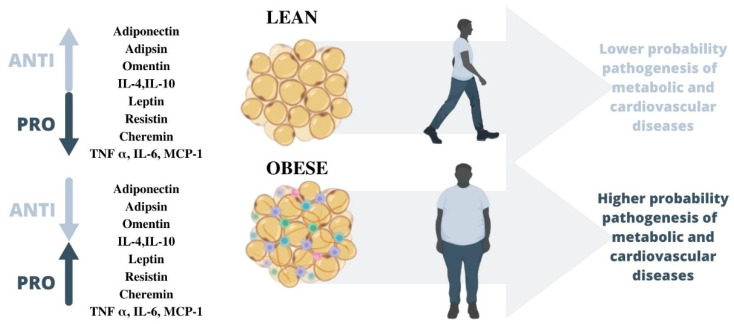
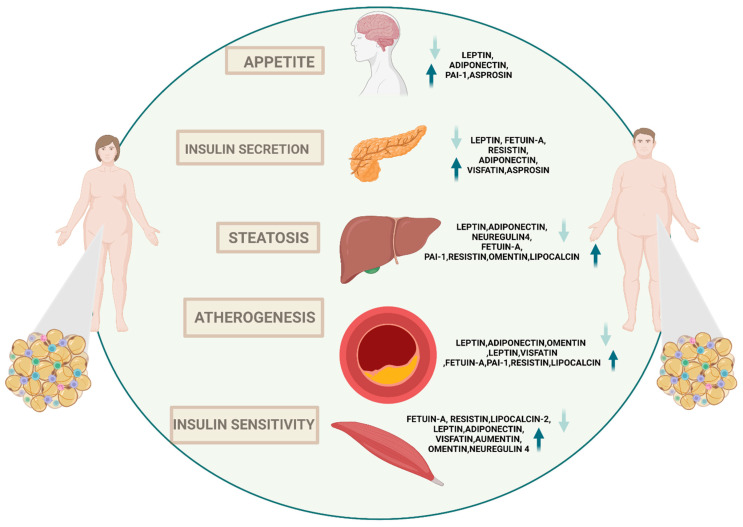
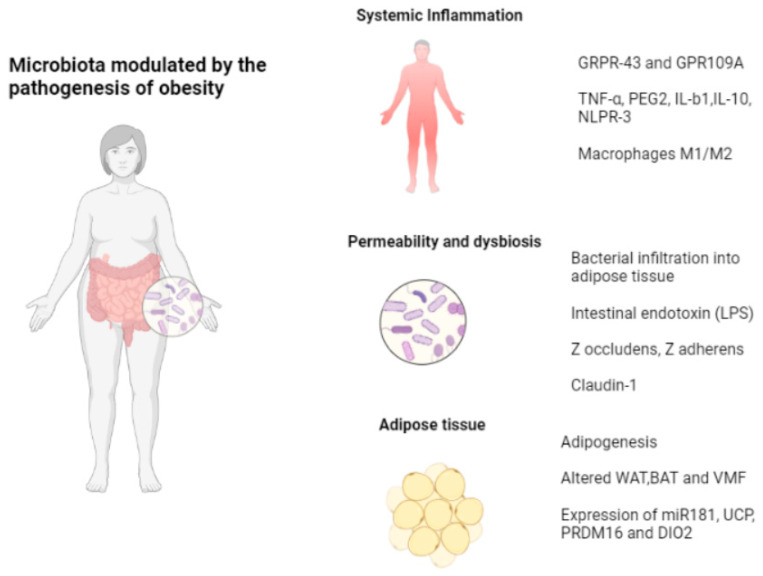
Verification
Claims the paper makes
The claims and statistics of this paper haven’t been checked yet.
Free: it reads the open-access text and checks the first 5 claims that cite a source we can check. Create a free account to check every claim.
Claims other papers make about this one
Each is checked against this paper’s own text: does it say what the citing paper says it does?
The check wasn’t confident either way, so it gives no verdict — never disputed.
In the citing paper
“Healthy expansion of WAT includes increased vascularization and anti-inflammatory signals (17, 18).”
From Metabolic impact of endogenously produced estrogens by adipose tissue in females and males across the lifespan (2025) · cites this paper as [17]
Experimental — accuracy not yet measured
Self-check
Percentages, sums and reported differences re-computed from the paper’s own numbers.
The self-check needs the paper’s full text.
Citations
Cites
1 retracted
Visfatin: A Protein Secreted by Visceral Fat That Mimics the Effects of Insulin
Fukuhara, A., Matsuda, M., Nishizawa, M., Segawa, K., Tanaka, M., Kishimoto, K., Matsuki, Y., Murakami, M., Ichisaka, T., Murakami, H., et al. (2005) · Science · doi:10.1126/science.1097243 · Cited by 1,906
RetractedVos, T., Lim, S. S., Abbafati, C., Abbas, K. M., Abbasi, M., Abbasifard, M., Abbasi-Kangevari, M., Abbastabar, H., Abd-Allah, F., Abdelalim, A., et al. (2020) · The Lancet · doi:10.1016/s0140-6736(20)30925-9 · Cited by 19,358
Inflammation and metabolic disorders
Hotamisligil, G. S. (2006) · Nature · doi:10.1038/nature05485 · Cited by 9,199 · cited 1×
“Adipose tissue inflammation is thought to be a key factor in the development of insulin resistance and other metabolic disorders [33].”
BackgroundThe metabolic phenotype in obesity: Fat mass, body fat distribution, and adipose tissue function
Goossens, G. H. (2017) · Obesity Facts · doi:10.1159/000471488 · Cited by 8,481
A PGC1-α-dependent myokine that drives brown-fat-like development of white fat and thermogenesis
Boström, P., Wu, J., Jedrychowski, M. P., Korde, A., Ye, L., Lo, J. C., Rasbach, K. A., Boström, E. A., Choi, J. H., Long, J. Z., et al. (2012) · Nature · doi:10.1038/nature10777 · Cited by 4,810
Obesity induces a phenotypic switch in adipose tissue macrophage polarization
Lumeng, C. N., Bodzin, J. L., & Saltiel, A. R. (2007) · Journal of Clinical Investigation · doi:10.1172/jci29881 · Cited by 4,664
Adipokines in inflammation and metabolic disease
Ouchi, N., Parker, J. L., Lugus, J. J., & Walsh, K. (2011) · Nature Reviews Immunology · doi:10.1038/nri2921 · Cited by 4,625
Weight-Reducing Effects of the Plasma Protein Encoded by the obese Gene
Halaas, J. L., Gajiwala, K. S., Maffei, M., Cohen, S. L., Chait, B. T., Rabinowitz, D., Lallone, R. L., Burley, S. K., & Friedman, J. M. (1995) · Science · doi:10.1126/science.7624777 · Cited by 4,451
Body Fatness and Cancer — Viewpoint of the IARC Working Group
Lauby-Secretan, B., Scoccianti, C., Loomis, D., Grosse, Y., Bianchini, F., & Straif, K. (2016) · New England Journal of Medicine · doi:10.1056/nejmsr1606602 · Cited by 3,596
European Guidelines for Obesity Management in Adults
Yumuk, V., Tsigos, C., Fried, M., Schindler, K., Busetto, L., Micic, D., & Toplak, H. (2015) · Obesity Facts · doi:10.1159/000442721 · Cited by 3,432
Research works printed but not linked: 4
- (2023, March 16). Extreme Eating Behaviours|Frontiers Research Topic. Available online: https://www.frontiersin.org/research-topics/9836/extreme-eating-behaviours.
- Hussein, 2021, Salivary Levels of Interleukin-1beta, Tumour Necrosis Factor-α, and C-Reactive Proteins in Smokers Patients with Severe Chronic Periodontitis, Syst. Rev. Pharm., 12, 1804
- (2023, March 17). SciELO—Brazil—Efeito Do Treinamento Concorrente e Destreinamento Sobre o Biomarcador Anti-Inflamatório e Níveis de Condicionamento Físico Em Crianças Obesas Efeito Do Treinamento Concorrente e Destreinamento Sobre o Biomarcador Anti-Inflamatório e Níveis de Condicionamento Físico Em Crianças Obesas. Available online: https://www.scielo.br/j/rbme/a/H4BHxv76F7SK3YhpQYKDs5H/?format=html&lang=en.
- Pigatto, E.; Schiesaro, M.; Caputo, M.; Beggio, M.; Galozzi, P.; Cozzi, F.; Sfriso, P. POS0329 gastrointestinal involvement in systemic sclerosis: Pathogenetic role of gut microbiome, cytokines and adipokines. Ann. Rheum. Dis. 2021, 80, 392. [CrossRef · DOI
Cited by
Items 201–300 of 463
Thaqi, G., Berisha, B., & Pfaffl, M. W. (2024) · Reproduction in Domestic Animals · doi:10.1111/rda.14624 · Cited by 5
Nouri, S., Navari, M., Shafiee, R., Mahmoudi, T., Rezamand, G., Asadi, A., Nobakht, H., Dabiri, R., Farahani, H., & Tabaeian, S. P. (2024) · Revista da Associação Médica Brasileira · doi:10.1590/1806-9282.20231537 · Cited by 3
“Resistin also enhances the expression of TNF-α and IL-1 β via MEK and ERK signaling pathways by inhibiting some microRNAs 8,22,23 , Consequently, a growing body of evidence corroborates the hypothesis that resistin and its gene, RETN , may play a role in the development and progression of NAFLD,…”
BackgroundThe Interplay Between Cytokines and MicroRNAs to Regulate Metabolic Disorders
Zhang, L., Zhang, L., Chen, H., & Xu, X. (2024) · Journal of Interferon & Cytokine Research · doi:10.1089/jir.2024.0059 · Cited by 4
“…proposal of several cytokines, such as TNF-a , IL-6, IL-1 b , IL-10, IL-8, IL-18, MCP-1, leptin, resistin, and adiponectin (Baldeon et al., 2014; Clemente-Suarez et al., 2023b), as well as miRNAs, including miR-146a, miR-155, miR-21, miR-126, miR-1, miR-133, miR-208a, miR-208b, miR-499, miR-25,…”
Goel, A., Goel, P., & Goel, S. (2024) · Cureus · doi:10.7759/cureus.69669 · Cited by 6
“The cytokines and adipokines released by visceral fat, including tumor necrosis factor-alpha (TNF-α ), interleukin-6 (IL-6), and adiponectin, play significant roles in modulating insulin sensitivity, inflammation, and lipid metabolism [9-11].”
BackgroundChen, X., Müller, A., Pishnamaz, M., Hildebrand, F., Bollheimer, L. C., & Nourbakhsh, M. (2024) · International Journal of Molecular Sciences · doi:10.3390/ijms251910722 · Cited by 5
“Adipokines represent a group of cytokines/chemokines that regulate important metabolic or inflammatory pathways in adipose tissue associated with obesity and obesity-related disorders [9].”
BackgroundTorres, E. M., & Tellechea, M. L. (2024) · Expert Review of Endocrinology & Metabolism · doi:10.1080/17446651.2024.2438231 · Cited by 4
“In general, leptin has proinflammatory properties and it can directly enhance the generation of many proinflammatory cytokines [9].”
InfluentialAbas, A. M., Esawy, M. M., Kamel, F., & Ali, M. (2025) · Scientific Reports · doi:10.1038/s41598-024-82214-z · Cited by 2
“Our findings contradict earlier study that found a link between Asprosin and BMI 31 .”
InfluentialAyala-García, J. C., Díaz-Benítez, C. E., Lagunas-Martínez, A., Orihuela, Y. C. O., Castañeda-Márquez, A. C., Ortiz‐Panozo, E., Bermúdez-Morales, V. H., Cruz, M., & Burguete-García, A. I. (2023) · Children · doi:10.3390/children10081382 · Cited by 4
Rychter, A. M., Skrzypczak-Zielińska, M., Naskręt, D., Michalak, M., Zawada, A. E., Walczak, M., Słomski, R., Dobrowolska, A., & Krela‐Kaźmierczak, I. (2023) · Gene · doi:10.1016/j.gene.2023.147909 · Cited by 3
Gül, M. A., Tozcu, D., Tekcan, A., Çapraz, M., & demir, H. D. (2024) · Revista da Associação Médica Brasileira · doi:10.1590/1806-9282.20231000 · Cited by 3
Engin, D. (2024) · Advances in experimental medicine and biology · doi:10.1007/978-3-031-63657-8_12 · Cited by 3
Kazeminasab, F., Fatemi, R., Bagheri, R., Santos, H. O., & Dutheil, F. (2024) · Frontiers in Nutrition · doi:10.3389/fnut.2024.1465378 · Cited by 7
DeMoulin, D., Cai, H., Cai, Q., Zheng, W., & Shu, X. (2025) · Cancer Epidemiology Biomarkers & Prevention · doi:10.1158/1055-9965.epi-25-0342 · Cited by 3
Predictors of Cardiac Autonomic Dysfunction in Obesity-Related Hypertension
Mujaddadi, A., Zaki, S., Noohu, M. M., Naqvi, I. H., & Veqar, Z. (2024) · High Blood Pressure & Cardiovascular Prevention · doi:10.1007/s40292-024-00623-7 · Cited by 4
Bakillah, A., AlSubaiee, M., Soliman, A. F., Khamees, K. O., Bashir, S. F., Hussaini, A. A., Arab, M. A., Otaibi, A. A., Mubarak, S. A. S., & Qarni, A. A. A. (2025) · International Journal of Molecular Sciences · doi:10.3390/ijms26051859 · Cited by 2
“Some studies suggested that ANP may influence lipid metabolism by modulating adipokine release from adipose tissue or altering lipoprotein particle composition [72].”
Bozoğlan, M. Y., Kuloğlu, T., Gözel, N., Kılınç, F., Çakmak, E., Akkoç, R. F., & Hark, B. D. (2025) · Medicina · doi:10.3390/medicina61030522 · Cited by 3
“There is an increasing number of studies reporting the effects of newly discovered adipokines on metabolism [14].”
Boren, C., Barr, B., Mubtasim, N., & Gollahon, L. (2025) · Current Issues in Molecular Biology · doi:10.3390/cimb47040218 · Cited by 4
“Previous studies have found that high-fat diets significantly increase body and fat mass content [9,31,47] and have an impact on changes in adipokine expression [48].”
Focused Ultrasound Neuromodulation to Peripheral Nerve System
Zhou, Y. (2025) · European Journal of Neuroscience · doi:10.1111/ejn.70062 · Cited by 4
“Obesity is often characterized by elevated levels of leptin and resistin and decreased levels of adiponectin, with adipokine dysregulation being associated with inflammation (Clemente-Suárez et al. 2023; Maximus et al. 2020).”
Rosero, R., Tamayo, M., Correa, R. R., Burguera, B. G., & Griebeler, M. L. (2025) · Obesity Science & Practice · doi:10.1002/osp4.70077 · Cited by 5
“Assessing both fat and muscle mass provides a more comprehensive understanding of the metabolic and inflammatory alterations associated with obesity [19–22].”
Rai, P. S., Shivarajashankara, Y., Bhandary, R. R., Prajna, R. H., Shetty, S., & Bhandary, Y. P. (2025) · Advances in Human Biology · doi:10.4103/aihb.aihb_61_25 · Cited by 2
Is body mass index associated with mortality in patients with sepsis?
Engoren, M., & Arslanian‐Engoren, C. (2025) · Heart & Lung · doi:10.1016/j.hrtlng.2025.09.008 · Cited by 1
The Unique Roles of Adipose Tissue in Wound Healing
Parker, J. B. L., Griffin, M., Akras, D., Liang, N. E., Valencia, C., Morgan, A. G., Kuhnert, M. M., DiIorio, S. E., Longaker, M. T., & Wan, D. C. (2025) · Advances in Wound Care · doi:10.1177/21621918251383812 · Cited by 5
Palabıyık, A. A., & Palabıyık, E. (2025) · Nutrire · doi:10.1186/s41110-025-00381-z · Cited by 4
“Omega-3 s may influence cardiovascular health by influencing risk factors and treatment strategies associated with metabolic syndrome, dyslipidemia, platelet aggregation, and inflammation [121].”
Ghosh, S., Bhaskar, R., Singh, K. K., Yarlagadda, B., Verma, P., Han, S. S., Purohit, S. D., & Sinha, J. K. (2025) · IET Nanobiotechnology · doi:10.1049/nbt2/6805313 · Cited by 2
“Within the context of obesity, adipose tissue functions as an endocrine organ, releasing adipokines and proin fl ammatory cytokines [25, 26] (Figure 2).”
Beyond Calories: Redox Interactions in Adipose Tissue That Lead to Metabolic Pathologies
Miranda-Martínez, A., Rodríguez-Martínez, E., Barragán-Reséndiz, P., & Rivas-Arancibia, S. (2025) · Physiologia · doi:10.3390/physiologia5040050 · Cited by 2
“Additionally, they promote angiogenesis and exert anti-inflammatory effects [47,48].”
Torabi, A., Afrashteh, S., Moftian, N., Ghalandari, H., Farhadi, A., Emamat, H., Nabipour, I., & Larijani, B. (2025) · Aging Clinical and Experimental Research · doi:10.1007/s40520-025-03248-5 · Cited by 2
“These agents have been reported to influence muscle metabolism and bone remodeling [47–49 ].”
Mahdavi, A. M., Javadivala, Z., Ilkay, H. O., & Ansarin, A. (2026) · Journal of Diabetes & Metabolic Disorders · doi:10.1007/s40200-026-01855-1 · Cited by 3
“Adipokines including leptin, resistin, adiponectin, and many others are molecular messengers originating from adipose tissue and modulate a variety of biological functions in the body [1, 2 ].”
Plant-based diets and functional foods in mitigating obesity-related cancer risks
Demirel, S., Arda, E., Kabayel, N., Akan, S., Elçiçek, M., Usta, U. B., Yıkmış, S., Demirok, N. T., Abdi, G., & Aadil, R. M. (2026) · Food and Agricultural Immunology · doi:10.1080/09540105.2026.2619234 · Cited by 6
Mitchell, C., Wilbrand, S. M., Hess, T., Riesenberg, A., Danforth, D., Wesley, U. V., Schwartz, E. S., Varghese, T., Blohowiak, C. J., Vandenberg, C., et al. (2026) · Journal of the American Heart Association · doi:10.1161/jaha.125.043224 · Cited by 2
The Hidden Metabolic Roots of Epilepsy
Rubio, C., Carpinteyro, S., Serrano‐García, N., Parra, H. R., Pérez-Villavicencio, J., Lee, Á., Mercado-Pimentel, R., & Rubio‐Osornio, M. (2026) · Biomedicines · doi:10.3390/biomedicines14040764 · Cited by 2
“Furthermore, preclinical and clinical evidence show that the adipokines peptide hormones secreted by adipose tissue, including leptin, adiponectin, and resisting are essential in energy metabolism and synaptic function [83–85].”
Bahtiar, A., Musyantika, L., Wahyuni, T., Utami, R. A., & Siriamornpun, S. (2026) · Foods · doi:10.3390/foods15071167 · Cited by 2
“Adiponectin levels increased approximately 4.4-fold (176.01 to 779.55), exceeding the 1.5–3-fold increases typically reported for polyphenol-rich interventions [45,46].”
InfluentialErkizia-Santamaría, I., Fernández, L., Horrillo, I., Meana, J. J., & Ortega, J. E. (2026) · Neurobiology of Stress · doi:10.1016/j.ynstr.2026.100815 · Cited by 4
Is adiponectin deficiency a critical factor for sevoflurane induced neurocognitive dysfunction?
Wang, J., Chang, R. C., Chu, J. M. T., & Wong, G. T. C. (2023) · Medical Hypotheses · doi:10.1016/j.mehy.2023.111241 · Cited by 2
Hormonal Imbalance in Obesity and Arthritis: Points of Contact
Vijayan, S., & Margesan, T. (2024) · Current Rheumatology Reviews · doi:10.2174/0115733971293288240313090945 · Cited by 2
Establishing Immortalized Brown and White Preadipocyte Cell Lines from Young and Aged Mice
Wu, X., Elsaid, S., Levet, F., Li, W., & Tee, S. S. (2024) · Current Protocols · doi:10.1002/cpz1.70072 · Cited by 2
Chen, Z., Fu, S., Lai, S., Fu, M., & Du, G. (2024) · Frontiers in Endocrinology · doi:10.3389/fendo.2024.1505082 · Cited by 3
Basini, G., & Grasselli, F. (2025) · Domestic Animal Endocrinology · doi:10.1016/j.domaniend.2025.106918 · Cited by 2
Adiponectin and HMW Oligomers in Relation to Inflammatory Markers in Crohn’s Disease Patients
Marra, M., Mallardo, M., Nigro, E., Cioffi, I., Leo, C., Guarino, A. D., Castiglione, F., Pasanisi, F., & Daniele, A. (2025) · Biomedicines · doi:10.3390/biomedicines13020273 · Cited by 4
“In obesity, hypoadiponectinemia is associated with insulin resistance, cardiovascular diseases, and others [10,11].”
Serum adipsin levels as a new marker in type 2 diabetes mellitus: A meta-analysis
Bansal, A., Honnapurmath, V., & Singh, A. (2025) · International Journal of Diabetes in Developing Countries · doi:10.1007/s13410-025-01449-2 · Cited by 3
Crintea, I. N., Cîndrea, A. C., Mederle, O. A., Fulga, T. F., Marza, A. M., Petrică, A., Trebuian, C. I., & Timar, R. Z. (2025) · Biomedicines · doi:10.3390/biomedicines13020349 · Cited by 3
Peiu, S. N., Zugun‐Eloae, F., Stoica, B. A., Anisie, E., Iosep, D. G., Danciu, M., Silivestru-Crețu, I., Akad, F., Avadanei, A. N., Condur, L., et al. (2025) · Journal of Cardiovascular Development and Disease · doi:10.3390/jcdd12030087 · Cited by 2
“…and PVAT of super fi cial femoral artery, popliteal artery, anterior tibial artery, and external iliac artery were correlated with metabolic syndrome indicators, such as increased waist circumference, triglyceridemia, glycemia, and atherosclerosis. including adiponectin, leptin, and IL-6 [24].”
Bakillah, A., Soliman, A. F., AlSubaiee, M., Khamees, K. O., Hussaini, A. A., Bashir, S. F., Arab, M. A., Otaibi, A. A., Mubarak, S. A. S., & Qarni, A. A. A. (2025) · International Journal of Molecular Sciences · doi:10.3390/ijms26073001 · Cited by 2
“Adipokines and cytokines play a significant role in regulating adipose tissue inflammation and metabolic dysfunction in diabetic patients, which can influence levels of both Cys-C and ox-LDL [22].”
Zhang, P., Wu, N., Xue, Q., Li, J., Ouyang, Q., Yu, X., Yang, Y., Dong, Y., Li, F., Wang, T., et al. (2025) · Journal of Alzheimer s Disease · doi:10.1177/13872877251352480 · Cited by 3
Relationship between asprosin and certain biochemical parameters in obese patients
Humadi, N. S., & Saleh, N. A. (2025) · Regulatory Mechanisms in Biosystems · doi:10.15421/0225059 · Cited by 2
Hurmuz, I., Barna, R. A., Natarâş, B. R., Trăilă, I.-A., Anderco, D., Dema, S., Jurescu, A., Lăzureanu, C., Tăban, S. M., & Dema, A. L. C. (2025) · Medicina · doi:10.3390/medicina61101748 · Cited by 3
“These shared metabolic pathways may also facilitate the development of secondary malignancies, particularly in hormone-responsive tissues such as the breast and ovary [23,24].”
Thaqi, G., Berisha, B., & Pfaffl, M. W. (2023) · Animals · doi:10.3390/ani13203221 · Cited by 4
Tian, Y., Wang, X., Sun, Y., Xiong, X., Zeng, W., Yang, K., Zhao, H., Deng, Y., & Song, D. (2024) · Aesthetic Plastic Surgery · doi:10.1007/s00266-024-04118-7 · Cited by 2
Kushawaha, S. K., Sharma, R., & Ashawat, M. S. (2024) · Current Drug Therapy · doi:10.2174/0115748855296758240408040336 · Cited by 1
WITHDRAWN: Physical activity, dysfunctional metabolism, and antitumor immunity
Shaver, A. L., Nikita, N., Tran, B. V., & Kim, F. J. (2024) · Elsevier eBooks · doi:10.1016/b978-0-443-14064-8.00010-2 · Cited by 1
Fasting-regulated mechanisms in inter-organ crosstalk
Alfaro, A. J., & Herzig, S. (2024) · Current Opinion in Endocrine and Metabolic Research · doi:10.1016/j.coemr.2024.100540 · Cited by 3
Changes in Circulating Adipokine Levels in COVID-19 Patients
Wikar, T., Rubinkiewicz, M., Stygar, D. M., Chełmecka, E., Popiela, U., Wysocki, M., Tylec, P., Maziarz, B., & Kukla, M. (2024) · Journal of Clinical Medicine · doi:10.3390/jcm13164784 · Cited by 1
“Adipokines can have local, peripheral, and central effects [19].”
BackgroundTarabeih, N., Kalinkovich, A., Ashkenazi, S., Shalata, A., & Livshits, G. (2024) · Biomolecules · doi:10.3390/biom14111426 · Cited by 1
“It is expressed in adipose tissue and secreted by adipocytes [15], suggesting its role as an adipokine.”
dos Santos, M. A., Bortolin, R. H., Cerda, Á., Oliveira, R. A., Stefani, T. I. M., Fajardo, C. M., Dórea, E. L., Bernik, M. M. S., Damasceno, N. R. T., Hirata, M. H., et al. (2024) · Nutrition Research · doi:10.1016/j.nutres.2024.12.005 · Cited by 1
Food Chain and Food Policies: Causes and Solutions for the Obesity Pandemic
Sareen, N., Watson, S., Hill, N. E., Brandt, E. J., & Vijayaraghavan, K. (2025) · Methodist DeBakey Cardiovascular Journal · doi:10.14797/mdcvj.1509 · Cited by 1
Kong, X., Wang, Q., Wang, H., Yang, Y., Guo, L., Song, S., Zhao, Y., Ma, X., Wang, X., & Sun, Q. (2025) · Journal of Stroke and Cerebrovascular Diseases · doi:10.1016/j.jstrokecerebrovasdis.2025.108273 · Cited by 1
Braitenbach, B. P. D. F., de Cerqueira, C. B. S., Lima, S. S., Hegouet, I. D. C., Moreno, B. C. L., & Medrado, A. R. A. P. (2025) · Lasers in Medical Science · doi:10.1007/s10103-025-04410-1 · Cited by 1
The Interplay Between Visceral Adiposity and Cardiometabolic Risk in Children With Obesity
Abdelhaleem, B. A., Emam, E. K., Salem, A. M., Yacoub, G. E. E., Helal, R., & Abdelhamed, M. H. (2025) · Cureus · doi:10.7759/cureus.84062 · Cited by 3
“They contribute to the balance and control of important body functions and systems such as metabolism, the cardiovascular system, and inflammatory and immunological processes [9].”
Liu, T., Zhuang, X., Gu, W., Liu, W., Zhang, J., & Zeng, W. (2025) · Maternal-Fetal Medicine · doi:10.1097/fm9.0000000000000292 · Cited by 1
“56 However, increased ADIPOQ levels are associated with increased risks of heart failure and coronary artery disease.”
Andrews, J. M., & Roy, C. R. (2025) · Infection and Immunity · doi:10.1128/iai.00080-25 · Cited by 2
Epicardial adipose tissue in type 1 diabetes mellitus: a systematic review and meta-analysis
Sooragonda, B. G., Karnwal, V., Gunaseelan, V., Joshi, A., Biswas, K., Shenoy, M. T., & Anbazhagan, R. (2025) · The Egyptian Heart Journal · doi:10.1186/s43044-025-00666-8 · Cited by 1
“Once considered a passive structural component, EAT is now recognized as a metabolically dynamic organ that secretes various bioactive molecules, including pro-inflammatory adipokines and cytokines [2, 3].”
Investigations on metabolic diseases of horses in Egypt
Aboelmaaty, A. M., Ahdy, A. M., El‐Khodery, S., & Elgioushy, M. M. (2025) · Frontiers in Veterinary Science · doi:10.3389/fvets.2025.1591090 · Cited by 2
“Typically ranging from 350 to 400 kg. High subcutaneous rump fat and elevated body condition scores (BCS) were used as indicators for diagnosing obesity in horses (8).”
Lipin-1 Drives Browning of White Adipocytes via Promotion of Brown Phenotype Markers
Hamzah, S. S., Zamri, L. A., Azar, S. A. A., Aziz, S. M. A., Abdullah, S. R., & Seman, N. A. (2025) · Biomedicines · doi:10.3390/biomedicines13092069 · Cited by 1
“Healthy adipocytes are essential for maintaining metabolic balance by regulating energy storage and release, secreting adipokines, and preserving systemic homeostasis [3,4].”
The Role of Omentin in Gastrointestinal Cancer: Diagnostic, Prognostic, and Therapeutic Perspectives
Mylonakis, A., Frountzas, M., Lidoriki, I., Kozadinos, A., Koloutsou, M. E., Margoni, A., Kalfoutzou, A., Theodorou, D., Toutouzas, K. G., & Schizas, D. (2025) · Metabolites · doi:10.3390/metabo15100649 · Cited by 2
Thyroid Disorders and Their Impact on Metabolic Syndrome and Cardiovascular Risk: A Narrative Review
Raveendran, A., Ragunathan, S., Neto, J. F. L., Mohamed, M. M., Chen, Y., Baral, S., Mendoza, A., Hatam, W., Yadav, S. K., Karvannan, V., et al. (2025) · Cureus · doi:10.7759/cureus.93669 · Cited by 17
“Hence, depending on the pro-and anti-inflammatory pathways, adipokines are involved in the pathogenesis of various metabolic diseases [32].”
InfluentialMallardo, M., Russo, R., Daniele, A., Chambery, A., & Nigro, E. (2025) · Molecular Biology Reports · doi:10.1007/s11033-025-11183-x · Cited by 1
The role of impaired adipogenesis in insulin resistance among non-obese individuals
Almuraikhy, S., Alser, M., Naja, K., Anwardeen, N. R., Taha, S., John, J., Halim, S., Badran, S. M., Ahmed, M. B., Jarrar, S. I., et al. (2026) · Frontiers in Physiology · doi:10.3389/fphys.2025.1739215 · Cited by 1
Sonaglioni, A., Gramaglia, G. F., Nicolosi, G. L., Baravelli, M., & Lombardo, M. (2026) · Journal of Clinical Medicine · doi:10.3390/jcm15020878 · Cited by 3
Wesley, U. V., Madrid, A., Riesenberg, A., Wilbrand, S. M., Nelson, D. E., Danforth, D., Blohowiak, C. J., Vandenberg, C., Lane, K., Maybock, J., et al. (2026) · World Neurosurgery · doi:10.1016/j.wneu.2026.124821 · Cited by 1
Deshmukh, B., Yaduvanshi, H., Bhati, F. K., & Bhat, M. K. (2026) · Biochimica et Biophysica Acta (BBA) - General Subjects · doi:10.1016/j.bbagen.2026.130911 · Cited by 1
Parveen, N., Iqbal, N., Mohamed, A. A. A., Shahid, S. M. A., Abdalla, R. A. H., Elhussein, G. E. M. O., Saleem, M., Choudhry, A. A., & Khan, M. S. (2026) · European journal of medical research · doi:10.1186/s40001-026-03959-z · Cited by 1
“This finding reinforces its role as a potential biomarker for early prediction, particularly when combined with other clinical indicators [28].”
Surina, S., Scisciola, L., Basilicata, M. G., Pesapane, A., Fontanella, R. A., Balzano, N., Palazzo, A., Zia, A., Tortorella, G., Ulfat, Z., et al. (2026) · Journal of Translational Medicine · doi:10.1186/s12967-026-07959-9 · Cited by 3
Dietary strategies to counter obesity-accelerated aging: Enhancing health-span and longevity
Rao, P. P. (2026) · Obesity Medicine · doi:10.1016/j.obmed.2026.100702 · Cited by 1
Dowlatshahi, S., Lee, C.-T., Elkins, M., Patki, B., & Ayilavarapu, S. (2026) · The Journal of the American Dental Association · doi:10.1016/j.adaj.2026.02.002 · Cited by 2
Adiponectin and phase angle in the assessment of sarcopenia in Crohn’s disease: beyond muscle mass
Nigro, E., Marra, M., Santis, F. D., Sammarco, R., Leo, C., Nardone, O. M., Calabrese, G., Guarino, A. D., Castiglione, F., Daniele, A., et al. (2026) · Frontiers in Nutrition · doi:10.3389/fnut.2026.1753532 · Cited by 1
The effects of omentin on estradiol and progesterone release in human granulosa cell culture
Tarıkahya, P., Burcu, B. A. B. A., Özer, L., Ecemiş, T., & Köprü, Ç. Z. (2026) · In Vitro Cellular & Developmental Biology - Animal · doi:10.1007/s11626-026-01187-7 · Cited by 1
Uti, D. E., Egbung, J. E., Alum, E. U., Bawa, I., Agada, S. A., Ogbu, C. O., & Ugwu, O. P.-C. (2026) · Obesity Medicine · doi:10.1016/j.obmed.2026.100712 · Cited by 3
Lis-Kuberka, J., & Berghausen-Mazur, M. (2026) · Frontiers in Endocrinology · doi:10.3389/fendo.2026.1776904 · Cited by 1
Roh, N., Park, K.-H., Le, D., Kim, E., Dang, T., Dinh, T., Bazarragchaa, B., Kim, S.-Y., Suh, S., Kim, J. J., et al. (2026) · International Journal of Molecular Sciences · doi:10.3390/ijms27114693 · Cited by 1
“Adipocytes store excess nutrients as triglycerides and secrete adipokines, such as leptin and adiponectin, that influence systemic insulin sensitivity and inflammatory pathways [5,6].”
Immune roles of canonically non-immune cells in biomaterials response
Stelzel, J. L., McKnight, I., Greco, A. H., Hernandez, J. L., Huang, I., Erb, C. J., Wilson, D. S., Mao, H., & Doloff, J. C. (2026) · Cell Biomaterials · doi:10.1016/j.celbio.2026.100463 · Cited by 2
Khodarahmi, M., Mehrabani, S., Pilehrood, K. S., Ansari, S., Abdi, M., Yahay, M., Shirani, F., & Saraf‐Bank, S. (2026) · Advances in Integrative Medicine · doi:10.1016/j.aimed.2026.100682 · Cited by 1
Curto, R., Giglione, C., Cannarella, R., Berisha, H., Hattab, R., Condorelli, R. A., Vignera, S. L., Calogero, A. E., & Magni, P. (2026) · Pharmacological Research · doi:10.1016/j.phrs.2026.108278 · Cited by 2
Tian, Y., Wu, X., Zhang, L., Gong, Y., Kang, X., Tian, Y., & Guo, Y. (2026) · Biomolecules · doi:10.3390/biom16060832 · Cited by 1
Serum FAM132A/Adipolin correlates with endothelial dysfunction in children with obesity
Jin, Y., Ding, Y., Li, H., Lian, B., Wu, X., Gao, N., Zhang, W., & Yin, C. (2026) · Pediatric Research · doi:10.1038/s41390-026-05240-9 · Cited by 1
The Gut Microbiome–Endocrine Axis in Obesity: Mechanisms and Therapeutics
Mao, H., Wang, X. L., Pang, Y., Lu, Y., Wang, H. W., Li, H., Ni, Y., & Jia, W. P. (2026) · Journal of Gastroenterology and Hepatology · doi:10.1111/jgh.70511 · Cited by 1
Khan, I., Meenakshi, S., Abubakar, M., Kumar, N., Gaikwad, V. L., Rai, A., & Murti, K. (2026) · Endocrine · doi:10.1007/s12020-026-04686-5 · Cited by 2
Robino, A., Tornese, G., Aldegheri, L., Franceschi, R., Mozzillo, E., Candia, F. D., Morosini, C., Zanfardino, A., Delvecchio, M., Bombaci, B., et al. (2026) · Journal of Endocrinological Investigation · doi:10.1007/s40618-026-03038-4 · Cited by 1
A review on the role of novel adipokine Isthmin-1 and Subfatin in human type 2 diabetes mellitus
Abed, B. A., Farhan, L. O., Salman, I. N., & Atta, S. E. (2023) · University of Thi-Qar Journal of Science · doi:10.32792/utq/utjsci/v10i2.1129 · Cited by 3
“These signaling proteins are present in cells and regulate or alter a variety of biological processes in the target organs, including the heart, blood vessels, muscles, brain, liver, and immune system [5].”
Revisiting the Name, Definition and Classification of Obesity
Singh, H. J., Ghani, R. A., Ramli, A. S., & Durairajanayagam, D. (2024) · Journal of Clinical and Health Sciences · doi:10.24191/jchs.v9i1.25785 · Cited by 2
“However, evidence in recent years has shown that the adipocytes produce a huge number of adipokines and cytokines, which, under normal circumstances, serve numerous physiological functions, including regulation of energy balance and body weight, immune function, and in reproduction [15,16].”
BackgroundHe, L., Wang, W., Wang, X., Zhang, D., Zhang, Y., Zhao, Y., Zhao, L., Li, X., Cheng, J., Xu, D., et al. (2024) · Animal Biotechnology · doi:10.1080/10495398.2024.2344207 · Cited by 2
Amini, K., Motallebi, M., Bakhtiari, K., Hajmiri, M. S., Zamanirafe, M., Sharifikia, M., Ranjbar, A., Keshavarzi, A., Mirjalili, M., & Mehrpooya, M. (2024) · Human Psychopharmacology Clinical and Experimental · doi:10.1002/hup.2907 · Cited by 2
Żelechowska, P., Wiktorska, M., Kozłowska, E., & Agier, J. (2024) · Immunology and Cell Biology · doi:10.1111/imcb.12809 · Cited by 1
Kornegay, J. N., Stedman, H. H., Lawlor, M. W., Byrne, B. J., & Childers, M. K. (2024) · Rare Disease and Orphan Drugs Journal · doi:10.20517/rdodj.2024.28 · Cited by 3
Endocrine Functions of the Adipose Tissue
Mitov, M. I. (2024) · Contemporary Endocrinology · doi:10.1007/978-3-031-72570-8_4 · Cited by 1
Pre-Adipocytes in 3D Co-Culture Underwent Self-Differentiation: New Perspectives for an Old Model
Mora, T. D., Saleh, N. A., Martinazzo, V. P. G., Büchele, M. L. C., Rode, M. P., Silva, A. H., Assunção, L. S., Creczynski‐Pasa, T. B., & Filippin-Monteiro, F. B. (2024) · Organoids · doi:10.3390/organoids3040018 · Cited by 1
“Therefore, adipose tissue is not merely a repository of adipocytes but also an integral part of the body’s endocrine system [5,6].”
Kibibi Wairimu, H. (2025) · Research Invention Journal of Scientific and Experimental Sciences · doi:10.59298/rijses/2025/526875
Effect of physical exercise on adiponectin levels in humans: a systematic review
Putra, D. P., Wibawa, J. C., Rossa, M., & Riyono, A. (2025) · doi:10.56984/8zg00e1ivu4 · Cited by 1
Low Oncostatin M Levels Are Associated with the Pathogenesis of Pcos and Its Metabolic ComplicationsPreprint
Çamili, F. E., Akış, M., Adalı, E., Hişmioğulları, A. A., Taşkın, M. İ., Güney, G., & Afşar, S. (2023) · Preprints.org · doi:10.20944/preprints202311.0299.v1 · Cited by 1
Challapalli, R. S., O’Dwyer, J., McInerney, N., Kerin, M. J., Duffy, G. P., Dolan, E. B., Dwyer, R. M., & Lowery, A. (2025) · bioRxiv (Cold Spring Harbor Laboratory) · doi:10.1101/2025.04.03.646623 · Cited by 1
“Adipokines are bioactive molecules secreted by adipose tissue that play significant roles in regulating metabolism, inflammation, and overall energy homeostasis [31, 32].”
Dantas, A. S. R. (2014) · Cadernos de Campo Revista de Ciências Sociais
Metadata
- Authors
- Clemente-Suárez, V. J., Redondo-Flórez, L., Beltrán-Velasco, A. I., Martín-Rodríguez, A., Martínez-Guardado, I., Navarro-Jiménez, E., Laborde-Cárdenas, C. C., & Tornero-Aguilera, J. F.
- Affiliations
- Faculty of Sports Sciences, Universidad Europea de Madrid, Tajo Street, s/n, 28670 Madrid, Spain
- Universidad Europea de Madrid (ES)
- Universidad Nebrija (ES)
- BRABE Group, Department of Psychology, Faculty of Life and Natural Sciences, University of Nebrija, C/del Hostal, 28248 Madrid, Spain
- Universidad Simón Bolívar (CO)
- Corresponding author
- Martín-Rodríguez, Alexandra
- ORCID
- Venue
- Biomedicines
- Publisher
- MDPI AG
- Published
- 2023-04-27
- Volume
- 11
- Issue
- 5
- Pages
- 1290
- ISSN
- 2227-9059 (ISSN-L)
- PMC
- PMC10216288
- OpenAlex
- W4367181460
- Semantic Scholar
- e8f00c12c3f4126c0f13105c46928305660c3592
- Cited by
- 463
- References
- 326
- Citations by year
- 2026: 143 · 2025: 185 · 2024: 107 · 2023: 27
- FWCI
- 18.06
- Type
- journal article
- Language
- en
- Open access
- gold
- doi.org
- Licence
- Locations
- Biomedicines (publishedVersion, cc-by)
- PubMed Central (publishedVersion, cc-by)
- PubMed (publishedVersion)
- ABACUS. Repositorio de Producción Científica (Universidad Europea) (submittedVersion, cc-by)
- DOAJ (DOAJ: Directory of Open Access Journals) (submittedVersion, cc-by-sa)
- Topics
- Health Sciences › Medicine › Endocrinology, Diabetes and Metabolism › Adipokines, Inflammation, and Metabolic Diseases
- Health Sciences › Medicine › Physiology (medical) › Adipose Tissue and Metabolism
- Health Sciences › Medicine › Cardiology and Cardiovascular Medicine › Cardiovascular Disease and Adiposity
- Keywords
- adipokines, adipose tissue, adipocytes, low-grade inflammation, cardiovascular disease, atherosclerosis, mental illness, metabolic disorders, cancer, dietary habits, gut microbiota, nutrition, physical activity
About these checks
Registry, retraction, Cites and statistics results are computed, not judged, with one exception: a printed reference that no index lists is read once by a model before it counts as a citation error. Claims are extracted by a model and kept only when their quote appears verbatim in the text; each cited source is then checked, with a model’s help, for whether it says what the claim relies on. Those verdicts can be wrong — read the claim’s quote and the cited source before relying on one.
Statistics and arithmetic are recomputed, not judged.
Confidence bands are shown only for fields calibrated on our annotated test set. None is calibrated yet, so no band is shown.
What counts as a claim ›How we measure confidence ›How we check this ›
Are you an author, or do you see a problem with this page? Request a review
Data sources
Bibliographic data: Semantic Scholar, OpenAlex, Crossref.
Contains information from the Semantic Scholar Academic Graph Datasets, made available under the ODC Attribution License (ODC-BY 1.0).
Semantic Scholar’s data is described in: Kinney, R., et al. (2023). The Semantic Scholar Open Data Platform. arXiv:2301.10140.
