

Hypoglycemia Unawareness—A Review on Pathophysiology and Clinical Implications
Open accessThe DOI matches its Crossref record; 66 of the 67 references it cites were found in a registry or an index; 28 of the 117 sources its claims cite were checked for support.
Abstract
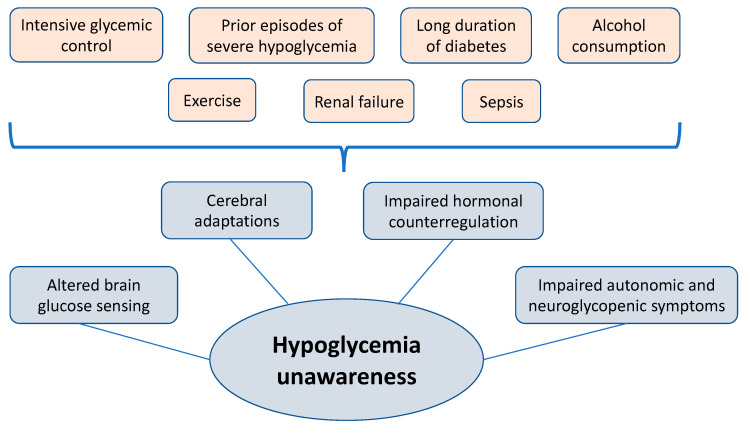
Hypoglycemia is a particular problem in people with diabetes while it can also occur in other clinical circumstances. Hypoglycemia unawareness describes a condition in which autonomic and neuroglycopenic symptoms of hypoglycemia decrease and hence are hardly perceivable. A failure to recognize hypoglycemia in time can lead to unconsciousness, seizure, and even death. The risk factors include intensive glycemic control, prior episodes of severe hypoglycemia, long duration of diabetes, alcohol consumption, exercise, renal failure, and sepsis. The pathophysiological mechanisms are manifold, but mainly concern altered brain glucose sensing, cerebral adaptations, and an impaired hormonal counterregulation with an attenuated release of glucagon, epinephrine, growth hormone, and other hormones, as well as impaired autonomous and neuroglycopenic symptoms. Physiologically, this counterregulatory response causes blood glucose levels to rise. The impaired hormonal counterregulatory response to recurrent hypoglycemia can lead to a vicious cycle of frequent and poorly recognized hypoglycemic episodes. There is a shift in glycemic threshold to trigger hormonal counterregulation, resulting in hypoglycemia-associated autonomic failure and leading to the clinical syndrome of hypoglycemia unawareness. This clinical syndrome represents a particularly great challenge in diabetes treatment and, thus, prevention of hypoglycemia is crucial in diabetes management. This mini-review provides an overview of hypoglycemia and the associated severe complication of impaired hypoglycemia awareness and its symptoms, pathophysiology, risk factors, consequences, as well as therapeutic strategies.
Overview
CoChat Summary
## TL;DR
This review explains hypoglycemia unawareness as a diabetes complication driven by recurrent hypoglycemia, impaired counterregulation, altered brain glucose sensing, and sleep-related effects. It emphasizes prevention through avoiding hypoglycemia, individualized therapy, patient education, and glucose-monitoring technologies.
## Key findings
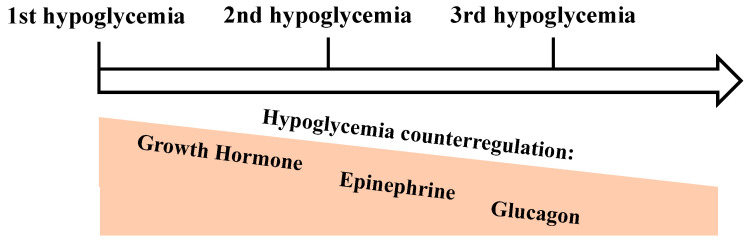
- Recent antecedent hypoglycemic episodes can blunt counterregulatory responses, including glucagon, growth hormone, and epinephrine, creating a “vicious cycle” of recurrent hypoglycemia and reduced awareness.
- The paper states that 2–3 weeks of strict hypoglycemia avoidance can raise the glucose threshold for symptom onset back to a healthier level.
- During sleep, around 60–70% of nocturnal hypoglycemic episodes in patients with diabetes occur in late sleep, between 03:00 and 07:00 h, when counterregulatory responses are less pronounced.
- In patients with T1D, a hyperinsulinemic–hypoglycemic clamp with a glucose nadir of 40 mg/dL (2.2 mmol/L) showed impaired awakening from sleep and an accompanying epinephrine increase compared with healthy controls.
## Methods
- Narrative review of the pathophysiology, consequences, and treatment of hypoglycemia unawareness in diabetes.
- Synthesizes prior human and animal studies, including clamp studies, cohort studies, imaging studies, and educational intervention studies.
- No original sample, dataset, or new statistical analysis is reported in the paper.
## Limitations
- The paper states that further research is needed to better understand the underlying mechanisms and develop targeted interventions.
- It notes that further investigations about sleep-related memory formation in chronic hypoglycemia unawareness are needed.
- Evident from the text: this is a review, so it does not present new primary data or a systematic, quantitative meta-analysis of effect sizes.
Model-written summary. Check it against the paper before relying on it.
Integrity signals
Registry
Cites
Statistics
Figures
Verification
Claims the paper makes
23 Valid · 0 Not valid · 54 Not checked · 10 Own results and interpretations
Every source the paper cites for this claim was checked and supports it.
In the paper
“Especially in children and adolescents, nocturnal hypoglycemia can occur after delayed effects of exercise and alterations in sleep physiology.”
What the sources say
- Supportedcites [8] Matyka, 2002, Sweet dreams?—Nocturnal hypoglycemia in children with type 1 diabetes: Nocturnal hypoglycemia in type 1 diabetes, Pediatr. Diabetes source
The etiology of nocturnal hypoglycemia section says exercise can cause delayed hypoglycemia, with the greatest risk probably overnight, and notes that young children may be especially vulnerable. The section on counterregulation during sleep reports that responses may be delayed or blunted in children and may vary by sleep stage in adolescents, supporting the hedged point about sleep-related physiology. (LLM, conf=0.86)
plainstates a possible cause- Asserted: passes — The authors put it forward as true.
- Checkable: passes — It can be checked against evidence.
- Load-bearing: unclear — It is unclear whether the paper’s conclusions depend on it.
- Based: passes — The paper gives a reason why it holds.
- Supported
The cited sources support only part of this claim — read each source’s verdict below.
In the paper
“Moreover, autoimmune conditions such as adrenal insufficiency and other endocrine diseases can lead to hypoglycemic episodes [ 9 ].”
What the sources say
- Partly supportedcites [9] Kalra, 2013, Hypoglycemia: The neglected complication, Indian J. Endocr. Metab. sourceExperimental — accuracy not yet measured
In the 'HYPOGLYCEMIA: CAUSES, SYMPTOMS AND RISK FACTORS' section our copy does state that hypoglycemia may result from seldom causes including autoimmune conditions and endocrine disease, which supports the general point of the citing sentence. However, the specific example the claim attaches to this source — adrenal insufficiency — appears nowhere in our copy: searches for 'adrenal insufficiency', 'Addison', 'hypopituitarism' and 'cortisol/glucocorticoid deficiency' returned no such passage (the only adrenal reference is to adrenaline/norepinephrine in the counter-regulatory responses section). The source also frames these as 'seldom causes' and hedges with 'may also result from', whereas the citing sentence states it without that rarity qualifier. (LLM, conf=0.75)
plainstates a cause- Asserted: passes — The authors put it forward as true.
- Checkable: passes — It can be checked against evidence.
- Load-bearing: unclear — It is unclear whether the paper’s conclusions depend on it.
- Based: passes — The paper gives a reason why it holds.
- Partly supported
Every source the paper cites for this claim was checked and supports it.
In the paper
“This is a serious complication and nocturnal hypoglycemic episodes are often profound and prolonged [ 8 ].”
What the sources say
- Supportedcites [8] Matyka, 2002, Sweet dreams?—Nocturnal hypoglycemia in children with type 1 diabetes: Nocturnal hypoglycemia in type 1 diabetes, Pediatr. Diabetes source
In “The size of the problem—the problem of size,” the paper describes a high prevalence of nocturnal hypoglycemia in children with type 1 diabetes and says episodes can be both profound and prolonged. The “Prolonged nocturnal hypoglycemia” section also refers to the prolonged nature of many episodes. (LLM, conf=0.93)
plain- Asserted: passes — The authors put it forward as true.
- Checkable: passes — It can be checked against evidence.
- Load-bearing: unclear — It is unclear whether the paper’s conclusions depend on it.
- Based: passes — The paper gives a reason why it holds.
- Supported
The sources with a verdict support this claim; the rest weren’t checked yet, have no full text we could read, or their verdicts aren’t rated yet.
In the paper
“An incretin-driven hyperinsulinemic response to undigested carbohydrates can result in a hypoglycemic episode [ 12 , 13 ].”
What the sources say
- Not checked yetcites [12] Tack, 2009, Pathophysiology, diagnosis and management of postoperative dumping syndrome, Nat. Rev. Gastroenterol. Hepatol. source
- Supportedcites [13] Emous, 2017, Dumping syndrome after esophageal, gastric or bariatric surgery: Pathophysiology, diagnosis, and management, Obes. Rev. source
The Late dumping section states that rapid delivery of undigested carbohydrates to the small intestine induces a hyperinsulinemic response followed by hypoglycemia. It also identifies an exaggerated incretin (GLP-1) response as a key mediator. Page numbers are not provided in our copy. (LLM, conf=0.94)
plainstates a cause- Asserted: passes — The authors put it forward as true.
- Checkable: passes — It can be checked against evidence.
- Load-bearing: unclear — It is unclear whether the paper’s conclusions depend on it.
- Based: passes — The paper gives a reason why it holds.
The sources with a verdict support this claim; the rest weren’t checked yet, have no full text we could read, or their verdicts aren’t rated yet.
In the paper
“Hypoglycemia unawareness syndrome is commonly observed in individuals with recurrent hypoglycemic episodes disrupting the normal release of counterregulatory hormones, such as glucagon, growth hormone (GH), and epinephrine.”
What the sources say
- Not checked yetcites [18] Cryer, 2001, Hypoglycemia-associated autonomic failure in diabetes, Am. J. Physiol. Endocrinol. Metab. source
- Supportedcites [19] Dembinski, 2022, Sleep deprivation prevents counterregulatory adaptation to recurrent hypoglycaemia, Diabetologia source
The Introduction says recurrent hypoglycaemic episodes attenuate hormonal responses and symptoms during subsequent hypoglycaemia, and links the resulting autonomic failure to hypoglycaemia unawareness. The Discussion specifically reports lower glucagon, growth hormone and adrenaline responses after recurrent episodes under the regular-sleep condition. (LLM, conf=0.92)
plainstates a cause- Asserted: passes — The authors put it forward as true.
- Checkable: passes — It can be checked against evidence.
- Load-bearing: passes — The paper’s conclusions depend on it.
- Based: passes — The paper gives a reason why it holds.
64 more claims · 19 with their cited sources checked
Create a free account to see all 87 claims and to verify the 89 references still open.
- It may state two separate claims as one. 16
- Probably not a substantial claim. 3
Citations
Cites
Diekelmann, S., & Born, J. (2010) · Nature Reviews Neuroscience · doi:10.1038/nrn2762 · Cited by 3,760 · cited 2×
“G l u c ago n”
BackgroundLactate in the brain: from metabolic end-product to signalling molecule
Magistretti, P. J., & Allaman, I. (2018) · Nature Reviews Neuroscience · doi:10.1038/nrn.2018.19 · Cited by 1,298
Cryer, P. E., Davis, S. N., & Shamoon, H. (2003) · Diabetes Care · doi:10.2337/diacare.26.6.1902 · Cited by 1,160 · cited 3×
“Further research is needed to gain a deeper understanding of the underlying mechanisms and develop targeted interventions to improve hypoglycemia awareness in individuals with diabetes.”
BackgroundDefining and Reporting Hypoglycemia in Diabetes
American Diabetes Association Workgroup on Hypoglycemia (2005) · Diabetes Care · doi:10.2337/diacare.28.5.1245 · Cited by 1,146
Hypoglycemic episodes and risk of dementia in older patients with type 2 diabetes mellitus
Whitmer, R. A. (2009) · JAMA · doi:10.1001/jama.2009.460 · Cited by 1,128 · cited 1×
“…the restoration of impaired hypoglycemia awareness and defective hypoglycemia counterregulation through educational strategies over 6 months, observed a significant increase in the mean glucose concentration at which participants first experienced symptoms of hypoglycemia compared to baseline.”
BackgroundGerich, J. E., Langlois, M., Noacco, C., Karam, J. H., & Forsham, P. H. (1973) · Science · doi:10.1126/science.182.4108.171 · Cited by 688
Hirsch, I. B. (2005) · New England Journal of Medicine · doi:10.1056/nejmra040832 · Cited by 667
Long-term effect of diabetes and its treatment on cognitive function
(2007) · New England Journal of Medicine · doi:10.1056/nejmoa066397 · Cited by 646
Garg, S. K., Weinzimer, S. A., Tamborlane, W. V., Buckingham, B. A., Bode, B. W., Bailey, T. S., Brazg, R. L., Ilany, J., Slover, R. H., Anderson, S. M., et al. (2017) · Diabetes Technology & Therapeutics · doi:10.1089/dia.2016.0421 · Cited by 585 · cited 1×
“Further research is needed to gain a deeper understanding of the underlying mechanisms and develop targeted interventions to improve hypoglycemia awareness in individuals with diabetes.”
BackgroundMiller, K. M., Beck, R. W., Bergenstal, R. M., Goland, R. S., Haller, M. J., McGill, J. B., Rodriguez, H., Simmons, J. H., Hirsch, I. B., & for the T1D Exchange Clinic Network (2013) · Diabetes Care · doi:10.2337/dc12-1770 · Cited by 505 · cited 1×
“Further research is needed to gain a deeper understanding of the underlying mechanisms and develop targeted interventions to improve hypoglycemia awareness in individuals with diabetes.”
BackgroundWeisman, A., Bai, J.-W., Cardinez, M., Kramer, C. K., & Perkins, B. A. (2017) · The Lancet Diabetes & Endocrinology · doi:10.1016/s2213-8587(17)30167-5 · Cited by 463
Karges, B., Schwandt, A., Heidtmann, B., Kordonouri, O., Binder, E., Schierloh, U., Boettcher, C., Kapellen, T., Rosenbauer, J., & Holl, R. W. (2017) · JAMA · doi:10.1001/jama.2017.13994 · Cited by 452 · cited 1×
“Further research is needed to gain a deeper understanding of the underlying mechanisms and develop targeted interventions to improve hypoglycemia awareness in individuals with diabetes.”
BackgroundMechanisms of hypoglycemia-associated autonomic failure in diabetes
Cryer, P. E. (2013) · New England Journal of Medicine · doi:10.1056/nejmra1215228 · Cited by 433 · cited 2×
“The absence of symptoms of hypoglycemia reflects the attenuation of the sympathoadrenal has been shown that especially younger, female, and non-diabetic individuals experience hypoglycemic episodes more frequently after bariatric surgery [11]. response [17].”
BackgroundRole of Glucagon, Catecholamines, and Growth Hormone in Human Glucose Counterregulation
Rizza, R. A., Cryer, P. E., & Gerich, J. E. (1979) · Journal of Clinical Investigation · doi:10.1172/jci109464 · Cited by 421 · cited 1×
“…are more likely to undergo episodes, leading to accidents, injuries, and increased healthcare Disruptions in sleep architecture to hypoglycemic episodes it often goes unnoticed, that healthy individuals to hypoglycemia during hormonal secretion, such as epinephrine, growth hormone sleep.”
BackgroundAssociation of Hypoglycemia and Cardiac Ischemia
Desouza, C., Salazar, H., Cheong, B., Murgo, J., & Fonseca, V. (2003) · Diabetes Care · doi:10.2337/diacare.26.5.1485 · Cited by 406 · cited 1×
“In a recent study, sleep deprivation compared with sleep attenuated the adaptation to recurrent hypoglycemia.”
BackgroundFanelli, C. G., Epifano, L., Rambotti, A. M., Pampanelli, S., Di Vincenzo, A., Modarelli, F., Lepore, M., Annibale, B., Ciofetta, M., Bottini, P., et al. (1993) · Diabetes · doi:10.2337/diab.42.11.1683 · Cited by 398 · cited 1×
“Various risk factors contribute to the development of hypoglycemia unaware-ness, such as intensive glycemic control, prior episodes of severe hypoglycemia, longer duration of diabetes, alcohol consumption, exercise, renal failure, and sepsis.”
BackgroundAgiostratidou, G., Anhalt, H., Ball, D., Blonde, L., Gourgari, E., Harriman, K. N., Kowalski, A. J., Madden, P., McAuliffe-Fogarty, A. H., McElwee-Malloy, M., et al. (2017) · Diabetes Care · doi:10.2337/dc17-1624 · Cited by 397
Pathophysiology, diagnosis and management of postoperative dumping syndrome
Tack, J., Arts, J., Caenepeel, P., De Wulf, D., & Bisschops, R. (2009) · Nature Reviews Gastroenterology & Hepatology · doi:10.1038/nrgastro.2009.148 · Cited by 387 · cited 2×
“An thus hypoglycemia incretin-driven hyperinsulinemic response to undigested carbohydrates can result in a hypoglycemic episode [12,13]. awareness [18].”
Backgroundvan Beek, A. P., Emous, M., Laville, M., & Tack, J. (2017) · Obesity Reviews · doi:10.1111/obr.12467 · Cited by 334
The metabolic burden of sleep loss
Schmid, S. M., Hallschmid, M., & Schultes, B. (2015) · The Lancet Diabetes & Endocrinology · doi:10.1016/s2213-8587(14)70012-9 · Cited by 328 · cited 2×
“G l u c ago n”
BackgroundSelf-citation7. Diabetes Technology: Standards of Care in Diabetes — 2023
ElSayed, N. A., Aleppo, G., Aroda, V. R., Bannuru, R. R., Brown, F. M., Bruemmer, D., Collins, B. S., Hilliard, M. E., Isaacs, D., Johnson, E. L., et al. (2023) · Diabetes Care · doi:10.2337/dc23-s007 · Cited by 301 · cited 1×
“Further research is needed to gain a deeper understanding of the underlying mechanisms and develop targeted interventions to improve hypoglycemia awareness in individuals with diabetes.”
BackgroundHuman regional cerebral glucose metabolism during non-rapid eye movement sleep in relation to waking
Nofzinger, E. A., Buysse, D. J., Miewald, J. M., Meltzer, C. C., Price, J. C., Sembrat, R. C., Ombao, H., Reynolds, C. F., Monk, T. H., Hall, M., et al. (2002) · Brain · doi:10.1093/brain/awf103 · Cited by 295 · cited 1×
“G l u c ago n”
Partitioning the symptoms of hypoglycaemia using multi-sample confirmatory factor analysis
Deary, I. J., Hepburn, D. A., MacLeod, K. M., & Frier, B. M. (1993) · Diabetologia · doi:10.1007/bf00401150 · Cited by 286 · cited 1×
“Autonomic symptoms usually occur at higher glucose thresholds than neuroglycopenic ones [3,4].”
BackgroundSymptoms of hypoglycaemia in people with diabetes
McAulay, V., Deary, I. J., & Frier, B. M. (2001) · Diabetic Medicine · doi:10.1046/j.1464-5491.2001.00620.x · Cited by 264 · cited 1×
“Autonomic symptoms usually occur at higher glucose thresholds than neuroglycopenic ones [3,4].”
BackgroundHypoglycemia: The neglected complication
Kalra, S., Mukherjee, J. J., Venkataraman, S., Bantwal, G., Shaikh, S., Saboo, B., Das, A. K., & Ramachandran, A. (2013) · Indian Journal of Endocrinology and Metabolism · doi:10.4103/2230-8210.117219 · Cited by 255 · cited 1×
“Moreover, autoimmune conditions such as adrenal insufficiency and other endocrine diseases can lead to hypoglycemic episodes [9].”
BackgroundMinireview: Glucagon in the Pathogenesis of Hypoglycemia and Hyperglycemia in Diabetes
Cryer, P. E. (2012) · Endocrinology · doi:10.1210/en.2011-1499 · Cited by 242 · cited 1×
“This was shown by a T1D and healthy controls who underwent a hyperinsulinemic clamp with a glucose nadir of 40 mg/dL (2.2 mmol/L) during sleep with an accompanying increase in epinephrine levels was impaired compared to healthy controls [39].”
BackgroundInfluentialGogitidze Joy, N., Hedrington, M. S., Briscoe, V. J., Tate, D. B., Ertl, A. C., & Davis, S. N. (2010) · Diabetes Care · doi:10.2337/dc09-0354 · Cited by 239
Rates of hypoglycemia in users of sulfonylureas
Van Staa, T., Abenhaim, L., & Monette, J. (1997) · Journal of Clinical Epidemiology · doi:10.1016/s0895-4356(97)00024-3 · Cited by 211
Lane, W., Bailey, T. S., Gerety, G., Gumprecht, J., Philis-Tsimikas, A., Hansen, C. T., Nielsen, T. S. S., Warren, M., Group Information, & 1, T. S. (2017) · JAMA · doi:10.1001/jama.2017.7115 · Cited by 206 · cited 1×
“Further research is needed to gain a deeper understanding of the underlying mechanisms and develop targeted interventions to improve hypoglycemia awareness in individuals with diabetes.”
BackgroundMechanisms of hypoglycemia unawareness and implications in diabetic patients
Martín-Timón, I. (2015) · World Journal of Diabetes · doi:10.4239/wjd.v6.i7.912 · Cited by 204
van den Boom, L., Karges, B., Auzanneau, M., Rami-Merhar, B., Lilienthal, E., von Sengbusch, S., Datz, N., Schröder, C., Kapellen, T., Laimer, M., et al. (2019) · Diabetes Care · doi:10.2337/dc19-0345 · Cited by 191
Davis, S. N., Shavers, C., Costa, F., & Mosqueda-Garcia, R. (1996) · Journal of Clinical Investigation · doi:10.1172/jci118839 · Cited by 173 · cited 1×
“Moreover, 1st hypoglycemia 2nd hypoglycemia 3rd hypoglycemia”
Risk factors associated with severe hypoglycemia in older adults with type 1 diabetes
Weinstock, R. S., DuBose, S. N., Bergenstal, R. M., Chaytor, N. S., Peterson, C., Olson, B. A., Munshi, M. N., Perrin, A. J. S., Miller, K. M., Beck, R. W., et al. (2016) · Diabetes Care · doi:10.2337/dc15-1426 · Cited by 171 · cited 1×
“Older age has also been shown to be related to severe hypoglycemic reactions [7].”
BackgroundMaternal hypoglycemia during pregnancy in type 1 diabetes: maternal and fetal consequences
ter Braak, E. W. M. T., Evers, I. M., Willem Erkelens, D., & Visser, G. H. A. (2002) · Diabetes/Metabolism Research and Reviews · doi:10.1002/dmrr.271 · Cited by 166
Neuroendocrine responses to hypoglycemia
Tesfaye, N., & Seaquist, E. R. (2010) · Annals of the New York Academy of Sciences · doi:10.1111/j.1749-6632.2010.05820.x · Cited by 164 · cited 3×
“Around 60–70% of during late sleep, i.e., stage architecture, there is early and late nocturnal epinephrine, norepinephrine during late than early to early nighttime hypo-glycemia mediating the awareness of is a mechanism which is study with patients with –hypoglycemic glucose .”
BackgroundHypoglycemia-associated autonomic failure in diabetes
Cryer, P. E. (2001) · American Journal of Physiology-Endocrinology and Metabolism · doi:10.1152/ajpendo.2001.281.6.e1115 · Cited by 152 · cited 2×
“An thus hypoglycemia incretin-driven hyperinsulinemic response to undigested carbohydrates can result in a hypoglycemic episode [12,13]. awareness [18].”
BackgroundEvers, I. M., ter Braak, E. W. M. T., de Valk, H. W., van der Schoot, B., Janssen, N., & Visser, G. H. A. (2002) · Diabetes Care · doi:10.2337/diacare.25.3.554 · Cited by 152 · cited 1×
“Furthermore, neuroglycopenic symptoms during hypo-glycemia were preserved upon sleep deprivation [19].”
BackgroundReichard, P., & Pihl, M. (1994) · Diabetes · doi:10.2337/diab.43.2.313 · Cited by 147 · cited 1×
“These benefits included improving hypoglycemia awareness, reducing mild hypoglycemia episodes, and enhancing the detection and treatment of low blood glucose levels [52].”
BackgroundLow fasting plasma glucose level as a predictor of cardiovascular disease and all-cause mortality
Wei, M., Gibbons, L. W., Mitchell, T. L., Kampert, J. B., Stern, M. P., & Blair, S. N. (2000) · Circulation · doi:10.1161/01.cir.101.17.2047 · Cited by 142 · cited 1×
“The adaptation to recurrent hypoglycemia leading to hypoglycemia unawareness has been described as a learning process that implicates the formation of neurometabolic memory.”
BackgroundRobinson, R. T. C. E., Harris, N. D., Ireland, R. H., Macdonald, I. A., & Heller, S. R. (2004) · Diabetologia · doi:10.1007/s00125-003-1292-4 · Cited by 137 · cited 2×
“G l u c ago n”
BackgroundExaggerated secretion of glucagon-like peptide-1 (GLP-1) could cause reactive hypoglycaemia
Toft-Nielsen, M., Madsbad, S., & Holst, J. J. (1998) · Diabetologia · doi:10.1007/s001250051049 · Cited by 132
Zinc, Not Insulin, Regulates the Rat α-Cell Response to Hypoglycemia In Vivo
Zhou, H., Zhang, T., Harmon, J. S., Bryan, J., & Robertson, R. P. (2007) · Diabetes · doi:10.2337/db06-1454 · Cited by 126 · cited 1×
“…one night of regular the hormonal counterregulatory response to hypoglycemia was In contrast, counterregulatory response was attenuated after considered as a learning process of memory consolidation that of neurometabolic memory and contributes to the development una-wareness syndrome [19,40].”
BackgroundDemonstration of a role for growth hormone in glucose counterregulation
De Feo, P., Perriello, G., Torlone, E., Ventura, M. M., Santeusanio, F., Brunetti, P., Gerich, J. E., & Bolli, G. B. (1989) · American Journal of Physiology-Endocrinology and Metabolism · doi:10.1152/ajpendo.1989.256.6.e835 · Cited by 116
Risk Factors for Frequent and Severe Hypoglycemia in Type 1 Diabetes
Allen, C., LeCaire, T., Palta, M., Daniels, K., Meredith, M., D’Alessio, D. J., & for the Wisconsin Diabetes Registry Project (2001) · Diabetes Care · doi:10.2337/diacare.24.11.1878 · Cited by 106
Amin, R., Ross, K., Acerini, C. L., Edge, J. A., Warner, J., & Dunger, D. B. (2003) · Diabetes Care · doi:10.2337/diacare.26.3.662 · Cited by 106 · cited 2×
“G l u c ago n”
BackgroundDefective awakening response to nocturnal hypoglycemia in patients with type 1 diabetes mellitus
Schultes, B., Jauch-Chara, K., Gais, S., Hallschmid, M., Reiprich, E., Kern, W., Oltmanns, K. M., Peters, A., Fehm, H. L., & Born, J. (2007) · PLoS Medicine · doi:10.1371/journal.pmed.0040069 · Cited by 100 · cited 2×
“G l u c ago n”
BackgroundSelf-citationAbrahamsson, N., Engström, B. E., Sundbom, M., & Karlsson, F. A. (2013) · European Journal of Endocrinology · doi:10.1530/eje-13-0504 · Cited by 99
Hypoglycemia-induced cognitive dysfunction in diabetes mellitus: Effect of hypoglycemia unawareness
Gold, A. E., MacLeod, K. M., Deary, I. J., & Frier, B. M. (1995) · Physiology & Behavior · doi:10.1016/0031-9384(95)00085-w · Cited by 81 · cited 1×
“Empowering patients with knowledge about hypoglycemia management, including recognition and appropriate treatment, can enhance their ability to self-manage and prevent severe events [21].”
BackgroundHermanns, N., Kulzer, B., Kubiak, T., Krichbaum, M., & Haak, T. (2007) · Diabetes/Metabolism Research and Reviews · doi:10.1002/dmrr.710 · Cited by 80 · cited 1×
“Additionally, there are alterations in brain glucose sensing, where the brain fails to detect and respond appropriately to low glucose levels.”
BackgroundEkhlaspour, L., Forlenza, G. P., Chernavvsky, D., Maahs, D. M., Wadwa, R. P., Deboer, M. D., Messer, L. H., Town, M., Pinnata, J., Kruse, G., et al. (2019) · Pediatric Diabetes · doi:10.1111/pedi.12867 · Cited by 76 · cited 1×
“Further research is needed to gain a deeper understanding of the underlying mechanisms and develop targeted interventions to improve hypoglycemia awareness in individuals with diabetes.”
BackgroundBahrmann, A., Bahrmann, P., Baumann, J., Bauer, J. M., Brückel, E., Dreyer, M., Freitag, M., Friedl, A., Gölz, S., Grundke, S., et al. (2018) · Diabetologie und Stoffwechsel · doi:10.1055/a-0666-0820 · Cited by 73
Bolo, N. R., Musen, G., Jacobson, A. M., Weinger, K., McCartney, R. L., Flores, V., Renshaw, P. F., & Simonson, D. C. (2011) · Diabetes · doi:10.2337/db11-0506 · Cited by 72 · cited 1×
“A randomized, prospective multi-center study found that specific training programs for patients with hypoglycemia unawareness issues provided additional benefits compared to the control group.”
BackgroundBoyle, P. J., & Cryer, P. E. (1991) · American Journal of Physiology-Endocrinology and Metabolism · doi:10.1152/ajpendo.1991.260.3.e395 · Cited by 63 · cited 1×
“Around 60–70% of during late sleep, i.e., stage architecture, there is early and late nocturnal epinephrine, norepinephrine during late than early to early nighttime hypo-glycemia mediating the awareness of is a mechanism which is study with patients with –hypoglycemic glucose .”
BackgroundRestoration of Self-Awareness of Hypoglycemia in Adults With Long-Standing Type 1 Diabetes
Leelarathna, L., Little, S. A., Walkinshaw, E., Tan, H. K., Lubina-Solomon, A., Kumareswaran, K., Lane, A. P., Chadwick, T., Marshall, S. M., Speight, J., et al. (2013) · Diabetes Care · doi:10.2337/dc13-1004 · Cited by 56 · cited 1×
“Additionally, education and awareness about hypoglycemia symptoms and proper self-care practices are essential for individuals with diabetes.”
BackgroundImpaired hypoglycaemia awareness in type 1 diabetes: Lessons from the lab
McNeilly, A. D., & McCrimmon, R. J. (2018) · Diabetologia · doi:10.1007/s00125-018-4548-8 · Cited by 55 · cited 1×
“This was shown by a T1D and healthy controls who underwent a hyperinsulinemic clamp with a glucose nadir of 40 mg/dL (2.2 mmol/L) during sleep with an accompanying increase in epinephrine levels was impaired compared to healthy controls [39].”
BackgroundInfluentialLee, C. J., Brown, T. T., Schweitzer, M., Magnuson, T., & Clark, J. M. (2018) · Surgery for Obesity and Related Diseases · doi:10.1016/j.soard.2018.01.028 · Cited by 49 · cited 2×
“The absence of symptoms of hypoglycemia reflects the attenuation of the sympathoadrenal has been shown that especially younger, female, and non-diabetic individuals experience hypoglycemic episodes more frequently after bariatric surgery [11]. response [17].”
BackgroundLucidi, P., Porcellati, F., Bolli, G. B., & Fanelli, C. G. (2018) · Current Diabetes Reports · doi:10.1007/s11892-018-1065-6 · Cited by 38 · cited 1×
“Further research is needed to gain a deeper understanding of the underlying mechanisms and develop targeted interventions to improve hypoglycemia awareness in individuals with diabetes.”
BackgroundIncreasing Trend in the Number of Severe Hypoglycemia Patients in Korea
Kim, J. T., Oh, T. J., Lee, Y. A., Bae, J. H., Kim, H. J., Jung, H. S., Cho, Y. M., Park, K. S., Lim, S., Jang, H. C., et al. (2011) · Diabetes & Metabolism Journal · doi:10.4093/dmj.2011.35.2.166 · Cited by 35 · cited 1×
“This represents a major lifelong challenge for patients with diabetes because a low HbA1c level is important, but the risk of hypoglycemia increases with HbA1c values below 6.5% [5].”
BackgroundInfluentialAwakening and Counterregulatory Response to Hypoglycemia during Early and Late Sleep
Jauch-Chara, K., Hallschmid, M., Gais, S., Oltmanns, K. M., Peters, A., Born, J., & Schultes, B. (2007) · Diabetes · doi:10.2337/db07-0044 · Cited by 35
Self-citationThe role of GLP-1 signaling in hypoglycemia due to hyperinsulinism
Danowitz, M., & De Leon, D. D. (2022) · Frontiers in Endocrinology · doi:10.3389/fendo.2022.863184 · Cited by 23
Matyka, K. A. (2002) · Pediatric Diabetes · doi:10.1034/j.1399-5448.2002.30203.x · Cited by 18 · cited 1×
“This is a serious complication and nocturnal hypoglycemic episodes are often profound and prolonged [8].”
BackgroundDifferences between nighttime and daytime hypoglycemia counterregulation in healthy humans
Merl, V., Kern, W., Peters, A., Oltmanns, K. M., Gais, S., Born, J., Fehm, H. L., & Schultes, B. (2004) · Metabolism · doi:10.1016/j.metabol.2004.02.010 · Cited by 17 · cited 2×
“G l u c ago n”
ResultSelf-citationBedeutung des zirkadianen Schlafrhythmus für den Energiestoffwechsel
Meyhöfer, S., Wilms, B., Oster, H., & Schmid, S. M. (2019) · Der Internist · doi:10.1007/s00108-018-0543-x · Cited by 14
Self-citationLanzinger, S., Best, F., Bergmann, T., Laimer, M., Lipovsky, B., Danne, T., Zimny, S., Bramlage, P., Meyhöfer, S., & Holl, R. W. (2022) · Diabetes Technology & Therapeutics · doi:10.1089/dia.2022.0063 · Cited by 13 · cited 1×
“Further research is needed to gain a deeper understanding of the underlying mechanisms and develop targeted interventions to improve hypoglycemia awareness in individuals with diabetes.”
BackgroundSelf-citationMeyhöfer, S., Chamorro, R., Hallschmid, M., Spyra, D., Klinsmann, N., Schultes, B., Lehnert, H., Meyhöfer, S. M., & Wilms, B. (2023) · Nutrients · doi:10.3390/nu15092035 · Cited by 12
Self-citationSleep deprivation prevents counterregulatory adaptation to recurrent hypoglycaemia
Meyhöfer, S., Dembinski, K., Schultes, B., Born, J., Wilms, B., Lehnert, H., Hallschmid, M., & Meyhöfer, S. M. (2022) · Diabetologia · doi:10.1007/s00125-022-05702-9 · Cited by 7
Self-citation
Research works printed but not linked: 1
- Wilms, 2019, Importance of sleep and circadian rhythm for energy metabolism, Internist, 60, 122
Cited by
14. Children and Adolescents: Standards of Care in Diabetes—2026
Bajaj, M. S., McCoy, R. G., Balapattabi, K., Bannuru, R. R., Bellini, N. J., Bennett, A. K., Beverly, E. A., Early, K. B., ChallaSivaKanaka, S., Echouffo-Tcheugui, J. B., et al. (2025) · Diabetes Care · doi:10.2337/dc26-s014 · Cited by 105
Nocturnal Hypoglycemia in the Era of Continuous Glucose Monitoring
Kulzer, B., Freckmann, G., Ziegler, R., Schnell, O., Glatzer, T., & Heinemann, L. (2024) · Journal of Diabetes Science and Technology · doi:10.1177/19322968241267823 · Cited by 33
“15-17 The NH, which often lasts longer than DH, can be a significant factor in the development of hypoglycemia awareness disorder.”
Paraneoplastic hypoglycemia: An overview for optimal clinical guidance
Karamanolis, N. N., Kounatidis, D. C., Vallianou, N. G., Alexandropoulos, K., Kovlakidi, E., Kaparou, P., Karampela, Ι., Stratigou, T., & Dalamaga, Μ. (2024) · Metabolism Open · doi:10.1016/j.metop.2024.100305 · Cited by 27
“In such cases, a comprehensive patient history is crucial to rule out other potential causes of hypoglycemia such as alcohol abuse, medications, dietary supplements, prior bariatric surgery, or liver failure [2].”
BackgroundInfluentialInsulin Management for Gestational and Type 2 Diabetes in Pregnancy
Valent, A. M., & Barbour, L. A. (2024) · Obstetrics and Gynecology · doi:10.1097/aog.0000000000005640 · Cited by 17
Jin, F., Wang, Y., Li, M., Li, R.-J., & Guo, J. (2024) · World Journal of Diabetes · doi:10.4239/wjd.v15.i8.1764 · Cited by 11
Metadata
- Authors
- Hölzen, L., Schultes, B., Meyhöfer, S. M., & Meyhöfer, S.
- Affiliations
- University of Lübeck (DE)
- German Center for Diabetes Research (DE)
- Corresponding author
- Meyhöfer, Svenja
- Venue
- Biomedicines
- Publisher
- MDPI AG
- Published
- 2024-02-08
- Volume
- 12
- Issue
- 2
- Pages
- 391
- ISSN
- 2227-9059 (ISSN-L)
- PMC
- PMC10887081
- OpenAlex
- W4391646395
- Semantic Scholar
- 87913761831d3080e3a34a553b863add315b21ae
- Cited by
- 44
- References
- 67
- Citations by year
- 2026: 17 · 2025: 20 · 2024: 7
- FWCI
- 2.57
- Type
- journal article
- Language
- en
- Open access
- gold
- doi.org
- Licence
- Locations
- Biomedicines (publishedVersion, cc-by)
- PubMed Central (publishedVersion, cc-by)
- PubMed (publishedVersion)
- DOAJ (DOAJ: Directory of Open Access Journals) (submittedVersion)
- Topics
- Health Sciences › Medicine › Endocrinology, Diabetes and Metabolism › Diabetes Management and Research
- Health Sciences › Medicine › Endocrinology, Diabetes and Metabolism › Diabetes Treatment and Management
- Health Sciences › Medicine › Clinical Neurology › Neurological and metabolic disorders
- Keywords
- hypoglycemia unawareness, hypoglycemia, diabetes mellitus, counterregulatory hormones, glucagon, epinephrine, growth hormone, hypoglycemia-associated autonomic failure, glycemic thresholds, neuroglycopenic symptoms, autonomic symptoms, hypoglycemia prevention, risk factors, hypoglycemic coma
About these checks
Registry, retraction, Cites and statistics results are computed, not judged, with one exception: a printed reference that no index lists is read once by a model before it counts as a citation error. Claims are extracted by a model and kept only when their quote appears verbatim in the text; each cited source is then checked, with a model’s help, for whether it says what the claim relies on. Those verdicts can be wrong — read the claim’s quote and the cited source before relying on one.
The claim verdicts this report counts are experimental: their accuracy is not yet measured.
A language model drew the claims from the paper on 2026-10-11, under version 3 of the claim definition (model deepseek-v4.1-flash, prompt extract-v3).
A second model labelled each claim on 2026-10-11 (model jev-1.13-20260917, definition revision gold-guideline-v0.2).
Cited sources are checked with a language model’s help (gpt-6-sol and qwen3.8-omni-flash).
Statistics and arithmetic are recomputed, not judged.
Confidence bands are shown only for fields calibrated on our annotated test set. None is calibrated yet, so no band is shown.
What counts as a claim ›How we measure confidence ›How we check this ›
Are you an author, or do you see a problem with this page? Request a review
Data sources
Bibliographic data: Semantic Scholar, OpenAlex, Crossref.
Contains information from the Semantic Scholar Academic Graph Datasets, made available under the ODC Attribution License (ODC-BY 1.0).
Semantic Scholar’s data is described in: Kinney, R., et al. (2023). The Semantic Scholar Open Data Platform. arXiv:2301.10140.
