

High-level executive functions: A possible role of sex and weight condition in planning and decision-making performances.
Open accessThe DOI matches its Crossref record; 53 of the 53 references it cites were found in a registry or an index.
Abstract
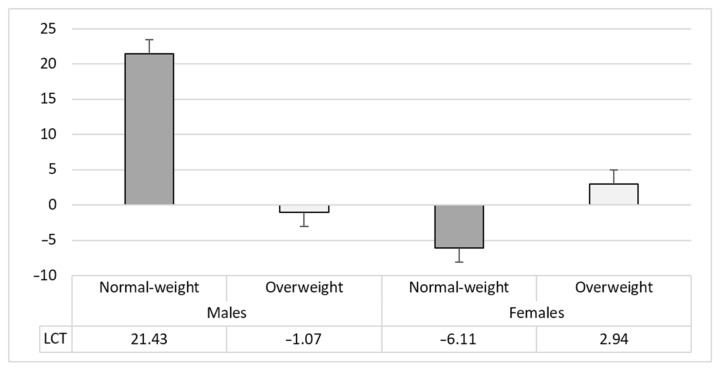
Evidence indicates an association between executive functioning and increased weight, with different patterns ascribed to individual differences (sex, age, lifestyles). This study reports on the relationship between high-level executive functions and body weight. Sixty-five young adults participated in the study: 29 participants (14 males, 15 females) in the normal weight range; 36 participants (18 males, 18 females) in the overweight range. The Iowa Gambling Task (IGT) and Tower of London Task were administered to assess decision making and planning. Planning did not differ in individuals in the normal-weight and overweight groups, and no difference emerged between females and males. However, normal and overweight males and females had different patterns in decision making. On the long-term consequences index of the IGT, females reported lower scores than males. Males in the overweight range had a lower long-term consequences index on the IGT than normal-weight males, while this pattern did not emerge in females. These findings suggest that decision-making responses may differ in the overweight relative to healthy weight condition, with a different expression in males and females. This pattern should be considered in weight loss prevention strategies, possibly adopting different approaches in males and females.
Overview
The claims and statistics of this paper haven’t been checked yet.
Free: it reads the open-access text and checks the first 5 claims that cite a source we can check. Create a free account to check every claim.
Integrity signals
Registry
Cites
Statistics
Figures
Verification
Claims the paper makes
The claims and statistics of this paper haven’t been checked yet.
Free: it reads the open-access text and checks the first 5 claims that cite a source we can check. Create a free account to check every claim.
Claims other papers make about this one
Each is checked against this paper’s own text: does it say what the citing paper says it does?
The cited source says what the claim attributes to it.
In the citing paper
“It is a hierarchical integrative model that illustrates the developmental dynamics and interrelationships between several EF: WM, inhibition, mental flexibility, and higher-level functions such as planning, prioritizing (Romero-López et al., 2017), problem-solving, decision-making (Favieri et al., 2022) and reasoning skills.”
From Assessment of executive functions in school-aged children: A narrative review (2022) · cites this paper as Favieri et al., 2022
Experimental — accuracy not yet measured
Self-check
Percentages, sums and reported differences re-computed from the paper’s own numbers.
The self-check needs the paper’s full text.
Citations
Cites
1 retracted
Steenbergen, L., & Colzato, L. S. (2017) · Frontiers in Nutrition · doi:10.3389/fnut.2017.00051 · Cited by 27
RetractedInsensitivity to future consequences following damage to human prefrontal cortex
Bechara, A., Damasio, A. R., Damasio, H., & Anderson, S. W. (1994) · Cognition · doi:10.1016/0010-0277(94)90018-3 · Cited by 6,128 · cited 1×
“A recent meta-analysis by Rotdge and colleagues [8] analyzed the association between obesity and decision making as assessed by the Iowa Gambling Task (IGT; [23]), a gold standard task for assessing decision-making abilities under ambiguous conditions where individuals lack complete knowledge of the different options…”
MethodSpecific impairments of planning
Shallice, T. (1982) · Philosophical Transactions of the Royal Society of London. B, Biological Sciences · doi:10.1098/rstb.1982.0082 · Cited by 3,741 · cited 2×
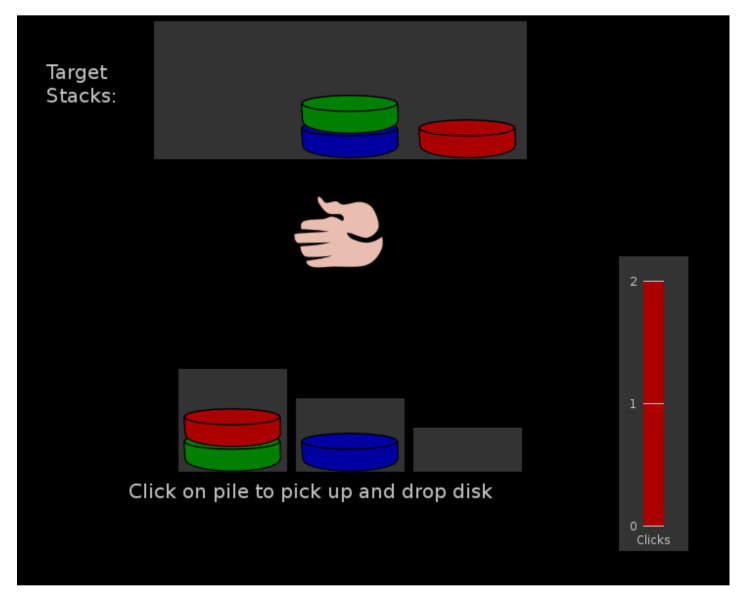
“Planning Planning abilities were assessed by a computerized version of the Tower of London task [33,34].”
MethodA model of neurovisceral integration in emotion regulation and dysregulation
Thayer, J. F., & Lane, R. D. (2000) · Journal of Affective Disorders · doi:10.1016/s0165-0327(00)00338-4 · Cited by 3,092 · cited 1×
“, cingulate cortex, sensorimotor cortices) in influencing the performance on executive tasks, including decision-making tasks [32,48].”
BackgroundBechara, A., Tranel, D., & Damasio, H. (2000) · Brain · doi:10.1093/brain/123.11.2189 · Cited by 1,919 · cited 3×
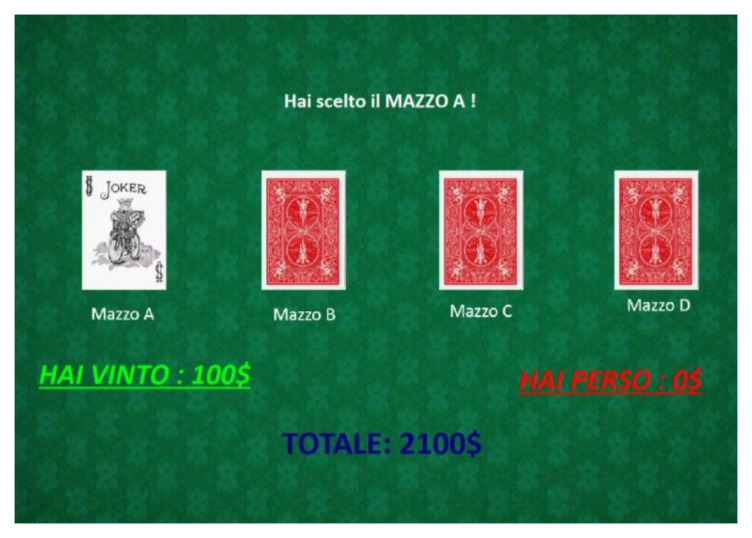
“Decision Making Decision making was assessed using a computerized version of the Iowa Gambling Task (IGT; [29]), completely superimposable on the original version [32].”
BackgroundMethodThe Psychology Experiment Building Language (PEBL) and PEBL Test Battery
Mueller, S. T., & Piper, B. J. (2014) · Journal of Neuroscience Methods · doi:10.1016/j.jneumeth.2013.10.024 · Cited by 1,085 · cited 1×
“5) – 18)); [35]) were calculated as alternative indices of body weight.”
A Better Index of Body Adiposity
Bergman, R. N., Stefanovski, D., Buchanan, T. A., Sumner, A. E., Reynolds, J. C., Sebring, N. G., Xiang, A. H., & Watanabe, R. M. (2011) · Obesity · doi:10.1038/oby.2011.38 · Cited by 999 · cited 1×
“Previous studies have confirmed an association between executive functions and both maladaptive eating behavior [36] and excessive body weight [6,37].”
BackgroundGariepy, G., Nitka, D., & Schmitz, N. (2010) · International Journal of Obesity · doi:10.1038/ijo.2009.252 · Cited by 753 · cited 1×
“, hypertension [1], diabetes [2], cardiovascular disorders [3]) and is related to psychological disorders (including anxiety and depression [4,5]), cognitive dysfunctions [6], and a general impairment of well-being and quality of life [7].”
BackgroundKolotkin, R. L., Meter, K., & Williams, G. R. (2001) · Obesity Reviews · doi:10.1046/j.1467-789x.2001.00040.x · Cited by 700 · cited 1×
“, hypertension [1], diabetes [2], cardiovascular disorders [3]) and is related to psychological disorders (including anxiety and depression [4,5]), cognitive dysfunctions [6], and a general impairment of well-being and quality of life [7].”
BackgroundElevated body mass index is associated with executive dysfunction in otherwise healthy adults
Gunstad, J., Paul, R. H., Cohen, R. A., Tate, D. F., Spitznagel, M. B., & Gordon, E. (2007) · Comprehensive Psychiatry · doi:10.1016/j.comppsych.2006.05.001 · Cited by 668 · cited 1×
“Obesity appears to be related to many brain changes that potentially impact cognitive and executive functions [52], and the worsening of these abilities will exacerbate inappropriate behaviors causing obesity [53].”
BackgroundExecutive Function Performance in Obesity and Overweight Individuals: A Meta-Analysis and Review
Yang, Y., Shields, G. S., Guo, C., & Liu, Y. (2018) · Neuroscience & Biobehavioral Reviews · doi:10.1016/j.neubiorev.2017.11.020 · Cited by 498 · cited 1×
“Biological sex differences in reward-based decision making have been demonstrated [31,38], suggesting that females tend to focus on short-term reward outcomes, whereas males focus on long-term decision outcomes.”
BackgroundSex/gender differences in obesity prevalence, comorbidities, and treatment
Cooper, A. J., Gupta, S. R., Moustafa, A. F., & Chao, A. M. (2021) · Current Obesity Reports · doi:10.1007/s13679-021-00453-x · Cited by 483
Jiang, S.-Z., Lu, W., Zong, X.-F., Ruan, H.-Y., & Liu, Y. (2016) · Experimental and Therapeutic Medicine · doi:10.3892/etm.2016.3667 · Cited by 445 · cited 1×
“, hypertension [1], diabetes [2], cardiovascular disorders [3]) and is related to psychological disorders (including anxiety and depression [4,5]), cognitive dysfunctions [6], and a general impairment of well-being and quality of life [7].”
BackgroundWaist-to-Height Ratio, a Useful Index to Identify High Metabolic Risk in Overweight Children
Maffeis, C., Banzato, C., & Talamini, G. (2008) · The Journal of Pediatrics · doi:10.1016/j.jpeds.2007.09.021 · Cited by 419 · cited 2×
“Planning Planning abilities were assessed by a computerized version of the Tower of London task [33,34].”
BackgroundMethodImpact of obesity on respiratory function
LITTLETON, S. W. (2012) · Respirology · doi:10.1111/j.1440-1843.2011.02096.x · Cited by 398 · cited 1×
“, hypertension [1], diabetes [2], cardiovascular disorders [3]) and is related to psychological disorders (including anxiety and depression [4,5]), cognitive dysfunctions [6], and a general impairment of well-being and quality of life [7].”
BackgroundDavis, C., Patte, K., Levitan, R., Reid, C., Tweed, S., & Curtis, C. (2007) · Appetite · doi:10.1016/j.appet.2006.05.016 · Cited by 388 · cited 1×
“Generally, the results of our study agree with previous literature, which has indicated that males are focused on long-term goals, reflecting an adaptive choice of long-term advantageous decks, while females are characterized by an exploratory approach ranging between short- and long-term consequences and are characte…”
Resultvan den Bos, R., Harteveld, M., & Stoop, H. (2009) · Psychoneuroendocrinology · doi:10.1016/j.psyneuen.2009.04.016 · Cited by 369 · cited 1×
“Sex has also been reported to have played a role in studies on planning, with better performance in males than females in tasks involving planning abilities [40].”
BackgroundExecutive functions and the self-regulation of eating behavior: A review
Dohle, S., Diel, K., & Hofmann, W. (2018) · Appetite · doi:10.1016/j.appet.2017.05.041 · Cited by 305 · cited 1×
“Previous studies have confirmed an association between executive functions and both maladaptive eating behavior [36] and excessive body weight [6,37].”
BackgroundFitzpatrick, S., Gilbert, S., & Serpell, L. (2013) · Neuropsychology Review · doi:10.1007/s11065-013-9224-7 · Cited by 247 · cited 1×
“Moreover, evidence has highlighted an association between impairments in executive functions and weight increase across the life span (for a review: [6,14]), especially in the individuals affected by obesity (i.”
BackgroundExecutive Functions Profile in Extreme Eating/Weight Conditions: From Anorexia Nervosa to Obesity
Fagundo, A. B., de la Torre, R., Jiménez-Murcia, S., Agüera, Z., Granero, R., Tárrega, S., Botella, C., Baños, R., Fernández-Real, J. M., Rodríguez, R., et al. (2012) · PLoS ONE · doi:10.1371/journal.pone.0043382 · Cited by 226
Obesity and the four facets of impulsivity
Mobbs, O., Crépin, C., Thiéry, C., Golay, A., & Van der Linden, M. (2010) · Patient Education and Counseling · doi:10.1016/j.pec.2010.03.003 · Cited by 197
On Some Functions of the Human Prefrontal Cortexa
DAMASIO, A. R. (1995) · Annals of the New York Academy of Sciences · doi:10.1111/j.1749-6632.1995.tb38142.x · Cited by 186 · cited 1×
“Decision making overlaps with some aspects of reward sensitivity [42], and it is characterized by the tendency to assign values and probabilities to behavioral patterns aimed at a specific outcome (e.”
BackgroundPrevalence of comorbid depression and obesity in general practice: a cross-sectional survey
Carey, M., Small, H., Yoong, S. L., Boyes, A., Bisquera, A., & Sanson-Fisher, R. (2014) · British Journal of General Practice · doi:10.3399/bjgp14x677482 · Cited by 174
Sex differences in a rat model of risky decision making.
Orsini, C. A., Willis, M. L., Gilbert, R. J., Bizon, J. L., & Setlow, B. (2016) · Behavioral Neuroscience · doi:10.1037/bne0000111 · Cited by 171 · cited 2×
“Generally, the results of our study agree with previous literature, which has indicated that males are focused on long-term goals, reflecting an adaptive choice of long-term advantageous decks, while females are characterized by an exploratory approach ranging between short- and long-term consequences and are characte…”
ResultFavieri, F., Forte, G., & Casagrande, M. (2019) · Frontiers in Psychology · doi:10.3389/fpsyg.2019.02126 · Cited by 170 · cited 10×
“, hypertension [1], diabetes [2], cardiovascular disorders [3]) and is related to psychological disorders (including anxiety and depression [4,5]), cognitive dysfunctions [6], and a general impairment of well-being and quality of life [7].”
BackgroundInfluentialSelf-citationDecision Making: a Theoretical Review
Morelli, M., Casagrande, M., & Forte, G. (2021) · Integrative Psychological and Behavioral Science · doi:10.1007/s12124-021-09669-x · Cited by 150 · cited 1×
“Another explanation for the findings of this study may lie in the sex differences in the activation of the reward system associated with overeating and responses to food cues [49].”
BackgroundSelf-citation(2016) · Wiley eBooks · doi:10.1002/9781118924853 · Cited by 141
Cognitive flexibility and decision-making in eating disorders and obesity
Perpiñá, C., Segura, M., & Sánchez-Reales, S. (2016) · Eating and Weight Disorders - Studies on Anorexia Bulimia and Obesity · doi:10.1007/s40519-016-0331-3 · Cited by 135
Chao, A. M., Loughead, J., Bakizada, Z. M., Hopkins, C. M., Geliebter, A., Gur, R. C., & Wadden, T. A. (2017) · Obesity Reviews · doi:10.1111/obr.12527 · Cited by 130 · cited 3×
“The association between planning and excessive body weight [30,50] is little examined and has yielded inconsistent results.”
MethodResultDecision-making in obesity: A study using the Gambling Task
Pignatti, R., Bertella, L., Albani, G., Mauro, A., Molinari, E., & Semenza, C. (2006) · Eating and Weight Disorders - Studies on Anorexia Bulimia and Obesity · doi:10.1007/bf03327557 · Cited by 126
Danner, U. N., Ouwehand, C., van Haastert, N. L., Hornsveld, H., & de Ridder, D. T. D. (2012) · European Eating Disorders Review · doi:10.1002/erv.1098 · Cited by 115 · cited 1×
“Given previous findings in adults with obesity [24,27,28], poorer performance in decision-making tasks under risk (IGT; [29]) is expected for overweight subjects compared to those with normal weight.”
BackgroundCasagrande, M., Boncompagni, I., Forte, G., Guarino, A., & Favieri, F. (2019) · Eating and Weight Disorders - Studies on Anorexia Bulimia and Obesity · doi:10.1007/s40519-019-00767-9 · Cited by 112 · cited 1×
“, mood, impulsivity [10]; emotion regulation [11]; attentional bias [12]) and environmental (e.”
BackgroundSelf-citationPerceived Barriers to Weight loss Programs for Overweight or Ob-ese Women
Sharifi, N., Mahdavi, R., & Ebrahimi-Mameghani, M. (2013) · Tabriz University of Medical Sciences · doi:10.5681/hpp.2013.002 · Cited by 92
Impaired decision making among morbidly obese adults
Brogan, A., Hevey, D., O’Callaghan, G., Yoder, R., & O'Shea, D. B. (2010) · Journal of Psychosomatic Research · doi:10.1016/j.jpsychores.2010.07.012 · Cited by 84 · cited 1×
“Given previous findings in adults with obesity [24,27,28], poorer performance in decision-making tasks under risk (IGT; [29]) is expected for overweight subjects compared to those with normal weight.”
BackgroundHeart Rate Variability and Decision-Making: Autonomic Responses in Making Decisions
Forte, G., Morelli, M., & Casagrande, M. (2021) · Brain Sciences · doi:10.3390/brainsci11020243 · Cited by 79 · cited 3×
“Decision Making Decision making was assessed using a computerized version of the Iowa Gambling Task (IGT; [29]), completely superimposable on the original version [32].”
BackgroundMethodSelf-citationKroll, D. S., Feldman, D. E., Biesecker, C. L., McPherson, K. L., Manza, P., Joseph, P. V., Volkow, N. D., & Wang, G. (2020) · Nutrients · doi:10.3390/nu12071942 · Cited by 70 · cited 3×
“Moreover, considering the possible sex differences [20,31], we expected different patterns in decision making and planning between females and males in the normal weight and overweight ranges.”
BackgroundInfluentialThe impact of sex hormone concentrations on decision-making in females and males
Derntl, B., Pintzinger, N. M., Kryspin‐Exner, I., & Schöpf, V. (2014) · Frontiers in Neuroscience · doi:10.3389/fnins.2014.00352 · Cited by 64
Goldschmidt, A. B., O'Brien, S., Lavender, J. M., Pearson, C. M., Le Grange, D., & Hunter, S. J. (2018) · Appetite · doi:10.1016/j.appet.2017.03.010 · Cited by 64
Gender differences in visuospatial planning: An eye movements study
Cazzato, V., Basso, D., Cutini, S., & Bisiacchi, P. S. (2009) · Behavioural Brain Research · doi:10.1016/j.bbr.2009.09.010 · Cited by 47 · cited 1×
“According to Damasio’s somatic marker hypothesis [41], some authors [8] have hypothesized a possible association between decision-making differences and eating behaviors associated with obesity.”
BackgroundToward a mechanistic account of gender differences in reward-based decision-making.
Byrne, K. A., & Worthy, D. A. (2016) · Journal of Neuroscience Psychology and Economics · doi:10.1037/npe0000059 · Cited by 46
Obese Adolescents Show Reduced Cognitive Processing Speed Compared with Healthy Weight Peers
Sweat, V., Yates, K. F., Migliaccio, R., & Convit, A. (2017) · Childhood Obesity · doi:10.1089/chi.2016.0255 · Cited by 46 · cited 1×
“, shifting, inhibition [51]) can represent risk factors for establishing maladaptive behaviors that lead to increased weight independently from other variables such as sex.”
Rotge, J. ‐., Poitou, C., Fossati, P., Aron‐Wisnewsky, J., & Oppert, J. ‐. (2017) · Obesity Reviews · doi:10.1111/obr.12549 · Cited by 42 · cited 7×
“Although studies on obesity demonstrate an association between severe body adiposity and impairment in decision making (for a review, see [6,8]), studies that have analyzed the relationship between decision making and less severe overweight status in healthy populations have not confirmed this association [15,27].”
BackgroundMethodInfluentialAltered Decision-Making under Risk in Obesity
Navas, J. F., Vilar‐López, R., Perales, J. C., Steward, T., Fernández‐Aranda, F., & Verdejo‐García, A. (2016) · PLoS ONE · doi:10.1371/journal.pone.0155600 · Cited by 38 · cited 3×
“However, the few studies evaluating the association between IGT performance and overweight (BMI between 25 and 30 kg/m2) did not confirm this finding in obesity [15,27], indicating a possibly different pattern in less severe conditions of body weight.”
BackgroundDepressive symptoms and poorer performance on the Stroop Task are associated with weight gain
Stinson, E. J., Krakoff, J. A., & Gluck, M. E. (2018) · Physiology & Behavior · doi:10.1016/j.physbeh.2018.01.005 · Cited by 38 · cited 2×
“However, the few studies evaluating the association between IGT performance and overweight (BMI between 25 and 30 kg/m2) did not confirm this finding in obesity [15,27], indicating a possibly different pattern in less severe conditions of body weight.”
BackgroundExecutive functions predict weight loss in a medically supervised weight loss programme
Galioto, R., Bond, D., Gunstad, J., Pera, V., Rathier, L., & Tremont, G. (2016) · Obesity Science & Practice · doi:10.1002/osp4.70 · Cited by 37
Sie, J.-H., Chen, Y.-H., Shiau, Y.-H., & Chu, W.-C. (2019) · Frontiers in Human Neuroscience · doi:10.3389/fnhum.2019.00369 · Cited by 35 · cited 2×
“The CAN differs between males and females due to metabolic and hormonal differences that characterize them [22].”
BackgroundComparing decision making in average and overweight children and adolescents
Verbeken, S., Braet, C., Bosmans, G., & Goossens, L. (2013) · International Journal of Obesity · doi:10.1038/ijo.2013.235 · Cited by 31 · cited 1×
“This suggests that obesity models in which overeating is theorized to be associated with poorer decision making [45] may be true for overweight individuals.”
BackgroundFavieri, F., Forte, G., Marotta, A., & Casagrande, M. (2020) · Nutrients · doi:10.3390/nu12020492 · Cited by 22 · cited 1×
“, mood, impulsivity [10]; emotion regulation [11]; attentional bias [12]) and environmental (e.”
BackgroundSelf-citationQavam, S. E., Anisan, A., Fathi, M., & Pourabbasi, A. (2015) · Journal of Diabetes & Metabolic Disorders · doi:10.1186/s40200-015-0211-9 · Cited by 21 · cited 4×
“Quavam and colleagues [30], analyzing a group of adolescents, found worse performance in the Tower of London (TOL) task, a measure of planning and problem solving, in adolescents with overweight status and obesity compared to normal weight.”
BackgroundResultInfluentialReward-related decision making and long-term weight loss maintenance
Brockmeyer, T., Simon, J. J., Becker, A., & Friederich, H.-C. (2017) · Physiology & Behavior · doi:10.1016/j.physbeh.2017.09.008 · Cited by 17 · cited 2×
“Some specific endogenous (psychological characteristics, hormonal balance) and exogenous factors (social influences, relationships, environmental stimuli), which influence reward sensitivity to food stimuli, could generate overeating behavior [43].”
BackgroundExecutive Functions and Body Weight at Different Ages: A Preliminary Study
Favieri, F., Chen, E. Y., & Casagrande, M. (2021) · Nutrients · doi:10.3390/nu13041174 · Cited by 14 · cited 1×
“Obesity appears to be related to many brain changes that potentially impact cognitive and executive functions [52], and the worsening of these abilities will exacerbate inappropriate behaviors causing obesity [53].”
BackgroundSelf-citationSocial Aspects as Maintenance Factors of the Obesity Condition: The Somatic Marker Hypothesis
Leite, C. D. M., & Rúbio, K. (2014) · LA Referencia (Red Federada de Repositorios Institucionales de Publicaciones Científicas) · Cited by 1
Social aspects as maintenance factors of the obesity condition: the somatic marker hypothesis
Rubio, K. (2014) · LA Referencia (Red Federada de Repositorios Institucionales de Publicaciones Científicas) · Cited by 1
Cited by
Assessment of executive functions in school-aged children: A narrative review
Souissi, S., Chamari, K., & Bellaj, T. (2022) · Frontiers in Psychology · doi:10.3389/fpsyg.2022.991699 · Cited by 56
“, 2017), problem-solving, decision-making (Favieri et al., 2022) and reasoning skills.”
Inhibition changes across the lifespan: experimental evidence from the Stroop task
Forte, G., Troisi, G., Favieri, F., & Casagrande, M. (2024) · BMC Psychology · doi:10.1186/s40359-024-01844-0 · Cited by 44
“Several researchers have compared inhibitory abilities between children and adolescents (e.g., [18, 19]).”
BackgroundSelf-citationThe Iowa Gambling Task: Men and Women Perform Differently. A Meta-analysis
Zanini, L., Picano, C., & Spitoni, G. F. (2024) · Neuropsychology Review · doi:10.1007/s11065-024-09637-3 · Cited by 41
Jatoi, N.-A., Al-Qassab, R. M., Alsalem, F. H., Muzayan, F. M. A., & AlShammari, R. Z. (2022) · Cureus · doi:10.7759/cureus.30539 · Cited by 10
“Physiological and hormonal changes peri and post-menopausal make females more susceptible to weight gain, in addition to the region-specific norms [25].”
BackgroundInhibition and Heart Rate Variability in Experimentally Induced Pain
Forte, G., Troisi, G., Favieri, F., Pascalis, V. D., Langher, V., & Casagrande, M. (2023) · Journal of Pain Research · doi:10.2147/jpr.s418238 · Cited by 10
“Despite the functional similarity, inhibition processes assessed by the two tasks are not the same.(42) The performance in the Go/No-Go task would reflect more the response inhibition associated with the activation of the middle and inferior frontal cortices,(43) the pre-supplementary areas (pre-SMA), and the anterior…”
MethodSelf-citation
Metadata
- Authors
- Favieri, F., Forte, G., Pazzaglia, M., Chen, E. Y., & Casagrande, M.
- Affiliations
- Fondazione Santa Lucia (IT)
- Temple University (US)
- Sapienza University of Rome (IT)
- Corresponding author
- Favieri, Francesca
- Venue
- Brain Sciences
- Publisher
- MDPI AG
- Published
- 2022-01-24
- Volume
- 12
- Issue
- 2
- Pages
- 149
- ISSN
- 2076-3425 (ISSN-L)
- PMC
- PMC8869997
- OpenAlex
- W4210698185
- Cited by
- 10
- References
- 53
- Citations by year
- 2025: 1 · 2024: 5 · 2023: 2 · 2022: 2
- FWCI
- 1.29
- Type
- journal article
- Language
- en
- Open access
- gold
- doi.org
- Licence
- Locations
- Brain Sciences (publishedVersion, cc-by)
- PubMed Central (publishedVersion, cc-by)
- PubMed (publishedVersion)
- DOAJ (DOAJ: Directory of Open Access Journals) (submittedVersion, cc-by-sa)
- IRIS Research product catalog (Sapienza University of Rome) (submittedVersion, cc-by)
- IRIS Research product catalog (Sapienza University of Rome) (submittedVersion)
- TUScholarShare (Temple University) (submittedVersion, cc-by)
- Funders
- Ministry of Health (RF-2018-12365682)
- Topics
- Life Sciences › Neuroscience › Cognitive Neuroscience › Neural and Behavioral Psychology Studies
- Social Sciences › Psychology › Clinical Psychology › Historical and Modern Theater Studies
- Social Sciences › Psychology › Clinical Psychology › Eating Disorders and Behaviors
- Keywords
- executive function, sex differences, body weight, overweight, decision-making, planning, Iowa Gambling Task, Tower of London, long-term effects, weight loss prevention, young adults
About these checks
Registry, retraction, Cites and statistics results are computed, not judged, with one exception: a printed reference that no index lists is read once by a model before it counts as a citation error. Claims are extracted by a model and kept only when their quote appears verbatim in the text; each cited source is then checked, with a model’s help, for whether it says what the claim relies on. Those verdicts can be wrong — read the claim’s quote and the cited source before relying on one.
Statistics and arithmetic are recomputed, not judged.
Confidence bands are shown only for fields calibrated on our annotated test set. None is calibrated yet, so no band is shown.
What counts as a claim ›How we measure confidence ›How we check this ›
Are you an author, or do you see a problem with this page? Request a review
Data sources
Bibliographic data: Semantic Scholar, OpenAlex, Crossref.
Contains information from the Semantic Scholar Academic Graph Datasets, made available under the ODC Attribution License (ODC-BY 1.0).
Semantic Scholar’s data is described in: Kinney, R., et al. (2023). The Semantic Scholar Open Data Platform. arXiv:2301.10140.
