

Positive and Negative Emotion Regulation in Adolescence: Links to Anxiety and Depression
Open accessThe DOI matches its Crossref record; 121 of the 121 references it cites were found in a registry or an index; 26 of the 126 sources its claims cite were checked for support.
Abstract
Emotion regulation skills develop substantially across adolescence, a period characterized by emotional challenges and developing regulatory neural circuitry. Adolescence is also a risk period for the new onset of anxiety and depressive disorders, psychopathologies which have long been associated with disruptions in regulation of positive and negative emotions. This paper reviews the current understanding of the role of disrupted emotion regulation in adolescent anxiety and depression, describing findings from self-report, behavioral, peripheral psychophysiological, and neural measures. Self-report studies robustly identified associations between emotion dysregulation and adolescent anxiety and depression. Findings from behavioral and psychophysiological studies are mixed, with some suggestion of specific impairments in reappraisal in anxiety. Results from neuroimaging studies broadly implicate altered functioning of amygdala-prefrontal cortical circuitries, although again, findings are mixed regarding specific patterns of altered neural functioning. Future work may benefit from focusing on designs that contrast effects of specific regulatory strategies, and isolate changes in emotional regulation from emotional reactivity. Approaches to improve treatments based on empirical evidence of disrupted emotion regulation in adolescents are also discussed. Future intervention studies might consider training and measurement of specific strategies in adolescents to better understand the role of emotion regulation as a treatment mechanism.
Overview
CoChat Summary
TL;DR
This narrative review synthesizes self-report, behavioral, psychophysiological, and fMRI evidence on emotion regulation in adolescent anxiety and depression. Self-report studies robustly link emotion dysregulation to both disorders, while behavioral and psychophysiological findings are mixed and neuroimaging broadly implicates altered amygdala–prefrontal circuitry.
Key findings
- A meta-analysis of 35 studies in adolescents aged 13–18 found that, compared with healthy individuals, those with anxiety and depressive disorders used less reappraisal, problem solving, and acceptance and more avoidance, suppression, and rumination; the strongest effects were for reduced acceptance and increased avoidance and rumination, with little evidence of disorder-specific disruptions.
- Meta-analytic data suggested disrupted self-reported emotion regulation predicts subsequent anxiety or depression, but not the reverse; in a study of N = 1065 adolescents aged 11–14, a latent emotion dysregulation construct predicted anxiety, aggression, and disordered eating, while depression was predicted only by rumination, expression of anger, and expression of sadness.
- Behavioral evidence suggests anxiety is associated with reduced spontaneous reappraisal and impaired reappraisal generation, though anxious adolescents who successfully generated reappraisals reduced negative affect similarly to non-anxious peers; depression findings for reappraisal were mixed, and depressive symptoms were associated with shorter persistence of positive affect.
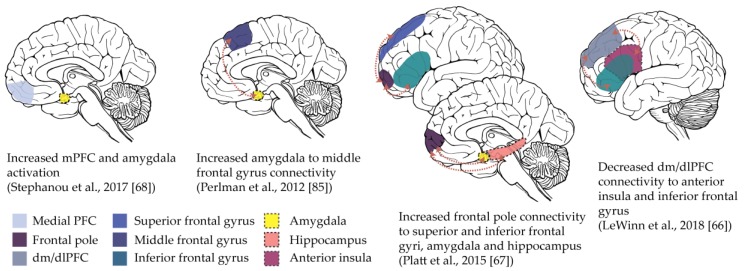
- fMRI studies consistently found aberrant prefrontal activation and connectivity during deliberate emotion regulation in adolescent depression, but specific regions varied; three of four studies found heightened amygdala reactivity or greater amygdala–PFC connectivity, while the largest study did not. In ninth-grade females, positive amygdala–vlPFC connectivity during incidental emotion regulation predicted future anxiety symptoms over 9 months.
Methods
- Narrative review, not a systematic review; the authors state they provide a selection of findings of interest rather than an exhaustive list.
- Reviews evidence across self-report, behavioral, peripheral psychophysiological, and neural (fMRI) measures, including meta-analytic and individual studies.
- Discusses clinical implications and future directions; no new primary data are reported.
Limitations
- The paper states it is a narrative rather than systematic review, focuses on the most widely used measures, and does not exhaustively cover all findings.
- The paper notes that many studies rely on indirect measures that conflate emotional reactivity with regulation; self-report is subject to memory and overgeneralization biases; psychophysiological measures lack specificity and can involve reverse inference; and fMRI functional connectivity is correlational, so directionality cannot be inferred.
- Evident from the text: heterogeneity in measures, designs, and samples limits comparability; positive emotion regulation is understudied; anxiety fMRI studies of deliberate reappraisal are lacking; and no studies directly compared adolescent and adult samples with anxiety or depression.
Model-written summary. Check it against the paper before relying on it.
Integrity signals
Registry
Cites
Statistics
Figures
Verification
Claims the paper makes
23 Valid · 0 Not valid · 66 Not checked · 53 Own results and interpretations
Every source the paper cites for this claim was checked and supports it.
In the paper
“and (2) a role for rumination and impulsive responding on the relationship between childhood maltreatment and symptoms of internalizing psychopathology [58].”
§ Positive and Negative Emotion Regulation in Adolescence: Links to Anxiety and Depression > 7. Relationships between Emotion Regulation Abilities and Symptoms of Anxiety and Depression in Adolescents > 7.1. Findings from Self-Report Studies
What the sources say
- Supportedcites [58] Heleniak C. Jenness J.L. Vander Stoep A. McCauley E. McLaughlin K.A. Childhood maltreatment exposure and disruptions in emotion regulation: A transdiagnostic pathway to adolescent internalizing and externalizing psychopathology Cognit. Therapy Res. 2016 40 394 415 10.1007/s10608-015-9735-z PMC5042349 27695145 source
The Study 1 Discussion (page unavailable) reports that maltreatment was associated with greater rumination and impulsive behavior, and that both rumination and behavioral dysregulation were associated with internalizing symptoms after controlling for maltreatment. This supports the cited claim that they play a role in that relationship. (LLM, conf=0.92)
plainstates an association- Asserted: passes — The authors put it forward as true.
- Checkable: passes — It can be checked against evidence.
- Load-bearing: passes — The paper’s conclusions depend on it.
- Based: passes — The paper gives a reason why it holds.
- Supported
The cited sources support only part of this claim — read each source’s verdict below.
In the paper
“These studies found: (1) an effect of self-blame, catastrophizing, and rumination on the relationship between stressful life events and symptoms of depression [57]”
§ Positive and Negative Emotion Regulation in Adolescence: Links to Anxiety and Depression > 7. Relationships between Emotion Regulation Abilities and Symptoms of Anxiety and Depression in Adolescents > 7.1. Findings from Self-Report Studies
What the sources say
- Partly supportedcites [57] Stikkelbroek Y. Bodden D.H.M. Kleinjan M. Reijnders M. van Baar A.L. Adolescent depression and negative life events, the mediating role of cognitive emotion regulation PLoS ONE 2016 11 e0161062 10.1371/journal.pone.0161062 27571274 PMC5003336 sourceExperimental — accuracy not yet measured
Stikkelbroek et al. (2016) do establish self-blame, catastrophizing and rumination as mediators between stressful life events and depressive symptoms (Discussion summary point V, p. n/a; Results > Path analyses, 'Within the whole sample, significant indirect paths from relational challenging stressful life events to depressive symptoms were found via self-blame, catastrophizing and rumination'). However, the claim attributes this to 'stressful life events' in general, whereas the source restricts mediation to relational challenging events and explicitly states 'Mediation was not found after losing a loved one or experiencing a health threat' (Discussion > Strengths and limitations). The source also bounds the finding to adolescents and reports no significant indirect paths within the clinically depressed subgroup, so the unqualified generalisation is only partly supported. (LLM, conf=0.75)
plainstates a cause- Asserted: passes — The authors put it forward as true.
- Checkable: passes — It can be checked against evidence.
- Load-bearing: passes — The paper’s conclusions depend on it.
- Based: passes — The paper gives a reason why it holds.
- Partly supported
Every source the paper cites for this claim was checked and supports it.
In the paper
“This type of approach therefore prevents discrete measurement of emotional reactivity from emotional regulation (for a theoretical discussion of this issue, see [76]).”
§ Positive and Negative Emotion Regulation in Adolescence: Links to Anxiety and Depression > 3. Self-Report Measures of Emotion Regulation
What the sources say
- Supportedcites [76] Gross J.J. Barrett F.L. Emotion generation and emotion regulation: One or two depends on your point of view Emot. Rev. 2011 3 8 16 10.1177/1754073910380974 21479078 PMC3072688 source
The citation points to a theoretical discussion of whether emotional responses and their regulation can be distinguished, rather than to evidence about experience-sampling methods. In “Similarities and Differences Across Perspectives” (page unavailable), the paper explains that some models distinguish emotion generation from regulation mechanistically while others do not, providing the cited theoretical discussion. (LLM, conf=0.85)
plainstates a cause- Asserted: passes — The authors put it forward as true.
- Checkable: passes — It can be checked against evidence.
- Load-bearing: unclear — It is unclear whether the paper’s conclusions depend on it.
- Based: passes — The paper gives a reason why it holds.
- Supported
The cited sources support only part of this claim — read each source’s verdict below.
In the paper
“It is well-established that stressful life events and childhood adversity are substantial risk factors for future psychopathology [21].”
§ Positive and Negative Emotion Regulation in Adolescence: Links to Anxiety and Depression > 1. Introduction
What the sources say
- Partly supportedcites [21] Kessler R.C. McLaughlin K.A. Green J.G. Gruber M.J. Sampson N.A. Zaslavsky A.M. Aguilar-Gaxiola S. Alhamzawi A.O. Alonso J. Angermeyer M. Childhood adversities and adult psychopathology in the WHO World Mental Health Surveys Br. J. Psychiatry 2010 197 378 385 10.1192/bjp.bp.110.080499 21037215 PMC2966503 sourceExperimental — accuracy not yet measured
Our copy clearly supports the childhood-adversity half of the claim: the Results ('Associations of childhood adversities with DSM-IV/CIDI disorders', p. ~4-5) report that all 12 childhood adversities were significantly associated with elevated risk of subsequent first onset of DSM-IV/CIDI disorders (bivariate ORs 1.6-2.0 for maladaptive family functioning adversities, 1.1-1.5 for others; multivariate ORs 1.3-2.4 in Table 2), and the 'Differential associations...' section states childhood adversities significantly predict first onset of all classes of disorder at every life-course stage (Table 3). However, the paper measures only childhood adversities before age 18; no passage in our copy (searched: 'stressful life events', 'negative life events', risk factors for disorder onset) reports associations of contemporaneous or general stressful life events with future psychopathology — such life-event work appears only in the titles of references it cites (e.g. Spinhoven et al. 2010, Read et al. 2009). The claim's conflation of 'stressful life events' with childhood adversity is therefore only half supported by this source. (LLM, conf=0.80)
boostedstates an association- Asserted: passes — The authors put it forward as true.
- Checkable: passes — It can be checked against evidence.
- Load-bearing: passes — The paper’s conclusions depend on it.
- Based: passes — The paper gives a reason why it holds.
- Partly supported
The cited sources support only part of this claim — read each source’s verdict below.
In the paper
“Whereas research in children suggests a predictive relationship between RSA and future anxiety and depression (e.g., [54,91])”
§ Positive and Negative Emotion Regulation in Adolescence: Links to Anxiety and Depression > 7. Relationships between Emotion Regulation Abilities and Symptoms of Anxiety and Depression in Adolescents > 7.3. Findings from Studies of Peripheral Psychophysiology
What the sources say
- Partly supportedcites [54] Gentzler A.L. Santucci A.K. Kovacs M. Fox N.A. Respiratory sinus arrhythmia reactivity predicts emotion regulation and depressive symptoms in at-risk and control children Biol. Psychol. 2009 82 156 163 10.1016/j.biopsycho.2009.07.002 19596044 PMC2848485 sourceExperimental — accuracy not yet measured
The Results (Multivariate Analyses; page unavailable) report that RSA reactivity predicted later clinician-rated depressive symptoms in children, even after controlling for earlier internalizing symptoms. The paper does not report a corresponding prediction of future anxiety; its Discussion describes predicting other disorders as a possibility for further study. (LLM, conf=0.88)
- Not checked yetcites [91] Hinnant J.B. El-Sheikh M. Children’s externalizing and internalizing symptoms over time: The role of individual differences in patterns of RSA responding J. Abnorm. Child Psychol. 2009 37 1049 10.1007/s10802-009-9341-1 19711181 source
hedgedstates an association- Asserted: passes — The authors put it forward as true.
- Checkable: passes — It can be checked against evidence.
- Load-bearing: unclear — It is unclear whether the paper’s conclusions depend on it.
- Based: passes — The paper gives a reason why it holds.
- Partly supported
63 more claims · 11 with their cited sources checked
Create a free account to see all 142 claims and to verify the 100 references still open.
- It may state two separate claims as one. 61
- Probably not a substantial claim. 24
Claims other papers make about this one
Each is checked against this paper’s own text: does it say what the citing paper says it does?
The source backs part of the claim, not all of it — or backs it for a different population, condition or comparison.
In the citing paper
“Increased negative affect during adolescence is associated with psychological maladjustment”
From Adolescent Loneliness and Negative Affect during the COVID-19 Pandemic: The Role of Extraversion and Neuroticism (2023) · cites this paper as Young et al., 2019
Experimental — accuracy not yet measured
Self-check
Percentages, sums and reported differences re-computed from the paper’s own numbers.
Each contradiction between two passages listed here was confirmed by an independent check.
Rated minor: it would not touch a result — a value no result rests on, a p-value that stays on the same side of the significance level, or a conflict that is clerical, resolved elsewhere in the paper, or outside its own findings.
In the paper
§ Positive and Negative Emotion Regulation in Adolescence: Links to Anxiety and Depression > 7. Relationships between Emotion Regulation Abilities and Symptoms of Anxiety and Depression in Adolescents > 7.4. Findings from fMRI Studies
“Taken together, these studies suggest that adolescents with anxiety and depression exhibit differences in neural functioning compared to non-depressed peers during deliberate emotion regulation.”
§ Positive and Negative Emotion Regulation in Adolescence: Links to Anxiety and Depression > 7. Relationships between Emotion Regulation Abilities and Symptoms of Anxiety and Depression in Adolescents > 7.4. Findings from fMRI Studies
“fMRI investigations of emotion regulation in adolescents with anxiety have been more limited than in depression, with no studies of deliberate reappraisal to date. However, activation across similar circuitry during incidental emotion regulation may prospectively predict the development of anxiety symptoms.”
Citations
Cites
Gross, J. J., & John, O. P. (2003) · Journal of Personality and Social Psychology · doi:10.1037/0022-3514.85.2.348 · Cited by 11,929 · cited 1×
“A widely used self-report measure is the Emotion Regulation Questionnaire (ERQ) that follows the organizational principles of the process model of emotion regulation and has subscales for reappraisal and expressive suppression [70].”
MethodThe emerging field of emotion regulation: an integrative review
Gross, J. J. (1998) · Review of General Psychology · doi:10.1037/1089-2680.2.3.271 · Cited by 9,916 · cited 2×
“Many psychological interventions for anxiety and depression include cognitive or behavioral strategies that aim to improve abilities to regulate emotion [10,11].”
BackgroundMethodGratz, K. L., & Roemer, L. (2004) · Journal of Psychopathology and Behavioral Assessment · doi:10.1023/b:joba.0000007455.08539.94 · Cited by 8,942 · cited 1×
“Other questionnaires assess different combinations of emotion regulation strategies, such as the Difficulties in Emotion Regulation Scale (DERS; [71]), the Cognitive Emotion Regulation Questionnaire (CERQ; [72]) and the Fragebogen zur Erhebung der Emotionsregulation bei Kindern und Jugenlichen (FEEL-KJ [73]).”
MethodKirschbaum, C., Pirke, K.-M., & Hellhammer, D. H. (2008) · Neuropsychobiology · doi:10.1159/000119004 · Cited by 6,093 · cited 2×
“, Trier Social Stress Task [77] or mock job interviews [46,59]); between pairs of individuals in spontaneous interactions; or during prescribed stress-inducing or rewarding situations [65,66,78].”
BackgroundEmotion regulation: affective, cognitive, and social consequences.
Gross, J. J. (2002) · Psychophysiology · doi:10.1017/s0048577201393198 · Cited by 4,890 · cited 2×
“In line with the process model of emotion regulation [2], Cognitive Bias Modification aims to tap into antecedent-focused regulatory processes such as attentional deployment (Attention Bias Modification) and interpretation/reappraisal (Interpretation Bias Modification).”
MethodTripartite model of anxiety and depression: psychometric evidence and taxonomic implications
Clark, L. A., & Watson, D. (1991) · Journal of Abnormal Psychology · doi:10.1037/0021-843x.100.3.316 · Cited by 4,601 · cited 1×
“Disruptions to emotion regulation capacities in adulthood are central to theories of how anxiety and depressive disorders manifest and are maintained [7,8].”
BackgroundA social neuroscience perspective on adolescent risk-taking
Steinberg, L. (2008) · Developmental Review · doi:10.1016/j.dr.2007.08.002 · Cited by 3,644 · cited 1×
“Heightened emotional reactivity, increased risk-taking, and impulsive behaviors are also characteristic of adolescence [14].”
BackgroundToward the future of psychiatric diagnosis: the seven pillars of RDoC
Cuthbert, B. N., & Insel, T. R. (2013) · BMC Medicine · doi:10.1186/1741-7015-11-126 · Cited by 3,053 · cited 1×
“Repeated observations across multiple levels of analysis increase the reliability and validity of observed associations and may improve precision in understanding dysfunction and disease course [24,25].”
BackgroundChildhood adversities and adult psychopathology in the WHO World Mental Health Surveys
Kessler, R. C., McLaughlin, K. A., Green, J. G., Gruber, M. J., Sampson, N. A., Zaslavsky, A. M., Aguilar-Gaxiola, S., Alhamzawi, A. O., Alonso, J., Angermeyer, M., et al. (2010) · British Journal of Psychiatry · doi:10.1192/bjp.bp.110.080499 · Cited by 2,640 · cited 1×
“It is well-established that stressful life events and childhood adversity are substantial risk factors for future psychopathology [21].”
BackgroundNegative life events, cognitive emotion regulation and emotional problems
Garnefski, N., Kraaij, V, & Spinhoven, P. (2001) · Personality and Individual Differences · doi:10.1016/s0191-8869(00)00113-6 · Cited by 2,494 · cited 1×
“Other questionnaires assess different combinations of emotion regulation strategies, such as the Difficulties in Emotion Regulation Scale (DERS; [71]), the Cognitive Emotion Regulation Questionnaire (CERQ; [72]) and the Fragebogen zur Erhebung der Emotionsregulation bei Kindern und Jugenlichen (FEEL-KJ [73]).”
Method
Research works printed but not linked: 1
- Parrott W.G. Beyond hedonism: Motives for inhibiting good moods Handbook of Mental Control Wegner D.M. Pennebaker J.W. Englewood Cliffs Prentice Hall, NJ, USA 1993 278 308
Cited by
Items 301–400 of 483
Hui, Z., Wang, X., Wang, X., Zhao, J., Pan, Y., Liu, F., Zheng, R., & Wang, M. (2023) · Frontiers in Public Health · doi:10.3389/fpubh.2023.1117287 · Cited by 4
Mousavi, F. S., Shoushtari, M. T., & Safarzadeh, S. (2024) · Journal of Clinical Research in Paramedical Sciences · doi:10.5812/jcrps-143109 · Cited by 3
Blum, K., Braverman, E. R., Gold, M. S., Dennen, C. A., Baron, D. A., Thanos, P. K., Hanna, C., Elman, I., Gondre-Lewis, M. C., Ashford, J. W., et al. (2024) · INNOSC Theranostics and Pharmacological Sciences · doi:10.36922/itps.1472 · Cited by 2
“113 Positive emotional words are associated with increased activation in the ventral medial PFC. 114 Other studies have uncovered important connections between positive emotions and brain processes relevant to prosocial behaviors.”
BackgroundDepressive Störungen bei Kindern und Jugendlichen
Legenbauer, T., & Kölch, M. G. (2021) · Springer Reference Medizin · doi:10.1007/978-3-662-49289-5_101-1 · Cited by 3
Adolescent neurocognitive development
Ravindranath, O., Parr, A. C., Perica, M. I., Elliott, S., & Luna, B. (2022) · Elsevier eBooks · doi:10.1016/b978-0-12-818872-9.00105-9 · Cited by 6
reisiee, H., Sharifi, T., Ghazanfari, A., & Chorami, M. (2021) · Journal of Shahrekord University of Medical Sciences · doi:10.34172/jsums.2021.26 · Cited by 1
“Emotion regulation includes strategies to increase, maintain, or decrease the intensity, duration, and trajectory of positive and negative emotions (5).”
BackgroundDuo, L.-L., & Rao, G. (2024) · World Journal of Psychiatry · doi:10.5498/wjp.v14.i12.1860 · Cited by 1
Ergenlerde Duygu Düzenlemeye Yönelik Müdahale Programlarının İncelenmesi
Solmaz, H., & Işık, Ş. (2025) · Türkiye Bütüncül Psikoterapi Dergisi · doi:10.56955/bpd.1576003 · Cited by 2
Wang, Y.-L., Young, K. S., Lau, J. Y. F., Hughes, A. M., & Hirsch, C. R. (2025) · Cognitive Therapy and Research · doi:10.1007/s10608-025-10585-2 · Cited by 3
“In addition, they have lower intensity and shorter duration of positive affect (e.g., dampening) in response to reward (Young et al., 2019).”
Self-citationSocial–emotional competencies and psychological well‐being across secondary school transition
Shum, C., Dockray, S., Gallagher, S. M., & McMahon, J. (2025) · British Journal of Developmental Psychology · doi:10.1111/bjdp.12564 · Cited by 4
Çelik, O., & NAZLI, S. (2025) · Türk Psikolojik Danışma ve Rehberlik Dergisi · doi:10.17066/tpdrd.1539049 · Cited by 8
“Similarly, the role of emotion regulation features is important in decreasing high abnormalities, stress and anxiety (Sbarra et al., 2011) that may occur in intense emotional states (Young et al., 2019).”
Zhang, J., Zhang, Y., Chen, Y., & Zhu, J. (2025) · Journal of Affective Disorders · doi:10.1016/j.jad.2025.119519 · Cited by 1
Emotion dysregulation and trauma in youth: A perpetuum mobile
Mitković-Vončina, M., Lero, M., Leštarević, S., & Pejovic-Milovancevic, M. M. (2025) · Medicinska istrazivanja · doi:10.5937/medi58-57547 · Cited by 1
Navarrete-Chávez, F. B. (2025) · Erevna Research Reports · doi:10.70171/dqehfy17 · Cited by 4
McAfee, E. E., Lathan, E. C., Lipschutz, R. S., Barrie, D. L. L., Mekawi, Y., Stenson, A. F., Jovanović, T., Bradley, B., & Powers, A. D. (2025) · Journal of Child and Family Studies · doi:10.1007/s10826-025-03077-0 · Cited by 1
“While the broader connection between dif fi culty with emotion regulation and childhood anxiety is important and well established (Young et al., 2019), dif fi culty with worry regulation may hold particular relevance due to the central role of worry in anxiety disorders like Generalized Anxiety…”
Chen, Y., Niu, X., Liao, H., & Wang, J. (2025) · British Journal of Developmental Psychology · doi:10.1111/bjdp.70017 · Cited by 3
Emmanuel, O. T., Akintola, A. A., Ayomide, L. Q., Animashaun, P. O., & Munirat, B. K. (2025) · Lifespan development and mental health. · doi:10.70322/ldmh.2025.10015 · Cited by 4
Exposure to nature scenes mitigates the adverse effects of adolescents’ social ostracism
Moll, A., Collado, S., Ratcliffe, E., Sorrel, M. Á., & Corraliza, J. A. (2025) · Journal of Environmental Psychology · doi:10.1016/j.jenvp.2025.102790 · Cited by 2
Oral, M., & Törüner, E. K. (2025) · Journal of Gazi University Health Sciences Institute · doi:10.59124/guhes.1690978 · Cited by 1
Tan, B., Tong, C., Xie, P. P., Shou, L., Ning, Y., Hu, L., & Yuan, T. (2025) · Annals of Medicine · doi:10.1080/07853890.2025.2566396 · Cited by 1
“Similarly, Young (2019) highlighted in a review of neuroimaging studies that adolescents with mood disorders often show altered amygdala-prefrontal cortical connectivity, a key neural circuit involved in emotion regulation [37].”
Tunkkari, M., Kiuru, N. H., Junttila, N., Paakkari, L. T., & Lyyra, N. (2025) · Journal of Adolescence · doi:10.1002/jad.70067 · Cited by 7
“For instance, the ability to regulate emotions including ostracism ‐ induced distress develops between adolescence and adulthood, suggesting that reactivity to ostracism may be heightened among younger than older adolescents (Sebastian et al. 2010; Young et al. 2019).”
Li, S., Su, S., Ning, L., Zeng, Y., Wang, Z., Xu, L., Tu, H., & Li, J. (2025) · Nursing and Health Sciences · doi:10.1111/nhs.70268 · Cited by 1
“…and emotion dysregulation as mediators (Cheng et al. 2020; Palagini et al. 2018 negative emotion regulation strategies that increase sleep problems (Cheng et al. 2020; Palagini et al. 2018), while CR is a positive emotion regulation strategy that produces beneficial results (Young et al. 2019).”
Martins, C. S., Brás, M. S. V., Antunes, J. P. T., Nunes, M. C. D. O. S., Guedes, C. D. S., & Carmo, C. (2025) · Springer eBooks · doi:10.1007/978-981-95-3133-2_5 · Cited by 1
Miller‐Chagnon, R. L., Prince, M. A., Haddock, S. A., & Zimmerman, T. S. (2026) · Journal of Research on Adolescence · doi:10.1111/jora.70114 · Cited by 4
“…between shame/self-judgment and PTSD symptoms (Seah et al., 2023) and due to the fact that the capacities for emotion regulation are still developing during adolescence (Young et al., 2019), it might be challenging for adolescents with PTSD to regulate their emotions while practicing non-judgment.”
InfluentialMuhammad, A., Ali, S., Afaq, R. M., & Shabbir, H. (2026) · Harvard Review of Psychiatry · doi:10.1097/hrp.0000000000000454 · Cited by 1
Yang, J., Zhang, J., Zhou, Y., Xie, Y., Wu, T. T., Qiao, J., Yang, B. X., Luo, D., 刘连忠, & Yu, P. (2026) · BMC Psychology · doi:10.1186/s40359-026-04287-x · Cited by 1
“Adolescence is a critical stage for individual psychological development, characterized by significantly increased susceptibility to emotional disorders like anxiety [1].”
Pacheco-Romero, A. M., Zetsche, U., Neumann, P., Sánchez-López, Á., Vázquez, C., Koster, E. H. W., & Hoorelbeke, K. (2026) · Behavior Therapy · doi:10.1016/j.beth.2026.03.004 · Cited by 1
Fathalla, M. M. (2020) · ALUSTATH JOURNAL FOR HUMAN AND SOCIAL SCIENCES · doi:10.36473/ujhss.v59i2.1072 · Cited by 3
MENTAL TOUGHNESS AND MENTAL HEALTH PROBLEMS IN DOCTORS; A MEDIATING ROLE OF EMOTION REGULATION
Aslam, S., Saleem, S., & Mahmood, Z. (2021) · Khyber Medical University Journal · doi:10.35845/kmuj.2021.19923 · Cited by 1
Yildirim, D., Vives, J., & Ballespí, S. (2021) · Personality and Individual Differences · doi:10.1016/j.paid.2021.111407 · Cited by 4
Sleep-Wake Cycle and Moderating Effect of Physical Activity in Managing Anxiety
da Silva, A. M. B., & Maia, J. L. (2022) · Springer eBooks · doi:10.1007/978-3-031-12737-3_15 · Cited by 1
Associations Between Emotion Regulation Strategies and Anxiety in Lithuanian Medical Students
Žukaitė, S., & Antinienė, D. (2022) · Baltic Journal of Sport and Health Sciences · doi:10.33607/bjshs.v127i4.1293 · Cited by 1
Uwimbabazi, M. P., MUZIKI, J. D., Muhayisa, A., Uwera, T., & Mutabaruka, J. (2023) · PLoS ONE · doi:10.1371/journal.pone.0281430 · Cited by 2
“In this prediction, the NF predicted an increased NEWA level, which is in line with what has been observed in the previous studies [45, 46], and the increased level of NEWA predicted a higher level of NEWD [33, 47] Therefore, increased levels of NEWA are one of the plausible mechanisms underlying the negative effect o…”
ResultStefanek, F., Lipka, J., & Trynduś, A. (2022) · Annales Universitatis Paedagogicae Cracoviensis Studia de Cultura · doi:10.24917/20837275.14.4.3 · Cited by 3
Rosharudin, N. A., Hoesni, S. M., Muhammad, N. A., & Ali, M. M. (2023) · Jurnal e-Bangi/e-Bangi · doi:10.17576/ebangi.2023.2003.19 · Cited by 1
Toxic Relationship: Depressive Disorder in Adolescents in Pariaman City
Azzahra, B. S., & Movitaria, M. A. (2023) · International Journal of Research · doi:10.55062//ijr.2023.v1i1/315/5 · Cited by 1
Mousavian, S. M., Ghasemzadeh, S., Arjmandnia, A. A., & Lavasani, M. G. (2022) · Pajouhan Scientific Journal · doi:10.61186/psj.20.4.268 · Cited by 1
Addressing the silent struggle: adolescent depression in Tanzania
Nkenguye, W. (2024) · International Journal of Surgery Global Health · doi:10.1097/gh9.0000000000000425 · Cited by 1
Calheiros, M. M., Rodrigues, A. F., Camilo, C., & Silva, C. S. (2024) · Child & Youth Care Forum · doi:10.1007/s10566-024-09847-z · Cited by 2
“…to note that adolescence is also a time when internalizing issues such as anxiety and depression become more prevalent, especially in later adolescence (Young et al., 2019), potentially explaining why heightened emotional support might correlate with increased internalizing problems in older youth.”
Wang, C., Qin, H., Ming-gui, G., Zhou, L., Hou, Z., & Wang, C. (2025) · Current Psychology · doi:10.1007/s12144-025-08254-4 · Cited by 2
“Previous research has demonstrated that negative factors from family (Babore et al., 2016) and individuals (Young et al., 2019) can impact their problem behaviors (including internalization issues). environment (Kumpfer, 2002).”
Tsarpalis-Fragkoulidis, A., Kolar, D. R., Schneckenreiter, C., & Zemp, M. (2025) · Kindheit und Entwicklung · doi:10.1026/0942-5403/a000492 · Cited by 1
“Similar challenges with accepting emotions have been observed in adolescents, with social anxiety often being associated with reduced emotional acceptance (Mathews et al., 2014; Young et al., 2019).”
Dehghanifar, F., Khosropour, F., & tehrani, H. M. (2020) · Preventive Care In Nursing and Midwifery Journal · doi:10.52547/pcnm.10.2.1 · Cited by 4
“, [32] showed that emotion regulation skills develop significantly during adolescence, a period associated with emotional challenges and the development of neural circuits.”
BackgroundLes déterminants psychologiques et situationnels de la fatigue chez les athlètes adolescents
(2021) · Swiss Sports & Exercise Medicine · doi:10.34045/sems/2021/21
Quality of Life and Cognitive Emotion Regulation Strategies in Multiple Sclerosis Patients
Eshaghzadeh, S., Abbaspour, S., Sarboozi-hoseinabadi, T., Eshaghzadeh, M., Tatari, M., Nezhad, M. R., Saravani, H., Hamidi, R., Aghabeigi, A., Rahimi, S., et al. (2022) · Journal of Rational-Emotive & Cognitive-Behavior Therapy · doi:10.1007/s10942-022-00474-y · Cited by 3
“Emotions are one of the most important constituents affecting cognitive health for adolescent and adults (Hasking et al., 2017; Young et al., 2019).”
BackgroundEuzebio, L. D. C., & Mosmann, C. P. (2023) · Ciencias Psicológicas · doi:10.22235/cp.v17i1.2583 · Cited by 3
“…em adolescentes estão sendo relacionadas com fatores de proteção de saúde mental (Antunes et al., 2018) se forem adaptativas e com ansiedade (Young et al., 2019), depressão (Young et al., 2019) e ideação suicida (Miller et al., 2018), nos casos de déficits na regulação emocional de adolescentes.”
Parsons, C. E., Schofield, B. E., Batziou, S. E., Ward, C., & Young, K. S. (2021) · doi:10.31234/osf.io/fnhd9 · Cited by 1
Self-citationAge-related differences in the extent to which affective flexibility predicts reappraisal abilityPreprint
Pierce, J. E., Chan, L., & Neta, M. (2022) · PsyArXiv (OSF Preprints) · doi:10.31234/osf.io/agvm5 · Cited by 1
Assets and stressors on adolescent substance use: The role of religiosity
Tirado, C., Moreno, O., Fuentes, L., Garcia‐Rodriguez, I., Hernandez, C. M., & Muñoz, G. (2022) · Elsevier eBooks · doi:10.1016/b978-0-12-818872-9.00195-3 · Cited by 1
Transcending the Self to Transcend SufferingPreprint
Ge, B. H., & Yang, F. (2023) · doi:10.31234/osf.io/sdwmg · Cited by 1
Beyond grades: Raising the visibility and impact of PISA data on students’ well-being
Cignetti, M., & Piacentíni, M. (2024) · OECD education working papers · doi:10.1787/806233fe-en · Cited by 8
Neuroanatomy Reflects Individual Variability in Impulsivity in YouthPreprint
Dhamala, E., Christensen, E., Hanson, J. L., Ricard, J. A., Arcaro, N., Bhola, S., Wiersch, L., Brosch, K., Yeo, B. T. T., Holmes, A. J., et al. (2025) · bioRxiv (Cold Spring Harbor Laboratory) · doi:10.1101/2025.04.23.650222 · Cited by 1
Zhao, C., Wang, X., Hao, W., Liu, S., Chen, Z., Wang, H., Song, H., Hu, L., Zhao, L., & Yujiang, G. U. O. (2026) · Mindfulness · doi:10.21203/rs.3.rs-9901586/v1 · Cited by 1
Selected predictors of suicidal behavior of youth in Poland
Cepuch, G., Kruszecka-Krówka, A., & Liber, P. (2021) · Nursing and Public Health · doi:10.17219/pzp/120966 · Cited by 5
Postpartum Loneliness – poems by doctors
Holliday, L. (2020) · The British Journal of Psychiatry · doi:10.1192/bjp.2020.67
Students Depression, Anxiety, and Stress Level: A Case Study in the Sport Education Department
Tuasikal, A. R. S., Wisnu, H., Ridwan, M., & Yulfadinata, A. (2020) · International Journal of Multicultural and Multireligious Understanding · doi:10.18415/ijmmu.v7i8.2044
Hapunda, G. (2021) · International Journal of Adolescence and Youth · doi:10.1080/02673843.2021.1886128
“Further, reduced capacity to down regulate emotions heightens negative effects common to both anxiety and depression among young people (Young et al., 2019).”
BackgroundTesting for implicit emotion regulation in childhoodPreprint
Uh, S., Šiugždaitė, R., Anwyl-Irvine, A. L., Dalmaijer, E. S., Bignardi, G., Smith, T. A., & Astle, D. E. (2021) · bioRxiv (Cold Spring Harbor Laboratory) · doi:10.1101/2021.12.19.473228
“Even at a young age, emotion dysregulation has been associated with adolescent depression and anxiety (Young et al., 2019) and is also a known risk factor for developmental and other mental health challenges like self-harm (Uh et al., 2021).”
BackgroundEmotion Regulation and Disordered Eating in Youths: Two Daily-Diary StudiesPreprint
Dworschak, C., Polack, R. G., Winschel, J., Joormann, J., & Hedy Kober, A. (2022) · doi:10.31234/osf.io/jzn5q
The Impact of Positive Emotion Regulation on convergent creativity Evidence from ERPPreprint
Yin, M., Zhao, Y., Xing, Q., & Liu, D. (2022) · Research Square · doi:10.21203/rs.3.rs-1992124/v1 · Cited by 1
The Relationship of Covıd-19 Related Anxiety with Positive and Negative Emotions of Individuals
Özdoğan, B., Sayar, G. H., & Ünübol, H. (2022) · doi:10.35365/ctjpp.22.3.03 · Cited by 1
Mindfulness Based Intervention for 21-Year-Old with Substance Use
Sohail, S., & Mubashir, A. S. (2022) · International Journal of Innovations in Science and Technology · doi:10.33411/ijist/2022040608
Rao, H. C. (2022) · INTERNATIONAL JOURNAL OF SCIENTIFIC RESEARCH · doi:10.36106/ijsr/0824685
Entwicklungspsychopathologie und Emotionsregulation
Resch, F., & Parzer, P. (2022) · Springer eBooks · doi:10.1007/978-3-031-15455-3_3
Lunding, S. H., Ueland, T., Aas, M., Høegh, M. C., Werner, M. C. F., Rødevand, L. N., Johansen, I. T., Hjell, G., Ormerod, M. B. E. G., Ringen, P. A., et al. (2022) · SSRN Electronic Journal · doi:10.2139/ssrn.4113866
A Closer Look On Panic Disorder: Case Study
Badulescu, A. L. (2023) · European Proceedings of Educational Sciences · doi:10.15405/epes.23045.33 · Cited by 1
Fombouchet, Y., Lannegrand‐Willems, L., & Lucenet, J. (2023) · Enfance · doi:10.3917/enf2.232.0217 · Cited by 1
THE IMPACT OF SOCIAL COMPARISON ON CONSUMER WELL-BEINGLITERATURE REVIEW
Elbayomy, D. R. M., & Metwally, A. H. (2023) · المجلة العملیة التجارة والتمویل · doi:10.21608/caf.2023.317362 · Cited by 1
“When these feelings continue and interfere with your ability to go about your daily activities, they become troublesome (Young et al., 2019).”
BackgroundAy, İ. (2023) · Shanlax International Journal of Education · doi:10.34293/education.v11is1-oct.6652
“This same relationship was also identified by Young et al. (2019), but they noted that these relationships exhibit complex structures and require further investigation.”
BackgroundKlocek, A., & Řiháček, T. (2023) · Counselling Psychology Quarterly · doi:10.1080/09515070.2023.2292212
“Currently, it is not clear whether anxiety and depression are rather distinct but entangled complex phenomena or two different facets of one disorder originating from the same root in emotion regulation difficulties (Young, Sandman, & Craske, 2019).”
Emotional Regulation Play Therapy for Maltreated Children: A Single Case Study
Benu, J. M. Y. (2023) · Journal of Health and Behavioral Science · doi:10.35508/jhbs.v5i2.3639
Dippel, N., & Asbrand, J. (2023) · Kindheit und Entwicklung · doi:10.1026/0942-5403/a000431 · Cited by 5
jafari, T., Zarei, M., Shahraki, M. N., & Amani, O. (2023) · doi:10.61838/kman.pwj.4.1.10 · Cited by 2
Perasso, G. F., Serantoni, G., Lillo, C., Maculan, A., Paoletti, P., & Giuseppe, T. D. (2024) · RICERCHE DI PSICOLOGIA · doi:10.3280/rip2023oa16630 · Cited by 3
Current Effect of Mother-Child Memory Talk on Emotion Regulation, Self-Esteem, and Memory
BORHAN, N. (2024) · International Journal of Assessment Tools in Education · doi:10.21449/ijate.1380529 · Cited by 1
STRATEGI REGULASI EMOSI DAN POLA ASUH ORANG TUA MELATARBELAKANGI PERILAKU BINGE EATING PADA REMAJA
Prasetya, M. A. R., Wanda, D., Adawiyah, R., & Astuti, A. (2024) · Jurnal Persatuan Perawat Nasional Indonesia (JPPNI) · doi:10.32419/jppni.v8i3.529
Maereg, T. M., Glover, B. A., Im, J., Neal, A. J., McBride, M., Harris, A., & Witherspoon, D. P. (2024) · Elsevier eBooks · doi:10.1016/b978-0-323-96023-6.00123-8
Becoming Connected - Adolescent Social-Cognitive Development in the Peer Context
Hollarek, M. (2024) · doi:10.5463/thesis.492 · Cited by 1
Polack, R. G., Paganini, G., Zhang, A. K., Dworschak, C., Silk, J. S., & Hedy Kober, A. (2024) · doi:10.31234/osf.io/x72sr
Shanny, M. B., Noer, A. H., & Pebriani, L. V. (2024) · Reslaj Religion Education Social Laa Roiba Journal · doi:10.47467/reslaj.v6i6.2360 · Cited by 4
School-based strategies to prevent depression in adolescents: An integrative review
AlKurbi, S. H. A., Toosi, A., Forgrave, D., & Ansar, S. (2024) · International Journal of Healthcare · doi:10.5430/ijh.v10n1p29 · Cited by 1
Corso, C. B., Hoppe, R., Kliewer, W. L., Wike, T. L., & Winter, M. A. (2024) · Child Psychiatry & Human Development · doi:10.1007/s10578-024-01728-9 · Cited by 1
“Middle childhood, where children transition into adolescence, is considered a critical developmental period across a variety of domains (e.g., physical, neurological, cognitive, social, emotional) [70–73].”
Adl, H. A., Pirāni, Z., & Abbasi, M. (2024) · Journal of Marital and Family Therapy · doi:10.1111/jmft.12722
Dursun, A., & Canbulat, N. (2024) · Current Psychology · doi:10.1007/s12144-024-06288-8 · Cited by 2
“These felt emotions challenge the adolescent because adolescence is a period of emotional difficulty and also carries the risk of new onset of anxiety and depressive disorders (Young et al., 2019 ).”
TOLAN, Ö. Ç., & Dersuneli, Y. (2024) · Çocuk ve Gençlik Ruh Sağlığı Dergisi / Turkish Journal of Child and Adolescent Mental Health · doi:10.4274/tjcamh.galenos.2022.74936 · Cited by 2
Ruvunangiza, J. B., & Valderrama, C. (2024) · Archives of Depression and Anxiety · doi:10.17352/2455-5460.000095
Emotion, Conformity, Aggression: Insights from Vocational High School Dynamics
Al-Mahsuny, M. A. I., & Nastiti, D. (2024) · Academia Open · doi:10.21070/acopen.9.2024.8113
Kumala, F. A., & Mardhiyah, Z. (2024) · Indigenous Jurnal Ilmiah Psikologi · doi:10.23917/indigenous.v9i1.3789 · Cited by 1
Depressive Störungen bei Kindern und Jugendlichen
Legenbauer, T., & Kölch, M. G. (2024) · Springer Reference Medizin · doi:10.1007/978-3-662-66744-6_101 · Cited by 1
Miller‐Slough, R. L., West, C., & Parigger, J. (2024) · Current Psychology · doi:10.1007/s12144-024-07087-x
“Adaptive emotion regulation strategies include reap - praisal, acceptance, or problem-solving, whereas maladap - tive strategies may involve emotion suppression, avoidance, and rumination (Young et al., 2019).”
Factors underlying anxiety and how self-control contributes to emotion regulation in adolescence
Zhang, J. (2024) · Journal of Education Humanities and Social Sciences · doi:10.54097/r98fjx50 · Cited by 1
“During the adolescence period, a time marked by emotional difficulties and the maturation of neural circuits involved in regulation, individuals may encounter a high risk of the onset of anxiety and depressive disorders [3].”
Dong, X., Liang, G., Li, D., Liu, M.-X., Yin, Z.-J., Li, Y.-Z., Zhang, T., & Pan, C. (2025) · doi:10.2196/preprints.70891
Zhang, Y., Guo, H., Wang, Y., Wang, J., & Ren, Y. (2025) · Journal of Affective Disorders Reports · doi:10.1016/j.jadr.2025.100883
Lin, Y., Cui, L., He, T., & Wu, X. (2025) · International Journal of High Speed Electronics and Systems · doi:10.1142/s0129156425403869
Griffith, J. M., Long, E. E., & Hankin, B. L. (2025) · Research on Child and Adolescent Psychopathology · doi:10.1007/s10802-025-01306-0
“One risk factor for adolescent internalizing that has garnered considerable empirical attention and support involves disruptions in emotional regulation (Schäfer et al., 2017; Young et al., 2019).”
Wozniak, E. E., Hare, D. J., Gregg, L., & Wittkowski, A. (2025) · Frontiers in Psychiatry · doi:10.3389/fpsyt.2025.1431798
Xiao, B., & Shapka, J. D. (2025) · Current Psychology · doi:10.1007/s12144-025-07977-8
“…research suggests that difficulties in regulat - ing emotions play a key role in this process, as adolescents with poor emotion regulation tend to experience heightened negative emotional responses, which can lead to increased vulnerability to anxiety and depression (Young et al., 2019).”
Goldschmidt, A. B., Mason, T. B., Smith, K. E., Hipwell, A. E., Stepp, S. D., & Keenan, K. E. (2025) · Research on Child and Adolescent Psychopathology · doi:10.1007/s10802-025-01342-w
“…a developmental period characterized by novel emotional challenges (e.g., changing intensity and/or complexity of emotional states) and neurobiologically-mediated shifts in internal capacity for self-regulation (Young et al., 2019) which may manifest in difficulties regulating negative emo - tions.”
Marsak, E. D., & Pirpir, D. A. (2025) · Participatory Educational Research · doi:10.17275/per.25.50.12.4
Metadata
- Authors
- Young, K., Sandman, C., & Craske, M.
- Affiliations
- King's College London (GB)
- University of California, Los Angeles (US)
- Corresponding author
- Young, Katherine
- Venue
- Brain Sciences
- Publisher
- MDPI AG
- Published
- 2019-03-29
- Volume
- 9
- Issue
- 4
- Pages
- 76
- ISSN
- 2076-3425 (ISSN-L)
- PMC
- PMC6523365
- OpenAlex
- W2924670529
- Semantic Scholar
- 12c9dcb8af62a0792e793db11e2c15ebb87520d1
- Cited by
- 485
- References
- 121
- Citations by year
- 2026: 68 · 2025: 87 · 2024: 90 · 2023: 74 · 2022: 74 · 2021: 47 · 2020: 39 · 2019: 5
- FWCI
- 6.50
- Type
- journal article
- Language
- en
- Open access
- gold
- dx.doi.org
- Licence
- Locations
- Brain Sciences (publishedVersion, cc-by)
- Europe PMC (PubMed Central) (publishedVersion, cc-by)
- PubMed Central (publishedVersion, cc-by)
- PubMed (publishedVersion)
- DOAJ (DOAJ: Directory of Open Access Journals) (submittedVersion, cc-by-sa)
- Research Portal (King's College London) (submittedVersion, cc-by)
- Topics
- Social Sciences › Psychology › Clinical Psychology › Child and Adolescent Psychosocial and Emotional Development
- Life Sciences › Neuroscience › Cognitive Neuroscience › Neural and Behavioral Psychology Studies
- Social Sciences › Psychology › Experimental and Cognitive Psychology › Anxiety, Depression, Psychometrics, Treatment, Cognitive Processes
- Keywords
- emotion regulation, adolescence, anxiety, depression, positive emotion regulation, negative emotion regulation, emotional dysregulation, cognitive reappraisal, amygdala, prefrontal cortex, neural circuits, psychophysiology, emotional reactivity, emotion regulation training, therapeutic mechanisms
About these checks
Registry, retraction, Cites and statistics results are computed, not judged, with one exception: a printed reference that no index lists is read once by a model before it counts as a citation error. Claims are extracted by a model and kept only when their quote appears verbatim in the text; each cited source is then checked, with a model’s help, for whether it says what the claim relies on. Those verdicts can be wrong — read the claim’s quote and the cited source before relying on one.
The claim verdicts this report counts are experimental: their accuracy is not yet measured.
A language model drew the claims from the paper on 2026-10-07, under version 3 of the claim definition (model deepseek-v4.1-flash, prompt extract-v3).
A second model labelled each claim on 2026-10-07 (model jev-1.13-20260917, definition revision gold-guideline-v0.2).
Cited sources are checked with a language model’s help (gpt-6-sol and qwen3.8-omni-flash).
Statistics and arithmetic are recomputed, not judged.
Confidence bands are shown only for fields calibrated on our annotated test set. None is calibrated yet, so no band is shown.
What counts as a claim ›How we measure confidence ›How we check this ›
Are you an author, or do you see a problem with this page? Request a review
Data sources
Bibliographic data: Semantic Scholar, OpenAlex, Crossref.
Contains information from the Semantic Scholar Academic Graph Datasets, made available under the ODC Attribution License (ODC-BY 1.0).
Semantic Scholar’s data is described in: Kinney, R., et al. (2023). The Semantic Scholar Open Data Platform. arXiv:2301.10140.
