

Positive and Negative Emotion Regulation in Adolescence: Links to Anxiety and Depression
Open accessThe DOI matches its Crossref record; 121 of the 121 references it cites were found in a registry or an index; 26 of the 126 sources its claims cite were checked for support.
Abstract
Emotion regulation skills develop substantially across adolescence, a period characterized by emotional challenges and developing regulatory neural circuitry. Adolescence is also a risk period for the new onset of anxiety and depressive disorders, psychopathologies which have long been associated with disruptions in regulation of positive and negative emotions. This paper reviews the current understanding of the role of disrupted emotion regulation in adolescent anxiety and depression, describing findings from self-report, behavioral, peripheral psychophysiological, and neural measures. Self-report studies robustly identified associations between emotion dysregulation and adolescent anxiety and depression. Findings from behavioral and psychophysiological studies are mixed, with some suggestion of specific impairments in reappraisal in anxiety. Results from neuroimaging studies broadly implicate altered functioning of amygdala-prefrontal cortical circuitries, although again, findings are mixed regarding specific patterns of altered neural functioning. Future work may benefit from focusing on designs that contrast effects of specific regulatory strategies, and isolate changes in emotional regulation from emotional reactivity. Approaches to improve treatments based on empirical evidence of disrupted emotion regulation in adolescents are also discussed. Future intervention studies might consider training and measurement of specific strategies in adolescents to better understand the role of emotion regulation as a treatment mechanism.
Overview
CoChat Summary
TL;DR
This narrative review synthesizes self-report, behavioral, psychophysiological, and fMRI evidence on emotion regulation in adolescent anxiety and depression. Self-report studies robustly link emotion dysregulation to both disorders, while behavioral and psychophysiological findings are mixed and neuroimaging broadly implicates altered amygdala–prefrontal circuitry.
Key findings
- A meta-analysis of 35 studies in adolescents aged 13–18 found that, compared with healthy individuals, those with anxiety and depressive disorders used less reappraisal, problem solving, and acceptance and more avoidance, suppression, and rumination; the strongest effects were for reduced acceptance and increased avoidance and rumination, with little evidence of disorder-specific disruptions.
- Meta-analytic data suggested disrupted self-reported emotion regulation predicts subsequent anxiety or depression, but not the reverse; in a study of N = 1065 adolescents aged 11–14, a latent emotion dysregulation construct predicted anxiety, aggression, and disordered eating, while depression was predicted only by rumination, expression of anger, and expression of sadness.
- Behavioral evidence suggests anxiety is associated with reduced spontaneous reappraisal and impaired reappraisal generation, though anxious adolescents who successfully generated reappraisals reduced negative affect similarly to non-anxious peers; depression findings for reappraisal were mixed, and depressive symptoms were associated with shorter persistence of positive affect.
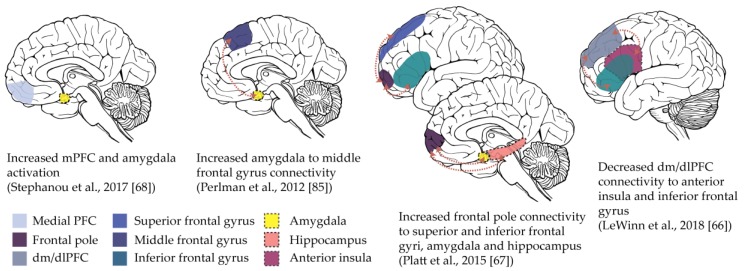
- fMRI studies consistently found aberrant prefrontal activation and connectivity during deliberate emotion regulation in adolescent depression, but specific regions varied; three of four studies found heightened amygdala reactivity or greater amygdala–PFC connectivity, while the largest study did not. In ninth-grade females, positive amygdala–vlPFC connectivity during incidental emotion regulation predicted future anxiety symptoms over 9 months.
Methods
- Narrative review, not a systematic review; the authors state they provide a selection of findings of interest rather than an exhaustive list.
- Reviews evidence across self-report, behavioral, peripheral psychophysiological, and neural (fMRI) measures, including meta-analytic and individual studies.
- Discusses clinical implications and future directions; no new primary data are reported.
Limitations
- The paper states it is a narrative rather than systematic review, focuses on the most widely used measures, and does not exhaustively cover all findings.
- The paper notes that many studies rely on indirect measures that conflate emotional reactivity with regulation; self-report is subject to memory and overgeneralization biases; psychophysiological measures lack specificity and can involve reverse inference; and fMRI functional connectivity is correlational, so directionality cannot be inferred.
- Evident from the text: heterogeneity in measures, designs, and samples limits comparability; positive emotion regulation is understudied; anxiety fMRI studies of deliberate reappraisal are lacking; and no studies directly compared adolescent and adult samples with anxiety or depression.
Model-written summary. Check it against the paper before relying on it.
Integrity signals
Registry
Cites
Statistics
Figures
Verification
Claims the paper makes
23 Valid · 0 Not valid · 66 Not checked · 53 Own results and interpretations
Every source the paper cites for this claim was checked and supports it.
In the paper
“and (2) a role for rumination and impulsive responding on the relationship between childhood maltreatment and symptoms of internalizing psychopathology [58].”
§ Positive and Negative Emotion Regulation in Adolescence: Links to Anxiety and Depression > 7. Relationships between Emotion Regulation Abilities and Symptoms of Anxiety and Depression in Adolescents > 7.1. Findings from Self-Report Studies
What the sources say
- Supportedcites [58] Heleniak C. Jenness J.L. Vander Stoep A. McCauley E. McLaughlin K.A. Childhood maltreatment exposure and disruptions in emotion regulation: A transdiagnostic pathway to adolescent internalizing and externalizing psychopathology Cognit. Therapy Res. 2016 40 394 415 10.1007/s10608-015-9735-z PMC5042349 27695145 source
The Study 1 Discussion (page unavailable) reports that maltreatment was associated with greater rumination and impulsive behavior, and that both rumination and behavioral dysregulation were associated with internalizing symptoms after controlling for maltreatment. This supports the cited claim that they play a role in that relationship. (LLM, conf=0.92)
plainstates an association- Asserted: passes — The authors put it forward as true.
- Checkable: passes — It can be checked against evidence.
- Load-bearing: passes — The paper’s conclusions depend on it.
- Based: passes — The paper gives a reason why it holds.
- Supported
The cited sources support only part of this claim — read each source’s verdict below.
In the paper
“These studies found: (1) an effect of self-blame, catastrophizing, and rumination on the relationship between stressful life events and symptoms of depression [57]”
§ Positive and Negative Emotion Regulation in Adolescence: Links to Anxiety and Depression > 7. Relationships between Emotion Regulation Abilities and Symptoms of Anxiety and Depression in Adolescents > 7.1. Findings from Self-Report Studies
What the sources say
- Partly supportedcites [57] Stikkelbroek Y. Bodden D.H.M. Kleinjan M. Reijnders M. van Baar A.L. Adolescent depression and negative life events, the mediating role of cognitive emotion regulation PLoS ONE 2016 11 e0161062 10.1371/journal.pone.0161062 27571274 PMC5003336 sourceExperimental — accuracy not yet measured
Stikkelbroek et al. (2016) do establish self-blame, catastrophizing and rumination as mediators between stressful life events and depressive symptoms (Discussion summary point V, p. n/a; Results > Path analyses, 'Within the whole sample, significant indirect paths from relational challenging stressful life events to depressive symptoms were found via self-blame, catastrophizing and rumination'). However, the claim attributes this to 'stressful life events' in general, whereas the source restricts mediation to relational challenging events and explicitly states 'Mediation was not found after losing a loved one or experiencing a health threat' (Discussion > Strengths and limitations). The source also bounds the finding to adolescents and reports no significant indirect paths within the clinically depressed subgroup, so the unqualified generalisation is only partly supported. (LLM, conf=0.75)
plainstates a cause- Asserted: passes — The authors put it forward as true.
- Checkable: passes — It can be checked against evidence.
- Load-bearing: passes — The paper’s conclusions depend on it.
- Based: passes — The paper gives a reason why it holds.
- Partly supported
Every source the paper cites for this claim was checked and supports it.
In the paper
“This type of approach therefore prevents discrete measurement of emotional reactivity from emotional regulation (for a theoretical discussion of this issue, see [76]).”
§ Positive and Negative Emotion Regulation in Adolescence: Links to Anxiety and Depression > 3. Self-Report Measures of Emotion Regulation
What the sources say
- Supportedcites [76] Gross J.J. Barrett F.L. Emotion generation and emotion regulation: One or two depends on your point of view Emot. Rev. 2011 3 8 16 10.1177/1754073910380974 21479078 PMC3072688 source
The citation points to a theoretical discussion of whether emotional responses and their regulation can be distinguished, rather than to evidence about experience-sampling methods. In “Similarities and Differences Across Perspectives” (page unavailable), the paper explains that some models distinguish emotion generation from regulation mechanistically while others do not, providing the cited theoretical discussion. (LLM, conf=0.85)
plainstates a cause- Asserted: passes — The authors put it forward as true.
- Checkable: passes — It can be checked against evidence.
- Load-bearing: unclear — It is unclear whether the paper’s conclusions depend on it.
- Based: passes — The paper gives a reason why it holds.
- Supported
The cited sources support only part of this claim — read each source’s verdict below.
In the paper
“It is well-established that stressful life events and childhood adversity are substantial risk factors for future psychopathology [21].”
§ Positive and Negative Emotion Regulation in Adolescence: Links to Anxiety and Depression > 1. Introduction
What the sources say
- Partly supportedcites [21] Kessler R.C. McLaughlin K.A. Green J.G. Gruber M.J. Sampson N.A. Zaslavsky A.M. Aguilar-Gaxiola S. Alhamzawi A.O. Alonso J. Angermeyer M. Childhood adversities and adult psychopathology in the WHO World Mental Health Surveys Br. J. Psychiatry 2010 197 378 385 10.1192/bjp.bp.110.080499 21037215 PMC2966503 sourceExperimental — accuracy not yet measured
Our copy clearly supports the childhood-adversity half of the claim: the Results ('Associations of childhood adversities with DSM-IV/CIDI disorders', p. ~4-5) report that all 12 childhood adversities were significantly associated with elevated risk of subsequent first onset of DSM-IV/CIDI disorders (bivariate ORs 1.6-2.0 for maladaptive family functioning adversities, 1.1-1.5 for others; multivariate ORs 1.3-2.4 in Table 2), and the 'Differential associations...' section states childhood adversities significantly predict first onset of all classes of disorder at every life-course stage (Table 3). However, the paper measures only childhood adversities before age 18; no passage in our copy (searched: 'stressful life events', 'negative life events', risk factors for disorder onset) reports associations of contemporaneous or general stressful life events with future psychopathology — such life-event work appears only in the titles of references it cites (e.g. Spinhoven et al. 2010, Read et al. 2009). The claim's conflation of 'stressful life events' with childhood adversity is therefore only half supported by this source. (LLM, conf=0.80)
boostedstates an association- Asserted: passes — The authors put it forward as true.
- Checkable: passes — It can be checked against evidence.
- Load-bearing: passes — The paper’s conclusions depend on it.
- Based: passes — The paper gives a reason why it holds.
- Partly supported
The cited sources support only part of this claim — read each source’s verdict below.
In the paper
“Whereas research in children suggests a predictive relationship between RSA and future anxiety and depression (e.g., [54,91])”
§ Positive and Negative Emotion Regulation in Adolescence: Links to Anxiety and Depression > 7. Relationships between Emotion Regulation Abilities and Symptoms of Anxiety and Depression in Adolescents > 7.3. Findings from Studies of Peripheral Psychophysiology
What the sources say
- Partly supportedcites [54] Gentzler A.L. Santucci A.K. Kovacs M. Fox N.A. Respiratory sinus arrhythmia reactivity predicts emotion regulation and depressive symptoms in at-risk and control children Biol. Psychol. 2009 82 156 163 10.1016/j.biopsycho.2009.07.002 19596044 PMC2848485 sourceExperimental — accuracy not yet measured
The Results (Multivariate Analyses; page unavailable) report that RSA reactivity predicted later clinician-rated depressive symptoms in children, even after controlling for earlier internalizing symptoms. The paper does not report a corresponding prediction of future anxiety; its Discussion describes predicting other disorders as a possibility for further study. (LLM, conf=0.88)
- Not checked yetcites [91] Hinnant J.B. El-Sheikh M. Children’s externalizing and internalizing symptoms over time: The role of individual differences in patterns of RSA responding J. Abnorm. Child Psychol. 2009 37 1049 10.1007/s10802-009-9341-1 19711181 source
hedgedstates an association- Asserted: passes — The authors put it forward as true.
- Checkable: passes — It can be checked against evidence.
- Load-bearing: unclear — It is unclear whether the paper’s conclusions depend on it.
- Based: passes — The paper gives a reason why it holds.
- Partly supported
63 more claims · 11 with their cited sources checked
Create a free account to see all 142 claims and to verify the 100 references still open.
- It may state two separate claims as one. 61
- Probably not a substantial claim. 24
Claims other papers make about this one
Each is checked against this paper’s own text: does it say what the citing paper says it does?
The source backs part of the claim, not all of it — or backs it for a different population, condition or comparison.
In the citing paper
“Increased negative affect during adolescence is associated with psychological maladjustment”
From Adolescent Loneliness and Negative Affect during the COVID-19 Pandemic: The Role of Extraversion and Neuroticism (2023) · cites this paper as Young et al., 2019
Experimental — accuracy not yet measured
Self-check
Percentages, sums and reported differences re-computed from the paper’s own numbers.
Each contradiction between two passages listed here was confirmed by an independent check.
Rated minor: it would not touch a result — a value no result rests on, a p-value that stays on the same side of the significance level, or a conflict that is clerical, resolved elsewhere in the paper, or outside its own findings.
In the paper
§ Positive and Negative Emotion Regulation in Adolescence: Links to Anxiety and Depression > 7. Relationships between Emotion Regulation Abilities and Symptoms of Anxiety and Depression in Adolescents > 7.4. Findings from fMRI Studies
“Taken together, these studies suggest that adolescents with anxiety and depression exhibit differences in neural functioning compared to non-depressed peers during deliberate emotion regulation.”
§ Positive and Negative Emotion Regulation in Adolescence: Links to Anxiety and Depression > 7. Relationships between Emotion Regulation Abilities and Symptoms of Anxiety and Depression in Adolescents > 7.4. Findings from fMRI Studies
“fMRI investigations of emotion regulation in adolescents with anxiety have been more limited than in depression, with no studies of deliberate reappraisal to date. However, activation across similar circuitry during incidental emotion regulation may prospectively predict the development of anxiety symptoms.”
Citations
Cites
Gross, J. J., & John, O. P. (2003) · Journal of Personality and Social Psychology · doi:10.1037/0022-3514.85.2.348 · Cited by 11,929 · cited 1×
“A widely used self-report measure is the Emotion Regulation Questionnaire (ERQ) that follows the organizational principles of the process model of emotion regulation and has subscales for reappraisal and expressive suppression [70].”
MethodThe emerging field of emotion regulation: an integrative review
Gross, J. J. (1998) · Review of General Psychology · doi:10.1037/1089-2680.2.3.271 · Cited by 9,916 · cited 2×
“Many psychological interventions for anxiety and depression include cognitive or behavioral strategies that aim to improve abilities to regulate emotion [10,11].”
BackgroundMethodGratz, K. L., & Roemer, L. (2004) · Journal of Psychopathology and Behavioral Assessment · doi:10.1023/b:joba.0000007455.08539.94 · Cited by 8,942 · cited 1×
“Other questionnaires assess different combinations of emotion regulation strategies, such as the Difficulties in Emotion Regulation Scale (DERS; [71]), the Cognitive Emotion Regulation Questionnaire (CERQ; [72]) and the Fragebogen zur Erhebung der Emotionsregulation bei Kindern und Jugenlichen (FEEL-KJ [73]).”
MethodKirschbaum, C., Pirke, K.-M., & Hellhammer, D. H. (2008) · Neuropsychobiology · doi:10.1159/000119004 · Cited by 6,093 · cited 2×
“, Trier Social Stress Task [77] or mock job interviews [46,59]); between pairs of individuals in spontaneous interactions; or during prescribed stress-inducing or rewarding situations [65,66,78].”
BackgroundEmotion regulation: affective, cognitive, and social consequences.
Gross, J. J. (2002) · Psychophysiology · doi:10.1017/s0048577201393198 · Cited by 4,890 · cited 2×
“In line with the process model of emotion regulation [2], Cognitive Bias Modification aims to tap into antecedent-focused regulatory processes such as attentional deployment (Attention Bias Modification) and interpretation/reappraisal (Interpretation Bias Modification).”
MethodTripartite model of anxiety and depression: psychometric evidence and taxonomic implications
Clark, L. A., & Watson, D. (1991) · Journal of Abnormal Psychology · doi:10.1037/0021-843x.100.3.316 · Cited by 4,601 · cited 1×
“Disruptions to emotion regulation capacities in adulthood are central to theories of how anxiety and depressive disorders manifest and are maintained [7,8].”
BackgroundA social neuroscience perspective on adolescent risk-taking
Steinberg, L. (2008) · Developmental Review · doi:10.1016/j.dr.2007.08.002 · Cited by 3,644 · cited 1×
“Heightened emotional reactivity, increased risk-taking, and impulsive behaviors are also characteristic of adolescence [14].”
BackgroundToward the future of psychiatric diagnosis: the seven pillars of RDoC
Cuthbert, B. N., & Insel, T. R. (2013) · BMC Medicine · doi:10.1186/1741-7015-11-126 · Cited by 3,053 · cited 1×
“Repeated observations across multiple levels of analysis increase the reliability and validity of observed associations and may improve precision in understanding dysfunction and disease course [24,25].”
BackgroundChildhood adversities and adult psychopathology in the WHO World Mental Health Surveys
Kessler, R. C., McLaughlin, K. A., Green, J. G., Gruber, M. J., Sampson, N. A., Zaslavsky, A. M., Aguilar-Gaxiola, S., Alhamzawi, A. O., Alonso, J., Angermeyer, M., et al. (2010) · British Journal of Psychiatry · doi:10.1192/bjp.bp.110.080499 · Cited by 2,640 · cited 1×
“It is well-established that stressful life events and childhood adversity are substantial risk factors for future psychopathology [21].”
BackgroundNegative life events, cognitive emotion regulation and emotional problems
Garnefski, N., Kraaij, V, & Spinhoven, P. (2001) · Personality and Individual Differences · doi:10.1016/s0191-8869(00)00113-6 · Cited by 2,494 · cited 1×
“Other questionnaires assess different combinations of emotion regulation strategies, such as the Difficulties in Emotion Regulation Scale (DERS; [71]), the Cognitive Emotion Regulation Questionnaire (CERQ; [72]) and the Fragebogen zur Erhebung der Emotionsregulation bei Kindern und Jugenlichen (FEEL-KJ [73]).”
Method
Research works printed but not linked: 1
- Parrott W.G. Beyond hedonism: Motives for inhibiting good moods Handbook of Mental Control Wegner D.M. Pennebaker J.W. Englewood Cliffs Prentice Hall, NJ, USA 1993 278 308
Cited by
Items 401–483 of 483
Substance Use, Criminal Behavior, and Adolescence: Insights from Public Health
Monroy-Vite, N., & Muñoz-Toledo, E. C. (2025) · Springer eBooks · doi:10.1007/978-3-031-91957-2_8
Giang, T.-V., Mai, M.-H., Diep, D.-K., Vu, V.-D. T., & Pham, T.-N. N. (2025) · SSRN Electronic Journal · doi:10.2139/ssrn.5346638
A Better Way to Understand Emotion of Adolescents: Lessons From the Animation “Inside Out 2”
Bahn, G. H. (2025) · Psychoanalysis · doi:10.18529/psychoanal.2025.36.3.57
Saravanan, S., & Tamizharasi, K. (2025) · Indian Journal of Psychiatric Nursing · doi:10.4103/iopn.iopn_9_24
Hall, K. E., Shacklewood, C., Sege, C. T., Hahn, A. M., & Danielson, C. K. (2025) · Journal of Child & Adolescent Trauma · doi:10.1007/s40653-025-00740-y
“Since adolescence is a sensitive period in which these emotion regulation skills develop (Young et al., 2019), it should be explored how traumatic events in childhood can influence skill development and other areas of mental health functioning.”
Oral, M., & Törüner, E. K. (2025) · Halk Sağlığı Hemşireliği Dergisi · doi:10.54061/jphn.1681454
Smith, C., Sorsdahl, K. R., Pozuelo, J. R., & van der Westhuizen, C. (2025) · SSM - Mental Health · doi:10.1016/j.ssmmh.2025.100522
Muric, M. D., & Muric, N. N. (2025) · EABR. Experimental and Applied Biomedical Research · doi:10.2478/eabr-2025-0009 · Cited by 1
“Impairments or delays in the development of emotion regulation capacities are considered central to theoretical models explaining the onset and maintenance of anxiety and depression (14).”
Kuberka, P., Chilton, M., Pike, K. C., Shafran, R., & Yardley, L. (2025) · doi:10.2196/preprints.84384
Naziri, A., & Hooman, F. (2025) · Preventive Care In Nursing and Midwifery Journal · doi:10.61882/pcnm.15.1.33 · Cited by 2
Li, W., Shi, J., & Chai, C. (2025) · International Journal of Human-Computer Interaction · doi:10.1080/10447318.2025.2573834 · Cited by 1
“Emotions include positive and negative feelings such as happiness and depression (Young et al., 2019).”
Smith, C., Sorsdahl, K. R., Berking, M., & van der Westhuizen, C. (2025) · BMC Pediatrics · doi:10.1186/s12887-025-06280-6 · Cited by 2
“Emotional dysregulation, a key factor associated with depression and anxiety [31–38], is particularly prevalent among 12–15-year-olds, who are vulnerable to maladaptive ER strategies [39, 40].”
Sex-specific brain structural predictors and outcomes of adolescent depression trajectoriesPreprint
Ding, Q., Rakesh, D., Khetana, M., & Whittle, S. (2025) · bioRxiv (Cold Spring Harbor Laboratory) · doi:10.64898/2025.11.30.689896
“34,35 It also supports earlier prospective research showing associations between reduced global brain volume and surface area and general psychopathology in youth.”
Prosociálnosť v kontexte rizikového správania v dospievaní
Banárová, K., Čerešník, M., Lenghart, D., & Čerešníková, M. (2025) · doi:10.5507/vup.25.74763861
Emmelkamp, J., Wisman, M. A., Beuk, N., Stikkelbroek, Y. A. J., Nauta, M. H., Dekker, J., & Christ, C. (2022) · Figshare · doi:10.6084/m9.figshare.21340304
Emmelkamp, J., Wisman, M. A., Beuk, N., Stikkelbroek, Y. A. J., Nauta, M. H., Dekker, J., & Christ, C. (2022) · Figshare · doi:10.6084/m9.figshare.21340307
Hu, S. X., Liu, S., & Guo, Y. (2025) · Journal of Affective Disorders · doi:10.1016/j.jad.2025.120883 · Cited by 3
Psychiatric, Behavioral, and Familial Risk Factors in Adolescent BMI
Öksüzoğlu, M. E. (2025) · IntechOpen eBooks · doi:10.5772/intechopen.1013250 · Cited by 1
Aoun, M., Saade, E., Chahine, A., Maalouf, G., Hankache, A., Obeïd, S., Fekih‐Romdhane, F., & Hallit, S. R. (2025) · Pediatric Investigation · doi:10.1002/ped4.70031
Roberts, K. A. (2025) · Educational and Child Psychology · doi:10.53841/bpsecp.2025.42.4.73
Dong, X., Liang, G., Li, D., Liu, M.-X., Yin, Z.-J., Li, Y.-Z., Zhang, T., & Pan, C.-W. (2025) · Frontiers in Psychiatry · doi:10.3389/fpsyt.2025.1642896
Ghelbash, Z., Rezazadeh, M., Musarezaie, A., Pezeshkzad, S., Momeni-Ghaleghasemi, T., & Alidousti, F. (2026) · Iranian Journal of Nursing and Midwifery Research · doi:10.4103/ijnmr.ijnmr_277_24
“[11] Cognitive‑emotional strategies are significant in emotional administration or regulation ability, as well as in preserving control over emotions during or after facing threatening or stressful incidents.”
Burrus, C. J., Dinc, E. N., Kingston, C., Feurer, C., & Burkhouse, K. L. (2026) · Research on Child and Adolescent Psychopathology · doi:10.1007/s10802-025-01417-8 · Cited by 1
“…on offspring aged 9 to 16 years, as this developmental period represents a window in which emotion regulation abilities develop substantially and vulnerability to depression and other internalizing disorders increase, particularly among high risk youth of depressed mothers (Young et al., 2019 ).”
Bochniarz, K. T., Charzyńska, E., & Atroszko, P. A. (2026) · Journal of Religion and Health · doi:10.1007/s10943-025-02552-8 · Cited by 1
“Additionally, educating young people on constructive strategies for managing stress and negative emotions is essential, allowing them to identify harmful patterns and replace them with healthier ones (Young et al., 2019).”
Wu, Y., Xia, Y., Wang, Y., Tang, Y., Wang, G., & Xu, Y. (2026) · BMC Psychology · doi:10.1186/s40359-025-03863-x · Cited by 1
“…develop a tool for assessing the self-management abilities of adolescent patients with depressive disorders, focusing on three aspects: the implementation of treatment plans and symptom monitoring [16, 28, 29], negative emotion regulation skills [30, 31], and the utilization of social support [32].”
McCullen, J. R., Hilton, A. L., & Scott, B. G. (2026) · Current Psychology · doi:10.1007/s12144-025-08988-1
“…supporting the important role of experiencing positive emotions, most research with adolescents has focused primarily on the experience of negative emotions, how (and how well) they down-regulate (decrease) negative emotions, and their effect on physical and mental health (Young et al., 2019).”
Çelik, O. (2026) · KIRŞEHİR EĞİTİM FAKÜLTESİ DERGİSİ · doi:10.29299/kefad.1681480 · Cited by 1
Profiling problematic digital use in adolescence: A clustering analysis from clinical settings
Albayrak, Z. S., Ateş, B. Ö., Ballı, M., Sartekin, T. Ö., & Dağdeviren, C. K. (2026) · Current Psychology · doi:10.1007/s12144-026-09185-4 · Cited by 2
“Future studies using neurocognitive or physiological measures—such as amygdala responsivity or autonomic reactivity during social-media interaction—may help clarify how emotional sensitivity and digital engagement co-evolve (Silk et al., 2024 ; Young et al., 2019).”
Reframing nature connectedness as a psychosocial mechanism for youth mental health
Liu, F., Zhang, Z., Huang, Y., Wang, P., Bao, Z., Nou, Y., Zhang, Z., Sun, H., & Song, T. (2026) · Frontiers in Psychiatry · doi:10.3389/fpsyt.2026.1781920
“Adolescence is marked by heightened emotional reactivity and ongoing maturation of regulatory systems, rendering young people particularly vulnerable to stress, anxiety, and mood disturbances (36, 37).”
Beji, A., Hajri, M., Maatallah, N., Askri, W., Cherif, E., Abbes, Z. S., Halayem, S., & Bouden, A. (2026) · Neuropsychiatrie de l Enfance et de l Adolescence · doi:10.1016/j.neurenf.2026.02.010 · Cited by 1
Adolescents’ Perceptions of Online and Real-Life Peer Interactions and Social SkillsPreprint
Stolk, T., Lockhorst, D., Kester, L., Scholte, R. H. J., & Pouwels, J. L. (2026) · SSRN Electronic Journal · doi:10.2139/ssrn.6450164
From clicks to crashes: Proneness to online shopping addiction and how it costs emotionally
Makhdoom, T. R. (2026) · Social Sciences & Humanities Open · doi:10.1016/j.ssaho.2026.102721 · Cited by 1
Tatli, S., & Aytar, F. A. G. (2026) · Journal of Public Child Welfare · doi:10.1080/15548732.2026.2649787
Les déterminants et le retentissement de la régulation émotionnelle chez les adolescents
AL-hajri, R. K. (2020) · theses.fr (ABES) · doi:10.70675/7a409dd4z299az4e52zb80dz0172a25c12c1
Différences sexuelles dans les synapses excitatrices de l’amygdale basolatérale de rat
Guily, P. (2021) · theses.fr (ABES) · doi:10.70675/3ce7db18z6a11z4e26z940fze421cc5e9733
Fombouchet, Y. (2022) · theses.fr (ABES) · doi:10.70675/d2a95d53ze728z40cbza605zde9a40929df5 · Cited by 4
Emotion dysregulation in autistic adults : an ecological, self-report, and physiological approach
Costache, M. E. (2024) · theses.fr (ABES) · doi:10.70675/575e0a4az1174z4c91z976cz320b40c5304a
Cyber-victimized and cognitively fogged? Cyberbullying victimization and executive function
Jia, H., Suo, R., Wang, J., Zhou, L., & Liu, Y. (2026) · BMC Public Health · doi:10.1186/s12889-026-27272-w · Cited by 1
“Concurrently, victims often endure persistent feelings of shame, fear, and helpless-ness, which, if not effectively regulated, can exacerbate anxiety levels [84].”
Tan, L., Jing, Y., Ma, R., 穆国霞, & Wang, Y. (2026) · Humanities and Social Sciences Communications · doi:10.1057/s41599-026-06819-7
“Long-term negative emotions can cause healthy adolescents to develop into adolescents with emotional problems (Young et al., 2019).”
Virdiyanti, R., Maulidah, M., & Nurjannah, N. (2026) · Health Information Jurnal Penelitian · doi:10.36990/hijp.v18i1.1813
Uy, J. P., Yuan, J. P., Joachimsthaler, J., & Gotlib, I. H. (2026) · Biological Psychiatry · doi:10.1016/j.biopsych.2026.04.021
Ji, H., & Wang, Y. (2026) · Applied Psychology Health and Well-Being · doi:10.1111/aphw.70150
Salter, E., Carr, M., Reakes, F., & Ankrett, S. (2026) · BJPsych Bulletin · doi:10.1192/bjb.2026.10218
Jayaram, M., Davis, C., Anifowoshe, K., Slaughter, J. C., & Jaser, S. S. (2026) · Annals of Behavioral Medicine · doi:10.1093/abm/kaag023
“19 This finding emphasizes the need for ongoing support and interventions that may promote positive affect throughout adolescence and as individuals navigate the long-term management of their condition.”
Zhang, W., Gao, R., Zheng, X., Guo, Y., & Ma, L. (2026) · BMC Public Health · doi:10.1186/s12889-026-27745-y
“From a developmental perspective, adolescence is a period characterized by heightened emotional reactivity, identity exploration, and sensitivity to social evaluation [42, 43].”
Nowack, K. M. (2026) · Wiley eBooks · doi:10.1002/9781394292806.ch26
Momentary Peer Acceptance: An fMRI-EMA Integration Study of Peer Acceptance and Emotions
Ryan, M. B., Curby, T. W., Bedillion, M. F., Ansell, E. B., & Chaplin, T. M. (2026) · Child Psychiatry & Human Development · doi:10.1007/s10578-026-02007-5
“Since lower negative emotion is associated with lower incidence of depression and anxiety in adolescence [33], it is important to understand what leads adolescents to experience lower negative emotions.”
Huang, F. (2026) · Acta Psychologica · doi:10.1016/j.actpsy.2026.107052
He, D., Mai, J., & He, X. (2026) · Behavioral Sciences · doi:10.3390/bs16060845
“Given that emotion dysregulation is a well-established correlate of adolescent anxiety and depression, regulatory capacities associated with resilience represent plausible pathways through which resilience may attenuate internalizing risk under heightened NLE exposure (Young et al., 2019).”
Ke, Q., Xu, J., Zhang, J., Lin, J., Sun, J., & Kou, X. (2026) · Flavour and Fragrance Journal · doi:10.1002/ffj.70106
Liu, T. C. Y., Kwok, N. T.-K., Chan, S. S.-M., Mo, F. Y. M., Ching, E. W.-K., Chau, S. W. H., Wong, O. W. H., Ma, S. L., Tsoi, K. K. F., Lai, K. Y. C., et al. (2026) · Psychological Medicine · doi:10.1017/s0033291726104346 · Cited by 2
Adverse Childhood Experiences Underlie Race‐Related Differences in Neural Reactivity to Stress
Grey, D. K., Davis, E., Goodman, A. M., Purcell, J. B., Dark, H. E., Harnett, N. G., Bolaram, A., Eickstead, C. T., Cook, H. C., Mrug, S., et al. (2026) · Behavioural Neurology · doi:10.1155/bn/9924677
“Stress-related emotional processes (e.g., susceptibility or resilience to psychopathology) are supported by the amygdala, hippocampus, PFC (e.g., vmPFC, dmPFC, and dlPFC), and IPL [18–21].”
Lukito, S., Chandler, S., Kakoulidou, M., Griffiths, K., Funnell, E., Wyatt, A., Baker, S., Stahl, D. R., Pavlopoulou, G., Sonuga-Barke, E. J. S., et al. (2026) · European Child & Adolescent Psychiatry · doi:10.1007/s00787-026-03073-9 · Cited by 1
“Adolescents may respond to being upset in various ways, from seeking help, thinking of a solution to problems, to withdrawing and ruminating, which can either ease or intensify their distress and affect their long-term mental health [13, 14].”
Wang, S., Sun, W., Hong, Z., Huang, H., & Xu, S. (2026) · Frontiers in Psychology · doi:10.3389/fpsyg.2026.1803574
“Within the Chinese context, emotional abuse frequently co-occurs with physical abuse (Chen et al., 2023; Fu et al., 2018), while adolescence represents a sensitive developmental window for the emergence and escalation of anxiety disorders (Young et al., 2019).”
Lu, M., (21093599), S. C., Hu, D., Lu, J., Li, Y., Li, P., & Xu, J. (2026) · Journal of Orthopaedic Surgery and Research · doi:10.1186/s13018-026-07014-9
“Consequently, they are more susceptible to negative emotions, such as anxiety and depression, when confronted with physical abnormalities or undergoing medical interventions [4].”
Adu, P. (2026) · International Journal of Psychology · doi:10.1002/ijop.70230
Oktaviani, E. D. (2026) · Human Psychology & Behavior · doi:10.58920/humpsycholbehav0201609
Youth Perspectives and Design Opportunities for Emotion Regulation in Social Virtual Reality
Kitson, A., Antle, A. N., Adhikari, A., Karthik, K., Slovák, P., & Isbister, K. (2026) · Designing Interactive Systems Conference · doi:10.1145/3800645.3813006
ALLERGIC RHINITIS AND MENTAL HEALTH: EPIDEMIOLOGICAL ASSOCIATIONS AND NEUROIMMUNE MECHANISMS
Rogulski, K., Szczepański, P., Kącikowska, J., Grzelak, O., Bolek, O., Majkowska, M., Fengier, M., Kuśmierczyk, W., Sordyl, K., & Trzaskowski, J. (2026) · International Journal of Innovative Technologies in Social Science · doi:10.31435/ijitss.2(50).2026.5343
Li-Ya, A., Zhang, X., Jiang, Y.-Y., Huang, H., Liu, S., Su, Z., Cheung, T. C. C., Ng, C. H., & Xiang, Y. (2026) · Asia-Pacific Psychiatry · doi:10.1111/appy.70027
“Previous studies found that individuals with psychiatric problems, such as anxiety and depression, may experience weakened coping abilities and poor management of negative emotions (Young et al. 2019).”
Nguyen, M. T. D., My, H., Nguyen, T. M., & Dinh, D.-H. (2026) · International Journal of ADVANCED AND APPLIED SCIENCES · doi:10.21833/ijaas.2026.06.016
Du, Y., Zhang, K., Wu, W. W., & Liu, M. (2026) · BMC Psychology · doi:10.21203/rs.3.rs-9877980/v1
Dehnavi, S. R., Giahi, A., & Rabi, V. (2026) · international journal high risk behaviors & addiction · doi:10.5812/ijhrba-165978
Denny, S., Foley, S., Adhikary, S., Lindstrom, D., Halse, S., Coyne, S., Halsey, R., Andrews, T., Mcgahan, G., & Ewais, T. (2026) · Australasian Psychiatry · doi:10.1177/10398562261466412
Ji, Y., Hu, H., & Tang, X. (2026) · BMC Psychiatry · doi:10.1186/s12888-026-08410-5
“Their repeated emergence across culturally diverse samples (UK, US, China) supports the existence of a core transdiagnostic architecture that consolidates during mid-to-late adolescence [48–50].”
Effect of yoga practice on quality of life and family relationship among adolescence
Nag, R., Parida, T., Snigdha, A., & Babu, N. (2026) · Yoga Mimamsa · doi:10.4103/ymjscy.ymjscy_16_26
Kuberka, P., Chilton, M., Pike, K. C., Shafran, R., & Yardley, L. (2026) · JMIR Pediatrics and Parenting · doi:10.2196/84384
Luan, Y., Wang, S., Gao, Y., Kong, Q., Ma, Z., & Luan, C. (2026) · Frontiers in Psychiatry · doi:10.3389/fpsyt.2026.1915122
“Evidence from self-report, behavioral, physiological, and neural studies suggests that emotion dysregulation is not a peripheral feature but a core process in adolescent internalizing psychopathology (39).”
Mucuk, M. D., Çetin, M. K., & Sarı, T. (2026) · Current Psychology · doi:10.1007/s12144-026-09839-3
“Furthermore, the ability to regulate emotional experiences also plays a role in the development and maintenance of emotional disorders in adolescents (Young et al., 2019).”
Self-blame and catastrophising as common indicators of subjective sleep quality and mental health
Urbanová, L., Vňuková, M., Sebalo, I., Königová, M. P., Koleničová, V., Anders, M., & Bušková, J. (2026) · Journal of Health Psychology · doi:10.1177/13591053261467672
Márquez, A. C., Ampatzoglou, A., Rojas-Rincón, J., Fernández-Cardellach, C., Garcia-Casanovas, A., Fernández-Capo, M., Gámiz, M., Garolera, M., & Porras-García, B. (2026) · Depression and Anxiety · doi:10.1155/da/1162692 · Cited by 1
Küçükçelebi, F. K., & Koca, E. (2026) · IntechOpen eBooks · doi:10.5772/intechopen.1017033
Ali, S. B. A., Mourad, G. M., Mohamed, H. S., & Khalifa, A. M. (2026) · BMC Psychology · doi:10.1186/s40359-026-05345-0
“Adolescence represents a critical developmental period characterized by increased vulnerability to depression and anxiety, conditions that are frequently associated with low self-esteem and maladaptive coping strategies [27].”
Zhan, W., Zhu, S., Jin, W., Chen, X., Xu, Z., Zhang, C., Chen, X., & Li, L. (2026) · Perspectives In Psychiatric Care · doi:10.1155/ppc/9084496
Lopez, G. D., Mesa, M. L. R. A., Villasanta, A. P. V. P., Salvador, L. L., & Madrid, B. J. (2026) · Child Protection and Practice · doi:10.1016/j.chipro.2026.100343
Goemaere, H., Braet, J., Verbeken, S., Claes, L., & Braet, C. (2026) · Research on Child and Adolescent Psychopathology · doi:10.1007/s10802-026-01501-7
“Despite its relevance, emotion reactivity to positive emotions (and their regulation) has received considerably less attention overall, including in youth populations (Hu et al. 2014; Mazefsky et al., 2021a; Young et al. 2019).”
Chen, X., Zhang, W., Hu, C., Yuan, Y., & Gary, J. M. (2026) · Behavioral Sciences · doi:10.3390/bs16091706 · Cited by 1
“…adjustment, and have been associated with adverse outcomes, including sleep disturbances, problematic internet use, substance abuse, non-suicidal self-injury, and suicidal behaviors (Gu et al., 2024; C. Hu et al., 2026b; Li et al., 2025; Rowe & Fitness, 2018; Xie et al., 2023; Young et al., 2019).”
Yang, J., Zhang, Z., Tan, X., Cheng, S., & Wang, J. (2026) · Scientific Reports · doi:10.1038/s41598-026-60930-y
Asif, A., & Sajjad, S. (2026) · journal of social sciences review · doi:10.62843/jssr.v6i3.751
Lo, W. K., Zheng, X., Lee, K. L., & Wang, H. (2026) · Journal of Affective Disorders Reports · doi:10.1016/j.jadr.2026.101180
From individual to relational: a scientometric mapping of emotion regulation in adolescence
Simoncini, G., Borghesi, F., Ballarotto, G., Barone, L., Benzi, I. M. A., Greco, C., Parolin, L. A. L., Velotti, P., & Cipresso, P. (2026) · Frontiers in Psychology · doi:10.3389/fpsyg.2026.1965549
“Emotion regulation (ER) sits at the core of adaptive functioning and mental health, comprising implicit and explicit skills used to monitor, evaluate, and modify emotional responses in accordance with one’s own goals (Silvers, 2022; Young et al., 2019; Velotti et al., 2013).”
Gu, W., Chen, Y., Zhang, H., Liu, Y., 殷小秋, & Cai, L. (2026) · Journal of Child and Adolescent Mental Health · doi:10.2989/17280583.2026.2733649
Nan, J. K.-M., Kang, M., Huang, X. S., & Wang, H. C. (2026) · Art Therapy · doi:10.1080/07421656.2026.2724609
Metadata
- Authors
- Young, K., Sandman, C., & Craske, M.
- Affiliations
- King's College London (GB)
- University of California, Los Angeles (US)
- Corresponding author
- Young, Katherine
- Venue
- Brain Sciences
- Publisher
- MDPI AG
- Published
- 2019-03-29
- Volume
- 9
- Issue
- 4
- Pages
- 76
- ISSN
- 2076-3425 (ISSN-L)
- PMC
- PMC6523365
- OpenAlex
- W2924670529
- Semantic Scholar
- 12c9dcb8af62a0792e793db11e2c15ebb87520d1
- Cited by
- 485
- References
- 121
- Citations by year
- 2026: 68 · 2025: 87 · 2024: 90 · 2023: 74 · 2022: 74 · 2021: 47 · 2020: 39 · 2019: 5
- FWCI
- 6.50
- Type
- journal article
- Language
- en
- Open access
- gold
- dx.doi.org
- Licence
- Locations
- Brain Sciences (publishedVersion, cc-by)
- Europe PMC (PubMed Central) (publishedVersion, cc-by)
- PubMed Central (publishedVersion, cc-by)
- PubMed (publishedVersion)
- DOAJ (DOAJ: Directory of Open Access Journals) (submittedVersion, cc-by-sa)
- Research Portal (King's College London) (submittedVersion, cc-by)
- Topics
- Social Sciences › Psychology › Clinical Psychology › Child and Adolescent Psychosocial and Emotional Development
- Life Sciences › Neuroscience › Cognitive Neuroscience › Neural and Behavioral Psychology Studies
- Social Sciences › Psychology › Experimental and Cognitive Psychology › Anxiety, Depression, Psychometrics, Treatment, Cognitive Processes
- Keywords
- emotion regulation, adolescence, anxiety, depression, positive emotion regulation, negative emotion regulation, emotional dysregulation, cognitive reappraisal, amygdala, prefrontal cortex, neural circuits, psychophysiology, emotional reactivity, emotion regulation training, therapeutic mechanisms
About these checks
Registry, retraction, Cites and statistics results are computed, not judged, with one exception: a printed reference that no index lists is read once by a model before it counts as a citation error. Claims are extracted by a model and kept only when their quote appears verbatim in the text; each cited source is then checked, with a model’s help, for whether it says what the claim relies on. Those verdicts can be wrong — read the claim’s quote and the cited source before relying on one.
The claim verdicts this report counts are experimental: their accuracy is not yet measured.
A language model drew the claims from the paper on 2026-10-07, under version 3 of the claim definition (model deepseek-v4.1-flash, prompt extract-v3).
A second model labelled each claim on 2026-10-07 (model jev-1.13-20260917, definition revision gold-guideline-v0.2).
Cited sources are checked with a language model’s help (gpt-6-sol and qwen3.8-omni-flash).
Statistics and arithmetic are recomputed, not judged.
Confidence bands are shown only for fields calibrated on our annotated test set. None is calibrated yet, so no band is shown.
What counts as a claim ›How we measure confidence ›How we check this ›
Are you an author, or do you see a problem with this page? Request a review
Data sources
Bibliographic data: Semantic Scholar, OpenAlex, Crossref.
Contains information from the Semantic Scholar Academic Graph Datasets, made available under the ODC Attribution License (ODC-BY 1.0).
Semantic Scholar’s data is described in: Kinney, R., et al. (2023). The Semantic Scholar Open Data Platform. arXiv:2301.10140.
