

Positive and Negative Emotion Regulation in Adolescence: Links to Anxiety and Depression
Open accessThe DOI matches its Crossref record; 121 of the 121 references it cites were found in a registry or an index; 26 of the 126 sources its claims cite were checked for support.
Abstract
Emotion regulation skills develop substantially across adolescence, a period characterized by emotional challenges and developing regulatory neural circuitry. Adolescence is also a risk period for the new onset of anxiety and depressive disorders, psychopathologies which have long been associated with disruptions in regulation of positive and negative emotions. This paper reviews the current understanding of the role of disrupted emotion regulation in adolescent anxiety and depression, describing findings from self-report, behavioral, peripheral psychophysiological, and neural measures. Self-report studies robustly identified associations between emotion dysregulation and adolescent anxiety and depression. Findings from behavioral and psychophysiological studies are mixed, with some suggestion of specific impairments in reappraisal in anxiety. Results from neuroimaging studies broadly implicate altered functioning of amygdala-prefrontal cortical circuitries, although again, findings are mixed regarding specific patterns of altered neural functioning. Future work may benefit from focusing on designs that contrast effects of specific regulatory strategies, and isolate changes in emotional regulation from emotional reactivity. Approaches to improve treatments based on empirical evidence of disrupted emotion regulation in adolescents are also discussed. Future intervention studies might consider training and measurement of specific strategies in adolescents to better understand the role of emotion regulation as a treatment mechanism.
Overview
CoChat Summary
TL;DR
This narrative review synthesizes self-report, behavioral, psychophysiological, and fMRI evidence on emotion regulation in adolescent anxiety and depression. Self-report studies robustly link emotion dysregulation to both disorders, while behavioral and psychophysiological findings are mixed and neuroimaging broadly implicates altered amygdala–prefrontal circuitry.
Key findings
- A meta-analysis of 35 studies in adolescents aged 13–18 found that, compared with healthy individuals, those with anxiety and depressive disorders used less reappraisal, problem solving, and acceptance and more avoidance, suppression, and rumination; the strongest effects were for reduced acceptance and increased avoidance and rumination, with little evidence of disorder-specific disruptions.
- Meta-analytic data suggested disrupted self-reported emotion regulation predicts subsequent anxiety or depression, but not the reverse; in a study of N = 1065 adolescents aged 11–14, a latent emotion dysregulation construct predicted anxiety, aggression, and disordered eating, while depression was predicted only by rumination, expression of anger, and expression of sadness.
- Behavioral evidence suggests anxiety is associated with reduced spontaneous reappraisal and impaired reappraisal generation, though anxious adolescents who successfully generated reappraisals reduced negative affect similarly to non-anxious peers; depression findings for reappraisal were mixed, and depressive symptoms were associated with shorter persistence of positive affect.
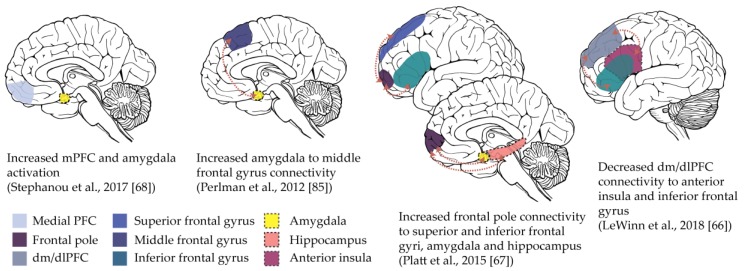
- fMRI studies consistently found aberrant prefrontal activation and connectivity during deliberate emotion regulation in adolescent depression, but specific regions varied; three of four studies found heightened amygdala reactivity or greater amygdala–PFC connectivity, while the largest study did not. In ninth-grade females, positive amygdala–vlPFC connectivity during incidental emotion regulation predicted future anxiety symptoms over 9 months.
Methods
- Narrative review, not a systematic review; the authors state they provide a selection of findings of interest rather than an exhaustive list.
- Reviews evidence across self-report, behavioral, peripheral psychophysiological, and neural (fMRI) measures, including meta-analytic and individual studies.
- Discusses clinical implications and future directions; no new primary data are reported.
Limitations
- The paper states it is a narrative rather than systematic review, focuses on the most widely used measures, and does not exhaustively cover all findings.
- The paper notes that many studies rely on indirect measures that conflate emotional reactivity with regulation; self-report is subject to memory and overgeneralization biases; psychophysiological measures lack specificity and can involve reverse inference; and fMRI functional connectivity is correlational, so directionality cannot be inferred.
- Evident from the text: heterogeneity in measures, designs, and samples limits comparability; positive emotion regulation is understudied; anxiety fMRI studies of deliberate reappraisal are lacking; and no studies directly compared adolescent and adult samples with anxiety or depression.
Model-written summary. Check it against the paper before relying on it.
Integrity signals
Registry
Cites
Statistics
Figures
Verification
Claims the paper makes
23 Valid · 0 Not valid · 66 Not checked · 53 Own results and interpretations
Every source the paper cites for this claim was checked and supports it.
In the paper
“and (2) a role for rumination and impulsive responding on the relationship between childhood maltreatment and symptoms of internalizing psychopathology [58].”
§ Positive and Negative Emotion Regulation in Adolescence: Links to Anxiety and Depression > 7. Relationships between Emotion Regulation Abilities and Symptoms of Anxiety and Depression in Adolescents > 7.1. Findings from Self-Report Studies
What the sources say
- Supportedcites [58] Heleniak C. Jenness J.L. Vander Stoep A. McCauley E. McLaughlin K.A. Childhood maltreatment exposure and disruptions in emotion regulation: A transdiagnostic pathway to adolescent internalizing and externalizing psychopathology Cognit. Therapy Res. 2016 40 394 415 10.1007/s10608-015-9735-z PMC5042349 27695145 source
The Study 1 Discussion (page unavailable) reports that maltreatment was associated with greater rumination and impulsive behavior, and that both rumination and behavioral dysregulation were associated with internalizing symptoms after controlling for maltreatment. This supports the cited claim that they play a role in that relationship. (LLM, conf=0.92)
plainstates an association- Asserted: passes — The authors put it forward as true.
- Checkable: passes — It can be checked against evidence.
- Load-bearing: passes — The paper’s conclusions depend on it.
- Based: passes — The paper gives a reason why it holds.
- Supported
The cited sources support only part of this claim — read each source’s verdict below.
In the paper
“These studies found: (1) an effect of self-blame, catastrophizing, and rumination on the relationship between stressful life events and symptoms of depression [57]”
§ Positive and Negative Emotion Regulation in Adolescence: Links to Anxiety and Depression > 7. Relationships between Emotion Regulation Abilities and Symptoms of Anxiety and Depression in Adolescents > 7.1. Findings from Self-Report Studies
What the sources say
- Partly supportedcites [57] Stikkelbroek Y. Bodden D.H.M. Kleinjan M. Reijnders M. van Baar A.L. Adolescent depression and negative life events, the mediating role of cognitive emotion regulation PLoS ONE 2016 11 e0161062 10.1371/journal.pone.0161062 27571274 PMC5003336 sourceExperimental — accuracy not yet measured
Stikkelbroek et al. (2016) do establish self-blame, catastrophizing and rumination as mediators between stressful life events and depressive symptoms (Discussion summary point V, p. n/a; Results > Path analyses, 'Within the whole sample, significant indirect paths from relational challenging stressful life events to depressive symptoms were found via self-blame, catastrophizing and rumination'). However, the claim attributes this to 'stressful life events' in general, whereas the source restricts mediation to relational challenging events and explicitly states 'Mediation was not found after losing a loved one or experiencing a health threat' (Discussion > Strengths and limitations). The source also bounds the finding to adolescents and reports no significant indirect paths within the clinically depressed subgroup, so the unqualified generalisation is only partly supported. (LLM, conf=0.75)
plainstates a cause- Asserted: passes — The authors put it forward as true.
- Checkable: passes — It can be checked against evidence.
- Load-bearing: passes — The paper’s conclusions depend on it.
- Based: passes — The paper gives a reason why it holds.
- Partly supported
Every source the paper cites for this claim was checked and supports it.
In the paper
“This type of approach therefore prevents discrete measurement of emotional reactivity from emotional regulation (for a theoretical discussion of this issue, see [76]).”
§ Positive and Negative Emotion Regulation in Adolescence: Links to Anxiety and Depression > 3. Self-Report Measures of Emotion Regulation
What the sources say
- Supportedcites [76] Gross J.J. Barrett F.L. Emotion generation and emotion regulation: One or two depends on your point of view Emot. Rev. 2011 3 8 16 10.1177/1754073910380974 21479078 PMC3072688 source
The citation points to a theoretical discussion of whether emotional responses and their regulation can be distinguished, rather than to evidence about experience-sampling methods. In “Similarities and Differences Across Perspectives” (page unavailable), the paper explains that some models distinguish emotion generation from regulation mechanistically while others do not, providing the cited theoretical discussion. (LLM, conf=0.85)
plainstates a cause- Asserted: passes — The authors put it forward as true.
- Checkable: passes — It can be checked against evidence.
- Load-bearing: unclear — It is unclear whether the paper’s conclusions depend on it.
- Based: passes — The paper gives a reason why it holds.
- Supported
The cited sources support only part of this claim — read each source’s verdict below.
In the paper
“It is well-established that stressful life events and childhood adversity are substantial risk factors for future psychopathology [21].”
§ Positive and Negative Emotion Regulation in Adolescence: Links to Anxiety and Depression > 1. Introduction
What the sources say
- Partly supportedcites [21] Kessler R.C. McLaughlin K.A. Green J.G. Gruber M.J. Sampson N.A. Zaslavsky A.M. Aguilar-Gaxiola S. Alhamzawi A.O. Alonso J. Angermeyer M. Childhood adversities and adult psychopathology in the WHO World Mental Health Surveys Br. J. Psychiatry 2010 197 378 385 10.1192/bjp.bp.110.080499 21037215 PMC2966503 sourceExperimental — accuracy not yet measured
Our copy clearly supports the childhood-adversity half of the claim: the Results ('Associations of childhood adversities with DSM-IV/CIDI disorders', p. ~4-5) report that all 12 childhood adversities were significantly associated with elevated risk of subsequent first onset of DSM-IV/CIDI disorders (bivariate ORs 1.6-2.0 for maladaptive family functioning adversities, 1.1-1.5 for others; multivariate ORs 1.3-2.4 in Table 2), and the 'Differential associations...' section states childhood adversities significantly predict first onset of all classes of disorder at every life-course stage (Table 3). However, the paper measures only childhood adversities before age 18; no passage in our copy (searched: 'stressful life events', 'negative life events', risk factors for disorder onset) reports associations of contemporaneous or general stressful life events with future psychopathology — such life-event work appears only in the titles of references it cites (e.g. Spinhoven et al. 2010, Read et al. 2009). The claim's conflation of 'stressful life events' with childhood adversity is therefore only half supported by this source. (LLM, conf=0.80)
boostedstates an association- Asserted: passes — The authors put it forward as true.
- Checkable: passes — It can be checked against evidence.
- Load-bearing: passes — The paper’s conclusions depend on it.
- Based: passes — The paper gives a reason why it holds.
- Partly supported
The cited sources support only part of this claim — read each source’s verdict below.
In the paper
“Whereas research in children suggests a predictive relationship between RSA and future anxiety and depression (e.g., [54,91])”
§ Positive and Negative Emotion Regulation in Adolescence: Links to Anxiety and Depression > 7. Relationships between Emotion Regulation Abilities and Symptoms of Anxiety and Depression in Adolescents > 7.3. Findings from Studies of Peripheral Psychophysiology
What the sources say
- Partly supportedcites [54] Gentzler A.L. Santucci A.K. Kovacs M. Fox N.A. Respiratory sinus arrhythmia reactivity predicts emotion regulation and depressive symptoms in at-risk and control children Biol. Psychol. 2009 82 156 163 10.1016/j.biopsycho.2009.07.002 19596044 PMC2848485 sourceExperimental — accuracy not yet measured
The Results (Multivariate Analyses; page unavailable) report that RSA reactivity predicted later clinician-rated depressive symptoms in children, even after controlling for earlier internalizing symptoms. The paper does not report a corresponding prediction of future anxiety; its Discussion describes predicting other disorders as a possibility for further study. (LLM, conf=0.88)
- Not checked yetcites [91] Hinnant J.B. El-Sheikh M. Children’s externalizing and internalizing symptoms over time: The role of individual differences in patterns of RSA responding J. Abnorm. Child Psychol. 2009 37 1049 10.1007/s10802-009-9341-1 19711181 source
hedgedstates an association- Asserted: passes — The authors put it forward as true.
- Checkable: passes — It can be checked against evidence.
- Load-bearing: unclear — It is unclear whether the paper’s conclusions depend on it.
- Based: passes — The paper gives a reason why it holds.
- Partly supported
63 more claims · 11 with their cited sources checked
Create a free account to see all 142 claims and to verify the 100 references still open.
- It may state two separate claims as one. 61
- Probably not a substantial claim. 24
Claims other papers make about this one
Each is checked against this paper’s own text: does it say what the citing paper says it does?
The source backs part of the claim, not all of it — or backs it for a different population, condition or comparison.
In the citing paper
“Increased negative affect during adolescence is associated with psychological maladjustment”
From Adolescent Loneliness and Negative Affect during the COVID-19 Pandemic: The Role of Extraversion and Neuroticism (2023) · cites this paper as Young et al., 2019
Experimental — accuracy not yet measured
Self-check
Percentages, sums and reported differences re-computed from the paper’s own numbers.
Each contradiction between two passages listed here was confirmed by an independent check.
Rated minor: it would not touch a result — a value no result rests on, a p-value that stays on the same side of the significance level, or a conflict that is clerical, resolved elsewhere in the paper, or outside its own findings.
In the paper
§ Positive and Negative Emotion Regulation in Adolescence: Links to Anxiety and Depression > 7. Relationships between Emotion Regulation Abilities and Symptoms of Anxiety and Depression in Adolescents > 7.4. Findings from fMRI Studies
“Taken together, these studies suggest that adolescents with anxiety and depression exhibit differences in neural functioning compared to non-depressed peers during deliberate emotion regulation.”
§ Positive and Negative Emotion Regulation in Adolescence: Links to Anxiety and Depression > 7. Relationships between Emotion Regulation Abilities and Symptoms of Anxiety and Depression in Adolescents > 7.4. Findings from fMRI Studies
“fMRI investigations of emotion regulation in adolescents with anxiety have been more limited than in depression, with no studies of deliberate reappraisal to date. However, activation across similar circuitry during incidental emotion regulation may prospectively predict the development of anxiety symptoms.”
Citations
Cites
Gross, J. J., & John, O. P. (2003) · Journal of Personality and Social Psychology · doi:10.1037/0022-3514.85.2.348 · Cited by 11,929 · cited 1×
“A widely used self-report measure is the Emotion Regulation Questionnaire (ERQ) that follows the organizational principles of the process model of emotion regulation and has subscales for reappraisal and expressive suppression [70].”
MethodThe emerging field of emotion regulation: an integrative review
Gross, J. J. (1998) · Review of General Psychology · doi:10.1037/1089-2680.2.3.271 · Cited by 9,916 · cited 2×
“Many psychological interventions for anxiety and depression include cognitive or behavioral strategies that aim to improve abilities to regulate emotion [10,11].”
BackgroundMethodGratz, K. L., & Roemer, L. (2004) · Journal of Psychopathology and Behavioral Assessment · doi:10.1023/b:joba.0000007455.08539.94 · Cited by 8,942 · cited 1×
“Other questionnaires assess different combinations of emotion regulation strategies, such as the Difficulties in Emotion Regulation Scale (DERS; [71]), the Cognitive Emotion Regulation Questionnaire (CERQ; [72]) and the Fragebogen zur Erhebung der Emotionsregulation bei Kindern und Jugenlichen (FEEL-KJ [73]).”
MethodKirschbaum, C., Pirke, K.-M., & Hellhammer, D. H. (2008) · Neuropsychobiology · doi:10.1159/000119004 · Cited by 6,093 · cited 2×
“, Trier Social Stress Task [77] or mock job interviews [46,59]); between pairs of individuals in spontaneous interactions; or during prescribed stress-inducing or rewarding situations [65,66,78].”
BackgroundEmotion regulation: affective, cognitive, and social consequences.
Gross, J. J. (2002) · Psychophysiology · doi:10.1017/s0048577201393198 · Cited by 4,890 · cited 2×
“In line with the process model of emotion regulation [2], Cognitive Bias Modification aims to tap into antecedent-focused regulatory processes such as attentional deployment (Attention Bias Modification) and interpretation/reappraisal (Interpretation Bias Modification).”
MethodTripartite model of anxiety and depression: psychometric evidence and taxonomic implications
Clark, L. A., & Watson, D. (1991) · Journal of Abnormal Psychology · doi:10.1037/0021-843x.100.3.316 · Cited by 4,601 · cited 1×
“Disruptions to emotion regulation capacities in adulthood are central to theories of how anxiety and depressive disorders manifest and are maintained [7,8].”
BackgroundA social neuroscience perspective on adolescent risk-taking
Steinberg, L. (2008) · Developmental Review · doi:10.1016/j.dr.2007.08.002 · Cited by 3,644 · cited 1×
“Heightened emotional reactivity, increased risk-taking, and impulsive behaviors are also characteristic of adolescence [14].”
BackgroundToward the future of psychiatric diagnosis: the seven pillars of RDoC
Cuthbert, B. N., & Insel, T. R. (2013) · BMC Medicine · doi:10.1186/1741-7015-11-126 · Cited by 3,053 · cited 1×
“Repeated observations across multiple levels of analysis increase the reliability and validity of observed associations and may improve precision in understanding dysfunction and disease course [24,25].”
BackgroundChildhood adversities and adult psychopathology in the WHO World Mental Health Surveys
Kessler, R. C., McLaughlin, K. A., Green, J. G., Gruber, M. J., Sampson, N. A., Zaslavsky, A. M., Aguilar-Gaxiola, S., Alhamzawi, A. O., Alonso, J., Angermeyer, M., et al. (2010) · British Journal of Psychiatry · doi:10.1192/bjp.bp.110.080499 · Cited by 2,640 · cited 1×
“It is well-established that stressful life events and childhood adversity are substantial risk factors for future psychopathology [21].”
BackgroundNegative life events, cognitive emotion regulation and emotional problems
Garnefski, N., Kraaij, V, & Spinhoven, P. (2001) · Personality and Individual Differences · doi:10.1016/s0191-8869(00)00113-6 · Cited by 2,494 · cited 1×
“Other questionnaires assess different combinations of emotion regulation strategies, such as the Difficulties in Emotion Regulation Scale (DERS; [71]), the Cognitive Emotion Regulation Questionnaire (CERQ; [72]) and the Fragebogen zur Erhebung der Emotionsregulation bei Kindern und Jugenlichen (FEEL-KJ [73]).”
Method
Research works printed but not linked: 1
- Parrott W.G. Beyond hedonism: Motives for inhibiting good moods Handbook of Mental Control Wegner D.M. Pennebaker J.W. Englewood Cliffs Prentice Hall, NJ, USA 1993 278 308
Cited by
Pfeifer, J. H., & Allen, N. B. (2021) · Biological Psychiatry · doi:10.1016/j.biopsych.2020.09.002 · Cited by 411
Navigating the Social Environment in Adolescence: The Role of Social Brain Development
Andrews, J. L., Ahmed, S. P., & Blakemore, S.-J. (2021) · Biological Psychiatry · doi:10.1016/j.biopsych.2020.09.012 · Cited by 337
Boursier, V., Gioia, F., Musetti, A., & Schimmenti, A. (2020) · Frontiers in Psychiatry · doi:10.3389/fpsyt.2020.586222 · Cited by 309
“Evidence also showed that the increase in negative feelings was stronger among women and younger participants when examining the effects of sociodemographic variables in the mediationmodels, which is in line with vast amounts of literature suggesting increased internalizing symptoms in females (125), even during the p…”
ResultRisk factors for non-suicidal self-injury (NSSI) in adolescents: A meta-analysis
Wang, Y.-J., Li, X., Ng, C. H., Xu, D.-W., Hu, S., & Yuan, T.-F. (2022) · eClinicalMedicine · doi:10.1016/j.eclinm.2022.101350 · Cited by 294
Goldfarb, E. V., Seo, D., & Sinha, R. (2019) · Neurobiology of Stress · doi:10.1016/j.ynstr.2019.100177 · Cited by 153
The development of emotion regulation in adolescence: What do we know and where to go next?
Fombouchet, Y., Pineau, S., Perchec, C., Lucenet, J., & Lannegrand‐Willems, L. (2023) · Social Development · doi:10.1111/sode.12684 · Cited by 195
Neural Correlates of Emotion Regulation in Adolescents and Emerging Adults: A Meta-analytic Study
Pozzi, E., Vijayakumar, N., Rakesh, D., & Whittle, S. (2021) · Biological Psychiatry · doi:10.1016/j.biopsych.2020.08.006 · Cited by 115
Berardis, D. D., Fornaro, M., Orsolini, L., Ventriglio, A., Vellante, F., & Giannantonio, M. D. (2020) · Brain Sciences · doi:10.3390/brainsci10090591 · Cited by 124
“[8] has demonstrated altered activation and connectivity in the amygdala and across regions of the prefrontal cortex to explain disrupted emotional regulation.”
BackgroundMethodInfluentialZhu, Y., Wang, H., & Wang, A. (2021) · International Journal of Mental Health Nursing · doi:10.1111/inm.12867 · Cited by 73
“However, emotion regulation dysfunction is also connected with depression and anxiety (Young et al., 2019).”
BackgroundHolfelder, B., Klotzbier, T. J., Eisele, M., & Schott, N. (2020) · Frontiers in Psychology · doi:10.3389/fpsyg.2020.00694 · Cited by 89
Ip, H., Suen, Y. N., Hui, C. L. M., Wong, S. M. Y., Chan, S. K. W., Lee, E. H. M., Wong, M. T. H., & Chen, E. Y. H. (2022) · BMC Psychiatry · doi:10.1186/s12888-022-04329-9 · Cited by 77
“This alarming fact about youth anxiety may be further complicated by greater cognitive symptoms of anxiety among young adults [22], its strong catalyst effect on depression [23], youths’ underdeveloped emotion regulation efficacy [24], and less perceived control and more anxiety-related worries in this age group [25].”
BackgroundTsujimoto, M., Saito, T. I., Matsuzaki, Y., & Kawashima, R. (2024) · Journal of Happiness Studies · doi:10.1007/s10902-024-00714-1 · Cited by 93
Parsons, C. E., Schofield, B. E., Batziou, S. E., Ward, C., & Young, K. S. (2021) · Journal of Sleep Research · doi:10.1111/jsr.13533 · Cited by 75
“We focused on young adults (aged 18– 24 years) because late adolescence to early adulthood is a developmental period where there are changes in emotion regulation capacities (Young et al., 2019), and striking shifts in sleep patterns (Roenneberg et al., 2004).”
BackgroundMethodSelf-citationSocial anxiety disorder and emotion regulation problems in adolescents
Sackl‐Pammer, P., Jahn, R., Özlü-Erkilic, Z., Pollak, E., Ohmann, S., Schwarzenberg, J., Plener, P. L., & Akkaya-Kalayci, T. (2019) · Child and Adolescent Psychiatry and Mental Health · doi:10.1186/s13034-019-0297-9 · Cited by 68
Yang, H., Wang, Z., Elhai, J. D., & Montag, C. (2022) · Journal of Behavioral Addictions · doi:10.1556/2006.2022.00038 · Cited by 50
Zhou, Y., Lv, X., Wang, L., Li, J., & Gao, X. (2022) · Computers in Human Behavior · doi:10.1016/j.chb.2022.107647 · Cited by 93
Barcaccia, B., Cervin, M., Pozza, A., Medvedev, O. N., Baiocco, R., & Pallini, S. (2020) · Mindfulness · doi:10.1007/s12671-020-01466-8 · Cited by 59
Predicting Negative and Positive Affect During COVID‐19: A Daily Diary Study in Youths
Deng, W., Gadassi Polack, R., Creighton, M., Kober, H., & Joormann, J. (2021) · Journal of Research on Adolescence · doi:10.1111/jora.12646 · Cited by 48
“For example, studies have shown that emotion regulation strategies that increase positive affect (e.g., savoring) may support cognitive development in youths by avoiding prolonged hypothalamic–pituitary–adrenocortical (HPA) hyperactivity (Helion, Krueger, & Ochsner, 2019; Young et al., 2019).”
BackgroundRatliff, E. L., Morris, A. S., Cui, L., Jespersen, J. E., Silk, J. S., & Criss, M. M. (2023) · Frontiers in Psychology · doi:10.3389/fpsyg.2023.1193449 · Cited by 95
“ER provides a critical link to understanding developmental psychopathology during adolescence - a period marked by dramatic increases in mental health issues such as depression and anxiety (Young et al., 2019).”
BackgroundSocial Network Addiction and Its Impact on Anxiety Level among University Students
Lozano Blasco, R., Latorre Cosculluela, C., & Quílez Robres, A. (2020) · Sustainability · doi:10.3390/su12135397 · Cited by 46
“Young KS, Sandman CF, Craske MG. Positive and Negative Emotion Regulation in Adolescence: Links to Anxiety and Depression.”
BackgroundInfluentialAlivernini, F., Manganelli, S., Girelli, L., Cozzolino, M., Lucidi, F., & Cavicchiolo, E. (2021) · Journal of Pediatric Psychology · doi:10.1093/jpepsy/jsaa122 · Cited by 46
“The original TIPI generally had low-to-moderate Cronbach’s alphas (Nunes et al., 2018), which is a typical finding in 2-item scales (Ziegler et al., 2014).”
MethodLin, S., Tan, L., Chen, X., Liao, Z., Li, Y., Tang, Y., Shi, Y., Hao, J., Wang, X., Huang, Q., et al. (2023) · Journal of Affective Disorders · doi:10.1016/j.jad.2023.08.077 · Cited by 58
Krishnan, N. S., Fornieles-Deu, A., & Sánchez‐Carracedo, D. (2020) · Child Indicators Research · doi:10.1007/s12187-020-09751-7 · Cited by 76
“Major stressful events can lead to a lack of positive emotions in adolescents (Young et al. 2019).”
BackgroundMoses, T. E. H., Gray, E., Mischel, N., & Greenwald, M. K. (2023) · Neurobiology of Stress · doi:10.1016/j.ynstr.2023.100515 · Cited by 47
Mkhize, M., van der Westhuizen, C., & Sorsdahl, K. R. (2024) · Comprehensive Psychiatry · doi:10.1016/j.comppsych.2024.152469 · Cited by 57
LeWinn, K. Z., Strigo, I. A., Connolly, C. G., Ho, T. C., Tymofiyeva, O., Sacchet, M. D., Weng, H. Y., Blom, E. H., Simmons, A. N., & Yang, T. T. (2018) · Journal of Affective Disorders · doi:10.1016/j.jad.2018.07.020 · Cited by 38
Beaumont, J., Putwain, D. W., Gallard, D., Malone, E., Marsh, H. W., & Pekrun, R. H. (2023) · Journal of Educational Psychology · doi:10.1037/edu0000800 · Cited by 63
“As such, if young people can manage their emotions effectively through this developmental time, it can result in positive outcomes for their current and future mental health (Ahmed et al., 2015; Young et al., 2019).”
BackgroundSwee, G., Shochet, I. M., Cockshaw, W. D., & Hides, L. M. (2020) · Journal of Youth and Adolescence · doi:10.1007/s10964-020-01301-2 · Cited by 50
Akgül, G., & Ergin, D. A. (2021) · Current Psychology · doi:10.1007/s12144-020-01229-7 · Cited by 48
“In other words, it serves as a kind of emotion regulation (Whang et al., 2003; Young, 1999).”
BackgroundVacaru, S. V., Beijers, R., & de Weerth, C. (2022) · PLoS ONE · doi:10.1371/journal.pone.0264962 · Cited by 40
“This corroborates earlier findings that emotional challenges, such as poorer emotional regulation skills, influence children’s wellbeing and may exacerbate into later psychopathology [46].”
ResultEmpathy development from adolescence to adulthood and its consistency across targets
Gaspar, A., & Esteves, F. G. (2022) · Frontiers in Psychology · doi:10.3389/fpsyg.2022.936053 · Cited by 70
“, 2015), changes in concerns (Erikson, 1968), alongside with changes in brain organization, affecting the top-down control of emotional reactivity (Young et al., 2019), and a diversity of cognitive functions and behavior (e.”
BackgroundGambin, M., Woźniak‐Prus, M., Konecka, A., & Sharp, C. (2020) · European Journal of Developmental Psychology · doi:10.1080/17405629.2020.1736030 · Cited by 56
Ding, R., Wu, N., Tang, S., Liu, T., Li, W., & Ni, S. (2022) · Journal of Affective Disorders · doi:10.1016/j.jad.2022.01.043 · Cited by 43
Tao, Y., Tang, Q., Wang, S., Zou, X., Ma, Z., Zhang, L., Liu, G., & Liu, X. (2024) · Journal of Behavioral Addictions · doi:10.1556/2006.2023.00081 · Cited by 49
“Furthermore, in this new stage of life, adolescents reduce their dependence on their families, shouldering their pressures and challenges more on their own (Young, Sandman, & Craske, 2019).”
BackgroundTanzer, M., Salaminios, G., Morosan, L., Campbell, C., & Debbané, M. (2020) · Journal of Child & Adolescent Trauma · doi:10.1007/s40653-020-00307-z · Cited by 53
“…recourse to maladaptive strategies to regulate stress might suggests that psychological interventions targeting emotion-regulation skills may be indicated for vulnerable adolescents (Loevaas et al. 2019; Rossouw and Fonagy 2012; Sharp et al. 2009; Sukhodolsky et al. 2004; Young et al. 2019).”
BackgroundMasi, G., Sesso, G., Pfanner, C., Valente, E., Molesti, A., Placini, F., Boldrini, S., Loriaux, N., Drago, F., Montesanto, A. R., et al. (2021) · Frontiers in Psychiatry · doi:10.3389/fpsyt.2021.619037 · Cited by 40
Dagan, O., Groh, A. M., Madigan, S. L., & Bernard, K. (2021) · Brain Sciences · doi:10.3390/brainsci11091226 · Cited by 54
Bellato, A., Sesso, G., Milone, A., Masi, G., & Cortese, S. (2023) · Journal of the American Academy of Child & Adolescent Psychiatry · doi:10.1016/j.jaac.2023.01.017 · Cited by 45
Fabris, M. A., Longobardi, C., Morese, R., & Marengo, D. (2022) · International Journal of Environmental Research and Public Health · doi:10.3390/ijerph19169871 · Cited by 43
“Difficulty regulating emotions in an adaptive manner has been linked to a variety of negative outcomes, including internalizing and externalizing symptoms, poorer academic performance, and poorer relationship quality [32,33].”
BackgroundFernandes, B., Wright, M. L., & Essau, C. A. (2023) · Children · doi:10.3390/children10010139 · Cited by 48
Schettler, L. M., Thomasius, R., & Paschke, K. (2023) · European Child & Adolescent Psychiatry · doi:10.1007/s00787-023-02184-x · Cited by 52
“Accordingly, accompanied mental disorders might have confounded the ability to regulate emotions [62].”
BackgroundWu, C., Li, S., Cheng, F., Zhang, L., Du, Y., He, S., & Lang, H. (2020) · Frontiers in Psychology · doi:10.3389/fpsyg.2020.563558 · Cited by 36
“Positive emotion regulation strategies can promote good psychological adaptability and positive coping and actively seeking help from the outside world (Bamonti et al., 2019; Young et al., 2019), which is consistent with d’Arbeloff ’s research (d’Arbeloff et al.”
ResultAutomatic emotion recognition in healthcare data using supervised machine learning
Azam, N., Ahmad, T., & Haq, N. U. (2021) · PeerJ Computer Science · doi:10.7717/peerj-cs.751 · Cited by 41
“The existence of negative emotion by the end leads the way to depression, mental illness, and health issues ( Young, Sandman & Craske, 2019 ).”
BackgroundTranscending the self to transcend suffering
Ge, B. H., & Yang, F. (2023) · Frontiers in Psychology · doi:10.3389/fpsyg.2023.1113965 · Cited by 45
Roquet, C. D., Theofanopoulou, N., Freeman, J. L., Schleider, J. L., Gross, J. J., Davis, K. S., Townsend, E., & Slovák, P. (2022) · CHI Conference on Human Factors in Computing Systems · doi:10.1145/3491102.3502135 · Cited by 38
“shown to be a protective factor that can prevent or mitigate mental health conditions [2, 6, 34, 115]; and is increasingly viewed as a fundamental life skill associated with wellbeing, academic performance, and positive adjustment throughout the life span [11, 46, 75].”
BackgroundDemkowicz, O., Panayiotou, M., Qualter, P., & Humphrey, N. (2023) · Development and Psychopathology · doi:10.1017/s0954579422001407 · Cited by 41
“This is critical to inform adolescent prevention efforts, which frequently target regulatory knowledge and skills (Young et al., 2019).”
BackgroundYouth coping and symptoms of anxiety and depression: associations with age, gender, and peer stress
Anderson, A. S., Siciliano, R. E., Gruhn, M. A., Bettis, A. H., Reising, M. M., Watson, K. H., Dunbar, J. P., & Compas, B. E. (2023) · Current Psychology · doi:10.1007/s12144-023-05363-w · Cited by 46
“This ongoing stress in peer relationships is related to increased risk for anxiety and depressive disorders in youth (Grant et al., 2003; Lee & Hankin, 2009; Young et al., 2019; Zand-stra et al., 2015; Zimmer-Gembeck and Skinner, 2017).”
Allen, K., Waters, L. E., Arslan, G., & Prentice, M. (2022) · Journal of Adolescence · doi:10.1002/jad.12016 · Cited by 36
“If this is correct, then the predictive effect of SBP on both emotional processing and SRG is noteworthy, especially given that, unlike children, adolescents are less reliant on parental support (Young et al., 2019).”
BackgroundInfluentialAneesh, A., Sia, S. K., & Kumar, P. (2023) · Journal of Human Behavior in the Social Environment · doi:10.1080/10911359.2023.2221321 · Cited by 42
“…research findings on ER and mental health in children and adolescents, differences in the ability to cope with difficult emotions are linked to psychopathological symptoms like depression, anxiety, conduct disorders, and substance use disorders (Berking & Wupperman, 2012; Young et al., 2019).”
BackgroundThe Negative Effects of Travel on Student Athletes Through Sleep and Circadian Disruption
Heller, H. C., Herzog, E. D., Brager, A. J., Poe, G. R., Allada, R., Scheer, F. A. J. L., Carskadon, M. A., de la Iglesia, H. O., Jang, R. S., Montero, A., et al. (2023) · Journal of Biological Rhythms · doi:10.1177/07487304231207330 · Cited by 40
“The frontal brain areas that are still developing during the college years include areas where critical judgments and decisions are made, and where impulsive behaviors and emotions are controlled (Young et al., 2019, Etkin and Wager, 2007; Etkin et al., 2011).”
BackgroundThe Role of Emotional Skills (Competence) and Coping Strategies in Adolescent Depression
Vučenović, D., Sipek, G., & Jelić, K. (2023) · European Journal of Investigation in Health Psychology and Education · doi:10.3390/ejihpe13030041 · Cited by 44
“Recent research highlights the role of emotional regulation [11] and coping strategies [12].”
BackgroundUnemployment anxiety of last year college students
Yaşar, O. M., & Turğut, M. (2020) · Cypriot Journal of Educational Sciences · doi:10.18844/cjes.v15i1.4588 · Cited by 44
Mancinelli, E., Sharka, O., Lai, T., Sgaravatti, E., & Salcuni, S. (2021) · Health Psychology Open · doi:10.1177/20551029211038811 · Cited by 36
Ye, B., Zhao, S., Zeng, Y., Chen, C., & Zhang, Y. (2022) · Current Psychology · doi:10.1007/s12144-022-03049-3 · Cited by 40
“Previous research suggests that positive emotional regulation strategies like cognitive reappraisal can protect individuals from depression by improving resilience (Mestre et al., 2017; Young et al., 2019).”
BackgroundRuan, Q.-N., Chen, C.-M., Yang, J.-S., Yan, W., & Huang, Z. (2023) · Frontiers in Psychiatry · doi:10.3389/fpsyt.2023.1230807 · Cited by 34
“Centrality indices for the nodes of the male and female networks, including those for strength, betweenness, closeness, and expected influence. transdiagnostic factors that could transcend traditional diagnostic categories (58).”
BackgroundEffect of Psychosocial Interventions on Children and Youth Emotion Regulation: A Meta-Analysis
Espenes, K., Tørmoen, A. J., Rognstad, K., Nilsen, W., Waaler, P. M., Wentzel‐Larsen, T., & Kjøbli, J. (2024) · Administration and Policy in Mental Health and Mental Health Services Research · doi:10.1007/s10488-024-01373-3 · Cited by 38
“…(Carver et al., 2017; Caspi & Moffitt, 2018), Specifically, emotional dysregulation has been recognized in youth depression (Silk et al., 2003; Young et al., 2019), anxiety disorders (Schneider et al., 2018), deliberate self-harm (Wolff et al., 2019), the development of personality disorders…”
InfluentialGracia Granados, B., Quintana-Orts, C. L., & Rey Peña, L. (2020) · Health and Addictions/Salud y Drogas · doi:10.21134/haaj.v20i1.473 · Cited by 24
Self-Compassion, Anxiety and Depression Symptoms; the Mediation of Shame and Guilt
Shamsabadi, P. E., & Dehshiri, G. (2024) · Psychological Reports · doi:10.1177/00332941241227525 · Cited by 40
“The Importance of Emotion in Individuals with depressive and anxiety disorders have dif fi culty identifying, describing, and expressing emotional experiences and using adaptive strategies to emotion regulation (Liu & Thompson, 2017; Young et al., 2019).”
Stirnberg, J., Margraf, J., Precht, L.-M., & Brailovskaia, J. (2024) · Journal of Social Media Research · doi:10.29329/jsomer.3 · Cited by 31
The power of emotion regulation: how managing sadness influences depression and anxiety?
Zaid, S. M., Hutagalung, F. D., Hamid, H. S. A., & Taresh, S. M. (2025) · BMC Psychology · doi:10.1186/s40359-025-02354-3 · Cited by 35
“In addition, individuals with heightened depressive symptoms are more likely to use expressive suppression and less likely to employ cognitive reappraisal [35, 36].”
Wisman, M. A., Emmelkamp, J., Dekker, J., & Christ, C. (2022) · Internet Interventions · doi:10.1016/j.invent.2022.100596 · Cited by 39
Hugh‐Jones, S., Ulor, M. N., Nugent, T., Walshe, S., & Kirk, M. (2023) · Mental Health & Prevention · doi:10.1016/j.mhp.2023.200265 · Cited by 31
Forbes, E. E., Eckstrand, K., Rofey, D. L., & Silk, J. S. (2020) · Biological Psychiatry Cognitive Neuroscience and Neuroimaging · doi:10.1016/j.bpsc.2020.07.020 · Cited by 25
Beshai, S., Mishra, S., Feeney, J. R., Summerfield, T., Hembroff, C. C., & Krätzig, G. P. (2022) · International Journal of Environmental Research and Public Health · doi:10.3390/ijerph19105926 · Cited by 31
“This association points to the potentially dynamic nature of the relationship between envy, negative emotions, and poorer mental health; envy is associated with more intense negative emotions, which are, in turn, both a by-product and accelerant of mental health symptoms [42,43].”
BackgroundFusion of Multi-domain EEG Signatures Improves Emotion Recognition
Wang, X., Pei, Y. L., Luo, Z., Zhao, S., Xie, L., Ye, Y., Yin, E., Liu, S., & Ming, D. (2024) · Journal of Integrative Neuroscience · doi:10.31083/j.jin2301018 · Cited by 24
Vogel, A. C., Tillman, R., Elsayed, N. M., Jackson, J. J., Perlman, S. B., Barch, D. M., & Luby, J. L. (2021) · Development and Psychopathology · doi:10.1017/s0954579421000705 · Cited by 33
Frontoamygdalar Effective Connectivity in Youth Depression and Treatment Response
Kung, P., Davey, C. G., Harrison, B. J., Jamieson, A. J., Felmingham, K. L., & Steward, T. (2023) · Biological Psychiatry · doi:10.1016/j.biopsych.2023.06.009 · Cited by 27
“Connectivity studies conducted to date have been limited in that they cannot elucidate the directional influence of one brain region on another (15,22,27).”
Abend, R., Bajaj, M. A., Harrewijn, A., Matsumoto, C., Michalska, K. J., Necka, E. A., Palacios‐Barrios, E. E., Leibenluft, E., Atlas, L. Y., & Pine, D. S. (2021) · Journal of Psychiatry and Neuroscience · doi:10.1503/jpn.200110 · Cited by 21
Emotion regulation and diurnal cortisol: A longitudinal study of early adolescents
Rnic, K., Jopling, E. N., Tracy, A., & LeMoult, J. (2021) · Biological Psychology · doi:10.1016/j.biopsycho.2021.108212 · Cited by 26
“Mixed findings have also been reported for the association of rumination with the CAR (see Zoccola & Dickerson, 2012).”
BackgroundKłosowska, J., Verbeken, S., Braet, C., Wijnant, K., Debeuf, T., Henauw, S. D., & Michels, N. (2020) · Psychosomatic Medicine · doi:10.1097/psy.0000000000000804 · Cited by 23
“Depressive and anxiety symptoms in adolescents are found to be generally negatively associated with adaptive ER (AdER) strategies and generally positively associated with maladaptive ER (MalER) strategies (23), although a recent review (24) has indicated that this association is only robust for self-reportbased studie…”
BackgroundMechler, J., Lindqvist, K., Falkenström, F., Carlbring, P., Andersson, G., & Philips, B. (2020) · Frontiers in Psychiatry · doi:10.3389/fpsyt.2020.00671 · Cited by 19
Risk factors for suicide attempts among rural youth with a history of suicidal ideation
Flórez, I. A., Au, J. S., Morrisette, N., & Lamis, D. A. (2019) · Death Studies · doi:10.1080/07481187.2019.1701147 · Cited by 19
Günaydın, N., Arıcı, Y. K., Kutlu, Y., & Demir, E. Y. (2021) · Journal of Community Psychology · doi:10.1002/jcop.22708 · Cited by 33
Li, X., Gao, Y., & Jia, Y. (2022) · Frontiers in Psychology · doi:10.3389/fpsyg.2021.742129 · Cited by 19
“Negative emotion is excessive reaction of a person to objective stimulus, containing anxiety, tension, anger, depression, grief, pain, sadness, unhappiness, and depression (De Vaus et al., 2018; Young et al., 2019).”
BackgroundSmith, C., Sorsdahl, K. R., & van der Westhuizen, C. (2024) · Comprehensive Psychiatry · doi:10.1016/j.comppsych.2024.152476 · Cited by 28
Fadda, S. M. N., Castañeda, R. C., Jiménez, E. V., Ochoa, G. M., & Callejas-Jerónimo, J. E. (2020) · International Journal of Environmental Research and Public Health · doi:10.3390/ijerph17134831 · Cited by 27
“Emotion dysregulation in adolescence is strongly related to psychological distress [23], defined as psychological suffering characterized by symptoms of anxiety and depression, with a range of dysfunction from mild to severe at cognitive, emotional, and behavioral levels of functioning [24,25].”
BackgroundNeural correlates of emotional reactivity and regulation in youth with and without anxiety
Padgaonkar, N. T., Uy, J. P., DePasque, S., Galván, A., & Peris, T. S. (2021) · Depression and Anxiety · doi:10.1002/da.23154 · Cited by 20
“As such, and given this is the first study examining neurobiological differences between youth with and without anxiety in emotion regulation (Young et al., 2019), we focused on this circumscribed portion of the emotion regulation circuit as a priori seed regions in activation and connectivity…”
Emotion regulation and disordered eating behaviour in youths: Two daily‐diary studies
Dworschak, C., Polack, R. G., Winschel, J., Joormann, J., & Kober, H. (2023) · European Eating Disorders Review · doi:10.1002/erv.2993 · Cited by 22
“However, although dampening has received some attention in clinical research (e.g., Young et al., 2019), it has been rarely examined in relation to eating pathology.”
BackgroundDai, W., Wang, H., & Yang, Z. (2024) · Computers in Human Behavior · doi:10.1016/j.chb.2024.108469 · Cited by 20
The Dark Side of the Self: When Family is Highly Related to Mental Health Deterioration
Ertema, M., Sánchez-Sosa, J. C., García, Ó. F., Villarreal-González, M. E., & Pérez, J. F. G. (2025) · The Spanish Journal of Psychology · doi:10.1017/sjp.2025.3 · Cited by 20
“…or negatively) and to varying extents but it also extends previous research on the relationships between mental health deterioration and the five dimensions of self-concept by showing a strong relationship with emotional self-concept (Gross & Muñoz, 1995; Young et al., 2019; Zapf et al., 2024).”
InfluentialKeskin, G., & Branje, S. (2022) · Journal of Adolescence · doi:10.1002/jad.12065 · Cited by 24
“…emotion regulation strategies are more likely to have higher internalizing and externalizing problems as well as poorer social well‐being than adolescents who regulate their emotions well (Betts et al., 2009; Chervonsky & Hunt, 2019; Maciejewski et al., 2019; Silk et al., 2003; Young et al., 2019).”
BackgroundTsarpalis-Fragkoulidis, A., van Eickels, R. L., & Zemp, M. (2022) · Journal of Clinical Medicine · doi:10.3390/jcm11205979 · Cited by 24
Arrivillaga, C., Elhai, J. D., Rey, L., & Extremera, N. (2023) · Cyberpsychology Journal of Psychosocial Research on Cyberspace · doi:10.5817/cp2023-3-2 · Cited by 28
ADICCIÓN A REDES SOCIALES E INTELIGENCIA EMOCIONAL EN ESTUDIANTES DE EDUCACIÓN SUPERIOR TÉCNICA
Allaín, G. A., & Salas-Blas, E. (2022) · African journal of rhetoric · doi:10.21134/haaj.v22i1.640 · Cited by 37
Dampened psychobiological responses to stress and substance use in adolescence
Rahal, D., Shirtcliff, E. A., Fuligni, A. J., Kogut, K. R., Gonzales, N. A., Johnson, M. M., Eskenazi, B., & Deardorff, J. (2022) · Development and Psychopathology · doi:10.1017/s0954579422000244 · Cited by 18
“Emotion reactivity to stress often includes increases in negative emotions of both high arousal (e.g., anger) and low arousal (e.g., sadness) and decreases in positive emotion, and each form of emotional change can have unique implications for health (e.g., Young et al., 2019).”
BackgroundSousa, R., Petrocchi, N., Gilbert, P., & Rijo, D. (2022) · Journal of Criminal Justice · doi:10.1016/j.jcrimjus.2022.101970 · Cited by 16
Latina, D., Goreis, A., Sajko, P., & Kothgassner, O. D. (2023) · Journal of Clinical Medicine · doi:10.3390/jcm12052056 · Cited by 25
“These groups of adolescents are characterized by a high inability to regulate their negative emotions in an adaptive manner [13,14].”
BackgroundAdolescent help-seeking: an exploration of associations with perceived cause of emotional distress
O‘Neill, A., Stapley, E., Rehman, I., & Humphrey, N. (2023) · Frontiers in Public Health · doi:10.3389/fpubh.2023.1183092 · Cited by 20
“Research indicates that internal regulatory strategies change throughout the period of adolescence, moving from limited efficacy in early and middle adolescence to a greater reliance on adaptive strategies later in the epoch (15–17).”
BackgroundInfluentialChiappini, S., Sampogna, G., Ventriglio, A., Menculini, G., Ricci, V., Pettorruso, M., Volpe, U., & Martinotti, G. (2025) · Frontiers in Psychiatry · doi:10.3389/fpsyt.2025.1613251 · Cited by 26
“These life changes normally coincide with an improvement in emotion regulation capacities (21).”
Feurer, C., Francis, J., Ajilore, O., Craske, M. G., Phan, K. L., & Klumpp, H. (2021) · Cognitive Therapy and Research · doi:10.1007/s10608-021-10222-8 · Cited by 19
“, perseverating on one’s negative thoughts) (Aldao & Nolen-Hoeksema, 2010; Aldao et al., 2016; Boden et al., 2013; Dryman & Heimberg, 2018; Ehring & Watkins, 2008; Kashdan et al., 2008; Mennin et al., 2007; Nolen-Hoeksema & Morrow, 1993; Wahl et al., 2019; Young et al., 2019).”
Self-citationLi, W., & Peng, H. (2022) · Frontiers in Psychology · doi:10.3389/fpsyg.2022.980669 · Cited by 26
“At this point, the level of negative emotions may be such a subjective issue and the ability of emotion regulation is also different between adolescents and adults (Young et al., 2019).”
BackgroundWilliams, A. J., Freed, M., Theofanopoulou, N., Roquet, C. D., Klasnja, P., Gross, J. J., Schleider, J. L., & Slovák, P. (2023) · JMIR Mental Health · doi:10.2196/46826 · Cited by 23
“Across young people, difficulties with ER have been associated with a range of mental health difficulties, such as eating disorders [28], anxiety and depression [29], as well as self-harm and suicidal thoughts [30].”
BackgroundInhabiting the body: Exploring the link between embodiment and identity in community adolescents
Vankerckhoven, L., Claes, L., Raemen, L., Vanderhaegen, J., Eggermont, S., & Luyckx, K. (2023) · Body Image · doi:10.1016/j.bodyim.2023.101623 · Cited by 21
Miller, A. B., Jenness, J. L., Elton, A., Pelletier‐Baldelli, A., Patel, K. K., Bonar, A. S., Martin, S., Dichter, G. S., Giletta, M., Slavich, G. M., et al. (2023) · Biological Psychiatry · doi:10.1016/j.biopsych.2023.10.015 · Cited by 19
“Prior research also suggests that age (46), depression symptoms (47,48), and medication use (49,50) are related to differences in neural markers of emotion regulation.”
BackgroundSfärlea, A., Takano, K., Buhl, C., Löchner, J., Greimel, E., Salemink, E., Schulte‐Körne, G., & Platt, B. (2021) · Research on Child and Adolescent Psychopathology · doi:10.1007/s10802-021-00814-z · Cited by 27
“Whereas negative emotions are regulated by the caregiver in early childhood, adolescence sees a reduction in the reliance on caregivers for ER (Young et al., 2019).”
BackgroundInfluentialYang, S., Jing, L., He, Q., & Wang, H. (2024) · Frontiers in Psychology · doi:10.3389/fpsyg.2024.1408022 · Cited by 38
Lonigro, A., Longobardi, E., & Laghi, F. (2022) · Child & Youth Care Forum · doi:10.1007/s10566-022-09685-x · Cited by 27
Dickey, L., Pegg, S. L., Cárdenas, E. F., Green, H. E., Dao, A., Waxmonsky, J. G., Pérez‐Edgar, K. E., & Kujawa, A. (2023) · Research on Child and Adolescent Psychopathology · doi:10.1007/s10802-023-01054-z · Cited by 21
Dibaj, I. S., Tørmoen, A. J., Klungsøyr, O., Haga, E., & Mehlum, L. I. (2023) · Clinical Child Psychology and Psychiatry · doi:10.1177/13591045231177374 · Cited by 19
“DSH reduction is an important treatment target, as both a risk factor for suicide attempts (Ribeiro et al., 2016) and maintaining of emotion dysregulation - which is predictive of adult psychopathology (Young et al., 2019).”
BackgroundYang, C.-C., Llamas‐Díaz, D., Bahena, Y. A., Cabello, R., Dahl, R. E., & Magis‐Weinberg, L. (2023) · Journal of Affective Disorders · doi:10.1016/j.jad.2023.05.036 · Cited by 27
“Emotion regulation difficulties are associated with psychopathology in adolescence (Dahl, 2004; Silk et al., 2003; Weinberg & Klonsky, 2009; Young et al., 2019).”
Influential
Metadata
- Authors
- Young, K., Sandman, C., & Craske, M.
- Affiliations
- King's College London (GB)
- University of California, Los Angeles (US)
- Corresponding author
- Young, Katherine
- Venue
- Brain Sciences
- Publisher
- MDPI AG
- Published
- 2019-03-29
- Volume
- 9
- Issue
- 4
- Pages
- 76
- ISSN
- 2076-3425 (ISSN-L)
- PMC
- PMC6523365
- OpenAlex
- W2924670529
- Semantic Scholar
- 12c9dcb8af62a0792e793db11e2c15ebb87520d1
- Cited by
- 485
- References
- 121
- Citations by year
- 2026: 68 · 2025: 87 · 2024: 90 · 2023: 74 · 2022: 74 · 2021: 47 · 2020: 39 · 2019: 5
- FWCI
- 6.50
- Type
- journal article
- Language
- en
- Open access
- gold
- dx.doi.org
- Licence
- Locations
- Brain Sciences (publishedVersion, cc-by)
- Europe PMC (PubMed Central) (publishedVersion, cc-by)
- PubMed Central (publishedVersion, cc-by)
- PubMed (publishedVersion)
- DOAJ (DOAJ: Directory of Open Access Journals) (submittedVersion, cc-by-sa)
- Research Portal (King's College London) (submittedVersion, cc-by)
- Topics
- Social Sciences › Psychology › Clinical Psychology › Child and Adolescent Psychosocial and Emotional Development
- Life Sciences › Neuroscience › Cognitive Neuroscience › Neural and Behavioral Psychology Studies
- Social Sciences › Psychology › Experimental and Cognitive Psychology › Anxiety, Depression, Psychometrics, Treatment, Cognitive Processes
- Keywords
- emotion regulation, adolescence, anxiety, depression, positive emotion regulation, negative emotion regulation, emotional dysregulation, cognitive reappraisal, amygdala, prefrontal cortex, neural circuits, psychophysiology, emotional reactivity, emotion regulation training, therapeutic mechanisms
About these checks
Registry, retraction, Cites and statistics results are computed, not judged, with one exception: a printed reference that no index lists is read once by a model before it counts as a citation error. Claims are extracted by a model and kept only when their quote appears verbatim in the text; each cited source is then checked, with a model’s help, for whether it says what the claim relies on. Those verdicts can be wrong — read the claim’s quote and the cited source before relying on one.
The claim verdicts this report counts are experimental: their accuracy is not yet measured.
A language model drew the claims from the paper on 2026-10-07, under version 3 of the claim definition (model deepseek-v4.1-flash, prompt extract-v3).
A second model labelled each claim on 2026-10-07 (model jev-1.13-20260917, definition revision gold-guideline-v0.2).
Cited sources are checked with a language model’s help (gpt-6-sol and qwen3.8-omni-flash).
Statistics and arithmetic are recomputed, not judged.
Confidence bands are shown only for fields calibrated on our annotated test set. None is calibrated yet, so no band is shown.
What counts as a claim ›How we measure confidence ›How we check this ›
Are you an author, or do you see a problem with this page? Request a review
Data sources
Bibliographic data: Semantic Scholar, OpenAlex, Crossref.
Contains information from the Semantic Scholar Academic Graph Datasets, made available under the ODC Attribution License (ODC-BY 1.0).
Semantic Scholar’s data is described in: Kinney, R., et al. (2023). The Semantic Scholar Open Data Platform. arXiv:2301.10140.
