

Emerging Insights into Targeted Therapy-Tolerant Persister Cells in Cancer
Open accessThe DOI matches its Crossref record; 130 of the 131 references it cites were found in a registry or an index; 39 of the 112 sources its claims cite were checked for support.
Abstract
Drug resistance is perhaps the greatest challenge in improving outcomes for cancer patients undergoing treatment with targeted therapies. It is becoming clear that “persisters,” a subpopulation of drug-tolerant cells found in cancer populations, play a critical role in the development of drug resistance. Persisters are able to maintain viability under therapy but are typically slow cycling or dormant. These cells do not harbor classic drug resistance driver alterations, and their partial resistance phenotype is transient and reversible upon removal of the drug. In the clinic, the persister state most closely corresponds to minimal residual disease from which relapse can occur if treatment is discontinued or if acquired drug resistance develops in response to continuous therapy. Thus, eliminating persister cells will be crucial to improve outcomes for cancer patients. Using lung cancer targeted therapies as a primary paradigm, this review will give an overview of the characteristics of drug-tolerant persister cells, mechanisms associated with drug tolerance, and potential therapeutic opportunities to target this persister cell population in tumors.
Overview
CoChat Summary
TL;DR
This review argues that drug-tolerant persister cells survive targeted therapy without bona fide resistance mutations, are often slow-cycling/dormant, and can serve as a reservoir from which acquired resistance evolves. It summarizes mechanisms of tolerance and potential therapeutic vulnerabilities, using lung cancer targeted therapies as the primary paradigm.
Key findings
- In the founding cancer persister study, ~0.3% of PC9 EGFR-mutant NSCLC cells survived lethal-dose erlotinib as slowly cycling drug-tolerant persisters; upon drug removal, expanded persisters reverted to a drug-sensitive state.
- Acquired resistance can evolve from persisters: in PC9 pools treated with gefitinib, 5–10% developed rapid EGFR T790M resistance as early as 2 weeks, while most underwent initial response followed by slow expansion of drug-tolerant cells and later full resistance.
- Clinical resistance mechanisms include secondary mutations such as EGFR T790M, bypass signaling such as MET activation in 5–10% of EGFR TKI-resistant lung cancers, and lineage transformation in 5–15% of EGFR-mutant lung cancer patients with acquired resistance.
- Persister mechanisms reviewed include epigenetic/chromatin reprogramming, bypass/alternative signaling, apoptosis suppression, metabolic reprogramming, tumor microenvironment interactions, and adaptive mutagenesis; clinical minimal residual disease is the closest analogue.
Methods
- Narrative review of in vitro, in vivo, and clinical studies on drug-tolerant persister cells, focused on targeted therapies for solid malignancies and using lung cancer as the primary paradigm.
- Synthesizes mechanistic studies and includes Table 1 cataloging tumor type, target oncogene, targeted therapy, model system, mechanism of drug tolerance, and susceptibility for each study.
- No systematic review, meta-analysis, or primary experimental methods are reported.
Limitations
- The paper states that understanding clinical persisters is limited by difficulty accessing tumor tissue at minimal residual disease, that molecular signatures indicating whether relapsed tumors passed through a persister state are undefined, and that the true extent of relapse from persister evolution versus pre-existing resistant clones remains unknown.
- The paper states that tumor microenvironment contributions cannot be addressed well by in vitro models or in vivo studies using immunocompromised mice, and that future work should prioritize on-treatment biopsies.
- Evident from the text: this is a narrative review without systematic search or quantitative synthesis, so conclusions depend on the selected literature and model systems discussed.
Model-written summary. Check it against the paper before relying on it.
Integrity signals
Registry
Cites
Statistics
Figures
Verification
Claims the paper makes
21 Valid · 0 Not valid · 88 Not checked · 30 Own results and interpretations
Every source the paper cites for this claim was checked and supports it.
In the paper
“The results revealed a large fraction of shared barcodes within the cells treated with EGFR inhibitor alone, consistent with selection of pre-existing persister clones.”
§ Emerging Insights into Targeted Therapy-Tolerant Persister Cells in Cancer > 2. Origins and Characteristics of Persisters > 2.3. Origin of Drug-Tolerant Persister Cells
What the sources say
- Supportedcites [56] Kurppa K.J. Liu Y. To C. Zhang T. Fan M. Vajdi A. Knelson E.H. Xie Y. Lim K. Cejas P. Treatment-Induced Tumor Dormancy through YAP-Mediated Transcriptional Reprogramming of the Apoptotic Pathway Cancer Cell 2020 37 104 122.e112 10.1016/j.ccell.2019.12.006 31935369 PMC7146079 source
The Results section (“Combined EGFR and MEK inhibition results in a stable, but reversible dormant state”; page not supplied) reports DNA barcoding of PC-9 cells and a large fraction of shared barcodes after gefitinib or osimertinib alone. The authors interpret this as strong evidence for selection of pre-existing clones. (LLM, conf=0.93)
plainstates a cause- Asserted: passes — The authors put it forward as true.
- Checkable: passes — It can be checked against evidence.
- Load-bearing: passes — The paper’s conclusions depend on it.
- Based: passes — The paper gives a reason why it holds.
- Supported
The sources with a verdict support this claim; the rest weren’t checked yet, have no full text we could read, or their verdicts aren’t rated yet.
In the paper
“Alternatively, cells may survive initial drug treatment by epigenetic adaptations that enable a drug-tolerant, slow-cycling phenotype that precedes the emergence of permanent drug resistance [23,24].”
§ Emerging Insights into Targeted Therapy-Tolerant Persister Cells in Cancer > 1. Introduction
What the sources say
- Supportedcites [23] Sharma S.V. Lee D.Y. Li B. Quinlan M.P. Takahashi F. Maheswaran S. McDermott U. Azizian N. Zou L. Fischbach M.A. A chromatin-mediated reversible drug-tolerant state in cancer cell subpopulations Cell 2010 141 69 80 10.1016/j.cell.2010.02.027 20371346 PMC2851638 source
The Abstract and Introduction of Sharma et al. (2010) describe a reversibly drug-tolerant subpopulation maintained via an altered chromatin state requiring RBP2/KDM5A, i.e. an epigenetic adaptation, and the Results (p. 'Detection of a drug-tolerant cancer cell subpopulation') characterize the DTPs as 'largely quiescent' slow-cycling cells surviving an otherwise lethal exposure. The DISCUSSION states explicitly that such a transient drug-tolerant state lets a small subpopulation withstand the initial drug onslaught 'until more permanent resistance mechanisms can be established,' matching the claim's ordering of tolerance preceding permanent resistance. The claim's hedged wording ('may') is consistent with the source's own framing. (LLM, conf=0.93)
- Not checked yetcites [24] Guler G.D. Tindell C.A. Pitti R. Wilson C. Nichols K. KaiWai Cheung T. Kim H.J. Wongchenko M. Yan Y. Haley B. Repression of Stress-Induced LINE-1 Expression Protects Cancer Cell Subpopulations from Lethal Drug Exposure Cancer Cell 2017 32 221 237 10.1016/j.ccell.2017.07.002 28781121 source
hedgedstates a possible cause- Asserted: passes — The authors put it forward as true.
- Checkable: passes — It can be checked against evidence.
- Load-bearing: passes — The paper’s conclusions depend on it.
- Based: passes — The paper gives a reason why it holds.
- Supported
The cited sources support only part of this claim — read each source’s verdict below.
In the paper
“Meanwhile, other studies suggest that some persister phenotypes arise via plasticity induced by drug treatment [56,64,65].”
§ Emerging Insights into Targeted Therapy-Tolerant Persister Cells in Cancer > 2. Origins and Characteristics of Persisters > 2.3. Origin of Drug-Tolerant Persister Cells
What the sources say
- Supportedcites [56] Kurppa K.J. Liu Y. To C. Zhang T. Fan M. Vajdi A. Knelson E.H. Xie Y. Lim K. Cejas P. Treatment-Induced Tumor Dormancy through YAP-Mediated Transcriptional Reprogramming of the Apoptotic Pathway Cancer Cell 2020 37 104 122.e112 10.1016/j.ccell.2019.12.006 31935369 PMC7146079 source
The Results section reports that entry into dormancy after EGFR/MEK inhibitor treatment was predominantly stochastic rather than selection of a pre-existing resistant clone. The Discussion describes cells reversibly adopting a dormant, senescent-like state during treatment and returning to their prior state after drug withdrawal. Together, these passages support the claim that some persister phenotypes arise through treatment-induced plasticity. Page numbers are unavailable in our copy. (LLM, conf=0.92)
- Supportedcites [64] Goldman A. Majumder B. Dhawan A. Ravi S. Goldman D. Kohandel M. Majumder P.K. Sengupta S. Temporally sequenced anticancer drugs overcome adaptive resistance by targeting a vulnerable chemotherapy-induced phenotypic transition Nat. Commun. 2015 6 6139 10.1038/ncomms7139 25669750 PMC4339891 source
In Results, ‘Drug-induced phenotypic plasticity and tolerance’ (page not provided), the paper identifies drug-tolerant cells as persisters and reports that low-dose chemotherapy induced a CD44HiCD24Hi phenotype without selecting for surviving cells. It concludes that chemotherapy tolerance could arise from a drug-induced cell-state transition, matching the claim’s cautious wording. (LLM, conf=0.93)
- Partly supportedcites [65] Glasspool R.M. Teodoridis J.M. Brown R. Epigenetics as a mechanism driving polygenic clinical drug resistance Br. J. Cancer 2006 94 1087 1092 10.1038/sj.bjc.6603024 16495912 PMC2361257 sourceExperimental — accuracy not yet measured
The ‘Genetic vs Epigenetic Alterations of Resistance Genes’ section suggests that epigenetic changes allow tumour cells to adapt to cytotoxic drug therapy and produce persistent acquired resistance. It does not identify these cells as persisters or establish that persister phenotypes arise through treatment-induced plasticity. (LLM, conf=0.83)
hedgedstates a possible cause- Asserted: passes — The authors put it forward as true.
- Checkable: passes — It can be checked against evidence.
- Load-bearing: unclear — It is unclear whether the paper’s conclusions depend on it.
- Based: passes — The paper gives a reason why it holds.
- Supported
Every source the paper cites for this claim was checked and supports it.
In the paper
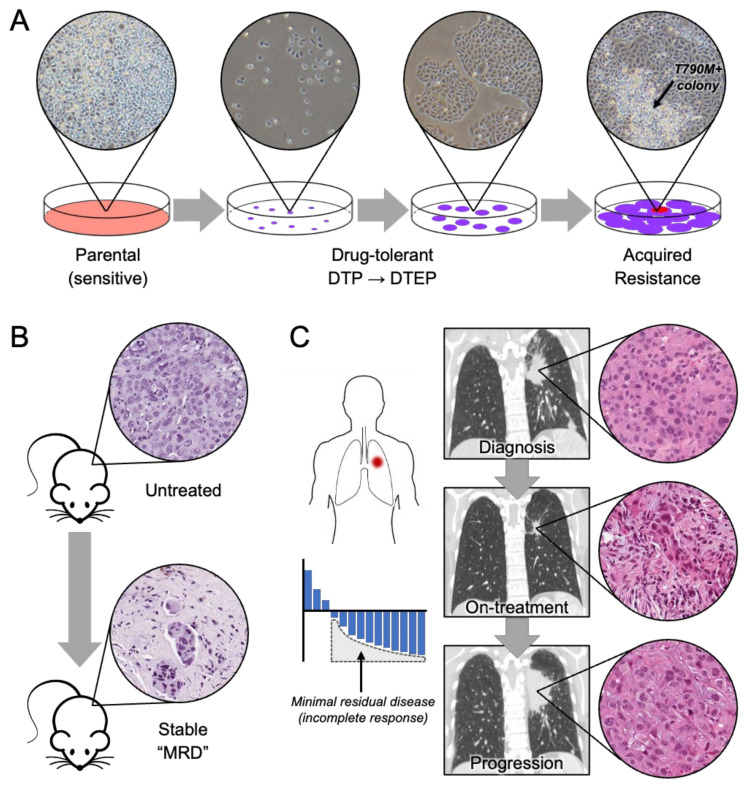
“Over time, a fraction of DTPs reinitiated proliferation in the presence of erlotinib, giving rise to a second population of cells labeled drug-tolerant expanded persisters (DTEPs).”
§ Emerging Insights into Targeted Therapy-Tolerant Persister Cells in Cancer > 2. Origins and Characteristics of Persisters > 2.2. Persisters in Cancer
What the sources say
- Supportedcites [23] Sharma S.V. Lee D.Y. Li B. Quinlan M.P. Takahashi F. Maheswaran S. McDermott U. Azizian N. Zou L. Fischbach M.A. A chromatin-mediated reversible drug-tolerant state in cancer cell subpopulations Cell 2010 141 69 80 10.1016/j.cell.2010.02.027 20371346 PMC2851638 source
The Results section 'Detection of a drug-tolerant cancer cell subpopulation' (p. 1 of our copy) states that although DTPs are largely quiescent, approximately 20% eventually resume normal proliferation in the presence of drug, yielding colonies termed 'drug-tolerant expanded persisters' (DTEPs), which can be propagated indefinitely in drug. The 'Generation of DTEPs' procedures (Experimental Procedures) corroborate that clones of drug-resistant cells appear after ~30 days of continued erlotinib/gefitinib selection. Both the fraction ('a fraction') and the continued-drug condition in the citing sentence match the source. (LLM, conf=0.93)
plainstates a cause- Asserted: passes — The authors put it forward as true.
- Checkable: passes — It can be checked against evidence.
- Load-bearing: unclear — It is unclear whether the paper’s conclusions depend on it.
- Based: passes — The paper gives a reason why it holds.
- Supported
Every source the paper cites for this claim was checked and supports it.
In the paper
“Some studies indicate that drug-tolerant persister populations or cancer cells that are primed to persist exist even prior to treatment [40,43,60,61].”
§ Emerging Insights into Targeted Therapy-Tolerant Persister Cells in Cancer > 2. Origins and Characteristics of Persisters > 2.3. Origin of Drug-Tolerant Persister Cells
What the sources say
- Supportedcites [40] Hangauer M.J. Viswanathan V.S. Ryan M.J. Bole D. Eaton J.K. Matov A. Galeas J. Dhruv H.D. Berens M.E. Schreiber S.L. Drug-tolerant persister cancer cells are vulnerable to GPX4 inhibition Nature 2017 551 247 250 10.1038/nature24297 29088702 PMC5933935 source
The passage on RSL3 pretreatment (labeled Abstract in our copy; page not provided) says that reducing the later persister-cell pool is consistent with reports that persister cells may preexist drug treatment. This supports the citing sentence’s qualified claim that some studies indicate pretreatment existence. (LLM, conf=0.93)
- Supportedcites [43] Raha D. Wilson T.R. Peng J. Peterson D. Yue P. Evangelista M. Wilson C. Merchant M. Settleman J. The cancer stem cell marker aldehyde dehydrogenase is required to maintain a drug-tolerant tumor cell subpopulation Cancer Res. 2014 74 3579 3590 10.1158/0008-5472.CAN-13-3456 24812274 source
In “Drug-tolerant cancer cells express the CSC marker ALDH1A1,” the paper identifies ALDH-high cells before treatment and reports that they showed greater crizotinib tolerance than ALDH-low cells. The Discussion explicitly describes a preexisting subpopulation with characteristics of drug-tolerant cells. This supports the citing sentence’s qualified claim that some cancer cells are primed to persist before treatment. (LLM, conf=0.93)
- Supportedcites [60] Roesch A. Vultur A. Bogeski I. Wang H. Zimmermann K.M. Speicher D. Korbel C. Laschke M.W. Gimotty P.A. Philipp S.E. Overcoming intrinsic multidrug resistance in melanoma by blocking the mitochondrial respiratory chain of slow-cycling JARID1B(high) cells Cancer Cell 2013 23 811 825 10.1016/j.ccr.2013.05.003 23764003 PMC3810180 source
In Results (“Dynamics of the therapy-resistant JARID1Bhigh phenotype”; page unavailable), the authors conclude that treatment mainly selects pre-existing slow-cycling JARID1Bhigh melanoma cells. This supports the claim that cells primed to survive treatment can exist beforehand, while the paper also allows that some cells may acquire the phenotype. (LLM, conf=0.93)
- Supportedcites [61] Shaffer S.M. Dunagin M.C. Torborg S.R. Torre E.A. Emert B. Krepler C. Beqiri M. Sproesser K. Brafford P.A. Xiao M. Rare cell variability and drug-induced reprogramming as a mode of cancer drug resistance Nature 2017 546 431 435 10.1038/nature22794 28607484 PMC5542814 source
The Abstract says that transcriptional variability in melanoma cells before treatment predicts which cells will resist the drug. It describes rare cells in a transient pre-resistant state that become stably resistant after drug-induced reprogramming, supporting the claim's 'primed to persist' alternative. (LLM, conf=0.92)
hedged- Asserted: passes — The authors put it forward as true.
- Checkable: passes — It can be checked against evidence.
- Load-bearing: passes — The paper’s conclusions depend on it.
- Based: passes — The paper gives a reason why it holds.
- Supported
89 more claims · 13 with their cited sources checked
Create a free account to see all 139 claims and to verify the 73 references still open.
- It may state two separate claims as one. 38
- Probably not a substantial claim. 8
Claims other papers make about this one
Each is checked against this paper’s own text: does it say what the citing paper says it does?
The cited source says what the claim attributes to it.
In the citing paper
“in BRAF-mutated CRC, the response to single-agent BRAF inhibition is limited by EGFR-mediated adaptive feedback reactivation of MAPK signaling [237].”
From Mechanisms and Strategies to Overcome Drug Resistance in Colorectal Cancer (2025) · cites this paper as [237]
In the citing paper
“Biologically, the closest analogy to clinical residual disease is the drug-tolerant (or “persister”) state (9).”
From Synthetic Lethal Interaction with BCL-XL Blockade Deepens Response to Cetuximab in Patient-Derived Models of Metastatic Colorectal Cancer (2023) · cites this paper as [9]
Self-check
Percentages, sums and reported differences re-computed from the paper’s own numbers.
Each contradiction between two passages listed here was confirmed by an independent check.
Rated minor: it would not touch a result — a value no result rests on, a p-value that stays on the same side of the significance level, or a conflict that is clerical, resolved elsewhere in the paper, or outside its own findings.
In the paper
§ Emerging Insights into Targeted Therapy-Tolerant Persister Cells in Cancer > 3. Drug-Tolerant Persister Cells: Mechanisms of Drug Tolerance and Therapeutic Vulnerabilities > 3.1. Epigenetic Reprogramming/Plasticity
“| Melanoma | BRAF | Vemurafenib | SK-MEL-5, SK-MEL-28, G-361 | Stromal cell secretion of HGF | MAPK (PD184352), PI3K–AKT (crizotinib, MK-2206) | [99] |”
§ Emerging Insights into Targeted Therapy-Tolerant Persister Cells in Cancer > 3. Drug-Tolerant Persister Cells: Mechanisms of Drug Tolerance and Therapeutic Vulnerabilities > 3.5. Interactions with the Tumor Microenvironment
“Using either an HGF-blocking antibody or the MET small molecule inhibitor crizotinib to target the HGF–MET axis suppressed fibroblast-mediated resistance.”
Citations
Cites
Lynch, T. J., Bell, D. W., Sordella, R., Gurubhagavatula, S., Okimoto, R. A., Brannigan, B. W., Harris, P. L., Haserlat, S. M., Supko, J. G., Haluska, F. G., et al. (2004) · New England Journal of Medicine · doi:10.1056/nejmoa040938 · Cited by 11,486
EGFR Mutations in Lung Cancer: Correlation with Clinical Response to Gefitinib Therapy
Paez, J. G., Jänne, P. A., Lee, J. C., Tracy, S., Greulich, H., Gabriel, S., Herman, P., Kaye, F. J., Lindeman, N., Boggon, T. J., et al. (2004) · Science · doi:10.1126/science.1099314 · Cited by 9,368
Microenvironmental regulation of tumor progression and metastasis
Quail, D. F., & Joyce, J. A. (2013) · Nature Medicine · doi:10.1038/nm.3394 · Cited by 7,994
Primary, Adaptive, and Acquired Resistance to Cancer Immunotherapy
Sharma, P., Hu-Lieskovan, S., Wargo, J. A., & Ribas, A. (2017) · Cell · doi:10.1016/j.cell.2017.01.017 · Cited by 5,588
Identification of the transforming EML4–ALK fusion gene in non-small-cell lung cancer
Soda, M., Choi, Y. L., Enomoto, M., Takada, S., Yamashita, Y., Ishikawa, S., Fujiwara, S.-I., Watanabe, H., Kurashina, K., Hatanaka, H., et al. (2007) · Nature · doi:10.1038/nature05945 · Cited by 5,439
Cancer drug resistance: an evolving paradigm
Holohan, C., Van Schaeybroeck, S., Longley, D. B., & Johnston, P. G. (2013) · Nature Reviews Cancer · doi:10.1038/nrc3599 · Cited by 4,681 · cited 2×
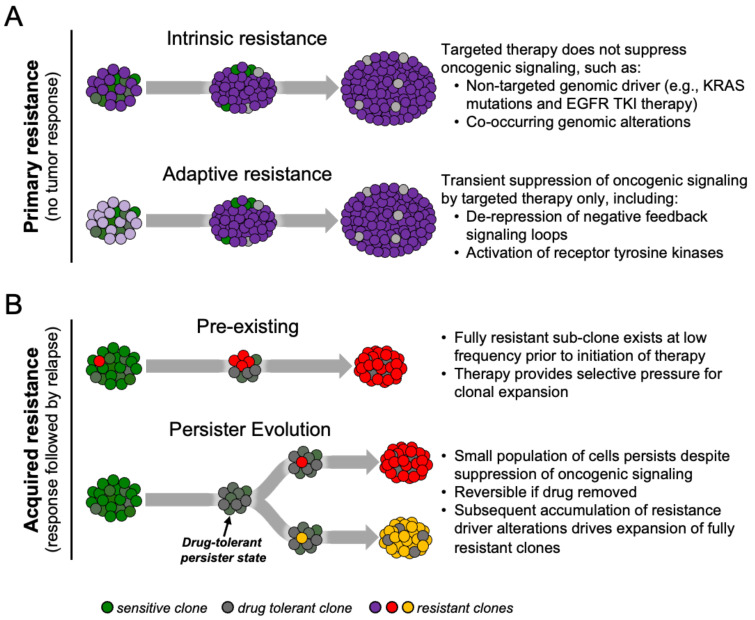
“Drug resistance to targeted therapies in cancer can be classified as primary or acquired (Figure 1A) [8,9].”
BackgroundMET Amplification Leads to Gefitinib Resistance in Lung Cancer by Activating ERBB3 Signaling
Engelman, J. A., Zejnullahu, K., Mitsudomi, T., Song, Y., Hyland, C., Park, J. O., Lindeman, N., Gale, C.-M., Zhao, X., Christensen, J., et al. (2007) · Science · doi:10.1126/science.1141478 · Cited by 4,496 · cited 4×
“For example, the discovery of MET amplification in a subset of resistant EGFR-mutant lung cancers [14] has now led to promising activity of combination EGFR and MET TKIs [103] in EGFR-mutant lung cancer patients with acquired resistance due to MET amplification.”
BackgroundInfluentialEGFR Mutation and Resistance of Non–Small-Cell Lung Cancer to Gefitinib
Kobayashi, S., Boggon, T. J., Dayaram, T., Jänne, P. A., Kocher, O., Meyerson, M., Johnson, B. E., Eck, M. J., Tenen, D. G., & Halmos, B. (2005) · New England Journal of Medicine · doi:10.1056/nejmoa044238 · Cited by 3,964 · cited 1×
“For example, in EGFR-mutant lung cancers, the point mutation leading to a substitution of methionine for threonine at amino acid position 790 in exon 20 of EGFR, known as the EGFR T790M gatekeeper mutation, is a leading cause of resistance to first- and second-generation EGFR inhibitors [11,12].”
BackgroundGenotypic and Histological Evolution of Lung Cancers Acquiring Resistance to EGFR Inhibitors
Sequist, L. V., Waltman, B. A., Dias-Santagata, D., Digumarthy, S., Turke, A. B., Fidias, P., Bergethon, K., Shaw, A. T., Gettinger, S., Cosper, A. K., et al. (2011) · Science Translational Medicine · doi:10.1126/scitranslmed.3002003 · Cited by 3,499
Bacterial Persistence as a Phenotypic Switch
Balaban, N. Q., Merrin, J., Chait, R., Kowalik, L., & Leibler, S. (2004) · Science · doi:10.1126/science.1099390 · Cited by 2,952 · cited 1×
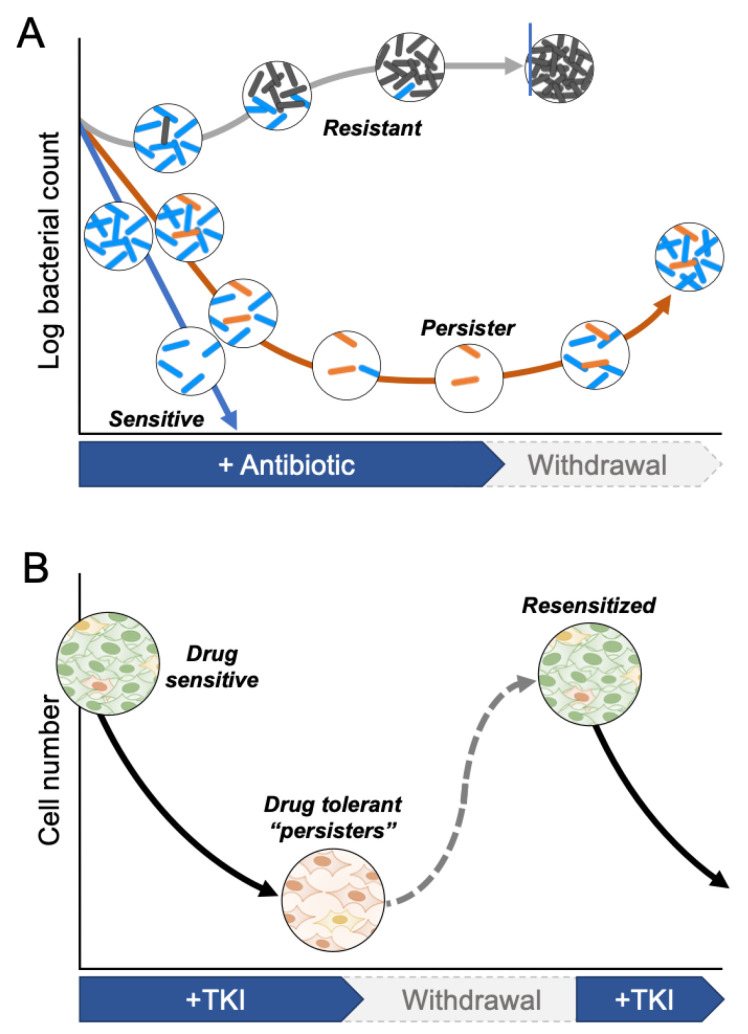
“More recently, live imaging experiments have confirmed that these bacterial cells that survived antibiotic treatment were indeed not proliferating before the addition of antibiotics [30].”
Background
Cited by
Senescence and cancer — role and therapeutic opportunities
Schmitt, C. A., Wang, B., & Demaria, M. (2022) · Nature Reviews Clinical Oncology · doi:10.1038/s41571-022-00668-4 · Cited by 794
Third-generation EGFR and ALK inhibitors: mechanisms of resistance and management
Cooper, A. J., Sequist, L. V., & Lin, J. J. (2022) · Nature Reviews Clinical Oncology · doi:10.1038/s41571-022-00639-9 · Cited by 508
Immunogenic cell death in cancer: targeting necroptosis to induce antitumour immunity
Meier, P., Legrand, A. J., Adam, D., & Silke, J. (2024) · Nature Reviews Cancer · doi:10.1038/s41568-024-00674-x · Cited by 382
“Moreover, non-mutational drug resistance mechanisms can also support the survival of residual cancer persister cells , which then serve as a reservoir from which tumours can re-emerge 5,6 .”
Metabolic reprogramming and therapeutic resistance in primary and metastatic breast cancer
Liu, S., Zhang, X., Wang, W., Li, X., Sun, X., Zhao, Y., Wang, Q., Li, Y., Hu, F., & Ren, H. (2024) · Molecular Cancer · doi:10.1186/s12943-024-02165-x · Cited by 246
Yang, Y., Li, S., To, K. K. W., Zhu, S., Wang, F., & Fu, L. (2025) · Journal of Experimental & Clinical Cancer Research · doi:10.1186/s13046-025-03377-9 · Cited by 184
“A multifaceted array of factors, including driver oncogene mutations, epigenetic alterations, disruptions in critical signaling pathways, defects in the antigen-presenting pathway and immune evasion, are known to contribute to diminished effectiveness of immunotherapy [10–12].”
Principles and functions of metabolic compartmentalization
Bar-Peled, L., & Kory, N. (2022) · Nature Metabolism · doi:10.1038/s42255-022-00645-2 · Cited by 181
ALK-positive lung cancer: a moving target
Schneider, J. L., Lin, J. J., & Shaw, A. T. (2023) · Nature Cancer · doi:10.1038/s43018-023-00515-0 · Cited by 189
“Persisters may subvert TKI inhibition through adaptive mechanisms, including epigenetic modifications, bypass activation, metabolic reprogramming and altered interactions with the tumor microenvironment 115 .”
BackgroundDrug-tolerant persister cells in cancer: the cutting edges and future directions
Pu, Y., Li, L., Peng, H., Liu, L., Heymann, D., Robert, C., Vallette, F., & Shen, S. (2023) · Nature Reviews Clinical Oncology · doi:10.1038/s41571-023-00815-5 · Cited by 175
“Consequently, different DTP states or behaviours probably exist depending on the disease type and treatment received, and the DTP population rarely comprises cells of a single monolithic phenotype.”
BackgroundChapeau, E. A., Sansregret, L., Galli, G. G., Chène, P., Wartmann, M., Mourikis, T. P., Jaaks, P., Baltschukat, S., Barbosa, I. A. M., Bauer, D., et al. (2024) · Nature Cancer · doi:10.1038/s43018-024-00754-9 · Cited by 159
Drug-Tolerant Persister Cells in Cancer Therapy Resistance
Dhanyamraju, P. K., Schell, T. D., Amin, S., & Robertson, G. P. (2022) · Cancer Research · doi:10.1158/0008-5472.can-21-3844 · Cited by 161
AXL in cancer: a modulator of drug resistance and therapeutic target
Tang, Y., Zang, H., Wen, Q., & Fan, S. (2023) · Journal of Experimental & Clinical Cancer Research · doi:10.1186/s13046-023-02726-w · Cited by 140
“The drug resistance can be intrinsic or acquired and reflects the result of multiple genetic and epigenetic alterations in cancer cells [4, 5].”
BackgroundCancer metastasis: Molecular mechanisms and clinical perspectives
Khan, S. U., Fatima, K., Malik, F. A., Kalkavan, H., & Wani, A. (2023) · Pharmacology & Therapeutics · doi:10.1016/j.pharmthera.2023.108522 · Cited by 133
Haderk, F., Chou, Y.-T., Cech, L., Fernández-Méndez, C., Yu, J., Olivas, V., Meraz, I. M., Barbosa Rabago, D., Kerr, D. L., Gomez, C., et al. (2024) · Nature Communications · doi:10.1038/s41467-024-47423-0 · Cited by 103
“These fi ndings align with previous studies, suggesting that the selection of pre-existing subclones is unlikely to be the only basis for the observed phenotype of drug tolerance 27 .”
Challenges in the Use of Targeted Therapies in Non–Small Cell Lung Cancer
Rivera‐Concepción, J., Uprety, D., & Adjei, A. A. (2022) · Cancer Research and Treatment · doi:10.4143/crt.2022.078 · Cited by 94
“Persister cells tend to lack classic drug resistance driver alterations and their resistant phenotype could be transient and reversible upon removal of the treatment drug [77].”
BackgroundGenomic hallmarks and therapeutic implications of G0 cell cycle arrest in cancer
Wiecek, A. J., Cutty, S. J., Kornai, D., Parreno-Centeno, M., Gourmet, L. E., Tagliazucchi, G. M., Jacobson, D. H., Zhang, P., Xiong, L., Bond, G. L., et al. (2023) · Genome biology · doi:10.1186/s13059-023-02963-4 · Cited by 89
Mechanisms and Strategies to Overcome Drug Resistance in Colorectal Cancer
Haynes, J., & Manogaran, P. (2025) · International Journal of Molecular Sciences · doi:10.3390/ijms26051988 · Cited by 82
“For example, in BRAF -mutated CRC, the response to single-agent BRAF inhibition is limited by EGFR-mediated adaptive feedback reactivation of MAPK signaling [237].”
Dormancy, stemness, and therapy resistance: interconnected players in cancer evolution
Francescangeli, F., Angelis, M. L. D., Rossi, R., Cuccu, A., Giuliani, A., Maria, R. D., & Zeuner, A. (2023) · Cancer and Metastasis Reviews · doi:10.1007/s10555-023-10092-4 · Cited by 114
“vironmental elements and with the immune system play a key role in the determination of preexisting chemoresistant QCCs, as indicated by previous evidences [24, 115] and by recent studies discussed below.”
BackgroundResultAraujo, H. A., Pechuan-Jorge, X., Zhou, T., Do, M. T., Hu, X., Rojas Alvarez, F. R., Salvatierra, M. E., Ibarguen, H. P., Lee, R., Raghulan, R., et al. (2024) · Cancer Discovery · doi:10.1158/2159-8290.cd-24-0421 · Cited by 70
Wang, J., Li, J., Liu, J., Chan, K.-Y., Lee, J. H. S., Lin, K. N., Wang, C. C., & Lau, T. (2024) · Cancers · doi:10.3390/cancers16030512 · Cited by 81
“Persister cells, as a subpopulation of cancer cells, can survive despite anti-cancer treatments, contributing to the development of resistance to certain therapies [107].”
BackgroundLiu, S., Jiang, A., Tang, F., Duan, M., & Li, B. (2025) · Molecular Cancer · doi:10.1186/s12943-025-02323-9 · Cited by 78
“%) develop rapid resistance as early as 2 weeks of erlotinib exposure due to the pre-existing EGFR T790M mutation, while the majority initially respond but later develop tolerance through DTP expansion over a duration of 1 year [31].”
A Tale of Two Cancers: A Current Concise Overview of Breast and Prostate Cancer
Silva, F. D., & Alcorn, J. (2022) · Cancers · doi:10.3390/cancers14122954 · Cited by 72
The recent progress of inorganic‐based intelligent responsive nanoplatform for tumor theranostics
Yang, Z., & Chen, H. (2022) · Open Research (University of Surrey) · doi:10.1002/viw.20220009 · Cited by 57
Fiskus, W. C., Mill, C. P., Birdwell, C. E., Davis, J. A., Das, K., Boettcher, S., Kadia, T. M., Dinardo, C. D., Takahashi, K., Loghavi, S., et al. (2023) · Blood Cancer Journal · doi:10.1038/s41408-023-00826-6 · Cited by 58
“Whether this synergistic combination would abrogate adaptive mechanisms that lead to emergence of MI-tolerant/persister cells following MI monotherapy remains to be fully evaluated [52, 53].”
Brd4 proteolysis-targeting chimera nanoparticles sensitized colorectal cancer chemotherapy
He, Y., Ju, Y., Hu, Y., Wang, B., Che, S., Jian, Y., Zhuo, W., Fu, X., Cheng, Y., Zheng, S., et al. (2023) · Journal of Controlled Release · doi:10.1016/j.jconrel.2022.12.035 · Cited by 59
Zhang, J., Peng, Q., Fan, J., Liu, F., Chen, H., Bi, X., Yuan, S., Jiang, W., Pan, T. S., Li, K., et al. (2024) · Journal of Translational Medicine · doi:10.1186/s12967-024-06018-5 · Cited by 57
Non-lethal outcomes of engaging regulated cell death pathways in cancer
Kalkavan, H., Rühl, S., Shaw, J. J. P., & Green, D. R. (2023) · Nature Cancer · doi:10.1038/s43018-023-00571-6 · Cited by 49
Fiskus, W. C., Piel, J. C., Collins, M. P., Hentemann, M., Cuglievan, B., Mill, C. P., Birdwell, C. E., Das, K., Davis, J. A., Hou, H., et al. (2024) · Blood · doi:10.1182/blood.2023022832 · Cited by 50
“This suggests that resistance to MI in MV4-11/MITR and OCI-AML3/MITR cells is non-genetic and likely due to undefined adaptive/epigenetic mechanisms (31).”
BackgroundExosomal Non-Coding RNAs: New Insights into the Biology of Hepatocellular Carcinoma
Zhang, Q., Li, H., Liu, Y., Li, J., Wu, C., & Tang, H. (2022) · Current Oncology · doi:10.3390/curroncol29080427 · Cited by 48
“Acquired drug resistance to targeted cancer therapy is challenging in that tumor cells initially respond to treatment but subsequently develop acquired drug resistance after long-term treatment [95,96].”
BackgroundThe Role of Tumor Stem Cell Exosomes in Cancer Invasion and Metastasis
Liu, K., Gao, X., Kang, B., Liu, Y., Wang, D., & Wang, Y. (2022) · Frontiers in Oncology · doi:10.3389/fonc.2022.836548 · Cited by 49
Natural Products in Preventing Tumor Drug Resistance and Related Signaling Pathways
Yang, C., Mai, Z., Liu, C., Yin, S., Cai, Y., & Xia, C. (2022) · Molecules · doi:10.3390/molecules27113513 · Cited by 48
“It was found that 5–10% of lung cancer patients develop resistance to TKIs due to c-MET gene amplification [54].”
BackgroundAdvances and future directions in ROS1 fusion-positive lung cancer
Boulanger, M. C., Schneider, J. L., & Lin, J. J. (2024) · The Oncologist · doi:10.1093/oncolo/oyae205 · Cited by 38
Singh, D., & Siddique, H. R. (2023) · Cancer and Metastasis Reviews · doi:10.1007/s10555-023-10141-y · Cited by 41
“Cancer cells enter a dormant and stem-like state, forming a subpopulation known as drug-tolerant persisters (DTPs) [8].”
Exploring androgen receptor signaling pathway in prostate cancer: A path to new discoveries
Obinata, D., Takayama, K., Inoue, S., & Takahashi, S. (2024) · International Journal of Urology · doi:10.1111/iju.15424 · Cited by 43
ALK inhibitors in cancer: mechanisms of resistance and therapeutic management strategies
Poei, D., Ali, S., Ye, S., & Hsu, R. C. (2024) · Cancer Drug Resistance · doi:10.20517/cdr.2024.25 · Cited by 64
Programmed cell death network in cancer drug resistance: A framework for therapeutic intervention
Guo, D., Guo, Y., Zhu, C., Liao, Y., Lin, Z., Zhang, H., Zhang, W., & Zou, Z. (2026) · Drug Resistance Updates · doi:10.1016/j.drup.2026.101387 · Cited by 41
Sublethal engagement of apoptotic pathways in residual cancer
Killarney, S. T., Tait, S. W. G., Green, D. R., & Wood, K. C. (2023) · Trends in Cell Biology · doi:10.1016/j.tcb.2023.07.005 · Cited by 42
Aravindan, A., Gupta, A., Moorkoth, S., & Dhas, N. L. (2024) · Journal of Drug Delivery Science and Technology · doi:10.1016/j.jddst.2024.106007 · Cited by 40
Zhang, F., Hao, Y., Yang, N., Liu, M., Luo, Y., Zhang, Y., Zhou, J., Liu, H., & Li, J. (2024) · BMC Cancer · doi:10.1186/s12885-024-11951-1 · Cited by 35
“Inhibition of apoptosis, one of the classic markers of cancer, is related to drug resistance and may be an important therapeutic target to overcome the drug resistance [19].”
BackgroundThe role of lncRNA NEAT1 in human cancer chemoresistance
Long, F., Li, X., Pan, J., Ye, H., Di, C., Huang, Y., Li, J., Zhou, X., Yi, H., Huang, Q., et al. (2024) · Cancer Cell International · doi:10.1186/s12935-024-03426-x · Cited by 42
“Chemotherapy induced drug resistance can be regarded as an adaptive change of cancer cells to chemo-therapeutic drugs [7].”
BackgroundMolecular mechanism and application of emerging technologies in study of bacterial persisters
Yuan, S., Shen, Y., Quan, Y., Gao, S., Zuo, J., Jin, W., Li, R., Yi, L., Wang, Y., & Wang, Y. (2024) · BMC Microbiology · doi:10.1186/s12866-024-03628-3 · Cited by 35
“This way in which cancer cells adapt to environmental stress by changing their phenotype shows a high degree of similarity to persisters [167] and may therefore explain the emergence of both by similar mechanisms.”
Daley, B. R., Vieira, H. M., Rao, C., Hughes, J. M., Beckley, Z., Huisman, D. H., Chatterjee, D., Sealover, N. E., Cox, K., Askew, J. W., et al. (2023) · Proceedings of the National Academy of Sciences · doi:10.1073/pnas.2313137120 · Cited by 32
“KRAS - mutated cancer cells treated with MEK inhibitors are capable of surviving targeted treatments by entering a near - quiescent state (5, 23), becoming drug - tolerant persister (DTP) cells (21).”
BackgroundLeto, S. M., Ferri, M., Sassi, F., Zanella, E. R., Cottino, F., Vurchio, V., Catalano, I., Ferrero, A., Zingaretti, C. C., Marchiò, C., et al. (2023) · Clinical Cancer Research · doi:10.1158/1078-0432.ccr-22-2550 · Cited by 30
Chen, Z., Vallega, K. A., Wang, D., Quan, Z., Fan, S., Wang, Q., Leal, T. A. B., Ramalingam, S. S., & Sun, S. (2024) · Journal of Clinical Investigation · doi:10.1172/jci172716 · Cited by 30
“…of acquired resistance is largely due to its effectiveness eliminating both primarily resistant clones and DTCs present in the EGFRm NSCLC cell population, which both constitute a key mechanism accounting for the emergence of acquired resistance to EGFR-TKIs including osimertinib (18, 19).”
BackgroundRamponi, V., Richart, L., Kovatcheva, M., Attolini, C. S., Capellades, J., Lord, A. E., Yanes, Ó., Ficz, G., & Serrano, M. (2024) · Cancer Research · doi:10.1158/0008-5472.can-24-0529 · Cited by 31
“…to therapy: therapy-induced senescence (TIS), a state of low reversibility in which most cells remain arrested long-term, even upon therapy termination (2); and drug-tolerant persistence (DTP), a state in which cells can efficiently resume proliferation after removal of the anticancer drug (3).”
Persister cell plasticity in tumour drug resistance
McDonald, P. C., & Dedhar, S. (2023) · Seminars in Cell and Developmental Biology · doi:10.1016/j.semcdb.2023.11.003 · Cited by 32
Emerging trends of phytochemicals as ferroptosis modulators in cancer therapy
Khan, F., Pandey, P., Verma, M., Ramniwas, S., Lee, D., Moon, S., Park, M. N., Upadhyay, T. K., & Kim, B. (2024) · Biomedicine & Pharmacotherapy · doi:10.1016/j.biopha.2024.116363 · Cited by 32
Chen, R., Zhu, S., Zhao, R., Liu, W., Jin, L., Ren, X., & He, H. (2024) · Frontiers in Pharmacology · doi:10.3389/fphar.2024.1402514 · Cited by 30
“Drug-tolerant persister (DTP) is a prestate of drug-resistant cells, which enables malignant cells to endure the chemotherapy for a period, thereby allowing them to develop drug resistance through different methods (Cabanos and Hata, 2021).”
BackgroundHariri, A., Mirian, M., Khosravi, A., Zarepour, A., Iravani, S., & Zarrabi, A. (2024) · Drug Resistance Updates · doi:10.1016/j.drup.2024.101119 · Cited by 31
Borgeaud, M., Olivier, T., Bar, J., Saw, S. P. L., Parikh, K., Banna, G. L., Vito, C. D., Feldman, J., Le, X., & Addeo, A. (2025) · CA A Cancer Journal for Clinicians · doi:10.3322/caac.70024 · Cited by 67
“134,135 Moreover, it also has been demonstrated that the TME plays a role in the emergence and promotion of drug persister cells, such as tumor - associated fibroblasts.”
Tumor-promoting aftermath post-chemotherapy: A focus on breast cancer
Famta, P., Shah, S., Jain, N., Kumar, K. C., Bagasariya, D., Khatri, D. K., Raghuvanshi, R. S., Singh, S. B., & Srivastava, S. (2022) · Life Sciences · doi:10.1016/j.lfs.2022.121125 · Cited by 28
Song, X.-H., Yang, L., Zheng, X., Zhu, Q., Liao, X.-L., Liu, K., Zhang, W., Peng, Q., Zhu, Y., Zhao, L.-Y., et al. (2023) · MedComm · doi:10.1002/mco2.342 · Cited by 32
Addressing Challenges in Targeted Therapy for Metastatic Colorectal Cancer
Hage, M. E., Su, Z., & Linnebacher, M. (2025) · Cancers · doi:10.3390/cancers17071098 · Cited by 34
“Persister cells typically do not possess conventional driver alterations associated with drug resistance, and their resistant properties may be transient and reversible upon cessation of drug treatment [67].”
Jog, E., Jainarayanan, A., Ferlita, A. L., Chakraborty, A., Dalwai, A., Yahya, S., Shivashankar, A., Choudhary, B. S., Chandramouli, A., Kazi, M. K., et al. (2024) · Redox Biology · doi:10.1016/j.redox.2024.103458 · Cited by 31
Targeting therapy-persistent residual disease
Sun, X., Wu, L. F., Altschuler, S. J., & Hata, A. N. (2024) · Nature Cancer · doi:10.1038/s43018-024-00819-9 · Cited by 29
Self-citationThe Hallmarks of Cancer as Eco-Evolutionary Processes
Bhattacharya, R., Avdieiev, S. S., Bukkuri, A., Whelan, C. J., Gatenby, R. A., Tsai, K. Y., & Brown, J. S. (2025) · Cancer Discovery · doi:10.1158/2159-8290.cd-24-0861 · Cited by 26
Nano-engineering nanomedicines with customized functions for tumor treatment applications
Wang, Y., Li, S., Ren, X., Yu, S., & Meng, X. (2023) · Journal of Nanobiotechnology · doi:10.1186/s12951-023-01975-3 · Cited by 31
Small Cell Lung Cancer—An Update on Chemotherapy Resistance
Ying, Q., Fan, R., Shen, Y., Chen, B., Zhang, J., Li, Q., & Shi, X. (2024) · Current Treatment Options in Oncology · doi:10.1007/s11864-024-01245-w · Cited by 26
Recent Advances and Future Prospects in Biological-Membrane-Targeted Polymers
Chen, R., Liu, Y., Jiang, Y., Sun, M., Fan, Z., & Du, J. (2025) · Polymer science & technology. · doi:10.1021/polymscitech.5c00014 · Cited by 27
Nojima, Y., Yao, R., & Suzuki, T. (2025) · Biochimica et Biophysica Acta (BBA) - Molecular Basis of Disease · doi:10.1016/j.bbadis.2025.167693 · Cited by 28
Clinical application and drug resistance mechanism of gemcitabine
Zhang, X., Qi, B., & Chen, J. (2025) · Frontiers in Cell and Developmental Biology · doi:10.3389/fcell.2025.1702720 · Cited by 28
Zhang, W. C., Skiados, N. G., Aftab, F., Moreno, C., Silva, L., Corbilla, P. J. A., Asara, J. M., Hata, A. N., & Slack, F. J. (2022) · Cancer Gene Therapy · doi:10.1038/s41417-022-00504-y · Cited by 24
“Drug-tolerant persister cells (DTPCs) are a population of malignant cells showing prolonged survival when receiving anticancer treatments and are a likely source of drug resistance [36, 37].”
BackgroundSelf-citationNotch receptor/ligand diversity: contribution to colorectal cancer stem cell heterogeneity
Brisset, M., Mehlen, P., Meurette, O., & Hollande, F. (2023) · Frontiers in Cell and Developmental Biology · doi:10.3389/fcell.2023.1231416 · Cited by 20
“By doing so, DTP cells display resistance to a wide variety of chemotherapeutic agents (De Angelis et al., 2019), radiotherapy (Zhao Y. et al., 2020), and targeted therapies (Cabanos and Hata, 2021).”
BackgroundSun, S. (2023) · Chinese Medical Journal - Pulmonary and Critical Care Medicine · doi:10.1016/j.pccm.2022.10.001 · Cited by 21
“11, 12 18 Resistance mechanisms caused by genetic alterations (EGFR-dependent and EGFR-independent) are well-documented in many studies.”
ResultCharacteristics and molecular mechanism of drug-tolerant cells in cancer: a review
Liang, X.-W., Liu, B., Chen, J.-C., Cao, Z. W., Chu, F.-R., Xiong, L., Wang, S.-Z., & Wu, J. (2023) · Frontiers in Oncology · doi:10.3389/fonc.2023.1177466 · Cited by 20
“Previous studies have indicated that some cells in tumours that have genetic mutations before drug treatment and have stable drug resistance, and that they survive drug pressure and become the dominant cells, eventually resulting in tumour drug resistance (3).”
BackgroundRole of functional genomics in identifying cancer drug resistance and overcoming cancer relapse
Mahgoub, E. O., Cho, W. C. S., Sharifi, M., Falahati, M., Zeinabad, H. A., Mare, H. E., & Hasan, A. (2023) · Heliyon · doi:10.1016/j.heliyon.2023.e22095 · Cited by 22
Daley, B. R., Sealover, N. E., Finniff, B. A., Hughes, J. M., Sheffels, E., Gerlach, D., Hofmann, M. H., Kostyrko, K., LaMorte, J. P., Linke, A. J., et al. (2024) · Cancer Research · doi:10.1158/0008-5472.can-23-3256 · Cited by 22
Gold nanoparticles as antiangiogenic and antimetastatic agents
Zamborlin, A., & Voliani, V. (2022) · Drug Discovery Today · doi:10.1016/j.drudis.2022.103438 · Cited by 19
Wu, Y., Huang, C.-S., Hsieh, M., Huang, C.-M., Setiawan, S. A., Yeh, C., Kuo, K.-T., & Liu, S. (2024) · Aging · doi:10.18632/aging.205409 · Cited by 36
“This DTP state enables cancer cells to survive drug therapy long enough to acquire drug resistance through other mechanisms [21].”
BackgroundOsimertinib-tolerant lung cancer cells are susceptible to ferroptosis
Konishi, H., Haga, Y., Lin, Y., Tsujino, H., Higashisaka, K., & Tsutsumi, Y. M. (2022) · Biochemical and Biophysical Research Communications · doi:10.1016/j.bbrc.2022.12.029 · Cited by 20
Song, Y., Deng, Z. C., Sun, H., Zhao, Y., Zhao, R., Cheng, J., & Huang, Q. (2023) · Journal of Translational Medicine · doi:10.1186/s12967-023-04260-x · Cited by 21
“believed that this group of cells acted as cancer stem cells (CSCs) to mediate tumor relapse through genetic processes [28, 29], while recent research results used persistent state or slow cycling state, a diapause-like slow proliferation state that mediates relapse through nongenetic mechanisms, to describe this grou…”
Overcoming chemotherapy resistance in low-grade gliomas: A computational approach
Delobel, T., Ayala-Hernández, L. E., Bosque, J. J., Pérez-Beteta, J., Chulián, S., García-Ferrer, M., Piñero, P., Schucht, P., Murek, M. K., & Pérez‐García, V. M. (2023) · PLoS Computational Biology · doi:10.1371/journal.pcbi.1011208 · Cited by 18
“Drug-tolerant cells share common antibiotic tolerance properties observed in bacteria, thus they are also known as persistent cancer cells or persisters, replicating the term used for bacteria [9].”
Refining the Treatment of Pancreatic Cancer From Big Data to Improved Individual Survival
Bailey, P. J., Zhou, X., An, J., Peccerella, T., Hu, K., Springfeld, C., Büchler, M. W., & Neoptolemos, J. P. (2023) · Function · doi:10.1093/function/zqad011 · Cited by 21
CDCP1: A promising diagnostic biomarker and therapeutic target for human cancer
Qi, X., Gao, J., Li, Z., Zhang, G., Li, J., Fu, Y., Cai, M., Wang, H., & Tong, T. (2022) · Life Sciences · doi:10.1016/j.lfs.2022.120600 · Cited by 17
On optimal temozolomide scheduling for slowly growing glioblastomas
Segura‐Collar, B., Jiménez-Sánchez, J., Gargini, R., Dragoj, M., Sepúlveda-Sánchez, J. M., Pešić, M., Ramírez-González, M. A., Ayala-Hernández, L. E., Gomez, P. S., & Pérez‐García, V. M. (2022) · Neuro-Oncology Advances · doi:10.1093/noajnl/vdac155 · Cited by 20
Persisting cancer cells are different from bacterial persisters
Decollogny, M., & Rottenberg, S. (2024) · Trends in cancer · doi:10.1016/j.trecan.2024.02.002 · Cited by 16
Zhang, H., Xu, X., Cao, Y., Chen, Z., Liu, W., Lu, X., & Li, C. (2025) · Angewandte Chemie International Edition · doi:10.1002/anie.202424830 · Cited by 17
Chen, Z., Vallega, K. A., Wang, D., Quan, Z., Fan, S., Wang, Q., Leal, T. A. B., Ramalingam, S. S., & Sun, S. (2024) · The Journal of Experimental Medicine · doi:10.1084/jem.20240435 · Cited by 17
“…and DTCs in sensitive EGFRm NSCLC cell populations represents a key mechanism accounting for the emergence of acquired resistance to EGFR-TKIs (Cabanos and Hata, 2021; Sun, 2023), we next determined the effects of the combination on suppressing the growth of EGFRm NSCLC tumors and delaying…”
New advances of natural products in non-small cell lung cancer: From mechanisms to therapies
Yang, Y., Wang, H., Xue, Q., Peng, W., & Zhou, Q. (2025) · Journal of Ethnopharmacology · doi:10.1016/j.jep.2025.119636 · Cited by 19
Mechanisms of drug resistance in breast cancer liver metastases: Dilemmas and opportunities
Yan, C., Zhao, M., Wei, Y.-N., & Zhao, X. (2023) · Molecular Therapy — Oncolytics · doi:10.1016/j.omto.2023.02.001 · Cited by 17
“After prolonged treatment of tumors that respond to therapy initially, acquired drug resistance develops.(5) The "key determinants" of tumor resistance include tumor burden and growth kinetics, tumor heterogeneity, the physical barriers of the cellmembrane, the immune system andmicroenvironment, un-”
BackgroundHong, S. H., Kang, N., Kim, O., Hong, S. A., Park, J., Kim, J., Lee, M. A., & Kang, J. (2022) · Cancers · doi:10.3390/cancers15010124 · Cited by 15
“Therefore, targeting persistent tumor cells during early EGFR-TKI therapy is a goal of new therapeutic strategies to prevent the development of overt EGFR-TKI-resistant tumors [21].”
BackgroundThe epigenome and the many facets of cancer drug tolerance
Moore, P. C., Henderson, K. W., & Classon, M. (2023) · Advances in cancer research · doi:10.1016/bs.acr.2022.12.002 · Cited by 15
Personalized treatment in localized pancreatic cancer
Neoptolemos, J. P., Hu, K., Bailey, P. J., Springfeld, C., Cai, B., Miao, Y., Michalski, C. W., Carvalho, C. T., Hackert, T., & Büchler, M. W. (2023) · European surgery. Supplement/European surgery · doi:10.1007/s10353-023-00814-x · Cited by 18
Identification of genes with oscillatory expression in glioblastoma: the paradigm of SOX2
Fu, R. Z., Cottrell, O., Cutillo, L., Rowntree, A., Zador, Z. E., Wurdak, H., Papalopulu, N., & Marinopoulou, E. (2024) · Scientific Reports · doi:10.1038/s41598-024-51340-z · Cited by 13
Shi, R., Farnsworth, D., Febres‐Aldana, C. A., Chow, J. L. M., Sheena, R., Atwal, T., Marti, J. L. G., Li, S., Thomas, K. N., Lee, C.-M., et al. (2025) · Oncogene · doi:10.1038/s41388-025-03461-6 · Cited by 15
“While factors driving EMT in EGFR-TKI resistance remain unclear, there is evidence that a transitory drug-tolerant-persister (DTP) state may be involved [11].”
InfluentialFBXW7 attenuates tumor drug resistance and enhances the efficacy of immunotherapy
Chen, S., Lin, J., Zhao, J., Lin, Q., Liu, J., Wang, Q., Mui, R. K., & Ma, L. (2023) · Frontiers in Oncology · doi:10.3389/fonc.2023.1147239 · Cited by 16
“Acquired drug resistance can be induced by three mechanisms, including genetic drivers, activation of bypass signaling, and histologic transformation (2).”
BackgroundInfluentialChaudhary, N., Mandal, D., Choudhary, B. S., Patra, S., Jain, D., Poonia, P., Shaikh, S., Tekalkar, S., Malvankar, S., Shivashankar, A., et al. (2025) · Redox Biology · doi:10.1016/j.redox.2025.103864 · Cited by 14
Immune cells in residual disease and recurrence
Ceyhan, Y., Garcia, N. M. G., & Alvarez, J. V. (2023) · Trends in cancer · doi:10.1016/j.trecan.2023.04.001 · Cited by 14
Unlocking the Next Frontier in Precision Oncology: Addressing Drug-Tolerant Residual Disease
Lin, J. J., Gainor, J. F., Lam, V. K. L., & Lovly, C. M. (2024) · Cancer Discovery · doi:10.1158/2159-8290.cd-24-0374 · Cited by 11
Zhao, Q., Liu, W.-J., Wang, J., Li, H., Lv, J.-L., Wang, Y., & Wang, C. (2025) · Journal of Cancer Research and Clinical Oncology · doi:10.1007/s00432-025-06164-3 · Cited by 11
“For example, drug-resistant cells increase their baseline tolerance by switching on certain mechanisms to avoid drug-induced cell death (Cabanos and Hata 2021).”
Targeting apoptosis to manage acquired resistance to third generation EGFR inhibitors
Sun, S. (2022) · Frontiers of Medicine · doi:10.1007/s11684-022-0951-0 · Cited by 11
“These DTCs can often survive the initial phase of treatment, possess reversible feature of drug insensitivity upon drug removal, are typically slow cycling or dormant, and do not carry classical drug resistance driver gene alterations (see reviews [71,72]).”
BackgroundOsoegawa, A., Takumi, Y., Hashimoto, T., Nakatsuji, S., Hori, M., Sakai, M., Karashima, T., Abe, M., Miyawaki, M., & Sugio, K. (2023) · Investigational New Drugs · doi:10.1007/s10637-023-01337-8 · Cited by 11
Benfield, A. H., Vernen, F., Young, R. S. E., Nadal‐Bufí, F., Lamb, H., Hammerlindl, H., Craik, D. J., Schaider, H., Lawrence, N., Blanksby, S. J., et al. (2024) · Pharmacological Research · doi:10.1016/j.phrs.2024.107298 · Cited by 11
Quantifying cancer cell plasticity with gene regulatory networks and single-cell dynamics
Groves, S. M., & Quaranta, V. (2023) · Frontiers in Network Physiology · doi:10.3389/fnetp.2023.1225736 · Cited by 12
“…phenotype may be intrinsically less susceptible to treatment, so transitions to this “ drug-tolerant persister ” phenotype can promote tumor survival (Sharma et al., 2010; Liau et al., 2017; Paudel et al., 2018; Risom et al., 2018; Jia et al., 2020; Cabanos and Hata, 2021; Oren et al., 2021).”
BackgroundWahoski, C. C., & Singh, B. (2024) · Cancers · doi:10.3390/cancers16132472 · Cited by 9
“Tumors with acquired resistance can have cells that adapt, persist, and evolve to grow under the presence of the drug, or the resistant cells already existed within the tumor [8].”
BackgroundKSR1 Mediates Small Cell Lung Carcinoma Tumor Initiation and Cisplatin Resistance
Chatterjee, D., Svoboda, R. A., Huisman, D. H., Drapkin, B. J., Vieira, H. M., Rao, C., Askew, J. W., Fisher, K. W., & Lewis, R. E. (2025) · Molecular Cancer Research · doi:10.1158/1541-7786.mcr-24-0652 · Cited by 10
Nangia, V., Ashraf, H. M., Marikar, N. C., Passanisi, V. J., Christopher, R., & Spencer, S. L. (2025) · Science Signaling · doi:10.1126/scisignal.adw3231 · Cited by 11
Park, M. N., Kim, H. S., Park, S., Syahputra, R. A., Delfino, D. V., Ko, S., & Kim, B. (2026) · Redox Biology · doi:10.1016/j.redox.2026.104111 · Cited by 9
“Importantly, DHODH-mediated ferroptosis defense links nucleotide metabolism with mitochondrial redox control, creating a metabolic – oxidative checkpoint that selectively sustains survival in GPX4-low or cystine-limited tumor states [67,75].”
Novel insights into immune cells modulation of tumor resistance
Zhou, Y., Na, C., & Li, Z. (2024) · Critical Reviews in Oncology/Hematology · doi:10.1016/j.critrevonc.2024.104457 · Cited by 10
Chen, Z., Vallega, K. A., Boda, V. K., Quan, Z., Wang, D., Fan, S., Wang, Q., Ramalingam, S. S., Li, W., & Sun, S. (2024) · Advanced Science · doi:10.1002/advs.202310126 · Cited by 12
Fujimura, T., Furugaki, K., Mizuta, H., Muraoka, S., Nishio, M., Adachi, J., Uchibori, K., Miyauchi, E., Hayashi, H., Katayama, R., et al. (2024) · npj Precision Oncology · doi:10.1038/s41698-024-00757-w · Cited by 9
Metadata
- Authors
- Cabanos, H. F., & Hata, A. N.
- Affiliations
- Harvard University (US)
- Corresponding author
- Hata, Aaron N.
- Venue
- Cancers
- Publisher
- MDPI AG
- Published
- 2021-05-28
- Volume
- 13
- Issue
- 11
- Pages
- 2666
- ISSN
- 2072-6694 (ISSN-L)
- PMC
- PMC8198243
- OpenAlex
- W3164747206
- Semantic Scholar
- 2c8bf4ee4ae8fc459542c3b2c653293e06b91077
- Cited by
- 189
- References
- 131
- Citations by year
- 2026: 24 · 2025: 37 · 2024: 58 · 2023: 43 · 2022: 25 · 2021: 2
- FWCI
- 4.03
- Type
- journal article
- Language
- en
- Open access
- gold
- doi.org
- Licence
- Locations
- Cancers (publishedVersion, cc-by)
- PubMed Central (publishedVersion, cc-by)
- PubMed (publishedVersion)
- DOAJ (DOAJ: Directory of Open Access Journals) (submittedVersion, cc-by-sa)
- Funders
- National Institutes of Health (K08 CA197389, R01 CA137008)
- Doris Duke Charitable Foundation (Clinical Scientist Development Award)
- Stand Up To Cancer (Convergence 1.0 Team Award)
- V Foundation (Scholar Award)
- Ludwig Center at Harvard (N/A)
- Topics
- Health Sciences › Medicine › Oncology › Cancer Cells and Metastasis
- Health Sciences › Medicine › Pulmonary and Respiratory Medicine › Lung Cancer Treatments and Mutations
- Physical Sciences › Mathematics › Modeling and Simulation › Mathematical Biology Tumor Growth
- Keywords
- drug-tolerant persister cells, targeted therapy, drug resistance, minimal residual disease, lung cancer, tumor dormancy, tumor recurrence
About these checks
Registry, retraction, Cites and statistics results are computed, not judged, with one exception: a printed reference that no index lists is read once by a model before it counts as a citation error. Claims are extracted by a model and kept only when their quote appears verbatim in the text; each cited source is then checked, with a model’s help, for whether it says what the claim relies on. Those verdicts can be wrong — read the claim’s quote and the cited source before relying on one.
The claim verdicts this report counts are experimental: their accuracy is not yet measured.
A language model drew the claims from the paper on 2026-10-06, under version 3 of the claim definition (model deepseek-v4.1-flash, prompt extract-v3).
A second model labelled each claim on 2026-10-06 (model jev-1.13-20260917, definition revision gold-guideline-v0.2).
Cited sources are checked with a language model’s help (gpt-6-sol and qwen3.8-omni-flash).
Statistics and arithmetic are recomputed, not judged.
Confidence bands are shown only for fields calibrated on our annotated test set. None is calibrated yet, so no band is shown.
What counts as a claim ›How we measure confidence ›How we check this ›
Are you an author, or do you see a problem with this page? Request a review
Data sources
Bibliographic data: Semantic Scholar, OpenAlex, Crossref.
Contains information from the Semantic Scholar Academic Graph Datasets, made available under the ODC Attribution License (ODC-BY 1.0).
Semantic Scholar’s data is described in: Kinney, R., et al. (2023). The Semantic Scholar Open Data Platform. arXiv:2301.10140.
