

The DOI matches its Crossref record; 230 of the 234 references it cites were found in a registry or an index.
Hypoxia Dictates Metabolic Rewiring of Tumors: Implications for Chemoresistance
Open accessAbstract
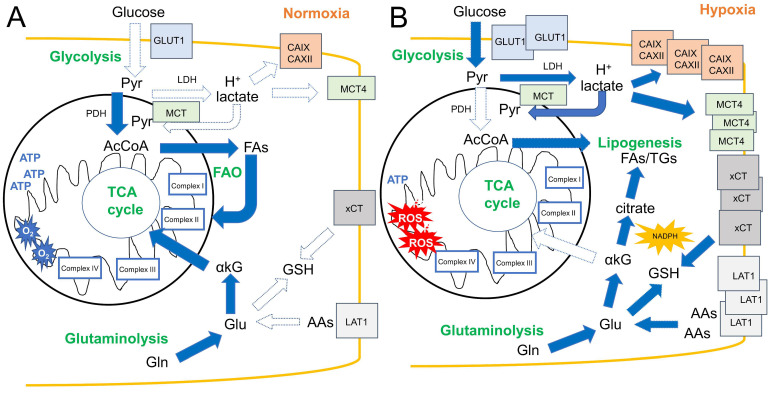
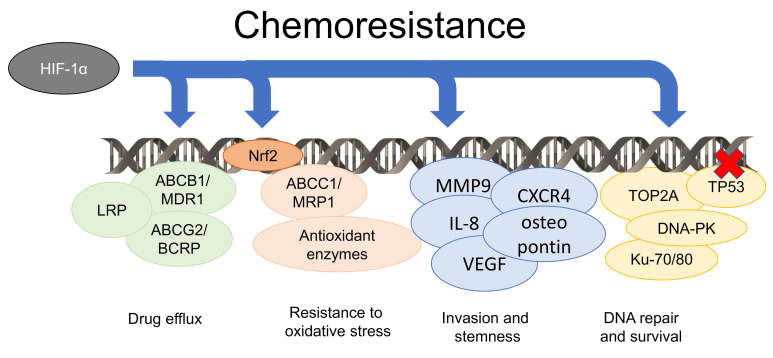
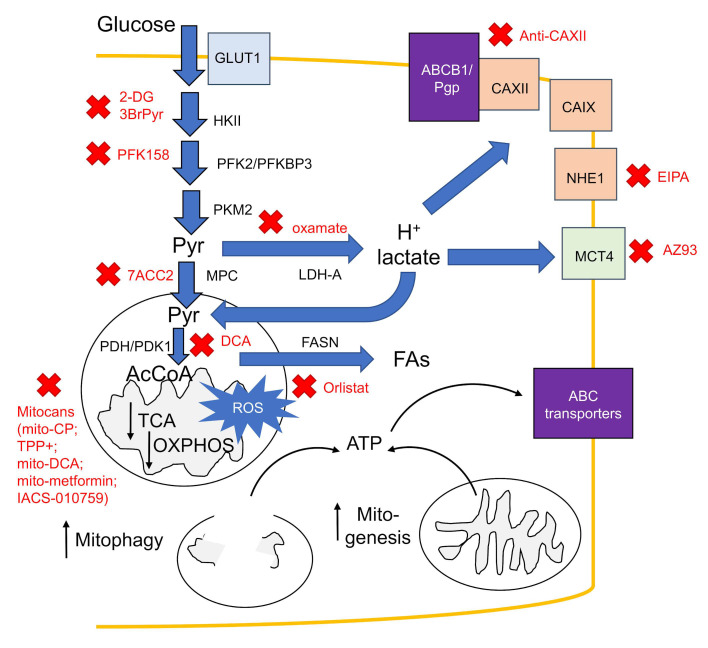
Hypoxia is a condition commonly observed in the core of solid tumors. The hypoxia-inducible factors (HIF) act as hypoxia sensors that orchestrate a coordinated response increasing the pro-survival and pro-invasive phenotype of cancer cells, and determine a broad metabolic rewiring. These events favor tumor progression and chemoresistance. The increase in glucose and amino acid uptake, glycolytic flux, and lactate production; the alterations in glutamine metabolism, tricarboxylic acid cycle, and oxidative phosphorylation; the high levels of mitochondrial reactive oxygen species; the modulation of both fatty acid synthesis and oxidation are hallmarks of the metabolic rewiring induced by hypoxia. This review discusses how metabolic-dependent factors (e.g., increased acidification of tumor microenvironment coupled with intracellular alkalinization, and reduced mitochondrial metabolism), and metabolic-independent factors (e.g., increased expression of drug efflux transporters, stemness maintenance, and epithelial-mesenchymal transition) cooperate in determining chemoresistance in hypoxia. Specific metabolic modifiers, however, can reverse the metabolic phenotype of hypoxic tumor areas that are more chemoresistant into the phenotype typical of chemosensitive cells. We propose these metabolic modifiers, able to reverse the hypoxia-induced metabolic rewiring, as potential chemosensitizer agents against hypoxic and refractory tumor cells.
Overview
The claims and statistics of this paper haven’t been checked yet.
Run the check — free, no account needed. It reads the open-access text and checks the sources it cites.
Integrity signals
Registry
Cites
Statistics
Figures
Verification
Claims the paper makes
The claims and statistics of this paper haven’t been checked yet.
Run the check — free, no account needed. It reads the open-access text and checks the sources it cites.
Claims other papers make about this one
Each is checked against this paper’s own text: does it say what the citing paper says it does?
In the citing paper
“On the other hand, in hypoxia oxygenic stress response is activated by NRF2, which activates HIF1α, but more importantly an array of multidrug resistance genes such as MDR1/ABCB1, MRP1/ABCC1 and BCRP/ABCG2 resulting in resistance to a variety of other chemotherapeutics [59, 60].”
From Hypoxia Signaling in Cancer: From Basics to Clinical Practice (2021) · cites this paper as [60]
Self-check
Percentages, sums and reported differences re-computed from the paper’s own numbers.
The self-check needs the paper’s full text.
Citations
Cites
1 retracted
Mitochondrial Autophagy Is an HIF-1-dependent Adaptive Metabolic Response to Hypoxia
Zhang, H., Bosch-Marce, M., Shimoda, L. A., Tan, Y. S., Baek, J. H., Wesley, J. B., Gonzalez, F. J., & Semenza, G. L. (2008) · Journal of Biological Chemistry · doi:10.1074/jbc.m800102200 · Cited by 1,601
RetractedHallmarks of Cancer: The Next Generation
Hanahan, D., & Weinberg, R. A. (2011) · Cell · doi:10.1016/j.cell.2011.02.013 · Cited by 66,590
Understanding the Warburg Effect: The Metabolic Requirements of Cell Proliferation
Vander Heiden, M. G., Cantley, L. C., & Thompson, C. B. (2009) · Science · doi:10.1126/science.1160809 · Cited by 16,197
Molecular mechanisms of epithelial–mesenchymal transition
Lamouille, S., Xu, J., & Derynck, R. (2014) · Nature Reviews Molecular Cell Biology · doi:10.1038/nrm3758 · Cited by 8,091
Multidrug resistance in cancer: role of ATP–dependent transporters
Gottesman, M. M., Fojo, T., & Bates, S. E. (2002) · Nature Reviews Cancer · doi:10.1038/nrc706 · Cited by 5,536
Hypoxia — a key regulatory factor in tumour growth
Harris, A. L. (2002) · Nature Reviews Cancer · doi:10.1038/nrc704 · Cited by 5,177
Kim, J.-W., Tchernyshyov, I., Semenza, G. L., & Dang, C. V. (2006) · Cell Metabolism · doi:10.1016/j.cmet.2006.02.002 · Cited by 3,905
On Respiratory Impairment in Cancer Cells
Warburg, O. H. (1956) · Science · doi:10.1126/science.124.3215.269 · Cited by 3,472
Metabolic Competition in the Tumor Microenvironment Is a Driver of Cancer Progression
Chang, C.-H., Qiu, J., O’Sullivan, D., Buck, M. D., Noguchi, T., Curtis, J. D., Chen, Q., Gindin, M., Gubin, M. M., van der Windt, G. J. W., et al. (2015) · Cell · doi:10.1016/j.cell.2015.08.016 · Cited by 3,331
Regulation of Translation Initiation in Eukaryotes: Mechanisms and Biological Targets
Sonenberg, N., & Hinnebusch, A. G. (2009) · Cell · doi:10.1016/j.cell.2009.01.042 · Cited by 3,304 · cited 1×
“Concurrently HIF-2α activates mTOR, a sensor of the cellular energy status and of the AA availability, and a stimulator of protein translation and cell proliferation [104].”
Background
Cited by
Sorted by citations
Unveiling the mechanisms and challenges of cancer drug resistance
Khan, S. U., Fatima, K., Aisha, S., & Malik, F. (2024) · Cell Communication and Signaling · doi:10.1186/s12964-023-01302-1 · Cited by 417
Hypoxia as a driver of resistance to immunotherapy
Kopecka, J., Salaroglio, I. C., Pérez-Ruiz, E., Sarmento‐Ribeiro, A. B., Saponara, S., Rivas, J. D. L., & Riganti, C. (2021) · Drug Resistance Updates · doi:10.1016/j.drup.2021.100787 · Cited by 264
Role of mitochondrial alterations in human cancer progression and cancer immunity
Wang, S., Tseng, L., & Lee, H. (2023) · Journal of Biomedical Science · doi:10.1186/s12929-023-00956-w · Cited by 225
Hypoxia, endoplasmic reticulum stress and chemoresistance: dangerous liaisons
Akman, M., Belisario, D. C., Salaroglio, I. C., Kopecka, J., Donadelli, M., Smaele, E. D., & Riganti, C. (2021) · Journal of Experimental & Clinical Cancer Research · doi:10.1186/s13046-020-01824-3 · Cited by 179
Impact of cancer metabolism on therapy resistance – Clinical implications
Gonçalves, A. C., Richiardone, E., Jorge, J., Polónia, B. R. G., Xavier, C. P. R., Salaroglio, I. C., Riganti, C., Vasconcelos, M. H., Corbet, C., & Sarmento‐Ribeiro, A. B. (2021) · Drug Resistance Updates · doi:10.1016/j.drup.2021.100797 · Cited by 176
Lorenc, P., Sikorska, A., Molenda, S., Guzniczak, N., Dams‐Kozlowska, H., & Florczak, A. (2024) · Biomedicine & Pharmacotherapy · doi:10.1016/j.biopha.2024.117585 · Cited by 142
Zhang, K., Zhang, T., Yang, Y., Tu, W., Huang, H., Wang, Y., Chen, Y., Pan, K., & Chen, Z. (2022) · Theranostics · doi:10.7150/thno.73746 · Cited by 124
Recent advances in regenerative medicine strategies for cancer treatment
Mansouri, V., Beheshtizadeh, N., Gharibshahian, M., Sabouri, L., Varzandeh, M., & Rezaei, N. (2021) · Biomedicine & Pharmacotherapy · doi:10.1016/j.biopha.2021.111875 · Cited by 115
Hypoxia Signaling in Cancer: From Basics to Clinical Practice
Sebestyén, A., Kopper, L., Dankó, T., & Tímár, J. (2021) · Pathology and Oncology Research · doi:10.3389/pore.2021.1609802 · Cited by 110
Gas Therapy: Generating, Delivery, and Biomedical Applications
Ghaffari‐Bohlouli, P., Jafari, H., Okoro, O. V., Alimoradi, H., Nie, L., Jiang, G., Kakkar, A. K., & Shavandi, A. (2024) · Small Methods · doi:10.1002/smtd.202301349 · Cited by 113
Mollaei, M., Hassan, Z. M., Khorshidi, F., & Langroudi, L. (2021) · Translational Oncology · doi:10.1016/j.tranon.2021.101056 · Cited by 114
Missiaen, R., Lesner, N. P., & Simon, M. C. (2023) · The EMBO Journal · doi:10.15252/embj.2022112067 · Cited by 78
Stashko, C., Hayward, M.-K., Northey, J. J., Pearson, N., Ironside, A. J., Lakins, J. N., Oria, R., Goyette, M.-A., Mayo, L. N., Russnes, H. G., et al. (2023) · Nature Communications · doi:10.1038/s41467-023-39085-1 · Cited by 65
Gonzalez‐Molina, J., Moyano‐Galceran, L., Single, A., Gultekin, O., Alsalhi, S., & Lehti, K. (2022) · Seminars in Cancer Biology · doi:10.1016/j.semcancer.2022.03.012 · Cited by 53
Salaroglio, I. C., Belisario, D. C., Akman, M., Vecchia, S. L., Godel, M., Anobile, D. P., Ortone, G., Digiovanni, S., Fontana, S., Costamagna, C., et al. (2022) · Journal of Experimental & Clinical Cancer Research · doi:10.1186/s13046-022-02447-6 · Cited by 56
Ramtohul, T., Tescher, C., Vaflard, P., Cyrta, J., Girard, N., Malhaire, C., & Tardivon, A. A. (2022) · Radiology · doi:10.1148/radiol.220389 · Cited by 47
Giannotta, C., Autino, F., & Massaia, M. (2023) · Frontiers in Immunology · doi:10.3389/fimmu.2022.1102471 · Cited by 50
SIRT1/PGC-1α/PPAR-γ Correlate With Hypoxia-Induced Chemoresistance in Non-Small Cell Lung Cancer
Xu, R., Luo, X., Ye, X., Li, H., Liu, H., Du, Q., & Zhai, Q. (2021) · Frontiers in Oncology · doi:10.3389/fonc.2021.682762 · Cited by 44
To, K. K. W., & Cho, W. C. S. (2022) · Cancer Drug Resistance · doi:10.20517/cdr.2022.38 · Cited by 47
Role of proton-activated G protein-coupled receptors in pathophysiology
Silva, P. H. I., Câmara, N. O. S., & Wagner, C. A. (2022) · American Journal of Physiology-Cell Physiology · doi:10.1152/ajpcell.00114.2022 · Cited by 41
Tang, K. L., Toyozumi, T., Murakami, K., Sakata, H., Kano, M., Endo, S., Matsumoto, Y., Suito, H., Takahashi, M., Sekino, N., et al. (2022) · British Journal of Cancer · doi:10.1038/s41416-022-01825-3 · Cited by 43
Gao, C., Kwong, C. H. T., Wang, Q., Kam, H., Wei, J., Chen, Q., Zhang, J., Lee, S. M. Y., Gu, D., & Wang, R. (2022) · Materials Today · doi:10.1016/j.mattod.2022.06.024 · Cited by 39
Kunachowicz, D., Tomecka, P., Sędzik, M., Kalinin, J., Kuźnicki, J., & Rembiałkowska, N. (2025) · Cells · doi:10.3390/cells14141057 · Cited by 42
Moreno, C., Muñoz, C., Terol, M. J., Hernández‐Rivas, J., & Villanueva, M. (2021) · Journal of Experimental & Clinical Cancer Research · doi:10.1186/s13046-021-02115-1 · Cited by 39
A prismatic view of the epigenetic-metabolic regulatory axis in breast cancer therapy resistance
Das, C., Bhattacharya, A., Adhikari, S., Mondal, A., Mondal, P., Adhikary, S., Roy, S., Ramos, K. S., Yadav, K. K., Tainer, J. A., et al. (2024) · Oncogene · doi:10.1038/s41388-024-03054-9 · Cited by 39
Liang, Y., Kaushal, D., & Wilson, R. B. (2024) · International Journal of Molecular Sciences · doi:10.3390/ijms25147943 · Cited by 40
Supramolecular approaches for the treatment of hypoxic regions in tumours
Regeni, I., & Bonnet, S. A. (2025) · Nature Reviews Chemistry · doi:10.1038/s41570-025-00705-7 · Cited by 39
Role of Tumor Microenvironment in Prostate Cancer Immunometabolism
Wang, Y., Chen, Y., & Wang, J. (2025) · Biomolecules · doi:10.3390/biom15060826 · Cited by 34
Yoon, N., Jang, A.-K., Seo, Y., & Jung, B. H. (2021) · Metabolites · doi:10.3390/metabo11120812 · Cited by 37
Vahabi, M., Comandatore, A., Frańczak, M., Smolenski, R. T., Peters, G. J., Morelli, L., & Giovannetti, E. (2023) · Cytokine & Growth Factor Reviews · doi:10.1016/j.cytogfr.2023.07.004 · Cited by 35
Ahuja, S., & Zaheer, S. (2025) · Immunology · doi:10.1111/imm.70045 · Cited by 43
Nanotechnological strategies to increase the oxygen content of the tumor
Zhang, J., Tang, K., Fang, R., Liu, J., Liu, M., Ma, J., Wang, H., Ding, M., Wang, X., Song, Y., et al. (2023) · Frontiers in Pharmacology · doi:10.3389/fphar.2023.1140362 · Cited by 33
He, Q., Peng, H. F., He, G., Mai, H., Liu, W., Zhang, W., Zhang, K., Zhong, G., Guo, R., Yu, C., et al. (2022) · Journal of Translational Medicine · doi:10.1186/s12967-022-03549-7 · Cited by 32
Unfolding the role of autophagy in the cancer metabolism
Pandey, A., Yadav, P., & Shukla, S. (2021) · Biochemistry and Biophysics Reports · doi:10.1016/j.bbrep.2021.101158 · Cited by 31
Drug delivery for metabolism targeted cancer immunotherapy
Khodaei, T., Inamdar, S., Suresh, A. P., & Acharya, A. P. (2022) · Advanced Drug Delivery Reviews · doi:10.1016/j.addr.2022.114242 · Cited by 30
Chen, J., Liu, Z., Wu, Z., Li, W., & Tan, X. (2023) · Frontiers in Oncology · doi:10.3389/fonc.2023.1132424 · Cited by 32
Li, Y., Jin, G., Liu, N., Guo, H., & Xu, F. (2023) · Cancer Letters · doi:10.1016/j.canlet.2023.216583 · Cited by 29
Braconi, L., Teodori, E., Riganti, C., Coronnello, M., Nocentini, A., Bartolucci, G., Pallecchi, M., Contino, M., Manetti, D., Romanelli, M. N., et al. (2022) · Journal of Medicinal Chemistry · doi:10.1021/acs.jmedchem.2c01175 · Cited by 27
Lin, A. G., Sahun, M., Biscop, E., Verswyvel, H., Waele, J. D., Backer, J. D., Theys, C., Cuypers, B., Laukens, K., Berghe, W. V., et al. (2022) · Drug Resistance Updates · doi:10.1016/j.drup.2022.100914 · Cited by 27
Renal hypoxia–HIF–PHD–EPO signaling in transition metal nephrotoxicity: friend or foe?
Thévenod, F., Schreiber, T., & Lee, W. (2022) · Archives of Toxicology · doi:10.1007/s00204-022-03285-3 · Cited by 27
Thyroid Hormone Enhances Angiogenesis and the Warburg Effect in Squamous Cell Carcinomas
Miro, C., Nappi, A., Cicatiello, A. G., Cicco, E. D., Sagliocchi, S., Murolo, M., Belli, V., Troiani, T., Albanese, S., Amiranda, S., et al. (2021) · Cancers · doi:10.3390/cancers13112743 · Cited by 26
Targeting Mitochondrial Oncometabolites: A New Approach to Overcome Drug Resistance in Cancer
Godel, M., Ortone, G., Anobile, D. P., Pasino, M., Randazzo, G., Riganti, C., & Kopecka, J. (2021) · Pharmaceutics · doi:10.3390/pharmaceutics13050762 · Cited by 23
Hypoxia modeling techniques: A review
Salyha, N., & Oliynyk, I. (2023) · Heliyon · doi:10.1016/j.heliyon.2023.e13238 · Cited by 27
Vishnubalaji, R., Shaath, H., Al-Alwan, M. M., Abdelalim, E. M., & Alajez, N. M. (2022) · Seminars in Cancer Biology · doi:10.1016/j.semcancer.2022.10.007 · Cited by 21
Metabolic Reprogramming of Ovarian Cancer Spheroids during Adhesion
Compton, S. L. E., Grieco, J. P., Gollamudi, B., Bae, E., Mullekom, J. H. V., & Schmelz, E. M. (2022) · Cancers · doi:10.3390/cancers14061399 · Cited by 20
El-Sayed, N. N. E., Al-Otaibi, T. M., Alonazi, M. A., Masand, V. H., Barakat, A., Almarhoon, Z. M., & Bacha, A. G. B. (2021) · Molecules · doi:10.3390/molecules26113121 · Cited by 19
Cao, X., Cao, Y., Zhao, H., Wang, P., & Zhu, Z. (2022) · Current Stem Cell Research & Therapy · doi:10.2174/1574888x17666220827113434 · Cited by 18
Duś‐Szachniewicz, K., Gdesz-Birula, K., Zduniak, K., & Wiśniewski, J. R. (2021) · Cells · doi:10.3390/cells10082025 · Cited by 21
Rodriguez-Gonzalez, J. C., Hernández-Balmaseda, I., Declerck, K., Pérez-Novo, C., Logie, E., Theys, C., Jakubek, P., Quiñones-Maza, O. L., Dantas-Cassali, G., Carlos dos Reis, D., et al. (2021) · Frontiers in Pharmacology · doi:10.3389/fphar.2021.670167 · Cited by 19
Clinical application and drug resistance mechanism of gemcitabine
Zhang, X., Qi, B., & Chen, J. (2025) · Frontiers in Cell and Developmental Biology · doi:10.3389/fcell.2025.1702720 · Cited by 22
A photothermal driven chemotherapy for the treatment of metastatic melanoma
Bhatt, H., Diwan, R., Borrego, E. A., Perez, C. A., Varela-Ramírez, A., Kumar, R., Aguilera, R. J., & Nurunnabi, M. (2023) · Journal of Controlled Release · doi:10.1016/j.jconrel.2023.08.005 · Cited by 17
Unveiling the future of cancer stem cell therapy: a narrative exploration of emerging innovations
Obisi, J. N., Abimbola, A. N. J., Babaleye, O. A., Atidoglo, P. K., Usin, S. G., Nwanaforo, E. O., Patrick-Inezi, F. S., Fasogbon, I. V., Chimezie, J., Dare, C. A., et al. (2025) · Discover Oncology · doi:10.1007/s12672-025-02102-4 · Cited by 19
Yang, G., Li, H., Yin, J., Lei, Y., Yang, J., Tang, J., Wu, Y. P., Zhou, M., Luo, T., Zhang, Y., et al. (2024) · Ultrasonics Sonochemistry · doi:10.1016/j.ultsonch.2024.107115 · Cited by 16
miR-210: A non-invasive biomarker for hypoxia-driven lung cancer diagnosis and therapy
Goyal, A., Afzal, M., Goyal, K., Ballal, S., Sharma, G. C., Kavitha, V., Maharana, L., Devi, A., Rana, M., Kumar, K., et al. (2025) · Clinica Chimica Acta · doi:10.1016/j.cca.2025.120215 · Cited by 15
Jin, Z., Xiang, R., Dai, J.-M., Wang, Y., & Xu, Z. (2023) · Molecular Carcinogenesis · doi:10.1002/mc.23515 · Cited by 17
Lee, Y.-H., & Huang, C.-Y. (2025) · International Journal of Nanomedicine · doi:10.2147/ijn.s505458 · Cited by 15
Kothadiya, S., Cutshaw, G., Uthaman, S., Hassan, N. A., Sahoo, D. K., Wickham, H., Quam, E., Allenspach, K., Mochel, J. P., & Bardhan, R. (2024) · ACS Applied Materials & Interfaces · doi:10.1021/acsami.4c08629 · Cited by 14
Sonodynamic biomimetic-nanomedicine fight cancers
Zhang, A., Zheng, X., Yan, G., Liu, X., Xie, D., Xu, X., Sun, M., & Liu, Z. (2025) · Journal of Nanobiotechnology · doi:10.1186/s12951-025-03583-9 · Cited by 16
Atypical artificial cells: Novel biomimetic materials for combating cancer
Ren, Z., Wan, Q., Zhu, Y., Li, L., Wang, K., Zhao, F., Jiao, K., Tang, M., Tay, F. R., Wan, M., et al. (2024) · Interdisciplinary materials · doi:10.1002/idm2.12199 · Cited by 15
MOLECULAR AND CELLULAR MECHANISMS OF HYPOXIC RESPONSE
Bondarenko, N. N., Khomutov, E. V., Ryapolova, T. L., Кишеня, М. С., Игнатенко, Т. С., Tolstoy, V. A., Evtushenko, I., & Туманова, С. В. (2023) · Ulyanovsk Medico-biological Journal · doi:10.34014/2227-1848-2023-2-6-29 · Cited by 13
Insights Into Heart-Tumor Interactions in Heart Failure
Caller, T., Moore, K. J., Lehmann, L., Wu, S. M., & Leor, J. (2025) · Circulation Research · doi:10.1161/circresaha.124.325490 · Cited by 15
Chen, J., Xu, J., Yang, J., Zhan, Y., Li, S., Jia, L., Wu, W., Si, X., Zhang, D., Yu, K., et al. (2023) · International Journal of Oncology · doi:10.3892/ijo.2023.5481 · Cited by 13
White, D., Lauterboeck, L., Mobasheran, P., Kitaguchi, T., Chaanine, A. H., & Yang, Q. (2023) · Cells · doi:10.3390/cells12050695 · Cited by 12
The role of SLC7A11 in diabetic wound healing: novel insights and new therapeutic strategies
Zhang, W., Feng, J., Ni, Y., Li, G., Wang, Y., Cao, Y., Zhou, M., & Zhao, C. (2024) · Frontiers in Immunology · doi:10.3389/fimmu.2024.1467531 · Cited by 16
Drongitis, D., Verrillo, L., Marinis, P. D., Orabona, P., Caiola, A., Turitto, G., Alfieri, A., Bruscella, S., Gentile, M., Moriello, V., et al. (2022) · International Journal of Molecular Sciences · doi:10.3390/ijms231810250 · Cited by 12
Deng, Y., Chen, Z., Chen, P., Xiong, Y., Zhang, C., Wu, Q., Huang, H., Yang, S., Zhang, K., He, T., et al. (2025) · Acta Pharmaceutica Sinica B · doi:10.1016/j.apsb.2025.04.018 · Cited by 11
Hypoxic microenvironment in cancer: role in metabolic reprogramming
Sureka, N., Maheshwari, R., Agravat, A., Singhal, S., Zaman, S., Rishi, B., Siraj, F., Zaheer, S., & Misra, A. (2026) · Frontiers in Oncology · doi:10.3389/fonc.2026.1771365 · Cited by 11
Fructose Metabolism in Cancer: Molecular Mechanisms and Therapeutic Implications
Chen, X., Yang, M., Wang, L., Tu, J., & Yuan, X. (2025) · International Journal of Medical Sciences · doi:10.7150/ijms.108549 · Cited by 11
Metabolic Classification and Intervention Opportunities for Tumor Energy Dysfunction
Monferrer, E., Vieco-Martí, I., López-Carrasco, A., Fariñas, F., Abanades, S., de la Cruz‐Merino, L., Noguera, R., & Naranjo, T. Á. (2021) · Metabolites · doi:10.3390/metabo11050264 · Cited by 12
Yuan, F., Jiang, Y., Yang, L., Lu, D., Li, N., Zhang, Q., Yang, H., Qin, H., Zhang, J., Gou, X., et al. (2025) · Journal of drug targeting · doi:10.1080/1061186x.2025.2453730 · Cited by 11
Targeting the Mitochondria in High-Grade Gliomas
Sathe, S., Li, Q., Jung, J., & Wu, J. (2025) · Cancers · doi:10.3390/cancers17183062 · Cited by 10
Spadea, A., Tirella, A., Rosa, J. M. R. D. L., Lallana, E., Mehibel, M., Telfer, B. A., Tirelli, N., Lawrence, M. J., Williams, K. J., Stratford, I. J., et al. (2024) · Pharmaceutics · doi:10.3390/pharmaceutics16101286 · Cited by 9
Role of Hypoxia-Associated Long Noncoding RNAs in Cancer Chemo-Therapy Resistance
Elahi, M. A., Tariq, A., Malik, A., & Zhra, M. (2025) · International Journal of Molecular Sciences · doi:10.3390/ijms26030936 · Cited by 9
ALKhemeiri, N., Eljack, S., & Saber-Ayad, M. M. (2025) · Cells · doi:10.3390/cells14100745 · Cited by 9
The emerging role of metabolic interventions in uveal melanoma
Kuranaga, Y., Hatem, Y., Grossniklaus, H. E., Ali, S. S., & Meir, E. G. V. (2025) · Seminars in Cancer Biology · doi:10.1016/j.semcancer.2025.10.002 · Cited by 9
Torabidastgerdooei, S., Roy, M.-È., & Annabi, B. (2023) · Frontiers in Endocrinology · doi:10.3389/fendo.2023.1265698 · Cited by 9
Decoding the complex web: cellular and molecular interactions in the lung tumour microenvironment
Issa, B. S., Adhab, A. H., Mahdi, M. S., Kyada, A., Ganesan, S., Bhanot, D., Naidu, K. S., Kaur, S., Mansoor, A. S., Radi, U. K., et al. (2024) · Journal of drug targeting · doi:10.1080/1061186x.2024.2445772 · Cited by 8
Huang, D., Xu, F., Xu, L., Tang, Z., Hu, Y., Li, J., & Yu, J. (2025) · Biochimica et Biophysica Acta (BBA) - Molecular Basis of Disease · doi:10.1016/j.bbadis.2025.167814 · Cited by 8
Dabbagh, N., Abbasvandi, F., Miripour, Z. S., Hoseinpour, P., Jahanbakhshi, F., Moradi, A., Riazi, H., Moradian, F., Zanjani, F. S., Parniani, M., et al. (2021) · International Journal of Medical Robotics and Computer Assisted Surgery · doi:10.1002/rcs.2335 · Cited by 8
Liu, S., Washio, J., Sato, S., Abiko, Y., Shinohara, Y., Kobayashi, Y., Otani, H., Sasaki, S., Wang, X., & Takahashi, N. (2022) · International Journal of Molecular Sciences · doi:10.3390/ijms23020989 · Cited by 8
Bauer, R., Meyer, S. P., Kloss, K. A., Ruiz, V. M. G., Reuscher, S., Zhou, Y., Fuhrmann, D. C., Zarnack, K., Schmid, T., & Brüne, B. (2022) · International Journal of Molecular Sciences · doi:10.3390/ijms23105824 · Cited by 7
Metabolic vulnerability of cancer stem cells and their niche
Marrone, L., Romano, S., Malasomma, C., Giacomo, V. D., Cerullo, A., Abate, R., Vecchione, M. A., Fratantonio, D., & Romano, M. F. (2024) · Frontiers in Pharmacology · doi:10.3389/fphar.2024.1375993 · Cited by 7
Transcriptomics Unveil Canonical and Non-Canonical Heat Shock-Induced Pathways in Human Cell Lines
Reinschmidt, A., Solano, L. E., Chavez, Y., Hulsy, W. D., & Nikolaidis, N. (2025) · International Journal of Molecular Sciences · doi:10.3390/ijms26031057 · Cited by 7
Afonso, J., Barbosa, A., Pastrez, P. R. A., Bonatelli, M., Costa, R. F. A., Pinheiro, C. M., Longatto‐Filho, A., & Baltazar, F. (2023) · Pathobiology · doi:10.1159/000528562 · Cited by 7
Blood Metabolite Profiling of Antarctic Expedition Members: An 1H NMR Spectroscopy-Based Study
Coco, L. D., Greco, M., Inguscio, A., Munir, A., Danieli, A., Cossa, L. G., Musarò, D., Coscia, M. R., Fanizzi, F. P., & Maffia, M. (2023) · International Journal of Molecular Sciences · doi:10.3390/ijms24098459 · Cited by 7
Mitochondrion: Main organelle in orchestrating cancer escape from chemotherapy
Mostafavi, S., & Eskandari, N. (2023) · Cancer Reports · doi:10.1002/cnr2.1942 · Cited by 6
Stackelberg evolutionary games for cancer modeling and treatment
Romano, C., Borri, A., & Benedetto, M. D. D. (2024) · IEEE Conference on Decision and Control (CDC) · doi:10.1109/cdc56724.2024.10886021 · Cited by 6
Cancer Metabolism as a New Real Target in Tumor Therapy
Chiaradonna, F., & Scumaci, D. (2021) · Cells · doi:10.3390/cells10061393 · Cited by 6
Sulaiman, S. H., Omer, R. A., Barzani, K. I. S., Barzani, H. A. H., Ashfaq, M., Smerat, A., & Feizi‐Dehnayebi, M. (2026) · Chemical Physics Impact · doi:10.1016/j.chphi.2026.101054 · Cited by 6
Dharaskar, S. P., Paithankar, K., & Subbarao, S. A. (2023) · Scientific Reports · doi:10.1038/s41598-023-34728-1 · Cited by 5
Bissiengou, P. M., Comlan, J. G. M., Atsame-Ebang, G., Niang, M. S., & Siawaya, J. F. D. (2023) · Cancer Reports · doi:10.1002/cnr2.1817 · Cited by 5
Mitochondrial lipid metabolism in metastatic breast cancer
Ruidas, B. (2024) · Mitochondrial Communications · doi:10.1016/j.mitoco.2024.07.001 · Cited by 6
Romano, C., Borri, A., & Benedetto, M. D. D. (2024) · IEEE International Conference on Automation Science and Engineering (CASE) · doi:10.1109/case59546.2024.10711752 · Cited by 5
Allal, B.-E., Bounaama, A., Silva, D., Quintas, C., Dahlouk, S. I., Gonçalves, J., & Djerdjouri, B. (2023) · Naunyn-Schmiedeberg s Archives of Pharmacology · doi:10.1007/s00210-023-02403-x · Cited by 4
Eghbalifard, N., Nouri, N., Rouzbahani, S., Bakhshi, M., Kahrizsangi, N. G., Golafshan, F., & Abbasi, F. (2025) · Discover Oncology · doi:10.1007/s12672-025-02150-w · Cited by 3
Exploring metabolic biomarkers in primary and chemoreduced retinoblastoma with patient outcome
Supriya, M., Singh, M. K., Singh, L., Sharma, S., Meel, R., Lomi, N., Sen, S., & Kashyap, S. (2025) · British Journal of Ophthalmology · doi:10.1136/bjo-2024-326495 · Cited by 2
Liang, X., Zhu, X., Zhang, Y., Chen, M. M., & Liu, N. (2026) · Discover Oncology · doi:10.1007/s12672-025-04326-w · Cited by 2
Hyperoxic-hypoxic Paradox: Breast Cancer Microenvironment and an Innovative Treatment Strategy
Ray, S. K., & Mukherjee, S. (2024) · Anti-Cancer Agents in Medicinal Chemistry · doi:10.2174/0118715206290816240220062545 · Cited by 2
Joshi, E., Pandya, M. D., Balar, S., Saiyed, H., Patel, S., Rawal, R., & Desai, U. (2023) · Research Square · doi:10.21203/rs.3.rs-3039736/v1 · Cited by 2
Singh, R. P., & Sonali (2024) · Current Protein and Peptide Science · doi:10.2174/0113892037307636240612112408 · Cited by 1
Metadata
- Authors
- Belisario, D. C., Kopecka, J., Pasino, M., Akman, M., De Smaele, E., Donadelli, M., & Riganti, C.
- Affiliations
- University of Turin (IT)
- Department of Experimental Medicine, Sapienza University of Roma, 00185 Roma, Italy
- University of Verona (IT)
- Corresponding author
- Riganti, Chiara
- Venue
- Cells
- Publisher
- MDPI AG
- Published
- 2020-12-04
- Volume
- 9
- Issue
- 12
- Pages
- 2598
- ISSN
- 2073-4409 (ISSN-L)
- PMC
- PMC7761956
- OpenAlex
- W3109893680
- Cited by
- 133
- References
- 234
- Citations by year
- 2026: 17 · 2025: 27 · 2024: 23 · 2023: 24 · 2022: 24 · 2021: 18
- FWCI
- 1.71
- Type
- journal article
- Language
- en
- Open access
- gold
- doi.org
- Licence
- Locations
- Cells (publishedVersion, cc-by)
- PubMed Central (publishedVersion, cc-by)
- PubMed (publishedVersion)
- Institutional Research Information System University of Turin (University of Turin) (submittedVersion, other-oa)
- DOAJ (DOAJ: Directory of Open Access Journals) (submittedVersion, cc-by-sa)
- IRIS Research product catalog (Sapienza University of Rome) (submittedVersion, cc-by)
- Funders
- AIRC (Associazione Italiana per la Ricerca sul Cancro) (IG21408)
- Topics
- Life Sciences › Biochemistry, Genetics and Molecular Biology › Cancer Research › Cancer, Hypoxia, and Metabolism
- Life Sciences › Biochemistry, Genetics and Molecular Biology › Cancer Research › Cancer, Lipids, and Metabolism
- Health Sciences › Medicine › Oncology › Cancer Cells and Metastasis
- Keywords
- tumor hypoxia, metabolic reprogramming, chemoresistance, hypoxia-inducible factor, tumor microenvironment acidification, efflux pumps, cancer stemness, epithelial-mesenchymal transition, glycolysis, glutamine metabolism, oxidative phosphorylation, fatty acid metabolism, reactive oxygen species, cancer metabolism
- MeSH terms
- Amino Acids, Animals, Hypoxia, Citric Acid Cycle, Glucose, Glutamine, Humans, Mitochondria, Neoplasms, Oxidation-Reduction, Oxidative Phosphorylation, Oxygen, Phenotype, Reactive Oxygen Species, Disease Progression, Drug Resistance, Neoplasm, Dimerization, Lactic Acid, Mice, Epithelial-Mesenchymal Transition, Tumor Microenvironment
About these checks
Registry, retraction, Cites and statistics results are computed, not judged, with one exception: a printed reference that no index lists is read once by a model before it counts as a citation error. Claims are extracted by a model and kept only when their quote appears verbatim in the text; each cited source is then checked, with a model’s help, for whether it says what the claim relies on. Those verdicts can be wrong — read the claim’s quote and the cited source before relying on one.
Statistics and arithmetic are recomputed, not judged.
Confidence bands are shown only for fields calibrated on our annotated test set. None is calibrated yet, so no band is shown.
What counts as a claim ›How we measure confidence ›How we check this ›
Are you an author, or do you see a problem with this page? Request a review
