

The DOI matches its Crossref record; 230 of the 234 references it cites were found in a registry or an index.
Hypoxia Dictates Metabolic Rewiring of Tumors: Implications for Chemoresistance
Open accessAbstract
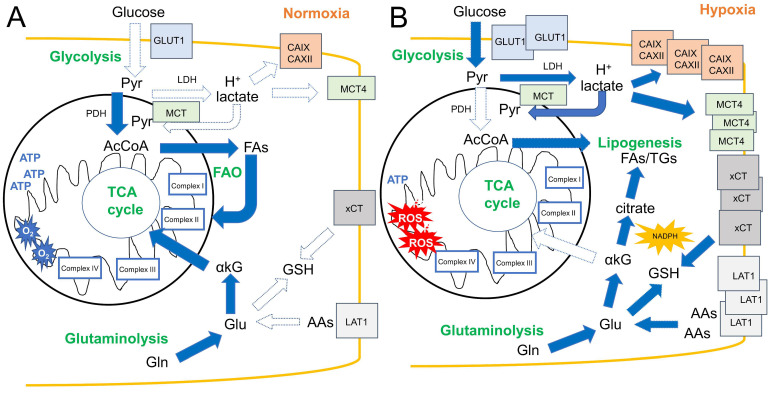
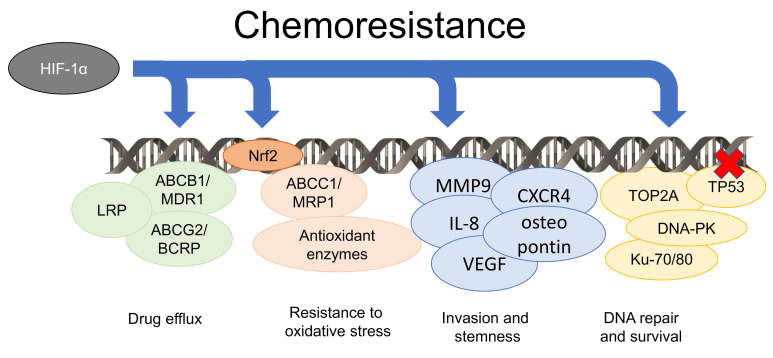
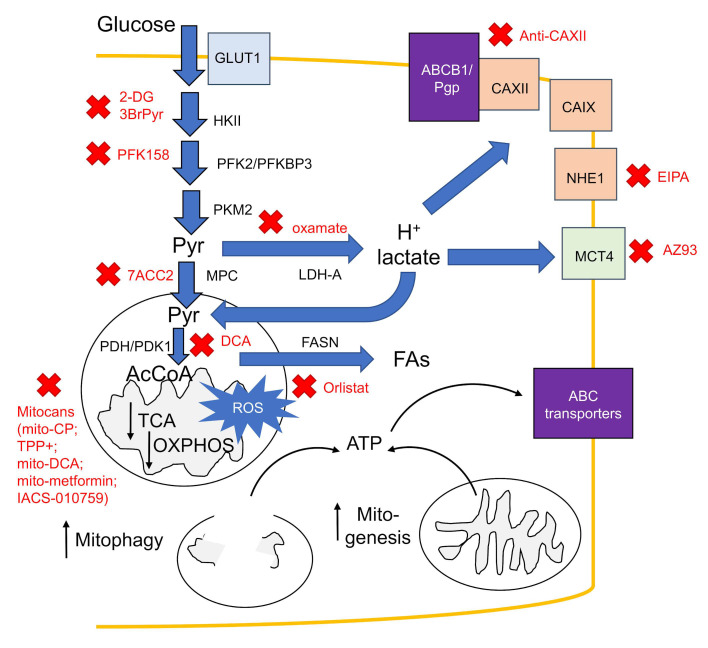
Hypoxia is a condition commonly observed in the core of solid tumors. The hypoxia-inducible factors (HIF) act as hypoxia sensors that orchestrate a coordinated response increasing the pro-survival and pro-invasive phenotype of cancer cells, and determine a broad metabolic rewiring. These events favor tumor progression and chemoresistance. The increase in glucose and amino acid uptake, glycolytic flux, and lactate production; the alterations in glutamine metabolism, tricarboxylic acid cycle, and oxidative phosphorylation; the high levels of mitochondrial reactive oxygen species; the modulation of both fatty acid synthesis and oxidation are hallmarks of the metabolic rewiring induced by hypoxia. This review discusses how metabolic-dependent factors (e.g., increased acidification of tumor microenvironment coupled with intracellular alkalinization, and reduced mitochondrial metabolism), and metabolic-independent factors (e.g., increased expression of drug efflux transporters, stemness maintenance, and epithelial-mesenchymal transition) cooperate in determining chemoresistance in hypoxia. Specific metabolic modifiers, however, can reverse the metabolic phenotype of hypoxic tumor areas that are more chemoresistant into the phenotype typical of chemosensitive cells. We propose these metabolic modifiers, able to reverse the hypoxia-induced metabolic rewiring, as potential chemosensitizer agents against hypoxic and refractory tumor cells.
Overview
The claims and statistics of this paper haven’t been checked yet.
Run the check — free, no account needed. It reads the open-access text and checks the sources it cites.
Integrity signals
Registry
Cites
Statistics
Figures
Verification
Claims the paper makes
The claims and statistics of this paper haven’t been checked yet.
Run the check — free, no account needed. It reads the open-access text and checks the sources it cites.
Claims other papers make about this one
Each is checked against this paper’s own text: does it say what the citing paper says it does?
In the citing paper
“On the other hand, in hypoxia oxygenic stress response is activated by NRF2, which activates HIF1α, but more importantly an array of multidrug resistance genes such as MDR1/ABCB1, MRP1/ABCC1 and BCRP/ABCG2 resulting in resistance to a variety of other chemotherapeutics [59, 60].”
From Hypoxia Signaling in Cancer: From Basics to Clinical Practice (2021) · cites this paper as [60]
Self-check
Percentages, sums and reported differences re-computed from the paper’s own numbers.
The self-check needs the paper’s full text.
Citations
Cites
1 retracted
Mitochondrial Autophagy Is an HIF-1-dependent Adaptive Metabolic Response to Hypoxia
Zhang, H., Bosch-Marce, M., Shimoda, L. A., Tan, Y. S., Baek, J. H., Wesley, J. B., Gonzalez, F. J., & Semenza, G. L. (2008) · Journal of Biological Chemistry · doi:10.1074/jbc.m800102200 · Cited by 1,601
RetractedHallmarks of Cancer: The Next Generation
Hanahan, D., & Weinberg, R. A. (2011) · Cell · doi:10.1016/j.cell.2011.02.013 · Cited by 66,590
Understanding the Warburg Effect: The Metabolic Requirements of Cell Proliferation
Vander Heiden, M. G., Cantley, L. C., & Thompson, C. B. (2009) · Science · doi:10.1126/science.1160809 · Cited by 16,197
Molecular mechanisms of epithelial–mesenchymal transition
Lamouille, S., Xu, J., & Derynck, R. (2014) · Nature Reviews Molecular Cell Biology · doi:10.1038/nrm3758 · Cited by 8,091
Multidrug resistance in cancer: role of ATP–dependent transporters
Gottesman, M. M., Fojo, T., & Bates, S. E. (2002) · Nature Reviews Cancer · doi:10.1038/nrc706 · Cited by 5,536
Hypoxia — a key regulatory factor in tumour growth
Harris, A. L. (2002) · Nature Reviews Cancer · doi:10.1038/nrc704 · Cited by 5,177
Kim, J.-W., Tchernyshyov, I., Semenza, G. L., & Dang, C. V. (2006) · Cell Metabolism · doi:10.1016/j.cmet.2006.02.002 · Cited by 3,905
On Respiratory Impairment in Cancer Cells
Warburg, O. H. (1956) · Science · doi:10.1126/science.124.3215.269 · Cited by 3,472
Metabolic Competition in the Tumor Microenvironment Is a Driver of Cancer Progression
Chang, C.-H., Qiu, J., O’Sullivan, D., Buck, M. D., Noguchi, T., Curtis, J. D., Chen, Q., Gindin, M., Gubin, M. M., van der Windt, G. J. W., et al. (2015) · Cell · doi:10.1016/j.cell.2015.08.016 · Cited by 3,331
Regulation of Translation Initiation in Eukaryotes: Mechanisms and Biological Targets
Sonenberg, N., & Hinnebusch, A. G. (2009) · Cell · doi:10.1016/j.cell.2009.01.042 · Cited by 3,304 · cited 1×
“Concurrently HIF-2α activates mTOR, a sensor of the cellular energy status and of the AA availability, and a stimulator of protein translation and cell proliferation [104].”
BackgroundThe extracellular matrix: A dynamic niche in cancer progression
Lu, P., Weaver, V. M., & Werb, Z. (2012) · Journal of Cell Biology · doi:10.1083/jcb.201102147 · Cited by 3,024
Fatty acid synthase and the lipogenic phenotype in cancer pathogenesis
Menendez, J. A., & Lupu, R. (2007) · Nature Reviews Cancer · doi:10.1038/nrc2222 · Cited by 2,941
Tumor Hypoxia: Definitions and Current Clinical, Biologic, and Molecular Aspects
Hockel, M., & Vaupel, P. (2001) · JNCI Journal of the National Cancer Institute · doi:10.1093/jnci/93.4.266 · Cited by 2,662 · cited 1×
“On the contrary, in pathological hypoxia, the homeostatic mechanisms do not compensate adequately the falling in O2 levels [7].”
BackgroundPhysiological Roles of Mitochondrial Reactive Oxygen Species
Sena, L. A., & Chandel, N. S. (2012) · Molecular Cell · doi:10.1016/j.molcel.2012.09.025 · Cited by 2,632
DeBerardinis, R. J., Mancuso, A., Daikhin, E., Nissim, I., Yudkoff, M., Wehrli, S., & Thompson, C. B. (2007) · Proceedings of the National Academy of Sciences · doi:10.1073/pnas.0709747104 · Cited by 2,622
EMT, cancer stem cells and drug resistance: an emerging axis of evil in the war on cancer
Singh, A., & Settleman, J. (2010) · Oncogene · doi:10.1038/onc.2010.215 · Cited by 2,545
Tumor cell metabolism: cancer's Achilles' heel
Kroemer, G., & Pouyssegur, J. (2008) · Cancer Cell · doi:10.1016/j.ccr.2008.05.005 · Cited by 2,337
From Krebs to clinic: glutamine metabolism to cancer therapy
Altman, B. J., Stine, Z. E., & Dang, C. V. (2016) · Nature Reviews Cancer · doi:10.1038/nrc.2016.71 · Cited by 2,119
Michalek, R. D., Gerriets, V. A., Jacobs, S. R., Macintyre, A. N., MacIver, N. J., Mason, E. F., Sullivan, S. A., Nichols, A. G., & Rathmell, J. C. (2011) · The Journal of Immunology · doi:10.4049/jimmunol.1003613 · Cited by 2,091
The role of hypoxia in cancer progression, angiogenesis, metastasis, and resistance to therapy
Muz, B., de la Puente, P., Azab, F., & Azab, A. K. (2015) · Hypoxia · doi:10.2147/hp.s93413 · Cited by 2,066
LDHA-Associated Lactic Acid Production Blunts Tumor Immunosurveillance by T and NK Cells
Brand, A., Singer, K., Koehl, G. E., Kolitzus, M., Schoenhammer, G., Thiel, A., Matos, C., Bruss, C., Klobuch, S., Peter, K., et al. (2016) · Cell Metabolism · doi:10.1016/j.cmet.2016.08.011 · Cited by 2,039
Ward, P. S., Patel, J., Wise, D. R., Abdel-Wahab, O., Bennett, B. D., Coller, H. A., Cross, J. R., Fantin, V. R., Hedvat, C. V., Perl, A. E., et al. (2010) · Cancer Cell · doi:10.1016/j.ccr.2010.01.020 · Cited by 2,020
Inhibitory effect of tumor cell-derived lactic acid on human T cells
Fischer, K., Hoffmann, P., Voelkl, S., Meidenbauer, N., Ammer, J., Edinger, M., Gottfried, E., Schwarz, S., Rothe, G., Hoves, S., et al. (2007) · Blood · doi:10.1182/blood-2006-07-035972 · Cited by 1,946
Reductive glutamine metabolism by IDH1 mediates lipogenesis under hypoxia
Metallo, C. M., Gameiro, P. A., Bell, E. L., Mattaini, K. R., Yang, J., Hiller, K., Jewell, C. M., Johnson, Z. R., Irvine, D. J., Guarente, L., et al. (2012) · Nature · doi:10.1038/nature10602 · Cited by 1,791
Mitochondrial metabolism and ROS generation are essential for Kras-mediated tumorigenicity
Weinberg, F., Hamanaka, R., Wheaton, W. W., Weinberg, S., Joseph, J., Lopez, M., Kalyanaraman, B., Mutlu, G. M., Budinger, G. R. S., & Chandel, N. S. (2010) · Proceedings of the National Academy of Sciences · doi:10.1073/pnas.1003428107 · Cited by 1,742
Zielonka, J., Joseph, J., Sikora, A., Hardy, M., Ouari, O., Vasquez-Vivar, J., Cheng, G., Lopez, M., & Kalyanaraman, B. (2017) · Chemical Reviews · doi:10.1021/acs.chemrev.7b00042 · Cited by 1,683
Targeting lactate-fueled respiration selectively kills hypoxic tumor cells in mice
Sonveaux, P., Végran, F., Schroeder, T., Wergin, M., Verrax, J., Rabbani, Z. N., Saedeleer, C. J. D., Kennedy, K. M., Diepart, C., Jordan, B. F., et al. (2008) · Journal of Clinical Investigation · doi:10.1172/jci36843 · Cited by 1,635
Lando, D., Peet, D. J., Gorman, J. J., Whelan, D. A., Whitelaw, M. L., & Bruick, R. K. (2002) · Genes & Development · doi:10.1101/gad.991402 · Cited by 1,550 · cited 1×
“Furthermore, HIF-α subunits are subjected to asparagine hydroxylation at N803 residue: this modification hinders the binding of HIF-1α with the general co-activator p300/CREB binding protein (CBP)complex [36].”
BackgroundMitochondrial complex III is required for hypoxia-induced ROS production and cellular oxygen sensing
Guzy, R. D., Hoyos, B., Robin, E., Chen, H., Liu, L., Mansfield, K. D., Simon, M. C., Hammerling, U., & Schumacker, P. T. (2005) · Cell Metabolism · doi:10.1016/j.cmet.2005.05.001 · Cited by 1,545
Hypoxia and the extracellular matrix: drivers of tumour metastasis
Gilkes, D. M., Semenza, G. L., & Wirtz, D. (2014) · Nature Reviews Cancer · doi:10.1038/nrc3726 · Cited by 1,520 · cited 1×
“, by stimulating the paracrine secretion of soluble factors that generate a fibrotic and stiff ECM, favorable to cell spreading [19,20].”
BackgroundHypoxia-inducible factors: mediators of cancer progression and targets for cancer therapy
Semenza, G. L. (2012) · Trends in Pharmacological Sciences · doi:10.1016/j.tips.2012.01.005 · Cited by 1,514
The Science and Translation of Lactate Shuttle Theory
Brooks, G. A. (2018) · Cell Metabolism · doi:10.1016/j.cmet.2018.03.008 · Cited by 1,486
(2000) · PubMed · Cited by 1,445
LeBleu, V. S., O’Connell, J. T., Herrera, K. N. G., Wikman, H., Pantel, K., Haigis, M. C., de Carvalho, F. M., Damascena, A. S., Chinen, L. T. D., Rocha, R. M., et al. (2014) · Nature Cell Biology · doi:10.1038/ncb3039 · Cited by 1,438
Stine, Z. E., Walton, Z. E., Altman, B. J., Hsieh, A. L., & Dang, C. V. (2015) · Cancer Discovery · doi:10.1158/2159-8290.cd-15-0507 · Cited by 1,435
HIF-1: upstream and downstream of cancer metabolism
Semenza, G. L. (2009) · Current Opinion in Genetics & Development · doi:10.1016/j.gde.2009.10.009 · Cited by 1,431
Q's next: the diverse functions of glutamine in metabolism, cell biology and cancer
DeBerardinis, R. J., & Cheng, T. (2010) · Oncogene · doi:10.1038/onc.2009.358 · Cited by 1,365
HIF-1 mediates metabolic responses to intratumoral hypoxia and oncogenic mutations
Semenza, G. L. (2013) · Journal of Clinical Investigation · doi:10.1172/jci67230 · Cited by 1,335
Mitochondrial metabolism and cancer
Porporato, P. E., Filigheddu, N., Pedro, J. M. B., Kroemer, G., & Galluzzi, L. (2017) · Cell Research · doi:10.1038/cr.2017.155 · Cited by 1,323
Why is the partial oxygen pressure of human tissues a crucial parameter? Small molecules and hypoxia
Carreau, A., Hafny‐Rahbi, B. E., Matejuk, A., Grillon, C., & Kieda, C. (2011) · Journal of Cellular and Molecular Medicine · doi:10.1111/j.1582-4934.2011.01258.x · Cited by 1,246
Molecular and cellular regulation of glucose transporter (GLUT) proteins in cancer
Macheda, M. L., Rogers, S., & Best, J. D. (2005) · Journal of Cellular Physiology · doi:10.1002/jcp.20166 · Cited by 1,229
Nutrient-sensing mechanisms and pathways
Efeyan, A., Comb, W. C., & Sabatini, D. M. (2015) · Nature · doi:10.1038/nature14190 · Cited by 1,110
Defining normoxia, physoxia and hypoxia in tumours—implications for treatment response
McKeown, S. R. (2014) · The British Journal of Radiology · doi:10.1259/bjr.20130676 · Cited by 1,050
Tumour acidosis: from the passenger to the driver's seat
Corbet, C., & Féron, O. (2017) · Nature reviews. Cancer · doi:10.1038/nrc.2017.77 · Cited by 1,028
SULFUR AMINO ACID METABOLISM: Pathways for Production and Removal of Homocysteine and Cysteine
Stipanuk, M. H. (2004) · Annual Review of Nutrition · doi:10.1146/annurev.nutr.24.012003.132418 · Cited by 997
Hypoxia-Inducible Factors: Master Regulators of Cancer Progression
Schito, L., & Semenza, G. L. (2016) · Trends in Cancer · doi:10.1016/j.trecan.2016.10.016 · Cited by 962
Lactate in the Regulation of Tumor Microenvironment and Therapeutic Approaches
de la Cruz-López, K. G., Castro-Muñoz, L. J., Reyes-Hernández, D. O., García-Carrancá, A., & Manzo-Merino, J. (2019) · Frontiers in Oncology · doi:10.3389/fonc.2019.01143 · Cited by 940
An inhibitor of oxidative phosphorylation exploits cancer vulnerability
Molina, J. R., Sun, Y., Protopopova, M., Gera, S., Bandi, M., Bristow, C., McAfoos, T., Morlacchi, P., Ackroyd, J., Agip, A.-N. A., et al. (2018) · Nature Medicine · doi:10.1038/s41591-018-0052-4 · Cited by 928
Cancer stem cells as key drivers of tumour progression
Ayob, A. Z., & Ramasamy, T. S. (2018) · Journal of Biomedical Science · doi:10.1186/s12929-018-0426-4 · Cited by 910
Ullah, M. S., Davies, A. J., & Halestrap, A. P. (2006) · Journal of Biological Chemistry · doi:10.1074/jbc.m511397200 · Cited by 894
Cellular Metabolism and Disease: What Do Metabolic Outliers Teach Us?
DeBerardinis, R. J., & Thompson, C. B. (2012) · Cell · doi:10.1016/j.cell.2012.02.032 · Cited by 858
(2002) · PubMed · Cited by 840
Tan, A. S., Baty, J. W., Dong, L.-F., Bezawork-Geleta, A., Endaya, B., Goodwin, J., Bajzikova, M., Kovarova, J., Peterka, M., Yan, B., et al. (2015) · Cell Metabolism · doi:10.1016/j.cmet.2014.12.003 · Cited by 785
Chiche, J., Ilc, K., Laferrière, J., Trottier, E., Dayan, F., Mazure, N. M., Brahimi-Horn, M. C., & Pouysségur, J. (2008) · Cancer Research · doi:10.1158/0008-5472.can-08-2470 · Cited by 751
Yanagida, O., Kanai, Y., Chairoungdua, A., Kim, D. K., Segawa, H., Nii, T., Cha, S. H., Matsuo, H., Fukushima, J.-I., Fukasawa, Y., et al. (2001) · Biochimica et Biophysica Acta (BBA) - Biomembranes · doi:10.1016/s0005-2736(01)00384-4 · Cited by 746
The SLC3 and SLC7 families of amino acid transporters
Fotiadis, D., Kanai, Y., & Palacı́n, M. (2013) · Molecular Aspects of Medicine · doi:10.1016/j.mam.2012.10.007 · Cited by 697
San-Millán, I., & Brooks, G. A. (2016) · Carcinogenesis · doi:10.1093/carcin/bgw127 · Cited by 640
Rohwer, N., & Cramer, T. (2011) · Drug Resistance Updates · doi:10.1016/j.drup.2011.03.001 · Cited by 628
Conrad, M., & Sato, H. (2011) · Amino Acids · doi:10.1007/s00726-011-0867-5 · Cited by 621
Cancer Stem Cells: The Architects of the Tumor Ecosystem
Prager, B. C., Xie, Q., Bao, S., & Rich, J. N. (2019) · Cell stem cell · doi:10.1016/j.stem.2018.12.009 · Cited by 608
The mammalian basic helix–loop–helix/PAS family of transcriptional regulators
Kewley, R. J., Whitelaw, M. L., & Chapman‐Smith, A. (2003) · The International Journal of Biochemistry & Cell Biology · doi:10.1016/s1357-2725(03)00211-5 · Cited by 602
HIF ‐1 at the crossroads of hypoxia, inflammation, and cancer
Balamurugan, K. (2015) · International Journal of Cancer · doi:10.1002/ijc.29519 · Cited by 588
Zaugg, K., Yao, Y., Reilly, P. T., Kannan, K., Kiarash, R., Mason, J. M., Huang, P., Sawyer, S. K., Fuerth, B. J., Faubert, B., et al. (2011) · Genes & Development · doi:10.1101/gad.1987211 · Cited by 504
Tumor hypoxia and malignant progression
Vaupel, P., Mayer, A., & Höckel, M. (2004) · Methods in Enzymology · doi:10.1016/s0076-6879(04)81023-1 · Cited by 496
HIF drives lipid deposition and cancer in ccRCC via repression of fatty acid metabolism
Du, W., Zhang, L., Brett-Morris, A., Aguila, B., Kerner, J., Hoppel, C. L., Puchowicz, M., Serra, D., Herrero, L., Rini, B. I., et al. (2017) · Nature Communications · doi:10.1038/s41467-017-01965-8 · Cited by 468
Hypoxic gene expression and metastasis
Le, Q., Denko, N. C., & Giaccia, A. J. (2004) · Cancer and Metastasis Reviews · doi:10.1023/b:canc.0000031768.89246.d7 · Cited by 467
Expression of glucose transporters in cancers
Szablewski, L. (2012) · Biochimica et Biophysica Acta (BBA) - Reviews on Cancer · doi:10.1016/j.bbcan.2012.12.004 · Cited by 453
Serine Catabolism Regulates Mitochondrial Redox Control during Hypoxia
Ye, J., Fan, J., Venneti, S., Wan, Y.-W., Pawel, B. R., Zhang, J., Finley, L. W. S., Lu, C., Lindsten, T., Cross, J. R., et al. (2014) · Cancer Discovery · doi:10.1158/2159-8290.cd-14-0250 · Cited by 452 · cited 6×
“The oxidation of the latter to 10-formyl-THF by methylene-THF dehydrogenase produces NADPH [115], which neutralizes ROS and supports lipid synthesis in hypoxic tumors.”
BackgroundInfluentialRole and regulation of prolyl hydroxylase domain proteins
Fong, G.-H., & Takeda, K. (2008) · Cell Death and Differentiation · doi:10.1038/cdd.2008.10 · Cited by 437
Molecular mechanisms for tumour resistance to chemotherapy
Pan, S., Li, Z., He, Z., Qiu, J., & Zhou, S. (2016) · Clinical and Experimental Pharmacology and Physiology · doi:10.1111/1440-1681.12581 · Cited by 415
The VHL/HIF axis in clear cell renal carcinoma
Shen, C., & Kaelin, W. G. (2012) · Seminars in Cancer Biology · doi:10.1016/j.semcancer.2012.06.001 · Cited by 404
Furuta, E., Pai, S. K., Zhan, R., Bandyopadhyay, S., Watabe, M., Mo, Y., Hirota, S., Hosobe, S., Tsukada, T., Miura, K., et al. (2008) · Cancer Research · doi:10.1158/0008-5472.can-07-2489 · Cited by 404
Quiescent Fibroblasts Exhibit High Metabolic Activity
Lemons, J. M. S., Feng, X., Bennett, B. D., Legesse-Miller, A., Johnson, E. L., Raitman, I., Pollina, E. A., RABITZ, H. A., Rabinowitz, J. D., & Coller, H. A. (2010) · PLoS Biology · doi:10.1371/journal.pbio.1000514 · Cited by 394
Gaude, E., & Frezza, C. (2016) · Nature Communications · doi:10.1038/ncomms13041 · Cited by 373
The transcriptional factors HIF-1 and HIF-2 and their novel inhibitors in cancer therapy
Albadari, N. G., Deng, S., & Li, W. (2019) · Expert Opinion on Drug Discovery · doi:10.1080/17460441.2019.1613370 · Cited by 365
Saraei, P., Asadi, I., Kakar, M. A., & Moradikor, N. (2019) · Cancer Management and Research · doi:10.2147/cmar.s200059 · Cited by 361
Huang, D., Li, T., Li, X., Zhang, L., Sun, L., He, X., Zhong, X., Jia, D., Song, L., Semenza, G. L., et al. (2014) · Cell Reports · doi:10.1016/j.celrep.2014.08.028 · Cited by 352
Corbet, C., Pinto, A., Martherus, R., de Jesus, J. T. C. L., Polet, F., & Féron, O. (2016) · Cell Metabolism · doi:10.1016/j.cmet.2016.07.003 · Cited by 340
Erratum: From Krebs to clinic: glutamine metabolism to cancer therapy
Altman, B. J., Stine, Z. E., & Dang, C. V. (2016) · Nature Reviews Cancer · doi:10.1038/nrc.2016.114 · Cited by 339
Wilde, L. R., Roche, M. E., Domingo‐Vidal, M., Tanson, K., Philp, N. J., Curry, J., & Martinez‐Outschoorn, U. (2017) · Seminars in Oncology · doi:10.1053/j.seminoncol.2017.10.004 · Cited by 338
Corbet, C., Bastien, E., de Jesus, J. T. C. L., Dierge, E., Martherus, R., Linden, C. V., Doix, B., Degavre, C., Guilbaud, C., Petit, L., et al. (2020) · Nature Communications · doi:10.1038/s41467-019-14262-3 · Cited by 338
Lactate metabolism is associated with mammalian mitochondria
Chen, Y.-J., Mahieu, N. G., Huang, X., Singh, M., Crawford, P. A., Johnson, S. L., Gross, R. W., Schaefer, J., & Patti, G. J. (2016) · Nature Chemical Biology · doi:10.1038/nchembio.2172 · Cited by 326
The Von Hippel-Lindau Tumor Suppressor Gene and Kidney Cancer
Kaelin, W. G. (2004) · Clinical Cancer Research · doi:10.1158/1078-0432.ccr-sup-040025 · Cited by 318
Quinlan, C. L., Goncalves, R. L. S., Hey-Mogensen, M., Yadava, N., Bunik, V. I., & Brand, M. D. (2014) · Journal of Biological Chemistry · doi:10.1074/jbc.m113.545301 · Cited by 310
HIF Inhibitors: Status of Current Clinical Development
Fallah, J., & Rini, B. I. (2019) · Current Oncology Reports · doi:10.1007/s11912-019-0752-z · Cited by 308
Role of HIF-1 in Cancer Progression: Novel Insights. A Review
Pezzuto, A., & Carico, E. (2018) · Current Molecular Medicine · doi:10.2174/1566524018666181109121849 · Cited by 306
Masson, N., & Ratcliffe, P. J. (2014) · Cancer & Metabolism · doi:10.1186/2049-3002-2-3 · Cited by 305
Hypoxia, cancer metabolism and the therapeutic benefit of targeting lactate/H(+) symporters
Marchiq, I., & Pouysségur, J. (2016) · Journal of Molecular Medicine · doi:10.1007/s00109-015-1307-x · Cited by 300
Oxygen sensing and hypoxia signalling pathways in animals: The implications of physiology for cancer
Ratcliffe, P. J. (2013) · The Journal of Physiology · doi:10.1113/jphysiol.2013.251470 · Cited by 294
Wang, S., Wang, Z., Yu, G., Zhou, Z., Jacobson, O., Liu, Y., Ma, Y., Zhang, F., Chen, Z., & Chen, X. S. (2019) · Advanced Science · doi:10.1002/advs.201801986 · Cited by 294
Le, Q., Chen, E. Y., Salim, A., Cao, H., Kong, C. S., Whyte, R. I., Donington, J. S., Cannon, W., Wakelee, H. A., Tibshirani, R. J., et al. (2006) · Clinical Cancer Research · doi:10.1158/1078-0432.ccr-05-2049 · Cited by 293
Ippolito, L., Morandi, A., Taddei, M. L., Parri, M., Comito, G., Iscaro, A., Raspollini, M. R., Magherini, F., Rapizzi, E., Masquelier, J., et al. (2019) · Oncogene · doi:10.1038/s41388-019-0805-7 · Cited by 290
miRNAs regulate the HIF switch during hypoxia: a novel therapeutic target
Serocki, M., Bartoszewska, S., Janaszak-Jasiecka, A., Ochocka, R. J., Collawn, J. F., & Bartoszewski, R. (2018) · Angiogenesis · doi:10.1007/s10456-018-9600-2 · Cited by 288
Pharmacologic Targeting of Hypoxia-Inducible Factors
Semenza, G. L. (2019) · Annual Review of Pharmacology and Toxicology · doi:10.1146/annurev-pharmtox-010818-021637 · Cited by 288
Causes, consequences, and therapy of tumors acidosis
Pillai, S., Damaghi, M., Marunaka, Y., Spugnini, E. P., Fais, S., & Gillies, R. J. (2019) · Cancer and Metastasis Reviews · doi:10.1007/s10555-019-09792-7 · Cited by 286
Hypoxia, gene expression, and metastasis
Chan, D. A., & Giaccia, A. J. (2007) · Cancer and Metastasis Reviews · doi:10.1007/s10555-007-9063-1 · Cited by 280
Tang, Y.-A., Chen, Y.-F., Bao, Y., Mahara, S., Yatim, S. M. J. M., Oguz, G., Lee, P. L., Feng, M., Cai, Y., Tan, E. Y., et al. (2018) · Proceedings of the National Academy of Sciences · doi:10.1073/pnas.1801348115 · Cited by 277
Fate-mapping post-hypoxic tumor cells reveals a ROS-resistant phenotype that promotes metastasis
Godet, I., Shin, Y. J., Ju, J. A., Ye, I. C., Wang, G., & Gilkes, D. M. (2019) · Nature Communications · doi:10.1038/s41467-019-12412-1 · Cited by 275
Lu, H., Samanta, D., Xiang, L., Zhang, H., Hu, H., Chen, I., Bullen, J. W., & Semenza, G. L. (2015) · Proceedings of the National Academy of Sciences · doi:10.1073/pnas.1513433112 · Cited by 270
Hypoxia-inducible factor 3 biology: complexities and emerging themes
Duan, C. (2016) · American Journal of Physiology-Cell Physiology · doi:10.1152/ajpcell.00315.2015 · Cited by 269
Tumors and Mitochondrial Respiration: A Neglected Connection
Viale, A., Corti, D., & Draetta, G. F. (2015) · Cancer Research · doi:10.1158/0008-5472.can-15-0491 · Cited by 268
Lactate promotes glioma migration by TGF-β2–dependent regulation of matrix metalloproteinase-2
Baumann, F., Leukel, P., Doerfelt, A., Beier, C. P., Dettmer, K., Oefner, P. J., Kastenberger, M., Kreutz, M. P., Nickl‐Jockschat, T., Bogdahn, U., et al. (2008) · Neuro-Oncology · doi:10.1215/15228517-2008-106 · Cited by 256
Ellinghaus, P., Heisler, I., Unterschemmann, K., Haerter, M., Beck, H., Greschat, S., Ehrmann, A., Summer, H., Flamme, I., Oehme, F., et al. (2013) · Cancer Medicine · doi:10.1002/cam4.112 · Cited by 230
Acidosis induces reprogramming of cellular metabolism to mitigate oxidative stress
LaMonte, G., Tang, X., Chen, J. L.-Y., Wu, J., Ding, C. C., Keenan, M. M., Sangokoya, C., Kung, H., Ilkayeva, O., Boros, L. G., et al. (2013) · Cancer & Metabolism · doi:10.1186/2049-3002-1-23 · Cited by 228
Yu, M. (2011) · Life Sciences · doi:10.1016/j.lfs.2011.05.010 · Cited by 216
Fatty acid metabolism in breast cancer subtypes
Monaco, M. E. (2017) · Oncotarget · doi:10.18632/oncotarget.15494 · Cited by 216
PERK induces resistance to cell death elicited by endoplasmic reticulum stress and chemotherapy
Salaroglio, I. C., Panada, E., Moiso, E., Buondonno, I., Provero, P., Rubinstein, M., Kopecka, J., & Riganti, C. (2017) · Molecular Cancer · doi:10.1186/s12943-017-0657-0 · Cited by 216
Koizume, S., & Miyagi, Y. (2016) · International Journal of Molecular Sciences · doi:10.3390/ijms17091430 · Cited by 213
HIF2α Acts as an mTORC1 Activator through the Amino Acid Carrier SLC7A5
Elorza, A., Soro-Arnáiz, I., Meléndez‐Rodríguez, F., Rodríguez-Vaello, V., Marsboom, G., de Cárcer, G., Acosta‐Iborra, B., Albacete-Albacete, L., Ordóñez, Á., Serrano‐Oviedo, L., et al. (2012) · Molecular Cell · doi:10.1016/j.molcel.2012.09.017 · Cited by 212
Targeting Metabolic Symbiosis to Overcome Resistance to Anti-angiogenic Therapy
Pisarsky, L., Bill, R., Fagiani, E., Dimeloe, S., Goosen, R., Hagmann, J., Hess, C., & Christofori, G. (2016) · Cell Reports · doi:10.1016/j.celrep.2016.04.028 · Cited by 206
Kondo, A., Yamamoto, S., Nakaki, R., Shimamura, T., Hamakubo, T., Sakai, J., Kodama, T., Yoshida, T., Aburatani, H., & Osawa, T. (2017) · Cell Reports · doi:10.1016/j.celrep.2017.02.006 · Cited by 205
Vinciguerra, M., Sgroi, A., Veyrat-Durebex, C., Rubbia-Brandt, L., Buhler, L. H., & Foti, M. (2009) · Hepatology · doi:10.1002/hep.22737 · Cited by 198
Acidosis overrides oxygen deprivation to maintain mitochondrial function and cell survival
Khacho, M., Tarabay, M., Patten, D. A., Khacho, P., MacLaurin, J. G., Guadagno, J., Bergeron, R., Cregan, S. P., Harper, M., Park, D. S., et al. (2014) · Nature Communications · doi:10.1038/ncomms4550 · Cited by 197
When translation meets transformation: the mTOR story
Avérous, J., & Proud, C. G. (2006) · Oncogene · doi:10.1038/sj.onc.1209887 · Cited by 197
Bosc, C., Selak, M. A., & Sarry, J. (2017) · Cell Metabolism · doi:10.1016/j.cmet.2017.10.013 · Cited by 193
Kung-Chun Chiu, D., Pui-Wah Tse, A., Law, C.-T., Ming-Jing Xu, I., Lee, D., Chen, M., Kit-Ho Lai, R., Wai-Hin Yuen, V., Wing-Sum Cheu, J., Wai-Hung Ho, D., et al. (2019) · Cell Death & Disease · doi:10.1038/s41419-019-2155-3 · Cited by 192
Metabolic adaptation of cancer and immune cells mediated by hypoxia-inducible factors
Samanta, D., & Semenza, G. L. (2018) · Biochimica et Biophysica Acta (BBA) - Reviews on Cancer · doi:10.1016/j.bbcan.2018.07.002 · Cited by 190
Corbet, C., Bastien, E., Draoui, N., Doix, B., Mignion, L., Jordan, B. F., Marchand, A., Vanherck, J., Chaltin, P., Schakman, O., et al. (2018) · Nature Communications · doi:10.1038/s41467-018-03525-0 · Cited by 189
New horizons in hypoxia signaling pathways
Pugh, C. W., & Ratcliffe, P. J. (2017) · Experimental Cell Research · doi:10.1016/j.yexcr.2017.03.008 · Cited by 186
Paddenberg, R., Ishaq, B., Goldenberg, A., Faulhammer, P., Rose, F., Weissmann, N., Braun-Dullaeus, R. C., & Kummer, W. (2003) · American Journal of Physiology-Lung Cellular and Molecular Physiology · doi:10.1152/ajplung.00149.2002 · Cited by 184
Hagenbuchner, J., Kuznetsov, A. V., Obexer, P., & Ausserlechner, M. J. (2012) · Oncogene · doi:10.1038/onc.2012.500 · Cited by 181
Metabolic Heterogeneity of Cancer Cells: An Interplay between HIF-1, GLUTs, and AMPK
Moldogazieva, N. T., Mokhosoev, I. M., & Terentiev, A. A. (2020) · Cancers · doi:10.3390/cancers12040862 · Cited by 181
Maya‐Mendoza, A., Ostráková, J., Košař, M., Hall, A., Dušková, P., Mistrík, M., Merchut‐Maya, J. M., Hodný, Z., Bártková, J., Christensen, C., et al. (2014) · Molecular Oncology · doi:10.1016/j.molonc.2014.11.001 · Cited by 179
Doublier, S., Belisario, D. C., Polimeni, M., Annaratone, L., Riganti, C., Allìa, E., Ghigo, D., Bosìa, A., & Sapino, A. (2012) · BMC Cancer · doi:10.1186/1471-2407-12-4 · Cited by 179
VHL Deficiency Drives Enhancer Activation of Oncogenes in Clear Cell Renal Cell Carcinoma
Yao, X., Tan, J. Y., Lim, K. J., Koh, J., Ooi, W. F., Li, Z., Huang, D., Xing, M., Chan, Y. S., Qu, J. Z., et al. (2017) · Cancer Discovery · doi:10.1158/2159-8290.cd-17-0375 · Cited by 171
Corbet, C., Draoui, N., Polet, F., Pinto, A., Drozak, X., Riant, O., & Feron, O. (2014) · Cancer Research · doi:10.1158/0008-5472.can-14-0705 · Cited by 169
Yang, S., Wu, C., XIONG, Z.-F., & Fang, X. (2015) · Molecular Medicine Reports · doi:10.3892/mmr.2015.3689 · Cited by 165
Hypoxia-regulated microRNAs in human cancer
Shen, G., Li, X., Jia, Y.-F., Piazza, G. A., & Xi, Y. (2013) · Acta Pharmacologica Sinica · doi:10.1038/aps.2012.195 · Cited by 164
Tumor-derived lactate and myeloid-derived suppressor cells: Linking metabolism to cancer immunology
Husain, Z., Seth, P., & Sukhatme, V. P. (2013) · OncoImmunology · doi:10.4161/onci.26383 · Cited by 164
Louie, S. M., Roberts, L. S., Mulvihill, M. M., Luo, K., & Nomura, D. K. (2013) · Biochimica et Biophysica Acta (BBA) - Molecular and Cell Biology of Lipids · doi:10.1016/j.bbalip.2013.07.008 · Cited by 154
McDonald, P. C., Chafe, S. C., & Dedhar, S. (2016) · Frontiers in Cell and Developmental Biology · doi:10.3389/fcell.2016.00027 · Cited by 154
Mondal, S., Roy, D., Bhattacharya, S. S., Jin, L., Jung, D., Zhang, S., Kalogera, E., Staub, J. K., Wang, Y., Xuyang, W., et al. (2018) · International Journal of Cancer · doi:10.1002/ijc.31868 · Cited by 154
Rohwer, N., Dame, C., Haugstetter, A., Wiedenmann, B., Detjen, K. M., Schmitt, C. A., & Cramer, T. (2010) · PLoS ONE · doi:10.1371/journal.pone.0012038 · Cited by 152
Acute versus chronic hypoxia in tumors
Bayer, C., & Vaupel, P. W. (2012) · Strahlentherapie und Onkologie · doi:10.1007/s00066-012-0085-4 · Cited by 140
Pathak, R., Marrache, S., Harn, D. A., & Dhar, S. (2014) · ACS Chemical Biology · doi:10.1021/cb400944y · Cited by 137
Hypoxia causes triglyceride accumulation via HIF-1-mediated stimulation of lipin 1 expression
Mylonis, I., Sembongi, H., Befani, C. D., Liakos, P., Siniossoglou, S., & Simos, G. (2012) · Journal of Cell Science · doi:10.1242/jcs.106682 · Cited by 137
Bhattarai, D., Xu, X., & Lee, K. (2017) · Medicinal Research Reviews · doi:10.1002/med.21477 · Cited by 123
Carbonic anhydrase XII is a new therapeutic target to overcome chemoresistance in cancer cells
Kopecka, J., Campia, I., Jacobs, A., Frei, A. P., Ghigo, D., Wollscheid, B., & Riganti, C. (2015) · Oncotarget · doi:10.18632/oncotarget.2882 · Cited by 122
Tumor Angiogenesis: Insights and Innovations
Nussenbaum, F., & Herman, I. M. (2010) · Journal of Oncology · doi:10.1155/2010/132641 · Cited by 122
Lawrentschuk, N., Poon, A. M. T., Foo, S. S., Putra, L. J., Murone, C., Davis, I. D., Bolton, D. M., & Scott, A. M. (2005) · British Journal of Urology · doi:10.1111/j.1464-410x.2005.05681.x · Cited by 118
Nutrient transporters: the Achilles’ heel of anabolism
McCracken, A. N., & Edinger, A. L. (2013) · Trends in Endocrinology and Metabolism · doi:10.1016/j.tem.2013.01.002 · Cited by 116
Kabakov, A. E., Yakimova, A. O., & Matchuk, O. N. (2020) · Cells · doi:10.3390/cells9040892 · Cited by 113
Yeo, C. D., Kang, N., Choi, S. Y., Kim, B. N., Park, C. K., Kim, J. W., Kim, Y. K., & Kim, S. J. (2017) · The Korean Journal of Internal Medicine · doi:10.3904/kjim.2016.302 · Cited by 109
The VHL Tumor Suppressor Gene: Insights into Oxygen Sensing and Cancer.
Kaelin, W. G. (2017) · Europe PMC (PubMed Central) · Cited by 101
Ravenna, L., Salvatori, L., & Russo, M. A. (2016) · The FEBS Journal · doi:10.1111/febs.13572 · Cited by 97
Cretenet, G., Clerc, I., Matias, M. I., Loisel‐Meyer, S., Craveiro, M., Oburoglu, L., Kinet, S., Mongellaz, C., Dardalhon, V., & Taylor, N. N. (2016) · Scientific Reports · doi:10.1038/srep24129 · Cited by 97
Mitochondrial NIX Promotes Tumor Survival in the Hypoxic Niche of Glioblastoma
Jung, J., Zhang, Y., Celiku, O., Zhang, W., Song, H., Williams, B. J., Giles, A. J., Rich, J. N., Abounader, R., Gilbert, M. R., et al. (2019) · Cancer Research · doi:10.1158/0008-5472.can-19-0198 · Cited by 97
Progress toward Overcoming Hypoxia-Induced Resistance to Solid Tumor Therapy
Reginato, M., & Karakashev, S. (2015) · Cancer Management and Research · doi:10.2147/cmar.s58285 · Cited by 95
Dominant-Negative HIF-3α4 Suppresses VHL-Null Renal Cell Carcinoma Progression
Maynard, M. A., Evans, A. J., Shi, W., Kim, W. Y., Liu, F., & Ohh, M. (2007) · Cell Cycle · doi:10.4161/cc.6.22.4947 · Cited by 92
Shen, Y., Yang, J., Zhao, J., Xiao, C., Xu, C., & Xiang, Y. (2015) · Experimental Cell Research · doi:10.1016/j.yexcr.2015.04.010 · Cited by 92
Miraglia, E., Viarisio, D., Riganti, C., Costamagna, C., Ghigo, D., & Bosìa, A. (2005) · International Journal of Cancer · doi:10.1002/ijc.20959 · Cited by 88
Roberts, A. M., Watson, I. R., Evans, A. J., Foster, D. A., Irwin, M. S., & Ohh, M. (2009) · Cancer Research · doi:10.1158/0008-5472.can-09-1770 · Cited by 88
Guo, B., Tam, A., Santi, S. A., & Parissenti, A. M. (2016) · BMC Cancer · doi:10.1186/s12885-016-2790-3 · Cited by 88
Epithelial–mesenchymal transition and cancer stemness: the Twist1–Bmi1 connection
Wu, K.-J., & Yang, M. (2011) · Bioscience Reports · doi:10.1042/bsr20100114 · Cited by 87
Novel drugs that target the metabolic reprogramming in renal cell cancer
van der Mijn, J. C., Panka, D. J., Geissler, A. K., Verheul, H. M. W., & Mier, J. W. (2016) · Cancer & Metabolism · doi:10.1186/s40170-016-0154-8 · Cited by 83
Lactic acid induces lactate transport and glycolysis/OXPHOS interconversion in glioblastoma
Duan, K., Liu, Z.-J., Hu, S.-Q., Huo, H., Xu, Z., Ruan, J.-F., Sun, Y., Dai, L.-P., Yan, C.-B., Xiong, W., et al. (2018) · Biochemical and Biophysical Research Communications · doi:10.1016/j.bbrc.2018.06.092 · Cited by 82
Cheng, G., Zielonka, J., McAllister, D. M., Hardy, M., Ouari, O., Joseph, J., Dwinell, M. B., & Kalyanaraman, B. (2015) · Cancer Letters · doi:10.1016/j.canlet.2015.05.016 · Cited by 81
Hypoxia optimises tumour growth by controlling nutrient import and acidic metabolite export
Parks, S. K., Cormerais, Y., Marchiq, I., & Pouysségur, J. (2015) · Molecular Aspects of Medicine · doi:10.1016/j.mam.2015.12.001 · Cited by 80
Fatty acid oxidation is associated with proliferation and prognosis in breast and other cancers
Aiderus, A., Black, M. A., & Dunbier, A. K. (2018) · BMC Cancer · doi:10.1186/s12885-018-4626-9 · Cited by 80
Lactate secreted by cervical cancer cells modulates macrophage phenotype
Stone, S. C., Rossetti, R. A. M., Alvarez, K. L. F., Carvalho, J. P., Margarido, P. F. R., Baracat, E. C., Tacla, M., Boccardo, E., Yokochi, K., Lorenzi, N. P. C., et al. (2019) · Journal of Leukocyte Biology · doi:10.1002/jlb.3a0718-274rr · Cited by 80
Reiter, R. J., Sharma, R., Ma, Q., Rosales‐Corral, S., & Chuffa, L. G. D. A. (2020) · Cellular and Molecular Life Sciences · doi:10.1007/s00018-019-03438-1 · Cited by 80
Betsunoh, H., Fukuda, T., Anzai, N., Nishihara, D., Mizuno, T., Yuki, H., Masuda, A., Yamaguchi, Y., Abe, H., Yashi, M., et al. (2013) · BMC Cancer · doi:10.1186/1471-2407-13-509 · Cited by 77
Lin, F., Bao, Y.-W., & Wu, F. (2018) · Molecules · doi:10.3390/molecules23113016 · Cited by 77
Alexa‐Stratulat, T., Pešić, M., Gašparović, A. Č., Trougakos, I. P., & Riganti, C. (2019) · Drug Resistance Updates · doi:10.1016/j.drup.2019.100643 · Cited by 77
Saito, S., Lin, Y., Tsai, M., Lin, C., Murayama, Y., Sato, R., & Yokoyama, K. K. (2015) · The Kaohsiung Journal of Medical Sciences · doi:10.1016/j.kjms.2015.03.002 · Cited by 76
Lactate Exposure Promotes Immunosuppressive Phenotypes in Innate Immune Cells
Sangsuwan, R., Thuamsang, B., Pacifici, N. J., Allen, R. P., Han, H., Miakicheva, S., & Lewis, J. S. (2020) · Cellular and Molecular Bioengineering · doi:10.1007/s12195-020-00652-x · Cited by 76
Integrative Analysis of Hypoxia-Associated Signature in Pan-Cancer
Zhang, Q., Huang, R., Hu, H., Yu, L., Tang, Q., Tao, Y., Liu, Z., Li, J., & Wang, G. (2020) · iScience · doi:10.1016/j.isci.2020.101460 · Cited by 75
Invited review: decoding the microRNA response to hypoxia
Pocock, R. (2011) · Pflügers Archiv - European Journal of Physiology · doi:10.1007/s00424-010-0910-5 · Cited by 72
Riganti, C., Salaroglio, I. C., Caldera, V., Campia, I., Kopecka, J., Mellai, M., Annovazzi, L., Bosìa, A., Ghigo, D., & Schiffer, D. (2013) · Neuro-Oncology · doi:10.1093/neuonc/not104 · Cited by 72
Brandi, J., Cecconi, D., Cordani, M., Torrens‐Mas, M., Pacchiana, R., Pozza, E. D., Butera, G., Manfredi, M., Marengo, E., Oliver, J., et al. (2016) · Free Radical Biology and Medicine · doi:10.1016/j.freeradbiomed.2016.10.499 · Cited by 71
Cordani, M., Pacchiana, R., Butera, G., D’Orazi, G., Scarpa, A., & Donadelli, M. (2016) · Cancer Letters · doi:10.1016/j.canlet.2016.03.046 · Cited by 70
MCT1 regulates aggressive and metabolic phenotypes in bladder cancer
Zhang, G., Zhang, Y., Dong, D., Wang, F., Ma, X., Guan, F., & Sun, L. (2018) · Journal of Cancer · doi:10.7150/jca.25257 · Cited by 70
Yang, X., Yin, H., Zhang, Y., Li, X., Tong, H., Zeng, Y., Wang, Q., & He, W. (2018) · International Journal of Oncology · doi:10.3892/ijo.2018.4376 · Cited by 66
Sullivan, R., & Graham, C. H. (2009) · Molecular Cancer Therapeutics · doi:10.1158/1535-7163.mct-08-1090 · Cited by 65
Metabolic reprogramming in keloid fibroblasts: Aerobic glycolysis and a novel therapeutic strategy
Li, Q., Qin, Z., Nie, F., Bi, H., Zhao, R., Pan, B., Ma, J., & Xie, X. (2018) · Biochemical and Biophysical Research Communications · doi:10.1016/j.bbrc.2018.01.068 · Cited by 65
Riganti, C., Gazzano, E., Gulino, G. R., Volante, M., Ghigo, D., & Kopecka, J. (2015) · Cancer Letters · doi:10.1016/j.canlet.2015.02.008 · Cited by 63
Matschke, J., Riffkin, H., Klein, D., Handrick, R., Lüdemann, L., Metzen, E., Shlomi, T., Stuschke, M., & Jendrossek, V. (2016) · Antioxidants and Redox Signaling · doi:10.1089/ars.2015.6589 · Cited by 63
Energy metabolism in cancer stem cells
Zhu, X., Chen, H., Gao, C., Zhang, X., Jiang, J., Zhang, Y., Fang, J., Zhao, F., & Chen, Z. (2020) · World Journal of Stem Cells · doi:10.4252/wjsc.v12.i6.448 · Cited by 62
Regulation of vitamin metabolism by p53 and p63 in development and cancer
Zhou, H., & van Bokhoven, H. (2010) · Cell Cycle · doi:10.4161/cc.9.14.12591 · Cited by 61
Okamoto, A., Sumi, C., Tanaka, H., Kusunoki, M., Iwai, T., Nishi, K., Matsuo, Y., Harada, H., Takenaga, K., Bono, H. U., et al. (2017) · Scientific Reports · doi:10.1038/s41598-017-03980-7 · Cited by 60
Butera, G., Pacchiana, R., Mullappilly, N., Margiotta, M., Bruno, S., Conti, P., Riganti, C., & Donadelli, M. (2018) · Biochimica et Biophysica Acta (BBA) - Molecular Cell Research · doi:10.1016/j.bbamcr.2018.10.005 · Cited by 60
He, M., Wu, H., Jiang, Q., Liu, Y., Han, L., Yan, Y., Wei, B., Liu, F., Deng, X., Chen, H., et al. (2018) · Molecular Oncology · doi:10.1002/1878-0261.12419 · Cited by 60
Current Opinions on Chemoresistance: An Overview
Hasan, S., Taha, R. Y., & Omri, H. E. (2018) · Bioinformation · doi:10.6026/97320630014080 · Cited by 59
Integration of superoxide formation and cristae morphology for mitochondrial redox signaling
Plecitá‐Hlavatá, L., & Ježek, P. (2016) · The International Journal of Biochemistry & Cell Biology · doi:10.1016/j.biocel.2016.09.010 · Cited by 57
Griggio, V., Vitale, C., Todaro, M., Riganti, C., Kopecka, J., Salvetti, C., Bomben, R., Bo, M. D., Magliulo, D., Rossi, D., et al. (2019) · Haematologica · doi:10.3324/haematol.2019.217430 · Cited by 57
Common Responses of Tumors and Wounds to Hypoxia
Payen, V. L., Brisson, L., Dewhirst, M. W., & Sonveaux, P. (2015) · The Cancer Journal · doi:10.1097/ppo.0000000000000098 · Cited by 55
Rovida, E., Peppicelli, S., Bono, S., Bianchini, F., Tusa, I., Cheloni, G., Marzi, I., Cipolleschi, M. G., Calorini, L., & Sbarba, P. D. (2014) · Cell Cycle · doi:10.4161/15384101.2014.964107 · Cited by 53
Pepe, F., Pagotto, S., Soliman, S. H. A., Rossi, C., Lanuti, P., Braconi, C., Mariani‐Costantini, R., Visone, R., & Veronese, A. (2017) · Oncogenesis · doi:10.1038/oncsis.2017.35 · Cited by 52
Including the mitochondrial metabolism of l-lactate in cancer metabolic reprogramming
Lidia de, B. A. R. I., & Atlante, A. (2018) · Cellular and Molecular Life Sciences · doi:10.1007/s00018-018-2831-y · Cited by 52
Wirthner, R., Wrann, S., Balamurugan, K., Wenger, R. H., & Stiehl, D. P. (2008) · Carcinogenesis · doi:10.1093/carcin/bgn231 · Cited by 51
von Neubeck, B., Gondi, G., Riganti, C., Pan, C., Parra‐Damas, A., Scherb, H., Ertürk, A., & Zeidler, R. (2018) · International Journal of Cancer · doi:10.1002/ijc.31607 · Cited by 51
Kant, S., Kumar, A., & Singh, S. M. (2013) · Biochimica et Biophysica Acta (BBA) - General Subjects · doi:10.1016/j.bbagen.2013.09.020 · Cited by 50
Liver tissue partial pressure of oxygen and carbon dioxide during partial hepatectomy
Brooks, A. J., Eastwood, J. R., Beckingham, I. J., & Girling, K. J. (2004) · British Journal of Anaesthesia · doi:10.1093/bja/aeh112 · Cited by 50
Regulation of O2 consumption by the PI3K and mTOR pathways contributes to tumor hypoxia
Kelly, M., Hussien, K., Fokas, E., Kannan, P., Shipley, R. J., Ashton, T. M., Stratford, M. R. L., Pearson, N. C., & Muschel, R. J. (2014) · Radiotherapy and Oncology · doi:10.1016/j.radonc.2014.02.007 · Cited by 49
Liu, L., Sun, L., Zhang, H., Li, Z., Ning, X., Shi, Y., Guo, C., Han, S., Wu, K., & Fan, D. (2008) · International Journal of Cancer · doi:10.1002/ijc.24135 · Cited by 49
Qian, J. X., Shen, S., Chen, W., & Chen, N. (2018) · BioMed Research International · doi:10.1155/2018/4174232 · Cited by 49
Sun, X., Sun, G., Huang, Y., Hao, Y., Tang, X., Zhang, N., Zhao, L., Zhong, R., & Peng, Y. (2020) · Biochemical Pharmacology · doi:10.1016/j.bcp.2020.113988 · Cited by 49
Fu, P., Du, F., Chen, W., Yao, M., Lv, K., & Liu, Y. (2014) · Oncology Reports · doi:10.3892/or.2014.3140 · Cited by 48
Chen, L., Feng, P., Li, S., Long, D., Cheng, J., Lu, Y., & Zhou, D. (2008) · Neurochemical Research · doi:10.1007/s11064-008-9864-9 · Cited by 48
Milošević, V., Kopecka, J., Salaroglio, I. C., Libener, R., Napoli, F., Izzo, S., Orecchia, S., Ananthanarayanan, P., Bironzo, P., Grosso, F., et al. (2019) · International Journal of Cancer · doi:10.1002/ijc.32419 · Cited by 48
Cited by
Sorted by citations
Unveiling the mechanisms and challenges of cancer drug resistance
Khan, S. U., Fatima, K., Aisha, S., & Malik, F. (2024) · Cell Communication and Signaling · doi:10.1186/s12964-023-01302-1 · Cited by 417
Hypoxia as a driver of resistance to immunotherapy
Kopecka, J., Salaroglio, I. C., Pérez-Ruiz, E., Sarmento‐Ribeiro, A. B., Saponara, S., Rivas, J. D. L., & Riganti, C. (2021) · Drug Resistance Updates · doi:10.1016/j.drup.2021.100787 · Cited by 264
Role of mitochondrial alterations in human cancer progression and cancer immunity
Wang, S., Tseng, L., & Lee, H. (2023) · Journal of Biomedical Science · doi:10.1186/s12929-023-00956-w · Cited by 225
Hypoxia, endoplasmic reticulum stress and chemoresistance: dangerous liaisons
Akman, M., Belisario, D. C., Salaroglio, I. C., Kopecka, J., Donadelli, M., Smaele, E. D., & Riganti, C. (2021) · Journal of Experimental & Clinical Cancer Research · doi:10.1186/s13046-020-01824-3 · Cited by 179
Impact of cancer metabolism on therapy resistance – Clinical implications
Gonçalves, A. C., Richiardone, E., Jorge, J., Polónia, B. R. G., Xavier, C. P. R., Salaroglio, I. C., Riganti, C., Vasconcelos, M. H., Corbet, C., & Sarmento‐Ribeiro, A. B. (2021) · Drug Resistance Updates · doi:10.1016/j.drup.2021.100797 · Cited by 176
Metadata
- Authors
- Belisario, D. C., Kopecka, J., Pasino, M., Akman, M., De Smaele, E., Donadelli, M., & Riganti, C.
- Affiliations
- University of Turin (IT)
- Department of Experimental Medicine, Sapienza University of Roma, 00185 Roma, Italy
- University of Verona (IT)
- Corresponding author
- Riganti, Chiara
- Venue
- Cells
- Publisher
- MDPI AG
- Published
- 2020-12-04
- Volume
- 9
- Issue
- 12
- Pages
- 2598
- ISSN
- 2073-4409 (ISSN-L)
- PMC
- PMC7761956
- OpenAlex
- W3109893680
- Cited by
- 133
- References
- 234
- Citations by year
- 2026: 17 · 2025: 27 · 2024: 23 · 2023: 24 · 2022: 24 · 2021: 18
- FWCI
- 1.71
- Type
- journal article
- Language
- en
- Open access
- gold
- doi.org
- Licence
- Locations
- Cells (publishedVersion, cc-by)
- PubMed Central (publishedVersion, cc-by)
- PubMed (publishedVersion)
- Institutional Research Information System University of Turin (University of Turin) (submittedVersion, other-oa)
- DOAJ (DOAJ: Directory of Open Access Journals) (submittedVersion, cc-by-sa)
- IRIS Research product catalog (Sapienza University of Rome) (submittedVersion, cc-by)
- Funders
- AIRC (Associazione Italiana per la Ricerca sul Cancro) (IG21408)
- Topics
- Life Sciences › Biochemistry, Genetics and Molecular Biology › Cancer Research › Cancer, Hypoxia, and Metabolism
- Life Sciences › Biochemistry, Genetics and Molecular Biology › Cancer Research › Cancer, Lipids, and Metabolism
- Health Sciences › Medicine › Oncology › Cancer Cells and Metastasis
- Keywords
- tumor hypoxia, metabolic reprogramming, chemoresistance, hypoxia-inducible factor, tumor microenvironment acidification, efflux pumps, cancer stemness, epithelial-mesenchymal transition, glycolysis, glutamine metabolism, oxidative phosphorylation, fatty acid metabolism, reactive oxygen species, cancer metabolism
- MeSH terms
- Amino Acids, Animals, Hypoxia, Citric Acid Cycle, Glucose, Glutamine, Humans, Mitochondria, Neoplasms, Oxidation-Reduction, Oxidative Phosphorylation, Oxygen, Phenotype, Reactive Oxygen Species, Disease Progression, Drug Resistance, Neoplasm, Dimerization, Lactic Acid, Mice, Epithelial-Mesenchymal Transition, Tumor Microenvironment
About these checks
Registry, retraction, Cites and statistics results are computed, not judged, with one exception: a printed reference that no index lists is read once by a model before it counts as a citation error. Claims are extracted by a model and kept only when their quote appears verbatim in the text; each cited source is then checked, with a model’s help, for whether it says what the claim relies on. Those verdicts can be wrong — read the claim’s quote and the cited source before relying on one.
Statistics and arithmetic are recomputed, not judged.
Confidence bands are shown only for fields calibrated on our annotated test set. None is calibrated yet, so no band is shown.
What counts as a claim ›How we measure confidence ›How we check this ›
Are you an author, or do you see a problem with this page? Request a review
