

State of the art and perspectives on surface strengthening process and associated mechanisms by shot peening
Open accessThe DOI matches its Crossref record; 72 of the 73 references it cites were found in a registry or an index.
Abstract
Shot peening is a surface-strengthening process that is widely used in various industries, such as aerospace, automotive, and biomedical engineering. The process involves the impact of small, spherical media, called shots, onto the surface of a material, resulting in residual compressive stress and improved surface properties. This review aims to provide an overview of the state of the art and perspectives on surface strengthening by shot peening. The review covers various aspects of shot peening, including process parameters, shot materials, and quality control techniques. The advantages and limitations of shot peening in comparison to other surface-strengthening techniques are also discussed. The findings of this review indicate that shot peening is a versatile and effective surface-strengthening technique with numerous applications, and further research is needed to fully realize its potential. In conclusion, this review provides insights into the current status and future perspectives on surface strengthening by shot peening, and it is expected to be useful for researchers, engineers, and practitioners in the field of material science and engineering.
Overview
The claims and statistics of this paper haven’t been checked yet.
Free: it reads the open-access text and checks the first 5 claims that cite a source we can check. Create a free account to check every claim.
Integrity signals
Registry
Cites
Statistics
Figures
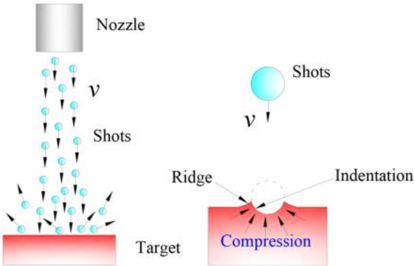
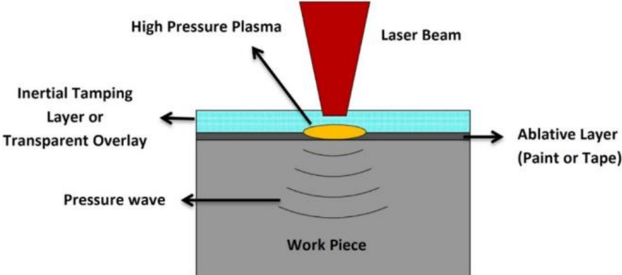
![Figure 3 Schematic representation of the ultrasonic shot peening process [3 Figure 3. Schematic representation of the ultrasonic shot peening process [39].](https://figures.cochat.ai/paper-figures/da75185291ac4e3fb0bd6e14ed28038b/state-of-the-art-and-perspectives-on-surface-strengthening-process-and-figure-3.png)
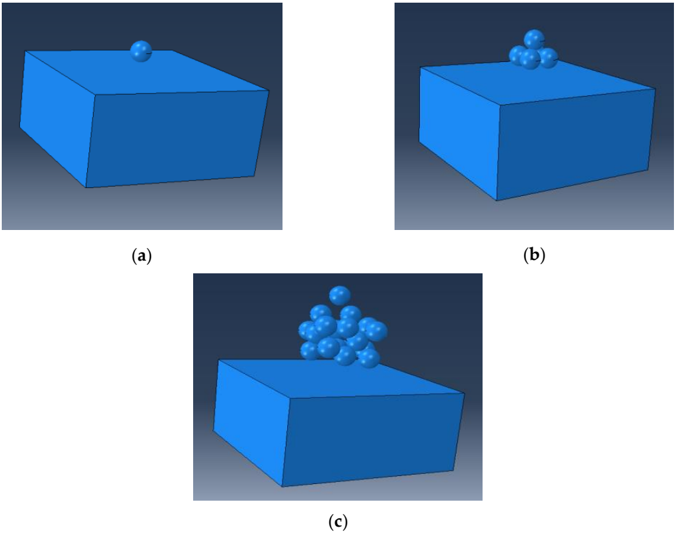
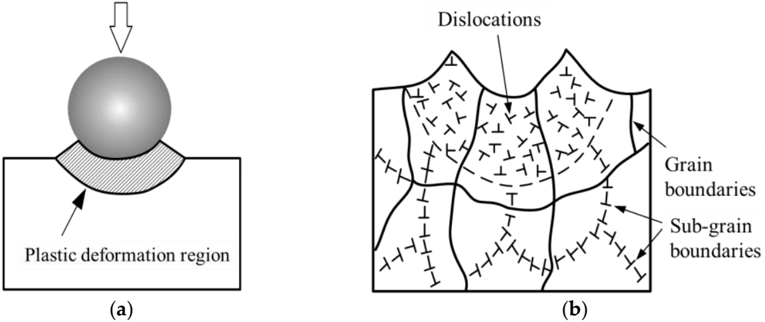
![Figure 8 Schematic representation of microstructure evolution under shot peening [ Figure 8. Schematic representation of microstructure evolution under shot peening [78].](https://figures.cochat.ai/paper-figures/fc32efaf7bef42db9776b614cfbb7777/state-of-the-art-and-perspectives-on-surface-strengthening-process-and-figure-8.png)
Verification
Claims the paper makes
The claims and statistics of this paper haven’t been checked yet.
Free: it reads the open-access text and checks the first 5 claims that cite a source we can check. Create a free account to check every claim.
Self-check
Percentages, sums and reported differences re-computed from the paper’s own numbers.
The self-check needs the paper’s full text.
Citations
Cites
Tao, N. R., Wang, Z. B., Tong, W. P., Sui, M. L., Lu, J., & Lu, K. (2002) · Acta Materialia · doi:10.1016/s1359-6454(02)00310-5 · Cited by 1,010 · cited 2×
“is the use of a high pressure ’ s surface, resulting in a fatigue performance [36]. reduced stress concentration, minimal increase in machined surface roughness, and easier processing of narrow also more efficient and environmentally development prospects [37].”
BackgroundGujba, A., & Medraj, M. (2014) · Materials · doi:10.3390/ma7127925 · Cited by 416 · cited 1×
“If the shock wave’s maximum pressure is greater than the workpiece’s dynamic yield strength, residual compressive stress is produced on the workpiece surface, thus improving its fatigue performance. illustrates the laser shock peening process [30].”
BackgroundRelating Almen intensity to residual stresses induced by shot peening: a numerical approach
Guagliano, M. (2001) · Journal of Materials Processing Technology · doi:10.1016/s0924-0136(00)00893-1 · Cited by 307 · cited 1×
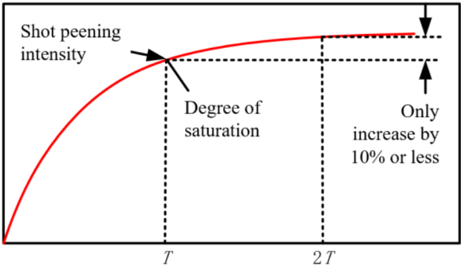
“By gradually increasing the time of shot peening on a set of standard Wire-cut shot High hardness, typically ranging from 55 to 62 HRC, good toughness, prone to breakage, and low recovery rate, suitable for high-intensity shot peening applications. a saturation curve is generated, as shown in”
BackgroundReview of shot peening processes to obtain nanocrystalline surfaces in metal alloys
Bagheri, S., & Guagliano, M. (2009) · Surface Engineering · doi:10.1179/026708408x334087 · Cited by 297 · cited 1×
“The creation of nanocrystallized layer by the shot peening of metal alloys has been reviewed by Bagheri et al. [23], and the available microstructural characteristics of nanocrystal thin layers obtained Thus, it is necessary to conduct a review on the and perspectives of surface strengthening…”
BackgroundRubio-González, C., Ocaña, J. L., Gomez-Rosas, G., Molpeceres, C., Paredes, M., Banderas, A., Porro, J., & Morales, M. (2004) · Materials Science and Engineering: A · doi:10.1016/j.msea.2004.07.025 · Cited by 225 · cited 1×
“…speed, and is considered advantageous due to its strong strengthening effect, good control, and broad application range. speed, and is considered its strong strengthening effect, good control, and broad application However, the high cost of laser shock peening equipment limits its use [31,32].”
BackgroundThree-dimensional dynamic finite element analysis of shot-peening induced residual stresses
Meguid, S. A., Shagal, G., Stranart, J. C., & Daly, J. (1999) · Finite Elements in Analysis and Design · doi:10.1016/s0168-874x(98)00057-2 · Cited by 223
On the potential applications of a 3D random finite element model for the simulation of shot peening
Miao, H. Y., Larose, S., Perron, C., & Lévesque, M. (2009) · Advances in Engineering Software · doi:10.1016/j.advengsoft.2009.03.013 · Cited by 213
Improvement of fatigue property in 7050–T7451 aluminum alloy by laser peening and shot peening
Gao, Y. K. (2011) · Materials Science and Engineering: A · doi:10.1016/j.msea.2011.01.077 · Cited by 212 · cited 1×
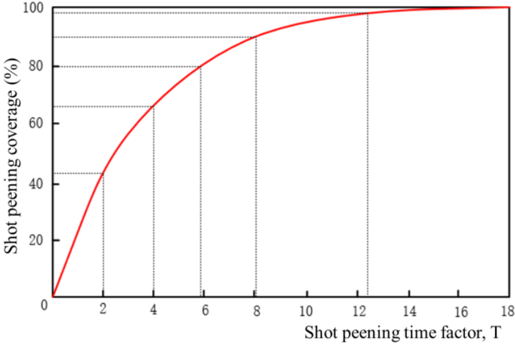
“Hence, considering the shot peening coverage rate of 98% as full coverage in practical processing can greatly reduce the shot peening time and improve production efficiency.”
BackgroundA three-dimensional simulation of shot peening process using multiple shot impacts
Majzoobi, G. H., Azizi, R., & Alavi Nia, A. (2005) · Journal of Materials Processing Technology · doi:10.1016/j.jmatprotec.2005.02.139 · Cited by 210
Soyama, H. (2019) · Journal of Materials Processing Technology · doi:10.1016/j.jmatprotec.2019.01.030 · Cited by 198 · cited 2×
“…traditional shot peening, leading to a better strengthening effect. peening, leading to a better strengthening equipment size and relatively low cost make it useful in industries Its small equipment size and relatively low cost make it useful in industries such as automotive manufacturing and…”
Background
Research works printed but not linked: 7
- 60. Hong, T.; Wang, Z.W.; Yuan, J.L. Numerical simulation of shot peening process using Finite Element and Discrete Element Method. China Mech. Eng. 2008, 19, 0-1316.
- 64. Li, Y.Z.; Wang, F.; Lv, J.; Xu, K.W. Finite Element analysis for shot-peening models of single shot impact and multiple impingment. J. Xi'an Jiaotong Univ. 2007, 41, 5.
- 65. Zhang, H.W.; Chen, J.Q.; Zhang, Y.D. Numerical simulation of shot-peening process based on multiple shot model. J. Plast. Eng. 2012, 19, 8.
- 69. Sheng, X.F.; Li, Z.; Zhao, K.Y.; Cheng, X.Q. Numerical simulation research on strengthening effect of shot peening at identical intensity. Surf. Technol. 2018, 47, 7.
- 73. Xin, Z.L. Shot peening process design intensit. Tool Eng. 2018, 52, 4.
- 75. Fang, B.W. Controlled Shot Peening and Residual Stress Theory; Shandong Science and Technology Press: Jinan, China, 1991.
- 82. Li, R.; Liu, D.; Wei, Z.; Xuan, L.; Qiao, M.; Xia, M. Influence of shot peening and surface integrity on the fatigue properties of 300M steel. Mech. Sci. Technol. Aerosp. Eng. 2011, 30, 1418-1423.
Cited by
Effects of peening duration on surface and wear properties of aircraft graded AA2017 alloy
Jagannati, V., Beyanagari, S. R., Turaka, S., Ragupathy, V. D., & Reddy, P. S. (2024) · Surface and Coatings Technology · doi:10.1016/j.surfcoat.2023.130361 · Cited by 35
Ji, R., Qi, Z., Chen, J., Zhang, L., Lin, K., Lu, S., & Li, Y. (2023) · Crystals · doi:10.3390/cryst13030430 · Cited by 32
Self-citationThangamani, G., Tamang, S. K., Patel, M. S., Narayanan, J. A., Pallagani, J. K., Rose, P., Gianchandani, P. K., Arunkumar, T., & Palani, I. A. (2025) · The International Journal of Advanced Manufacturing Technology · doi:10.1007/s00170-025-15058-0 · Cited by 31
Zhao, X., Gu, K., Zhang, M., Weng, Z., Pan, R., Liu, B., & Wang, J. (2025) · Materials Science and Engineering A · doi:10.1016/j.msea.2025.147919 · Cited by 32
Fang, X., Wang, Z., Wang, W., Cao, X., Li, D., Wang, Z., Gong, J., & Cai, Z. (2024) · Surface and Coatings Technology · doi:10.1016/j.surfcoat.2024.131538 · Cited by 22
Wang, Y., Wang, Z., Ni, P., Wang, D., Lu, Y., Lu, H., Guo, S., & Chen, Z. (2023) · Coatings · doi:10.3390/coatings13040758 · Cited by 13
Zhang, H., Cao, S., Li, C., He, N., & Wang, F. (2023) · Materials Science and Engineering A · doi:10.1016/j.msea.2023.145477 · Cited by 13
Kwon, J. K., Kim, M. H., Park, J. H., Jeon, J. I., & Sohn, T.-J. (2024) · Engineering Failure Analysis · doi:10.1016/j.engfailanal.2024.108253 · Cited by 13
Jose, S. A., John, M., Misra, M., & Menezes, P. L. (2025) · Materials · doi:10.3390/ma18020438 · Cited by 13
Yuan, H., Yang, W., Zhang, L., & Hong, T. (2023) · Coatings · doi:10.3390/coatings13030581 · Cited by 12
Self-citationCeramic–Titanium Alloy Artificial Hip Joint Wear Simulation and Experimental Study
Ji, R., Fei, C., Ying, R., & Zhang, L. (2023) · Coatings · doi:10.3390/coatings13081321 · Cited by 10
Self-citationXu, J., & Ding, W. (2025) · Vacuum · doi:10.1016/j.vacuum.2025.114551 · Cited by 10
Ferroelectric Material in Triboelectric Nanogenerator
Zhang, Z., Wu, T. L., Sun, E., Chen, Y., & Wang, N. (2024) · Materials · doi:10.3390/ma17122834 · Cited by 8
Wang, S., Yao, J., Zhen, S., Wang, Y., Yu, Y., Zhao, C., Li, S., & Wang, Y. (2025) · Journal of Nuclear Materials · doi:10.1016/j.jnucmat.2025.156224 · Cited by 7
Graddala, S. B., & Das, C., V (2024) · Engineering Research Express · doi:10.1088/2631-8695/ad7782 · Cited by 7
Wei, Y., Seetharaman, S., Lee, C. J. J., Zhao, Y., Chua, A., Liu, H., Cheng, B., & Tan, C. C. (2025) · Journal of Materials Research and Technology · doi:10.1016/j.jmrt.2025.06.172 · Cited by 6
Enhancing the corrosion–wear resistance of HVOF-sprayed Inconel 625 coatings via micro-shot peening
Chen, T.-C., Tsay, L., Chou, C.-C., & Hsu, S.-C. (2025) · Surface and Coatings Technology · doi:10.1016/j.surfcoat.2025.132801 · Cited by 6
Wang, C., Park, Y., & Kim, T. (2023) · Materials · doi:10.3390/ma16155472 · Cited by 5
Study on the process of abrasive water jet peening for Ti6Al4V curved surfaces
Wang, Y., Wu, M., Zhou, S., & Miao, X. (2025) · Journal of the Brazilian Society of Mechanical Sciences and Engineering · doi:10.1007/s40430-025-05632-8 · Cited by 5
Xu, J., Du, D., Song, J. Y., Li, D., & Li, Y. (2025) · International Journal of Structural Integrity · doi:10.1108/ijsi-09-2024-0159 · Cited by 5
Self-citationAn experimental investigation on AA5083 alloy shot peening surface characteristics
Thirumavalavan, K., Sudharson, S., & Sarukasan, D. (2024) · Surface Engineering · doi:10.1177/02670844241301416 · Cited by 4
“11 These methods are highly valued for their ability to greatly re fi ne grain in fully dense, bulk-scale workpieces, with promising prospects for structural applications.”
Machine Learning-Based Analysis of Surface Hardening in Shot-Peened Superalloys
Rodrigues, P., Kerwad, M. M., Askar, S. K., Pallathadka, H., Abduvalieva, D., & Zearah, S. A. (2024) · Journal of Materials Engineering and Performance · doi:10.1007/s11665-024-09918-1 · Cited by 3
Liu, M., Zhang, J., & Hu, J. (2025) · Surfaces and Interfaces · doi:10.1016/j.surfin.2025.107537 · Cited by 4
Meguehout, M., Chaib, M., Yahiaoui, T., Slimane, A., Kaddour, B., Abdelkader, Z., Kumaravel, M., & Amiri, A. (2025) · The International Journal of Advanced Manufacturing Technology · doi:10.1007/s00170-025-16613-5 · Cited by 3
Parvin, B. G., Gülten, G., Totık, Y., & Efeoğlu, İ. (2026) · Thin Solid Films · doi:10.1016/j.tsf.2026.140891 · Cited by 3
Liu, Y., He, Z., Lin, Y., Yuan, W., Zu, Y., Zhou, W., Fu, X., & Chen, G. (2026) · Surface and Coatings Technology · doi:10.1016/j.surfcoat.2026.133537 · Cited by 3
Synthetic effects of turning and shot peening on surface integrity
Feng, W., Liu, H., Tang, Y., & Zhang, J. (2025) · Materials and Manufacturing Processes · doi:10.1080/10426914.2025.2487267 · Cited by 3
“[6,7] Nevertheless, the high strain and temperature applied to the surfaces during the machining and strengthening processes can result in severe plastic deformation (SPD), which can give rise to in microstructural evolution.”
You, Z., Yuan, H., & Ye, X. (2023) · Coatings · doi:10.3390/coatings13061048 · Cited by 3
Radziejewska, J., Marczak, M., Maj, P., Głowacki, D., & Diduszko, R. (2024) · Archives of Civil and Mechanical Engineering · doi:10.1007/s43452-024-01068-4 · Cited by 3
“However, it is important to note that these compressive stresses are generally more superficial than those induced by shot peen-ing, thus limiting the potential for enhancing bulk material strength and fatigue life [33].”
Bai, Z., Feng, F., Huang, K., Tang, M., Feng, S., Zhang, J., Feng, P., Wang, J., & Zhang, X. (2025) · Journal of Materials Research and Technology · doi:10.1016/j.jmrt.2025.11.247 · Cited by 2
Brooks, N., Hackel, L. A., & Davami, K. (2025) · Intermetallics · doi:10.1016/j.intermet.2025.109081 · Cited by 2
Neural Network-Enabled Process Flowsheet for Industrial Shot Peening
Feltner, L., & Mort, P. (2025) · Materials · doi:10.3390/ma19010009 · Cited by 2
Tayyaba, Q., Tonny, U. B., Swain, G. M., Chakrapani, S. K., Boehlert, C. J., & Hermawan, H. (2026) · International Materials Reviews · doi:10.1177/09506608261438588 · Cited by 2
Cao, B., Yin, W., & Zhang, Z. (2024) · IEEE Transactions on Instrumentation and Measurement · doi:10.1109/tim.2024.3413137 · Cited by 2
“…in the course of the shot peening, an energetic jet of steel shots ( (cid:56) 0.5– (cid:56) 3) bombards the surface of the workpiece, and such treatment can significantly improve the mechanical properties, fatigue strength, and corrosion resistance of critical components [4], [5], [6], [7].”
BackgroundInfluentialImproved lifetime estimation of shot-peened shaft bores using a numerical approach
Reissner, F.-C., Uhlmann, L., Baumgartner, J., Herrig, T., & Bergs, T. (2024) · Procedia Structural Integrity · doi:10.1016/j.prostr.2024.03.044 · Cited by 1
Numerical modeling of residual stress of 40cr gear by double-roller gear ultrasonic rolling
Shi, Z. Y., Shao, W. Z., Lv, L., Tang, J., Shi, Y., & Li, X. (2025) · The International Journal of Advanced Manufacturing Technology · doi:10.1007/s00170-025-16001-z · Cited by 1
Experimental study on the bending fatigue characteristics of shot peening gears
Zhong, Z., Huang, X., Zhang, C., Zou, J., Zhu, Y., & Liu, X. (2025) · Journal of Physics Conference Series · doi:10.1088/1742-6596/3068/1/012030 · Cited by 1
Advances in Solid Lubricating Layers for Gears: A Review
Zhang, H., Wu, S., Li, J., & Li, Y. (2026) · Lubricants · doi:10.3390/lubricants14020066 · Cited by 1
Self-citationPavlenko, D. V., Vyshnepolskyi, Y., Двирнык, Я. В., & Schetinina, M. O. (2026) · Materials & Design · doi:10.1016/j.matdes.2026.115996 · Cited by 1
Modeling of hardening and burnishing of workpiece surfaces by toroidal impact indenter
Lytvyniak, Y., Stupnytskyy, V., Yurchyshyn, I., & Lytvyniak, O. (2025) · Archive of Mechanical Engineering · doi:10.24425/ame.2025.153741
Effect of Gradient Microstructure on Wear Properties of 23CrNi3Mo Steel
Liao, G., Lei, M., & Luo, A. (2025) · steel research international · doi:10.1002/srin.202500161
A critical review of forced convection in microchannels
Kadhim, G., & Al-Saadi, A. (2025) · Al-Qadisiyah Journal for Engineering Sciences · doi:10.30772/qjes.2023.141506.1003
Determination of the efficiency of shot blasting of metal surfaces
Goryk, O., Брикун, О. М., Kalashnykov, O., & Buchynskyi, A. (2025) · Technology audit and production reserves · doi:10.15587/2706-5448.2025.348608
Effect of micro-shot peening on the surface and interface integrity of 7075 aluminum alloy
Hossain, M. A., Siddiq, M., & Javed, J. (2026) · Next Materials · doi:10.1016/j.nxmate.2026.102058 · Cited by 1
Rajesh, R., Kulkarni, M. V., Vergis, B. R., Sampathkumaran, P., & Kumar, S. A. (2026) · An-Najah University Journal for Research - A (Natural Sciences) · doi:10.35552/anujr.a.a2801
Wang, R., Ye, L., Zhu, X., Chuai, S., Liu, P., & Li, X. (2026) · Chemical Engineering and Processing - Process Intensification · doi:10.1016/j.cep.2026.110866
Hou, N., Niu, S., Bai, L., Shutao, H., Li, J., Wang, X., Wang, M., & Song, D. (2026) · Journal of Mechanical Science and Technology · doi:10.1007/s12206-026-0519-z
“These techniques induce the formation of a gradient nanostructured surface layer through grain refinement, resulting in high surface hardness and introducing beneficial residual compressive stress [9-12].”
Ma, F., Wu, S., Wu, Z., Shi, X., & Wang, X. (2026) · Proceedings of the Institution of Mechanical Engineers Part L Journal of Materials Design and Applications · doi:10.1177/14644207261458689
Sheng, Y., Hou, X., Hou, Y., Chen, W., Liu, Q., Li, X., & Qu, S. (2026) · Materials · doi:10.3390/ma19153257 · Cited by 1
Multi-Objective Optimization of Shot Peening Parameters and Surface Integrity for GH4202 Superalloy
Wang, Y., Song, X., Tang, S., Li, Q., Du, H., Zuo, Q., Liu, E., Lü, Q., & Yang, L. (2026) · Journal of Manufacturing and Materials Processing · doi:10.3390/jmmp10090350
“High-velocity metallic or ceramic shots impact the surface, causing plastic deformation, introducing compressive residual stress, and refining the near-surface microstructure [4–7].”
Antonioli, L., Merlin, M., Benasciutti, D., Cruciani, G., Morales, C., & Soffritti, C. (2026) · Materials Science and Engineering A · doi:10.1016/j.msea.2026.151067
Polis, J., Szydło, K., Lukaszkowicz, K., Gołombek, K., Nuckowski, P. M., Maranda, A., & Polis, M. (2026) · Materials Science and Engineering A · doi:10.1016/j.msea.2026.151170
Zhang, P., Zhang, J., Gao, Y., & Wang, X. (2026) · Journal of the Brazilian Society of Mechanical Sciences and Engineering · doi:10.1007/s40430-026-06781-0
Influence Factors of Shot Peening Intensity and Its Effect on Residual Stress in Herringbone Gears
Yin, F., Lv, L., Tang, J., & Shao, W. Z. (2026) · Materials · doi:10.3390/ma19214453
Hocalar, Ç., & Saklakoğlu, N. (2026) · International Students Science Congress (ISSC) · doi:10.52460/issc.2026.050
Meng, L., Wang, Z., Zhang, B., Peng, Y., Qi, Z., & Cai, Z. (2026) · Materials & Design · doi:10.1016/j.matdes.2026.117387
Chauhan, K., & Jha, P. K. (2026) · International Journal of Lightweight Materials and Manufacture · doi:10.1016/j.ijlmm.2026.10.009
Metadata
- Authors
- Xie, X., Zhang, L., Zhu, L., Li, Y., Hong, T., Yang, W., & Shan, X.
- Affiliations
- Zhejiang University of Technology (CN)
- Zhejiang Guanlin Machinery Inc., Anji 313300, China
- Corresponding author
- Shan, Xiaohang
- Venue
- Coatings
- Publisher
- MDPI AG
- Published
- 2023-04-30
- Volume
- 13
- Issue
- 5
- Pages
- 859
- ISSN
- 2079-6412 (ISSN-L)
- OpenAlex
- W4367627131
- Cited by
- 49
- References
- 73
- Citations by year
- 2026: 14 · 2025: 18 · 2024: 10 · 2023: 7
- FWCI
- 4.83
- Type
- journal article
- Language
- en
- Open access
- gold
- doi.org
- Licence
- Locations
- Coatings (publishedVersion, cc-by)
- Funders
- Key Research and Development Program of Zhejiang Province (2021C04011, U21A20122, 51575493)
- National Natural Science Foundation of China (2021C04011, U21A20122, 51575493)
- Topics
- Physical Sciences › Engineering › Mechanical Engineering › Surface Treatment and Residual Stress
- Physical Sciences › Engineering › Mechanical Engineering › Surface Treatment and Coatings
- Physical Sciences › Engineering › Mechanics of Materials › Metal and Thin Film Mechanics
- Keywords
- shot peening, surface strengthening, compressive residual stress, process parameters, quality control
About these checks
Registry, retraction, Cites and statistics results are computed, not judged, with one exception: a printed reference that no index lists is read once by a model before it counts as a citation error. Claims are extracted by a model and kept only when their quote appears verbatim in the text; each cited source is then checked, with a model’s help, for whether it says what the claim relies on. Those verdicts can be wrong — read the claim’s quote and the cited source before relying on one.
Statistics and arithmetic are recomputed, not judged.
Confidence bands are shown only for fields calibrated on our annotated test set. None is calibrated yet, so no band is shown.
What counts as a claim ›How we measure confidence ›How we check this ›
Are you an author, or do you see a problem with this page? Request a review
Data sources
Bibliographic data: Semantic Scholar, OpenAlex, Crossref.
Contains information from the Semantic Scholar Academic Graph Datasets, made available under the ODC Attribution License (ODC-BY 1.0).
Semantic Scholar’s data is described in: Kinney, R., et al. (2023). The Semantic Scholar Open Data Platform. arXiv:2301.10140.
