

Continuous Hydrothermal Liquefaction of Biomass: A Critical Review
Open accessThe DOI matches its Crossref record; 99 of the 99 references it cites were found in a registry or an index.
Abstract
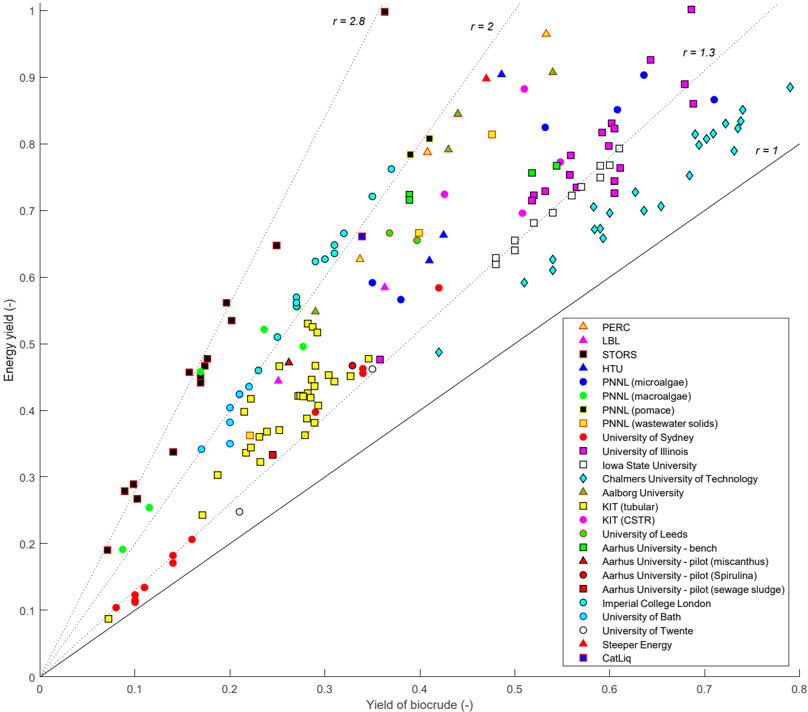
Hydrothermal liquefaction (HTL) of biomass is emerging as an effective technology to efficiently valorize different types of (wet) biomass feedstocks, ranging from lignocellulosics to algae and organic wastes. Significant research into HTL has been conducted in batch systems, which has provided a fundamental understanding of the different process conditions and the behavior of different biomass. The next step towards continuous plants, which are prerequisites for an industrial implementation of the process, has been significantly less explored. In order to facilitate a more focused future development, this review—based on the sources available in the open literature—intends to present the state of the art in the field of continuous HTL as well as to suggest means of interpretation of data from such plants. This contributes to a more holistic understanding of causes and effects, aiding next generation designs as well as pinpointing research focus. Additionally, the documented experiences in upgrading by catalytic hydrotreating are reported. The study reveals some interesting features in terms of energy densification versus the yield of different classes of feedstocks, indicating that some global limitations exist irrespective of processing implementations. Finally, techno-economic considerations, observations and remarks for future studies are presented.
Overview
The claims and statistics of this paper haven’t been checked yet.
Free: it reads the open-access text and checks the first 5 claims that cite a source we can check. Create a free account to check every claim.
Integrity signals
Registry
Cites
Statistics
Figures
Verification
Claims the paper makes
The claims and statistics of this paper haven’t been checked yet.
Free: it reads the open-access text and checks the first 5 claims that cite a source we can check. Create a free account to check every claim.
Claims other papers make about this one
Each is checked against this paper’s own text: does it say what the citing paper says it does?
The source backs part of the claim, not all of it — or backs it for a different population, condition or comparison.
In the citing paper
“In addition, the reaction temperature also influences certain reaction mechanisms and the kinetics of various competing reactions; subcritical water properties prefer ionic reactions, whereas gas-like density in a supercritical water condition favors radical reactions [22,107,117].”
From Sub- and Supercritical Water Liquefaction of Kraft Lignin and Black Liquor Derived Lignin (2020) · cites this paper as [22]
Experimental — accuracy not yet measuredThe source backs part of the claim, not all of it — or backs it for a different population, condition or comparison.
In the citing paper
“HTL is a thermochemical process in which the main product obtained is a biocrude - an oxygenated precursor of hydrocarbon fuels - that can be further upgraded to meet product specifications using standard refinery technology.”
From Integration of hydrothermal liquefaction and carbon capture and storage for the production of advanced liquid biofuels with negative CO2 emissions (2020) · cites this paper as [4]
Experimental — accuracy not yet measuredThe source backs part of the claim, not all of it — or backs it for a different population, condition or comparison.
In the citing paper
“In a subsequent hydrotreating step, excess hydrogen is used for heteroatom removal, bonds saturation and overall improvement of the biocrude quality towards the final drop-in fuels [4].”
From Integration of hydrothermal liquefaction and carbon capture and storage for the production of advanced liquid biofuels with negative CO2 emissions (2020) · cites this paper as [4]
Experimental — accuracy not yet measuredThe cited source says what the claim attributes to it.
In the citing paper
“The reaction temperature of HTL varies from 523 K up to 723 K as the pressure range varies between 10 MPa and 35 MPa [22,52].”
From Sub- and Supercritical Water Liquefaction of Kraft Lignin and Black Liquor Derived Lignin (2020) · cites this paper as [22]
The cited source says what the claim attributes to it.
In the citing paper
“Most studies have focused on batch HTL systems, but in order to make the process commercially viable a continuous system is desirable and the issues that need to be addressed have been reviewed [107].”
From Key Targets for Improving Algal Biofuel Production (2021) · cites this paper as [107]
2 more claims about this paper
Create a free account to see every claim other papers make about this one.
Self-check
Percentages, sums and reported differences re-computed from the paper’s own numbers.
The self-check needs the paper’s full text.
Citations
Cites
The Path Forward for Biofuels and Biomaterials
Ragauskas, A. J., Williams, C. K., Davison, B. H., Britovsek, G., Cairney, J., Eckert, C. A., Frederick, W. J., Hallett, J. P., Leak, D. J., Liotta, C. L., et al. (2006) · Science · doi:10.1126/science.1114736 · Cited by 5,741 · cited 1×
“Among the different energy sources, biomass represents a very important part, including into its definition a wide range of materials such as forestry and agricultural residues, energy crops, but also organic wastes such as sewage sludge, food and sorted organic waste can be all considered as biomass [1,2].”
BackgroundWagner, W., & Pruß, A. (2002) · Journal of Physical and Chemical Reference Data · doi:10.1063/1.1461829 · Cited by 4,884
Energy production from biomass (part 1): overview of biomass
McKendry, P. (2002) · Bioresource Technology · doi:10.1016/s0960-8524(01)00118-3 · Cited by 4,860 · cited 1×
“Among the different energy sources, biomass represents a very important part, including into its definition a wide range of materials such as forestry and agricultural residues, energy crops, but also organic wastes such as sewage sludge, food and sorted organic waste can be all considered as biomass [1,2].”
BackgroundProduction of first and second generation biofuels: A comprehensive review
Naik, S. N., Goud, V. V., Rout, P. K., & Dalai, A. K. (2010) · Renewable and Sustainable Energy Reviews · doi:10.1016/j.rser.2009.10.003 · Cited by 3,264 · cited 1×
“Particularly for applications in the field of transportation, for example, this is preferred in order to feed internal combustion engines or turbines [6].”
BackgroundA unified correlation for estimating HHV of solid, liquid and gaseous fuels
Channiwala, S. A., & Parikh, P. P. (2002) · Fuel · doi:10.1016/s0016-2361(01)00131-4 · Cited by 2,489
Peterson, A. A., Vogel, F., Lachance, R. P., Fröling, M., Antal, Jr., & Tester, J. W. (2008) · Energy & Environmental Science · doi:10.1039/b810100k · Cited by 2,132
Renewable Fuels and Chemicals by Thermal Processing of Biomass
Bridgwater, A. V. (2003) · Chemical Engineering Journal · doi:10.1016/s1385-8947(02)00142-0 · Cited by 1,920 · cited 1×
“Biomass can thus be considered the natural substitute for fossil crude oil in the production of liquid fuels and petrochemicals [5].”
BackgroundHydrothermal liquefaction of biomass: A review of subcritical water technologies
Toor, S. S., Rosendahl, L., & Rudolf, A. (2011) · Energy · doi:10.1016/j.energy.2011.03.013 · Cited by 1,840 · cited 2×
“On the other hand, hydrothermal liquefaction is potentially able to yield a liquid with a considerably lower oxygen content and to work also with wet biomass, showing great flexibility in terms of feedstock [9,10].”
BackgroundSelf-citationA review of catalytic upgrading of bio-oil to engine fuels
Mortensen, P. M., Grunwaldt, J.-D., Jensen, P. A., Knudsen, K. G., & Jensen, A. D. (2011) · Applied Catalysis A: General · doi:10.1016/j.apcata.2011.08.046 · Cited by 1,768 · cited 1×
“Therefore, these liquids would rapidly polymerize when heated up, which would make their utilization in internal combustion engines quite challenging [8].”
BackgroundOrganic Chemical Reactions in Supercritical Water
Savage, P. E. (1999) · Chemical Reviews · doi:10.1021/cr9700989 · Cited by 1,416
Research works printed but not linked: 3
- 71. Caretta, A.; Riccò, M.; Bosetti, A.; Burattini, M.; Carnelli, L.; Miglio, R.; Volpato, C.B. Waste to fuel-Conversion of waste into energy. In Proceedings of the 9th European Congress of Chemical Engineering, The Hague, The Netherlands, 21-24 April 2013.
- 75. Roberts, M.; Williams, J.; Halberstadt, P.; Sanders, D.; Adams, T. Animal waste to marketable products. In Proceedings of the Natural Gas Technologies Conference, Phoenix, AZ, USA, 8-11 February 2004.
- 97. Anastasakis, K.; Johannsen, I.; Madsen, R.B.; Biller, P. Assessing hydrothermal liquefaction of lignocellulosic biomass, microalgae and sewage sludge at pilot scale. In Proceedings of the 26th European Biomass Conference and Exhibition, Copenhagen, Denmark, 14-17 May 2018. 125.
Cited by
Items 201–300 of 387
Recent Advances in Hydrothermal Liquefaction of Microalgae
Mahadevan, V., Gopinath, K. P., & Ghodke, P. K. (2022) · Clean Energy Production Technologies · doi:10.1007/978-981-19-0680-0_5 · Cited by 11
de Caprariis, B., Damizia, M., Tai, L., & Filippis, P. D. (2022) · Chemical engineering transactions · doi:10.3303/cet2292102 · Cited by 11
Effect of co-liquefaction of lignin and laminaria saccharina on optimization of bio-oil yield
Jayathilake, M., Rudra, S., & Christy, A. A. (2021) · Energy Conversion and Management X · doi:10.1016/j.ecmx.2021.100151 · Cited by 11
Achour, A., Castello, D., Haider, M. S., & Rosendahl, L. A. (2025) · Chemical Engineering Journal · doi:10.1016/j.cej.2025.166233 · Cited by 10
Self-citationZoppi, G., Biller, P., Catalano, J., & Anastasakis, K. (2025) · Chemical Engineering Journal · doi:10.1016/j.cej.2025.168987 · Cited by 10
Second Generation Biofuels and Extraction Techniques
Kumar, P., Sharma, P. K., Tripathi, S., Kumar, D., Nannaware, A. D., Chaturvedi, S., & Rout, P. K. (2023) · Wiley eBooks · doi:10.1002/9781119829522.ch8 · Cited by 10
Sanchez, E. L., Paulsen, M. M., Ferrari, F. A., & Pedersen, T. H. (2024) · Industrial & Engineering Chemistry Research · doi:10.1021/acs.iecr.3c04157 · Cited by 10
Self-citationJayathilake, M., Rudra, S., & Rosendahl, L. A. (2021) · Fuel · doi:10.1016/j.fuel.2021.121498 · Cited by 10
Self-citationBriand, M., Haarlemmer, G. W., Roubaud, A., & Fongarland, P. (2022) · ChemEngineering · doi:10.3390/chemengineering6010002 · Cited by 10
“In fact, hydrothermal liquefaction can be applied to a large variety of resources to produce a high heating value biocrude with a lower oxygen content than initial feedstock [3–7].”
BackgroundWaste to Biofuels Through Zero-energy Hydrothermal Solar Plants: Process Design
(2020) · doi:10.3303/cet2080002 · Cited by 9
“18 €/LGE typical of traditional HTL plants (Castello et al. 2018).”
BackgroundSelf-citationBest practices for bio-crude oil production at pilot scale using continuous flow reactors
Cheng, F., & Brewer, C. E. (2022) · Elsevier eBooks · doi:10.1016/b978-0-323-90971-6.00003-6 · Cited by 9
Exploration of upgrading of biomass and its paradigmatic synthesis: Future scope for biogas exertion
Awasthi, M. K., Rajendran, K., Vigneswaran, V. S., Kumar, V., Dregulo, A. M., Singh, V., Kumar, D., Sindhu, R., & Zhang, Z. (2024) · Sustainable Chemistry and Pharmacy · doi:10.1016/j.scp.2024.101450 · Cited by 9
Investigating Salt Precipitation in Continuous Supercritical Water Gasification of Biomass
Dutzi, J., Boukis, Ν., & Sauer, J. (2024) · Processes · doi:10.3390/pr12050935 · Cited by 9
Lee, S. E., Lim, J. S., Park, Y., Shong, B., & Lee, H.-S. (2024) · The Journal of Supercritical Fluids · doi:10.1016/j.supflu.2024.106416 · Cited by 9
Design, Commissioning And Start-Up of a New Hydrothermal Liquefaction Continuous Pilot Unit
Rizzo, A. M., Dell’Orco, S., Miliotti, E., & Chiaramonti, D. (2020) · Chemical engineering transactions · doi:10.3303/cet2080062 · Cited by 9
Phycocyanin Extraction and Production of Crude Bio-Oil from Residual Biomass
Soni, B., Menon, D., Vijaykumar, V., Ghadge, R., & Dasgupta, S. (2022) · Industrial Biotechnology · doi:10.1089/ind.2022.0006 · Cited by 9
Cabrera, D. V., Adema-Yusta, I. P., Santibañez, M. J., Celis, C. A., Tester, J. W., & Labatut, R. A. (2024) · Energy & Environmental Science · doi:10.1039/d4ee02245a · Cited by 8
Hydrothermal Treatment of Digestates: Challenges and Perspectives
Abdelfatah-Aldayyat, E., & Gómez, X. (2025) · Environments · doi:10.3390/environments12100347 · Cited by 8
Montesantos, N., Kohli, K., Sharma, B. K., & Maschietti, M. (2022) · Industrial & Engineering Chemistry Research · doi:10.1021/acs.iecr.2c02109 · Cited by 8
Chaudhary, V., Awadakkam, S., Borugadda, V. B., & Dalai, A. K. (2024) · Sustainable Energy & Fuels · doi:10.1039/d4se00527a · Cited by 8
Widanagamage, G. W., Zhang, Z., Barner, L., O’Hara, I. M., & Moghaddam, L. (2025) · Sustainable materials and technologies · doi:10.1016/j.susmat.2025.e01453 · Cited by 8
High-temperature Extraction of Lignocellulosic Bio-oil by Supercritical Carbon Dioxide
Montesantos, N., Pedersen, T. H., Nielsen, R. P., Rosendahl, L. A., & Maschietti, M. (2019) · Chemical engineering transactions · doi:10.3303/cet1974134 · Cited by 8
“…been converted to liquid HTL bio-crudes with promising fuel properties such as higher heating values up to 35 MJ/kg. Development of HTL has already reached demonstration scale, even though there are a few obstacles to overcome with regard to downstream fuel upgrading (Castello et al., 2018).”
BackgroundSelf-citationFuel‐Driven Biorefineries Using Hydrothermal Processes
Klemm, M., Kröger, M., Görsch, K., Müller‐Langer, F., & Majer, S. (2020) · Chemie Ingenieur Technik · doi:10.1002/cite.202000093 · Cited by 8
Dayton, D. C., & Foust, T. D. (2019) · Elsevier eBooks · doi:10.1016/b978-0-12-815605-6.00003-2 · Cited by 8
A review on the interplay between bioeconomy and soil organic carbon stocks maintenance.Preprint
Díaz, C. A., Albers, A., Zamora-Ledezma, E., & Hamelin, L. (2022) · Research Square · doi:10.21203/rs.3.rs-1447842/v1 · Cited by 8
Aqueous phase recirculation in hydrothermal liquefaction: A critical review
Shah, A. A., Khan, M. I., Noonari, A. A., Jatoi, A. S., & Sandquist, J. (2025) · Biomass and Bioenergy · doi:10.1016/j.biombioe.2025.108612 · Cited by 7
Hydrothermal Liquefaction as a Sustainable Strategy for Integral Valorization of Agricultural Waste
Jagadale, M., Jadhav, M., Kumar, T. N., Shrivastava, P. S., & Kumar, N. (2024) · Wiley eBooks · doi:10.1002/9781394174805.ch7 · Cited by 7
Yousefzadeh, H., Borhan, E., HAZNEDAROĞLU, B. Z., Uzun, A., & Erkey, C. (2024) · Biochemical Engineering Journal · doi:10.1016/j.bej.2024.109237 · Cited by 7
Bayat, H., Dehghanizadeh, M., Lujan, A. L., & Brewer, C. E. (2024) · Energy & Fuels · doi:10.1021/acs.energyfuels.4c03026 · Cited by 7
dos Passos, J. S., Skibsted, S. K. G., & Biller, P. (2024) · Energy & Fuels · doi:10.1021/acs.energyfuels.4c04589 · Cited by 7
Jung, P.-G., Kim, S., Lim, Y., Choi, J., & Kim, J. (2025) · Biomass and Bioenergy · doi:10.1016/j.biombioe.2025.107915 · Cited by 7
Papamatthaiakis, N., Barbero-López, A., Eronen, E., Jänis, J., Mola‐Yudego, B., & Haapala, A. (2025) · BioEnergy Research · doi:10.1007/s12155-025-10867-3 · Cited by 7
“When comparing HTL to other thermochemical processes like pyrolysis or gasification, HTL offers several advantages, particularly in its ability to process high-moisture feedstocks without the need for energy-intensive drying [14, 17].”
Sharma, K., Haider, M. S., Castello, D., & Pedersen, T. H. (2022) · Energy & Fuels · doi:10.1021/acs.energyfuels.2c02692 · Cited by 7
Self-citationAturagaba, G., Egesa, D., Mubiru, E., & Tebandeke, E. (2023) · Journal of Sustainable Bioenergy Systems · doi:10.4236/jsbs.2023.133005 · Cited by 7
Sapillado, G., Zhang, Y., Summers, S., Ribeiro, R., & Tommaso, G. (2024) · Renewable Energy · doi:10.1016/j.renene.2024.121308 · Cited by 7
Suryawanshi, P. G., Das, S., Borugadda, V. B., Goud, V. V., & Dalai, A. K. (2020) · Springer eBooks · doi:10.1007/978-981-15-1804-1_10 · Cited by 7
Catalytic and Non-Catalytic Hydrothermal Liquefaction of Microalgae
Resurreccion, E. P., & Kumar, S. (2021) · Springer eBooks · doi:10.1007/978-3-030-65017-9_6 · Cited by 7
Hydrothermal Liquefaction Conversion of Lignocelluloses and waste Biomass Using Zeolite Catalyst
Hasan, N. H., & Jazie, A. A. A.-H. (2021) · IOP Conference Series Earth and Environmental Science · doi:10.1088/1755-1315/790/1/012036 · Cited by 7
Lauro, F. D., Balsamo, M., Solimene, R., Salatino, P., & Montagnaro, F. (2022) · Chemical engineering transactions · doi:10.3303/cet2292080 · Cited by 7
Hybrid Gasoline Production from Black Liquor through Coprocessing
Melin, K., Strüven, J. O., Eidam, P., Appelt, J., Hummel, C., Armbruster, U., Chapelliere, Y., Mirodatos, C., Schuurman, Y., & Oasmaa, A. (2022) · Energy & Fuels · doi:10.1021/acs.energyfuels.2c01638 · Cited by 7
Highfield, J. G., Ruppert, A. M., & Keller, N. (2025) · Catalysis Today · doi:10.1016/j.cattod.2025.115207 · Cited by 6
Ameen, M., Manaf, A. S. A., Mostapha, M., Mohamed, M., Lee, S. P., Hui, T., Rashidi, N. A., Aslam, N., Chiang, K., Daeneke, T., et al. (2025) · Energy Conversion and Management X · doi:10.1016/j.ecmx.2025.101097 · Cited by 6
Tiwari, R., & Mallick, N. (2025) · Energy · doi:10.1016/j.energy.2025.137371 · Cited by 6
Marrakchi, F., Toor, S. S., Pedersen, T. H., & Rosendahl, L. A. (2025) · Chemical Engineering Journal · doi:10.1016/j.cej.2025.170589 · Cited by 6
Self-citationSolar Thermal Technologies for Biofuel Production: Recent Advances and Future Prospectus
Sharma, A. K. (2025) · Green energy and fuel research. · doi:10.53941/gefr.2025.100002 · Cited by 6
“Thermochemical conversion techniques such hydrothermal carbonization, pyrolysis, and gasification are frequently employed [11–14].”
Acaru, S. F., Abdullah, R., & Lim, R. C. (2023) · Waste and Biomass Valorization · doi:10.1007/s12649-023-02074-y · Cited by 6
On the hydrothermal depolymerisation of kraft lignin using glycerol as a capping agent
Ahlbom, A., Maschietti, M., Nielsen, R. P., Hasani, M., & Theliander, H. (2023) · Holzforschung · doi:10.1515/hf-2022-0146 · Cited by 6
Hydrothermal Liquefaction of Food Waste: A Potential Resource Recovery Strategy
Katakojwala, R., Kopperi, H., Althuri, A., & Mohan, S. V. (2021) · Wiley eBooks · doi:10.1002/9783527825394.ch2 · Cited by 6
Zhou, N. (2021) · University of Minnesota Digital Conservancy (University of Minnesota) · Cited by 6
Anaerobic co-digestion of hydrothermal liquefaction aqueous phase with municipal sludge
Azarmina, N. (2023) · cIRcle (University of British Columbia) · doi:10.14288/1.0437873 · Cited by 6
Rivas-Arrieta, M. J., & Biller, P. (2025) · Separation and Purification Technology · doi:10.1016/j.seppur.2025.133859 · Cited by 5
Amini, G., Ghanbarzadeh, S., Nikzad, M., & Koupaie, E. H. (2026) · Chemical Engineering and Processing - Process Intensification · doi:10.1016/j.cep.2026.110786 · Cited by 5
Scalable kinetic modeling for hydrothermal liquefaction towards commercial application
Wang, Z., Wang, Z., Summers, S., Paul, S., Mirzaei, D., & Zhang, Y. (2026) · Energy Conversion and Management · doi:10.1016/j.enconman.2026.121713 · Cited by 5
Agricultural Waste Liquefied Hydrothermally using Heterogeneous Catalyst
Hasan, N. H., & Hasan, N. I. (2023) · IOP Conference Series Earth and Environmental Science · doi:10.1088/1755-1315/1259/1/012032 · Cited by 5
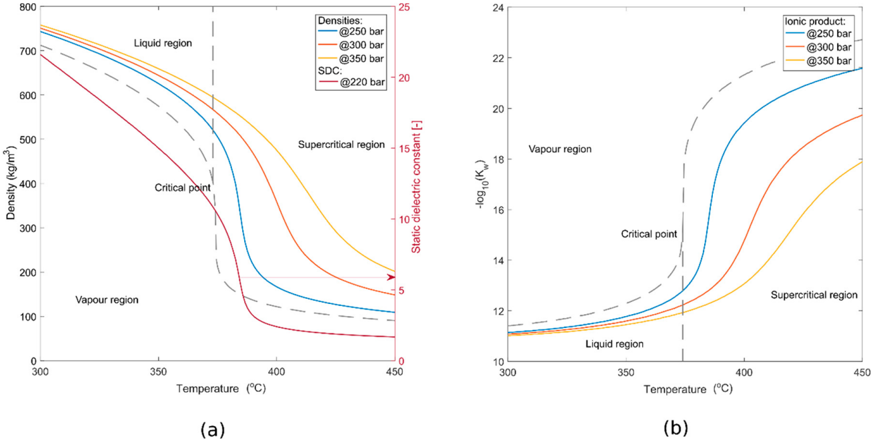
“This increases the solubility of the organic hydro-phobic substances and increases the ionic product through giving the acid-base reaction catalyzed process [23, 24].”
BackgroundSustainable Valorization of Oil and Gas Industry Biosolids: Optimal Reuse Pathways
Elfaki, H., Hemachandra, N., Stockinger, G., Al-Sharshani, A., Solim, S., & Al‐Mohannadi, D. M. (2024) · Sustainability · doi:10.3390/su16229738 · Cited by 5
Khare, S., Bjørgen, K. O. P., Kohansal, K., Haider, M. S., Castello, D., Pedersen, T. H., Løvås, T., & Emberson, D. R. (2023) · Energies · doi:10.3390/en16186754 · Cited by 6
Self-citationBiofuel Production: An Ecofriendly Way to Produce Sustainable Energy
Datta, D., Ghosal, R. K., Biswas, S., Mandal, E., & Das, B. (2024) · Environmental science and engineering · doi:10.1007/978-3-031-52167-6_4 · Cited by 5
Thermo‐Catalytic Conversion of Non‐Edible Seeds (Extractive‐Rich Biomass) to Fuel Oil
Bhuyan, N., Bora, N., Narzari, R., Boruah, K., & Kataki, R. (2021) · Wiley eBooks · doi:10.1002/9781119793038.ch9 · Cited by 5
Hydrothermal techniques for biofuels production
Mascarell, J. J., Abelleira-Pereira, J. M., García-Jarana, B., & Portela, J. R. (2023) · Elsevier eBooks · doi:10.1016/b978-0-323-95076-3.00006-5 · Cited by 5
Hydrothermal liquefaction within a microalgae biorefinery
Guo, B. (2020) · Repository KITopen (Karlsruhe Institute of Technology) · doi:10.5445/ir/1000105190 · Cited by 5
“The removal of heteroatom is significant: the oxygen content drops from 14.6 wt.% to only 1 wt.% in the best case of NiMo catalyst at 400 °C. Similar results were reported in (Haider, Castello et al. 2018), which found temperature is the only significant factor influencing the oxygen removal.”
BackgroundResultInfluentialHosseinpour, M., Fakhroleslam, M., Salimi, M., Short, M., Phan, A. N., Timko, M. T., & Borhani, T. N. G. (2025) · Progress in Energy and Combustion Science · doi:10.1016/j.pecs.2025.101264 · Cited by 4
Shah, A. A., Noonari, A. A., Channa, I. A., Ashraf, M., Raza, A., Shah, A., Mallah, N. B., Usto, M. A., & Khan, M. I. (2026) · Sustainability · doi:10.3390/su18052370 · Cited by 4
Chen, J. C. Y., Liu, J., Evrendilek, F., Tao, L., Yao, C., Zou, Z., Chen, T., Li, L., Cai, B., Zhuang, G., et al. (2026) · Processes · doi:10.3390/pr14050865 · Cited by 4
Unconventional heterogeneous catalysts synthesis from waste in biocrude hydrotreatment processes
Jiménez-Blasco, U., Korili, S. A., & Gil, A. (2026) · Microporous and Mesoporous Materials · doi:10.1016/j.micromeso.2026.114276 · Cited by 4
Nunes, A. D. S., Sierra‐Pallares, J., Tran, K., & Hearst, R. J. (2022) · Chemical Engineering Science · doi:10.1016/j.ces.2022.117944 · Cited by 4
“Consequently, oil products are favoured over coke and gases, both formed by radical reactions [4].”
BackgroundHydrothermal conversion of mango wood wastes and sugarcane bagasse for biofuel production
Mahdi, T. S., El‐Hafiz, D. R. A., Helal, N. M., & El-Akkad, S. S. (2024) · Biomass Conversion and Biorefinery · doi:10.1007/s13399-024-05572-8 · Cited by 4
“…biomass at lower reaction temperature (180 ℃ ) is effective for bio-oil production from an economic and environmental point of view, as it produces lower hydrochar, lower biogas, and comparable yield of biocrude oil with that produced in the literature at harsh reaction conditions [1, 2, 14].”
Liakos, D., Altiparmaki, G., Moustakas, K. G., Malamis, S., & Vakalis, S. (2024) · Sustainable Chemistry and Pharmacy · doi:10.1016/j.scp.2024.101683 · Cited by 4
Algae as a feedstock for biofuel production
Karpagam, R. (2022) · Elsevier eBooks · doi:10.1016/b978-0-323-91159-7.00016-3 · Cited by 4
EFFECT of surface treatment on corrosion control of P91 hydrothermal aqueous solutions
ASARE, E., Zeng, Y., & Kish, J. R. (2021) · Canadian Metallurgical Quarterly · doi:10.1080/00084433.2021.2014711 · Cited by 4
Elbersen, W., Gürsel, I. V., Voogt, J., Meesters, K. P. H., & Kulišić, B. (2022) · doi:10.18174/562461 · Cited by 4
Agriculture Biomass Characterization and Exploitation
Ramli, A. N. M., Jamek, S., Azelee, N. I. W., Manas, N. H. A., Munir, N., & Patil, R. V. (2023) · Elsevier eBooks · doi:10.1016/b978-0-323-93940-9.00067-0 · Cited by 4
Algal Biomass Conversion: Hydrothermal Liquefaction for Advanced Bio-Fuel Production
Rudra, S., & Akhtar, T. (2024) · Elsevier eBooks · doi:10.1016/b978-0-323-93940-9.00233-4 · Cited by 4
El‐Sayed, H. E. M., Gartley, B., Sehdev, R., Lehoux, R., Link, F., Halmenschlager, C. M., Sánchez, N. M., & de Klerk, A. (2025) · Energy Science & Engineering · doi:10.1002/ese3.70214 · Cited by 3
Padhi, P., Bhuyan, N., Bora, N., Deka, A., Athparia, M., Borah, B., & Kataki, R. (2025) · Advances in sustainability science and technology · doi:10.1007/978-981-96-5198-6_10 · Cited by 3
Kapusta, K., Pankiewicz-Sperka, M., Basa, W., Strugała-Wilczek, A., Xu, D., Duan, P., Hao, B., Wang, Y., Leng, L., Yang, L., et al. (2025) · Bioresource Technology · doi:10.1016/j.biortech.2025.133067 · Cited by 3
Silva, R. V. S., Borges, A. M., Nunes, V. O., Pereira, V. B., Stelzer, K. T., Pinho, A. D. R., & Azevedo, D. D. A. (2025) · Biomass and Bioenergy · doi:10.1016/j.biombioe.2025.108384 · Cited by 3
Spohr, G. F., Weise, C. M., Garcia, T. R., Draszewski, C. P., ABAIDE, E. R., Brondani, L. N., de Castilhos, F., & Mayer, F. D. (2026) · Biomass and Bioenergy · doi:10.1016/j.biombioe.2026.109228 · Cited by 3
Bibliometric Analysis of Hydrothermal Co-Processing of Biomass for Energy Generation
Fatokun, V. O., Tetteh, E. K., & Rathilal, S. (2026) · Energies · doi:10.3390/en19081843 · Cited by 3
Performance analysis of an engineering-scale hydrothermal liquefaction system
dos Passos, J. S., Diaz, E., Fox, S., Gray, M., Kilgore, U. J., & Schmidt, A. (2026) · Chemical Engineering Journal · doi:10.1016/j.cej.2026.179332 · Cited by 3
Ukarde, T. M., & Pawar, H. S. (2022) · Biofuels Bioproducts and Biorefining · doi:10.1002/bbb.2352 · Cited by 3
Benedetti, V., Cascioli, A., Pecchi, M., & Baratieri, M. (2024) · Bioresource Technology · doi:10.1016/j.biortech.2024.130934 · Cited by 3
“In this case, the main product is the biocrude, which can be further upgraded into drop-in biofuels following hydrogenation and distillation (Castello et al., 2018).”
InfluentialBioenergy Generation: Processes and Technologies
Ray, A., Ojasvi, Yenumala, S. R., & Kumar, S. (2022) · Geological Society of India eBooks · doi:10.17491/bgsi.2022.9854.09 · Cited by 3
Effects of Coprocessing Vacuum Gas Oil with Wood-Based Biocrude
Hansen, J. A., Nielsen, L. J., & Stummann, M. Z. (2025) · Energy & Fuels · doi:10.1021/acs.energyfuels.5c02980 · Cited by 3
Hydrothermal Liquefaction of Bark-containing Nordic Biomass
Sandquist, J., Everson, N., Delić, A., & Olsen, M. N. P. (2022) · Chemical engineering transactions · doi:10.3303/cet2292017 · Cited by 3
Potential direct uses of organic wastes on Bonaire
de Vrije, G. J., Lenders, R., Romijn, M., Hol, S., Elisse, H. J. H., Dijkstra, J., Cieplik, M. K., & López-Contreras, A. M. (2025) · doi:10.18174/691950 · Cited by 3
Thirumalaikumar, R., & Jaikumar, V. (2024) · Global NEST Journal · doi:10.30955/gnj.05829 · Cited by 2
Akpotu, S. O., Mukundan, S., Soni, H. L., & Wagner, J. L. (2025) · Biomass and Bioenergy · doi:10.1016/j.biombioe.2025.108438 · Cited by 2
Energetic Valorization of Leather Solid Waste Through Thermochemical and Biochemical Methods
Gobbo, M., Gallorini, R., & Rosi, L. (2025) · Energies · doi:10.3390/en18246493 · Cited by 2
Advances in converting waste plastics into energy to bolster the circular economy
Nwaogu, P. C., Ndiukwu, C. C., Ejiako, E. J., Ejiogu, A. I., Ubadi, C., Igbozulike, O., Egboluche, T. K., Uwaoma, R. C., & Akakuru, O. U. (2025) · Journal of Industrial and Engineering Chemistry · doi:10.1016/j.jiec.2025.12.006 · Cited by 2
Mazzuoccolo, I., Climaco, I., Passaro, J., Lauro, F. D., Battegazzore, D., Jović, M., Russo, P., Malucelli, G., Gaan, S., Aronne, A., et al. (2026) · Sustainable materials and technologies · doi:10.1016/j.susmat.2026.e01900 · Cited by 2
Giuliano, A., Giacomo, A. D., Bari, I. D., & Barletta, D. (2026) · ACS Omega · doi:10.1021/acsomega.5c08334 · Cited by 2
Gao, J., Ban, D., Zhang, W., Zhan, H., Leng, L., & Li, H. (2026) · Bioresource Technology · doi:10.1016/j.biortech.2026.134360 · Cited by 2
Moisture-Driven CO2 Direct Air Capture and Delivery for Cultivating Cyanobacteria
Flory, J., Li, S., Taylor, S., Tiwari, S., Cole, G. M., Velazco‐Medel, M. A., Lowe, A., Monroe, J., Sarbaz, S., Lowery, N., et al. (2026) · Environmental Science & Technology · doi:10.1021/acs.est.5c18524 · Cited by 2
Allen, M. J., & Pearce, M. (2024) · ChemEngineering · doi:10.3390/chemengineering8020029 · Cited by 2
“Challenges for continuous HTL have been highlighted [6].”
BackgroundPecchi, M., Motiei, P., Adair, J. L., O'Connor, J. A., & Goldfarb, J. L. (2025) · Renewable Energy · doi:10.1016/j.renene.2025.123221 · Cited by 2
Investigation on Yield of Natural Rubber to Bio-Crude Oil from Hydrothermal Liquefaction Process
phoncharoen, V., & Pianthong, K. (2025) · Journal of Research and Applications in Mechanical Engineering · doi:10.14456/jrame.2025.5 · Cited by 2
Gasification of Bio-oil and Torrefied Biomass: An Overview
Sánchez, N. M., Link, F., Halmenschlager, C. M., & Chauhan, G. (2022) · Royal Society of Chemistry eBooks · doi:10.1039/9781839167829-00116 · Cited by 2
The Promising Role of Thermochemical Conversion in Sustainable Power Generation
Banik, R. K., Das, S., Bordoloi, U., Das, H. J., Das, B., Basumatary, S., Das, B., & Kalita, P. (2024) · Energy, environment, and sustainability · doi:10.1007/978-981-97-1406-3_4 · Cited by 2
Askander, J. A., USDOE, Jones, S. B., Freeman, C., Langholtz, M., & Samu, N. M. (2020) · OSTI OAI (U.S. Department of Energy Office of Scientific and Technical Information) · doi:10.2172/1671999 · Cited by 2
A review on the interplay between bioeconomy and soil organic carbon stocks maintenance.Preprint
Díaz, C. A., Albers, A., Zamora-Ledezma, E., & Hamelin, L. (2022) · Research Square · doi:10.21203/rs.3.rs-1447842/v2 · Cited by 2
Metadata
- Authors
- Castello, D., Pedersen, T. H., & Rosendahl, L. A.
- Affiliations
- Aalborg University (DK)
- Corresponding author
- Rosendahl, Lasse Aistrup
- Venue
- Energies
- Publisher
- MDPI AG
- Published
- 2018-11-15
- Volume
- 11
- Issue
- 11
- Pages
- 3165
- ISSN
- 1996-1073 (ISSN-L)
- OpenAlex
- W2900917918
- Cited by
- 343
- References
- 99
- Citations by year
- 2026: 46 · 2025: 49 · 2024: 43 · 2023: 43 · 2022: 58 · 2021: 47 · 2020: 41 · 2019: 15 · 2018: 1
- FWCI
- 10.41
- Type
- journal article
- Language
- en
- Open access
- gold
- doi.org
- Licence
- Locations
- Energies (publishedVersion, cc-by)
- VBN Forskningsportal (Aalborg Universitet) (publishedVersion, cc-by)
- RePEc: Research Papers in Economics (submittedVersion)
- DOAJ (DOAJ: Directory of Open Access Journals) (submittedVersion, cc-by-sa)
- Funders
- Horizon 2020 Framework Programme (727531)
- Innovationsfonden (1305-00030B)
- Topics
- Physical Sciences › Energy › Fuel Technology › Thermochemical Biomass Conversion Processes
- Physical Sciences › Chemical Engineering › Catalysis › Catalysis and Hydrodesulfurization Studies
- Physical Sciences › Engineering › Biomedical Engineering › Biofuel production and bioconversion
- Keywords
- hydrothermal liquefaction, biomass valorization, lignocellulosic biomass, algae, organic waste, catalytic hydrotreating, energy densification, techno-economic analysis, industrial scale-up
About these checks
Registry, retraction, Cites and statistics results are computed, not judged, with one exception: a printed reference that no index lists is read once by a model before it counts as a citation error. Claims are extracted by a model and kept only when their quote appears verbatim in the text; each cited source is then checked, with a model’s help, for whether it says what the claim relies on. Those verdicts can be wrong — read the claim’s quote and the cited source before relying on one.
Statistics and arithmetic are recomputed, not judged.
Confidence bands are shown only for fields calibrated on our annotated test set. None is calibrated yet, so no band is shown.
What counts as a claim ›How we measure confidence ›How we check this ›
Are you an author, or do you see a problem with this page? Request a review
Data sources
Bibliographic data: Semantic Scholar, OpenAlex, Crossref.
Contains information from the Semantic Scholar Academic Graph Datasets, made available under the ODC Attribution License (ODC-BY 1.0).
Semantic Scholar’s data is described in: Kinney, R., et al. (2023). The Semantic Scholar Open Data Platform. arXiv:2301.10140.
