

Continuous Hydrothermal Liquefaction of Biomass: A Critical Review
Open accessThe DOI matches its Crossref record; 99 of the 99 references it cites were found in a registry or an index.
Abstract
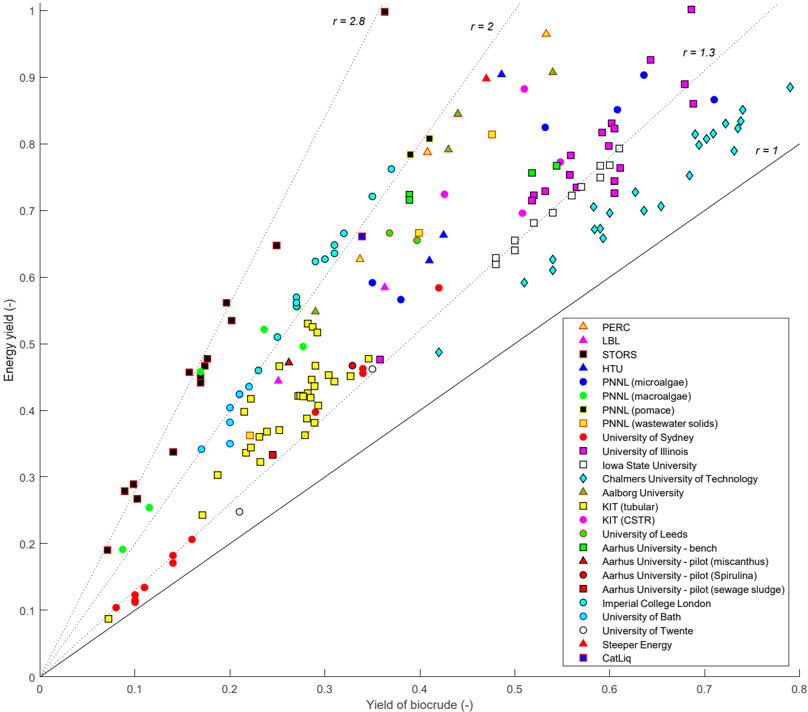
Hydrothermal liquefaction (HTL) of biomass is emerging as an effective technology to efficiently valorize different types of (wet) biomass feedstocks, ranging from lignocellulosics to algae and organic wastes. Significant research into HTL has been conducted in batch systems, which has provided a fundamental understanding of the different process conditions and the behavior of different biomass. The next step towards continuous plants, which are prerequisites for an industrial implementation of the process, has been significantly less explored. In order to facilitate a more focused future development, this review—based on the sources available in the open literature—intends to present the state of the art in the field of continuous HTL as well as to suggest means of interpretation of data from such plants. This contributes to a more holistic understanding of causes and effects, aiding next generation designs as well as pinpointing research focus. Additionally, the documented experiences in upgrading by catalytic hydrotreating are reported. The study reveals some interesting features in terms of energy densification versus the yield of different classes of feedstocks, indicating that some global limitations exist irrespective of processing implementations. Finally, techno-economic considerations, observations and remarks for future studies are presented.
Overview
The claims and statistics of this paper haven’t been checked yet.
Free: it reads the open-access text and checks the first 5 claims that cite a source we can check. Create a free account to check every claim.
Integrity signals
Registry
Cites
Statistics
Figures
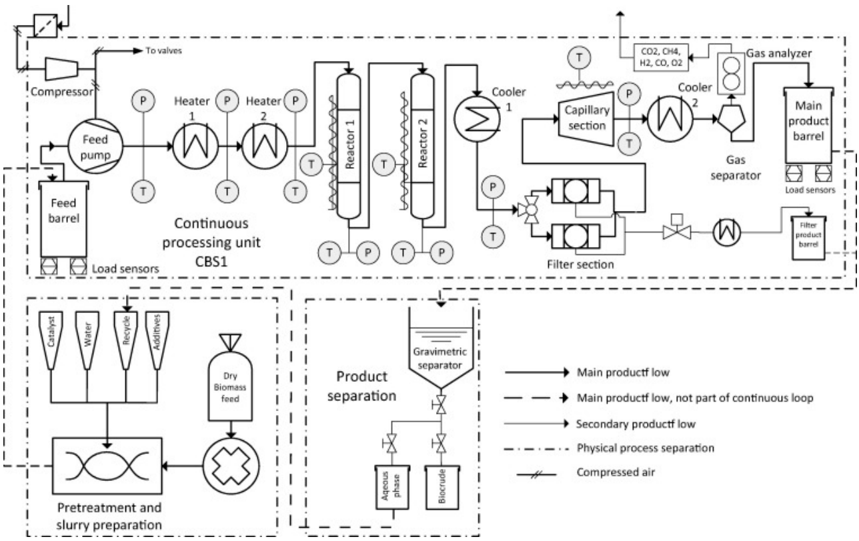
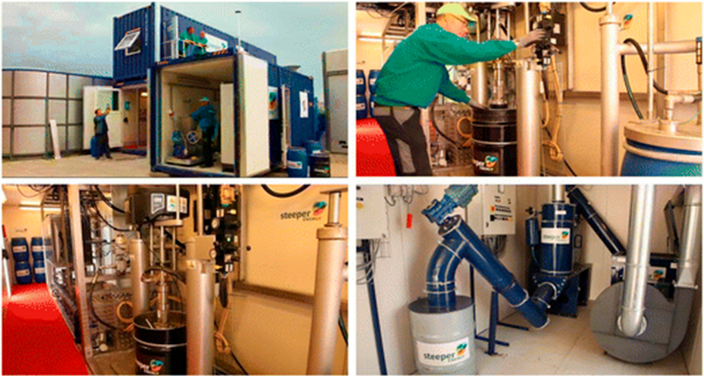
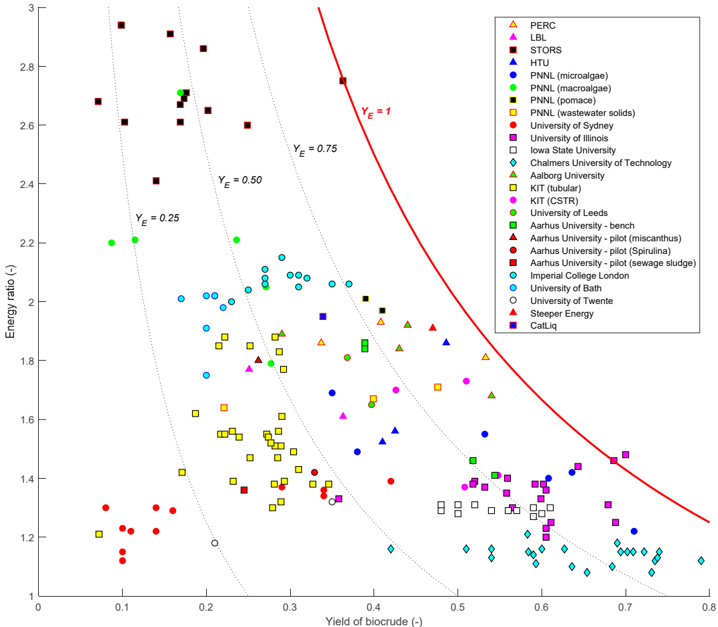
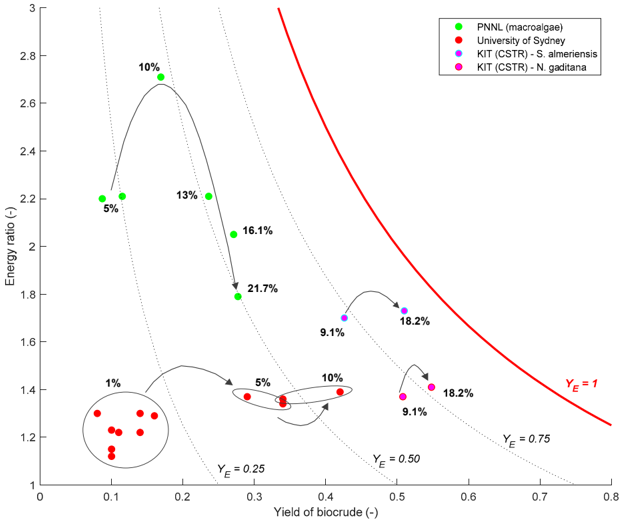
Verification
Claims the paper makes
The claims and statistics of this paper haven’t been checked yet.
Free: it reads the open-access text and checks the first 5 claims that cite a source we can check. Create a free account to check every claim.
Claims other papers make about this one
Each is checked against this paper’s own text: does it say what the citing paper says it does?
The source backs part of the claim, not all of it — or backs it for a different population, condition or comparison.
In the citing paper
“In addition, the reaction temperature also influences certain reaction mechanisms and the kinetics of various competing reactions; subcritical water properties prefer ionic reactions, whereas gas-like density in a supercritical water condition favors radical reactions [22,107,117].”
From Sub- and Supercritical Water Liquefaction of Kraft Lignin and Black Liquor Derived Lignin (2020) · cites this paper as [22]
Experimental — accuracy not yet measuredThe source backs part of the claim, not all of it — or backs it for a different population, condition or comparison.
In the citing paper
“HTL is a thermochemical process in which the main product obtained is a biocrude - an oxygenated precursor of hydrocarbon fuels - that can be further upgraded to meet product specifications using standard refinery technology.”
From Integration of hydrothermal liquefaction and carbon capture and storage for the production of advanced liquid biofuels with negative CO2 emissions (2020) · cites this paper as [4]
Experimental — accuracy not yet measuredThe source backs part of the claim, not all of it — or backs it for a different population, condition or comparison.
In the citing paper
“In a subsequent hydrotreating step, excess hydrogen is used for heteroatom removal, bonds saturation and overall improvement of the biocrude quality towards the final drop-in fuels [4].”
From Integration of hydrothermal liquefaction and carbon capture and storage for the production of advanced liquid biofuels with negative CO2 emissions (2020) · cites this paper as [4]
Experimental — accuracy not yet measuredThe cited source says what the claim attributes to it.
In the citing paper
“The reaction temperature of HTL varies from 523 K up to 723 K as the pressure range varies between 10 MPa and 35 MPa [22,52].”
From Sub- and Supercritical Water Liquefaction of Kraft Lignin and Black Liquor Derived Lignin (2020) · cites this paper as [22]
The cited source says what the claim attributes to it.
In the citing paper
“Most studies have focused on batch HTL systems, but in order to make the process commercially viable a continuous system is desirable and the issues that need to be addressed have been reviewed [107].”
From Key Targets for Improving Algal Biofuel Production (2021) · cites this paper as [107]
2 more claims about this paper
Create a free account to see every claim other papers make about this one.
Self-check
Percentages, sums and reported differences re-computed from the paper’s own numbers.
The self-check needs the paper’s full text.
Citations
Cites
The Path Forward for Biofuels and Biomaterials
Ragauskas, A. J., Williams, C. K., Davison, B. H., Britovsek, G., Cairney, J., Eckert, C. A., Frederick, W. J., Hallett, J. P., Leak, D. J., Liotta, C. L., et al. (2006) · Science · doi:10.1126/science.1114736 · Cited by 5,741 · cited 1×
“Among the different energy sources, biomass represents a very important part, including into its definition a wide range of materials such as forestry and agricultural residues, energy crops, but also organic wastes such as sewage sludge, food and sorted organic waste can be all considered as biomass [1,2].”
BackgroundWagner, W., & Pruß, A. (2002) · Journal of Physical and Chemical Reference Data · doi:10.1063/1.1461829 · Cited by 4,884
Energy production from biomass (part 1): overview of biomass
McKendry, P. (2002) · Bioresource Technology · doi:10.1016/s0960-8524(01)00118-3 · Cited by 4,860 · cited 1×
“Among the different energy sources, biomass represents a very important part, including into its definition a wide range of materials such as forestry and agricultural residues, energy crops, but also organic wastes such as sewage sludge, food and sorted organic waste can be all considered as biomass [1,2].”
BackgroundProduction of first and second generation biofuels: A comprehensive review
Naik, S. N., Goud, V. V., Rout, P. K., & Dalai, A. K. (2010) · Renewable and Sustainable Energy Reviews · doi:10.1016/j.rser.2009.10.003 · Cited by 3,264 · cited 1×
“Particularly for applications in the field of transportation, for example, this is preferred in order to feed internal combustion engines or turbines [6].”
BackgroundA unified correlation for estimating HHV of solid, liquid and gaseous fuels
Channiwala, S. A., & Parikh, P. P. (2002) · Fuel · doi:10.1016/s0016-2361(01)00131-4 · Cited by 2,489
Peterson, A. A., Vogel, F., Lachance, R. P., Fröling, M., Antal, Jr., & Tester, J. W. (2008) · Energy & Environmental Science · doi:10.1039/b810100k · Cited by 2,132
Renewable Fuels and Chemicals by Thermal Processing of Biomass
Bridgwater, A. V. (2003) · Chemical Engineering Journal · doi:10.1016/s1385-8947(02)00142-0 · Cited by 1,920 · cited 1×
“Biomass can thus be considered the natural substitute for fossil crude oil in the production of liquid fuels and petrochemicals [5].”
BackgroundHydrothermal liquefaction of biomass: A review of subcritical water technologies
Toor, S. S., Rosendahl, L., & Rudolf, A. (2011) · Energy · doi:10.1016/j.energy.2011.03.013 · Cited by 1,840 · cited 2×
“On the other hand, hydrothermal liquefaction is potentially able to yield a liquid with a considerably lower oxygen content and to work also with wet biomass, showing great flexibility in terms of feedstock [9,10].”
BackgroundSelf-citationA review of catalytic upgrading of bio-oil to engine fuels
Mortensen, P. M., Grunwaldt, J.-D., Jensen, P. A., Knudsen, K. G., & Jensen, A. D. (2011) · Applied Catalysis A: General · doi:10.1016/j.apcata.2011.08.046 · Cited by 1,768 · cited 1×
“Therefore, these liquids would rapidly polymerize when heated up, which would make their utilization in internal combustion engines quite challenging [8].”
BackgroundOrganic Chemical Reactions in Supercritical Water
Savage, P. E. (1999) · Chemical Reviews · doi:10.1021/cr9700989 · Cited by 1,416
Research works printed but not linked: 3
- 71. Caretta, A.; Riccò, M.; Bosetti, A.; Burattini, M.; Carnelli, L.; Miglio, R.; Volpato, C.B. Waste to fuel-Conversion of waste into energy. In Proceedings of the 9th European Congress of Chemical Engineering, The Hague, The Netherlands, 21-24 April 2013.
- 75. Roberts, M.; Williams, J.; Halberstadt, P.; Sanders, D.; Adams, T. Animal waste to marketable products. In Proceedings of the Natural Gas Technologies Conference, Phoenix, AZ, USA, 8-11 February 2004.
- 97. Anastasakis, K.; Johannsen, I.; Madsen, R.B.; Biller, P. Assessing hydrothermal liquefaction of lignocellulosic biomass, microalgae and sewage sludge at pilot scale. In Proceedings of the 26th European Biomass Conference and Exhibition, Copenhagen, Denmark, 14-17 May 2018. 125.
Cited by
Assessment of the renewable energy generation towards net-zero energy buildings: A review
Ahmed, A., Ge, T., Peng, J., Yan, W.-C., Tee, B. T., & You, S. (2022) · Energy and Buildings · doi:10.1016/j.enbuild.2021.111755 · Cited by 450
Valorization of hydrothermal liquefaction aqueous phase: pathways towards commercial viability
Watson, J., Wang, T., Si, B., Chen, W.-T., Aierzhati, A., & Zhang, Y. (2020) · Progress in Energy and Combustion Science · doi:10.1016/j.pecs.2019.100819 · Cited by 394
Sustainable energy and fuels from biomass: a review focusing on hydrothermal biomass processing
Alper, K., Tekin, K., Karagöz, S., & Ragauskas, A. J. (2020) · Sustainable Energy & Fuels · doi:10.1039/d0se00784f · Cited by 335
Wu, Y., Wang, H., Li, H., Han, X., Zhang, M., Sun, Y., Fan, X., Tu, R., Zeng, Y., Xu, C. C., et al. (2022) · Renewable Energy · doi:10.1016/j.renene.2022.07.031 · Cited by 274
Basar, I. A., Liu, H., Carrere, H., Trably, E., & Eskicioglu, C. (2021) · Green Chemistry · doi:10.1039/d0gc04092d · Cited by 253
Mishra, R. K., kumar, V., Kumar, P., & Mohanty, K. (2022) · Fuel · doi:10.1016/j.fuel.2022.123377 · Cited by 251
Castello, D., Haider, M. S., & Rosendahl, L. A. (2019) · Renewable Energy · doi:10.1016/j.renene.2019.04.003 · Cited by 206
“Through the last decade, hydrothermal liquefaction (HTL) has been gaining a prominent position [3].”
BackgroundSelf-citationBrindhadevi, K., Anto, S., Rene, E. R., Sekar, M., Mathimani, T., Thuy Lan Chi, N., & Pugazhendhi, A. (2021) · Fuel · doi:10.1016/j.fuel.2020.119106 · Cited by 194
Biomass to biofuels using hydrothermal liquefaction: A comprehensive review
Shahbeik, H., Kazemi Shariat Panahi, H., Dehhaghi, M., Guillemin, G. J., Fallahi, A., Hosseinzadeh-Bandbafha, H., Amiri, H., Rehan, M., Raikwar, D., Latine, H., et al. (2024) · Renewable and Sustainable Energy Reviews · doi:10.1016/j.rser.2023.113976 · Cited by 186
Nagappan, S., Bhosale, R. R., Nguyen, D. D., Chi, N. T. L., Ponnusamy, V. K., Woong, C. S., & Kumar, G. (2021) · Fuel · doi:10.1016/j.fuel.2020.119053 · Cited by 181
Mathanker, A., Das, S., Pudasainee, D., Khan, M., Kumar, A., & Gupta, R. P. (2021) · Energies · doi:10.3390/en14164916 · Cited by 182
Jacob, A., Ashok, B., Alagumalai, A., Chyuan, O. H., & Le, P. T. K. (2021) · Energy Conversion and Management · doi:10.1016/j.enconman.2020.113655 · Cited by 176
Venkata Mohan, S., Hemalatha, M., Chakraborty, D., Chatterjee, S., Ranadheer, P., & Kona, R. (2020) · Bioresource Technology · doi:10.1016/j.biortech.2019.122128 · Cited by 175
Yang, R., Jan, K., Chen, C., Chen, W., & Wu, K. C. ‐. (2022) · ChemSusChem · doi:10.1002/cssc.202200171 · Cited by 172
Waste-to-energy conversion technologies in the UK: Processes and barriers – A review
Foster, W., Azimov, U., Gauthier‐Maradei, P., Castro, L., Combrinck, M. L., Munoz, J., Jaimes-Estévez, J., & Patino, L. (2020) · Renewable and Sustainable Energy Reviews · doi:10.1016/j.rser.2020.110226 · Cited by 170
Beims, R. F., Hu, Y., Shui, H., & Xu, C. (. (2020) · Biomass and Bioenergy · doi:10.1016/j.biombioe.2020.105510 · Cited by 166
Heterogeneous catalysts for hydrothermal liquefaction of lignocellulosic biomass: A review
Scarsella, M., de Caprariis, B., Damizia, M., & De Filippis, P. (2020) · Biomass and Bioenergy · doi:10.1016/j.biombioe.2020.105662 · Cited by 152
From biomass to biocrude: Innovations in hydrothermal liquefaction and upgrading
Usman, M., Cheng, S., Boonyubol, S., & Cross, J. S. (2024) · Energy Conversion and Management · doi:10.1016/j.enconman.2024.118093 · Cited by 151
Grande, L., Pedroarena, I., Korili, S. A., & Gil, A. (2021) · Materials · doi:10.3390/ma14185286 · Cited by 130
“However, a number of important drawbacks have been described concerning continuous hydrothermal liquefaction [12]:”
BackgroundMethodInfluentialChemical recycling of plastic waste for sustainable polymer manufacturing – A critical review
Martínez‐Narro, G., Hassan, S., & Phan, A. N. (2024) · Journal of environmental chemical engineering · doi:10.1016/j.jece.2024.112323 · Cited by 145
A review on treatment processes of chicken manure
Manogaran, M. D., Shamsuddin, R., Yusoff, M. H. M., Lay, M. C., & Siyal, A. A. (2022) · Cleaner and Circular Bioeconomy · doi:10.1016/j.clcb.2022.100013 · Cited by 142
The Role of Catalysts in Biomass Hydrothermal Liquefaction and Biocrude Upgrading
Shah, A. A., Sharma, K., Haider, M. S., Toor, S. S., Rosendahl, L. A., Pedersen, T. H., & Castello, D. (2022) · Processes · doi:10.3390/pr10020207 · Cited by 142
“The overall temperature range for HTL varies from 270 to 400 ◦C [10].”
BackgroundSelf-citationGhadge, R., Nagwani, N., Saxena, N., Dasgupta, S., & Sapre, A. V. (2022) · Energy Conversion and Management X · doi:10.1016/j.ecmx.2022.100223 · Cited by 129
Ravichandran, S. R., Venkatachalam, C. D., Sengottian, M., Sekar, S., Kandasamy, S., Subramanian, K., Purushothaman, K., Chandrasekaran, A. L., & Narayanan, M. (2021) · Fuel · doi:10.1016/j.fuel.2021.122679 · Cited by 126
Hydrothermal liquefaction of high ash containing sewage sludge at sub and supercritical conditions
Shah, A. A., Toor, S. S., Conti, F., Nielsen, A. H., & Rosendahl, L. A. (2020) · Biomass and Bioenergy · doi:10.1016/j.biombioe.2020.105504 · Cited by 121
Self-citationElemental migration and transformation during hydrothermal liquefaction of biomass
Lu, J., Watson, J., Liu, Z., & Wu, Y. (2022) · Journal of Hazardous Materials · doi:10.1016/j.jhazmat.2021.126961 · Cited by 124
Insights into valuing the aqueous phase derived from hydrothermal liquefaction
SundarRajan, P., Gopinath, K. P., Arun, J., Pavithra, K. G., Joseph, A. A., & Manasa, S. (2021) · Renewable and Sustainable Energy Reviews · doi:10.1016/j.rser.2021.111019 · Cited by 123
A perspective on hydrothermal processing of sewage sludge
Chen, W., Haque, M. A., Lu, T., Aierzhati, A., & Reimonn, G. (2020) · Current Opinion in Environmental Science & Health · doi:10.1016/j.coesh.2020.02.008 · Cited by 121
Chen, P. H., & Quinn, J. C. (2021) · Applied Energy · doi:10.1016/j.apenergy.2021.116613 · Cited by 120
Environmental life cycle assessment of biomass conversion using hydrothermal technology: A review
Hussin, F., Hazani, N. N., Khalil, M., & Aroua, M. K. (2023) · Fuel Processing Technology · doi:10.1016/j.fuproc.2023.107747 · Cited by 120
Qian, L., Wang, S., & Savage, P. E. (2019) · Applied Energy · doi:10.1016/j.apenergy.2019.114312 · Cited by 120
Screening of common synthetic polymers for depolymerization by subcritical hydrothermal liquefaction
dos Passos, J. S., Glasius, M., & Biller, P. (2020) · Process Safety and Environmental Protection · doi:10.1016/j.psep.2020.04.040 · Cited by 119
Song, C., Zhang, C., Zhang, S., Lin, H., Kim, Y., Ramakrishnan, M., Du, Y., Zhang, Y., Zheng, H., & Barceló, . (2020) · The Science of The Total Environment · doi:10.1016/j.scitotenv.2020.141972 · Cited by 117
Kusenberg, M., Eschenbacher, A., Delva, L., Meester, S. D., Delikonstantis, E., Stefanidis, G. D., Ragaert, K., & Geem, K. M. V. (2022) · Fuel Processing Technology · doi:10.1016/j.fuproc.2022.107474 · Cited by 117
Recent development of hydrothermal liquefaction for algal biorefinery
Gu, X., Martinez-Fernandez, J. S., Pang, N., Fu, X., & Chen, S. (2020) · Renewable and Sustainable Energy Reviews · doi:10.1016/j.rser.2020.109707 · Cited by 115
Low, Y. W., & Yee, K. F. (2021) · Biomass and Bioenergy · doi:10.1016/j.biombioe.2021.106245 · Cited by 115
Life cycle environmental analysis of ‘drop in’ alternative aviation fuels: a review
Kolosz, B. W., Luo, Y., Xu, B., Maroto-Valer, M. M., & Andresen, J. M. (2020) · Sustainable Energy & Fuels · doi:10.1039/c9se00788a · Cited by 81
Haider, M. S., Castello, D., & Rosendahl, L. A. (2020) · Biomass and Bioenergy · doi:10.1016/j.biombioe.2020.105658 · Cited by 101
“The output from HTL is an energetically dense intermediate product, referred to as biocrude [1,2].”
BackgroundSelf-citationPerkins, G., Batalha, N., Kumar, A., Bhaskar, T., & Konarova, M. (2019) · Renewable and Sustainable Energy Reviews · doi:10.1016/j.rser.2019.109400 · Cited by 99
Tanzer, S. E., Posada, J., Geraedts, S., & Ramírez, A. (2019) · Journal of Cleaner Production · doi:10.1016/j.jclepro.2019.117845 · Cited by 96
Microplastics degradation through hydrothermal liquefaction of wastewater treatment sludge
Chand, R., Kohansal, K., Toor, S. S., Pedersen, T. H., & Vollertsen, J. (2022) · Journal of Cleaner Production · doi:10.1016/j.jclepro.2022.130383 · Cited by 103
Self-citationAierzhati, A., Watson, J., Si, B., Stablein, M., Wang, T., & Zhang, Y. (2021) · Energy Conversion and Management X · doi:10.1016/j.ecmx.2021.100076 · Cited by 100
Bio-Crude Production through Aqueous Phase Recycling of Hydrothermal Liquefaction of Sewage Sludge
Shah, A. A., Toor, S. S., Seehar, T. H., Nielsen, R. S., Nielsen, A. H., Pedersen, T. H., & Rosendahl, L. A. (2020) · Energies · doi:10.3390/en13020493 · Cited by 100
Self-citationGuo, B., Walter, V., Hornung, U., & Dahmen, N. (2019) · Fuel Processing Technology · doi:10.1016/j.fuproc.2019.04.003 · Cited by 83
Techno-economic uncertainty analysis of wet waste-to-biocrude via hydrothermal liquefaction
Li, S., Jiang, Y., Snowden-Swan, L. J., Askander, J. A., Schmidt, A. J., & Billing, J. M. (2021) · Applied Energy · doi:10.1016/j.apenergy.2020.116340 · Cited by 90
Bio-oil from microalgae: Materials, production, technique, and future
Ahmed, S. F., Rafa, S. J., Mehjabin, A., Tasannum, N., Ahmed, S., Mofijur, M., Lichtfouse, É., AlMomani, F. A., Badruddin, I. A., & Kamangar, S. (2023) · Energy Reports · doi:10.1016/j.egyr.2023.09.068 · Cited by 88
Sub- and Supercritical Water Liquefaction of Kraft Lignin and Black Liquor Derived Lignin
Lappalainen, J., Baudouin, D., Hornung, U., Schuler, J., Melin, K., Bjelić, S., Vogel, F., Konttinen, J., & Joronen, T. (2020) · Energies · doi:10.3390/en13133309 · Cited by 87
“Those HTL review articles that do exist either focus on the HTL of biomasses from different sources [21,22], the HTL of pure lignin compounds [23], or the HTL of a specific biomass, such as wood [24], algae [25–27], agricultural and forestry waste [28], and even swine manure [29].”
BackgroundInfluentialAlhazmi, H., & Loy, A. C. M. (2021) · Bioresource Technology Reports · doi:10.1016/j.biteb.2021.100682 · Cited by 85
An overview on microalgae as renewable resources for meeting sustainable development goals
Oliveira, C. Y. B., Jacob, A., Nader, C., Oliveira, C. D. L., Matos, Â. P., Araújo, E. S., Shabnam, N., Ashok, B., & Gálvez, A. O. (2022) · Journal of Environmental Management · doi:10.1016/j.jenvman.2022.115897 · Cited by 83
Katakojwala, R., Kopperi, H., Kumar, S., & Mohan, S. V. (2020) · Bioresource Technology · doi:10.1016/j.biortech.2020.123369 · Cited by 84
He, S., Barati, B., Hu, X., & Wang, S. (2022) · Fuel Processing Technology · doi:10.1016/j.fuproc.2022.107563 · Cited by 80
Co-processing of Biocrudes in Oil Refineries
Lindfors, C., Elliott, D. C., Prins, W., Oasmaa, A., & Lehtonen, J. S. (2022) · Energy & Fuels · doi:10.1021/acs.energyfuels.2c04238 · Cited by 80
Understanding Plant Biomass via Computational Modeling
Zhou, S., Jin, K., & Buehler, M. J. (2020) · Advanced Materials · doi:10.1002/adma.202003206 · Cited by 77
Hydrothermal liquefaction process: Review and trends
Ocampo, E., Beltran, V. V., Gómez, E. A., Ríos, L. A., & Ocampo, D. (2023) · Current Research in Green and Sustainable Chemistry · doi:10.1016/j.crgsc.2023.100382 · Cited by 75
Ranjbar, S., & Malcata, F. X. (2023) · Molecules · doi:10.3390/molecules28248127 · Cited by 75
“However, the complex nature of HTL-derived slurry demands continuous research and innovation to optimize pumping systems and reduce operational hurdles associated with viscosity changes and rheological complexities [100–102].”
BackgroundLozano, E. M., Pedersen, T. H., & Rosendahl, L. A. (2020) · Applied Energy · doi:10.1016/j.apenergy.2020.115753 · Cited by 70
“In a subsequent hydrotreating step, excess hydrogen is used for heteroatom removal, bonds saturation and overall improvement of the biocrude quality towards the final drop-in fuels [4].”
BackgroundSelf-citationRecent development in production of pellet fuels from biomass and polyethylene (PE) wastes
Wei, Z., Cheng, Z., & Shen, Y. (2023) · Fuel · doi:10.1016/j.fuel.2023.130222 · Cited by 68
Rojas, M., Manrique, R., Hornung, U., Funke, A., Mullen, C. A., Chejne, F., & Maya, J. C. (2025) · Biomass and Bioenergy · doi:10.1016/j.biombioe.2025.107621 · Cited by 67
“Furthermore, biomass is highly heterogeneous, consisting of various organic components like cellulose, hemi-cellulose, lignin, proteins, and lipids, each reacting differently under hydrothermal conditions [101].”
Energy recovery and nutrients recycling from municipal sewage sludge
Das, P., Khan, S., AbdulQuadir, M., Thaher, M. I., Waqas, M., Easa, A., Attia, E., & Jabri, H. M. S. J. A. (2020) · The Science of The Total Environment · doi:10.1016/j.scitotenv.2020.136775 · Cited by 68
“, pyrolysis, incineration, and co-firingwith coal)would require a dry biosludge, some other technologies, like anaerobic digestion (AD), and hydrothermal liquefaction (HTL), could process the wet biosludge (Castello et al., 2018).”
BackgroundBiocrude Production from Wheat Straw at Sub and Supercritical Hydrothermal Liquefaction
Seehar, T. H., Toor, S. S., Shah, A. A., Pedersen, T. H., & Rosendahl, L. A. (2020) · Energies · doi:10.3390/en13123114 · Cited by 69
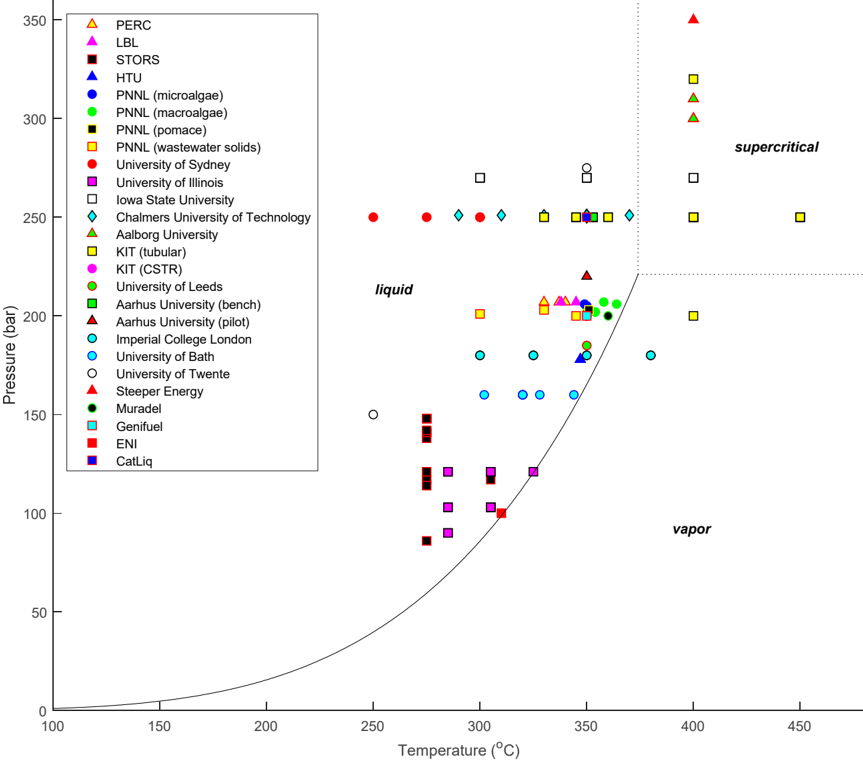
“, temperature 250–450 ◦C and 100–350 bar [8].”
Self-citationAli Shah, A., Sohail Toor, S., Hussain Seehar, T., Sadetmahaleh, K. K., Helmer Pedersen, T., Haaning Nielsen, A., & Aistrup Rosendahl, L. (2021) · Fuel · doi:10.1016/j.fuel.2020.119407 · Cited by 62
Self-citationSánchez, N. M., Link, F., Chauhan, G., Halmenschlager, C. M., El‐Sayed, H. E. M., Sehdev, R., Lehoux, R., & de Klerk, A. (2022) · Energy Science & Engineering · doi:10.1002/ese3.1072 · Cited by 64
Bast, M. E., Allam, N., Msallem, Y. A., Awad, S., & Loubar, K. (2023) · Journal of the Energy Institute · doi:10.1016/j.joei.2023.101260 · Cited by 64
Potential use of bamboo resources in energy value‐added conversion technology and energy systems
Liang, Z., Neményi, A., Kovács, G. P., & Gyuricza, C. (2023) · GCB Bioenergy · doi:10.1111/gcbb.13072 · Cited by 62
“Typically, HTL parameters are set at 250– 400°C and pressure at 10– 35 MPa (Castello et al., 2018).”
BackgroundSingh, S. P., Pant, K. K., & Krishania, M. (2023) · Journal of Analytical and Applied Pyrolysis · doi:10.1016/j.jaap.2023.106160 · Cited by 59
Ovsyannikova, E., Kruse, A., & Becker, G. C. (2020) · Energies · doi:10.3390/en13020379 · Cited by 59
“continuous mode, has received considerably less attention [10].”
BackgroundAssessing bio‐oil co‐processing routes as CO2 mitigation strategies in oil refineries
Angarita, É. E. Y., Meerman, H., Ramírez, A., Castillo, E., & Faaij, A. P. C. (2020) · Biofuels Bioproducts and Biorefining · doi:10.1002/bbb.2163 · Cited by 58
Hydrothermal Liquefaction of Rice Straw Using Methanol as Co-Solvent
Yerrayya, A., Vishnu, A. K., Shreyas, S., Chakravarthy, S. R., & Vinu, R. (2020) · Energies · doi:10.3390/en13102618 · Cited by 56
Sanchez, E. L., Løkke, S., Rosendahl, L. A., & Pedersen, T. H. (2022) · Energy Conversion and Management X · doi:10.1016/j.ecmx.2022.100178 · Cited by 56
Self-citationSivo, A., Galaverna, R., Gomes, G. R., Pastre, J. C., & Vilé, G. (2021) · Reaction Chemistry & Engineering · doi:10.1039/d0re00411a · Cited by 55
Subramaniam, S., Santosa, D. M., Brady, C., Swita, M., Ramasamy, K. K., & Thorson, M. R. (2021) · ACS Sustainable Chemistry & Engineering · doi:10.1021/acssuschemeng.1c02743 · Cited by 54
A perspective on biofuels use and CCS for GHG mitigation in the marine sector
Mukherjee, A., Bruijnincx, P., & Junginger, M. (2020) · iScience · doi:10.1016/j.isci.2020.101758 · Cited by 53
Tito, E., Zoppi, G., Pipitone, G., Miliotti, E., Fraia, A. D., Rizzo, A. M., Pirone, R., Chiaramonti, D., & Bensaid, S. (2022) · Journal of environmental chemical engineering · doi:10.1016/j.jece.2022.109076 · Cited by 53
Yerrayya, A., Nikunj, A., Prashanth, P. F., Chakravarthy, S. R., Natarajan, U., & Vinu, R. (2022) · Energy · doi:10.1016/j.energy.2022.123192 · Cited by 51
Castello, D., Haider, M. S., Chiaberge, S., & Rosendahl, L. A. (2023) · Chemical Engineering Journal · doi:10.1016/j.cej.2023.148333 · Cited by 50
Self-citationKey Targets for Improving Algal Biofuel Production
Griffiths, G., Hossain, A. K., Sharma, V., & Duraisamy, G. (2021) · Clean Technologies · doi:10.3390/cleantechnol3040043 · Cited by 49
Co-Hydrothermal Liquefaction of Lignocellulosic Biomass in Supercritical Water
Sharma, K., Shah, A. A., Toor, S. S., Seehar, T. H., Pedersen, T. H., & Rosendahl, L. A. (2021) · Energies · doi:10.3390/en14061708 · Cited by 48
“It was observed that the highest pressure of 30 to 32 MPa was recorded from all the experiments at constant temperatures of 400 ◦ C.”
BackgroundInfluentialSelf-citationMiliotti, E., Dell’Orco, S., Lotti, G., Rizzo, A. M., Rosi, L., & Chiaramonti, D. (2019) · Energies · doi:10.3390/en12040723 · Cited by 49
“Energies 2019, 12, 723 12 of 27 Energies 2019, 01, x FOR PEER REVIEW 13 of 29 Although Castello, Pedersen and Rosendahl [9] recently reported that favorable HTL conditions can be obtained also at supercritical condition, it is known that the HTL temperature range where the biocrude is maximized lies between 300 and 35…”
BackgroundInfluentialSangjan, A., Ngamsiri, P., Klomkliang, N., Wu, K. C. ‐., Matsagar, B. M., Ratchahat, S., Liu, C., Laosiripojana, N., & Sakdaronnarong, C. K. (2020) · Renewable Energy · doi:10.1016/j.renene.2020.03.070 · Cited by 48
Haider, M. S., Castello, D., & Rosendahl, L. A. (2021) · Energy & Fuels · doi:10.1021/acs.energyfuels.1c01228 · Cited by 48
Self-citationMicroalgal Hydrogen Production in Relation to Other Biomass-Based Technologies—A Review
Dębowski, M., Dudek, M., Zieliński, M., Nowicka, A., & Kazimierowicz, J. (2021) · Energies · doi:10.3390/en14196025 · Cited by 48
“aquatic plant biomass for gasification [100].”
Arun, J., Raghu, R., Hanif, S. S. M., Thilak, P. G., Sridhar, D., Nirmala, N., Dawn, S. S., Sivaramakrishnan, R., Lan, N. T., & Pugazhendhi, A. (2022) · Applied Energy · doi:10.1016/j.apenergy.2022.119808 · Cited by 47
The challenge of nitrogen compounds in hydrothermal liquefaction of algae
Matricon, L., Roubaud, A., Haarlemmer, G. W., & Geantet, C. (2023) · The Journal of Supercritical Fluids · doi:10.1016/j.supflu.2023.105867 · Cited by 47
Metal carbides, phosphides, and nitrides for biomass conversion
Smith, K. J. (2019) · Current Opinion in Green and Sustainable Chemistry · doi:10.1016/j.cogsc.2019.11.008 · Cited by 46
Kumar, A., Mishra, S., Singh, N. K., Yadav, M. K., Padhiyar, H., Christian, J. J., & Kumar, R. (2024) · Journal of Environmental Management · doi:10.1016/j.jenvman.2024.121182 · Cited by 45
Use of Co-Solvents in Hydrothermal Liquefaction (HTL) of Microalgae
Han, Y., Hoekman, S. K., Jena, U., & Das, P. (2019) · Energies · doi:10.3390/en13010124 · Cited by 45
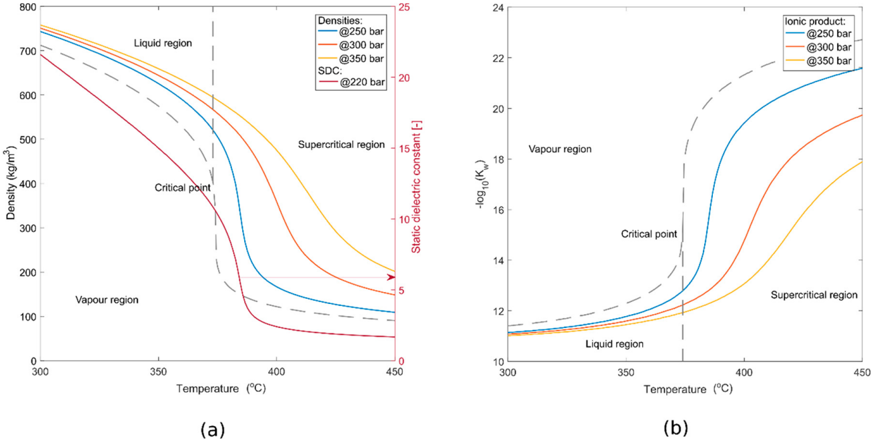
“The ionic product is typically high enough to favor ionic reactions, which contribute to biocrude conversion, rather than radical reactions, which promote solids and gaseous products [27].”
BackgroundHarisankar, S., & Vinu, R. (2023) · Fuel · doi:10.1016/j.fuel.2022.127236 · Cited by 45
Sivaranjanee, R., Kumar, P. S., & Rangasamy, G. (2023) · Carbon letters · doi:10.1007/s42823-023-00576-2 · Cited by 45
“HTL is especially suitable for moist feedstocks as the demand for drying is reduced because of the need of a wet reaction environment [62].”
BackgroundA review on hydrothermal treatments for solid, liquid and gaseous fuel production from biomass
Teoh, R. H., Mahajan, A. S., Moharir, S. R., Manaf, N. A., Shi, S., & Thangalazhy‐Gopakumar, S. (2024) · Energy Nexus · doi:10.1016/j.nexus.2024.100301 · Cited by 45
A review of current technologies for the sustainable valorisation of sugarcane bagasse
Matsueda, Y., & Antunes, E. (2024) · Journal of environmental chemical engineering · doi:10.1016/j.jece.2024.114900 · Cited by 44
Yadav, P., & Reddy, S. N. (2020) · Bioresource Technology · doi:10.1016/j.biortech.2020.123691 · Cited by 43
Montesantos, N., Pedersen, T. H., Nielsen, R. P., Rosendahl, L. A., & Maschietti, M. (2019) · The Journal of Supercritical Fluids · doi:10.1016/j.supflu.2019.04.001 · Cited by 42
Self-citationSustainable processing of algal biomass for a comprehensive biorefinery
Javed, M. U., Mukhtar, H., Hayat, M. T., Rashid, U., Mumtaz, M. W., & Ngamcharussrivichai, C. (2022) · Journal of Biotechnology · doi:10.1016/j.jbiotec.2022.05.009 · Cited by 42
van Dyk, S., Su, J., Ebadian, M., O'Connor, D. E., Lakeman, M. B., & Saddler, J. N. (2019) · Biotechnology for Biofuels · doi:10.1186/s13068-019-1625-2 · Cited by 42
“However, the biocrude obtained via hydrothermal liquefaction (HTL) showed some properties, such as the pH and the oxygen content, that were different from previously reported values [17, 26].”
BackgroundResultFully integrated CO2 mitigation strategy for an existing refinery: A case study in Colombia
Angarita, É. E. Y., Meerman, H., Ramírez, A., Castillo, E., & Faaij, A. P. C. (2022) · Applied Energy · doi:10.1016/j.apenergy.2022.118771 · Cited by 41
Prestigiacomo, C., Scialdone, O., & Galia, A. (2022) · The Journal of Supercritical Fluids · doi:10.1016/j.supflu.2022.105689 · Cited by 41
Hydrothermal Liquefaction of an Animal Carcass for Biocrude Oil
Yang, C., Wang, S., Ren, M., Li, Y., & Song, W. (2019) · Energy & Fuels · doi:10.1021/acs.energyfuels.9b03100 · Cited by 41
de Souza, R., Bressanin, J. M., Fernandes, D. S., Guimarães, H. R., Chagas, M. F., Bonomi, A., Fregolente, L. V., & Watanabe, M. D. B. (2023) · Energies · doi:10.3390/en16062723 · Cited by 42
Synergies during hydrothermal liquefaction of cow manure and wheat straw
dos Passos, J. S., Matayeva, A., & Biller, P. (2022) · Journal of environmental chemical engineering · doi:10.1016/j.jece.2022.108181 · Cited by 40
Li, H., Zhu, Z., Lu, J., Watson, J., Kong, D., Wang, K., Zhang, Y., & Liu, Z. (2020) · Fuel · doi:10.1016/j.fuel.2020.118605 · Cited by 39
Metadata
- Authors
- Castello, D., Pedersen, T. H., & Rosendahl, L. A.
- Affiliations
- Aalborg University (DK)
- Corresponding author
- Rosendahl, Lasse Aistrup
- Venue
- Energies
- Publisher
- MDPI AG
- Published
- 2018-11-15
- Volume
- 11
- Issue
- 11
- Pages
- 3165
- ISSN
- 1996-1073 (ISSN-L)
- OpenAlex
- W2900917918
- Cited by
- 343
- References
- 99
- Citations by year
- 2026: 46 · 2025: 49 · 2024: 43 · 2023: 43 · 2022: 58 · 2021: 47 · 2020: 41 · 2019: 15 · 2018: 1
- FWCI
- 10.41
- Type
- journal article
- Language
- en
- Open access
- gold
- doi.org
- Licence
- Locations
- Energies (publishedVersion, cc-by)
- VBN Forskningsportal (Aalborg Universitet) (publishedVersion, cc-by)
- RePEc: Research Papers in Economics (submittedVersion)
- DOAJ (DOAJ: Directory of Open Access Journals) (submittedVersion, cc-by-sa)
- Funders
- Horizon 2020 Framework Programme (727531)
- Innovationsfonden (1305-00030B)
- Topics
- Physical Sciences › Energy › Fuel Technology › Thermochemical Biomass Conversion Processes
- Physical Sciences › Chemical Engineering › Catalysis › Catalysis and Hydrodesulfurization Studies
- Physical Sciences › Engineering › Biomedical Engineering › Biofuel production and bioconversion
- Keywords
- hydrothermal liquefaction, biomass valorization, lignocellulosic biomass, algae, organic waste, catalytic hydrotreating, energy densification, techno-economic analysis, industrial scale-up
About these checks
Registry, retraction, Cites and statistics results are computed, not judged, with one exception: a printed reference that no index lists is read once by a model before it counts as a citation error. Claims are extracted by a model and kept only when their quote appears verbatim in the text; each cited source is then checked, with a model’s help, for whether it says what the claim relies on. Those verdicts can be wrong — read the claim’s quote and the cited source before relying on one.
Statistics and arithmetic are recomputed, not judged.
Confidence bands are shown only for fields calibrated on our annotated test set. None is calibrated yet, so no band is shown.
What counts as a claim ›How we measure confidence ›How we check this ›
Are you an author, or do you see a problem with this page? Request a review
Data sources
Bibliographic data: Semantic Scholar, OpenAlex, Crossref.
Contains information from the Semantic Scholar Academic Graph Datasets, made available under the ODC Attribution License (ODC-BY 1.0).
Semantic Scholar’s data is described in: Kinney, R., et al. (2023). The Semantic Scholar Open Data Platform. arXiv:2301.10140.
