

Traditional and New Microorganisms in Lactic Acid Fermentation of Food
Open accessThe DOI matches its Crossref record; 144 of the 150 references it cites were found in a registry or an index; none of the 90 sources its claims cite is checked for support yet.
Abstract
Lactic acid fermentation is one of the oldest and most commonly used methods of bioconservation. This process is widely used for food preservation and also for a production technique that relies on the metabolism of lactic acid bacteria (LAB) to convert carbohydrates into lactic acid. This fermentation imparts unique flavors and texture of foods, extends their shelf life, and can offer health benefits. There are both traditional and new microorganisms involved in the lactic acid fermentation of food. The current review outlines the issues of fermented foods. Based on traditional fermentation methods, a broad panorama of various food products is presented, with the microorganisms involved. The methods of both traditional fermentation (spontaneous and back-slopping) as well as the importance and application of starter cultures in mass food production are presented. Currently, based on the results of scientific research, the health-promoting effect of fermented foods is becoming more and more important. This is due to the presence of probiotic microorganisms that are naturally presented or may be added to them, as starter cultures or additives, and from the presence of prebiotics and postbiotics. New innovative methods of using probiotic microorganisms open up new and broad perspectives for fermented functional foods.
Overview
CoChat Summary
TL;DR
This narrative review surveys traditional and novel microorganisms in lactic acid fermentation of foods, covering dairy, plant, bakery, meat/fish, and oriental products, and the shift from spontaneous/back-slopping fermentation to starter cultures and probiotics. It concludes that probiotic LAB and starter cultures can improve preservation, safety, and health-promoting properties, though strain selection and food-matrix viability remain key challenges.
Key findings
- Lactic acid fermentation is ancient and widespread; the review cites Tamang (2010) estimating more than 5,000 fermented food products are consumed worldwide, and notes 261 LAB species grouped in 26 genera.
- Traditional fermentations rely on spontaneous microbiota or back-slopping; commercial starter cultures improve control, safety, and standardization, but may limit microbial biodiversity and regional sensory uniqueness.
- LAB dominate across food categories: dairy (yoghurt, kefir, cheese), plant foods (sauerkraut, table olives, juices), sourdough bakery, meat/fish, and oriental products (tarhana, boza, stinky tofu, natto, miso, kimchi, etc.). Reported examples include native LAB in fruits/vegetables at 2.0–4.0 log CFU g⁻¹, LAB counts in fermented fish up to 9.5 log CFU g⁻¹, and sauerkraut made with 2.3–3.0% salt reaching final pH 3.5–3.8.
- Probiotics are presented as novel microorganisms for lactic acid fermentation; probiotic food products must have high cell concentrations (≥10⁶ CFU mL⁻¹, or 10⁸–10¹¹ CFU per day) and maintain viability through shelf life and gastrointestinal passage, with benefits being strain-specific.
Methods
- Narrative review; no systematic search strategy, meta-analysis, or primary experimental data are described.
- Synthesizes literature on traditional and new microorganisms in lactic acid fermentation, organized by history, food category, starter cultures, and probiotics; includes two BioRender figures.
- Draws on cited secondary studies and examples, including analyses of 168 research papers on fermented fish and 80 European fermented meat products.
Limitations
- The paper states no limitations.
- Evident from the text: it is a narrative review without reported systematic search, inclusion/exclusion criteria, or quality assessment, so conclusions synthesize heterogeneous studies.
- Evident from the text: broad scope across many food matrices and regions, with no primary data or quantitative synthesis; health-benefit claims generally reference other studies rather than new trials.
Model-written summary. Check it against the paper before relying on it.
Integrity signals
Registry
Cites
Statistics
Figures
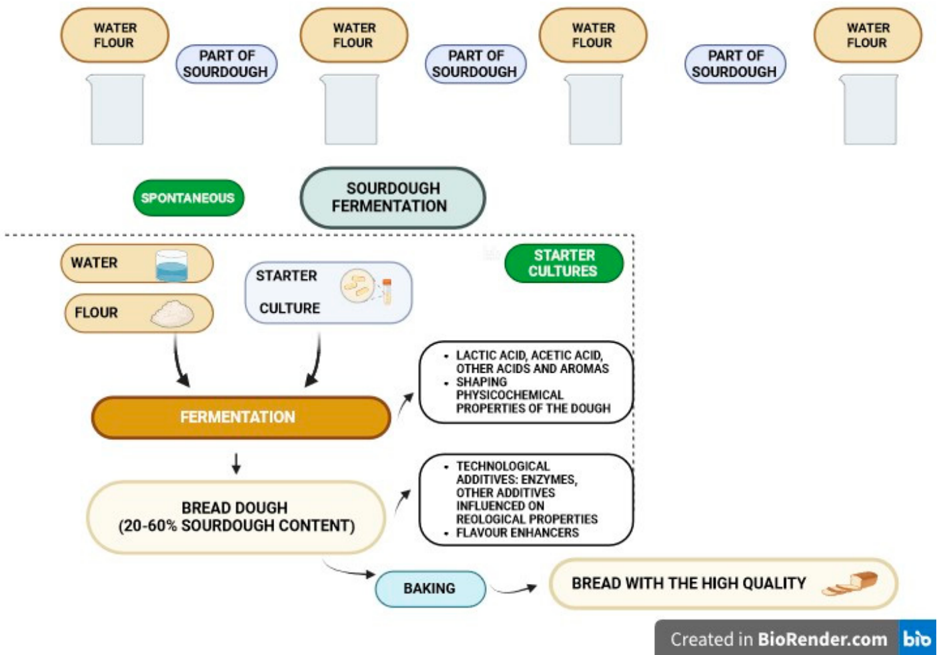
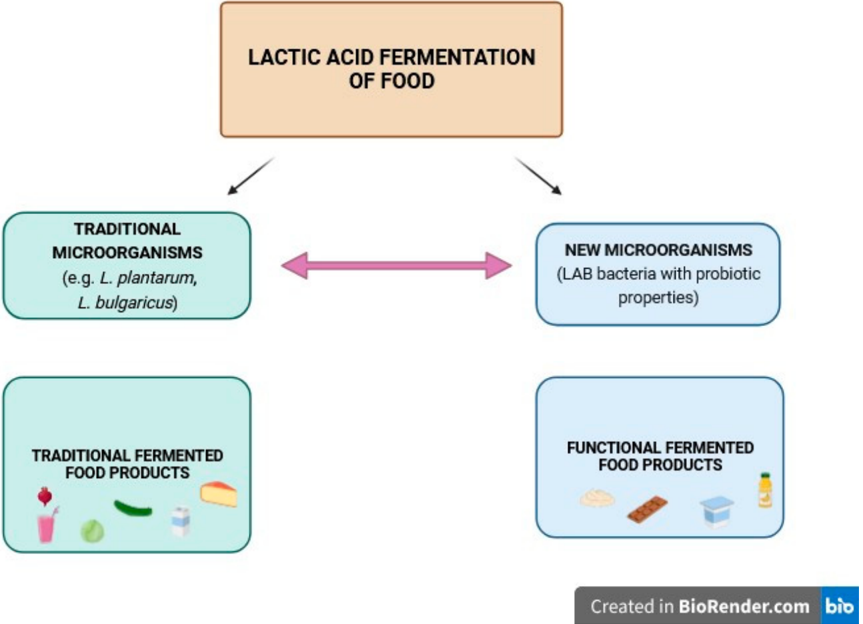
Verification
Claims the paper makes
0 Valid · 0 Not valid · 69 Not checked · 4 Own results and interpretations
None of the sources cited for this claim have been checked yet.
In the paper
“Some authors reported that the application of some LAB strains (Levl.brevis, Lacp.plantarum, P. pentosaceus, and Pediococcus acidilactici) in baked bread showed significantly reduced acrylamide content [69,70].”
§ Traditional and New Microorganisms in Lactic Acid Fermentation of Food > 3.3. Bakery Products
What the sources say
- Not checked yetcites [69] Ben Taher, I.; Chouaibi, M.; Jaunbergs, J.; Bartkevics, V.; Hassouna, M. Assessment of lactic acid bacteria application for the reduction of acrylamide formation in bread. LWT-Food Sci. Technol. 2018, 92, 435-441. [CrossRef] source
- Not checked yetcites [70] Esfahani, B.N.; Kadivar, M.; Shahedi, M.; Soleimanian-Zad, S. Reduction of acrylamide in whole-wheat bread by combining lactobacilli and yeast fermentation. Food Addit. Contam. Part A 2017, 34, 1904-1914. [CrossRef] source
hedgedstates a cause- Asserted: passes — The authors put it forward as true.
- Checkable: passes — It can be checked against evidence.
- Load-bearing: unclear — It is unclear whether the paper’s conclusions depend on it.
- Based: passes — The paper gives a reason why it holds.
In the paper
“The natural and safe preservatives of traditional dairy products are ensured by LAB-produced antimicrobial peptides called bacteriocins [19].”
§ Traditional and New Microorganisms in Lactic Acid Fermentation of Food > 3.1. Dairy Products
What the sources say
- Not checked yetcites [19] de Souza, E.L.; de Oliveira, K.; de Oliveira, M.E. Influence of lactic acid bacteria metabolites on physical and chemical food properties. Curr. Opin. Food Sci. 2023, 49, 100981. [CrossRef] source
plainstates a cause- Asserted: passes — The authors put it forward as true.
- Checkable: passes — It can be checked against evidence.
- Load-bearing: unclear — It is unclear whether the paper’s conclusions depend on it.
- Based: passes — The paper gives a reason why it holds.
In the paper
“Starter cultures are selected by considering features, such as hetero-and homofermentation, probiotic properties, acid tolerance, organic acid production, temperature range, salt tolerance, oleuropein separation ability, flavor devel-opment, and bacteriocin production, in order to dominate the natural microbiota [24].”
§ Traditional and New Microorganisms in Lactic Acid Fermentation of Food > 3.1. Dairy Products
What the sources say
- Not checked yetcites [24] Montet, D.; Ray, R.C.; Zakhia-Rozis, N. Lactic Acid Fermentation of Vegetables and Fruits. In Microorganisms and Fermentation of Traditional Foods; CRC Press: Boca Raton, FL, USA, 2014; pp. 118-150.
plainstates a cause- Asserted: passes — The authors put it forward as true.
- Checkable: passes — It can be checked against evidence.
- Load-bearing: unclear — It is unclear whether the paper’s conclusions depend on it.
- Based: passes — The paper gives a reason why it holds.
In the paper
“However, the implementation of empirical and artisanal techniques often leads to inconsistent food products [21].”
§ Traditional and New Microorganisms in Lactic Acid Fermentation of Food > 3.1. Dairy Products
What the sources say
- Not checked yetcites [21] Skowron, K.; Budzy ńska, A.; Grudlewska-Buda, K.; Wiktorczyk-Kapischke, N.; Andrzejewska, M.; Wałecka-Zacharska, E.; Gospodarek-Komkowska, E. Two Faces of Fermented Foods-The Benefits and Threats of Its Consumption. Front. Microbiol. 2022, 13, 845166. [CrossRef] [PubMed] source
plainstates a cause- Asserted: passes — The authors put it forward as true.
- Checkable: passes — It can be checked against evidence.
- Load-bearing: unclear — It is unclear whether the paper’s conclusions depend on it.
- Based: passes — The paper gives a reason why it holds.
In the paper
“Exopolysaccharides influence interactions with milk proteins and micelles, resulting in improvements in casein network firmness and ability to bind water [27].”
§ Traditional and New Microorganisms in Lactic Acid Fermentation of Food > 3.1. Dairy Products
What the sources say
- Not checked yetcites [27] Abarquero, D.; Renes, E.; Fresno, J.M.; Tornadijo, M.E. Study of exopolysaccharides from lactic acid bacteria and their industrial applications: A review. Int. J. Food Sci. Technol. 2022, 57, 16-26. [CrossRef] source
plainstates a cause- Asserted: passes — The authors put it forward as true.
- Checkable: passes — It can be checked against evidence.
- Load-bearing: unclear — It is unclear whether the paper’s conclusions depend on it.
- Based: passes — The paper gives a reason why it holds.
27 more claims
Create a free account to see all 73 claims and to verify the 90 references still open.
- It may state two separate claims as one. 37
- Probably not a substantial claim. 9
Citations
Cites
Hill (2014) · doi:10.1038/nrgastro.2014.66 · Cited by 9,592 · cited 1×
“The term “probiotic microorganisms” is defined as “live microorganisms that, when administered in adequate amounts, confer a health benefit on the host” [125].”
The State of World Fisheries and Aquaculture 2022
(2022) · FAO eBooks · doi:10.4060/cc0461en · Cited by 5,689
Zheng, J., Wittouck, S., Salvetti, E., Franz, C. M. A. P., Harris, H. M. B., Mattarelli, P., O’Toole, P. W., Pot, B., Vandamme, P., Walter, J., et al. (2020) · International Journal of Systematic and Evolutionary Microbiology · doi:10.1099/ijsem.0.004107 · Cited by 3,313 · cited 2×
“The genus Lactobacillus , which has recently been divided into 23 new genera, is one of the more than 70 bacterial species that have been isolated from sourdough fermentation [17,55].”
Lactic acid bacteria as functional starter cultures for the food fermentation industry
Leroy, F., & De Vuyst, L. (2004) · Trends in Food Science & Technology · doi:10.1016/j.tifs.2003.09.004 · Cited by 1,852 · cited 1×
“Moreover, the wide use of commercially selected starter cultures may lead to the disappearance of certain wild strains, leading to the loss of genetic material [40].”
Bacillus As Potential Probiotics: Status, Concerns, and Future Perspectives
Elshaghabee, F. M. F., Rokana, N., Gulhane, R. D., Sharma, C., & Panwar, H. (2017) · Frontiers in Microbiology · doi:10.3389/fmicb.2017.01490 · Cited by 940
Recent advances in cheese microbiology
Beresford, T. P., Fitzsimons, N. A., Brennan, N. L., & Cogan, T. M. (2001) · International Dairy Journal · doi:10.1016/s0958-6946(01)00056-5 · Cited by 823 · cited 2×
“The most-often used starter bacteria are members of the genera Lactococcus , Lactobacillus , Streptococcus , Leuconostoc , and Enter-coccus [39].”
Review: Diversity of Microorganisms in Global Fermented Foods and Beverages
Tamang, J. P., Watanabe, K., & Holzapfel, W. H. (2016) · Frontiers in Microbiology · doi:10.3389/fmicb.2016.00377 · Cited by 816
Probiotic species in the modulation of gut microbiota: An overview
Azad, M. A. K., Sarker, M., Li, T., & Yin, J. (2018) · BioMed Research International · doi:10.1155/2018/9478630 · Cited by 803 · cited 1×
“In addition to Lactobacillus and Bifidobacterium , other significant and prevalent probiotic microorganisms include Lactococcus , Streptococcus , Enterococcus , Propionibacterium , and Saccharomyces yeasts [128,129].”
Dimidi, E., Cox, S., Rossi, M., & Whelan, K. (2019) · Nutrients · doi:10.3390/nu11081806 · Cited by 801 · cited 1×
“The fermentation techniques include balance of ingredients, temperature, and time control, which can be different from one region to another and result in regional specialties [96].”
Fermented foods in a global age: east meets West
Tamang, J. P., Cotter, P. D., Endo, A., Han, N. S., Kort, R., Liu, S. Q., Mayo, B., Westerik, N., & Hutkins, R. (2020) · Comprehensive Reviews in Food Science and Food Safety · doi:10.1111/1541-4337.12520 · Cited by 719
Appropriate starter culture technologies for small-scale fermentation in developing countries
Holzapfel, W. H. (2002) · International Journal of Food Microbiology · doi:10.1016/s0168-1605(01)00707-3 · Cited by 692
Exploitation of vegetables and fruits through lactic acid fermentation.
Di Cagno, R., Coda, R., De Angelis, M., & Gobbetti, M. (2013) · Food Microbiology · doi:10.1016/j.fm.2012.09.003 · Cited by 644
Vieco-Saiz, N., Belguesmia, Y., Raspoet, R., Auclair, E., Gancel, F., Kempf, I., & Drider, D. (2019) · Frontiers in Microbiology · doi:10.3389/fmicb.2019.00057 · Cited by 603
Fermented Foods as a Dietary Source of Live Organisms
Rezac, S., Kok, C. R., Heermann, M., & Hutkins, R. (2018) · Frontiers in Microbiology · doi:10.3389/fmicb.2018.01785 · Cited by 540 · cited 1×
“The diversity of microorganisms found in naturally fermented foods makes them an excellent source of potential probiotics [132].”
Earliest evidence for cheese making in the sixth millennium bc in northern Europe
Salque, M., Bogucki, P. I., Pyzel, J., Sobkowiak-Tabaka, I., Grygiel, R., Szmyt, M., & Evershed, R. P. (2013) · Nature · doi:10.1038/nature11698 · Cited by 511
Fermented Foods, Health and the Gut Microbiome
Leeuwendaal, N. K., Stanton, C., O’Toole, P. W., & Beresford, T. P. (2022) · Nutrients · doi:10.3390/nu14071527 · Cited by 496
Fermented Fruits and Vegetables of Asia: A Potential Source of Probiotics
Swain, M. R., Anandharaj, M., Ray, R. C., & Parveen Rani, R. (2014) · Biotechnology Research International · doi:10.1155/2014/250424 · Cited by 478
Safety assessment of dairy microorganisms: The Lactobacillus genus
Bernardeau, M., Vernoux, J. P., Henri-Dubernet, S., & Guéguen, M. (2008) · International Journal of Food Microbiology · doi:10.1016/j.ijfoodmicro.2007.08.015 · Cited by 384
Thirty years of knowledge on sourdough fermentation: A systematic review
Arora, K., Ameur, H., Polo, A., Di Cagno, R., Rizzello, C. G., & Gobbetti, M. (2021) · Trends in Food Science & Technology · doi:10.1016/j.tifs.2020.12.008 · Cited by 356
Sourdough volatile compounds and their contribution to bread: A review
Pétel, C., Onno, B., & Prost, C. (2017) · Trends in Food Science & Technology · doi:10.1016/j.tifs.2016.10.015 · Cited by 323
Kimchi and Other Widely Consumed Traditional Fermented Foods of Korea: A Review
Patra, J. K., Das, G., Paramithiotis, S., & Shin, H.-S. (2016) · Frontiers in Microbiology · doi:10.3389/fmicb.2016.01493 · Cited by 318
New perspectives in fermented dairy products and their health relevance
García-Burgos, M., Moreno-Fernández, J., Alférez, M. J. M., Díaz-Castro, J., & López-Aliaga, I. (2020) · Journal of Functional Foods · doi:10.1016/j.jff.2020.104059 · Cited by 317
Dimidi, E., Christodoulides, S., Fragkos, K. C., Scott, S. M., & Whelan, K. (2014) · The American Journal of Clinical Nutrition · doi:10.3945/ajcn.114.089151 · Cited by 316 · cited 1×
“Probiotic cells must survive the passage through the gastrointestinal tract, reach the colon in sufficient numbers, and, finally, adhere to, and colonize the gut epithelium [148–150].”
Lactic acid bacteria as antifungal and anti-mycotoxigenic agents: A comprehensive review
Sadiq, F. A., Yan, B., Tian, F., Zhao, J., Zhang, H., & Chen, W. (2019) · Comprehensive Reviews in Food Science and Food Safety · doi:10.1111/1541-4337.12481 · Cited by 313
Cizeikiene, D., Juodeikiene, G., Paskevicius, A., & Bartkiene, E. (2013) · Food Control · doi:10.1016/j.foodcont.2012.12.004 · Cited by 296 · cited 1×
“This fermentation process primarily involves the conversion of sugars into lactic acid by lactic acid bacteria, contributing to changes in homo-or heterofermentation, and offers many technological and nutritional benefits, as well as affecting the quality of bread [52–54].”
The Role of Probiotics and Prebiotics in Inducing Gut Immunity
Vieira, A. T., Teixeira, M. M., & Martins, F. S. (2013) · Frontiers in Immunology · doi:10.3389/fimmu.2013.00445 · Cited by 273
Shori, A. B. (2016) · Food Bioscience · doi:10.1016/j.fbio.2015.11.001 · Cited by 271
Sourdough Technology—A Traditional Way for Wholesome Foods: A Review
Chavan, R. S., & Chavan, S. R. (2011) · Comprehensive Reviews in Food Science and Food Safety · doi:10.1111/j.1541-4337.2011.00148.x · Cited by 261
Kefir and Its Biological Activities
Azizi, N. F., Kumar, M. R., Yeap, S. K., Abdullah, J. O., Khalid, M., Omar, A. R., Osman, M. A., Mortadza, S. A. S., & Alitheen, N. B. (2021) · Foods · doi:10.3390/foods10061210 · Cited by 256
Liu, L., Wang, J., Rosenberg, D., Zhao, H., Lengyel, G., & Nadel, D. (2018) · Journal of Archaeological Science: Reports · doi:10.1016/j.jasrep.2018.08.008 · Cited by 243
Fermented Foods in Health and Disease Prevention
(2017) · Elsevier eBooks · doi:10.1016/c2014-0-01734-0 · Cited by 235
Fermented Foods and Beverages of the World
(2010) · CRC Press eBooks · doi:10.1201/ebk1420094954 · Cited by 233
Bread Staling: Updating the View
Fadda, C., Sanguinetti, A. M., Del Caro, A., Collar, C., & Piga, A. (2014) · Comprehensive Reviews in Food Science and Food Safety · doi:10.1111/1541-4337.12064 · Cited by 233
Microbial ecology and process technology of sourdough fermentation
(2017) · Advances in applied microbiology · doi:10.1016/bs.aambs.2017.02.003 · Cited by 226
Mannaa, M., Han, G., Seo, Y., & Park, I. (2021) · Foods · doi:10.3390/foods10112861 · Cited by 223
Ashraf, R., & Shah, N. P. (2011) · International Journal of Food Microbiology · doi:10.1016/j.ijfoodmicro.2011.07.008 · Cited by 219
Gobbetti, M., De Angelis, M., Di Cagno, R., Mancini, L., & Fox, P. F. (2015) · Trends in Food Science & Technology · doi:10.1016/j.tifs.2015.07.016 · Cited by 217 · cited 1×
“The population of non-starter LAB consists of mesophilic and thermophilic lactic acid bacteria and lactococci , pediococci , enterococci , and Leuconostoc spp. [41].”
Dynamic changes of lactic acid bacteria flora during Chinese sauerkraut fermentation
Xiong, T., Guan, Q., Song, S., Hao, M., & Xie, M. (2012) · Food Control · doi:10.1016/j.foodcont.2012.01.027 · Cited by 217
Food-Origin Lactic Acid Bacteria May Exhibit Probiotic Properties: Review
Zielińska, D., & Kolożyn-Krajewska, D. (2018) · BioMed Research International · doi:10.1155/2018/5063185 · Cited by 210
Self-citationMicroorganisms and Fermentation of Traditional Foods
(2014) · CRC Press eBooks · doi:10.1201/b17307 · Cited by 199
Beneficial Effects of Yoghurts and Probiotic Fermented Milks and Their Functional Food Potential
Hadjimbei, E., Botsaris, G., & Chrysostomou, S. (2022) · Foods · doi:10.3390/foods11172691 · Cited by 199
The role of protective and probiotic cultures in food and feed and their impact in food safety
Gaggìa, F., Gioia, D. D., Baffoni, L., & Biavati, B. (2011) · Trends in Food Science & Technology · doi:10.1016/j.tifs.2011.03.003 · Cited by 193
Overview of Sourdough Technology: from Production to Marketing
Siepmann, F. B., Ripari, V., Waszczynskyj, N., & Spier, M. R. (2017) · Food and Bioprocess Technology · doi:10.1007/s11947-017-1968-2 · Cited by 187
Quality, functionality, and microbiology of fermented fish: a review
Zang, J., Xu, Y., Xia, W., & Regenstein, J. M. (2020) · Critical Reviews in Food Science and Nutrition · doi:10.1080/10408398.2019.1565491 · Cited by 183
Composition and function of sourdough microbiota: From ecological theory to bread quality
Gänzle, M., & Ripari, V. (2016) · International Journal of Food Microbiology · doi:10.1016/j.ijfoodmicro.2016.05.004 · Cited by 182
Potential of lactic acid bacteria in aflatoxin risk mitigation
Ahlberg, S. H., Joutsjoki, V., & Korhonen, H. J. (2015) · International Journal of Food Microbiology · doi:10.1016/j.ijfoodmicro.2015.04.042 · Cited by 171
Probiotic microorganisms from non-dairy traditional fermented foods
Ilango, S., & Antony, U. (2021) · Trends in Food Science & Technology · doi:10.1016/j.tifs.2021.05.034 · Cited by 161
Two Faces of Fermented Foods—The Benefits and Threats of Its Consumption
Skowron, K., Budzyńska, A., Grudlewska-Buda, K., Wiktorczyk-Kapischke, N., Andrzejewska, M., Wałecka-Zacharska, E., & Gospodarek-Komkowska, E. (2022) · Frontiers in Microbiology · doi:10.3389/fmicb.2022.845166 · Cited by 160
Fermentation and the microbial community of Japanese koji and miso : A review
Allwood, J. G., Wakeling, L. T., & Bean, D. C. (2021) · Journal of Food Science · doi:10.1111/1750-3841.15773 · Cited by 156
A Holistic Review on Euro-Asian Lactic Acid Bacteria Fermented Cereals and Vegetables
Ashaolu, T., & Reale, A. (2020) · Microorganisms · doi:10.3390/microorganisms8081176 · Cited by 155
Microbial production of food ingredients, enzymes and nutraceuticals
McNeil, B., Archer, D., Giavasis, I., & Harvey, L. (2013) · Woodhead Publishing Limited eBooks · doi:10.1533/9780857093547 · Cited by 153
Cogan, T. M., & Accolas, J.-P. (1995) · Cited by 146
Wang, Y., Han, J., Wang, D., Gao, F., Zhang, K., Tian, J., & Jin, Y. (2022) · Foods · doi:10.3390/foods11142090 · Cited by 145
Diverse Microbial Composition of Sourdoughs From Different Origins
Comasio, A., Verce, M., Kerrebroeck, S. V., & Vuyst, L. D. (2020) · Frontiers in Microbiology · doi:10.3389/fmicb.2020.01212 · Cited by 139
Cruxen, C. E. D. S., Funck, G. D., Haubert, L., Dannenberg, G. D. S., Marques, J. D. L., Chaves, F. C., da Silva, W. P., & Fiorentini, Â. M. (2019) · Food Research International · doi:10.1016/j.foodres.2019.04.018 · Cited by 134
Choi, I. H., Noh, J. S., Han, J.-S., Kim, H. J., Han, E.-S., & Song, Y. O. (2013) · Journal of Medicinal Food · doi:10.1089/jmf.2012.2563 · Cited by 126
Streptococcus thermophilus: From yogurt starter to a new promising probiotic candidate?
Uriot, O., Denis, S., Junjua, M., Roussel, Y., Dary-Mourot, A., & Blanquet-Diot, S. (2017) · Journal of Functional Foods · doi:10.1016/j.jff.2017.07.038 · Cited by 125
Lactic Fermented Fruit or Vegetable Juices: Past, Present and Future
Garcia, C., Guerin, M., Souidi, K., & Remize, F. (2020) · Beverages · doi:10.3390/beverages6010008 · Cited by 123
Meat fermentation at the crossroads of innovation and tradition: A historical outlook
Leroy, F., Geyzen, A., Janssens, M., Vuyst, L. D., & Scholliers, P. (2013) · Trends in Food Science & Technology · doi:10.1016/j.tifs.2013.03.008 · Cited by 121
Probiotic characteristics of Bacillus strains isolated from Korean traditional soy sauce
Lee, S., Lee, J., Jin, Y.-I., Jeong, J.-C., Chang, Y. H., Lee, Y., Jeong, Y., & Kim, M. (2017) · LWT - Food Science and Technology · doi:10.1016/j.lwt.2016.08.040 · Cited by 117 · cited 1×
“An example is lactic acid-fermented cabbage consumed around the ancient world: in the Roman Empire, as sauerkraut; in Asia, as a Chinese PaoCai gun-drunk; in the Himalayas or in Korea, as a kimchi [12–14].”
Microbiota of table olive fermentations and criteria of selection for their use as starters
Heperkan, D. (2013) · Frontiers in Microbiology · doi:10.3389/fmicb.2013.00143 · Cited by 115
Diversity of lactic acid bacteria in fermented brines used to make stinky tofu
Chao, S.-H., Tomii, Y., Watanabe, K., & Tsai, Y.-C. (2008) · International Journal of Food Microbiology · doi:10.1016/j.ijfoodmicro.2007.12.010 · Cited by 114
Technological advances for enhancing quality and safety of fermented meat products
Ojha, K. S., Kerry, J. P., Duffy, G., Beresford, T., & Tiwari, B. K. (2015) · Trends in Food Science & Technology · doi:10.1016/j.tifs.2015.03.010 · Cited by 113
Belleggia, L., & Osimani, A. (2023) · Food Research International · doi:10.1016/j.foodres.2023.113112 · Cited by 110
The Development of High-Quality Multispecies Probiotic Formulations: From Bench to Market
Grumet, L., Tromp, Y., & Stiegelbauer, V. (2020) · Nutrients · doi:10.3390/nu12082453 · Cited by 107
Study of exopolysaccharides from lactic acid bacteria and their industrial applications: A review
Abarquero, D., Renes, E., Fresno, J. M., & Tornadijo, M. E. (2022) · International Journal of Food Science & Technology · doi:10.1111/ijfs.15227 · Cited by 107
Ravyts, F., & Vuyst, L. D. (2011) · Food Microbiology · doi:10.1016/j.fm.2011.03.004 · Cited by 106
Boza: A lactic acid fermented cereal beverage as a traditional Turkish food
Arici, M., & Daglioglu, O. (2002) · Food Reviews International · doi:10.1081/fri-120003416 · Cited by 102
Sadeghi, A., Ebrahimi, M. T., Mortazavi, S. A., & Abedfar, A. (2018) · Food Control · doi:10.1016/j.foodcont.2018.08.013 · Cited by 102
Lick, S., Drescher, K., & Heller, K. J. (2001) · Applied and Environmental Microbiology · doi:10.1128/aem.67.9.4137-4143.2001 · Cited by 98
Liu, T., Li, Y., Chen, J., Sadiq, F. A., Zhang, G., Li, Y., & He, G. (2016) · LWT - Food Science and Technology · doi:10.1016/j.lwt.2015.12.025 · Cited by 97
Sourdough-Based Biotechnologies for the Production of Gluten-Free Foods
Nionelli, L., & Rizzello, C. G. (2016) · Foods · doi:10.3390/foods5030065 · Cited by 95
Kaveh, S., Hashemi, S. M. B., Abedi, E., Amiri, M. J., & Conte, F. L. (2023) · Sustainability · doi:10.3390/su151310154 · Cited by 95
The Use of Starter Cultures in Traditional Meat Products
Laranjo, M., Elias, M., & Fraqueza, M. J. (2017) · Journal of Food Quality · doi:10.1155/2017/9546026 · Cited by 91
Beganović, J., Pavunc, A. L., Gjuračić, K., Špoljarec, M., Šušković, J., & Kos, B. (2011) · Journal of Food Science · doi:10.1111/j.1750-3841.2010.02030.x · Cited by 87
Nakamura, S., Kuda, T., An, C., Kanno, T., Takahashi, H., & Kimura, B. (2012) · Anaerobe · doi:10.1016/j.anaerobe.2011.11.006 · Cited by 87
Pennacchia, C., Vaughan, E. E., & Villani, F. (2006) · Meat Science · doi:10.1016/j.meatsci.2005.10.019 · Cited by 87
Applications of plant-based fermented foods and their microbes
Wuyts, S., Van Beeck, W., Allonsius, C. N., van den Broek, M. F., & Lebeer, S. (2020) · Current Opinion in Biotechnology · doi:10.1016/j.copbio.2019.09.023 · Cited by 86
de Albuquerque, M. A. C., Bedani, R., LeBlanc, J. G., & Saad, S. M. I. (2017) · International Journal of Food Microbiology · doi:10.1016/j.ijfoodmicro.2017.09.001 · Cited by 86
Le‐Bail, A., Boumali, K., Jury, V., Aissa, M. F. B., & Zúñiga, R. (2009) · Journal of Cereal Science · doi:10.1016/j.jcs.2009.05.008 · Cited by 86
Aspri, M., Leni, G., Galaverna, G., & Papademas, P. (2018) · Food Chemistry · doi:10.1016/j.foodchem.2018.06.119 · Cited by 85
Gänzle, M. G. (2020) · Current Opinion in Food Science · doi:10.1016/j.cofs.2020.04.002 · Cited by 82
Influence of lactic acid bacteria metabolites on physical and chemical food properties
de Souza, E. L., de Oliveira, K. Á., & de Oliveira, M. E. (2023) · Current Opinion in Food Science · doi:10.1016/j.cofs.2022.100981 · Cited by 81
Probiotic meat products and human nutrition
Kołożyn-Krajewska, D., & Dolatowski, Z. J. (2012) · Process Biochemistry · doi:10.1016/j.procbio.2012.09.017 · Cited by 79
Self-citationStarter Cultures in Food Production
Romano, P., & Capece, A. (2017) · Wiley eBooks · doi:10.1002/9781118933794 · Cited by 79
Konkit, M., & Kim, W. (2016) · Journal of Dairy Science · doi:10.3168/jds.2016-11002 · Cited by 76
Multari, S., Carafa, I., Barp, L., Caruso, M., Licciardello, C., Larcher, R., Tuohy, K. M., & Martens, S. (2020) · LWT · doi:10.1016/j.lwt.2020.109205 · Cited by 74
Tamang, J. P. (2010) · CRC Press eBooks · doi:10.1201/ebk1420094954-c2 · Cited by 74
Assessment of lactic acid bacteria application for the reduction of acrylamide formation in bread
Nachi, I., Fhoula, I., Smida, I., Ben Taher, I., Chouaibi, M., Jaunbergs, J., Bartkevics, V., & Hassouna, M. (2018) · LWT · doi:10.1016/j.lwt.2018.02.061 · Cited by 73
Early evidence for beer drinking in a 9000-year-old platform mound in southern China
Wang, J., Jiang, L., & Sun, H. (2021) · PLoS ONE · doi:10.1371/journal.pone.0255833 · Cited by 72
Does kimchi deserve the status of a probiotic food?
Cha, J., Kim, Y. B., Park, S.-E., Lee, S. H., Roh, S. W., Son, H.-S., & Whon, T. W. (2024) · Critical Reviews in Food Science and Nutrition · doi:10.1080/10408398.2023.2170319 · Cited by 72
da Costa, W. K. A., Pedrosa, G. T. D. S., Brandão, L. R., de Lima, R. C., Garcia, E. F., Lima, M. D. S., de Souza, E. L., Saarela, M., & Magnani, M. (2018) · Food Research International · doi:10.1016/j.foodres.2018.03.045 · Cited by 70
Palla, M., Cristani, C., Giovannetti, M., & Agnolucci, M. (2017) · International Journal of Food Microbiology · doi:10.1016/j.ijfoodmicro.2017.03.015 · Cited by 70
Łepecka, A., Szymański, P., Okoń, A., & Zielińska, D. (2023) · LWT · doi:10.1016/j.lwt.2023.114440 · Cited by 70
Li, H., Li, Z., Qu, J., & Wang, J. (2017) · LWT - Food Science and Technology · doi:10.1016/j.lwt.2017.04.007 · Cited by 67
Rodzi, N. A. R. M., & Lee, L. K. (2021) · Food Research International · doi:10.1016/j.foodres.2021.110814 · Cited by 67
Comparing natural and selected starter cultures in meat and cheese fermentations
Bassi, D., Puglisi, E., & Cocconcelli, P. S. (2015) · Current Opinion in Food Science · doi:10.1016/j.cofs.2015.03.002 · Cited by 66
Kanno, T., Kuda, T., An, C., Takahashi, H., & Kimura, B. (2012) · LWT · doi:10.1016/j.lwt.2012.01.007 · Cited by 66
Van Reckem, E., Geeraerts, W., Charmpi, C., Van der Veken, D., De Vuyst, L., & Leroy, F. (2019) · Frontiers in Microbiology · doi:10.3389/fmicb.2019.02302 · Cited by 66
Lactofermentation of vegetables: An ancient method of preservation matching new trends
Thierry, A., Baty, C., Marché, L., Chuat, V., Picard, O., Lortal, S., & Valence, F. (2023) · Trends in Food Science & Technology · doi:10.1016/j.tifs.2023.07.009 · Cited by 64
Traditional dairy fermented products in Central Asia
Konuspayeva, G. S., Baubekova, A., Akhmetsadykova, S., & Faye, B. (2022) · International Dairy Journal · doi:10.1016/j.idairyj.2022.105514 · Cited by 64
Kim, K.-T., Yang, S. J., & Paik, H.-D. (2021) · Food Science and Biotechnology · doi:10.1007/s10068-020-00853-0 · Cited by 62
Saez, G. D., Hebert, E. M., Saavedra, L., & Zárate, G. (2017) · Food Research International · doi:10.1016/j.foodres.2017.09.042 · Cited by 61
Bangar, S. P., Sharma, N., Kumar, M., Ozogul, F., Purewal, S. S., & Trif, M. (2021) · Food Bioscience · doi:10.1016/j.fbio.2021.101444 · Cited by 60
Wang, Y., Chen, Q., Li, L., Chen, S., Zhao, Y., Li, C., Xiang, H., Wu, Y., & Sun‐Waterhouse, D. (2023) · Comprehensive Reviews in Food Science and Food Safety · doi:10.1111/1541-4337.13208 · Cited by 59
Reduction of acrylamide in whole-wheat bread by combining lactobacilli and yeast fermentation
Nasiri Esfahani, B., Kadivar, M., Shahedi, M., & Soleimanian-Zad, S. (2017) · Food Additives & Contaminants: Part A · doi:10.1080/19440049.2017.1378444 · Cited by 58
Peñas, E., Martínez‐Villaluenga, C., & Frías, J. (2016) · Elsevier eBooks · doi:10.1016/b978-0-12-802309-9.00024-8 · Cited by 56
Pyrazines Biosynthesis by Bacillus Strains Isolated from Natto Fermented Soybean
Kłosowski, G., Mikulski, D., & Pielech-Przybylska, K. (2021) · Biomolecules · doi:10.3390/biom11111736 · Cited by 55 · cited 1×
“The fermentation of natto produces several bioactive components, including nattokinase, daidzein, phytosterols, superoxide dismutase, and several biologically active peptides, improving nutritional quality [109].”
Koyanagi, T., Kiyohara, M., Matsui, H., Yamamoto, K., KONDO, T., Katayama, T., & Kumagai, H. (2011) · Letters in Applied Microbiology · doi:10.1111/j.1472-765x.2011.03155.x · Cited by 55
Kiyohara, M., KOYANAGI, T., Matsui, H., Yamamoto, K., Take, H., Katsuyama, Y., Tsuji, A. B., MIYAMAE, H., KONDO, T., Nakamura, S., et al. (2012) · Bioscience Biotechnology and Biochemistry · doi:10.1271/bbb.110424 · Cited by 55
Wang, X., Wang, S., & Zhao, H. (2019) · Journal of Food Science and Technology · doi:10.1007/s13197-019-03781-y · Cited by 54
Ray, A., & Dittel, B. N. (2015) · Immunology · doi:10.1111/imm.12511 · Cited by 53
Dai, Z., Li, Y., Wu, J., & Zhao, Q. (2013) · Journal of Food Science · doi:10.1111/1750-3841.12289 · Cited by 52
Fermented foods of Egypt and the Middle East
El-Gendy, S. M. (1983) · Journal of Food Protection · doi:10.4315/0362-028x-46.4.358 · Cited by 50
Oshiro, M., Tanaka, M., Zendo, T., & Nakayama, J. (2020) · Bioscience of Microbiota Food and Health · doi:10.12938/bmfh.2019-038 · Cited by 48
Kesenkaş, H., Gürsoy, O., & Özbaş, H. (2016) · Elsevier eBooks · doi:10.1016/b978-0-12-802309-9.00014-5 · Cited by 45
Acrylamide formation in traditional Czech leavened wheat-rye breads and wheat rolls
Forstova, V., Belkova, B., Riddellova, K., Vaclavik, L., Prihoda, J., & Hajslova, J. (2014) · Food Control · doi:10.1016/j.foodcont.2013.10.022 · Cited by 45
Heperkan, D., Daşkaya-Dikmen, C., & Bayram, B. (2014) · Process Biochemistry · doi:10.1016/j.procbio.2014.06.012 · Cited by 43
Healthy and safe Korean traditional fermented foods: kimchi and chongkukjang
Chang, H. C. (2018) · Journal of Ethnic Foods · doi:10.1016/j.jef.2018.08.003 · Cited by 43
Jampaphaeng, K., Cocolin, L., & Maneerat, S. (2017) · Annals of Microbiology · doi:10.1007/s13213-016-1233-3 · Cited by 41
Graça, C., Edelmann, M., Raymundo, A., de Sousa, I. M. N., Coda, R., Sontag-Strohm, T. S., & Huang, X. (2021) · Journal of Functional Foods · doi:10.1016/j.jff.2021.104877 · Cited by 41
Şimşek, Ö., Özel, S., & Çon, A. H. (2017) · Food Science and Biotechnology · doi:10.1007/s10068-017-0024-3 · Cited by 39
Domingos‐Lopes, M. F. P., Lamosa, P., Stanton, C., Ross, R. P., & Silva, C. C. G. (2018) · Letters in Applied Microbiology · doi:10.1111/lam.13073 · Cited by 38
Effect of Fermentation Parameters on Natto and Its Thrombolytic Property
Yang, Y., Lan, G., Tian, X., He, L., Li, C., Zeng, X., & Wang, X. (2021) · Foods · doi:10.3390/foods10112547 · Cited by 37
Limbad, M., Gutierrez Maddox, N., Hamid, N., & Kantono, K. (2020) · Foods · doi:10.3390/foods9091165 · Cited by 36
Ołdak, A., Zielińska, D., Łepecka, A., Długosz, E., & Kołożyn-Krajewska, D. (2020) · Probiotics and Antimicrobial Proteins · doi:10.1007/s12602-019-09587-w · Cited by 35
Self-citationIndigenous fermented foods: nutritional and safety aspects
Ramos, C. L., Bressani, A. P. P., Batista, N. N., Martinez, S. J., Dias, D. R., & Schwan, R. F. (2023) · Current Opinion in Food Science · doi:10.1016/j.cofs.2023.101075 · Cited by 33
PROBIOTICS IN FERMENTED MEAT PRODUCTS
Kołożyn‐Krajewska, D., & Dolatowski, Z. J. (2009) · Acta Scientiarum Polonorum Technologia Alimentaria · Cited by 31
Self-citationChristensen, I. B., Vedel, C., Clausen, M.-L., Kjærulff, S., Agner, T., & Nielsen, D. S. (2021) · Frontiers in Microbiology · doi:10.3389/fmicb.2021.733847 · Cited by 31
Trindade, D. P. D. A., Barbosa, J. P., Martins, E. M. F., & Tette, P. A. S. (2022) · Food Bioscience · doi:10.1016/j.fbio.2022.101739 · Cited by 29
Temiz, H., & Tarakçı, Z. (2017) · Journal of Food Science and Technology · doi:10.1007/s13197-017-2513-z · Cited by 29
Zhou, R. Y., Huang, X., Liu, Z., Chua, J.-Y., & Liu, S.-Q. (2022) · Current Research in Food Science · doi:10.1016/j.crfs.2022.10.004 · Cited by 27
Joseph, R., & Bachhawat, A. K. (2014) · Elsevier eBooks · doi:10.1016/b978-0-12-384730-0.00361-x · Cited by 25
Wang, J., Aziz, T., Bai, R., Zhang, X., Shahzad, M., Sameeh, M. Y., Khan, A. A., Dablool, A. S., & Zhu, Y. (2022) · Frontiers in Microbiology · doi:10.3389/fmicb.2022.990606 · Cited by 24
Probiotic potential of Tetragenococcus halophilus EFEL7002 isolated from Korean soy Meju
Kim, D. H., Kim, S.-A., Jo, Y. M., Seo, H., Kim, G. Y., Cheon, S. W., Yang, S. H., Jeon, C. O., & Han, N. S. (2022) · BMC Microbiology · doi:10.1186/s12866-022-02561-7 · Cited by 23
Nalepa, B., & Markiewicz, L. H. (2022) · Animals · doi:10.3390/ani13010168 · Cited by 21
Dharaneedharan, S., & Heo, M. (2016) · Journal of Life Science · doi:10.5352/jls.2016.26.4.496 · Cited by 18
Fermented Milk in Protection Against Inflammatory Mechanisms in Obesity
Pothuraju, R., Yenuganti, V. R., Hussain, S. A., & Sharma, M. (2017) · Elsevier eBooks · doi:10.1016/b978-0-12-805417-8.00029-9 · Cited by 18
Łepecka, A., Okoń, A., Szymański, P., Zielińska, D., Kajak‐Siemaszko, K., Jaworska, D., Neffe‐Skocińska, K., Sionek, B., Trząskowska, M., Kołożyn‐Krajewska, D., et al. (2022) · Molecules · doi:10.3390/molecules27031097 · Cited by 18
Self-citationPreface for Volume 10: Microbial Contamination and Food Degradation
Holban, A. M., & Grumezescu, A. M. (2018) · Elsevier eBooks · doi:10.1016/b978-0-12-811515-2.00023-8 · Cited by 17
Bozdemir, M., Gümüş, T., & Kamer, D. D. A. (2022) · Food Biotechnology · doi:10.1080/08905436.2022.2092128 · Cited by 15
Bioconversion of pumpkin by-products in novel supplements supporting Lactobacillus casei
Genevois, C. E., Pieniazek, F., Messina, V., Flores, S. K., & Pla, M. F. D. E. (2019) · LWT · doi:10.1016/j.lwt.2019.01.057 · Cited by 14
Barbaccia, P., Francesca, N., Gerlando, R. D., Busetta, G., Moschetti, G., Gaglio, R., & Settanni, L. (2020) · FEMS Microbiology Letters · doi:10.1093/femsle/fnaa066 · Cited by 14
Krawęcka, A., Libera, J., & Latoch, A. (2021) · Foods · doi:10.3390/foods10102492 · Cited by 12
Effect of ancient wheat flours and fermentation types on tarhana properties
Cankurtaran Kömürcü, T., & Bilgiçli, N. (2022) · Food Bioscience · doi:10.1016/j.fbio.2022.101982 · Cited by 12
Fermentation Processes: Emerging and Conventional Technologies
(2021) · doi:10.1002/9781119505822 · Cited by 10
Quality improvement and fermentation control in meat products
Lücke, F. (2014) · Elsevier eBooks · doi:10.1016/b978-1-78242-015-6.00015-3 · Cited by 9
Postbiotyki – właściwości, zastosowanie i wpływ na zdrowie człowieka
Karbowiak, M., & Zielińska, D. (2020) · Zywnosc-nauka Technologia Jakosc · doi:10.15193/zntj/2020/123/332 · Cited by 4
(2014) · International Linear Collider
Research works printed but not linked: 13
- Tamang, J.P., Kailasapathy, K., Eds.; CRC Press: New York, NY, USA, 2010; pp. 41-84. [CrossRef]
- Frias, J., Martinez-Villaluenga, C., Peñas, E., Eds.; Academic Press: Cambridge, MA, USA, 2017; pp. 557-576. [CrossRef]
- Montet, D.; Ray, R.C.; Zakhia-Rozis, N. Lactic Acid Fermentation of Vegetables and Fruits. In Microorganisms and Fermentation of Traditional Foods; CRC Press: Boca Raton, FL, USA, 2014; pp. 118-150.
- Mojka, K. Charakterystyka mlecznych napojów fermentowanych. Probl. Hig. Epidemiol. 2013, 94, 722-729.
- Joseph, R.; Bachhawat, A.K. Yeasts: Production and Commercial Uses. In Encyclopedia of Food Microbiology, 2nd ed.; ˙Içinde, C.A., Batt, M.L.T., Eds.; Academic Press: Cambridge, MA, USA, 2014; pp. 823-830. [CrossRef]
- Kesenkaş, H.; Gürsoy, O.; Özbaş, H. Chapter 14-Kefir. In Fermented Foods in Health and Disease Prevention;
- Frias, ˙I.J., Martinez- Villaluenga, C., Peñas, E., Eds.; Academic Press: Cambridge, MA, USA, 2017; pp. 339-361. [CrossRef]
- John, W.F., Ed.; Academic Press: Cambridge, MA, USA, 2011; pp. 533-543. ISBN 9780123744074.
- Randazzo, C.L.; Rajendram, R.; Caggia, C. Lactic Acid Bacteria in Table Olive Fermentations in Olives and Olive Oil in Health and Disease; Preedy, V.R., Watson, R.R., Eds.; Academic Press: Singapore, 2010; pp. 369-376.
- Holzapfel, W., Ed.; Woodhead Publishing: Sawston, UK, 2015; pp. 357-376. [CrossRef]
- Ruddle, K.; Rosma, A.; Singh, A.; Ann, A.; Raj, A.; Gupta, A.; Kumar, A.; Thilakaratne, B.M.K.; Neopany, B.; Angchok, D.; et al. Indigenous Fermented Foods in Fermented Meat Products, Fish and Fish Products, Alkaline Fermented Foods, Tea, and Other Related Products; CRC Press: New York, NY, USA, 2015; pp. 645-713.
- Lennart Svensson, U., Desselberger, H.B., and Greenberg, M.K.E. (2016). Viral Gastroenteritis, Academic Press.
- Putta, S.; Yarla, N.S.; Lakkappa, D.B.; Imandi, S.B.; Malla, R.R.; Chaitanya, A.K.; Chari, B.P.V.; Saka, S.; Vechalapu, R.R.; Kamal, M.A.; et al. Chapter 2-Probiotics: Supplements, Food, Pharmaceutical Industry. In Therapeutic, Probiotic, and Unconventional Foods; Grumezescu, A.M., Holban, A.M., Eds.; Academic Press: Cambridge, MA, USA, 2018. 146.
Cited by
Anumudu, C. K., Miri, T., & Onyeaka, H. (2024) · Foods · doi:10.3390/foods13233714 · Cited by 248
“…of fermentation and highly contribute to the development of flavors, aromas, and textures within a wide range of fermented foods and beverages [36]. a crucial role in the development of aroma in a wide range of fermented foods [11] The oxidation of lipids in fermented foods leads to the…”
InfluentialMafe, A. N., Edo, G. I., Makia, R. S., Joshua, O. A., Akpoghelie, P. O., Gaaz, T. S., Jikah, A. N., Yousif, E., Isoje, E. F., Igbuku, U. A., et al. (2024) · Food Chemistry Advances · doi:10.1016/j.focha.2024.100852 · Cited by 235
Sawant, S. S., Park, H.-Y., Sim, E.-Y., Kim, H.-S., & Choi, H.-S. (2025) · Fermentation · doi:10.3390/fermentation11010015 · Cited by 198
The Impact of Physicochemical Conditions on Lactic Acid Bacteria Survival in Food Products
Sionek, B., Szydłowska, A., Trząskowska, M., & Kołożyn‐Krajewska, D. (2024) · Fermentation · doi:10.3390/fermentation10060298 · Cited by 187
Self-citationLactic Acid Fermentation in the Food Industry and Bio-Preservation of Food
Aguirre-García, Y. L., Nery‐Flores, S. D., Campos‐Múzquiz, L. G., Flores‐Gallegos, A. C., Palomo‐Ligas, L., Ascacio‐Valdés, J. A., Sepúlveda, L., & Rodríguez-Herrera, R. (2024) · Fermentation · doi:10.3390/fermentation10030168 · Cited by 133
Metadata
- Authors
- Sionek, B., Szydłowska, A., Küçükgöz, K., & Kołożyn-Krajewska, D.
- Affiliations
- Warsaw University of Life Sciences (PL)
- Department of Food Gastronomy and Food Hygiene, Institute of Human Nutrition Sciences, Warsaw University of Life Sciences (WULS), Nowoursynowska St.159C, 02-776 Warsaw, Poland
- Corresponding author
- Szydłowska, Aleksandra
- Venue
- Fermentation
- Publisher
- MDPI AG
- Published
- 2023-12-14
- Volume
- 9
- Issue
- 12
- Pages
- 1019
- ISSN
- 2311-5637 (ISSN-L)
- OpenAlex
- W4389735997
- Cited by
- 185
- References
- 144
- Citations by year
- 2026: 78 · 2025: 73 · 2024: 33 · 2023: 1
- FWCI
- 18.03
- Type
- journal article
- Language
- en
- Open access
- gold
- doi.org
- Licence
- Locations
- Fermentation (publishedVersion, cc-by)
- DOAJ (DOAJ: Directory of Open Access Journals) (submittedVersion)
- Topics
- Life Sciences › Agricultural and Biological Sciences › Food Science › Probiotics and Fermented Foods
- Life Sciences › Agricultural and Biological Sciences › Food Science › Fermentation and Sensory Analysis
- Life Sciences › Agricultural and Biological Sciences › Food Science › Food Nutrient Composition and Product Development
- Keywords
- lactic acid fermentation, lactic acid bacteria, fermented foods, starter cultures, probiotics, prebiotics, postbiotics, functional foods, food preservation, backslopping, health-promoting properties
About these checks
Registry, retraction, Cites and statistics results are computed, not judged, with one exception: a printed reference that no index lists is read once by a model before it counts as a citation error. Claims are extracted by a model and kept only when their quote appears verbatim in the text; each cited source is then checked, with a model’s help, for whether it says what the claim relies on. Those verdicts can be wrong — read the claim’s quote and the cited source before relying on one.
A language model drew the claims from the paper on 2026-11-24, under version 3 of the claim definition (model deepseek-v4.1-flash, prompt extract-v3).
A second model labelled each claim on 2026-11-24 (model jev-1.13-20260917, definition revision gold-guideline-v0.2).
Statistics and arithmetic are recomputed, not judged.
Confidence bands are shown only for fields calibrated on our annotated test set. None is calibrated yet, so no band is shown.
What counts as a claim ›How we measure confidence ›How we check this ›
Are you an author, or do you see a problem with this page? Request a review
Data sources
Bibliographic data: Semantic Scholar, OpenAlex, Crossref.
Contains information from the Semantic Scholar Academic Graph Datasets, made available under the ODC Attribution License (ODC-BY 1.0).
Semantic Scholar’s data is described in: Kinney, R., et al. (2023). The Semantic Scholar Open Data Platform. arXiv:2301.10140.
