

Starch Edible Films/Coatings Added with Carvacrol and Thymol: In Vitro and In Vivo Evaluation against Colletotrichum gloeosporioides
Open accessThe DOI matches its Crossref record; 50 of the 51 references it cites were found in a registry or an index; 1 of the 12 sources its claims cite were checked for support.
Abstract
The aim of this work was to evaluate the in vitro and in vivo effectiveness of thymol and carvacrol added to edible starch films and coatings against Colletotrichum gloeosporioides. In vitro evaluation consisted of determining minimal inhibitory concentration (MIC) of carvacrol and thymol was determined at different pH values against Colletotrichum gloeosporioides. With MIC values, binary mixtures were developed. From these results, two coatings formulations were in vivo evaluated on mango and papaya. Physicochemical analysis, color change, fruit lesions and C. gloeosporioides growth were determined during storage. In vitro assay indicated that the MIC value of carvacrol and thymol against C. gloeosporioides was 1500 mg/L at pH 5. An additive effect was determined with 750/750 and 1125/375 mg/L mixtures of carvacrol and thymol, respectively. Coated fruits with selected mixtures of carvacrol and thymol presented a delay in firmness, maturity index and color change. Moreover, a fungistatic effect was observed due to a reduction of lesions in coated fruits. These results were corroborated by the increase in the lag phase value and the reduction of the growth rate. Carvacrol and thymol incorporated into edible films and coatings are able to reduce the incidence of anthracnose symptoms on mango and papaya.
Overview
CoChat Summary
## TL;DR
This study tested starch edible films/coatings containing carvacrol and thymol against *Colletotrichum gloeosporioides* in vitro and on mango and papaya in vivo. The antimicrobials showed an MIC of 1500 mg/L at pH 5, additive effects in selected mixtures, and reduced anthracnose symptoms and fungal growth on fruit.
## Key findings
- In vitro, the MIC of both carvacrol and thymol against *C. gloeosporioides* was 1500 mg/L at pH 5.
- Binary mixtures showed additive effects for 750/750 mg/L and 1125/375 mg/L carvacrol/thymol; three other tested mixes had no interactive effect.
- On mango and papaya, coated fruits showed a delay in firmness loss, maturity index change, and color change, and the coatings reduced lesions; the paper describes this as a fungistatic effect in vivo.
- Gompertz modeling showed that Formulation 2 (1125 mg/L carvacrol + 375 mg/L thymol) had the significant and high fungistatic effect (p < 0.05), increasing lag phase and reducing maximum specific growth rate.
## Methods
- Design: In vitro antifungal testing of thymol and carvacrol in starch films across pH 4, 5, 6, and 7, followed by in vivo coating trials on inoculated mango and papaya; two additive binary mixtures were selected for fruit tests.
- Sample/data: Mango (*Mangifera indica* var. Ataulfo) and papaya (*Carica papaya* L. var. Maradol) from a local market in Puebla, Mexico; *C. gloeosporioides* was isolated from infected papaya fruit. Experiments were performed in triplicate.
- Main analysis: MIC determination, checkerboard/FIC index analysis for binary mixtures, storage measurements of firmness, soluble solids, titratable acidity, maturity index, external injury, color change, fungal counts, and Gompertz modeling; one-way ANOVA with Tukey’s test was used.
## Limitations
- The paper states that in vivo results cannot often be anticipated by in vitro activity because fruit species/cultivar and environmental conditions may differ; this is presented as an explanation for the weaker in vivo effect.
- The text makes evident that the fruit tests were done under one storage condition (20 °C for 18 days) and on one fungal isolate/source, which may limit generalization.
Model-written summary. Check it against the paper before relying on it.
Integrity signals
Registry
Cites
Statistics
Figures
Verification
Claims the paper makes
0 Valid · 1 Not valid · 7 Not checked · 28 Own results and interpretations
The cited sources that could be checked couldn’t confirm or dispute this claim.
In the paper
“Similar findings were also reported by Pinto et al. [20] that found the different antifungal activity of thyme essential oil between in vitro and in vivo experiments.”
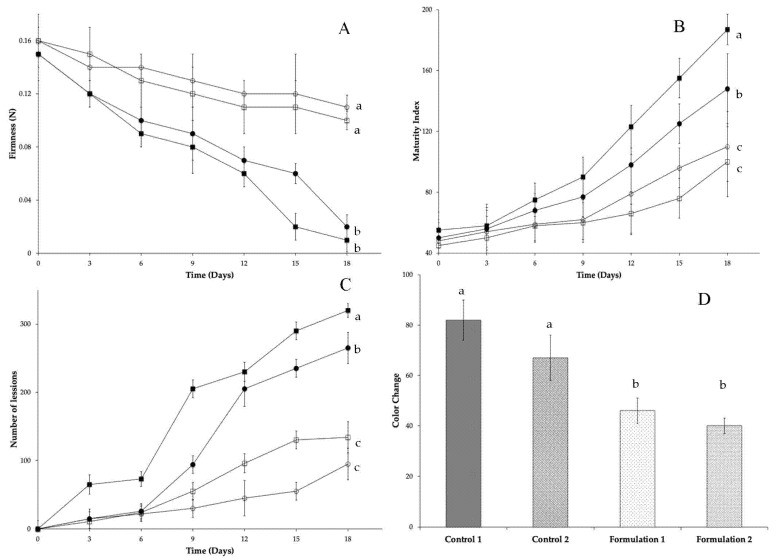
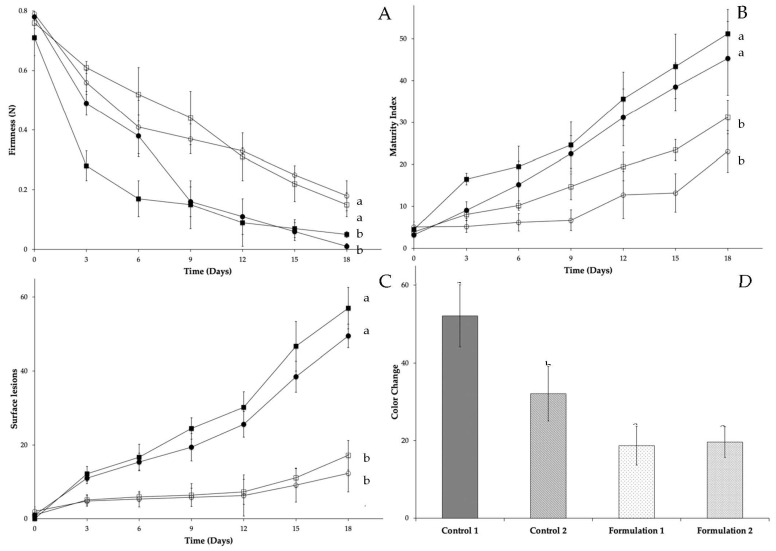
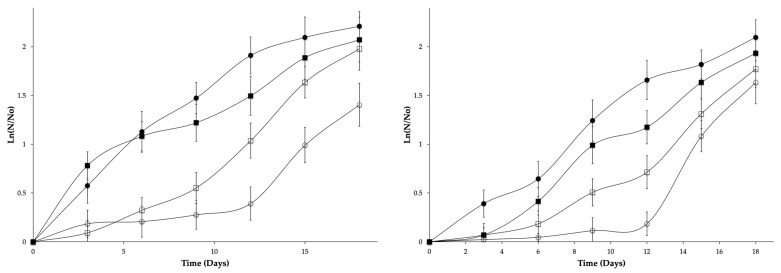
§ Starch Edible Films/Coatings Added with Carvacrol and Thymol: In Vitro and In Vivo Evaluation against Colletotrichum gloeosporioides > 3. Results and Discussion > 3.2. In Vivo Evaluation of Thymol and Carvacrol Added to Starch Edible Coatings against C. gloeosporioides Results of physicochemical analyses of mango and papaya treated with edible starch coatings added with carvacrol and thymol are presented in Figure 1 and Figure 2. Firmness (Figure 1A and Figure 2A) represents a key parameter that shows the maturation process in both climacteric fruits. During storage, a significant softening delay (p < 0.05) is presented in this parameter in both fruits coated with edible coatings added with carvacrol and thymol. Change in firmness is one of the critical indicators of fruit quality and is closely affected by ripening. Maringgal et al. [1] proposed two possible mechanisms of softening. The first one is due to a breakdown of polymeric carbohydrates that form cell walls; the second is related to water loss causing less cell turgor [45]. Active edible coatings can reduce the oxygen permeability and consequently the respiration rate, which is the inverse related way with the maturity index. Thus, an increase in the respiration rate and increase of maturity index is observed (Figure 1B and Figure 2B). During ripening, fruit acid content decreases due to their use in some metabolic pathways and increases total soluble solids [46,47]. In uncoated mango and papaya and starch coated fruits presented a significative (p > 0.05) maturity index that represents higher metabolic respiration. Starch coating posses a suitable water vapor resistance, which decreases the degree of dehydration. Sahraee et al. [48] mentioned that this characteristic might be due to their considerable number of hydrogen bonds along the film, which helps adjacent chains bind tightly to each other. This effect prevents ethylene production and a decrease in O2 and CO2 permeability. Moreover, at the end of the storage period, the color change is significative higher (p < 0.05) in uncoated fruits than coated ones (Figure 1D and Figure 2D). Although edible starch coatings did not change the fruit’s surface color (because of their transparent characteristic), L* values increased. For mango L* a* b* values change for green to yellow during storage (L* 62.99 ± 3.32 to 83.03 ± 4.32; a* −4.84 ± 1.03 to 10.07 ± 1.34; b* 6.85 ± 1.67 to 80.26 ± 3.45). In papaya from green to orange (L* 52.69 ± 4.57 to 64.94 ± 2.46; a* −20.21 ± 2.25 to 21.48 ± 2.11; b* 49.65 ± 4.23 to 56.01 ± 5.27). Md Nor et al. [30] specified that mango exhibits the tendency to browning disorder after harvest. High oxygen concentration can stimulate polyphenol oxidase (PPO) activity and produce a rapid browning reaction. Coated fruit reduces the available oxygen concentration retard PPO activity, and regulate the undesirable peel fruit browning. Some compounds, like thymol and carvacrol, can improve PPO inhibition. Moreover, climacteric fruits peel color changes due to a transformation of carotenoids from chloroplasts to chromoplasts [49]. Furthermore, Maringgal et al. [1] mentioned that edible coatings improve fruits’ appearance by maintaining the color and glossy surface. Our results show a moderate color change development in coated fruits during storage. This effect could be attributed to the lower respiration rate; caused by a delay in ethylene production by the modification of the fruit atmosphere. Yousuf et al. [50] quoted that color values viz L*, a*, b* and subsequently, the parameters derived (chroma and hue angle). Changes will occur upon storage, but the variation will depend upon the particular fruit into consideration. Edible coatings containing mixtures of carvacrol and thymol are suitable for delaying ripening because these natural compounds are continuously released over time on the fruit surface, delaying firmness and peel color changes on papaya and mango [51,52]. Finally, an indirect parameter that confirms fungal growth is the number of lesions detected on the surface of the fruit (Figure 1C and Figure 2C). The effect of carvacrol and thymol binary mixtures added on edible starch coatings on C. gloeosporioides growth on mango and papaya surfaces is shown in Figure 3. Although in vitro assays edible films demonstrated an antifungal effect, when they were applied as coatings, they maintained a fungistatic effect on C. gloeosporioides growth. Guimarães et al. [4] pointed out that fruit (species and even cultivar) and the environmental conditions may explain why results from in vivo experiments cannot often be anticipated by the in vitro activity. Similar findings were also reported by Pinto et al. [20] that found the different antifungal activity of thyme essential oil between in vitro and in vivo experiments. It can be observed with Gompertz parameters (Table 3) that, for both fruits, Formulation 2 is the one with a significant and high fungistatic effect (p < 0.05). This formulation increased the lag phase and reduced th maximum specific growth rate in both fruits. These differences between both analysis orders are due to time and storage conditions that allow a gradual loss of carvacrol and thymol, making it only a delay on fruit surface fungal growth. Nevertheless, the shelf life of both fruits stored at room temperature can be extended for at least double the time as those that are uncoated. Similar results were obtained with chitosan coatings added with mint essential oil on mango var. Atkins [51], and with a combination of diverse mint varieties, essential oils in papaya [10].
What the sources say
- Could not verifycites Pinto et al. [20] Pinto L. Cefola M. Bonifacio M.A. Cometa S. Bocchino C. Pace B. De Giglio E. Palumbo M. Sada A. Logrieco A.F. Effect of red thyme oil (Thymus vulgaris L.) vapours on fungal decay, quality parameters and shelf-life of oranges during cold storage Food Chem. 2021 336 127590 10.1016/j.foodchem.2020.127590 32763742 sourceExperimental — accuracy not yet measured
The indexed summary (no page given) reports that red thyme oil vapours reduced fungal decay in inoculated oranges. It gives no in vitro result or comparison with in vivo activity; searches for both terms and the claimed difference found no such passage in our copy. (LLM, conf=0.70)
plainstates an association- Asserted: passes — The authors put it forward as true.
- Checkable: passes — It can be checked against evidence.
- Load-bearing: passes — The paper’s conclusions depend on it.
- Based: passes — The paper gives a reason why it holds.
- Could not verify
A result the paper reports from its own data — it cites no other source for it, so there is none to check. The quote shows it is in the paper.
In the paper
“An additive effect was determined with 750/750 and 1125/375 mg/L mixtures of carvacrol and thymol, respectively.”
§ Starch Edible Films/Coatings Added with Carvacrol and Thymol: In Vitro and In Vivo Evaluation against Colletotrichum gloeosporioides > Abstract
plainstates a cause- Asserted: passes — The authors put it forward as true.
- Checkable: passes — It can be checked against evidence.
- Load-bearing: passes — The paper’s conclusions depend on it.
- Based: passes — The paper gives a reason why it holds.
A result the paper reports from its own data — it cites no other source for it, so there is none to check. The quote shows it is in the paper.
In the paper
“Coated fruits with selected mixtures of carvacrol and thymol presented a delay in firmness, maturity index and color change.”
§ Starch Edible Films/Coatings Added with Carvacrol and Thymol: In Vitro and In Vivo Evaluation against Colletotrichum gloeosporioides > Abstract
plainstates a cause- Asserted: passes — The authors put it forward as true.
- Checkable: passes — It can be checked against evidence.
- Load-bearing: passes — The paper’s conclusions depend on it.
- Based: passes — The paper gives a reason why it holds.
A result the paper reports from its own data — it cites no other source for it, so there is none to check. The quote shows it is in the paper.
In the paper
“For binary mixtures, there were three mixes with no interactive effect (750/1125, 1125/750 and 1125/1125 mg/L of carvacrol/thymol, respectively) and two with additive effect (750/750 and 1125/375 mg/L of carvacrol/thymol, respectively).”
§ Starch Edible Films/Coatings Added with Carvacrol and Thymol: In Vitro and In Vivo Evaluation against Colletotrichum gloeosporioides > 3. Results and Discussion > 3.1. In Vitro Evaluation of Thymol and Carvacrol Added to Starch Edible Films against C. gloeosporioides
plain- Asserted: passes — The authors put it forward as true.
- Checkable: passes — It can be checked against evidence.
- Load-bearing: unclear — It is unclear whether the paper’s conclusions depend on it.
- Based: passes — The paper gives a reason why it holds.
A result the paper reports from its own data — it cites no other source for it, so there is none to check. The quote shows it is in the paper.
In the paper
“These results were corroborated by the increase in the lag phase value and the reduction of the growth rate.”
§ Starch Edible Films/Coatings Added with Carvacrol and Thymol: In Vitro and In Vivo Evaluation against Colletotrichum gloeosporioides > Abstract
plainstates a cause- Asserted: passes — The authors put it forward as true.
- Checkable: passes — It can be checked against evidence.
- Load-bearing: passes — The paper’s conclusions depend on it.
- Based: passes — The paper gives a reason why it holds.
14 more claims
Create a free account to see all 36 claims and to verify the 2 references still open.
- It may state two separate claims as one. 12
- The quote only partly states this claim. 3
- Probably not a substantial claim. 3
Citations
Cites
(1971) · Soil Science Society of America Journal · doi:10.2136/sssaj1971.03615995003500050003x · Cited by 6,358
Food Packaging—Roles, Materials, and Environmental Issues
Marsh, K., & Bugusu, B. (2007) · Journal of Food Science · doi:10.1111/j.1750-3841.2007.00301.x · Cited by 1,919
Acevedo-Fani, A., Salvia-Trujillo, L., Rojas-Graü, M. A., & Martín-Belloso, O. (2015) · Food Hydrocolloids · doi:10.1016/j.foodhyd.2015.01.032 · Cited by 651 · cited 1×
“[42] reported that thymol and carvacrol at proper pH values could change membrane permeability due to molecules binding to proteins by hydrophobic interactions.”
BackgroundStarch-based films: Major factors affecting their properties
Thakur, R., Pristijono, P., Scarlett, C. J., Bowyer, M., Singh, S. P., & Vuong, Q. V. (2019) · International Journal of Biological Macromolecules · doi:10.1016/j.ijbiomac.2019.03.190 · Cited by 573 · cited 1×
“The efficiency of fruit coating materials primarily depends on the coatings ingredients’ nature and their relative optimal concentration [27].”
BackgroundWater vapor permeability of edible starch based films
Bertuzzi, M. A., Castro Vidaurre, E. F., Armada, M., & Gottifredi, J. C. (2007) · Journal of Food Engineering · doi:10.1016/j.jfoodeng.2006.07.016 · Cited by 508
Prakash, B., Kedia, A., Mishra, P. K., & Dubey, N. K. (2015) · Food Control · doi:10.1016/j.foodcont.2014.07.023 · Cited by 473 · cited 1×
“Moreover, they have been registered by the European Commission for use as a food additive in view of its non-toxic effect on the mammalian system and preservative potential [17].”
BackgroundLiolios, C. C., Gortzi, O., Lalas, S., Tsaknis, J., & Chinou, I. (2009) · Food Chemistry · doi:10.1016/j.foodchem.2008.05.060 · Cited by 425 · cited 1×
“[40] mentioned that for an adequate operation of edible films added with antimicrobials, the optimal pH should be considered.”
BackgroundRamos, M., Jiménez, A., Peltzer, M., & Garrigós, M. C. (2012) · Journal of Food Engineering · doi:10.1016/j.jfoodeng.2011.10.031 · Cited by 403 · cited 2×
“An inconvenience of EO direct application on food surfaces by dipping, powdering or spraying; is that antimicrobial compounds can be neutralized, evaporated or rapidly diffused from the surface into the product [18,19].”
BackgroundPonce, A. G., Roura, S. I., del Valle, C. E., & Moreira, M. R. (2008) · Postharvest Biology and Technology · doi:10.1016/j.postharvbio.2008.02.013 · Cited by 360
Recent advance in edible coating and its effect on fresh/fresh-cut fruits quality
Maringgal, B., Hashim, N., Mohamed Amin Tawakkal, I. S., & Muda Mohamed, M. T. (2020) · Trends in Food Science & Technology · doi:10.1016/j.tifs.2019.12.024 · Cited by 358 · cited 3×
“[1] mentioned that edible coatings improve fruits’ appearance by maintaining the color and glossy surface.”
BackgroundInfluentialAzarakhsh, N., Osman, A., Ghazali, H. M., Tan, C. P., & Mohd Adzahan, N. (2014) · Postharvest Biology and Technology · doi:10.1016/j.postharvbio.2013.09.004 · Cited by 344 · cited 1×
“Edible films and coatings are thin layers of material (proteins, polysaccharides and/or lipids) that offers the potential to provide: a selective barrier to moisture, carbon dioxide and oxygen, improve mechanical and textural properties, prevent flavorlessness, and act as a carrier for different food additives to avoi…”
BackgroundArroyo, B. J., Bezerra, A. C., Oliveira, L. L., Arroyo, S. J., Melo, E. A. D., & Santos, A. M. P. (2020) · Food Chemistry · doi:10.1016/j.foodchem.2019.125566 · Cited by 261 · cited 2×
“It is essential that technologies not only ensure food quality or increase shelf life, but in addition, receive a reduced environmental impact [9,10].”
BackgroundNawab, A., Alam, F., & Hasnain, A. (2017) · International Journal of Biological Macromolecules · doi:10.1016/j.ijbiomac.2017.05.057 · Cited by 240 · cited 1×
“Starch is cheap, commercially available, transparent, colorless and tasteless [25,28].”
BackgroundYousuf, B., Wu, S., & Siddiqui, M. W. (2021) · Trends in Food Science & Technology · doi:10.1016/j.tifs.2021.01.016 · Cited by 216 · cited 1×
“[50] quoted that color values viz L*, a*, b* and subsequently, the parameters derived (chroma and hue angle).”
BackgroundProtection of foods against oxidative deterioration using edible films and coatings: A review
Sahraee, S., Milani, J. M., Regenstein, J. M., & Kafil, H. S. (2019) · Food Bioscience · doi:10.1016/j.fbio.2019.100451 · Cited by 215 · cited 1×
“[48] mentioned that this characteristic might be due to their considerable number of hydrogen bonds along the film, which helps adjacent chains bind tightly to each other.”
BackgroundTrends and advances in edible biopolymer coating for tropical fruit: A review
Md Nor, S., & Ding, P. (2020) · Food Research International · doi:10.1016/j.foodres.2020.109208 · Cited by 212 · cited 2×
“[30] specified that mango exhibits the tendency to browning disorder after harvest.”
BackgroundCosme Silva, G. M., Silva, W. B., Medeiros, D. B., Salvador, A. R., Cordeiro, M. H. M., da Silva, N. M., Santana, D. B., & Mizobutsi, G. P. (2017) · Food Chemistry · doi:10.1016/j.foodchem.2017.05.123 · Cited by 211
du Plooy, W., Regnier, T., & Combrinck, S. (2009) · Postharvest Biology and Technology · doi:10.1016/j.postharvbio.2009.04.005 · Cited by 201 · cited 1×
“The environment is associated with excessive chemical residues and trends of resistance against fungicides, thereby shortening the lifespan of protective products [4,7,8].”
BackgroundEvidence for synergistic activity of plant-derived essential oils against fungal pathogens of food
Hossain, F., Follett, P., Dang Vu, K., Harich, M., Salmieri, S., & Lacroix, M. (2016) · Food Microbiology · doi:10.1016/j.fm.2015.08.006 · Cited by 196 · cited 2×
“For instance, thymol showed antifungal activity in the vapor phase [20], with synergistic effects with other terpenes against different fungal genera [21].”
BackgroundMantilla, N., Castell-Perez, M. E., Gomes, C., & Moreira, R. G. (2013) · LWT - Food Science and Technology · doi:10.1016/j.lwt.2012.10.010 · Cited by 166 · cited 1×
“Moreover, some researchers demonstrated the potential of edible antimicrobial coatings in fresh fruits to increase their shelf life [24].”
BackgroundEdible films and coatings for shelf life extension of mango: a review
Tavassoli-Kafrani, E., Gamage, M., Dumée, L. F., Kong, L., & Zhao, S. (2020) · Critical Reviews in Food Science and Nutrition · doi:10.1080/10408398.2020.1853038 · Cited by 163 · cited 2×
“A preponderant factor for developing this technology is due to its nontoxicity, biocompatibility, biodegradability and reproducibility properties [23,25,26].”
BackgroundSynergistic effects of some essential oils against fungal spoilage on pear fruit
Nikkhah, M., Hashemi, M., Habibi Najafi, M. B., & Farhoosh, R. (2017) · International Journal of Food Microbiology · doi:10.1016/j.ijfoodmicro.2017.06.021 · Cited by 154 · cited 1×
“Contamination by some filamentous fungi represents the primary cause of rapid spoilage of fresh fruits, which affects their quality and decreases shelf life [2,3].”
BackgroundChitosan Polymer as Bioactive Coating and Film against Aspergillus niger Contamination
Sebti, I., Martial‐Gros, A., Carnet‐Pantiez, A., Grelier, S., & Coma, V. (2005) · Journal of Food Science · doi:10.1111/j.1365-2621.2005.tb07098.x · Cited by 149 · cited 2×
“In this case, amylose polymer and pH affect the release of carvacrol and thymol due to many factors like electrostatic interactions, osmosis, structural changes, and environmental conditions [19,33].”
BackgroundMethodCarrageenan as an alternative coating for papaya (Carica papaya L. cv. Eksotika)
Hamzah, H. M., Osman, A., Tan, C. P., & Ghazali, F. M. (2012) · Postharvest Biology and Technology · doi:10.1016/j.postharvbio.2012.08.012 · Cited by 141
Use of herbs and spices for food preservation: advantages and limitations
Martínez-Graciá, C., González-Bermúdez, C. A., Cabellero-Valcárcel, A. M., Santaella-Pascual, M., & Frontela-Saseta, C. (2015) · Current Opinion in Food Science · doi:10.1016/j.cofs.2015.11.011 · Cited by 136 · cited 1×
“[41] reported that pH dissociation values of carvacrol and thymol are acidic (4.”
BackgroundApplication of Aloe vera coating delays ripening and extend the shelf life of papaya fruit
Mendy, T. K., Misran, A. B., Mahmud, T. M. M., & Ismail, S. I. (2018) · Scientia Horticulturae · doi:10.1016/j.scienta.2018.11.054 · Cited by 126
Castro, M. A. A., Ayala-Zavala, J. F., Castellanos, L., Hernández-Ochoa, L., Peydecastaing, J., & Durrieu, V. (2017) · Food Packaging and Shelf Life · doi:10.1016/j.fpsl.2017.09.002 · Cited by 116
Post-harvest development of anthracnose in pepper (Capsicum spp): Etiology and management strategies
Ali, A., Bordoh, P. K., Singh, A. K., Siddiqui, Y., & Droby, S. (2016) · Crop Protection · doi:10.1016/j.cropro.2016.07.026 · Cited by 115 · cited 1×
“Currently, this genus was recognized as the most prevalent fungal pathogens causing diseases in diverse tropical and subtropical fruits [5,6].”
BackgroundAnalysis of the changes in quality in mandarin fruit, produced by deficit irrigation treatments
Navarro, J. M., Pérez-Pérez, J. G., Romero, P., et al. (2009) · Food Chemistry · doi:10.1016/j.foodchem.2009.09.048 · Cited by 114 · cited 1×
“Moreover, climacteric fruits peel color changes due to a transformation of carotenoids from chloroplasts to chromoplasts [49].”
BackgroundSelf-citationAzevedo, A. N., Feitosa, P. R. B., Cruz, E. M. O., Blank, A. F., Alves, P. B., Nunes, M. L., & Santana, L. C. L. D. A. (2014) · Food Control · doi:10.1016/j.foodcont.2014.02.033 · Cited by 110 · cited 1×
“Thymol is structurally similar to carvacrol, though it has the hydroxyl group at a different location on the phenolic ring [16].”
Backgroundde Oliveira, K. Á. R., Berger, L. R. R., de Araújo, S. A., Câmara, M. P. S., & de Souza, E. L. (2017) · Food Microbiology · doi:10.1016/j.fm.2017.04.012 · Cited by 109
Lima Oliveira, P. D., de Oliveira, K. Á. R., Vieira, W. A. D. S., Câmara, M. P. S., & de Souza, E. L. (2018) · International Journal of Food Microbiology · doi:10.1016/j.ijfoodmicro.2017.11.018 · Cited by 103
Rhubarb extract incorporated into an alginate-based edible coating for peach preservation
Li, X., Du, X., Liu, Y., Tong, L., Wang, Q., & Li, J. (2019) · Scientia Horticulturae · doi:10.1016/j.scienta.2019.108685 · Cited by 103 · cited 2×
“A preponderant factor for developing this technology is due to its nontoxicity, biocompatibility, biodegradability and reproducibility properties [23,25,26].”
BackgroundNarsaiah, K., Wilson, R. A., Gokul, K., Mandge, H. M., Jha, S. N., Bhadwal, S., Anurag, R. K., Malik, R. K., & Vij, S. (2014) · Postharvest Biology and Technology · doi:10.1016/j.postharvbio.2014.10.003 · Cited by 98
Aspergillus flavus growth response to cinnamon extract and sodium benzoate mixtures
López‐Malo, A., Barreto-Valdivieso, J., Palou, E., & Martin-Gonzalez, M. F. S. (2006) · Food Control · doi:10.1016/j.foodcont.2006.04.010 · Cited by 91 · cited 2×
“With MIC values for thymol and carvacrol, a checkerboard array [35] was used to evaluate the effects of binary mixtures on C.”
BackgroundMethoddos Passos Braga, S., Lundgren, G. A., Macedo, S. A., Tavares, J. F., dos Santos Vieira, W. A., Câmara, M. P. S., & de Souza, E. L. (2019) · International Journal of Biological Macromolecules · doi:10.1016/j.ijbiomac.2019.08.010 · Cited by 84
Ávila-Sosa, R., Hernández-Zamoran, E., López-Mendoza, I., Palou, E., Jiménez‐Munguía, M. T., Nevárez‐Moorillón, G. V., & López‐Malo, A. (2010) · Journal of Food Science · doi:10.1111/j.1750-3841.2010.01524.x · Cited by 81 · cited 1×
“gloeosporioides growth for 7 days [13].”
Self-citationA review on the management of postharvest anthracnose in dragon fruits caused by Colletotrichum spp.
Bordoh, P. K., Ali, A., Dickinson, M., Siddiqui, Y., & Romanazzi, G. (2020) · Crop Protection · doi:10.1016/j.cropro.2019.105067 · Cited by 79 · cited 2×
“Currently, this genus was recognized as the most prevalent fungal pathogens causing diseases in diverse tropical and subtropical fruits [5,6].”
BackgroundJahani, M., Pira, M., & Aminifard, M. H. (2020) · Scientia Horticulturae · doi:10.1016/j.scienta.2020.109188 · Cited by 77 · cited 2×
“[11] mentioned that phenolic compounds (like carvacrol and thymol) could affect the normal physiology activity, probably through inhibiting glycolysis, which in turn influence cell energy metabolism, breaking original balance.”
BackgroundPunia, S., Sandhu, K. S., Dhull, S. B., & Kaur, M. (2019) · International Journal of Biological Macromolecules · doi:10.1016/j.ijbiomac.2019.04.089 · Cited by 67 · cited 1×
“It allows thymol and carvacrol dispersion increasing the particle distribution among the edible films [29,30].”
BackgroundJongsri, P., Rojsitthisak, P., Wangsomboondee, T., & Seraypheap, K. (2017) · Scientia Horticulturae · doi:10.1016/j.scienta.2017.06.011 · Cited by 66 · cited 1×
“Edible coatings containing mixtures of carvacrol and thymol are suitable for delaying ripening because these natural compounds are continuously released over time on the fruit surface, delaying firmness and peel color changes on papaya and mango [51,52].”
BackgroundPinto, L., Cefola, M., Bonifacio, M. A., Cometa, S., Bocchino, C., Pace, B., De Giglio, E., Palumbo, M., Sada, A., Logrieco, A. F., et al. (2021) · Food Chemistry · doi:10.1016/j.foodchem.2020.127590 · Cited by 62 · cited 4×
“For instance, thymol showed antifungal activity in the vapor phase [20], with synergistic effects with other terpenes against different fungal genera [21].”
BackgroundInfluentialGuimarães, J. E. R., de la Fuente, B., Pérez-Gago, M. B., Andradas, C., Carbó, R., Mattiuz, B.-H., & Palou, L. (2019) · International Journal of Food Microbiology · doi:10.1016/j.ijfoodmicro.2019.04.008 · Cited by 52
Edible coatings in post-harvest papaya: impact on physical–chemical and sensory characteristics
Batista, D. D. V. S., Reis, R. C., Almeida, J. M., Rezende, B., Bragança, C. A. D., & da Silva, F. (2019) · Journal of Food Science and Technology · doi:10.1007/s13197-019-04057-1 · Cited by 50 · cited 1×
“A preponderant factor for developing this technology is due to its nontoxicity, biocompatibility, biodegradability and reproducibility properties [23,25,26].”
BackgroundMartínez-Ortiz, M. Á., Palma‐Rodríguez, H. M., Montalvo‐González, E., Sáyago‐Ayerdi, S. G., Utrilla‐Coello, R. G., & Vargas‐Torres, A. (2019) · Scientia Horticulturae · doi:10.1016/j.scienta.2019.108604 · Cited by 47
Ochoa‐Velasco, C. E., Navarro-Cruz, A. R., Verá-López, O., Palou, E., & Ávila-Sosa, R. (2017) · Revista Argentina de Microbiología · doi:10.1016/j.ram.2016.11.010 · Cited by 39
Self-citationPortillo‐Ruiz, M. C., Ávila-Sosa, R., Viramontes-Ramos, S., Muñoz, J., & Nevárez‐Moorillón, G. V. (2012) · Journal of Food Science · doi:10.1111/j.1750-3841.2012.02821.x · Cited by 32
Self-citationPeraza-Sánchez, S. R., Chan-Che, E. O., & Ruiz-Sánchez, E. (2005) · Journal of Agricultural and Food Chemistry · doi:10.1021/jf040422i · Cited by 29 · cited 1×
“Spores were transferred to the center of another Petri dish containing PDA medium, which was incubated in the dark for 8 days at 28 ◦C [32].”
MethodGROWTH OF EUROTIUM CHEVALIERI IN MILK JAM: INFLUENCE OF PH, POTASSIUM SORBATE AND WATER ACTIVITY
CHAR, C. D., GUERRERO, S. N., & ALZAMORA, S. M. (2007) · Journal of Food Safety · doi:10.1111/j.1745-4565.2007.00055.x · Cited by 23 · cited 1×
“gloeosporioides Growth on In Vivo Evaluation Growth data of fungal analyses from control and coated samples stored at 20 ◦C for 18 days were modeled using the modified Gompertz equation [38]:”
MethodNavarro-Cruz, A. R., Ochoa‐Velasco, C. E., Caballero-Alvarez, F. J., Lazcano-Hernández, M., Verá-López, O., López‐Malo, A., & Ávila-Sosa, R. (2018) · Journal of Food Quality · doi:10.1155/2018/1659394 · Cited by 13
Self-citation
Research works printed but not linked: 1
- Cao J.K. Jiang W.B. Zhao Y.M. Fruits and Vegetables Postharvest Physiological and Biochemical Experiment Instruction China Light Industry Press Beijing, China 2007 54 156
Cited by
Rathod, N. B., Kulawik, P., Ozogul, F., Regenstein, J. M., & Ozogul, Y. (2021) · Trends in Food Science & Technology · doi:10.1016/j.tifs.2021.08.023 · Cited by 244
A Review on Reinforcements and Additives in Starch-Based Composites for Food Packaging
Muñoz-Gimena, P. F., Oliver-Cuenca, V., Peponi, L., & López, D. (2023) · Polymers · doi:10.3390/polym15132972 · Cited by 166
“Edible starch films were obtained using carvacrol and thymol as a method of reducing the incidence of anthracnose symptoms in mango and papaya, enhancing fruit quality as long as possible by an additive effect of both molecules [304].”
MethodAntimicrobial Compounds in Food Packaging
Duda‐Chodak, A., Tarko, T., & Petka, K. (2023) · International Journal of Molecular Sciences · doi:10.3390/ijms24032457 · Cited by 155
Bizymis, A.-P., & Tzia, C. (2021) · Critical Reviews in Food Science and Nutrition · doi:10.1080/10408398.2021.1934652 · Cited by 131
“(Fraz~ao, Blank, and Santana 2017; Oh et al. 2017).”
BackgroundMartins, V. F. R., Pintado, M., Morais, R. M. S. C., & Morais, A. M. M. B. (2024) · Foods · doi:10.3390/foods13020318 · Cited by 115
Metadata
- Authors
- Ochoa-Velasco, C. E., Pérez-Pérez, J. C., Varillas-Torres, J. M., Navarro-Cruz, A. R., Hernández-Carranza, P., Munguía-Pérez, R., Cid-Pérez, T. S., & Avila-Sosa, R.
- Affiliations
- Facultad de Ciencias Químicas, Benemérita Universidad Autónoma de Puebla, Puebla 72420, Mexico
- Benemérita Universidad Autónoma de Puebla (MX)
- Venue
- Foods
- Publisher
- MDPI AG
- Published
- 2021-01-16
- Volume
- 10
- Issue
- 1
- Pages
- 175
- ISSN
- 2304-8158 (ISSN-L)
- PMC
- PMC7830592
- OpenAlex
- W3124949254
- Cited by
- 61
- References
- 51
- Citations by year
- 2026: 5 · 2025: 12 · 2024: 15 · 2023: 14 · 2022: 9 · 2021: 6
- FWCI
- 6.61
- Type
- journal article
- Language
- en
- Open access
- gold
- doi.org
- Licence
- Locations
- Foods (publishedVersion, cc-by)
- PubMed Central (publishedVersion, cc-by)
- PubMed (publishedVersion)
- DOAJ (DOAJ: Directory of Open Access Journals) (submittedVersion, cc-by-sa)
- Funders
- Benemérita Universidad Autónoma de Puebla
- Topics
- Life Sciences › Agricultural and Biological Sciences › Plant Science › Postharvest Quality and Shelf Life Management
- Physical Sciences › Materials Science › Biomaterials › Nanocomposite Films for Food Packaging
- Life Sciences › Agricultural and Biological Sciences › Food Science › Essential Oils and Antimicrobial Activity
- Keywords
- edible coatings, carvacrol, thymol, Colletotrichum gloeosporioides, anthracnose, mango, papaya, minimum inhibitory concentration, fungistatic activity, fruit firmness, color change, fruit lesions, essential oils
About these checks
Registry, retraction, Cites and statistics results are computed, not judged, with one exception: a printed reference that no index lists is read once by a model before it counts as a citation error. Claims are extracted by a model and kept only when their quote appears verbatim in the text; each cited source is then checked, with a model’s help, for whether it says what the claim relies on. Those verdicts can be wrong — read the claim’s quote and the cited source before relying on one.
The claim verdicts this report counts are experimental: their accuracy is not yet measured.
A language model drew the claims from the paper on 2026-10-10, under version 3 of the claim definition (model deepseek-v4.1-flash, prompt extract-v3).
A second model labelled each claim on 2026-10-10 (model jev-1.13-20260917, definition revision gold-guideline-v0.2).
Cited sources are checked with a language model’s help (gpt-6-sol).
Statistics and arithmetic are recomputed, not judged.
Confidence bands are shown only for fields calibrated on our annotated test set. None is calibrated yet, so no band is shown.
What counts as a claim ›How we measure confidence ›How we check this ›
Are you an author, or do you see a problem with this page? Request a review
Data sources
Bibliographic data: Semantic Scholar, OpenAlex, Crossref.
Contains information from the Semantic Scholar Academic Graph Datasets, made available under the ODC Attribution License (ODC-BY 1.0).
Semantic Scholar’s data is described in: Kinney, R., et al. (2023). The Semantic Scholar Open Data Platform. arXiv:2301.10140.
