

The DOI matches its Crossref record; 163 of the 166 references it cites were found in a registry or an index.
Bioactive Compounds and Biological Functions of Garlic (Allium sativum L.)
Open accessAbstract
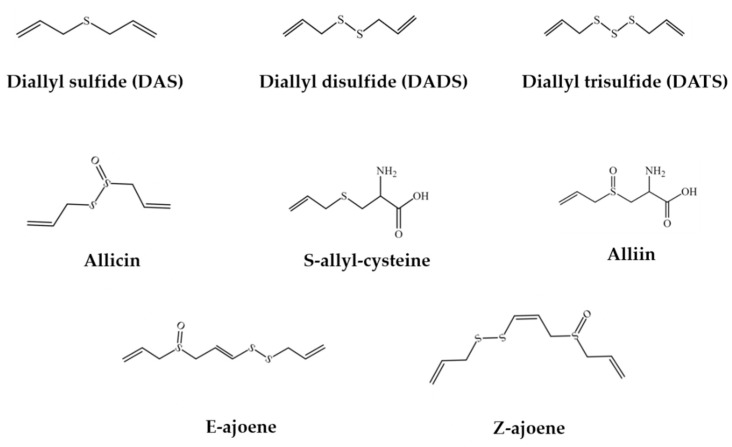
Garlic (Allium sativum L.) is a widely consumed spice in the world. Garlic contains diverse bioactive compounds, such as allicin, alliin, diallyl sulfide, diallyl disulfide, diallyl trisulfide, ajoene, and S-allyl-cysteine. Substantial studies have shown that garlic and its bioactive constituents exhibit antioxidant, anti-inflammatory, antibacterial, antifungal, immunomodulatory, cardiovascular protective, anticancer, hepatoprotective, digestive system protective, anti-diabetic, anti-obesity, neuroprotective, and renal protective properties. In this review, the main bioactive compounds and important biological functions of garlic are summarized, highlighting and discussing the relevant mechanisms of actions. Overall, garlic is an excellent natural source of bioactive sulfur-containing compounds and has promising applications in the development of functional foods or nutraceuticals for the prevention and management of certain diseases.
Overview
The claims and statistics of this paper haven’t been checked yet.
Run the check — free, no account needed. It reads the open-access text and checks the sources it cites.
Integrity signals
Registry
Cites
Statistics
Figures
Verification
Claims the paper makes
The claims and statistics of this paper haven’t been checked yet.
Run the check — free, no account needed. It reads the open-access text and checks the sources it cites.
Claims other papers make about this one
Each is checked against this paper’s own text: does it say what the citing paper says it does?
In the citing paper
“Saponins extracted from garlic were reported to scavenge intracellular ROS and protect mouse-derived C2C12 myoblasts towards growth inhibition and H2O2-induced DNA damage [68].”
From Chemical Constituents and Pharmacological Activities of Garlic (Allium sativum L.): A Review (2020) · cites this paper as [68]
In the citing paper
“Shang et al. [68] reported that the anticancer mechanisms of garlic extracts were attributed to the inhibition of cell growth and proliferation, regulation of carcinogen metabolism, stimulation of apoptosis, prevention of angiogenesis, invasion, and migration and thus reducing the anticancer agent’s negative effects.”
From Chemical Constituents and Pharmacological Activities of Garlic (Allium sativum L.): A Review (2020) · cites this paper as [68]
In the citing paper
“Moreover, Z-ajoene has shown anti-proliferative activities against different types of cancers and it inhibits the growth of human breast cancer cells and glioblastoma multiforme cancer stem cells (GBM CSC) [68].”
From Chemical Constituents and Pharmacological Activities of Garlic (Allium sativum L.): A Review (2020) · cites this paper as [68]
Self-check
Percentages, sums and reported differences re-computed from the paper’s own numbers.
The self-check needs the paper’s full text.
Citations
Cites
1 retracted
Miltonprabu, S., Sumedha, N. C., & Senthilraja, P. (2017) · International Immunopharmacology · doi:10.1016/j.intimp.2017.06.011 · Cited by 46
RetractedBray, F., Ferlay, J., Soerjomataram, I., Siegel, R. L., Torre, L. A., & Jemal, A. (2018) · CA: A Cancer Journal for Clinicians · doi:10.3322/caac.21492 · Cited by 84,109
Hallmarks of Cancer: The Next Generation
Hanahan, D., & Weinberg, R. A. (2011) · Cell · doi:10.1016/j.cell.2011.02.013 · Cited by 66,590
Heart disease and stroke statistics-2018 update: a report from the american heart association
Benjamin, E. J., Virani, S. S., Callaway, C. W., Chamberlain, A. M., Chang, A. R., Cheng, S., Chiuve, S. E., Cushman, M., Delling, F. N., Deo, R., et al. (2018) · Circulation · doi:10.1161/cir.0000000000000558 · Cited by 7,146
Natural Polyphenols for Prevention and Treatment of Cancer
Zhou, Y., Zheng, J., Li, Y., Xu, D.-P., Li, S., Chen, Y., & Li, H. (2016) · Nutrients · doi:10.3390/nu8080515 · Cited by 784
Self-citationAntioxidant capacities and total phenolic contents of 62 fruits
Li, F., Xu, B., Xu, X., Gan, R., Zhang, Y., Xia, E.-Q., & Li, H. (2011) · Food Chemistry · doi:10.1016/j.foodchem.2011.04.079 · Cited by 769
Self-citationKey Characteristics of Carcinogens as a Basis for Organizing Data on Mechanisms of Carcinogenesis
Smith, M. T., Guyton, K., Gibbons, C., Fritz, J. M., Portier, C., Rusyn, I., DeMarini, D., Caldwell, J., Kavlock, R., Lambert, P., et al. (2015) · Environmental Health Perspectives · doi:10.1289/ehp.1509912 · Cited by 599
Garlic: a review of potential therapeutic effects.
Bayan, L., Koulivand, P. H., & Gorji, A. (2014) · Europe PMC (PubMed Central) · Cited by 559
Antibacterial and Antifungal Activities of Spices
Liu, Q., Meng, X., Li, Y., Zhao, C., Tang, G., & Li, H. (2017) · International Journal of Molecular Sciences · doi:10.3390/ijms18061283 · Cited by 458
Self-citationGan, R., Li, H., Sui, Z., & Corke, H. (2016) · Critical Reviews in Food Science and Nutrition · doi:10.1080/10408398.2016.1231168 · Cited by 441
Self-citation
Research works printed but not linked: 4
- Han, 2011, Antihypertensive activities of processed garlic on spontaneously hypertensive rats and hypertensive humans, Bot. Stud., 52, 277
- Kaur, 2015, A histometric study to assess preventive action of ascorbic acid and garlic on cadmium induced hepatotoxicity in albino mice, Int. J. Pharm. Phytopharmacol. Res., 5, 398
- Siddique, 2015, Effects of garlic (Allium sativum) on the weights of liver in albino rats, Pak. J. Med. Health Sci., 9, 1051
- 2016, Protective effect of garlic against diabetic retinopathy in adult albino rats, Res. J. Pharm. Biol. Chem. Sci., 7, 2748
Cited by
Sorted by citations
Items 701–800 of 893
Andrade, M. T. V. S., Monteiro, S. M., da Costa, V. M., de Assis, D. M. S., & Tavares-Martins, A. C. C. (2022) · Research Square · doi:10.21203/rs.3.rs-2167604/v1 · Cited by 1
Yunus, F. T., Suwondo, A., & Martini, M. (2020) · Care Jurnal Ilmiah Ilmu Kesehatan · doi:10.33366/jc.v8i2.1693
The role of nutrition in respiratory disease and COVID-19 management
Pereko, K. K. A., Mensah, E. D., Acquaye, V. A., Nsiah-Asamoah, C. N. A., Chadaré, F. J., Intiful, F. D., Setorglo, J., Enyan, N. I. E., & Dai-Kosi, A. D. (2021) · Elsevier eBooks · doi:10.1016/b978-0-12-824289-6.00011-8
INTERNATIONAL CONFERENCE ON STANDARDIZATION OF RADIATION SOURCES.
Sul'kin, A. G., & Chervatenko, G. A. (1968) · OSTI OAI (U.S. Department of Energy Office of Scientific and Technical Information)
The effects of NX-AS-401 on methicillin resistant Staphylococcus aureus
Butterick, P. (2021) · Cronfa (Swansea University) · doi:10.23889/suthesis.59037
Lima, S. M. R. R., Gamberini, M. T., Rodrigues, D. S., da Silva, P. I., & Torres, K. A. D. M. (2022) · Research Square · doi:10.21203/rs.3.rs-1149854/v1
Pakakaew, P., Phimolsiripol, Y., Taesuwan, S., Kumphune, S., Klangpetch, W., & Utama‐ang, N. (2022) · Research Square · doi:10.21203/rs.3.rs-1192931/v1
Data Analysis of COVID-19 THE GREAT EPIDEMIC OF THE YEAR 2020 (Preprint)Preprint
Singla, S. K. (2020) · doi:10.2196/preprints.20315
Svakodnevna prehrana u Dalmatinskoj zagori pedesetih godina 20. stoljeća
Bosanac, V., & Nanjara, L. (2021) · Etnološka istraživanja · doi:10.32458/ei.26.5
Daily Nutrition in the Dalmatian Hinterland in the 1950s
Bosanac, V., & Nanjara, L. (2021) · Etnološka istraživanja · doi:10.32458/ei.26.10
Khalil, R. M., & El‐Tanbouly, G. S. (2022) · Research Square · doi:10.21203/rs.3.rs-1251671/v1
Synergistic Effects of Phytogenic Compounds on Early Growth Parameters of Native Chickens
Taer, A., & Taer, E. C. (2022) · Journal of World s Poultry Research · doi:10.36380/jwpr.2022.8
Chandio, S., Memon, S. H., Maria, Mangi, N. Z., Ujjan, I. U., & Raza, A. (2021) · SINDH UNIVERSITY RESEARCH JOURNAL -SCIENCE SERIES · doi:10.26692/surj.v53i04.4218
Curing of liver cancer: an update on the efficacy of bioactive compounds
Moola, A. K., Renuka, S. G., Seenivasan, H. K., Manickam, N., Peela, S., & Kumari, B. D. R. (2022) · Elsevier eBooks · doi:10.1016/b978-0-323-99283-1.00009-4
The Activity of Plant-Derived Ren’s Oligopeptides-1 against the Pseudorabies Virus
Xiao, D., He, Y., Qin, X., Cai, L., Wang, H., Reheman, A., & Xiao, K. (2022) · Animals · doi:10.3390/ani12111341
Lima, S. M. R. R., Gamberini, M. T., Rodrigues, D. S., da Silva, P. I., & Torres, K. A. D. M. (2022) · Research Square · doi:10.21203/rs.3.rs-1149854/v2
Role of Functional Food Additives in Regulating the Immune Response to COVID-19
Verma, R., & Bagel, M. P. (2022) · Current Biotechnology · doi:10.2174/2211550111666220613143422
Machado, A. R. T. (2022) · Digital Library of Theses and Dissertations (Universidade de São Paulo) · doi:10.11606/t.60.2022.tde-01072022-091334
Sonitha, S., S, M. K., P, S. R., & Shree Devi, M. S. (2022) · Asian Journal of Pharmaceutical and Clinical Research · doi:10.22159/ajpcr.2022.v15i7.44825
Kendenan, M., Ali, Z., Kurniati, N., & Saleh, M. I. (2021) · SRIWIJAYA JOURNAL OF MEDICINE · doi:10.32539/sjm.v4i2.119
Hiệp, N. M., & Ngọc, T. T. (2022) · TNU Journal of Science and Technology · doi:10.34238/tnu-jst.5446
Excessive Consumption of Garlic as a Nutraceutical may Lead to Transient Coagulopathy-First report
Bansal, P., Bansal, N. R., & Khillan, R. (2022) · Journal of Biomedical and Pharmaceutical Research · doi:10.32553/jbpr.v11i3.911
Khadka, D., & Pandey, K. (2022) · Fungal biology · doi:10.1007/978-3-031-04805-0_17
Plant bioactives in immune modulation and their role in antiaging
Aydin, Y., Dikbasan, Y. U., & Yılmaz, B. O. (2022) · Elsevier eBooks · doi:10.1016/b978-0-323-90581-7.00010-4
Changes in the antioxidant activity and metabolite analysis of black elephant garlicPreprint
Nam, S.-H., Han, Y., Sim, K.-H., Yang, S., & Kim, M. (2022) · Research Square · doi:10.21203/rs.3.rs-2221036/v1
ATIVOS COSMÉTICOS USADOS PARA PREVENIR E CONTROLAR O MELASMA DURANTE O PERÍODO GESTACIONAL
Ricardo, S. R. D. S., do Couto, K. K. B., & Queiroz, F. J. G. (2022) · Brazilian Journals Editora eBooks · doi:10.35587/brj.ed.0001902
AÇÃO PROFILÁTICA DO KEFIR EM DOENÇAS NEURODEGENERATIVAS
Coutinho, J. V. D. S., Chanca, N. L., Lima, I. P., Falsoni, R. M. P., & Louzada, G. E. (2022) · Brazilian Journals Editora eBooks · doi:10.35587/brj.ed.0001898
NUTRINDO O SABER: EDUCAÇÃO POPULAR E AMBIENTAL COM RECORTE EM SEGURANÇA ALIMENTAR E NUTRICIONAL
de Araújo, I. O., & França, S. L. G. (2022) · Brazilian Journals Editora eBooks · doi:10.35587/brj.ed.0001894
Zirpoli, B. B. P., Sena, D. C., Neto, J. B. G. B., de Andrade, M. S. B., Pontes, P. A. R. D. M., & da Costa, E. G. (2022) · Brazilian Journals Editora eBooks · doi:10.35587/brj.ed.0001890
Dutra, M. E. A., Alves, R. F., dos Santos, T. A., Chaves, L. C., & Silva, R. P. (2022) · Research Society and Development · doi:10.33448/rsd-v11i15.37136
Abdullah, H., & Miladiyah, I. (2022) · doi:10.2991/978-94-6463-048-0_49
(2022) · International journal of KIU · doi:10.37966/ijkiu2022032
Hareera, M. N. F. Z., Gunasena, M. D. C. L., Wijesekara, G. U. S., Bandara, E. M. S., & Wanniarachchi, D. C. (2022) · International journal of KIU · doi:10.37966/ijkiu2022032032
Sinkovič, L., Pipan, B., Skrt, M., Ulrih, N. P., & Meglič, V. (2022) · Агрознање · doi:10.7251/agren2202057s
Rational pharmacotherapy for metabolic risk factors for erectile dysfunction.
Сергеевич, К. С., & Moscow, R. (2022) · Experimental and Сlinical Urology · doi:10.29188/2222-8543-2022-15-4-86-94
Buchart, K. (2022) · Springer eBooks · doi:10.1007/978-3-662-64744-8_5
Al-Suwaiegh, S. (2023) · Indian Journal of Animal Research · doi:10.18805/ijar.bf-1619
Prevention Effects of Spices on Hyperglycemia and Diabetes Mellitus
Fang, L., Zhang, H., Feng, T., & Ma, L. (2023) · MEDS Clinical Medicine · doi:10.23977/medsc.2023.040306
Allium sativum and Group B Streptococcus: antimicrobial and synergistic activityPreprint
Lima, S. M. R. R., Gamberini, M. T., Rodrigues, D. S., da Silva, P. I., & Torres, K. A. D. M. (2023) · Research Square · doi:10.21203/rs.3.rs-1149854/v3
Ramadhanti, D. P., Rachmani, E. P. N., & Kurniawan, A. A. (2023) · Majalah Kedokteran Gigi Indonesia · doi:10.22146/majkedgiind.77132
Bifunctional Antidiabetic – Anticancer Dual - Active Plants: New Roles, Challenges and Prospects
(2023) · Advances in Bioengineering and Biomedical Science Research · doi:10.33140/abbsr.06.05.001
Arellano, E. D. S., Castro-Dionicio, I. Y., Jeyaraj, J. G., Ezzone, N. P. M., & de Blanco, E. J. C. (2023) · Fortschritte der Chemie Organischer Naturstoffe/Fortschritte der Chemie organischer Naturstoffe/Progress in the chemistry of organic natural products · doi:10.1007/978-3-031-26768-0_1
Anti-Inflammatory Agents From Common Spices
Kannan, A., Saravanan, T., Shanmuga Sundari, I., & Balasubramaniyan, M. (2023) · Advances in medical diagnosis, treatment, and care (AMDTC) book series · doi:10.4018/979-8-3693-0703-8.ch012
Jasim, S. M. A. (2023) · Al-Kufa University Journal for Biology · doi:10.36320/ajb/v15.i2.13330
Traditional Medicine — A Gold Mine in the Treatment of Asthma
Saini, J., Mazumder, A., & Khan, A. (2023) · Journal of Natural Remedies · doi:10.18311/jnr/2023/32318
Juninda, L., Dewi, L. M., Sintowati, R., & Bestari, R. S. (2023) · MAGNA MEDICA Berkala Ilmiah Kedokteran dan Kesehatan · doi:10.26714/magnamed.10.2.2023.163-169
Pesticides and Biopesticides Use in Market Gardening in Ouagadouou, Burkina Faso
Ouédraogo, L., Compaoré, S., Bazongo, P., & Kiendrébeogo, M. (2023) · Current Journal of Applied Science and Technology · doi:10.9734/cjast/2023/v42i364238
Kızılyıldırım, S., & Çoğun, H. Y. (2023) · Journal of Anatolian Environmental and Animal Sciences · doi:10.35229/jaes.1342151
Setiani, D., Shoufiah, R., Widiastuti, H. P., Imamah, I. N., Firdaus, R., & Andrianur, F. (2023) · Healthcare in Low-resource Settings · doi:10.4081/hls.2023.11776
Evaluation of Garlic efficiency on precipitated lead chloride in hepatocytes of mice
حسين, س. ا., Gathwan, K. H., Hashim, M. S., & Obaid, S. (2023) · Journal of university of Anbar for pure science · doi:10.37652/juaps.2023.141429.1092
Eco-friendly Approach for the Biocontrol of Two Fusarium spp. Using Allium sativum Extract
(2023) · Middle East Journal of Agriculture Research · doi:10.36632/mejar/2023.12.2.20
Medalcho, T. H., Abegaz, K., Dessalegn, E., & Maté, J. I. (2023) · SSRN Electronic Journal · doi:10.2139/ssrn.4657331
Anti-Leishmanial Effects of Medicinal Plants
Kalim, A., Shah, S. M. A., Kalim, F., Asim, A., Ramzan, S., Akbar, M. B., Aafreen, A., & Khan, A. A. U. (2023) · doi:10.61748/cam.2023/004
Impact of Garlic Extract on H.pylori Isolated from Chicken Meat Markets
Almashhadany, D. A., Mayas, S. M., & Shalsh, F. J. (2023) · SVU- International Journal of Veterinary Sciences · doi:10.21608/svu.2023.224436.1285
The consumption of garlic as a preventive measure against the development of metabolic disorders
Neogi, S., Mukherjee, P., & Tewari, S. (2023) · Journal Of Advanced Zoology · doi:10.53555/jaz.v44is5.3218
Manfaat Black Garlic pada Penyakit Tuberkulosis
Faza, A. D. A., Nurhidayati, N., & Eva, T. (2023) · Unram Medical Journal · doi:10.29303/jku.v12i2.949
Case Studies and Application of Different Novel Extraction Methods
Sharma, M., Vaishkiyar, S., & Kumari, S. (2024) · Methods and protocols in food science · doi:10.1007/978-1-0716-3601-5_11
Benefits of Medicinal Plants in Boosting Immunity against Viral Infections Including COVID-19
Prajapati, U. B., Srivastav, A. L., & Grewal, A. S. (2024) · Current Traditional Medicine · doi:10.2174/0122150838266498231130014802
Archana, & Deshmukh, R. (2024) · Current Cancer Therapy Reviews · doi:10.2174/0115733947279599231208095726
Chiang, C. (2024) · Journal of Food Technology & Nutrition Sciences · doi:10.47363/jftns/2024(6)160
Jhulki, S., & Pal, A. (2024) · Journal of Herbal Medicine · doi:10.1016/j.hermed.2024.100856
Allium sativum and Group B Streptococcus: antimicrobial and synergistic activityPreprint
Lima, S. M. R. R., Gamberini, M. T., Rodrigues, D. S., da Silva, P. I., & Torres, K. A. D. M. (2024) · Research Square · doi:10.21203/rs.3.rs-1149854/v4
Natural Product as Chemoprevention from Maqasid Shariah Perspective: A Narrative Review
Azalan, M. S., & Ghani, R. A. (2023) · Revelation and Science · doi:10.31436/revival.v13i2.369
Monika, M., Dua, A., Kumar, S., Sharma, S., Gupta, S., & Mittal, A. (2024) · Journal of Applied and Natural Science · doi:10.31018/jans.v16i1.5386
CHANDA, S., & Dikshit, N. (2023) · Journal of Medicinal and Aromatic Plant Sciences · doi:10.62029/jmaps.v45i3.chanda
Muneer, A., Awan, A. I., Hamza, M., Babekir, S. A., Alhujaili, W. F., Naeem, S., & Saleem, F. (2024) · Journal of Health and Rehabilitation Research · doi:10.61919/jhrr.v4i1.699
Group B Strep in Pregnancy and Allium sativum L.Preprint
Torres, K. A. D. M., Lima, S. M. R. R., Gamberini, M. T., Rodrigues, D. S., & da Silva, P. I. (2024) · Research Square · doi:10.21203/rs.3.rs-1149854/v5
Arulvendhan, V., & Bhavan, P. S. (2024) · Research Square · doi:10.21203/rs.3.rs-4246750/v1
Black Garlic for the treatment of Tuberculosis and Diabetes mellitus
Djannah, F., Rahaju, A. S., Kadriyan, H., Triani, E., Trianto, H. F., & Zainul, R. (2024) · Research Journal of Pharmacy and Technology · doi:10.52711/0974-360x.2024.00201
Helal, F., Salama, R., & Naggar, S. E. (2024) · Egyptian Journal of Veterinary Science · doi:10.21608/ejvs.2024.270953.1857
Aydemir, Ç. İ., Temiztürk, H. E., & Taner, G. (2024) · Journal of Bursa Faculty of Medicine · doi:10.61678/bursamed.1452163
A Review on Antidiabetic Edible Plants Used by Garo Community of Meghalaya, India
Debnath, B., Singh, W. S., Saha, S. M., Manna, K., Chakraborty, R., & Goswami, S. (2024) · Journal of Natural Remedies · doi:10.18311/jnr/2024/34988
Ameade, E. P. K., Zakaria, A. P., Abubakar, L., Sandow, R., Abagna, L. A., & Adom, E. (2024) · International Journal of Complementary & Alternative Medicine · doi:10.15406/ijcam.2024.17.00693
Akwaras, N., Adeniyi, O. S., Saalu, L. C., Ogli, S. A., Adugba, A. O., Onahinon, C., Eru, E. U., & Inyang, J. U. (2023) · International Journal of Innovative Science and Research Technology (IJISRT) · doi:10.38124/ijisrt/ijisrt24jun112
: THE EFFICACY OF SOME HERBAL THERAPIES PREFERRED BY TURKISH MS PATIENTS
Demirci, S., & Ünlü, M. D. (2024) · SDÜ Tıp Fakültesi Dergisi · doi:10.17343/sdutfd.1330810
Sheikh, T. J., Joshi, D. V., Patel, B. J., Raval, S. H., Ranjan, R., & Modi, C. M. (2024) · Annals of Phytomedicine An International Journal · doi:10.54085/ap.2024.13.1.58
Gutiérrez‐Leyva, R., Gasca, C. A. C., Ramírez-Ramírez, J., Rodríguez-Carpena, J., De-La-Cruz-Moreno, C., & Escalera-Valente, F. (2024) · Abanico veterinario · doi:10.21929/abavet2024.13
Shah, P., Patel, P., Hariwal, M., Verma, S., Yadav, R., & Kumar, S. (2024) · Springer eBooks · doi:10.1007/978-981-97-3405-4_7
A Compendium on Various Traditional Plants Used in the Management of Diabetes Mellitus
Mehla, S., Sharma, A., Mittal, V., & Sharma, D. (2024) · Current Drug Therapy · doi:10.2174/0115748855318662240909091130
Research Outcomes of Natural Products in Diabetes Mellitus
Bhattamisra, S. K., & Candasamy, M. (2024) · BENTHAM SCIENCE PUBLISHERS eBooks · doi:10.2174/9789815238129124030007
Group B Strep During Pregnancy and Allium sativum L.
Torres, K. A. D. M., Lima, S. M. R. R., Gamberini, M. T., Rodrigues, D. S., & da Silva, P. I. (2024) · Journal of Herbal Medicine · doi:10.1016/j.hermed.2024.100965
Lam, Y. T., Al‐Ashwal, R. H., Sani, M. H., Safri, N. S. M., & Al‐Hazmy, S. M. (2024) · World Congress on Medical Physics and Biomedical Engineering, September 7 - 12, 2009, Munich, Germany · doi:10.1007/978-3-031-80355-0_53
Gil‐Ramírez, A., & Romero, C. D. (2025) · Elsevier eBooks · doi:10.1016/b978-0-443-13959-8.00001-6
Ismoyowati, I., Tugiyanti, E., Suswoyo, I., Darmanto, A., & Santosa, S. A. (2025) · E3S Web of Conferences · doi:10.1051/e3sconf/202560902008
Impart of Fermentation on the Nutritional and Metal Composition of Functional Beverage Blend
Adeoye, O. O., Akindeko, R., & John-Isa, J. F. (2025) · Asian Science Bulletin · doi:10.3923/asb.2025.58.62
Monografia do Allium sativumL. (Amaryllidaceae)
Guilbert, B., Neves, T. C. D. C. L., & Alves, L. F. (2025) · Revista Fitos · doi:10.32712/2446-4775.2025.1757
Hypolipidemic Activity of Medicinal Plants: An Overview
Eqbal, K., Alam, M. A., Asjad, M., Khan, A. A., & Akram, M. V. (2022) · Hippocratic Journal of Unani Medicine · doi:10.4103/hjum.hjum_15_24
Herrera-Rodulfo, A. F., Andrade-Medina, M., García-Delgado, M. S., & Carrillo‐Tripp, M. (2025) · Journal of Computational Biophysics and Chemistry · doi:10.1142/s2737416525500267
The Influence of Different Garlic Genotypes on Yogurt Production
Akal, C., Eminoğlu, G., & Akan, S. (2025) · Food Science & Nutrition · doi:10.1002/fsn3.4606
Kanlı, Z., Çetin, İ. A., Cabadak, H., & Aydın, B. (2025) · Acibadem Universitesi Saglik Bilimleri Dergisi · doi:10.31067/acusaglik.1604067
Suprayogi, W. P. S., Nuhriawangsa, A. M. P., Prastowo, S., Ratriyanto, A., & Saraswati, P. N. (2025) · IOP Conference Series Earth and Environmental Science · doi:10.1088/1755-1315/1490/1/012044
Bhujade, P. R., Hatwar, P. R., Bakal, R. L., Nehar, K. N., Gawai, A. Y., & Rathod, J. S. (2025) · International Journal of Herbal Medicine · doi:10.22271/flora.2025.v13.i3a.982
Medicinal Plants and Their Phytoconstituents in Neurodegenerative Disorders
Tripathi, S. M., Mishra, S. K., Malviya, R., & Ojha, S. (2025) · BENTHAM SCIENCE PUBLISHERS eBooks · doi:10.2174/9789815324846125010004
Kaur, A., & Assogba, B. D. (2025) · bioRxiv (Cold Spring Harbor Laboratory) · doi:10.1101/2025.06.10.659002
Garlic Extract in Rheumatological Diseases: A Systematic Review
de Carvalho, J. F., Lerner, A., & Benzvi, C. (2025) · Complementary Medicine Research · doi:10.1159/000547181
Negru, P. A., Radu, A.-F., Radu, A.-F., Ţiţ, D. M., & Bungau, G. S. (2025) · Current Issues in Molecular Biology · doi:10.3390/cimb47070577
Agrawal, A., Dubey, S., & Sharma, S. (2025) · Current Chemical Biology · doi:10.2174/0122127968366669250703194520
Gumula, I., Buyinza, D., Onen, P., & Kyarimpa, C. M. (2025) · Interdisciplinary biotechnological advances · doi:10.1007/978-981-96-8590-5_3
Metadata
- Authors
- Shang, A., Cao, S.-Y., Xu, X.-Y., Gan, R.-Y., Tang, G.-Y., Corke, H., Mavumengwana, V., & Li, H.-B.
- Affiliations
- Sun Yat-sen University (CN)
- Shanghai Jiao Tong University (CN)
- South African Medical Research Council (ZA)
- Corresponding author
- Gan, Ren-You
- Li, Hua-Bin
- Venue
- Foods
- Publisher
- MDPI AG
- Published
- 2019-07-05
- Volume
- 8
- Issue
- 7
- Pages
- 246
- ISSN
- 2304-8158 (ISSN-L)
- PMC
- PMC6678835
- OpenAlex
- W2955644861
- Cited by
- 896
- References
- 166
- Citations by year
- 2026: 94 · 2025: 142 · 2024: 150 · 2023: 156 · 2022: 161 · 2021: 118 · 2020: 64 · 2019: 7
- FWCI
- 7.82
- Type
- journal article
- Language
- en
- Open access
- gold
- dx.doi.org
- Licence
- Locations
- Foods (publishedVersion, cc-by)
- Europe PMC (PubMed Central) (publishedVersion, cc-by)
- PubMed Central (publishedVersion, cc-by)
- PubMed (publishedVersion)
- DOAJ (DOAJ: Directory of Open Access Journals) (submittedVersion, cc-by-sa)
- SUNScholar (Stellenbosch University) (submittedVersion)
- Funders
- the National Key R&D Program of China (2017YFC1600100)
- the Shanghai Basic and Key Program (18JC1410800)
- the Agri-X Interdisciplinary Fund of Shanghai Jiao Tong University (Agri-X2017004)
- the Key Project of Guangdong Provincial Science and Technology Program (2014B020205002)
- Topics
- Life Sciences › Agricultural and Biological Sciences › Plant Science › Garlic and Onion Studies
- Physical Sciences › Chemistry › Organic Chemistry › Chemical synthesis and alkaloids
- Life Sciences › Biochemistry, Genetics and Molecular Biology › Molecular Biology › Genomics, phytochemicals, and oxidative stress
- Keywords
- garlic, bioactive compounds, allicin, alliin, diallyl sulfide, ajoene, S-allylcysteine, sulfur compounds, antioxidant activity, anti-inflammatory activity, antibacterial activity, antifungal activity, anticancer activity, hepatoprotection, antidiabetic activity, anti-obesity, neuroprotection, renal protection, cardioprotection, functional foods, nutraceuticals
About these checks
Registry, retraction, Cites and statistics results are computed, not judged, with one exception: a printed reference that no index lists is read once by a model before it counts as a citation error. Claims are extracted by a model and kept only when their quote appears verbatim in the text; each cited source is then checked, with a model’s help, for whether it says what the claim relies on. Those verdicts can be wrong — read the claim’s quote and the cited source before relying on one.
Statistics and arithmetic are recomputed, not judged.
Confidence bands are shown only for fields calibrated on our annotated test set. None is calibrated yet, so no band is shown.
What counts as a claim ›How we measure confidence ›How we check this ›
Are you an author, or do you see a problem with this page? Request a review
