

The DOI matches its Crossref record; 61 of the 61 references it cites were found in a registry or an index.
Microalgae as Functional Ingredients in Savory Food Products: Application to Wheat Crackers
Open accessAbstract
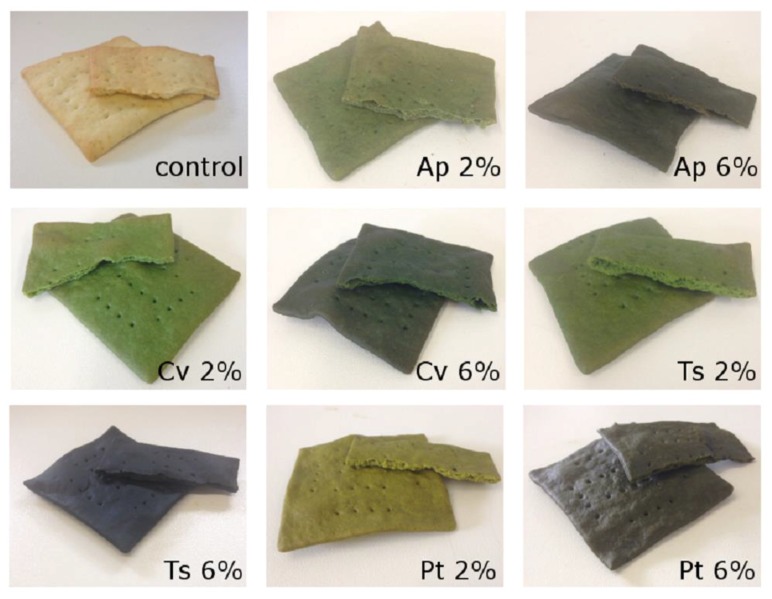
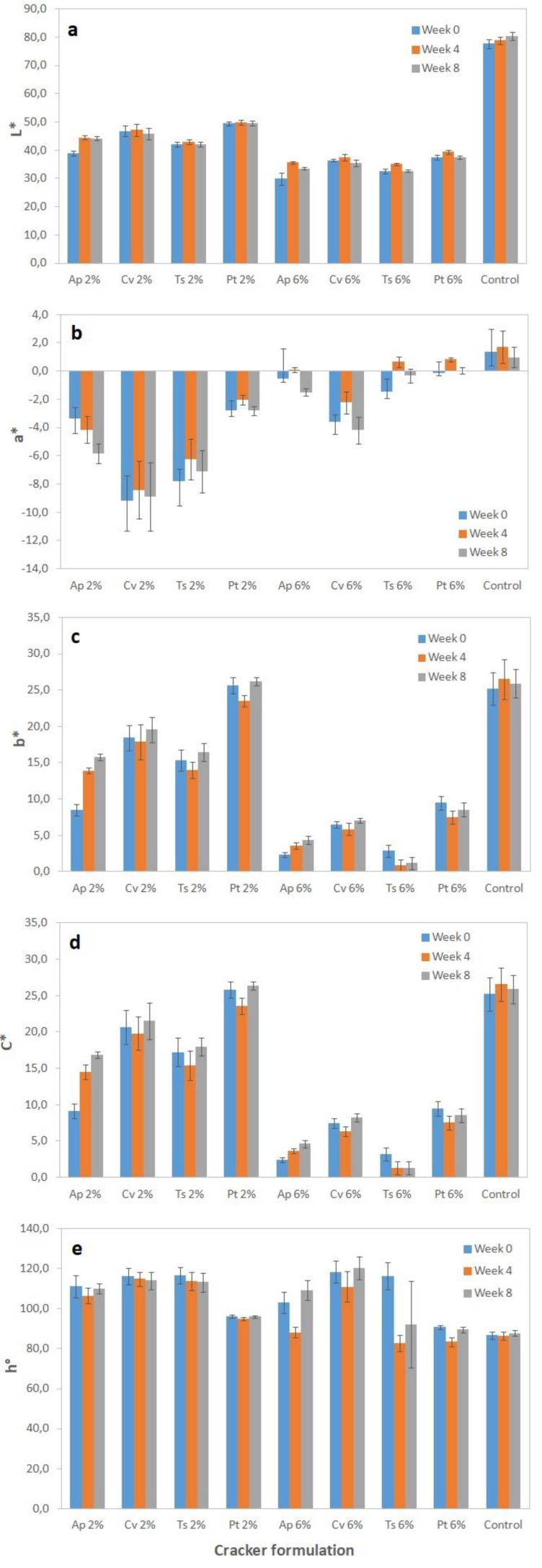
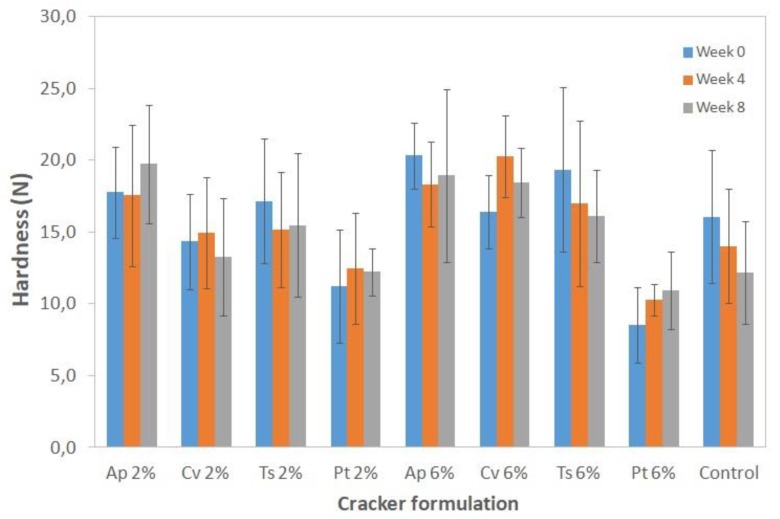
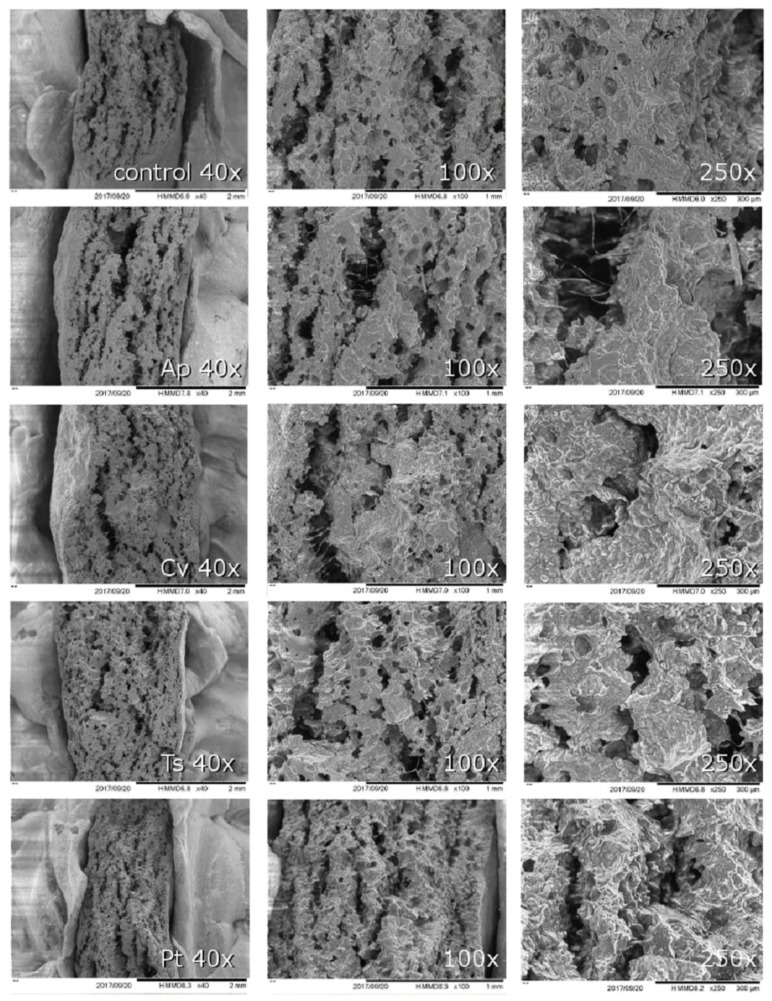
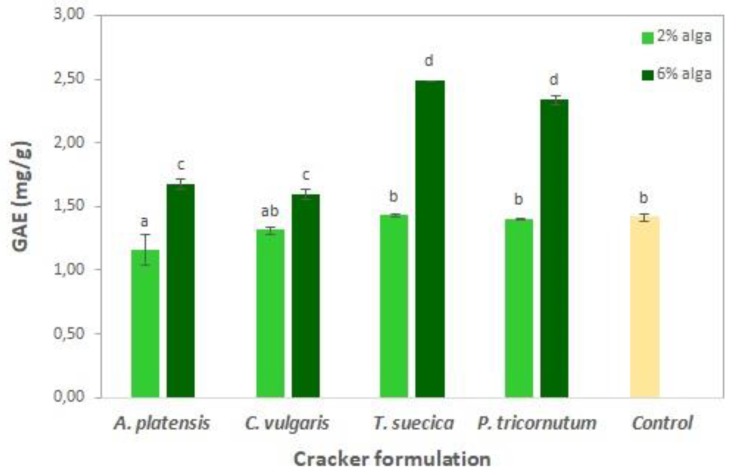
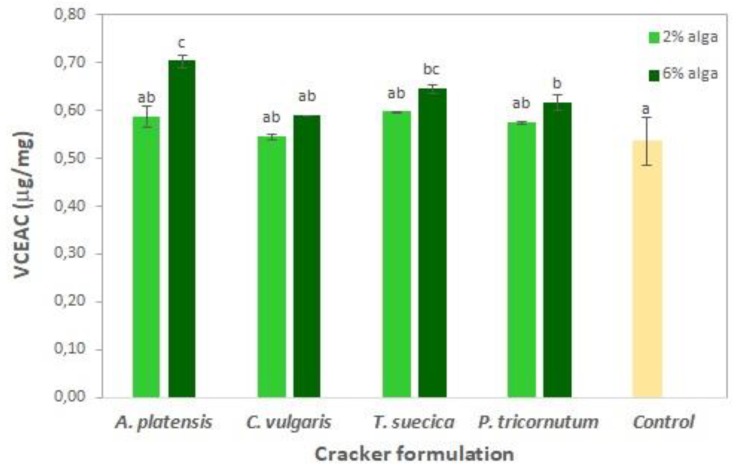
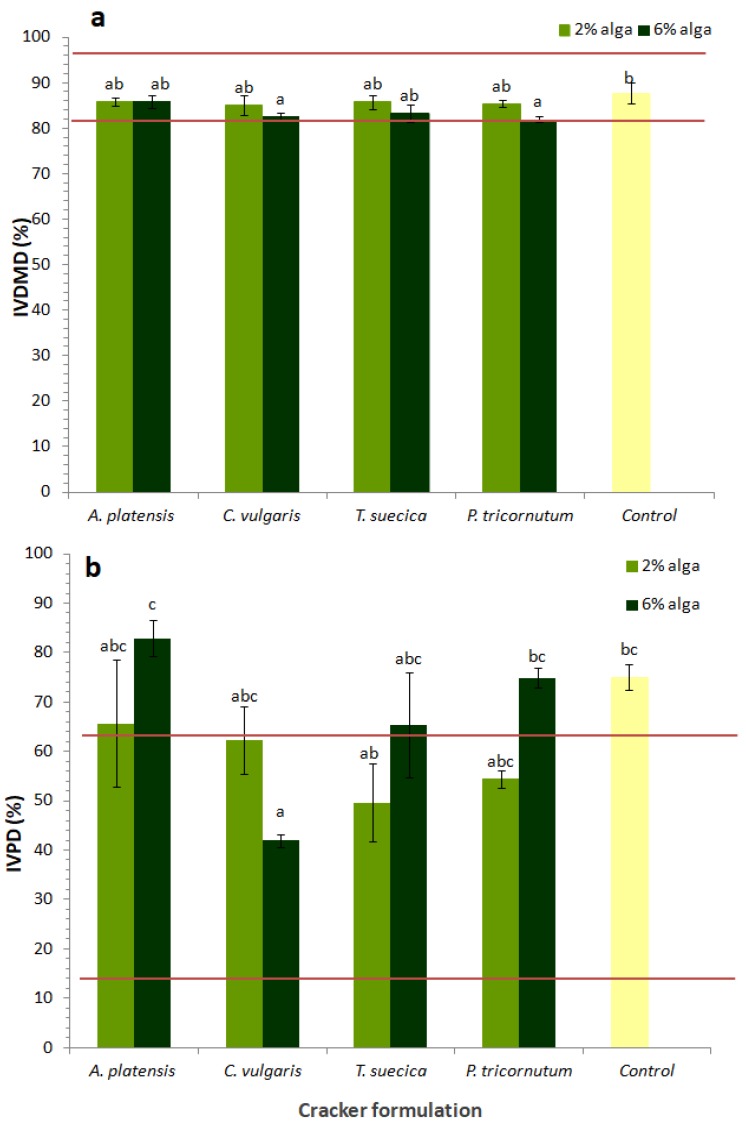
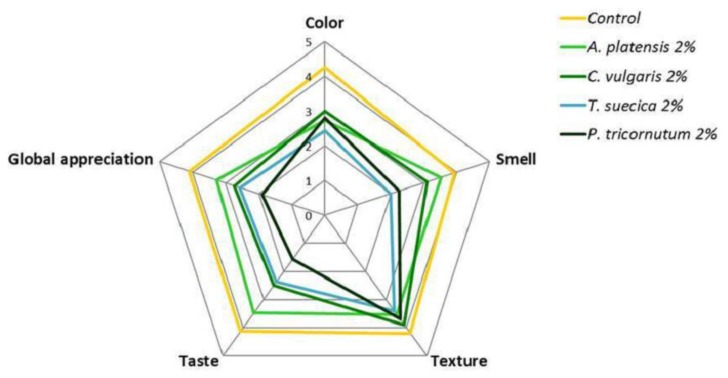
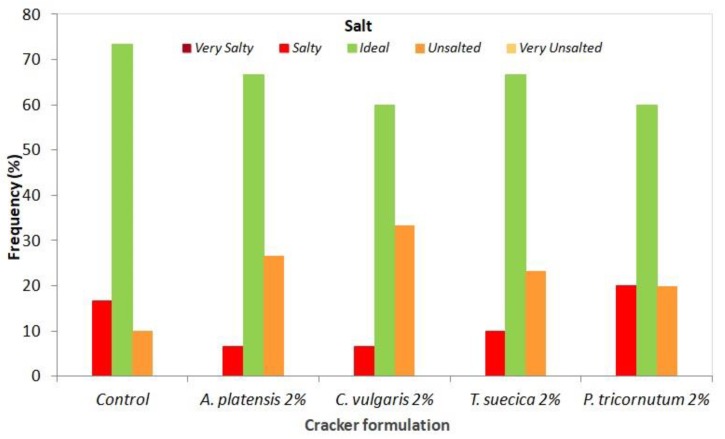
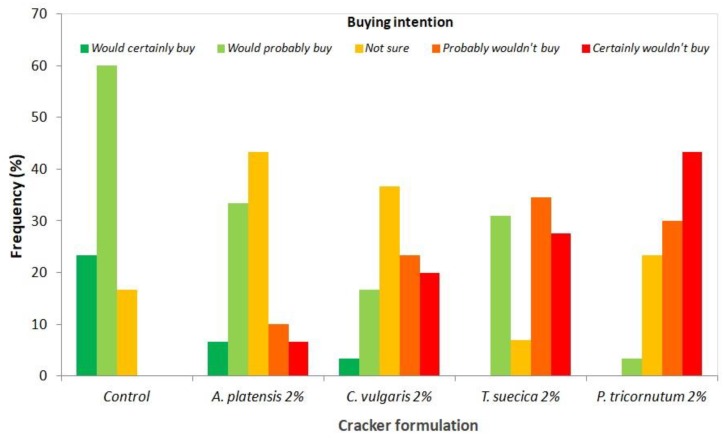
Crackers are widely consumed snack foods and there is an increasing trend in adding functional ingredients to their composition. In the present work, the dried biomasses of four microalgae strains—Arthrospira platensis F&M-C256, Chlorella vulgaris Allma, Tetraselmis suecica F&M-M33, and Phaeodactylum tricornutum F&M-M40—were used as a source of proteins, antioxidants, and other bioactive molecules in artisanal wheat crackers. Two incorporation levels were tested: 2% (w/w) and 6% (w/w). The impact of microalgae addition was evaluated in terms of physical properties, biochemical composition, antioxidant activity, in vitro digestibility, and sensory characteristics. Microalgae crackers presented stable color and texture throughout eight weeks of storage. Microalgae crackers were slightly thinner and lighter than the control but presented a similar density in agreement with scanning electron microscope images, indicating that gas retention was not greatly affected by microalgae addition. Regarding biochemical composition, 6% A. platensis and C. vulgaris crackers presented a significantly higher protein content (13.2–13.5%), for which they could be claimed to be a “source of protein” according to the Regulation (EC) No. 1924/2006. A. platensis crackers showed the highest antioxidant activity and attained better sensory analysis scores. T. suecica and P. tricornutum crackers showed high phenolic content and antioxidant activity but attained low sensory scores mainly because of their unattractive fishy off-flavor.
Overview
The claims and statistics of this paper haven’t been checked yet.
Run the check — free, no account needed. It reads the open-access text and checks the sources it cites.
Integrity signals
Registry
Cites
Statistics
Figures
Verification
Claims the paper makes
The claims and statistics of this paper haven’t been checked yet.
Run the check — free, no account needed. It reads the open-access text and checks the sources it cites.
Claims other papers make about this one
Each is checked against this paper’s own text: does it say what the citing paper says it does?
The cited source doesn’t support the claim as written.
In the citing paper
“On the other hand, research carried out by El Nakib et al. [34] demonstrated that the nutritional content of biscuits might be improved by adding certain percentages of spirulina to the foods that schoolchildren eat for snacks. The percentages tested were 0%, 5%, 10%, and 15%. It also revealed an increase in fatty acids, such as omega-3, omega-6, omega-7, and omega-9, with omega-6 containing the”
From Trends and Technological Advancements in the Possible Food Applications of Spirulina and Their Health Benefits: A Review. (2022) · cites this paper as [83]
Checked by a reasoning model — may be wrong.
Experimental — accuracy not yet measuredThe source backs part of the claim, not all of it — or backs it for a different population, condition or comparison.
In the citing paper
“The quantity of protein that could be digested in the treated samples was 11.9 g/100 g of biscuits. This proportion is much greater than the one found in the control sample, which had a protein content of 9.8% and a digestible protein content of 7.3 g/100 g of biscuits.”
From Trends and Technological Advancements in the Possible Food Applications of Spirulina and Their Health Benefits: A Review. (2022) · cites this paper as [83]
Experimental — accuracy not yet measuredThe source backs part of the claim, not all of it — or backs it for a different population, condition or comparison.
In the citing paper
“As a result, these additions are regarded as a source of protein, since the biscuit that was loaded with the spirulina alga A. platensis had the strongest antioxidant activity and received the highest score in the sensory evaluation [83].”
From Trends and Technological Advancements in the Possible Food Applications of Spirulina and Their Health Benefits: A Review. (2022) · cites this paper as [83]
Experimental — accuracy not yet measuredThe source backs part of the claim, not all of it — or backs it for a different population, condition or comparison.
In the citing paper
“In addition, Batista et al. [83] revealed that when estimating the amount of total phenols in biscuits enriched with spirulina algae, the addition of spirulina by 2% did not give any significant differences compared to the control sample, as the amount of phenols was 1.4 mg gallic acid/g, while the content of phenolics increased significantly to 1.6–1.7 mg gallic acid/g when spirulina was increa”
From Trends and Technological Advancements in the Possible Food Applications of Spirulina and Their Health Benefits: A Review. (2022) · cites this paper as [83]
Experimental — accuracy not yet measuredThe source backs part of the claim, not all of it — or backs it for a different population, condition or comparison.
In the citing paper
“Numerous minerals, including potassium phosphate, potassium sulfate, sodium (sodium carbonate, sodium bicarbonate, sodium nitrate, and sodium chloride), phosphorous (potassium phosphate), calcium (calcium chloride), magnesium (hydrated magnesium sulfate), iron (ferrous sulfate hydrate), and EDTA, are required for the growth of spirulina and must be present in the culture medium [44].”
From Tendencies Affecting the Growth and Cultivation of Genus Spirulina: An Investigative Review on Current Trends (2022) · cites this paper as [44]
Experimental — accuracy not yet measured
The source backs part of the claim, not all of it — or backs it for a different population, condition or comparison.
In the citing paper
“In order to carry out photosynthesis, the medium in which the algae is grown must have carbon. Because spirulina contains 47% of the carbon that is required for its growth, the medium in which it is grown has a very high concentration of sodium bicarbonate (10.8 g/L) and sodium carbonate (7.6 g/L) [44].”
From Tendencies Affecting the Growth and Cultivation of Genus Spirulina: An Investigative Review on Current Trends (2022) · cites this paper as [44]
Experimental — accuracy not yet measuredThe source backs part of the claim, not all of it — or backs it for a different population, condition or comparison.
In the citing paper
“Despite the fact that the spirulina medium has modest concentrations of iron (2 mg/L), it has a rather significant quantity of iron (0.58–1.8 g/kg) in its biomass [44].”
From Tendencies Affecting the Growth and Cultivation of Genus Spirulina: An Investigative Review on Current Trends (2022) · cites this paper as [44]
Experimental — accuracy not yet measuredThe cited source says what the claim attributes to it.
In the citing paper
“Batista et al. [83] were able to boost the protein availability in the biscuit samples by adding A. platensis as a high protein food source.”
From Trends and Technological Advancements in the Possible Food Applications of Spirulina and Their Health Benefits: A Review. (2022) · cites this paper as [83]
The cited source says what the claim attributes to it.
In the citing paper
“The incorporation of 6% each of spirulina and Chlorella resulted in significantly increased protein content (13.2–13.5%) [83].”
From Trends and Technological Advancements in the Possible Food Applications of Spirulina and Their Health Benefits: A Review. (2022) · cites this paper as [83]
The check wasn’t confident either way, so it gives no verdict — never disputed.
In the citing paper
“At a temperature of 30 °C, it was observed that using urea as a source of nitrogen in spirulina made its absorption by the spirulina easier, which resulted in an increase in biomass, but had no effect on the chlorophyll content [14,44].”
From Tendencies Affecting the Growth and Cultivation of Genus Spirulina: An Investigative Review on Current Trends (2022) · cites this paper as [44]
Experimental — accuracy not yet measuredThe check wasn’t confident either way, so it gives no verdict — never disputed.
In the citing paper
“It was determined to be 0.78 g/L (based on dry weight), and after 40 h of cultivation, the growth rate increased to 0.82 g/L after sodium bicarbonate was added.”
From Tendencies Affecting the Growth and Cultivation of Genus Spirulina: An Investigative Review on Current Trends (2022) · cites this paper as [44]
Experimental — accuracy not yet measuredThe check wasn’t confident either way, so it gives no verdict — never disputed.
In the citing paper
“Growth variables such as light intensity, temperature, pH, and salinity can have a major influence on the lipid and pigment content in cells of spirulina, which determines the composition of nutrients in spirulina biomass and is dependent on these growing parameters [1,44].”
From Tendencies Affecting the Growth and Cultivation of Genus Spirulina: An Investigative Review on Current Trends (2022) · cites this paper as [44]
Experimental — accuracy not yet measuredThe check wasn’t confident either way, so it gives no verdict — never disputed.
In the citing paper
“At a pH range of 8.0–8.3, the biomass of Spirulina spp. that was grown in saltwater with urea was 7.35 g (dry weight)/m2/day. This was a lower value than the biomass of Spirulina spp. that was grown in seawater with sodium bicarbonate (NaHCO3), which was 8.14 g/m2/day [14,44].”
From Tendencies Affecting the Growth and Cultivation of Genus Spirulina: An Investigative Review on Current Trends (2022) · cites this paper as [44]
Experimental — accuracy not yet measuredThe check wasn’t confident either way, so it gives no verdict — never disputed.
In the citing paper
“It was found that the nitrogen content of 2.5 g/L was ideal for the medium, and that urea was a superior source of nitrogen to either ammonium or nitrate as a fertilizer ingredient.”
From Tendencies Affecting the Growth and Cultivation of Genus Spirulina: An Investigative Review on Current Trends (2022) · cites this paper as [44]
Experimental — accuracy not yet measuredThe check wasn’t confident either way, so it gives no verdict — never disputed.
In the citing paper
“increasing the phosphate concentration to 250 mg/L in the form of potassium phosphate K2HPO4 boosted the production of biomass [44].”
From Tendencies Affecting the Growth and Cultivation of Genus Spirulina: An Investigative Review on Current Trends (2022) · cites this paper as [44]
Experimental — accuracy not yet measuredThe check wasn’t confident either way, so it gives no verdict — never disputed.
In the citing paper
“Spirulina does not grow below 17 °C, but it does not perish above 38 °C. The optimal temperature for growth is 35 °C, but temperatures that are higher than 38 °C either prevent or disrupt its growth [1,44].”
From Tendencies Affecting the Growth and Cultivation of Genus Spirulina: An Investigative Review on Current Trends (2022) · cites this paper as [44]
Experimental — accuracy not yet measuredThe check wasn’t confident either way, so it gives no verdict — never disputed.
In the citing paper
“After 21 days of batch cultivation (1.21 g/L), higher dry weights were reported for 20% of the regular Zarrouk medium compared to 0.84 g/L for the Zarrouk-modified medium.”
From Tendencies Affecting the Growth and Cultivation of Genus Spirulina: An Investigative Review on Current Trends (2022) · cites this paper as [44]
Experimental — accuracy not yet measuredThe check wasn’t confident either way, so it gives no verdict — never disputed.
In the citing paper
“The characteristics of the water quality contributed to the mass production of algae and had a double effect by affecting the solubility of added nutrients in the agricultural media and the accumulation of some heavy metals by the algae while they were in the growth stage. In addition, the water quality characteristics had an effect on the mass production of algae [44,45,46].”
From Tendencies Affecting the Growth and Cultivation of Genus Spirulina: An Investigative Review on Current Trends (2022) · cites this paper as [44]
Experimental — accuracy not yet measuredThe check wasn’t confident either way, so it gives no verdict — never disputed.
In the citing paper
“Due to the high nutrient and salt requirements of spirulina, it can only be naturally cultivated in salt lakes [44,45,46].”
From Tendencies Affecting the Growth and Cultivation of Genus Spirulina: An Investigative Review on Current Trends (2022) · cites this paper as [44]
Experimental — accuracy not yet measuredThe check wasn’t confident either way, so it gives no verdict — never disputed.
In the citing paper
“Spirulina has the ability to grow and adapt in environments with high salt, and it can be cultivated in salinities ranging from 10 to 40 psi without experiencing substantial changes in its biomass dry weight, chemical composition, or fatty acid levels [44,45,53].”
From Tendencies Affecting the Growth and Cultivation of Genus Spirulina: An Investigative Review on Current Trends (2022) · cites this paper as [44]
Experimental — accuracy not yet measuredIn the citing paper
“Batista et al. [142] reported that cookies made with 2% (w/w) Arthrospira achieved positive results regarding their flavor.”
From Challenges in Functional Food Products with the Incorporation of Some Microalgae (2024) · cites this paper as [142]
Self-check
Percentages, sums and reported differences re-computed from the paper’s own numbers.
The self-check needs the paper’s full text.
Citations
Cites
PROTEIN MEASUREMENT WITH THE FOLIN PHENOL REAGENT
Lowry, O. H., Rosebrough, N., Farr, A. L., & Randall, R. (1951) · Journal of Biological Chemistry · doi:10.1016/s0021-9258(19)52451-6 · Cited by 316,394
Guillard, R. R., & Ryther, J. (1962) · Canadian Journal of Microbiology (print) · doi:10.1139/m62-029 · Cited by 7,663
Micro-algae as a source of protein
Becker, E. W. (2007) · Biotechnology Advances · doi:10.1016/j.biotechadv.2006.11.002 · Cited by 2,311
Algae as nutritional and functional food sources: revisiting our understanding.
Wells, M. L., Potin, P., Craigie, J. S., Raven, J. A., Merchant, S. S., Helliwell, K. E., Smith, A. G., Camire, M. E., & Brawley, S. H. (2017) · Journal of Applied Phycology · doi:10.1007/s10811-016-0974-5 · Cited by 1,562
Outdoor cultivation of microalgae for carotenoid production: Current state and perspectives
Del Campo, J. A., García-González, M., & Guerrero, M. G. (2007) · Applied Microbiology and Biotechnology · doi:10.1007/s00253-007-0844-9 · Cited by 739
Trends in Microalgae Incorporation Into Innovative Food Products With Potential Health Benefits
Caporgno, M. P., & Mathys, A. (2018) · Frontiers in Nutrition · doi:10.3389/fnut.2018.00058 · Cited by 639
Innovative natural functional ingredients from microalgae
Plaza, M., Herrero, M., Cifuentes, A., & Ibáñez, E. (2009) · Journal of Agricultural and Food Chemistry · doi:10.1021/jf901070g · Cited by 509
Salt reduction in the United Kingdom: a successful experiment in public health
He, F. J., Brinsden, H. C., & MacGregor, G. A. (2014) · Journal of Human Hypertension · doi:10.1038/jhh.2013.105 · Cited by 456
Comparison of microalgal biomass profiles as novel functional ingredient for food products
Batista, A. P., Gouveia, L., Bandarra, N. M., Franco, J. M., & Raymundo, A. (2013) · Algal Research · doi:10.1016/j.algal.2013.01.004 · Cited by 450
Self-citationA Potential Commercial Source of Fucoxanthin Extracted from the Microalga Phaeodactylum tricornutum
Kim, S. M., Jung, Y.-J., Kwon, O.-N., Cha, K. H., Um, B.-H., Chung, D., & Pan, C.-H. (2012) · Applied Biochemistry and Biotechnology · doi:10.1007/s12010-012-9602-2 · Cited by 417
Research works printed but not linked: 3
- Zarrouk, C. (1966). Contribution à l’étude d’une cyanophycée. Influence de divers facteurs physiques et chimiques sur la croissance et la photosynthèse de Spirulina maxima (Setch et Gardner) Geitler. [Ph.D. Thesis, Université de Paris].
- Bolanho, 2014, Antioxidant and nutritional potential of cookies enriched with Spirulina platensis and sources of fibre, J. Food Nutr. Res., 53, 171
- Abraços, L.M.C. (2017). Estudo de ingredientes da Salvia sclareoides—Um contributo para o desenvolvimento de um novo suplemento alimentar. [Master’s Thesis, Faculdade de Ciências da Universidade de Lisboa].
Cited by
Sorted by citations
Items 101–200 of 202
Iñíguez-Moreno, M., González-Meza, G. M., Araújo, R. G., Flores-Contreras, E. A., & de la Rosa, O. (2025) · Bioresource Technology Reports · doi:10.1016/j.biteb.2025.102183 · Cited by 10
Görünmek, M., Kibar, E. A. A., Çakmak, Z. E., & Çakmak, T. (2025) · Algal Research · doi:10.1016/j.algal.2025.103900 · Cited by 6
Rahman, T. T., Rahman, A. M., Pei, Z., Thakare, K., Qin, H., & Khan, A. (2023) · Green Manufacturing Open · doi:10.20517/gmo.2022.13 · Cited by 6
Physical and Organoleptic Characteristic of Bread Substituted with Spirulina Platensis
Rahimah, S., Sonjaya, M. F., Andoyo, R., Satya, A., Nurhasanah, S. F., & Chrismadha, T. (2024) · Green energy and technology · doi:10.1007/978-981-99-7769-7_14 · Cited by 6
Brassesco, M. E., Paupério, A., Pereira, C., Ferreira, J. P., & Pintado, M. (2025) · Foods · doi:10.3390/foods14071144 · Cited by 5
Matos, Â. P., Molognoni, L., Nicolladelli, J., Marco, I. D., Caon, T., Neves, F. D. F., Martelli, F., Bernini, V., Tribuzi, G., & Lindner, J. D. D. (2025) · Trends in Food Science & Technology · doi:10.1016/j.tifs.2025.105341 · Cited by 8
Quality Properties of Crackers Enriched with Composite Flours: Effect on Dough and Final Product
Giannoutsos, K., Koukoumaki, D. I., Bountziouka, V. P., Poriazi, T., Παπαγεωργίου, Μ., Sarris, D., Gkatzionis, K., & Naziri, E. (2025) · Applied Sciences · doi:10.3390/app152312361 · Cited by 5
Alam, A., Shiam, M. A. H., Biswas, B., Islam, M. S., Biswas, M., Hossain, M. N., Arbi, A. H., & Zahid, M. A. (2026) · Future Foods · doi:10.1016/j.fufo.2026.100976 · Cited by 5
Erem, F. (2024) · Food Science and Technology International · doi:10.1177/10820132241248486 · Cited by 5
Hepatoprotective effect of functional biscuits enriched with spirulina
Shouk, A. A., Yaseen, A. A., Fouda, K. A., Marrez, D. A., Shedeed, N. A., & Mohammad, A. A. (2025) · Food & Function · doi:10.1039/d5fo00349k · Cited by 5
Environmental, Nutritional, and Cultural Sustainability of Novel Food Protein Sources
Nitride, C., D’Auria, G., Ferrara, A., & Ferranti, P. (2022) · Elsevier eBooks · doi:10.1016/b978-0-12-823960-5.00056-1 · Cited by 5
Diversity of algae and their biotechnological potential
Gilmour, D. J. (2023) · Advances in microbial physiology/Advances in Microbial Physiology · doi:10.1016/bs.ampbs.2023.02.001 · Cited by 5
Tibaldi, C., Oliveira, S., Dinelli, G., Marotti, I., & Raymundo, A. (2025) · Journal of the Science of Food and Agriculture · doi:10.1002/jsfa.14156 · Cited by 6
Self-citationThe commercial microalgae-based foods
Ravikumar, N., Tiwari, S., Jethani, H., & Chauhan, V. S. (2023) · Elsevier eBooks · doi:10.1016/b978-0-323-99196-4.00032-2 · Cited by 5
Tiwari, M., Tiwari, A., Kataria, A., & Chauhan, K. (2023) · Springer eBooks · doi:10.1007/978-3-031-40308-8_7 · Cited by 5
Bian, T., Chin, Y. L., van der Goot, A. J., & Keppler, J. K. (2026) · Future Foods · doi:10.1016/j.fufo.2026.101010 · Cited by 4
Salama, M. M., Ghanem, S. M., Kadry, M. M., Wang, S., & Abdelnaby, T. (2025) · Discover Food · doi:10.1007/s44187-025-00467-7 · Cited by 4
Tsykhanovska, I., Stabnikova, О., Riabchykov, М., Лазарєва, Т., & Korolyova, N. (2024) · Plant Foods for Human Nutrition · doi:10.1007/s11130-024-01232-4 · Cited by 13
Snacking: Ingredients, Processing and Safety
Gasparre, N., & Rosell, C. M. (2021) · Springer eBooks · doi:10.1007/978-3-030-69228-5_7 · Cited by 4
Aslam, S., Akhtar, A., Nazir, W., Khalid, N., & Barrow, C. J. (2024) · ACS Food Science & Technology · doi:10.1021/acsfoodscitech.4c00418 · Cited by 4
Formulation of a Biologically-leavened Composite Cracker with Functional Properties
Rathnayake, H. A., Navaratne, S. B., & Navaratne, C. M. (2022) · Journal of Culinary Science & Technology · doi:10.1080/15428052.2022.2102560 · Cited by 3
García-Moncayo, A. I., Rodríguez-Martínez, E. S., Ochoa-Reyes, E., Sáenz-Hidalgo, H. K., Sepulveda, D. R., Buenrostro-Figueroa, J. J., & Alvarado-González, M. (2023) · Emirates Journal of Food and Agriculture · doi:10.9755/ejfa.2023.3147 · Cited by 3
Özdemır, N., & Eroğlu, Z. (2024) · Black Sea Journal of Engineering and Science · doi:10.34248/bsengineering.1410249 · Cited by 3
Bertoldi, M. C., da Silva, M. E. T., Grigório, J. K. A., & Santana, H. C. (2025) · Algal Research · doi:10.1016/j.algal.2025.104029 · Cited by 4
Dabas, T., Gorman, M., LeBlanc, J., Moss, R. H., & McSweeney, M. B. (2023) · International Journal of Food Science & Technology · doi:10.1111/ijfs.16708 · Cited by 3
Damayanti, A., Megawati, M., Winaningsih, I., Taghna, E. A., Supriyadi, M., Zahra, S. A., Khusniyyah, R., Tandirogang, N. A., & Then, N. A. E. (2025) · Biofuels · doi:10.1080/17597269.2025.2469384 · Cited by 4
Algae as nutritional and bioactive food ingredients
Dı́az-Godı́nez, G., Peña-Solis, K., & Díaz-Domínguez, G. (2024) · Revista Mexicana de Ingeniería Química · doi:10.24275/rmiq/bio24209 · Cited by 4
Su, J., Zeng, H., Qu, L., Yang, R., & Zhao, C. (2025) · Journal of Food Science · doi:10.1111/1750-3841.70256 · Cited by 2
Nanoencapsulation of protein-rich Spirulina biomass: New frontiers for superfoods — A review
Rasia, T. A., Vaz, B. D. S., Costa, J. A. V., & de Morais, M. G. (2025) · Food Bioscience · doi:10.1016/j.fbio.2025.107587 · Cited by 2
Cvetković, B., Belović, M. M., Pezo, L. L., Lazarević, J., Radivojević, G., Penić, M., Šimurina, O., & Bajić, A. (2025) · Foods · doi:10.3390/foods14203539 · Cited by 4
Tapia-Cervantes, K. A., Herrera-Cardoso, E. D., & León‐Galván, M. F. (2026) · Plant Foods for Human Nutrition · doi:10.1007/s11130-026-01501-4 · Cited by 2
PASTRIES WITH FUNCTIONAL SPIRULINA PLATENSIS INGREDIENTS
Bantea-Zagareanu, V., Gurev, A., Dragancea, V., & Dodon, A. (2021) · Journal of Engineering Science · doi:10.52326/jes.utm.2021.28(2).14 · Cited by 2
Nashir, N. G. A., Triastuti, J., & Nirmala, D. (2022) · Journal of Marine and Coastal Science · doi:10.20473/jmcs.v11i2.35021 · Cited by 2
Mata, M. T., Camerón, H., Avalos, V., & Riquelme, C. E. (2023) · Plants · doi:10.3390/plants12193372 · Cited by 4
Jin, L., Yu, N., Jiang, Y., Li, Y., & Wang, X. (2023) · Journal of Emerging Investigators · doi:10.59720/23-116 · Cited by 1
Antiviral products derived from microalgae
Niccolai, A. (2024) · Elsevier eBooks · doi:10.1016/b978-0-443-19213-5.00012-1 · Cited by 2
Self-citationSusanto, E., Mustajab, R. M., Kamil, M., Atho’illah, M. F., Riyadi, P. H., Kurniasih, R. A., Pangestuti, R., & Prasetyo, D. Y. B. (2024) · Molecular Biotechnology · doi:10.1007/s12033-024-01080-2 · Cited by 2
Diatoms for Value-Added Products: Challenges and Opportunities
Neeti, K., Singh, R., Ahmad, S., Sakshi, S., & Rai, A. K. (2024) · Springer eBooks · doi:10.1007/978-981-97-5057-3_5 · Cited by 2
da Silva, E. F., Bianchini, C. B., Wanderley, B. R. D. S. M., Fritzen‐Freire, C. B., Bezerra, P. Q. M., & Nunes, I. L. (2024) · Food Science and Technology · doi:10.5327/fst.000365 · Cited by 2
Torbica, A. M., Filipčev, B. V., Vujasinović, V., Miljić, U. D., Radivojević, G., Miljić, M., & Radosavljević, M. (2025) · Foods · doi:10.3390/foods14040582 · Cited by 2
Spirulina: Morphology, Cultivation, Harvesting as a Supplement and Its Therapeutic Properties
Khushala, A., Bobby, M. N., & Balasubramaniyan, M. (2025) · Springer eBooks · doi:10.1007/978-981-96-1844-6_9 · Cited by 2
Santoso, Y. F., Pranata, F. S., & Swasti, Y. R. (2021) · AGRITEKNO Jurnal Teknologi Pertanian · doi:10.30598/jagritekno.2021.10.1.1 · Cited by 2
FORMULASI CRACKERS MOCAF DENGAN PENAMBAHAN TEPUNG UDANG REBON SERTA KARAKTERISTIKNYA
Program Studi Ilmu dan Teknologi Pangan, U. T., Ramadhani, W., Indrawan, I., & Seveline, S. (2022) · JURNAL BIOINDUSTRI · doi:10.31326/jbio.v4i2.1238 · Cited by 2
Effect of Hazelnut Skin Addition on Quality Characteristics of Functional Crackers
Kömürcü, T. C. (2023) · Kahramanmaraş Sütçü İmam Üniversitesi Tarım ve Doğa Dergisi · doi:10.18016/ksutarimdoga.vi.1222490 · Cited by 2
Application of microalgae in baked goods and pasta
Raymundo, A., Fradinho, P., & Nunes, M. C. (2023) · Elsevier eBooks · doi:10.1016/b978-0-323-99196-4.00022-x · Cited by 3
Self-citationStudy of the Preference Value of High-Fiber Crackers
Patrisiya, B., Rosida, D. F., & Wicaksono, L. A. (2023) · AJARCDE (Asian Journal of Applied Research for Community Development and Empowerment) · doi:10.29165/ajarcde.v7i3.357 · Cited by 2
Pereira, T., Barroso, S., Teixeira, P., Domingues, M. R., Maurício, T., Mendes, S., Pinto, F. R., Freire, C. D., Matos, G., Saraiva, J. A., et al. (2024) · Foods · doi:10.3390/foods13233913 · Cited by 1
Advancing 3D-Printed Seafood Analogues with Tetraselmis chui and Tetraselmis chui Water Extract
Moreira, C., Molina-Montero, C., Ferreira‐Santos, P., Teixeira, J. A., Rocha, C. M. R., & Martı́nez-Monzó, J. (2025) · Food and Bioprocess Technology · doi:10.1007/s11947-025-03965-9 · Cited by 1
Wu, M., Bai, Y., Li, Y., Chen, K., Le, J., Li, J., Zhou, C., Agathos, S. N., Zhang, L., Yan, X., et al. (2025) · Marine Life Science & Technology · doi:10.1007/s42995-025-00320-x · Cited by 1
Algae and seaweeds: oceanic treasures for umami and salinity
Dangal, A., Rai, K., Timsina, P., Baroncelli, E. B., Giuffrè, A. M., Romano, A., Dahal, S., Gautam, N., & Ghimire, H. (2025) · Elsevier eBooks · doi:10.1016/b978-0-443-33345-3.00019-5 · Cited by 1
Baune, M.-C., Walle, S. V. D., Januschewski, E., Gifuni, I., Szkudlarski, J., Ebert, E., Bindrich, U., Royen, G. V., Juadjur, A., Heinz, V., et al. (2025) · Future Foods · doi:10.1016/j.fufo.2025.100840 · Cited by 1
Viji, P., Binsi, P. K., Sireesha, S., & Badireddy, M. R. (2026) · Journal of Food Science and Technology · doi:10.1007/s13197-025-06521-7 · Cited by 1
Chlorophylls in Microalgae: Distribution, Chemistry, and Applications
Fernandes, A. S., & de Rosso, V. V. (2026) · Springer eBooks · doi:10.1007/978-3-031-93945-7_2 · Cited by 1
de Brito, G. M. K., Costa, J. A. V., Barreira, L. A., & de Morais, M. G. (2026) · Foods · doi:10.3390/foods15152761 · Cited by 1
Algae-based Aquaculture Wastewater Treatment and Resource Utilization
Cheng, P., Wang, C., Bo, Y., Guo, J., Song, X., Shan, S., Zhou, C., Yan, X., & Ruan, R. R. (2023) · CABI eBooks · doi:10.1079/9781800621954.0011 · Cited by 1
Nuraini, L., Anggraeni, L., Baswarsiati, B., Hutasoit, J. P., Antarlina, S. S., & Khamidah, A. (2024) · IOP Conference Series Earth and Environmental Science · doi:10.1088/1755-1315/1312/1/012048 · Cited by 1
Potential benefits of functional antianemic energy bars
Tsykhanovska, I., Лазарєва, Т., Stabnikova, О., Kupriyanov, O., Litvin, O., & Yevlash, V. (2023) · Ukrainian Food Journal · doi:10.24263/2304-974x-2023-12-4-7 · Cited by 1
García-Moncayo, A. I., Ochoa-Reyes, E., Sáenz-Hidalgo, H. K., González-Pérez, P., Castellanos, L., Sepulveda, D. R., Buenrostro-Figueroa, J. J., & Alvarado-González, M. (2024) · Foods · doi:10.3390/foods13213381 · Cited by 1
Aktaş, A. B. (2024) · Springer eBooks · doi:10.1007/978-3-031-69872-9_7 · Cited by 1
Microalgae as Sustainable and Economic Sources of Omega-3 Fatty Acids
Panchal, S. K., Heimann, K., & Brown, L. (2025) · Springer eBooks · doi:10.1007/978-3-031-84200-9_6 · Cited by 2
Extracting Edible Oil from Nannochloropsis oculata: A Functional Food for Future
Mohamad, N., Lim, J. S., & Idris, A. (2020) · Food Science and Technology · doi:10.13189/fst.2020.080302 · Cited by 1
Zahroh, N., Mojiono, M., Faridz, R., & Purwandari, U. (2023) · Food Research · doi:10.26656/fr.2017.7(6).042 · Cited by 1
Goel, N., & Choudhary, P. (2025) · Wiley eBooks · doi:10.1002/9781394241538.ch19 · Cited by 1
Microalgae as novel ingredients for the formulation of food products
Uribe-Wandurraga, Z. N. (2020) · doi:10.4995/thesis/10251/158743
Zabala, C., & Constanza, C. (2021)
Bartalucci, C., Fagioli, F., Giachetti, A., Niccolai, A., & Verdi, L. (2022) · Proceedings e report · doi:10.36253/978-88-5518-541-7
Self-citationFormulation of Nutrient Enriched Cookies from Chia (Salvia hispanica L) Seeds - A Pilot Study
Ramabhai, V., Jayaprakashvel, M., Chandresh, S., Shanmugapriya, J., & Wyson, J. D. B. (2022) · International Journal of Zoological Investigations · doi:10.33745/ijzi.2022.v08i02.068
The Use of Microalgae in Various Applications
Ulucan‐Karnak, F., Sabankay, M., & Seydibeyoğlu, M. Ö. (2023) · Wiley eBooks · doi:10.1002/9781119857839.ch2
The Physicochemical Quality of Chicken Meatball Using Red Lentil Flour (Lens culinaris L.)
Rohmah, N. I., Evanuarini, H., & Thohari, I. (2023) · Asian Food Science Journal · doi:10.9734/afsj/2023/v22i8648
Sifat Fisik Kimia Permen Jelly dari Gelatin Ikan Gabus dengan Penambahan Lendir Okra
Jaya, F. M., Sari, L. P., & Utpalasari, R. L. (2023) · Jurnal Ilmu-ilmu Perikanan dan Budidaya Perairan · doi:10.31851/jipbp.v18i1.12052
Kovalev, N. N., Leskova, S. E., & Mikheev, E. V. (2023) · Indonesian Aquaculture Journal · doi:10.15578/iaj.18.1.2023.37-44
Impact of Chlorella vulgaris biomass substitution on in vitro bioaccessibility of cookies
Dündar, A. N., Aygün, A., & Şahin, O. I. (2024) · European Food Science and Engineering · doi:10.55147/efse.1487284
Biochemical, Techno-Functional and Sensory Properties of Food Prepared with Algae
Kong, H. (2024) · Environmental science and engineering · doi:10.1007/978-981-97-2371-3_24
Nkanga, A. U., & Inyang, U. E. (2024) · African Journal of Agricultural Science and Food Research · doi:10.62154/ajasfr.2024.016.010380
Development and optimization of savory crackers with Vigna aconitifolia and Lens culinaris flour
Nitish Kumar, T., Shivaswamy, M. S., Kavivarshini, K., S, N. S., & Kirithikasri, R. (2024) · Journal of Culinary Science & Technology · doi:10.1080/15428052.2024.2394819
Škrobot, D., Tomić, J., & Maravić, N. (2024) · Elsevier eBooks · doi:10.1016/b978-0-443-18622-6.00024-4
Velickova, E., & Tomovska, E. (2024) · Elsevier eBooks · doi:10.1016/b978-0-443-18622-6.00025-6
The importance of downstream processes in algal biorefinery concept
İnan, B., Koçer, A. T., Karaca, G. A., Karacaoğlu, B., & Balkanlı, D. (2024) · Elsevier eBooks · doi:10.1016/b978-0-443-14059-4.00024-6
Algae-Derived Food and Feed Products
Senapati, P. K., Singh, M., & Karmi, M. (2024) · Springer eBooks · doi:10.1007/978-3-031-70698-1_6
Chemical composition of microalgae with potential for bioactive compounds
Jasmadi, J., Suryaningtyas, I. T., Je, J., & Pangestuti, R. (2025) · Elsevier eBooks · doi:10.1016/b978-0-443-22080-7.00024-7
Microalgae as Biofactories: Metabolites, Bioproducts, and Industrial Biotechnology Applications
Rahaman, T., Samanta, S., Seth, A., Debnath, B., & Das, S. (2025) · Current Biotechnology · doi:10.2174/0122115501408500251019130934
Development of Novel Tempeh Product via Cofermentation of Soybean and Chlorella vulgaris
Wonorahardjo, D., & Surya, R. (2025) · IOP Conference Series Earth and Environmental Science · doi:10.1088/1755-1315/1564/1/012010
Spirulina (Arthrospira platensis) as an alternative ingredient for 3D printed white chocolate
Erünsal, S. Ç., Karabiyik, M. B., Inac, H. N., & Kirdi, K. S. (2026) · Journal of Food Measurement & Characterization · doi:10.1007/s11694-025-03942-y
The algae renaissance: unlocking the potential of algae for food industries
Rawindran, H., Sahrin, N. T., Zin, M. T., Tong, C. Y., Raksasat, R., Ramanathan, S., Satpati, G. G., & Srinuanpan, S. (2026) · Preparative Biochemistry & Biotechnology · doi:10.1080/10826068.2026.2640057
Pestana, C., Mahmoud, N., Raymundo, A., Prista, C., & Nunes, M. C. (2026) · SSRN Electronic Journal · doi:10.2139/ssrn.6428461
Self-citationAlkahder, I., Tang, D. Y. Y., Chew, K. W., & Show, P. L. (2026) · Elsevier eBooks · doi:10.1016/b978-0-443-26502-0.00004-5
Phototrophic Microorganisms in the Global Bioeconomy: Advances, Barriers, and Regional Perspectives
Sergeeva, Y. A., Sukhinov, D. V., Горин, К. В., Pozhidaev, V. M., Mikhailov, G. V., Petrova, M. G., Suchkov, V. G., Хлевная, В. С., & Vasilov, R. G. (2025) · Nanobiotechnology Reports · doi:10.1134/s2635167625602153
Coulombier, N. (2020) · theses.fr (ABES) · doi:10.70675/1fc6442az8116z418dza169z7fa855798c1c
Market Trends and Consumer Acceptance of Algae-Based Foods: Opportunities and Challenges
Sarkar, N., Dhar, S., & Mahata, C. (2026) · Springer eBooks · doi:10.1007/978-3-032-22521-4_7
Grasshopper Utility in the Snack Food Industry
Winarni, S., Adithia, R. P., & Asna, A. F. (2026) · IGI Global eBooks · doi:10.4018/979-8-2600-1423-3.ch006
Göztok, S. P., & Güner, C. (2026) · International Journal of Gastronomy Research · doi:10.56479/ijgr-72
Effects of spirulina powder on the physicochemical and volatile properties of rice balls
Jia, X., Shi, Y., Ji, Z., Shen, W., Liu, X. Q., Yu, B., Syaputri, Y., & Zhang, H. (2026) · Food Chemistry X · doi:10.1016/j.fochx.2026.104141
Kambele, J., Okechukwu, Q. N., Adadi, P., Adepoju, F. O., & Kovaleva, E. G. (2026) · ACS Food Science & Technology · doi:10.1021/acsfoodscitech.6c00450
Gursoy, E. G., Özdere, B., Erdoğan, A., Dalay, M. C., & Tavman, Ş. (2026) · Food Science & Nutrition · doi:10.1002/fsn3.72079
Wahyuningtyas, A. S. H., Berlian, G. O., Isaskar, R., Putri, D. A. D., Putri, W. D. R., Sulaiman, Z. P., Sitepu, I., & Hanifa, A. (2026) · Food Quality and Preference · doi:10.1016/j.foodqual.2026.106049
Pestana, C., Mahmoud, N., Raymundo, A., Prista, C., & Nunes, M. C. (2026) · Algal Research · doi:10.1016/j.algal.2026.104846 · Cited by 1
Self-citationAyustaningwarno, F., Muthmainnah, H., Portuna, S. D., Ainiatuzahwa, N., Jusman, T. N. G., Wijayanti, L., Syahadah, M. M., Panunggal, B., & Widyastuti, N. (2026) · Food Research International · doi:10.1016/j.foodres.2026.120195
Manirambona, I., Ogakwu, A. S., Ketu, K. V., Niyukuri, J., & Ikyenge, B. A. (2026) · Journal of Cereal Science · doi:10.1016/j.jcs.2026.104572
Metadata
- Authors
- Batista, A. P., Niccolai, A., Bursic, I., Sousa, I., Raymundo, A., Rodolfi, L., Biondi, N., & Tredici, M. R.
- Affiliations
- University of Lisbon (PT)
- University of Florence (IT)
- LEAF—Linking Landscape, Environment, Agriculture and Food, Instituto Superior de Agronomia, Universidade de Lisboa, Tapada da Ajuda, 1349-017 Lisboa, Portugal
- Corresponding author
- Niccolai, Alberto
- ORCID
- Venue
- Foods
- Publisher
- MDPI AG
- Published
- 2019-11-23
- Volume
- 8
- Issue
- 12
- Pages
- 611
- ISSN
- 2304-8158 (ISSN-L)
- PMC
- PMC6963871
- OpenAlex
- W2989853209
- Cited by
- 203
- References
- 60
- Citations by year
- 2026: 23 · 2025: 37 · 2024: 48 · 2023: 38 · 2022: 22 · 2021: 19 · 2020: 16
- FWCI
- 12.70
- Type
- journal article
- Language
- en
- Open access
- gold
- dx.doi.org
- Licence
- Locations
- Foods (publishedVersion, cc-by)
- Europe PMC (PubMed Central) (publishedVersion, cc-by)
- PubMed Central (publishedVersion, cc-by)
- PubMed (publishedVersion)
- Florence Research (University of Florence) (submittedVersion, other-oa)
- Portuguese National Funding Agency for Science, Research and Technology (RCAAP Project by FCT) (submittedVersion, other-oa)
- Funders
- Fundação para a Ciência e a Tecnologia (UID/AGR/04129/2013)
- Topics
- Life Sciences › Agricultural and Biological Sciences › Aquatic Science › Seaweed-derived Bioactive Compounds
- Life Sciences › Agricultural and Biological Sciences › Food Science › Food Nutrient Composition and Product Development
- Life Sciences › Agricultural and Biological Sciences › Food Science › Seed and Plant Biochemistry
- Keywords
- microalgae, functional food ingredients, Spirulina platensis, Chlorella vulgaris, Tetraselmis suecica, Phaeodactylum tricornutum, protein content, antioxidant activity, phenolic compounds, in vitro digestibility, sensory evaluation, off-flavor, storage stability
About these checks
Registry, retraction, Cites and statistics results are computed, not judged, with one exception: a printed reference that no index lists is read once by a model before it counts as a citation error. Claims are extracted by a model and kept only when their quote appears verbatim in the text; each cited source is then checked, with a model’s help, for whether it says what the claim relies on. Those verdicts can be wrong — read the claim’s quote and the cited source before relying on one.
Statistics and arithmetic are recomputed, not judged.
Confidence bands are shown only for fields calibrated on our annotated test set. None is calibrated yet, so no band is shown.
What counts as a claim ›How we measure confidence ›How we check this ›
Are you an author, or do you see a problem with this page? Request a review
