

The DOI matches its Crossref record; 61 of the 61 references it cites were found in a registry or an index.
Chemical Composition, Antioxidant and Enzyme Inhibitory Properties of Different Extracts Obtained from Spent Coffee Ground and Coffee Silverskin
Open accessAbstract
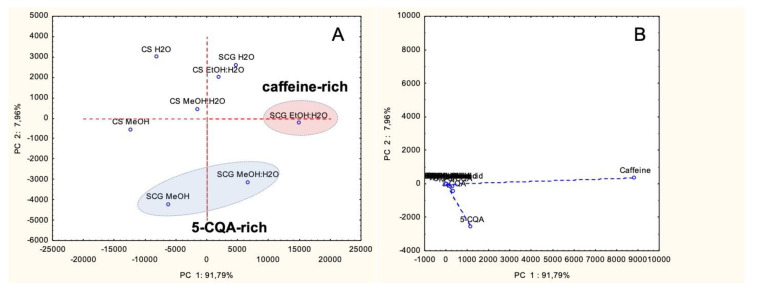
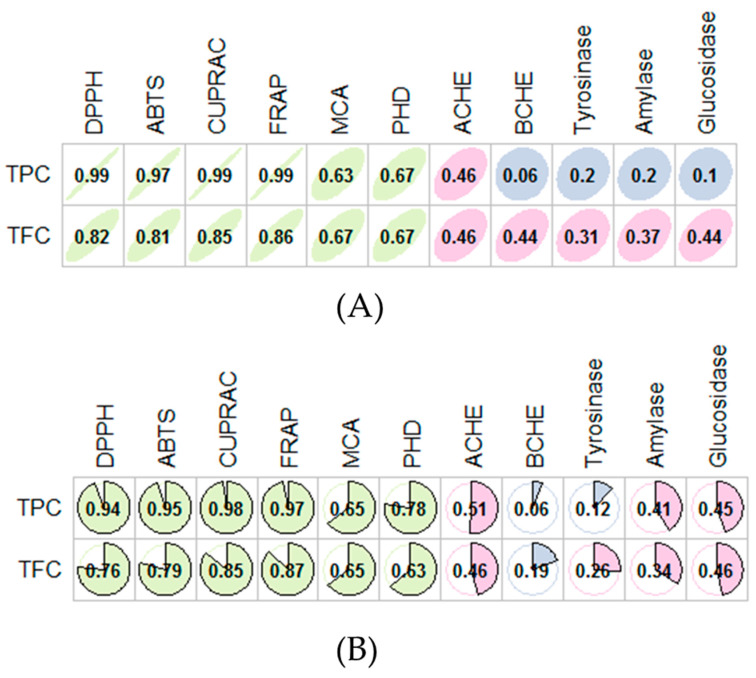
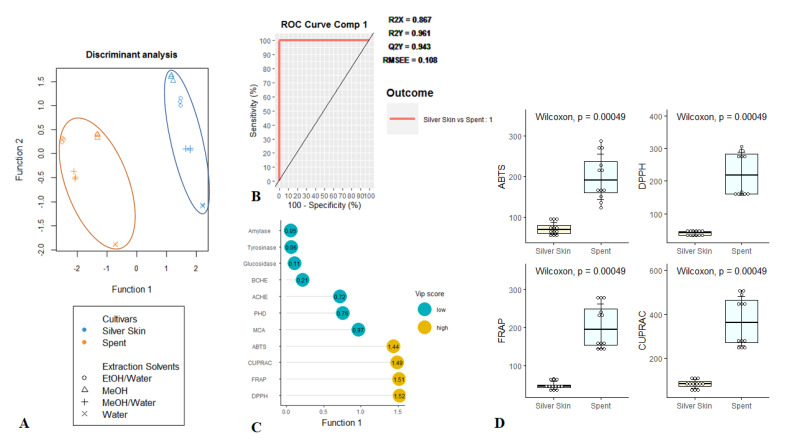
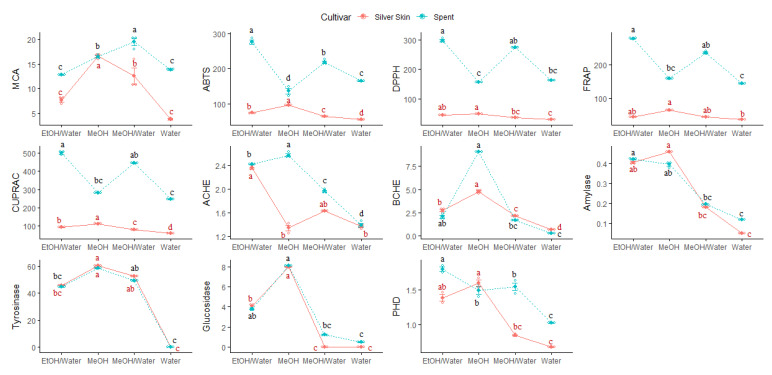
In a world where an eco-friendlier approach is becoming more and more necessary, it is essential to reduce waste production and to reuse residues of the company’s supply chain. Coffee silverskin (CS) and spent coffee ground (SCG), two by-products of coffee production, are important sources of bioactive compounds and, for this, some authors have proposed their reuse in the nutraceutical, food, and cosmetic sector. However, their potential enzyme inhibitory properties have been poorly investigated. Hence, the objective of the current work was to study the enzymatic inhibitory activities against acetylcholinesterase, butyrylcholinesterase, α-amylase, α-glucosidase, and tyrosinase of different extracts of CS and SCG. Before these in vitro bioassays, the phytochemical composition of each extract was investigated via colorimetric assays and HPLC-MS/MS analysis. In addition, the antioxidant activities were evaluated by different chemical approaches. SCG extracts contained a higher content of bioactive compounds, notably the SCG EtOH:H2O extract was the richest in caffeine and possessed the highest antioxidant activities. The hydroalcoholic and methanolic extracts were shown to be the most active against all tested enzymes, while the water extracts displayed lower activity. Our results showed a weak correlation between bioactive compounds and enzyme inhibitory effects, proving inhibitory activities likely due to non-phenolic molecules such as alkaloids and terpenoids. Obtained findings could be a starting point to develop novel nutraceuticals from CS and SCG.
Overview
The claims and statistics of this paper haven’t been checked yet.
Run the check — free, no account needed. It reads the open-access text and checks the sources it cites.
Integrity signals
Registry
Cites
Statistics
Figures
Verification
Claims the paper makes
The claims and statistics of this paper haven’t been checked yet.
Run the check — free, no account needed. It reads the open-access text and checks the sources it cites.
Claims other papers make about this one
Each is checked against this paper’s own text: does it say what the citing paper says it does?
The cited source says what the claim attributes to it.
In the citing paper
“The above results follow those of Tundis et al. [35] and Zengin et al. [36], where flavonoids, according to the former, and especially apigenin 7-glucoside, showed a potential anti-cholinesterase effect, while the latter showed an enzyme-inhibitory effect for the total methanolic extracts of both SCGs and coffee silverskin.”
From The Valorization of Spent Coffee Ground Extract as a Prospective Insecticidal Agent against Some Main Key Pests of Phaseolus vulgaris in the Laboratory and Field (2022) · cites this paper as Zengin et al. [36]
Self-check
Percentages, sums and reported differences re-computed from the paper’s own numbers.
The self-check needs the paper’s full text.
Citations
Cites
Chemical, Functional, and Structural Properties of Spent Coffee Grounds and Coffee Silverskin
Ballesteros, L. F., Teixeira, J. A., & Mussatto, S. I. (2014) · Food and Bioprocess Technology · doi:10.1007/s11947-014-1349-z · Cited by 893
Comparison of extracts prepared from plant by-products using different solvents and extraction time
Lapornik, B., Prošek, M., & Golc Wondra, A. (2005) · Journal of Food Engineering · doi:10.1016/j.jfoodeng.2004.10.036 · Cited by 859
Sánchez-Rangel, J. C., Benavides, J., Heredia, J. B., Cisneros‐Zevallos, L., & Jacobo‐Velázquez, D. A. (2013) · Analytical Methods · doi:10.1039/c3ay41125g · Cited by 802
Granato, D., Shahidi, F., Wrolstad, R. E., Kilmartin, P. A., Melton, L. D., Hidalgo, F. J., Miyashita, K., Camp, J. V., Alasalvar, C., Ismail, A., et al. (2018) · Food Chemistry · doi:10.1016/j.foodchem.2018.04.012 · Cited by 552
Advantages and limitations of common testing methods for antioxidants
Amorati, R., & Valgimigli, L. (2014) · Free Radical Research · doi:10.3109/10715762.2014.996146 · Cited by 481
Grochowski, D., Uysal, Ş., Aktümsek, A., Granica, S., Zengin, G., Ceylan, R., Locatelli, M., & Tomczyk, M. (2017) · Phytochemistry Letters · doi:10.1016/j.phytol.2017.03.005 · Cited by 447
Self-citationExtraction of antioxidant phenolic compounds from spent coffee grounds
Mussatto, S. I., Ballesteros, L. F., Martins, S., & Teixeira, J. A. (2011) · Separation and Purification Technology · doi:10.1016/j.seppur.2011.09.036 · Cited by 441
Chemical composition and value-adding applications of coffee industry by-products: A review
Janissen, B., & Huynh, T. T. (2017) · Resources Conservation and Recycling · doi:10.1016/j.resconrec.2017.10.001 · Cited by 436
Thomas, R., Halim, S., Gurudas, S., Sivaprasad, S., & Owens, D. R. (2019) · Diabetes Research and Clinical Practice · doi:10.1016/j.diabres.2019.107840 · Cited by 379
Oboh, G., Agunloye, O. M., Adefegha, S. A., Akinyemi, A. J., & Ademiluyi, A. O. (2014) · Journal of Basic and Clinical Physiology and Pharmacology · doi:10.1515/jbcpp-2013-0141 · Cited by 365
Oboh, G., Agunloye, O. M., Akinyemi, A. J., Ademiluyi, A. O., & Adefegha, S. A. (2013) · Neurochemical Research · doi:10.1007/s11064-012-0935-6 · Cited by 333
Natural products for glycaemic control: Polyphenols as inhibitors of alpha-amylase
Sun, L., Warren, F. J., & Gidley, M. J. (2019) · Trends in Food Science & Technology · doi:10.1016/j.tifs.2019.07.009 · Cited by 292
Karmee, S. K. (2017) · Waste Management · doi:10.1016/j.wasman.2017.10.042 · Cited by 290
Antioxidant and Antiradical Activity of Coffee
Yashin, A. Y., Yashin, Y. I., Wang, J., & Nemzer, B. V. (2013) · Antioxidants · doi:10.3390/antiox2040230 · Cited by 252
Antioxidant activity of caffeoyl quinic acid derivatives from the roots of Dipsacus asper Wall
Hưng, T. M., Na, M., Thương, P. T., Sự, N. D., Sok, D., Song, K. S., Seong, Y. H., & Bae, K. (2006) · Journal of Ethnopharmacology · doi:10.1016/j.jep.2006.04.029 · Cited by 236
Antioxidant and prooxidant properties of caffeine, theobromine and xanthine.
Azam, S., Hadi, N., Khan, N. U.-D., & Hadi, S. M. (2003) · PubMed · Cited by 234
Dorta, E., Lobo, M., & González, M. (2011) · Journal of Food Science · doi:10.1111/j.1750-3841.2011.02477.x · Cited by 220
Validation of Coffee By-Products as Novel Food Ingredients
Iriondo-DeHond, A., Aparicio García, N., Fernandez-Gomez, B., Guisantes-Batan, E., Velázquez Escobar, F., Blanch, G. P., San Andres, M. I., Sanchez-Fortun, S., & del Castillo, M. D. (2019) · Innovative Food Science & Emerging Technologies · doi:10.1016/j.ifset.2018.06.010 · Cited by 214
Costa, A. S. G., Alves, R. C., Vinha, A. F., Barreira, S. V. P., Nunes, M. A., Cunha, L. M., & Oliveira, M. B. P. P. (2014) · Industrial Crops and Products · doi:10.1016/j.indcrop.2014.01.006 · Cited by 214
Antioxidant capacity of some edible and wound healing plants in Oman
Marwah, R. G., Fatope, M. O., Mahrooqi, R. A., Varma, G. B., Abadi, H. A., & Al-Burtomani, S. K. S. (2006) · Food Chemistry · doi:10.1016/j.foodchem.2006.02.001 · Cited by 209
Zengin, G., & Aktümsek, A. (2014) · African Journal of Traditional Complementary and Alternative Medicines · doi:10.4314/ajtcam.v11i2.37 · Cited by 202
Self-citationGhafoor, K., Juhaimi, F. A., Özcan, M. M., Uslu, N., Babiker, E. E., & Ahmed, I. A. M. (2020) · LWT · doi:10.1016/j.lwt.2020.109354 · Cited by 183
Nzekoue, F. K., Angeloni, S., Navarini, L., Angeloni, C., Freschi, M., Hrelia, S., Vitali, L. A., Sagratini, G., Vittori, S., & Caprioli, G. (2020) · Food Research International · doi:10.1016/j.foodres.2020.109128 · Cited by 165
Self-citationInhibition of porcine pancreatic α-amylase activity by chlorogenic acid
Zheng, Y., Yang, W., Sun, W., Chen, S., Liu, D., Kong, X., Tian, J., & Ye, X. (2019) · Journal of Functional Foods · doi:10.1016/j.jff.2019.103587 · Cited by 162
Bernátová, I. (2018) · Biotechnology Advances · doi:10.1016/j.biotechadv.2018.01.009 · Cited by 159
Ramón-Gonçalves, M., Gómez-Mejía, E., Rosales‐Conrado, N., León‐González, M. E., & Madrid, Y. (2019) · Waste Management · doi:10.1016/j.wasman.2019.07.009 · Cited by 137
Anti-cholinesterase hybrids as multi-target-directed ligands against Alzheimer’s disease (1998–2018)
Mishra, P., Kumar, A., & Panda, G. (2019) · Bioorganic & Medicinal Chemistry · doi:10.1016/j.bmc.2019.01.025 · Cited by 130
Coffee Silverskin: A Review on Potential Cosmetic Applications
Bessada, S., C. Alves, R., & P. P. Oliveira, M. (2018) · Cosmetics · doi:10.3390/cosmetics5010005 · Cited by 126
Caffeine Inhibits Acetylcholinesterase, But Not Butyrylcholinesterase
Pohanka, M., & Dobes, P. (2013) · International Journal of Molecular Sciences · doi:10.3390/ijms14059873 · Cited by 120
Szwajgier, D. (2015) · Annals of Agricultural and Environmental Medicine · doi:10.5604/12321966.1185777 · Cited by 117
Diabetes mellitus and nature’s pharmacy of putative antidiabetic plants
Chinsembu, K. C. (2018) · Journal of Herbal Medicine · doi:10.1016/j.hermed.2018.09.001 · Cited by 110
Quinine conjugates and quinine analogues as potential antimalarial agents
Jones, R. A., Panda, S. S., & Hall, C. D. (2015) · European Journal of Medicinal Chemistry · doi:10.1016/j.ejmech.2015.02.002 · Cited by 107
Assessment of Total (Free and Bound) Phenolic Compounds in Spent Coffee Extracts
Monente, C., Ludwig, I. A., Irigoyen, A., De Peña, M.-P., & Cid, C. (2015) · Journal of Agricultural and Food Chemistry · doi:10.1021/acs.jafc.5b01619 · Cited by 93
Mirón-Mérida, V. A., Yáñez‐Fernández, J., Montañez‐Barragán, B., & Barragán‐Huerta, B. E. (2018) · LWT · doi:10.1016/j.lwt.2018.11.013 · Cited by 90
Coffee Silverskin Extract Protects against Accelerated Aging Caused by Oxidative Agents
Iriondo‐DeHond, A., Martorell, P., Genovés, S., Ramón, D., Stamatakis, K., Fresno, M., Molina, A., & del Castillo, M. D. (2016) · Molecules · doi:10.3390/molecules21060721 · Cited by 87
Regazzoni, L., Saligari, F., Marinello, C., Rossoni, G., Aldini, G., Carini, M., & Orioli, M. (2015) · Journal of Functional Foods · doi:10.1016/j.jff.2015.11.027 · Cited by 80
Bertolino, M., Barbosa‐Pereira, L., Ghirardello, D., Botta, C., Rollè, L., Guglielmetti, A., Vecchia, S. B. D., & Zeppa, G. (2019) · Journal of the Science of Food and Agriculture · doi:10.1002/jsfa.9659 · Cited by 74
Isolation of polyphenols from spent coffee grounds and silverskin by mild hydrothermal pretreatment
Conde, T., & Mussatto, S. I. (2015) · Preparative Biochemistry & Biotechnology · doi:10.1080/10826068.2015.1084514 · Cited by 73
Belhaoues, S., Amri, S., & Bensouilah, M. (2020) · South African Journal of Botany · doi:10.1016/j.sajb.2020.02.018 · Cited by 72
Ribeiro, D. A., Camilo, C. J., Nonato, C. D. F. A., Rodrigues, F. F. G., de Menezes, I. R. A., Ribeiro‐Filho, J., Xiao, J., Souza, M. M. D. A., & da Costa, J. G. M. (2020) · Food Chemistry · doi:10.1016/j.foodchem.2020.126277 · Cited by 67
Natural Products as a Potential Enzyme Inhibitors from Medicinal Plants
Rauf, A., & Jehan, N. (2017) · InTech eBooks · doi:10.5772/67376 · Cited by 66
Polidoro, A. D. S., Scapin, E., Lazzari, E., Silva, A. N., dos Santos, A. L., Caramão, E. B., & Jacques, R. A. (2017) · Journal of Analytical and Applied Pyrolysis · doi:10.1016/j.jaap.2017.12.005 · Cited by 65
Mustafa, A. M., Caprioli, G., Ricciutelli, M., Maggi, F., Marín, R., Vittori, S., & Sagratini, G. (2014) · Food Chemistry · doi:10.1016/j.foodchem.2014.11.089 · Cited by 63
Self-citationAngeloni, S., Nzekoue, F. K., Navarini, L., Sagratini, G., Torregiani, E., Vittori, S., & Caprioli, G. (2020) · Journal of Mass Spectrometry · doi:10.1002/jms.4519 · Cited by 62
Self-citation4- O -Caffeoylquinic acid as an antioxidant marker for mulberry leaves rich in phenolic compounds
Ganzon, J. G., Chen, L.-G., & Wang, C. (2017) · Journal of Food and Drug Analysis · doi:10.1016/j.jfda.2017.11.011 · Cited by 61
Uysal, Ş., Uğurlu, A., Zengin, G., Baloğlu, M. C., Altunoğlu, Y. Ç., Mollica, A., Custódio, L. M. B., Neng, N. R., Nogueira, J. M. F., & Mahomoodally, M. F. (2017) · Food and Chemical Toxicology · doi:10.1016/j.fct.2017.11.058 · Cited by 57
Self-citationNootropic medicinal plants: Therapeutic alternatives for Alzheimer’s disease
Vyas, S., Kothari, S. L., & Kachhwaha, S. (2019) · Journal of Herbal Medicine · doi:10.1016/j.hermed.2019.100291 · Cited by 48
Sustainable Exploitation of Coffee Silverskin in Water Remediation
Malara, A., Paone, E., Frontera, P., Bonaccorsi, L., Panzera, G., & Mauriello, F. (2018) · Sustainability · doi:10.3390/su10103547 · Cited by 47
Severini, C., Caporizzi, R., Fiore, A. G., Ricci, I., Oral, M. O., & Derossi, A. (2019) · LWT · doi:10.1016/j.lwt.2019.108877 · Cited by 47
Spent coffee grounds: A potential commercial source of phytosterols
Nzekoue, F. K., Khamitova, G., Angeloni, S., Sempere, A. N., Tao, J., Maggi, F., Xiao, J., Sagratini, G., Vittori, S., & Caprioli, G. (2020) · Food Chemistry · doi:10.1016/j.foodchem.2020.126836 · Cited by 45
Self-citationMariotti‐Celis, M. S., Martínez‐Cifuentes, M., Huamán-Castilla, N. L., Vargas-González, M., Pedreschi, F., & Pérez‐Correa, J. R. (2017) · Molecules · doi:10.3390/molecules23010021 · Cited by 44
Dietary Epicatechin, A Novel Anti-aging Bioactive Small Molecule
Si, H., Lai, C., & Liu, D. (2019) · Current Medicinal Chemistry · doi:10.2174/0929867327666191230104958 · Cited by 39
The Future Role of the United States in Global Health
Fuster, V., Frazer, J., Snair, M., Vedanthan, R., Dzau, V., Frazer, J., Fuster, V., Abbam, G., Batson, A., Burkle, F., et al. (2017) · Journal of the American College of Cardiology · doi:10.1016/j.jacc.2017.11.009 · Cited by 37
Formulation of Nutraceutical Biscuits Based on Dried Spent Coffee Grounds
Ali, H., Farouk, A., Kamil, M. M., & Husse, A. M. S. (2018) · International Journal of Pharmacology · doi:10.3923/ijp.2018.584.594 · Cited by 32
Oh, H., Park, D.-H., Park, J., Song, S.-Y., Lee, S.-H., Yoon, G., Moon, H.-S., Oh, D., Rhee, S.-H., Im, E., et al. (2019) · Molecules · doi:10.3390/molecules24183266 · Cited by 29
Mahomoodally, M. F., Sieniawska, E., Sinan, K. I., Picot-Allain, M. C. N., Yerlikaya, Ş., Baloğlu, M. C., Altunoğlu, Y. Ç., Şenkardeş, İ., Rengasamy, K. R. R., & Zengin, G. (2019) · Food and Chemical Toxicology · doi:10.1016/j.fct.2019.111052 · Cited by 28
Self-citationEffects of catechins and caffeine on the development of atherosclerosis in mice
Liu, L., Nagai, I., Gao, Y., Matsushima, Y., Kawai, Y., & Sayama, K. (2017) · Bioscience Biotechnology and Biochemistry · doi:10.1080/09168451.2017.1364618 · Cited by 27
Enzyme Inhibitors as the Attractive Targets for the Treatment of Various Diseases
Orhan, İ. E. (2019) · Current Medicinal Chemistry · doi:10.2174/092986732618190821115641 · Cited by 20
Global health: current issues, future trends and foreign policy
Kirwan, D. E. (2009) · Clinical Medicine · doi:10.7861/clinmedicine.9-3-247 · Cited by 15
Antioxidant Activity of Caffeine
Tellone, E., Galtieri, A., Giardina, B., Russo, A., Bellocco, E., Barreca, D., & Ficarra, S. (2014) · Coffee in Health and Disease Prevention · doi:10.1016/b978-0-12-409517-5.00092-9 · Cited by 8
Demir, E., Yılmaz, C., & Paşaoğlu, Ö. T. (2016) · Turkish Journal of Biochemistry · doi:10.1515/tjb-2016-0032 · Cited by 4
Cited by
Sorted by citations
Bondam, A. F., da Silveira, D. D., dos Santos, J. P., & Hoffmann, J. F. (2022) · Trends in Food Science & Technology · doi:10.1016/j.tifs.2022.03.013 · Cited by 189
Liczbiński, P., & Bukowska, B. (2021) · Industrial Crops and Products · doi:10.1016/j.indcrop.2021.114265 · Cited by 161
Potential Uses of Spent Coffee Grounds in the Food Industry
França, A. S., & Oliveira, L. S. (2022) · Foods · doi:10.3390/foods11142064 · Cited by 152
Strategies to Improve Meat Products’ Quality
Ursachi, C. Ș., Perța-Crișan, S., & Munteanu, F. (2020) · Foods · doi:10.3390/foods9121883 · Cited by 125
Andrade, C. F. P., Perestrelo, R., & Câmara, J. S. (2022) · Molecules · doi:10.3390/molecules27217504 · Cited by 115
Metadata
- Authors
- Zengin, G., Sinan, K. I., Mahomoodally, M. F., Angeloni, S., Mustafa, A. M., Vittori, S., Maggi, F., & Caprioli, G.
- Affiliations
- Department of Biology, Science Faculty, Selcuk University, Campus, Konya, 42130 Konya, Turkey
- Selçuk University (TR)
- Duy Tan University (VN)
- Università di Camerino (IT)
- Corresponding author
- Maggi, Filippo
- ORCID
- Venue
- Foods
- Publisher
- MDPI AG
- Published
- 2020-06-02
- Volume
- 9
- Issue
- 6
- Pages
- 713
- ISSN
- 2304-8158 (ISSN-L)
- PMC
- PMC7353581
- OpenAlex
- W3033666822
- Cited by
- 122
- References
- 61
- Citations by year
- 2026: 22 · 2025: 20 · 2024: 28 · 2023: 19 · 2022: 18 · 2021: 12 · 2020: 2
- FWCI
- 7.64
- Type
- journal article
- Language
- en
- Open access
- gold
- dx.doi.org
- Licence
- Locations
- Foods (publishedVersion, cc-by)
- PubMed Central (publishedVersion, cc-by)
- PubMed (publishedVersion)
- DOAJ (DOAJ: Directory of Open Access Journals) (submittedVersion, cc-by-sa)
- Unicam Scientific Publications (University of Camerino) (submittedVersion, other-oa)
- Greater South Information System
- Funders
- Università degli Studi di Camerino (FPI000051)
- Topics
- Health Sciences › Medicine › Pharmacology (medical) › Coffee research and impacts
- Health Sciences › Medicine › Biochemistry (medical) › Phytochemicals and Antioxidant Activities
- Life Sciences › Agricultural and Biological Sciences › Food Science › Agricultural and Biological Research
- Keywords
- spent coffee grounds, coffee silverskin, coffee by-products, antioxidant activity, enzyme inhibition, acetylcholinesterase, butyrylcholinesterase, alpha-amylase, alpha-glucosidase, tyrosinase, caffeine, bioactive compounds, nutraceuticals, waste valorization, phenolic compounds, alkaloids, terpenoids
About these checks
Registry, retraction, Cites and statistics results are computed, not judged, with one exception: a printed reference that no index lists is read once by a model before it counts as a citation error. Claims are extracted by a model and kept only when their quote appears verbatim in the text; each cited source is then checked, with a model’s help, for whether it says what the claim relies on. Those verdicts can be wrong — read the claim’s quote and the cited source before relying on one.
Statistics and arithmetic are recomputed, not judged.
Confidence bands are shown only for fields calibrated on our annotated test set. None is calibrated yet, so no band is shown.
What counts as a claim ›How we measure confidence ›How we check this ›
Are you an author, or do you see a problem with this page? Request a review
