

Mitotic Recombination and Adaptive Genomic Changes in Human Pathogenic Fungi
Open accessThe DOI matches its Crossref record; 142 of the 143 references it cites were found in a registry or an index.
Abstract
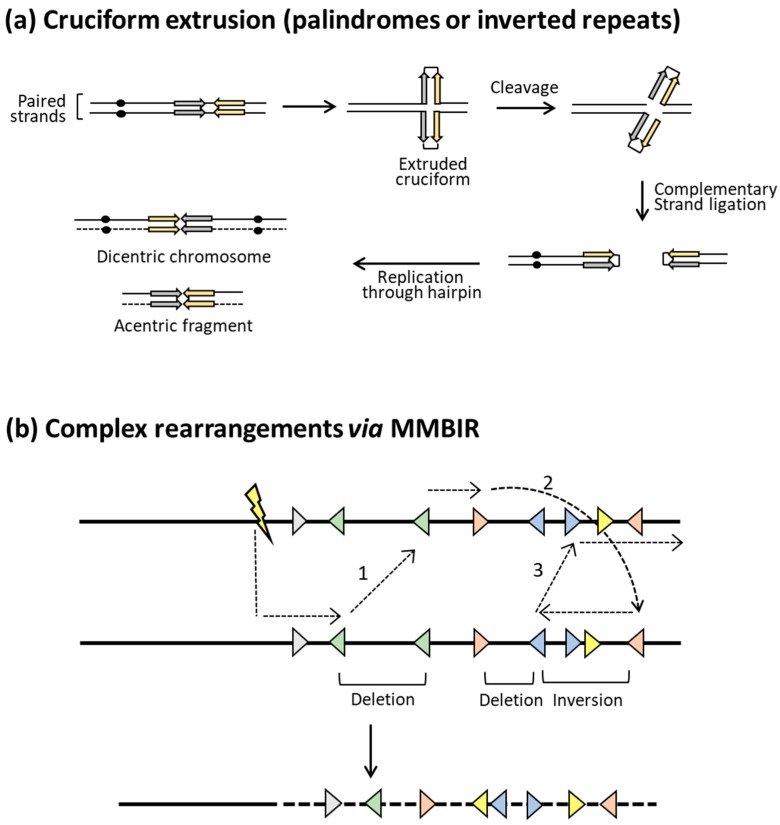
Genome rearrangements and ploidy alterations are important for adaptive change in the pathogenic fungal species Candida and Cryptococcus, which propagate primarily through clonal, asexual reproduction. These changes can occur during mitotic growth and lead to enhanced virulence, drug resistance, and persistence in chronic infections. Examples of microevolution during the course of infection were described in both human infections and mouse models. Recent discoveries defining the role of sexual, parasexual, and unisexual cycles in the evolution of these pathogenic fungi further expanded our understanding of the diversity found in and between species. During mitotic growth, damage to DNA in the form of double-strand breaks (DSBs) is repaired, and genome integrity is restored by the homologous recombination and non-homologous end-joining pathways. In addition to faithful repair, these pathways can introduce minor sequence alterations at the break site or lead to more extensive genetic alterations that include loss of heterozygosity, inversions, duplications, deletions, and translocations. In particular, the prevalence of repetitive sequences in fungal genomes provides opportunities for structural rearrangements to be generated by non-allelic (ectopic) recombination. In this review, we describe DSB repair mechanisms and the types of resulting genome alterations that were documented in the model yeast Saccharomyces cerevisiae. The relevance of similar recombination events to stress- and drug-related adaptations and in generating species diversity are discussed for the human fungal pathogens Candida albicans and Cryptococcus neoformans.
Overview
The claims and statistics of this paper haven’t been checked yet.
Free: it reads the open-access text and checks the first 5 claims that cite a source we can check. Create a free account to check every claim.
Integrity signals
Registry
Cites
Statistics
Figures
Verification
Claims the paper makes
The claims and statistics of this paper haven’t been checked yet.
Free: it reads the open-access text and checks the first 5 claims that cite a source we can check. Create a free account to check every claim.
Claims other papers make about this one
Each is checked against this paper’s own text: does it say what the citing paper says it does?
The cited source says what the claim attributes to it.
In the citing paper
“Aneuploidy, characterized by the loss or gain of chromosomes, can enhance survival under stress conditions and is considered one of the mechanisms of resistance to FLC (51).”
From Potential role of lysine acetylation in the stepwise adaptation of Candida albicans to fluconazole (2025) · cites this paper as [51]
Self-check
Percentages, sums and reported differences re-computed from the paper’s own numbers.
The self-check needs the paper’s full text.
Citations
Cites
The double-strand-break repair model for recombination
Szostak, J. W., Orr-Weaver, T. L., Rothstein, R. J., & Stahl, F. W. (1983) · Cell · doi:10.1016/0092-8674(83)90331-8 · Cited by 2,437 · cited 1×
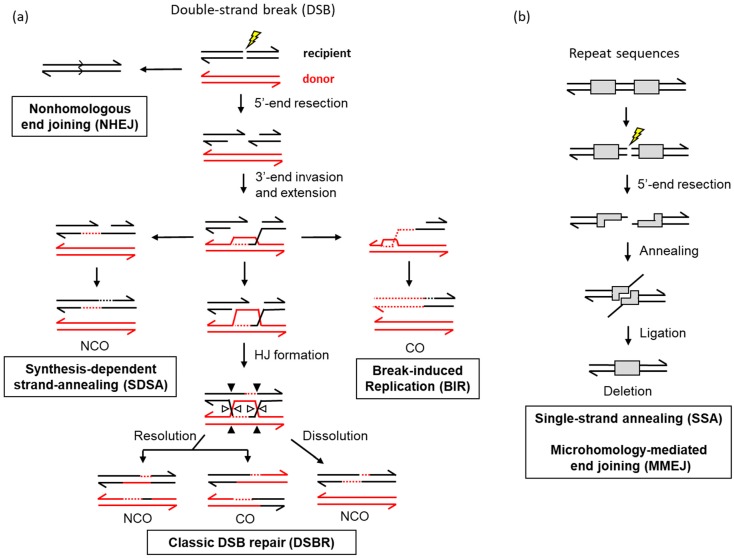
“In the currently accepted version of the classic DSB repair (DSBR) model [42], the 3′ tail on the other side of the initiating break anneals to or “captures” the complementary, displaced strand of the D-loop [43].”
BackgroundTransposable elements and the epigenetic regulation of the genome
Slotkin, R. K., & Martienssen, R. (2007) · Nature Reviews Genetics · doi:10.1038/nrg2072 · Cited by 2,044 · cited 1×
“Although transposon movement is typically suppressed to prevent genome instability [139], we recently demonstrated the mobilization of transposons in C.”
BackgroundGlobal burden of disease of HIV-associated cryptococcal meningitis: an updated analysis
Rajasingham, R., Smith, R. M., Park, B. J., Jarvis, J. N., Govender, N. P., Chiller, T. M., Denning, D. W., Loyse, A., & Boulware, D. R. (2017) · The Lancet Infectious Diseases · doi:10.1016/s1473-3099(17)30243-8 · Cited by 1,861 · cited 2×
“Cryptococcal infections are the most lethal among those caused by fungal pathogens, accounting for 15% of all AIDS-related deaths, estimated at 180,000 deaths worldwide annually [12].”
BackgroundRepair Pathway Choices and Consequences at the Double-Strand Break
Ceccaldi, R., Rondinelli, B., & D’Andrea, A. D. (2016) · Trends in Cell Biology · doi:10.1016/j.tcb.2015.07.009 · Cited by 1,499 · cited 2×
“cerevisiae are highly conserved among fungi and all eukaryotes [26,27,30].”
BackgroundDouble-Strand Break End Resection and Repair Pathway Choice
Symington, L. S., & Gautier, J. (2011) · Annual Review of Genetics · doi:10.1146/annurev-genet-110410-132435 · Cited by 1,493
Yeast transformation: a model system for the study of recombination.
Orr-Weaver, T. L., Szostak, J. W., & Rothstein, R. J. (1981) · Proceedings of the National Academy of Sciences · doi:10.1073/pnas.78.10.6354 · Cited by 1,455
Kullberg, B. J., & Arendrup, M. C. (2015) · New England Journal of Medicine · doi:10.1056/nejmra1315399 · Cited by 1,315 · cited 2×
“The resulting blood and deep tissue infections affect a quarter of a million people annually with about 50,000 deaths worldwide [7].”
BackgroundA simple and efficient method for direct gene deletion in Saccharomyces cerevisiae
Baudin, A., Ozier-Kalogeropoulos, O., Denouel, A., Lacroute, F., & Cullin, C. (1993) · Nucleic Acids Research · doi:10.1093/nar/21.14.3329 · Cited by 1,269 · cited 1×
“cerevisiae, which has an extremely high efficiency of DNA integration by HR, requiring only small regions of homology (<100 bp) [135].”
BackgroundEvolution of pathogenicity and sexual reproduction in eight Candida genomes
Butler, G., Rasmussen, M. D., Lin, M. F., Santos, M. A. S., Sakthikumar, S., Munro, C. A., Rheinbay, E., Grabherr, M., Forche, A., Reedy, J. L., et al. (2009) · Nature · doi:10.1038/nature08064 · Cited by 1,065
Horn, D. L., Neofytos, D., Anaissie, E. J., Fishman, J. A., Steinbach, W. J., Olyaei, A. J., Marr, K. A., Pfaller, M. A., Chang, C., & Webster, K. M. (2009) · Clinical Infectious Diseases · doi:10.1086/599039 · Cited by 956
Research works printed but not linked: 1
- Gusa A. Averette A. Sun S. Heitman J. Jinks-Robertson S. Transposon-mediated mutagenesis and drug resistance in Cryptococcus deneoformans in a host model of infection Proceedings of the HFP2019 Advanced Lecture Course La Colle sur Loup, France 18–24 May 2019 Abstract P4A
Cited by
Candida and Candidiasis—Opportunism Versus Pathogenicity: A Review of the Virulence Traits
Ciurea, C. N., Kosovski, I.-B., Mare, A. D., Toma, F., Pintea-Simon, I. A., & Man, A. (2020) · Microorganisms · doi:10.3390/microorganisms8060857 · Cited by 183
“The high number of STRs also favors the allelic homologous recombination [44].”
BackgroundThe Structural, Functional and Evolutionary Impact of Transposable Elements in Eukaryotes
Almojil, D., Bourgeois, Y., Falis, M., Hariyani, I. E., Wilcox, J. J. S., & Boissinot, S. (2021) · Genes · doi:10.3390/genes12060918 · Cited by 94
“While the movement and replication of TEs is an obvious source of structural variation, TEs can cause structural variation through several indirect processes, particularly those related to DNA repair and recombination [75,126,146,147].”
BackgroundGusa, A., Williams, J. D., Cho, J.-E., Averette, A. F., Sun, S., Shouse, E. M., Heitman, J., Alspaugh, J. A., & Jinks-Robertson, S. (2020) · Proceedings of the National Academy of Sciences · doi:10.1073/pnas.2001451117 · Cited by 65
“deletions, translocations, and complex rearrangements (11).”
BackgroundSelf-citationTwo-speed genome evolution drives pathogenicity in fungal pathogens of animals
Wacker, T., Helmstetter, N., Wilson, D., Fisher, M. C., Studholme, D. J., & Farrer, R. A. (2023) · Proceedings of the National Academy of Sciences · doi:10.1073/pnas.2212633120 · Cited by 62
Gusa, A. A., Yadav, V., Roth, C., Williams, J. D., Shouse, E. M., Magwene, P. M., Heitman, J., & Jinks-Robertson, S. (2023) · Proceedings of the National Academy of Sciences · doi:10.1073/pnas.2209831120 · Cited by 62
“In addition to programmed cellular responses to stress, spontaneous genomic changes that arise in the context of human fungal infections have been described (14).”
BackgroundSelf-citation
Metadata
- Authors
- Gusa, A., & Jinks-Robertson, S.
- Affiliations
- Duke Medical Center (US)
- Corresponding author
- Jinks-Robertson, Sue
- Venue
- Genes
- Publisher
- MDPI AG
- Published
- 2019-11-07
- Volume
- 10
- Issue
- 11
- Pages
- 901
- ISSN
- 2073-4425 (ISSN-L)
- PMC
- PMC6895784
- OpenAlex
- W2984368562
- Cited by
- 38
- References
- 143
- Citations by year
- 2026: 2 · 2025: 4 · 2024: 4 · 2023: 7 · 2022: 5 · 2021: 7 · 2020: 8 · 2019: 1
- FWCI
- 0.46
- Type
- journal article
- Language
- en
- Open access
- gold
- dx.doi.org
- Licence
- Locations
- Genes (publishedVersion, cc-by)
- PubMed Central (publishedVersion, cc-by)
- PubMed (publishedVersion)
- DOAJ (DOAJ: Directory of Open Access Journals) (submittedVersion, cc-by-sa)
- Funders
- National Institutes of Health (R35GM118077, R21AI133644, 2T32AI52080)
- Topics
- Life Sciences › Biochemistry, Genetics and Molecular Biology › Molecular Biology › Fungal and yeast genetics research
- Life Sciences › Biochemistry, Genetics and Molecular Biology › Molecular Biology › DNA Repair Mechanisms
- Health Sciences › Medicine › Infectious Diseases › Antifungal resistance and susceptibility
- Keywords
- mitotic recombination, genome rearrangement, ploidy changes, Candida albicans, Cryptococcus neoformans, DNA double-strand break repair, homologous recombination, non-homologous end joining, loss of heterozygosity, ectopic recombination, repetitive DNA, microevolution, drug resistance, virulence, fungal pathogenesis, Saccharomyces cerevisiae, parasexual cycle, structural rearrangement
- MeSH terms
- Adaptation, Physiological, Candida, Cryptococcus, Mitosis, Genomic Instability, Homologous Recombination
About these checks
Registry, retraction, Cites and statistics results are computed, not judged, with one exception: a printed reference that no index lists is read once by a model before it counts as a citation error. Claims are extracted by a model and kept only when their quote appears verbatim in the text; each cited source is then checked, with a model’s help, for whether it says what the claim relies on. Those verdicts can be wrong — read the claim’s quote and the cited source before relying on one.
Statistics and arithmetic are recomputed, not judged.
Confidence bands are shown only for fields calibrated on our annotated test set. None is calibrated yet, so no band is shown.
What counts as a claim ›How we measure confidence ›How we check this ›
Are you an author, or do you see a problem with this page? Request a review
How to cite
Cite CoChat for the checks on this page, and the paper for its own findings.
- This page
- CoChat. (2026). Citation check: Mitotic Recombination and Adaptive Genomic Changes in Human Pathogenic Fungi. https://app.cochat.ai/papers/10.3390/genes10110901
- The paper
- Gusa, A., & Jinks-Robertson, S. (2019). Mitotic Recombination and Adaptive Genomic Changes in Human Pathogenic Fungi. Genes. https://doi.org/10.3390/genes10110901
Data sources
Bibliographic data: Semantic Scholar, OpenAlex, Crossref.
Contains information from the Semantic Scholar Academic Graph Datasets, made available under the ODC Attribution License (ODC-BY 1.0).
Semantic Scholar’s data is described in: Kinney, R., et al. (2023). The Semantic Scholar Open Data Platform. arXiv:2301.10140.
