

The DOI matches its Crossref record; 116 of the 120 references it cites were found in a registry or an index.
The Impact of the COVID-19 Pandemic on Burnout, Compassion Fatigue, and Compassion Satisfaction in Healthcare Personnel: A Systematic Review of the Literature Published during the First Year of the Pandemic
Open accessAbstract
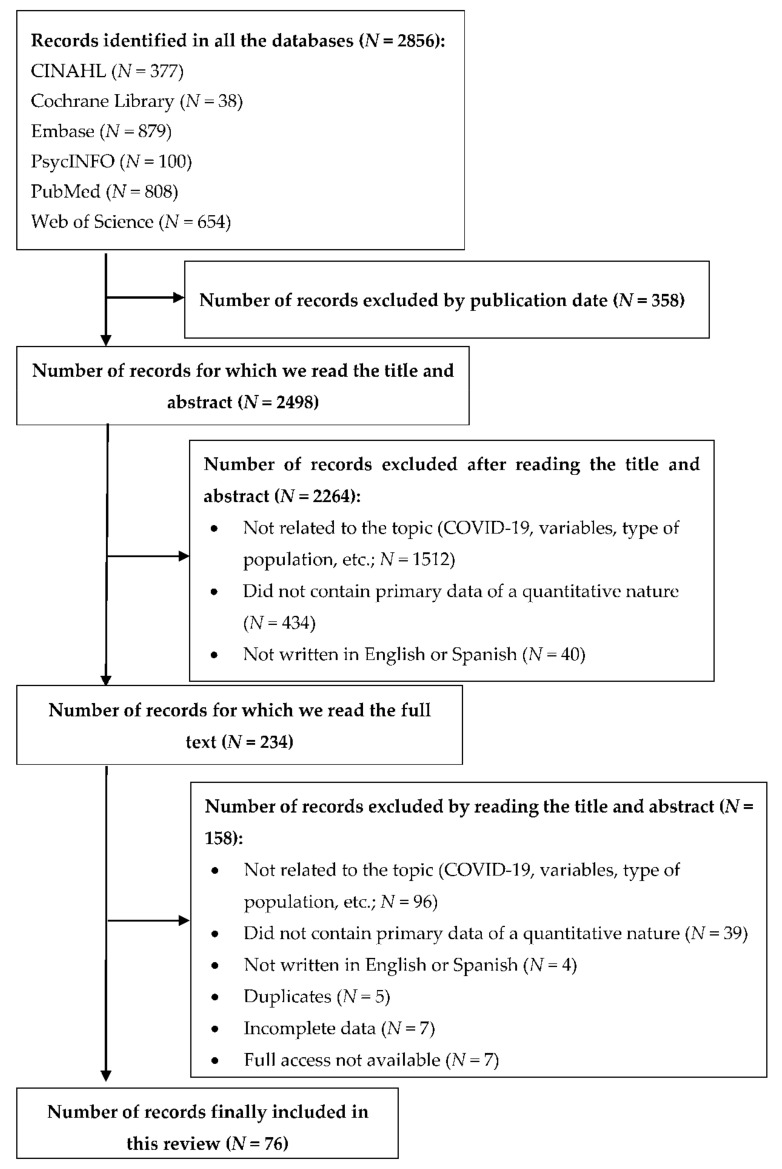
This literature review aimed to determine the level of burnout, compassion fatigue, and compassion satisfaction, as well as their associated risks and protective factors, in healthcare professionals during the first year of the COVID-19 pandemic. We reviewed 2858 records obtained from the CINAHL, Cochrane Library, Embase, PsycINFO, PubMed, and Web of Science databases, and finally included 76 in this review. The main results we found showed an increase in the rate of burnout, dimensions of emotional exhaustion, depersonalization, and compassion fatigue; a reduction in personal accomplishment; and levels of compassion satisfaction similar to those before the pandemic. The main risk factors associated with burnout were anxiety, depression, and insomnia, along with some sociodemographic variables such as being a woman or a nurse or working directly with COVID-19 patients. Comparable results were found for compassion fatigue, but information regarding compassion satisfaction was lacking. The main protective factors were resilience and social support.
Overview
The claims and statistics of this paper haven’t been checked yet.
Run the check — free, no account needed. It reads the open-access text and checks the sources it cites.
Integrity signals
Registry
Cites
Statistics
Figures
Verification
Claims the paper makes
The claims and statistics of this paper haven’t been checked yet.
Run the check — free, no account needed. It reads the open-access text and checks the sources it cites.
Claims other papers make about this one
Each is checked against this paper’s own text: does it say what the citing paper says it does?
The source backs part of the claim, not all of it — or backs it for a different population, condition or comparison.
In the citing paper
“This burden appears to have peaked during the most demanding periods of the COVID-19 pandemic”
From What do we really know about addressing burnout among healthcare workers? Maybe less than we think (2026) · cites this paper as [7]
Experimental — accuracy not yet measuredThe cited source says what the claim attributes to it.
In the citing paper
“although burnout in the healthcare field was already a long-standing issue before the pandemic.6,7”
From What do we really know about addressing burnout among healthcare workers? Maybe less than we think (2026) · cites this paper as [7]
The cited source says what the claim attributes to it.
In the citing paper
“A systematic review of research published in the first year of the pandemic found evidence for increased levels of burnout, emotional exhaustion, depersonalization and compassion fatigue among health care workers, with nurses, women and those working directly with COVID‐19 patients most impacted.”
From 2024 Alzheimer's disease facts and figures (2024) · cites this paper as [820]
Self-check
Percentages, sums and reported differences re-computed from the paper’s own numbers.
The self-check needs the paper’s full text.
Citations
Cites
1 retracted
Panagioti, M., Geraghty, K., Johnson, J., Zhou, A. Y., Panagopoulou, E. P., Chew-Graham, C. A., Peters, D. H., Hodkinson, A., Riley, R. A., & Esmail, A. (2018) · JAMA Internal Medicine · doi:10.1001/jamainternmed.2018.3713 · Cited by 1,059
RetractedPRISMA-P Group, Moher, D., Shamseer, L., Clarke, M., Ghersi, D., Liberati, A., Petticrew, M., Shekelle, P., & Stewart, L. A. (2015) · Systematic Reviews · doi:10.1186/2046-4053-4-1 · Cited by 26,223 · cited 2×
“Although several systematic reviews have recently been published on the impact of the COVID-19 pandemic on the mental health of healthcare professionals [4,30,31], very few of them specifically included dimensions of professional quality of life such as burnout [32–35], only one considered indirect trauma [36] and, to…”
BackgroundFreudenberger, H. J. (1974) · Journal of Social Issues · doi:10.1111/j.1540-4560.1974.tb00706.x · Cited by 5,463
Mental health and the COVID-19 pandemic
Pfefferbaum, B., & North, C. S. (2020) · New England Journal of Medicine · doi:10.1056/nejmp2008017 · Cited by 4,378 · cited 1×
“Among several potentially harmful factors for the health of professionals, some authors have highlighted the lack of access to adequate protective equipment [1], exhaustion resulting from wearing personal protective equipment throughout the working day, the feeling of having inadequate support [2,3], long working hour…”
BackgroundCOVID-19 and mental health: A review of the existing literature
Rajkumar, R. P. (2020) · Asian Journal of Psychiatry · doi:10.1016/j.ajp.2020.102066 · Cited by 3,574 · cited 2×
“Among several potentially harmful factors for the health of professionals, some authors have highlighted the lack of access to adequate protective equipment [1], exhaustion resulting from wearing personal protective equipment throughout the working day, the feeling of having inadequate support [2,3], long working hour…”
BackgroundPrevalence of Burnout Among Physicians: A Systematic Review
Rotenstein, L. S., Torre, M., Ramos, M. A., Rosales, R. C., Guille, C., Sen, S., & Mata, D. A. (2018) · JAMA · doi:10.1001/jama.2018.12777 · Cited by 1,904 · cited 2×
“However, for certain professional profiles such as healthcare professionals in the oncology area, elevated levels of emotional exhaustion and depersonalization had already been identified prior to the pandemic [116].”
BackgroundHealthcare staff wellbeing, burnout, and patient safety: a systematic review
Hall, L. H., Johnson, J., Watt, I., Tsipa, A., & O’Connor, D. B. (2016) · PLOS ONE · doi:10.1371/journal.pone.0159015 · Cited by 1,683 · cited 2×
“Indeed, the first two risk factors have already been recorded elsewhere in the literature [111,119].”
BackgroundResultCompassion fatigue: Psychotherapists’ chronic lack of self care.
Figley, C. R. (2002) · Journal of Clinical Psychology · doi:10.1002/jclp.10090 · Cited by 1,614
Li, Z., Ge, J., Yang, M., Feng, J., Qiao, M., Jiang, R., Bi, J., Zhan, G., Xu, X., Wang, L., et al. (2020) · Brain Behavior and Immunity · doi:10.1016/j.bbi.2020.03.007 · Cited by 1,223 · cited 4×
“Some studies indicated high scores as a consequence of the pandemic on the personal accomplishment subscale [75,78], although these were lower in other studies [7,39,52,60,84].”
BackgroundResultInfluentialHu, D., Kong, Y., Li, W., Han, Q., Zhang, X., Zhu, L. X., Wan, S. W., Liu, Z., Shen, Q., Yang, J., et al. (2020) · EClinicalMedicine · doi:10.1016/j.eclinm.2020.100424 · Cited by 936 · cited 2×
“Hu et al. (2020) [70] To assess mental health (burnout, anxiety, depression, and fear) and its associated factors among frontline nurses caring for COVID-19 patients in Wuhan, China.”
Background
Research works printed but not linked: 1
- Figley, C.R. (1995). Compassion Fatigue: Coping with Secondary Traumatic Stress Disorder in Those Who Treat the Traumatized, Routledge.
Cited by
Sorted by citations
Items 101–200 of 281
Bento, S. P., Stewart, C., Conroy, C., Smith, A., Reece, L., Jervis, K., Cole-Lewis, Y., Logan, D. E., & Randall, E. T. (2023) · Clinical Journal of Pain · doi:10.1097/ajp.0000000000001120 · Cited by 5
Galiana, L., Moreno, C., Carrero‐Planells, A., López‐Deflory, C., Pazo, P. G., Nadal-Servera, M., & Sansó, N. (2023) · BMC Medical Ethics · doi:10.1186/s12910-023-00911-2 · Cited by 5
“However, during the pandemic the factors that caused the most stress were: the lack of available material and human resources, the increase in workloads in almost all settings [8], and the emotional impact suffered during health care in the pandemic [2, 24] has been identified as one of the core factors that reduces p…”
BackgroundSelf-citationNurses’ Experience After First Wave of COVID-19: Implications for a Trauma-Informed Workforce
Lewis-O’Connor, A., Linzer, P. B., & Goldstein, E. (2023) · The Permanente Journal · doi:10.7812/tpp/23.117 · Cited by 5
Filipponi, C., Pizzoli, S. F. M., Masiero, M. A., Cutica, I., & Pravettoni, G. (2022) · Psychological Reports · doi:10.1177/00332941221129127 · Cited by 5
“Also, it would be interesting to control the impact of the COVID19 on the work-related well-being of Italian healthcare professionals since the Italian context was demonstrated to be one of the European countries most affected by the pandemic (Lluch et al., 2022).”
BackgroundSarode, A. L., Hu, X., & Dill, M. J. (2025) · Health Services Research · doi:10.1111/1475-6773.70003 · Cited by 4
Burnout and Resilience in Community Nurses During COVID-19: A Holistic Nursing Perspective
Magalhães, M. J., Gonçalves, S. D., Monteiro, M. J., & Caramelo, A. (2025) · Journal of Holistic Nursing · doi:10.1177/08980101251393563 · Cited by 4
Mathew, S., Fitts, M. S., Liddle, Z., Bourke, L., Campbell, N., Murakami‐Gold, L., Russell, D., Humphreys, J. S., Rossingh, B., Zhao, Y., et al. (2024) · BMC Family Practice · doi:10.1186/s12875-024-02485-3 · Cited by 4
“This was combined with the additional stress created by the lack of capacity for health staff to take annual leave due to both workforce shortages and lock-downs [11].”
BackgroundBurnout among health care workers: unavoidable and solvable
Kent, K. B., Goetzel, R. Z., Roemer, E. C., & Wong, A. (2025) · Epidemiologic Reviews · doi:10.1093/epirev/mxaf005 · Cited by 4
Barnard, N. B., & Coetzee, S. K. (2025) · Nursing and Health Sciences · doi:10.1111/nhs.70132 · Cited by 4
“Despite the challenges faced by nurses, compassion satisfaction can emerge from aiding others and mitigating suffering, fostering a sense of professional achievement and fulfillment (Lluch et al. 2022; Sacco et al. 2015).”
Shrubsole, K., Rogers, K. D., Wallace, S. J., Isaacs, M. L., Ong, W. X., Worrall, L. E., McCluskey, A., & Power, E. (2025) · Disability and Rehabilitation · doi:10.1080/09638288.2025.2534525 · Cited by 4
“These barriers have been compounded by an increase in staff burnout since the onset of COVID19 [62].”
Development and psychometric properties of the Compassion Fatigue Assessment Scale for Indian nurses
Sharma, S., Pareek, B., Kaur, H., Baby, P., & Ravi, R. (2025) · BMC Nursing · doi:10.1186/s12912-025-03670-0 · Cited by 4
“This finding aligns with previous research that highlights burnout as a significant contributor to compassion fatigue [46].”
Moon, S. J., & Jang, H. (2022) · Journal of Korean Critical Care Nursing · doi:10.34250/jkccn.2022.15.3.23 · Cited by 4
“이러한 급격하게 변 화하는 중환자실 업무 환경에서 중환자실 간호사는 압 도되고 두려움을 느낄 수 있으며 전문직 삶의 질의 부 정적 측면이 강화될 수 있다[31].”
Compassionate Care Within Early Intervention Caregiver Coaching
D’Agostino, S. R., Douglas, S. N., & Meadan, H. (2023) · Infants & Young Children · doi:10.1097/iyc.0000000000000238 · Cited by 4
Day to Day and Environmental Risk Factors for Psychological Distress Among Healthcare Workers
Atkins, K., Cooney, E. E., Park, S., Closser, S., Surkan, P. J., Marker, H. C., Schneider-Firestone, S., Kalb, L. G., Thrul, J., & Veenema, T. G. (2023) · Journal of Occupational and Environmental Medicine · doi:10.1097/jom.0000000000002909 · Cited by 5
Zhang, Y., Xu, Q., Ma, J., Wang, Z., & Lu, S. (2024) · Nursing Open · doi:10.1002/nop2.2081 · Cited by 3
“Lluch et al. ( 2022 ) reviewed 2858 records and included 76 in the review, and results showed an increase in the rate of burnout, dimensions of emotional exhaustion and compassion fatigue, and a reduction in the personal accomplishment of nurses.”
BackgroundJob burnout among healthcare workers—The impact of the COVID-19 pandemic
Wlazło, M., Łaskawiec-Żuławińska, D., Grajek, M. K., & Korzonek-Szlacheta, I. (2024) · Applied Psychology Research · doi:10.59400/apr.v3i1.359 · Cited by 4
Supporting Wellness, Resilience, and Community With Forest Therapy
Abookire, S. A., Ayala, S. G., & Shadick, N. A. (2024) · Global Advances in Integrative Medicine and Health · doi:10.1177/27536130241246503 · Cited by 4
Meiers, S. J., de Goumoëns, V., Thirsk, L. M., Abbott‐Anderson, K., Brysiewicz, P., Eggenberger, S. K., Heitschmidt, M. G., Kiszio, B., McAndrew, N. S., Morman, A., et al. (2024) · Intensive and Critical Care Nursing · doi:10.1016/j.iccn.2024.103773 · Cited by 4
Characterizing engagement and burnout among Certified Child Life Specialists: a mixed methods study
Burns‐Nader, S., Daniels, S. R., Boles, J. C., Keller, B. P., & Chidley, E. (2024) · Children s Health Care · doi:10.1080/02739615.2024.2370262 · Cited by 4
“In recent years, unprecedented rates of burnout and job turnover have occurred across healthcare professions (Lluch et al., 2022), including child life.”
Rosenfeld, L. C., Tepper, M. C., Leff, H. S., Wang, D., Zhang, A., Tian, L., Huttlin, E. A., Fulwiler, C., Aldis, R., Wang, P., et al. (2024) · Learning Health Systems · doi:10.1002/lrh2.10472 · Cited by 4
Panda, U., Lanoix, M., Gewurtz, R. E., Moll, S. E., & Durocher, E. (2024) · Healthcare · doi:10.3390/healthcare12232474 · Cited by 5
“First, much of the documented research on healthcare workers during the COVID-19 pandemic was focused on regulated healthcare professions such as nursing, physicians, therapists [87,88]; the work presented here sheds light on the important experiences of PSWs.”
Cosentino, C., Foà, C., Bertuol, M., Cappi, V., Riboni, S., Rossi, S., Artioli, G., & Sarli, L. (2022) · Acta bio-medica dell'Ateneo parmense/Acta biomedica · doi:10.23750/abm.v93is2.13053 · Cited by 4
Portuguese Volunteer Firefighters in the Context of the Challenges Posed by the COVID-19 Pandemic
Almeida, F. L., de Morais, J. C. P., & Pereira, A. (2022) · Social Sciences · doi:10.3390/socsci11070285 · Cited by 4
Cebolla, A., Galiana, L., Navarrete, J., Morón, D. A., Garrote‐Caparrós, E., Sansó, N., Simarro, J. V. C., Juan, M., & Blasco, M. L. (2022) · International Journal of Environmental Research and Public Health · doi:10.3390/ijerph192013137 · Cited by 8
“Healthcare (HC) professionals show high levels of psychological distress and burnout [1], which impacts their well-being [2], and also has an impact on their patients and the health care system [3].”
BackgroundSelf-citationAgeel, M., & Shbeer, A. M. (2022) · Nursing Research and Reviews · doi:10.2147/nrr.s386670 · Cited by 9
D’Agostino, S. R., Dueñas, A. D., Douglas, S. N., & Meadan, H. (2023) · Behavior Analysis in Practice · doi:10.1007/s40617-023-00831-y · Cited by 4
Building Relationships: Advanced Practice Providers and Fellows in Neonatal-Perinatal Medicine
Forman, K. R., Bruno, C. J., Izatt, S. D., Fuloria, M., Adams, A., Kim, M., Zuber, J., Cano, N., & LaTuga, M. S. (2023) · American Journal of Perinatology · doi:10.1055/s-0043-1771503 · Cited by 4
Rizzo, A., Yıldırım, M., Aziz, I. A., Çağış, Z. G., Szarpak, Ł., Nucera, G., Sitibondo, A., Khabbache, H., Chirico, F., & Nowrouzi‐Kia, B. (2023) · Healthcare · doi:10.3390/healthcare11233044 · Cited by 4
The COVID-19 pandemic and sleep medicine: a look back and a look ahead
Khosla, S., Beam, E. N., Berneking, M., Cheung, J., Epstein, L. J., Meyer, B., Ramar, K., So, J. Y., Sullivan, S. S., Wolfe, L. F., et al. (2022) · Journal of Clinical Sleep Medicine · doi:10.5664/jcsm.10102 · Cited by 4
“30,31,32 Graduate medical education Rapid switch to virtual learning.”
Editorial: Psychological Distress, Burnout, Quality of Life, and Wellness Among Healthcare Workers
Galiana, L., Kowalczuk, K., & Sansó, N. (2022) · Frontiers in Psychology · doi:10.3389/fpsyg.2022.913941 · Cited by 4
“The COVID-19 pandemic has increased pressure on health systems, forcing staff to make critical decisions in environments with multiple adverse conditions (Lluch et al., 2022).”
BackgroundSelf-citationHutto, A., Raynor, P., Tavakoli, A. S., Baliko, B., & Tosone, C. (2024) · Applied Nursing Research · doi:10.1016/j.apnr.2024.151786 · Cited by 3
Okon, S. A., Roan, C. C., & Hoopsick, R. A. (2025) · Journal of Psychiatric Research · doi:10.1016/j.jpsychires.2025.07.017 · Cited by 4
“COVID-19 and the New Hidden Curriculum of Moral Injury and Compassion Fatigue”
Joshi, I. A., & Zemel, R. (2024) · American Journal of Hospice and Palliative Medicine® · doi:10.1177/10499091241253283 · Cited by 3
Yeh, Y.-C., Sheng, W., Pan, M., Liu, H.-Y., Liu, C., & Chiou, P. (2024) · Applied Nursing Research · doi:10.1016/j.apnr.2024.151857 · Cited by 5
Cohen, T., Kanji, F. F., Zamudio, J., Breese, C., Avenido, R., Yoshizawa, C., Bartkowicz, S., Catchpole, K. C., & Anger, J. T. (2024) · Journal of Patient Safety · doi:10.1097/pts.0000000000001279 · Cited by 3
Macleod, E., Curll, S. L., Walker, I. A., Cruwys, T., Greenwood, L., Reynolds, J., Lane, J., Galati, C., Christensen, B. K., & Calear, A. L. (2025) · International Journal of Disaster Risk Reduction · doi:10.1016/j.ijdrr.2025.105195 · Cited by 5
Sayadi, I., Moradian, S. T., Mahmoudi, H., Salimi, S. H., & Moayed, M. S. (2025) · Current Psychology · doi:10.1007/s12144-025-07277-1 · Cited by 3
“The vast and rapid prevalence of the COVID-19 disease had extensive and adverse physical and psychological effects the treatment system (Asgari & Khalkhali, 2016; Lluch et al., 2022; Xie et al., 2021).”
An Examination of Factors Associated With Child Life Internship Acquisition
Boles, J. C., Keller, B. P., Maher, G., Jones, K., & Murphy, L. M. (2025) · The Journal of Child Life Psychosocial Theory and Practice · doi:10.55591/001c.142176 · Cited by 3
Gilavand, A. (2022) · Frontiers in Public Health · doi:10.3389/fpubh.2022.973690 · Cited by 3
Lomahan, S., Rauscher, G. H., & Murphy, A. M. (2023) · Cancer Medicine · doi:10.1002/cam4.5793 · Cited by 2
From Revolution to Evolution: Early Experience with Virtual-First, Outcomes-Based Primary Care
Ellner, A., Basu, N., & Phillips, R. S. (2023) · Journal of General Internal Medicine · doi:10.1007/s11606-023-08151-1 · Cited by 3
Cai, X., Li, G., Feng, H., Wang, X., He, L., Luo, D., Xu, C., Huang, Y., & Qiu, S. (2023) · Psychiatry Investigation · doi:10.30773/pi.2022.0238 · Cited by 3
Responding to the impact of COVID-19 on the mental health and well-being of health workers in LMICs
Hoover, J., Bolton, P. A., Clonchmore, A., Sussman, L. K., & Frymus, D. E. (2023) · Cambridge Prisms Global Mental Health · doi:10.1017/gmh.2023.30 · Cited by 4
Erjavec, K., & Leskovic, L. (2023) · International Journal of Occupational Medicine and Environmental Health · doi:10.13075/ijomeh.1896.02182 · Cited by 5
“Most current studies have concluded that nurses working in healthcare settings have higher levels of burnout than other HCPs [1].”
BackgroundResultInfluentialFinding compassion when compassion fatigued
Nikel, C., & Gildenblatt, L. (2023) · The International Journal of Psychiatry in Medicine · doi:10.1177/00912174231215923 · Cited by 3
Jankelová, N., Joniaková, Z., & Čambalíková, A. (2023) · Ekonomický časopis · doi:10.31577/ekoncas.2023.06-07.03 · Cited by 3
Corradi‐Dell’Acqua, C., Horisberger, G., Caillet‐Bois, D., Toraldo, A., Christ, M., Santa, V. D., Frochaux, V., Mols, P., Penaloza, A., Rezzonico, S., et al. (2024) · Clinical Psychology & Psychotherapy · doi:10.1002/cpp.2969 · Cited by 3
Smith, L. M., McNulty, B., Scroggs, E., & Yorke, A. M. (2024) · Journal of Interprofessional Care · doi:10.1080/13561820.2024.2351007 · Cited by 3
“…pandemic changed lives both personally and pro-fessionally for front-line healthcare workers including nurses, occupational therapists (OT), physical therapists (PT), and physicians working in acute care settings (Honarmand et al., 2022; Lluch et al., 2022; Tiwari et al., 2021; Yorke et al., 2023).”
BackgroundChing, G. S., Malabanan, J. C., & Cañete, J. J. O. (2025) · International Journal of Research Studies in Education · doi:10.5861/ijrse.2025.25801 · Cited by 3
Boni, R. L., & Dingley, C. (2023) · ANS. Advances in nursing science · doi:10.1097/ans.0000000000000516
COMPASSION FATIGUE, JOB STRESS AND HAPPINESS AT WORK: A STUDY ON NURSES
Tarakcı, H. D. (2023) · International Journal Of Eurasia Social Sciences · doi:10.35826/ijoess.3363 · Cited by 2
The science of families: Nurturing hope, happiness, and health
Henderson, T. L., Matthews-Juarez, P., & Obasi, S. N. (2023) · Family Relations · doi:10.1111/fare.12987 · Cited by 2
Compassion Dynamics in Medical Students: An Ecological Momentary Assessment Study
Wooldridge, J. S., Soriano, E. C., Filip, T. F., Moore, R. C., Eyler, L. T., & Herbert, M. S. (2024) · Journal of Clinical Psychology in Medical Settings · doi:10.1007/s10880-024-10003-x · Cited by 3
“A 2022 systematic review found increased compassion fatigue, burnout, and emotional exhaustion, and lack of perceived personal accomplishment among healthcare professionals during the first year of the pandemic (Lluch et al., 2022).”
Prescription for change: Unveiling burnout perspectives among pharmacy leaders
Kiriazopoulos, S., Perepelkin, J. P., & Alford, H. (2024) · Canadian Pharmacists Journal / Revue des Pharmaciens du Canada · doi:10.1177/17151635241293785 · Cited by 2
Etesaminia, S., & Tarım, M. (2025) · Journal of International Health Sciences and Management · doi:10.48121/jihsam.1639641 · Cited by 2
Vural, M. E., GEÇER, H., HACIKELEŞOĞLU, H., & Yıldırım, M. (2025) · Religions · doi:10.3390/rel16060666 · Cited by 3
“Lluch et al. (2022), in their literature review, found that the pandemic increased the sense of burnout, depersonalization, and compassion fatigue in individuals and that burnout was associated with several negative mental health indicators.”
Medical Social Workers in Hospitals: Burnout and Secondary Trauma During the COVID-19 Pandemic
Olson, L., Cabrera, A., Bickel, J., Robinson, A., Eigege, C. Y., Blanchard, K., Mandiberg, J. M., & Gearing, R. E. (2025) · Social Work in Public Health · doi:10.1080/19371918.2025.2545831 · Cited by 3
“Research has identified that preventive strategies, self-care, organizational justice, and having both individual and organizational preventive approaches serve as protective factors against the development of emotional exhaustion (Lluch et al., 2022).”
Olivencia-Carrión, M. A., Olivencia-Carrión, M. D., Fernández-Daza, M. P., Cogollo, S. J. Z., Castro, G. P., & Jiménez-Torres, M. G. (2023) · Healthcare · doi:10.3390/healthcare11060844 · Cited by 4
“These results support [6,51] studies, which found that social support was negatively correlated with the level of anxiety in university students and health professionals, respectively.”
ResultNaja, F., Hassan, H., Radwan, H. M., Kellany, F., Ismail, L. C., Hashim, M. S., Rida, W. H., Qiyas, S. J. A., & Alameddine, M. S. (2024) · PLoS ONE · doi:10.1371/journal.pone.0295904 · Cited by 2
Leach, B. C. B., Ahalt, C., Williams, B. A., & Kwan, A. T. (2024) · Journal of Correctional Health Care · doi:10.1089/jchc.23.09.0081 · Cited by 2
Craig, J., Kaplan, C. A., Rode, D. C., Stojanowski, M., Smith, C. B., & Cohen, B. (2024) · Practical Implementation of Nursing Science · doi:10.29024/pins.62 · Cited by 2
Nowrouzi‐Kia, B., King, E. C., Edwards, B. M., Nizzer, S., Yazdani, A., Gohar, B., Bani‐Fatemi, A., Howe, A. S., Fayyaz, Y., Alam, B., et al. (2024) · British Journal of Occupational Therapy · doi:10.1177/03080226241269251 · Cited by 3
“A systematic review by Lluch et al. (2022) found increased rates of burnout postpandemic compared to prepandemic levels among healthcare personnel in general.”
Fan, L.-H., Cai, J., Li, L., & Yi, L.-J. (2024) · Geriatric Nursing · doi:10.1016/j.gerinurse.2024.08.041 · Cited by 2
Wooldridge, J. S., Soriano, E. C., Chu, G. M., Shirazi, A., Shapiro, D. N., Patterson, M., Kim, H.-C., & Herbert, M. S. (2024) · JMIR Formative Research · doi:10.2196/60670 · Cited by 2
Impact of COVID-19 on nurse outcomes in the private sector of South Africa: a cross-sectional study
Gohentsemang, G. S., Coetzee, S. K., Botha, S., & Fourie, E. (2024) · BMC Nursing · doi:10.1186/s12912-024-02559-8 · Cited by 2
Fitzpatrick, P., Bye, R. A., Eriksson, C., Liu, K. P. Y., & LIM, D. J. (2025) · British Journal of Occupational Therapy · doi:10.1177/03080226241311418 · Cited by 3
Pal, R. Y., Chua, M. T., Guo, L., Kumar, R., Shi, L., & Kuan, W. S. (2025) · Medicina · doi:10.3390/medicina61020173 · Cited by 2
Heyerdahl, L. W., Guillemot, V., Lana, B., Bizel-Bizellot, G., & Giles‐Vernick, T. (2025) · BMC Public Health · doi:10.1186/s12889-025-22406-y · Cited by 2
“These concepts, used to describe frontline workers the pandemic, have some limited applicability to our findings.”
Impact of COVID-19 on Selected Nurse and Patient Outcomes in Emergency Units Across South Africa
Pienaar, A., Blignaut, A. J., Coetzee, S. K., Mather, M. F., & Fourie, E. (2025) · Journal of Emergency Nursing · doi:10.1016/j.jen.2025.02.016 · Cited by 2
Uhlig‐Reche, H., Rolin, S. N., Karnik, R., Lyons, M., & Verduzco‐Gutierrez, M. (2025) · PM&R · doi:10.1002/pmrj.13383 · Cited by 2
“21 As the symptoms of long COVID became more recognized, a 2021 cross-sectional study of senior physician specialists in Ireland found that one quarter of respondents reported that they or a colleague had experienced long COVID, and most respondents screened positive for burnout.”
Lange, Z. J., Hoover, F.-A., Holmes, T., & Uejio, C. K. (2025) · Sustainable Environment · doi:10.1080/27658511.2025.2493997 · Cited by 2
“For example, compassion fatigue due to exhaustion and care driven labor , widely witnessed in the heat of the COVID-19 pandemic, is a well-documented phenomenon among health-care practitioners (Lyles et al., 2018; Lluch et al., 2022).”
Justification and Limitations of the Duty to Treat
Millán, G. M. O. (2025) · The Journal of Medicine and Philosophy A Forum for Bioethics and Philosophy of Medicine · doi:10.1093/jmp/jhaf017 · Cited by 2
Seehra, J. K., Doleman, B., & Lund, J. N. (2025) · Journal of surgical education · doi:10.1016/j.jsurg.2025.103552 · Cited by 2
Wang, W., Xiao, H., Liu, X., Kuang, W., Shen, F., Li, X., Yu, M., & Hu, L. (2025) · International Nursing Review · doi:10.1111/inr.70095 · Cited by 2
Morera, Y., Castro, E. C., Lorenzo, E., Mahtani‐Chugani, V., & Delgado, N. (2025) · Scientific Reports · doi:10.1038/s41598-025-14602-y · Cited by 2
Quality of life vs. coping with stress by nurses during the COVID-19 pandemic
Kupcewicz, E., Piwko, G., Araminowicz-Kierklo, E., & Młynarska, K. (2025) · Frontiers in Public Health · doi:10.3389/fpubh.2025.1664792 · Cited by 2
Haezebrouck, E., & Yorke, A. M. (2023) · Journal of Acute Care Physical Therapy · doi:10.1097/jat.0000000000000213 · Cited by 3
Lee, J. C., Martin, A., & Ozaki, W. H. (2023) · Plastic & Reconstructive Surgery Global Open · doi:10.1097/gox.0000000000004793 · Cited by 2
Siddiqui, S., Mohamed, E., Johansson, A., Rock, L. K., Hartog, C. S., & Subramaniam, B. (2022) · Anesthesia & Analgesia · doi:10.1213/ane.0000000000006295 · Cited by 2
Mansoury, O., Chamsi, K., Essoli, S., Mansouri, A., Sebbani, M., Adarmouch, L., & Amine, M. (2023) · Archives des maladies professionnelles et de médecine du travail/Archives des maladies professionnelles et de l'environnement · doi:10.1016/j.admp.2023.101877 · Cited by 2
Lau, Y. T., Chia, H. T., Nadia, A. H., Shaffari, M. M., Liliwati, I., & Syazana, C. I. N. (2024) · Malaysian Family Physician · doi:10.51866/oa.597 · Cited by 2
Psychological Distress, Burnout, Quality of Life, and Wellness among Healthcare Workers
(2022) · Frontiers research topics · doi:10.3389/978-2-88976-211-8 · Cited by 1
Experiences of psychotherapists transitioning to private practice during COVID ‐19
Duquette, C., & Morgan, S. M. (2023) · Counselling and Psychotherapy Research · doi:10.1002/capr.12643 · Cited by 1
COVID ‐19 and beyond: A systematic review of adaptations to psychosocial support in oncology
Martin, M., Rice, K., Murray, C., Thorsteinsson, E., & Usher, K. J. (2024) · Journal of Advanced Nursing · doi:10.1111/jan.16175 · Cited by 1
Becker, C., Beck, K., Moser, C., Lessing, C., Arpagaus, A., Groß, S., Urben, T., Schaefert, R., Amacher, S. A., Bassetti, S., et al. (2024) · Swiss Medical Weekly · doi:10.57187/s.3634 · Cited by 1
Investigation of COVID-19 Fear and Burnout in General Surgery Assistants
Mollaoğlu, M. C., & Karadayı, K. (2024) · Online Türk Sağlık Bilimleri Dergisi · doi:10.26453/otjhs.1455690 · Cited by 1
A human factors engineering approach to improving hand hygiene quality
Boyce, M. W., Mathew, T. A., Roberts, S. C., Aniskiewicz, M. J., Krechevsky, K., Dahlberg, S. E., Frye, N., Trumpler, J. E., Evans, L. V., & Martinello, R. A. (2024) · Human Factors in Healthcare · doi:10.1016/j.hfh.2024.100085 · Cited by 1
Lin, Y., Cho, S., Hsieh, Y.-L., Chuang, Y., Hsu, C.-E., Liu, Y.-C., Sung, C.-C., Huang, Y.-H., Ku, W. L., Hsieh, M., et al. (2024) · Frontiers in Psychiatry · doi:10.3389/fpsyt.2024.1402194 · Cited by 1
Uses of the Trauma of Others: Insights from Two Ethnographic Studies of Human Service Workers
Doering‐White, J., & Smith, Y. (2024) · Social Service Review · doi:10.1086/732313 · Cited by 1
Dar, K. A., Iqbal, N., Scrumeda, A., Asif, R., Enea, V., Hassan, M., & Manciuc, C. D. (2024) · Psychiatry · doi:10.1080/00332747.2024.2435204 · Cited by 1
Resiliency Among Mass General Brigham Hospital Employees Post-COVID-19 Pandemic
Durieux, N. M., Park, E. R., Hall, D. L., Meek, J., Fricchione, G. L., Mehta, D. H., & Luberto, C. M. (2025) · Global Advances in Integrative Medicine and Health · doi:10.1177/27536130251325831 · Cited by 1
Andersson, H., Faresjö, T., Levander, V., Didriksson, H., Jönsson, C., Gagnö, G., & Chew, M. S. (2025) · Acta Anaesthesiologica Scandinavica · doi:10.1111/aas.70081 · Cited by 2
Yi, L.-J., Long, H., Yuan, J., Yang, H., He, C., Tian, X., & Herrera, M. (2025) · SAGE Open · doi:10.1177/21582440251337194 · Cited by 1
“The majority of these studies have concentrated on demographic factors and job-related variables (Lluch et al., 2022; McGrath et al., 2022).”
Peterson, K., & Dick, K. (2025) · The Nurse Practitioner · doi:10.1097/01.npr.0000000000000356 · Cited by 1
Bordarie, J., & Mourtialon, C. (2025) · Journal of Workplace Behavioral Health · doi:10.1080/15555240.2025.2563542 · Cited by 1
“Burnout and compassion fatigue are more prevalent among women, as well as among individuals experiencing depression, insomnia, and anxiety (Lluch et al., 2022).”
Meaning, Fulfillment, and the Work of Healthcare
Errasti‐Ibarrondo, B., Lemermeyer, G., & van Manen, M. (2025) · Health Care Analysis · doi:10.1007/s10728-025-00547-w · Cited by 1
Nesbit, T. S., Coker, K. A.-A. R., Abraczinskas, M., O’Neal, L. J., Grunwald, S., McKune, S. L., & Forthun, L. F. (2026) · Journal of Religion and Health · doi:10.1007/s10943-025-02515-z · Cited by 1
“The Covid-19 pandemic both exacerbated and highlighted the need to address healthcare providers’ well-being (Lluch et al., 2022).”
Physiological Resilience and Perceived Workplace Characteristics Predict Burnout Symptoms in Nurses
Bourassa, K. A., Yu, H., Bartek, N., Madan, A., Gibbons, K., Vasquez, N., Rohr, J. C., Bautista, C., Sabharwal, A., Barclay, N., et al. (2026) · Journal of Technology in Behavioral Science · doi:10.1007/s41347-026-00621-7 · Cited by 1
Burnout among healthcare professionals in Bangladesh: a narrative review
Arafat, S. M. Y., & Hossain, S. (2026) · Discover Mental Health · doi:10.1007/s44192-026-00514-4 · Cited by 1
“The COVID-19 pandemic further influenced burnout by increasing clinical workload, psychological stress, and exposure to moral and occupational risks [8].”
When Helping Hurts: Compassion Fatigue in Family Physicians
Kamajian, S. D. (2022) · Medical Journal of Southern California Clinicians · doi:10.38206/150104 · Cited by 1
Metadata
- Authors
- Lluch, C., Galiana, L., Doménech, P., & Sansó, N.
- Affiliations
- Universitat de València (ES)
- Valencian International University (ES)
- Health Research Institute of the Balearic Islands (ES)
- Corresponding author
- Sansó, Noemí
- Venue
- Healthcare
- Publisher
- MDPI AG
- Published
- 2022-02-13
- Volume
- 10
- Issue
- 2
- Pages
- 364
- ISSN
- 2227-9032 (ISSN-L)
- PMC
- PMC8872521
- OpenAlex
- W4213375660
- Cited by
- 281
- References
- 120
- Citations by year
- 2026: 24 · 2025: 62 · 2024: 79 · 2023: 76 · 2022: 40
- FWCI
- 10.74
- Type
- journal article
- Language
- en
- Open access
- gold
- doi.org
- Licence
- Locations
- Healthcare (publishedVersion, cc-by)
- PubMed Central (publishedVersion, cc-by)
- PubMed (publishedVersion)
- Repository of Digital Objects for Teaching Research and Culture (University of Valencia) (submittedVersion, cc-by-nc)
- DOAJ (DOAJ: Directory of Open Access Journals) (submittedVersion, cc-by-sa)
- Funders
- Ministry of Science and Innovation / State Research Agency /FEDER (RTI2018-094089-I00)
- Topics
- Social Sciences › Psychology › Clinical Psychology › COVID-19 and Mental Health
- Health Sciences › Health Professions › General Health Professions › Healthcare professionals’ stress and burnout
- Health Sciences › Medicine › Public Health, Environmental and Occupational Health › Occupational Health and Burnout
- Keywords
- COVID-19 pandemic, burnout, compassion fatigue, compassion satisfaction, healthcare workers, emotional exhaustion, depersonalization, personal accomplishment, risk factors, protective factors, resilience, social support, anxiety, depression, insomnia, nurses
About these checks
Registry, retraction, Cites and statistics results are computed, not judged, with one exception: a printed reference that no index lists is read once by a model before it counts as a citation error. Claims are extracted by a model and kept only when their quote appears verbatim in the text; each cited source is then checked, with a model’s help, for whether it says what the claim relies on. Those verdicts can be wrong — read the claim’s quote and the cited source before relying on one.
Statistics and arithmetic are recomputed, not judged.
Confidence bands are shown only for fields calibrated on our annotated test set. None is calibrated yet, so no band is shown.
What counts as a claim ›How we measure confidence ›How we check this ›
Are you an author, or do you see a problem with this page? Request a review
