

The DOI matches its Crossref record; 116 of the 120 references it cites were found in a registry or an index.
The Impact of the COVID-19 Pandemic on Burnout, Compassion Fatigue, and Compassion Satisfaction in Healthcare Personnel: A Systematic Review of the Literature Published during the First Year of the Pandemic
Open accessAbstract
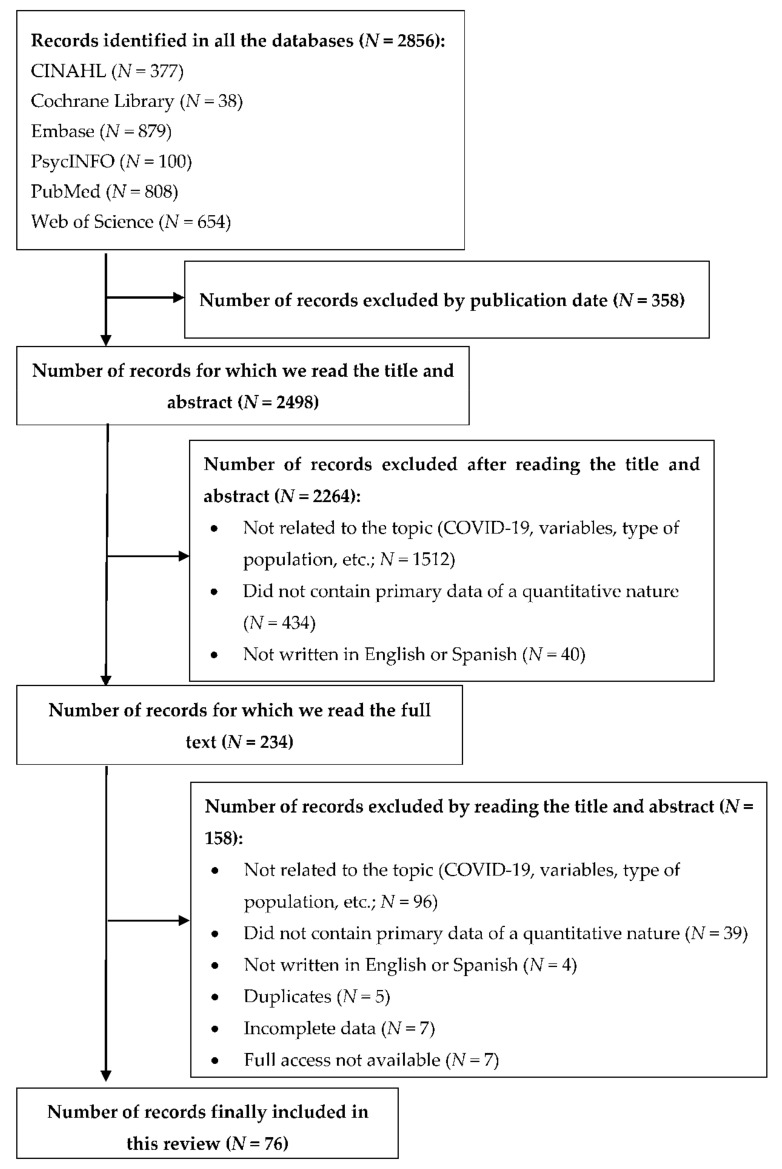
This literature review aimed to determine the level of burnout, compassion fatigue, and compassion satisfaction, as well as their associated risks and protective factors, in healthcare professionals during the first year of the COVID-19 pandemic. We reviewed 2858 records obtained from the CINAHL, Cochrane Library, Embase, PsycINFO, PubMed, and Web of Science databases, and finally included 76 in this review. The main results we found showed an increase in the rate of burnout, dimensions of emotional exhaustion, depersonalization, and compassion fatigue; a reduction in personal accomplishment; and levels of compassion satisfaction similar to those before the pandemic. The main risk factors associated with burnout were anxiety, depression, and insomnia, along with some sociodemographic variables such as being a woman or a nurse or working directly with COVID-19 patients. Comparable results were found for compassion fatigue, but information regarding compassion satisfaction was lacking. The main protective factors were resilience and social support.
Overview
The claims and statistics of this paper haven’t been checked yet.
Run the check — free, no account needed. It reads the open-access text and checks the sources it cites.
Integrity signals
Registry
Cites
Statistics
Figures
Verification
Claims the paper makes
The claims and statistics of this paper haven’t been checked yet.
Run the check — free, no account needed. It reads the open-access text and checks the sources it cites.
Claims other papers make about this one
Each is checked against this paper’s own text: does it say what the citing paper says it does?
The source backs part of the claim, not all of it — or backs it for a different population, condition or comparison.
In the citing paper
“This burden appears to have peaked during the most demanding periods of the COVID-19 pandemic”
From What do we really know about addressing burnout among healthcare workers? Maybe less than we think (2026) · cites this paper as [7]
Experimental — accuracy not yet measuredThe cited source says what the claim attributes to it.
In the citing paper
“although burnout in the healthcare field was already a long-standing issue before the pandemic.6,7”
From What do we really know about addressing burnout among healthcare workers? Maybe less than we think (2026) · cites this paper as [7]
The cited source says what the claim attributes to it.
In the citing paper
“A systematic review of research published in the first year of the pandemic found evidence for increased levels of burnout, emotional exhaustion, depersonalization and compassion fatigue among health care workers, with nurses, women and those working directly with COVID‐19 patients most impacted.”
From 2024 Alzheimer's disease facts and figures (2024) · cites this paper as [820]
Self-check
Percentages, sums and reported differences re-computed from the paper’s own numbers.
The self-check needs the paper’s full text.
Citations
Cites
1 retracted
Panagioti, M., Geraghty, K., Johnson, J., Zhou, A. Y., Panagopoulou, E. P., Chew-Graham, C. A., Peters, D. H., Hodkinson, A., Riley, R. A., & Esmail, A. (2018) · JAMA Internal Medicine · doi:10.1001/jamainternmed.2018.3713 · Cited by 1,059
RetractedPRISMA-P Group, Moher, D., Shamseer, L., Clarke, M., Ghersi, D., Liberati, A., Petticrew, M., Shekelle, P., & Stewart, L. A. (2015) · Systematic Reviews · doi:10.1186/2046-4053-4-1 · Cited by 26,223 · cited 2×
“Although several systematic reviews have recently been published on the impact of the COVID-19 pandemic on the mental health of healthcare professionals [4,30,31], very few of them specifically included dimensions of professional quality of life such as burnout [32–35], only one considered indirect trauma [36] and, to…”
BackgroundFreudenberger, H. J. (1974) · Journal of Social Issues · doi:10.1111/j.1540-4560.1974.tb00706.x · Cited by 5,463
Mental health and the COVID-19 pandemic
Pfefferbaum, B., & North, C. S. (2020) · New England Journal of Medicine · doi:10.1056/nejmp2008017 · Cited by 4,378 · cited 1×
“Among several potentially harmful factors for the health of professionals, some authors have highlighted the lack of access to adequate protective equipment [1], exhaustion resulting from wearing personal protective equipment throughout the working day, the feeling of having inadequate support [2,3], long working hour…”
BackgroundCOVID-19 and mental health: A review of the existing literature
Rajkumar, R. P. (2020) · Asian Journal of Psychiatry · doi:10.1016/j.ajp.2020.102066 · Cited by 3,574 · cited 2×
“Among several potentially harmful factors for the health of professionals, some authors have highlighted the lack of access to adequate protective equipment [1], exhaustion resulting from wearing personal protective equipment throughout the working day, the feeling of having inadequate support [2,3], long working hour…”
BackgroundPrevalence of Burnout Among Physicians: A Systematic Review
Rotenstein, L. S., Torre, M., Ramos, M. A., Rosales, R. C., Guille, C., Sen, S., & Mata, D. A. (2018) · JAMA · doi:10.1001/jama.2018.12777 · Cited by 1,904 · cited 2×
“However, for certain professional profiles such as healthcare professionals in the oncology area, elevated levels of emotional exhaustion and depersonalization had already been identified prior to the pandemic [116].”
BackgroundHealthcare staff wellbeing, burnout, and patient safety: a systematic review
Hall, L. H., Johnson, J., Watt, I., Tsipa, A., & O’Connor, D. B. (2016) · PLOS ONE · doi:10.1371/journal.pone.0159015 · Cited by 1,683 · cited 2×
“Indeed, the first two risk factors have already been recorded elsewhere in the literature [111,119].”
BackgroundResultCompassion fatigue: Psychotherapists’ chronic lack of self care.
Figley, C. R. (2002) · Journal of Clinical Psychology · doi:10.1002/jclp.10090 · Cited by 1,614
Li, Z., Ge, J., Yang, M., Feng, J., Qiao, M., Jiang, R., Bi, J., Zhan, G., Xu, X., Wang, L., et al. (2020) · Brain Behavior and Immunity · doi:10.1016/j.bbi.2020.03.007 · Cited by 1,223 · cited 4×
“Some studies indicated high scores as a consequence of the pandemic on the personal accomplishment subscale [75,78], although these were lower in other studies [7,39,52,60,84].”
BackgroundResultInfluentialHu, D., Kong, Y., Li, W., Han, Q., Zhang, X., Zhu, L. X., Wan, S. W., Liu, Z., Shen, Q., Yang, J., et al. (2020) · EClinicalMedicine · doi:10.1016/j.eclinm.2020.100424 · Cited by 936 · cited 2×
“Hu et al. (2020) [70] To assess mental health (burnout, anxiety, depression, and fear) and its associated factors among frontline nurses caring for COVID-19 patients in Wuhan, China.”
BackgroundCai, H., Tu, B., Ma, J., Chen, L., Fu, L., Jiang, Y., & Zhuang, Q. (2020) · Medical Science Monitor · doi:10.12659/msm.924171 · Cited by 843
Moreno, L., Talavera‐Velasco, B., García-Albuerne, Y., & Martín‐García, J. (2020) · International Journal of Environmental Research and Public Health · doi:10.3390/ijerph17155514 · Cited by 834 · cited 4×
“Of note, some studies referred to the concept as compassion fatigue [62,66,91,95,101,109] while others referred to it as secondary or vicarious trauma [17,38,44,45,67,77,80,97,101,102].”
BackgroundInfluentialBarello, S., Palamenghi, L., & Graffigna, G. (2020) · Psychiatry Research · doi:10.1016/j.psychres.2020.113129 · Cited by 713 · cited 3×
“Author and Year Aims Country Sample Results Barello et al. (2020b) [43] To report work-related psychological pressure, emotional exhaustion, and somatic symptoms during the COVID-19 outbreak among healthcare workers in Italy.”
Backgroundvan Mol, M. M. C., Kompanje, E. J. O., Benoît, D., Bakker, J., & Nijkamp, M. D. (2015) · PLoS ONE · doi:10.1371/journal.pone.0136955 · Cited by 702
Hooper, C., Craig, J. B., Janvrin, D. R., Wetsel, M. A., & Reimels, E. (2010) · Journal of Emergency Nursing · doi:10.1016/j.jen.2009.11.027 · Cited by 647 · cited 2×
“Finally, compassion satisfaction was only studied in four (5%) of the studies included in this current review [45,62,91,95] and the ProQOOL-5 questionnaire [23] was used to assess this factor in all these studies.”
BackgroundMethodChen, R., Sun, C., Chen, J., Jen, H., Kang, X. L., Kao, C., & Chou, K. (2020) · International Journal of Mental Health Nursing · doi:10.1111/inm.12796 · Cited by 599 · cited 1×
“(2020a) [47] To assess the prevalence of anxiety and depression symptoms in healthcare workers during the COVID-19 pandemic, and to identify the associated risk factors.”
BackgroundSerrano-Ripoll, M. J., Meneses-Echavez, J. F., Ricci-Cabello, I., Fraile-Navarro, D., Fiol-deRoque, M. A., Pastor-Moreno, G., Castro, A., Ruiz-Pérez, I., Zamanillo Campos, R., & Gonçalves-Bradley, D. C. (2020) · Journal of Affective Disorders · doi:10.1016/j.jad.2020.08.034 · Cited by 592 · cited 1×
“Although several systematic reviews have recently been published on the impact of the COVID-19 pandemic on the mental health of healthcare professionals [4,30,31], very few of them specifically included dimensions of professional quality of life such as burnout [32–35], only one considered indirect trauma [36] and, to…”
BackgroundHeath, C., Sommerfield, A., & von Ungern-Sternberg, B. S. (2020) · Anaesthesia · doi:10.1111/anae.15180 · Cited by 577 · cited 1×
“Indeed, the first two risk factors have already been recorded elsewhere in the literature [111,119].”
BackgroundLiu, C.-Y., Yang, Y.-Z., Zhang, X.-M., Xu, X., Dou, Q.-L., Zhang, W.-W., & Cheng, A. S. K. (2020) · Epidemiology and Infection · doi:10.1017/s0950268820001107 · Cited by 549 · cited 10×
“Liu et al. (2020) [7] To find out factors related to job burnoutin Chinese health workers.”
BackgroundResultInfluentialBride, B. E., Radey, M., & Figley, C. R. (2007) · Clinical Social Work Journal · doi:10.1007/s10615-007-0091-7 · Cited by 544 · cited 1×
“However, more and more academics and clinicians have pointed out that burnout alone is insufficient to explain the emotional problems presented by practitioners in general healthcare contexts [13,14] or in the field of palliative care, in particular [15,16].”
BackgroundThe psychological impact of the COVID-19 outbreak on health professionals: A cross-sectional study
Giusti, E. M., Pedroli, E., D'Aniello, G. E., Stramba Badiale, C., Pietrabissa, G., Manna, C., Stramba Badiale, M., Riva, G., Castelnuovo, G., & Molinari, E. (2020) · Frontiers in Psychology · doi:10.3389/fpsyg.2020.01684 · Cited by 533 · cited 16×
“India n = 1117 Physicians: 1667 Nurses: 198 Administration staff: 90 Paramedics (dietitians, physiotherapists, pharmacists, etc.): 43 Others: 28 Men: 55% Women: 45% Burnout (CBI): The mean scores were as follows: personal exhaustion: M = 49.72 ± 18.68; work exhaustion: M = 39.69 ± 20.43; and exhaustion related to the…”
BackgroundMethodInfluentialWu, Y., Wang, J., Luo, C.-G., Hu, S., Lin, X., Anderson, A. E., Bruera, E., Yang, X.-X., Wei, S., & Qian, Y. (2020) · Journal of Pain and Symptom Management · doi:10.1016/j.jpainsymman.2020.04.008 · Cited by 530
Ruiz‐Fernández, M. D., Ramos‐Pichardo, J. D., Ibáñez‐Masero, O., Cabrera‐Troya, J., Carmona‐Rega, M. I., & Ortega‐Galán, Á. M. (2020) · Journal of Clinical Nursing · doi:10.1111/jocn.15469 · Cited by 514 · cited 4×
“In terms of the workplace, the results were also contradictory; some research indicated that health workers on the frontline against COVID-19 suffered less burnout [58,104], while the majority found higher burnout scores among these same health workers [40,63,69,72,93,95,101,106,109].”
BackgroundResultInfluentialRaudenská, J., Šteinerová, V., Javůrková, A., Urits, I., Kaye, A. D., Viswanath, O., & Varrassi, G. (2020) · Best practice & research. Clinical anaesthesiology · doi:10.1016/j.bpa.2020.07.008 · Cited by 494 · cited 2×
“For example, the review by Sharifi et al. [35] on burnout among healthcare workers during the COVID-19 pandemic only included 12 studies; Chew et al. considered 23 studies evaluating emotional exhaustion and other variables; and Amanullah and Ramesh [32] only included five articles.”
BackgroundBuselli, R., Corsi, M., Baldanzi, S., Chiumiento, M., Lupo, E. D., Dell’Oste, V., Bertelloni, C. A., Massimetti, G., Dell’Osso, L., Cristaudo, A., et al. (2020) · International Journal of Environmental Research and Public Health · doi:10.3390/ijerph17176180 · Cited by 465 · cited 6×
“[118] implemented in emergency nurses before the COVID-19 pandemic, our results suggest that healthcare professionals had high scores for compassion fatigue [17,44,45,91,95,101], although other studies [38] have reported medium levels for this factor.”
BackgroundResultInfluentialSoto-Rubio, A. L., Giménez‐Espert, M. D. C., & Prado‐Gascó, V. (2020) · International Journal of Environmental Research and Public Health · doi:10.3390/ijerph17217998 · Cited by 423 · cited 4×
“The risk factors, or those that showed a positive relationship with burnout, were anxiety and depression [82,106,108], insomnia [96,106], and moral damage [106].”
BackgroundInfluentialRestauri, N., & Sheridan, A. D. (2020) · Journal of the American College of Radiology · doi:10.1016/j.jacr.2020.05.021 · Cited by 422
Trumello, C., Bramanti, S. M., Ballarotto, G., Candelori, C., Cerniglia, L., Cimino, S., Crudele, M., Lombardi, L., Pignataro, S., Viceconti, M. L., et al. (2020) · International Journal of Environmental Research and Public Health · doi:10.3390/ijerph17228358 · Cited by 419 · cited 2×
“Author and Year Aims Country Sample Results Trumello et al. (2020) [101] To analyze the psychological adjustment of Italian healthcare professionals during the peak of the COVID-19 pandemic in terms of perceived stress, anxiety, depression, and professional quality of life.”
BackgroundMethodBurton, A., Burgess, C., Dean, S., Koutsopoulou, G. Z., & Hugh‐Jones, S. (2017) · Stress and Health · doi:10.1002/smi.2673 · Cited by 412 · cited 1×
“The academic literature from the past few decades has revealed that health professionals are especially vulnerable to burnout because their work context is characterized by high-risk decisions, dealing with the public, and expectations of compassion and sensitivity [12].”
BackgroundSymptoms of burnout in intensive care unit specialists facing the COVID-19 outbreak
Azoulay, É., Waele, J. J. D., Ferrer, R., Staudinger, T., Borkowska, M., Póvoa, P. M. S. R., Iliopoulou, K., Artigas, A., Schaller, S. J., Shankar‐Hari, M., et al. (2020) · Annals of Intensive Care · doi:10.1186/s13613-020-00722-3 · Cited by 408
Matsuo, T., Kobayashi, D., Taki, F., Sakamoto, F., Uehara, Y., Mori, N., & Fukui, T. (2020) · JAMA Network Open · doi:10.1001/jamanetworkopen.2020.17271 · Cited by 404 · cited 6×
“Manzano-García and Ayala-Calvo (2020) [83] To study whether the perception of threat generated by the COVID-19 pandemic explained burnout in nurses, and its moderating effect on the influence of resources and demands on burnout.”
BackgroundMethodInfluentialExposure to COVID-19 patients increases physician trainee stress and burnout
Kannampallil, T. G., Goss, C. W., Evanoff, B. A., Strickland, J. R., McAlister, R. P., & Duncan, J. (2020) · PLOS ONE · doi:10.1371/journal.pone.0237301 · Cited by 389 · cited 3×
“Protective factors, or those whose presence was related to lower levels of burnout, included resilience and social support [70], and quality of life [46].”
BackgroundMurat, M., Köse, S., & Şavaşer, S. (2020) · International Journal of Mental Health Nursing · doi:10.1111/inm.12818 · Cited by 369 · cited 3×
“(2020) [85] To assess the prevalence of burnout among frontline workers during the COVID-19 pandemic in Japan based on job categories and other factors.”
BackgroundXie, W., Chen, L., Feng, F., Okoli, C. T. C., Tang, P., Zeng, L., Jin, M., Zhang, Y., & Wang, J. (2021) · International Journal of Nursing Studies · doi:10.1016/j.ijnurstu.2021.103973 · Cited by 369 · cited 1×
“very heterogeneous prevalences ranging from 0% to 80% [117], the levels of burnout in the studies we considered were more homogeneous, ranging from 30% to 60% [39,43,55,71].”
BackgroundBurnout in the intensive care unit professionals
Chuang, C.-H., Tseng, P., Lin, C.-Y., Lin, K., & Chen, Y. (2016) · Medicine · doi:10.1097/md.0000000000005629 · Cited by 360
Sansó, N., Galiana, L., Oliver, A., Pascual, A., Sinclair, S., & Benito, E. (2015) · Journal of Pain and Symptom Management · doi:10.1016/j.jpainsymman.2015.02.013 · Cited by 330 · cited 1×
“However, more and more academics and clinicians have pointed out that burnout alone is insufficient to explain the emotional problems presented by practitioners in general healthcare contexts [13,14] or in the field of palliative care, in particular [15,16].”
BackgroundSelf-citationZerbini, G., Ebigbo, A., Reicherts, P., Miriam Kunz, A., & Messman, H. (2020) · PubMed Central · doi:10.3205/000281 · Cited by 326 · cited 4×
“The most-examined country was the United States of America, with 15 studies [38,49,50,52,56,65,72,73,75,81,86,92,94,104,109].”
BackgroundResultInfluentialKulkarni, A. P., Khasne, R. W., Dhakulkar, B. S., & Mahajan, H. C. (2020) · Indian Journal of Critical Care Medicine · doi:10.5005/jp-journals-10071-23518 · Cited by 325 · cited 3×
“Khasne et al. (2020) [76] To study the prevalence of burnout dueto the COVID-19 pandemic in India.”
BackgroundBurnout syndrome in Romanian medical residents in time of the COVID-19 pandemic
Dimitriu, M. C. T., Pantea-Stoian, A., Smaranda, A. C., Nica, A. A., Carap, A. C., Constantin, V. D., Davitoiu, A. M., Cirstoveanu, C., Bacalbasa, N., Bratu, O. G., et al. (2020) · Medical Hypotheses · doi:10.1016/j.mehy.2020.109972 · Cited by 319 · cited 3×
“Work stress also influenced burnout [69] and the lack of personal protective equipment affected emotional exhaustion [39,57].”
BackgroundCompassion fatigue in healthcare providers: A systematic review and meta-analysis.
Cavanagh, N., Cockett, G., Heinrich, C., Doig, L., Fiest, K., Guichon, J. R., Page, S., Mitchell, I., & Doig, C. J. (2020) · Nursing Ethics · doi:10.1177/0969733019889400 · Cited by 307 · cited 2×
“[113], in which 88% of the articles they examined evaluated exhaustion, while compassion fatigue and compassion satisfaction was considered only in 21% and 5% of the cases, respectively.”
BackgroundBurnout and Associated Factors Among Health Care Workers in Singapore During the COVID-19 Pandemic
Tan, B. Y., Kanneganti, A., Lim, L. J. H., Tan, M., Chua, Y. X., Tan, L. F., Sia, C., Denning, M., Goh, E. T., Purkayastha, S., et al. (2020) · Journal of the American Medical Directors Association · doi:10.1016/j.jamda.2020.09.035 · Cited by 280 · cited 6×
“(2020) [98] To analyze the effect of psychosocial risks and emotional intelligence on burnout.”
BackgroundMethodInfluentialShahrour, G., & Dardas, L. A. (2020) · Journal of Nursing Management · doi:10.1111/jonm.13124 · Cited by 276 · cited 1×
“In this sense, a large body of recent evidence now suggests that many healthcare professionals are suffering from compassion fatigue [17,18].”
BackgroundThe impact of COVID-19 on physician burnout globally: a review
Amanullah, S., & Ramesh Shankar, R. (2020) · Healthcare · doi:10.3390/healthcare8040421 · Cited by 276
Burnout among Portuguese healthcare workers during the COVID-19 pandemic
Duarte, I., Teixeira, A., Castro, L., Marina, S., Ribeiro, C. S. M. F., Jácome, C. I. O., Martins, V., Ribeiro‐Vaz, I., Pinheiro, H. C., Silva, A. R., et al. (2020) · BMC Public Health · doi:10.1186/s12889-020-09980-z · Cited by 263 · cited 6×
“United States of America n = 583 Health professionals: Contact with COVID-19 patients: 277 No contact with COVID-19 patients: 129 Men: 25 Women: 396 Burnout (MBI), compassion fatigue (OFER-15), insomnia (PFI), post-traumatic stress (SPRINT), and psychological distress (PHQ-4): Burnout: emotional exhaustion: M = 32.21…”
BackgroundMethodInfluentialZhang, Y., Wang, C., Pan, W., Zheng, J., Gao, J., Huang, X., Cai, S., Zhai, Y., Latour, J. M., & Zhu, C. (2020) · Frontiers in Psychiatry · doi:10.3389/fpsyt.2020.565520 · Cited by 259 · cited 2×
“Zhang et al. (2020) [107] To identify stressors and burnout in frontline nurses caring for COVID-19 patients in Wuhan and Shanghai, and explore the perceived and effective moral support strategies.”
BackgroundSagherian, K., Steege, L. M. B., Cobb, S. J., & Cho, H. (2020) · Journal of Clinical Nursing · doi:10.1111/jocn.15566 · Cited by 254 · cited 2×
“Author and Year Aims Country Sample Results Sagherian et al. (2020) [91] To know the prevalence of insomnia, fatigue, and psychological well-being (exhaustion, post-traumatic stress, and psychological distress), and examine the differences in these measures based on the working characteristics of…”
BackgroundThe threat of COVID‐19 and its influence on nursing staff burnout
García, G. M., & Calvo, J. C. A. (2020) · Journal of Advanced Nursing · doi:10.1111/jan.14642 · Cited by 248 · cited 10×
“The instruments most used to assess these variables were the ProQOL-5 [45,62,66,81,91,95,101] and STSS [17,97,102].”
BackgroundMethodInfluentialTraumatic Stress in Healthcare Workers during COVID-19 Pandemic: A Review of the Immediate Impact
Benfante, A., Di Tella, M., Romeo, A., & Castelli, L. (2020) · Frontiers in Psychology · doi:10.3389/fpsyg.2020.569935 · Cited by 237 · cited 1×
“[35] on burnout among healthcare workers during the COVID-19 pandemic only included 12 studies; Chew et al.”
BackgroundVagni, M., Maiorano, T., Giostra, V., & Pajardi, D. (2020) · Frontiers in Psychology · doi:10.3389/fpsyg.2020.566912 · Cited by 223 · cited 9×
“Burnout (OLBI): The occupational stress (p = 0.006) and burnout (p = 0.002) scores in the exposure group were significantly higher than in the non-exposure group.”
BackgroundMethodInfluentialDinçer, B., & İnangil, D. (2020) · EXPLORE · doi:10.1016/j.explore.2020.11.012 · Cited by 215 · cited 2×
“In terms of the workplace, the results were also contradictory; some research indicated that health workers on the frontline against COVID-19 suffered less burnout [58,104], while the majority found higher burnout scores among these same health workers [40,63,69,72,93,95,101,106,109].”
BackgroundResultDobson, H., Malpas, C. B., Burrell, A. J. C., Gurvich, C., Chen, L., Kulkarni, J., & Winton‐Brown, T. (2020) · Australasian Psychiatry · doi:10.1177/1039856220965045 · Cited by 204 · cited 9×
“United States of America n = 583 Health professionals: Contact with COVID-19 patients: 277 No contact with COVID-19 patients: 129 Men: 25 Women: 396 Burnout (MBI), compassion fatigue (OFER-15), insomnia (PFI), post-traumatic stress (SPRINT), and psychological distress (PHQ-4): Burnout: emotional exhaustion: M = 32.21…”
BackgroundMethodResultInfluentialJose, S., Dhandapani, M., & Cyriac, M. C. (2020) · Indian Journal of Critical Care Medicine · doi:10.5005/jp-journals-10071-23667 · Cited by 201 · cited 10×
“Burnout (OLBI): The occupational stress (p = 0.006) and burnout (p = 0.002) scores in the exposure group were significantly higher than in the non-exposure group.”
BackgroundMethodResultInfluentialThe Coronavirus Disease 2019 Pandemic’s Effect on Critical Care Resources and Health-Care Providers
Wahlster, S., Sharma, M., Lewis, A. K., Patel, P. V., Hartog, C. S., Jannotta, G. E., Blissitt, P. A., Kross, E. K., Kassebaum, N. J., Greer, D. M., et al. (2020) · CHEST Journal · doi:10.1016/j.chest.2020.09.070 · Cited by 199
Çelmeçe, N., & Menekay, M. (2020) · Frontiers in Psychology · doi:10.3389/fpsyg.2020.597624 · Cited by 199 · cited 1×
“Author and Year Aims Country Sample Results Çelmeçe and Menekay (2020) [46] To determine the effect of the levels of stress, anxiety, and exhaustion on the quality of life of health professionals who actively worked in hospitals during the COVID-19 pandemic.”
BackgroundYörük, S., & Güler, D. S. (2020) · Perspectives In Psychiatric Care · doi:10.1111/ppc.12659 · Cited by 192 · cited 4×
“Other authors developed an ad-hoc questionnaire [94,103] or used instruments such as the CBI [49,63,66,67,76], OLBI [53,65,69,100], ProQOL [45,62], PFI [61,72,109] or CESQT [83,98].”
BackgroundMethodInfluentialBlanco‐Donoso, L. M., Moreno‐Jiménez, J. E., Amutio, A., Gallego‐Alberto, L., Jiménez, B. M., & Garrosa, E. (2020) · Journal of Applied Gerontology · doi:10.1177/0733464820964153 · Cited by 184 · cited 5×
“(2020b) [43] To report work-related psychological pressure, emotional exhaustion, and somatic symptoms during the COVID-19 outbreak among healthcare workers in Italy.”
BackgroundResultInfluentialChen, J., Liu, X., Wang, D., Jin, Y., He, M., Ma, Y., Zhao, X., Song, S., Zhang, L., Xiang, X., et al. (2020) · Social Psychiatry and Psychiatric Epidemiology · doi:10.1007/s00127-020-01954-1 · Cited by 176 · cited 3×
“Çelmeçe and Menekay (2020) [46] To determine the effect of the levels of stress, anxiety, and exhaustion on the quality of life of health professionals who actively worked in hospitals during the COVID-19 pandemic.”
BackgroundSharifi, M., Asadi‐Pooya, A. A., & Mousavi‐Roknabadi, R. S. (2021) · Archives of Academic Emergency Medicine · doi:10.22037/aaem.v9i1.1004 · Cited by 176
Prevalence, Risk Factors, and Levels of Burnout Among Oncology Nurses: A Systematic Review
Gómez‐Urquiza, J. L., Aneas-López, A. B., Fuente-Solana, E. I. D. L., Albendín‐García, L., Díaz‐Rodríguez, L., & la Fuente, G. A. C. (2016) · Oncology nursing forum · doi:10.1188/16.onf.e104-e120 · Cited by 174
Rodriguez, R. M., Medak, A. J., Baumann, B. M., Lim, S. C., Chinnock, B. F., Frazier, R., & Cooper, R. J. (2020) · Academic Emergency Medicine · doi:10.1111/acem.14065 · Cited by 172 · cited 3×
“The most-examined country was the United States of America, with 15 studies [38,49,50,52,56,65,72,73,75,81,86,92,94,104,109].”
BackgroundMonte, C. D., Monaco, S., Mariani, R., & Trani, M. D. (2020) · Frontiers in Psychology · doi:10.3389/fpsyg.2020.567201 · Cited by 166 · cited 3×
“Author and Year Aims Country Sample Results Di Monte et al. (2020) [57] To explore the relationships between the dimensions of exhaustion and various psychological characteristics in Italian primary care physicians during the COVID-19 emergency.”
BackgroundLizano, E. L. (2015) · Human Services Organizations Management Leadership & Governance · doi:10.1080/23303131.2015.1014122 · Cited by 162
Civantos, A. M., Byrnes, Y. M., Chang, C., Prasad, A., Chorath, K. T., Poonia, S. K., Jenks, C. M., Bur, A. M., Thakkar, P., Graboyes, E. M., et al. (2020) · Head & Neck · doi:10.1002/hed.26292 · Cited by 162 · cited 5×
“Civantos et al. (2020b) [51] To assess the symptoms of exhaustion, anxiety, distress, and depression in the participants.”
BackgroundInfluentialKoh, M. Y. H., Chong, P. H., Neo, P. S. H., Ong, Y. J., Yong, W. C., Ong, W. Y., Shen, M. L. J., & Hum, A. Y. M. (2015) · Palliative Medicine · doi:10.1177/0269216315575850 · Cited by 159 · cited 1×
“Compassion satisfaction occurs when exposure to traumatic and distress-related events produces satisfaction [24] derived from the pleasure of helping others [22] and providing a means to alleviate suffering [24].”
BackgroundLópez, J. Á. M., Lázaro-Pérez, C., Galán, J. G., & Martínez, M. D. M. F. (2020) · Journal of Clinical Medicine · doi:10.3390/jcm9093029 · Cited by 157 · cited 5×
“Spain n = 1422 health workers Men: 194 Women: 1228 Burnout (MBI-HHS), TEPT (IES-R), anxiety and depression (HADS), and resilience (BRS): Emotional exhaustion: 584 (41”
BackgroundInfluentialImpact of Fear of COVID-19 Pandemic on the Mental Health of Nurses in Pakistan
Khattak, S. R., Saeed, I., Rehman, S. U., & Fayaz, M. (2021) · Journal of Loss and Trauma · doi:10.1080/15325024.2020.1814580 · Cited by 150 · cited 4×
“Some studies indicated high scores as a consequence of the pandemic on the personal accomplishment subscale [75,78], although these were lower in other studies [7,39,52,60,84].”
BackgroundResultInfluentialIran, I., & Iran, I. (2020) · Investigación y Educación en Enfermería · doi:10.17533/udea.iee.v38n2e03 · Cited by 144 · cited 11×
“India n = 1117 Physicians: 1667 Nurses: 198 Administration staff: 90 Paramedics (dietitians, physiotherapists, pharmacists, etc.): 43 Others: 28 Men: 55% Women: 45% Burnout (CBI): The mean scores were as follows: personal exhaustion: M = 49.72 ± 18.68; work exhaustion: M = 39.69 ± 20.43; and exhaustion related to the…”
BackgroundMethodResultInfluentialBurnout amongst emergency healthcare workers during the COVID-19 pandemic: A multi-center study
Chor, W. P. D., Ng, W. M., Cheng, L. T. W., Situ, W., Chong, J. W., Ng, L. Y. A., Mok, P. L., Yau, Y. W., & Lin, Z. (2020) · The American Journal of Emergency Medicine · doi:10.1016/j.ajem.2020.10.040 · Cited by 140 · cited 6×
“[48] included the largest number of participants (12,596 people), while the smallest study cohort was limited to 80 participants [59].”
BackgroundInfluentialFactors Associated with Burnout Among Physicians: An Evaluation During a Period of COVID-19 Pandemic
Dinibutun, S. R. (2020) · Journal of Healthcare Leadership · doi:10.2147/jhl.s270440 · Cited by 134 · cited 4×
“[48] included the largest number of participants (12,596 people), while the smallest study cohort was limited to 80 participants [59].”
BackgroundInfluentialColeman, J. R., Abdelsattar, J. M., Glocker, R. J., Carmichael, H., Vigneshwar, N., Ryan, R., Qiu, Q., Nayyar, A., Visenio, M. R., Sonntag, C. C., et al. (2020) · Journal of the American College of Surgeons · doi:10.1016/j.jamcollsurg.2020.09.026 · Cited by 128 · cited 3×
“(2020b) [51] To assess the symptoms of exhaustion, anxiety, distress, and depression in the participants.”
BackgroundCompassion fatigue in critical care nurses
Alharbi, J. N., Jackson, D. W., & Usher, K. J. (2019) · Saudi Medical Journal · doi:10.15537/smj.2019.11.24569 · Cited by 125 · cited 1×
“The concept of compassion fatigue was first introduced by Joinson [19] to characterize a state of reduced capacity for compassion as a consequence of exhaustion caused by contact with the suffering of others [20].”
BackgroundMoral injury in health-care workers during COVID-19 pandemic.
Litam, S. D. A., & Balkin, R. S. (2020) · Traumatology An International Journal · doi:10.1037/trm0000290 · Cited by 122 · cited 2×
“[79] found that following a coping strategies program resulted in lower levels of burnout among healthcare professionals.”
BackgroundNg, K. Y. Y., Zhou, S., Tan, S. H., Ishak, N. D. B., Goh, Z. Z. S., Chua, Z. Y., Chia, J. M. X., Chew, E. L., Shwe, T. T., Mok, J. K. Y., et al. (2020) · JCO Global Oncology · doi:10.1200/go.20.00374 · Cited by 121 · cited 3×
“Ng et al. (2020) [88] To assess the prevalence of burnout in oncological health professionals during the COVID-19 pandemic.”
BackgroundArpacıoğlu, S., Gurler, M., & Çakıroğlu, S. (2020) · International Journal of Social Psychiatry · doi:10.1177/0020764020940742 · Cited by 113 · cited 12×
“The instruments most used to assess these variables were the ProQOL-5 [45,62,66,81,91,95,101] and STSS [17,97,102].”
BackgroundMethodResultInfluentialBurnout levels and sleep quality of COVID‐19 heroes
Sayılan, A. A., Kulakaç, N., & Uzun, S. (2020) · Perspectives In Psychiatric Care · doi:10.1111/ppc.12678 · Cited by 111 · cited 4×
“(2020) [94] To assess the levels of anxiety and exhaustion, changes in life, changes at home, and measures to relieve the stress of emergency physicians in the United States during the COVID-19 pandemic.”
BackgroundMethodInfluentialElhadi, M., Msherghi, A. A. A., Elgzairi, M., Alhashimi, A., Bouhuwaish, A. E. M., Biala, M. I., Abuelmeda, S., Khel, S., Khaled, A., Alsoufi, A., et al. (2020) · Frontiers in Psychiatry · doi:10.3389/fpsyt.2020.579563 · Cited by 105 · cited 16×
“The levels of compassion satisfaction were generally medium or high [62], and were similar to those from before the COVID-19 pandemic.”
BackgroundMethodResultInfluentialGarcía‐Iglesias, J. J., Gómez-Salgado, J. C., Martín-Pereira, J., Fagundo-Rivera, J., Ayuso-Murillo, D., Riera, J. R. M., & Ruíz-Frutos, C. (2020) · PubMed Central · Cited by 103
Ortega‐Campos, E., Vargas-Román, K., Velando‐Soriano, A., Suleiman‐Martos, N., la Fuente, G. A. C., Albendín‐García, L., & Gómez‐Urquiza, J. L. (2019) · Sustainability · doi:10.3390/su12010072 · Cited by 101 · cited 2×
“Specifically, in many of the studies [7,39,43,52,63,64,71,88], the scores for emotional exhaustion and depersonalization exceeded the medium–high levels obtained in pre-pandemic reviews [111,114,115].”
ResultKhalafallah, A. M., Lam, S., Gami, A., Dornbos, D. L., Sivakumar, W., Johnson, J. N., & Mukherjee, D. (2020) · Journal of Clinical Neuroscience · doi:10.1016/j.jocn.2020.08.012 · Cited by 101 · cited 7×
“Khalafallah et al. (2020a) [74] Investigate the impact of the COVID-19 pandemic on the workflow, burnout, and career satisfaction of neurosurgery residents in the US.”
BackgroundInfluentialPsychotherapists’ vicarious traumatization during the COVID-19 pandemic.
Doorn, K. A., Békés, V., Prout, T. A., & Hoffman, L. (2020) · Psychological Trauma Theory Research Practice and Policy · doi:10.1037/tra0000868 · Cited by 93
Abdelhafiz, A. S., Ali, A. M. M., Ziady, H. H., Maaly, A. M., Alorabi, M., & Sultan, E. A. (2020) · Frontiers in Public Health · doi:10.3389/fpubh.2020.590190 · Cited by 92 · cited 6×
“Abdelhafiz et al. (2020) [39] To assess the prevalence of burnout in Egyptian physicians during the COVID-19 pandemic and study the associated risk factors and possible consequences.”
BackgroundResultInfluentialCorreia, I. F., & Almeida, A. E. (2020) · Frontiers in Psychology · doi:10.3389/fpsyg.2020.566139 · Cited by 91 · cited 7×
“Some studies indicated high scores as a consequence of the pandemic on the personal accomplishment subscale [75,78], although these were lower in other studies [7,39,52,60,84].”
BackgroundResultInfluentialCOVID-19 Outbreak Can Change the Job Burnout in Health Care Professionals
Liu, X., Chen, J., Wang, D., Li, X., Wang, E., Jin, Y., Ma, Y., Yu, C. J., Luo, C., Zhang, L., et al. (2020) · Frontiers in Psychiatry · doi:10.3389/fpsyt.2020.563781 · Cited by 88 · cited 2×
“Liu et al. (2020) [7] To find out factors related to job burnoutin Chinese health workers.”
BackgroundSystematic Review of Burnout Risk Factors among European Healthcare Professionals
Bria, M., Băban, A., & Dumitrascu, D. L. (2012) · Cognitie, Creier, Comportament · Cited by 85
Wang, Z., Koenig, H. G., Yan, T., Jing, W., Mu, S., Liu, H., & Guangtian, L. (2020) · BMC Psychiatry · doi:10.1186/s12888-020-02954-w · Cited by 85 · cited 4×
“The risk factors, or those that showed a positive relationship with burnout, were anxiety and depression [82,106,108], insomnia [96,106], and moral damage [106].”
BackgroundResultInfluentialLázaro-Pérez, C., López, J. Á. M., Galán, J. G., & Menéses, E. L. (2020) · International Journal of Environmental Research and Public Health · doi:10.3390/ijerph17165938 · Cited by 84 · cited 10×
“India n = 1117 Physicians: 1667 Nurses: 198 Administration staff: 90 Paramedics (dietitians, physiotherapists, pharmacists, etc.): 43 Others: 28 Men: 55% Women: 45% Burnout (CBI): The mean scores were as follows: personal exhaustion: M = 49.72 ± 18.68; work exhaustion: M = 39.69 ± 20.43; and exhaustion related to the…”
BackgroundMethodInfluentialSantamaría, M. D., Ozamiz-Etxebarria, N., Redondo, I., Gorrotxategi, M. P., & Jaureguizar, J. (2020) · Frontiers in Psychology · doi:10.3389/fpsyg.2020.606121 · Cited by 81 · cited 3×
“Some studies indicated high scores as a consequence of the pandemic on the personal accomplishment subscale [75,78], although these were lower in other studies [7,39,52,60,84].”
BackgroundResultde Wit, K., Mercuri, M., Wallner, C., Clayton, N., Archambault, P. M., Ritchie, K., Gérin‐Lajoie, C., Gray, S. H., Schwartz, L. J., & Chan, T. M. (2020) · Journal of the American College of Emergency Physicians Open · doi:10.1002/emp2.12225 · Cited by 79 · cited 4×
“De Wit et al. (2020) [56] To report on burnout and describe the psychological effects of working as a Canadian emergency physician during the first weeks of the COVID-19 pandemic.”
BackgroundInfluentialKotera, Y., Ozaki, A., Miyatake, H., Tsunetoshi, C., Nishikawa, Y., & Tanimoto, T. E. (2021) · Current Psychology · doi:10.1007/s12144-021-01514-z · Cited by 79
Mental health among head and neck surgeons in Brazil during the COVID-19 pandemic: A national study
Civantos, A. M., Bertelli, A. A. T., Gonçalves, A. J., Getzen, E. J., Chang, C., Long, Q., & Rajasekaran, K. (2020) · American Journal of Otolaryngology · doi:10.1016/j.amjoto.2020.102694 · Cited by 78 · cited 12×
“India n = 1117 Physicians: 1667 Nurses: 198 Administration staff: 90 Paramedics (dietitians, physiotherapists, pharmacists, etc.): 43 Others: 28 Men: 55% Women: 45% Burnout (CBI): The mean scores were as follows: personal exhaustion: M = 49.72 ± 18.68; work exhaustion: M = 39.69 ± 20.43; and exhaustion related to the…”
InfluentialBurnout and career satisfaction among attending neurosurgeons during the COVID-19 pandemic
Khalafallah, A. M., Lam, S., Gami, A., Dornbos, D., Sivakumar, W., Johnson, J. N., & Mukherjee, D. R. (2020) · Clinical Neurology and Neurosurgery · doi:10.1016/j.clineuro.2020.106193 · Cited by 78 · cited 10×
“Khalafallah et al. (2020a) [74] Investigate the impact of the COVID-19 pandemic on the workflow, burnout, and career satisfaction of neurosurgery residents in the US.”
BackgroundMethodResultInfluentialOsama, M., Zaheer, F., Saeed, H., Anees, K., Jawed, Q., Syed, S. H., & Sheikh, B. A. (2020) · International Journal of Surgery · doi:10.1016/j.ijsu.2020.06.004 · Cited by 76 · cited 2×
“(2020) [87] To determine levels of stress, depression, and burnout among frontline nurses.”
BackgroundCravero, A., Kim, N. J., Feld, L. D., Berry, K., Rabiee, A., Bazarbashi, N., Bassin, S. R., Lee, T.-H., Moon, A. M., Qi, X., et al. (2020) · Postgraduate Medical Journal · doi:10.1136/postgradmedj-2020-138789 · Cited by 72 · cited 7×
“Burnout (OLBI): The occupational stress (p = 0.006) and burnout (p = 0.002) scores in the exposure group were significantly higher than in the non-exposure group.”
BackgroundMethodInfluentialGaliana, L., Sansó, N., Muñoz-Martínez, I., Vidal‐Blanco, G., Oliver, A., & Larkin, P. J. (2021) · Journal of Pain and Symptom Management · doi:10.1016/j.jpainsymman.2021.07.004 · Cited by 72 · cited 1×
“However, more and more academics and clinicians have pointed out that burnout alone is insufficient to explain the emotional problems presented by practitioners in general healthcare contexts [13,14] or in the field of palliative care, in particular [15,16].”
BackgroundSelf-citationChew, Q. H., Wei, K., Vasoo, S. S., & Sim, K. (2020) · The Journal of Clinical Psychiatry · doi:10.4088/jcp.20r13450 · Cited by 65 · cited 1×
“[120] found that preventive strategies, self-care, organizational justice, and having individual and organizational preventive strategies were protective factors against the development of emotional exhaustion.”
BackgroundLange, M., Joo, S., Couette, P.-A., Jaegher, S. D., Joly, F., & Humbert, X. (2020) · Annales Pharmaceutiques Françaises · doi:10.1016/j.pharma.2020.09.002 · Cited by 64 · cited 5×
“Spain n = 1422 health workers Men: 194 Women: 1228 Burnout (MBI-HHS), TEPT (IES-R), anxiety and depression (HADS), and resilience (BRS): Emotional exhaustion: 584 (41”
BackgroundMethodInfluentialGalli, F., Pozzi, G., Ruggiero, F., Mameli, F., Cavicchioli, M., Barbieri, S., Canevini, M. P., Priori, A., Pravettoni, G., Sani, G., et al. (2020) · Frontiers in Psychiatry · doi:10.3389/fpsyt.2020.568664 · Cited by 64 · cited 3×
“Although several systematic reviews have recently been published on the impact of the COVID-19 pandemic on the mental health of healthcare professionals [4,30,31], very few of them specifically included dimensions of professional quality of life such as burnout [32–35], only one considered indirect trauma [36] and, to…”
BackgroundBarello, S., Palamenghi, L., & Graffigna, G. (2020) · Frontiers in Psychology · doi:10.3389/fpsyg.2020.02179 · Cited by 63 · cited 3×
“(2020) [42] Document the prevalence of mental health outcomes in intensive care unit (ICU) specialists facing the COVID-19 outbreak.”
BackgroundDemartini, B., Nisticò, V., D’Agostino, A., Priori, A., & Gambini, O. (2020) · Frontiers in Psychiatry · doi:10.3389/fpsyt.2020.561345 · Cited by 63 · cited 3×
“The number of patients attended to also appeared to influence the level of exhaustion: the more COVID-19 patients seen by the participants, the higher their levels of exhaustion [54].”
BackgroundInfluentialSurgeon Burnout: Defining, Identifying, and Addressing the New Reality
Senturk, J., & Melnitchouk, N. (2019) · Clinics in Colon and Rectal Surgery · doi:10.1055/s-0039-1692709 · Cited by 62
Kelker, H. P., Yoder, K., Musey, P. I., Harris, M., Johnson, O., Sarmiento, E. J., Vyas, P. K., Henderson, B., Adams, Z. W., & Welch, J. L. (2021) · BMC Emergency Medicine · doi:10.1186/s12873-021-00425-3 · Cited by 61
Franza, F., Basta, R., Pellegrino, F., Solomita, B., & Fasano, V. (2020) · PubMed · Cited by 60
The Early Impact of the Covid-19 Emergency on Mental Health Workers: A Survey in Lombardy, Italy
Rapisarda, F., Vallarino, M., Cavallini, E., Barbato, A., Brousseau‐Paradis, C., Benedictis, L. D., & LESAGE, A. D. (2020) · International Journal of Environmental Research and Public Health · doi:10.3390/ijerph17228615 · Cited by 57 · cited 18×
“The instruments most used to assess these variables were the ProQOL-5 [45,62,66,81,91,95,101] and STSS [17,97,102].”
BackgroundMethodResultInfluentialHaj, M. E., Allain, P., Annweiler, C., Boutoleau‐Bretonnière, C., Chapelet, G., Gallouj, K., Kapogiannis, D., Roche, J., & Boudoukha, A. H. (2020) · Journal of Alzheimer s Disease · doi:10.3233/jad-201029 · Cited by 49 · cited 12×
“India n = 1117 Physicians: 1667 Nurses: 198 Administration staff: 90 Paramedics (dietitians, physiotherapists, pharmacists, etc.): 43 Others: 28 Men: 55% Women: 45% Burnout (CBI): The mean scores were as follows: personal exhaustion: M = 49.72 ± 18.68; work exhaustion: M = 39.69 ± 20.43; and exhaustion related to the…”
BackgroundMethodResultInfluentialThe Korean Society of Infectious Diseases, Park, S. Y., Kim, B., Jung, D. S., Jung, S., Oh, W. S., Kim, S., Peck, K. R., & Chang, H. (2020) · BMC Public Health · doi:10.1186/s12889-020-09886-w · Cited by 47
Aebischer, O., Weilenmann, S., Gachoud, D., Méan, M., & Spiller, T. R. (2020) · Swiss Medical Weekly · doi:10.4414/smw.2020.20418 · Cited by 47 · cited 9×
“Spain n = 1422 health workers Men: 194 Women: 1228 Burnout (MBI-HHS), TEPT (IES-R), anxiety and depression (HADS), and resilience (BRS): Emotional exhaustion: 584 (41”
BackgroundResultInfluentialSansó, N., Galiana, L., Oliver, A., Tomás-Salvá, M., & Vidal‐Blanco, G. (2020) · International Journal of Environmental Research and Public Health · doi:10.3390/ijerph17124366 · Cited by 46
Self-citationThe Effect of COVID-19 on Interventional Pain Management Practices: A Physician Burnout Survey
Soin, A. (2020) · Pain Physician · doi:10.36076/ppj.2020/23/s271 · Cited by 46 · cited 3×
“(2020) [40] To compare the physical and psychological health of Swiss medical students involved in the COVID-19 response with that of their non-involved peers.”
BackgroundResultPrasad, A., Civantos, A. M., Byrnes, Y. M., Chorath, K. T., Poonia, S. K., Chang, C., Graboyes, E. M., Bur, A. M., Thakkar, P., Deng, J., et al. (2020) · OTO Open · doi:10.1177/2473974x20948835 · Cited by 44 · cited 5×
“Spain n = 1422 health workers Men: 194 Women: 1228 Burnout (MBI-HHS), TEPT (IES-R), anxiety and depression (HADS), and resilience (BRS): Emotional exhaustion: 584 (41”
BackgroundInfluentialSecoșan, I., Vîrgă, D., Crăiniceanu, Z. P., & Bratu, T. (2020) · Behavioral Sciences · doi:10.3390/bs10110164 · Cited by 38 · cited 15×
“Secosan et al. (2020) [97] To identify the mediating effect of insomnia and exhaustion on secondary trauma and mental health in frontline health professionals during the COVID-19 pandemic.”
BackgroundMethodResultInfluentialResilience and Burnout Resources in Respiratory Care Departments
Miller, A. G., Roberts, K. J., Hinkson, C. R., Davis, G., Strickland, S. L., & Rehder, K. J. (2020) · Respiratory Care · doi:10.4187/respcare.08440 · Cited by 36
Samaniego-Pinho, A., Alfonso Urzúa, M., Bernal, M. B., & Vera-Villarroel, P. (2020) · Revista Interamericana de Psicología/Interamerican Journal of Psychology · doi:10.30849/ripijp.v54i1.1298 · Cited by 34 · cited 2×
“(2020) [89] To measure the positive and negative impacts of the pandemic on surgical residency programs and on the lives of surgical residents.”
BackgroundExploring anxiety levels in healthcare workers during COVID-19 pandemic: Turkey sample
Şahin, C. U., & Kulakaç, N. (2021) · Current Psychology · doi:10.1007/s12144-021-01730-7 · Cited by 32 · cited 1×
“Among several potentially harmful factors for the health of professionals, some authors have highlighted the lack of access to adequate protective equipment [1], exhaustion resulting from wearing personal protective equipment throughout the working day, the feeling of having inadequate support [2,3], long working hour…”
BackgroundSpiller, T. R., Méan, M., Ernst, J., Sazpinar, O., Gehrke, S., Paolercio, F., Petry, H., Pfaltz, M. C., Morina, N., Aebischer, O., et al. (2020) · Psychological Medicine · doi:10.1017/s0033291720003128 · Cited by 31 · cited 9×
“The instruments most used to assess these variables were the ProQOL-5 [45,62,66,81,91,95,101] and STSS [17,97,102].”
BackgroundMethodInfluentialS.D. Asfendiyarov Kazakh National Medical University, R. O. K., LEE, S., ROZYBAKIEVA, Z., S.D. Asfendiyarov Kazakh National Medical University, R. O. K., ASIMOV, M., S.D. Asfendiyarov Kazakh National Medical University, R. O. K., BAGIYAROVA, F., S.D. Asfendiyarov Kazakh National Medical University, R. O. K., TAZHIYEVA, A., S.D. Asfendiyarov Kazakh National Medical University, R. O. K., et al. (2020) · Archives of the Balkan Medical Union · doi:10.31688/abmu.2020.55.3.04 · Cited by 13
Franza, F., Pellegrino, F., Buono, G. D., Solomita, B., & Fasano, V. (2020) · European Neuropsychopharmacology · doi:10.1016/j.euroneuro.2020.09.619 · Cited by 6 · cited 1×
“Giusti et al. (2020) [68] To identify the prevalence of burnout and psychological suffering in health professionals during the early phases of the COVID-19 pandemic.”
Background
Research works printed but not linked: 1
- Figley, C.R. (1995). Compassion Fatigue: Coping with Secondary Traumatic Stress Disorder in Those Who Treat the Traumatized, Routledge.
Cited by
Sorted by citations
2024 Alzheimer's disease facts and figures
(2024) · Alzheimer's & Dementia · doi:10.1002/alz.13809 · Cited by 2,536
Poon, E. G., Lemak, C. H., Rojas, J. C., Guptill, J., & Classen, D. C. (2025) · Journal of the American Medical Informatics Association · doi:10.1093/jamia/ocaf065 · Cited by 194
Third-party evaluators perceive AI as more compassionate than expert humans
Ovsyannikova, D., de Mello, V. O., & Inzlicht, M. (2025) · Communications Psychology · doi:10.1038/s44271-024-00182-6 · Cited by 159
Compassion fatigue in healthcare providers: a scoping review
Garnett, A., Hui, L., Oleynikov, C., & Boamah, S. A. (2023) · BMC Health Services Research · doi:10.1186/s12913-023-10356-3 · Cited by 114
“Burnout and secondary trauma are suggested to be mediated by compassion satisfaction—the pleasure that comes from helping behavior [11, 12].”
BackgroundPatterns in Physician Burnout in a Stable-Linked Cohort
Ortega, M. V., Hidrue, M. K., Lehrhoff, S. R., Ellis, D. B., Sisodia, R. C., Curry, W. T., Carmen, M. G. D., & Wasfy, J. H. (2023) · JAMA Network Open · doi:10.1001/jamanetworkopen.2023.36745 · Cited by 100
Metadata
- Authors
- Lluch, C., Galiana, L., Doménech, P., & Sansó, N.
- Affiliations
- Universitat de València (ES)
- Valencian International University (ES)
- Health Research Institute of the Balearic Islands (ES)
- Corresponding author
- Sansó, Noemí
- Venue
- Healthcare
- Publisher
- MDPI AG
- Published
- 2022-02-13
- Volume
- 10
- Issue
- 2
- Pages
- 364
- ISSN
- 2227-9032 (ISSN-L)
- PMC
- PMC8872521
- OpenAlex
- W4213375660
- Cited by
- 281
- References
- 120
- Citations by year
- 2026: 24 · 2025: 62 · 2024: 79 · 2023: 76 · 2022: 40
- FWCI
- 10.74
- Type
- journal article
- Language
- en
- Open access
- gold
- doi.org
- Licence
- Locations
- Healthcare (publishedVersion, cc-by)
- PubMed Central (publishedVersion, cc-by)
- PubMed (publishedVersion)
- Repository of Digital Objects for Teaching Research and Culture (University of Valencia) (submittedVersion, cc-by-nc)
- DOAJ (DOAJ: Directory of Open Access Journals) (submittedVersion, cc-by-sa)
- Funders
- Ministry of Science and Innovation / State Research Agency /FEDER (RTI2018-094089-I00)
- Topics
- Social Sciences › Psychology › Clinical Psychology › COVID-19 and Mental Health
- Health Sciences › Health Professions › General Health Professions › Healthcare professionals’ stress and burnout
- Health Sciences › Medicine › Public Health, Environmental and Occupational Health › Occupational Health and Burnout
- Keywords
- COVID-19 pandemic, burnout, compassion fatigue, compassion satisfaction, healthcare workers, emotional exhaustion, depersonalization, personal accomplishment, risk factors, protective factors, resilience, social support, anxiety, depression, insomnia, nurses
About these checks
Registry, retraction, Cites and statistics results are computed, not judged, with one exception: a printed reference that no index lists is read once by a model before it counts as a citation error. Claims are extracted by a model and kept only when their quote appears verbatim in the text; each cited source is then checked, with a model’s help, for whether it says what the claim relies on. Those verdicts can be wrong — read the claim’s quote and the cited source before relying on one.
Statistics and arithmetic are recomputed, not judged.
Confidence bands are shown only for fields calibrated on our annotated test set. None is calibrated yet, so no band is shown.
What counts as a claim ›How we measure confidence ›How we check this ›
Are you an author, or do you see a problem with this page? Request a review
