

Economics of Artificial Intelligence in Healthcare: Diagnosis vs. Treatment
Open accessThe DOI matches its Crossref record; 195 of the 198 references it cites were found in a registry or an index.
Abstract
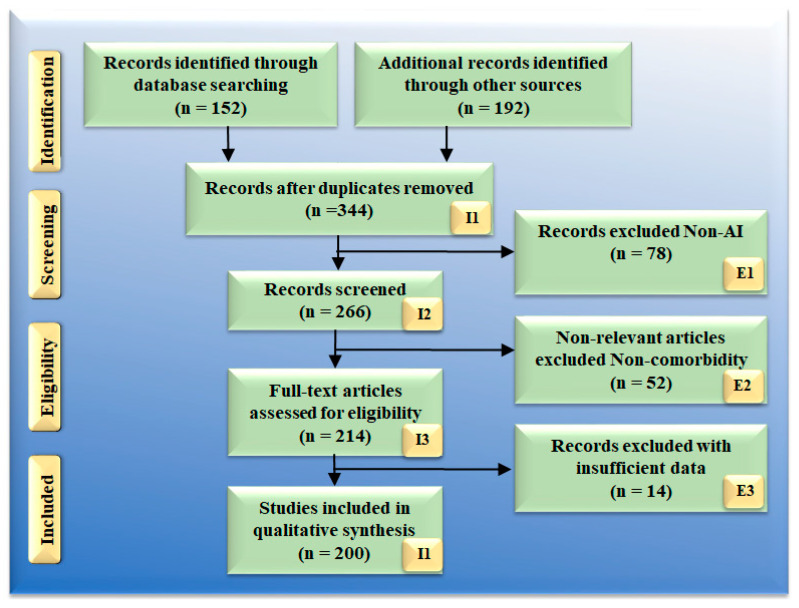
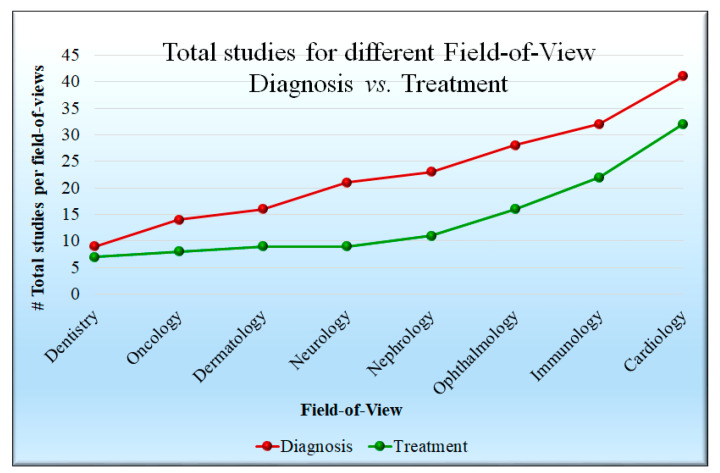
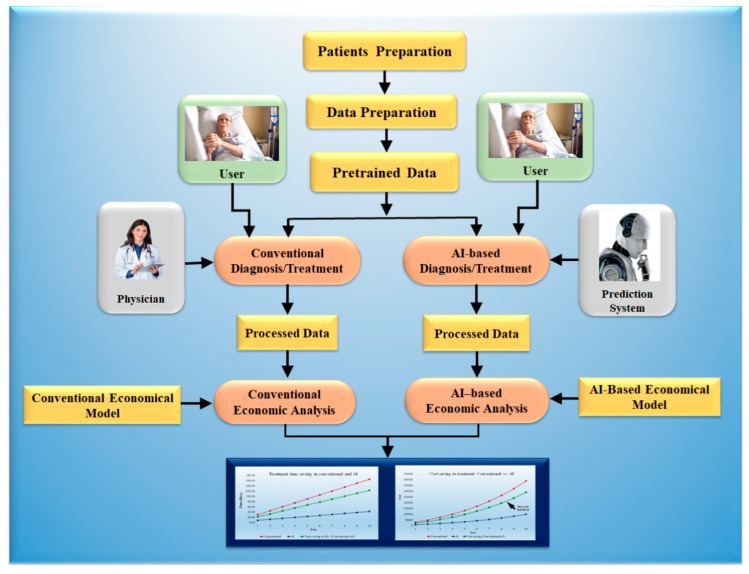
Motivation: The price of medical treatment continues to rise due to (i) an increasing population; (ii) an aging human growth; (iii) disease prevalence; (iv) a rise in the frequency of patients that utilize health care services; and (v) increase in the price. Objective: Artificial Intelligence (AI) is already well-known for its superiority in various healthcare applications, including the segmentation of lesions in images, speech recognition, smartphone personal assistants, navigation, ride-sharing apps, and many more. Our study is based on two hypotheses: (i) AI offers more economic solutions compared to conventional methods; (ii) AI treatment offers stronger economics compared to AI diagnosis. This novel study aims to evaluate AI technology in the context of healthcare costs, namely in the areas of diagnosis and treatment, and then compare it to the traditional or non-AI-based approaches. Methodology: PRISMA was used to select the best 200 studies for AI in healthcare with a primary focus on cost reduction, especially towards diagnosis and treatment. We defined the diagnosis and treatment architectures, investigated their characteristics, and categorized the roles that AI plays in the diagnostic and therapeutic paradigms. We experimented with various combinations of different assumptions by integrating AI and then comparing it against conventional costs. Lastly, we dwell on three powerful future concepts of AI, namely, pruning, bias, explainability, and regulatory approvals of AI systems. Conclusions: The model shows tremendous cost savings using AI tools in diagnosis and treatment. The economics of AI can be improved by incorporating pruning, reduction in AI bias, explainability, and regulatory approvals.
Overview
The claims and statistics of this paper haven’t been checked yet.
Free: it reads the open-access text and checks the first 5 claims that cite a source we can check. Create a free account to check every claim.
Integrity signals
Registry
Cites
Statistics
Figures
Verification
Claims the paper makes
The claims and statistics of this paper haven’t been checked yet.
Free: it reads the open-access text and checks the first 5 claims that cite a source we can check. Create a free account to check every claim.
Claims other papers make about this one
Each is checked against this paper’s own text: does it say what the citing paper says it does?
The cited source says what the claim attributes to it.
In the citing paper
“Regulatory constraints may also play a role, as seen in sectors like healthcare, where AI integration faces compliance hurdles.26”
From The widespread adoption of large language model-assisted writing across society (2025) · cites this paper as [26]
Self-check
Percentages, sums and reported differences re-computed from the paper’s own numbers.
The self-check needs the paper’s full text.
Citations
Cites
Deep learning in medical image analysis
Shen, D., Wu, G., & Suk, H.-I. (2017) · Annual Review of Biomedical Engineering · doi:10.1146/annurev-bioeng-071516-044442 · Cited by 4,968 · cited 2×
“CNN can employ high‐level features to diagnose medical conditions [39,134].”
BackgroundMethodThe potential for artificial intelligence in healthcare
Davenport, T., & Kalakota, R. (2019) · Future Healthcare Journal · doi:10.7861/futurehosp.6-2-94 · Cited by 3,800
An introduction to kernel-based learning algorithms
Muller, K.-R., Mika, S., Ratsch, G., Tsuda, K., & Scholkopf, B. (2001) · IEEE Transactions on Neural Networks · doi:10.1109/72.914517 · Cited by 3,473
(1989) · Cited by 3,214
ARTIFICIAL INTELLIGENCE FOR THE REAL WORLD
(2023) · International Research Journal of Modernization in Engineering Technology and Science · doi:10.56726/irjmets42512 · Cited by 1,434 · cited 1×
“However, static or increasing human employment means that AI technologies are unlikely to significantly cut the costs of medical diagnosis and treatment throughout that timeframe [197].”
BackgroundLiu, X., Cruz Rivera, S., Moher, D., Calvert, M. J., Denniston, A. K., The SPIRIT-AI and CONSORT-AI Working Group, SPIRIT-AI and CONSORT-AI Steering Group, Chan, A.-W., Darzi, A., Holmes, C., et al. (2020) · Nature Medicine · doi:10.1038/s41591-020-1034-x · Cited by 1,421
Can machine-learning improve cardiovascular risk prediction using routine clinical data?
Weng, S. F., Reps, J., Kai, J., Garibaldi, J. M., & Qureshi, N. (2017) · PLOS ONE · doi:10.1371/journal.pone.0174944 · Cited by 1,346
Lung pattern classification for interstitial lung diseases using a deep convolutional neural network
Anthimopoulos, M., Christodoulidis, S., Ebner, L., Christe, A., & Mougiakakou, S. (2016) · IEEE Transactions on Medical Imaging · doi:10.1109/tmi.2016.2535865 · Cited by 1,343 · cited 2×
“Medical image analysis can benefit from DL techniques such as classification and feature extraction [132].”
MethodBenjamens, S., Dhunnoo, P., & Meskó, B. (2020) · npj Digital Medicine · doi:10.1038/s41746-020-00324-0 · Cited by 1,215
Global healthcare expenditure on diabetes for 2010 and 2030
Zhang, P., Zhang, X., Brown, J., Vistisen, D., Sicree, R., Shaw, J., & Nichols, G. (2010) · Diabetes Research and Clinical Practice · doi:10.1016/j.diabres.2010.01.026 · Cited by 1,145
Research works printed but not linked: 6
- Suri J.S. Mind of An Innovator Stalk. Artic. 2022 1 1
- Johri A.M. Mantella L.E. Jamthikar A.D. Saba L. Suri J.S. Artificial Intelligence-based Survival Analysis and Coronary Artery Disease Prediction using a combination of Carotid B-model Image Phenotypes and Intraplaque Neovascularization Int. J. Cardiovasc. Imaging 2021 112–121 2021
- Dick R.S. Steen E.B. Detmer D.E. The Computer-Based Patient Record: An Essential Technology for Health Care National Academies Press Washington, DC, USA 1997 112 123 25121222
- Saba L. Suri J.S. Multi-Detector CT Imaging: ABDOMEN, Pelvis, and CAD Applications CRC Press Boca Raton, FL, USA 2013
- Zhu M. Gupta S. To prune, or not to prune: Exploring the efficacy of pruning for model compression arXiv 2017 1710.01878
- Smith A. Anderson J. AI, Robotics, and the Future of Jobs Pew Res. Cent. 2014 6 51
Cited by
Items 201–300 of 449
The Transformative Power of Predictive Analytics in Healthcare Systems
Khandelwal, P. (2025) · International Journal on Science and Technology · doi:10.71097/ijsat.v16.i2.3047 · Cited by 4
“…record (EHR) data utilization patterns across 43 healthcare systems found that the average tertiary care hospital now generates approximately 46 petabytes of structured and unstructured clinical data annually, with this volume expanding at a compound annual growth rate of 36.8% since 2019 [2].”
InfluentialWhere are all the neurosurgery robots?
Prasad, D., Weiss, B. E., Snyder, L. A., Arnold, P. M., & Rosenow, J. M. (2025) · Journal of Robotic Surgery · doi:10.1007/s11701-025-02435-w · Cited by 4
Public hesitancy for AI-based detection of neurodegenerative diseases in France
Rafaï, I., Davin-Casalena, B., Dubois, D., Blayac, T., & Ventelou, B. (2025) · Scientific Reports · doi:10.1038/s41598-025-11917-8 · Cited by 4
Jawanpuria, A., Behera, A. R., Dash, C., & Rahman, M. H. U. (2024) · European Journal of Clinical and Experimental Medicine · doi:10.15584/ejcem.2024.2.19 · Cited by 4
AI-Driven Diagnostics and Imaging: Transforming Early Detection and Precision in Healthcare
Sitaraman, S. (2024) · International Journal of Scientific Research in Computer Science Engineering and Information Technology · doi:10.32628/cseit241061167 · Cited by 4
Implementation of AI in healthcare challenges and potential
Zakiuddin, K. S., Dhale, S. A., & Fulzele, P. R. (2024) · AIP conference proceedings · doi:10.1063/5.0240525 · Cited by 4
Mehmood, R., Parvez, M. A., Qureshi, M., & Sagheer, Z. (2025) · Review of Applied Management and Social Sciences · doi:10.47067/ramss.v8i1.442 · Cited by 4
“Besides, biases in the training data may result in discriminatory results and thus endanger vulnerable groups (Khanna et al., 2022).”
Norouzi, M., Kafieh, R., Chazot, P. L., Smith, D. T., & Amini, Z. (2025) · Aging & Mental Health · doi:10.1080/13607863.2025.2464704 · Cited by 4
“Moreover, AI prepares cost-effective screening tools, by significantly reducing healthcare costs (Khanna et al., 2022).”
Kushala, K., Induru, V., Radhakrishnan, P., Ramar, V. A., & Pushpakumar, R. (2024) · International Journal of Future Engineering Innovations · doi:10.54660/ijfei.2024.1.5.19-25 · Cited by 4
AI’s ongoing impact: Implications of AI’s effects on health equity for women’s healthcare providers
Vadlamani, S., & Wachira, E. (2025) · Revista Panamericana de Salud Pública · doi:10.26633/rpsp.2025.19 · Cited by 3
Felbel, D., Prüser, M., Schmidt, C., Schreiweis, B., Spicher, N., Rottbauer, W., Varghese, J., Zietzer, A., Störk, S., Dieterich, C., et al. (2025) · European Heart Journal - Digital Health · doi:10.1093/ehjdh/ztaf075 · Cited by 3
“49 Contribution to the concept of a learning healthcare system More broadly, ACRIBiS may serve as a small-scale pilot project and procedural template for a significant part of a strategic approach to implementing the dynamically learning healthcare system of the future.”
Conceptual model for assessing the economic efficiency of AI solutions in healthcare
Tokareva, O. (2025) · Economics and Management · doi:10.35854/1998-1627-2025-6-804-815 · Cited by 3
Goyal, A., Koutentakis, M., Park, J., Macias, C. A., Ballard, I., Law, S. H., Babu, A., Lau, E. C. A., Mendoza, M., Acosta, S., et al. (2025) · Cancers · doi:10.3390/cancers17203292 · Cited by 3
“Similarly, none of the included studies evaluated the cost-effectiveness or broader economic implications of deploying AI systems in surgical workflows [26].”
Islami, S. A., Harisi, R., & Fikri, A. M. (2025) · Golden Ratio of Law and Social Policy Review · doi:10.52970/grlspr.v5i1.1695 · Cited by 3
Galdames, I. S., & Gil, A. M. C. (2025) · Lecture notes in networks and systems · doi:10.1007/978-3-031-99699-3_21 · Cited by 3
Rethinking fairness in AI to improve current practice in oncology
Konate, S., Gallifant, J., Senteio, C. R., Celi, L. A., & Seyyed-Kalantari, L. (2025) · Trends in cancer · doi:10.1016/j.trecan.2025.11.005 · Cited by 3
Aliyev, E., Ugur, Y., YILDIZ, A. E., Bayındır, Y., Çam, V., Ünal, D., Emreol, H. E., Sağ, E., Basaran, O., Bilginer, Y., et al. (2025) · JCR Journal of Clinical Rheumatology · doi:10.1097/rhu.0000000000002311 · Cited by 3
Riaz, A., Shahjehan, W., & Arslan, T. (2026) · IEEE Access · doi:10.1109/access.2026.3665438 · Cited by 3
Pricing models for diagnostic AI based on qualitative insights from healthcare decision makers
Kirchhoff, J., Berns, F., Schieder, C., & Schobel, J. (2026) · npj Digital Medicine · doi:10.1038/s41746-026-02501-z · Cited by 3
“These dynamics 7,18,19 .”
Tiwari, E., Shrimankar, D., Maindarkar, M. A., Saba, L., & Suri, J. S. (2026) · Diagnostics · doi:10.3390/diagnostics16081158 · Cited by 3
Self-citationCare ethics and the transformation of care in an age of artificial intelligence
Kimani, R. W. (2026) · BMC Medical Ethics · doi:10.1186/s12910-026-01474-8 · Cited by 3
“Although AI is often presented as a remedy for staff shortages and cost concerns [54], Tronto’s framework questions whether such technologies align with the ethical commitments of care or deepen the structural devaluation of caregiving labor.”
Kumar, S., & Bawankar, S. (2026) · International Academic Journal of Innovative Research · doi:10.71086/iajir/v13i2/iajir1320 · Cited by 3
Evolving role of artificial intelligence in health care
Deering, T. F., Krahn, A. D., & Hurwitz, J. L. (2024) · Heart Rhythm · doi:10.1016/j.hrthm.2024.08.002 · Cited by 3
Nur, A., Yumnanisha, D. A., Tjandra, S., Bachtiar, A., & Harbuwono, D. S. (2024) · Acta medica Indonesiana · Cited by 3
Machine Learning to Recognise ACL Tears: A Systematic Review
Wolfgart, J. M., Hofmann, U. K., Praster, M., Danalache, M., Migliorini, F., & Feierabend, M. (2025) · Applied Sciences · doi:10.3390/app15094636 · Cited by 3
Are we sleepwalking into a fully automated medical imaging service?
Gale, N. (2025) · Journal of medical imaging and radiation sciences · doi:10.1016/j.jmir.2025.101969 · Cited by 3
Cloud Automation in Healthcare: Faster Onboarding and Better Patient Experiences
Baddam, B. R. (2025) · Journal of Computer Science and Technology Studies · doi:10.32996/jcsts.2025.7.4.10 · Cited by 3
“Research examining healthcare digital transformation indicates that successful implementation of these technologies requires careful attention to the sociotechnical aspects of healthcare environments, including workflow analysis, stakeholder engagement, and organizational readiness [6].”
Deep Learning Approach for Pneumonia Prediction from X-Rays using A Pretrained Densenet Model
Wafi, A. Z. A., Rochim, F. P., & Fathimah, A. (2025) · Jurnal ELTIKOM · doi:10.31961/eltikom.v9i1.1457 · Cited by 3
Menon, S., Patel, R., & Musuku, S. R. (2024) · Academic Medicine & Surgery · doi:10.62186/001c.126332 · Cited by 3
Amaresam, R. K. (2025) · International Journal of Scientific Research in Computer Science Engineering and Information Technology · doi:10.32628/cseit25112543 · Cited by 2
Radiomics and machine learning for predicting metachronous liver metastasis in rectal cancer
Krishnan, A. (2025) · World Journal of Gastrointestinal Oncology · doi:10.4251/wjgo.v17.i4.102324 · Cited by 2
Diomatari, C., Martin, G. P., Jenkins, D. A., & Jani, M. (2025) · Seminars in Arthritis and Rheumatism · doi:10.1016/j.semarthrit.2025.152728 · Cited by 2
Kamalesh, R., Thamarai, P., Shaji, A., Deivayanai, V. C., Saravanan, A., Vickram, A. S., Sundaram, T., & Chopra, H. (2025) · Current Pharmaceutical Design · doi:10.2174/0113816128388946250717182703 · Cited by 2
Neurosurgery 4.0: A Scoping Review of Current Trends and Challenges in Specialized Smart Hospitals
Shabo, E., Sarikaya-Seiwert, S., Borger, V., Schneider, M. B., Vatter, H., & Hager, L. (2025) · Cureus · doi:10.7759/cureus.92673 · Cited by 2
Personalised medicine through AI-enhanced integration of diagnostic imaging and radiation therapy
Bottazzi, S., Chiloiro, G., Russo, L., Rame, A., Iacono, A., Gui, B., Boldrini, L., Gambacorta, M. A., & Sala, E. (2025) · European Radiology Experimental · doi:10.1186/s41747-025-00664-0 · Cited by 2
Future Trends and Opportunities in AI Driven Industrial Relations
Majumdar, S., & Misra, B. (2026) · Studies in computational intelligence · doi:10.1007/978-3-032-14557-4_6 · Cited by 2
Dhanekula, A., & Kudapa, S. P. (2026) · doi:10.63125/x4wdbp36 · Cited by 2
Łajczak, P. M., & Łajczak, A. (2026) · European Journal of Ophthalmology · doi:10.1177/11206721261419673 · Cited by 2
“46 These aspects require further investigation to ensure AI-based solutions are not only accurate but also practical and accessible in different healthcare settings.”
Pfahl, E., Pracha, N. S., Emlemdi, M., Le, P.-H. D., & Makary, M. S. (2026) · Biomedicines · doi:10.3390/biomedicines14030505 · Cited by 2
“While costs would be decreased in the long run [91], initial costs could pose a barrier to AI program development, particularly in community settings.”
Garg, S., Kaur, P., Joshi, K., Gangola, S., Punetha, H., Devi, A., Dwibedi, V., & Vyas, A. (2026) · Preparative Biochemistry & Biotechnology · doi:10.1080/10826068.2026.2669845 · Cited by 2
Ridoy, M. J. I., & Islam, A. (2025) · Journal of Knowledge Learning and Science Technology · doi:10.60087/jklst.vol4.n4.013 · Cited by 2
“Financial technology researchers use this design because it delivers dependable statistical data which shows how people actually behave in their everyday activities (Khanna et al., 2022).”
Almarwani, A. M., & Hebeshy, M. I. (2026) · BMC Nursing · doi:10.1186/s12912-026-04524-z · Cited by 2
“It has been shown that AI integration reduces healthcare costs while improving the efficiency of healthcare services [3].”
Arginteanu, A.-M., Manea, D., Oţoiu, A., & Rusu, R. A. (2026) · Proceedings of the ... International Conference on Business Excellence · doi:10.2478/picbe-2026-0022 · Cited by 2
Impact of Artificial Intelligence in the Health Sector: Potential and Barriers
Lal, S., Raghav, A. S., Arora, M. K., Mishra, S., & Singh, B. (2024) · Advances in electronic government, digital divide, and regional development book series · doi:10.4018/979-8-3693-5976-1.ch005 · Cited by 2
Artificial Intelligence in Chronic Pain Management
Archontis, A., & Koumpouros, Y. (2025) · IGI Global eBooks · doi:10.4018/979-8-3693-9501-1.ch002 · Cited by 2
Rapid Screening of Carotid Plaque in Cloud Handheld Ultrasound System Based on 5G and AI Technology
Zhang, M. W., Zhou, P. M., Meng, M. Q., Zhang, M. L., Liu, M. X., Liu, P. P., & Liu, P. D. (2023) · Advanced ultrasound in diagnosis and therapy · doi:10.37015/audt.2023.230018 · Cited by 2
APPLICATION OF TECHNOLOGIES BASED ON ARTIFICIAL INTELLIGENCE IN THE HEALTHCARE SECTOR OF GEORGIA
Giguashvili, G., Makasarashvili, T., & Mamatsashvili, D. (2023) · ГРААЛЬ НАУКИ · doi:10.36074/grail-of-science.13.10.2023.069 · Cited by 2
“The positive economic effect is critical while determining whether to invest in an AI solution in healthcare business [8].”
BackgroundCapabilities of Distributed Artificial Intelligence in Medicine
Rumovskaya, S. B., & Litvin, A. (2023) · International Conference on Control Systems, Mathematical Modeling, Automation and Energy Efficiency (SUMMA) · doi:10.1109/summa60232.2023.10349394 · Cited by 2
“The high cost of AI computing poses significant barriers to researchers and organizations seeking to advance in this field [10].”
BackgroundWork of Breathing: Physiology, Measurement, and Diagnostic Value in Childhood Pneumonia
Amirav, I., Manucot, A., Crawley, J., & Levi, S. (2024) · Children · doi:10.3390/children11060642 · Cited by 2
Atçeken, Z., Çelik, Y., Atasoy, Ç., & Peker, Y. (2024) · Journal of Clinical Medicine · doi:10.3390/jcm13216415 · Cited by 2
Jacob, A. M., Sneed, K. B., & Pathak, Y. V. (2024) · Nursing & Primary Care · doi:10.33425/2639-9474.1266 · Cited by 2
“As it was seen, the United States had wasted over a quarter of healthcare dollars in 2020 [17].”
BackgroundMethodIslam, R. K., Huynh, T. N., Becevic, M., & Nahar, V. K. (2025) · Journal of the Dermatology Nurses’ Association · doi:10.1097/jdn.0000000000000822 · Cited by 2
Jantos, B. A., Wierzbicki, M. P., & Tomaszewski, M. (2025) · Lecture notes in networks and systems · doi:10.1007/978-3-031-92734-8_7 · Cited by 2
AI-Powered Medical Data APIs: Transforming Modern Healthcare Integration
Enjamuri, N. (2025) · Journal of Computer Science and Technology Studies · doi:10.32996/jcsts.2025.7.4.118 · Cited by 2
“…of clinical decision-making processes reveals that physicians report making decisions with incomplete historical patient data in approximately 29% of cases, with 13.8% of these instances resulting in sub-optimal treatment selections that could have been avoided with complete information access [4].”
InfluentialAhmad, S., & Parveen, R. (2025) · EDPACS · doi:10.1080/07366981.2025.2518666 · Cited by 2
“K-Nearest K-Nearest Neighbors (KNN) is a basic classification algorithm that uses distance measure and is effective when it is observed that patients having similar characteristics have similar disease manifestations (Khanna et al., 2022).”
Setyowati, M. R. Y., Rahadian, D. D., Hartono, B., & Daud, A. G. (2025) · Jurnal Riset Multidisiplin Edukasi · doi:10.71282/jurmie.v2i8.875 · Cited by 2
Surgical outcomes and patient-centred perioperative programs
Bignami, E. G., Celoria, S., & Bellini, V. (2023) · Journal of Clinical Monitoring and Computing · doi:10.1007/s10877-023-01057-7 · Cited by 2
“Analyses of the cost-effectiveness of digitisation and AI in this setting are not yet sufficient to determine the economic impact of these tools [16]; anyway, there are settings where this aspect also seems promising [17].”
BackgroundKomalasari, R., & Khang, A. (2024) · Advances in medical diagnosis, treatment, and care (AMDTC) book series · doi:10.4018/979-8-3693-3679-3.ch016 · Cited by 2
Editorial: All good things come to an end
(2023) · Physiology News · doi:10.36866/pn.132.6 · Cited by 2
AI and Quality and Patient Safety
Asif, F., & Qureshi, M. F. H. (2024) · Advances in healthcare information systems and administration book series · doi:10.4018/979-8-3693-7051-3.ch009 · Cited by 1
Das, R. K. K., Dutta, N., Mukherjee, D., Mahapatra, S., Mitra, I., & Nandy, P. (2024) · International Conference on Electrical, Communication, and Computer Engineering (ICECCE) · doi:10.1109/icecce63537.2024.10823421 · Cited by 1
Your artificial intelligence will see you now: Why nurse practitioners remain irreplaceable
Gleasman-DeSimone, S. (2025) · Journal of the American Association of Nurse Practitioners · doi:10.1097/jxx.0000000000001074 · Cited by 1
Trilar, J., & Cvar, N. (2024) · Javnost - The Public · doi:10.1080/13183222.2024.2443731 · Cited by 1
Ekoturizmde Sürdürülebilir Gelişim Yöntemleri
(2025) · Bidge Yayınları eBooks · doi:10.70269/v919bcqy75lc · Cited by 1
AI-Assisted Diagnosis and Treatment of Septic Shock
Yu, X., & Liu, Y. (2025) · IntechOpen eBooks · doi:10.5772/intechopen.1008885 · Cited by 1
Evaluating the Cost-Effectiveness of Cervical Cancer Screening and Treatment in Western Romania
Petre, I., Negru, S. M., Buleu, F. N., Moleriu, R. D., Mercioni, M. A., Petre, I., Bordianu, A., Turi, V., Marc, L., Popa, D. I., et al. (2025) · Current Oncology · doi:10.3390/curroncol32060336 · Cited by 1
“While classical time series regression could have trouble with scalability and non-linear correlations, artificial intelligence (AI) is excellent at integrating and learning from such diverse, high-dimensional data [60].”
Dautov, T. (2025) · Astana Medical Journal · doi:10.54500/2790-1203-2025-125-1-20-26 · Cited by 1
Herrick, G., Grand, Z. A., Frasier, K. M., Mazzoranna, A., Kioutchoukova, I. P., Foster, D. T., Ciesla, C. D., Rockwell, M., & Lowe, E. (2025) · Journal of Cutaneous Medicine and Surgery · doi:10.1177/12034754251349193 · Cited by 1
“27 For example, involving staff in the selection of AI tools and providing them with opportunities to voice concerns can help build trust and facilitate a smoother transition.”
Elbana, H. H., Emara, M. M., Saad, A. M., Shehata, I. M., Viswanath, O., & Rehman, M. (2025) · Springer eBooks · doi:10.1007/978-3-031-92538-2_17 · Cited by 1
Automated detection of wrist ganglia in MRI using convolutional neural networks
Hämäläinen, M., Sormaala, M. J., Kaseva, T., Salli, E., Savolainen, S. E., & Kangasniemi, M. (2025) · BMC Musculoskeletal Disorders · doi:10.1186/s12891-025-09011-1 · Cited by 1
“AI tools in healthcare have demonstrated significant cost savings in diagnosis and treatment, justifying further research due to its proven economic benefits [15].”
Ahuja, A. S., Gill, G. S., Giri, P., Byanju, R., Bhandari, G., Bhandari, S., Poudyal, B., Kandel, R. P., O’Brien, K. S., Lietman, T. M., et al. (2025) · Cornea Open · doi:10.1097/coa.0000000000000069 · Cited by 1
Artificial intelligence in imaging methods
Lambert, L., Suchánek, V., Mikšík, L., & Svítilová, J. (2025) · Česko-slovenská pediatrie · doi:10.55095/cspediatrie2025/042 · Cited by 1
The use of Artificial Intelligence for Diagnosing Retinopathy of Prematurity – A Systematic Review
Pertiwi, A. M., Yulia, D. E., & Lestari, Y. D. (2025) · International Journal of Retina · doi:10.35479/ijretina.2025.vol008.iss002.316 · Cited by 1
Goldberg, M., Eisenkolb, V. M., Aftahy, A. K., Negwer, C., Meyer, H. S., Gempt, J., Meyer, B., & Wagner, A. (2025) · Digital Health · doi:10.1177/20552076251384604 · Cited by 1
COMPARATIVE ANALYSIS OF HYPERPARAMETER OPTIMIZATION TECHNIQUES ON LIGHTGBM FOR ASTHMA PREDICTION
Azmi, Z., Julita, R., Irawati, N., Pariyasto, S., & Purwawijaya, E. (2025) · JITK (Jurnal Ilmu Pengetahuan dan Teknologi Komputer) · doi:10.33480/jitk.v11i2.7369 · Cited by 1
“With the rapid growth of computing power and the availability of large-scale medical data, AI-based methods offer the potential to improve diagnostic accuracy, reduce human bias, and provide more efficient and cost-effective healthcare solutions [4][5][6].”
Umar, M., Shamim, L., Musharaf, I., Tabasum, P., Malhotra, V., Farhan, K., Hidayat, A., Waqas, M., Anwar, A., Qadri, M., et al. (2025) · Journal of intelligent medicine. · doi:10.1002/jim4.70018 · Cited by 1
“49 A similar PwC (2017) report also estimated that AI could save up to $150 billion annually in the US healthcare system by 2026.”
A comparative analysis of machine learning classifiers for chronic liver disease prediction in rats
Nadeem, A., Bisht, S., Kaushal, A., & Gupta, S. (2025) · Journal of Pharmacy and Pharmacology · doi:10.1093/jpp/rgaf121 · Cited by 1
Improving Acute Care Surgery with Artificial Intelligence: A Practical Review
Rice, W. M., Morris, R., & Haines, K. (2025) · Clinics in Colon and Rectal Surgery · doi:10.1055/a-2769-0955 · Cited by 1
Demystifying Explainable Artificial Intelligence (XAI) in Healthcare: The Role of XAI
Harshavardhan, K., Murugadoss, H., Priyankaa, V., & Rajanadh, M. G. (2026) · Advances in computational intelligence and robotics book series · doi:10.4018/979-8-3373-6400-1.ch001 · Cited by 1
AI and Big Data Analytics for Management of Nutraceuticals
Almoselhy, R. I. M., Usmani, A., Rajendran, R., & Thomas, S. (2026) · Springer eBooks · doi:10.1007/978-3-031-98791-5_50 · Cited by 1
Ara, J., & Abdullah, S. B. (2026) · American Journal of Scholarly Research and Innovation · doi:10.63125/1dz58p94 · Cited by 1
Zhang, B., Wang, H., Wang, Z., Zhu, Z., Wang, X., Du, X., Chen, M., Liu, C., & Sun, C. (2025) · Sexual Medicine · doi:10.1093/sexmed/qfaf104 · Cited by 1
Takahashi, Y., Mori, R., Kubota, S., Kubota, S., Sakai, M., Takao, K., Kato, T., Mizuno, M., Hirota, T., Horikawa, Y., et al. (2026) · Thyroid Science · doi:10.1016/j.thscie.2026.100039 · Cited by 1
Seify, M., Moghaddam, M. J., Sarwar, D., Hansani, W. K., Thiwanthika, K. P. D. Y. M., Frahmand, A., Osadugba, T., Dang, T. D., Ghashami, H., & Far, A. H. (2026) · Elsevier eBooks · doi:10.1016/b978-0-443-40379-8.00009-0 · Cited by 1
Hamza, A., Faiz, M., Iftikhar, A., Badal, B., Qamar, S., Ali, E. A., Usman, M., Talha, M., Nisa, N. U., Mujtaba, A., et al. (2026) · Journal of Cardiovascular Translational Research · doi:10.1007/s12265-026-10760-0 · Cited by 1
Scholz, S., Wüchner-Fuchs, M., & Höller, K. (2026) · Springer eBooks · doi:10.1007/978-3-032-16837-5 · Cited by 1
Artificial Intelligence in Radiology: Hidden Fragilities and the Path to Resilience
Alhasan, M. S. (2026) · Saudi Medical Journal · doi:10.15537/1658-3175.1002 · Cited by 2
Artificial Intelligence in the Nursing Profession: Applications, Challenges, and Future Directions
Philip, R. (2026) · International Journal of Medical Pharmaceutical and Health Sciences (IJMPHS). · doi:10.62946/ijmphs/3.1.473-485 · Cited by 1
Esmer, A. Ç., Bozkurt, D., & Dinçer, B. (2026) · Sustainable finance · doi:10.1007/978-3-032-16198-7_16 · Cited by 1
Karaoba, D. D., Candiri, B., Yılmaz, R. C., & Perçin, A. (2026) · Acibadem Universitesi Saglik Bilimleri Dergisi · doi:10.31067/acusaglik.1846765 · Cited by 1
Reimagining Medical Practice with AI: Innovations for Precise Healthcare Solutions
Yadav, P. (2026) · International Journal of Drug Delivery Technology · doi:10.25258/ijddt.16.21s.1 · Cited by 1
Hughes, R., Bello, A. L., Liang, R. F.-H., Pugliano, C. L., Zammarchi, I., Ghosh, S., & Iacucci, M. (2026) · Chinese Medical Journal · doi:10.1097/cm9.0000000000004170 · Cited by 1
“[1,2] In clinical practice, AI can improve data management efficiency, enhance diagnostic accuracy, standardize assessments, and optimize workflows.”
Wei, C., Zhang, L., Chen, C., Le, Y., Feng, Q., Li, Z., & Leng, Z. (2026) · Value in Health · doi:10.1016/j.jval.2026.06.005 · Cited by 1
Hernandez, M., & Vega, C. (2025) · Journal of Current Research in Oral Surgery · doi:10.51847/6mukmpnanw · Cited by 1
Medical artificial intelligence and the right to health
Prince, S., Ong, S., Muyskens, K., Savulescu, J., & Mann, S. P. (2026) · BMC Medical Ethics · doi:10.1186/s12910-026-01536-x · Cited by 1
“…et al. [125], and Muyskens et al. [21] for discussions on the justifiability of using biased black-box AI in healthcare. with resource constraints [50–55 , A third objection might be that the claim ‘medical AI’ is too broad to regulate properly, but it would also be absurd to say that people have…”
Omri, A., & Hamza, F. (2026) · Frontiers in Public Health · doi:10.3389/fpubh.2026.1889171 · Cited by 1
“At the clinical level, AI supports diagnosis and treatment decisions by reducing human error, accelerating medical image interpretation, and enabling more targeted care (20).”
Negoiță, D.-C., Stanga, L., Branea, H. S., Rosca, C. I., Ilie, A. C., & Roșca, O. (2026) · Healthcare · doi:10.3390/healthcare14172820 · Cited by 1
Cozmescu, A. F., Cernega, A., Didilescu, A. C., Imre, M. M., Funieru, C., & Pițuru, S.-M. (2026) · Dentistry Journal · doi:10.3390/dj14090572 · Cited by 1
“The financial dimension is captured by the technological sustainability score (median = 3.00, IQR = 2.44–3.44), reflecting concern that implementation and maintenance costs, together with rapid obsolescence, may be passed on through higher fees and may exclude vulnerable patients [53,54].”
InfluentialGoverning AI for Pharmacovigilance in Low-Income Countries: Systems Perspective
Dut, G. M. (2026) · Journal of Medical Internet Research · doi:10.2196/96374 · Cited by 1
“These potential gains are discernible from a health economics perspective [105].”
Artificial Intelligence: Development and Applications in Neurosurgery
Shah, R., Reese, V. C., Oselkin, M., & Stawicki, S. P. (2023) · Artificial intelligence · doi:10.5772/intechopen.113034 · Cited by 1
Metadata
- Authors
- Khanna, N. N., Maindarkar, M. A., Viswanathan, V., Fernandes, J. F. E., Paul, S., Bhagawati, M., Ahluwalia, P., Ruzsa, Z., Sharma, A., Kolluri, R., Singh, I. M., Laird, J. R., Fatemi, M., Alizad, A., Saba, L., Agarwal, V., Sharma, A., Teji, J. S., Al-Maini, M., Rathore, V., Naidu, S., Liblik, K., Johri, A. M., Turk, M., Mohanty, L., Sobel, D. W., Miner, M., Viskovic, K., Tsoulfas, G., Protogerou, A. D., Kitas, G. D., Fouda, M. M., Chaturvedi, S., Kalra, M. K., & Suri, J. S.
- Affiliations
- Indraprastha Apollo Hospitals (IN)
- North Eastern Hill University (IN)
- M.V. Hospital for Diabetes and Diabetes Research Centre (IN)
- Department of Vascular Surgery, University of Lisbon, 1649-004 Lisbon, Portugal
- Max Super Speciality Hospital (IN)
- Invasive Cardiology Division, Faculty of Medicine, University of Szeged, 6720 Szeged, Hungary
- Sanjay Gandhi Post Graduate Institute of Medical Sciences (IN)
- OhioHealth (US)
- Stroke Monitoring and Diagnostic Division, AtheroPoint™, Roseville, CA 95661, USA
- St. Helena Hospital (US)
- Mayo Clinic (US)
- Azienda Ospedaliero-Universitaria Cagliari (IT)
- Lurie Children's Hospital (US)
- Allergy, Clinical Immunology and Rheumatology Institute, Toronto, ON L4Z 4C4, Canada
- AtheroPoint LLC, Roseville, CA 95661, USA
- University of Minnesota, Duluth (US)
- Queen's University (CA)
- Institute for Advanced Study (DE)
- ABES Engineering College (IN)
- National and Kapodistrian University of Athens (GR)
- Miriam Hospital (US)
- Department of Radiology and Ultrasound, University Hospital for Infectious Diseases, 10000 Zagreb, Croatia
- Aristotle University of Thessaloniki (GR)
- Cardiovascular Prevention and Research Unit, Department of Pathophysiology, National & Kapodistrian University of Athens, 15772 Athens, Greece
- Dudley Group NHS Foundation Trust (GB)
- Idaho State University (US)
- University of Maryland, Baltimore (US)
- Harvard University (US)
- Corresponding author
- Suri, Jasjit S.
- ORCID
- Khanna, Narendra N.
- Maindarkar, Mahesh A.
- Viswanathan, Vijay
- Paul, Sudip
- Bhagawati, Mrinalini
- Ahluwalia, Puneet
- Ruzsa, Zoltan
- Sharma, Aditya
- Kolluri, Raghu
- Singh, Inder M.
- Laird, John R.
- Fatemi, Mostafa
- Alizad, Azra
- Saba, Luca
- Agarwal, Vikas
- Sharma, Aman
- Teji, Jagjit S.
- Al-Maini, Mustafa
- Rathore, Vijay
- Naidu, Subbaram
- Liblik, Kiera
- Johri, Amer M.
- Mohanty, Lopamudra
- Sobel, David W.
- Miner, Martin
- Tsoulfas, George
- Protogerou, Athanasios D.
- Kitas, George D.
- Fouda, Mostafa M.
- Chaturvedi, Seemant
- Kalra, Mannudeep K.
- Suri, Jasjit S.
- Venue
- Healthcare
- Publisher
- MDPI AG
- Published
- 2022-12-09
- Volume
- 10
- Issue
- 12
- Pages
- 2493
- ISSN
- 2227-9032 (ISSN-L)
- PMC
- PMC9777836
- OpenAlex
- W4312000342
- Semantic Scholar
- ceccd431fe9588ad93821e8aaf3ec1e076bb3010
- Cited by
- 347
- References
- 198
- Citations by year
- 2026: 65 · 2025: 157 · 2024: 70 · 2023: 54 · 2022: 1
- FWCI
- 21.26
- Type
- journal article
- Language
- en
- Open access
- gold
- doi.org
- Licence
- Locations
- Healthcare (publishedVersion, cc-by)
- PubMed Central (publishedVersion, cc-by)
- PubMed (publishedVersion)
- SZTE Publicatio Repozitórium (University of Szeged) (acceptedVersion, other-oa)
- DOAJ (DOAJ: Directory of Open Access Journals) (submittedVersion, cc-by-sa)
- UNICA IRIS Institutional Research Information System (University of Cagliari) (submittedVersion, other-oa)
- Topics
- Health Sciences › Medicine › Health Informatics › Artificial Intelligence in Healthcare and Education
- Health Sciences › Health Professions › Health Information Management › Artificial Intelligence in Healthcare
- Social Sciences › Economics, Econometrics and Finance › Economics and Econometrics › Health Systems, Economic Evaluations, Quality of Life
- Keywords
- artificial intelligence in healthcare, health care costs, diagnosis, medical treatment, cost reduction, model pruning, algorithmic bias, explainability, comparison with conventional methods
About these checks
Registry, retraction, Cites and statistics results are computed, not judged, with one exception: a printed reference that no index lists is read once by a model before it counts as a citation error. Claims are extracted by a model and kept only when their quote appears verbatim in the text; each cited source is then checked, with a model’s help, for whether it says what the claim relies on. Those verdicts can be wrong — read the claim’s quote and the cited source before relying on one.
Statistics and arithmetic are recomputed, not judged.
Confidence bands are shown only for fields calibrated on our annotated test set. None is calibrated yet, so no band is shown.
What counts as a claim ›How we measure confidence ›How we check this ›
Are you an author, or do you see a problem with this page? Request a review
Data sources
Bibliographic data: Semantic Scholar, OpenAlex, Crossref.
Contains information from the Semantic Scholar Academic Graph Datasets, made available under the ODC Attribution License (ODC-BY 1.0).
Semantic Scholar’s data is described in: Kinney, R., et al. (2023). The Semantic Scholar Open Data Platform. arXiv:2301.10140.
