

Economics of Artificial Intelligence in Healthcare: Diagnosis vs. Treatment
Open accessThe DOI matches its Crossref record; 195 of the 198 references it cites were found in a registry or an index.
Abstract
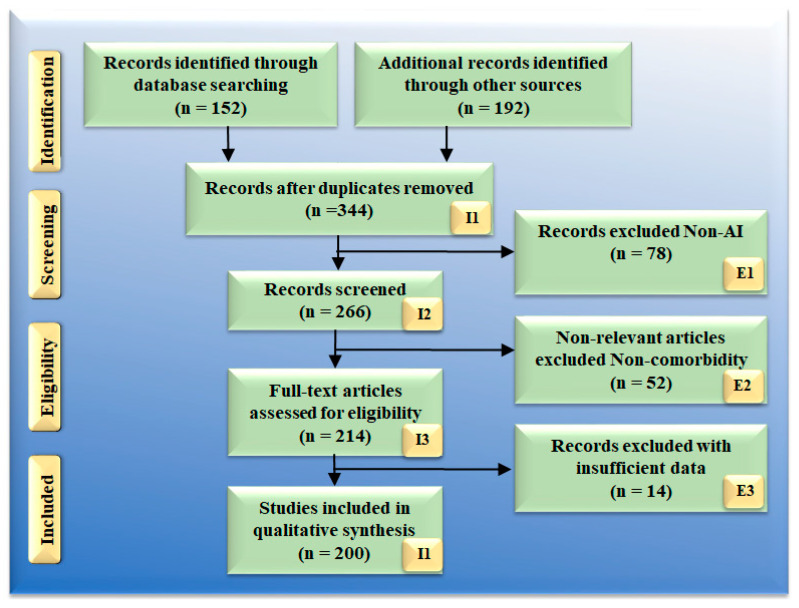
Motivation: The price of medical treatment continues to rise due to (i) an increasing population; (ii) an aging human growth; (iii) disease prevalence; (iv) a rise in the frequency of patients that utilize health care services; and (v) increase in the price. Objective: Artificial Intelligence (AI) is already well-known for its superiority in various healthcare applications, including the segmentation of lesions in images, speech recognition, smartphone personal assistants, navigation, ride-sharing apps, and many more. Our study is based on two hypotheses: (i) AI offers more economic solutions compared to conventional methods; (ii) AI treatment offers stronger economics compared to AI diagnosis. This novel study aims to evaluate AI technology in the context of healthcare costs, namely in the areas of diagnosis and treatment, and then compare it to the traditional or non-AI-based approaches. Methodology: PRISMA was used to select the best 200 studies for AI in healthcare with a primary focus on cost reduction, especially towards diagnosis and treatment. We defined the diagnosis and treatment architectures, investigated their characteristics, and categorized the roles that AI plays in the diagnostic and therapeutic paradigms. We experimented with various combinations of different assumptions by integrating AI and then comparing it against conventional costs. Lastly, we dwell on three powerful future concepts of AI, namely, pruning, bias, explainability, and regulatory approvals of AI systems. Conclusions: The model shows tremendous cost savings using AI tools in diagnosis and treatment. The economics of AI can be improved by incorporating pruning, reduction in AI bias, explainability, and regulatory approvals.
Overview
The claims and statistics of this paper haven’t been checked yet.
Free: it reads the open-access text and checks the first 5 claims that cite a source we can check. Create a free account to check every claim.
Integrity signals
Registry
Cites
Statistics
Figures
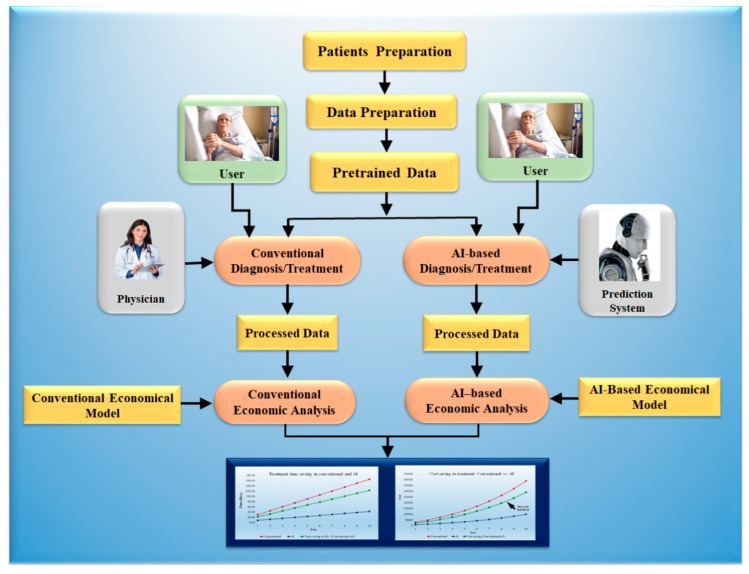
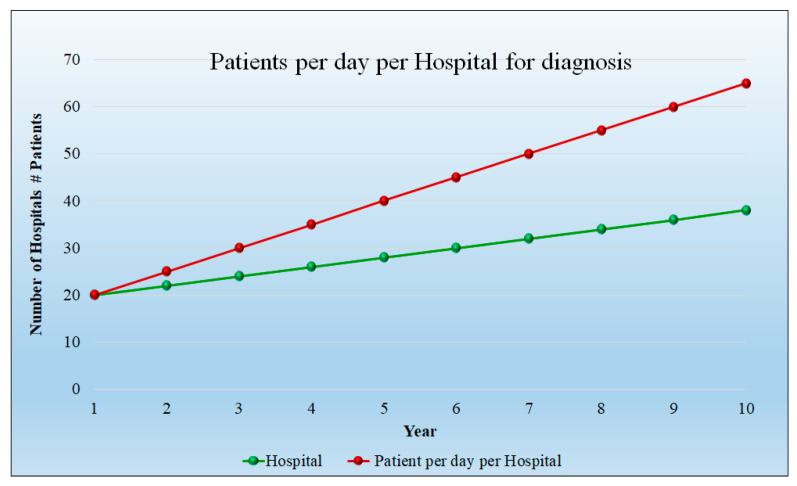
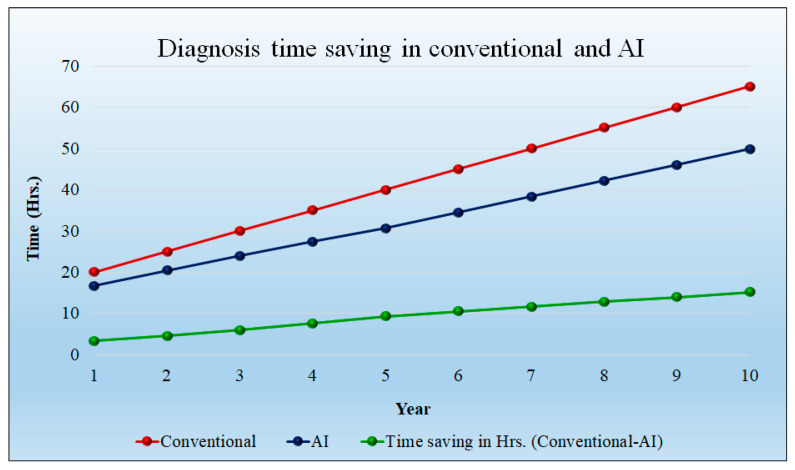
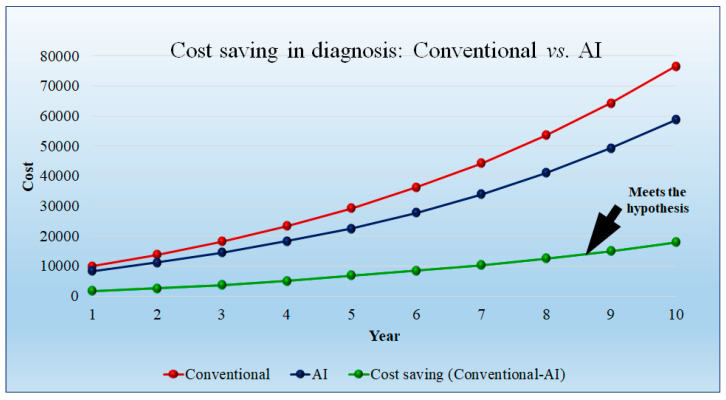
Verification
Claims the paper makes
The claims and statistics of this paper haven’t been checked yet.
Free: it reads the open-access text and checks the first 5 claims that cite a source we can check. Create a free account to check every claim.
Claims other papers make about this one
Each is checked against this paper’s own text: does it say what the citing paper says it does?
The cited source says what the claim attributes to it.
In the citing paper
“Regulatory constraints may also play a role, as seen in sectors like healthcare, where AI integration faces compliance hurdles.26”
From The widespread adoption of large language model-assisted writing across society (2025) · cites this paper as [26]
Self-check
Percentages, sums and reported differences re-computed from the paper’s own numbers.
The self-check needs the paper’s full text.
Citations
Cites
Deep learning in medical image analysis
Shen, D., Wu, G., & Suk, H.-I. (2017) · Annual Review of Biomedical Engineering · doi:10.1146/annurev-bioeng-071516-044442 · Cited by 4,968 · cited 2×
“CNN can employ high‐level features to diagnose medical conditions [39,134].”
BackgroundMethodThe potential for artificial intelligence in healthcare
Davenport, T., & Kalakota, R. (2019) · Future Healthcare Journal · doi:10.7861/futurehosp.6-2-94 · Cited by 3,800
An introduction to kernel-based learning algorithms
Muller, K.-R., Mika, S., Ratsch, G., Tsuda, K., & Scholkopf, B. (2001) · IEEE Transactions on Neural Networks · doi:10.1109/72.914517 · Cited by 3,473
(1989) · Cited by 3,214
ARTIFICIAL INTELLIGENCE FOR THE REAL WORLD
(2023) · International Research Journal of Modernization in Engineering Technology and Science · doi:10.56726/irjmets42512 · Cited by 1,434 · cited 1×
“However, static or increasing human employment means that AI technologies are unlikely to significantly cut the costs of medical diagnosis and treatment throughout that timeframe [197].”
BackgroundLiu, X., Cruz Rivera, S., Moher, D., Calvert, M. J., Denniston, A. K., The SPIRIT-AI and CONSORT-AI Working Group, SPIRIT-AI and CONSORT-AI Steering Group, Chan, A.-W., Darzi, A., Holmes, C., et al. (2020) · Nature Medicine · doi:10.1038/s41591-020-1034-x · Cited by 1,421
Can machine-learning improve cardiovascular risk prediction using routine clinical data?
Weng, S. F., Reps, J., Kai, J., Garibaldi, J. M., & Qureshi, N. (2017) · PLOS ONE · doi:10.1371/journal.pone.0174944 · Cited by 1,346
Lung pattern classification for interstitial lung diseases using a deep convolutional neural network
Anthimopoulos, M., Christodoulidis, S., Ebner, L., Christe, A., & Mougiakakou, S. (2016) · IEEE Transactions on Medical Imaging · doi:10.1109/tmi.2016.2535865 · Cited by 1,343 · cited 2×
“Medical image analysis can benefit from DL techniques such as classification and feature extraction [132].”
MethodBenjamens, S., Dhunnoo, P., & Meskó, B. (2020) · npj Digital Medicine · doi:10.1038/s41746-020-00324-0 · Cited by 1,215
Global healthcare expenditure on diabetes for 2010 and 2030
Zhang, P., Zhang, X., Brown, J., Vistisen, D., Sicree, R., Shaw, J., & Nichols, G. (2010) · Diabetes Research and Clinical Practice · doi:10.1016/j.diabres.2010.01.026 · Cited by 1,145
Research works printed but not linked: 6
- Suri J.S. Mind of An Innovator Stalk. Artic. 2022 1 1
- Johri A.M. Mantella L.E. Jamthikar A.D. Saba L. Suri J.S. Artificial Intelligence-based Survival Analysis and Coronary Artery Disease Prediction using a combination of Carotid B-model Image Phenotypes and Intraplaque Neovascularization Int. J. Cardiovasc. Imaging 2021 112–121 2021
- Dick R.S. Steen E.B. Detmer D.E. The Computer-Based Patient Record: An Essential Technology for Health Care National Academies Press Washington, DC, USA 1997 112 123 25121222
- Saba L. Suri J.S. Multi-Detector CT Imaging: ABDOMEN, Pelvis, and CAD Applications CRC Press Boca Raton, FL, USA 2013
- Zhu M. Gupta S. To prune, or not to prune: Exploring the efficacy of pruning for model compression arXiv 2017 1710.01878
- Smith A. Anderson J. AI, Robotics, and the Future of Jobs Pew Res. Cent. 2014 6 51
Cited by
Items 301–400 of 449
Infectious diseases as the human population enters a stationary phase
Laupland, K. B., & Keynan, Y. (2023) · Journal of the Association of Medical Microbiology and Infectious Disease Canada · doi:10.3138/jammi-2023-06-01 · Cited by 1
Wadood, M. (2024) · Kurdish Studies · doi:10.53555/ks.v12i5.331 · Cited by 1
Leveraging Artificial Intelligence in the Diagnosis and Management of Pulmonary Embolism
Mojibian, H. R., & Khosla, A. J. (2025) · Springer eBooks · doi:10.1007/978-3-030-70904-4_72-1 · Cited by 1
Galeoto, G., Ruotolo, I., Sellitto, G., Amadio, E., Sipio, E. D., Russa, R. L., Volonnino, G., & Frati, P. (2025) · Sensors · doi:10.3390/s25051331 · Cited by 1
“The possibility of using them as a certified alternative to common measurement methods in everyday clinical practice is interesting both for clinicians and patients, because with one device, a professional can collect more reliable data-saving time, money and space [17].”
The New Technology of Intelligent Health Physical Fitness Detection Based on Mobile Terminal
Xie, R., & Hou, W. (2025) · Journal of Cases on Information Technology · doi:10.4018/jcit.370389 · Cited by 1
Sarkar, S., Das, S., Chanda, A., & Biswas, S. (2025) · Wiley eBooks · doi:10.1002/9781394302444.ch12 · Cited by 1
The Role of AI Technologies in Healthcare Routines: A Literature Review
Huijun, S. U. N., Cai, Z., Zhou, H., & Tan, C.-W. (2025) · AIS Electronic Library (AISeL) · Cited by 1
Ruiz, M., Moreno, J. L., & Ortega, A. F. (2022) · Journal of Current Research in Oral Surgery · doi:10.51847/8gdmjxx3yf · Cited by 1
Char, D. S. (2024) · The American Journal of Bioethics · doi:10.1080/15265161.2024.2388752 · Cited by 1
“…of AI appear to be occurring more rapidly than is typical for traditional research reviews, motivated by the increasing belief that AI tools provide dramatic cost savings to healthcare systems, and that a healthcare institution not engaging with AI tools is disadvantaged (Khanna et al. 2022).”
Wisk, D. F., Gravenstein, S., Mihale, D. P. H., & Berenji, M. (2025) · AJPM Focus · doi:10.1016/j.focus.2025.100411 · Cited by 1
Ali, A. (2025) · Expert Review of Pharmacoeconomics & Outcomes Research · doi:10.1080/14737167.2025.2603951 · Cited by 1
Application of Artificial Intelligence in Three-level Prevention of Heart Failure (Preprint)Preprint
Ma, H., Chu, Q., Ruichen, C., Wu, L., Conghua, J., & Mao, W. (2023) · doi:10.2196/preprints.50634
A tribute to Professor Justin Yerbury: an advocate and beacon of hope for motor neurone disease
Ooi, L. (2023) · Physiology News · doi:10.36866/pn.132.45
Obituary: John Nicholls (1929-2023)
Ashmore, J. F., & Gibb, A. J. (2023) · Physiology News · doi:10.36866/pn.132.46
Faisal, A. A., Komorowski, M., Gordon, A. C., Lewis, R. M., Todd, O. M., & Antoniades, C. A. (2023) · Physiology News · doi:10.36866/pn.132.42
AI for fairer clinical decisions
Surodina, S., Albertyn, C. P., Siow, R. C. M., & Haraldsen, I. (2023) · Physiology News · doi:10.36866/pn.132.25
Meeting Report: Drowning Prevention and Treatment Online Summit
Events Team The Physiological Society (2023) · Physiology News · doi:10.36866/pn.132.36
News from our family of journals
The Physiological Society (2023) · Physiology News · doi:10.36866/pn.132.10
The Physiological Society (2023) · Physiology News · doi:10.36866/pn.132.41
Editorial: Artificial intelligence: Friend or foe?
Orpen, A. (2023) · Physiology News · doi:10.36866/pn.132.5
Meeting Report: Two-day scientific meetings
Events Team The Physiological Society (2023) · Physiology News · doi:10.36866/pn.132.32
Book Review: Survival kit for the Physiology Lecturer by Francisco Suárez et al.
Redzic, Z. B. (2023) · Physiology News · doi:10.36866/pn.132.12
Polygenic scores and precision genetics
Gidziela, A. (2023) · Physiology News · doi:10.36866/pn.132.21
Chief Executive’s View: Our 2023 highlights: Together we are stronger, effective, and innovative
Burdass, D. (2023) · Physiology News · doi:10.36866/pn.132.7
Policy Focus: Physiology at the heart of AI safety
Mackenzie, A. (2023) · Physiology News · doi:10.36866/pn.132.8
Meeting Preview: Physiology in Focus 2024
Events Team The Physiological Society (2023) · Physiology News · doi:10.36866/pn.132.37
Promises and pitfalls for artificial intelligence in healthcare
Nelson, J. W., & Stevens, A. (2023) · Physiology News · doi:10.36866/pn.132.16
The impact of artificial intelligence on teaching writing skills to life science students
Hardy, M. (2023) · Physiology News · doi:10.36866/pn.132.38
Physiological Reports celebrates 10 years of basic and translational physiology
The Physiological Society (2023) · Physiology News · doi:10.36866/pn.132.11
Using AI to develop better ovarian cancer treatment
Yau, C., & Ahmed, A. A. (2023) · Physiology News · doi:10.36866/pn.132.28
Redzic, S. (2023) · Physiology News · doi:10.36866/pn.132.14
Congratulations to the 2023 Honorary Fellows
The Physiological Society (2023) · Physiology News · doi:10.36866/pn.132.40
AI's Potential for Management and Business in the Healthcare Industry
Gupta, A., & Gupta, A. (2023) · International Journal of Research Publication and Reviews · doi:10.55248/gengpi.4.1223.123434
AOA Critical Issues Symposium: Promoting Health Equity
Kenter, K., Bovid, K. M., Baker, E. B., Carson, E. W., & Mercer, D. M. (2024) · Journal of Bone and Joint Surgery · doi:10.2106/jbjs.23.01056
Morphological analysis of virtual teeth generated by deep learning
Bae, E.-J. (2024) · Journal of Korean Acedemy of Dental Technology · doi:10.14347/jtd.2024.46.3.93
Artificial Intelligent Empowering Healthcare: Smart Solution in Medicine
Acharjee, T., Saikia, H., & Bhatia, D. (2024) · Acta Scientific Neurology · doi:10.31080/asne.2024.07.0789
Innovations in Medical Devices for Patient Care
Hussein, Z. Z., Alwan, A. W., Fadhil, Z. A., Khalaf, S. S., & Shehab, S. M. (2024) · Bright Sky Publications eBooks · doi:10.62906/bs.book.224
REVOLUTIONIZING HEALTHCARE: THE IMPACT OF AI-DRIVEN CASE MANAGEMENT
Maddukuri, N. (2024) · INTERNATIONAL JOURNAL OF RESEARCH IN COMPUTER APPLICATIONS AND INFORMATION TECHNOLOGY · doi:10.34218/ijrcait_07_02_206
Kara Kutudan Açıklanabilir Yapay Zekaya
ATAŞ, M., & Alhajahmad, B. (2024) · Bidge Yayınları eBooks · doi:10.70269/10.70269/8932254255
Atçeken, Z., Çelik, Y., Atasoy, Ç., & Peker, Y. (2025) · Thoracic research and practice · doi:10.4274/thoracrespract.2024.24090
“32,33 In this context, we also applied the AI-guided scoring systems to the short-term outcomes described in our first study.”
Artificial intelligence–based treatment solutions
Maindarkar, M. A. (2025) · Elsevier eBooks · doi:10.1016/b978-0-443-13816-4.00006-1
Self-citationL’IA en économie de santé : “hype” contre “hope”
Sadok, H. (2025) · Soins Cadres · doi:10.1016/j.scad.2024.12.014
Pros and Cons of ChatGPT in Medical Oncology - Comprehensive Review of Available Literature
Singh, A. P., Marwah, G., Dwivedi, T., Dwivedi, B., Sharma, R., & Kaur, A. (2024) · Clinical Case Reports Open Access · doi:10.46527/2582-5038.323
The Future of Virology Diagnostics Using Wearable Devices Driven by Artificial Intelligence
Sallam, M., Mijwil, M. M., Abotaleb, M. S. A., & Sailawi, A. S. A. A. (2025) · Advances in computational intelligence and robotics book series · doi:10.4018/979-8-3693-7352-1.ch020 · Cited by 1
THE ROLE OF HUMAN-AI COLLABORATION IN TRANSFORMING HEALTHCARE SYSTEMS
Nanda, M. S. (2025) · INTERNATIONAL JOURNAL OF INFORMATION TECHNOLOGY AND MANAGEMENT INFORMATION SYSTEMS · doi:10.34218/ijitmis_16_01_044
AI AND AUTOMATION IN PRECISION MEDICINE: REDEFINING THE PATIENT-CENTRIC APPROACH
Khandelwal, P. (2025) · INTERNATIONAL JOURNAL OF INFORMATION TECHNOLOGY AND MANAGEMENT INFORMATION SYSTEMS · doi:10.34218/ijitmis_16_01_067
Rasheed, Z. (2025) · PubMed Central
Inteligência Artificial no Monitoramento em Unidade de Terapia Intensiva (UTI)
Moreira, R. D. S., Andrade, L., Gomes, C., Amato, M. B. P., & de Carvalho, C. R. R. (2025) · Revista de Medicina · doi:10.11606/issn.1679-9836.v103i6e-233051
Park, D., Hong, D., Jin, S., Kim, J. H., & Kim, H. S. (2025) · Journal Of Big Data · doi:10.1186/s40537-025-01133-6
Medical Physics and Laser Technology: Pioneering Advances in Diagnostic and Therapeutic Applications
younis, R. H. D., Khalaf, S. A. A., Sadiq, Z., & Sajer, R. A. S. (2025) · Bright Sky Publications eBooks · doi:10.62906/bs.book.294
Optimizing COPD Management: Machine Learning Solutions for Early Detection and Data Privacy
Irene, D. S., Vinod, D., Nancy, P., & Anitha, K. (2025) · Advances in environmental engineering and green technologies book series · doi:10.4018/979-8-3693-8532-6.ch017
Enhancing Cancer Diagnosis with Advanced Vision Transformers and Hybrid Deep Learning Models
Sabitha, P. (2025) · INTERANTIONAL JOURNAL OF SCIENTIFIC RESEARCH IN ENGINEERING AND MANAGEMENT · doi:10.55041/ijsrem45521
Iyappan, A., Vevek, S., Idziak, E., & Karri, V. (2025) · Advances in computational intelligence and robotics book series · doi:10.4018/979-8-3373-3897-2.ch002
ІНТЕГРАЦІЯ ШТУЧНОГО ІНТЕЛЕКТУ ДО СИСТЕМИ РАННЬОЇ ДІАГНОСТИКИ ОНКОЛОГІЧНИХ ЗАХВОРЮВАНЬ В УКРАЇНІ
Горбовий, О., Ilyina-Stognienko, V. Y., & Chaika, O. M. (2025) · Перспективи та інновації науки · doi:10.52058/2786-4952-2025-4(50)-2175-2192
The Role of Artificial Intelligence in Advancing Healthcare and Longevity Research
ADITYA, S. A. (2025) · Journal of Computer Science and Technology Studies · doi:10.32996/jcsts.2025.7.3.84
“According to the systematic review [10], AI-assisted research has enabled the identification of novel aging biomarkers with greater precision, leading to a 40% improvement in target identification accuracy.”
Arogya Sahayak: AI-Powered Health Navigator App
Sarkar, A., Nath, T., Bhattacharjee, D., Das, P., Ray, C., Bhowmik, S., & Nandi, S. (2025) · International Journal of Enhanced Research In Science Technology & Engineering · doi:10.55948/ijerste.2025.0634
Gyarteng, E. S. A., Zhang, X., & Ukwuoma, C. C. (2025) · SSRN Electronic Journal · doi:10.2139/ssrn.5338489
Changes in radiological imaging: an interview with Mark Schweitzer
Schweitzer, M. E. (2025) · Expert Review of Medical Devices · doi:10.1080/17434440.2025.2530771
The Evaluative, Economic, and Organizational Dimensions of Personalized Medicine
Trieste, L., & Turchetti, G. (2025) · Data science, machine intelligence, and law · doi:10.1007/978-3-031-99709-9_9
The Impact of Artificial Intelligence on Healthcare
Zhang, S. (2025) · Scientific Journal Of Humanities and Social Sciences · doi:10.54691/4rrxqd55
Quah, B., Yong, C. W., Chen, M. W. J., Lai, C. W. M., & Islam, I. (2025) · Frontiers in Oral Health · doi:10.3389/froh.2025.1630995
Rahman, F. M. (2025) · Studies in systems, decision and control · doi:10.1007/978-3-031-90271-0_53
AI in the healthcare system: Current viewpoint developments
Herbert, E., & Fournier, D. (2025) · Health Sciences Quarterly · doi:10.26900/hsq.2850
“…screening, personalized prevention and enhanced productivity, which are some of the advantages outlined [8]. prevention and enhanced productivity, which With the growing demand for the NHS, staff shortages, and a squeeze in healthcare budgets, is AI a solution to the prevailing situation [17,18]?”
Vasilev, Y. A., Slavushcheva, E. A., Zelenova, M. A., Михайлович, Ш. И., & Arzamasov, K. M. (2025) · Digital Diagnostics · doi:10.17816/dd631519
Navigating Barriers: Disability, Healthcare Information Seeking, and AI ‐Enabled Chatbots
Gray, M., & Threats, M. (2025) · Proceedings of the Association for Information Science and Technology · doi:10.1002/pra2.1433
“AI has been praised by healthcare systems and providers for its potential to democratize access to healthcare and improve patient outcomes and is considered promising for managing and preventing chronic illnesses and diseases (Delpino et al., 2022; Hogg et al., 2023; Khanna et al., 2022).”
The Adoption and Integration of Artificial Intelligence in Diagnostics Across Europe
Horgan, D., Reduzzi, C., Belina, I., Lal, J. A., Pestana, R. C., Bounedjar, A., Malapelle, U., Maravic, Z., Elghazaly, H., Rasheed, H. M. A., et al. (2025) · AI in Precision Oncology · doi:10.1177/2993091x251395734
AI and Big Data Analytics for Management of Nutraceuticals
Almoselhy, R. I. M., Usmani, A., Rajendran, R., & Thomas, S. (2025) · Springer eBooks · doi:10.1007/978-3-030-69677-1_50-1
Using Artificial Intelligence Algorithms to Recognize Osteoporosis: A Review
Razzaq, S. A., & Khaleel, B. I. (2024) · Optimum: Journal of Economics and Development (University of Ahmad Dahlan Yogyakarta) · doi:10.26555/jiteki.v10i4.30352 · Cited by 1
Enhancing Diarrheal Disease Diagnosis and Detection with a Hybrid Deep Learning Model
Vala, N., Yagnik, S. B., & Kumar, Y. (2024) · Indian Journal of Science and Technology · doi:10.17485/ijst/v17i11.132
Database solutions suitable for XAI cardiovascular disease predictions
Franke, A., & Hanna, T. (2024) · KTH Publication Database DiVA (KTH Royal Institute of Technology)
Uso de redes neuronales para clasificación de imágenes hiperespectrales en tejidos biológicos
Dimache, A. (2024) · UPM Digital Archive (Technical University of Madrid)
FINANCIRANJE ZDRAVSTVENEGA ZAVAROVANJA V SEVERNI MAKEDONIJI IN SLOVENIJI
Petrushevska, E. (2024) · Repository of the University of Ljubljana (University of Ljubljana)
Challenges of AI integration into dermatology EHRs
Goldust, M., & Grant-Kels, J. M. (2025) · Archives of Dermatological Research · doi:10.1007/s00403-025-04386-6
Comparative Outcomes of AI-Assisted Diagnosis vs. Traditional Diagnosis in Primary Care Settings
Tariq, M., Khan, M. H., Javaid, M. S., Hijazi, H., Chaudhry, S., Ullah, M. S., & Almanasef, Z. M. (2025) · Indus journal of bioscience research. · doi:10.70749/ijbr.v3i9.2336
Belt, E., von Rüden, L., Makimoto, H., & Zerth, J. (2025) · Springer eBooks · doi:10.1007/978-3-658-48573-3_29
Piltz, A. (2025) · Digital Access to Scholarship at Harvard (DASH) (Harvard University)
Farid, H. (2025) · UTUPub (University of Turku)
Kwan, J. (2025) · Biomedical Journal of Scientific & Technical Research · doi:10.26717/bjstr.2025.64.009993
Ophthalmic imaging and artificial intelligence in early diagnosis of Alzheimer disease
Makarushkina, D. N., Mamedov, V. A., Smagulova, G., Khasanova, A. I., Yunusova, N. F., Dadaev, A. R., Gabbasova, L. K., Sadykova, A. I., Barotova, Z. A., Valeeva, E. R., et al. (2025) · Neurology Bulletin · doi:10.17816/nb690471
Apply Artificial Intelligence for Improving Medical Accessibility in Rural Areas
Liu, Z. (2025) · Highlights in Business Economics and Management · doi:10.54097/xvn4xq38
“Economic benefits are especially key in financially starved rural healthcare environments for preserving service quality on tight budgets [13].”
Lee, T., Lee, L., Hu, C., Mélin, N., Bouchez, L. C., & Lee, D. (2025) · IGI Global eBooks · doi:10.4018/979-8-3373-5856-7.ch005
Radjou, A. N., Mohapatra, D. P., & Dey, A. K. (2025) · Journal of Current Research in Scientific Medicine · doi:10.4103/jcrsm.jcrsm_100_25
Ahmed, F., Haider, F., Ali, R., Arham, M., Junaid, Y., Dad, A., Bakht, K., Abbasi, M., Malik, B. T., Mateen, A., et al. (2026) · Frontiers in Artificial Intelligence · doi:10.3389/frai.2025.1709489
“Moreover, integrating AI models is predicted to reduce healthcare costs and time enormously in coming years (Khanna et al., 2022).”
Baugh, C. W., Gibson, C. M., Giannitsis, E., Morrow, D. A., Januzzi, J. L., Papendick, C., Rocca, H. B., Daniels, L. B., Palau, H., Visciola, L., et al. (2026) · Critical Pathways in Cardiology A Journal of Evidence-Based Medicine · doi:10.1097/hpc.0000000000000412
“29 As an example, implementing AI diagnostic algorithms alongside confirmatory high-specificity polymerase chain reaction for colorectal cancer in the United States has been estimated to save $400 million compared with next-generation sequencing alone.”
Application of Foundation Models in Emergency and Critical Care: A Scoping ReviewPreprint
Kong, Y., Mai, X., Meyer, A., FANG, Y. C., Xu, Z., Song, Z., Gong, C., Wacker, D. A., Heneghan, J. A., Wang, Q., et al. (2026) · Research Square · doi:10.21203/rs.3.rs-8338830/v1
Mapping Economic Considerations in Clinical Artificial Intelligence Research
Özcan, H. (2026) · Information technology in economics and business. · doi:10.69882/adba.iteb.2026011
Longo, U. G., Bandini, B., Saccomanno, M. F., d’Hooghe, P. P. R. N., Zsidai, B., Oeding, J. F., Oettl, F. C., Samuelsson, K., Alessandro de, S. I. R. E., FELDT, R. H., et al. (2026) · Journal of Experimental Orthopaedics · doi:10.1002/jeo2.70623
“Such implementations will establish the foundation for a personalized health management strategy, which is anticipated to reduce health care costs by lowering the rates of hospitalizations, outpatient consultations and therapeutic interventions [8, 22].”
Artificial intelligence in the management of inflammatory bowel disease: What’s next?
Bilotta, A. J., Trebilcock, J., Hebda, N., Sasan, C., Cooper, K. M., & Rupawala, A. (2026) · World Journal of Gastrointestinal Pharmacology and Therapeutics · doi:10.4292/wjgpt.v17.i1.112640
“If AI improves efficiency through aiding diagnoses and treatment, then there should be significant cost savings to health systems in the long-term which may offset the cost of AI implementation[132].”
Artificial intelligence as a low-precision technology
Marwala, T. (2026) · Elsevier eBooks · doi:10.1016/b978-0-443-36322-1.00030-4
Predicting Surgical Outcomes in Breast Reconstruction With Machine Learning: A Systematic Review
Rosenbloom, A., Gasbeck, T., Mamoun, L., Shah, N. D., Nanda, A., & Lee, G. (2026) · Annals of Plastic Surgery · doi:10.1097/sap.0000000000004667
IA para diagnóstico asistido en salud: precisión, sesgos y adopción clínica
Alencastro, J. A. P., Frausto, J. J. P., Villarruel, C. L. N., & Dominguez, A. O. (2026) · Bastcorp International Journal. · doi:10.62943/bij.v5n1.2026.467
AI-Enabled Clinical Decision Support for Oral Disease Detection
Natarajan, P. (2025) · Tuwhera (Auckland University of Technology)
Pourghasem, F. (2025) · TSpace (University of Toronto)
Estudio y predicción del riesgo de caídas en personas mayores
Castro, A. G. (2025) · Buleria (Universidad de León) · doi:10.18002/10612/27709
Artificial intelligence applications in gynecological cancer detection
Yoldemir, T. (2026) · Climacteric · doi:10.1080/13697137.2026.2633071
Responsible Use of AI: Ethical Considerations for Marginalized Groups
Scholz, S. (2026) · Springer eBooks · doi:10.1007/978-3-032-16837-5_13
Oboli, B., Etaware, P. M., & Egara, O. W. (2026) · Elsevier eBooks · doi:10.1016/b978-0-443-44415-9.00007-7
Tiwari, E., Shrimankar, D., Chaudhary, K., Saba, L., & Suri, J. S. (2026) · Soft Computing · doi:10.1007/s00500-026-11312-z
Self-citationMartin, S. R. (2025) · Buleria (Universidad de León) · doi:10.18002/10612/28003
Metadata
- Authors
- Khanna, N. N., Maindarkar, M. A., Viswanathan, V., Fernandes, J. F. E., Paul, S., Bhagawati, M., Ahluwalia, P., Ruzsa, Z., Sharma, A., Kolluri, R., Singh, I. M., Laird, J. R., Fatemi, M., Alizad, A., Saba, L., Agarwal, V., Sharma, A., Teji, J. S., Al-Maini, M., Rathore, V., Naidu, S., Liblik, K., Johri, A. M., Turk, M., Mohanty, L., Sobel, D. W., Miner, M., Viskovic, K., Tsoulfas, G., Protogerou, A. D., Kitas, G. D., Fouda, M. M., Chaturvedi, S., Kalra, M. K., & Suri, J. S.
- Affiliations
- Indraprastha Apollo Hospitals (IN)
- North Eastern Hill University (IN)
- M.V. Hospital for Diabetes and Diabetes Research Centre (IN)
- Department of Vascular Surgery, University of Lisbon, 1649-004 Lisbon, Portugal
- Max Super Speciality Hospital (IN)
- Invasive Cardiology Division, Faculty of Medicine, University of Szeged, 6720 Szeged, Hungary
- Sanjay Gandhi Post Graduate Institute of Medical Sciences (IN)
- OhioHealth (US)
- Stroke Monitoring and Diagnostic Division, AtheroPoint™, Roseville, CA 95661, USA
- St. Helena Hospital (US)
- Mayo Clinic (US)
- Azienda Ospedaliero-Universitaria Cagliari (IT)
- Lurie Children's Hospital (US)
- Allergy, Clinical Immunology and Rheumatology Institute, Toronto, ON L4Z 4C4, Canada
- AtheroPoint LLC, Roseville, CA 95661, USA
- University of Minnesota, Duluth (US)
- Queen's University (CA)
- Institute for Advanced Study (DE)
- ABES Engineering College (IN)
- National and Kapodistrian University of Athens (GR)
- Miriam Hospital (US)
- Department of Radiology and Ultrasound, University Hospital for Infectious Diseases, 10000 Zagreb, Croatia
- Aristotle University of Thessaloniki (GR)
- Cardiovascular Prevention and Research Unit, Department of Pathophysiology, National & Kapodistrian University of Athens, 15772 Athens, Greece
- Dudley Group NHS Foundation Trust (GB)
- Idaho State University (US)
- University of Maryland, Baltimore (US)
- Harvard University (US)
- Corresponding author
- Suri, Jasjit S.
- ORCID
- Khanna, Narendra N.
- Maindarkar, Mahesh A.
- Viswanathan, Vijay
- Paul, Sudip
- Bhagawati, Mrinalini
- Ahluwalia, Puneet
- Ruzsa, Zoltan
- Sharma, Aditya
- Kolluri, Raghu
- Singh, Inder M.
- Laird, John R.
- Fatemi, Mostafa
- Alizad, Azra
- Saba, Luca
- Agarwal, Vikas
- Sharma, Aman
- Teji, Jagjit S.
- Al-Maini, Mustafa
- Rathore, Vijay
- Naidu, Subbaram
- Liblik, Kiera
- Johri, Amer M.
- Mohanty, Lopamudra
- Sobel, David W.
- Miner, Martin
- Tsoulfas, George
- Protogerou, Athanasios D.
- Kitas, George D.
- Fouda, Mostafa M.
- Chaturvedi, Seemant
- Kalra, Mannudeep K.
- Suri, Jasjit S.
- Venue
- Healthcare
- Publisher
- MDPI AG
- Published
- 2022-12-09
- Volume
- 10
- Issue
- 12
- Pages
- 2493
- ISSN
- 2227-9032 (ISSN-L)
- PMC
- PMC9777836
- OpenAlex
- W4312000342
- Semantic Scholar
- ceccd431fe9588ad93821e8aaf3ec1e076bb3010
- Cited by
- 347
- References
- 198
- Citations by year
- 2026: 65 · 2025: 157 · 2024: 70 · 2023: 54 · 2022: 1
- FWCI
- 21.26
- Type
- journal article
- Language
- en
- Open access
- gold
- doi.org
- Licence
- Locations
- Healthcare (publishedVersion, cc-by)
- PubMed Central (publishedVersion, cc-by)
- PubMed (publishedVersion)
- SZTE Publicatio Repozitórium (University of Szeged) (acceptedVersion, other-oa)
- DOAJ (DOAJ: Directory of Open Access Journals) (submittedVersion, cc-by-sa)
- UNICA IRIS Institutional Research Information System (University of Cagliari) (submittedVersion, other-oa)
- Topics
- Health Sciences › Medicine › Health Informatics › Artificial Intelligence in Healthcare and Education
- Health Sciences › Health Professions › Health Information Management › Artificial Intelligence in Healthcare
- Social Sciences › Economics, Econometrics and Finance › Economics and Econometrics › Health Systems, Economic Evaluations, Quality of Life
- Keywords
- artificial intelligence in healthcare, health care costs, diagnosis, medical treatment, cost reduction, model pruning, algorithmic bias, explainability, comparison with conventional methods
About these checks
Registry, retraction, Cites and statistics results are computed, not judged, with one exception: a printed reference that no index lists is read once by a model before it counts as a citation error. Claims are extracted by a model and kept only when their quote appears verbatim in the text; each cited source is then checked, with a model’s help, for whether it says what the claim relies on. Those verdicts can be wrong — read the claim’s quote and the cited source before relying on one.
Statistics and arithmetic are recomputed, not judged.
Confidence bands are shown only for fields calibrated on our annotated test set. None is calibrated yet, so no band is shown.
What counts as a claim ›How we measure confidence ›How we check this ›
Are you an author, or do you see a problem with this page? Request a review
Data sources
Bibliographic data: Semantic Scholar, OpenAlex, Crossref.
Contains information from the Semantic Scholar Academic Graph Datasets, made available under the ODC Attribution License (ODC-BY 1.0).
Semantic Scholar’s data is described in: Kinney, R., et al. (2023). The Semantic Scholar Open Data Platform. arXiv:2301.10140.
