

Body Perceptions and Psychological Well-Being: A Review of the Impact of Social Media and Physical Measurements on Self-Esteem and Mental Health with a Focus on Body Image Satisfaction and Its Relationship with Cultural and Gender Factors
Open accessThe DOI matches its Crossref record; 215 of the 221 references it cites were found in a registry or an index; 98 of the 211 sources its claims cite were checked for support.
Abstract
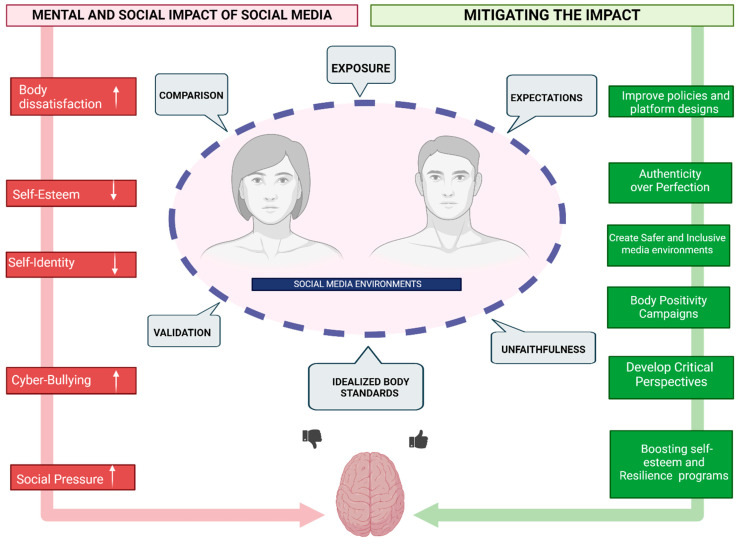
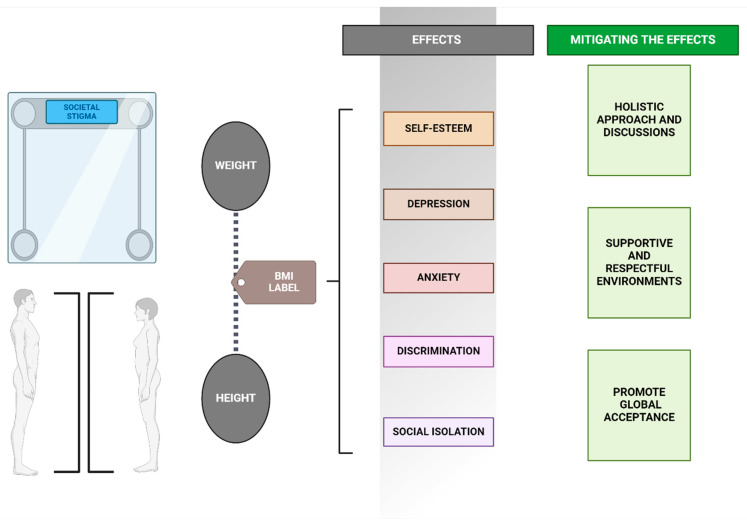
This narrative review examines the interplay among body image perceptions, social media influence, physical measurements, and their impact on psychological well-being, focusing on the roles of cultural and gender differences and the need to understand the research methodologies employed in this field. In the age of digital proliferation, platforms like Instagram and Facebook have reshaped body image concerns, often leading to increased dissatisfaction and psychological distress due to constant exposure to idealized images and a culture of social comparison. Physical attributes such as weight, height, and BMI are scrutinized under societal standards of health and attractiveness, contributing to a spectrum of mental health issues including low self-esteem, depression, and eating disorders. This examination reveals how cultural norms and gender expectations further complicate body image perceptions, affecting individuals differently based on societal and personal ideals. It synthesizes current research and types of methods to illuminate how these factors together influence mental health and self-esteem, advocating for comprehensive interventions and policy measures aimed at mitigating body dissatisfaction and promoting a healthier, more inclusive understanding of body image. By delving into the complexities of body image satisfaction and its psychological implications, this review highlights the necessity of addressing these concerns within public health and social policy frameworks, underscoring the importance of a multifaceted approach to enhance individual and societal well-being.
Overview
CoChat Summary
TL;DR
This is a narrative review of how social media, physical measurements, and cultural/gender norms shape body image satisfaction and psychological well-being. It argues that body dissatisfaction is linked to lower self-esteem and mental health problems, and that media literacy, body positivity, and policy change are needed to reduce harm.
Key findings
- The authors identified 450 articles in their search, retained 280 after exclusion/appraisal, and finally included 212 articles in the review.
- Social media is presented as a major driver of body dissatisfaction through upward social comparison, selective self-presentation, and exposure to idealized or digitally altered images; the paper states this is associated with increased body dissatisfaction, reduced self-esteem, and heightened anxiety about physical appearance.
- The review links poor body image to mental health outcomes including depression, anxiety, eating disorders, and body dysmorphic disorder; it also states that body image satisfaction is protective and is associated with reduced symptoms of depression and anxiety.
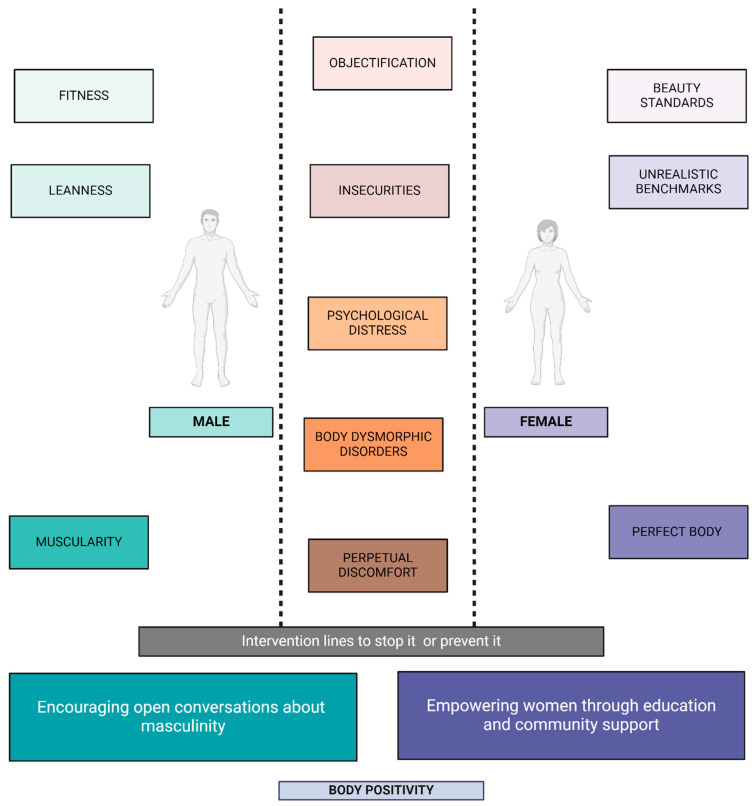
- The paper emphasizes that effects vary by gender and culture: thinness is especially valorized for women, muscularity/leanness for men, and Western beauty ideals can intensify dissatisfaction in other cultural contexts.
Methods
- Narrative review design covering literature published from 1 September 2004 to 1 September 2024.
- Searched primary and secondary literature across multiple sources, including PubMed, Scopus, Embase, Science Direct, Sports Discuss, ResearchGate, and Web of Science.
- Employed a reviewer-based screening process: six reviewers appraised titles/summaries and extracted data; the paper also notes AI tools were used for figure creation and translation refinement, not for the core research or writing.
Limitations
- The paper states methodological limitations of the reviewed approaches in general: surveys/questionnaires can be affected by social desirability bias, qualitative methods often have smaller sample sizes and limited generalizability, experimental studies may have artificial settings, and longitudinal studies require substantial time and resource commitments.
- Evident from the text: this is a narrative review, so it does not report a new empirical sample, effect estimates, or meta-analytic pooled results.
- Evident from the text: the inclusion process is broad but not fully transparent about study-by-study quality assessment or a formal systematic review protocol.
Model-written summary. Check it against the paper before relying on it.
Integrity signals
Registry
Cites
Statistics
Figures
Verification
Claims the paper makes
59 Valid · 41 Not valid · 101 Not checked · 82 Own results and interpretations
The cited sources support only part of this claim — read each source’s verdict below.
In the paper
“platforms like Instagram and Facebook have reshaped body image concerns, often leading to increased dissatisfaction and psychological distress due to constant exposure to idealized images and a culture of social comparison.”
- Also stated in: § 3. Influence of Social Media on Body Image and Mental Health · boosted
“The rise of social media has profoundly transformed individual perceptions of body image, promoting a homogenized ideal of beauty and attractiveness that emphasizes narrow and often unattainable standards [3,4,6].”
§ Body Perceptions and Psychological Well-Being: A Review of the Impact of Social Media and Physical Measurements on Self-Esteem and Mental Health with a Focus on Body Image Satisfaction and Its Relationship with Cultural and Gender Factors > Abstract
What the sources say
- Not checked — no full text of the sourcecites [3] Fardouly J. Vartanian L.R. Social Media and Body Image Concerns: Current Research and Future Directions Curr. Opin. Psychol. 2016 9 1 5 10.1016/j.copsyc.2015.09.005 source
- Partly supportedcites [4] Rounsefell K. Gibson S. McLean S. Blair M. Molenaar A. Brennan L. Truby H. McCaffrey T.A. Social Media, Body Image and Food Choices in Healthy Young Adults: A Mixed Methods Systematic Review Nutr. Diet. 2020 77 19 40 10.1111/1747-0080.12581 31583837 PMC7384161 sourceExperimental — accuracy not yet measured
The Results (page unavailable) associate exposure to idealized images on Instagram and Facebook with greater body dissatisfaction and identify appearance-related comparison as a mediator. The Discussion (page unavailable) describes thinness and fitness ideals and an online culture of comparison. The cited passages do not establish the additional claim of psychological distress, and the review’s largely observational findings do not establish that exposure causes it. (LLM, conf=0.85)
- Not checked — no full text of the sourcecites [6] Burnette C.B. Kwitowski M.A. Mazzeo S.E. “I Don’t Need People to Tell Me I’m Pretty on Social Media:” A Qualitative Study of Social Media and Body Image in Early Adolescent Girls Body Image 2017 23 114 125 10.1016/j.bodyim.2017.09.001 28965052 source
boostedstates a cause- Asserted: passes — The authors put it forward as true.
- Checkable: passes — It can be checked against evidence.
- Load-bearing: passes — The paper’s conclusions depend on it.
- Based: passes — The paper gives a reason why it holds.
- Also stated in: § 3. Influence of Social Media on Body Image and Mental Health · boosted
The cited sources support only part of this claim — read each source’s verdict below.
In the paper
“This trend is particularly pronounced among adolescents and young adults, who comprise a substantial segment of social media users and are at a pivotal stage in the development of their self-identity and body image [3,4,5,6].”
§ Body Perceptions and Psychological Well-Being: A Review of the Impact of Social Media and Physical Measurements on Self-Esteem and Mental Health with a Focus on Body Image Satisfaction and Its Relationship with Cultural and Gender Factors > 3. Influence of Social Media on Body Image and Mental Health
What the sources say
- Not checked — no full text of the sourcecites [3] Fardouly J. Vartanian L.R. Social Media and Body Image Concerns: Current Research and Future Directions Curr. Opin. Psychol. 2016 9 1 5 10.1016/j.copsyc.2015.09.005 source
- Partly supportedcites [4] Rounsefell K. Gibson S. McLean S. Blair M. Molenaar A. Brennan L. Truby H. McCaffrey T.A. Social Media, Body Image and Food Choices in Healthy Young Adults: A Mixed Methods Systematic Review Nutr. Diet. 2020 77 19 40 10.1111/1747-0080.12581 31583837 PMC7384161 sourceExperimental — accuracy not yet measured
The Introduction reports high social-media use among young adults, and the Results report social-media associations with body dissatisfaction, lower self-esteem, and anxiety in young-adult samples. The Results also report worse Facebook body-image scores in young adults than in older cohorts. The review does not establish that the full set of associations is particularly pronounced among adolescents, or attribute it to a pivotal stage of self-identity and body-image development. No page numbers were available in our copy. (LLM, conf=0.85)
- Partly supportedcites [5] Vandenbosch L. Fardouly J. Tiggemann M. Social Media and Body Image: Recent Trends and Future Directions Curr. Opin. Psychol. 2022 45 101289 10.1016/j.copsyc.2021.12.002 35030460 sourceExperimental — accuracy not yet measured
The opening section says social media use is related to negative body image, and §2.1 discusses body-image dissatisfaction among adolescents. But §4 says systematic evidence about age differences is lacking, so the review does not establish that the association is particularly pronounced among adolescents and young adults. It also does not establish the claimed association with anxiety or reduced self-esteem, or the citing sentence’s explanation about self-identity development. (LLM, conf=0.88)
- Not checked — no full text of the sourcecites [6] Burnette C.B. Kwitowski M.A. Mazzeo S.E. “I Don’t Need People to Tell Me I’m Pretty on Social Media:” A Qualitative Study of Social Media and Body Image in Early Adolescent Girls Body Image 2017 23 114 125 10.1016/j.bodyim.2017.09.001 28965052 source
plainstates an association- Asserted: passes — The authors put it forward as true.
- Checkable: passes — It can be checked against evidence.
- Load-bearing: passes — The paper’s conclusions depend on it.
- Based: passes — The paper gives a reason why it holds.
The cited sources support only part of this claim — read each source’s verdict below.
In the paper
“The impact of social media on body image and mental health varies significantly across cultural and gender lines, underscoring the complexity of these phenomena and the influence of societal norms and values in shaping individual responses to digital content.”
§ Body Perceptions and Psychological Well-Being: A Review of the Impact of Social Media and Physical Measurements on Self-Esteem and Mental Health with a Focus on Body Image Satisfaction and Its Relationship with Cultural and Gender Factors > 3. Influence of Social Media on Body Image and Mental Health > 3.4. Cultural and Gender Differences in Social Media’s Impact
What the sources say
- Partly supportedcites [48] Nagar P. Digital Detriments: Unraveling the Psychological Consequences of Social Media Lloyd Bus. Rev. 2023 2 1 14 10.56595/lbr.v2i1.9 sourceExperimental — accuracy not yet measured
The Findings of the Study (§4.1; page unavailable) say that social media’s effect on mental health may differ by gender, and the Review of Literature (§3; page unavailable) describes gender differences in mental-health outcomes. The paper does not establish significant differences across cultural lines or show that cultural and gender differences apply to body image; it also does not attribute those differences to societal norms and values. (LLM, conf=0.88)
plainstates an association- Asserted: passes — The authors put it forward as true.
- Checkable: passes — It can be checked against evidence.
- Load-bearing: passes — The paper’s conclusions depend on it.
- Based: passes — The paper gives a reason why it holds.
- Partly supported
The cited sources support only part of this claim — read each source’s verdict below.
In the paper
“Furthermore, the act of curating and maintaining an idealized online self demands constant vigilance and self-scrutiny, which can become a significant source of stress and anxiety.”
§ Body Perceptions and Psychological Well-Being: A Review of the Impact of Social Media and Physical Measurements on Self-Esteem and Mental Health with a Focus on Body Image Satisfaction and Its Relationship with Cultural and Gender Factors > 3. Influence of Social Media on Body Image and Mental Health > 3.2. The Role of Self-Presentation on Social Media
What the sources say
- Partly supportedcites [39] Ryding F.C. Kuss D.J. The Use of Social Networking Sites, Body Image Dissatisfaction, and Body Dysmorphic Disorder: A Systematic Review of Psychological Research Psychol. Pop. Media 2020 9 412 10.1037/ppm0000264 sourceExperimental — accuracy not yet measured
The Mediating Factors section describes ongoing awareness of attractiveness to a social-media audience and links it to greater body surveillance; it also reports an association between heavier Instagram use and physical-appearance anxiety (page not available in our copy). It does not establish that curating and maintaining an idealized online self demands constant vigilance or that this activity causes stress and anxiety. (LLM, conf=0.82)
plainstates a cause- Asserted: passes — The authors put it forward as true.
- Checkable: passes — It can be checked against evidence.
- Load-bearing: passes — The paper’s conclusions depend on it.
- Based: passes — The paper gives a reason why it holds.
- Partly supported
The cited sources support only part of this claim — read each source’s verdict below.
In the paper
“This dynamic can exacerbate the pressure to conform to idealized standards, as adolescents and young adults equate social approval and self-worth with how closely their bodies resemble those celebrated online [35].”
§ Body Perceptions and Psychological Well-Being: A Review of the Impact of Social Media and Physical Measurements on Self-Esteem and Mental Health with a Focus on Body Image Satisfaction and Its Relationship with Cultural and Gender Factors > 3. Influence of Social Media on Body Image and Mental Health > 3.3. The Impact of Social Media on Adolescents and Young Adults
What the sources say
- Partly supportedcites [35] Steinsbekk S. Wichstrøm L. Stenseng F. Nesi J. Hygen B.W. Skalická V. The Impact of Social Media Use on Appearance Self-Esteem from Childhood to Adolescence—A 3Wave Community Study Comput. Human Behav. 2021 114 106528 10.1016/j.chb.2020.106528 sourceExperimental — accuracy not yet measured
The Introduction (page unavailable) says idealized social-media images may create difficult-to-attain appearance norms, and Section 4.1 reports that engaging with others’ posts predicted lower appearance self-esteem during the transition to adolescence. The paper does not establish that adolescents equate social approval with bodily resemblance to people online, and its findings do not extend to young adults. (LLM, conf=0.86)
plainstates a cause- Asserted: passes — The authors put it forward as true.
- Checkable: passes — It can be checked against evidence.
- Load-bearing: passes — The paper’s conclusions depend on it.
- Based: passes — The paper gives a reason why it holds.
- Partly supported
136 more claims · 45 with their cited sources checked
Create a free account to see all 283 claims and to verify the 17 references still open.
- It may state two separate claims as one. 101
- Probably not a substantial claim. 54
Claims other papers make about this one
Each is checked against this paper’s own text: does it say what the citing paper says it does?
In the citing paper
“Conversely, those with high self-esteem may engage with social media in a more balanced way, using it to reinforce their positive self-image but without becoming dependent on the feedback of others (Merino et al., 2024; Sekścińska & Jaworska, 2022; M. Wang et al., 2021).”
From The Role of False Self-Presentation and Social Comparison in Excessive Social Media Use (2025) · cites this paper as Merino et al., 2024
Citations
Cites
Objectification Theory: Toward Understanding Women's Lived Experiences and Mental Health Risks
Fredrickson, B. L., & Roberts, T.-A. (1997) · Psychology of Women Quarterly · doi:10.1111/j.1471-6402.1997.tb00108.x · Cited by 5,531 · cited 1×
“Understanding these cultural nuances is crucial for crafting effective interventions and promoting a global movement toward body positivity [15].”
BackgroundExacting beauty: Theory, assessment, and treatment of body image disturbance.
Thompson, J. K., Heinberg, L. J., Altabe, M., & Tantleff-Dunn, S. (1999) · doi:10.1037/10312-000 · Cited by 3,100 · cited 1×
“This concept posits that social actors, such as family, friends, and the media, develop the standards of physical attractiveness and slimness for women [32].”
BackgroundThe influence of physical activity on mental well-being
Fox, K. R. (1999) · Public Health Nutrition · doi:10.1017/s1368980099000567 · Cited by 1,415 · cited 1×
“The dissonance between societal ideals and the reality of natural body diversity creates fertile ground for body dissatisfaction and its psychological ramifications [70].”
BackgroundThe Body Appreciation Scale-2: Item refinement and psychometric evaluation
Tylka, T. L., & Wood-Barcalow, N. L. (2015) · Body Image · doi:10.1016/j.bodyim.2014.09.006 · Cited by 1,298 · cited 3×
“Understanding the implications of body perceptions on psychological well-being necessitates a foundational grasp of the theoretical frameworks that underpin body image research [7,8].”
BackgroundWhat is and what is not positive body image? Conceptual foundations and construct definition
Tylka, T. L., & Wood-Barcalow, N. L. (2015) · Body Image · doi:10.1016/j.bodyim.2015.04.001 · Cited by 1,293 · cited 2×
“Understanding the implications of body perceptions on psychological well-being necessitates a foundational grasp of the theoretical frameworks that underpin body image research [7,8].”
BackgroundFredrickson, B. L., Roberts, T.-A., Noll, S. M., Quinn, D. M., & Twenge, J. M. (1998) · Journal of Personality and Social Psychology · doi:10.1037/0022-3514.75.1.269 · Cited by 1,129 · cited 1×
“The rising incidence of objectified male images in media and advertising underscores that the psychological impacts of objectification are universally pertinent, necessitating a broadened scope of discourse and intervention [14].”
BackgroundObjectification Theory and Psychology of Women: A Decade of Advances and Future Directions
Moradi, B., & Huang, Y.-P. (2008) · Psychology of Women Quarterly · doi:10.1111/j.1471-6402.2008.00452.x · Cited by 1,071 · cited 1×
“These emotions can escalate to more severe mental health issues, including eating disorders and depression, and may also have somatic consequences, such as increased cardiovascular risk due to sustained stress and anxiety [12].”
BackgroundSocial comparison: The end of a theory and the emergence of a field
Buunk, A. P., & Gibbons, F. X. (2007) · Organizational Behavior and Human Decision Processes · doi:10.1016/j.obhdp.2006.09.007 · Cited by 1,012 · cited 1×
“In the context of body image, the dynamics of social comparison can be particularly impactful [18].”
BackgroundSocial Media and Body Image Concerns: Current Research and Future Directions
Fardouly, J., & Vartanian, L. R. (2016) · Current Opinion in Psychology · doi:10.1016/j.copsyc.2015.09.005 · Cited by 801 · cited 3×
“This trend is particularly pronounced among adolescents and young adults, who comprise a substantial segment of social media users and are at a pivotal stage in the development of their self-identity and body image [3–6].”
BackgroundPhysical Exercise and Psychological Well-Being: A Population Study in Finland
Hassmén, P., Koivula, N., & Uutela, A. (2000) · Preventive Medicine · doi:10.1006/pmed.1999.0597 · Cited by 731
Research works printed but not linked: 1
- Sudhir P. Delma D. Comparison of Body Image Perception and the Actual BMI and Correlation with Self esteem and Mental Health: A Cross sectional Study among Adolescents Sudhir Int. J. Health Allied Sci. 2018 7 145 149
Cited by
The Role of False Self-Presentation and Social Comparison in Excessive Social Media Use
Nor, N., Iqbal, N., & Shaari, A. (2025) · Behavioral Sciences · doi:10.3390/bs15050675 · Cited by 85
“Conversely, those with high self-esteem may engage with social media in a more balanced way, using it to reinforce their positive self-image but without becoming dependent on the feedback of others (Merino et al., 2024; Sek´sci´nska & Jaworska, 2022; M. Wang et al., 2021).”
Sharma, S. K., Alutaibi, A. I., Khan, A. R., Tejani, G. G., Ahmad, F., & Mousavirad, S. J. (2025) · Scientific Reports · doi:10.1038/s41598-025-00386-8 · Cited by 67
Huang, W., Chen, B., & Hu, C. (2025) · Frontiers in Public Health · doi:10.3389/fpubh.2025.1663474 · Cited by 52
Unlocking Longevity in Aesthetic Dermatology: Epigenetics, Aging, and Personalized Care
Haykal, D., Flament, F., Mora, P., Balooch, G., & Cartier, H. (2025) · International Journal of Dermatology · doi:10.1111/ijd.17725 · Cited by 43
Clemente‐Suárez, V. J., Rubio-Zarapuz, A., Belinchón-deMiguel, P., Beltrán-Velasco, A. I., Martín-Rodríguez, A., & Tornero-Aguilera, J. F. (2024) · Cells · doi:10.3390/cells13231940 · Cited by 31
Self-citationPerry, P., Osburg, V., Huq, F. A., & Diallo, M. F. (2024) · Journal of Business Ethics · doi:10.1007/s10551-024-05913-7 · Cited by 41
“However, there are increasing reports of the negative psychological effects of excessive social media use and social comparison to unrealistic beauty ideals, especially in younger adults (Merino et al., 2024).”
Rostamzadeh, M., & Rahimi, F. (2025) · BMC Medical Ethics · doi:10.1186/s12910-025-01169-6 · Cited by 54
Xiao, X., Huang, D., & Li, G. (2025) · Frontiers in Psychology · doi:10.3389/fpsyg.2025.1635912 · Cited by 39
Yang, D., Hu, C., Zhou, Z., He, L., Huang, S., Wan, M., Ke, X., & Si, J. (2025) · Acta Psychologica · doi:10.1016/j.actpsy.2025.105660 · Cited by 25
Xiang, L., Gou, H., & Hu, C. (2025) · Frontiers in Public Health · doi:10.3389/fpubh.2025.1709480 · Cited by 20
The impact of advertising on women’s self-perception: a systematic review
Dai, Y., Zhu, Z., & Guo, W. (2025) · Frontiers in Psychology · doi:10.3389/fpsyg.2024.1430079 · Cited by 47
Sex and gender differences in metabolic dysfunction-associated liver disease
Penmetsa, R., Kapil, S. R., & VanWagner, L. B. (2025) · Indian Journal of Gastroenterology · doi:10.1007/s12664-025-01833-0 · Cited by 26
Behera, N., Khuntia, S., Pandey, K., & Shankar, S. (2025) · International Journal of Behavioral Medicine · doi:10.1007/s12529-025-10411-9 · Cited by 22
Zhang, R., Liu, F., Wang, X., & Wang, S. (2024) · Heliyon · doi:10.1016/j.heliyon.2024.e38465 · Cited by 18
RetractedJamalinia, M., Saeian, S., Nikkhoo, N., Nazerian, A., & Lankarani, K. B. (2025) · Metabolism and Target Organ Damage · doi:10.20517/mtod.2025.131 · Cited by 20
Breves, P. L., van Berlo, Z. M. C., Teunissen, L., König, L., Binder, A., & Naderer, B. (2025) · Health Communication · doi:10.1080/10410236.2025.2465795 · Cited by 16
“However, it is likely that other demographics are also influenced by body-focused influencers (Merino et al., 2024).”
Cultural Determinants of Body Image: What About the Menopausal Transition?
Vincent, C., Ménard, A., & Giroux, I. (2025) · Healthcare · doi:10.3390/healthcare13010076 · Cited by 21
“For women and girls, the beauty standards propagated among Western culture are highly characterized by the thin ideal and are often unattainable for the average individual, leading to widespread feelings of inadequacy and dissatisfaction [32,52].”
InfluentialClemente‐Suárez, V. J., Redondo-Flórez, L., Beltrán-Velasco, A. I., Sepulveda, R. A. Y., Rubio-Zarapuz, A., Martín-Rodríguez, A., Navarro-Jiménez, E., & Tornero-Aguilera, J. F. (2025) · Metabolites · doi:10.3390/metabo15070453 · Cited by 21
Self-citationWang, H., Alivi, M. A., & Mustafa, S. E. (2025) · Body Image · doi:10.1016/j.bodyim.2025.101895 · Cited by 19
Öztunç, M., Çötok, N. A., Işıkgöz, M. E., & Biricik, K. (2025) · BMC Psychology · doi:10.1186/s40359-025-03517-y · Cited by 19
Hansen, K. G., & Barene, S. (2025) · European Journal of Investigation in Health Psychology and Education · doi:10.3390/ejihpe15040046 · Cited by 31
“Social relationships and physical health are key factors in fostering mental wellbeing (Merino et al., 2024; Regan et al., 2022; Ryan & Deci, 2001), and school climate plays a particularly important role, as adolescents spend a significant portion of their daily lives in school (Bailey et al.,…”
Lițan, D.-E. (2025) · Behavioral Sciences · doi:10.3390/bs15040481 · Cited by 23
“…constant exposure to unrealistic standards of success, beauty, edited images and idealized lifestyles (Calogero et al., 2005; Tian et al., 2024; Merino et al., 2024); • Downward comparison and the need for validation that can, for example, generate dependence on likes and comments to validate…”
RETRACTED ARTICLE: Factors influencing the quality of life of postpartum women: a systematic review
Jamal, M. K., Moghadam, F. R., Malkari, B. H. M., Meshkvat, M., Rastgou, P., Moghimi, S., Parnianfard, N., & Naderi, M. (2025) · Current Psychology · doi:10.1007/s12144-025-07443-5 · Cited by 19
“Postpartum women’s quality of life is multifaceted, which is influenced by physical health, psychological well-being, social support, education, and socioeconomic conditions.”
RetractedSearching for Beauty and Health: Aging in Women, Nutrition, and the Secret in Telomeres
Boccardi, V., & Połom, J. (2024) · Nutrients · doi:10.3390/nu16183111 · Cited by 14
“This can lead to a cycle of dissatisfaction and stress, affecting overall well-being [14].”
BackgroundKriaučionienė, V., Gajewska, D., Raskilienė, A., Myszkowska-Ryciak, J., Ponichter, J., Paulauskienė, L., & Petkevičienė, J. (2024) · Nutrients · doi:10.3390/nu16223939 · Cited by 17
“Additionally, individuals with greater body dissatisfaction are more likely to engage in harmful weight control practices, such as restrictive dieting and excessive exercise, which can have negative effects on both their physical and mental well-being [20,46,48].”
Exploring female genital self-image: a psychological and sociocultural perspective
Mohammed, G. F., Al‐Dhubaibi, M. S., AbdElneam, A. I., Bahaj, S. S., & Al‐Dhubaibi, A. M. (2025) · Sexual Medicine Reviews · doi:10.1093/sxmrev/qeaf006 · Cited by 12
Chen, Y.-H. (2025) · Frontiers in Psychology · doi:10.3389/fpsyg.2025.1625771 · Cited by 41
Evaluating the impact of rock climbing on mental health and emotional well-being in adolescents
Gürer, H., Akçınar, F., Arslan, S. C., AKÇINAR, S., Güllü, M., Eken, Ö., Kurtoğlu, A., Ilkım, M., Alotaibi, M. H., & Elkholi, S. M. A. (2024) · Frontiers in Psychology · doi:10.3389/fpsyg.2024.1426654 · Cited by 19
Eating disorder risk in adult women: the role of social physique anxiety and emotional eating
Pehlivan, M., Denkçi, N., Pehlivan, R., Belgin, K., Nur, Y. F., Büşra, S., Zülal, B., Emine, Ö., Ceylan, S., Kevser, M., et al. (2025) · Current Psychology · doi:10.1007/s12144-025-07635-z · Cited by 9
“…to a vicious cycle in which eating behavior is re-triggered, paving the way for the development of eating disorders. dissatisfaction by distorting women’s perceptions of what is normal and attainable, leading them to associate their self-worth with their physical appearance (Merino et al., 2024).”
The relationship between body image and nutritional behaviors in adult individuals
Pehlivan, M., Denkçi, N., Pehlivan, R., Çakır, M. A., & Mercan, Y. (2025) · PLoS ONE · doi:10.1371/journal.pone.0320408 · Cited by 13
“In addition, this structure is not static; it is sensitive to aging, health changes, and evolution in the social understanding of beauty [4].”
InfluentialTorbey, A., Yabroudi, P. N., Darra, A. A., Kadri, S. A., Alsawaf, T., Mugharbel, J., Kheirbek, J. A., Al‐Habal, S., Khair, H., Baghdan, G. B., et al. (2025) · Aesthetic Surgery Journal Open Forum · doi:10.1093/asjof/ojaf103 · Cited by 7
“18 This heightened dissatisfaction often leads individuals to seek cosmetic surgery as a sol-ution to their perceived flaws.”
AlNajdi, S. M., Salem, M. A., & Elshaer, I. A. (2025) · Bioengineering · doi:10.3390/bioengineering12101095 · Cited by 13
“More-over, social and physical factors also play a significant role in shaping self-esteem, as positive peer relationships enhance mental health and foster greater self-worth [21,22].”
Shah, M. W., Yan, Q., Pan, D., & Sun, G. (2025) · Nutrients · doi:10.3390/nu17050795 · Cited by 8
“By assessing the applicability of these scales in diverse cultural contexts, this study underscores the role of cultural norms in shaping eating behaviors and psychological well-being [39].”
Paudel, S., Chalise, A., Tamrakar, S., & Khatri, D. (2025) · SAGE Open Medicine · doi:10.1177/20503121251324085 · Cited by 17
Body Image Distress and Depression in Head and Neck Cancer Patients- a Narrative Review
Chowdhury, R., Almhanedi, H., Hussain, S., Gerardis, G., Turkdogan, S., & Henry, M. (2025) · Indian Journal of Otolaryngology and Head & Neck Surgery · doi:10.1007/s12070-025-05461-0 · Cited by 9
“Previous studies have identified several key characteristics of body image concerns, including perceived alterations in physical appearance, accompanied by dissatisfaction, reduced functional abilities, and psychological distress related to these changes [2, 4 – 6].”
Grajek, M. K., Jurys, T., & Rozmiarek, M. (2025) · Children · doi:10.3390/children12091143 · Cited by 6
“These components of self-perception play a pivotal role in adolescent well-being, influencing emotional resilience, interpersonal functioning, and susceptibility to disorders such as depression, anxiety, and body dysmorphia [9].”
Social Media Influencers and Young Women's Body Image: Implications for Public Health
Issa, W. B., Abdelrahim, D. N., Zaid, S. H., Taheri, M. A., Alhooti, B. K., Alahmed, G. N., Radwan, H. M., Ibrahim, A., Khalil, H., Al‐Yateem, N., et al. (2025) · Public Health Nursing · doi:10.1111/phn.70047 · Cited by 8
The need for research on AI-driven social media and adolescent mental health
Fadillah, D. (2025) · Asian Journal of Psychiatry · doi:10.1016/j.ajp.2025.104513 · Cited by 10
Tsomokos, D. I. (2026) · Social Psychiatry and Psychiatric Epidemiology · doi:10.1007/s00127-025-02999-w · Cited by 5
Braimah, R. O., Bakare, A. T., Yakubu, A. I., Taiwo, A. O., Bala, M., Fatusi, O. A., Butali, A., & Ile-Ogedengbe, B. O. (2025) · Journal of Stomatology Oral and Maxillofacial Surgery · doi:10.1016/j.jormas.2025.102315 · Cited by 5
Social Media Use and Sleep Quality in Adolescents and Young Adults: A Scoping Review of Reviews
Ndubisi, A., Agyapong-Opoku, F., & Agyapong, B. (2025) · Children · doi:10.3390/children13010051 · Cited by 13
“This cycle can influence self-image, emotions, and habits, including those connected to overall health and sleep [5].”
Controlled role of gender and age between work fatigue and job performance in healthcare managers
Uysal, D., & Potas, N. (2026) · Management Decision · doi:10.1108/md-02-2025-0430 · Cited by 8
General Research Perspectives with Human Spirit in Wider Range for Current Art Therapy
Nishikiori, Y., Bando, M., Yoshioka, A., & Bando, H. (2025) · Journal of Health Care and Research · doi:10.36502/2025/hcr.6242 · Cited by 5
Al-Busaidi, S., Al-Mahrouqi, T., Al-Omrani, S., Al-Hajri, F., Al-Salahi, A., Jose, S., & Al‐Adawi, S. (2025) · Saudi Journal of Medicine and Medical Sciences · doi:10.4103/sjmms.sjmms_728_24 · Cited by 5
Gan, W. Y., Chen, I., Tung, S. E. H., Huang, R.-Y., Poon, W. C., Siaw, Y.-L., Li, W., Chen, J., O’Brien, K., Griffiths, M. D., et al. (2025) · INQUIRY The Journal of Health Care Organization Provision and Financing · doi:10.1177/00469580251339395 · Cited by 10
Dao, H. M., Bui, M. L., Hoang, D., & Martinez, L. F. (2025) · Journal of Marketing Analytics · doi:10.1057/s41270-025-00411-9 · Cited by 9
“Viewers of cosmetic livestreams may be seeking not just procedural information, but also emotional reassurance and aspirational narratives (Hilvert-Bruce et al. 2018; Merino et al., 2024).”
Self-image among adolescent and young adult cancer survivors: a qualitative study
Schruff, M. A., Sharp, K. M. H., Heidelberg, R. E., & Daniels, S. R. (2025) · Journal of Pediatric Psychology · doi:10.1093/jpepsy/jsaf085 · Cited by 5
Dimopoulou, M., Dimopoulou, A., & Gortzi, O. (2025) · Psychology International · doi:10.3390/psycholint7040087 · Cited by 7
“In society, food is often emphasized in the context of weight loss or appearance, but shifting the focus to nutrition and emotional well-being can help a person build a healthier relationship with food (Merino et al., 2024).”
Dever, M., Skouteris, H., Rodriguez, A. C. I., & Hill, B. (2025) · Journal of Health Psychology · doi:10.1177/13591053251389779 · Cited by 6
“This includes challenging weight-stigmatising portrayals by holding media accountable for biased representations that conflate weight with health, morality, or competence, and promoting body diversity through advocacy efforts (Clark et al., 2021; Merino et al., 2024; Puhl, 2022).”
Alyami, M. M., Alshammari, K. A., Al-Mutawa, M., & Alzahrani, H. M. (2025) · Journal of Eating Disorders · doi:10.1186/s40337-025-01489-3 · Cited by 5
“Our study did not examine cultural factors or social media exposure that may relate to WPs [3, 47].”
Irfan, B., Alfarra, R., Abuhaiba, S., Helow, H. A., Elkhatib, H., Elmasry, M., Abdu, D., Shamali, M., Shiha, H. A., Abumughessib, L., et al. (2025) · Journal of Craniofacial Surgery · doi:10.1097/scs.0000000000012228 · Cited by 4
Paasch, R., Mau, G., & Korol, O. (2026) · Performance Enhancement & Health · doi:10.1016/j.peh.2025.100406 · Cited by 5
The Impact of Social Media on Mental Health: A Generational Perspective
Saeidnia, Z., Zamani, V., Tavakoli, N., & Otaghsara, S. G. (2025) · InfoScience Trends · doi:10.61186/ist.202502.02.03 · Cited by 5
Garrido-Bueno, M., Núñez-Sánchez, M., García-Lozano, M. S., Fagundo-Rivera, J., Romero-Alvero, A., & Fernández-León, P. (2025) · Healthcare · doi:10.3390/healthcare13121425 · Cited by 9
“From a sociocultural perspective, these gender differences can be understood within the framework of normative beauty ideals, which disproportionately impact women, especially during adolescence, a developmental stage marked by intensified social pressure to conform to esthetic standards [10].”
InfluentialHorovitz, O. (2025) · Medical Humanities · doi:10.1136/medhum-2025-013331 · Cited by 5
Zhao, J., Zhao, J. H., Han, Y., & Gao, Z. (2024) · Frontiers in Nutrition · doi:10.3389/fnut.2024.1501536 · Cited by 4
Oshodi‐Bakare, M., Nwozichi, C. U., Olaogun, E. T., Kolawole, O., Martins‐Akinlose, O. D., & Brotobor, D. (2025) · Psycho-Oncology · doi:10.1002/pon.70179 · Cited by 6
The impact of body image on low mood: Insights from 154,183 adolescents across 43 countries
Melo, G. L. R., Maciel, L. A., Santo, R. C. D. E., & Agostinis‐Sobrinho, C. (2025) · Journal of Affective Disorders · doi:10.1016/j.jad.2025.03.089 · Cited by 3
Miss AI beauty pageant: A milestone in the convergence of technology, beauty, and social norms
Su, B.-C. (2025) · Journal of Consumer Culture · doi:10.1177/14695405251356544 · Cited by 6
“The advent of social media platforms has compounded these changes by promoting homogenized beauty ideals, often resulting in detrimental self-perceptions among audiences (Merino et al., 2024; Pathak and Nichter, 2021).”
López-Muñóz, C., Sánchez, R. G., Méndez, M. D. C. L., & Marrero, R. J. (2025) · Healthcare · doi:10.3390/healthcare13161997 · Cited by 3
“A positive correlation has been identified between balanced nutritional intake and life satisfaction, indicating that individuals who maintain a healthy diet and feel satisfied with their eating habits generally report higher life satisfaction [31].”
Hu, Y. S., Zeng, Y., Dong, H., & Li, H. (2025) · Frontiers in Psychology · doi:10.3389/fpsyg.2025.1648594 · Cited by 8
Falak, F., Ahmad, A. M. R., Mahmood, H., Malik, Z. I., Shah, S. H. B. U., Abid, J., & Irfan, M. (2025) · Frontiers in Public Health · doi:10.3389/fpubh.2025.1651903 · Cited by 8
Gkintoni, E., & Nikolaou, G. (2025) · European Journal of Investigation in Health Psychology and Education · doi:10.3390/ejihpe16010002 · Cited by 5
Parvez, A., Zeeshan, N., Sultan, L., Mukhlis, M., Bhagwan, R., Munir, T., Ali, M. F., Siddiqui, S. A., Jain, J., Yadav, R., et al. (2025) · Scientific Reports · doi:10.1038/s41598-025-30451-1 · Cited by 3
“Notably, an early invasive strategy is found to have a greater benefit among women yet a higher incidence of post-procedural complications and mortality greatly limits their use 26,29 .”
InfluentialAlhumaid, M. M., Alobaid, M. A., & Said, M. A. (2026) · Frontiers in Public Health · doi:10.3389/fpubh.2026.1734477 · Cited by 5
Samuel-Okon, A. D. (2024) · Asian Journal of Advanced Research and Reports · doi:10.9734/ajarr/2024/v18i9736 · Cited by 5
Bai, L., Yang, X., Miao, H., Shi, H., Zhang, H., Fu, X., & Li, W. (2025) · Western Journal of Nursing Research · doi:10.1177/01939459251314967 · Cited by 6
“Body image concerns can also lead to psychological distress, 42 such as depression and anxiety, which can further impact QoL.”
Aesthetic Gynecology and Mental Health: What Does It Really Mean for Women?
Marano, G., Anesini, M. B., Sfratta, G., d’Abate, C., Traversi, G., Rossi, S., Lisci, F. M., Brisi, C., Paris, I., Pola, R., et al. (2025) · Cosmetics · doi:10.3390/cosmetics12010028 · Cited by 7
Ding, N., & Wang, Z. (2025) · Deviant Behavior · doi:10.1080/01639625.2025.2526660 · Cited by 3
Swarna, R. S., Roy, M. K., Zamila, M., Rahman, F., Faruq, M., Zenith, T. R. R., Das, R. R., Mahmud, I., & Hawlader, M. D. H. (2025) · Journal of Affective Disorders · doi:10.1016/j.jad.2025.119956 · Cited by 6
Tagare, R. L., Saroca, D. B., & Aguinaldo, J. C. (2024) · Physical Culture and Sport Studies and Research · doi:10.2478/pcssr-2025-0005 · Cited by 8
Laczi, S. A., & Póser, V. (2025) · IEEE World Symposium on Applied Machine Intelligence and Informatics (SAMI) · doi:10.1109/sami63904.2025.10883322 · Cited by 9
Dağ, İ., & Değer, V. B. (2025) · Obstetrics and gynecology. · doi:10.5772/intechopen.1009206 · Cited by 8
Cultural influences on choosing to move more and sit less
Aktan, R., Hall, G., & Ozemek, C. (2025) · Progress in Cardiovascular Diseases · doi:10.1016/j.pcad.2025.03.006 · Cited by 4
Beaumont, J. D., Reimann, T., Wyld, R., & O’Hara, B. (2025) · Obesities · doi:10.3390/obesities5030049 · Cited by 3
Bachynska, N. V., Doroshenko, E., Svatiev, A. V., et al. (2025) · Physical Education Theory and Methodology · doi:10.17309/tmfv.2025.1.13 · Cited by 2
“…issues of body image and psychological resilience in view of the complex impact of social media and physical measurements on self-esteem and mental health of young athletes with an emphasis on their connection with cultural and gender factors are highlighted in the study (Merino et al., 2024).”
Kabasakal, S. A. (2025) · Akdeniz Spor Bilimleri Dergisi · doi:10.38021/asbid.1574225 · Cited by 2
Social Media’s Role In Mental Health Awareness: A Review Study
Anwar, N., Qamar, A., & Ansar, Q. (2025) · Annual Methodological Archive Research Review · doi:10.63075/s22kgr96 · Cited by 3
“The term mental illness is a broad category that encompasses various disorders, including psychological disorders, anxiety and depression, psychosis, and mood disorders, which disrupt the individual’s ability to manage their emotions, thoughts, and actions (Merino et al., 2024).”
Halali, F., Lapveteläinen, A. T., Tammela, L. I., Hantunen, S., Lappalainen, R. I., Kantanen, T. T., & Karhunen, L. (2025) · Journal of Health Psychology · doi:10.1177/13591053251338340 · Cited by 3
“In clinical settings, addressing psychological wellbeing may improve body image outcomes, disordered eating behaviors, weight control, adopting health-promoting behaviors, and quality of life (Merino et al., 2024; Sairanen et al., 2014).”
Gao, Z., Zhao, J., Liu, X., Wang, H., Zhang, M.-L., & Yuan, H. (2025) · Frontiers in Public Health · doi:10.3389/fpubh.2025.1571144 · Cited by 2
Bullying, Body Shaming, and Academic Behavior Among University Students in Nigeria
Opesemowo, O. A. G., & Olufunmi, T. (2025) · International Journal of Bullying Prevention · doi:10.1007/s42380-025-00312-6 · Cited by 10
Lafuenti, L., Ciccarone, F., Paola, R. D., Sicco, S., Sani, L., Belella, D., Liberati, L., Ferrarese, D., Massaroni, V., Fagotti, A., et al. (2025) · Supportive Care in Cancer · doi:10.1007/s00520-025-09862-3 · Cited by 7
Çınaroğlu, M., Yılmazer, E., & Ahlatcıoğlu, E. N. (2025) · Adolescents · doi:10.3390/adolescents5040063 · Cited by 2
“During these developmental stages, individuals undergo not only biological transitions but also psychosocial transformations, seeking to construct identities validated by others [7].”
Xu, R., & Chen, C. (2025) · Frontiers in Psychology · doi:10.3389/fpsyg.2025.1648431 · Cited by 2
Malawaraarachchi, B. P., Abeysinghe, C., Seneviwickrama, M., & Ranasinghe, S. (2025) · BMC Cancer · doi:10.1186/s12885-025-15288-1 · Cited by 5
“Appearance plays a pivotal role in shaping women’s perceived identities, as emphasised in cultural and religious narratives that elevate beauty as an essential component of femininity [22].”
The impact of body image disturbances on social avoidance in burn patients
Huang, Q., Li, Z., Yue, F., Shi, W., Lei, Y., & Jiang, T. (2025) · Frontiers in Psychiatry · doi:10.3389/fpsyt.2025.1714860 · Cited by 5
Existential Anxiety in Contemporary Cinema: The Example of the Film “The Substance”
Tutar, H., & Diltemiz, M. (2025) · SELÇUK ÜNİVERSİTESİ İLETİŞİM FAKÜLTESİ AKADEMİK DERGİSİ · doi:10.18094/josc.1813863 · Cited by 2
Yu, W., Cui, L., Liu, C., Wang, J., Li, J., & Lipowski, M. (2026) · Frontiers in Psychology · doi:10.3389/fpsyg.2025.1699756 · Cited by 8
Xiao, Y., Barnhart, W. R., Wang, P., Sahlan, R. N., Huang, Z., Cui, T., Nagata, J. M., & He, J. (2026) · Clinical Psychology Review · doi:10.1016/j.cpr.2026.102724 · Cited by 3
Wang, C., & Hong, W. (2026) · PLoS ONE · doi:10.1371/journal.pone.0345920 · Cited by 5
Physical Exercise Counteracts Impaired Cognition by Improving Mitochondrial Function
Maciel, P., Lamas, C. B., Araújo, A. C., Chagas, E. F. B., Guiguer, É. L., Curi, R., Pithon‐Curi, T. C., Almeida, M. C. D. S., Sloam, K. C. P., Sloan, L. A., et al. (2026) · International Journal of Molecular Sciences · doi:10.3390/ijms27104337 · Cited by 4
“An active lifestyle can improve cognition and reduce the risk of neurodegenerative disorders [100,101].”
Gao, Y., Lu, K., Ni, Y., & Shen, Y. (2025) · Frontiers in Psychology · doi:10.3389/fpsyg.2025.1512704 · Cited by 4
Robson, C. W., Fismen, A., Skogen, J. C., & Haug, E. (2025) · Scientific Reports · doi:10.1038/s41598-025-00439-y · Cited by 3
“…negatively impact body image by promoting unattainable standards, it also offers arenas for support and community 41 , such as promoting body positivity and share experiences 42 , as well as advocating for greater acceptance of all body types, challenging traditional beauty standards 43 .”
Cultural Identity in Multicultural Societies
Neema Amani, U. (2025) · Research Invention Journal of Research in Education · doi:10.59298/rijre/2025/521016 · Cited by 2
“A better understanding of the issues and context of the migrant experience can benefit the mental health care of immigrants [17, 18].”
Rethinking body representations in autism across cultures
Mourad, J., Grosjean, B., Perroud, N. A., Bogaerts, K., Desseilles, M., & Bonnechère, B. (2025) · Frontiers in Psychiatry · doi:10.3389/fpsyt.2025.1612219 · Cited by 2
Arefnia, R., Alizadeh, K. H., & Seddigh, S. H. (2025) · Middle East Journal of Rehabilitation and Health Studies · doi:10.5812/mejrh-153656 · Cited by 1
Nuriana, Z. I. (2025) · Sinergi International Journal of Psychology · doi:10.61194/psychology.v2i3.524 · Cited by 2
“Recent data indicate that body dissatisfaction among adolescents and young adults has reached alarming levels, with over 30% of young individuals reporting dissatisfaction with their physical appearance (Al-Musharaf et al., 2022; Merino et al., 2024).”
Kurt, A., Uzun, İ. B., Açıcı, B. N., Tunç, A. C., & Büyükatar, B. (2025) · Genel Tıp Dergisi · doi:10.54005/geneltip.1539354 · Cited by 1
Caro, P., de la Fuente‐Arrillaga, C., Bullón‐Vela, V., Pérez-Araluce, R., Martínez‐González, M. Á., & Bes‐Rastrollo, M. (2025) · Biomedicines · doi:10.3390/biomedicines13051147 · Cited by 1
Metadata
- Authors
- Merino, M., Tornero-Aguilera, J. F., Rubio-Zarapuz, A., Villanueva-Tobaldo, C. V., Martín-Rodríguez, A., & Clemente-Suárez, V. J.
- Affiliations
- Universidad Europea de Madrid (ES)
- Faculty of Sports Sciences, Universidad Europea de Madrid, 28670 Madrid, Spain
- Corresponding author
- Rubio-Zarapuz, Alejandro
- ORCID
- Venue
- Healthcare
- Publisher
- MDPI AG
- Published
- 2024-07-12
- Volume
- 12
- Issue
- 14
- Pages
- 1396
- ISSN
- 2227-9032 (ISSN-L)
- PMC
- PMC11276240
- OpenAlex
- W4400582835
- Semantic Scholar
- 5e7e5ad7061dbbb9c88137fff9b9ddd2ac738e22
- Cited by
- 349
- References
- 221
- Citations by year
- 2026: 142 · 2025: 189 · 2024: 17
- FWCI
- 30.86
- Type
- journal article
- Language
- en
- Open access
- gold
- doi.org
- Licence
- Locations
- Healthcare (publishedVersion, cc-by)
- PubMed Central (publishedVersion, cc-by)
- PubMed (publishedVersion)
- DSPACE System - Metalibrary (University of the Coast) (submittedVersion, cc-by)
- Topics
- Social Sciences › Psychology › Clinical Psychology › Eating Disorders and Behaviors
- Social Sciences › Psychology › Clinical Psychology › Body Image and Dysmorphia Studies
- Health Sciences › Nursing › Nutrition and Dietetics › Nutrition, Health and Food Behavior
- Keywords
- body image, body dissatisfaction, social media, self-esteem, mental health, anthropometry, body mass index, social comparison, gender differences, cultural norms, eating disorders, depression, Instagram, body image interventions
About these checks
Registry, retraction, Cites and statistics results are computed, not judged, with one exception: a printed reference that no index lists is read once by a model before it counts as a citation error. Claims are extracted by a model and kept only when their quote appears verbatim in the text; each cited source is then checked, with a model’s help, for whether it says what the claim relies on. Those verdicts can be wrong — read the claim’s quote and the cited source before relying on one.
The claim verdicts this report counts are experimental: their accuracy is not yet measured.
A language model drew the claims from the paper on 2026-10-11, under version 3 of the claim definition (model deepseek-v4.1-flash, prompt extract-v3).
A second model labelled each claim on 2026-10-11 (model jev-1.13-20260917, definition revision gold-guideline-v0.2).
Cited sources are checked with a language model’s help (gpt-6-sol).
Statistics and arithmetic are recomputed, not judged.
Confidence bands are shown only for fields calibrated on our annotated test set. None is calibrated yet, so no band is shown.
What counts as a claim ›How we measure confidence ›How we check this ›
Are you an author, or do you see a problem with this page? Request a review
Data sources
Bibliographic data: Semantic Scholar, OpenAlex, Crossref.
Contains information from the Semantic Scholar Academic Graph Datasets, made available under the ODC Attribution License (ODC-BY 1.0).
Semantic Scholar’s data is described in: Kinney, R., et al. (2023). The Semantic Scholar Open Data Platform. arXiv:2301.10140.
