

Body Perceptions and Psychological Well-Being: A Review of the Impact of Social Media and Physical Measurements on Self-Esteem and Mental Health with a Focus on Body Image Satisfaction and Its Relationship with Cultural and Gender Factors
Open accessThe DOI matches its Crossref record; 215 of the 221 references it cites were found in a registry or an index; 98 of the 211 sources its claims cite were checked for support.
Abstract
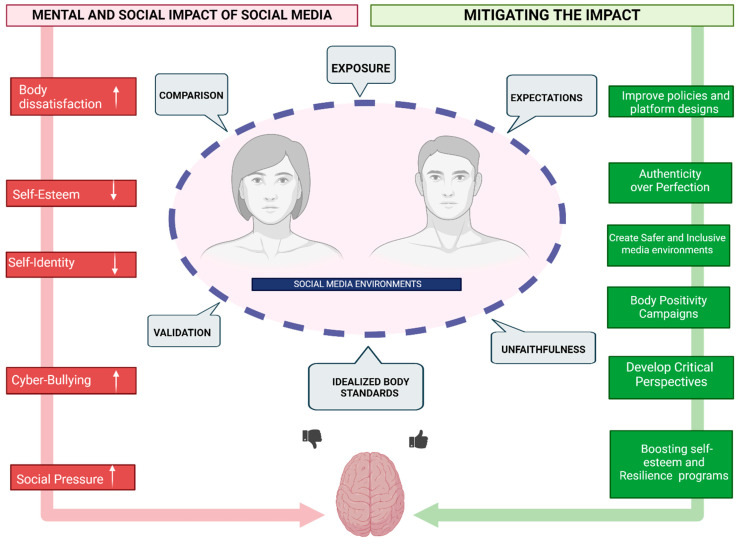
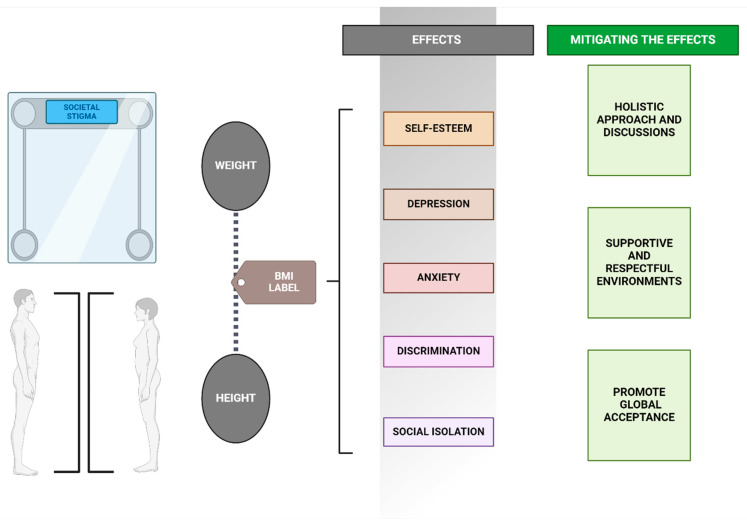
This narrative review examines the interplay among body image perceptions, social media influence, physical measurements, and their impact on psychological well-being, focusing on the roles of cultural and gender differences and the need to understand the research methodologies employed in this field. In the age of digital proliferation, platforms like Instagram and Facebook have reshaped body image concerns, often leading to increased dissatisfaction and psychological distress due to constant exposure to idealized images and a culture of social comparison. Physical attributes such as weight, height, and BMI are scrutinized under societal standards of health and attractiveness, contributing to a spectrum of mental health issues including low self-esteem, depression, and eating disorders. This examination reveals how cultural norms and gender expectations further complicate body image perceptions, affecting individuals differently based on societal and personal ideals. It synthesizes current research and types of methods to illuminate how these factors together influence mental health and self-esteem, advocating for comprehensive interventions and policy measures aimed at mitigating body dissatisfaction and promoting a healthier, more inclusive understanding of body image. By delving into the complexities of body image satisfaction and its psychological implications, this review highlights the necessity of addressing these concerns within public health and social policy frameworks, underscoring the importance of a multifaceted approach to enhance individual and societal well-being.
Overview
CoChat Summary
TL;DR
This is a narrative review of how social media, physical measurements, and cultural/gender norms shape body image satisfaction and psychological well-being. It argues that body dissatisfaction is linked to lower self-esteem and mental health problems, and that media literacy, body positivity, and policy change are needed to reduce harm.
Key findings
- The authors identified 450 articles in their search, retained 280 after exclusion/appraisal, and finally included 212 articles in the review.
- Social media is presented as a major driver of body dissatisfaction through upward social comparison, selective self-presentation, and exposure to idealized or digitally altered images; the paper states this is associated with increased body dissatisfaction, reduced self-esteem, and heightened anxiety about physical appearance.
- The review links poor body image to mental health outcomes including depression, anxiety, eating disorders, and body dysmorphic disorder; it also states that body image satisfaction is protective and is associated with reduced symptoms of depression and anxiety.
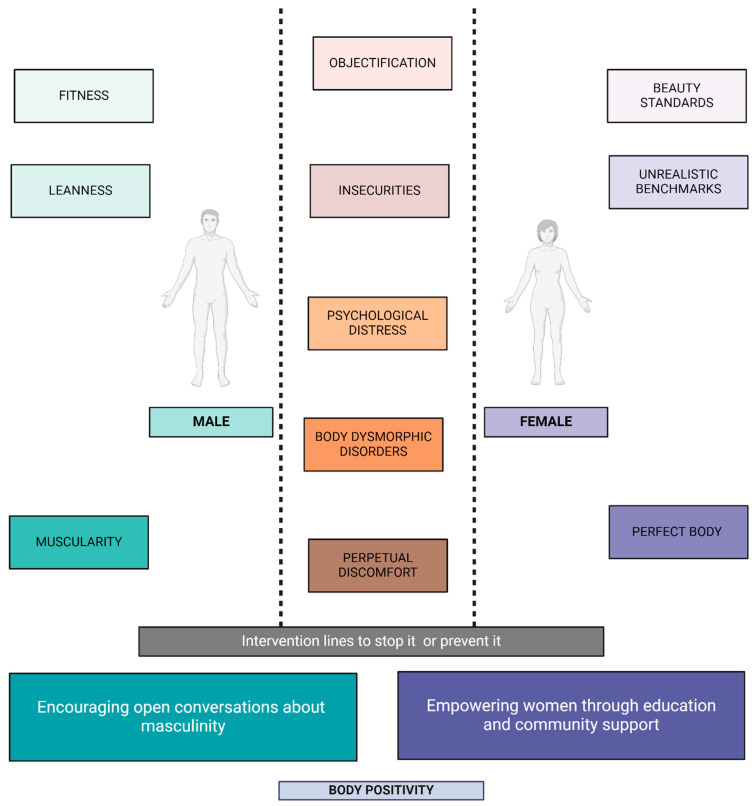
- The paper emphasizes that effects vary by gender and culture: thinness is especially valorized for women, muscularity/leanness for men, and Western beauty ideals can intensify dissatisfaction in other cultural contexts.
Methods
- Narrative review design covering literature published from 1 September 2004 to 1 September 2024.
- Searched primary and secondary literature across multiple sources, including PubMed, Scopus, Embase, Science Direct, Sports Discuss, ResearchGate, and Web of Science.
- Employed a reviewer-based screening process: six reviewers appraised titles/summaries and extracted data; the paper also notes AI tools were used for figure creation and translation refinement, not for the core research or writing.
Limitations
- The paper states methodological limitations of the reviewed approaches in general: surveys/questionnaires can be affected by social desirability bias, qualitative methods often have smaller sample sizes and limited generalizability, experimental studies may have artificial settings, and longitudinal studies require substantial time and resource commitments.
- Evident from the text: this is a narrative review, so it does not report a new empirical sample, effect estimates, or meta-analytic pooled results.
- Evident from the text: the inclusion process is broad but not fully transparent about study-by-study quality assessment or a formal systematic review protocol.
Model-written summary. Check it against the paper before relying on it.
Integrity signals
Registry
Cites
Statistics
Figures
Verification
Claims the paper makes
59 Valid · 41 Not valid · 101 Not checked · 82 Own results and interpretations
The cited sources support only part of this claim — read each source’s verdict below.
In the paper
“platforms like Instagram and Facebook have reshaped body image concerns, often leading to increased dissatisfaction and psychological distress due to constant exposure to idealized images and a culture of social comparison.”
- Also stated in: § 3. Influence of Social Media on Body Image and Mental Health · boosted
“The rise of social media has profoundly transformed individual perceptions of body image, promoting a homogenized ideal of beauty and attractiveness that emphasizes narrow and often unattainable standards [3,4,6].”
§ Body Perceptions and Psychological Well-Being: A Review of the Impact of Social Media and Physical Measurements on Self-Esteem and Mental Health with a Focus on Body Image Satisfaction and Its Relationship with Cultural and Gender Factors > Abstract
What the sources say
- Not checked — no full text of the sourcecites [3] Fardouly J. Vartanian L.R. Social Media and Body Image Concerns: Current Research and Future Directions Curr. Opin. Psychol. 2016 9 1 5 10.1016/j.copsyc.2015.09.005 source
- Partly supportedcites [4] Rounsefell K. Gibson S. McLean S. Blair M. Molenaar A. Brennan L. Truby H. McCaffrey T.A. Social Media, Body Image and Food Choices in Healthy Young Adults: A Mixed Methods Systematic Review Nutr. Diet. 2020 77 19 40 10.1111/1747-0080.12581 31583837 PMC7384161 sourceExperimental — accuracy not yet measured
The Results (page unavailable) associate exposure to idealized images on Instagram and Facebook with greater body dissatisfaction and identify appearance-related comparison as a mediator. The Discussion (page unavailable) describes thinness and fitness ideals and an online culture of comparison. The cited passages do not establish the additional claim of psychological distress, and the review’s largely observational findings do not establish that exposure causes it. (LLM, conf=0.85)
- Not checked — no full text of the sourcecites [6] Burnette C.B. Kwitowski M.A. Mazzeo S.E. “I Don’t Need People to Tell Me I’m Pretty on Social Media:” A Qualitative Study of Social Media and Body Image in Early Adolescent Girls Body Image 2017 23 114 125 10.1016/j.bodyim.2017.09.001 28965052 source
boostedstates a cause- Asserted: passes — The authors put it forward as true.
- Checkable: passes — It can be checked against evidence.
- Load-bearing: passes — The paper’s conclusions depend on it.
- Based: passes — The paper gives a reason why it holds.
- Also stated in: § 3. Influence of Social Media on Body Image and Mental Health · boosted
The cited sources support only part of this claim — read each source’s verdict below.
In the paper
“This trend is particularly pronounced among adolescents and young adults, who comprise a substantial segment of social media users and are at a pivotal stage in the development of their self-identity and body image [3,4,5,6].”
§ Body Perceptions and Psychological Well-Being: A Review of the Impact of Social Media and Physical Measurements on Self-Esteem and Mental Health with a Focus on Body Image Satisfaction and Its Relationship with Cultural and Gender Factors > 3. Influence of Social Media on Body Image and Mental Health
What the sources say
- Not checked — no full text of the sourcecites [3] Fardouly J. Vartanian L.R. Social Media and Body Image Concerns: Current Research and Future Directions Curr. Opin. Psychol. 2016 9 1 5 10.1016/j.copsyc.2015.09.005 source
- Partly supportedcites [4] Rounsefell K. Gibson S. McLean S. Blair M. Molenaar A. Brennan L. Truby H. McCaffrey T.A. Social Media, Body Image and Food Choices in Healthy Young Adults: A Mixed Methods Systematic Review Nutr. Diet. 2020 77 19 40 10.1111/1747-0080.12581 31583837 PMC7384161 sourceExperimental — accuracy not yet measured
The Introduction reports high social-media use among young adults, and the Results report social-media associations with body dissatisfaction, lower self-esteem, and anxiety in young-adult samples. The Results also report worse Facebook body-image scores in young adults than in older cohorts. The review does not establish that the full set of associations is particularly pronounced among adolescents, or attribute it to a pivotal stage of self-identity and body-image development. No page numbers were available in our copy. (LLM, conf=0.85)
- Partly supportedcites [5] Vandenbosch L. Fardouly J. Tiggemann M. Social Media and Body Image: Recent Trends and Future Directions Curr. Opin. Psychol. 2022 45 101289 10.1016/j.copsyc.2021.12.002 35030460 sourceExperimental — accuracy not yet measured
The opening section says social media use is related to negative body image, and §2.1 discusses body-image dissatisfaction among adolescents. But §4 says systematic evidence about age differences is lacking, so the review does not establish that the association is particularly pronounced among adolescents and young adults. It also does not establish the claimed association with anxiety or reduced self-esteem, or the citing sentence’s explanation about self-identity development. (LLM, conf=0.88)
- Not checked — no full text of the sourcecites [6] Burnette C.B. Kwitowski M.A. Mazzeo S.E. “I Don’t Need People to Tell Me I’m Pretty on Social Media:” A Qualitative Study of Social Media and Body Image in Early Adolescent Girls Body Image 2017 23 114 125 10.1016/j.bodyim.2017.09.001 28965052 source
plainstates an association- Asserted: passes — The authors put it forward as true.
- Checkable: passes — It can be checked against evidence.
- Load-bearing: passes — The paper’s conclusions depend on it.
- Based: passes — The paper gives a reason why it holds.
The cited sources support only part of this claim — read each source’s verdict below.
In the paper
“The impact of social media on body image and mental health varies significantly across cultural and gender lines, underscoring the complexity of these phenomena and the influence of societal norms and values in shaping individual responses to digital content.”
§ Body Perceptions and Psychological Well-Being: A Review of the Impact of Social Media and Physical Measurements on Self-Esteem and Mental Health with a Focus on Body Image Satisfaction and Its Relationship with Cultural and Gender Factors > 3. Influence of Social Media on Body Image and Mental Health > 3.4. Cultural and Gender Differences in Social Media’s Impact
What the sources say
- Partly supportedcites [48] Nagar P. Digital Detriments: Unraveling the Psychological Consequences of Social Media Lloyd Bus. Rev. 2023 2 1 14 10.56595/lbr.v2i1.9 sourceExperimental — accuracy not yet measured
The Findings of the Study (§4.1; page unavailable) say that social media’s effect on mental health may differ by gender, and the Review of Literature (§3; page unavailable) describes gender differences in mental-health outcomes. The paper does not establish significant differences across cultural lines or show that cultural and gender differences apply to body image; it also does not attribute those differences to societal norms and values. (LLM, conf=0.88)
plainstates an association- Asserted: passes — The authors put it forward as true.
- Checkable: passes — It can be checked against evidence.
- Load-bearing: passes — The paper’s conclusions depend on it.
- Based: passes — The paper gives a reason why it holds.
- Partly supported
The cited sources support only part of this claim — read each source’s verdict below.
In the paper
“Furthermore, the act of curating and maintaining an idealized online self demands constant vigilance and self-scrutiny, which can become a significant source of stress and anxiety.”
§ Body Perceptions and Psychological Well-Being: A Review of the Impact of Social Media and Physical Measurements on Self-Esteem and Mental Health with a Focus on Body Image Satisfaction and Its Relationship with Cultural and Gender Factors > 3. Influence of Social Media on Body Image and Mental Health > 3.2. The Role of Self-Presentation on Social Media
What the sources say
- Partly supportedcites [39] Ryding F.C. Kuss D.J. The Use of Social Networking Sites, Body Image Dissatisfaction, and Body Dysmorphic Disorder: A Systematic Review of Psychological Research Psychol. Pop. Media 2020 9 412 10.1037/ppm0000264 sourceExperimental — accuracy not yet measured
The Mediating Factors section describes ongoing awareness of attractiveness to a social-media audience and links it to greater body surveillance; it also reports an association between heavier Instagram use and physical-appearance anxiety (page not available in our copy). It does not establish that curating and maintaining an idealized online self demands constant vigilance or that this activity causes stress and anxiety. (LLM, conf=0.82)
plainstates a cause- Asserted: passes — The authors put it forward as true.
- Checkable: passes — It can be checked against evidence.
- Load-bearing: passes — The paper’s conclusions depend on it.
- Based: passes — The paper gives a reason why it holds.
- Partly supported
The cited sources support only part of this claim — read each source’s verdict below.
In the paper
“This dynamic can exacerbate the pressure to conform to idealized standards, as adolescents and young adults equate social approval and self-worth with how closely their bodies resemble those celebrated online [35].”
§ Body Perceptions and Psychological Well-Being: A Review of the Impact of Social Media and Physical Measurements on Self-Esteem and Mental Health with a Focus on Body Image Satisfaction and Its Relationship with Cultural and Gender Factors > 3. Influence of Social Media on Body Image and Mental Health > 3.3. The Impact of Social Media on Adolescents and Young Adults
What the sources say
- Partly supportedcites [35] Steinsbekk S. Wichstrøm L. Stenseng F. Nesi J. Hygen B.W. Skalická V. The Impact of Social Media Use on Appearance Self-Esteem from Childhood to Adolescence—A 3Wave Community Study Comput. Human Behav. 2021 114 106528 10.1016/j.chb.2020.106528 sourceExperimental — accuracy not yet measured
The Introduction (page unavailable) says idealized social-media images may create difficult-to-attain appearance norms, and Section 4.1 reports that engaging with others’ posts predicted lower appearance self-esteem during the transition to adolescence. The paper does not establish that adolescents equate social approval with bodily resemblance to people online, and its findings do not extend to young adults. (LLM, conf=0.86)
plainstates a cause- Asserted: passes — The authors put it forward as true.
- Checkable: passes — It can be checked against evidence.
- Load-bearing: passes — The paper’s conclusions depend on it.
- Based: passes — The paper gives a reason why it holds.
- Partly supported
136 more claims · 45 with their cited sources checked
Create a free account to see all 283 claims and to verify the 17 references still open.
- It may state two separate claims as one. 101
- Probably not a substantial claim. 54
Claims other papers make about this one
Each is checked against this paper’s own text: does it say what the citing paper says it does?
In the citing paper
“Conversely, those with high self-esteem may engage with social media in a more balanced way, using it to reinforce their positive self-image but without becoming dependent on the feedback of others (Merino et al., 2024; Sekścińska & Jaworska, 2022; M. Wang et al., 2021).”
From The Role of False Self-Presentation and Social Comparison in Excessive Social Media Use (2025) · cites this paper as Merino et al., 2024
Citations
Cites
Objectification Theory: Toward Understanding Women's Lived Experiences and Mental Health Risks
Fredrickson, B. L., & Roberts, T.-A. (1997) · Psychology of Women Quarterly · doi:10.1111/j.1471-6402.1997.tb00108.x · Cited by 5,531 · cited 1×
“Understanding these cultural nuances is crucial for crafting effective interventions and promoting a global movement toward body positivity [15].”
BackgroundExacting beauty: Theory, assessment, and treatment of body image disturbance.
Thompson, J. K., Heinberg, L. J., Altabe, M., & Tantleff-Dunn, S. (1999) · doi:10.1037/10312-000 · Cited by 3,100 · cited 1×
“This concept posits that social actors, such as family, friends, and the media, develop the standards of physical attractiveness and slimness for women [32].”
BackgroundThe influence of physical activity on mental well-being
Fox, K. R. (1999) · Public Health Nutrition · doi:10.1017/s1368980099000567 · Cited by 1,415 · cited 1×
“The dissonance between societal ideals and the reality of natural body diversity creates fertile ground for body dissatisfaction and its psychological ramifications [70].”
BackgroundThe Body Appreciation Scale-2: Item refinement and psychometric evaluation
Tylka, T. L., & Wood-Barcalow, N. L. (2015) · Body Image · doi:10.1016/j.bodyim.2014.09.006 · Cited by 1,298 · cited 3×
“Understanding the implications of body perceptions on psychological well-being necessitates a foundational grasp of the theoretical frameworks that underpin body image research [7,8].”
BackgroundWhat is and what is not positive body image? Conceptual foundations and construct definition
Tylka, T. L., & Wood-Barcalow, N. L. (2015) · Body Image · doi:10.1016/j.bodyim.2015.04.001 · Cited by 1,293 · cited 2×
“Understanding the implications of body perceptions on psychological well-being necessitates a foundational grasp of the theoretical frameworks that underpin body image research [7,8].”
BackgroundFredrickson, B. L., Roberts, T.-A., Noll, S. M., Quinn, D. M., & Twenge, J. M. (1998) · Journal of Personality and Social Psychology · doi:10.1037/0022-3514.75.1.269 · Cited by 1,129 · cited 1×
“The rising incidence of objectified male images in media and advertising underscores that the psychological impacts of objectification are universally pertinent, necessitating a broadened scope of discourse and intervention [14].”
BackgroundObjectification Theory and Psychology of Women: A Decade of Advances and Future Directions
Moradi, B., & Huang, Y.-P. (2008) · Psychology of Women Quarterly · doi:10.1111/j.1471-6402.2008.00452.x · Cited by 1,071 · cited 1×
“These emotions can escalate to more severe mental health issues, including eating disorders and depression, and may also have somatic consequences, such as increased cardiovascular risk due to sustained stress and anxiety [12].”
BackgroundSocial comparison: The end of a theory and the emergence of a field
Buunk, A. P., & Gibbons, F. X. (2007) · Organizational Behavior and Human Decision Processes · doi:10.1016/j.obhdp.2006.09.007 · Cited by 1,012 · cited 1×
“In the context of body image, the dynamics of social comparison can be particularly impactful [18].”
BackgroundSocial Media and Body Image Concerns: Current Research and Future Directions
Fardouly, J., & Vartanian, L. R. (2016) · Current Opinion in Psychology · doi:10.1016/j.copsyc.2015.09.005 · Cited by 801 · cited 3×
“This trend is particularly pronounced among adolescents and young adults, who comprise a substantial segment of social media users and are at a pivotal stage in the development of their self-identity and body image [3–6].”
BackgroundPhysical Exercise and Psychological Well-Being: A Population Study in Finland
Hassmén, P., Koivula, N., & Uutela, A. (2000) · Preventive Medicine · doi:10.1006/pmed.1999.0597 · Cited by 731
Research works printed but not linked: 1
- Sudhir P. Delma D. Comparison of Body Image Perception and the Actual BMI and Correlation with Self esteem and Mental Health: A Cross sectional Study among Adolescents Sudhir Int. J. Health Allied Sci. 2018 7 145 149
Cited by
Items 101–200 of 339
The impact of social media addiction on self-esteem and self-perception
Çınaroğlu, M., Aktarli, M., & Yılmazer, E. (2025) · Nevşehir Hacı Bektaş Veli Üniversitesi SBE Dergisi · doi:10.30783/nevsosbilen.1467064 · Cited by 1
The Psychological Impact of Body Shaming on Adolescents and Young Adults: A Narrative Review
Mirza, H., Rodriguez, A., Robson, A., Patel, A., Ledesma, M., & Pagadala, V. (2025) · INNOVAPATH · doi:10.63501/8vkhnf42 · Cited by 1
Miftachurochmah, Y., Rismayanthi, C., Mulyawan, R., & Pamungkas, G. (2025) · Pedagogy of Physical Culture and Sports · doi:10.15561/26649837.2025.0308 · Cited by 3
Kriaučionienė, V., Raskilienė, A., Šnipaitienė, L., & Petkevičienė, J. (2025) · Medicina · doi:10.3390/medicina61071223 · Cited by 2
“During their first year of university, students undergo various psychological and behavioural changes related to increased autonomy, identity development, academic re-sponsibilities, and social interactions [22,23].”
InfluentialCahill, L., Staras, C. O., Jones, B. A., Perera, T.-M., & McDermott, D. T. (2025) · Body Image · doi:10.1016/j.bodyim.2025.101941 · Cited by 3
Kufoof, T., Saad, R. K., Al-Ghawanmeh, R., et al. (2025) · Frontiers in Endocrinology · doi:10.3389/fendo.2025.1630919 · Cited by 1
Dai, Q., Liang, Y., Ye, B., & Yang, Q. (2025) · Child & Youth Care Forum · doi:10.1007/s10566-025-09895-z · Cited by 3
“One such key mediator may be internalizing problems, which are frequently triggered by negative body image and are known to disrupt social functioning (Merino et al., 2024).”
Body image dissatisfaction in brazilian nutrition students: A cross-sectional study
Bensberg, G. C., Moro, A. C. L., & Pinheiro, D. F. (2025) · L Encéphale · doi:10.1016/j.encep.2025.06.004 · Cited by 2
Agastya, I. K. W., Yudistira, C. G. P., Kasiani, K., Sutiarso, M. A., & Sharmin, F. (2025) · Journal of Education, Social & Communication Studies. · doi:10.71028/jescs.v2i3.59 · Cited by 1
정, 에., 조, 남., & 최, 나. (2025) · 한국체육학회지 · doi:10.23949/kjpe.2025.7.64.4.31 · Cited by 1
Beauty and the Bot: Perceptions of Human and AI Fitness Influencers on Instagram
Edwards, C. C., Edwards, A. P., Rijhwani, V., Mostafa, H. K., Ebo, D., & Doku, D. (2025) · International Journal of Human-Computer Interaction · doi:10.1080/10447318.2025.2558025 · Cited by 5
“Furthermore, societal standards regarding attractiveness significantly influence these interactions, highlighting the role of gender in shaping user perceptions and engagement patterns (Merino et al., 2024; Sands et al., 2022).”
Pasyar, N., Mokhtarinia, B., Salmanpour, M., Rambod, M., & Ramzi, M. (2025) · BMC Psychology · doi:10.1186/s40359-025-03406-4 · Cited by 1
“Having positive feelings toward one’s body plays a key role in self-esteem [26], psychological well-being [27], and sexual well-being [28].”
The Relationship Between Attachment Styles and Love Attitudes of Undergraduate Nursing Students
Özeren, G. S. (2025) · Nursing Open · doi:10.1002/nop2.70318 · Cited by 2
Rodrigues, D. A. C., Marcadenti, A., Bersch-Ferreira, Â. C., Gherardi‐Donato, E. C. D. S., Quinhoneiro, D. C. G., de Souza, S. R., Busnello, F. M., Bressan, J., Reis, I. A., Consoli, M. L. D., et al. (2025) · Endocrine · doi:10.1007/s12020-025-04425-2 · Cited by 1
“In contrast, the fact that the disinhibition subscale was associated with energy intake only among women might indicate a greater concern or effort by this group to manage episodes of disinhibition— possibly shaped by social expectations surrounding eating and body image [ 43 ].”
The Impact of Exposure to Thin Ideal Celebrities on Young Women's Mood and Body Image
Nadeem, S., & Asad, S. (2025) · Journal of Professional & Applied Psychology · doi:10.52053/jpap.v6i3.410 · Cited by 3
“Accordingly, body dissatisfaction is associated with numerous negative health outcomes (Kwan et al., 2023; Larson et al., 2021;Merino et al., 2024).”
Ryan, S. E., Mansoor, A., Vani, M., & Sabiston, C. (2025) · Body image · doi:10.1016/j.bodyim.2025.101978 · Cited by 2
Reframing the reflection: Can body positive videos boost body satisfaction?
Salom, A., & Tipple, C. (2025) · Body Image · doi:10.1016/j.bodyim.2025.101980 · Cited by 1
Nugroho, R. F., & Wardani, E. M. (2025) · Journal of Current Health Sciences · doi:10.47679/jchs.2025132 · Cited by 1
Pedrollo, L. F. S., Miasso, A. I., Molina, N. P. F. M., Donato, G. D., & Vedana, K. G. G. (2025) · Mental Illness · doi:10.1155/mij/1245527 · Cited by 1
“Satisfaction is in fl uenced by multiple and subjective factors, and graduate students' perceptions of physical appearance may be shaped by socially constructed ideals perpetuated through social media, particularly in relation to comparisons, unattainable standards, and stereotypes [15, 48, 49].”
Díaz, N. D. C. G., Javier-Aliaga, D., Casas-Gálvez, C., Barreto-Espinoza, L. A., Saintila, J., & Calizaya-Milla, Y. E. (2025) · BMC Women s Health · doi:10.1186/s12905-025-04181-5 · Cited by 1
“Likewise, these adolescents may face greater social and psychological pressures related to body image and early maturation, which can affect their self-perception and promote the adoption of less healthy behaviors [38], potentially leading to increased body weight [39].”
Media Influence on Women's Beauty, Psychology and Social Perceptions: A Longitudinal Study
Junaidi (2025) · Journal Discrimination and Injustice · doi:10.70992/dbyeq032 · Cited by 1
“As a concrete example, dark-skinned women are more vulnerable to stigma at school or in the workplace, while those with “non-ideal” bodies have to face negative comments or even have their abilities dismissed (Merino et al., 2024).”
Barzegari, M., & Majelan, A. S. (2025) · Scientific Reports · doi:10.1038/s41598-025-29071-6 · Cited by 1
Alonazi, A., Almutairi, D., Alyousef, T., & Alkhateeb, A. M. (2025) · PeerJ · doi:10.7717/peerj.20353 · Cited by 1
“There is a complex relation among the ubiquitous exposure to social media, cultural norms, self-perception and body image satisfaction, and its considerable psychological repercussions linked with so called societal ‘beauty standards’ ( Merino et al., 2024 ).”
Nercessian, A., & Salameh, P. (2025) · Global Social Welfare · doi:10.1007/s40609-025-00421-6 · Cited by 2
Fields, J. B., Jones, M. T., Kitts, S., King, E. L., & Jagim, A. R. (2025) · The Journal of Strength and Conditioning Research · doi:10.1519/jsc.0000000000005281 · Cited by 3
Foscolou, A., Koutoulogenis, K., Amerikanou, C., Chatzistamatiou, C., Stergiou, E.-M., Katsari, R., Perrea, A., Panoutsopoulos, G., Kaliora, A., & Gioxari, A. (2025) · European eating disorders review · doi:10.1002/erv.70069 · Cited by 1
“The societal demands can frequently impose additional stress, leading to a limited diet that may cause substantial dietary deficiencies (Merino et al. 2024).”
Heilat, H. B., Mashagba, S., Said, M., Nemrawi, R. I. M., Alkhawaja, F., Alrefai, E. A., AlElaimat, M., Nassr, S. B., & Oudat, D. (2025) · Future Science OA · doi:10.1080/20565623.2025.2601632 · Cited by 1
“…our study identified a lower prevalence of Bsc among tiktok and snapchat users, a finding that diverges from much of the existing literature [62,63]. this pattern may partly reflect culturally specific uses of these platforms, which in our context appear to function primarily as sources of…”
Jeong, J., Kim, H., Jo, H., Kim, H. J., Park, J., Cho, J., Hwang, J., Park, S., Pizzol, D., Smith, L., et al. (2025) · Psychiatry Investigation · doi:10.30773/pi.2025.0216 · Cited by 2
“41 It is also necessary to introduce government-level media guidelines that restrict advertisements or programs that have a negative influence on self-perceived weight.”
GENÇ YETİŞKİN KADINLARDA ÖZ SAYGI, BEDEN İMAJI VE KADINSILIK ALGISININ FLÖRT ŞİDDETİ İLE İLİŞKİSİ
Temiz, A. E., & Uluyol, F. M. (2025) · Dokuz Eylül Üniversitesi Sosyal Bilimler Enstitüsü Dergisi · doi:10.16953/deusosbil.1643601 · Cited by 1
Filho, J. R. D. O., Pratt, J. S. A., Chinn, J. O., Bowen, K. A., Hornick, M. A., & Griggs, C. L. (2026) · Obesity Surgery · doi:10.1007/s11695-025-08475-3 · Cited by 1
Vidaković, R., Žigante, M., Kelmendi, J., & Špalj, S. (2026) · PLoS ONE · doi:10.1371/journal.pone.0340828 · Cited by 1
“Some studies, however, suggest that younger individuals may be more motivated by body image concern than older individuals, possibly due to greater societal pressure on adolescents to conform to idealized beauty standards promoted by peers and the media [32,33].”
Group psychotherapy for young people with gender-related distress
Pearce, J. (2026) · Journal of Child Psychotherapy · doi:10.1080/0075417x.2025.2606700 · Cited by 1
Mahboubi, S., Zemestani, M., & Rostami, A. (2025) · Iranian Journal of Psychiatry and Behavioral Sciences · doi:10.5812/ijpbs-157029 · Cited by 2
FİDANCIOĞLU, Y. D., & Çatak, T. (2026) · BMC Oral Health · doi:10.1186/s12903-026-07779-9 · Cited by 1
“Merino et al.‘s analysis of social media’s impact on health perceptions expressed that social media can shape individuals’ perceptions both positively and negatively, which explains the dual effects on the decision-making process [30].”
Embodied renegotiation: Redefining male body image through yoga in Korea.
Kim, J., & Heo, J. (2026) · Body Image · doi:10.1016/j.bodyim.2026.102035 · Cited by 1
Lao, C. H., Skandalakis, A., & Marshall, T. C. (2026) · Media Psychology · doi:10.1080/15213269.2026.2626701 · Cited by 2
Wang, H., Alivi, M. A., Mustafa, S. E., Xu, J., & Dharejo, N. (2026) · Aesthetic Plastic Surgery · doi:10.1007/s00266-026-05687-5 · Cited by 4
“The intersection of social media usage and cosmetic surgery consideration has emerged as a significant area of study in recent years, reflecting the growing influence of digital platforms on body image perception and aesthetic choices [18].”
Self-Esteem and Body Image as Predictors of Sexual Satisfaction: A Systematic Review
Alcalá-Hinojosa, C., & Sánchez-Fuentes, M. D. M. (2026) · Sexuality & Culture · doi:10.1007/s12119-026-10541-6 · Cited by 1
Koçak, T., Koçyiğit, E., Özbek, Y. D., & Çelik, İ. (2026) · Frontiers in Psychology · doi:10.3389/fpsyg.2026.1772302 · Cited by 1
“Previous research on body image has mostly focused on risk-oriented issues such as body dissatisfaction, body shame, and negative body image (Lacroix et al., 2023; Merino et al., 2024).”
Body Esteem in Women with Complex PTSD: A Comparative Study
Ramírez-Rodríguez, R., Puig-Lagunes, Á. A., Fernández-Demeneghi, R., Ceja-Venegas, A. K., Rutti, Y. Y. G., & Tecamachaltzi-Silvarán, M. B. (2026) · Psychiatry International · doi:10.3390/psychiatryint7020046 · Cited by 1
Cao, X., & Cao, J. (2026) · International Journal of Computers and Applications · doi:10.1080/1206212x.2026.2650125 · Cited by 1
“Such approaches usually have a narrow scope and frequency, and it is hard to monitor the well-being of individuals on a continuous or real-time basis [14,15].”
Ata, O. V., Oladele, R. I., Adetula, I., Akinrinde, D. I., & Arokoyo, K. (2026) · PLOS mental health. · doi:10.1371/journal.pmen.0000583 · Cited by 1
“Globally, societal pressures regarding physical appearance are often more intensely focused on girls, with adolescent girls more likely to be body-shamed compared to their male counterparts [24].”
Body Image and Paranoia—Findings From a Large‐Scale Community Sample Using Network Analysis
Piwińska, J., Bagrowska, P., & Gawęda, Ł. (2026) · Journal of Clinical Psychology · doi:10.1002/jclp.70141 · Cited by 2
Salvador, R., Cordeiro, F., Castuera, R. J., Rebelo‐Gonçalves, R., & Monteiro, D. (2026) · Healthcare · doi:10.3390/healthcare14111445 · Cited by 1
“This perceptual–evaluative gap reflects a subjective cognitive judgment [11] and represents a relevant psychological factor associated with psychological well-being and health-related behaviors [12].”
Psychological Well-being of the Elderly in Yogyakarta City: Descriptive Study
Astuti, B., Rachmawati, I., Kurniasari, M., Sari, W. J., & Lestari, R. (2024) · Bulletin of Counseling and Psychotherapy · doi:10.51214/002024061103000 · Cited by 1
“Piko (2023) and Merino et al. (2024) stated that counsellors, psychologists, or psychiatrists could provide counselling, support groups, or meaningful guidance for the elderly to build better mental health in facing old age.”
Verdaguer-Rodríguez, M., Comas, J. O., Garreta, F., Garcia, B., Haro, J. M., Ribas, B., Romero, R., Nicolau, L., Mateo, B., Marcos, S., et al. (2025) · Women · doi:10.3390/women5010008 · Cited by 3
“The increase in self-esteem may be attributed to the supportive and non-judgmental environment provided by the WAE sessions, which can be particularly beneficial for women who may face societal pressures affecting body image and self-worth [87,88].”
Arslan, M., Çevik, E., Şahin, K., Hatunoglu, H. N., Çolak, H., & Aytulu, T. (2025) · Nutrition and Health · doi:10.1177/02601060251323954 · Cited by 1
“…due to the prejudice that men should be stronger and independent within the framework of gender norms, or that women spend more time on healthy eating and body weight control because they are exposed to more pressure related to their body perception (Merino et al., 2024; Novak et al., 2019).”
Challenges Faced by Patients After Bariatric Surgery: A Qualitative Study in Swat, KPK, Pakistan
Hussain, S., Mohammad, S., Ullah, A., Shah, A., Shakoor, A., & Farooq, M. (2025) · medtigo Journal of Medicine · doi:10.63096/medtigo30623137 · Cited by 1
Mental Health and Smartphone Addiction: Understanding the Digital Impact on Well-Being
Goel, R., & Singla, J. (2025) · Advances in human and social aspects of technology book series · doi:10.4018/979-8-3693-8804-4.ch002 · Cited by 3
Cappadona, I., Pagano, M. C., Corallo, F., Bonanno, L., Crupi, M. F., Lombardo, V., Anselmo, A., Cardile, D., Ciurleo, R., Iaropoli, F., et al. (2025) · Psychology Health & Medicine · doi:10.1080/13548506.2025.2495892 · Cited by 2
“At the same time, poor quality of life can negatively affect well-being, creating a vicious cycle that makes managing the condition more challenging (Merino et al., 2024).”
Motshware, P., Francke, E., & Makwambeni, B. (2025) · Language, Technology, and Social Media. · doi:10.70211/ltsm.v3i2.226 · Cited by 1
Mohamed, A. A. A., Abdelfatah, M. M., Shazly, M. N., Helmy, M. A., Shazly, A., & Mostafa, M. S. (2025) · Obesity Surgery · doi:10.1007/s11695-025-08176-x · Cited by 1
“Therefore, generalizing our findings is not appropriate, considering that body image is intricately linked to multiple factors, including psychiatric, socioeconomic, regional, and ethnic dimensions [69, 75].”
Say, Y., Cheng, S. H., Nazaruddin, N. F. S., Wang, J., Goh, W. Y., Yap, F. L., & Tsai, M. (2025) · Research Square · doi:10.21203/rs.3.rs-6971300/v1 · Cited by 1
The Influence of Self Esteem and Body Image on the Mental Wellbeing of University of Ghana Students
Opoku, A. E. (2024) · Annals of Psychiatry and Treatment · doi:10.17352/apt.000062 · Cited by 3
de Andrade, B. L., Baze, V. A., & Nazaré, W. O. (2024) · Revista Foco · doi:10.54751/revistafoco.v17n11-109 · Cited by 3
Mirror, Mirror on the Wall: The Role of Self-Esteem and Attachments in Early Adolescent Body-Esteem
Kim, Y. (2024) · International Journal of Mental Health Promotion · doi:10.32604/ijmhp.2024.057597 · Cited by 4
Enwere, C. A., & Iloakasia, A. J. (2024) · Applied Psychology Research · doi:10.59400/apr1555 · Cited by 3
Chandana, G. (2024) · African Journal of Biomedical Research · doi:10.53555/ajbr.v27i4s.5051
Majeed, S., & Batool, S. (2024) · Journal for social science archives · doi:10.59075/jssa.v2i2.81
Дуйсенбаева, A. О., & Баймолдина, Л. О. (2024) · Habaršy. Psihologiâ seriâsy · doi:10.51889/2959-5967.2024.81.4.009
The Impact of Photo Editing on Dermatological Perceptions in Skin of Color
Misra, R., Sataray-Rodriguez, A., Coleman, B.-A., Chime-Eze, C. M., Tolete, C., Haghighat, B., Monroe, J., Orestes, G., Randolph, C., & Frasier, K. M. (2025) · Journal of Biosciences and Medicines · doi:10.4236/jbm.2025.132033 · Cited by 1
Problematic internet use among people with dentofacial deformity: a preliminary study
Kożybska, M., Szpyt, J., Pajor, K., Radlińska, I., Starkowska, A., & Karakiewicz, B. (2025) · Frontiers in Psychiatry · doi:10.3389/fpsyt.2025.1481739
Shirazi, R., Beltrami, E. J., Cohen, A. J., & Vashi, N. A. (2025) · Advances in Cosmetic Surgery · doi:10.1016/j.yacs.2025.01.008
Enhancing Psychological Well-Being Assessment Through Data Mining: A Case Study from Thailand
Treearpornwong, A., Kantathanawat, T., Charoentham, M., Pimdee, P., & Sukkamart, A. (2025) · European Journal of Investigation in Health Psychology and Education · doi:10.3390/ejihpe15040061
“Excessive engagement with texting and social media interactions has contributed to this troubling trend (Merino et al., 2024).”
Malak, M. Z., Al-Qiam, S., Al-Amer, R. M., et al. (2025) · Clinical Psychologist · doi:10.1080/13284207.2025.2499630
Yu, Y. L., Yuan, S., Wang, J., Zhao, X., Li, L., Min, H., Dong, S., Yu, D., & Sun, X. (2025) · Frontiers in Public Health · doi:10.3389/fpubh.2025.1549695 · Cited by 2
Shiraishi, M., Kurashima, Y., Harada, R., & Ito, H. (2025) · Women & Health · doi:10.1080/03630242.2025.2509624 · Cited by 1
“In line with this theory, body dissatisfaction has been proposed as a contributing factor to depression, operating through mechanisms such as persistent sadness, low mood, and reduced self-Table 32.1 ± 5.9 31.9 ± 5.9 33.9 ± 5.1 1.061 0. esteem (Merino et al. 2024).”
InfluentialExamination of the psychometric properties of Arabic version of the Body Vigilance Scale
Chahine, A., Hemade, A., Zouki, C.-J. E., Obeïd, S., Lahoud, J.-C. F., Fekih‐Romdhane, F., & Hallit, S. R. (2025) · PLoS ONE · doi:10.1371/journal.pone.0324610 · Cited by 1
“As a result, those with high mindfulness scores might be more aware of their bodies without necessarily feeling the anxiety that comes with hypervigilance [53,54].”
The dark side of digital connectivity: smartphone dependency and body image issues in Filipino teens
Lacsa, J. E. M. (2025) · Korean Journal of Family Medicine · doi:10.4082/kjfm.25.0094 · Cited by 1
“Filipino psychiatrists and mental health advocates emphasize that reducing exposure to weight-biased media, rather than merely restricting smartphone usage, is the key to addressing body image distortion [6].”
Triana, G. J. C., Luque, A. P. P., Alvarado, W. S., & Rojas, J. F. B. (2025) · Anuario electrónico de estudios en Comunicación Social Disertaciones · doi:10.12804/revistas.urosario.edu.co/disertaciones/a.14472
The Role of Family: Effects on Adolescents’ Body Image and Eating Attitudes
Esgin, Ö., Erten, T., & Şahiner, A. (2025) · Acibadem Universitesi Saglik Bilimleri Dergisi · doi:10.31067/acusaglik.1651237
The Silent Choice: Understanding Why Women Decline Leadership Roles in Higher Education
Asrifan, A., Alwi, A., & Ram, S. W. (2025) · IGI Global eBooks · doi:10.4018/979-8-3373-0260-7.ch014
Kim, H., & Jeon, H.-S. (2025) · Asian Journal of Beauty and Cosmetology · doi:10.20402/ajbc.2025.0003 · Cited by 1
Aton, A. G. (2025) · Sportis Scientific Journal of School Sport Physical Education and Psychomotricity · doi:10.17979/sportis.2025.11.3.11674 · Cited by 2
The Relationship between Self-esteem and Technology Use
Thompson, J. A. (2025) · University of North Texas Digital Library (University of North Texas) · doi:10.12794/metadc2443132
Laktasyon Sürecindeki Annelerin Beden Algısının Emzirme Motivasyonu ile İlişkisi
Akusta, B., Ünlü, Z., Şahin, Z. Ş., & Bay, H. (2025) · Gümüşhane Üniversitesi Sağlık Bilimleri Dergisi · doi:10.37989/gumussagbil.1557296
The psychological impact of body image on academic self-efficacy in Vietnamese undergraduates
Vu, N. T., Tran, T. T., Tran, T. T., Thi, V. N., & Luong-Thi, T.-H. (2025) · Multidisciplinary Science Journal · doi:10.31893/multiscience.2025633
Tuncer, D., Kaya, M., & Uçgun, H. (2025) · Journal of Health and Allied Sciences NU · doi:10.25259/jhs-2024-11-12-(1660
Aja, L., Muhammad, T., Sunday, O. I., et al. (2025) · Open Research Africa · doi:10.12688/openresafrica.15850.1
Development of Community Corrections From the Perspective of College Students' Mental Health
Bai, S. (2025) · International Journal of Healthcare Information Systems and Informatics · doi:10.4018/ijhisi.385795 · Cited by 1
Epilepsy and Everyday Life: A Gendered Perspective from Urban Muzaffarabad (AJ&K)
Khan, A. H., & Gillani, N. U. A. (2025) · ACADEMIA International Journal for Social Sciences · doi:10.63056/acad.004.03.0478 · Cited by 1
Body Perception Attributes as Reflected on the Holistic Wellness Mirror
Gitimu, P. N., Bedeley, R. T., Gichaga, L. W., Kobia, C., Day, A. N., Bobwealth-Omontese, C., & Shani, S. (2025) · International Journal of Art Culture Design and Technology · doi:10.4018/ijacdt.385687
Zannat, N., & Mahmud, M. (2025) · Journal of Human Centered Technology · doi:10.11113/humentech.v4n2.107
Examination of obese individuals' health belief attitudes towards exercise according to variables
Uğurlu, D., & Yapıcı, H. (2025) · Journal of Health Sciences and Medicine · doi:10.32322/jhsm.1708403
Cinque, T., & Jones, A. (2025) · Oxford University Press eBooks · doi:10.1093/9780198945215.003.0184
Tan, J. Y., Low, C. E., Wong, H. J., Sim, I. Y., Lee, C. Y. C., Ding, H. R., Loke, S., Lee, A. R. Y. B., & Ho, C. S. H. (2025) · doi:10.2196/preprints.83357
Śmigiel, Z., & Wojcieszek, A. (2025) · Research Square · doi:10.21203/rs.3.rs-7194768/v1
Girls’ Experiences Regarding Obesity: A Qualitative Study in Iraq
Al‐Jubouri, M. B., Saeed, S., Bakey, S. J., Mohammed, S. A., Yousif, S. S., Shaheed, A. A., & Jabbar, K. S. (2025) · Iranian Journal of Nursing and Midwifery Research · doi:10.4103/ijnmr.ijnmr_355_24 · Cited by 3
Mallia, P., Savona‐Ventura, C., & Mahmood, T. A. (2025) · European Journal of Obstetrics & Gynecology and Reproductive Biology · doi:10.1016/j.ejogrb.2025.114710
Kamaei, E., Jayervand, H., Heidari, A., & Shoushtari, M. T. (2025) · Journal of Health Reports and Technology · doi:10.5812/jhrt-163773
Asl, M. A., Bozorgi, Z. D., Asgari, P., & Safarzadeh, S. (2025) · Journal of Health Reports and Technology · doi:10.5812/jhrt-163975 · Cited by 1
Sevi̇ndi̇k, S. T., & Mansuroğlu, S. (2025) · Psikiyatride Guncel Yaklasimlar - Current Approaches in Psychiatry · doi:10.18863/pgy.1756738
Li, Z., Huang, Q., Li, Z., Yue, F., Lei, Y., & Liu, H. (2025) · Frontiers in Public Health · doi:10.3389/fpubh.2025.1682796 · Cited by 1
Kanake, P., Anandapadmanabhan, G., & Padmaja, G. (2025) · Journal of Education and Health Promotion · doi:10.4103/jehp.jehp_1624_24
“[5] Patients often undergo significant physical and functional changes due to treatments like radiation, chemotherapy, and surgery.”
Maldonado, G. T., Patev, A. J., Carrico, M. A., Wall, C. S. J., Barnes, A. J., & Cobb, C. O. (2025) · Substance Use & Misuse · doi:10.1080/10826084.2025.2568150
“Individuals who identify as women may experience higher levels of societal pressure to maintain a certain body image that is associated with that gender role (Merino et al., 2024).”
Doğan, E., Sağlam, Ç. K., & Burgul, N. (2025) · Cukurova Anestezi ve Cerrahi Bilimler Dergisi · doi:10.36516/jocass.1733805
Ahn, C. K., Nagata, J. M., Rodgers, R. F., Testa, A. M., & Ganson, K. T. (2025) · Body Image · doi:10.1016/j.bodyim.2025.101976
Complications of aesthetics injectables
Miller, N. (2025) · Nursing Made Incredibly Easy! · doi:10.1097/nme.0000000000000129
Petridis, K., Lawrence, K., & Mason, J. (2025) · Tizard Learning Disability Review · doi:10.1108/tldr-04-2025-0006
Deep Learning Analysis for Early Mental Health Disorder Detection via Voice Data
Takawale, N. N. (2025) · International Journal of Latest Technology in Engineering Management & Applied Science · doi:10.51583/ijltemas.2025.1413sp016
Metadata
- Authors
- Merino, M., Tornero-Aguilera, J. F., Rubio-Zarapuz, A., Villanueva-Tobaldo, C. V., Martín-Rodríguez, A., & Clemente-Suárez, V. J.
- Affiliations
- Universidad Europea de Madrid (ES)
- Faculty of Sports Sciences, Universidad Europea de Madrid, 28670 Madrid, Spain
- Corresponding author
- Rubio-Zarapuz, Alejandro
- ORCID
- Venue
- Healthcare
- Publisher
- MDPI AG
- Published
- 2024-07-12
- Volume
- 12
- Issue
- 14
- Pages
- 1396
- ISSN
- 2227-9032 (ISSN-L)
- PMC
- PMC11276240
- OpenAlex
- W4400582835
- Semantic Scholar
- 5e7e5ad7061dbbb9c88137fff9b9ddd2ac738e22
- Cited by
- 349
- References
- 221
- Citations by year
- 2026: 142 · 2025: 189 · 2024: 17
- FWCI
- 30.86
- Type
- journal article
- Language
- en
- Open access
- gold
- doi.org
- Licence
- Locations
- Healthcare (publishedVersion, cc-by)
- PubMed Central (publishedVersion, cc-by)
- PubMed (publishedVersion)
- DSPACE System - Metalibrary (University of the Coast) (submittedVersion, cc-by)
- Topics
- Social Sciences › Psychology › Clinical Psychology › Eating Disorders and Behaviors
- Social Sciences › Psychology › Clinical Psychology › Body Image and Dysmorphia Studies
- Health Sciences › Nursing › Nutrition and Dietetics › Nutrition, Health and Food Behavior
- Keywords
- body image, body dissatisfaction, social media, self-esteem, mental health, anthropometry, body mass index, social comparison, gender differences, cultural norms, eating disorders, depression, Instagram, body image interventions
About these checks
Registry, retraction, Cites and statistics results are computed, not judged, with one exception: a printed reference that no index lists is read once by a model before it counts as a citation error. Claims are extracted by a model and kept only when their quote appears verbatim in the text; each cited source is then checked, with a model’s help, for whether it says what the claim relies on. Those verdicts can be wrong — read the claim’s quote and the cited source before relying on one.
The claim verdicts this report counts are experimental: their accuracy is not yet measured.
A language model drew the claims from the paper on 2026-10-11, under version 3 of the claim definition (model deepseek-v4.1-flash, prompt extract-v3).
A second model labelled each claim on 2026-10-11 (model jev-1.13-20260917, definition revision gold-guideline-v0.2).
Cited sources are checked with a language model’s help (gpt-6-sol).
Statistics and arithmetic are recomputed, not judged.
Confidence bands are shown only for fields calibrated on our annotated test set. None is calibrated yet, so no band is shown.
What counts as a claim ›How we measure confidence ›How we check this ›
Are you an author, or do you see a problem with this page? Request a review
Data sources
Bibliographic data: Semantic Scholar, OpenAlex, Crossref.
Contains information from the Semantic Scholar Academic Graph Datasets, made available under the ODC Attribution License (ODC-BY 1.0).
Semantic Scholar’s data is described in: Kinney, R., et al. (2023). The Semantic Scholar Open Data Platform. arXiv:2301.10140.
