

Body Perceptions and Psychological Well-Being: A Review of the Impact of Social Media and Physical Measurements on Self-Esteem and Mental Health with a Focus on Body Image Satisfaction and Its Relationship with Cultural and Gender Factors
Open accessThe DOI matches its Crossref record; 215 of the 221 references it cites were found in a registry or an index; 98 of the 211 sources its claims cite were checked for support.
Abstract
This narrative review examines the interplay among body image perceptions, social media influence, physical measurements, and their impact on psychological well-being, focusing on the roles of cultural and gender differences and the need to understand the research methodologies employed in this field. In the age of digital proliferation, platforms like Instagram and Facebook have reshaped body image concerns, often leading to increased dissatisfaction and psychological distress due to constant exposure to idealized images and a culture of social comparison. Physical attributes such as weight, height, and BMI are scrutinized under societal standards of health and attractiveness, contributing to a spectrum of mental health issues including low self-esteem, depression, and eating disorders. This examination reveals how cultural norms and gender expectations further complicate body image perceptions, affecting individuals differently based on societal and personal ideals. It synthesizes current research and types of methods to illuminate how these factors together influence mental health and self-esteem, advocating for comprehensive interventions and policy measures aimed at mitigating body dissatisfaction and promoting a healthier, more inclusive understanding of body image. By delving into the complexities of body image satisfaction and its psychological implications, this review highlights the necessity of addressing these concerns within public health and social policy frameworks, underscoring the importance of a multifaceted approach to enhance individual and societal well-being.
Overview
CoChat Summary
TL;DR
This is a narrative review of how social media, physical measurements, and cultural/gender norms shape body image satisfaction and psychological well-being. It argues that body dissatisfaction is linked to lower self-esteem and mental health problems, and that media literacy, body positivity, and policy change are needed to reduce harm.
Key findings
- The authors identified 450 articles in their search, retained 280 after exclusion/appraisal, and finally included 212 articles in the review.
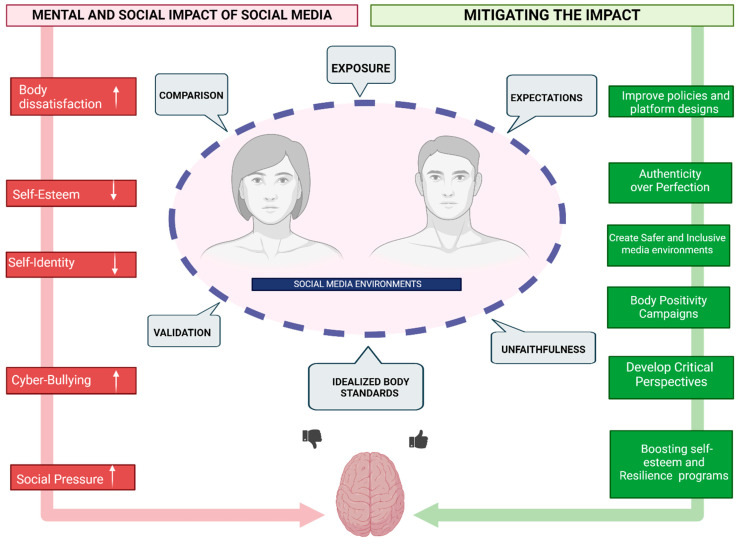
- Social media is presented as a major driver of body dissatisfaction through upward social comparison, selective self-presentation, and exposure to idealized or digitally altered images; the paper states this is associated with increased body dissatisfaction, reduced self-esteem, and heightened anxiety about physical appearance.
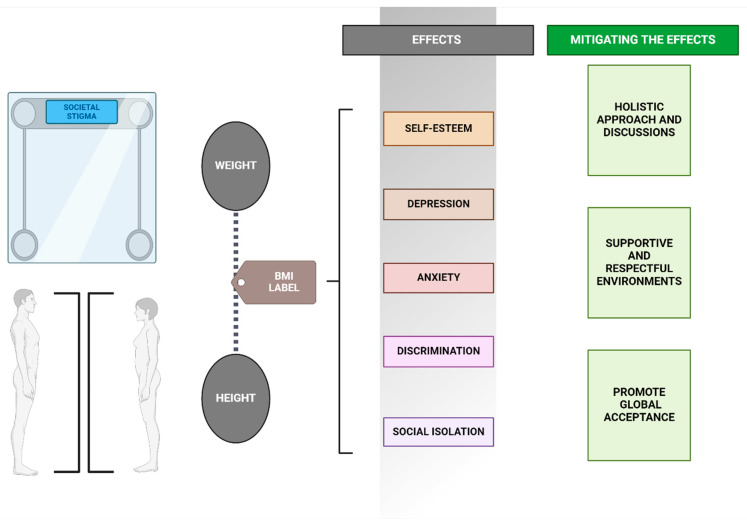
- The review links poor body image to mental health outcomes including depression, anxiety, eating disorders, and body dysmorphic disorder; it also states that body image satisfaction is protective and is associated with reduced symptoms of depression and anxiety.
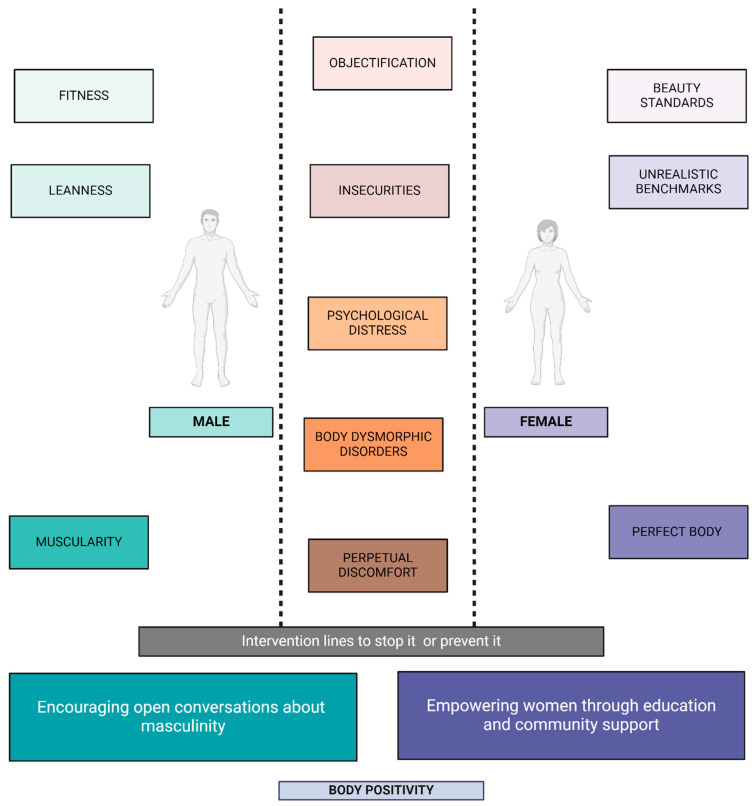
- The paper emphasizes that effects vary by gender and culture: thinness is especially valorized for women, muscularity/leanness for men, and Western beauty ideals can intensify dissatisfaction in other cultural contexts.
Methods
- Narrative review design covering literature published from 1 September 2004 to 1 September 2024.
- Searched primary and secondary literature across multiple sources, including PubMed, Scopus, Embase, Science Direct, Sports Discuss, ResearchGate, and Web of Science.
- Employed a reviewer-based screening process: six reviewers appraised titles/summaries and extracted data; the paper also notes AI tools were used for figure creation and translation refinement, not for the core research or writing.
Limitations
- The paper states methodological limitations of the reviewed approaches in general: surveys/questionnaires can be affected by social desirability bias, qualitative methods often have smaller sample sizes and limited generalizability, experimental studies may have artificial settings, and longitudinal studies require substantial time and resource commitments.
- Evident from the text: this is a narrative review, so it does not report a new empirical sample, effect estimates, or meta-analytic pooled results.
- Evident from the text: the inclusion process is broad but not fully transparent about study-by-study quality assessment or a formal systematic review protocol.
Model-written summary. Check it against the paper before relying on it.
Integrity signals
Registry
Cites
Statistics
Figures
Verification
Claims the paper makes
59 Valid · 41 Not valid · 101 Not checked · 82 Own results and interpretations
The cited sources support only part of this claim — read each source’s verdict below.
In the paper
“platforms like Instagram and Facebook have reshaped body image concerns, often leading to increased dissatisfaction and psychological distress due to constant exposure to idealized images and a culture of social comparison.”
- Also stated in: § 3. Influence of Social Media on Body Image and Mental Health · boosted
“The rise of social media has profoundly transformed individual perceptions of body image, promoting a homogenized ideal of beauty and attractiveness that emphasizes narrow and often unattainable standards [3,4,6].”
§ Body Perceptions and Psychological Well-Being: A Review of the Impact of Social Media and Physical Measurements on Self-Esteem and Mental Health with a Focus on Body Image Satisfaction and Its Relationship with Cultural and Gender Factors > Abstract
What the sources say
- Not checked — no full text of the sourcecites [3] Fardouly J. Vartanian L.R. Social Media and Body Image Concerns: Current Research and Future Directions Curr. Opin. Psychol. 2016 9 1 5 10.1016/j.copsyc.2015.09.005 source
- Partly supportedcites [4] Rounsefell K. Gibson S. McLean S. Blair M. Molenaar A. Brennan L. Truby H. McCaffrey T.A. Social Media, Body Image and Food Choices in Healthy Young Adults: A Mixed Methods Systematic Review Nutr. Diet. 2020 77 19 40 10.1111/1747-0080.12581 31583837 PMC7384161 sourceExperimental — accuracy not yet measured
The Results (page unavailable) associate exposure to idealized images on Instagram and Facebook with greater body dissatisfaction and identify appearance-related comparison as a mediator. The Discussion (page unavailable) describes thinness and fitness ideals and an online culture of comparison. The cited passages do not establish the additional claim of psychological distress, and the review’s largely observational findings do not establish that exposure causes it. (LLM, conf=0.85)
- Not checked — no full text of the sourcecites [6] Burnette C.B. Kwitowski M.A. Mazzeo S.E. “I Don’t Need People to Tell Me I’m Pretty on Social Media:” A Qualitative Study of Social Media and Body Image in Early Adolescent Girls Body Image 2017 23 114 125 10.1016/j.bodyim.2017.09.001 28965052 source
boostedstates a cause- Asserted: passes — The authors put it forward as true.
- Checkable: passes — It can be checked against evidence.
- Load-bearing: passes — The paper’s conclusions depend on it.
- Based: passes — The paper gives a reason why it holds.
- Also stated in: § 3. Influence of Social Media on Body Image and Mental Health · boosted
The cited sources support only part of this claim — read each source’s verdict below.
In the paper
“This trend is particularly pronounced among adolescents and young adults, who comprise a substantial segment of social media users and are at a pivotal stage in the development of their self-identity and body image [3,4,5,6].”
§ Body Perceptions and Psychological Well-Being: A Review of the Impact of Social Media and Physical Measurements on Self-Esteem and Mental Health with a Focus on Body Image Satisfaction and Its Relationship with Cultural and Gender Factors > 3. Influence of Social Media on Body Image and Mental Health
What the sources say
- Not checked — no full text of the sourcecites [3] Fardouly J. Vartanian L.R. Social Media and Body Image Concerns: Current Research and Future Directions Curr. Opin. Psychol. 2016 9 1 5 10.1016/j.copsyc.2015.09.005 source
- Partly supportedcites [4] Rounsefell K. Gibson S. McLean S. Blair M. Molenaar A. Brennan L. Truby H. McCaffrey T.A. Social Media, Body Image and Food Choices in Healthy Young Adults: A Mixed Methods Systematic Review Nutr. Diet. 2020 77 19 40 10.1111/1747-0080.12581 31583837 PMC7384161 sourceExperimental — accuracy not yet measured
The Introduction reports high social-media use among young adults, and the Results report social-media associations with body dissatisfaction, lower self-esteem, and anxiety in young-adult samples. The Results also report worse Facebook body-image scores in young adults than in older cohorts. The review does not establish that the full set of associations is particularly pronounced among adolescents, or attribute it to a pivotal stage of self-identity and body-image development. No page numbers were available in our copy. (LLM, conf=0.85)
- Partly supportedcites [5] Vandenbosch L. Fardouly J. Tiggemann M. Social Media and Body Image: Recent Trends and Future Directions Curr. Opin. Psychol. 2022 45 101289 10.1016/j.copsyc.2021.12.002 35030460 sourceExperimental — accuracy not yet measured
The opening section says social media use is related to negative body image, and §2.1 discusses body-image dissatisfaction among adolescents. But §4 says systematic evidence about age differences is lacking, so the review does not establish that the association is particularly pronounced among adolescents and young adults. It also does not establish the claimed association with anxiety or reduced self-esteem, or the citing sentence’s explanation about self-identity development. (LLM, conf=0.88)
- Not checked — no full text of the sourcecites [6] Burnette C.B. Kwitowski M.A. Mazzeo S.E. “I Don’t Need People to Tell Me I’m Pretty on Social Media:” A Qualitative Study of Social Media and Body Image in Early Adolescent Girls Body Image 2017 23 114 125 10.1016/j.bodyim.2017.09.001 28965052 source
plainstates an association- Asserted: passes — The authors put it forward as true.
- Checkable: passes — It can be checked against evidence.
- Load-bearing: passes — The paper’s conclusions depend on it.
- Based: passes — The paper gives a reason why it holds.
The cited sources support only part of this claim — read each source’s verdict below.
In the paper
“The impact of social media on body image and mental health varies significantly across cultural and gender lines, underscoring the complexity of these phenomena and the influence of societal norms and values in shaping individual responses to digital content.”
§ Body Perceptions and Psychological Well-Being: A Review of the Impact of Social Media and Physical Measurements on Self-Esteem and Mental Health with a Focus on Body Image Satisfaction and Its Relationship with Cultural and Gender Factors > 3. Influence of Social Media on Body Image and Mental Health > 3.4. Cultural and Gender Differences in Social Media’s Impact
What the sources say
- Partly supportedcites [48] Nagar P. Digital Detriments: Unraveling the Psychological Consequences of Social Media Lloyd Bus. Rev. 2023 2 1 14 10.56595/lbr.v2i1.9 sourceExperimental — accuracy not yet measured
The Findings of the Study (§4.1; page unavailable) say that social media’s effect on mental health may differ by gender, and the Review of Literature (§3; page unavailable) describes gender differences in mental-health outcomes. The paper does not establish significant differences across cultural lines or show that cultural and gender differences apply to body image; it also does not attribute those differences to societal norms and values. (LLM, conf=0.88)
plainstates an association- Asserted: passes — The authors put it forward as true.
- Checkable: passes — It can be checked against evidence.
- Load-bearing: passes — The paper’s conclusions depend on it.
- Based: passes — The paper gives a reason why it holds.
- Partly supported
The cited sources support only part of this claim — read each source’s verdict below.
In the paper
“Furthermore, the act of curating and maintaining an idealized online self demands constant vigilance and self-scrutiny, which can become a significant source of stress and anxiety.”
§ Body Perceptions and Psychological Well-Being: A Review of the Impact of Social Media and Physical Measurements on Self-Esteem and Mental Health with a Focus on Body Image Satisfaction and Its Relationship with Cultural and Gender Factors > 3. Influence of Social Media on Body Image and Mental Health > 3.2. The Role of Self-Presentation on Social Media
What the sources say
- Partly supportedcites [39] Ryding F.C. Kuss D.J. The Use of Social Networking Sites, Body Image Dissatisfaction, and Body Dysmorphic Disorder: A Systematic Review of Psychological Research Psychol. Pop. Media 2020 9 412 10.1037/ppm0000264 sourceExperimental — accuracy not yet measured
The Mediating Factors section describes ongoing awareness of attractiveness to a social-media audience and links it to greater body surveillance; it also reports an association between heavier Instagram use and physical-appearance anxiety (page not available in our copy). It does not establish that curating and maintaining an idealized online self demands constant vigilance or that this activity causes stress and anxiety. (LLM, conf=0.82)
plainstates a cause- Asserted: passes — The authors put it forward as true.
- Checkable: passes — It can be checked against evidence.
- Load-bearing: passes — The paper’s conclusions depend on it.
- Based: passes — The paper gives a reason why it holds.
- Partly supported
The cited sources support only part of this claim — read each source’s verdict below.
In the paper
“This dynamic can exacerbate the pressure to conform to idealized standards, as adolescents and young adults equate social approval and self-worth with how closely their bodies resemble those celebrated online [35].”
§ Body Perceptions and Psychological Well-Being: A Review of the Impact of Social Media and Physical Measurements on Self-Esteem and Mental Health with a Focus on Body Image Satisfaction and Its Relationship with Cultural and Gender Factors > 3. Influence of Social Media on Body Image and Mental Health > 3.3. The Impact of Social Media on Adolescents and Young Adults
What the sources say
- Partly supportedcites [35] Steinsbekk S. Wichstrøm L. Stenseng F. Nesi J. Hygen B.W. Skalická V. The Impact of Social Media Use on Appearance Self-Esteem from Childhood to Adolescence—A 3Wave Community Study Comput. Human Behav. 2021 114 106528 10.1016/j.chb.2020.106528 sourceExperimental — accuracy not yet measured
The Introduction (page unavailable) says idealized social-media images may create difficult-to-attain appearance norms, and Section 4.1 reports that engaging with others’ posts predicted lower appearance self-esteem during the transition to adolescence. The paper does not establish that adolescents equate social approval with bodily resemblance to people online, and its findings do not extend to young adults. (LLM, conf=0.86)
plainstates a cause- Asserted: passes — The authors put it forward as true.
- Checkable: passes — It can be checked against evidence.
- Load-bearing: passes — The paper’s conclusions depend on it.
- Based: passes — The paper gives a reason why it holds.
- Partly supported
136 more claims · 45 with their cited sources checked
Create a free account to see all 283 claims and to verify the 17 references still open.
- It may state two separate claims as one. 101
- Probably not a substantial claim. 54
Claims other papers make about this one
Each is checked against this paper’s own text: does it say what the citing paper says it does?
In the citing paper
“Conversely, those with high self-esteem may engage with social media in a more balanced way, using it to reinforce their positive self-image but without becoming dependent on the feedback of others (Merino et al., 2024; Sekścińska & Jaworska, 2022; M. Wang et al., 2021).”
From The Role of False Self-Presentation and Social Comparison in Excessive Social Media Use (2025) · cites this paper as Merino et al., 2024
Citations
Cites
Objectification Theory: Toward Understanding Women's Lived Experiences and Mental Health Risks
Fredrickson, B. L., & Roberts, T.-A. (1997) · Psychology of Women Quarterly · doi:10.1111/j.1471-6402.1997.tb00108.x · Cited by 5,531 · cited 1×
“Understanding these cultural nuances is crucial for crafting effective interventions and promoting a global movement toward body positivity [15].”
BackgroundExacting beauty: Theory, assessment, and treatment of body image disturbance.
Thompson, J. K., Heinberg, L. J., Altabe, M., & Tantleff-Dunn, S. (1999) · doi:10.1037/10312-000 · Cited by 3,100 · cited 1×
“This concept posits that social actors, such as family, friends, and the media, develop the standards of physical attractiveness and slimness for women [32].”
BackgroundThe influence of physical activity on mental well-being
Fox, K. R. (1999) · Public Health Nutrition · doi:10.1017/s1368980099000567 · Cited by 1,415 · cited 1×
“The dissonance between societal ideals and the reality of natural body diversity creates fertile ground for body dissatisfaction and its psychological ramifications [70].”
BackgroundThe Body Appreciation Scale-2: Item refinement and psychometric evaluation
Tylka, T. L., & Wood-Barcalow, N. L. (2015) · Body Image · doi:10.1016/j.bodyim.2014.09.006 · Cited by 1,298 · cited 3×
“Understanding the implications of body perceptions on psychological well-being necessitates a foundational grasp of the theoretical frameworks that underpin body image research [7,8].”
BackgroundWhat is and what is not positive body image? Conceptual foundations and construct definition
Tylka, T. L., & Wood-Barcalow, N. L. (2015) · Body Image · doi:10.1016/j.bodyim.2015.04.001 · Cited by 1,293 · cited 2×
“Understanding the implications of body perceptions on psychological well-being necessitates a foundational grasp of the theoretical frameworks that underpin body image research [7,8].”
BackgroundFredrickson, B. L., Roberts, T.-A., Noll, S. M., Quinn, D. M., & Twenge, J. M. (1998) · Journal of Personality and Social Psychology · doi:10.1037/0022-3514.75.1.269 · Cited by 1,129 · cited 1×
“The rising incidence of objectified male images in media and advertising underscores that the psychological impacts of objectification are universally pertinent, necessitating a broadened scope of discourse and intervention [14].”
BackgroundObjectification Theory and Psychology of Women: A Decade of Advances and Future Directions
Moradi, B., & Huang, Y.-P. (2008) · Psychology of Women Quarterly · doi:10.1111/j.1471-6402.2008.00452.x · Cited by 1,071 · cited 1×
“These emotions can escalate to more severe mental health issues, including eating disorders and depression, and may also have somatic consequences, such as increased cardiovascular risk due to sustained stress and anxiety [12].”
BackgroundSocial comparison: The end of a theory and the emergence of a field
Buunk, A. P., & Gibbons, F. X. (2007) · Organizational Behavior and Human Decision Processes · doi:10.1016/j.obhdp.2006.09.007 · Cited by 1,012 · cited 1×
“In the context of body image, the dynamics of social comparison can be particularly impactful [18].”
BackgroundSocial Media and Body Image Concerns: Current Research and Future Directions
Fardouly, J., & Vartanian, L. R. (2016) · Current Opinion in Psychology · doi:10.1016/j.copsyc.2015.09.005 · Cited by 801 · cited 3×
“This trend is particularly pronounced among adolescents and young adults, who comprise a substantial segment of social media users and are at a pivotal stage in the development of their self-identity and body image [3–6].”
BackgroundPhysical Exercise and Psychological Well-Being: A Population Study in Finland
Hassmén, P., Koivula, N., & Uutela, A. (2000) · Preventive Medicine · doi:10.1006/pmed.1999.0597 · Cited by 731
Research works printed but not linked: 1
- Sudhir P. Delma D. Comparison of Body Image Perception and the Actual BMI and Correlation with Self esteem and Mental Health: A Cross sectional Study among Adolescents Sudhir Int. J. Health Allied Sci. 2018 7 145 149
Cited by
Items 201–300 of 339
Bautista, P., Salinas, A. C., Saso, C. E., & Íñiguez‐Berrozpe, T. (2025) · International Journal of Adolescence and Youth · doi:10.1080/02673843.2025.2574466 · Cited by 3
“These patterns are especially prevalent in Mediterranean cultures, where appearance plays a central role in peer interactions and digital identity construction (Merino et al., 2024).”
Graumans, W., Stone, W. J., Ramjith, J., et al. (2025) · medRxiv · doi:10.1101/2025.10.26.25338829
Al-Bashabsheh, Z., Batarseh, N., Othman, G. A., Albashabsheh, N. T., Haddad, M. A., & Al-Dabbas, M. M. (2025) · Journal of Education and Health Promotion · doi:10.4103/jehp.jehp_791_25
“[48,49] There was also a significant impact of gender.”
Andreasen, E. M., & Westergren, T. (2025) · International Journal of Qualitative Studies on Health and Well-Being · doi:10.1080/17482631.2025.2582287 · Cited by 1
“These challenges may compromise well-being and contribute to negative outcomes such as poor body image and emotional stress (Merino et al., 2024; Shannon et al., 2022).”
Validating the 5 H psychological framework for sustainable organizational behavior
Jaturat, N., & Na-Nan, K. (2025) · Discover Psychology · doi:10.1007/s44202-025-00534-1 · Cited by 2
“A well-balanced work environment fosters both personal fulfillment and organizational success [27, 28].”
Martinez, L. S., Crocker, N., Akkone, S., Hariprasad, S., Houghton, R. F., & Buhi, E. R. (2025) · doi:10.2196/preprints.87607
Saxod, D., Vergriete, K., Migliorelli, F., Martínez, A., Cornou, C., Poussel, M., Buffeteau, A., Lambaudie, É., Weyl, A., & Motton, S. (2025) · Supportive Care in Cancer · doi:10.1007/s00520-025-10162-z
Fernandes, A. J., & Pereira, B. J. (2025) · Annals of Indian Psychiatry · doi:10.4103/aip.aip_145_25
Mirror Within: Exploring the Impact of Physical Activity on Body Image and Anxiety in Youth
Rawat, K., Błachnio, A., & Liberska, H. (2025) · Journal of Clinical Medicine · doi:10.3390/jcm14238484 · Cited by 4
The necessity of objectification: Sartre and Lacan on online body shaming
de Boer, B., & Aydin, C. (2025) · Philosophical Psychology · doi:10.1080/09515089.2025.2601722
Braouzou, I., & Gkouletsa, K. (2025) · Cureus · doi:10.7759/cureus.98947
“These patterns appear more pronounced in individuals with underlying anxiety, attachment insecurity, or low sexual assertiveness [27].”
Zhu, N. (2025) · Journal of Social Development and History · doi:10.71052/jsdh/slns3080
Experiences of Women with Polycystic Ovarian Syndrome: A Qualitative Inquiry
Bashir, A., Bhat, N., Jan, M., Shakeel, A., Ahmed, S., Altaf, M. M., & Nazir, I. (2025) · Women s Reproductive Health · doi:10.1080/23293691.2025.2593855
Artsrouni, E. V., Sadykova, R. N., & Mingazova, E. N. (2025) · Remedium Journal about the Russian market of medicines and medical equipment · doi:10.32687/1561-5936-2025-29-4-355-360
Body Image Concept of Women's Gym Community in Makassar City
Payuk, I., Suriah, Ibnu, I. F., Riskiyani, S., & Moedjiono, A. I. (2025) · Salud Ciencia y Tecnología · doi:10.56294/saludcyt20262601
Yoga, T. P., Alamsyah, N., Hendra, A., et al. (2025) · International Conference on Cybernetics and Intelligent System (ICORIS) · doi:10.1109/icoris67789.2025.11296028
“Mental health conditions such as anxiety and depression are influenced by a wide range of variables, including sleep patterns, physical activity levels, social support, stress, and self-esteem [2].”
Anwar, W., Ranjan, P., Malhotra, A., Kandpal, A., Upadhyay, A. D., Kaloiya, G. S., Kumari, A., & Vikram, N. K. (2025) · Journal of Education and Health Promotion · doi:10.4103/jehp.jehp_120_25
“[8,30] extend beyond overweight and obesity to underweight and normal‑weight individuals.”
Neeraj, M. S., Nirmala, B. P., Janardhana, N., & Sharma, M. K. (2025) · Indian Journal of Social Psychiatry · doi:10.4103/ijsp.ijsp_378_24
Predictive relationship between body esteem and interpersonal competence among university students
Masagca, R. C. (2025) · Physical Education of Students · doi:10.15561/20755279.2025.0605 · Cited by 2
Zahid, B., Shoukat, N., Khan, S., Ashraf, M., Adeel, U., & Rafi, A. (2025) · Pakistan Journal of Psychological Research · doi:10.33824/pjpr.2025.40.4.42
Beden Algısı Bozukluğu ve İşlevsellik Ölçeği: Geliştirme, Geçerlik ve Güvenirlik
Yılmazer, E. (2025) · Nişantaşı üniversitesi sosyal bilimler dergisi/Nişantaşı Üniversitesi sosyal bilimler dergisi · doi:10.52122/nisantasisbd.1779261
Siaw, A. O., Aboagyewaa-Ntiri, J., Appiah, N. A., et al. (2025) · Fashion and Textiles Review. · doi:10.35738/ftr.v6.2025.12
Zhang, X., & Zhang, Z. (2026) · Healthcare · doi:10.3390/healthcare14010120
“Given that Xiaohongshu is predominantly used by young women and that women are disproportionately affected by appearance‑focused social media pressures [15,16], we focused exclusively on female participants.”
Galindo, C. D., Lopez, A., Avendaño, D. O., Ruiz, L. G., & Osorno, I. (2026) · Cureus · doi:10.7759/cureus.101014 · Cited by 2
“These mechanisms may be particularly salient during adolescence, when self-concept formation is ongoing and sensitivity to external evaluation is heightened [8].”
Nugraeni, D. T., Harjanto, R., Herari, N., et al. (2026) · SHS Web of Conferences · doi:10.1051/shsconf/202622703001
Pan, R., Zhao, P., Huang, X., Liu, S., Shu, J., Tao, R., Liu, T., & Li, W. (2026) · Obesity Surgery · doi:10.1007/s11695-025-08478-0
Gonçalves, I. D. S. A., Campos, T. D. N., Freitas, D. M. D. O., Milagres, L. P., Aleixo, M. T., Lacerda, A. C. G. S., Moreira, T. R., Cabrini, D., de Freitas, B. G., da Silva, J. A., et al. (2026) · Nutrients · doi:10.3390/nu18030414 · Cited by 2
“Moreover, the societal valorisation of thinness contributes to body stigma and dissat-isfaction with body image, particularly among women [13].”
Visualizing Diversity: Addressing Bias in Anatomical Representation
Auck, H., Shah, M. H., Flari, E., Day, Y., & Murray, O. (2026) · Biomedical visualization · doi:10.1007/978-3-032-12305-3_5
Moonajilin, M. S., Chandraaroy, B., Islam, R. U., Taher, L., Noshin, F., Taher, T., & Kamal, S. (2026) · Asia-Pacific Psychiatry · doi:10.1111/appy.70014 · Cited by 1
“Women with EBW face dissatisfaction and stigma, which can cause low self-esteem, anxiety, and depression (Abdoli et al. 2024; Merino et al. 2024).”
Braun-Trocchio, R., Brandner, C. F., Swafford, S. H., Compton, A. T., & Graybeal, A. J. (2026) · Journal of Clinical Sport Psychology · doi:10.1123/jcsp.2025-0078
CAREER ASPIRATIONS AMONG MALAYSIAN YOUTH: A QUALITATIVE STUDY ON THE INFLUENCE OF TIKTOK
Mohamad, F., Ramlan, M. A. I., Rashid, F. H. A., Ismail, I. Z., & Azahari, E. H. (2025) · International Journal of Entrepreneurship and Management Practices · doi:10.35631/ijemp.832007
Obez bireylerin egzersize yönelik sağlık inanç tutumlarının değişkenlere göre incelenmesi
Uğurlu, D., & Yapıcı, H. (2025) · Journal of Health Sciences and Medicine
Mehta, A., Shah, K., & Kulkarni, R. (2022) · Asian Journal of Ethics in Health and Medicine · doi:10.51847/vjuq0qnfiz
Nasir, A. M., Firdaus, M. I. A.-F. M., Razak, I. B. A., Akbar, N. A. N. F., Azrell, N. E., Nassir, C. M. N. C. M., Ahmed, M. A., Allam, A. H. A. E., Tajudin, H. H. M., & Jaffer, U. (2025) · International Journal of Education Psychology and Counseling · doi:10.35631/ijepc.1061095
Khalesi, M., Samadi, A., & Nasiri, E. (2026) · International Journal of Preventive Medicine · doi:10.4103/ijpvm.ijpvm_121_25
“…contrast, dissatisfaction with body weight or inaccurate weight assessment (either overestimation or underestimation) can lead to unhealthy weight‑control behaviors, such as eating disorders (e.g., anorexia nervosa or binge eating disorder), [13] or even passive attitudes toward weight management.”
Pathirathna, M. L., HARUNA, M., Nandasena, H. M. R. K. G., Atapattu, A. M. M. P., & Ganegoda, U. D. (2026) · International Journal of Gynecology & Obstetrics · doi:10.1002/ijgo.70891
“68 The observed association between negative body image attitudes and increased antenatal or postpartum depressive symptoms might underscore the importance of integrating body image screening into routine prenatal and postnatal care.”
Exploring the role of negative urgency in body dissatisfaction in young adults
Watkins, J. M., Herms, E. N., Schiestl, E. T., & Wisner, K. (2026) · Journal of Health Psychology · doi:10.1177/13591053261430272
Mentzelou, M., Papadopoulou, S. Κ., Angelakou, E.-P., Chatziprodromidou, I. P., & Giaginis, C. (2026) · Behavioral Sciences · doi:10.3390/bs16030422
“A culture of constant comparison is fostered by the constant exposure to carefully chosen and frequently digitally enhanced depictions of the human form, which causes widespread body dissatisfaction and psychological anguish across large segments of the world’s population (Merino et al., 2024).”
InfluentialBEM-ESTAR SUBJETIVO, ESTRESSE PERCEBIDO E SATISFAÇÃO COM APARÊNCIA MUSCULAR: Um estudo correlacional
Lopes, B. D. J., dos Reis, C. B., Nogueira, W. B., & Silva, A. L. D. A. C. (2026) · Scientia Generalis · doi:10.22289/sg.v7n1a16
Berbegal-Bernabeu, M., García-D’Urso, N., Sanchez-SanSegundo, M., Vives‐Cases, C., Tomé-Fernández, M., & Zaragoza-Martí, A. (2026) · Archives of Public Health · doi:10.1186/s13690-026-01893-4
“Next to self-esteem and emotional well-being, body image is a key concept believed to be negatively affected in individuals with excess weight [11].”
Earl, S. R., & Irvine, K. (2026) · International Journal of Sport and Exercise Psychology · doi:10.1080/1612197x.2026.2645204
Handayani, D., Widowati, R., Silawati, V., & Rukmaini (2026) · Nursing and Health Sciences Journal (NHSJ) · doi:10.53713/nhsj.v6i1.613
“…essential, parallel efforts in psychological counseling, media literacy education, and fostering supportive school and family environments are critical to promoting a realistic, healthy body image and safeguarding both the physical and mental well-being of adolescent girls (Merino et al., 2023).”
Özlü, N. G. Ö., Vural, F., & CENAN, D. (2026) · Archives of Sexual Behavior · doi:10.1007/s10508-025-03407-9 · Cited by 1
“For women in particular, beauty perception is strongly linked to self-esteem, gender identity, and sexuality, making it a critical component of psychosocial well-being (Castro et al. 2017; Dimitrov et al., 2023; Merino et al., 2024; Rodgers et al., 2023).”
Aliyeva, T., & Chakir, H. (2026) · IGI Global eBooks · doi:10.4018/979-8-3373-5467-5.ch001
Tamrakar, S., Paudel, S., Khatri, D., & Chalise, A. (2026) · BMC Psychology · doi:10.1186/s40359-026-04457-x · Cited by 1
Li, Y., Liu, Z., & Liu, F. (2026) · doi:10.2196/preprints.96331
Wong, Z. N., Ou, K. Q., Wong, Z. N., Danpanichkul, P., Faderani, R., Kanapathy, M., & Mosahebi, A. (2026) · Plastic and Aesthetic Nursing · doi:10.1097/psn.0000000000000647
Symptom-specific links between depression and functional impairment in young adults
Liu, Q., Standring, J. P., Li, S. M., Irani, K., & Quinn, M. E. (2026) · Journal of Affective Disorders · doi:10.1016/j.jad.2026.121710 · Cited by 1
Nguyen, X. P., Hoang, A. T., Pham, T. D., Le, M. P., Le, T. N., & Trinh, D. B. (2026) · Lecture notes in networks and systems · doi:10.1007/978-3-032-18162-6_56
Humphrey, S., Hernández, C., Montes, J. R., Park, J.-Y., Voropai, D., & Warnell, K. (2026) · Aesthetic Surgery Journal Open Forum · doi:10.1093/asjof/ojag058
The Well-Being of Early Childhood Teachers in Indonesia: Promoting Empathy to Mitigate Burnout
Rizkyanti, C. A., & Mufiedatussalam, S. (2026) · Springer international handbooks of education · doi:10.1007/978-981-95-2423-5_1 · Cited by 1
Wang, S., Choe, D., Saito, A., Humbert, A. T., Kowalske, K. J., Oh, J. G., Winnek, K., Schneider, J. C., Ryan, C. M., & Yenikomshian, H. A. (2026) · Journal of Burn Care & Research · doi:10.1093/jbcr/irag051
Hong, W., Yang, W., Niu, Y., & Li, Q. (2026) · International Journal of Eating Disorders · doi:10.1002/eat.70108
Xu, Q., & Wang, Z. (2026) · Journal of Information Science · doi:10.1177/01655515261442148 · Cited by 1
Impact of Mass Media on Dietary Habits and Food Choices of College-Going Girls in Urban Patna, Bihar
Sinha, N., & Kumari, N. (2026) · Research Journal of Humanities and Social Sciences · doi:10.52711/2321-5828.2026.00002
Healthy Orthorexia and Orthorexia Nervosa Among Nurses in Qatar
Pattabi, A., Nazarene, A., Nashwan, A. J. J., Joy, G. V., Hassan, S. M., Samara, H., & Singh, K. (2026) · Health Science Reports · doi:10.1002/hsr2.71228
Xiao, Y., Zhao, S., Zhou, Q., Zhang, Y., Han, J., Ji, F., & He, J. (2026) · Body Image · doi:10.1016/j.bodyim.2026.102097
Zhao, Y., Mu, J., & Zou, H. (2026) · Journal of Pediatric Endocrinology and Metabolism · doi:10.1515/jpem-2026-0058
“Research has demonstrated that social, cultural, and personal aspects of mental health are impacted by body satisfaction, not just height [24].”
NO QUE INFLUENCIAM OS INFLUENCIADORES? Um estudo sobre autoestima com mulheres jovens no brasil
Leal, T. C. D. A., & Silva, I. D. C. B. Q. (2026) · Psicologia e Saúde em Debate · doi:10.22289/2446-922x.v12a1a58
Pablos-Gabriel, C., Sánchez-García, A. B., Patino-Alonso, C., & Sánchez-García, J. C. (2026) · Frontiers in Psychology · doi:10.3389/fpsyg.2026.1796613 · Cited by 2
“Dissatisfaction with body image itself is a significant risk factor for the development of psychological distress (Liu B. et al., 2023) and is associated with harmful consequences for the mental health of young people worldwide (Merino et al., 2024).”
Suthar, P., Namdeo, N., Parmar, K., et al. (2026) · Prosthetics and Orthotics International · doi:10.1097/pxr.0000000000000543
Torales, J. C., Vargas, M., Almirón, M., O’Higgins, M. G., Caycho-Rodríguez, T., Ventriglio, A., Castaldelli-Maia, J. M., & Barrios, I. (2026) · Revista Científica de la UCSA · doi:10.18004/ucsa/2409-8752/2026.013.01.086
“…con la comparación corporal social (PACS), lo cual concuerda con investigaciones que señalan que la exposición continua a imágenes corporales idealizadas intensifica la tendencia a compararse con otros y disminuye la valoración personal del cuerpo (Fatt & Fardouly, 2023; Merino et al., 2024).”
Say, Y., Cheng, S., Nazaruddin, N. F. S., Wang, J., Goh, W. Y., Yap, F. L., & Tsai, M. (2026) · Journal of PHYSIOLOGICAL ANTHROPOLOGY · doi:10.1186/s40101-026-00427-9 · Cited by 1
“In males, high levels of muscularity dissatisfaction have been associated with performance-enhancing substance use, social withdrawal, and low self-esteem, while in females, body dissatisfaction has traditionally manifested as restrictive eating and over-exercising [34].”
Kramer, A. E., Laskowski, N. M., Juergensen, V., Zaiser, C., Mueller, R., & Paslakis, G. (2026) · Journal of Health Psychology · doi:10.1177/13591053261448993
Reducing Adolescent Body Image Concerns: A Controlled Evaluation of a School-Based Intervention
Calugi, S., Cattaneo, G., Chimini, M., Grave, A. D., & Grave, R. D. (2026) · Media Psychology · doi:10.1080/15213269.2026.2678219
Body Image Considerations in Patients with Serious Illness #534
Myerson, J., Brewerton, Y.-L., & Hutchinson, S. Z. (2026) · Journal of Palliative Medicine · doi:10.1177/10966218261450282
Perspective Chapter: Women’s Body Image – Medical Implications Across the Lifespan
Roman, D., Popescu, S., & Sorescu, T. (2026) · IntechOpen eBooks · doi:10.5772/intechopen.1015480
Ağralı, C., & Kara, A. (2026) · BMC Psychology · doi:10.1186/s40359-026-04822-w
“…by Merino et al. suggests that, in the context of rapidly advancing digitalization, platforms such as Instagram and Face-book may be associated with body image concerns, dissatisfaction, and psychological distress through repeated exposure to idealized images and social comparison processes [40].”
Yang, F., Xiang, J., & Gao, J. (2026) · Frontiers in Psychology · doi:10.3389/fpsyg.2026.1824393
“This has been demonstrated in overweight college students (Merino et al., 2024).”
Ghadban, E., Sassine, J., Obeïd, S., Helou, L., Sacre, Y., Akiki, N., Fekih‐Romdhane, F., Hallit, S. R., & Hokayem, M. (2026) · Health Science Reports · doi:10.1002/hsr2.72594
Akbari, M., Forootan, R., Tabar, Z., Barajeeh, B., & Griffiths, M. D. (2026) · Body Image · doi:10.1016/j.bodyim.2026.102135 · Cited by 1
Understanding body image and social appearance anxiety as determinants of student mental health
Ongcoy, P. J. B. (2026) · Multidisciplinary Reviews · doi:10.31893/multirev.2026580
“Another study similarly found that students’ overall body image tends to reflect a blend of confidence and self-awareness, resulting in generally stable self-evaluations (Merino et al., 2024).”
Annan-Asare, J., Apprey, C., Tandoh, M. A., Twum-Dei, B., Immurana, M., & Danzerl, N. O. P. (2026) · Discover Social Science and Health · doi:10.1007/s44155-026-00439-x
“High levels of body-shape rumination and distress are consistent with work linking obesity to internalized weight bias, social comparison processes, and psychosocial burden, particularly among women [31, 32].”
Lopresti, A. L., & Smith, S. J. (2026) · Frontiers in Nutrition · doi:10.3389/fnut.2026.1838513 · Cited by 2
“In addition to the high comorbidity between depression and sleep, depressive symptoms are associated with reduced self-esteem, lower self-evaluations of physical appearance and skin quality, and increased skin aging (14–16).”
Bień, A., Grzesik‐Gąsior, J., Górska, B., Pięta, B., Jurek, K., & Bączek, G. (2026) · Frontiers in Public Health · doi:10.3389/fpubh.2026.1829865
Perceptions of Exercise in Latin Americans and Non-Hispanic Whites with Overweight and Obesity
Bigliassi, M., Antonio, D. S., Oparina, E., & Kostrna, J. R. (2026) · Restorative Neurology and Neuroscience · doi:10.1177/09226028261436633
Anyanwu, G. E., Ojiakor, V. O., & Ogbunyibe, S. C. (2026) · F1000Research · doi:10.12688/f1000research.183387.1
Prince, T., Boyes, A., Crethar, M., Driver, C., Mills, L., & Hermens, D. F. (2026) · Journal of Adolescence · doi:10.1002/jad.70204
“Body dissatisfaction represents another key domain, typically intensifying across adolescence and consistently linked to emotional difficulties and broader psychosocial impairment (Merino et al. 2024; Rodgers et al. 2023; Voelker et al. 2015).”
InfluentialOmari, S. K., Mosses, L. I., & Mwanjali, H. H. (2026) · Health Science Reports · doi:10.1002/hsr2.72604 · Cited by 1
Díaz, M. L. B., Rodríguez, D. M., Ortega-Luyando, M., Amaya-Hernández, A., & Ortíz, A. I. V. (2026) · Revista Mexicana de Trastornos Alimentarios/Mexican Journal of Eating Disorders · doi:10.22201/fesi.20071523e.2026.e.904
Screen Time, Unhealthy Eating Behaviors, and Associated Health Risks in Children: A Narrative Review
Calcaterra, V., Cena, H., Marin, L., Cavallo, C., Taranto, S., Conti, M. V., Patanè, P., Guardamagna, L., Minardi, E., Bellingeri, L., et al. (2026) · Children · doi:10.3390/children13070887 · Cited by 2
Gonzales, F., Alalawi, R. H., Shanmugam, S. R., Tumala, R. B., Estadilla, L. T., Pangilinan, L., Almutairi, A. S., Anies, E., Cajigal, J. V., Abdelmaksoud, S. H. E. S., et al. (2026) · Behavioral Sciences · doi:10.3390/bs16071074
“Narrative reviews support this view (Merino et al., 2024) and highlight how body dissatisfaction and societal beauty standards consistently contribute to diminished self-esteem and psychological distress.”
The Role of Self-Compassion and Body Perception in Predicting Psychological Safety
Poli, A., & Miccoli, M. (2026) · Journal of Clinical Medicine · doi:10.3390/jcm15135177 · Cited by 1
“Remarkably, the contribution of body perception to psychological safety may be influenced by how bodily states are worded, so that the SCS-SF emerged as a unique predictor over and beyond BPQ-22 and DASS-21 subscales [39,40].”
Li, Y., Liu, Z., & Liu, F. (2026) · JMIR Mental Health · doi:10.2196/96331 · Cited by 3
“…and young adults, for whom influencer content constitutes a primary source of social information [11], lifestyle reference [12], and emotional stimulation [13], the mental health implications of the relational bonds that audiences form with such figures are a pressing public health concern [14].”
Tasa-Vinyals, E., Tristany-Dalmau, Q., Rodríguez-Rey, A., Martínez-Pinteño, A., Mora-Porta, M., Plana, M. T., Andrés-Perpiñá, S., Moreno, E., Martínez, E., Lázaro, L., et al. (2026) · Healthcare · doi:10.3390/healthcare14131987
“The centrality of gender and other cultural contextual factors in the complex relationship between social media exposure and physical measurements, media internalization and body image problems has been emphasized by other studies, also in males [14,38–41].”
Popov, M. Y. (2026) · Social Psychology and Society · doi:10.17759/sps.2026170202
Body image and language anxiety: a mixed-methods study of affective factors
Ünsal, F., & KASAP, S. (2026) · Current Psychology · doi:10.1007/s12144-026-09771-6
Chen, L., Wei, P.-J., Zuo, H.-J., Zhang, D.-Y., Lou, H., Yu, S.-H., & Li, B. (2026) · BMC Public Health · doi:10.1186/s12889-026-28549-w · Cited by 1
“Men are often encouraged to demonstrate strength and competitiveness through physical exercise [13], while women may limit their outdoor activities due to concerns related to body image [14], social evaluation [15], or safety considerations [16].”
Addeh, O. D. (2026) · Women s Studies in Communication · doi:10.1080/07491409.2026.2690658
Anoop, V. S., & Meena, P. N. (2026) · Springer eBooks · doi:10.1007/978-3-032-23626-5_3
Moscato, E. L., Duan, Q., Hammad, S., Siddiqui, M. A., Stabl, I., Skinner, D., Elam, M. P., & Irwin, M. K. (2026) · Psycho-Oncology · doi:10.1002/pon.70543
Esan, D. T., Onabanjo, O. D., & Rasaq, N. O. (2026) · SSM - Mental Health · doi:10.1016/j.ssmmh.2026.100681
A pilot study to explore postpartum body image and resumed menstruation
Hussain, A., Nalivaikaite, A., Warren, J., & Jackson, L. (2026) · Journal of Reproductive and Infant Psychology · doi:10.1080/02646838.2026.2703090
The association between physical activity and body image among young adults
Kuna, D., & Šunda, S. (2026) · Physical Education of Students · doi:10.15561/20755279.2026.0402
Cui, M., Li, J., & Li, C. (2026) · International Journal of Tourism Research · doi:10.1002/jtr.70379
Causes and intervention strategies for appearance anxiety: a critical review of recent advances
Wei, J. N., Song, Y., & Guo, M. (2026) · Frontiers in Psychiatry · doi:10.3389/fpsyt.2026.1779181
“Local cultures actively resist, reinterpret, and hybridize global aesthetic in fl uences, resulting in a dynamic and heterogeneous contemporary aesthetic landscape (29).”
Lima, B. Z., Ferreira, I. D. S., & Martins, N. N. F. (2026) · Research Society and Development · doi:10.33448/rsd-v15i7.51446
Heyn, L., Schwender, T. M., Rudi, H., & Köhntopp, M. (2026) · Frontiers in Psychology · doi:10.3389/fpsyg.2026.1836311
“…movements such as body neutrality promote a partially appreciative or at least non-judgmental stance toward one’s own body (Aubrey et al., 2024; Merino et al., 2024; Seekis and Lawrence, 2023); on the other hand, they exist in tension with established societal and media-driven beauty and…”
Examining the impact of augmented reality face filters on consumers’ self-concept and well-being
Sharma, D., & Singh, T. (2026) · European Journal of Marketing · doi:10.1108/ejm-01-2025-0033
Metadata
- Authors
- Merino, M., Tornero-Aguilera, J. F., Rubio-Zarapuz, A., Villanueva-Tobaldo, C. V., Martín-Rodríguez, A., & Clemente-Suárez, V. J.
- Affiliations
- Universidad Europea de Madrid (ES)
- Faculty of Sports Sciences, Universidad Europea de Madrid, 28670 Madrid, Spain
- Corresponding author
- Rubio-Zarapuz, Alejandro
- ORCID
- Venue
- Healthcare
- Publisher
- MDPI AG
- Published
- 2024-07-12
- Volume
- 12
- Issue
- 14
- Pages
- 1396
- ISSN
- 2227-9032 (ISSN-L)
- PMC
- PMC11276240
- OpenAlex
- W4400582835
- Semantic Scholar
- 5e7e5ad7061dbbb9c88137fff9b9ddd2ac738e22
- Cited by
- 349
- References
- 221
- Citations by year
- 2026: 142 · 2025: 189 · 2024: 17
- FWCI
- 30.86
- Type
- journal article
- Language
- en
- Open access
- gold
- doi.org
- Licence
- Locations
- Healthcare (publishedVersion, cc-by)
- PubMed Central (publishedVersion, cc-by)
- PubMed (publishedVersion)
- DSPACE System - Metalibrary (University of the Coast) (submittedVersion, cc-by)
- Topics
- Social Sciences › Psychology › Clinical Psychology › Eating Disorders and Behaviors
- Social Sciences › Psychology › Clinical Psychology › Body Image and Dysmorphia Studies
- Health Sciences › Nursing › Nutrition and Dietetics › Nutrition, Health and Food Behavior
- Keywords
- body image, body dissatisfaction, social media, self-esteem, mental health, anthropometry, body mass index, social comparison, gender differences, cultural norms, eating disorders, depression, Instagram, body image interventions
About these checks
Registry, retraction, Cites and statistics results are computed, not judged, with one exception: a printed reference that no index lists is read once by a model before it counts as a citation error. Claims are extracted by a model and kept only when their quote appears verbatim in the text; each cited source is then checked, with a model’s help, for whether it says what the claim relies on. Those verdicts can be wrong — read the claim’s quote and the cited source before relying on one.
The claim verdicts this report counts are experimental: their accuracy is not yet measured.
A language model drew the claims from the paper on 2026-10-11, under version 3 of the claim definition (model deepseek-v4.1-flash, prompt extract-v3).
A second model labelled each claim on 2026-10-11 (model jev-1.13-20260917, definition revision gold-guideline-v0.2).
Cited sources are checked with a language model’s help (gpt-6-sol).
Statistics and arithmetic are recomputed, not judged.
Confidence bands are shown only for fields calibrated on our annotated test set. None is calibrated yet, so no band is shown.
What counts as a claim ›How we measure confidence ›How we check this ›
Are you an author, or do you see a problem with this page? Request a review
Data sources
Bibliographic data: Semantic Scholar, OpenAlex, Crossref.
Contains information from the Semantic Scholar Academic Graph Datasets, made available under the ODC Attribution License (ODC-BY 1.0).
Semantic Scholar’s data is described in: Kinney, R., et al. (2023). The Semantic Scholar Open Data Platform. arXiv:2301.10140.
