

The DOI matches its Crossref record; 107 of the 107 references it cites were found in a registry or an index.
The Association between Future Anxiety, Health Literacy and the Perception of the COVID-19 Pandemic: A Cross-Sectional Study
Open accessAbstract
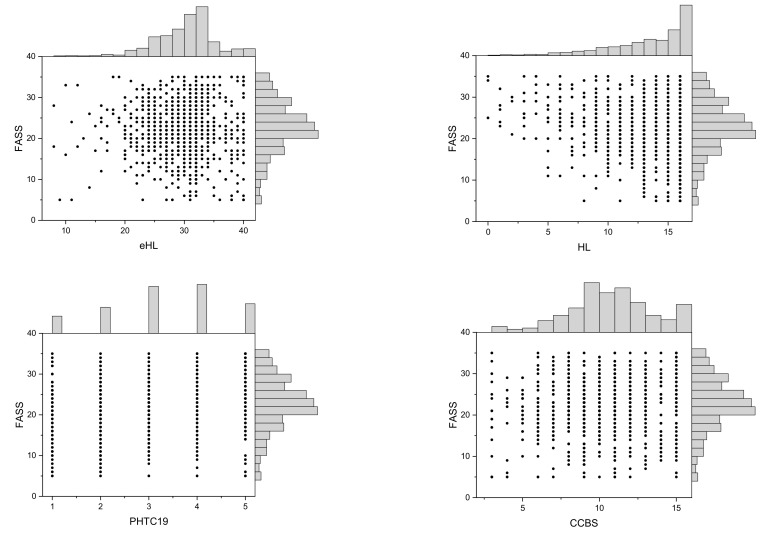
Increased anxiety related to the Coronavirus Disease 2019 (COVID-19) pandemic in society and specific professional groups has been reported by many authors. Most have applied tools enabling assessing the general traits of anxiety. Tools specifically designed for an assessment of anxiety or fear related to COVID-19 have also been developed. However, no study has assessed the future anxiety in relation to the pandemic. This concept was defined by Zaleski in the end of the 20th century as the state of apprehension, fear, worry, and concern regarding unfavourable changes in the more remote personal future. The aim of this study was an analysis to establish the level and the determinants of future anxiety in Polish society related to the COVID-19 pandemic three months after the introduction of the state of epidemic. The analysis reported in the paper is based on the data obtained through a web-based survey carried out on a representative sample of 1002 Polish adults aged 18–74 years. The hierarchical linear regression model was developed for the analysis of the determinants of future anxiety from the responses to a questionnaire consisting of five items. The independent variables selected for inclusion in the model, apart from sociodemographic characteristics, encompassed health literacy (HL) and ehealth literacy (eHL), perceived health threat related to COVID-19 (PHTC19), and a COVID-19-related conspiracy belief score (CCBS) derived from three items asking about the most popular conspiracy theories. The regression model developed in the final step showed that the future anxiety scale score (FASS) was significantly associated with gender, vocational status, HL, PHTC19, and CCBS. The FASS was lower among men than women (regression coefficient (B) (standard error, SE) = −1.28 (0.39), p = 0.001), among entrepreneurs or farmers rather than among employees of the public or private sector (B(SE) = −1.55, p = 0.010), in persons with a higher HL (B(SE) = −0.43 (0.06), p < 0.001). A higher FASS was observed in respondents with higher rather than lower PHTC19 (B(SE) = 1.49 (0.17), p < 0.001) and in those with a higher CCBS (B(SE) = 0.33 (0.07), p < 0.001). The model accounted for 15.2% of the variance of the FASS. In conclusion, the COVID-19 pandemic is not only a cause of increased mental symptoms, but also of increased future anxiety. Health-related measures are significantly associated with the FASS.
Overview
The claims and statistics of this paper haven’t been checked yet.
Run the check — free, no account needed. It reads the open-access text and checks the sources it cites.
Integrity signals
Registry
Cites
Statistics
Figures
Verification
Claims the paper makes
The claims and statistics of this paper haven’t been checked yet.
Run the check — free, no account needed. It reads the open-access text and checks the sources it cites.
Claims other papers make about this one
Each is checked against this paper’s own text: does it say what the citing paper says it does?
The cited source says what the claim attributes to it.
In the citing paper
“The COVID-19 pandemic increased anxiety regarding the future [33,34,35].”
From COVID-19 Victimization Experience and College Students’ Mobile Phone Addiction: A Moderated Mediation Effect of Future Anxiety and Mindfulness (2022) · cites this paper as [33]
Self-check
Percentages, sums and reported differences re-computed from the paper’s own numbers.
The self-check needs the paper’s full text.
Citations
Cites
Diagnostic and Statistical Manual of Mental Disorders
American Psychiatric Association (2013) · doi:10.1176/appi.books.9780890425596 · Cited by 116,369
The psychological impact of the COVID-19 epidemic on college students in China
Cao, W., Fang, Z., Hou, G., Han, M., Xu, X., Dong, J., & Zheng, J. (2020) · Psychiatry Research · doi:10.1016/j.psychres.2020.112934 · Cited by 5,843 · cited 8×
“assessed the psychological consequences of COVID19 pandemic in more than 7000 medical students in Chanzhi, China [17].”
BackgroundMethodInfluentialLow Health Literacy and Health Outcomes: An Updated Systematic Review
Berkman, N. D., Sheridan, S. L., Donahue, K. E., Halpern, D. J., & Crotty, K. (2011) · Annals of Internal Medicine · doi:10.7326/0003-4819-155-2-201107190-00005 · Cited by 5,505
The Fear of COVID-19 Scale: Development and Initial Validation
Ahorsu, D. K., Lin, C.-Y., Imani, V., Saffari, M., Griffiths, M. D., & Pakpour, A. H. (2022) · International Journal of Mental Health and Addiction · doi:10.1007/s11469-020-00270-8 · Cited by 4,332 · cited 2×
“In general, the assessment of fear or stress related to COVID-19 with specific tools, like the FC19S, showed that these scores correlated with the general anxiety scores [22,23,28,29,99].”
MethodPappa, S., Ntella, V., Giannakas, T., Giannakoulis, V. G., Papoutsi, E., & Katsaounou, P. (2020) · Brain Behavior and Immunity · doi:10.1016/j.bbi.2020.05.026 · Cited by 3,617 · cited 1×
“8% that showed symptoms of depression [18].”
Salari, N., Hosseinian-Far, A., Jalali, R., Vaisi-Raygani, A., Rasoulpoor, S., Mohammadi, M., Rasoulpoor, S., & Khaledi-Paveh, B. (2020) · Globalization and Health · doi:10.1186/s12992-020-00589-w · Cited by 3,560 · cited 1×
“[12] showed that during the COVID-19 pandemic, stress was experienced by nearly 30%, anxiety by 32% and depression by 34% of the general population.”
BackgroundCOVID-19 pandemic and mental health consequences: Systematic review of the current evidence
Vindegaard, N., & Benros, M. E. (2020) · Brain, Behavior, and Immunity · doi:10.1016/j.bbi.2020.05.048 · Cited by 3,221
eHEALS: The eHealth Literacy Scale
Norman, C. D., & Skinner, H. A. (2006) · Journal of Medical Internet Research · doi:10.2196/jmir.8.4.e27 · Cited by 2,680 · cited 2×
“The eHL score was determined in line with the instructions given by the authors of the eHealth Literacy Scale (eHEALS) [74].”
MethodHealth literacy in Europe: Comparative results of the european health literacy survey (HLS-EU)
Sørensen, K., Pelikan, J. M., Röthlin, F., Ganahl, K., Slonska, Z., Doyle, G., Fullam, J., Kondilis, B., Agrafiotis, D., Uiters, E., et al. (2015) · The European Journal of Public Health · doi:10.1093/eurpub/ckv043 · Cited by 2,651
eHealth Literacy: Essential Skills for Consumer Health in a Networked World.
Norman, C. D., & Skinner, H. A. (2006) · Journal of Medical Internet Research · doi:10.2196/jmir.8.2.e9 · Cited by 2,643 · cited 1×
“In 2006, Norman and Skinner proposed a definition and a model of eHL originating from a set of six basic competencies including reading and calculating, as well as literacies relevant to health, information, science and information technology [39].”
Background
Research works printed but not linked: 8
- Feldman, M.D., Christensen, J.F., Satterfield, J.M., and Laponis, R. (2020). Anxiety. Behavioral Medicine: A Guide for Clinical Practice, McGraw-Hill Education.
- Spielberger, 1971, Development of the Spanish edition of the State-Trait Anxiety Inventory, Rev. Interam. Psicol., 5, 145
- Zaleski, 1997, Influence strategies used by military and civil supervisors: Empirical research, Pol. Psychol. Bull., 28, 325
- Pelikan, J.M., Röthlin, F., and Ganahl, K. (2014, January 3–4). Measuring Comprehensive Health Literacy in General Populations: Validation of Instrument, Indices and Scales of the HLS-EU Study. Proceedings of the 6th Annual Health Literacy Research Conference, Hyat Regency, Bethesda, MD, USA.
- Stickley, A., Matsubayashi, T., Sueki, H., Ueda, M., and Faculty, M.U. (2020). COVID-19 preventive behaviors among people with anxiety and depression: Findings from Japan. medRxiv. · DOI
- Isautier, J., Ayre, J., Cvejic, E., Meyerowitz-Katz, G., Batcup, C., Bonner, C., Dodd, R., Nickel, B., Pickles, K., and Cornell, S. (2020). Lessons from the COVID-19 pandemic: People’s experiences and satisfaction with telehealth during the COVID-19 pandemic in Australia. medRxiv. · DOI
- Gritsenko, V., Skugarevsky, O., Konstantinov, V., Khamenka, N., Marinova, T., Reznik, A., and Isralowitz, R. (2020). COVID 19 Fear, Stress, Anxiety, and Substance Use Among Russian and Belarusian University Students. Int. J. Ment. Health Addict., 1. · DOI
- Chen, X., Zhang, S.X., Jahanshahi, A.A., Alvarez-Risco, A., Dai, H., Li, J., and Ibarra, V.G. (2020). Belief in Conspiracy Theory about COVID-19 Predicts Mental Health and Well-being-A Study of Healthcare Staff in Ecuador. medRxiv. · DOI
Cited by
Sorted by citations
Antecedents and consequences of COVID-19 conspiracy beliefs: A systematic review
van Mulukom, V., Pummerer, L., Alper, S., Bai, H., Čavojová, V., Farias, J. E. M., Kay, C. S., Lazarević, L. B., Lobato, E. J. C., Marinthe, G., et al. (2022) · Social Science & Medicine · doi:10.1016/j.socscimed.2022.114912 · Cited by 437
“…psychological well-being interact and strengthen each other (Douglas et al., 2017), and believing COVID-19 conspiracy theories may lead to lower psychological well-being in the long term, for example through associations of feelings of powerlessness and uncertainty (Duplaga and Grysztar, 2021).”
Antecedents and consequences of COVID-19 conspiracy beliefs: a systematic reviewPreprint
van Mulukom, V., Pummerer, L., Alper, S., Bai, H., Čavojová, V., Farias, J. E. M., Kay, C. S., Lazarević, L. B., Lobato, E. J. C., Marinthe, G., et al. (2020) · doi:10.31234/osf.io/u8yah · Cited by 71
Contemporary trends in psychological research on conspiracy beliefs. A systematic review
Pilch, I., Turska–Kawa, A., Wardawy-Dudziak, P., Olszanecka-Marmola, A., & Smołkowska-Jędo, W. (2023) · Frontiers in Psychology · doi:10.3389/fpsyg.2023.1075779 · Cited by 76
“, 2021), future anxiety (Duplaga and Grysztar, 2021), and also lower wellbeing (Spasovski and Kenig, 2020; van Prooijen et al.”
BackgroundHermans, L., den Broucke, S. V., Gisle, L., Demarest, S. S., & Charafeddine, R. (2021) · BMC Public Health · doi:10.1186/s12889-021-11437-w · Cited by 72
“[23] showed that higher health literacy was associated with lower levels of future anxiety during the COVID-19 pandemic.”
BackgroundFrings, D., Sykes, S., Ojo, A., Rowlands, G., Trasolini, A., Dadaczynski, K., Okan, O., & Wills, J. (2022) · BMC Public Health · doi:10.1186/s12889-022-13087-y · Cited by 49
“situations [24, 25], emerging literature from the pandemic context is consistent showing that those who are less pessimistic and reporting less fear about the future feel more psychologically prepared in pandemic management [26, 27].”
BackgroundPisl, V., Volavka, J., Chvojková, E., Cechová, K., Kavalirova, G., & Vevera, J. (2021) · European psychiatry · doi:10.3390/ijerph18105065 · Cited by 36
Tao, Y., Hou, W., Niu, H., Ma, Z., Zheng, Z., Wang, S., Liu, X., & Zhang, L. (2022) · Journal of Affective Disorders · doi:10.1016/j.jad.2022.12.120 · Cited by 44
Yıldırım, M., Kaynar, Ö., Arslan, G., & Chirico, F. (2023) · Journal of Personalized Medicine · doi:10.3390/jpm13040597 · Cited by 39
“For example, Duplaga and Grysztar (2021) examined the relationship between future anxiety, health literacy [20], perceived health threat related to COVID-19, and COVID-19-related conspiracy belief.”
BackgroundKartol, A., Üztemur, S., & Yaşar, P. (2023) · BMC Public Health · doi:10.1186/s12889-023-17460-3 · Cited by 44
“Studies conducted during the COVID-19 pandemic period indicate that people experience future anxiety in the face of dangerous and negative life events [33–35].”
BackgroundRegnoli, G. M., Tiano, G., & De Rosa, B. (2024) · European Journal of Investigation in Health, Psychology and Education · doi:10.3390/ejihpe14040054 · Cited by 33
“Future Anxiety and Intolerance of Uncertainty have been investigated in contexts of war and other traumatic events such as pandemics [61,62,70,72], showing that among youths, both are vulnerability and are risk factors that fuel mental suffering, as confirmed in our findings.”
BackgroundResultFears Related to COVID-19 among Rural Older People in Japan
Ohta, R., Ryu, Y., & Sano, C. (2021) · Healthcare · doi:10.3390/healthcare9050524 · Cited by 29
Sansakorn, P., Mushtaque, I., Awais‐E‐Yazdan, M., & Dost, M. K. B. (2024) · International Journal of Environmental Research and Public Health · doi:10.3390/ijerph21091168 · Cited by 50
“Only three studies [33–35] have examined the association between health literacy and mental health during the COVID-19 pandemic.”
BackgroundAlotaibi, N. M. (2021) · Frontiers in Sociology · doi:10.3389/fsoc.2021.729811 · Cited by 29
A Visualized and Scientometric Analysis of Health Literacy Research
Wang, J., & Shahzad, F. (2022) · Frontiers in Public Health · doi:10.3389/fpubh.2021.811707 · Cited by 30
Vaccine Hesitancy and Fear of COVID-19 Among Italian Medical Students: A Cross-Sectional Study
Moro, G. L., Cugudda, E., Bert, F., Raco, I., & Siliquini, R. (2022) · Journal of Community Health · doi:10.1007/s10900-022-01074-8 · Cited by 28
“The 1 3 FCS-19S is a tool for evaluating personal fear of COVID19: it consists of 7 items (5-item Likert-type answers from “strongly disagree” to “strongly agree”).”
BackgroundInfluentialTao, Y., Niu, H., Hou, W., Zhang, L., & Ying, R. (2022) · Journal of Clinical Psychology · doi:10.1002/jclp.23439 · Cited by 31
“Moreover, the COVID‐19 resurgence made college students uncertain of their future (Duplaga & Grysztar, 2021).”
BackgroundChen, L., Li, J., & Huang, J. (2022) · International Journal of Environmental Research and Public Health · doi:10.3390/ijerph19137578 · Cited by 26
Graham, C., Chun, Y.-R., Hamilton, B., Roll, S., Ross, W., & Grinstein-Weiss, M. (2022) · PLoS ONE · doi:10.1371/journal.pone.0267583 · Cited by 27
Kowalska-Duplaga, K., & Duplaga, M. (2023) · BMC Public Health · doi:10.1186/s12889-023-15603-0 · Cited by 27
“Our earlier study showed that greater future anxiety is associated with more intense COVID-19-related conspiracy beliefs [40].”
BackgroundSelf-citationMohammadkhah, F., Shamsalinia, A., Shirinkam, F., Daneshnia, M., Mahmoudian, A., Rafiei, N., Atashpoosh, A., & Ghaffari, F. (2021) · Heliyon · doi:10.1016/j.heliyon.2021.e07336 · Cited by 25
Regnoli, G. M., Tiano, G., & Rosa, B. D. (2024) · Climate · doi:10.3390/cli12080118 · Cited by 30
“In any case, Future appears to be another vulnerability factor for Depression, Anxiety and Stress as already highlighted in research on the impact of traumatic collective phenomena such as pandemics or war [40,68].”
BackgroundResultInfluentialRegnoli, G. M., Tiano, G., & Rosa, B. D. (2024) · European Journal of Investigation in Health Psychology and Education · doi:10.3390/ejihpe14060121 · Cited by 29
“Recent research has also explored the relationship between Future Anxiety, collective phenomena with trauma potential (e.g., pandemic, war) and psychological distress and highlighted its function as a risk factor in exacerbating the impact of such events on mental health [20,48–50].”
BackgroundKästner, A., Lücker, P., Hannich, A., Schmeyers, L., Lücker, J., & Hoffmann, W. U. (2022) · Frontiers in Public Health · doi:10.3389/fpubh.2022.1003876 · Cited by 23
Rivadeneira, M. F., Miranda-Velasco, M. J., Arroyo, H., Caicedo-Gallardo, J. D., & Pinos, C. S. (2022) · International Journal of Environmental Research and Public Health · doi:10.3390/ijerph19074092 · Cited by 24
“On the other hand, it is known that the digital literature on health is related to sociodemographic factors, with differences found by sex, educational, and socioeconomic level [21,22], and is associated with anxiety about the future and well-being [23].”
BackgroundHaruyama, Y., Miyagi, E., Kobashi, G., Obata, S., Umazume, T., Yoshimi, A., Hishimoto, A., Kurasawa, K., Suzuki, Y., Ikeda, T., et al. (2022) · Scientific Reports · doi:10.1038/s41598-022-18405-3 · Cited by 21
Cheng, X., Liu, J., Li, J., & Hu, Z. (2023) · Addictive Behaviors · doi:10.1016/j.addbeh.2023.107785 · Cited by 22
Miconi, D., Geenen, G., Frounfelker, R. L., Levinsson, A., & Rousseau, C. (2022) · Frontiers in Psychiatry · doi:10.3389/fpsyt.2022.765908 · Cited by 22
Gattino, S., Rizzo, M., Gatti, F., Compare, C., Procentese, F., Guarino, A., Napoli, I. D., Barbieri, I., Fedi, A., Aresi, G., et al. (2021) · Journal of Community Psychology · doi:10.1002/jcop.22780 · Cited by 15
Park, S., & Chung, S. (2023) · Health Promotion International · doi:10.1093/heapro/daad099 · Cited by 14
Szota, M., Rogowska, A. M., Kwaśnicka, A., & Chilicka, K. (2024) · Journal of Clinical Medicine · doi:10.3390/jcm13164897 · Cited by 21
“Studies also showed higher levels of anxiety symptoms, including future anxiety, among women than men [29,40,41].”
BackgroundResultHealth literacy and fear among Iranian medical students due to COVID‐19: An observational study
Pourfridoni, M., Khan, M. A., Daneshi, S., Vazirinasab, H., Nosrati, Z., & Daneshi‐Maskooni, M. (2022) · Brain and Behavior · doi:10.1002/brb3.2586 · Cited by 14
“Our findings are in line with a cross-sectional study conducted by Duplaga et al., who found that during the COVID-19 pandemic, people with higher HL scores experienced less future anxiety (Duplaga & Grysztar, 2021).”
BackgroundResultMoussa, M. L., Moussa, F. L., Alharbi, H., Omer, T. Y., Sofiany, H. A., Almuzaini, T. M., Alsaady, E. S., & Alrashede, S. M. (2022) · Frontiers in Public Health · doi:10.3389/fpubh.2021.740625 · Cited by 15
Lee-Won, R. J., Jang, I., Kim, H., & Park, S.-G. (2022) · International Journal of Environmental Research and Public Health · doi:10.3390/ijerph19031062 · Cited by 13
Chen, S., Huy, L. Đ., Lin, C.-Y., Lai, C.-F., Nguyen, N. T. H., Hoang, Y. N., Nguyen, T. T. P., Dang, L. T., Truong, N. L. T., Phaṇ, T. N., et al. (2022) · International Journal of Environmental Research and Public Health · doi:10.3390/ijerph192315617 · Cited by 16
Poon, K., Chan, R. S. W., Liang, J., & Li, L. M. W. (2023) · Social Science & Medicine · doi:10.1016/j.socscimed.2023.116384 · Cited by 10
Future Anxiety in Young Spanish Adults: Psychometric Properties of the Dark Future Scale
Torrado, M., García-Castro, F. J., & Blanca, M. (2024) · Anales de Psicología · doi:10.6018/analesps.549681 · Cited by 12
“Although developed only recently, the DFS has already been applied in different populations, including samples from Poland (Duplaga & Grysztar, 2021; Sobol et al., 2020), Italy (Rapelli et al., 2021; Scandurra et al., 2021), Germany (Dadaczynski et al., 2021), Canada (Watson, 2020), Turkey (Armağan & Durukal, 2021), a…”
BackgroundResultJannini, T. B., Mordacchini, I., Rossi, R., Socci, V., & Lorenzo, G. D. (2024) · Current Psychology · doi:10.1007/s12144-024-06517-0 · Cited by 15
“…largely stemming from perceived threats to personal and familial health, as well as uncertainties regarding employment and income during the COVID-19 pandemic (Duplaga & Grysztar, 2021; Jannini et al., 2023b; Pacitti et al., 2022; Paredes et al., 2021; Rossi et al., 2023; Servidio et al., 2022).”
Zengi̇n, M., Başoğul, C., & Yayan, E. H. (2021) · International Journal of Clinical Practice · doi:10.1111/ijcp.14839 · Cited by 8
Sosyal Bilgiler Öğretmeni Adaylarının Gelecek Kaygılarının Belirlenmesi
Demir, F. B., DEMİRBAŞ, İ., & ÖTELEŞ, Ü. U. (2023) · Gençlik Araştırmaları Dergisi · doi:10.52528/genclikarastirmalari.1271105 · Cited by 8
Moro, G. L., Scaioli, G., Bert, F., Zacchero, A. L., Minutiello, E., & Siliquini, R. (2022) · International Journal of Environmental Research and Public Health · doi:10.3390/ijerph19159350 · Cited by 8
Is the future frightening? Anxiety among young people in care in Poland as they move to independence
Koprowicz, A., & Gumowska, I. (2022) · Adoption & Fostering · doi:10.1177/03085759221116412 · Cited by 7
“However, the research undertaken by Duplaga and Grysztar (2021), including people in a wider age group (18–74 years), demonstrated a higher level of future anxiety among women.”
MethodLanz, M., Caliciuri, R., Iafrate, R., Regalia, C., Rosnati, R. R., & Sorgente, A. (2023) · Psychological Reports · doi:10.1177/00332941231161790 · Cited by 7
“Zaleski et al. (2019) de fi ned future anxiety as a state of apprehension, fear, worry, and concern regarding adverse changes in the more remote personal future (Duplaga & Grysztar, 2021).”
Luo, Y.-F., Zhao, H., Chen, H., & Xiao, M. (2023) · Frontiers in Public Health · doi:10.3389/fpubh.2023.1199941 · Cited by 6
“This occurrence may be related to the psychological toll that the COVID-19 outbreak has had on people (51), people may experience worry and depression and so be less inclined to follow the advised prevention measures (52).”
BackgroundVo, H. T., Dao, D. T., Duong, T. V., Nguyen, T. T., Do, B. N., Xuan, T., Khuê, P. M., Hai, V. V., Pham, L. V., Nguyen-Thi-Hong, L., et al. (2024) · Osong Public Health and Research Perspectives · doi:10.24171/j.phrp.2023.0261 · Cited by 6
Teng, Z., Su, Y., Chen, J., Wu, R., Tang, H., Wu, H., Liu, X., Ling, H., Yuan, H., & Huang, J. (2021) · Frontiers in Psychology · doi:10.3389/fpsyg.2021.676307 · Cited by 6
“Previous studies found that female frontline staff experienced more serve mental fatigue and anxiety (Batra et al., 2020; Teng et al., 2020; Duplaga and Grysztar, 2021).”
BackgroundYILMAZ, M., & Arslan, F. M. (2021) · Journal of Research in Business · doi:10.54452/jrb.1010902 · Cited by 6
Shindi, Y. A. A., Emam, M. M., & Farhadi, H. (2022) · Journal of Child & Adolescent Trauma · doi:10.1007/s40653-022-00506-w · Cited by 7
“Previous research suggests that depressive symptoms are important in predicting general and specific future anxieties (Bakioğlu et al., 2021; Duplaga & Grysztar, 2021).”
BackgroundPsychological impact of COVID-19 on obstetrics and gynaecology residents in India
Prasad, S., Mahato, C., & Magon, N. (2021) · International Journal of Reproduction Contraception Obstetrics and Gynecology · doi:10.18203/2320-1770.ijrcog20212669 · Cited by 5
“Studies show an association of depression with fear of infection, distress and loss of quality sleep.(18,23,33,40) Fear of COVID-19 is positively correlated with psychological distress (p=0.”
BackgroundMusa, S., & Nurhayati, S. (2020) · JPUD - Jurnal Pendidikan Usia Dini · doi:10.21009/jpud.142.13 · Cited by 5
“Health literacy refers to a term that is highly relevant for the understanding and application of health knowledge (Duplaga & Grysztar, 2021).”
BackgroundApud, I., Ortuño, V. E. C., Silva, M. R. R., & Revello, V. G. (2022) · International Journal of Latin American Religions · doi:10.1007/s41603-022-00181-7 · Cited by 5
Kuroda, Y., Goto, A., Koriyama, C., & Suzuki, K. (2023) · Health Promotion International · doi:10.1093/heapro/daac200 · Cited by 7
The mediating role of health literacy for COVID-19 between preventive behaviors and quality of life
Hou, W., Wu, J., Huang, H.-Y., & Yen, H. (2024) · Applied Nursing Research · doi:10.1016/j.apnr.2024.151888 · Cited by 6
Kartol, A., Üztemur, S., & Gökalp, A. (2025) · Journal of Health Psychology · doi:10.1177/13591053251341189 · Cited by 5
“Indeed, studies have shown that negative life events such as the COVID-19 pandemic (Duplaga and Grysztar, 2021) and earthquakes (Kartol et al., 2023) increase future anxiety.”
Cénat, J. M., Mathieu, J., Farahi, S. M. M. M., Dalexis, R. D., & King, R. U. (2024) · Current Psychology · doi:10.1007/s12144-024-07134-7 · Cited by 4
“Indeed, health literacy was a protective factor against future anxiety (Duplaga & Grysztar, 2021 ), PTSD symptoms (Alatawi et al., 2020; Yang et al., 2021), depression and insomnia (Yang et al., 2021), among others.”
Gelecek Kaygısının Akademik Motivasyon Üzerindeki Etkisi
Çelik, N. (2025) · The Online Journal of Recreation and Sport · doi:10.22282/tojras.1593271 · Cited by 4
Does Mothers Health Literacy Levels Affect Their Stress During COVID-19 Pandemic Process
Ağralı, H., Pazarcıkcı, F., & Aydınlı, A. (2023) · Journal of General Health Sciences (JGEHES) Necmettin Erbakan University · doi:10.51123/jgehes.2023.74 · Cited by 4
Effect of the COVID-19 pandemic on health science students' individual entrepreneurship perception
Saygılı, M., Kandemir, A., & Özkan, Ş. (2024) · The Asia Pacific Scholar · doi:10.29060/taps.2024-9-4/oa3282 · Cited by 4
Kucukergin, K. G., Özekici, Y. K., & Şahin, G. G. (2024) · Journal of Hospitality and Tourism Insights · doi:10.1108/jhti-07-2023-0444 · Cited by 3
Tayfun, A., Silik, C. E., DÜLGER, A. S., & MARGAZİEVA, N. (2022) · Turk Turizm Arastirmalari Dergisi · doi:10.26677/tr1010.2022.1012 · Cited by 3
A cross-sectional study of university students' wellbeing: What to focus on?
Biscaldi, V., Delbosq, S., Ghelfi, M., Serio, J., Vecchio, L. P., Dadaczynski, K., Okan, O., & Velasco, V. (2023) · PSICOLOGIA DELLA SALUTE · doi:10.3280/pds2023-003006 · Cited by 2
Niedorys, B., Nowicki, G., Chrzan‐Rodak, A., Nowak-Starz, G., & Ślusarska, B. J. (2024) · Medical Studies · doi:10.5114/ms.2024.137593 · Cited by 2
Vural, M. E., GEÇER, H., HACIKELEŞOĞLU, H., & Yıldırım, M. (2025) · Religions · doi:10.3390/rel16060666 · Cited by 3
Future anxiety and belongingness in young and older adults: An empirical study
Saraç, E., & Yıldız, E. (2025) · World Journal of Psychiatry · doi:10.5498/wjp.v15.i6.106227 · Cited by 2
Kuş, O. (2022) · TRT Akademi · doi:10.37679/trta.1013649 · Cited by 2
Şayık, D., & Uçan, A. (2022) · Eskişehir Türk Dünyası Uygulama ve Araştırma Merkezi Halk Sağlığı Dergisi · doi:10.35232/estudamhsd.1065427 · Cited by 2
Şengül, A. (2024) · International Journal of Academic Value Studies (Javstudies JAVS) · doi:10.29228/javs.74742 · Cited by 2
Yang, Y., Adnan, H. M., & Alivi, M. A. (2024) · Heliyon · doi:10.1016/j.heliyon.2024.e39092 · Cited by 3
Guo, Y., Gong, Z., Zhang, Z., Ma, B., Xia, R., Lu, Y., Liu, J., Xin, H., Cao, Y., Yang, S., et al. (2025) · Frontiers in Psychiatry · doi:10.3389/fpsyt.2025.1475626 · Cited by 3
“Previous research has shown that higher health literacy is associated with lower levels of anxiety (25), while low social support is a well-established predictor of depression and anxiety (26, 27).”
COVID-19, Misinformation and Communication Studies: A Systematic Review of the Infodemic
Kuş, O., & ÖZTÜRK, İ. D. (2022) · Connectist Istanbul University Journal of Communication Sciences · doi:10.26650/connectist2022-1028131 · Cited by 2
Kuş, O., & ÖZTÜRK, İ. D. (2021) · Türkiye İletişim Araştırmaları Dergisi · doi:10.17829/turcom.933550 · Cited by 2
Okun, O., & Arun, K. (2024) · SAVSAD Savunma ve Savaş Araştırmaları Dergisi · doi:10.54078/savsad.1313329 · Cited by 1
BİLGİ KAYNAKLARININ COVID-19 KORKUSUNA ETKİSİ
KARAHAN, G., Duyan, V., & Güre, M. D. P. (2022) · Turkish Journal of Applied Social Work · doi:10.54467/trjasw.1099685 · Cited by 1
Future Anxiety and Immune Status in Nursing Students During the Coronavirus Disease-2019 Pandemic
Purnama, A., & Anindya, I. (2022) · Jurnal Keperawatan Indonesia · doi:10.7454/jki.v25i1.1678 · Cited by 1
“Apart from anxiety, other mental health disorders, such as fear, depressive symptoms, and low sleep quality, have been reported during the pandemic (Duplaga & Grysztar, 2021).”
BackgroundFLEXIBLE TO SHIFT OR TRANSFORM: EFFECTS OF COVID-19 ON THE FUTURE ANXIETY OF HOSPITALITY STUDENTS
Şanlıöz-özgen, H. K., Tekdemir, G., & Cankat, E. (2022) · Journal of tourism, leisure and hospitality · doi:10.48119/toleho.1200532 · Cited by 1
مهارات ما وراء الانفعال وعلاقتها التنبؤية بقلق المستقبل المهني لدى طلاب الجامعة
البهنسي, أ. ن., رزق, ك. إ., زهران, س. ح., & متولي, ع. إ. (2023) · مجلة کلية التربية بدمياط · doi:10.21608/jsdu.2023.306389 · Cited by 1
Hüseynov, A., & Satıcı, B. (2025) · World Journal of Psychiatry · doi:10.5498/wjp.v15.i3.103175 · Cited by 1
Rodrigues, P. C. L., & Borges, A. P. (2021) · Advances in human services and public health (AHSPH) book series · doi:10.4018/978-1-7998-8674-7.ch021 · Cited by 1
COVID-19, Misinformation and Communication Studies: A Systematic Review of the Infodemic
Kuş, O., & ÖZTÜRK, İ. D. (2022) · Connectist Istanbul University Journal of Communication Sciences · doi:10.26650/connectist2022-102813 · Cited by 4
Cyberchondria as a By-Product of Extensive Use of Health-Related Information on the Internet
Kobryn, M., & Duplaga, M. (2021) · Jagiellonian University Repository (Jagiellonian University)
Self-citationنمذجة العلاقات السببية بين اليقظة العقلية والتنظيم الإنفعالي وقلق المستقبل لدى طلاب الجامعة
إبراهيم, ر. م. ا. (2021) · المجلة التربوية لکلية التربية بسوهاج · doi:10.21608/edusohag.2021.208300
العزیز, ع. ا. م. ع. (2022) · المجلة المصرية للدراسات النفسية · doi:10.21608/ejcj.2022.212024
العلاقة بين قلق المستقبل والسكينة النفسية لدى الطلاب مصابي حوادث المرور بجامعة الملك خالد
الشعراوي, د. ص. ف. م. (2021) · بحوث عربية فى مجالات التربية النوعية · doi:10.21608/raes.2021.198173
Perception of the impact of COVID-19 pandemics on cancer patientsPreprint
Pires, M. R., Pestana‐Santos, A., Costa, C. A., Caetano, A. C., Monteiro, J. C., Sousa, M. J., Pereira, T. C., Pêgo, A., & Sousa, G. (2022) · Research Square · doi:10.21203/rs.3.rs-1827813/v1
YALMAN, F., & Karagöz, Y. (2022) · International Journal of Health Management and Tourism · doi:10.31201/ijhmt.1183567
Future Health Care and Medical Entrepreneurship in the Age of Pandemic
Tariq, M. U. (2023) · Springer eBooks · doi:10.1007/978-981-19-6696-5_9
Demir, H., TANŞU, A., Demir, H., Biçer, İ., AYDIN, O. A., & BAYRAK, G. (2023) · the Journal of Academic Social Sciences · doi:10.29228/asos.69890
العلاقة بين قلق المستقبل والسكينة النفسية لدى الطلاب مصابي حوادث المرور بجامعة الملك خالد
الشعراوي, د. ص. ف. (2021) · بحوث عربية فى مجالات التربية النوعية · doi:10.21608/raes.2023.322165
القلق من المستقبل وعلاقته بفاعلية الذات لدى الجالية الإندونيسية الناطقة باللغة العربية في مصر
سلامة, أ. إ. ع. (2022) · Mağallaẗ Al-Dirāsāt Al-Afrū Asyawīyaẗ · doi:10.21608/aass.2022.340546
THE MODERATION AND MEDIATION MODEL OF HEALTH-RELATED KNOWLEDGE IN ILLNESS ANXIETY AND CYBERCHONDRIA
Khan, A. A., Sajjad, M., Ditta, A., Khan, G. N., Iqbal, A., Ikram, A., Bashir, R., & Akhlaq, B. (2024) · Journal of Population Therapeutics and Clinical Pharmacology · doi:10.53555/jptcp.v31i1.4669
Demirdağ, A., Hasdağ, D., & Ulutaş, E. (2024) · Ankara Üniversitesi Dil ve Tarih-Coğrafya Fakültesi Dergisi · doi:10.33171/dtcfjournal.2024.64.1.9
Older Adults’ Future Perspectives and Attitudes Amid Uncertainty: Shifts Across 2 Years of COVID-19
Vleet, B. V., Fuller, H. R., Hofmann, B., & Huseth‐Zosel, A. L. (2024) · Journal of Adult Development · doi:10.1007/s10804-024-09486-7
Sharifi, F., Jahromi, B. N., Alirezaei, S., Bordbar, M. R. F., & Roudsari, R. L. (2024) · Coronaviruses · doi:10.2174/0126667975318867240919184721
Bireylerin Anksiyete Okuryazarlığı Düzeylerinin Belirlenmesi ve İlişkili Faktörlerin İncelenmesi
Ünkür, P., & Türkoğlu, M. C. (2024) · Süleyman Demirel Üniversitesi Vizyoner Dergisi · doi:10.21076/vizyoner.1490155
Making Meaning of Covid-19: Navigating the Maze of Covid-19 Information
Sriram, S., & Bhargava, S. (2024) · Springer eBooks · doi:10.1007/978-981-97-8899-6_4
Sociodemographic factors and their predictive role in parents’ future anxiety
Bujnowska, A. M., Rodríguez, C., García, T., Areces, D., & Marsh, N. V. (2025) · Psicologia Reflexão e Crítica · doi:10.1186/s41155-025-00340-7
“The period of the pandemic has meant that researchers have been focused on studying FA together with general anxiety, stress or depression, and with the sociodemographic predictors and features related to the course of anxiety about the COVID-19 pandemic (Duplaga & Grysztar, 2021).”
InfluentialLiu, S., & Wang, L. (2025) · Early Intervention in Psychiatry · doi:10.1111/eip.70075
“In contrast, students with low MHL often experience feelings of isolation and helplessness, with higher levels of DAS (Duplaga and Grysztar 2021; Gorczynski et al. 2017).”
GENERATIONAL SHADES OF GREEN: HOW FUTURE ANXIETY SHAPES ENVIRONMENTAL AND FRUGAL CONSUMPTION?
Sevinç, S. B., Kurtuluş, S., & Dirsehan, T. (2025) · Marmara Üniversitesi İktisadi ve İdari Bilimler Dergisi · doi:10.14780/muiibd.1606393
Hermans, L., den Broucke, S. V., Gisle, L., Demarest, S., & Charafeddine, R. (2021) · Figshare · doi:10.6084/m9.figshare.14944994
Salman, A. A., Jafarnia, J. L., Ring, D., van der Heide, S. T., Doornberg, J. N., Crijns, T. J., & Ramtin, S. (2025) · SurgiColl · doi:10.58616/001c.143203
Xu, K., Jiang, H., & Wang, H. (2026) · Frontiers in Psychology · doi:10.3389/fpsyg.2025.1678651
“Research has shown that 23.4% of frontline workers report symptoms of anxiety, with 7.5% experiencing moderate to severe levels of anxiety (Duplaga and Grysztar, 2021).”
Influential
Metadata
- Authors
- Duplaga, M., & Grysztar, M.
- Affiliations
- Jagiellonian University (PL)
- Corresponding author
- Duplaga, Mariusz
- Venue
- Healthcare
- Publisher
- MDPI AG
- Published
- 2021-01-05
- Volume
- 9
- Issue
- 1
- Pages
- 43
- ISSN
- 2227-9032 (ISSN-L)
- PMC
- PMC7824811
- OpenAlex
- W3120587867
- Cited by
- 106
- References
- 105
- Citations by year
- 2026: 7 · 2025: 10 · 2024: 22 · 2023: 16 · 2022: 32 · 2021: 17
- FWCI
- 14.83
- Type
- journal article
- Language
- en
- Open access
- gold
- doi.org
- Licence
- Locations
- Healthcare (publishedVersion, cc-by)
- Europe PMC (PubMed Central) (publishedVersion, other-oa)
- PubMed Central (publishedVersion, cc-by)
- PubMed (publishedVersion)
- Homo Politicus (Academy of Humanities and Economics in Lodz) (submittedVersion, cc-by)
- DOAJ (DOAJ: Directory of Open Access Journals) (submittedVersion, cc-by-sa)
- Funders
- Uniwersytet Jagielloński Collegium Medicum (N43/DBS/000050)
- Topics
- Social Sciences › Psychology › Clinical Psychology › COVID-19 and Mental Health
- Health Sciences › Health Professions › General Health Professions › Health Literacy and Information Accessibility
- Social Sciences › Communication › Communication and COVID-19 Impact
- Keywords
- future anxiety, COVID-19 pandemic, health literacy, digital health literacy, perceived health threat, conspiracy beliefs, COVID-19 conspiracy theories, gender differences, occupational status, Polish adults, public health communication, health education, health policy, health care costs
About these checks
Registry, retraction, Cites and statistics results are computed, not judged, with one exception: a printed reference that no index lists is read once by a model before it counts as a citation error. Claims are extracted by a model and kept only when their quote appears verbatim in the text; each cited source is then checked, with a model’s help, for whether it says what the claim relies on. Those verdicts can be wrong — read the claim’s quote and the cited source before relying on one.
Statistics and arithmetic are recomputed, not judged.
Confidence bands are shown only for fields calibrated on our annotated test set. None is calibrated yet, so no band is shown.
What counts as a claim ›How we measure confidence ›How we check this ›
Are you an author, or do you see a problem with this page? Request a review
