

A Review of Data Quality Assessment Methods for Public Health Information Systems
Open accessThe DOI matches its Crossref record; 60 of the 61 references it cites were found in a registry or an index.
Abstract
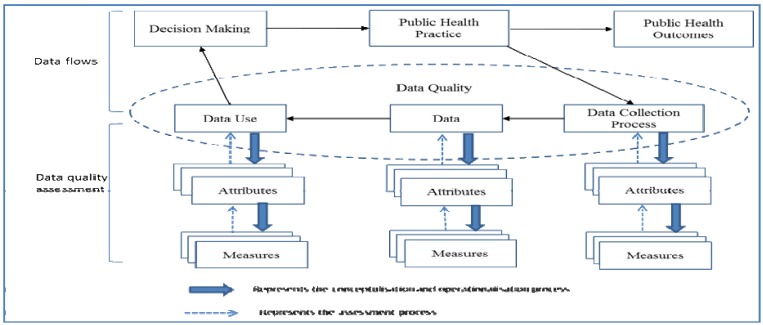
High quality data and effective data quality assessment are required for accurately evaluating the impact of public health interventions and measuring public health outcomes. Data, data use, and data collection process, as the three dimensions of data quality, all need to be assessed for overall data quality assessment. We reviewed current data quality assessment methods. The relevant study was identified in major databases and well-known institutional websites. We found the dimension of data was most frequently assessed. Completeness, accuracy, and timeliness were the three most-used attributes among a total of 49 attributes of data quality. The major quantitative assessment methods were descriptive surveys and data audits, whereas the common qualitative assessment methods were interview and documentation review. The limitations of the reviewed studies included inattentiveness to data use and data collection process, inconsistency in the definition of attributes of data quality, failure to address data users’ concerns and a lack of systematic procedures in data quality assessment. This review study is limited by the coverage of the databases and the breadth of public health information systems. Further research could develop consistent data quality definitions and attributes. More research efforts should be given to assess the quality of data use and the quality of data collection process.
Overview
The claims and statistics of this paper haven’t been checked yet.
Free: it reads the open-access text and checks the first 5 claims that cite a source we can check. Create a free account to check every claim.
Integrity signals
Registry
Cites
Statistics
Figures
Verification
Claims the paper makes
The claims and statistics of this paper haven’t been checked yet.
Free: it reads the open-access text and checks the first 5 claims that cite a source we can check. Create a free account to check every claim.
Claims other papers make about this one
Each is checked against this paper’s own text: does it say what the citing paper says it does?
The source backs part of the claim, not all of it — or backs it for a different population, condition or comparison.
In the citing paper
“Poor data quality in these domains leads to significant social and economic consequences. [1-4].”
From Data Quality in the Age of AI: A Review of Governance, Ethics, and the FAIR Principles (2025) · cites this paper as [4]
Experimental — accuracy not yet measured
Self-check
Percentages, sums and reported differences re-computed from the paper’s own numbers.
The self-check needs the paper’s full text.
Citations
Cites
Beyond Accuracy: What Data Quality Means to Data Consumers
Wang, R. Y., & Strong, D. M. (1996) · Journal of Management Information Systems · doi:10.1080/07421222.1996.11518099 · Cited by 4,672 · cited 5×
“, records, organisational documentation, data collection process and data users) and used at different levels of the organisation [33,35,36,38,75,76].”
BackgroundInfluentialBleiholder, J., & Naumann, F. (2009) · ACM Computing Surveys · doi:10.1145/1456650.1456651 · Cited by 1,838
Pipino, L. L., Lee, Y. W., & Wang, R. Y. (2002) · Communications of the ACM · doi:10.1145/505248.506010 · Cited by 1,724
Strong, D. M., Lee, Y. W., & Wang, R. Y. (1997) · Communications of the ACM · doi:10.1145/253769.253804 · Cited by 1,298 · cited 4×
“, records, organisational documentation, data collection process and data users) and used at different levels of the organisation [33,35,36,38,75,76].”
BackgroundInfluentialMethodologies for data quality assessment and improvement
Batini, C., Cappiello, C., Francalanci, C., & Maurino, A. (2009) · ACM Computing Surveys · doi:10.1145/1541880.1541883 · Cited by 1,288 · cited 1×
“A comprehensive data quality assessment method includes a set of guidelines and techniques that defines a rational process to assess data quality [37].”
Method(2001) · PsycEXTRA Dataset · doi:10.1037/e548222006-001 · Cited by 1,129
The Untilled Fields of Public Health
Winslow, C.-E. A. (1920) · Science · doi:10.1126/science.51.1306.23 · Cited by 717 · cited 2×
“The ultimate goal of public health is to improve health at the population level, and this is achieved through the collective mechanisms and actions of public health authorities within the government context [1,2].”
BackgroundAqil, A., Lippeveld, T., & Hozumi, D. (2009) · Health Policy and Planning · doi:10.1093/heapol/czp010 · Cited by 502 · cited 8×
“This included public health project/program data management and reporting, routine health information systems, and PHIS under a national health institute [34,40,41,44,45].”
BackgroundInfluentialEmergence and control of infectious diseases in China
Wang, L., Wang, Y., Jin, S., Wu, Z., Chin, D. P., Koplan, J. P., & Wilson, M. E. (2008) · The Lancet · doi:10.1016/s0140-6736(08)61365-3 · Cited by 390 · cited 1×
“Significant advantages of PHIS are their capability of electronic data collection, as well as the transmission and interchange of data, to promote public health agencies’ timely access to information [15,20].”
BackgroundChan, M., Kazatchkine, M., Lob-Levyt, J., Obaid, T., Schweizer, J., Sidibe, M., Veneman, A., & Yamada, T. (2010) · PLoS Medicine · doi:10.1371/journal.pmed.1000223 · Cited by 226 · cited 4×
“The establishment of information systems driven by the needs of single-disease programs may cause excessive data demand and fragmented PHIS systems, which undermine data quality [5,24].”
BackgroundInfluential
Research works printed but not linked: 3
- Institute of Medicine The Future of Public Health National Academies Press Washington, DC, USA 1988
- Demlo L.K. Gentleman J.F. Morbidity Data Public Health Informatics and Information Systems O’Carroll P.W. Yasnoff W.A. Ward M.E. Ripp L.H. Martin E.L. Springer Science+Business Media Inc. New York, NY, USA 2003 286 315 · DOI · Paper page
- Institute of Medicine The Future of the Public’s Health in the 21st Century The National Academies Press Washington, DC, USA 2003
Cited by
Items 101–200 of 385
Data quality assessment of a South African electronic registry for drug-resistant TB, 2015–2016
Manesen, R., Mekler, K. A., Molobi, T. R., Tyiki, A. A., Madlavu, M. J., Velen, K., Charalambous, S., & van der Heijden, Y. F. (2021) · Public Health Action · doi:10.5588/pha.20.0031 · Cited by 13
Riley, M. M., Robinson, K. M., Kilkenny, M. F., & Leggat, S. G. (2022) · Health Information Management Journal · doi:10.1177/18333583221078377 · Cited by 16
“Most definitions focus on the data attributes or dimensions such as accuracy, consistency, currency and relevance (Chen et al., 2014; Karr et al., 2006; Lee et al., 2002; Teslow, 2015). In their seminal work, Wang and Strong (1996) adopted a consumer-based definition where high-quality data were defined as “intrinsica…”
BackgroundPapadopoulou, C.-I., Loizou, E., Chatzitheodoridis, F., Michailidis, A., Karelakis, C. D., Fallas, Y., & Paltaki, A. (2023) · Land · doi:10.3390/land12040809 · Cited by 13
Palavicini, G. (2023) · Sensors · doi:10.3390/s23229053 · Cited by 15
“Data sets can be considered in three dimensions [45]: (a) improvement in attention following previous findings, which would allow faster engagement based on previous knowledge, which leads to speedier clinical attention; (b) the prevention of other illnesses the patient could be predisposed to based…”
BackgroundData Quality Methods and Applications in Health Care System: A Systematic Literature Review
Biancone, P., Secinaro, S. F., Brescia, V., & Calandra, D. (2019) · International Journal of Business and Management · doi:10.5539/ijbm.v14n4p35 · Cited by 13
Carvalho, M. S., Coeli, C. M., Chor, D., Pinheiro, R. S., da Fonseca, M. D. J. M., & Carvalho, L. C. D. S. (2015) · PLoS ONE · doi:10.1371/journal.pone.0132216 · Cited by 13
“Allocation of human and physical resources (consultation rooms, health care establishments, equipment) [91,92]; public-private relations in health care administration [93]; direct information and orientation for services and operational and administrative information systems [94]; permits and interdictions, certificat…”
BackgroundDeterminants of Intention to Use of Hospital Information Systems among Healthcare Professionals
Bach, M. P., Mihajlović, I., Stanković, M., Khawaja, S., & Qureshi, F. H. (2024) · Systems · doi:10.3390/systems12070235 · Cited by 14
Evaluating Data Quality: Comparative Insights on Standards, Methodologies, and Modern Software Tools
Alexakis, T., Adamopoulou, E. F., Πεππές, Ν., Daskalakis, E., & Ntouskas, G. (2025) · Electronics · doi:10.3390/electronics14153038 · Cited by 21
Building a healthcare data warehouse: considerations, opportunities, and challenges
Ivanovski, T. K., Honap, S., Matić, R., Marković, S. Z., & Peyrin‐Biroulet, L. (2025) · Frontiers in Digital Health · doi:10.3389/fdgth.2025.1691142 · Cited by 14
METODE PENILAIAN KUALITAS DATA SEBAGAI REKOMENDASI SISTEM REPOSITORI ILMIAH NASIONAL
Riyanto, S., Marlina, E., Subagyo, H., Triasih, H., & Yaman, A. (2020) · BACA JURNAL DOKUMENTASI DAN INFORMASI · doi:10.14203/j.baca.v41i1.544 · Cited by 12
A Standard Framework for Evaluating Large Health Care Data and Related Resources
Félix, S. E. B., Yusuf, H. R., Ritchey, M. D., Romano, S. D., Namulanda, G., Wilkins, N. J., & Boehmer, T. K. (2024) · MMWR Supplements · doi:10.15585/mmwr.su7303a1 · Cited by 19
Dufour, É., Duhoux, A., & Contandriopoulos, D. (2018) · International Journal of Medical Informatics · doi:10.1016/j.ijmedinf.2018.05.007 · Cited by 12
Issues Around Aligning Theory, Research and Practice in Social Work Education
Makhubele, J. C., & Blitz, L. V. (2018) · Knowledge pathing · doi:10.4102/aosis.2018.bk76 · Cited by 21
“Data verification must be considered where data quality control is lacking (Chen et al. 2014; Needham et al. 2009).”
BackgroundTian, Q., Han, Z., Yu, P., An, J., Lü, X., & Duan, H. (2021) · BMC Medical Informatics and Decision Making · doi:10.1186/s12911-021-01481-2 · Cited by 12
Self-citationEdwards, R. J., Cyrus, E., Bhatt, C. B., Lyons, N., Lavia, L.-O., & Boyce, G. (2019) · Global Public Health · doi:10.1080/17441692.2019.1633379 · Cited by 12
Database quality assessment in research in paramedicine: a scoping review
McDonald, N., Little, N., Kriellaars, D. J., Doupe, M. B., Giesbrecht, G. G., & Pryce, R. T. (2023) · Scandinavian Journal of Trauma Resuscitation and Emergency Medicine · doi:10.1186/s13049-023-01145-2 · Cited by 12
“Although as many as 49 different domains have been described in one practice area, [25]. frameworks typically include between one and eight domains, with key concepts such as completeness, accuracy, and timeliness appearing most frequently [25].”
Box Supervised Video Segmentation Proposal Network
Hannan, T., Koner, R., Kobold, J., & Schubert, M. (2022) · International Machine Vision and Image Processing Conference (IMVIP) · doi:10.56541/azwk8552 · Cited by 11
Tchoualeu, D. D., Elmousaad, H., Osadebe, L. U., Adegoke, O. J., Nnadi, C. D., Haladu, S., Jacenko, S., Davis, L. B., Bloland, P. B., & Sandhu, H. (2021) · PubMed Central · doi:10.11604/pamj.supp.2021.40.1.17313 · Cited by 11
“Despite a growing desire by RI programs to encourage a culture of data use in the public health community, few studies have adequately addressed data quality and use [5].”
BackgroundA FAIR Perspective on Data-Quality Frameworks
Nicholson, N., Negrao Carvalho, R., & Štotl, I. (2025) · doi:10.20944/preprints202507.0064.v1 · Cited by 10
Review of Data Governance Approaches in the Field of Transportation Domain
Hrubeš, P., Langr, M., & Purkrábková, Z. (2024) · Smart City Symposium Prague (SCSP) · doi:10.1109/scsp61506.2024.10552682 · Cited by 10
“The authors [9] point out that in the healthcare domain, the most frequently evaluated data dimension was completeness.”
BackgroundImpact of Primary Health Care Data Quality on Infectious Disease Surveillance in Brazil: Case Study
Florentino, P. T. V., Bertoldo, J., Barbosa, G. C. G., Silva, T. C., Oliveira, V. D. A., Garcia, M. H. D. O., Penna, G. O., Boaventura, V. S., Ramos, P. I. P., Barral‐Netto, M., et al. (2025) · JMIR Public Health and Surveillance · doi:10.2196/67050 · Cited by 19
“While quality assessment of quantitative data generally used descriptive surveys, the authors argued about the importance of systematic scientific data quality assessment [18].”
MAISTRO: Towards an Agile Methodology for AI System Development Projects
Petrin, N. S. M., Néto, J. C., & Mariano, H. C. (2025) · Applied Sciences · doi:10.3390/app15052628 · Cited by 14
Ethics of Digital Health in Islamic Perspective
Gamon, A. M. I. (2023) · Journal of Science and Technology · doi:10.20428/jst.v28i1.1993 · Cited by 12
Illustrating the Evaluation of System Feedback Mechanisms Using System Evaluation Theory (SET)
Renger, R. F. (2016) · Evaluation Journal of Australasia · doi:10.1177/1035719x1601600403 · Cited by 10
Defining and Developing a Generic Framework for Monitoring Data Quality in Clinical Research.
Houston, M. L., Yu, P., Martin, D. A., & Probst, Y. (2018) · Europe PMC (PubMed Central) · Cited by 10
Self-citationPublic reporting in five health care areas: A comparative content analysis across nine countries
Sapin, M., Ehlig, D., Geißler, A., & Vogel, J. (2024) · Health Policy · doi:10.1016/j.healthpol.2024.105222 · Cited by 11
Shabani, J., Salim, N., Bohne, C. A., Day, L. T., Kumalija, C., Makuwani, A., Bundala, F. A., Ismail, H., Lawn, J. E., & Ohuma, E. O. (2025) · BMC Pediatrics · doi:10.1186/s12887-025-05417-x · Cited by 9
“While the availability of resources and infrastructure can enhance data recording, factors such as high workloads, excessive data demands, and fragmented health information systems can compromise data quality [47–50].”
Towards a sustainable high-quality materials data ecosystem: frameworks and strategies
He, B., Wang, K., Jiang, Z., Zhang, Y., Avdeev, M., & Shi, S. (2026) · National Science Review · doi:10.1093/nsr/nwag108 · Cited by 9
“In the 21st century, this focus has permeated diverse disciplines, including biomedicine [12 ,13 ], geospatial science [14 ] and electronic device engineering [15 ].”
Quality of patient information in emergency department
Farzandipour, M., Karami, M., Arbabi, M., & Moghadam, S. A. (2019) · International Journal of Health Care Quality Assurance · doi:10.1108/ijhcqa-09-2017-0177 · Cited by 10
Odeny, B., Njoroge, A., Gloyd, S., Hughes, J. P., Wagenaar, B. H., Odhiambo, J. O., Nyagah, L. M., Manya, A. S., Oghera, O. W., & Puttkammer, N. H. (2023) · BMC Health Services Research · doi:10.1186/s12913-023-10133-2 · Cited by 9
Davis, L. M., Zalisk, K., Herrera, S., Prosnitz, D., Coelho, H. F., & Yourkavitch, J. (2019) · Journal of Global Health · doi:10.7189/jogh.09.010805 · Cited by 9
Baselines and monitoring: More than a means to measure the end
Kelly, L. M., & Reid, C. J. (2020) · Evaluation Journal of Australasia · doi:10.1177/1035719x20977522 · Cited by 9
“Data use is highlighted as a key characteristic of data quality in general (Chen et al., 2014).”
BackgroundInfluentialFeteira-Santos, R., Camarinha, C., Nobre, M. D. A., Elias, C. P., Bacelar–Nicolau, L., da Costa, A. C. J. S., Furtado, C., & Nogueira, P. (2022) · International Journal of Medical Informatics · doi:10.1016/j.ijmedinf.2022.104763 · Cited by 15
“Indeed, incompleteness of reporting has been frequently found when assessing the data quality of health information databases before the COVID-19 pandemic [24] and associated with the surveillance of COVID-19 cases in Portugal [25] or in other countries [26,27].”
BackgroundOutlier detection for questionnaire data in biobanks
Sakurai, R., Ueki, M., Makino, S., Hozawa, A., Kuriyama, S., Takai‐Igarashi, T., Kinoshita, K., Yamamoto, M. P., & Tamiya, G. (2019) · International Journal of Epidemiology · doi:10.1093/ije/dyz012 · Cited by 9
Kagoya, H. R., Kibuule, D., Rennie, T. W., Wuletaw, C., & Mitonga, K. H. (2019) · Research in Social and Administrative Pharmacy · doi:10.1016/j.sapharm.2019.09.057 · Cited by 10
Kagoro, F., Allen, E. N., Mabuza, A. M., Workman, L., Magagula, R., Kok, G., Davies, C., Malatje, G., Guerin, P. J., Dhorda, M., et al. (2022) · Malaria Journal · doi:10.1186/s12936-022-04224-4 · Cited by 9
“Since there are no proposed analysis frameworks for evaluating routine location data from cohorts of infectious diseases patients, metrics were adapted from the latest systematic review and the WHO’s Data Quality Review (DQR) framework, an expert proposed framework designed only for the assessment of facility-based da…”
MethodA Risk-Based Approach for Enhancing the Fitness of Use of VGI
Sboui, T., & Aissi, S. (2022) · IEEE Access · doi:10.1109/access.2022.3201022 · Cited by 8
“Many works have used the Spearman’s rank correlation coefficient to explore and evaluate quality indicators [10], [23].”
MethodTowards Sustainable Compressive Population Health: A GAN-based Year-By-Year Imputation Method
Feng, Y., Wang, J., Wang, Y., & Chu, X. (2022) · ACM Transactions on Computing for Healthcare · doi:10.1145/3571159 · Cited by 8
“The large data errors will not allow researchers to make correct analyses and judgments about trends in chronic disease changes, ultimately leading to inappropriate allocation of health funding, and failure in public health surveillance [7, 8].”
BackgroundKhan, S., Ullah, S., Ullah, K., Almutairi, S. S., & Aftan, S. (2024) · Sensors · doi:10.3390/s24175840 · Cited by 8
Pirmani, A., Brouwer, E. D., Geys, L., Parciak, T., Moreau, Y., & Peeters, L. M. (2023) · JMIR Medical Informatics · doi:10.2196/48030 · Cited by 10
Dissemination of Technology to Evaluate Healthy Food Incentive Programs
Freedman, D. A., Hunt, A., Merritt, K., Shon, E., & Moore, S. P. (2017) · American Journal of Preventive Medicine · doi:10.1016/j.amepre.2016.08.036 · Cited by 8
“A current methodologic shift is the use of information technology for intervention delivery and data collection.(1,2) The ubiquity of technology access furthers the role PRCs can fulfill to develop and disseminate evaluation technology focused on chronic disease prevention.”
Msendema, M. B., Chigona, W., Kumwenda, B., Kaasbøll, J., & Kanjo, C. (2023) · The Electronic Journal of Information Systems in Developing Countries · doi:10.1002/isd2.12289 · Cited by 7
“Within this debate, the definition of data quality has been a central topic, as there have been different schools of thought (Chen et al., 2014).”
BackgroundKim, S. M., Choi, B. Y., Choi, B. Y., Kim, S.-I., Kim, S. I., Choi, J. Y., Kim, Y. J., Song, J. Y., Kim, Y. J., Kee, M., et al. (2020) · Epidemiology and Health · doi:10.4178/epih.e2020063 · Cited by 7
“Main factors affecting the quality of research data include completeness, accuracy, and timeliness [3], and accurate input of data, monitoring of input data, and data cleaning are required construction for these factors [2,4-7].”
BackgroundYuan, M., Powell, G. A., Lavigne, M., Okhmatovskaia, A., & Buckeridge, D. L. (2017) · PubMed · Cited by 12
Kalema, B. M., & Busobozi, V. V. (2019) · Asset analytics · doi:10.1007/978-981-13-8253-6_4 · Cited by 7
Chen, H., Yu, P., Hailey, D. M., & Cui, T. (2020) · International Journal of Medical Informatics · doi:10.1016/j.ijmedinf.2020.104306 · Cited by 7
Self-citationEvaluation of the Quality of Survey Data and its Visualization Using Dashboards
Komleva, N. O., Любченко, В. В., & Zinovatna, S. L. (2020) · IEEE International Conference on Computer Sciences and Information Technologies (CSIT) · doi:10.1109/csit49958.2020.9321970 · Cited by 13
“The review [2] studied public health outcome measurements and highlights that “data, data use, and data collection process, as the three dimensions of data quality, all need to be assessed for overall data quality assessment.””
BackgroundYamada, D. B., Bernardi, F. A., Filho, M. E. C., Neiva, M. B., Lima, V., Vinci, A. L. T., de Oliveira, B. M., Félix, T. M., & Alves, D. (2022) · Lecture notes in computer science · doi:10.1007/978-3-031-08757-8_4 · Cited by 7
“We designed the electronic Case Report Forms (eCRFs) in REDCap to collect data from the health centers, and we structured processes to ensure the monitoring of data quality indicators through a methodology of auditory Early Hearing Detection and Intervention (EHDI) [19].”
MethodAhanhanzo, Y. G., Kpozéhouen, A., Sopoh, G. E., Sossa, C. J., Ouedraogo, L. T., & Wilmet-Dramaix, M. (2016) · Pan African Medical Journal · doi:10.11604/pamj.2016.24.263.9370 · Cited by 7
“(most used quality criterion [21]) of four key performance indicators of emergency management units which have been selected: the time before the first consultation, the average duration of the first consultation, the average length of stay and the mortality [5, 22, 23]; the information outputs deriving from the manag…”
Boadu, R. O., Agyei‐Baffour, P., & Edusei, A. K. (2018) · International Journal of Public Health Science (IJPHS) · doi:10.11591/ijphs.v8i1.15934 · Cited by 7
“Data quality is described in four dimensions: relevance, completeness, timeliness and accuracy [9-11].”
BackgroundDetecting Data Accuracy Issues in Textual Geographical Data by a Clustering-based Approach
Pellegrino, M. A., Postiglione, L., & Scarano, V. (2020) · Joint International Conference on Data Science & Management of Data (CODS-COMAD) · doi:10.1145/3430984.3431031 · Cited by 7
“Data quality involves different dimensions, and accuracy [1, 8] is considered a crucial one [24].”
Background24th Irish Machine Vision and Image Processing Conference
(2022) · doi:10.56541/iprcs_imvip2022 · Cited by 7
Wang, Y., & Pan, Y. (2026) · Digital Health · doi:10.1177/20552076251411601 · Cited by 7
“30 These models fail to fully account for the unique socio-economic, healthcare access, and environmental differences speci fi c to rural areas, limiting their predictive ef fi cacy and generalizability to this group.”
A multimodal database for the collection of interdisciplinary audiological research data in Spain
Callejón-Leblic, M. A., Blanco-Trejo, S., Villarreal-Garza, B., Picazo-Reina, A. M., Tena-García, B., Lara-Delgado, A., Lazo-Maestre, M., López-Benítez, F., Escobar-Reyero, F., Álvarez-Cendrero, M., et al. (2024) · Auditio · doi:10.51445/sja.auditio.vol8.2024.109 · Cited by 7
“Post-processing pipelines have been developed to monitor data quality by evaluating different metrics such as integrity, completeness, consistency, and accuracy (Schmidt et al. , 2021; Kahn et al. , 2016; Chen et al. , 2014).”
MethodOzodiegwu, I. D., Mhlanga, L., Bamgboye, E. A., Fagbamigbe, A. F., Ademu, C., Okoronkwo, C., Akinyemi, J. O., Ogunwale, A. O., Ajayi, I. O., & Galatas, B. (2025) · BMC Global and Public Health · doi:10.1186/s44263-025-00126-0 · Cited by 5
“We demonstrate that this can be achieved through the subjective evaluation of data quality, common in public health [47] and the business sector [48], combined with a visual assessment of malaria risk based on stakeholder experience.”
Facilitating Effective Reuse of Soil Research Data: The BonaRes Repository
Lachmuth, S., Dönmez, C., Hoffmann, C., Specka, X., Svoboda, N., & Helming, K. (2025) · European Journal of Soil Science · doi:10.1111/ejss.70103 · Cited by 6
“Issues such as unbalanced or poorly represented data, insufficient sample sizes, data gaps, redundant information, and data inconsistencies can potentially undermine the assumptions of statistical analyses (Chen et al. 2014; Clemente et al. 2023).”
DICOM Metadata Analysis for Population Studies
Santos, M., Silva, L. A. B., Silva, A., & Rocha, N. P. (2018) · International Journal of E-Health and Medical Communications · doi:10.4018/ijehmc.2019010101 · Cited by 6
The role of transactional data in prognostics and health management work processes
Lukens, S., Naik, M., Hu, X., Doan, D. S., & Abado, S. (2017) · Annual Conference of the PHM Society · doi:10.36001/phmconf.2017.v9i1.2473 · Cited by 6
Jain, N., Moore, C., Quinn, E., Liu, H. M., Liu, D., Heaton, M., Gehlot, P., Dhakal, Y., Gupta, L., Hogbin, R., et al. (2021) · Australian and New Zealand Journal of Public Health · doi:10.1111/1753-6405.13145 · Cited by 6
Gildea, K., Mercadal-Baudart, C., Blythman, R., Smolić, A., & Simms, C. K. (2022) · International Machine Vision and Image Processing Conference (IMVIP) · doi:10.56541/qtuv2945 · Cited by 8
The Role of E-Government in Modern Public Health Systems
Sharma, D., & Gupta, S. (2025) · IGI Global eBooks · doi:10.4018/979-8-3373-0817-3.ch010 · Cited by 8
Data quality assessment of interventional trials in public trial databases
Iken, A. R., Poolman, R. W., & Gademan, M. G. J. (2024) · Journal of Clinical Epidemiology · doi:10.1016/j.jclinepi.2024.111516 · Cited by 7
Quality Assessment of Healthcare Databases
Carle, F., Minco, L. D., Skrami, E., Gesuita, R., Palmieri, L., Giampaoli, S., & Corrao, G. (2022) · Epidemiology Biostatistics and Public Health · doi:10.2427/12901 · Cited by 6
Perceptions of Portuguese medical coders on the transition to ICD-10-CM/PCS: A national survey
Martins, F. S., Lopes, F., Souza, J., Freitas, A., & Santos, J. V. (2023) · Health Information Management Journal · doi:10.1177/18333583231180294 · Cited by 5
“Although there is no full consensus as to the dimensions of data quality, metrics such as accuracy, comparability, completeness, consistency, relevance, usability and validity are considered essential (Abdelhak et al., 2014; Chen et al., 2014; Streiner et al., 2015; Strome, 2013).”
Saraswat, R., Raikwar, A., & Panda, S. (2024) · Asian Journal of Pharmaceutical and Clinical Research · doi:10.22159/ajpcr.2024v17i10.52179 · Cited by 5
Doka, B. K., Worku, A. G., Negeri, K. G., & Hailu, D. (2024) · Digital Health · doi:10.1177/20552076241297227 · Cited by 6
Oladoyin, V., Adedini, S. A., Ijadunola, K. T., Ogunwemimo, H. S., Folorunso, O., Chukwu, E., Okoli, U., Adoghe, A., Oyeniyi, S., Adetiloye, O., et al. (2025) · PLoS ONE · doi:10.1371/journal.pone.0318010 · Cited by 6
Factors associated with false-positive screening mammography in São Paulo, Brazil
Câmara, A. B., Duarte, L. S., Cury, L., & Filho, V. W. (2025) · Scientific Reports · doi:10.1038/s41598-025-86993-x · Cited by 5
“…national health information systems, it is possible to assess the quality of results in a systematic and standardized way, as well as identify areas where improvements are needed, guiding the planning of targeted interventions to improve the quality of mammography in screening programs [14, 15].”
Alkawaldeh, M. Y., Choi, J., & Jacelon, C. S. (2020) · Geriatric Nursing · doi:10.1016/j.gerinurse.2020.05.004 · Cited by 5
Data Recovery Approach for Fault-Tolerant IoT Node
Vedavalli, P., & Ch, D. (2022) · International Journal of Advanced Computer Science and Applications · doi:10.14569/ijacsa.2022.0130189 · Cited by 6
“Difficulties of detecting incorrect data and the quality of data have been studied extensively [1].”
BackgroundMethodDatabase quality assessment in research in paramedicine: a scoping review protocol
McDonald, N., Kriellaars, D. J., Doupe, M. B., Giesbrecht, G. G., & Pryce, R. T. (2022) · BMJ Open · doi:10.1136/bmjopen-2022-063372 · Cited by 6
Frondelius, A., Kinnunen, U., & Jormanainen, V. J. (2024) · Methods of Information in Medicine · doi:10.1055/a-2511-7866 · Cited by 7
“7,10,11 18 When assessing information quality, particularly in terms of its relevance and suitability for intended purpose, emphasis is placed on the information user and the context of use.”
Shared Longitudinal Health Records for Clinical and Population Health
Broyles, D. B., Crichton, R., Jolliffe, B., Sæbø, J. I., & Dixon, B. E. (2016) · Elsevier eBooks · doi:10.1016/b978-0-12-803135-3.00010-4 · Cited by 5
“In order for the HMIS to provide a reliable method of measuring population health outcomes and evaluating the performance of public health programs and policies, it is critical that data quality is assessed effectively [34].”
Woods, J. A., Johnson, C. E., Allingham, S. F., Ngo, H., Katzenellenbogen, J. M., & Thompson, S. (2020) · Health Information Management Journal · doi:10.1177/1833358320908957 · Cited by 6
“Systematic approaches to DQA are well established (Chatfield, 1985; Chen et al., 2014).”
Backgroundvan Roon, A. M., Rapaliuté, E., Koleci, X., Muñoz‐Gómez, V., Mercat, M., Faverjon, C., Santman-Berends, I. M. G. A., Nielen, M., More, S. J., Graham, D. A., et al. (2021) · Frontiers in Veterinary Science · doi:10.3389/fvets.2021.656336 · Cited by 5
“The latter is, amongst others, influenced by the quality of the available data (9), which in turn is most commonly assessed based on its completeness, accuracy and timeliness (10).”
BackgroundLessons learned in evaluating system interdependencies using qualitative methods
Souvannasacd, E., Engblom, H., Eck, R. N. V., Renger, R. F., & Basson, M. D. (2022) · Evaluation Journal of Australasia · doi:10.1177/1035719x211066961 · Cited by 5
“subsystem communications and their utility through five criteria: timeliness, sufficient frequency, credibility, relevance, and specificity (Chen et al., 2014).”
BackgroundBig-Data-Assisted Urban Governance: A Machine-Learning-Based Data Record Standard Scoring Method
Zhang, Z., & Zhang, T. (2025) · Systems · doi:10.3390/systems13050320 · Cited by 4
“Thus, we propose the following:”
Mastala, P. I., Kalonde, P. K., Chikhola, E., Bailey, J. L. B., Nkhoma, J., Lohr, F., Hiwa, T., Phiri, B., Wood, C., Kapalamula, T. F., et al. (2026) · One Health Outlook · doi:10.1186/s42522-025-00193-1 · Cited by 7
“High-quality data that is timely, accurate, reliable and fit for purpose is fundamental to the effectiveness of disease surveillance systems and underpins decisions related to disease intervention, policy formulation, and resource allocation [7, 9–12].”
Zeindler, J., Taha, A., Ponholzer, F., Ochs, V., Rakhmatillokhon, K., Soysal, S. D., Kollmar, O., & Rosenberg, R. (2026) · European surgery. Supplement/European surgery · doi:10.1007/s10353-026-00938-w · Cited by 4
Are creative users more apt in reusing and adopting Open Government Data (OGD)? Gender differences
Alexopoulos, C., Saxena, S., Rizun, N., Matheus, R., & Janssen, M. (2024) · Thinking Skills and Creativity · doi:10.1016/j.tsc.2024.101478 · Cited by 5
Ferdinando, R., Magodaratna, L. N., Chandraratne, N., Abeysinghe, N., Piyasena, D., & Wijesinghe, M. S. D. (2024) · Leprosy Review · doi:10.47276/lr.95.2.2023083 · Cited by 4
Krämer, S., Kottwitz, G. R., Woźniak, M. P., Meyer, J., & Koelle, M. (2024) · Nordic Conference on Human-Computer Interaction · doi:10.1145/3679318.3685372 · Cited by 6
Unsupervised Scale-Invariant Multispectral Shape Matching
Pazi, I., Ginzburg, D., & Raviv, D. (2022) · International Machine Vision and Image Processing Conference (IMVIP) · doi:10.56541/vhmq4826 · Cited by 5
Muraru, D., Pontone, G., Jurcut, R. O., Magné, J., Donal, E., Stanković, I., Anagnostopoulos, C., Bartko, P. E., Bijnens, B. H., Fontana, M., et al. (2024) · European Heart Journal - Cardiovascular Imaging · doi:10.1093/ehjci/jeae238 · Cited by 5
Willoughby, M., Woolford, M., Young, C., & Ibrahim, J. (2019) · International Journal of Older People Nursing · doi:10.1111/opn.12273 · Cited by 6
Profiling the Research Culture of Philippine Higher Education Institutions
Soriano, P. R., Morales, M. P. E., & Reyes, W. S. (2020) · EDUCARE Journal of Primary Education · doi:10.2121/edu-ijes.v13i1.1337 · Cited by 4
Moradipour, M., Javidi, M., & Sadeghi, T. (2021) · Jundishapur Journal of Health Sciences · doi:10.5812/jjhs.119762 · Cited by 4
Legal and technological aspects for the creation of a European Health Data Space
Machado, A. C., & Polónia, D. F. (2022) · Iberian Conference on Information Systems and Technologies (CISTI) · doi:10.23919/cisti54924.2022.9820577 · Cited by 6
Perceptions and Challenges of EHR Clinical Data Quality
Downey, S., Indulska, M., & Sadiq, S. W. (2019) · Journal of the Association for Information Systems · Cited by 4
Data Engineering in Aerospace Systems Design & Forecasting
Haney, E. (2016) · UTA ResearchCommons (University of Texas Arlington) · Cited by 4
A Strategy That Improves the Culture of Information Use at Primary Health Care Units in EthiopiaPreprint
Abera, W. S., Halallo, B. A., Beshir, I. A., Desta, B. F., & Argaw, M. D. (2021) · Research Square · doi:10.21203/rs.3.rs-151176/v1 · Cited by 4
“As lowand middle-income countries grapple with poor-quality data production and limited information use at the primary health care level, strong integrated supportive supervision and strategies are required to overcome problems in data use at district levels (12, 17, 18).”
BackgroundMethodDigital health research governance: from FAIR to RE-AIM
Bernardi, F. A. (2024) · Digital Library of Theses and Dissertations (Universidade de São Paulo) · doi:10.11606/t.82.2024.tde-05072024-092611 · Cited by 5
Munakampe, M. N., Haaland, M. E. S., Zulu, J. M., & Michelo, C. (2021) · Health Policy OPEN · doi:10.1016/j.hpopen.2021.100046 · Cited by 3
“Population‐based surveys aim to explore trends in the health and well‐being of communities and their health determinants; exploring the risks and adverse health effects of these determinants [20].”
BackgroundLestari, D. (2021) · The Indonesian Journal of Public Health · doi:10.20473/ijph.v16i1.2021.89-100 · Cited by 3
“If the data quality is low, it will cause the data to become invalid (Chen et al, 2014); hence, it was less acceptable and less representative of the population (Groseclose & Buckeridge, 2017).”
BackgroundStratil, A.-S., Rodrigues, M. D. L. V., Armando, S., Gomane, S., Mussa, K., Candrinho, B. N., & Roca‐Feltrer, A. (2024) · American Journal of Tropical Medicine and Hygiene · doi:10.4269/ajtmh.23-0443 · Cited by 3
Application of the data quality framework to administrative data on child maltreatment
Thompson, Y. T., Li, Y., Kang, Z., Miller, M., Wurgler, R., & Silovsky, J. F. (2025) · Child Abuse & Neglect · doi:10.1016/j.chiabu.2025.107646 · Cited by 3
Islam, M. R., & Chowdhury, A. K. (2025) · Energy Environment and Economy · doi:10.25163/energy.3110320 · Cited by 3
Jansen, B. J. J., Aldous, K. K., Salminen, J. O., Almerekhi, H., & Jung, S. (2023) · Synthesis lectures on information concepts, retrieval, and services · doi:10.1007/978-3-031-41933-1_5 · Cited by 3
Digital Health Data Imperfection Patterns and Their Manifestations in an Australian Digital Hospital
Goel, K., Sadeghianasl, S., Andrews, R., ter Hofstede, A. H. M., Wynn, M., Geeganage, D. K., Leemans, S., McGree, J. M., Eden, R., Staib, A. N., et al. (2023) · Hawaii International Conference on System Sciences (HICSS) · doi:10.24251/hicss.2023.398 · Cited by 7
“Duplicate data can have negative data storage implications, hindering its effectiveness in supporting collaboration (Chao, 2016) and can result in inconsistent and biased data, culminating in unreliable insights (Ehsani-Moghaddam et al., 2021).”
Mendoza, J. N. B., Buhat-Mendoza, D. G., Ampaguey, J. O., & Gravides, M. M. (2024) · Conference on Information Communications Technology and Society (ICTAS) · doi:10.1109/ictas59620.2024.10507143 · Cited by 3
“The primary uses of this include improving population health overall [3-5], preventing illnesses and injuries by modifying risk factors for the population, and utilizing informatics for public health data collection, analysis, and intervention [2, 3].”
Background
Metadata
- Authors
- Chen, H., Hailey, D., Wang, N., & Yu, P.
- Affiliations
- University of Wollongong (AU)
- Chinese Center For Disease Control and Prevention (CN)
- Corresponding author
- Yu, Ping
- Venue
- International Journal of Environmental Research and Public Health
- Publisher
- MDPI AG
- Published
- 2014-05-14
- Volume
- 11
- Issue
- 5
- Pages
- 5170-5207
- ISSN
- 1660-4601 (ISSN-L)
- PMC
- PMC4053886
- OpenAlex
- W2061702164
- Cited by
- 354
- References
- 61
- Citations by year
- 2026: 31 · 2025: 27 · 2024: 54 · 2023: 32 · 2022: 56 · 2021: 28 · 2020: 32 · 2019: 36 · 2018: 21 · 2017: 19 · 2016: 12 · 2015: 6
- FWCI
- 15.58
- Type
- journal article
- Language
- en
- Open access
- gold
- doi.org
- Licence
- Locations
- International Journal of Environmental Research and Public Health (publishedVersion, cc-by)
- Europe PMC (PubMed Central) (publishedVersion, cc-by)
- PubMed Central (publishedVersion, cc-by)
- PubMed (publishedVersion)
- Research Online (University of Wollongong) (submittedVersion)
- RePEc: Research Papers in Economics (submittedVersion)
- Figshare (submittedVersion)
- Funders
- Strong
- Topics
- Physical Sciences › Computer Science › Information Systems › Data Quality and Management
- Health Sciences › Health Professions › Health Information Management › Medical Coding and Health Information
- Health Sciences › Health Professions › Health Information Management › Electronic Health Records Systems
- Keywords
- data quality assessment, public health information systems, data completeness, data accuracy, data timeliness, data collection, data auditing, data quality attributes, public health outcomes
- MeSH terms
- Humans, Public Health, Quality Assurance, Health Care, Outcome Assessment, Health Care, Health Information Systems
About these checks
Registry, retraction, Cites and statistics results are computed, not judged, with one exception: a printed reference that no index lists is read once by a model before it counts as a citation error. Claims are extracted by a model and kept only when their quote appears verbatim in the text; each cited source is then checked, with a model’s help, for whether it says what the claim relies on. Those verdicts can be wrong — read the claim’s quote and the cited source before relying on one.
Statistics and arithmetic are recomputed, not judged.
Confidence bands are shown only for fields calibrated on our annotated test set. None is calibrated yet, so no band is shown.
What counts as a claim ›How we measure confidence ›How we check this ›
Are you an author, or do you see a problem with this page? Request a review
Data sources
Bibliographic data: Semantic Scholar, OpenAlex, Crossref.
Contains information from the Semantic Scholar Academic Graph Datasets, made available under the ODC Attribution License (ODC-BY 1.0).
Semantic Scholar’s data is described in: Kinney, R., et al. (2023). The Semantic Scholar Open Data Platform. arXiv:2301.10140.
