

A Review of Data Quality Assessment Methods for Public Health Information Systems
Open accessThe DOI matches its Crossref record; 60 of the 61 references it cites were found in a registry or an index.
Abstract
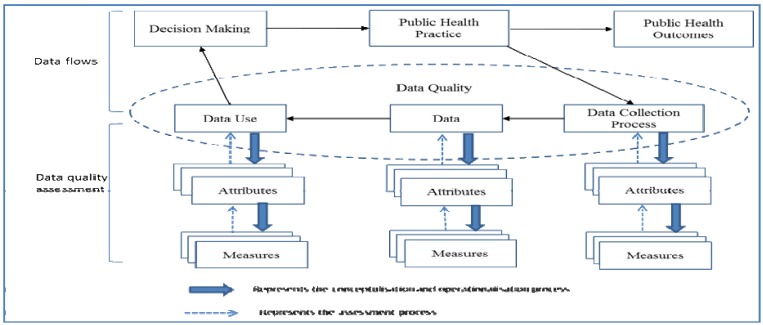
High quality data and effective data quality assessment are required for accurately evaluating the impact of public health interventions and measuring public health outcomes. Data, data use, and data collection process, as the three dimensions of data quality, all need to be assessed for overall data quality assessment. We reviewed current data quality assessment methods. The relevant study was identified in major databases and well-known institutional websites. We found the dimension of data was most frequently assessed. Completeness, accuracy, and timeliness were the three most-used attributes among a total of 49 attributes of data quality. The major quantitative assessment methods were descriptive surveys and data audits, whereas the common qualitative assessment methods were interview and documentation review. The limitations of the reviewed studies included inattentiveness to data use and data collection process, inconsistency in the definition of attributes of data quality, failure to address data users’ concerns and a lack of systematic procedures in data quality assessment. This review study is limited by the coverage of the databases and the breadth of public health information systems. Further research could develop consistent data quality definitions and attributes. More research efforts should be given to assess the quality of data use and the quality of data collection process.
Overview
The claims and statistics of this paper haven’t been checked yet.
Free: it reads the open-access text and checks the first 5 claims that cite a source we can check. Create a free account to check every claim.
Integrity signals
Registry
Cites
Statistics
Figures
Verification
Claims the paper makes
The claims and statistics of this paper haven’t been checked yet.
Free: it reads the open-access text and checks the first 5 claims that cite a source we can check. Create a free account to check every claim.
Claims other papers make about this one
Each is checked against this paper’s own text: does it say what the citing paper says it does?
The source backs part of the claim, not all of it — or backs it for a different population, condition or comparison.
In the citing paper
“Poor data quality in these domains leads to significant social and economic consequences. [1-4].”
From Data Quality in the Age of AI: A Review of Governance, Ethics, and the FAIR Principles (2025) · cites this paper as [4]
Experimental — accuracy not yet measured
Self-check
Percentages, sums and reported differences re-computed from the paper’s own numbers.
The self-check needs the paper’s full text.
Citations
Cites
Beyond Accuracy: What Data Quality Means to Data Consumers
Wang, R. Y., & Strong, D. M. (1996) · Journal of Management Information Systems · doi:10.1080/07421222.1996.11518099 · Cited by 4,672 · cited 5×
“, records, organisational documentation, data collection process and data users) and used at different levels of the organisation [33,35,36,38,75,76].”
BackgroundInfluentialBleiholder, J., & Naumann, F. (2009) · ACM Computing Surveys · doi:10.1145/1456650.1456651 · Cited by 1,838
Pipino, L. L., Lee, Y. W., & Wang, R. Y. (2002) · Communications of the ACM · doi:10.1145/505248.506010 · Cited by 1,724
Strong, D. M., Lee, Y. W., & Wang, R. Y. (1997) · Communications of the ACM · doi:10.1145/253769.253804 · Cited by 1,298 · cited 4×
“, records, organisational documentation, data collection process and data users) and used at different levels of the organisation [33,35,36,38,75,76].”
BackgroundInfluentialMethodologies for data quality assessment and improvement
Batini, C., Cappiello, C., Francalanci, C., & Maurino, A. (2009) · ACM Computing Surveys · doi:10.1145/1541880.1541883 · Cited by 1,288 · cited 1×
“A comprehensive data quality assessment method includes a set of guidelines and techniques that defines a rational process to assess data quality [37].”
Method(2001) · PsycEXTRA Dataset · doi:10.1037/e548222006-001 · Cited by 1,129
The Untilled Fields of Public Health
Winslow, C.-E. A. (1920) · Science · doi:10.1126/science.51.1306.23 · Cited by 717 · cited 2×
“The ultimate goal of public health is to improve health at the population level, and this is achieved through the collective mechanisms and actions of public health authorities within the government context [1,2].”
BackgroundAqil, A., Lippeveld, T., & Hozumi, D. (2009) · Health Policy and Planning · doi:10.1093/heapol/czp010 · Cited by 502 · cited 8×
“This included public health project/program data management and reporting, routine health information systems, and PHIS under a national health institute [34,40,41,44,45].”
BackgroundInfluentialEmergence and control of infectious diseases in China
Wang, L., Wang, Y., Jin, S., Wu, Z., Chin, D. P., Koplan, J. P., & Wilson, M. E. (2008) · The Lancet · doi:10.1016/s0140-6736(08)61365-3 · Cited by 390 · cited 1×
“Significant advantages of PHIS are their capability of electronic data collection, as well as the transmission and interchange of data, to promote public health agencies’ timely access to information [15,20].”
BackgroundChan, M., Kazatchkine, M., Lob-Levyt, J., Obaid, T., Schweizer, J., Sidibe, M., Veneman, A., & Yamada, T. (2010) · PLoS Medicine · doi:10.1371/journal.pmed.1000223 · Cited by 226 · cited 4×
“The establishment of information systems driven by the needs of single-disease programs may cause excessive data demand and fragmented PHIS systems, which undermine data quality [5,24].”
BackgroundInfluential
Research works printed but not linked: 3
- Institute of Medicine The Future of Public Health National Academies Press Washington, DC, USA 1988
- Demlo L.K. Gentleman J.F. Morbidity Data Public Health Informatics and Information Systems O’Carroll P.W. Yasnoff W.A. Ward M.E. Ripp L.H. Martin E.L. Springer Science+Business Media Inc. New York, NY, USA 2003 286 315 · DOI · Paper page
- Institute of Medicine The Future of the Public’s Health in the 21st Century The National Academies Press Washington, DC, USA 2003
Cited by
Woldeamanuel, Y. W., & Cowan, R. P. (2017) · Journal of the Neurological Sciences · doi:10.1016/j.jns.2016.11.071 · Cited by 425
An Overview of Data Quality Frameworks
Cichy, C., & Rass, S. (2019) · IEEE Access · doi:10.1109/access.2019.2899751 · Cited by 243
“[24] provide an extensive review of this type of frameworks.”
BackgroundA Systematic Review of Cost-of-Illness Studies of Multimorbidity
Wang, L., Si, L., Cocker, F., Palmer, A. J., & Sanderson, K. (2018) · Applied Health Economics and Health Policy · doi:10.1007/s40258-017-0346-6 · Cited by 178
The METRIC-framework for assessing data quality for trustworthy AI in medicine: A systematic review
Schwabe, D., Becker, K., Seyferth, M., Klaß, A., & Schaeffter, T. (2024) · npj Digital Medicine · doi:10.1038/s41746-024-01196-4 · Cited by 169
Rumisha, S., Lyimo, E. P., Mremi, I., Tungu, P., Mwingira, V., Mbata, D., Malekia, S. E., Joachim, C., & Mboera, L. (2020) · BMC Medical Informatics and Decision Making · doi:10.1186/s12911-020-01366-w · Cited by 120
Schmidt, C. O., Struckmann, S., Enzenbach, C., Reineke, A., Stausberg, J., Damerow, S., Huebner, M., Schmidt, B., Sauerbrei, W., & Richter, A. (2021) · BMC Medical Research Methodology · doi:10.1186/s12874-021-01252-7 · Cited by 126
Smith, M. J., Lix, L. M., Azimaee, M., Enns, J. E., Orr, J., Hong, S. P., & Roos, L. L. (2017) · Journal of the American Medical Informatics Association · doi:10.1093/jamia/ocx078 · Cited by 119
“However, few research institutions have adopted structured frameworks to assess data quality, and there is little consensus in regard to which dimensions of data quality should be measured.(7) In addition, the research literature on administrative data quality is sparse and has rarely included discussion of data quali…”
BackgroundLeal, F., Chis, A. E., Caton, S., González–Vélez, H., García–Gómez, J. M., Durá, M., Sánchez–García, A., Sáez, C., Karageorgos, A., Gerogiannis, V. C., et al. (2021) · Big Data Research · doi:10.1016/j.bdr.2020.100172 · Cited by 96
“Several systematic reviews have been carried out seeking agreement on different data quality dimensions to be assessed in data repositories [26,27].”
BackgroundPezoulas, V. C., Kourou, K. D., Kalatzis, F., Exarchos, T. P., Venetsanopoulou, A., Zampeli, E., Gandolfo, S., Skopouli, F., De Vita, S., Tzioufas, A. G., et al. (2019) · Computers in Biology and Medicine · doi:10.1016/j.compbiomed.2019.03.001 · Cited by 96
Kotecha, D., Asselbergs, F. W., Achenbach, S., Anker, S. D., Atar, D., Baigent, C., Banerjee, A., Beger, B., Brobert, G., Casadei, B., et al. (2022) · The Lancet Digital Health · doi:10.1016/s2589-7500(22)00151-0 · Cited by 86
Ouédraogo, M., Kurji, J., Abebe, L., Labonté, R., Morankar, S., Bedru, K. H., Bulcha, G., Abera, M., Potter, B., Roy-Gagnon, M., et al. (2019) · PLoS ONE · doi:10.1371/journal.pone.0213600 · Cited by 57
Information Quality Frameworks for Digital Health Technologies: Systematic Review
Fadahunsi, K. P., O’Connor, S., Akinlua, J. T., Wark, P. A., Gallagher, J., Carroll, C., Car, J., Majeed, A., & O’Donoghue, J. (2021) · Journal of Medical Internet Research · doi:10.2196/23479 · Cited by 97
“Although previous literature reviews have attempted to define the IQ dimensions of digital health information, they focused on the use of digital health information for administrative and research purposes [14,15].”
BackgroundThe creation, management, and use of data quality information for life cycle assessment
Edelen, A. N., & Ingwersen, W. W. (2017) · The International Journal of Life Cycle Assessment · doi:10.1007/s11367-017-1348-1 · Cited by 88
Raina, N., Khanna, R., Gupta, S., Jayathilaka, C. A., Mehta, R., & Behera, S. (2023) · The Lancet Regional Health - Southeast Asia · doi:10.1016/j.lansea.2023.100307 · Cited by 104
Automating Electronic Health Record Data Quality Assessment
Ozonze, O., Scott, P. J., & Hopgood, A. A. (2023) · Journal of Medical Systems · doi:10.1007/s10916-022-01892-2 · Cited by 69
“Keywords for the queries were drawn after a series of preliminary trial searches that considered the search strategies employed in related studies [10, 49, 51].”
MethodLimitations of COVID-19 testing and case data for evidence-informed health policy and practice
Álvarez, E., Bielska, I. A., Hopkins, S., Belal, A. A., Goldstein, D. M., Slick, J., Pavalagantharajah, S., Wynfield, A., Dakey, S., Gedeon, M.-C., et al. (2023) · Health Research Policy and Systems · doi:10.1186/s12961-023-00963-1 · Cited by 93
“Data quality issues, such as completeness, accuracy, timeliness, reliability, relevance and consistency, are important for surveillance and reporting [95, 96].”
BackgroundEngaging Solidarity in Data Collection Practices for Community Health
Ismail, A., & Kumar, N. (2018) · Proceedings of the ACM on Human-Computer Interaction · doi:10.1145/3274345 · Cited by 78
“These include accuracy, timeliness, reliability, completeness, and integrity of data collectors [16].”
BackgroundYu, P., & Qian, S. (2018) · PLoS ONE · doi:10.1371/journal.pone.0190749 · Cited by 88
“A total of 49 attributes are identified [19].”
BackgroundSelf-citationData Quality—Concepts and Problems
Hassenstein, M. J., & Vanella, P. (2022) · Encyclopedia · doi:10.3390/encyclopedia2010032 · Cited by 93
“The literature suggests numerous general and special purpose frameworks for DQA and subsequent data improvement [35,49], including a framework for open data [50].”
BackgroundMethodFadahunsi, K. P., Akinlua, J. T., O’Connor, S., Wark, P. A., Gallagher, J., Carroll, C., Majeed, A., & O’Donoghue, J. (2019) · BMJ Open · doi:10.1136/bmjopen-2018-024722 · Cited by 88
“A number of IQ frameworks have been developed to evaluate different types of health information systems.(13) However, IQ frameworks for newer types of eHealth, such as the mHealth apps, are virtually non-existent(14) 15 and there is no generic IQ framework for eHealth which is applicable across different eHealth appli…”
BackgroundCommon data quality elements for health information systems: a systematic review
Ghalavand, H., Shirshahi, S., Rahimi, A., Zarrinabadi, Z., & Amani, F. (2024) · BMC Medical Informatics and Decision Making · doi:10.1186/s12911-024-02644-7 · Cited by 99
“Meth-ods for evaluating the quality of data were presented in eight publications [10, 20, 21, 35, 38, 41, 51, 52], 19 publications tended to conduct on the health information [5, 8, 10, 11, 16, 17, 20–22, 26, 31, 37, 42, 47, 49–51, 55, 57, 60, 66] and eight paper focus on health or medical records…”
BackgroundMethodInfluentialA Data Quality Ontology for the Secondary Use of EHR Data.
(2015) · PubMed Central · Cited by 66
Teipel, S., König, A., Hoey, J., Kaye, J., Krüger, F., Robillard, J. M., Kirste, T., & Babiloni, C. (2018) · Alzheimer's & Dementia · doi:10.1016/j.jalz.2018.05.003 · Cited by 67
“The literature defines several general dimensions of data quality valid for clinical research as well [74], including accuracy, completeness, timeliness, and validity.”
Tiye, K., & Gudeta, T. (2018) · BMC Medical Informatics and Decision Making · doi:10.1186/s12911-018-0720-9 · Cited by 59
Defining & assessing the quality, usability, and utilization of immunization data
Bloland, P., & MacNeil, A. (2019) · BMC Public Health · doi:10.1186/s12889-019-6709-1 · Cited by 59
Digital-Twins-Based Internet of Robotic Things for Remote Health Monitoring of COVID-19 Patients
Khan, S., Ullah, S., Khan, H. U., & Rehman, I. U. (2023) · IEEE Internet of Things Journal · doi:10.1109/jiot.2023.3267171 · Cited by 108
“The quality of monitoring data was assessed using the three most commonly used data-quality (DQ) dimensions (accuracy, completeness, and timeliness) described in [61].”
MethodA Comparison of Data Quality Assessment Checks in Six Data Sharing Networks
Callahan, T. J., Bauck, A. E., Bertoch, D., Brown, J. S., Khare, R., Ryan, P. B., Staab, J., Zozus, M. N., & Kahn, M. G. (2017) · eGEMs (Generating Evidence & Methods to improve patient outcomes) · doi:10.5334/egems.223 · Cited by 52
“of DQA methods for assessing public health information systems identified 49 distinct dimensions used when measuring DQ; completeness, accuracy, and timeliness being those most frequently described.(21) While there is a wide variety of DQ dimensions one can choose from when assessing a data source, there are equally a…”
MethodAbiy, R., Gashu, K., Asemaw, T., Mitiku, M., Fekadie, B., Abebaw, Z., Mamuye, A., Tazebew, A., Teklu, A., Nurhussien, F., et al. (2018) · Online Journal of Public Health Informatics · doi:10.5210/ojphi.v10i2.8309 · Cited by 45
“In subsequent follow-up visits, it can provide a complete and accurate chronology of treatments, patient results and future plans for care [10,11].”
BackgroundKotecha, D., Asselbergs, F. W., Achenbach, S. S., Anker, S. D., Atar, D., Baigent, C., Banerjee, A., Beger, B., Brobert, G., Casadei, B., et al. (2022) · BMJ · doi:10.1136/bmj-2021-069048 · Cited by 60
A Review of Data Quality Assessment in Emergency Medical Services
Mashoufi, M., Ayatollahi, H., & Khorasani‐Zavareh, D. (2018) · The Open Medical Informatics Journal · doi:10.2174/1874431101812010019 · Cited by 60
“In fact, the subjective assessment is a supplement to the objective assessment and is useful for designing effective strategies for improving data quality [15, 21, 22, 62].”
BackgroundMethodInfluentialInitializing a hospital-wide data quality program. The AP-HP experience.
Daniel, C., Serre, P., Orlova, N., Bréant, S., Paris, N., & Griffon, N. (2019) · Computer Methods and Programs in Biomedicine · doi:10.1016/j.cmpb.2018.10.016 · Cited by 40
A Cautionary Tale for Machine Learning Design: why we Still Need Human-Assisted Big Data Analysis
Roccetti, M., Delnevo, G., Casini, L., & Salomoni, P. (2020) · Mobile Networks and Applications · doi:10.1007/s11036-020-01530-6 · Cited by 49
Solomon, M., Addise, M., Tassew, B., Balcha, B., & Abebe, A. (2021) · PLoS ONE · doi:10.1371/journal.pone.0255949 · Cited by 41
“This may lead to ignorance of data management and thereby the unawareness of data quality problem [8].”
Exploring Data Quality Management within Clinical Trials
Houston, L., Probst, Y., Yu, P., & Martin, A. (2018) · Applied Clinical Informatics · doi:10.1055/s-0037-1621702 · Cited by 47
“1 To ensure data integrity in clinical research, it is imperative to introduce a “ gold standard methodology ” so that manuscripts can be published referencing their methods employed and the broader research community can be reassured the data was valid.”
MethodSelf-citationNi, K., Chu, H., Zeng, L., Li, N., & Zhao, Y. (2019) · BMJ Open · doi:10.1136/bmjopen-2019-029314 · Cited by 53
Sáez, C., Zurriaga, Ó., Pérez‐Panadés, J., Melchor, I., Robles, M., & Garcia-Gomez, J. M. (2016) · Journal of the American Medical Informatics Association · doi:10.1093/jamia/ocw010 · Cited by 46
“Additionally, ensuring DQ requires specific areas of research and investment in public health.(8,14) For example, the WHO recommends conducting regular checks to validate death certification in hospitals as well as investigating new technologies to understand large data sets,(30) where the multisource and temporal met…”
Getachew, N., Erkalo, B., & Garedew, M. (2022) · BMC Medical Informatics and Decision Making · doi:10.1186/s12911-022-01898-3 · Cited by 35
A review of the role of public health informatics in healthcare
Aziz, H. A. (2016) · Journal of Taibah University Medical Sciences · doi:10.1016/j.jtumed.2016.08.011 · Cited by 55
“preventing diseases and injuries by changing the conditions that increases the risk of the population.(2) Basically, PHI is using informatics in public health data collection, analysis and actions.”
BackgroundData quality and data use in primary health care: A case study from Iran
Daneshkohan, A., Alimoradi, M., Ahmadi, M., & Alipour, J. (2022) · Informatics in Medicine Unlocked · doi:10.1016/j.imu.2022.100855 · Cited by 44
Renger, R. F. (2015) · Evaluation Journal of Australasia · doi:10.1177/1035719x1501500403 · Cited by 40
A study on the quality of novel coronavirus (COVID-19) official datasets
Ashofteh, A., & Bravo, J. M. (2020) · Statistical Journal of the IAOS · doi:10.3233/sji-200674 · Cited by 40
“However, poor data quality or coding errors in PHIS is not a new issue and can lead to inaccurate inferences of health interventions [4].”
BackgroundAssessing the Current Limitations of Large Language Models in Advancing Health Care Education
Kim, J., & Vajravelu, B. N. (2025) · JMIR Formative Research · doi:10.2196/51319 · Cited by 46
Chen, H., Yu, P., Hailey, D. M., & Cui, T. (2019) · Health Informatics Journal · doi:10.1177/1460458219848622 · Cited by 44
Self-citationNextGen Public Health Surveillance and the Internet of Things (IoT)
Sahu, K. S., Majowicz, S. E., Dubin, J. A., & Morita, P. P. (2021) · Frontiers in Public Health · doi:10.3389/fpubh.2021.756675 · Cited by 48
“Current data used for the surveillance have challenges like missing data, under-reporting, inconsistencies, invalid data, illegible handwriting, non-standardization of vocabulary, measurement error, and inappropriate fields (23).”
MethodKotecha, D., Asselbergs, F. W., Achenbach, S. S., Anker, S. D., Atar, D., Baigent, C., Banerjee, A., Beger, B., Brobert, G., Casadei, B., et al. (2022) · European Heart Journal · doi:10.1093/eurheartj/ehac426 · Cited by 39
“Evidence demonstrating how algorithms have been externally validated, and also what quality assessment was performed on the research findings, for example on the accuracy, completeness and timeliness of the data.(14) Data quality rules can be used to assess coded data and allow comparisons across institutions and coun…”
Data Quality in the Age of AI: A Review of Governance, Ethics, and the FAIR Principles
Guillen-Aguinaga, M., Aguinaga-Ontoso, E., Guillen-Aguinaga, L., Guillen-Grima, F., & Aguinaga-Ontoso, I. (2025) · Data · doi:10.3390/data10120201 · Cited by 37
“In healthcare, business, and public administration alike, low-quality data can lead to flawed conclusions, wasted resources, and significant social and economic harm [1–4].”
Declerck, J., Kalra, D., Stichele, R. V., & Coorevits, P. L. (2024) · JMIR Medical Informatics · doi:10.2196/51560 · Cited by 44
Assessing the environmental status of selected North Atlantic deep-sea ecosystems
Kazanidis, G., Orejas, C., Borja, Á., Kenchington, E., Henry, L., Callery, O., Carreiro‐Silva, M., Egilsdóttir, H., Giacomello, E., Grehan, A. J., et al. (2020) · Ecological Indicators · doi:10.1016/j.ecolind.2020.106624 · Cited by 37
Posyandu Application for Monitoring Children Under-Five: A 3-Year Data Quality Map in Indonesia
Rinawan, F. R., Faza, A., Susanti, A. I., Purnama, W. G., Indraswari, N., Didah, D., Ferdian, D., Fatimah, S. N., Purbasari, A., Zulianto, A., et al. (2022) · ISPRS International Journal of Geo-Information · doi:10.3390/ijgi11070399 · Cited by 41
Traditional vs. Contemporary Management Control Practices for Developing Public Health Policies
Naranjo‐Gil, D., Sánchez-Expósito, M. J., & Gómez-Ruiz, L. (2016) · International Journal of Environmental Research and Public Health · doi:10.3390/ijerph13070713 · Cited by 41
“Health public literature has identified three main general functions of public health systems: (a) assessment of health status and health needs; (b) develop health policy to serve the public interest, and (c) provide necessary health services with quality, equity and accessibility [1,2].”
BackgroundExamining the infusion of mobile technology by healthcare practitioners in a hospital setting
O’Connor, Y., & O’Reilly, P. (2016) · Information Systems Frontiers · doi:10.1007/s10796-016-9728-9 · Cited by 40
“quality and information quality components inherent in mHealth (Chen et al. 2014).”
BackgroundAlves, D., Yamada, D. B., Bernardi, F. A., Carvalho, I., Filho, M. E. C., Neiva, M. B., Lima, V., & Félix, T. M. (2020) · JMIR Research Protocols · doi:10.2196/24826 · Cited by 37
“To ensure the monitoring of data quality indicators, an early hearing detection and intervention (EHDI) will be conducted, and dimensions such as completeness, uniqueness, timeliness, validity, accuracy, and consistency will be evaluated [54].”
MethodCOVID-19 surveillance data quality issues: a national consecutive case series
Santos, C., Neves, A. L., Cruz-Correia, R. J., Santos, P., Monteiro‐Soares, M., Freitas, A., Ribeiro‐Vaz, I., Henriques, T. S., Rodrigues, P. P., Costa‐Pereira, A., et al. (2021) · BMJ Open · doi:10.1136/bmjopen-2020-047623 · Cited by 34
Chen, H., Pieptea, L. F., & Ding, J. (2022) · IEEE Transactions on Reliability · doi:10.1109/tr.2022.3156126 · Cited by 38
Self-citationA Framework for Current and New Data Quality Dimensions: An Overview
Miller, R., Whelan, H., Chrubasik, M., Whittaker, D., Duncan, P., & Gregório, J. (2024) · Data · doi:10.3390/data9120151 · Cited by 33
“Prior studies on data quality have typically focused on specific sectors, as evidenced by existing literature reviews [19,22–34].”
Maternal and child health data quality in health care facilities at the Cape Coast Metropolis, Ghana
Lasim, O. U., Ansah, E. W., & Apaak, D. (2022) · BMC Health Services Research · doi:10.1186/s12913-022-08449-6 · Cited by 40
“Accuracy of data is defined as how close data values are to the reality, or the truthfulness of the provided information [17].”
BackgroundOkello, G. R., Molyneux, S. C., Zakayo, S. M., Gerrets, R. P., & Jones, C. H. D. (2019) · Malaria Journal · doi:10.1186/s12936-019-3061-y · Cited by 36
Makeleni, N., & Cilliers, L. (2021) · South African journal of information management · doi:10.4102/sajim.v23i1.1230 · Cited by 34
“For example, according to Chen et al. (2014), coding errors were reported by Australian researchers, which were caused by the poor-quality documentations in the clinical informaion systems.”
BackgroundInfluentialEnhancing Workforce Capacity to Improve Vaccination Data Quality, Uganda
Ward, K., Mugenyi, K., Benke, A., Luzze, H., Kyozira, C., Ampeire, I., Tanifum, P., Kisakye, A., Bloland, P. B., & MacNeil, A. (2017) · Emerging infectious diseases · doi:10.3201/eid2313.170627 · Cited by 34
“Routine checking of accuracy of data entered into the DHIS2 8 (73) † Checking completeness and accuracy of monthly report data before acceptance 8 (73) † Analysis and use of data 6 (55) † Archiving of data 6 (55) † Changes in supply of recording and reporting tools † 18 (53) Checking monthly report data with primary d…”
BackgroundMethodDocumentation Errors and Deficiencies in Medical Records: A Systematic Review
Shahbodaghi, A., Moghaddasi, H., Asadi, F., & Hosseini, A. (2024) · Journal of Health Management · doi:10.1177/09720634241229545 · Cited by 32
“In order to categorise the documentation errors and deficiencies, the most common quality dimensions mentioned in the literature were used (Chen, Hailey, et al., 2014; Chen, Yu, et al., 2014; Davoudi et al., 2015; Kahn et al., 2016; Moghaddasi & Rahimi, 2016; Wager et al., 2017; Weiskopf & Weng,…”
MethodData Quality in Health Care: Main Concepts and Assessment Methodologies
Mashoufi, M., Ayatollahi, H., Khorasani-Zavareh, D., & Talebi Azad Boni, T. (2023) · Methods of Information in Medicine · doi:10.1055/s-0043-1761500 · Cited by 32
Metadata-based data quality assessment
Aljumaili, M., Karim, R., & Tretten, P. (2016) · VINE Journal of Information and Knowledge Management Systems · doi:10.1108/vjikms-11-2015-0059 · Cited by 29
Exploring completeness in clinical data research networks with DQe-c
Estiri, H., Stephens, K. A., Klann, J. G., & Murphy, S. N. (2017) · Journal of the American Medical Informatics Association · doi:10.1093/jamia/ocx109 · Cited by 30
“EHR data quality evaluation requires consistency.(21,24) Harmonization across methodologies is key to establishing consistent EHR data quality assessment.”
MethodTowards interactive event log forensics: Detecting and quantifying timestamp imperfections
Fischer, D. A., Goel, K., Andrews, R., van Dun, C., Wynn, M. T., & Röglinger, M. (2022) · Information Systems · doi:10.1016/j.is.2022.102039 · Cited by 33
Diaz‐Garelli, F., Bernstam, E. V., Lee, M., Hwang, K. O., Rahbar, M. H., & Johnson, T. R. (2019) · eGEMs (Generating Evidence & Methods to improve patient outcomes) · doi:10.5334/egems.286 · Cited by 30
“The complexity stems from the need for mixed quantitative-qualitative reasoning as well as information from multiple data sources such as the intended analytical design or purpose [9, 15], data source descriptions [40, 41], data management constraints [44, 57] and DQ theory [14, 15, 38, 55].”
BackgroundA Review of the State of the Art of Data Quality in Healthcare
Liu, C., Talaei‐Khoei, A., Storey, V. C., & Peng, G. (2023) · Journal of Global Information Management · doi:10.4018/jgim.316236 · Cited by 31
“For example, some reviews identified several methods used to measure specific issues of EMR data under two or three data quality dimensions (Chen et al., 2014; Kahn et al., 2016; Thiru et al., 2003; Weiskopf & Weng, 2013).”
BackgroundMethodInfluentialData Quality–Driven Improvement in Health Care: Systematic Literature Review
Lighterness, A., Adcock, M., Scanlon, L. A., & Price, G. (2024) · Journal of Medical Internet Research · doi:10.2196/57615 · Cited by 26
“…is often reported to be popular among DQ frameworks, tooling, and studies [22-27, 29, The most common method to measure completeness consists of counting records with blank, unknown, empty, “NULL,” or “NaN” values, though variations may include a measurement of data availability [22,25,26].”
InfluentialNoël, R., Taramasco, C., & Márquez, G. (2022) · Journal of Medical Internet Research · doi:10.2196/26577 · Cited by 28
“Health information system (HIS) quality refers to whether a system’s internal and external specifications and the expectations of stakeholders are satisfied [6].”
BackgroundGrad-CAM++ is Equivalent to Grad-CAM With Positive Gradients
Lerma, M., & Lucas, M. (2022) · International Machine Vision and Image Processing Conference (IMVIP) · doi:10.56541/awjv6348 · Cited by 28
Raza, S., Shaban-Nejad, A., Dolatabadi, E., & Mamiya, H. (2024) · IEEE Access · doi:10.1109/access.2024.3509353 · Cited by 25
“This process is highly important to ensure that the data used in ML models accurately represent health trends and outcomes [18].”
Prediksi Cuaca Kota Jakarta Menggunakan Metode Random Forest
Dwiyanti, Z. A., & Prianto, C. (2023) · Jurnal Tekno Insentif · doi:10.36787/jti.v17i2.1136 · Cited by 25
“Penyelidikan ini melibatkan beberapa tahap, mulai dari proses pencarian dan pengumpulan data hingga analisis mendalam terhadap atribut-atribut yang ada serta evaluasi keseluruhan kualitas dataset (Chen et al., 2014) .”
BackgroundFactors that affect immunization data quality in Kabarole District, Uganda
Nsubuga, F., Luzze, H., Ampeire, I., Kasasa, S., Opar, B. T., & Riolexus, A. A. (2018) · PLoS ONE · doi:10.1371/journal.pone.0203747 · Cited by 25
TAQIH, a tool for tabular data quality assessment and improvement in the context of health data
Álvarez, R., Beristain, A., Epelde, G., & Carlin, P. F. (2018) · Computer Methods and Programs in Biomedicine · doi:10.1016/j.cmpb.2018.12.029 · Cited by 25
Canbek, G., Sağıroğlu, Ş., & Temizel, T. T. (2018) · International Congress on Big Data, Deep Learning and Fighting Cyber Terrorism (IBIGDELFT) · doi:10.1109/ibigdelft.2018.8625275 · Cited by 29
“record count, null value percentage, distinct value percentage, most frequent values), the literature covers the quality of datasets from specific domain’s perspective such as the quality in spatial datasets [3], health-data [4], natural disasters [5].”
BackgroundChekol, A., Tsehay, A. K., Endale, A., Aschale, A., Endalew, B., & Asemahagn, M. A. (2023) · Frontiers in Health Services · doi:10.3389/frhs.2023.1059611 · Cited by 23
“This could result in a lack of understanding of data management and data quality awareness (13).”
BackgroundPezoulas, V. C., Kourou, K. D., Kalatzis, F., Exarchos, T. P., Zampeli, E., Gandolfo, S., Goules, A. V., Baldini, C., Skopouli, F. N., Vita, S. D., et al. (2020) · IEEE Open Journal of Engineering in Medicine and Biology · doi:10.1109/ojemb.2020.2981258 · Cited by 23
“clinical data with poor quality that may lead to erroneous results [9]–[11].”
Backgroundvan Bavel, B., Berrang‐Ford, L., Harper, S. L., Ford, J. D., Elsey, H., Lwasa, S., & King, R. (2020) · Environmental Research Letters · doi:10.1088/1748-9326/ab875e · Cited by 28
“Theory and definitions taken from public health surveillance evaluation approaches [6, 54, 55], quality assessment methods [56, 57], as well as community-based participatory monitoring [7–14, 17, 19] were used to design the data extraction form.”
MethodYourkavitch, J., Zalisk, K., Prosnitz, D., Luhanga, M., & Nsona, H. (2016) · Health Policy and Planning · doi:10.1093/heapol/czw047 · Cited by 22
“Specific attention and resources should ensure data quality and position it at the forefront of public health (Chen et al. 2014).”
BackgroundCompleteness of Electronic Dental Records in a Student Clinic: Retrospective Analysis
Levitin, S. A., Grbic, J. T., & Finkelstein, J. (2019) · JMIR Medical Informatics · doi:10.2196/13008 · Cited by 25
“Evaluation of completeness of symptom documentation in this study followed recent guidance on EMR data quality–assessment methodology [29] that promulgates the use of validated population-based prevalence as a gold standard [30-31].”
Data science in organizations: Conceptualizing its breakthroughs and blind spots
Cybulski, J. L., & Scheepers, R. (2021) · Journal of Information Technology · doi:10.1177/0268396220988539 · Cited by 22
Vidiasratri, A. R., Hanindriyo, L., & Hartanto, C. M. (2024) · International Journal of Environmental Research and Public Health · doi:10.3390/ijerph21030249 · Cited by 24
“Health-related quality of life is less frequently conducted in certain regions, such as Asia, South America, and Africa [41,45,46].”
BackgroundNjuguna, C. K., Vandi, M. A., Malimbo, M., Kanu, J. S., Liyosi, E., Chimbaru, A., Gachari, W., Caulker, V., Sesay, S., Githuku, J. N., et al. (2020) · BMC Health Services Research · doi:10.1186/s12913-020-05591-x · Cited by 20
Estiri, H., & Stephens, K. A. (2017) · eGEMs (Generating Evidence & Methods to improve patient outcomes) · doi:10.13063/2327-9214.1277 · Cited by 19
Gass, J. D., Misra, A., Yadav, M. N. S., Sana, F., Singh, C., Mankar, A., Neal, B. J., Fisher-Bowman, J., Maisonneuve, J. J., Delaney, M. M., et al. (2017) · Trials · doi:10.1186/s13063-017-2159-1 · Cited by 19
“Clinical trials often require multiple data collection activities, all subject to different sources of error; therefore, DQA activities often must target multiple dimensions of quality [14, 16, 23].”
BackgroundAn Overview of Data Integration in Neuroscience With Focus on Alzheimer's Disease
Turrisi, R., Squillario, M., Abate, G., Uberti, D. L., & Barla, A. (2023) · IEEE Journal of Biomedical and Health Informatics · doi:10.1109/jbhi.2023.3268729 · Cited by 19
“Complete reviews of data quality assessment methods have been addressed in just a few and very specific health related applications such as The Human Brain Initiative [13] and Public Health Information [14].”
BackgroundNaik, S. R., Voong, S., Bamford, M., Smith, K., Joyce, A., & Grinspun, D. R. (2020) · Journal of the American Medical Informatics Association · doi:10.1093/jamia/ocaa031 · Cited by 18
Understanding Data Quality in a Data-Driven Industry Context: Insights from the Fundamentals
Fu, Q., Nicholson, G. L., & Easton, J. M. (2024) · Journal of Industrial Information Integration · doi:10.1016/j.jii.2024.100729 · Cited by 17
Validation of an Electronic Surgical Outcomes Database at Mbarara Regional Referral Hospital, Uganda
Anderson, G. A., Ilcisin, L. A. S., Ngonzi, J. N. J., Ttendo, S. S., Twesigye, D., Benitez, N. P., Firth, P. G., & Nehra, D. (2017) · World Journal of Surgery · doi:10.1007/s00268-017-4172-7 · Cited by 17
“A comprehensive assessment of database validity looks at six different factors: completeness, accuracy, precision, correctness, consistency and timeliness [19, 20].”
BackgroundBayram, F., Ahmed, B. S., & Hallin, E. (2024) · Journal of Systems and Software · doi:10.1016/j.jss.2024.112184 · Cited by 16
Swiss Validation of the Enhanced Recovery After Surgery (ERAS) Database
Pache, B. C.-E., Martin, D. J., Addor, V., Demartines, N., & Hübner, M. (2021) · World Journal of Surgery · doi:10.1007/s00268-020-05926-z · Cited by 16
“Other factors such as precision, consistency and timeliness have also been used in database validation [12, 13] However, there is currently no clear consensus on the criteria for validating a surgical database.”
MethodGordon, B. H., Fennessy, C., Varma, S., Barrett, J., McCondochie, E., Heritage, T. W., Duroe, O., Jeffery, R., Rajamani, V., Earlam, K., et al. (2022) · BMJ Open · doi:10.1136/bmjopen-2021-054186 · Cited by 16
Data Quality: A Negotiator between Paper-Based and Digital Records in Pakistan’s TB Control Program
Ali, S. M., Naureen, F., Noor, A., Boulos, M. N. K., Aamir, J., Ishaq, M., Anjum, N., Ainsworth, J. D., Rashid, A., Majidulla, A., et al. (2018) · Data · doi:10.3390/data3030027 · Cited by 16
“Furthermore, it is critically important to receive complete and correct patient information, which is achievable if mHealth technology is fully exploited beyond the mere basic functions of digital data collection, storage, retrieval, and sharing [31,33].”
BackgroundBirkegård, A. C., Fertner, M. E., Jensen, V. F., Boklund, A. E., Toft, N., Halasa, T., & Antunes, A. C. L. (2018) · Zoonoses and Public Health · doi:10.1111/zph.12513 · Cited by 17
Data Quality Assessment in Emergency Medical Services: What Are the Stakeholders' Perspectives?
Mashoufi, M., Ayatollahi, H., & Khorasani-Zavareh, A. D. (2019) · Europe PMC (PubMed Central) · Cited by 19
Guan, V. X., Probst, Y., Neale, E. P., & Tapsell, L. C. (2019) · PLoS ONE · doi:10.1371/journal.pone.0221047 · Cited by 16
“, records, data collection process and documentation) [27].”
BackgroundDQ2S – A framework for data quality-aware information management
Sampaio, S., Dong, C., & Sampaio, P. (2015) · Expert Systems with Applications · doi:10.1016/j.eswa.2015.06.050 · Cited by 14
A practical approach for evaluating the strength of knowledge supporting risk assessment models
Bani-Mustafa, T., Zeng, Z., Zio, E., & Vasseur, D. (2020) · Safety Science · doi:10.1016/j.ssci.2019.104596 · Cited by 14
Ali, S. M., Naureen, F., Noor, A., N. Boulos, M. K., Aamir, J., Ishaq, M., Anjum, N., Ainsworth, J., Rashid, A., Majidulla, A., et al. (2018) · doi:10.20944/preprints201806.0185.v1 · Cited by 14
Information Technology and Value-Based Healthcare Systems: A Strategy and Framework
Aldosari, B. (2024) · Cureus · doi:10.7759/cureus.53760 · Cited by 16
“Modifying the factors that put the population at higher risk of disease and injury to prevent these occurrences [29].”
BackgroundA FAIR Perspective on Data Quality Frameworks
Nicholson, N. C., Carvalho, R., & Štotl, I. (2025) · Data · doi:10.3390/data10090136 · Cited by 14
Metadata
- Authors
- Chen, H., Hailey, D., Wang, N., & Yu, P.
- Affiliations
- University of Wollongong (AU)
- Chinese Center For Disease Control and Prevention (CN)
- Corresponding author
- Yu, Ping
- Venue
- International Journal of Environmental Research and Public Health
- Publisher
- MDPI AG
- Published
- 2014-05-14
- Volume
- 11
- Issue
- 5
- Pages
- 5170-5207
- ISSN
- 1660-4601 (ISSN-L)
- PMC
- PMC4053886
- OpenAlex
- W2061702164
- Cited by
- 354
- References
- 61
- Citations by year
- 2026: 31 · 2025: 27 · 2024: 54 · 2023: 32 · 2022: 56 · 2021: 28 · 2020: 32 · 2019: 36 · 2018: 21 · 2017: 19 · 2016: 12 · 2015: 6
- FWCI
- 15.58
- Type
- journal article
- Language
- en
- Open access
- gold
- doi.org
- Licence
- Locations
- International Journal of Environmental Research and Public Health (publishedVersion, cc-by)
- Europe PMC (PubMed Central) (publishedVersion, cc-by)
- PubMed Central (publishedVersion, cc-by)
- PubMed (publishedVersion)
- Research Online (University of Wollongong) (submittedVersion)
- RePEc: Research Papers in Economics (submittedVersion)
- Figshare (submittedVersion)
- Funders
- Strong
- Topics
- Physical Sciences › Computer Science › Information Systems › Data Quality and Management
- Health Sciences › Health Professions › Health Information Management › Medical Coding and Health Information
- Health Sciences › Health Professions › Health Information Management › Electronic Health Records Systems
- Keywords
- data quality assessment, public health information systems, data completeness, data accuracy, data timeliness, data collection, data auditing, data quality attributes, public health outcomes
- MeSH terms
- Humans, Public Health, Quality Assurance, Health Care, Outcome Assessment, Health Care, Health Information Systems
About these checks
Registry, retraction, Cites and statistics results are computed, not judged, with one exception: a printed reference that no index lists is read once by a model before it counts as a citation error. Claims are extracted by a model and kept only when their quote appears verbatim in the text; each cited source is then checked, with a model’s help, for whether it says what the claim relies on. Those verdicts can be wrong — read the claim’s quote and the cited source before relying on one.
Statistics and arithmetic are recomputed, not judged.
Confidence bands are shown only for fields calibrated on our annotated test set. None is calibrated yet, so no band is shown.
What counts as a claim ›How we measure confidence ›How we check this ›
Are you an author, or do you see a problem with this page? Request a review
Data sources
Bibliographic data: Semantic Scholar, OpenAlex, Crossref.
Contains information from the Semantic Scholar Academic Graph Datasets, made available under the ODC Attribution License (ODC-BY 1.0).
Semantic Scholar’s data is described in: Kinney, R., et al. (2023). The Semantic Scholar Open Data Platform. arXiv:2301.10140.
