

A Review of Data Quality Assessment Methods for Public Health Information Systems
Open accessThe DOI matches its Crossref record; 60 of the 61 references it cites were found in a registry or an index.
Abstract
High quality data and effective data quality assessment are required for accurately evaluating the impact of public health interventions and measuring public health outcomes. Data, data use, and data collection process, as the three dimensions of data quality, all need to be assessed for overall data quality assessment. We reviewed current data quality assessment methods. The relevant study was identified in major databases and well-known institutional websites. We found the dimension of data was most frequently assessed. Completeness, accuracy, and timeliness were the three most-used attributes among a total of 49 attributes of data quality. The major quantitative assessment methods were descriptive surveys and data audits, whereas the common qualitative assessment methods were interview and documentation review. The limitations of the reviewed studies included inattentiveness to data use and data collection process, inconsistency in the definition of attributes of data quality, failure to address data users’ concerns and a lack of systematic procedures in data quality assessment. This review study is limited by the coverage of the databases and the breadth of public health information systems. Further research could develop consistent data quality definitions and attributes. More research efforts should be given to assess the quality of data use and the quality of data collection process.
Overview
The claims and statistics of this paper haven’t been checked yet.
Free: it reads the open-access text and checks the first 5 claims that cite a source we can check. Create a free account to check every claim.
Integrity signals
Registry
Cites
Statistics
Figures
Verification
Claims the paper makes
The claims and statistics of this paper haven’t been checked yet.
Free: it reads the open-access text and checks the first 5 claims that cite a source we can check. Create a free account to check every claim.
Claims other papers make about this one
Each is checked against this paper’s own text: does it say what the citing paper says it does?
The source backs part of the claim, not all of it — or backs it for a different population, condition or comparison.
In the citing paper
“Poor data quality in these domains leads to significant social and economic consequences. [1-4].”
From Data Quality in the Age of AI: A Review of Governance, Ethics, and the FAIR Principles (2025) · cites this paper as [4]
Experimental — accuracy not yet measured
Self-check
Percentages, sums and reported differences re-computed from the paper’s own numbers.
The self-check needs the paper’s full text.
Citations
Cites
Beyond Accuracy: What Data Quality Means to Data Consumers
Wang, R. Y., & Strong, D. M. (1996) · Journal of Management Information Systems · doi:10.1080/07421222.1996.11518099 · Cited by 4,672 · cited 5×
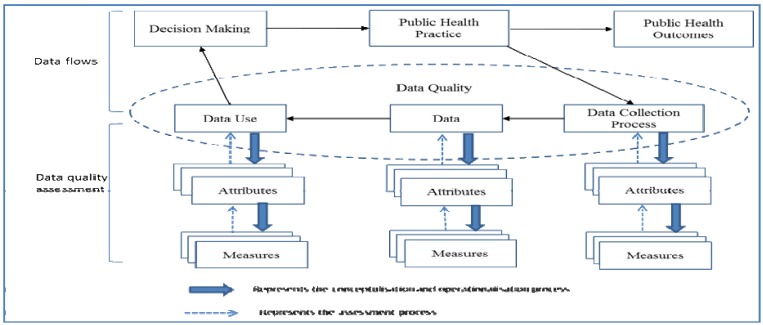
“, records, organisational documentation, data collection process and data users) and used at different levels of the organisation [33,35,36,38,75,76].”
BackgroundInfluentialBleiholder, J., & Naumann, F. (2009) · ACM Computing Surveys · doi:10.1145/1456650.1456651 · Cited by 1,838
Pipino, L. L., Lee, Y. W., & Wang, R. Y. (2002) · Communications of the ACM · doi:10.1145/505248.506010 · Cited by 1,724
Strong, D. M., Lee, Y. W., & Wang, R. Y. (1997) · Communications of the ACM · doi:10.1145/253769.253804 · Cited by 1,298 · cited 4×
“, records, organisational documentation, data collection process and data users) and used at different levels of the organisation [33,35,36,38,75,76].”
BackgroundInfluentialMethodologies for data quality assessment and improvement
Batini, C., Cappiello, C., Francalanci, C., & Maurino, A. (2009) · ACM Computing Surveys · doi:10.1145/1541880.1541883 · Cited by 1,288 · cited 1×
“A comprehensive data quality assessment method includes a set of guidelines and techniques that defines a rational process to assess data quality [37].”
Method(2001) · PsycEXTRA Dataset · doi:10.1037/e548222006-001 · Cited by 1,129
The Untilled Fields of Public Health
Winslow, C.-E. A. (1920) · Science · doi:10.1126/science.51.1306.23 · Cited by 717 · cited 2×
“The ultimate goal of public health is to improve health at the population level, and this is achieved through the collective mechanisms and actions of public health authorities within the government context [1,2].”
BackgroundAqil, A., Lippeveld, T., & Hozumi, D. (2009) · Health Policy and Planning · doi:10.1093/heapol/czp010 · Cited by 502 · cited 8×
“This included public health project/program data management and reporting, routine health information systems, and PHIS under a national health institute [34,40,41,44,45].”
BackgroundInfluentialEmergence and control of infectious diseases in China
Wang, L., Wang, Y., Jin, S., Wu, Z., Chin, D. P., Koplan, J. P., & Wilson, M. E. (2008) · The Lancet · doi:10.1016/s0140-6736(08)61365-3 · Cited by 390 · cited 1×
“Significant advantages of PHIS are their capability of electronic data collection, as well as the transmission and interchange of data, to promote public health agencies’ timely access to information [15,20].”
BackgroundChan, M., Kazatchkine, M., Lob-Levyt, J., Obaid, T., Schweizer, J., Sidibe, M., Veneman, A., & Yamada, T. (2010) · PLoS Medicine · doi:10.1371/journal.pmed.1000223 · Cited by 226 · cited 4×
“The establishment of information systems driven by the needs of single-disease programs may cause excessive data demand and fragmented PHIS systems, which undermine data quality [5,24].”
BackgroundInfluential
Research works printed but not linked: 3
- Institute of Medicine The Future of Public Health National Academies Press Washington, DC, USA 1988
- Demlo L.K. Gentleman J.F. Morbidity Data Public Health Informatics and Information Systems O’Carroll P.W. Yasnoff W.A. Ward M.E. Ripp L.H. Martin E.L. Springer Science+Business Media Inc. New York, NY, USA 2003 286 315 · DOI · Paper page
- Institute of Medicine The Future of the Public’s Health in the 21st Century The National Academies Press Washington, DC, USA 2003
Cited by
Items 201–300 of 385
Hendry, D., Devina, F., Nabasya, O. W., & Ruldeviyani, Y. (2024) · Jurnal Teknologi Dan Sistem Informasi Bisnis · doi:10.47233/jteksis.v6i2.1215 · Cited by 3
Improving Health Information Systems Data Quality in Sub-Saharan Africa
Sylla, B., Savadogo, L. G. B., & Diallo, G. (2024) · Studies in health technology and informatics · doi:10.3233/shti240428 · Cited by 3
Ba, A., Roka, J. L., Ndiaye, M., Ba, M. S., Diop, B., & Pasi, O. G. (2024) · BMC Public Health · doi:10.1186/s12889-024-20692-6 · Cited by 3
“Previous analyses have shown that poor data quality can bias evidence-based decision-making, under-scoring the necessity for implementing best practices to improve data quality [22].. Finally, we found that only a few responders (39”
Yang, L., Ren, M., Sun, S., Lu, J., & Wu, Y. (2024) · JAMIA Open · doi:10.1093/jamiaopen/ooae142 · Cited by 3
Integrating Digital and Ancillary Technologies in the Modern Clinical Evaluation of Chorea
Saranza, G., & Lin, C. (2025) · Movement Disorders Clinical Practice · doi:10.1002/mdc3.70238 · Cited by 4
“21,30 Furthermore, incorporating digital tools into clinical work fl ows can be challenging.”
Quality of data measurements in the big data era: Lessons learned from MIDAS project
Epelde, G., Beristain, A., Álvarez, R., Arrúe, M., Ezkerra, I., Belar, O., Bilbao, R., Nikolic, G., Shi, X., Moor, B. D., et al. (2020) · IEEE Instrumentation & Measurement Magazine · doi:10.1109/mim.2020.9234761 · Cited by 3
“Interesting research has been carried out to evaluate which dimensions are most considered in different application fields (e.g., public health information systems [7] or electronic health record data re-use [8]).”
BackgroundJURAIDIN, J. J., Nugroho, E., & Hasanbasri, M. (2020) · Journal of Information Systems for Public Health · doi:10.22146/jisph.12162 · Cited by 3
Firth, P. G., Ngonzi, J. N. J., Mushagara, R., Musinguzi, N., Liu, C., Boatin, A. A., Mugabi, W., Kayaga, D., Naturinda, P., Twesigye, D., et al. (2022) · Southern African Journal of Anaesthesia and Analgesia · doi:10.36303/sajaa.2022.28.1.2637 · Cited by 4
Bjørngaard, H., Koksvik, H. S., Jakobsen, B., & Grønning, K. (2022) · BMC Health Services Research · doi:10.1186/s12913-022-08595-x · Cited by 3
Shared longitudinal health records for clinical and population health
Broyles, D., Crichton, R., Jolliffe, B., Sæbø, J. I., & Dixon, B. E. (2023) · Elsevier eBooks · doi:10.1016/b978-0-323-90802-3.00025-3 · Cited by 3
Introduction to electronic data capture tools in public health
Mehto, A. K. (2024) · Elsevier eBooks · doi:10.1016/b978-0-443-15665-6.00009-9 · Cited by 3
Barriers and Enhancers of Data Quality in Health Sector of Somali Regional State, Eastern Ethiopia
Gobena, T., Enyew, D. B., Shore, H., Kenay, A., Wondirad, Y., & Ayanle, M. (2023) · Ethiopian Journal of Health Development · doi:10.20372/ejhd.v36i2.5562 · Cited by 3
Rule-based approach for detecting dirty data in discharge summaries
Rabia, L., Amarouche, I. A., & Bey, K. B. (2018) · International Symposium on Programming and Systems (ISPS) · doi:10.1109/isps.2018.8379015 · Cited by 5
“This is why a significant amount of work has investigated the data quality issues in HIS [12] and [3].”
BackgroundHammond, D. A., & Rech, M. A. (2019) · JACCP JOURNAL OF THE AMERICAN COLLEGE OF CLINICAL PHARMACY · doi:10.1002/jac5.1168 · Cited by 3
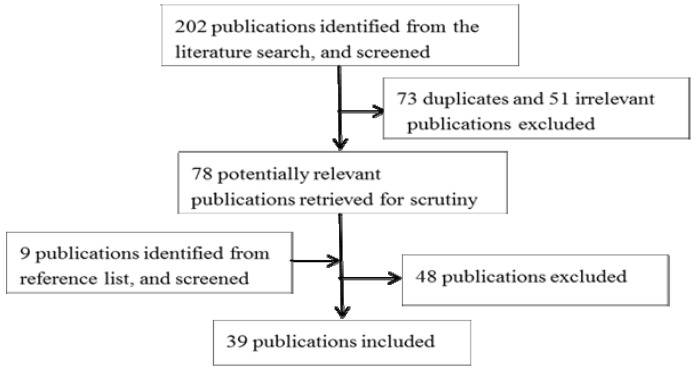
“and finally, a lack of a systematic process for data quality assessment.(35) In a review of 39 publications summarizing data quality”
MethodMiran, S. M., Nelson, S. J., Redd, D., & Zeng‐Treitler, Q. (2020) · International Journal of Medical Informatics · doi:10.1016/j.ijmedinf.2020.104368 · Cited by 5
Health Information Systems Evaluation Criteria: Overview of Systematic Reviews
Kia, A. S., Beheshti, M., & Shahmoradi, L. (2022) · Frontiers in Health Informatics · doi:10.30699/fhi.v11i1.376 · Cited by 3
Okello, G. A. (2017) · Open Research Online (The Open University) · doi:10.21954/ou.ro.0000ce33 · Cited by 4
Data Quality Evaluation and Improvement for Machine Learning
Chen, H. (2022) · University of North Texas Digital Library (University of North Texas) · doi:10.12794/metadc1944318 · Cited by 11
Self-citationA governance framework for medical code standardization to enhance multi-institutional data quality
Yamashita, T., Shibata, S.-I., Takada, A., Hotta, T., Izukura, R., Kang, D., & Nakashima, N. (2026) · BMC Medical Informatics and Decision Making · doi:10.1186/s12911-026-03397-1 · Cited by 2
“Therefore, studies have been conducted to investigate current practices and challenges in data quality assessment for public health information systems and RWD [7].”
McDermott, O., Conroy, N., Foster, M., Kharub, M., Thenarasu, M., & Narassima, M. S. (2026) · Quality Management Journal · doi:10.1080/10686967.2025.2591616 · Cited by 2
Landscape analysis towards data quality and utility labelling in the European Health Data Space
Sánchez-García, Á., Mercuri, C. P., Schutte, N. M., Estupiñán‐Romero, F., Tellería, C., Doñate-Martínez, A., Garcia-Gomez, J. M., Bernal‐Delgado, E., Sáez, C., & -, O. B. O. Q. (2026) · European Journal of Public Health · doi:10.1093/eurpub/ckag009 · Cited by 2
Cai, M., Huang, X., Cao, Y., Shao, X., & Xu, X. (2026) · Digital Health · doi:10.1177/20552076261427506 · Cited by 2
“16 Considerable progress has been made toward a systematic framework with diverse indicators to characterize healthcare data quality, such as completeness, correctness, concordance, plausibility, and currency.”
An epidemiological review of the one health approach in emerging zoonotic diseases
Singh, A. K., Kori, L., Evangeline Christina, A., Sunil-Chandra, N. P., Patil, T., Pandey, M. K., Rahman, A., Tiwari, R. R., & Nema, R. K. (2026) · Next research. · doi:10.1016/j.nexres.2026.101595 · Cited by 3
Horvath, J. D. C., Bessel, M., Kops, N. L., de Souza, F. M. A., Pereira, G. M., & Wendland, E. (2021) · JMIR Research Protocols · doi:10.2196/31365 · Cited by 2
“Although many studies have used quality assurance and quality control procedures, few have described those procedures in enough detail to support other researchers’ability to improve research quality [4-8].”
BackgroundTexture improvement for human shape estimation from a single image
Escribano, J. G., Rauno, S., Swaminathan, A., Smyth, D., & Smolić, A. (2022) · International Machine Vision and Image Processing Conference (IMVIP) · doi:10.56541/soww6683 · Cited by 2
Dynamic Channel Selection in Self-Supervised Learning
Krishna, T., Rai, A., Djilali, Y. A. D., Smeaton, A. F., McGuinness, K., & O'Connor, N. E. (2022) · International Machine Vision and Image Processing Conference (IMVIP) · doi:10.56541/lkli8696 · Cited by 2
Sboui, T., & Aissi, S. (2023) · Systems · doi:10.3390/systems11080393 · Cited by 2
The application of Artificial Intelligence (AI) in Mobile Learning (M-learning)
Ahmed, M. S. (2023) · Journal of Science and Technology · doi:10.20428/jst.v28i1.2001 · Cited by 6
A Survey of Data Quality Assessment Methods for Big Data
Choi, O., & Kim, Y. (2023) · Journal of Software Assessment and Valuation · doi:10.29056/jsav.2023.12.09 · Cited by 2
Tongtoyai, J., Cherdtrakulkiat, T., Girdthep, N., Masciotra, S., Winaitham, S., Sangprasert, P., Daengsaard, E., Puangsoi, A., Kittiyaowamarn, R., Dunne, E. F., et al. (2024) · PLoS ONE · doi:10.1371/journal.pone.0305296 · Cited by 2
Physical therapy registries worldwide: A systematic review
Yazdipour, A. B., Ayyoubzadeh, S. M., Nazary‐Moghadam, S., Arji, G., Meigooni, F. S. M., Kimiafar, K., & Shahmoradi, L. (2024) · Health Science Reports · doi:10.1002/hsr2.2312 · Cited by 3
Rawat, A. S., Rajendran, J., & Sikarwar, S. S. (2025) · Wiley eBooks · doi:10.1002/9781394278695.ch1 · Cited by 2
Hutchinson, D., Hines, S., Vijayaraghavan, N., Sammond, A., Metzler‐Wilson, K., & Kuchera, M. L. (2017) · Journal of Bodywork and Movement Therapies · doi:10.1016/j.jbmt.2017.05.004 · Cited by 2
Alipour, J., Mehdipour, Y., & Sheibani-Nasab, P. (2019) · Journal of Modern Medical Information Sciences · doi:10.29252/jmis.5.1.3 · Cited by 2
Data quality in the context of longitudinal research studies
Carić, T., & Kocijan, K. (2020) · Infuture .../Infuture · doi:10.17234/infuture.2019.12 · Cited by 2
“…procedures for preventing and correcting problems that may affect the quality of survey data (Biemer, Lyberg, 2003) The available literature on QA focuses mostly on standardizing the protocols and personnel training (Sáez et al., 2012; Chen et al., 2014; Szklo, Nieto, 2014; Yamanaka et al., 2016).”
BackgroundDATAANALYTICS OF FOURIER-TRANSFORM INFRARED SPECTROSCOPY (FTIR) FOR HALAL and NON-HALALADULTERATIONS
Arief, A., Kartiwi, M., & Jaswir, I. (2020) · International Conference on Cyber and IT Service Management (CITSM) · doi:10.1109/citsm50537.2020.9268816 · Cited by 2
Beyond the FAIRness of COVID-19 Data: What about Quality?
Pecoraro, F., & Luzi, D. (2021) · Studies in health technology and informatics · doi:10.3233/shti210816 · Cited by 2
Ndegwa, C. W. (2015) · University of Nairobi Research Archive (University of Nairobi) · Cited by 2
Unkels, R., Ahmad, A., Manzi, F., Kasembe, A., Kapologwe, N., Nabiev, R., Berndtsson, M., Hirose, A., & Hanson, C. (2023) · medRxiv · doi:10.1101/2023.04.12.23288456 · Cited by 2
“Definitions of HMIS data quality and its dimensions differ in the literature (6, 7, 29, 31-33), making standardized measurements and comparison between studies difficult.”
BackgroundData Valuation with Gradient SimilarityPreprint
Evans, N., Mills, G. B., Wu, G., Song, X. B., & McWeeney, S. K. (2024) · PubMed Central · doi:10.48550/arxiv.2405.08217 · Cited by 10
“Data quality issues can be particularly problematic in machine learning [5, 6, 7], as a small subset of inaccurate samples can significantly degrade modeling performance even if the majority of samples are high-quality.”
BackgroundDolgopolyi, R., Amaslidou, I., & Margaritou, A. (2025) · Research Square · doi:10.21203/rs.3.rs-6968809/v1 · Cited by 2
FAIRsharing record for: Brazilian Rare Disease Portal
FAIRsharing Team, Bernardi, F. A., Bernardi, F. A., Filho, M. E. C., & Yamada, D. B. (2023) · FAIRsharing.org · doi:10.25504/fairsharing.d7b6c8 · Cited by 2
“Not in My House”: Perspectives on HIV/AIDS of Afro-Caribbean Adolescents Living in South Florida
Archibald, C. M., Barnes, C. I., Rhodd, R. G., & Adenmosun, E. O. (2019) · Journal of Religion and Health · doi:10.1007/s10943-019-00870-2 · Cited by 1
Data Quality Assessment Model for Improving Decision Making Process
Al-Mughni, N. A. H., ALGhamdi, A. S. A.-M., & Saleem, F. (2020) · IJARCCE · doi:10.17148/ijarcce.2020.9814 · Cited by 1
Bello, I. M., Akpan, G. U., Gital, A. Y., Iliyasu, M., Mohammed, D., Barau, F. S., Oyaole, D. R., Erbeto, T. B., & Maleghemi, S. (2022) · Frontiers in Digital Health · doi:10.3389/fdgth.2022.907004 · Cited by 1
“It serves as input to the health systems toward predicting health outcomes and reducing morbidity and mortality of diseases (1).”
BackgroundRetracted: A Multi Disciplinary Data Quality Curation Framework for Discrete and Continuous IoT Data
Krishnam, N. P., Narayan, S., Mishra, R., Prasad, C. R., Singh, R., & Gangodkar, D. (2022) · International Conference on System Modeling & Advancement in Research Trends (SMART) · doi:10.1109/smart55829.2022.10047227 · Cited by 1
“[8] ( ii ) Missing Values .”
RetractedMendoza, J. N. B., & Buhat-Mendoza, D. G. (2023) · Asian Journal of Basic Science & Research · doi:10.38177/ajbsr.2023.5104 · Cited by 1
“A sub branch of public health informatics which is defined as the systematic application of information, computer science and technology in areas of public health, including surveillance, prevention, preparedness, and health promotion [10], with a main application promoting the health of the whole population [11, 12].”
BackgroundImplementation Status of Public Health Informatics
Chanyalew, M. A. (2024) · Sustainable development goals series · doi:10.1007/978-3-031-71118-3_5 · Cited by 1
Caetano, M. C., Campos, M. R., Emmerick, I. C. M., & Luiza, V. L. (2025) · Saúde em Debate · doi:10.1590/2358-289820251449350p · Cited by 1
Ankwatsa, I., Aguma, H. B., Atwiine, F., & Rajab, K. (2025) · Integrated Pharmacy Research and Practice · doi:10.2147/iprp.s514648 · Cited by 1
Godage, P., Dhanapala, S., & Jayatilleke, A. U. (2025) · BMJ Health & Care Informatics · doi:10.1136/bmjhci-2024-101357 · Cited by 1
Identifying Gaps in Mobile Data Collection by Frontline Health Workers in Bangladesh
Patwary, M. M., & Islam, N. (2025) · Annals of Global Health · doi:10.5334/aogh.4868 · Cited by 1
Scientometric review of health data quality (focusing on disease management)
Shirshahi, S., Rahimi, A., Beigi-Harchegani, H., Jangi, M., & Rezayatmand, R. (2025) · Digital Health · doi:10.1177/20552076251377953 · Cited by 2
“A study conducted by Chen et al. 20 reviewed the data quality assessment methods in public health information systems.”
Data Asset Quality Evaluation Model Considering the Requirements of Circulation Scenarios
Xu, T., Jiang, L., You, J., & Zhang, H. (2026) · Systems · doi:10.3390/systems14030287 · Cited by 3
“Early research on data quality primarily emphasized technical attributes such as accuracy, completeness, consistency, and timeliness [9–12], which are critical for data collection, storage, and processing.”
Adeoye, O. B., Tchoualeu, D. D., Konwloh, P. K., Abdu, H., Coleman, C., Theophile, A. A., Fortune, A. L., Nemah, Y., Kinkade, C., Adegoke, O. J., et al. (2026) · Vaccines · doi:10.3390/vaccines14040323 · Cited by 1
“Timely and high-quality disease surveillance and vaccination data are necessary to inform sound decision-making and manage effective health programs [6,7].”
Kleppe, S. N., Almstedt, P., Dillner, J., & Mühr, L. S. A. (2026) · International Journal of Gynecological Cancer · doi:10.1016/j.ijgc.2026.104751 · Cited by 1
Quality of perinatal data capture by nurses in Osun State, Nigeria
Komolafe, A. O., Irinoye, O. O., & Hanson, V. F. (2017) · African Journal of Midwifery and Women s Health · doi:10.12968/ajmw.2017.11.1.26 · Cited by 1
Evaluating the application and utility of ESSENCE for early event detection
Kunerth, A. K., Baker, E. A., Zelicoff, A. P., Elliot, M., & Syberg, K. W. (2017) · Online Journal of Public Health Informatics · doi:10.5210/ojphi.v9i1.7667 · Cited by 1
The relevance and use of secondary data analysis in social work research
Shirindi, M. L. (2018) · Knowledge pathing · doi:10.4102/aosis.2018.bk76.03 · Cited by 2
Pengembangan Instrumen RDQA Untuk Surveilans Epidemiologi DBD Di Dinas Kesehatan Kota Tarakan
Haikal, H., Martini, M., & Sediyono, E. (2019) · Jurnal Manajemen Kesehatan Indonesia · doi:10.14710/jmki.7.1.2019.16- · Cited by 1
Stromberg, P. M., & Ituarte‐Lima, C. (2021) · Springer eBooks · doi:10.1007/978-3-030-56371-4_10 · Cited by 1
Arief, A., Kartiwi, M., & Jaswir, I. (2020) · Journal of Information Systems and Digital Technologies · doi:10.31436/jisdt.v2i2.150 · Cited by 1
Masys, J., Peng, C., Ahn, A. C., & Masys, A. J. (2021) · Advanced sciences and technologies for security applications · doi:10.1007/978-3-030-71998-2_13 · Cited by 1
Wijesiri, H. G. T. I. D., & Usgodaarachchi, U. S. (2022) · SAR Journal of Dentistry Oral Surgery and Medicine · doi:10.36346/sarjdosm.2022.v03i01.001 · Cited by 2
Zumah, F., Niyi, J. L., Eweh, P. F., Adjei, B. N., Ajuik, M. A., Amaglo, E., Takramah, W. K., & Asem, L. (2022) · Open Journal of Nursing · doi:10.4236/ojn.2022.126029 · Cited by 1
Data Quality Applied to Open Databases: “COVID-19 Cases” and “COVID-19 Vaccines”
Pasini, A. C., Torres, J. I., Esponda, S., & Pesado, P. M. (2022) · Communications in computer and information science · doi:10.1007/978-3-031-05903-2_20 · Cited by 1
View Sub-sampling and Reconstruction for Efficient Light Field Compression
Chen, Y., Alain, M., & Smolić, A. (2022) · International Machine Vision and Image Processing Conference (IMVIP) · doi:10.56541/swcc3620 · Cited by 1
Classification of electromagnetic interference induced image noise in an analog video link
Purcell, A. W., & Eising, C. (2022) · International Machine Vision and Image Processing Conference (IMVIP) · doi:10.56541/zanb2627 · Cited by 1
Yao, W., Varkarakis, V., Lemley, J., & Corcoran, P. (2022) · International Machine Vision and Image Processing Conference (IMVIP) · doi:10.56541/fevr2516 · Cited by 1
A machine vision system for avian song classification with CNN’s
Palma, G., Aquino, A., Monticelli, P., Verdade, L. M., Markham, C., & Moral, R. D. A. (2022) · International Machine Vision and Image Processing Conference (IMVIP) · doi:10.56541/mhzn4111 · Cited by 2
Lee, T., McKeever, S., & Courtney, J. (2022) · International Machine Vision and Image Processing Conference (IMVIP) · doi:10.56541/poya9239 · Cited by 1
Yu, Y., Zhuo, L., Meng, R., Guo, W., Chen, Y., Zhang, Y., Chen, Y., Shi, H., Lin, Z., Zhan, S., et al. (2024) · Chinese Medical Journal · doi:10.1097/cm9.0000000000003053 · Cited by 1
A Delve into the Implementation of Data Quality Framework on Very Large Databases
Kamarthi, A. (2024) · INTERANTIONAL JOURNAL OF SCIENTIFIC RESEARCH IN ENGINEERING AND MANAGEMENT · doi:10.55041/ijsrem35601 · Cited by 1
Nanyonga, S., Medina, P. B., Kozlakidis, Z., Garcia, D. L., Ivanova, D., & Katsaounis, P. (2024) · Sustainable development goals series · doi:10.1007/978-3-031-62332-5_25 · Cited by 1
Multi-level quality assessment of United States COVID-19 epidemiological surveillance
Irgens, M. S., O’Neill, R. M., & Ruiz, J. M. (2025) · PLoS ONE · doi:10.1371/journal.pone.0319263 · Cited by 1
“Given the open source nature of COVID-19 data on U.S. health department websites, these quality constructs were adapted from previous literature examining the quality of open data [11] and public health information systems [10].”
An offline mobile data capture module for health and demographic surveillance system (HDSS) studies
Baguiya, A. (2016) · Cited by 1
Marais, H. J. (2017) · SUNScholar (Stellenbosch University) · Cited by 2
Exploration Of The Timeliness Of ICD Codes In Administrative Databases: A Nationwide StudyPreprint
Simon, M., Rance, B., Katsahian, S., Bounebache, S. K., Rey, G., Châtellier, G., Neuraz, A., Burgun, A., & Looten, V. (2018) · bioRxiv (Cold Spring Harbor Laboratory) · doi:10.1101/491951 · Cited by 1
“Data quality is a shared concern in research, and in public health[45].”
BackgroundWubante, S. M., Tegegne, M. D., Walle, A. D., Melaku, M. S., Enyew, E. B., Tareke, A. A., Endehabtu, B. F., & Mulatu, G. G. (2023) · Research Square · doi:10.21203/rs.3.rs-2237790/v1 · Cited by 1
Herath, S., Johannsson, J. G., Shrestha, Y. R., & von Krogh, G. (2025) · SSRN Electronic Journal · doi:10.2139/ssrn.5153658 · Cited by 2
Green Transition Efficiency in African Countries: The role of climate aid and climate readiness
Muciaccia, S. (. (2023) · Research Repository (Delft University of Technology) · Cited by 1
Enhancing reusability of veterinary epidemiological data by creating contextual metadata
Faverjon, C., Delavenne, C., Bareille, S., Cameron, A. R., Carmo, L. P., Dean, K. R., Nardi, M. D., Ezanno, P., Frössling, J., Gustafsson, W., et al. (2026) · Scientific Data · doi:10.1038/s41597-026-08217-9 · Cited by 1
Multi-Hazards Risk Aggregation Considering the Trustworthiness of the Risk Assessment
Bani-Mustafa, T. (2019) · theses.fr (ABES) · doi:10.70675/54626d48zba04z4ac5zb6fcze26902341f4b · Cited by 1
Avaliação do sistema de vigilância epidemiológica da influenza no Brasil, 2010-2013
da Costa, L. M. C. (2015) · RIUnB Institutional Repository (University of Brasília) · doi:10.26512/2015.12.t.19643
Strategies for Managing an Age-Diverse Workforce in Curaçao
Lasten, Y. W. (2016) · ScholarWorks (Walden University)
Strategies to Improve Data Quality for Forecasting Repairable Spare Parts
Eguasa, U. H. (2016) · ScholarWorks (Walden University) · Cited by 2
A Case Study of the International Niemann-Pick Disease Registry (INPDR)
Glöckner, S., Toikkanen, S., Rui, J., Hu, W. T., & Sinnott, R. (2017) · IEEE International Conference on e-Health Networking, Applications and Services (Healthcom) · doi:10.1109/healthcom.2017.8210764
“Most common used DQ dimensions are data completeness (DC), data accuracy (DA) and data timeliness [10], [11].”
BackgroundThe complexities and possibilities of health data utilization in the West Coast District
Zimri, I. S. (2018) · UWC Research Repository (University of the Western Cape)
Newborn Health Data Transfer in the Cape Coast Metropolis, Ghana
Achampong, E. K., Adzakpah, G., Boadu, R. O., Lasim, O. U., & Opoku, R. K. (2018) · Zenodo (CERN European Organization for Nuclear Research) · doi:10.5281/zenodo.3968108
Crop Insurance Strategies for Mitigating Net Underwriting Losses
Kitur, K. K. (2018) · ScholarWorks (Walden University) · Cited by 1
Namukwambi, R. N. (2017) · Unisa Institutional Repository (University of South Africa)
de Oliveira, A. C. M., Reis, L. P., & Gaio, R. (2019) · Advances in intelligent systems and computing · doi:10.1007/978-3-030-16187-3_50
Understanding Educational Vulnerability in the Context of Disasters Using Visualizations
Caldwell, C. (2018) · Digital Archive @ GSU · doi:10.57709/13360659
Insight in disease and drug interactions, with treatment optimisation of patients with cancer
Knapen (2019) · Research Publications (Maastricht University) · doi:10.26481/dis.20190510lk
Development of Drug and Food Surveillance Databases at Port Health Office
Putri, A. A., & Hargono, A. (2019) · Jurnal Berkala Epidemiologi · doi:10.20473/jbe.v7i12019.68-76
“Informasi yang dihasilkan dapat dianalisis berdasarkan hubungan maupun pengaruh antar variabel (Chen et al., 2014).. Informasi yang bervariasi dan detail ini diharapkan dapat bermanfaat bagi pihak KKP Kelas I Surabaya, terutama dalam pembuatan keputusan yang tepat, pengambilan tindakan yang efektif…”
BackgroundDietary intake data quality in the clinical research setting: Implications of quality improvement
Guan, V. X. (2019) · Research Online (University of Wollongong) · Cited by 1
An Assessment of Overdose Surveillance at a Local Public Health Department
Parmar, S. T., & Yarnell, B. K. (2019) · Online Journal of Public Health Informatics · doi:10.5210/ojphi.v11i1.9907
“General recommendations were generated based on challenges/solutions encountered and good practices observed from other health departments [4,5].”
BackgroundDr. Google, Please Help Me Understand!
Beutelspacher, L. (2019) · Lecture notes in computer science · doi:10.1007/978-3-030-21905-5_8
Usability of laboratory information system in Tabriz educational hospitals from user’s perspective
Damanabi, S., Monaghesh, E., & Faraji, R. (2019) · Journal of Modern Medical Information Sciences · doi:10.29252/jmis.5.1.60
Metadata
- Authors
- Chen, H., Hailey, D., Wang, N., & Yu, P.
- Affiliations
- University of Wollongong (AU)
- Chinese Center For Disease Control and Prevention (CN)
- Corresponding author
- Yu, Ping
- Venue
- International Journal of Environmental Research and Public Health
- Publisher
- MDPI AG
- Published
- 2014-05-14
- Volume
- 11
- Issue
- 5
- Pages
- 5170-5207
- ISSN
- 1660-4601 (ISSN-L)
- PMC
- PMC4053886
- OpenAlex
- W2061702164
- Cited by
- 354
- References
- 61
- Citations by year
- 2026: 31 · 2025: 27 · 2024: 54 · 2023: 32 · 2022: 56 · 2021: 28 · 2020: 32 · 2019: 36 · 2018: 21 · 2017: 19 · 2016: 12 · 2015: 6
- FWCI
- 15.58
- Type
- journal article
- Language
- en
- Open access
- gold
- doi.org
- Licence
- Locations
- International Journal of Environmental Research and Public Health (publishedVersion, cc-by)
- Europe PMC (PubMed Central) (publishedVersion, cc-by)
- PubMed Central (publishedVersion, cc-by)
- PubMed (publishedVersion)
- Research Online (University of Wollongong) (submittedVersion)
- RePEc: Research Papers in Economics (submittedVersion)
- Figshare (submittedVersion)
- Funders
- Strong
- Topics
- Physical Sciences › Computer Science › Information Systems › Data Quality and Management
- Health Sciences › Health Professions › Health Information Management › Medical Coding and Health Information
- Health Sciences › Health Professions › Health Information Management › Electronic Health Records Systems
- Keywords
- data quality assessment, public health information systems, data completeness, data accuracy, data timeliness, data collection, data auditing, data quality attributes, public health outcomes
- MeSH terms
- Humans, Public Health, Quality Assurance, Health Care, Outcome Assessment, Health Care, Health Information Systems
About these checks
Registry, retraction, Cites and statistics results are computed, not judged, with one exception: a printed reference that no index lists is read once by a model before it counts as a citation error. Claims are extracted by a model and kept only when their quote appears verbatim in the text; each cited source is then checked, with a model’s help, for whether it says what the claim relies on. Those verdicts can be wrong — read the claim’s quote and the cited source before relying on one.
Statistics and arithmetic are recomputed, not judged.
Confidence bands are shown only for fields calibrated on our annotated test set. None is calibrated yet, so no band is shown.
What counts as a claim ›How we measure confidence ›How we check this ›
Are you an author, or do you see a problem with this page? Request a review
Data sources
Bibliographic data: Semantic Scholar, OpenAlex, Crossref.
Contains information from the Semantic Scholar Academic Graph Datasets, made available under the ODC Attribution License (ODC-BY 1.0).
Semantic Scholar’s data is described in: Kinney, R., et al. (2023). The Semantic Scholar Open Data Platform. arXiv:2301.10140.
