

Mental Health Benefits of Long-Term Exposure to Residential Green and Blue Spaces: A Systematic Review
Open accessThe DOI matches its Crossref record; 63 of the 64 references it cites were found in a registry or an index.
Abstract
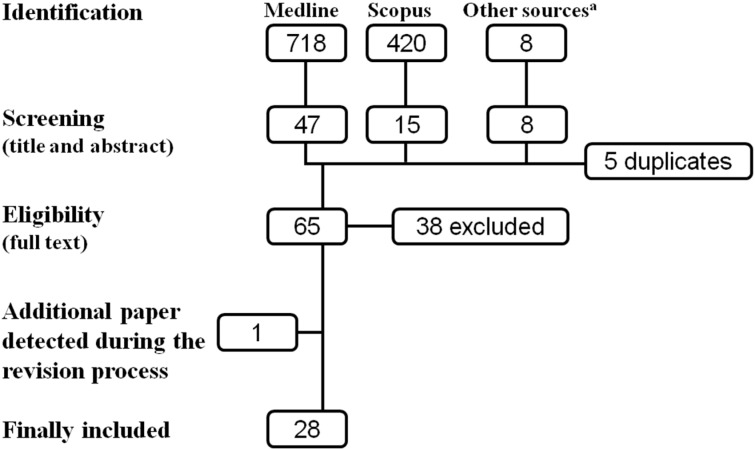
Many studies conducted during the last decade suggest the mental health benefits of green and blue spaces. We aimed to systematically review the available literature on the long-term mental health benefits of residential green and blue spaces by including studies that used standardized tools or objective measures of both the exposures and the outcomes of interest. We followed the PRISMA statement guidelines for reporting systematic reviews and meta-analysis. In total 28 studies were included in the systematic review. We found limited evidence for a causal relationship between surrounding greenness and mental health in adults, whereas the evidence was inadequate in children. The evidence was also inadequate for the other exposures evaluated (access to green spaces, quality of green spaces, and blue spaces) in both adults and children. The main limitation was the limited number of studies, together with the heterogeneity regarding exposure assessment. Given the increase in mental health problems and the current rapid urbanization worldwide, results of the present systematic review should be taken into account in future urban planning. However, further research is needed to provide more consistent evidence and more detailed information on the mechanisms and the characteristics of the green and blue spaces that promote better mental health. We provide recommendations for future studies in order to provide consistent and evidence-based recommendations for policy makers.
Overview
The claims and statistics of this paper haven’t been checked yet.
Free: it reads the open-access text and checks the first 5 claims that cite a source we can check. Create a free account to check every claim.
Integrity signals
Registry
Cites
Statistics
Figures
Verification
Claims the paper makes
The claims and statistics of this paper haven’t been checked yet.
Free: it reads the open-access text and checks the first 5 claims that cite a source we can check. Create a free account to check every claim.
Claims other papers make about this one
Each is checked against this paper’s own text: does it say what the citing paper says it does?
The cited source says what the claim attributes to it.
In the citing paper
“Although Attention Restoration Theory has been cited in relation to work with younger people (Gascon et al., 2015), there is a lack of theoretical underpinning for the development of interventions in relation to exposure to green and blue space and how this operates to impact mental health.”
From Exploring the role of exposure to green and blue spaces in preventing anxiety and depression among young people aged 14–24 years living in urban settings: A systematic review and conceptual framework (2022) · cites this paper as Gascon et al., 2015
The cited source says what the claim attributes to it.
In the citing paper
“but reviews including blue spaces do not focus on the age range of interest (Gascon et al., 2015).”
From Exploring the role of exposure to green and blue spaces in preventing anxiety and depression among young people aged 14–24 years living in urban settings: A systematic review and conceptual framework (2022) · cites this paper as Gascon et al., 2015
Self-check
Percentages, sums and reported differences re-computed from the paper’s own numbers.
The self-check needs the paper’s full text.
Citations
Cites
Preferred Reporting Items for Systematic Reviews and Meta-Analyses: the PRISMA statement
Moher, D., Liberati, A., Tetzlaff, J., Altman, D. G., & for the PRISMA Group (2009) · BMJ · doi:10.1136/bmj.b2535 · Cited by 83,823
Preferred Reporting Items for Systematic Reviews and Meta-Analyses: The PRISMA Statement
Moher, D., Liberati, A., Tetzlaff, J., & Altman, D. G. (2009) · Journal of Clinical Epidemiology · doi:10.1016/j.jclinepi.2009.06.005 · Cited by 19,575
Preferred reporting items for systematic reviews and meta-analyses: The PRISMA statement
Moher, D., Liberati, A., Tetzlaff, J., & Altman, D. G. (2010) · International Journal of Surgery · doi:10.1016/j.ijsu.2010.02.007 · Cited by 12,156
Hartig, T., Mitchell, R., de Vries, S., & Frumkin, H. (2014) · Annual Review of Public Health · doi:10.1146/annurev-publhealth-032013-182443 · Cited by 3,638 · cited 1×
“One of the main limitations to elucidate these questions is that many of the studies included in previous reviews used non-objective or non-standard tools to assess both residential green/blue spaces and mental health condition [5,9,10].”
ResultA systematic review of evidence for the added benefits to health of exposure to natural environments
Bowler, D. E., Buyung-Ali, L. M., Knight, T. M., & Pullin, A. S. (2010) · BMC Public Health · doi:10.1186/1471-2458-10-456 · Cited by 1,993 · cited 3×
“Additionally, many studies available are experimental and evaluate the short-term health effects of exposure to green/blue spaces [5,11,12] but not the health effects of long-term exposure to residential “greenness/blueness”, which is an essential information for policy makers to take appropriate decisions in urban pl…”
BackgroundResult(2012) · RePEc: Research Papers in Economics · Cited by 1,951
de Vries, S., Verheij, R. A., Groenewegen, P. P., & Spreeuwenberg, P. (2003) · Environment and Planning A: Economy and Space · doi:10.1068/a35111 · Cited by 1,258 · cited 15×
“Author (Year, Country) Study Design Age of the Study Population (Stratifications/Interactions) N Tools to Measure Mental Health Mental Health Item Greenness Data Source Surrounding Greenness Indicator Risk of Mental Health Problems Adults (or population irrespective of age) Triguero-Mas et al. 2015, Spain [14] Cross-…”
BackgroundResultInfluentialWhat are the benefits of interacting with nature?
Keniger, L., Gaston, K., Irvine, K., & Fuller, R. (2013) · International Journal of Environmental Research and Public Health · doi:10.3390/ijerph10030913 · Cited by 1,204 · cited 1×
“For instance, it could be that the use of green spaces or the mental health benefits of green spaces are influenced by their quality and characteristics [52] or by how these spaces are perceived.”
BackgroundSocial contacts as a possible mechanism behind the relation between green space and health
Maas, J., van Dillen, S. M. E., Verheij, R. A., & Groenewegen, P. P. (2009) · Health & Place · doi:10.1016/j.healthplace.2008.09.006 · Cited by 1,195 · cited 8×
“Author (Year, Country) Study Design Age of the Study Population (Stratifications/Interactions) N Tools to Measure Mental Health Mental Health Item Greenness Data Source Surrounding Greenness Indicator Risk of Mental Health Problems Adults (or population irrespective of age) Triguero-Mas et al. 2015, Spain [14] Cross-…”
BackgroundInfluentialThe relationship between nature connectedness and happiness: a meta-analysis
Capaldi, C. A., Dopko, R. L., & Zelenski, J. M. (2014) · Frontiers in Psychology · doi:10.3389/fpsyg.2014.00976 · Cited by 1,183 · cited 1×
“One of the main limitations to elucidate these questions is that many of the studies included in previous reviews used non-objective or non-standard tools to assess both residential green/blue spaces and mental health condition [5,9,10].”
Result
Cited by
Items 901–1,000 of 1,000
López, C., Mohammadalizadehkorde, M., Andrievskikh, D., Ponstingel, J., & Weaver, R. C. (2019) · Papers in Applied Geography · doi:10.1080/23754931.2019.1689157 · Cited by 4
“Benefits, such as health, environmental quality, and community wellbeing, are well documented in the literature (e.g., Gascon et al. 2015; Lee et al. 2015; Kabisch, Qureshi, and Haase 2015; Van den Berg et al. 2015).”
BackgroundEager, K., & McManus, P. (2024) · Oxford Open Infrastructure and Health · doi:10.1093/ooih/ouae003 · Cited by 3
Cuenca, V., Cole, H. V. S., & Mas, M. T. (2025) · Urban forestry & urban greening · doi:10.1016/j.ufug.2025.128668 · Cited by 3
Bayındır, D., & Çiftçi, Ç. (2025) · Education 3-13 · doi:10.1080/03004279.2025.2477185 · Cited by 3
A Spatially-Informed Healthy Location Index for Assessing Urban Living Environment
Rai, A. (2025) · European Journal of Geography · doi:10.48088/ejg.a.rai.16.2.091.107 · Cited by 3
Morrison, P. K., Lowe, A., & Obonyo, E. (2025) · Housing and Society · doi:10.1080/08882746.2025.2493034 · Cited by 3
“Furthermore, research generally shows that access to green space is important for both physical and mental health and wellbeing (Gascon et al., 2015).”
Han, R., Dong-feng, Y., & Liu, Z. (2025) · Transport Policy · doi:10.1016/j.tranpol.2025.05.015 · Cited by 3
Jiang, B., Xue, B., Li, T., Lai, C. K. Y., Pálsdóttir, A. M., & Lilian, M. (2025) · International Journal of Environmental Health Research · doi:10.1080/09603123.2025.2518165 · Cited by 3
“The findings revealed that increased interaction with natural environments including elements such as trees and water can effectively reduce mental stress (Gascon et al. 2015).”
A geospatial framework for Urban Blue Infrastructure suitability in semi-arid cities
Nathawat, R., Gupta, S. K., Kanga, S., Singh, S. K., Rana, R. S., Kumar, P., Meraj, G., & Sajan, B. (2025) · Next research. · doi:10.1016/j.nexres.2025.100596 · Cited by 3
Song, J., & Jeong, K.-H. (2025) · Frontiers in Sports and Active Living · doi:10.3389/fspor.2025.1616394 · Cited by 3
Chen, S., Yi, L., Wang, S., & Yang, C. (2025) · Journal of Environmental Psychology · doi:10.1016/j.jenvp.2025.102887 · Cited by 3
Jiménez-Arenas, P., Ferrer, M., Ruiz-Rivera, M., Júlvez, J., Bustamante, M., & Gascón, M. (2026) · Brain Behavior & Immunity - Health · doi:10.1016/j.bbih.2026.101212 · Cited by 4
“On the basis of methods followed in previous systematic reviews (Gascon et al., 2015; Carvajal et al., 2025) (Gascon et al., 2015; Carvajal et al., 2025), and applying the domains stated by the STORMS guidelines for human microbiome research reporting (Mirzayi et al., 2021), a quality appraisal of…”
Ochnik, D., Rojczyk, E., Budziński, M., Nagel, P., Szostak, A., Vitkovskyi, Y., & Wierzbik-Strońska, M. (2026) · Health & Place · doi:10.1016/j.healthplace.2026.103680 · Cited by 3
Guo, M., Liu, G., Huo, Z., Chang, W., Zhang, D., Li, J., Dai, X., Romano, A., & Gonella, F. (2026) · Journal of Environmental Psychology · doi:10.1016/j.jenvp.2026.103087 · Cited by 3
Psychological benefits of the person-nature relationship: a literature review
Hidalgo, C. T. R., Rumián, C., Saavedra, C., Uribe, T., Vidal, A., & Mardones, R. E. (2021) · Revista Interamericana de Psicología/Interamerican Journal of Psychology · doi:10.30849/ripijp.v55i3.1571 · Cited by 3
Zaino, A. A., Rasiya, A., Banaei, M., Abdullah, J., Abbas, M. Y., & Hassan, A. (2022) · Environment-Behaviour Proceedings Journal · doi:10.21834/ebpj.v7i20.2262 · Cited by 3
“More detailed information is needed on the characteristics of the blue spaces that promote better mental health (Gascon et al., 2015).”
BackgroundInfluentialExplaining Strategies to Reduce Urban Stress
Jalilisadrabad, S., Behzadfar, M., & Rahimi, K. M. (2023) · Springer eBooks · doi:10.1007/978-981-99-4202-2_4 · Cited by 3
Ajmi, R., Boussema, S. B. F., Essasi, S., Taïbi, A. N., & Allouche, F. K. (2024) · Advances in Science, Technology & Innovation/Advances in science, technology & innovation · doi:10.1007/978-3-031-43922-3_138 · Cited by 3
Frost, R., & Murtagh, N. (2024) · Urban forestry & urban greening · doi:10.1016/j.ufug.2024.128364 · Cited by 3
“Physical health is improved through increased opportunities for outdoor physical activity and socialising within a healthier environment (Gascon et al., 2015), better sleep quality (Shin et al., 2020) and lower body mass index and inflammation levels (Chaparro et al., 2018).”
Defining Urban Green Spaces in the Colombo District across Multiple Uses
Kumuduni, Y., & Weerakoon, K. G. P. K. (2024) · JRES. · doi:10.31357/jres.v21i2.7543 · Cited by 3
A study of spatial distribution and dynamic change in monthly FVC of urban parks
Zhang, Y., Ge, Y., & Qiao, L. (2024) · PLoS ONE · doi:10.1371/journal.pone.0308805 · Cited by 3
Bar-Ad, R., Vigo, M., Caruso, G., Quboa, Q., & Pinto, N. N. (2025) · PLoS ONE · doi:10.1371/journal.pone.0316195 · Cited by 3
Simoncic, V., Wenger, R., Monnier, M., Michelon, C., Périés, M., Hough, I., Klook, I., Lepeule, J., Mortamais, M., & Baghdadli, A. (2025) · Environmental Research · doi:10.1016/j.envres.2025.122577 · Cited by 3
Singh, A. N. A., & de Assis, G. L. (2025) · Current Treatment Options in Psychiatry · doi:10.1007/s40501-025-00368-7 · Cited by 3
“Indeed, each facet independently shows evidence for mental health benefits: nature exposure (d = 0.50 for depression; [90]), exercise (d = 0.62 for depression; [91]), and values-based interventions (d = 0.45 for well-being; [15]).”
InfluentialLomas, T., Mehanna, J.-G., Diego‐Rosell, P., Cowden, R. G., Passmore, H., Zelenski, J. M., Steger, M. F., Muthukrishna, M., & Snower, D. J. (2025) · The Journal of Positive Psychology · doi:10.1080/17439760.2025.2578848 · Cited by 3
“For example, Gascon et al. (2015) conducted a systematic review of 28 studies, indicating the long-term mental health benefits of such spaces in residential settings.”
The Potential for Urban Canopy Cover to Reduce Heat-Related Mortality in Adelaide
Bartesaghi-Koc, C., Soebarto, V. I., Hawken, S., & Sharifi, E. (2022) · Advances in sustainability science and technology · doi:10.1007/978-981-19-4707-0_13 · Cited by 3
Wang, C., Chen, S., Chen, Y., & Shen, Z. (2025) · Land · doi:10.3390/land14061128 · Cited by 3
“In addition to the direct health benefits of exposure to UGSs [8–11], evidence from various disciplines has confirmed another crucial health pathway of UGSs, mediated by encouraging people to participate in various health-related activities [3,12–17].”
Spatiotemporal Contribution of Blue-green Spaces to the Urban Thermal Environment in Changsha, China
Qiu, X., Kil, S., & Park, C. (2021) · Sensors and Materials · doi:10.18494/sam.2021.3341 · Cited by 3
Green Roof and Walls Technology Standardization and Market Across Europe
Enzi, V., Gruchmann-Bernau, E., Haymerle, I., Peritsch, M., Mann, G., Dostal, P., & Gedge, D. (2022) · Integrated science · doi:10.1007/978-3-030-91843-9_18 · Cited by 3
Neighbourhood Social Sustainability, Urban Renewal, and Health Inequalities: A Viewpoint
Macassa, G. (2022) · International Journal of Urban Planning and Smart Cities · doi:10.4018/ijupsc.301552 · Cited by 4
Prática de atividade física em ambientes naturais: um direito fundamental
Moreira, L. P., Abud, C. D. O., Sadauskas‐Henrique, H., & Gorisch, P. C. V. D. S. (2024) · Unisanta Law and Social Science · doi:10.66221/v12n1p219 · Cited by 3
The Impact Of Horticulture Therapy On Mental Health Care Consumers On A Retrofitted Roof
Wilkinson, S. J., & Orr, F. (2017) · UTS ePRESS (University of Technology Sydney) · Cited by 3
O’Sullivan, N. (2016) · Arrow - TU Dublin (Technological University Dublin) · doi:10.21427/0wa1-3x82 · Cited by 3
Health effects of combined exposure to surrounding green, air pollution and traffic noise
Klompmaker, J. O. (2020) · Utrecht University Repository (Utrecht University) · Cited by 3
Functional Limitations and Mental Health: Relationship and Well-Being Strategies
Zhang, H., & Chen, S. (2024) · Springer eBooks · doi:10.1007/978-3-031-40858-8_54-1 · Cited by 3
Enter the Virtual Forest: Exploring the Benefits of Forest Therapy in a Digital World
Soutelo, A. P., Sousa, A. R., Monteiro, M. L., de Almeida, R. S., Simões-Silva, V., & Portugal, P. (2023) · Advances in medical technologies and clinical practice book series · doi:10.4018/978-1-6684-9251-2.ch005 · Cited by 2
Kids' Environment and Health Cohort: Database Protocol
Akaraci, S., Macfarlane, A., Rammah, A., Courtin, É., Lewis, E., Miller, F. A., Powell-Bavester, J., Mitchell, J. L., Cruz, J., Lilliman, M., et al. (2025) · International Journal for Population Data Science · doi:10.23889/ijpds.v10i1.2475 · Cited by 2
Lourenço, P. J. D. S., Bastos, T. C. L., Pizarro, A. I. N., & Corredeira, R. (2025) · Schizophrenia Research · doi:10.1016/j.schres.2025.03.006 · Cited by 2
Kim, S., & Woo, A. (2025) · Journal of the Korean Institute of Landscape Architecture · doi:10.9715/kila.2025.53.3.065 · Cited by 2
Assessing Urban Green Space Distribution in Bhopal: An Integrated Neighbourhood Green Index Approach
Verma, M. C., & Kamat, R. (2025) · International Review for Spatial Planning and Sustainable Development · doi:10.14246/irspsd.13.3_138 · Cited by 3
Han, K.-T., & Zhang, X.-L. (2025) · Water Research · doi:10.1016/j.watres.2025.124530 · Cited by 2
Harvey, T., White, M. P., Pahl, S., & Elliott, L. R. (2025) · The Journal of Positive Psychology · doi:10.1080/17439760.2025.2549296 · Cited by 2
“Epidemiological evidence spans many countries (e.g. White et al., 2021) and though much of it is cross-sectional (Gascon et al., 2015), there are a growing number of large-scale longitudinal studies which show significant improvements in mental health (Alcock et al., 2014), or at least protective…”
Cycling with nature in cities: a scoping review considering weather and climate
Dovbischuk, T. (2025) · Transport Reviews · doi:10.1080/01441647.2025.2577803 · Cited by 2
“Natural elements in cities are known for improving urban dwellers’ well-being (e.g. Gascon et al., 2015; Hartig et al., 2014), strengthening residential satisfaction (Kley & Dovbischuk, 2024) and community cohesion (e.g. Jennings & Bamkole, 2019), and increasing the overall resilience of cities to…”
Heng, H., He, X., & Mo, N. (2025) · Buildings · doi:10.3390/buildings15213953 · Cited by 2
“Studies have pointed out that the accessibility of green infrastructure, including green space, well-designed sports and leisure facilities, and the social interactions enabled by the use of green infrastructures exert a combined influence on the physical and mental health of residents [24,42,43].”
The Right to the City in Urban Parks: The Role of Co-Governance in Fostering a Sense of Belonging
Liu, Y., Manfredini, M., Fang, Y., Guo, Z., & Weng, J. (2025) · Land · doi:10.3390/land14112250 · Cited by 2
Accumulation of psychological problems in UK cities; A quantile regression approach
Finnemann, A., Freichel, R., van der Maas, H. L. J., Borsboom, D., & Wiers, R. W. H. J. (2025) · Cities · doi:10.1016/j.cities.2025.106630 · Cited by 2
Tornquist, M., & Johnson, T. (2026) · International Journal of Wellbeing · doi:10.5502/ijw.v16i1.5183 · Cited by 2
Arnaud, N., Poch, M., Popartan, L. A., Verdaguer, M., Carrasco, F., & Pucher, B. (2026) · Water · doi:10.3390/w18020233 · Cited by 2
The impact of virtual reality-based forest therapy in psychiatric inpatient care: a pilot study
Martins, R., de Sousa, S., Viana, J., Fortuna, R., Henriques, A., Silva, A., & de Almeida, R. S. (2026) · Advances in Mental Health · doi:10.1080/18387357.2026.2615679 · Cited by 2
Menatti, L. (2026) · Studies in History and Philosophy of Science Part A · doi:10.1016/j.shpsa.2026.102115 · Cited by 3
Lomas, T., Padgett, R. N., Eichstaedt, J. C., Pawelski, J. O., Battle, K. E., Felton, C., & VanderWeele, T. J. (2026) · Social Indicators Research · doi:10.1007/s11205-025-03798-1 · Cited by 2
“…it 1 3 asks whether people are satisfied with the quality of air and water in the city or area where they live, many other aspects of the environment are also relevant to well-being (Lomas et al., 2025b), such as access to green and blue spaces (Gascon et al., 2015), which are not assessed.”
Sun, Z., Gao, X., Yang, Y., Bell, S., Hu, X., & Yin, J. (2026) · Environment International · doi:10.1016/j.envint.2026.110541 · Cited by 2
Wu, Y., Fei, X., Zheng, H., Cai, Y., Zhou, W., Zhang, H., Liu, Q., & Lan, S. (2026) · Humanities and Social Sciences Communications · doi:10.1057/s41599-026-07103-4 · Cited by 2
“GSAE signi fi cantly reduces the risk of chronic diseases (Twohig-Bennett and Jones, 2018), can alleviate depression and anxiety (Soga et al., 2017), promote mental health (Gascon et al., 2015), and enhance social interactions, reducing loneliness (Dadvand et al., 2016).”
Wang, Z., Lawson, G. M., & Green, R. J. (2026) · Land · doi:10.3390/land15040621 · Cited by 2
Framework for a participatory co-design approach of urban spaces with older adults
Petrovski, A., & Djukic, A. (2026) · International Journal of Architectural Research Archnet-IJAR · doi:10.1108/arch-12-2025-0578 · Cited by 2
Mao, Y., Cao, L., Zhang, J., Chen, D., Ding, J., Xia, T., Bai, Z., Zhang, X., & Zhang, Z. (2026) · Environmental Impact Assessment Review · doi:10.1016/j.eiar.2026.108545 · Cited by 2
Güngör, S., & Doğan, E. N. (2022) · Turkish Journal of Agriculture - Food Science and Technology · doi:10.24925/turjaf.v9isp.2466-2473.4864 · Cited by 2
Brace, O., & Kruja, S. (2022) · Revista de Estudios Andaluces · doi:10.12795/rea.2022.i43.05 · Cited by 2
Sefcik, J. S., Petrovsky, D., Huang, L., Behrens, L. L., Naylor, M. D., Hodgson, N. A., & Hirschman, K. B. (2022) · Geriatric Nursing · doi:10.1016/j.gerinurse.2022.03.007 · Cited by 2
Nishimura, H., Nawa, N., Yamaoka, Y., Koyama, Y., Kuramochi, J., & Fujiwara, T. (2023) · BMJ Public Health · doi:10.1136/bmjph-2023-000093 · Cited by 2
Liu, J., Liu, S., Meng, J., Meng, Y., & Yang, Z. (2025) · BMC Psychology · doi:10.1186/s40359-025-02559-6 · Cited by 2
“Most previous studies have focused on the positive effects of blue exposure on prosocial behavior [6, 72, 73], less attention has been given to the potential relationship between blue exposure and impulsivity.”
Nature exposure and telomere length: A pathway to slower ageing and improved longevity
Mohol, P., Ghosh, A., Kulkarni, S., Madhavi, N., & Jagtap, S. (2025) · Multidisciplinary Reviews · doi:10.31893/multirev.2025286 · Cited by 2
Bonelli, S., Larcher, F., Lu, L., Depetris, M., & Ronci, M. (2025) · Routledge eBooks · doi:10.4324/9781003474869-4 · Cited by 2
Klein, Y., Nilsen, I. B. R., Lindfors, P., Hanson, L. L. M., & Stenfors, C. U. D. (2025) · Journal of Public Health · doi:10.1007/s10389-025-02465-6 · Cited by 2
Psychological ecosystem services
Bratman, G. N., Garrett, J. K., & Elliott, L. R. (2025) · Routledge eBooks · doi:10.4324/9781003414896-6 · Cited by 3
Shaping regenerative stormwater management: a conceptual framework for blue- green infrastructure
Nethmini, A. L. H., Hadiwattage, C., Sivanraj, S., & Mannapperuma, M. M. N. (2025) · World Construction Symposium (WCS) · doi:10.31705/wcs.2025.92 · Cited by 2
From Green Spaces to Squares: Mapping the Distribution of Taijiquan Organizations in London
Zhang, P., Jin, Y., Gao, Z., & Ma, X. (2021) · International Journal of Environmental Research and Public Health · doi:10.3390/ijerph18168452 · Cited by 2
BioCities as Promotors of Health and Well-being
Ubalde-López, M., Nieuwenhuijsen, M. J., Spano, G., Sanesi, G., Calfapietra, C., Meyer-Grandbastien, A., O’Brien, L., Aalmo, G. O., Salbitano, F., Wilkes‐Allemann, J., et al. (2023) · Future city · doi:10.1007/978-3-031-29466-2_6 · Cited by 2
Self-citationLandscape Values: Place and Praxis
Collins, T., Kindermann, G., Newman, C., & Cronin, N. (2016) · Arrow@dit (Dublin Institute of Technology) · doi:10.13025/19688 · Cited by 2
Sinnett, D., Calvert, T., Burgess, S., & Smith, N. (2017) · UWE Research Repository (UWE Bristol) · Cited by 2
Designing ‘free’ spaces for children with disabilities
Green, D. (2018) · Developmental Medicine & Child Neurology · doi:10.1111/dmcn.13918 · Cited by 2
“) has been associated with better mental health.(3) The wonders and beauty of nature are difficult to quantify, but include unexpected pleasures such as coming upon a strip of daffodils (as in Wordsworth’s poem I wandered lonely as a cloud 1807) or hearing birdsong whilst smelling spring blossom.”
BackgroundNatural capital and environmental justice: A socio-spatial analysis of ecosystem services in England
Mullin, K. (2019) · White Rose eTheses Online (University of Leeds, The University of Sheffield, University of York) · Cited by 2
Shuvo, F. K. (2020) · Research Online (University of Wollongong) · Cited by 2
The Future is Green. Integrating Green and Blue Space Data from European Urban Atlas into UK BiobankPreprint
Geneshka, M., McClean, C. J., Gilbody, S. M., Cruz, J., & Coventry, P. A. (2022) · medRxiv · doi:10.1101/2022.05.09.22274764 · Cited by 2
Urban greenspace, bluespace, stress, and depression during pregnancy: San Francisco Bay Area
Guimaraes, A. P. (2021) · doi:10.46569/20.500.12680/3197xs66k · Cited by 2
Quels espaces publics pour la santé? : une méta-revue de la littérature scientifique
Braën, C. (2020) · doi:10.71781/639 · Cited by 2
Urban Green Space and Human Health : the Role of Quality Characteristics
Knobel, P. (2020) · Dipòsit Digital de Documents de la UAB (Universitat Autònoma de Barcelona) · Cited by 2
La gestión municipal de áreas verdes en el distrito de Los Olivos: 2015 – 2020. Un estudio de caso
Irarica Villar, J. C. (2020) · LA Referencia (Red Federada de Repositorios Institucionales de Publicaciones Científicas) · Cited by 2
Psychosocial impacts of hydraulic fracturing in Lancashire England
Aryee, F. A. (2019) · Northumbria Research Link (Northumbria University) · Cited by 2
Miranda, M. H., Fauggier, G. V., Knöll, M., Simons, M., van Wilgenburg, W., Dijst, M., Honvári, P., Jóna, L., Tóth, P. F., Kukorelli, I. S., et al. (2019) · TUbilio (Technical University of Darmstadt) · doi:10.26083/tuprints-00008352 · Cited by 2
Urban Green Space Research Progress and Hotspots Evolution Analysis: Visual Analysis based on WOS
Zhu, Z., & Cho, D.-G. (2024) · Journal of people, plants, and environment · doi:10.11628/ksppe.2024.27.2.69 · Cited by 1
“Collectively, urban green spaces contribute significantly to enhancing the overall well-being of individuals in urban settings (Vries et al., 2003, Gascon et al., 2015, Dadvand et al., 2016).”
BackgroundExploring Urban Greenery: A Case Study of Roadside Trees in Pokhara Metropolitan City
Gautam, A. (2024) · Landscape Architecture and Regional Planning · doi:10.11648/j.larp.20240901.12 · Cited by 1
“Studies have shown that access to green spaces, including streets lined with trees, correlates positively with residents' mental health and overall quality of life [18-19] [20-21].”
Lianur, L., Haryani, A., & Putri, M. I. (2025) · International Journal on ObGyn and Health Sciences · doi:10.35335/obgyn.v3i2.211 · Cited by 1
“Both tools have been validated in previous research and are appropriate for evaluating the impact of OT on individuals with mental health disorders(Gascon et al., 2015).”
Hayvon, J. C. (2025) · Journal of Aging and Environment · doi:10.1080/26892618.2025.2521318 · Cited by 1
Study on the Factors Affecting the Restorativeness of Pedestrian Streets in Winter Cities
Liu, Y., Meng, Z., Zhang, Y., & Yang, W. (2025) · International Review for Spatial Planning and Sustainable Development · doi:10.14246/irspsd.13.3_1 · Cited by 1
Gupta, A. K., Gavsker, K. K., & Lahari, V. K. (2025) · Climate change management · doi:10.1007/978-3-031-99132-5_4 · Cited by 1
Darvishpour, A., Mansouri, F., Fashtami, S. M., Aramesh, S., & Nouri-Saeed, A. (2025) · Health Science Reports · doi:10.1002/hsr2.71104 · Cited by 1
Wu, K.-T., Venohr, M., See, L., & Haase, D. (2025) · MethodsX · doi:10.1016/j.mex.2025.103603 · Cited by 1
“Furthermore, the well-being benefits from these environments have been explored and recommended by Gascon et al [5] and Triguero-Mas et al [6].”
Kruja, S., Braçe, O., Garrido‐Cumbrera, M., & Kokthi, E. (2025) · Tijdschrift voor Economische en Sociale Geografie · doi:10.1111/tesg.70036 · Cited by 1
Shi, Q., Zhang, J., Zhang, X., & Wei, Y. (2025) · URBAN DESIGN International · doi:10.1057/s41289-025-00293-4 · Cited by 1
Wali, B., Frank, L. D., Rees‐Punia, E., & Patel, A. V. (2025) · Environmental Research · doi:10.1016/j.envres.2025.123039 · Cited by 1
Mitigating urban stress through nature-based solutions: green spaces in relocation decision-making
Dovbischuk, T. (2025) · Urban Transformations · doi:10.1186/s42854-025-00083-9 · Cited by 1
“Nature-based solutions in cities are important for the physical and mental well-being of a growing number of city dwellers (Gascon et al., 2015; Hartig et al., 2014; Hong et al., 2019; Zhao et al., 2024) and are known for their restorative and stress-alleviating potential (Kaplan, 1995; Ulrich et…”
Mapping spatiotemporal variations in lakeside populations for sustainable lake management
Sun, Y., Liu, L., & Liu, Z. (2025) · Scientific Reports · doi:10.1038/s41598-025-21499-0 · Cited by 1
“Closer proximity to lakes can benefit human mental and physical health 4,5,33 and promote environmentally friendly behavior 42,43 .”
Pi‐Sunyer, B. P., Bignardi, G., García‐Baquero, G., Dadvand, P., Vrijheid, M., Guxens, M., Esplugues, A., Delgado-Saborit, J. M., Ibarluzea, J. M., Blakemore, S., et al. (2025) · Scientific Reports · doi:10.1038/s41598-025-22753-1 · Cited by 1
“Conversely, the prolonged availability of positive neighbourhood resources, such as access to green spaces, recreational facilities and supportive community environments, has been linked to improvements in health and wellbeing 50 .”
Self-citationZhang, Z., Zhang, Y.-F., & Lei, C.-C. (2025) · Frontiers in Medicine · doi:10.3389/fmed.2025.1715370 · Cited by 1
Landscapes of silence: designing quiet art spaces for inner peace in urban chaos
Yu, H. (2025) · Arts & Health · doi:10.1080/17533015.2025.2593865 · Cited by 1
Yang, J., Ren, S., Fu, W., & Qiu, Z. (2025) · Ecological Indicators · doi:10.1016/j.ecolind.2025.114321 · Cited by 1
Urban Biodiversity: Threats and Conservation Strategies
Jaiswal, N., Chowdhury, A. R., & Jayakumar, S. (2026) · The urban book series · doi:10.1007/978-3-032-07155-2_4 · Cited by 1
Battaglini, C., Isaja, V., Riscossa, G., Giordano, M., Quarello, P., Zucchetti, G., & Fagioli, F. (2026) · Children · doi:10.3390/children13010136 · Cited by 1
Metadata
- Authors
- Gascon, M., Triguero-Mas, M., Martínez, D., Dadvand, P., Forns, J., Plasència, A., & Nieuwenhuijsen, M.
- Affiliations
- ISGlobal, Barcelona Ctr. Int. Health Res. (CRESIB), Hospital Clínic-Universitat de Barcelona, Barcelona 08036, Spain
- Parc de Recerca Biomèdica de Barcelona (PRBB), Centre for Research in Environmental Epidemiology (CREAL). Doctor Aiguader, 88, 08003 Barcelona, Catalonia, Spain
- Barcelona Biomedical Research Park (ES)
- Norwegian Institute of Public Health (NO)
- Hospital Clínic de Barcelona (ES)
- Venue
- International Journal of Environmental Research and Public Health
- Publisher
- MDPI AG
- Published
- 2015-04-22
- Volume
- 12
- Issue
- 4
- Pages
- 4354-4379
- ISSN
- 1660-4601 (ISSN-L)
- PMC
- PMC4410252
- OpenAlex
- W2128386614
- Cited by
- 1,171
- References
- 64
- Citations by year
- 2026: 113 · 2025: 139 · 2024: 136 · 2023: 128 · 2022: 118 · 2021: 153 · 2020: 107 · 2019: 114 · 2018: 79 · 2017: 56 · 2016: 26 · 2015: 2
- FWCI
- 5.14
- Type
- journal article
- Language
- en
- Open access
- gold
- dx.doi.org
- Licence
- Locations
- International Journal of Environmental Research and Public Health (publishedVersion, cc-by)
- Europe PMC (PubMed Central) (publishedVersion, cc-by)
- PubMed Central (publishedVersion, cc-by)
- PubMed (publishedVersion)
- Dipòsit Digital de la Universitat de Barcelona (Universitat de Barcelona) (publishedVersion, cc-by)
- Research Bank (Australian Catholic University) (submittedVersion, cc-by)
- RePEc: Research Papers in Economics (submittedVersion)
- DOAJ (DOAJ: Directory of Open Access Journals) (submittedVersion, cc-by-sa)
- RECERCAT (Consorci de Serveis Universitaris de Catalunya) (submittedVersion, cc-by)
- Funders
- Secretariat for Universities and Research of the Ministry Economy and Knowledge of the Government of Catalonia (SUR), the Agency for Management of University and Research Grants (AGAUR) and the CERCA Institute (SUMA 2013)
- Spanish Ministry of Economy and Competitiveness (RYC-2012-10995)
- Catalan Government (AGAUR FI-DGR-2013)
- Topics
- Social Sciences › Urban Studies › Urban Green Space and Health
- Social Sciences › Sociology and Political Science › Environmental Justice and Health Disparities
- Physical Sciences › Environmental Science › Management, Monitoring, Policy and Law › Urban Arborization and Environmental Studies
- Keywords
- mental health, residential green space, blue spaces, long-term exposure, vegetation greenness, green space accessibility, green space quality, child mental health, urban planning, urbanization, environmental exposure assessment
- MeSH terms
- Environment, Humans, Mental Health, Urban Health
About these checks
Registry, retraction, Cites and statistics results are computed, not judged, with one exception: a printed reference that no index lists is read once by a model before it counts as a citation error. Claims are extracted by a model and kept only when their quote appears verbatim in the text; each cited source is then checked, with a model’s help, for whether it says what the claim relies on. Those verdicts can be wrong — read the claim’s quote and the cited source before relying on one.
Statistics and arithmetic are recomputed, not judged.
Confidence bands are shown only for fields calibrated on our annotated test set. None is calibrated yet, so no band is shown.
What counts as a claim ›How we measure confidence ›How we check this ›
Are you an author, or do you see a problem with this page? Request a review
Data sources
Bibliographic data: Semantic Scholar, OpenAlex, Crossref.
Contains information from the Semantic Scholar Academic Graph Datasets, made available under the ODC Attribution License (ODC-BY 1.0).
Semantic Scholar’s data is described in: Kinney, R., et al. (2023). The Semantic Scholar Open Data Platform. arXiv:2301.10140.
