

Mental Health Benefits of Long-Term Exposure to Residential Green and Blue Spaces: A Systematic Review
Open accessThe DOI matches its Crossref record; 63 of the 64 references it cites were found in a registry or an index.
Abstract
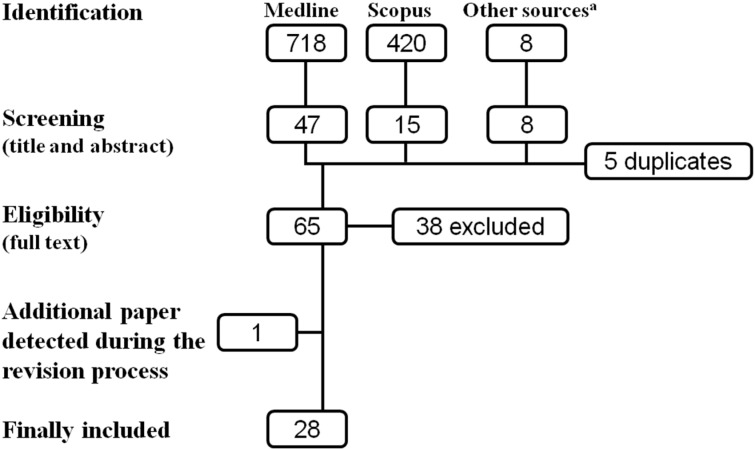
Many studies conducted during the last decade suggest the mental health benefits of green and blue spaces. We aimed to systematically review the available literature on the long-term mental health benefits of residential green and blue spaces by including studies that used standardized tools or objective measures of both the exposures and the outcomes of interest. We followed the PRISMA statement guidelines for reporting systematic reviews and meta-analysis. In total 28 studies were included in the systematic review. We found limited evidence for a causal relationship between surrounding greenness and mental health in adults, whereas the evidence was inadequate in children. The evidence was also inadequate for the other exposures evaluated (access to green spaces, quality of green spaces, and blue spaces) in both adults and children. The main limitation was the limited number of studies, together with the heterogeneity regarding exposure assessment. Given the increase in mental health problems and the current rapid urbanization worldwide, results of the present systematic review should be taken into account in future urban planning. However, further research is needed to provide more consistent evidence and more detailed information on the mechanisms and the characteristics of the green and blue spaces that promote better mental health. We provide recommendations for future studies in order to provide consistent and evidence-based recommendations for policy makers.
Overview
The claims and statistics of this paper haven’t been checked yet.
Free: it reads the open-access text and checks the first 5 claims that cite a source we can check. Create a free account to check every claim.
Integrity signals
Registry
Cites
Statistics
Figures
Verification
Claims the paper makes
The claims and statistics of this paper haven’t been checked yet.
Free: it reads the open-access text and checks the first 5 claims that cite a source we can check. Create a free account to check every claim.
Claims other papers make about this one
Each is checked against this paper’s own text: does it say what the citing paper says it does?
The cited source says what the claim attributes to it.
In the citing paper
“Although Attention Restoration Theory has been cited in relation to work with younger people (Gascon et al., 2015), there is a lack of theoretical underpinning for the development of interventions in relation to exposure to green and blue space and how this operates to impact mental health.”
From Exploring the role of exposure to green and blue spaces in preventing anxiety and depression among young people aged 14–24 years living in urban settings: A systematic review and conceptual framework (2022) · cites this paper as Gascon et al., 2015
The cited source says what the claim attributes to it.
In the citing paper
“but reviews including blue spaces do not focus on the age range of interest (Gascon et al., 2015).”
From Exploring the role of exposure to green and blue spaces in preventing anxiety and depression among young people aged 14–24 years living in urban settings: A systematic review and conceptual framework (2022) · cites this paper as Gascon et al., 2015
Self-check
Percentages, sums and reported differences re-computed from the paper’s own numbers.
The self-check needs the paper’s full text.
Citations
Cites
Preferred Reporting Items for Systematic Reviews and Meta-Analyses: the PRISMA statement
Moher, D., Liberati, A., Tetzlaff, J., Altman, D. G., & for the PRISMA Group (2009) · BMJ · doi:10.1136/bmj.b2535 · Cited by 83,823
Preferred Reporting Items for Systematic Reviews and Meta-Analyses: The PRISMA Statement
Moher, D., Liberati, A., Tetzlaff, J., & Altman, D. G. (2009) · Journal of Clinical Epidemiology · doi:10.1016/j.jclinepi.2009.06.005 · Cited by 19,575
Preferred reporting items for systematic reviews and meta-analyses: The PRISMA statement
Moher, D., Liberati, A., Tetzlaff, J., & Altman, D. G. (2010) · International Journal of Surgery · doi:10.1016/j.ijsu.2010.02.007 · Cited by 12,156
Hartig, T., Mitchell, R., de Vries, S., & Frumkin, H. (2014) · Annual Review of Public Health · doi:10.1146/annurev-publhealth-032013-182443 · Cited by 3,638 · cited 1×
“One of the main limitations to elucidate these questions is that many of the studies included in previous reviews used non-objective or non-standard tools to assess both residential green/blue spaces and mental health condition [5,9,10].”
ResultA systematic review of evidence for the added benefits to health of exposure to natural environments
Bowler, D. E., Buyung-Ali, L. M., Knight, T. M., & Pullin, A. S. (2010) · BMC Public Health · doi:10.1186/1471-2458-10-456 · Cited by 1,993 · cited 3×
“Additionally, many studies available are experimental and evaluate the short-term health effects of exposure to green/blue spaces [5,11,12] but not the health effects of long-term exposure to residential “greenness/blueness”, which is an essential information for policy makers to take appropriate decisions in urban pl…”
BackgroundResult(2012) · RePEc: Research Papers in Economics · Cited by 1,951
de Vries, S., Verheij, R. A., Groenewegen, P. P., & Spreeuwenberg, P. (2003) · Environment and Planning A: Economy and Space · doi:10.1068/a35111 · Cited by 1,258 · cited 15×
“Author (Year, Country) Study Design Age of the Study Population (Stratifications/Interactions) N Tools to Measure Mental Health Mental Health Item Greenness Data Source Surrounding Greenness Indicator Risk of Mental Health Problems Adults (or population irrespective of age) Triguero-Mas et al. 2015, Spain [14] Cross-…”
BackgroundResultInfluentialWhat are the benefits of interacting with nature?
Keniger, L., Gaston, K., Irvine, K., & Fuller, R. (2013) · International Journal of Environmental Research and Public Health · doi:10.3390/ijerph10030913 · Cited by 1,204 · cited 1×
“For instance, it could be that the use of green spaces or the mental health benefits of green spaces are influenced by their quality and characteristics [52] or by how these spaces are perceived.”
BackgroundSocial contacts as a possible mechanism behind the relation between green space and health
Maas, J., van Dillen, S. M. E., Verheij, R. A., & Groenewegen, P. P. (2009) · Health & Place · doi:10.1016/j.healthplace.2008.09.006 · Cited by 1,195 · cited 8×
“Author (Year, Country) Study Design Age of the Study Population (Stratifications/Interactions) N Tools to Measure Mental Health Mental Health Item Greenness Data Source Surrounding Greenness Indicator Risk of Mental Health Problems Adults (or population irrespective of age) Triguero-Mas et al. 2015, Spain [14] Cross-…”
BackgroundInfluentialThe relationship between nature connectedness and happiness: a meta-analysis
Capaldi, C. A., Dopko, R. L., & Zelenski, J. M. (2014) · Frontiers in Psychology · doi:10.3389/fpsyg.2014.00976 · Cited by 1,183 · cited 1×
“One of the main limitations to elucidate these questions is that many of the studies included in previous reviews used non-objective or non-standard tools to assess both residential green/blue spaces and mental health condition [5,9,10].”
Result
Cited by
Items 701–800 of 1,000
Ceñido, J. F., Freeman, C., & Bazargan‐Hejazi, S. (2019) · International Journal of Environmental Research and Public Health · doi:10.3390/ijerph16122180 · Cited by 13
Hüfner, K., Ower, C., Kemmler, G., Vill, T., Martini, C. L., Schmitt, A., & Sperner‐Unterweger, B. (2020) · BMC Psychiatry · doi:10.1186/s12888-020-02787-7 · Cited by 13
Acolin, J., Hajat, A., Nurius, P. S., & Lengua, L. J. (2022) · SSM - Mental Health · doi:10.1016/j.ssmmh.2022.100087 · Cited by 14
Sánchez, C. O., García‐Pérez, J., Gómez‐Barroso, D., Domínguez-Castillo, A., Romaguera, E. P., Cañete, A., Ortega-García, J. A., & Ramis, R. (2022) · International Journal of Environmental Research and Public Health · doi:10.3390/ijerph19095232 · Cited by 13
Subiza‐Pérez, M., Anabitarte, A., Babarro, I., Jimeno-Romero, A., Delclós, C., Vich, G., Delclòs‐Alió, X., Rueda-García, C., Miralles‐Guasch, C., & Lertxundi, A. (2022) · Landscape and Urban Planning · doi:10.1016/j.landurbplan.2022.104612 · Cited by 13
Humbert, A., Kohls, E., Baldofski, S., Epple, C., & Rummel‐Kluge, C. (2023) · Frontiers in Psychiatry · doi:10.3389/fpsyt.2023.1271702 · Cited by 13
Digital envirotyping: quantifying environmental determinants of health and behavior
Engelhard, M., Oliver, J. A., & McClernon, F. J. (2020) · npj Digital Medicine · doi:10.1038/s41746-020-0245-3 · Cited by 13
Urban green space and mental well-being of Aotearoa New Zealand adolescents: A path analysis
Zhang, Y., Zhao, J., Mavoa, S., Ikeda, E., Clark, T. C., Crengle, S. M., & Smith, M. (2022) · Wellbeing Space and Society · doi:10.1016/j.wss.2022.100085 · Cited by 13
“Social cohesion has been examined across multiple studies in adult populations (Gascon et al., 2018; Gascon et al., 2015; Zhang et al., 2021).”
Garrido‐Cumbrera, M., González‐Marín, A., Correa-Fernández, J., Braçe, O., & Foley, R. (2023) · Brain and Behavior · doi:10.1002/brb3.2875 · Cited by 13
“Direct contact with natural environments can be determined by visits to green spaces (White et al., 2013), residential proximity (Gascon et al., 2015) or neighborhoods with more green spaces.”
BackgroundOrdóñez, C., Kendal, D., Davern, M. T., & Conway, T. M. (2024) · Environmental Research · doi:10.1016/j.envres.2024.118445 · Cited by 12
Physical Activity and Local Blue/Green Space Access During the COVID-19 Pandemic
Nicklett, E. J., Sharma, B. B., & Testa, A. M. (2024) · American Journal of Health Promotion · doi:10.1177/08901171241244892 · Cited by 12
Chen, M., Lin, G., Zhou, W., & Chen, C. (2025) · Ecological Indicators · doi:10.1016/j.ecolind.2025.113829 · Cited by 12
Hong, H., Chang, Q., Cheng, K., & Xie, X. (2025) · Journal of Environmental Management · doi:10.1016/j.jenvman.2025.126538 · Cited by 12
Mousavinia, S. F. (2023) · Journal of Housing and the Built Environment · doi:10.1007/s10901-023-10035-z · Cited by 12
“An increasing amount of data supports the importance of access to open and green spaces in promoting urban sustainability and improving human health (Ahmadpoor & Shahab, 2020; Gascon et al., 2015; Kim & Miller, 2019; Olszewska-Guizzo et al., 2020).”
BackgroundWang, Y., Timms, F., Li, J., & Yu, H. (2024) · Current Opinion in Psychiatry · doi:10.1097/yco.0000000000000937 · Cited by 12
Benefits of Time Spent Outdoors in Early Childhood Education: A Systematic Review
Fermin, C., Perez, M., Obee, A. F., & Hart, K. C. (2024) · FIU Undergraduate Research Journal · doi:10.25148/urj.020107 · Cited by 12
Bubalo, M., van den Broek, K. L., Helbich, M., & Labib, S. M. (2024) · BMJ Open · doi:10.1136/bmjopen-2023-083578 · Cited by 12
“On the other hand, greenspace contact can lead to various health benefits, 6 7 and there are theoretical grounds explaining pathways linking greenspace to health.”
BackgroundKabaya, K. (2020) · Ecological Economics · doi:10.1016/j.ecolecon.2020.106927 · Cited by 12
Exploring the relationship of human–nature interaction and mindfulness: a cross-sectional study
Sahni, P., & Kumar, J. (2021) · Mental Health Religion & Culture · doi:10.1080/13674676.2021.1890704 · Cited by 12
“…human–nature interaction as either through: (a) neighbourhood nature, i.e., the presence of green spaces such as parks, gardens, woodlands (Ekkel & de Vries, 2017; Gascon et al., 2015), and or by (b) “frequency of visit” e.g., a walk in the park (Berman et al., 2009; Zelenski & Nisbet, 2014).”
BackgroundImpacts of Thermal Environments on Health Risk: A Case Study of Harris County, Texas
Chun, B., Hur, M., & Won, J. (2021) · International Journal of Environmental Research and Public Health · doi:10.3390/ijerph18115531 · Cited by 12
“Residents in a greener neighborhood had higher satisfaction with their environment, which positively relates to mental health [25] and physical health [26].”
BackgroundČákyová, K., Vertaľ, M., Vystrčil, J., Nespěšný, O., Bečkovský, D., Rubina, A., Pěnčík, J., & Vranayová, Z. (2021) · Sustainability · doi:10.3390/su132111649 · Cited by 12
Mason, K., Pearce, N. E., & Cummins, S. (2022) · Cancer Causes & Control · doi:10.1007/s10552-022-01626-2 · Cited by 12
Nature-Based Education for Resilient Cities
Schweitzer, J.-P., & Gionfra, S. (2017) · World sustainability series · doi:10.1007/978-3-319-69474-0_21 · Cited by 12
Connecting natural space exposure to mental health outcomes across Vancouver, Canada
Rugel, E. J. (2019) · cIRcle (University of British Columbia) · doi:10.14288/1.0377727 · Cited by 12
The health and social benefits of nature and biodiversity protection
ten Brink, P., Mutafoglu, K., Schweitzer, J.-P., Kettunen, M., Twigger-Ross, C., Baker, J., Kuipers, Y., Emonts, M., Tyrväinen, L., Hujala, T., et al. (2016) · Jukuri (Natural Resources Institute Finland (Luke)) · Cited by 12
Amin, S. (2023) · Health Economics Policy and Law · doi:10.1017/s1744133123000294 · Cited by 11
“A growing body of research establishes a relationship between social context including local poverty, inequality, and cohesion and mental health (Evans, 2003; Gascon et al ., 2015).”
BackgroundRole of Eco-spirituality in Psychological Well-Being of Selected Working Women
Quilon, A. (2024) · Bedan Research Journal · doi:10.58870/berj.v9i1.70 · Cited by 11
“Specifically, exposure to trees, grass, forest, and parks (Gascon, 2015) as well as physical involvement with lakes, rivers, coastal water, and springs are associated with positive mental health (Gascon, 2017).”
BackgroundSounds of Nature and Hearing Loss: A Call to Action
Lelic, D., Picou, E. M., Shafiro, V., & Lorenzi, C. (2024) · Ear and Hearing · doi:10.1097/aud.0000000000001601 · Cited by 11
“Before HA fitting, people with hearing loss could have been missing acoustic cues that are needed for building a clear sense of place and time, which play a role in depression, anxiety, and stress (Gascon et al. 2015), in addition to health and positive affect (Buxton et al. 2021).”
Korpilo, S., Willberg, E. S., Müürisepp, K., Klein, R., Taylor, R., Torkko, J., Hasanzadeh, K., & Toivonen, T. (2025) · AMBIO · doi:10.1007/s13280-025-02178-w · Cited by 13
“However, much of how we understand interactions with urban nature still stems from the fixed conceptual understanding of being in a place , which has been central to studies using residential neighbourhood or greenspace recreational use perspectives (Keniger et al. 2013; Gascon et al. 2015).”
Mehta, U., Wilt, G. E., Roscoe, C., Okereke, O. I., Coull, B. A., James, P., Laden, F., Iyer, H. S., Yanosky, J. D., Kaufman, J. D., et al. (2025) · Environmental Health Perspectives · doi:10.1289/ehp14458 · Cited by 12
“93,94 Our fi ndings suggest that participants living in the least socioeconomically deprived census tracts had stronger inverse associations with GAD symptoms among those who self-reported clinician-diagnosed depression in comparison with those who did not.”
Christensen, R., Fernandez, C. C., Topalian, N., Vaughan, L., Krenz, K., Pitman, A., & Fett, A.-K. J. (2025) · Landscape and Urban Planning · doi:10.1016/j.landurbplan.2025.105487 · Cited by 11
Cao, W., Wang, L., Wang, J., Elsadek, M., & Zhang, D. (2025) · Frontiers in Public Health · doi:10.3389/fpubh.2025.1680591 · Cited by 11
How human mobility shapes daily exposure to greenspaces: A systematic review
Ma, H., & Kwan, M. (2025) · Environmental Research · doi:10.1016/j.envres.2025.123397 · Cited by 11
O'Connor, A., King, A. C., Banchoff, A., Eyler, A. A., Reis, R. S., Brownson, R. C., Reséndiz, E., Holland, D., & Salvo, D. (2021) · Journal of Healthy Eating and Active Living · doi:10.51250/jheal.v1i4.29 · Cited by 11
“By providing plentiful natural green and blue spaces, metropolitan parks can contribute to improved mental health outcomes as well as environmental sustainability (Gascon et al., 2015; Jimenez et al., 2021; Vanaken & Danckaerts, 2018; Wood et al., 2017; Jennings et al., 2016; Kruizse et al., 2019).”
BackgroundLomas, T., & Case, B. (2023) · Current Research in Ecological and Social Psychology · doi:10.1016/j.cresp.2023.100090 · Cited by 11
Das, M. (2024) · Developments in environmental science · doi:10.1016/b978-0-443-21948-1.00027-3 · Cited by 11
Stress and the City: Mental Health in Urbanized vs. Rural Areas in Salzburg, Austria
Frey, V., Langthaler, P. B., Huf, M. J., Gruber, G., Prinz, T., Kedenko, L., Iglseder, B., Paulweber, B., & Trinka, E. (2024) · International Journal of Environmental Research and Public Health · doi:10.3390/ijerph21111459 · Cited by 11
“Green space in urban settings has been shown to have a positive influence on mental health [12,15,16,19,20].”
Qu, S., Li, H., Wu, J., & Zhao, B. Q. (2025) · Sustainability · doi:10.3390/su17052269 · Cited by 11
Nilsson, K., Bentsen, P., Grahn, P., & Mygind, L. (2018) · Revue Forestière Française · doi:10.4267/2042/70009 · Cited by 11
Cebrino, J., & de la Cruz, S. P. (2020) · Journal of Clinical Medicine · doi:10.3390/jcm9072199 · Cited by 11
“Conversely, certain environmental factors, such as green areas, could reduce stress and exert protective effects against mental disorders [30,31].”
BackgroundHeterogeneous Urban Exposures and Prevalent Hypertension in the Helsinki Capital Region, Finland
Okokon, E. O., Yli‐Tuomi, T., Siponen, T., Tiittanen, P., Turunen, A. W., Kangas, L., Karppinen, A., Kukkonen, J., & Lanki, T. (2021) · International Journal of Environmental Research and Public Health · doi:10.3390/ijerph18031196 · Cited by 11
“Proximity to a green area seemingly improves mental health [37,38] and vitality [39] by relieving stress [40].”
BackgroundTuofu, H., Qing-yun, H., & Xiao, O. (2022) · Frontiers in Environmental Science · doi:10.3389/fenvs.2022.833831 · Cited by 11
Exploring the effects of the Covid-19 pandemic on people's relationships with gardens
Gordon-Rawlings, T., & Russo, A. (2022) · Emotion, space and society · doi:10.1016/j.emospa.2022.100936 · Cited by 11
A neuro-cognitive perspective on urban behavior of people with different moods
Erkan, İ. (2023) · Open House International · doi:10.1108/ohi-10-2022-0252 · Cited by 12
Sunita, S., Kumar, D., & Shekhar, S. (2021) · Journal of Landscape Ecology · doi:10.2478/jlecol-2021-0016 · Cited by 11
“(Gascon et al., 2015) Mental health benefits of long-term exposure to residential green and blue spaces: A systematic review”
BackgroundThe relationship between transport and mental health in Aotearoa New Zealand
Wild, K., Woodward, A., Herbert, S., Tiatia‐Seath, J., Collings, S., Shaw, C., & Ameratunga, S. N. (2021) · ResearchSpace (University of Auckland) · Cited by 12
Singh, S., van de Wouw, M., Tomfohr‐Madsen, L. M., Lebel, C. A., & Giesbrecht, G. F. (2025) · Environment International · doi:10.1016/j.envint.2025.109572 · Cited by 11
Human–wildlife interaction networks at urban blue spaces
Duke, L., & Soulsbury, C. D. (2020) · Area · doi:10.1111/area.12683 · Cited by 10
Afentou, N., Moore, P., Hull, K., Shepherd, J., Elliott, S. B., & Frew, E. J. (2022) · International Journal of Environmental Research and Public Health · doi:10.3390/ijerph192113809 · Cited by 10
“health benefits of outdoor blue spaces in relation to physical activity, life satisfaction, and mental wellbeing, yet the results are inconsistent [17,18].”
ResultMapping, measuring, and valuing the benefits of nature-based solutions in cities
Guerry, A. D., Lonsdorf, E. V., Nootenboom, C., Remme, R. P., Griffin, R. M., Waters, H., Polasky, S., Han, B., Wu, T., Janke, B. D., et al. (2023) · Edward Elgar Publishing eBooks · doi:10.4337/9781800376762.00023 · Cited by 10
Buttazzoni, A. N., & Minaker, L. M. (2023) · Cities & Health · doi:10.1080/23748834.2023.2286741 · Cited by 10
“While urban environments seem poised to become a more important determinant of adolescent mental health, research into these relationships is relatively understudied compared to other groups like adults (Gascon et al .”
BackgroundResultLefta, R. M., Hjazi, A. M., Skakodub, A. A., Dham, A., Sapaev, I. B., Khlewee, I. H., Alawadi, A. H., Alsaalamy, A. H., Habash, R. T., & Najafi, M. L. (2024) · Environmental Sciences Europe · doi:10.1186/s12302-024-00878-w · Cited by 10
“…evaluated the quality of each article included in the review through an extensive 8-criterion check-list (Additional file 1: Table S2) developed by [20] that has been developed for and implemented in the previous systematic reviews of the available evidence on the human health effects of the…”
Greenspace Exposure with Chronic Obstructive Pulmonary Disease: A Systematic Review
Gao, Y., Pan, K., Li, H., & Zhao, B. (2024) · Forests · doi:10.3390/f15040634 · Cited by 10
Foster, S. A., Kleeman, A., & Maitland, C. (2024) · Landscape and Urban Planning · doi:10.1016/j.landurbplan.2024.105072 · Cited by 10
AboulNaga, M. M., Trombadore, A., Mostafa, M., & Abouaiana, A. (2024) · Springer eBooks · doi:10.1007/978-3-031-51220-9_1 · Cited by 10
Urban Forests: Importance, Challenges and Opportunities
Singh, A., Shukla, S., Singh, M. K., Singh, A., Singh, R., & Singh, B. K. (2024) · Springer eBooks · doi:10.1007/978-3-031-67837-0_2 · Cited by 10
Azevedo, A. (2020) · Journal of Tourism, Sustainability and Well-being · Cited by 11
Reuben, A., & Himschoot, E. A. (2021) · Parks Stewardship Forum · doi:10.5070/p537253244 · Cited by 10
“• Across numerous studies, adults who live in greener neighborhoods tend to report better mental health (Gascon et al. 2015).”
BackgroundInfluentialSofija, E., Anne, C., Sav, A., Sebar, B., & Harris, N. (2022) · Youth · doi:10.3390/youth2030027 · Cited by 11
Khaledi, H. J., Faizi, M., & Khakzand, M. (2022) · Frontiers in Built Environment · doi:10.3389/fbuil.2022.981582 · Cited by 10
“Also, connecting with greenery in public outdoor spaces benefits human physical and mental health (Barton and Pretty, 2010; Hartig et al., 2014; Gascon et al., 2015; Triguero-Mas et al., 2015; WHO, 2016; Douglas et al., 2017; Van den Bosch and Sang, 2017; Callaghan et al., 2021).”
BackgroundWood, S. M., Alston, L. V., Beks, H., Namara, K. M., Coffee, N. T., Clark, R. A., Shee, A. W., & Versace, V. L. (2023) · Health & Place · doi:10.1016/j.healthplace.2023.103108 · Cited by 10
Natural environments and suicide
Chang, S., & Gunnell, D. (2018) · The Lancet Planetary Health · doi:10.1016/s2542-5196(18)30024-x · Cited by 10
Hechter, S. A., & Fife, S. T. (2019) · SpringerBriefs in family therapy · doi:10.1007/978-3-030-14954-3_5 · Cited by 10
Restoration Experience Measurement Methods in Contact with Green Open SpacesPreprint
Malekinezhad, F., & Lamit, H. (2018) · Preprints.org · doi:10.20944/preprints201801.0064.v1 · Cited by 10
“These studies addressed the cumulative restorative effects of repeated contact with nature on indicators of satisfaction, revitalization, tranquility, less risk of depression and anxiety (Gascon et al., 2015; Van den Berg et al., 2015).”
BackgroundConceptualizing globalization for mental health research
Bhavsar, V., Zhang, S., & Bhugra, D. (2019) · International Journal of Social Psychiatry · doi:10.1177/0020764018823806 · Cited by 10
Maternal mental health improvement in Ghana: role of green spaces exposure
Boakye, S. K., Danquah, L., & Antwi, M. (2025) · BMC Women s Health · doi:10.1186/s12905-025-03886-x · Cited by 9
“These theoretical perspectives guide the study’s assumption that green space exposure may buffer the negative effects of stress, anxiety, and depression among mothers [62, 63].”
InfluentialPastore, M. C., Parenti, C. I. M., & Patetta, C. (2025) · Cities · doi:10.1016/j.cities.2025.106415 · Cited by 10
Mei, L., & Zhang, Y. (2025) · Urban forestry & urban greening · doi:10.1016/j.ufug.2025.129007 · Cited by 9
Encouraging planting in urban front gardens: a focus group study
Frost, R., & Murtagh, N. (2023) · Perspectives in Public Health · doi:10.1177/17579139231163738 · Cited by 9
“we identified four main themes in relation to the impact of front gardens on health: (1) effort and reward, (2) connecting with outdoor spaces, (3) the social nature of front garden spaces, and (4) gardening knowledge and self-efficacy.”
BackgroundGittins, H., Dandy, N., Wynne‐Jones, S., & Morrison, V. (2023) · Wellbeing Space and Society · doi:10.1016/j.wss.2023.100160 · Cited by 9
Buxton, R. T., Pearson, A. L., Lin, H., Sanciangco, J. C., & Bennett, J. (2023) · Geo Geography and Environment · doi:10.1002/geo2.127 · Cited by 10
Home Greenery: Alleviating Anxiety during Lockdowns with Varied Landscape Preferences
Zhang, Z., Zhang, H., Yang, H., & Zhong, B. (2023) · Sustainability · doi:10.3390/su152115371 · Cited by 9
Silvis, V. G., Cooper, C. M., Iulo, L. D., Nicholas, R. E., & Fowler, L. (2024) · International Journal of Disaster Risk Reduction · doi:10.1016/j.ijdrr.2024.104490 · Cited by 9
Nurturing attention through nature
Singh, N., Baumbach, C., Compa, M. F., Buczyłowska, D., Bratkowski, J., Mysak, Y., Wierzba-Łukaszyk, M., Sitnik‐Warchulska, K., Skotak, K., Lipowska, M., et al. (2024) · Environmental Research · doi:10.1016/j.envres.2024.120024 · Cited by 11
Skateboarding and the surplus value of city play
Glenney, B., Bjorke, I., & Buchetti, A. (2024) · Frontiers in Sports and Active Living · doi:10.3389/fspor.2024.1454274 · Cited by 9
Motoc, I., Ginos, B. N. R., Soares, A. G., Elhakeem, A., Voortman, T., Kavousi, M., Luik, A. I., Roseboom, T. J., & de Rooij, S. R. (2024) · Environmental Research · doi:10.1016/j.envres.2024.120321 · Cited by 9
McEwan, K., Richardson, M., Sheffield, D., Ferguson, F. J., & Brindley, P. (2021) · PsyEcology Bilingual Journal of Environmental Psychology · doi:10.1080/21711976.2020.1851878 · Cited by 9
Cohort Profile: The Green and Blue Spaces (GBS) and mental health in Wales e-cohort
Thompson, D. A., Geary, R. S., Rowney, F. M., Fry, R. J., Watkins, A. J., Wheeler, B. W., Mizen, A., Akbari, A., Lyons, R. A., Stratton, G., et al. (2022) · International Journal of Epidemiology · doi:10.1093/ije/dyac080 · Cited by 9
Bertrand, C., Pascal, M., & Médina, S. (2021) · Public Health · doi:10.1016/j.puhe.2021.09.015 · Cited by 9
Wang, W., Liang, L., Lawson, G. M., Li, Y., Kong, H., Yang, L., & Chen, L. (2025) · International Journal of Biometeorology · doi:10.1007/s00484-025-03004-4 · Cited by 8
“Research indicates that exposure to these spaces can enhance the impact of social interactions on the psychological health of elderly residents, making it easier for them to acquire relevant knowledge and address mental health issues (Gascon et al. 2015; Finlay et al. 2015; Chen and Yuan 2020 ).”
Climate-responsive urban design: Integrating nature-based solutions in smart cities
Datta, U., & Raman, R. (2026) · Elsevier eBooks · doi:10.1016/b978-0-443-33667-6.00003-3 · Cited by 8
Romanello, M. B., Walawender, M., Israelsson, J., Hasan, M. M., Battaglia, F., Dutta, A., Hsu, S.-C., Orgen, P., Palmeiro-Silva, Y. K., Scamman, D., et al. (2026) · The Lancet · doi:10.1016/s0140-6736(26)01779-4 · Cited by 8
Loose, T., Côté, S. M., Malboeuf‐Hurtubise, C., Ayotte‐Beaudet, J., Lessard, G., Chadi, N., Gauvin, L. I., Ouellet‐Morin, I., & Geoffroy, M. (2023) · BMC Public Health · doi:10.1186/s12889-023-15033-y · Cited by 8
“outcomes including the children’s sex [11, 13] and disability status [6], the quality of green-space surrounding school [14], the deprivation indicator of the school [12] and the amount of experience of teachers [15].”
BackgroundDo greenness and landscape indices for greenspace correlate with suicide ratio?
Lee, H., Chang, H.-T., Herianto, S., Wu, C., Liu, W., Yu, C.-P., Pan, W., & Wu, C. (2023) · Landscape and Urban Planning · doi:10.1016/j.landurbplan.2023.104935 · Cited by 9
Bereziartua, A., Cabrera‐León, A., Subiza‐Pérez, M., García‐Baquero, G., Gomez, S. D., Ballester, F., Estarlich, M., Merelles, A., Esplugues, A., Irles, M. Á., et al. (2024) · BMJ Open · doi:10.1136/bmjopen-2023-074252 · Cited by 8
“5 47 50–52 This knowledge gap can be partly explained by the heterogeneity and limitations of exposure and outcome metrics used in the studies.”
BackgroundAshraf, K., Park, Y. M., Browning, M. H. E. M., Wang, J., Wang, R., & Lee, K. (2024) · International Journal of Digital Earth · doi:10.1080/17538947.2024.2372321 · Cited by 8
“…studies have shown that an increase in particulate matter is linked to elevated stress levels (Boudier et al. 2022; Dimitrov-Discher et al. 2022; Gascon et al. 2015; Hicken et al. 2014; Jung, Cho, and Shin 2019; Kasdagli et al. 2022; Li et al. 2017; Liu et al. 2021; Pun, Man-jourides, and Suh…”
Prismawan, D., & Michael (2024) · Jurnal Perkotaan · doi:10.25170/perkotaan.v15i1.5531 · Cited by 8
“[18] Kemacetan lalu lintas seperti yang sering terjadi di Jakarta juga berkontribusi besar terhadap stres dan masalah kesehatan mental.”
BackgroundGarcía-Mayor, C., Bernabeu-Bautista, Á., & Ciriquián, P. M. (2025) · Urban forestry & urban greening · doi:10.1016/j.ufug.2025.128756 · Cited by 8
Quantitative Models of Well-Being to Inform Policy: Problems and Opportunities
Cooper, C. (2020) · Sustainability · doi:10.3390/su12083180 · Cited by 8
“• The green space–well-being link [54,55,57]; • The wealth–well-being link: acknowledged to be important in lower income countries where additional wealth directly translates into satisfaction of more capabilities, though of lesser importance in high income countries where studies estimate that relative income and wea…”
BackgroundUrban Climate Resilience in MENA Region: Opportunities and Challenges of Nature-Based Solutions
Hassen, T. B., & Hageer, Y. (2024) · Springer eBooks · doi:10.1007/978-3-030-98067-2_161-1 · Cited by 8
The Pandemic of SARS-CoV-2 as a Worldwide Health Safety Risk
Puvača, N., Lika, E., Brkanlić, S., Bresó, E., Ilić, D., Kika, T. S., & Brkić, I. (2021) · Repositori UJI (Universitat Jaume I) · Cited by 8
Critical Factors of Lean Healthcare: an Overview
Zepeda-Lugo, C., Tlapa, D., Baez-Lopez, Y. A., & Limón-Romero, J. (2018) · International Conference on Healthcare Service Management (ICHSM) · doi:10.1145/3242789.3242837 · Cited by 8
“; 2010; Netherlands[20] Reduce patient LOS Time series study design; 10 months before, 10months after Mapping using SIPOC analysis, DMAIC cycle, D-AEP, dashboard feedback LOS for surgical and injured patients reduced by 2.”
Methodde Manuel, B. F., Peña, L., Ametzaga-Arregi, I., & Onaindia, M. (2020) · Communities in ADDI (University of the Basque Country) · Cited by 8
Green Space and the Risk of Non-communicable Diseases: A Study of Urban Residents in Dhaka City
Debnath, S., & Das, P. K. (2023) · European Journal of Development Studies · doi:10.24018/ejdevelop.2023.3.6.313 · Cited by 8
“First, the findings suggest that increasing access to green spaces in urban areas can play a critical role in reducing the risk of NCDs (Gascon et al. , 2015)Second, the study highlights the importance of designing green spaces in a way that is accessible and user-friendly for urban residents,…”
BackgroundSocial Determinants of Health: A Health-Centered Approach to Multi-Sectoral Action
Pinto, D. M., Savedoff, W. D., & Bauhoff, S. (2024) · doi:10.18235/0013155 · Cited by 9
Green Space and Sense of Place: A Systematic Review
Zeng, Y., & Wang, J. (2025) · Regional science and environmental economics · doi:10.3390/rsee3010001 · Cited by 7
“Gascon et al.’s [16] systematic review, while finding limited conclusive evidence for causal relationships between green space and mental health, identified significant methodological heterogeneity [15] that has hindered stronger conclusions—a challenge equally relevant to place attachment research.”
Mental health benefits of specific blue space types and characteristics: A systematic evidence map
Beute, F., Marselle, M. R., Olszewska-Guizzo, A., Andreucci, M. B., Lammel, A., Davies, Z., Glanville, J., Keune, H., O’Brien, L., Remmen, R., et al. (2026) · Environmental Research · doi:10.1016/j.envres.2026.124054 · Cited by 8
Nawrath, M., Merlina, A., Knight, J., Welch, S. A., Rashidian, M., & Seifert-Dähnn, I. (2026) · Information · doi:10.3390/info17050501 · Cited by 8
“The selection of search terms relating to (1) greenspaces followed the methodology used in a previous review on the mental health benefits of exposure to greenspaces [73] (Table A1).”
Ren, S., & Giang, A. (2024) · GeoHealth · doi:10.1029/2024gh001157 · Cited by 7
Zhang, B., & Jiang, T. (2025) · Scientific Reports · doi:10.1038/s41598-025-13757-y · Cited by 7
“With the deepening of the “human-centered” urban development concept, the multidimensional impact mechanisms of green spaces on residents’ physical and mental health have become a key topic in environmental justice research 2 .”
Metadata
- Authors
- Gascon, M., Triguero-Mas, M., Martínez, D., Dadvand, P., Forns, J., Plasència, A., & Nieuwenhuijsen, M.
- Affiliations
- ISGlobal, Barcelona Ctr. Int. Health Res. (CRESIB), Hospital Clínic-Universitat de Barcelona, Barcelona 08036, Spain
- Parc de Recerca Biomèdica de Barcelona (PRBB), Centre for Research in Environmental Epidemiology (CREAL). Doctor Aiguader, 88, 08003 Barcelona, Catalonia, Spain
- Barcelona Biomedical Research Park (ES)
- Norwegian Institute of Public Health (NO)
- Hospital Clínic de Barcelona (ES)
- Venue
- International Journal of Environmental Research and Public Health
- Publisher
- MDPI AG
- Published
- 2015-04-22
- Volume
- 12
- Issue
- 4
- Pages
- 4354-4379
- ISSN
- 1660-4601 (ISSN-L)
- PMC
- PMC4410252
- OpenAlex
- W2128386614
- Cited by
- 1,171
- References
- 64
- Citations by year
- 2026: 113 · 2025: 139 · 2024: 136 · 2023: 128 · 2022: 118 · 2021: 153 · 2020: 107 · 2019: 114 · 2018: 79 · 2017: 56 · 2016: 26 · 2015: 2
- FWCI
- 5.14
- Type
- journal article
- Language
- en
- Open access
- gold
- dx.doi.org
- Licence
- Locations
- International Journal of Environmental Research and Public Health (publishedVersion, cc-by)
- Europe PMC (PubMed Central) (publishedVersion, cc-by)
- PubMed Central (publishedVersion, cc-by)
- PubMed (publishedVersion)
- Dipòsit Digital de la Universitat de Barcelona (Universitat de Barcelona) (publishedVersion, cc-by)
- Research Bank (Australian Catholic University) (submittedVersion, cc-by)
- RePEc: Research Papers in Economics (submittedVersion)
- DOAJ (DOAJ: Directory of Open Access Journals) (submittedVersion, cc-by-sa)
- RECERCAT (Consorci de Serveis Universitaris de Catalunya) (submittedVersion, cc-by)
- Funders
- Secretariat for Universities and Research of the Ministry Economy and Knowledge of the Government of Catalonia (SUR), the Agency for Management of University and Research Grants (AGAUR) and the CERCA Institute (SUMA 2013)
- Spanish Ministry of Economy and Competitiveness (RYC-2012-10995)
- Catalan Government (AGAUR FI-DGR-2013)
- Topics
- Social Sciences › Urban Studies › Urban Green Space and Health
- Social Sciences › Sociology and Political Science › Environmental Justice and Health Disparities
- Physical Sciences › Environmental Science › Management, Monitoring, Policy and Law › Urban Arborization and Environmental Studies
- Keywords
- mental health, residential green space, blue spaces, long-term exposure, vegetation greenness, green space accessibility, green space quality, child mental health, urban planning, urbanization, environmental exposure assessment
- MeSH terms
- Environment, Humans, Mental Health, Urban Health
About these checks
Registry, retraction, Cites and statistics results are computed, not judged, with one exception: a printed reference that no index lists is read once by a model before it counts as a citation error. Claims are extracted by a model and kept only when their quote appears verbatim in the text; each cited source is then checked, with a model’s help, for whether it says what the claim relies on. Those verdicts can be wrong — read the claim’s quote and the cited source before relying on one.
Statistics and arithmetic are recomputed, not judged.
Confidence bands are shown only for fields calibrated on our annotated test set. None is calibrated yet, so no band is shown.
What counts as a claim ›How we measure confidence ›How we check this ›
Are you an author, or do you see a problem with this page? Request a review
Data sources
Bibliographic data: Semantic Scholar, OpenAlex, Crossref.
Contains information from the Semantic Scholar Academic Graph Datasets, made available under the ODC Attribution License (ODC-BY 1.0).
Semantic Scholar’s data is described in: Kinney, R., et al. (2023). The Semantic Scholar Open Data Platform. arXiv:2301.10140.
