

A Meta-Analysis of Risk Factors for Post-Traumatic Stress Disorder (PTSD) in Adults and Children after Earthquakes
Open accessThe DOI matches its Crossref record, with a small difference in title or year; 75 of the 75 references it cites were found in a registry or an index.
Abstract
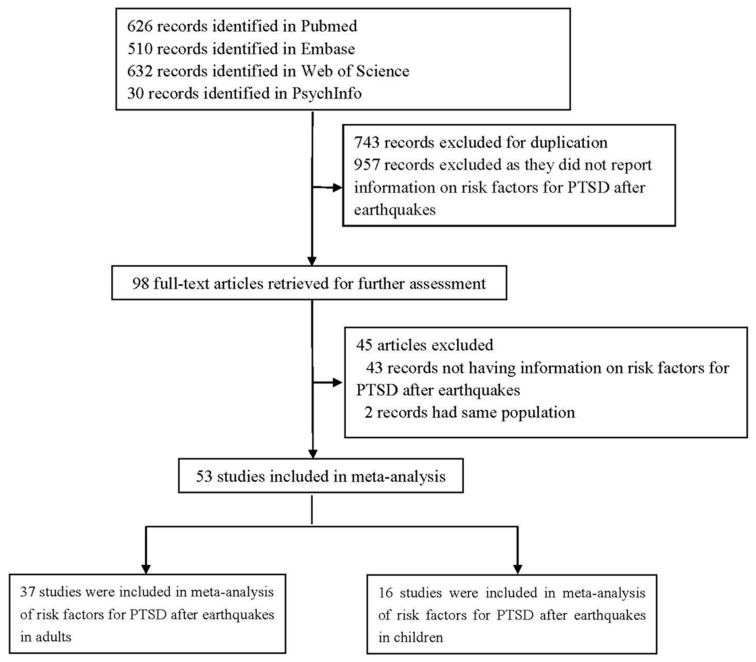
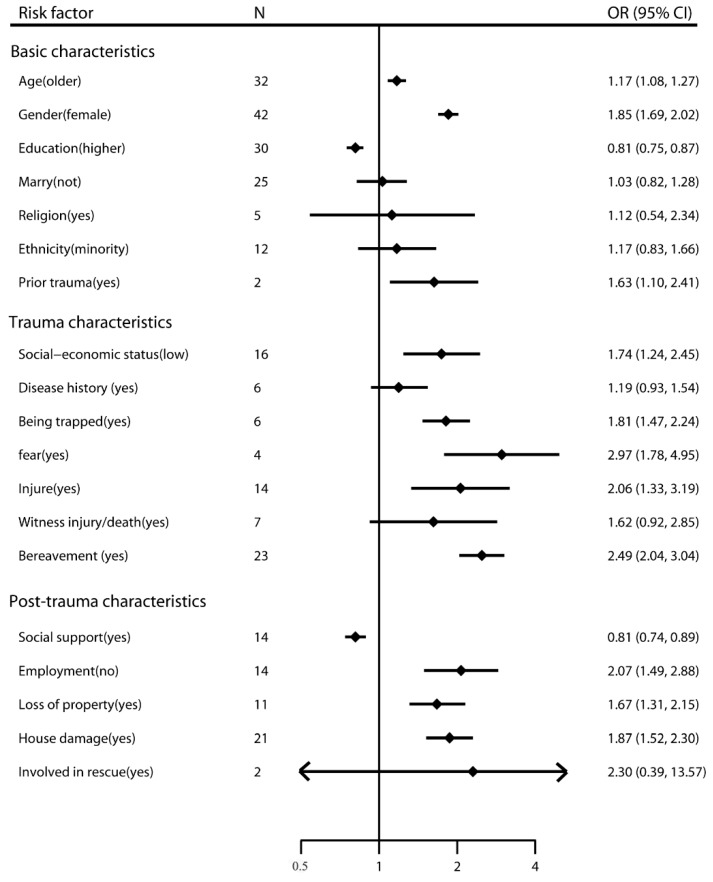
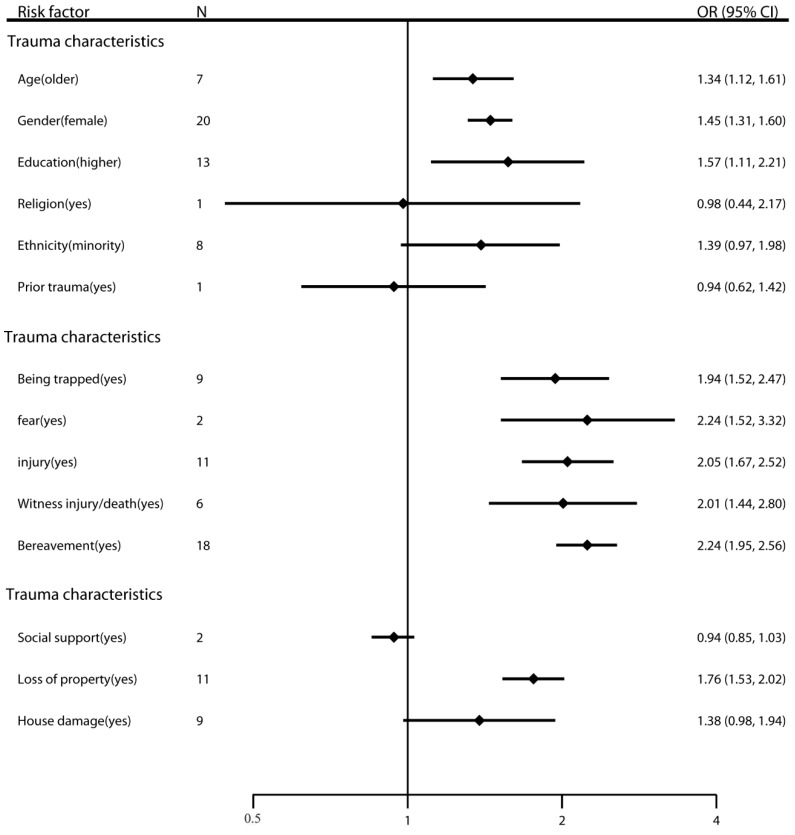
PTSD is considered the most common negative psychological reactions among survivors following an earthquake. The present study sought to find out the determinants of PTSD in earthquake survivors using a systematic meta-analysis. Four electronic databases (PubMed, Embase, Web of Science, and PsycInfo) were used to search for observational studies about PTSD following earthquakes. The literature search, study selection, and data extraction were conducted independently by two authors. 52 articles were included in the study. Summary estimates, subgroup analysis, and publication bias tests were performed on the data. The prevalence of PTSD after earthquakes ranged from 4.10% to 67.07% in adults and from 2.50% to 60.00% in children. For adults, the significant predictors were being female, low education level or socio-economic status, prior trauma; being trapped, experiencing fear, injury, or bereavement during the disaster. For children, the significant predictors were being older age, high education level; being trapped, experiencing fear, injury, or bereavement, witnessing injury/death during the earthquakes. Our study provides implications for the understanding of risk factors for PTSD among earthquake survivors. Post-disaster mental health recovery programs that include early identification, on-going monitoring, and sustained psychosocial support are needed for earthquake survivors.
Overview
The claims and statistics of this paper haven’t been checked yet.
Free: it reads the open-access text and checks the first 5 claims that cite a source we can check. Create a free account to check every claim.
Integrity signals
Registry
Cites
Statistics
Figures
Verification
Claims the paper makes
The claims and statistics of this paper haven’t been checked yet.
Free: it reads the open-access text and checks the first 5 claims that cite a source we can check. Create a free account to check every claim.
Claims other papers make about this one
Each is checked against this paper’s own text: does it say what the citing paper says it does?
The source backs part of the claim, not all of it — or backs it for a different population, condition or comparison.
In the citing paper
“Around the world, earthquake survivors exhibit elevated rates of post-traumatic stress disorder (PTSD), depression, anxiety, and other stress-related symptoms in the months and years following the event (2).”
From Coping strategies and psychological outcomes following the 2023 Kahramanmaraş earthquakes: a systematic review with meta-analytic synthesis (2026) · cites this paper as [2]
Experimental — accuracy not yet measured
Self-check
Percentages, sums and reported differences re-computed from the paper’s own numbers.
The self-check needs the paper’s full text.
Citations
Cites
Diagnostic and Statistical Manual of Mental Disorders
American Psychiatric Association (2013) · doi:10.1176/appi.books.9780890425596 · Cited by 116,369
Measuring inconsistency in meta-analyses
Higgins, J. P. T., Thompson, S. G., Deeks, J. J., & Altman, D. G. (2003) · BMJ · doi:10.1136/bmj.327.7414.557 · Cited by 63,139
Bias in meta-analysis detected by a simple, graphical test
Egger, M., Smith, G. D., Schneider, M., & Minder, C. (1997) · BMJ · doi:10.1136/bmj.315.7109.629 · Cited by 56,722 · cited 1×
“05 were considered statistically publication bias [32].”
Meta-analysis in clinical trials
DerSimonian, R., & Laird, N. (1986) · Controlled Clinical Trials · doi:10.1016/0197-2456(86)90046-2 · Cited by 39,552 · cited 1×
“A random-effects model [30] which assumes that the real potential effect varies among included studies, was used to estimate the pooled RRs with 95% CIs.”
MethodMeta-analysis of risk factors for posttraumatic stress disorder in trauma-exposed adults
Brewin, C. R., Andrews, B., & Valentine, J. D. (2000) · Journal of Consulting and Clinical Psychology · doi:10.1037/0022-006x.68.5.748 · Cited by 5,243 · cited 1×
“These have focused on different kinds of populations such as trauma-exposed adults [21], rescue workers [22], HIV-positive women [23], refugees and internally displaced persons [24], military personnel, and veterans [25].”
BackgroundPredictors of posttraumatic stress disorder and symptoms in adults: a meta-analysis
Ozer, E. J., Best, S. R., Lipsey, T. L., & Weiss, D. S. (2003) · Psychological Bulletin · doi:10.1037/0033-2909.129.1.52 · Cited by 3,322 · cited 1×
“[19] conducted a meta-analysis on seven separate predictors from 68 studies for PTSD among adults.”
MethodPorter, M., & Haslam, N. (2005) · JAMA · doi:10.1001/jama.294.5.602 · Cited by 1,793 · cited 1×
“These have focused on different kinds of populations such as trauma-exposed adults [21], rescue workers [22], HIV-positive women [23], refugees and internally displaced persons [24], military personnel, and veterans [25].”
BackgroundPredictors of posttraumatic stress disorder and symptoms in adults: A meta-analysis.
Ozer, E. J., Best, S. R., Lipsey, T. L., & Weiss, D. S. (2008) · Psychological Trauma: Theory, Research, Practice, and Policy · doi:10.1037/1942-9681.s.1.3 · Cited by 1,247
A meta-analysis of risk factors for post-traumatic stress disorder in children and adolescents
Trickey, D., Siddaway, A. P., Meiser-Stedman, R., Serpell, L., & Field, A. P. (2012) · Clinical Psychology Review · doi:10.1016/j.cpr.2011.12.001 · Cited by 828 · cited 1×
“estimated the population effect sizes of 25 potential risk factors for PTSD in children and adolescents aged 6–18 years across 64 studies (n = 32,238) [20].”
BackgroundBerger, W., Coutinho, E. S. F., Figueira, I., Marques-Portella, C., Luz, M. P., Neylan, T. C., Marmar, C. R., & Mendlowicz, M. V. (2012) · Social Psychiatry and Psychiatric Epidemiology · doi:10.1007/s00127-011-0408-2 · Cited by 712 · cited 1×
“These have focused on different kinds of populations such as trauma-exposed adults [21], rescue workers [22], HIV-positive women [23], refugees and internally displaced persons [24], military personnel, and veterans [25].”
Background
Research works printed but not linked: 2
- Celiac Disease Evidence Reports/Technology Assessments NAD Available online: http://www.ncbi.nlm.nih.gov/books/NBK35156 (accessed on 18 July 2016)
- Wells G.A. Shea B.J. O’Connell D. Peterson J.E. Welch V. Losos M. Tugwell P. The Newcastle–Ottawa Scale (NOS) for Assessing the Quality of Non-Randomized Studies in Meta-Analysis Appl. Eng. Agric. 2014 18 727 734
Cited by
Items 101–200 of 327
Zhang, Y., Hales, B. F., & Robaire, B. (2025) · Archives of Toxicology · doi:10.1007/s00204-025-03969-6 · Cited by 16
Purgato, M., Tedeschi, F., Turrini, G., Acartürk, C., Anttila, M., Augustinavicious, J., Baumgartner, J. S., Bryant, R. A., Churchill, R. C., İlkkurşun, Z., et al. (2022) · European Journal of Psychotraumatology · doi:10.1080/20008066.2022.2128270 · Cited by 13
“…higher level of symptoms, that is in line with the hypothesis that awareness and full understanding of the trauma might worsen psychological status (Tang et al., 2017), and with the hypothesis that people with a higher education level are more likely to suffer from role loss in the country of…”
BackgroundChen, Y., Lam, C. S., Deng, H., & Ko, K. Y. (2021) · Frontiers in Psychiatry · doi:10.3389/fpsyt.2021.691765 · Cited by 15
“Objective trauma characteristics, such as the degree of exposure (in terms of distance from the seismic epicenter), burial and injury, witnessing death, and the loss of family members, are also related to the severity of PTSD (13, 14).”
BackgroundMoral Injury in Former Child Soldiers in Liberia
Wong, P. (2021) · Journal of Child & Adolescent Trauma · doi:10.1007/s40653-021-00414-5 · Cited by 15
Vogt, A. J., Bartels, L., Grotzer, M., Bodenmann, G., Leibundgut, K., Rössler, J., & Landolt, M. A. (2024) · Journal of Pediatric Psychology · doi:10.1093/jpepsy/jsae077 · Cited by 12
İme, Y., Hoşoğlu, R., & Arslan, N. (2025) · Psychiatric Quarterly · doi:10.1007/s11126-025-10113-1 · Cited by 13
“Research indicates that the intensity of fear felt during an earthquake is a strong predictor of PTSD symptoms in survivors, as it is closely related to the perceived threat to life and property [35, 42].”
Abdelrahman, R. M., & Ismail, M. E. (2022) · Heliyon · doi:10.1016/j.heliyon.2022.e09422 · Cited by 12
Šagud, M., Janović, M. B., Ćusa, Z. V., Jakšić, N., Krakan, L. B., Begić, D., Grubišin, J., Janović, Š., Jevtović, S., Rajačić, B. K., et al. (2023) · BMC Psychiatry · doi:10.1186/s12888-023-05302-w · Cited by 15
“The majority of studies addressed the prevalence of earthquake-related psychiatric disorders in the exposed population [16].”
BackgroundYılmaz, Y., Güleç, S., & Sarıçam, H. (2024) · Anxiety Stress & Coping · doi:10.1080/10615806.2024.2376611 · Cited by 14
“Earthquakes represent a significant natural disaster that can result in posttraumatic stress disorder (PTSD) (Liang et al., 2019; Tang et al., 2017).”
InfluentialFadila, D. E. S., Ibrahim, F. M., & El‐Gilany, A. (2021) · Geriatric Nursing · doi:10.1016/j.gerinurse.2021.06.008 · Cited by 15
Chaby, L. E., Lasseter, H. C., Contrepois, K., Salek, R. M., Turck, C. W., Thompson, A., Vaughan, T. E., Haas, M., & Jeromin, A. (2021) · Metabolites · doi:10.3390/metabo11090609 · Cited by 12
Karataş, Z., & Tüccar, E. (2024) · Spiritual Psychology and Counseling · doi:10.37898/spiritualpc.1393636 · Cited by 11
Sarman, A., & Tuncay, S. (2024) · Turkish Journal of Family Medicine & Primary Care · doi:10.21763/tjfmpc.1340469 · Cited by 17
2023 depremleri ve uzaktan eğitimin yükseköğretim öğrencilerinin psikolojik durumlarına etkisi
Koçer, A., & Koçak, O. (2024) · Açıköğretim Uygulamaları ve Araştırmaları Dergisi · doi:10.51948/auad.1324641 · Cited by 11
Sekoni, O. O., Mall, S., & Christofides, N. J. (2021) · BMC Public Health · doi:10.1186/s12889-021-11508-y · Cited by 17
“Individuals with higher education levels are less likely to experience PTSD [26, 27].”
BackgroundKaya, E., Inal Onal, E., Fatih, S., & Güler, O. (2024) · International Journal of Disaster Risk Reduction · doi:10.1016/j.ijdrr.2024.104976 · Cited by 10
Gauthier, G. M., Pandey, S., Sánchez, V., Stromberg, S., & Zoellner, L. A. (2025) · Clinical Psychology Review · doi:10.1016/j.cpr.2025.102662 · Cited by 11
Nobakht, H. N., Ojagh, F. S., & Dale, K. Y. (2021) · Journal of Trauma & Dissociation · doi:10.1080/15299732.2020.1869640 · Cited by 14
“© 2021 Taylor & Francis et al., 2011; Tang et al., 2017).”
Sherman, A. C., Park, C. L., Salsman, J. M., Williams, M. L., Amick, B. C., Hudson, T. J., Messias, E., & Simonton-Atchley, S. (2021) · Journal of Affective Disorders · doi:10.1016/j.jad.2021.06.045 · Cited by 10
Pike, A., Mikolas, C., Tompkins, K., Olson, J., Olson, D. M., & Brémault‐Phillips, S. (2022) · Frontiers in Public Health · doi:10.3389/fpubh.2022.725256 · Cited by 16
Tanrikulu, A. B. (2024) · Dusunen Adam: The Journal of Psychiatry and Neurological Sciences · doi:10.14744/dajpns.2024.00245 · Cited by 10
Uyar, B., SALMAN, B. C., AYDAR, S., BATIHAN, G., SAVĞA, K., Balikci, B., BARAN, H., Inan, E., ARSLAN, A., Güneş, M., et al. (2023) · Turkish Journal of Clinics and Laboratory · doi:10.18663/tjcl.1384085 · Cited by 9
Personal Growth Initiative, Resilience and Psychological Wellbeing in Young Adults of Pakistan
Asif, A., Yasin, H., & Iqrar, L. (2024) · Journal of Asian Development Studies · doi:10.62345/jads.2024.13.1.35 · Cited by 9
Gareayaghi, A., Tatlıdil, E., Şişman, E., & Polat, A. (2025) · Medicina · doi:10.3390/medicina61061097 · Cited by 10
“Meta-analyses focusing on post-earthquake mental health consistently identify prior trauma as a strong risk factor for PTSD [22].”
InfluentialSimske, N. M., Joseph, N. M., Rascoe, A., Kalina, M., Simpson, M., Hendrickson, S. B., & Vallier, H. A. (2021) · Journal of the American Academy of Orthopaedic Surgeons · doi:10.5435/jaaos-d-20-01438 · Cited by 10
Mitchell, H., Antoni, M. H., Shaffer, K. M., & Kim, Y. (2023) · Psycho-Oncology · doi:10.1002/pon.6227 · Cited by 8
“We tested the extent to which risk factors with robust evidence as predictors of non ‐ medical PTSS/D [sociodemographic (i.e., age, gender, SES) and psychosocial (i.e., neurotic personality, social support)] 7,8,13 extend to cancer ‐ related PTSS.”
BackgroundLiu, X., Tang, B., Zhao, F., Xue, C., Dong, J., & Zhang, L. (2020) · Psychology Health & Medicine · doi:10.1080/13548506.2020.1738020 · Cited by 8
Self-citationAdapting the protocol for narrative exposure therapy for adults with mild intellectual disabilities
Marlow, K., Schröder, T., Tickle, A., & Renton, J. (2022) · British Journal of Learning Disabilities · doi:10.1111/bld.12479 · Cited by 8
Kwon, H.-J., Leem, J., Kim, D.-W., Kwon, C., & Kim, S.-H. (2023) · PLoS ONE · doi:10.1371/journal.pone.0281207 · Cited by 8
Çağlar, A. (2025) · Psychiatric Quarterly · doi:10.1007/s11126-025-10118-w · Cited by 7
“On the other hand, Tang [34] reported that the prevalence of post-earthquake PTSD ranged between 4.10% and 67.07% in adults.”
InfluentialHarigane, M., Nakajima, S., Takebayashi, Y., Maeda, M., Nakano, H., Yasumura, S., Yabe, H., Ohira, T., Kamiya, K., & Mental Health Group of the Fukushima Health Management Survey* (2022) · Journal of Traumatic Stress · doi:10.1002/jts.22893 · Cited by 7
Türkiye'de Krizler, Afetler ve Çocuk
Erbil, F. (2023) · Istanbul Bilgi University · doi:10.47613/reflektif.2023.110 · Cited by 10
GÜNGÖR, M. (2023) · Adıyaman üniversitesi sosyal bilimler enstitüsü dergisi/Adıyaman üniversitesi sosyal bilimler enstitisü dergisi · doi:10.14520/adyusbd.1339156 · Cited by 8
Examining Predictors of Post-Traumatic Changes Among Mothers in Turkey Following Earthquakes
Yıldız, G. K., & Türk, R. (2024) · Disaster Medicine and Public Health Preparedness · doi:10.1017/dmp.2024.275 · Cited by 7
Tatu, M. K., & Varlık, E. (2025) · International Journal of Disaster Risk Reduction · doi:10.1016/j.ijdrr.2025.105480 · Cited by 9
Faulkner, J. W., Snell, D. L., Theadom, A., de Terte, I., & Low, R. S. T. (2023) · Journal of Clinical and Experimental Neuropsychology · doi:10.1080/13803395.2023.2227401 · Cited by 7
“Previous studies in the general population have shown that educational history is associated with inferior mental health outcomes and is a risk factor for the development of PTSS (Brewin et al., 2000; Tang et al., 2017).”
BackgroundTekin, A. Y. (2024) · Frontiers in Psychology · doi:10.3389/fpsyg.2024.1468655 · Cited by 9
Yanardağ, R., TOPER, F., & Yağar, F. (2025) · Sosyoekonomi · doi:10.17233/sosyoekonomi.2025.01.25 · Cited by 9
Sugiyama, C., Koseki, S., Niikawa, Y., Ito, D., Takahashi, F., & Ishikawa, R. (2021) · Frontiers in Psychology · doi:10.3389/fpsyg.2021.687906 · Cited by 9
PTSD During Childhood, Childhood Trauma, Childhood Maltreatment and How They Relate to Adult PTSD
Moser, D. A., Suardi, F., & Schechter, D. S. (2020) · Springer eBooks · doi:10.1007/978-3-030-49414-8_11 · Cited by 8
Çınaroğlu, M. (2025) · Frontiers in Psychology · doi:10.3389/fpsyg.2025.1696103 · Cited by 7
Bakay, H., Işık, B., Gıca, Ş., & Ak, M. (2025) · Psychiatric Quarterly · doi:10.1007/s11126-025-10178-y · Cited by 6
“There are reports of prevalence rates ranging from 4.10 to 67.07% in adults after earthquakes [10].”
InfluentialParajuli, B., Acharya, K., Groves, C. C., Dhakal, R., Shrestha, J., Shrestha, R., & Manandhar, M. (2023) · Spinal Cord Series and Cases · doi:10.1038/s41394-023-00566-6 · Cited by 6
Peng, Y., Lu, B., & Wen, J. (2023) · Journal of Evidence-Based Medicine · doi:10.1111/jebm.12557 · Cited by 7
Özmen, S., Gül, M. K., Sertkaya, B., & Demirci, E. (2024) · Çocuk ve Gençlik Ruh Sağlığı Dergisi / Turkish Journal of Child and Adolescent Mental Health · doi:10.4274/tjcamh.galenos.2024.58561 · Cited by 7
Patel, S. S., Robb, K., Pluff, C., Maldonado, E., Tatar, G., & Williams, T. (2021) · Journal of Applied Research on Children Informing Policy for Children at Risk · doi:10.58464/2155-5834.1457 · Cited by 8
Losada-Otálora, M., Peña-García, N., & Juliao-Rossi, J. L. (2023) · International Journal of Bank Marketing · doi:10.1108/ijbm-11-2022-0496 · Cited by 6
Rachma, H., & Febrianti, T. (2021) · Jurnal Kesehatan · doi:10.26630/jk.v12i2.2148 · Cited by 6
Awa, T. M., Ugbe, U. M.-J., Onwusaka, O., Abua, E. E., & Esu, E. (2024) · BMJ Open · doi:10.1136/bmjopen-2023-078851 · Cited by 8
“This contradicts a finding by Tang et al 34 which found that Individuals with higher education levels were less likely to experience/develop PTSD. Low socioeconomic status generally plays a major role in the development and persistence of PTSD symptoms.”
ResultKocakaya, R., Koç, Ş., Türkmen, A. S., & Çakıcı, A. B. (2024) · Current Psychology · doi:10.1007/s12144-024-06600-6 · Cited by 6
“Several studies in the literature indicate that trauma history affects trauma - tization (Lai et al., 2004; Tang et al., 2017).”
InfluentialCoeur, E., Giaufer, C., Robert, P. H., & Corveleyn, X. (2025) · Journal of Affective Disorders · doi:10.1016/j.jad.2025.120484 · Cited by 5
Akay, G., Koç, E. S., & Oğuzhan, H. (2026) · Journal of Child & Adolescent Trauma · doi:10.1007/s40653-026-00822-5 · Cited by 5
“This finding aligns with prior studies indicating that females tend to experience higher stress reactions and lower QoL after earthquakes (Zhou et al., 2020 ; Tang et al., 2017; Yılmaz et al., 2024; Chou et al., 2004, b; Liang et al., 2013; Tian et al., 2013 ).”
Kong, L., Shen, Y. L., Chen, Y. L., Chen, X., Su, G., Wang, J., Xiao, G. B., Guo, Q., Zhang, J. C., Fang, D. Z., et al. (2021) · Clinical and Experimental Hypertension · doi:10.1080/10641963.2021.2018598 · Cited by 6
Zhang, J. C., Wang, J., Liu, J. Y., Guo, Q., Lin, J., Shen, Y. L., Jia, K. X., Cai, J. J., Su, G., & Fang, D. Z. (2023) · Psychiatry Investigation · doi:10.30773/pi.2023.0089 · Cited by 5
Çoban, S. A., & Koşar, Y. G. (2024) · Journal of Religion Spirituality & Aging · doi:10.1080/15528030.2024.2437792 · Cited by 5
“A meta-analysis assessing the psychosocial outcomes of natural disasters in Southeast Asia found that PTSD symptoms in children and adults ranged widely from 8.6% to 57.3% (Tang et al., 2017).”
InfluentialTemeltürk, R. D., Uytun, M. Ç., Yürümez, E., Zengin, N. D., Buyukkal, U., & Öztop, D. B. (2025) · Cambridge Prisms Global Mental Health · doi:10.1017/gmh.2025.13 · Cited by 8
“According to our regression analysis, child age was also found to be a predictor of PTSD, in line with a prior meta-analysis (Tang et al., 2017).”
Richardson, T. H., Ferrie, O., Smith, D. M., Ellis-Nee, C., Smart, T., Gray, E., Roberts, N. P., Delgadillo, J., & Simmons‐Dauvin, M. (2025) · The Cognitive Behaviour Therapist · doi:10.1017/s1754470x25000029 · Cited by 5
“…risk of developing PTSD. Systematic reviews have concluded that low income and financial difficulties predict development of PTSD in trauma patients (Visser et al ., 2017), and that lower socio-economic status predicts the development of PTSD in adults following earthquakes (Tang et al ., 2017).”
InfluentialPost-Traumatic Stress Disorder in Earthquake Victims in the Disaster of the Century
Gül, E., & Aktürk, Ü. (2025) · Journal of Social Service Research · doi:10.1080/01488376.2025.2492665 · Cited by 5
“A previous meta-analysis study found that the prevalence of PTSD in adults ranged from 4.10% to 67.07% (Tang et al., 2017).”
InfluentialGonzalez, R. N., Regmi, P., Aryal, N., & Akudjedu, T. N. (2021) · Journal of Manmohan Memorial Institute of Health Sciences · doi:10.3126/jmmihs.v7i1.43155 · Cited by 6
The Incidence of Posttraumatic Stress Symptoms in Children
May, C. J., Miller, P. E., Naqvi, M., Rademacher, E. S., Klajn, J., Hedequist, D., & Shore, B. J. (2023) · JAAOS Global Research and Reviews · doi:10.5435/jaaosglobal-d-22-00245 · Cited by 6
Tamir, T. T., Kassa, S. F., & Gebeyehu, D. A. (2022) · BMC Psychiatry · doi:10.1186/s12888-022-03930-2 · Cited by 5
“Females are thought to be more sensitive to stress hormones and threats, with a lower likelihood of using effective coping strategies and a higher likelihood of negatively interpreting disasters than males, making them more prone to developing PTSD [41].”
BackgroundBataineh, M. F., Mohamad, M. N., Dhaheri, A. S. A., Rawashdeh, M., Al‐Nawaiseh, A. M., Asali, F., Hashim, M. S., Jarrar, A. H., Jamous, D. O. A., Stojanovska, L., et al. (2022) · Women s Health · doi:10.1177/17455057221112935 · Cited by 5
Overview of Post Traumatic Stress Disorder (PTSD) Symptoms of Post-Road Traffic Accident Patients
Bahris, S., Sangkala, M. S., & Seniwati, T. (2020) · Indonesian Contemporary Nursing Journal (ICON Journal) · doi:10.20956/icon.v5i1.9422 · Cited by 5
Sancaktar, S. İ., & Sahin, G. E. (2025) · Disaster Medicine and Public Health Preparedness · doi:10.1017/dmp.2025.118 · Cited by 5
Şimşek, G. G., Tekeli, F. N., Parim, C., Özkan, B., Özkan, E., Karadağ, T., & Satıcı, S. A. (2025) · Acta Psychologica · doi:10.1016/j.actpsy.2025.105285 · Cited by 5
Derman, M. T., & Türen, Ş. (2025) · Frontiers in Public Health · doi:10.3389/fpubh.2025.1555125 · Cited by 4
Delgadillo, J., & Richardson, T. H. (2025) · European Journal of Psychotraumatology · doi:10.1080/20008066.2025.2547549 · Cited by 5
“…previous research in England demonstrating that more deprived areas have a greater need for psychological therapies for depression and anxiety (Delgadillo et al., 2016) and epidemiological research showing that lower socioeconomic status increases the risk of developing PTSD (Tang et al., 2017).”
Çimen, F., & Seçer, İ. (2025) · European Journal of Psychotraumatology · doi:10.1080/20008066.2025.2590402 · Cited by 4
“Exposure to natural disasters, as one form of traumatic experience, can have profound effects on children and adolescents, often resulting in the development of trauma-related symptoms (Hiller et al., 2016; Lai et al., 2013; Rubens et al., 2018; Tang et al., 2017).”
Dagher, D., Malaeb, D. N., Dabbous, M., Sakr, F., Khatib, S. E., Hallit, R. R., Fekih‐Romdhane, F., Obeïd, S., & Hallit, S. R. (2024) · International Journal of Environmental Health Research · doi:10.1080/09603123.2024.2373997 · Cited by 4
“Although considerable studies have examined the link between earthquakes or trauma exposure and PTSD (Zhang et al. 2012; Tang et al. 2017; Pistoia et al. 2018), or insomnia and PTSD (Ahmadi et al. 2022; Slavish et al. 2023), little is known about the role of resilience in this relationship.”
Kaya, E., Önal, E. İ., Fatih, S., & Güler, O. (2025) · Sociological Spectrum · doi:10.1080/02732173.2025.2484218 · Cited by 5
“A number of research, including meta-analyses and systematic reviews, have suggested that being a girl is a predictor of PTSD (Jin et al. 2019; Rezayat et al. 2020; Tang et al. 2017).”
InfluentialWang, P., Peng, Z., Liu, L., Li, A., Liu, Y., Cao, Q., Sun, L., Ji, N., Chen, Y., Yang, B., et al. (2021) · Brain and Behavior · doi:10.1002/brb3.2173 · Cited by 4
“(W. Tang et al., 2017) The data from an adult study were similar to those for youths, and these data showed that PTSD was sustained for several years in approximately one-third of PTSD patients.”
ResultPoyraz, B. Ç., Poyraz, C. A., Turan, Ş., Demirel, Ö. F., Kavla, Y., Bulu, E., Aydın, İ. H., & Ersungur, E. B. (2022) · Neuropsychiatric Investigation · doi:10.5152/neuropsychiatricinvest.2021.08-30 · Cited by 5
Resilience and Religious Coping in Libyan Survivors of Hurricane Daniele
Ali, M., Altaeb, H., & Abdelrahman, R. M. (2024) · Clinical Psychology & Psychotherapy · doi:10.1002/cpp.70010 · Cited by 5
Çolak, M., & Şireli, Ö. (2025) · Journal of Affective Disorders · doi:10.1016/j.jad.2025.03.042 · Cited by 5
Yılmaz, Y., & Bahadır, E. (2025) · Cumhuriyet Tıp Dergisi/Cumhuriyet Üniversitesi Tıp Fakültesi dergisi · doi:10.7197/cmj.1646980 · Cited by 6
Sociodemographic Factors in Combat Compensation Seekers for Delayed-Onset PTSD
Peraica, T., Petrović, Z. K., Blažev, M., Blažev, D., & Kozarić‐Kovačić, D. (2021) · Military Medicine · doi:10.1093/milmed/usab273 · Cited by 4
Pengaruh Visual Art Therapy dalam Menurunkan Post Traumatic Stress Disorder pada Mahasiswa
Hidayati, F. U., & Ahyani, L. N. (2023) · Jurnal Psikologi Perseptual · doi:10.24176/perseptual.v8i1.10334 · Cited by 11
d’Arqom, A., Akram, M., Azzahranisa, N. S., Nasution, M. Z., Surjaningrum, E. R., & Yusof, J. (2023) · Future Science OA · doi:10.2144/fsoa-2023-0104 · Cited by 5
“Interestingly, consuming micronutrients post-disaster including earthquakes, floods and massacres showed that micronutrient supplements reduced the risk of PTSD from 75 to 15% [53] .”
InfluentialMultilayer analysis of dynamic network reconfiguration in pediatric posttraumatic stress disorder
Suo, X., Lan, H., Zuo, C., Chen, L., Qin, K., Li, L., Kemp, G. J., Wang, S., & Gong, Q. (2023) · Cerebral Cortex · doi:10.1093/cercor/bhad436 · Cited by 4
Peker, A., & Cengiz, S. (2025) · Acta Psychologica · doi:10.1016/j.actpsy.2025.105159 · Cited by 3
Yaralı, S., Cengiz, M., & Kılıç, D. (2025) · Psychology Health & Medicine · doi:10.1080/13548506.2025.2552963 · Cited by 3
“A form prepared by the researcher in line with the literature (Alfuqaha et al., 2023; Tang et al., 2017) was used to evaluate university students within the scope of the study.”
Population-level effects of Hurricane Sandy on adolescent health
Lai, B. S., Riobueno‐Naylor, A., Baum, C., & Hawkins, S. S. (2024) · Journal of Affective Disorders · doi:10.1016/j.jad.2024.08.108 · Cited by 3
Unraveling Youth Trauma and Parental Influence After Twin Earthquakes
Giannakopoulos, G., Zaravinos-Tsakos, F., Farmakopoulou, I., van Pelt, B. J., Maras, A., & Kolaitis, G. A. (2025) · Healthcare · doi:10.3390/healthcare13111249 · Cited by 4
“In the wake of an earthquake, young survivors frequently exhibit posttraumatic stress symptoms (PTSS) and may develop full-blown posttraumatic stress disorder (PTSD), with prevalence rates reported to range from 2.5% to 60% in various studies [3].”
InfluentialFourgassie, L., Rodríguez-Pérez, M. D. C., Fuentes, M. E., Zwirner, E., Borbon, A., Colomb, A., Pérez-Torrado, F.-J., Jessop, D. E., Moune, S., Paris, R., et al. (2025) · International Journal of Disaster Risk Reduction · doi:10.1016/j.ijdrr.2025.105680 · Cited by 3
Wahyuni, S. I., Murni, A. W., Indra, B., Liza, R. G., Koerniati, I., & Sauma, E. (2023) · Jurnal Penyakit Dalam Indonesia · doi:10.7454/jpdi.v10i1.1032 · Cited by 5
Prolonged Unmet Mental Health Needs of the 2017 Pohang Earthquake Survivors
Joe, S., Lee, J. S., Klaus, F., Ng, H. X., Eyler, L. T., & Lee, Y. (2023) · Psychiatry Investigation · doi:10.30773/pi.2022.0332 · Cited by 3
Social Service Practices In Disaster: 6 February Earthquake Hatay Case
Duruel, M. (2023) · OPUS Toplum Araştırmaları Dergisi · doi:10.26466/opusjsr.1385721 · Cited by 3
Kuşlu, S., & Çelikkanat, Ş. (2024) · Disaster Medicine and Public Health Preparedness · doi:10.1017/dmp.2024.163 · Cited by 3
Group Work for Earthquake Survivors: A Randomized Controlled Trial Transforming Crisis into Hope
Özmete, E., Serpen, A. S., Gök, F. A., Özdemir, E. A., KALAYCI, E., & Duru, S. (2025) · Research on Social Work Practice · doi:10.1177/10497315251325253 · Cited by 4
“Post-traumatic stress disorder (PTSD) prevalence rates after earthquakes have been shown to range from 4.1% to 67.07% (Tang et al., 2017).”
InfluentialArslan, S. C. (2025) · Cureus · doi:10.7759/cureus.79393 · Cited by 2
“This finding aligns with the well-documented psychological ramifications of earthquakes on children, as well as the established correlation between earthquakes and an increased risk of psychiatric disorders, both new cases and exacerbation of existing conditions [7, 9, 10].”
Ngwenyama, P. L., & Webber-Youngman, R. C. W. (2025) · Safety in Extreme Environments · doi:10.1007/s42797-025-00126-1 · Cited by 2
“Another major earth-quake occurred in Lushan in 2013, resulting in 200 deaths and more than 12,000 injuries (Duan et al. 2022; Tang et al. 2017).”
Khasanah, U., Dewi, Y. L. R., Suwarto, S., & Padmaningrum, D. (2025) · Journal of Education and Health Promotion · doi:10.4103/jehp.jehp_1895_24 · Cited by 2
Challenges and Lessons Learned From Short-Term Medical Service Trips in Global Communities
Huang, C.-C., Torres, V. N., & Jacob, E. (2020) · The Journal for Nurse Practitioners · doi:10.1016/j.nurpra.2020.06.016 · Cited by 2
Kamış, G. Z., Bolu, G., & Şahin, E. K. (2024) · Ankara Medical Journal · doi:10.5505/amj.2024.61447 · Cited by 2
Assessment of Post-Traumatic Stress Disorder in Survivors of the Al Haouz Earthquake
Amara, Y., Hanine, I., Salim, J., Gartoum, M., Mouhadi, K., & Kadiri, M. (2024) · SAS Journal of Medicine · doi:10.36347/sasjm.2024.v10i09.028 · Cited by 2
Deprem Olgusunu Psikoloji Bağlamında Ele Alan Lisansüstü Tezlerin Bibliyometrik ve Tematik Analizi
Dursun, A. (2024) · Afet ve Risk Dergisi · doi:10.35341/afet.1385369 · Cited by 2
Posttraumatic Growth and Psychological Resilience in Young Adults Exposed to an Earthquake
Şanlı, M. E., & Kerkez, M. (2024) · Balıkesır Health Sciences Journal · doi:10.53424/balikesirsbd.1484874 · Cited by 3
Melkam, M., Takelle, G. M., Kibralew, G., & Nakie, G. (2025) · Frontiers in Public Health · doi:10.3389/fpubh.2025.1386566 · Cited by 4
Suzuki, R. R., Hasche, L. K., Srinivas, T., Gagnon, K. L., & DePrince, A. P. (2025) · Journal of Traumatic Stress · doi:10.1002/jts.23156 · Cited by 2
“Low social support is a clear risk factor for PTSS among adults (Brewin et al., 2000; Ozer et al., 2003; Tang et al., 2017).”
Lök, N., Bademli, K., Uzun, G., & Tosun, A. S. (2025) · Current Psychology · doi:10.1007/s12144-025-08217-9 · Cited by 2
“…marital status, employment status, perceived income level, house destruction status in the earthquake, and loss of a relative in the earthquake), created by the researchers based on literature (Wu et al., 2014; Tang et al., 2017; Boztas et al., 2019;; Rafiey et al., 2019; Bilge et al., 2024).”
Influential
Metadata
- Authors
- Tang, B., Deng, Q., Glik, D., Dong, J., & Zhang, L.
- Affiliations
- Second Military Medical University (CN)
- University of California, Los Angeles (US)
- Corresponding author
- Zhang, Lulu
- Venue
- International Journal of Environmental Research and Public Health
- Publisher
- MDPI AG
- Published
- 2017-12-08
- Volume
- 14
- Issue
- 12
- Pages
- 1537
- ISSN
- 1660-4601 (ISSN-L)
- PMC
- PMC5750955
- OpenAlex
- W2772695515
- Cited by
- 299
- References
- 75
- Citations by year
- 2026: 43 · 2025: 72 · 2024: 39 · 2023: 32 · 2022: 25 · 2021: 45 · 2020: 27 · 2019: 10 · 2018: 6
- FWCI
- 1.80
- Type
- journal article
- Language
- en
- Open access
- gold
- doi.org
- Licence
- Locations
- International Journal of Environmental Research and Public Health (publishedVersion, cc-by)
- PubMed Central (publishedVersion, cc-by)
- PubMed (publishedVersion)
- RePEc: Research Papers in Economics (submittedVersion)
- DOAJ (DOAJ: Directory of Open Access Journals) (submittedVersion)
- eScholarship (California Digital Library) (submittedVersion)
- eScholarship (California Digital Library) (submittedVersion, cc-by)
- Funders
- National Natural Science Foundation of China (71573270, 71303249, 91224005, 71774167)
- Topics
- Social Sciences › Psychology › Clinical Psychology › Posttraumatic Stress Disorder Research
- Health Sciences › Health Professions › Emergency Medical Services › Disaster Response and Management
- Social Sciences › Psychology › Clinical Psychology › Migration, Health and Trauma
- Keywords
- post-traumatic stress disorder, earthquake survivors, risk factors, children, adults, disaster mental health, PTSD prevalence, gender differences, socioeconomic status, prior trauma, bereavement, psychosocial support
- MeSH terms
- Adult, Bereavement, Child, Fear, Female, Grief, Humans, Male, Risk Factors, Social Class, Socioeconomic Factors, Stress Disorders, Post-Traumatic, Prevalence, Survivors, Risk Assessment, Earthquakes
About these checks
Registry, retraction, Cites and statistics results are computed, not judged, with one exception: a printed reference that no index lists is read once by a model before it counts as a citation error. Claims are extracted by a model and kept only when their quote appears verbatim in the text; each cited source is then checked, with a model’s help, for whether it says what the claim relies on. Those verdicts can be wrong — read the claim’s quote and the cited source before relying on one.
Statistics and arithmetic are recomputed, not judged.
Confidence bands are shown only for fields calibrated on our annotated test set. None is calibrated yet, so no band is shown.
What counts as a claim ›How we measure confidence ›How we check this ›
Are you an author, or do you see a problem with this page? Request a review
Data sources
Bibliographic data: Semantic Scholar, OpenAlex, Crossref.
Contains information from the Semantic Scholar Academic Graph Datasets, made available under the ODC Attribution License (ODC-BY 1.0).
Semantic Scholar’s data is described in: Kinney, R., et al. (2023). The Semantic Scholar Open Data Platform. arXiv:2301.10140.
