

A Meta-Analysis of Risk Factors for Post-Traumatic Stress Disorder (PTSD) in Adults and Children after Earthquakes
Open accessThe DOI matches its Crossref record, with a small difference in title or year; 75 of the 75 references it cites were found in a registry or an index.
Abstract
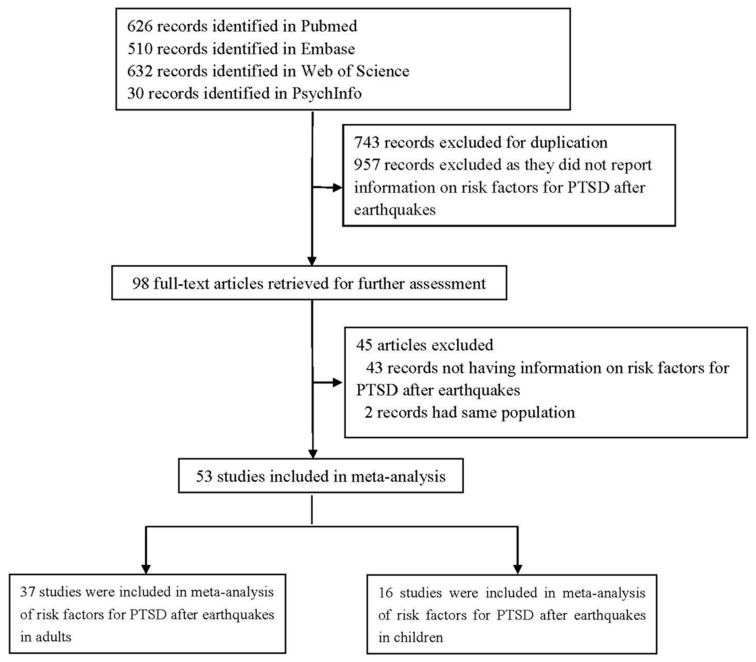
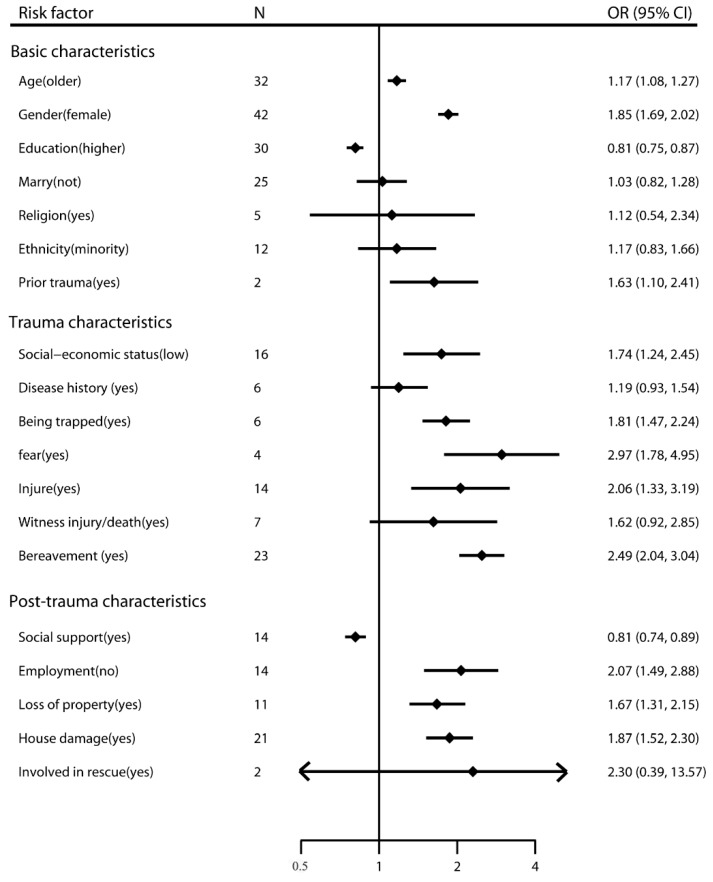
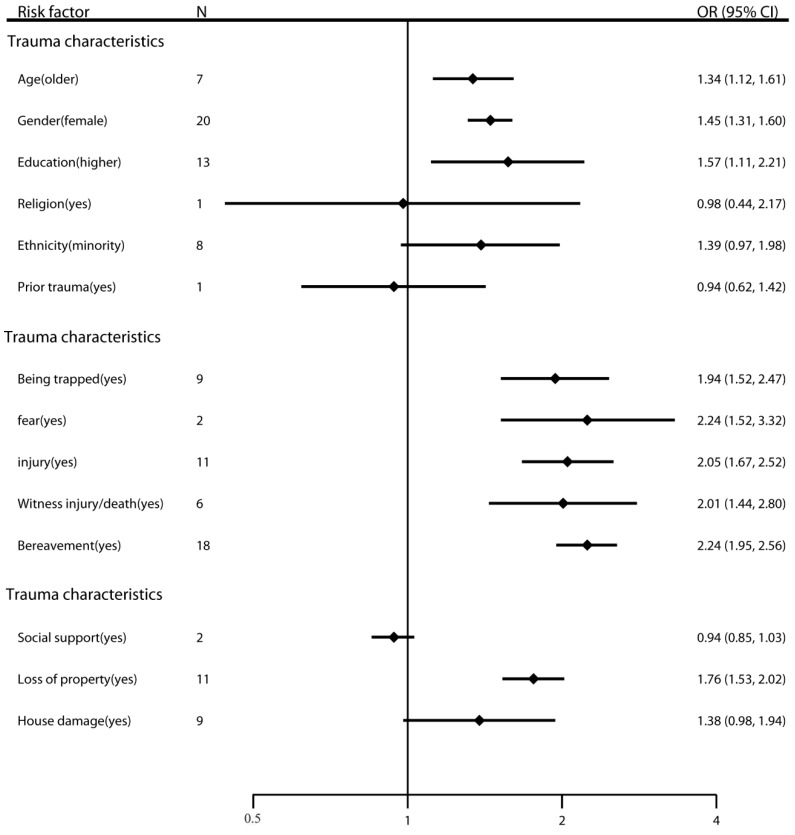
PTSD is considered the most common negative psychological reactions among survivors following an earthquake. The present study sought to find out the determinants of PTSD in earthquake survivors using a systematic meta-analysis. Four electronic databases (PubMed, Embase, Web of Science, and PsycInfo) were used to search for observational studies about PTSD following earthquakes. The literature search, study selection, and data extraction were conducted independently by two authors. 52 articles were included in the study. Summary estimates, subgroup analysis, and publication bias tests were performed on the data. The prevalence of PTSD after earthquakes ranged from 4.10% to 67.07% in adults and from 2.50% to 60.00% in children. For adults, the significant predictors were being female, low education level or socio-economic status, prior trauma; being trapped, experiencing fear, injury, or bereavement during the disaster. For children, the significant predictors were being older age, high education level; being trapped, experiencing fear, injury, or bereavement, witnessing injury/death during the earthquakes. Our study provides implications for the understanding of risk factors for PTSD among earthquake survivors. Post-disaster mental health recovery programs that include early identification, on-going monitoring, and sustained psychosocial support are needed for earthquake survivors.
Overview
The claims and statistics of this paper haven’t been checked yet.
Free: it reads the open-access text and checks the first 5 claims that cite a source we can check. Create a free account to check every claim.
Integrity signals
Registry
Cites
Statistics
Figures
Verification
Claims the paper makes
The claims and statistics of this paper haven’t been checked yet.
Free: it reads the open-access text and checks the first 5 claims that cite a source we can check. Create a free account to check every claim.
Claims other papers make about this one
Each is checked against this paper’s own text: does it say what the citing paper says it does?
The source backs part of the claim, not all of it — or backs it for a different population, condition or comparison.
In the citing paper
“Around the world, earthquake survivors exhibit elevated rates of post-traumatic stress disorder (PTSD), depression, anxiety, and other stress-related symptoms in the months and years following the event (2).”
From Coping strategies and psychological outcomes following the 2023 Kahramanmaraş earthquakes: a systematic review with meta-analytic synthesis (2026) · cites this paper as [2]
Experimental — accuracy not yet measured
Self-check
Percentages, sums and reported differences re-computed from the paper’s own numbers.
The self-check needs the paper’s full text.
Citations
Cites
Diagnostic and Statistical Manual of Mental Disorders
American Psychiatric Association (2013) · doi:10.1176/appi.books.9780890425596 · Cited by 116,369
Measuring inconsistency in meta-analyses
Higgins, J. P. T., Thompson, S. G., Deeks, J. J., & Altman, D. G. (2003) · BMJ · doi:10.1136/bmj.327.7414.557 · Cited by 63,139
Bias in meta-analysis detected by a simple, graphical test
Egger, M., Smith, G. D., Schneider, M., & Minder, C. (1997) · BMJ · doi:10.1136/bmj.315.7109.629 · Cited by 56,722 · cited 1×
“05 were considered statistically publication bias [32].”
Meta-analysis in clinical trials
DerSimonian, R., & Laird, N. (1986) · Controlled Clinical Trials · doi:10.1016/0197-2456(86)90046-2 · Cited by 39,552 · cited 1×
“A random-effects model [30] which assumes that the real potential effect varies among included studies, was used to estimate the pooled RRs with 95% CIs.”
MethodMeta-analysis of risk factors for posttraumatic stress disorder in trauma-exposed adults
Brewin, C. R., Andrews, B., & Valentine, J. D. (2000) · Journal of Consulting and Clinical Psychology · doi:10.1037/0022-006x.68.5.748 · Cited by 5,243 · cited 1×
“These have focused on different kinds of populations such as trauma-exposed adults [21], rescue workers [22], HIV-positive women [23], refugees and internally displaced persons [24], military personnel, and veterans [25].”
BackgroundPredictors of posttraumatic stress disorder and symptoms in adults: a meta-analysis
Ozer, E. J., Best, S. R., Lipsey, T. L., & Weiss, D. S. (2003) · Psychological Bulletin · doi:10.1037/0033-2909.129.1.52 · Cited by 3,322 · cited 1×
“[19] conducted a meta-analysis on seven separate predictors from 68 studies for PTSD among adults.”
MethodPorter, M., & Haslam, N. (2005) · JAMA · doi:10.1001/jama.294.5.602 · Cited by 1,793 · cited 1×
“These have focused on different kinds of populations such as trauma-exposed adults [21], rescue workers [22], HIV-positive women [23], refugees and internally displaced persons [24], military personnel, and veterans [25].”
BackgroundPredictors of posttraumatic stress disorder and symptoms in adults: A meta-analysis.
Ozer, E. J., Best, S. R., Lipsey, T. L., & Weiss, D. S. (2008) · Psychological Trauma: Theory, Research, Practice, and Policy · doi:10.1037/1942-9681.s.1.3 · Cited by 1,247
A meta-analysis of risk factors for post-traumatic stress disorder in children and adolescents
Trickey, D., Siddaway, A. P., Meiser-Stedman, R., Serpell, L., & Field, A. P. (2012) · Clinical Psychology Review · doi:10.1016/j.cpr.2011.12.001 · Cited by 828 · cited 1×
“estimated the population effect sizes of 25 potential risk factors for PTSD in children and adolescents aged 6–18 years across 64 studies (n = 32,238) [20].”
BackgroundBerger, W., Coutinho, E. S. F., Figueira, I., Marques-Portella, C., Luz, M. P., Neylan, T. C., Marmar, C. R., & Mendlowicz, M. V. (2012) · Social Psychiatry and Psychiatric Epidemiology · doi:10.1007/s00127-011-0408-2 · Cited by 712 · cited 1×
“These have focused on different kinds of populations such as trauma-exposed adults [21], rescue workers [22], HIV-positive women [23], refugees and internally displaced persons [24], military personnel, and veterans [25].”
Background
Research works printed but not linked: 2
- Celiac Disease Evidence Reports/Technology Assessments NAD Available online: http://www.ncbi.nlm.nih.gov/books/NBK35156 (accessed on 18 July 2016)
- Wells G.A. Shea B.J. O’Connell D. Peterson J.E. Welch V. Losos M. Tugwell P. The Newcastle–Ottawa Scale (NOS) for Assessing the Quality of Non-Randomized Studies in Meta-Analysis Appl. Eng. Agric. 2014 18 727 734
Cited by
Review: Mental health impacts of the COVID‐19 pandemic on children and youth – a systematic review
Samji, H., Wu, J., Ladak, A., Vossen, C., Stewart, E., Dove, N., Long, D., & Snell, G. (2022) · Child and Adolescent Mental Health · doi:10.1111/camh.12501 · Cited by 953
Tortella-Feliu, M., Fullana, M. A., Pérez-Vigil, A., Torres, X., Chamorro, J., Littarelli, S. A., Solanes, A., Ramella-Cravaro, V., Vilar, A., González-Parra, J. A., et al. (2019) · Neuroscience & Biobehavioral Reviews · doi:10.1016/j.neubiorev.2019.09.013 · Cited by 253
Al Dhaheri, A. S., Bataineh, M. F., Mohamad, M. N., Ajab, A., Al Marzouqi, A., Jarrar, A. H., Habib-Mourad, C., Abu Jamous, D. O., Ali, H. I., Al Sabbah, H., et al. (2021) · PLOS ONE · doi:10.1371/journal.pone.0249107 · Cited by 217
C. Fong, V., & Iarocci, G. (2020) · Journal of Pediatric Psychology · doi:10.1093/jpepsy/jsaa092 · Cited by 205
Cénat, J. M., McIntee, S.-E., & Blais-Rochette, C. (2020) · Journal of Affective Disorders · doi:10.1016/j.jad.2020.04.046 · Cited by 207
Di Crosta, A., Palumbo, R., Marchetti, D., Ceccato, I., La Malva, P., Maiella, R., Cipi, M., Roma, P., Mammarella, N., Verrocchio, M. C., et al. (2020) · Frontiers in Psychology · doi:10.3389/fpsyg.2020.567367 · Cited by 173
Park, C. L., Finkelstein-Fox, L., Russell, B. S., Fendrich, M., Hutchison, M., & Becker, J. (2021) · American Psychologist · doi:10.1037/amp0000813 · Cited by 127
“Age confers experience in coping with myriad stressors over the life course and may be a proxy for wisdom (e.g., Park et al, in press; Tang et al., 2017).”
Li, X., Zhou, Y., & Xu, X. (2021) · Journal of Nursing Management · doi:10.1111/jonm.13146 · Cited by 116
Evidence-based guidelines for protective actions and earthquake early warning systems
McBride, S. K., Smith, H. M., Morgoch, M., Sumy, D. F., Jenkins, M. R., Peek, L., Bostrom, A., Baldwin, D. A., Reddy, E. A., de Groot, R., et al. (2021) · Geophysics · doi:10.1190/geo2021-0222.1 · Cited by 125
Rezayat, A. A., Sahebdel, S., Jafari, S., Kabirian, A., Rahnejat, A. M., Farahani, R. H., Mosaed, R., & Nour, M. G. (2020) · Psychiatric Quarterly · doi:10.1007/s11126-020-09840-4 · Cited by 116
“Considering the trauma characteristics, being trapped, fear, injury, bereavement, and witnessing an injury or death were determined to be associated with PTSD [69].”
BackgroundSherman, A. C., Williams, M. L., Amick, B. C., Hudson, T. J., & Messias, E. (2020) · Psychiatry Research · doi:10.1016/j.psychres.2020.113476 · Cited by 99
“trauma-related symptoms, sometimes in tandem with other difficulties such as anxiety, substance use, and general distress (Beaglehole et al. 2018, Lowe et al. 2019; Pietrazk et al., 2012; Tang et al., 2017).”
Post-traumatic Stress Disorder and Moral Injury Among Ukrainian Civilians During the Ongoing War
Zasiekina, L., Засєкін, С. В., & Kuperman, V. (2023) · Journal of Community Health · doi:10.1007/s10900-023-01225-5 · Cited by 102
“For instance, younger age, higher level of trauma, lack of religious affiliation, and lower religiosity are correlated with increased severity of moral injury symptoms among civilian healthcare staff and service users from general medical clinics [13, 23] (see also Sareen [29] for a review of PTSD risk factors).”
Backgroundİlhan, B., Berikol, G. B., Eroğlu, O., & Deniz, T. (2023) · The American Journal of Emergency Medicine · doi:10.1016/j.ajem.2023.07.026 · Cited by 66
Qi, J., Yang, X., Tan, R., Wu, X., & Zhou, X. (2019) · Journal of Affective Disorders · doi:10.1016/j.jad.2019.09.071 · Cited by 77
Genetically predicted education attainment in relation to somatic and mental health
Yuan, S., Xiong, Y., Michaëlsson, M., Michaëlsson, K., & Larsson, S. C. (2021) · Scientific Reports · doi:10.1038/s41598-021-83801-0 · Cited by 74
Ismail, L. C., Mohamad, M. N., Bataineh, M. F., Ajab, A., Marzouqi, A. M. A., Jarrar, A. H., Jamous, D. O. A., Ali, H. I., Sabbah, H. A., Hasan, H. A., et al. (2021) · Frontiers in Psychiatry · doi:10.3389/fpsyt.2021.633230 · Cited by 75
“Some evidence suggests that individuals with a higher level of education might use better coping strategies and ultimately be less impacted by the environmental disaster (50, 51).”
BackgroundKatsoty, D., Greidinger, M., Neria, Y., Segev, A., & Lurie, I. (2024) · Israel Journal of Health Policy Research · doi:10.1186/s13584-024-00644-6 · Cited by 67
Factors Associated with Food Insecurity Following Hurricane Harvey in Texas
Clay, L., & Ross, A. D. (2020) · International Journal of Environmental Research and Public Health · doi:10.3390/ijerph17030762 · Cited by 63
Factors enhancing resilience among older adults experiencing disaster: A systematic review
Timalsina, R., & Songwathana, P. (2020) · Australasian Emergency Care · doi:10.1016/j.auec.2019.12.007 · Cited by 65
Moreno, L., Talavera‐Velasco, B., Vázquez-Estévez, D., & Martín‐García, J. (2021) · Journal of Occupational and Environmental Medicine · doi:10.1097/jom.0000000000002464 · Cited by 58
Hong, S., Kim, H., & Park, M. K. (2021) · International Journal of Mental Health Nursing · doi:10.1111/inm.12875 · Cited by 54
“PTSD is associated with sociodemographic factors such as age, gender, lower household income, and lower education levels (Kobayashi et al. 2019; Tang et al. 2017).”
BackgroundForresi, B., Soncini, F., Bottosso, E., Di Pietro, E., Scarpini, G., Scaini, S., Aggazzotti, G., Caffo, E., & Righi, E. (2020) · European Child & Adolescent Psychiatry · doi:10.1007/s00787-019-01370-0 · Cited by 49
Post-earthquake Distress and Development of Emotional Expertise in Young Adults
Pistoia, F., Conson, M., Carolei, A., Dema, M. G., Splendiani, A., Curcio, G., & Sacco, S. (2018) · Frontiers in Behavioral Neuroscience · doi:10.3389/fnbeh.2018.00091 · Cited by 40
“Prevalence rates of PTSD following an earthquake are extremely heterogeneous across studies and range from 4% to 67% (Tang et al., 2017).”
BackgroundInfluentialNobakht, H. N., Ojagh, F. S., & Dale, K. Y. (2018) · Psychiatry Research · doi:10.1016/j.psychres.2018.12.057 · Cited by 55
Brunson, E., Thierry, A., Ligier, F., Vulliez‐Coady, L., Novo, A., Rolland, A.-C., & Eutrope, J. (2021) · PLoS ONE · doi:10.1371/journal.pone.0246758 · Cited by 50
Fong, K. N. K., Law, Y. M., Luo, L., Zhao, Z., Chen, H., Ganesan, B., Lai, A. Y., Lee, B. H. C., Leung, A. N. T., Liu, K., et al. (2022) · International Journal of Disaster Risk Reduction · doi:10.1016/j.ijdrr.2022.103225 · Cited by 45
Amin, R., Nadeem, E., Iqbal, K., Asadullah, M. A., & Hussain, B. (2020) · School Mental Health · doi:10.1007/s12310-020-09373-y · Cited by 47
Tamir, T. T., Tekeba, B., Mekonen, E. G., Gebrehana, D. A., & Zegeye, A. F. (2025) · Child and Adolescent Psychiatry and Mental Health · doi:10.1186/s13034-025-00879-4 · Cited by 44
“This increased vulnerability may be attributed to greater cognitive and emotional awareness, which can intensify the psychological impact of trauma [9, 11, 12].”
InfluentialEarthquake Exposure and Post-traumatic Stress Among Nepalese Mothers After the 2015 Earthquakes
Kvestad, I., Ranjitkar, S., Ulak, M., Chandyo, R. K., Shrestha, M., Shrestha, L., Strand, T. A., & Hysing, M. (2019) · Frontiers in Psychology · doi:10.3389/fpsyg.2019.00734 · Cited by 43
“This is in line with the significant predictors of PTSD after earthquakes in recent metaanalyses (Dai et al., 2016; Tang et al., 2017).”
BackgroundResultHosseini Ramaghani, N. A., Rezaei, F., Sepahvandi, M. A., Gholamrezaei, S., & Mirderikvand, F. (2019) · European Journal of Psychotraumatology · doi:10.1080/20008198.2019.1648173 · Cited by 36
Mazza, C., Marchetti, D., Ricci, E., Fontanesi, L., Giandomenico, S. D., Verrocchio, M. C., & Roma, P. (2021) · International Journal of Psychology · doi:10.1002/ijop.12755 · Cited by 40
“Furthermore, this result is consistent with the findings of previous studies, showing a significant association between motherhood and parent distress (Bıkmazer et al., 2020), as well as research showing higher levels of anxiety, depression, and stress in mothers, compared to fathers and mothers’ greater susceptibilit…”
BackgroundInfluentialWahab, S. B., Yong, L. L., Chieng, W. K., Yamil, M., Sawal, N. A., Abdullah, N. Q., Rahmawati, C., Wiredarma, S. M. W., Ismail, R., Othman, A. H., et al. (2021) · Frontiers in Psychiatry · doi:10.3389/fpsyt.2021.680393 · Cited by 48
“Older children were found to be more susceptible to the development of PTSD compared with younger children (32).”
ResultThe Earthquake Disaster in Türkiye: A Review from Child and Adolescent Psychiatry Perspective
Aksu, G. G., & İmrek, Y. (2023) · Düzce Tıp Fakültesi Dergisi · doi:10.18678/dtfd.1271852 · Cited by 52
Taha, P. H., & Sijbrandij, M. (2021) · International Journal of Environmental Research and Public Health · doi:10.3390/ijerph18189779 · Cited by 45
Silwal, S., Chudal, R., Dybdahl, R., Sillanmäki, L. H., Lien, L., & Sourander, A. (2021) · Child Psychiatry & Human Development · doi:10.1007/s10578-021-01136-3 · Cited by 40
Nolting, I. K. L., Morina, N., Hoppen, T. H., Tam, K., & Kip, A. (2025) · European Journal of Psychotraumatology · doi:10.1080/20008066.2025.2476809 · Cited by 42
“Post-natural hazard reviews reported higher odds of PTSD (Gor-don-Hollingsworth et al., 2018; Tang et al., 2017) and MD (Tang et al., 2014) in women, reflecting the broader gender disparities observed in the general population.”
Holmes, S. C., Callinan, L. S., Facemire, V. C., Williams, M. T., Ciarleglio, M. M., & Smith, M. V. (2021) · Journal of Traumatic Stress · doi:10.1002/jts.22741 · Cited by 39
Li, L., Reinhardt, J. D., Dyke, C. V., Wang, H., Liu, M., Yamamoto, A., Chen, Q., & Hu, X. (2020) · BMC Psychiatry · doi:10.1186/s12888-020-2474-z · Cited by 38
Verstraeten, B. S. E., Elgbeili, G., Hyde, A. M., King, S., & Olson, D. M. (2020) · The Canadian Journal of Psychiatry · doi:10.1177/0706743720970859 · Cited by 42
“Women and children are thought to be more susceptible to the range of negative consequences resulting from disasters and stress in general, such as mental health issues.(1,2) Experiencing a natural disaster during gestation or postpartum may complicate the potential aftermath of these traumatic events, although the ra…”
BackgroundLu, B., Zeng, W., Li, Z., & Wen, J. (2021) · Epidemiology and Psychiatric Sciences · doi:10.1017/s2045796021000123 · Cited by 38
“The theory of personal vulnerability believes that this is because persons with low socioeconomic status have fewer resources and are less capable of responding to and recovering from disasters (Tang et al., 2017).”
BackgroundQuan, L., Lu, W., Zhen, R., & Zhou, X. (2023) · BMC Psychiatry · doi:10.1186/s12888-023-04660-9 · Cited by 35
“As a meta-analysis has highlighted, individuals with a higher socio-economic status may use better coping strategies due to greater social and economic resources, resulting in less impact from environmental disasters and ultimately reducing the prevalence of PTSD [50].”
Early Aftermath of February 6 Earthquakes in Turkey: PTSD, PTG, and Resilience
Bilge, Y., Emiral, E., & Demirci, H. (2024) · Journal of Loss and Trauma · doi:10.1080/15325024.2023.2254216 · Cited by 32
“In a meta-analysis conducted by Tang et al. (2017), the prevalence of PTSD in adults following an earthquake ranged from 4.10% to 67.07%.”
BackgroundInfluentialTrauma Levels After the 2023 Kahramanmaraş Earthquakes in Türkiye
Akçay, S., Gürbüz, E. B., & Koca, E. (2024) · Journal of Social Service Research · doi:10.1080/01488376.2024.2339967 · Cited by 30
“In a meta-analysis study, the prevalence of Post-Traumatic Stress Disorder (PTSD) varied significantly, with rates ranging from 4.10% to 67.07% among adults and from 2.5% to 60% among children (Tang et al., 2017).”
InfluentialPTSD risk factors in earthquake survivors and their families: a systematic review
Sirotich, A. C., & Camisasca, E. (2024) · European Journal of Psychotraumatology · doi:10.1080/20008066.2024.2365477 · Cited by 32
“Moreover, the stress and rehabilitation accompanying injury and the consequences of the injuries, in terms of amputation and disability, could reduce the quality of life (Hong & Efferth, 2016; Tang et al., 2017).”
BackgroundInfluentialYang, Y.-S., & Bae, S. (2022) · Archives of Psychiatric Nursing · doi:10.1016/j.apnu.2022.01.001 · Cited by 29
Prevalence and Determinants of PTSD 3 Years After an Earthquake in Iran
Rafiey, H., Alipour, F., LeBeau, R. T., & Salimi, Y. (2019) · Community Mental Health Journal · doi:10.1007/s10597-019-00384-x · Cited by 31
Ju, Y., Liu, J., Ng, R., Liu, B., Wang, M., Chen, W., Huang, M. H., Yang, A., Shu, K., Zhou, Y., et al. (2021) · European Journal of Psychotraumatology · doi:10.1080/20008198.2021.1915576 · Cited by 37
“Educational level is related to socioeconomic status, social connections and health behaviour (Tang et al., 2017).”
BackgroundSelf-citationPost-Traumatic Stress Disorder Trajectories the Year after COVID-19 Hospitalization
Serra, R., Borrazzo, C., Vassalini, P., Nicolantonio, C. D., Koukopoulos, A. E., Tosato, C., Cherubini, F., Alessandri, F., Ceccarelli, G., Mastroianni, C. M., et al. (2022) · International Journal of Environmental Research and Public Health · doi:10.3390/ijerph19148452 · Cited by 27
“This result confirms previous literature on PTSD [37].”
ResultAlpay, E. H., Redican, E., Hyland, P., Karatzias, T., & Shevlin, M. E. (2024) · Journal of Loss and Trauma · doi:10.1080/15325024.2024.2314306 · Cited by 28
“Consistent with prior research conducted on earthquake-exposed populations (Tang et al., 2017) in addition to the broader PTSD literature (e.g., McGinty et al., 2021), rates of PTSD were highest among female survivors of the earthquakes.”
InfluentialIs young age a risk factor for PTSD? Age differences in PTSD-symptoms after Hurricane Florence.
Kongshøj, I. L. L., & Berntsen, D. (2023) · Traumatology An International Journal · doi:10.1037/trm0000389 · Cited by 29
Tatsuno, J., Unoki, T., Sakuramoto, H., & Hamamoto, M. (2021) · Acute Medicine & Surgery · doi:10.1002/ams2.645 · Cited by 26
Foláyan, M. O., Ibigbami, O. I., Tantawi, M. E., Abeldaño, G. F., Ara, E., Ayanore, M. A., Ellakany, P., Gaffar, B. O., Al‐Khanati, N. M., Idigbe, I. E., et al. (2022) · BMC Psychiatry · doi:10.1186/s12888-021-03617-0 · Cited by 24
“Also, higher education status improves employment opportunity and socio-economic status thereby enabling individuals to gain access to social and economic resources to cope with pandemic related stress [69].”
BackgroundSuo, X., Zuo, C., Lan, H., Li, W., Li, L., Kemp, G. J., Wang, S., & Gong, Q. (2022) · Biological Psychiatry Cognitive Neuroscience and Neuroimaging · doi:10.1016/j.bpsc.2022.09.003 · Cited by 36
Andualem, F., Melkam, M., Takelle, G. M., Nakie, G., Tinsae, T., Fentahun, S., Rtbey, G., Begashaw, T. D., Seid, J., Tegegn, L. F., et al. (2024) · Frontiers in Psychiatry · doi:10.3389/fpsyt.2024.1336665 · Cited by 29
Avignon, V., Baud, D., Gaucher, L., Dupont, C., & Horsch, A. (2022) · Scientific Reports · doi:10.1038/s41598-022-14508-z · Cited by 26
Suo, X., Lei, D., Li, W., Sun, H., Qin, K., Yang, J., Li, L., Kemp, G. J., & Gong, Q. (2021) · Depression and Anxiety · doi:10.1002/da.23226 · Cited by 24
“Finally, because being female increases the risk of developing PTSD (Tang et al., 2017)”
BackgroundGeorgescu, T., & Nedelcea, C. (2023) · Clinical Psychology & Psychotherapy · doi:10.1002/cpp.2912 · Cited by 26
Yakşi, N., & Eroğlu, M. (2024) · Archives of Public Health · doi:10.1186/s13690-024-01434-x · Cited by 29
He, L., Lai, K., Lin, Z., & Ma, Z. (2018) · International Journal of Environmental Research and Public Health · doi:10.3390/ijerph15112386 · Cited by 24
“This finding contradicts one recent meta-analysis [9].”
BackgroundYılmaz, E., & Erdem, M. (2025) · BMC Psychiatry · doi:10.1186/s12888-025-06919-9 · Cited by 23
Rapid Population Growth throughout Asia’s Earthquake-Prone Areas: A Multiscale Analysis
Dou, Y., Huang, Q., He, C., Meng, S., & Zhang, Q. (2018) · International Journal of Environmental Research and Public Health · doi:10.3390/ijerph15091893 · Cited by 23
van der Velden, P. G., Komproe, I. H., Contino, C., de Bruijne, M., Kleber, R. J., Das, M., & Schut, H. A. W. (2020) · PLoS ONE · doi:10.1371/journal.pone.0232477 · Cited by 23
“12-month prevalence of PTE and PTSD-symptomatology The 12-month prevalence rates of PTEs are shown in Table 2.”
BackgroundInfluentialMa, Z., Zhu, Y., Tao, Y., Yang, Z., Huang, S., Liu, W., Chen, Y., Ye, H., & Fan, F. (2022) · Journal of Psychiatric Research · doi:10.1016/j.jpsychires.2022.03.011 · Cited by 24
Paudel, P., Sah, A., & Khanal, A. (2025) · PLoS ONE · doi:10.1371/journal.pone.0310233 · Cited by 22
Screening of post-traumatic stress disorder (PTSD) among flood victims in Indonesia
Nasri, R. I., Seniwati, T., Ilkafah, I., & Erfina, E. (2020) · Enfermería Clínica · doi:10.1016/j.enfcli.2019.07.115 · Cited by 23
Gür, G. C. (2024) · Current Psychology · doi:10.1007/s12144-024-05995-6 · Cited by 21
Aslan, B., & Önal, Ö. (2024) · Eastern Mediterranean Health Journal · doi:10.26719/2024.30.9.622 · Cited by 27
“Risk factors for PTSD include loss of life and property, injury, female gender, low socioeconomic status, being trapped, and fear ( 2,3 ).”
BackgroundKwon, C., Lee, B., & Kim, S.-H. (2021) · Journal of Clinical Medicine · doi:10.3390/jcm10081575 · Cited by 24
From crisis to classroom: preschool teachers’ post-earthquake experiences
Aydos, E. H., Güder, S. Y., Öztürk, İ., & Atabay, Y. K. (2025) · Humanities and Social Sciences Communications · doi:10.1057/s41599-025-04504-9 · Cited by 19
“Individuals with post-traumatic stress disorder (PTSD) may experience fl ashbacks, loss of hope for the future, sleep disturbances, avoidance of dreams that remind them of the event, restlessness, and anger and so on (Tang et al., 2017).”
Irizar, P., Stevelink, S. A. M., Pernet, D., Gage, S. H., Greenberg, N. L., Wessely, S. C., Goodwin, L., & Fear, N. T. (2021) · European Journal of Psychotraumatology · doi:10.1080/20008198.2021.1891734 · Cited by 20
Çıtak, Ş., & Dadandı, İ. (2024) · BMC Public Health · doi:10.1186/s12889-024-19736-8 · Cited by 25
Pino, O., Pelosi, A., Artoni, V., & Mari, M. (2021) · Psychiatric Quarterly · doi:10.1007/s11126-021-09908-9 · Cited by 21
Soh, K. C., Tay, Y. H., & Darjee, R. (2023) · Journal of Aggression Maltreatment & Trauma · doi:10.1080/10926771.2023.2186299 · Cited by 19
Liang, Y., Cheng, J., Zhou, Y., & Liu, Z. (2019) · European Journal of Psychotraumatology · doi:10.1080/20008198.2019.1586266 · Cited by 21
Klein, S., Fegert, J. M., Geprägs, A., Brähler, E., & Clemens, V. (2022) · Frontiers in Psychology · doi:10.3389/fpsyg.2022.844057 · Cited by 17
Shabani, A., Rasoulian, M., Naserbakht, M., Shooshtari, M. H., Hajebi, A., Tiyuri, A., & Motevalian, S. A. (2024) · BMC Public Health · doi:10.1186/s12889-024-17861-y · Cited by 19
Divsalar, P., & Dehesh, T. (2020) · Neuropsychiatric Disease and Treatment · doi:10.2147/ndt.s252730 · Cited by 17
Li, Y., Sjölander, A., Song, H., Cnattingius, S., Fang, F., Yang, Q., de la Cruz, L. F., Mataix‐Cols, D., Brander, G., Li, J., et al. (2022) · Molecular Psychiatry · doi:10.1038/s41380-021-01406-5 · Cited by 17
“5 to 71% [46, 47], while recent genome-wide association studies have successfully identified robust genetic markers associated with PTSD and stress-related disorders [9, 48].”
Song, J. Y., Jeong, K.-S., Choi, K., Kim, M., & Ahn, Y. (2018) · Workplace Health & Safety · doi:10.1177/2165079917750168 · Cited by 18
Kahramanmaraş Depremi Sonrası Travmatik Belirtiler, Dini Başa Çıkma ve Psikolojik İyi Oluş İlişkisi
Aka, M. (2024) · cumhuriyet ilahiyat dergisi · doi:10.18505/cuid.1516317 · Cited by 18
Zhang, W., Ohira, T., Maeda, M., Nakano, H., Iwasa, H., Yasumura, S., Ohtsuru, A., Harigane, M., Suzuki, Y., Horikoshi, N., et al. (2019) · Sleep Medicine · doi:10.1016/j.sleep.2019.09.004 · Cited by 22
Two cases report of epidemic stress disorder to novel coronavirus pneumonia
Wang, C., Zhou, J., & Zong, C. (2020) · Asian Journal of Psychiatry · doi:10.1016/j.ajp.2020.102070 · Cited by 16
“In addition, the two cases of patient had low educational level, which was also consistent with the research reports of Li et al. and Tang et al.”
ResultLiang, Y., Zeng, H., Liu, Y.-G., Xu, A., & Liu, W.-H. (2021) · World Journal of Emergency Medicine · doi:10.5847/wjem.j.1920-8642.2021.02.009 · Cited by 21
Natural Disasters and Pregnancy: Population-Level Stressors and Interventions
King, S., Matvienko‐Sikar, K., & Laplante, D. P. (2021) · Springer eBooks · doi:10.1007/978-3-030-60159-1_18 · Cited by 26
Parental Internalizing Psychopathology and PTSD in Offspring after the 2012 Earthquake in Italy
Forresi, B., Caputi, M., Scaini, S., Caffo, E., Aggazzotti, G., & Righi, E. (2021) · Children · doi:10.3390/children8100930 · Cited by 18
“One of the most common sequelae is represented by PTSD [3,7–14], with a prevalence in youths ranging between 5% and 60% [15].”
BackgroundResultLu, B., Zeng, W., Li, Z., & Wen, J. (2020) · Neuropsychiatric Disease and Treatment · doi:10.2147/ndt.s247527 · Cited by 18
Qi, R., Luo, Y., Zhang, L., Weng, Y., Surento, W., Jahanshad, N., Xu, Q., Yin, Y., Li, L., Cao, Z., et al. (2020) · Neurobiology of Stress · doi:10.1016/j.ynstr.2020.100227 · Cited by 17
Self-citationHolmes, S. C., Austin, A. E., & Smith, M. V. (2021) · Social Psychiatry and Psychiatric Epidemiology · doi:10.1007/s00127-021-02162-1 · Cited by 19
İskender, M. D., Gülsoy, A., Özcan, E., & Uyan, Y. (2022) · Journal of Clinical Nursing · doi:10.1111/jocn.16602 · Cited by 16
“For example, it has been reported that women are more sensitive to stress hormones and threats, and are less likely to use coping strategies in negative situations (Tang et al., 2017; Zhou et al., 2013).”
BackgroundFoláyan, M. O., Zúñiga, R. A. A., Ellakany, P., Yousaf, M. A., Osamika, B. E., Virtanen, J. I., Gaffar, B. O., Lawal, F. B., Khalid, Z., Aly, N. M., et al. (2024) · Scientific Reports · doi:10.1038/s41598-023-50333-8 · Cited by 17
“This study also demonstrates that, in addition to healthcare workers and those who contracted COVID-19, subpopulations of the public may also face an increased probability of having PTSS during the pandemic 65 .”
BackgroundLi, Y., Lv, Q., Li, B., Luo, D., Sun, X., & Xu, J. (2020) · BMC Psychiatry · doi:10.1186/s12888-020-02844-1 · Cited by 19
“For example, a meta-analysis of 53 studies conducted by Tang found that older age was a significant predictor of children’s PTSD [51].”
MethodGender differences in trajectories of mental health symptoms among Chinese earthquake survivors
Fu, M., Hall, B. J., Xi, J., & Guo, J. (2021) · Journal of Psychiatric Research · doi:10.1016/j.jpsychires.2021.07.034 · Cited by 18
deMello, R. A. F., Coimbra, B. M., Pedro, B. D. M., Benvenutti, I. M., Yeh, M. S. L., Mello, A. F., Mello, M. F., & Poyares, D. R. (2022) · Journal of Interpersonal Violence · doi:10.1177/08862605221114151 · Cited by 20
“Further risk factors implicated in PTSD are socioeconomic status (SES), increased alcohol use, and younger age at the time of the traumatic event (Olff et al., 2007; Tang et al., 2017).”
BackgroundAltamore, F., Grappasonni, I., Laxhman, N., Scuri, S., Petrelli, F., Grifantini, G., Accaramboni, P., & Priebe, S. (2020) · PLoS ONE · doi:10.1371/journal.pone.0233172 · Cited by 15
“However, there is a large variance between the PTSD prevalence rates reported 6 months after earthquake exposure [16].”
BackgroundMa, Z., Wang, D., Fu, X., Tao, Y., Zhang, Y., Liu, W., & Fan, F. (2023) · Journal of Anxiety Disorders · doi:10.1016/j.janxdis.2023.102767 · Cited by 14
Chen, Y. L., Zheng, Y. J., Shen, Y. L., Guo, Q., Xu, C., Lin, J., & Fang, D. Z. (2021) · Neuroscience Letters · doi:10.1016/j.neulet.2021.136411 · Cited by 14
Liu, X. X., Bao, M., Wang, X., & Zhou, G. (2024) · PsyCh Journal · doi:10.1002/pchj.781 · Cited by 14
“…delineation by Chen et al. (2020) into proximal and distal exposure, this study adopts a similar framework, categorizing factors associated with exposure to the flood (Sakuma et al., 2020) as proximal and psychological and categorizing the economic impact of the flood (Tang et al., 2017) as distal.”
Hussein, M. F., Saleeb, M., Tolba, B., Mohamed, Y. Y., Gebreal, A., Mohamed, A., Al-Qahtani, F. S., Yasin, F. M. O., Alawed, O. A., & Ghazy, R. M. (2025) · BMC Psychology · doi:10.1186/s40359-025-02542-1 · Cited by 19
Examination of Individual and Collective Trauma After the Kahramanmaraş Earthquake
Kılıç, A. K., Bademli, K., & Kayakuş, M. (2025) · Clinical Social Work Journal · doi:10.1007/s10615-025-00993-y · Cited by 13
“In a meta-analysis study on risk factors for PTSD in adults and children after the earthquake disaster, it was determined that the prevalence of PTSD after the earthquake ranged between 10% and 67.07% in adults and between 2.50% and 60.00% in children (Tang et al., 2017).”
InfluentialDisaster education: empowering resilience and mitigating PTSD in disaster-prone areas of China
Hu, X., Huang, P., Lv, Y., & Liu, M. (2023) · Environmental Research Communications · doi:10.1088/2515-7620/ad04f7 · Cited by 14
Metadata
- Authors
- Tang, B., Deng, Q., Glik, D., Dong, J., & Zhang, L.
- Affiliations
- Second Military Medical University (CN)
- University of California, Los Angeles (US)
- Corresponding author
- Zhang, Lulu
- Venue
- International Journal of Environmental Research and Public Health
- Publisher
- MDPI AG
- Published
- 2017-12-08
- Volume
- 14
- Issue
- 12
- Pages
- 1537
- ISSN
- 1660-4601 (ISSN-L)
- PMC
- PMC5750955
- OpenAlex
- W2772695515
- Cited by
- 299
- References
- 75
- Citations by year
- 2026: 43 · 2025: 72 · 2024: 39 · 2023: 32 · 2022: 25 · 2021: 45 · 2020: 27 · 2019: 10 · 2018: 6
- FWCI
- 1.80
- Type
- journal article
- Language
- en
- Open access
- gold
- doi.org
- Licence
- Locations
- International Journal of Environmental Research and Public Health (publishedVersion, cc-by)
- PubMed Central (publishedVersion, cc-by)
- PubMed (publishedVersion)
- RePEc: Research Papers in Economics (submittedVersion)
- DOAJ (DOAJ: Directory of Open Access Journals) (submittedVersion)
- eScholarship (California Digital Library) (submittedVersion)
- eScholarship (California Digital Library) (submittedVersion, cc-by)
- Funders
- National Natural Science Foundation of China (71573270, 71303249, 91224005, 71774167)
- Topics
- Social Sciences › Psychology › Clinical Psychology › Posttraumatic Stress Disorder Research
- Health Sciences › Health Professions › Emergency Medical Services › Disaster Response and Management
- Social Sciences › Psychology › Clinical Psychology › Migration, Health and Trauma
- Keywords
- post-traumatic stress disorder, earthquake survivors, risk factors, children, adults, disaster mental health, PTSD prevalence, gender differences, socioeconomic status, prior trauma, bereavement, psychosocial support
- MeSH terms
- Adult, Bereavement, Child, Fear, Female, Grief, Humans, Male, Risk Factors, Social Class, Socioeconomic Factors, Stress Disorders, Post-Traumatic, Prevalence, Survivors, Risk Assessment, Earthquakes
About these checks
Registry, retraction, Cites and statistics results are computed, not judged, with one exception: a printed reference that no index lists is read once by a model before it counts as a citation error. Claims are extracted by a model and kept only when their quote appears verbatim in the text; each cited source is then checked, with a model’s help, for whether it says what the claim relies on. Those verdicts can be wrong — read the claim’s quote and the cited source before relying on one.
Statistics and arithmetic are recomputed, not judged.
Confidence bands are shown only for fields calibrated on our annotated test set. None is calibrated yet, so no band is shown.
What counts as a claim ›How we measure confidence ›How we check this ›
Are you an author, or do you see a problem with this page? Request a review
Data sources
Bibliographic data: Semantic Scholar, OpenAlex, Crossref.
Contains information from the Semantic Scholar Academic Graph Datasets, made available under the ODC Attribution License (ODC-BY 1.0).
Semantic Scholar’s data is described in: Kinney, R., et al. (2023). The Semantic Scholar Open Data Platform. arXiv:2301.10140.
