

The Mental Health and Wellbeing of University Students: Acceptability, Effectiveness, and Mechanisms of a Mindfulness-Based Course
Open accessThe DOI matches its Crossref record; 65 of the 65 references it cites were found in a registry or an index.
Abstract
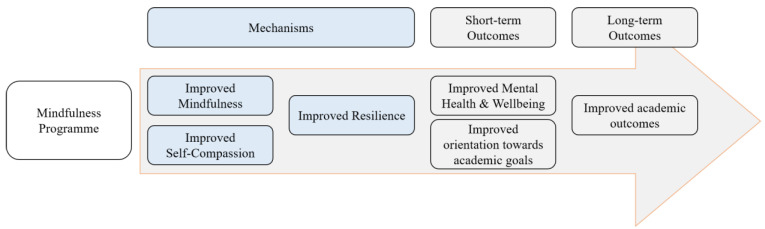
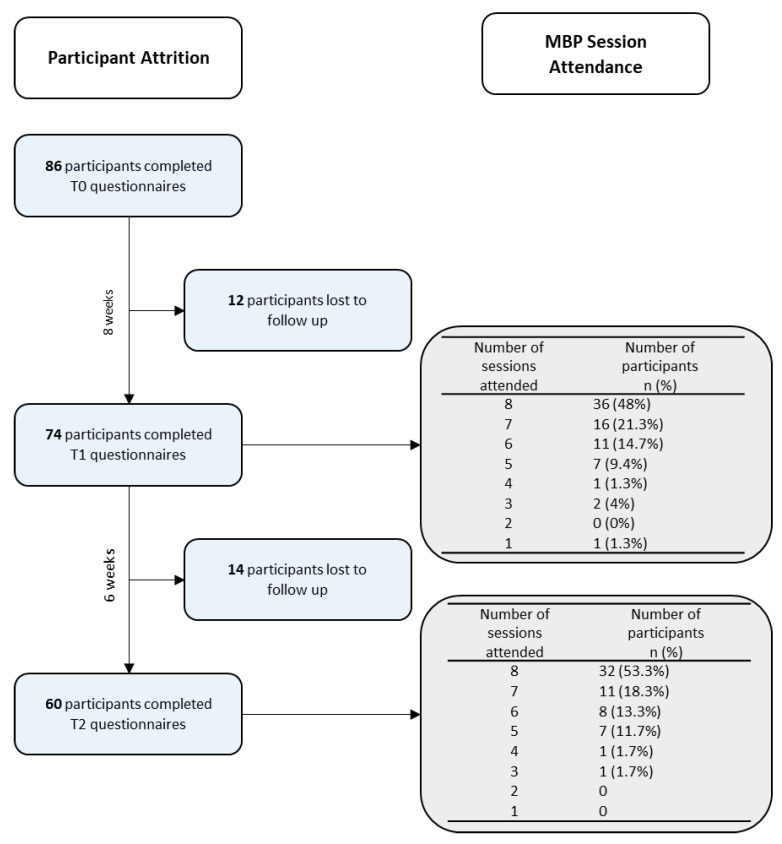
Mental health problems are relatively common during university and adversely affect academic outcomes. Evidence suggests that mindfulness can support the mental health and wellbeing of university students. We explored the acceptability and effectiveness of an 8-week instructor-led mindfulness-based course (“Mindfulness: Finding Peace in a Frantic World”; Williams and Penman, 2011) on improving wellbeing and mental health (self-reported distress), orientation and motivation towards academic goals, and the mechanisms driving these changes. Eighty-six undergraduate and post-graduate students (>18 years) participated. Students engaged well with the course, with 36 (48.0%) completing the whole programme, 52 (69.3%) attending 7 out of 8 sessions, and 71 (94.7%) completing at least half. Significant improvements in wellbeing and mental health were found post-intervention and at 6-week follow-up. Improvements in wellbeing were mediated by mindfulness, self-compassion, and resilience. Improvements in mental health were mediated by improvements in mindfulness and resilience but not self-compassion. Significant improvements in students’ orientation to their academic goal, measured by “commitment” to, “likelihood” of achieving, and feeling more equipped with the “skills and resources” needed, were found at post-intervention and at 6-week follow-up. Whilst exploratory, the results suggest that this mindfulness intervention is acceptable and effective for university students and can support academic study.
Overview
The claims and statistics of this paper haven’t been checked yet.
Free: it reads the open-access text and checks the first 5 claims that cite a source we can check. Create a free account to check every claim.
Integrity signals
Registry
Cites
Statistics
Figures
Verification
Claims the paper makes
The claims and statistics of this paper haven’t been checked yet.
Free: it reads the open-access text and checks the first 5 claims that cite a source we can check. Create a free account to check every claim.
Claims other papers make about this one
Each is checked against this paper’s own text: does it say what the citing paper says it does?
The source backs part of the claim, not all of it — or backs it for a different population, condition or comparison.
In the citing paper
“a previous study highlighted the mediating effect of mindfulness between mental health and wellbeing among people; mindfulness mediated improvements in wellbeing and mental health [26–30].”
From Mindfulness among lebanese university students and its indirect effect between mental health and wellbeing (2023) · cites this paper as [27]
Experimental — accuracy not yet measuredThe cited source says what the claim attributes to it.
In the citing paper
“Additionally, in general population samples, there is preliminary support for mindfulness and self-compassion as candidate mechanisms (Medlicott et al., 2021; Montero-Marin et al., 2021; Strauss et al., 2021)”
From The State- and Trait-Level Effects and Candidate Mechanisms of Four Mindfulness-Based Cognitive Therapy (MBCT) Practices: Two Exploratory Studies (2023) · cites this paper as Medlicott et al., 2021
The cited source says what the claim attributes to it.
In the citing paper
“There is also a growing body of evidence that has demonstrated preliminary efficacy of MBCT adaptations in general population samples (e.g., secondary school teachers, university students, healthcare workers, and workplace employees) (Beshai et al., 2016; de Bruin et al., 2020; Medlicott et al., 2021; Montero-Marin et al., 2021; Strauss et al., 2021; Taylor et al., 2014).”
From The State- and Trait-Level Effects and Candidate Mechanisms of Four Mindfulness-Based Cognitive Therapy (MBCT) Practices: Two Exploratory Studies (2023) · cites this paper as Medlicott et al., 2021
Self-check
Percentages, sums and reported differences re-computed from the paper’s own numbers.
The self-check needs the paper’s full text.
Citations
Cites
Development of a new resilience scale: The Connor-Davidson Resilience Scale (CD-RISC)
Connor, K. M., & Davidson, J. R. T. (2003) · Depression and Anxiety · doi:10.1002/da.10113 · Cited by 11,793 · cited 3×
“At all three time points (T0, T1 and T2), resilience was assessed using a shorter 10-item version (CD-RISC-10) [39], which has a stable factor structure, good reliability and validity [39].”
MethodUsing Self-Report Assessment Methods to Explore Facets of Mindfulness
Baer, R. A., Smith, G. T., Hopkins, J., Krietemeyer, J., & Toney, L. (2006) · Assessment · doi:10.1177/1073191105283504 · Cited by 7,511 · cited 3×
“At all data collection time points (T0, T1 and T2), participants completed the Five-Facet Mindfulness Questionnaire-Short Form (FFMQ-SF) [48], which is a shortened, 15-item version of the Five-Facet Mindfulness Questionnaire (FFMQ) [49].”
MethodMindfulness: A proposed operational definition.
Bishop, S. R., Lau, M., Shapiro, S., Carlson, L., Anderson, N. D., Carmody, J., Segal, Z. V., Abbey, S., Speca, M., Velting, D., et al. (2004) · Clinical Psychology: Science and Practice · doi:10.1093/clipsy.bph077 · Cited by 7,234
The Development and Validation of a Scale to Measure Self-Compassion
NEFF, K. D. (2003) · Self and Identity · doi:10.1080/15298860309027 · Cited by 6,436 · cited 1×
“With 12 items rather than 26 [51,52], this measure has good convergent validity and reliability [51].”
BackgroundSelf-Compassion: An Alternative Conceptualization of a Healthy Attitude Toward Oneself
NEFF, K. (2003) · Self and Identity · doi:10.1080/15298860309032 · Cited by 5,440 · cited 1×
“Initially, it was conceptualised as a bidirectional relationship with each enhancing the other [36], but emerging research suggests that mindfulness and self-compassion improve mental health and wellbeing independently [37].”
BackgroundThe Warwick-Edinburgh Mental Well-being Scale (WEMWBS): development and UK validation
Tennant, R., Hiller, L., Fishwick, R., Platt, S., Joseph, S., Weich, S., Parkinson, J., Secker, J., & Stewart-Brown, S. (2007) · Health and Quality of Life Outcomes · doi:10.1186/1477-7525-5-63 · Cited by 5,031
Required sample size to detect the mediated effect
Fritz, M. S., & MacKinnon, D. P. (2007) · Psychological Science · doi:10.1111/j.1467-9280.2007.01882.x · Cited by 4,810
(2001) · Cited by 3,666
Campbell‐Sills, L., & Stein, M. B. (2007) · Journal of Traumatic Stress · doi:10.1002/jts.20271 · Cited by 3,575
Prevention of relapse/recurrence in major depression by mindfulness-based cognitive therapy.
Teasdale, J. D., Segal, Z. V., Williams, J. M. G., Ridgeway, V. A., Soulsby, J. M., & Lau, M. A. (2000) · Journal of Consulting and Clinical Psychology · doi:10.1037/0022-006x.68.4.615 · Cited by 3,236 · cited 2×
“The course is an adaptation of Mindfulness-Based Cognitive Therapy (MBCT) [44] and includes 8 in-person weekly 90-min sessions of reduced-intensity MBCT with a focus on reducing general distress and improving wellbeing [21].”
Method
Research works printed but not linked: 3
- Metcalfe J. Wilson S. Levecque K. Exploring Wellbeing and Mental Health and Associated Support Services for Postgraduate Researchers The Careers Research and Advisory Centre (CRAC) Limited Cambridge, UK 2018 Available online: https://re.ukri.org/documents/2018/mental-health-report/ (accessed on 2 June 2021)
- The Oxford Mindfulness Centre Learn Mindfulness: Find a Course 2020 Available online: https://www.oxfordmindfulness.org/learn-mindfulness/find-a-course/ (accessed on 2 June 2021)
- Cohen J. Statistical Power Analysis for the Behavioral Science Routledge Academic New York, NY, USA 1988
Cited by
González-Martín, A. M., Aibar‐Almazán, A., Rivas-Campo, Y., Castellote‐Caballero, Y., & Carcelén‐Fraile, M. D. C. (2023) · Frontiers in Public Health · doi:10.3389/fpubh.2023.1284632 · Cited by 160
The MYRIAD team, Baer, R., Crane, C., Montero-Marin, J., Phillips, A., Taylor, L., Tickell, A., & Kuyken, W. (2021) · Mindfulness · doi:10.1007/s12671-020-01547-8 · Cited by 78
Self-citationAbulfaraj, G. G., Upsher, R., Zavos, H. M. S., & Dommett, E. J. (2024) · Education Sciences · doi:10.3390/educsci14050510 · Cited by 67
“There were eighteen studies in the mindfulness category [47,49,53,55–57, 60,67, 69 , 71, 72,77,81, 86– 90].”
BackgroundInfluentialSaracutu, O. I., Manfredini, D., Bracci, A., Cagidiaco, E. F., Ferrari, M., & Colonna, A. (2024) · CRANIO® · doi:10.1080/08869634.2024.2357199 · Cited by 61
“In addition to that, many scientific papers show that psychological distress is more common in university students compared to the general population [28–30].”
The Relationship between Mindful Attention Awareness, Perceived Stress and Subjective Wellbeing
Hepburn, S.-J., Carroll, A., & McCuaig, L. (2021) · International Journal of Environmental Research and Public Health · doi:10.3390/ijerph182312290 · Cited by 58
“It has been suggested that universities need to provide support for students because mental health concerns can have a broad range of impacts on a student’s quality of life [2,3].”
Montero‐Marín, J., Hinze, V., Crane, C., Dalrymple, N., Kempnich, M., Lord, L., Slaghekke, Y., Tudor, K., Ahmed, S. P., Allwood, M., et al. (2023) · Journal of the American Academy of Child & Adolescent Psychiatry · doi:10.1016/j.jaac.2023.02.016 · Cited by 59
“15 There were similarly mixed fi ndings for the association between mindfulness practice and outcomes, and potential associations between responsiveness and outcomes.”
BackgroundSelf-citationMartínez-Rubio, D., Navarrete, J., & Montero-Marin, J. (2021) · International Journal of Environmental Research and Public Health · doi:10.3390/ijerph19010154 · Cited by 41
“Some studies that tested MBPs in university students found that mindfulness skills and resilience might be potential mediators of improvements in psychological distress [18,19].”
BackgroundResultMartínez-Rubio, D., Colomer-Carbonell, A., Sanabria-Mazo, J. P., Pérez-Aranda, A., Navarrete, J., Martínez-Brotóns, C., Escamilla, C., Muro, A., Montero-Marín, J., Luciano, J. V., et al. (2023) · PLOS ONE · doi:10.1371/journal.pone.0280791 · Cited by 33
“Up to now, mindfulness-based interventions for university students have shown promising effectiveness [8,61], though our results suggest that comprehensive programmes more oriented at fostering other crucial process variables for stress reduction such as experiential avoidance PLOS ONE ‘Third wave’ constructs related…”
BackgroundA systematic review of university students’ mental health in sub-Saharan Africa
Julius, B., Putteeraj, M., & Somanah, J. (2024) · Transformation in Higher Education · doi:10.4102/the.v9i0.316 · Cited by 46
“A large migration of young adults to university is associated with increased social, academic and financial demands (Medlicott et al. 2021).”
Azzazy, S., Ghaffarianhoseini, A., GhaffarianHoseini, A., Naismith, N., Doan, D. T., & Hollander, J. B. (2024) · Building Research & Information · doi:10.1080/09613218.2024.2344072 · Cited by 20
Maloney, S., Montero‐Marín, J., & Kuyken, W. (2024) · Behaviour Research and Therapy · doi:10.1016/j.brat.2024.104478 · Cited by 19
Self-citationAlazemi, A. F. T., Gheisari, A., & Patra, I. (2023) · Asian-Pacific Journal of Second and Foreign Language Education · doi:10.1186/s40862-023-00220-6 · Cited by 36
“Given the importance of academic accomplishment to kids’ socioemotional functioning and the crucial role of schools in their lives, their well-being is tied to the school educational settings (Medlicott et al., 2021).”
BackgroundModrego‐Alarcón, M., Morillo, H., Campos, D., Navarro-Gil, M. T., Montero‐Marín, J., Monreal‐Bartolomé, A., García‐Campayo, J., & del Hoyo, Y. L. (2023) · Journal of Computing in Higher Education · doi:10.1007/s12528-023-09393-y · Cited by 16
“In this respect, mindfulness-based strategies have been suggested and recommended as means of responding to these challenges (e.g., Medlicott et al., 2021; Schonert-Reichl & Roeser, 2016).”
Bitar, Z., Rogoza, R., Hallit, S., & Obeid, S. (2023) · BMC Psychology · doi:10.1186/s40359-023-01155-w · Cited by 12
“Mediating effect of mindfulness The association between anxiety and wellbeing has been found to be mediated by mindfulness in our study, in accordance with previous findings [27, 28].”
ResultPuente-Torre, P., Benito, V. D., Cano, S. R., & García-Delgado, M. Á. (2024) · Multimodal Technologies and Interaction · doi:10.3390/mti8100089 · Cited by 16
Garcia-Toro, M., Aguilar-Latorre, A., Garcia, A., Navarro-Guzmán, C., Gervilla, E., Seguí, A., Gazquez, F., Marino, J. A., Gomez-Juanes, R., Serrano-Ripoll, M. J., et al. (2023) · Frontiers in Psychology · doi:10.3389/fpsyg.2023.1008891 · Cited by 10
“Several mechanisms in the context of MBCT have been proposed and three overlapping yet distinct factors have received considerable consensus: mindfulness skills, self-compassion, and (reduced) experiential avoidance (Gu et al., 2015; Collado-Navarro et al., 2021; Medlicott et al., 2021; Yela et al., 2022).”
BackgroundMaloney, S., Surawy, C., Martin, M., Montero-Marin, J., & Kuyken, W. (2023) · Mindfulness · doi:10.1007/s12671-023-02193-6 · Cited by 10
“…efficacy of MBCT adaptations in general population samples (e.g., secondary school teachers, university students, healthcare workers, and workplace employees) (Beshai et al., 2016; de Bruin et al., 2020; Medlicott et al., 2021; Montero-Marin et al., 2021; Strauss et al., 2021; Taylor et al., 2014).”
BackgroundSelf-citationBeltrán-Ruiz, M., Fernández, S., García‐Campayo, J., Puebla‐Guedea, M., del Hoyo, Y. L., Navarro‐Gil, M., & Montero‐Marín, J. (2023) · Frontiers in Psychology · doi:10.3389/fpsyg.2023.1185445 · Cited by 16
“As examples of how this has materialised, we can see that the National Institute of Health and Care Excellence (NICE) UK guideline recommends an MBP for the prevention of relapses in depression (Kendrick and Pilling, 2012), and that some MBP adaptations for university students have been piloted with positive results (…”
BackgroundWinkelmair, A., & Jansen, P. (2024) · Appetite · doi:10.1016/j.appet.2024.107554 · Cited by 10
Park, J. H., & Bui, K. V. T. (2023) · Journal of American College Health · doi:10.1080/07448481.2022.2161822 · Cited by 13
“21,22 24 Prior to the pandemic, Lipson et al. 25 found that undergrad-uates’ mental health conditions steadily worsened from 2013 to 2021.”
Barbir, J., Baars, C., Eustachio, J. H. P. P., Sharifi, A., Demarzo, M., & Filho, W. L. (2024) · Sustainability Science · doi:10.1007/s11625-024-01581-8 · Cited by 9
“This finding is also supported by Medlicott et al. (2021) and colleagues, who identified a significant improvement in well-being and mental health among students who engaged in mindfulness practices.”
Setyoadi, E. T., & Patmanthara, S. (2024) · Research and Development in Education (RaDEn) · doi:10.22219/raden.v4i1.32630 · Cited by 20
Deroche, M.-H., Kuyken, W., Uwatoko, T., Imoto, Y., & Kusumoto, R. (2025) · Mindfulness · doi:10.1007/s12671-025-02528-5 · Cited by 12
“The effectiveness of the program for both teachers (Beshai et al., 2016) and students (Galante et. al., 2018; Medlicott, 2021) has already been evaluated.”
Self-citationSanders, L., Budd, G., Carter, L., Dave, U., & Kemp, A. H. (2025) · BMC Medical Education · doi:10.1186/s12909-025-07768-6 · Cited by 6
“Resilience refers to the ability to adapt to and recover from stressors, which partially mediates the relationship between mindfulness and burnout [39, 40] and depression [41], while mediating the relationship between MBIs and PBS reductions [42].”
A Scoping Review of Acceptance and Commitment Therapy in Higher Education
Caimano, S., Malkin, A., Monroy, P., Horoky, D., & Kum, J. J. Y. (2024) · The Psychological Record · doi:10.1007/s40732-024-00586-0 · Cited by 6
“The most common type of support offered to students fall into the classes of cognitive/behavioral/mindfulness-based interventions (Regehr et al., 2012; Medlicott et al., 2021).”
Kassie, S. A. (2023) · Frontiers in Education · doi:10.3389/feduc.2023.1281949 · Cited by 14
Miceli, M. D. (2023) · European Journal of Education · doi:10.1111/ejed.12595 · Cited by 10
Isralowitz, R., Yehudai, M., Sugawara, D., Masuyama, A., Porat, S.-L. R., Dagan, A., & Reznik, A. (2022) · Social Sciences · doi:10.3390/socsci11120561 · Cited by 7
“While the worsening of symptoms may not be caused by higher education itself, it has been suggested that daily stressors associated with living conditions are a contributing factor (Cvetkovski et al. 2019; Duffy et al. 2020; Macaskill 2013; Medlicott et al. 2021).”
BackgroundSatıcı, B., Tekin, E. G., Deniz, M. E., Satıcı, S. A., & Yılmaz, F. B. (2024) · Journal of Rational-Emotive & Cognitive-Behavior Therapy · doi:10.1007/s10942-024-00551-4 · Cited by 4
“Furthermore, another study showed that university students who took mindfulness courses had improvements in their mental health and well-being post-intervention and follow-up (Medlicott et al., 2021).”
Internal evaluation of medical programs is more than housework: A scoping review
Gamage, S. M. K., Jowsey, T., Bishop, J., Forbes, M., Grant, L.-J., Green, P. A., Houghton, H., Links, M. J., Morgan, M., Röhl, J., et al. (2024) · PLoS ONE · doi:10.1371/journal.pone.0305996 · Cited by 4
The role of mind-body bridging-based university psychology course for students’ well-being
Siira, V., Petäjäniemi, M., Lutovac, S., & Kaasila, R. (2022) · Nordic Psychology · doi:10.1080/19012276.2022.2159867 · Cited by 6
“The increase in stressors in students ’ lives highlights the well-documented need to consider therapeutic approaches in higher educational contexts through the increased availability of mindfulness-based approaches (Galante et al., 2018; Medlicott et al., 2021).”
BackgroundDong, S., Harding, J., Pokorny, A., Sakowitz, L., & Ridgeway, L. S. (2023) · Journal of College Student Retention Research Theory & Practice · doi:10.1177/15210251231201341 · Cited by 7
“…a transition program on mind-fulness of college students with disabilities, previous literature indicated a general potential bene fi t of mindfulness on transition for college students with disabilities (Dvor ̌ áková et al., 2017; Gabriely et al., 2020; Medlicott et al., 2021; Ramler et al., 2015).”
Fitriyah, I. J., Saputro, S., Muqoyyidin, A. W., Erlangga, S. Y., & Aprilia, S. (2026) · Discover Psychology · doi:10.1007/s44202-025-00563-w · Cited by 10
“Dimensions identified by [36] confidence, control, persistence, commitment, and connectedness are expanded by [37] to include adaptability, coping, and meaning-making, evident in behaviors such as overcoming journal rejection and managing multiple workloads [32].”
Self-compassion as a Newly Observed Dimension of the Student's Personality
Krejčová, K., Rymešová, P., & Chýlová, H. (2023) · Journal on Efficiency and Responsibility in Education and Science · doi:10.7160/eriesj.2023.160205 · Cited by 5
“…trends that seek for improvement of the well-being in population is the expansion of the mindfulness-based interventions (Carmody and Baer, 2008) that are successfully applied at various levels of the educational system (Altner et al., 2018) including university students (Medlicott et al., 2021).”
BackgroundInfluentialOladele, J. I. (2025) · MethodsX · doi:10.1016/j.mex.2024.103140 · Cited by 4
Проненко, Е. А. (2025) · Innovative science psychology pedagogy defectology · doi:10.23947/2658-7165-2025-8-1-9-17 · Cited by 2
Work-related well-being in early career: A role of self-compassion
Krejčová, K., Krejčí, I., Chýlová, H., Rymešová, P., & Michálek, P. (2024) · Heliyon · doi:10.1016/j.heliyon.2024.e41377 · Cited by 12
“SC is perceived not only as a psychological trait but also as a process [26,27] that is positively related to agreeableness and conscientiousness [27] and can be enhanced by SC-centered and mindfulness-based interventions [16,17,28].”
The student wellbeing toolkit: Preparing for life at college, university and beyond
Gebregergis, W. T. (2024) · The Hungarian Educational Research Journal · doi:10.1556/063.2023.00274 · Cited by 1
Ohenewa, E., & Meyer‐Weitz, A. (2025) · Advances in Mental Health · doi:10.1080/18387357.2025.2495896 · Cited by 1
Ciacchini, R., Villani, S., Miniati, M., Orrù, G., Gemignani, A., & Conversano, C. (2025) · International Journal of Environmental Research and Public Health · doi:10.3390/ijerph22071027 · Cited by 4
“…study demonstrated that the classic 8-week mindfulness-based course was both acceptable and effective among university students, leading to improvements in mental health, well-being, and academic goal orientation, with mindfulness, resilience, and self-compassion mediating these effects [18].”
Mhlongo, X. L. (2026) · Journal of Mind and Medical Sciences · doi:10.3390/jmms13020011 · Cited by 1
“Students often face a confluence of newfound independence, intense academic demands, and complex social navigation, making this developmental stage a high-risk period for the onset of mental health disorders [2].”
Fitra Anggreni Kusuma, R., Adliah, F., & Mustari, Y. (2023) · Jurnal Fisioterapi dan Rehabilitasi · doi:10.33660/jfrwhs.v7i2.263 · Cited by 6
Gunawan, F. A., Opod, H., & David, L. E. V. (2024) · Medical Scope Journal · doi:10.35790/msj.v6i2.53197 · Cited by 4
Práticas extensionistas sob a perspectiva teórica das universidades promotoras da saúde
Carvalho, R. F., Faria, M. G. D. A., da Silva, C. S. S. L., Kebian, L. V. A., Ten, Y. Z. L. F., Guedes, F. C., Venâncio, C. G. D. S. F., & Cruz, V. L. D. S. P. (2024) · Journal of Nursing and Health · doi:10.15210/jonah.v13i3.24331 · Cited by 1
Rachman, S., Ahyadi, Z., & Syarifudin, S. (2022) · Media Elektro · doi:10.35508/jme.v0i0.8108
Shabanı, S. M., Ersever, O. G., & Darabı, F. (2023) · Journal of Education and Community Health · doi:10.34172/jech.2110
Gina, S. A., Mustofa, R. F., & Putra, R. R. (2024) · JPBI (Jurnal Pendidikan Biologi Indonesia) · doi:10.22219/jpbi.v10i2.33222 · Cited by 1
Kyei, S. B., & Howie, F. (2024) · Health & Social Care in the Community · doi:10.1155/2024/2551260 · Cited by 2
Cultivating the Well-Being of Ph.D. Students in Early Childhood Education Through Mindfulness
Gao, Q., Hall, A. M., Bache-Wiig, G., Counts-Davis, A. C., Orija, M., & Osho, L. O. (2024) · Early Childhood Education Journal · doi:10.1007/s10643-024-01752-3 · Cited by 2
“Medlicott et al. (2021) found that undergraduate and graduate students participating in a 90-min course once a week for eight weeks felt that they were more equipped to reach the goals they set for themselves (Medlicott et al., 2021).”
Mazurkiewicz, C. S. (2024) · The Teacher Educator · doi:10.1080/08878730.2024.2417308
“Training in MAP’s has been shown to reduce psychological distress, anxiety, and depression (Galante et al., 2021; Medlicott et al., 2021) and increase emotional regulation (Modinos et al., 2010; Taylor et al., 2016) and prosocial attitude (Brown et al., 2015; Flook et al., 2015) to promote mental…”
Sivakumar, S., Venkataraman, S., & Balasubramanian, D. L. (2024) · SSRN Electronic Journal · doi:10.2139/ssrn.5008871
Monteiro, M., Frontini, R., Mindrico, T., & Pernencar, C. A. D. C. (2024) · Springer series in design and innovation · doi:10.1007/978-3-031-77566-6_22
Using Mindfulness Strategies in Strengthening the Well-Being of Students in Universities
Oyoo, S. A., & Olendo, R. A. (2025) · Springer eBooks · doi:10.1007/978-3-031-88793-2_14
Fatores protetores e de risco à saúde mental de estudantes de Medicina na perspectiva deles
Custódio, C. G., do Cabo, J. S., Fasanella, N. A., de Almeida, F. A., & Pavan, M. V. (2025) · Revista Brasileira de Educação Médica · doi:10.1590/1981-5271v49.3-2024.0295.ing · Cited by 3
Gubser, I., Bauer, G. F., & Bagehorn, J. (2025) · Research Square · doi:10.21203/rs.3.rs-7805102/v1
Dang, S., Jin, Y. Z., Niu, X., Wang, J., Yu, W. G., Zhou, W., Sun, H., & Xie, H. (2025) · Frontiers in Psychology · doi:10.3389/fpsyg.2025.1636209 · Cited by 2
Using SDT to Enhance Mindfulness Practice for Students Coping in Higher Education
Naidu, S., & Roman, N. V. (2025) · Springer eBooks · doi:10.1007/978-981-95-3133-2_6
Staff and student well-being in theological education
Thesnaar, C. (2026) · doi:10.4102/aosis.2025.bk564.11
A University-Level Mindfulness Peer Education Program: Development and Evaluation Outcomes
Dietrich, K. M., & Bidart, M. G. (2026) · Journal of Peer Learning · doi:10.21061/jopl.130
Lathabhavan, R., Bharti, T., Mishra, N., & Sahay, V. S. (2026) · Acta Psychologica · doi:10.1016/j.actpsy.2026.106820 · Cited by 1
Self-compassion and the impostor phenomenon: Associations and implications
Krejčová, K., Stanislavská, L. K., & Ibrahim, F. (2026) · PLoS ONE · doi:10.1371/journal.pone.0348905 · Cited by 1
“The level of SC can be enhanced via targeted SC-centered and mindfulness interventions [34,71,72].”
Mindfulness-based interventions for student coping in higher education: a systematic review
Naidu, S., & Roman, N. V. (2026) · Advances in Mental Health · doi:10.1080/18387357.2026.2692478
Moran, M. J., Lupini, F., Ho, S., Vagadori, J., Streisand, R. M., Shomaker, L. B., Kelly, K. P., Dagnachew, M., DeJonckheere, M. J., Guetterman, T. C., et al. (2026) · Journal of Pediatric Psychology · doi:10.1093/jpepsy/jsag058
Ismail, S., Al-Etoom, S., Ahmed, V., Bahroun, Z., & Al-Assaf, K. (2026) · Computers in Human Behavior Reports · doi:10.1016/j.chbr.2026.101305 · Cited by 1
Pearmain, D. B., Kennedy, M., & Schlosser, K. K. (2026) · Frontiers in Psychology · doi:10.3389/fpsyg.2026.1810901
Metadata
- Authors
- Medlicott, E., Phillips, A., Crane, C., Hinze, V., Taylor, L., Tickell, A., Montero-Marin, J., & Kuyken, W.
- Affiliations
- Warneford Hospital (GB)
- Department of Psychiatry, University of Oxford, Warneford Hospital, Oxford OX3 7JX, UK
- Corresponding author
- Kuyken, Willem
- ORCID
- Venue
- International Journal of Environmental Research and Public Health
- Publisher
- MDPI AG
- Published
- 2021-06-03
- Volume
- 18
- Issue
- 11
- Pages
- 6023
- ISSN
- 1660-4601 (ISSN-L)
- PMC
- PMC8199969
- OpenAlex
- W3170519275
- Cited by
- 67
- References
- 65
- Citations by year
- 2026: 10 · 2025: 12 · 2024: 23 · 2023: 16 · 2022: 3 · 2021: 2
- FWCI
- 7.50
- Type
- journal article
- Language
- en
- Open access
- gold
- doi.org
- Licence
- Locations
- International Journal of Environmental Research and Public Health (publishedVersion, cc-by)
- PubMed Central (publishedVersion, cc-by)
- PubMed (publishedVersion)
- RePEc: Research Papers in Economics (submittedVersion)
- DOAJ (DOAJ: Directory of Open Access Journals) (submittedVersion)
- Apollo (University of Cambridge) (submittedVersion, cc-by)
- Funders
- Wellcome Trust (WT104908/Z/14/Z, WT107496/Z/15/Z)
- Topics
- Social Sciences › Psychology › Clinical Psychology › Mindfulness and Compassion Interventions
- Social Sciences › Psychology › Developmental and Educational Psychology › Student Stress and Coping
- Social Sciences › Psychology › Social Psychology › Psychological Well-being and Life Satisfaction
- Keywords
- mindfulness-based interventions, university students, student mental health, well-being, acceptability, intervention effectiveness, self-compassion, resilience, academic goal orientation, academic motivation, mediation
- MeSH terms
- Humans, Mental Health, Motivation, Students, Universities, Mindfulness
About these checks
Registry, retraction, Cites and statistics results are computed, not judged, with one exception: a printed reference that no index lists is read once by a model before it counts as a citation error. Claims are extracted by a model and kept only when their quote appears verbatim in the text; each cited source is then checked, with a model’s help, for whether it says what the claim relies on. Those verdicts can be wrong — read the claim’s quote and the cited source before relying on one.
Statistics and arithmetic are recomputed, not judged.
Confidence bands are shown only for fields calibrated on our annotated test set. None is calibrated yet, so no band is shown.
What counts as a claim ›How we measure confidence ›How we check this ›
Are you an author, or do you see a problem with this page? Request a review
Data sources
Bibliographic data: Semantic Scholar, OpenAlex, Crossref.
Contains information from the Semantic Scholar Academic Graph Datasets, made available under the ODC Attribution License (ODC-BY 1.0).
Semantic Scholar’s data is described in: Kinney, R., et al. (2023). The Semantic Scholar Open Data Platform. arXiv:2301.10140.
