

The Mental Health and Wellbeing of University Students: Acceptability, Effectiveness, and Mechanisms of a Mindfulness-Based Course
Open accessThe DOI matches its Crossref record; 65 of the 65 references it cites were found in a registry or an index.
Abstract
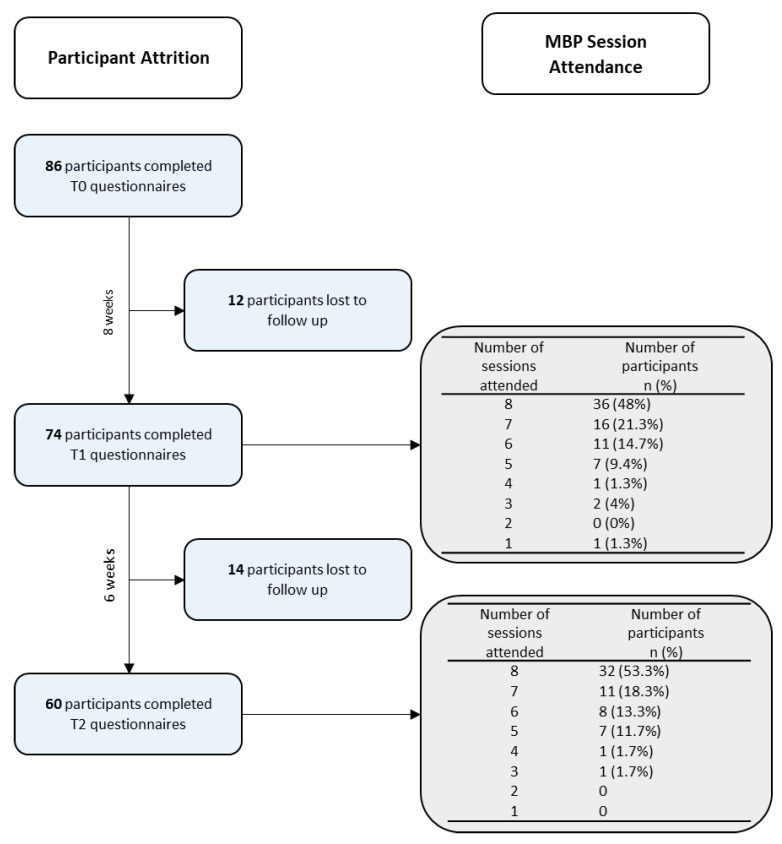
Mental health problems are relatively common during university and adversely affect academic outcomes. Evidence suggests that mindfulness can support the mental health and wellbeing of university students. We explored the acceptability and effectiveness of an 8-week instructor-led mindfulness-based course (“Mindfulness: Finding Peace in a Frantic World”; Williams and Penman, 2011) on improving wellbeing and mental health (self-reported distress), orientation and motivation towards academic goals, and the mechanisms driving these changes. Eighty-six undergraduate and post-graduate students (>18 years) participated. Students engaged well with the course, with 36 (48.0%) completing the whole programme, 52 (69.3%) attending 7 out of 8 sessions, and 71 (94.7%) completing at least half. Significant improvements in wellbeing and mental health were found post-intervention and at 6-week follow-up. Improvements in wellbeing were mediated by mindfulness, self-compassion, and resilience. Improvements in mental health were mediated by improvements in mindfulness and resilience but not self-compassion. Significant improvements in students’ orientation to their academic goal, measured by “commitment” to, “likelihood” of achieving, and feeling more equipped with the “skills and resources” needed, were found at post-intervention and at 6-week follow-up. Whilst exploratory, the results suggest that this mindfulness intervention is acceptable and effective for university students and can support academic study.
Overview
The claims and statistics of this paper haven’t been checked yet.
Free: it reads the open-access text and checks the first 5 claims that cite a source we can check. Create a free account to check every claim.
Integrity signals
Registry
Cites
Statistics
Figures
Verification
Claims the paper makes
The claims and statistics of this paper haven’t been checked yet.
Free: it reads the open-access text and checks the first 5 claims that cite a source we can check. Create a free account to check every claim.
Claims other papers make about this one
Each is checked against this paper’s own text: does it say what the citing paper says it does?
The source backs part of the claim, not all of it — or backs it for a different population, condition or comparison.
In the citing paper
“a previous study highlighted the mediating effect of mindfulness between mental health and wellbeing among people; mindfulness mediated improvements in wellbeing and mental health [26–30].”
From Mindfulness among lebanese university students and its indirect effect between mental health and wellbeing (2023) · cites this paper as [27]
Experimental — accuracy not yet measuredThe cited source says what the claim attributes to it.
In the citing paper
“Additionally, in general population samples, there is preliminary support for mindfulness and self-compassion as candidate mechanisms (Medlicott et al., 2021; Montero-Marin et al., 2021; Strauss et al., 2021)”
From The State- and Trait-Level Effects and Candidate Mechanisms of Four Mindfulness-Based Cognitive Therapy (MBCT) Practices: Two Exploratory Studies (2023) · cites this paper as Medlicott et al., 2021
The cited source says what the claim attributes to it.
In the citing paper
“There is also a growing body of evidence that has demonstrated preliminary efficacy of MBCT adaptations in general population samples (e.g., secondary school teachers, university students, healthcare workers, and workplace employees) (Beshai et al., 2016; de Bruin et al., 2020; Medlicott et al., 2021; Montero-Marin et al., 2021; Strauss et al., 2021; Taylor et al., 2014).”
From The State- and Trait-Level Effects and Candidate Mechanisms of Four Mindfulness-Based Cognitive Therapy (MBCT) Practices: Two Exploratory Studies (2023) · cites this paper as Medlicott et al., 2021
Self-check
Percentages, sums and reported differences re-computed from the paper’s own numbers.
The self-check needs the paper’s full text.
Citations
Cites
Development of a new resilience scale: The Connor-Davidson Resilience Scale (CD-RISC)
Connor, K. M., & Davidson, J. R. T. (2003) · Depression and Anxiety · doi:10.1002/da.10113 · Cited by 11,793 · cited 3×
“At all three time points (T0, T1 and T2), resilience was assessed using a shorter 10-item version (CD-RISC-10) [39], which has a stable factor structure, good reliability and validity [39].”
MethodUsing Self-Report Assessment Methods to Explore Facets of Mindfulness
Baer, R. A., Smith, G. T., Hopkins, J., Krietemeyer, J., & Toney, L. (2006) · Assessment · doi:10.1177/1073191105283504 · Cited by 7,511 · cited 3×
“At all data collection time points (T0, T1 and T2), participants completed the Five-Facet Mindfulness Questionnaire-Short Form (FFMQ-SF) [48], which is a shortened, 15-item version of the Five-Facet Mindfulness Questionnaire (FFMQ) [49].”
MethodMindfulness: A proposed operational definition.
Bishop, S. R., Lau, M., Shapiro, S., Carlson, L., Anderson, N. D., Carmody, J., Segal, Z. V., Abbey, S., Speca, M., Velting, D., et al. (2004) · Clinical Psychology: Science and Practice · doi:10.1093/clipsy.bph077 · Cited by 7,234
The Development and Validation of a Scale to Measure Self-Compassion
NEFF, K. D. (2003) · Self and Identity · doi:10.1080/15298860309027 · Cited by 6,436 · cited 1×
“With 12 items rather than 26 [51,52], this measure has good convergent validity and reliability [51].”
BackgroundSelf-Compassion: An Alternative Conceptualization of a Healthy Attitude Toward Oneself
NEFF, K. (2003) · Self and Identity · doi:10.1080/15298860309032 · Cited by 5,440 · cited 1×
“Initially, it was conceptualised as a bidirectional relationship with each enhancing the other [36], but emerging research suggests that mindfulness and self-compassion improve mental health and wellbeing independently [37].”
BackgroundThe Warwick-Edinburgh Mental Well-being Scale (WEMWBS): development and UK validation
Tennant, R., Hiller, L., Fishwick, R., Platt, S., Joseph, S., Weich, S., Parkinson, J., Secker, J., & Stewart-Brown, S. (2007) · Health and Quality of Life Outcomes · doi:10.1186/1477-7525-5-63 · Cited by 5,031
Required sample size to detect the mediated effect
Fritz, M. S., & MacKinnon, D. P. (2007) · Psychological Science · doi:10.1111/j.1467-9280.2007.01882.x · Cited by 4,810
(2001) · Cited by 3,666
Campbell‐Sills, L., & Stein, M. B. (2007) · Journal of Traumatic Stress · doi:10.1002/jts.20271 · Cited by 3,575
Prevention of relapse/recurrence in major depression by mindfulness-based cognitive therapy.
Teasdale, J. D., Segal, Z. V., Williams, J. M. G., Ridgeway, V. A., Soulsby, J. M., & Lau, M. A. (2000) · Journal of Consulting and Clinical Psychology · doi:10.1037/0022-006x.68.4.615 · Cited by 3,236 · cited 2×
“The course is an adaptation of Mindfulness-Based Cognitive Therapy (MBCT) [44] and includes 8 in-person weekly 90-min sessions of reduced-intensity MBCT with a focus on reducing general distress and improving wellbeing [21].”
MethodConstruction and factorial validation of a short form of the Self-Compassion Scale
Raes, F., Pommier, E., Neff, K. D., & Van Gucht, D. (2011) · Clinical Psychology & Psychotherapy · doi:10.1002/cpp.702 · Cited by 2,997 · cited 4×
“Self-Compassion The present study used a short-form version of the Self-Compassion Scale (SCS-SF) [51] to measure self-compassion at all 3 time points (T0, T1 and T2).”
BackgroundMethodInfluentialBaer, R. A., Smith, G. T., Lykins, E., Button, D., Krietemeyer, J., Sauer, S., Walsh, E., Duggan, D., & Williams, J. M. G. (2008) · Assessment · doi:10.1177/1073191107313003 · Cited by 2,930 · cited 3×
“At all data collection time points (T0, T1 and T2), participants completed the Five-Facet Mindfulness Questionnaire-Short Form (FFMQ-SF) [48], which is a shortened, 15-item version of the Five-Facet Mindfulness Questionnaire (FFMQ) [49].”
MethodAuerbach, R. P., Collaborators, W. W.-I., Mortier, P., Bruffaerts, R., Alonso, J., Benjet, C., Cuijpers, P., Demyttenaere, K., Ebert, D. D., Green, J. G., et al. (2018) · Journal of Abnormal Psychology · doi:10.1037/abn0000362 · Cited by 2,522 · cited 2×
“A global survey of 13,984 students found 35% reported at least one DSM-IV mental disorder [4].”
BackgroundResultMorris, S. B., & DeShon, R. P. (2002) · Psychological Methods · doi:10.1037/1082-989x.7.1.105 · Cited by 2,502
Hayes, A. F., & Scharkow, M. (2013) · Psychological Science · doi:10.1177/0956797613480187 · Cited by 2,387
Estimating effect sizes from pretest-posttest-control group designs
Morris, S. B. (2008) · Organizational Research Methods · doi:10.1177/1094428106291059 · Cited by 2,133
Mindfulness-based therapy: a comprehensive meta-analysis
Khoury, B., Lecomte, T., Fortin, G., Masse, M., Therien, P., Bouchard, V., Chapleau, M.-A., Paquin, K., & Hofmann, S. G. (2013) · Clinical Psychology Review · doi:10.1016/j.cpr.2013.05.005 · Cited by 2,003
A systematic review of studies of depression prevalence in university students
Ibrahim, A. K., Kelly, S. J., Adams, C. E., & Glazebrook, C. (2013) · Journal of Psychiatric Research · doi:10.1016/j.jpsychires.2012.11.015 · Cited by 1,988
Gu, J., Strauss, C., Bond, R., & Cavanagh, K. (2015) · Clinical Psychology Review · doi:10.1016/j.cpr.2015.01.006 · Cited by 1,712 · cited 19×
“Engagement, by M-FP course attendance, was higher than alternative MBPs offered to university students [23], and slightly lower in comparison to a secondary teacher sample [20].”
BackgroundResultInfluentialMindfulness-based stress reduction for healthy individuals: A meta-analysis
Khoury, B., Sharma, M., Rush, S. E., & Fournier, C. (2015) · Journal of Psychosomatic Research · doi:10.1016/j.jpsychores.2015.03.009 · Cited by 1,617 · cited 1×
“Whilst the effects of MBPs on mental health and wellbeing are widely researched [29,30], the mechanisms through which these improvements are facilitated remain unclear.”
BackgroundDo multiple outcome measures require p-value adjustment?
Feise, R. J. (2002) · BMC Medical Research Methodology · doi:10.1186/1471-2288-2-8 · Cited by 1,299 · cited 2×
“We did not correct for multiple testing, given the exploratory nature of the present study [68].”
BackgroundMethodInterventions to reduce stress in university students: A review and meta-analysis
Regehr, C., Glancy, D., & Pitts, A. (2013) · Journal of Affective Disorders · doi:10.1016/j.jad.2012.11.026 · Cited by 956
Towards a standardised brief outcome measure: Psychometric properties and utility of the CORE–OM
Evans, C., Connell, J., Barkham, M., Margison, F., McGrath, G., Mellor-Clark, J., & Audin, K. (2002) · British Journal of Psychiatry · doi:10.1192/bjp.180.1.51 · Cited by 934 · cited 2×
“The Clinical Outcomes Routine Evaluation-10 (CORE-10) [46] is derived from the 34-item Clinical Outcomes Routine Evaluation-Outcome Measure [47] and was used as a measure of psychological distress at all data collection time points (T0, T1 and T2).”
MethodTwo-condition within-participant statistical mediation analysis: A path-analytic framework.
Montoya, A. K., & Hayes, A. F. (2017) · Psychological Methods · doi:10.1037/met0000086 · Cited by 931
What defines mindfulness-based programs? The warp and the weft
Crane, R. S., Brewer, J., Feldman, C., Kabat-Zinn, J., Santorelli, S., Williams, J. M. G., & Kuyken, W. (2017) · Psychological Medicine · doi:10.1017/s0033291716003317 · Cited by 868
Self-citationEstimating and testing mediation and moderation in within-subject designs.
Judd, C. M., Kenny, D. A., & McClelland, G. H. (2001) · Psychological Methods · doi:10.1037/1082-989x.6.2.115 · Cited by 846
Taylor, G., Jungert, T., Mageau, G. A., Schattke, K., Dedic, H., Rosenfield, S., & Koestner, R. (2014) · Contemporary Educational Psychology · doi:10.1016/j.cedpsych.2014.08.002 · Cited by 816 · cited 2×
“ing higher levels of mindfulness engage more with autonomous academic goals that are intrinsically motivated than students with lower levels of mindfulness [26], which is a consistent predictor of academic achievement across different educational contexts [27].”
BackgroundRoeser, R. W., Schonert-Reichl, K. A., Jha, A., Cullen, M., Wallace, L., Wilensky, R., Oberle, E., Thomson, K., Taylor, C., & Harrison, J. (2013) · Journal of Educational Psychology · doi:10.1037/a0032093 · Cited by 795
Eisenberg, D., Hunt, J., & Speer, N. (2013) · Journal of Nervous & Mental Disease · doi:10.1097/nmd.0b013e31827ab077 · Cited by 728 · cited 2×
“These findings are particularly relevant considering the disproportionate number of students with poor mental health who drop out of university or perform less well academically compared to those without mental health problems [11,12].”
BackgroundParsons, C. E., Crane, C., Parsons, L. J., Fjorback, L. O., & Kuyken, W. (2017) · Behaviour Research and Therapy · doi:10.1016/j.brat.2017.05.004 · Cited by 550 · cited 1×
“Consistent with previous research, improvements in wellbeing were associated with more time engaging in home practices [70].”
ResultSelf-citationGalante, J., Dufour, G., Vainre, M., Wagner, A. P., Stochl, J., Benton, A., Lathia, N., Howarth, E., & Jones, P. B. (2018) · The Lancet Public Health · doi:10.1016/s2468-2667(17)30231-1 · Cited by 516
Building bridges: understanding student transition to university
Briggs, A. R. J., Clark, J., & Hall, I. (2012) · Quality in Higher Education · doi:10.1080/13538322.2011.614468 · Cited by 495
van der Velden, A. M., Kuyken, W., Wattar, U., Crane, C., Pallesen, K. J., Dahlgaard, J., Fjorback, L. O., & Piet, J. (2015) · Clinical Psychology Review · doi:10.1016/j.cpr.2015.02.001 · Cited by 455
Self-citationGu, J., Strauss, C., Crane, C., Barnhofer, T., Karl, A., Cavanagh, K., & Kuyken, W. (2016) · Psychological Assessment · doi:10.1037/pas0000263 · Cited by 431 · cited 1×
“As per recommendations for pre–post research [50], the “observation” subscale was excluded from the total score calculations, leading to a range of 12–60.”
MethodSelf-citationBajaj, B., & Pande, N. (2016) · Personality and Individual Differences · doi:10.1016/j.paid.2015.09.005 · Cited by 422 · cited 19×
“Engagement, by M-FP course attendance, was higher than alternative MBPs offered to university students [23], and slightly lower in comparison to a secondary teacher sample [20].”
BackgroundResultInfluentialNeff, K. D., Tóth-Király, I., Yarnell, L. M., Arimitsu, K., Castilho, P., Ghorbani, N., Guo, H. X., Hirsch, J. K., Hupfeld, J., Hutz, C. S., et al. (2019) · Psychological Assessment · doi:10.1037/pas0000629 · Cited by 397 · cited 1×
“We used a total score of self-compassion [53] that ranged from 1 to 5, with higher values indicating greater levels of self-compassion.”
MethodBaer, R. A., Lykins, E. L. B., & Peters, J. R. (2012) · The Journal of Positive Psychology · doi:10.1080/17439760.2012.674548 · Cited by 389 · cited 1×
“Initially, it was conceptualised as a bidirectional relationship with each enhancing the other [36], but emerging research suggests that mindfulness and self-compassion improve mental health and wellbeing independently [37].”
BackgroundConceptualizing mindfulness and acceptance as components of psychological resilience to trauma
Thompson, R. W., Arnkoff, D. B., & Glass, C. R. (2011) · Trauma, Violence, & Abuse · doi:10.1177/1524838011416375 · Cited by 387 · cited 1×
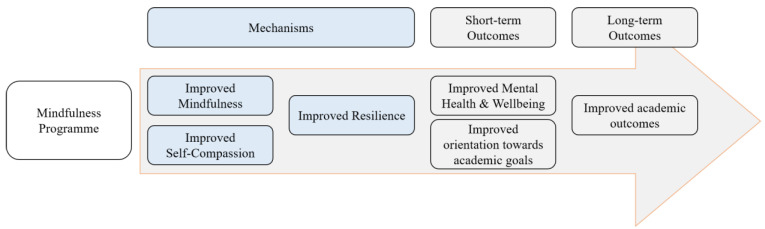
“Drawing upon clinical models depicting mechanisms of change, the cultivation of mindfulness skills is thought to enhance self-regulation skills, promoting the psychological resilience that supports mental health and wellbeing [40].”
MethodThe mental health of university students in the United Kingdom
Macaskill, A. (2013) · British Journal of Guidance & Counselling · doi:10.1080/03069885.2012.743110 · Cited by 357
R 2 effect-size measures for mediation analysis
Fairchild, A. J., MacKinnon, D. P., Taborga, M. P., & Taylor, A. B. (2009) · Behavior Research Methods · doi:10.3758/brm.41.2.486 · Cited by 353
Dawson, A. F., Brown, W. W., Anderson, J., Datta, B., Donald, J. N., Hong, K., Allan, S., Mole, T. B., Jones, P. B., & Galante, J. (2020) · Applied Psychology: Health and Well-Being · doi:10.1111/aphw.12188 · Cited by 312 · cited 2×
“A meta-analytic review of MBPs implemented in universities found overall improvements in depression, anxiety and wellbeing for students post-intervention, with lasting effects (>3 months) on distress [19].”
BackgroundResultRichardson, T., Elliott, P., Roberts, R., & Jansen, M. (2017) · Community Mental Health Journal · doi:10.1007/s10597-016-0052-0 · Cited by 304
Effect of regression to the mean on decision making in health care
Morton, V., & Torgerson, D. J. (2003) · BMJ · doi:10.1136/bmj.326.7398.1083 · Cited by 303
Mindfulness and Self-Compassion: Exploring Pathways to Adolescent Emotional Well-Being
Bluth, K., & Blanton, P. W. (2014) · Journal of Child and Family Studies · doi:10.1007/s10826-013-9830-2 · Cited by 270
Egbewale, B. E., Lewis, M., & Sim, J. (2014) · BMC Medical Research Methodology · doi:10.1186/1471-2288-14-49 · Cited by 234
Duffy, A., Keown-Stoneman, C., Goodday, S., Horrocks, J., Lowe, M., King, N., Pickett, W., McNevin, S. H., Cunningham, S., Rivera, D., et al. (2020) · BJPsych Open · doi:10.1192/bjo.2020.24 · Cited by 228
Breedvelt, J. J. F., Amanvermez, Y., Harrer, M., Karyotaki, E., Gilbody, S., Bockting, C. L. H., Cuijpers, P., & Ebert, D. D. (2019) · Frontiers in Psychiatry · doi:10.3389/fpsyt.2019.00193 · Cited by 222
Jenkins, P. E., Ducker, I., Gooding, R., James, M., & Rutter-Eley, E. (2021) · Journal of American College Health · doi:10.1080/07448481.2019.1709474 · Cited by 147 · cited 2×
“Specifically, the presence of depressive symptoms in university students has been associated with role limitations due to physical health problems; while anxiety symptoms have been related to bodily pain; and both depressive and anxiety symptoms have been associated with reductions in general health, energy/fatigue, s…”
BackgroundResultBeshai, S., McAlpine, L., Weare, K., & Kuyken, W. (2016) · Mindfulness · doi:10.1007/s12671-015-0436-1 · Cited by 141 · cited 1×
“For example, in a study of an instructor-led M-FP tailored for secondary school teachers, there was reduced stress and increased rates of wellbeing, mindfulness and self-compassion [33].”
ResultSelf-citationRole of Resilience in Mindfulness Training for First Responders
Kaplan, J. B., Bergman, A. L., Christopher, M., Bowen, S., & Hunsinger, M. (2017) · Mindfulness · doi:10.1007/s12671-017-0713-2 · Cited by 130
DeLuca, S. M., Kelman, A. R., & Waelde, L. C. (2018) · Psychological Studies · doi:10.1007/s12646-018-0452-z · Cited by 95
Pérez-Aranda, A., García-Campayo, J., Gude, F., Luciano, J. V., Feliu-Soler, A., González-Quintela, A., López-del-Hoyo, Y., & Montero-Marin, J. (2021) · International Journal of Clinical and Health Psychology · doi:10.1016/j.ijchp.2021.100229 · Cited by 92 · cited 2×
“Recent cross-sectional evidence from general population participants also found significant direct effects of mindfulness, self-compassion, and resilience on anxiety and depression symptoms, with indirect effects of mindfulness and self-compassion through resilience on depression symptoms [42].”
BackgroundRuffault, A., Bernier, M., Juge, N., & Fournier, J. F. (2016) · Mindfulness · doi:10.1007/s12671-015-0467-7 · Cited by 91 · cited 1×
“Intrinsic motivation is widely considered an important determinant for academic success [27] and is associated with trait mindfulness [73].”
BackgroundMediation Analysis in Psychosomatic Medicine Research
Lockhart, G., MacKinnon, D. P., & Ohlrich, V. (2011) · Psychosomatic Medicine · doi:10.1097/psy.0b013e318200a54b · Cited by 87 · cited 1×
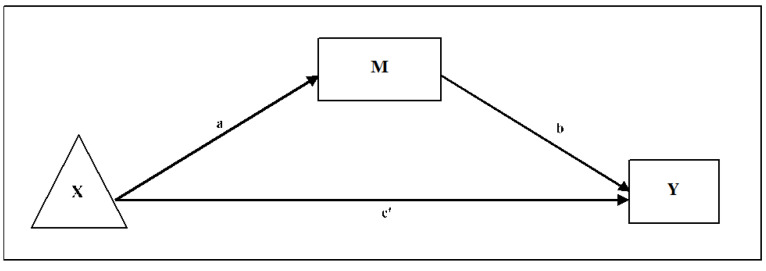
“Indirect effects are considered statistically significant when their 95% confidence interval does not include zero [66].”
BackgroundLever Taylor, B., Strauss, C., Cavanagh, K., & Jones, F. (2014) · Behaviour Research and Therapy · doi:10.1016/j.brat.2014.09.007 · Cited by 76 · cited 6×
“Engagement, by M-FP course attendance, was higher than alternative MBPs offered to university students [23], and slightly lower in comparison to a secondary teacher sample [20].”
BackgroundMethodResultInfluentialPositive life goals and plans in parasuicide
Vincent, P. J., Boddana, P., & MacLeod, A. K. (2004) · Clinical Psychology & Psychotherapy · doi:10.1002/cpp.394 · Cited by 72
Cvetkovski, S., Jorm, A. F., & Mackinnon, A. J. (2019) · Studies in Higher Education · doi:10.1080/03075079.2017.1356281 · Cited by 64
Conditional goal-setting, personal goals and hopelessness about the future
Hadley, S. A., & MacLeod, A. K. (2010) · Cognition & Emotion · doi:10.1080/02699930903122521 · Cited by 62
Personal goal setting as a mediator of the relationship between mindfulness and wellbeing
Grégoire, S., Bouffard, T., & Vezeau, C. (2012) · International Journal of Wellbeing · doi:10.5502/ijw.v2.i3.5 · Cited by 52
Montero-Marin, J., Taylor, L., Crane, C., Greenberg, M. T., Ford, T. J., Williams, J. M. G., García-Campayo, J., Sonley, A., Lord, L., Dalgleish, T., et al. (2021) · Journal of Educational Psychology · doi:10.1037/edu0000542 · Cited by 49 · cited 4×
“The delivery of the MBP may also impact these mechanisms for change, with the instructor-led delivery of the M-FP program indirectly improving wellbeing, mental health and burnout in secondary teachers by significantly enhancing mindfulness and self-compassion compared with the self-taught M-FP program [20].”
BackgroundResultInfluentialSelf-citationEffects of Mindfulness-Based Cognitive Therapy on Specificity of Life Goals
Crane, C., Winder, R., Hargus, E., Amarasinghe, M., & Barnhofer, T. (2012) · Cognitive Therapy and Research · doi:10.1007/s10608-010-9349-4 · Cited by 46 · cited 1×
“The ‘Measure to elicit positive future goals and plans’ (MEPGAP) [55] has been adapted in previous research to measure conditional goal setting [56,57].”
MethodSelf-citationLewis, E. G., & Cardwell, J. M. (2018) · Journal of Further and Higher Education · doi:10.1080/0309877x.2018.1471125 · Cited by 44
Bóo, S. J. M., Childs‐Fegredo, J., Cooney, S., Datta, B., Dufour, G., Jones, P. B., & Galante, J. (2020) · Counselling and Psychotherapy Research · doi:10.1002/capr.12282 · Cited by 39
Warren, M. T., & Wray‐Lake, L. (2017) · Journal of Adolescence · doi:10.1016/j.adolescence.2017.04.011 · Cited by 20
Mindfulness at Universities: An Increasingly Present Reality
Delgado-Suárez, I. (2018) · Educational Research Applications · doi:10.29011/2575-7032/100049 · Cited by 4
Research works printed but not linked: 3
- Metcalfe J. Wilson S. Levecque K. Exploring Wellbeing and Mental Health and Associated Support Services for Postgraduate Researchers The Careers Research and Advisory Centre (CRAC) Limited Cambridge, UK 2018 Available online: https://re.ukri.org/documents/2018/mental-health-report/ (accessed on 2 June 2021)
- The Oxford Mindfulness Centre Learn Mindfulness: Find a Course 2020 Available online: https://www.oxfordmindfulness.org/learn-mindfulness/find-a-course/ (accessed on 2 June 2021)
- Cohen J. Statistical Power Analysis for the Behavioral Science Routledge Academic New York, NY, USA 1988
Cited by
González-Martín, A. M., Aibar‐Almazán, A., Rivas-Campo, Y., Castellote‐Caballero, Y., & Carcelén‐Fraile, M. D. C. (2023) · Frontiers in Public Health · doi:10.3389/fpubh.2023.1284632 · Cited by 160
The MYRIAD team, Baer, R., Crane, C., Montero-Marin, J., Phillips, A., Taylor, L., Tickell, A., & Kuyken, W. (2021) · Mindfulness · doi:10.1007/s12671-020-01547-8 · Cited by 78
Self-citationAbulfaraj, G. G., Upsher, R., Zavos, H. M. S., & Dommett, E. J. (2024) · Education Sciences · doi:10.3390/educsci14050510 · Cited by 67
“There were eighteen studies in the mindfulness category [47,49,53,55–57, 60,67, 69 , 71, 72,77,81, 86– 90].”
BackgroundInfluentialSaracutu, O. I., Manfredini, D., Bracci, A., Cagidiaco, E. F., Ferrari, M., & Colonna, A. (2024) · CRANIO® · doi:10.1080/08869634.2024.2357199 · Cited by 61
“In addition to that, many scientific papers show that psychological distress is more common in university students compared to the general population [28–30].”
The Relationship between Mindful Attention Awareness, Perceived Stress and Subjective Wellbeing
Hepburn, S.-J., Carroll, A., & McCuaig, L. (2021) · International Journal of Environmental Research and Public Health · doi:10.3390/ijerph182312290 · Cited by 58
“It has been suggested that universities need to provide support for students because mental health concerns can have a broad range of impacts on a student’s quality of life [2,3].”
Metadata
- Authors
- Medlicott, E., Phillips, A., Crane, C., Hinze, V., Taylor, L., Tickell, A., Montero-Marin, J., & Kuyken, W.
- Affiliations
- Warneford Hospital (GB)
- Department of Psychiatry, University of Oxford, Warneford Hospital, Oxford OX3 7JX, UK
- Corresponding author
- Kuyken, Willem
- ORCID
- Venue
- International Journal of Environmental Research and Public Health
- Publisher
- MDPI AG
- Published
- 2021-06-03
- Volume
- 18
- Issue
- 11
- Pages
- 6023
- ISSN
- 1660-4601 (ISSN-L)
- PMC
- PMC8199969
- OpenAlex
- W3170519275
- Cited by
- 67
- References
- 65
- Citations by year
- 2026: 10 · 2025: 12 · 2024: 23 · 2023: 16 · 2022: 3 · 2021: 2
- FWCI
- 7.50
- Type
- journal article
- Language
- en
- Open access
- gold
- doi.org
- Licence
- Locations
- International Journal of Environmental Research and Public Health (publishedVersion, cc-by)
- PubMed Central (publishedVersion, cc-by)
- PubMed (publishedVersion)
- RePEc: Research Papers in Economics (submittedVersion)
- DOAJ (DOAJ: Directory of Open Access Journals) (submittedVersion)
- Apollo (University of Cambridge) (submittedVersion, cc-by)
- Funders
- Wellcome Trust (WT104908/Z/14/Z, WT107496/Z/15/Z)
- Topics
- Social Sciences › Psychology › Clinical Psychology › Mindfulness and Compassion Interventions
- Social Sciences › Psychology › Developmental and Educational Psychology › Student Stress and Coping
- Social Sciences › Psychology › Social Psychology › Psychological Well-being and Life Satisfaction
- Keywords
- mindfulness-based interventions, university students, student mental health, well-being, acceptability, intervention effectiveness, self-compassion, resilience, academic goal orientation, academic motivation, mediation
- MeSH terms
- Humans, Mental Health, Motivation, Students, Universities, Mindfulness
About these checks
Registry, retraction, Cites and statistics results are computed, not judged, with one exception: a printed reference that no index lists is read once by a model before it counts as a citation error. Claims are extracted by a model and kept only when their quote appears verbatim in the text; each cited source is then checked, with a model’s help, for whether it says what the claim relies on. Those verdicts can be wrong — read the claim’s quote and the cited source before relying on one.
Statistics and arithmetic are recomputed, not judged.
Confidence bands are shown only for fields calibrated on our annotated test set. None is calibrated yet, so no band is shown.
What counts as a claim ›How we measure confidence ›How we check this ›
Are you an author, or do you see a problem with this page? Request a review
Data sources
Bibliographic data: Semantic Scholar, OpenAlex, Crossref.
Contains information from the Semantic Scholar Academic Graph Datasets, made available under the ODC Attribution License (ODC-BY 1.0).
Semantic Scholar’s data is described in: Kinney, R., et al. (2023). The Semantic Scholar Open Data Platform. arXiv:2301.10140.
