

The Mental Health and Wellbeing of University Students: Acceptability, Effectiveness, and Mechanisms of a Mindfulness-Based Course
Open accessThe DOI matches its Crossref record; 65 of the 65 references it cites were found in a registry or an index.
Abstract
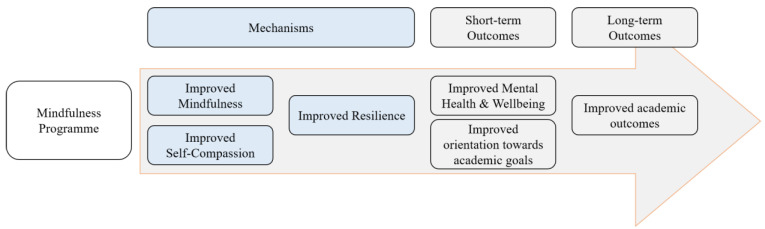
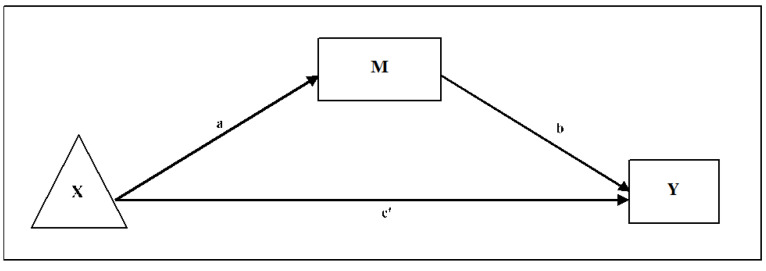
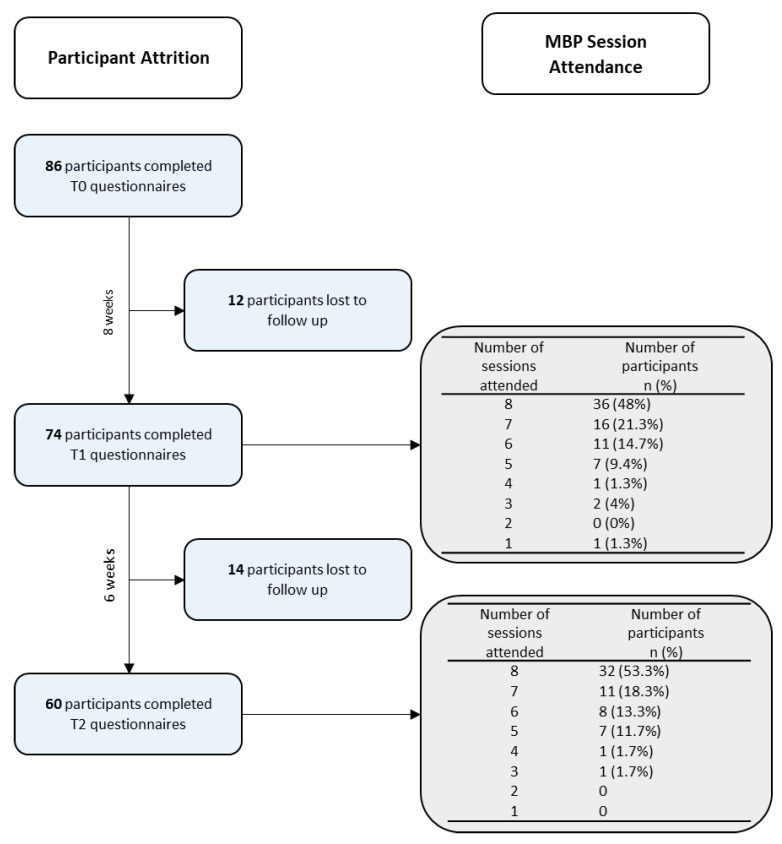
Mental health problems are relatively common during university and adversely affect academic outcomes. Evidence suggests that mindfulness can support the mental health and wellbeing of university students. We explored the acceptability and effectiveness of an 8-week instructor-led mindfulness-based course (“Mindfulness: Finding Peace in a Frantic World”; Williams and Penman, 2011) on improving wellbeing and mental health (self-reported distress), orientation and motivation towards academic goals, and the mechanisms driving these changes. Eighty-six undergraduate and post-graduate students (>18 years) participated. Students engaged well with the course, with 36 (48.0%) completing the whole programme, 52 (69.3%) attending 7 out of 8 sessions, and 71 (94.7%) completing at least half. Significant improvements in wellbeing and mental health were found post-intervention and at 6-week follow-up. Improvements in wellbeing were mediated by mindfulness, self-compassion, and resilience. Improvements in mental health were mediated by improvements in mindfulness and resilience but not self-compassion. Significant improvements in students’ orientation to their academic goal, measured by “commitment” to, “likelihood” of achieving, and feeling more equipped with the “skills and resources” needed, were found at post-intervention and at 6-week follow-up. Whilst exploratory, the results suggest that this mindfulness intervention is acceptable and effective for university students and can support academic study.
Overview
The claims and statistics of this paper haven’t been checked yet.
Free: it reads the open-access text and checks the first 5 claims that cite a source we can check. Create a free account to check every claim.
Integrity signals
Registry
Cites
Statistics
Figures
Verification
Claims the paper makes
The claims and statistics of this paper haven’t been checked yet.
Free: it reads the open-access text and checks the first 5 claims that cite a source we can check. Create a free account to check every claim.
Claims other papers make about this one
Each is checked against this paper’s own text: does it say what the citing paper says it does?
The source backs part of the claim, not all of it — or backs it for a different population, condition or comparison.
In the citing paper
“a previous study highlighted the mediating effect of mindfulness between mental health and wellbeing among people; mindfulness mediated improvements in wellbeing and mental health [26–30].”
From Mindfulness among lebanese university students and its indirect effect between mental health and wellbeing (2023) · cites this paper as [27]
Experimental — accuracy not yet measuredThe cited source says what the claim attributes to it.
In the citing paper
“Additionally, in general population samples, there is preliminary support for mindfulness and self-compassion as candidate mechanisms (Medlicott et al., 2021; Montero-Marin et al., 2021; Strauss et al., 2021)”
From The State- and Trait-Level Effects and Candidate Mechanisms of Four Mindfulness-Based Cognitive Therapy (MBCT) Practices: Two Exploratory Studies (2023) · cites this paper as Medlicott et al., 2021
The cited source says what the claim attributes to it.
In the citing paper
“There is also a growing body of evidence that has demonstrated preliminary efficacy of MBCT adaptations in general population samples (e.g., secondary school teachers, university students, healthcare workers, and workplace employees) (Beshai et al., 2016; de Bruin et al., 2020; Medlicott et al., 2021; Montero-Marin et al., 2021; Strauss et al., 2021; Taylor et al., 2014).”
From The State- and Trait-Level Effects and Candidate Mechanisms of Four Mindfulness-Based Cognitive Therapy (MBCT) Practices: Two Exploratory Studies (2023) · cites this paper as Medlicott et al., 2021
Self-check
Percentages, sums and reported differences re-computed from the paper’s own numbers.
The self-check needs the paper’s full text.
Citations
Cites
Development of a new resilience scale: The Connor-Davidson Resilience Scale (CD-RISC)
Connor, K. M., & Davidson, J. R. T. (2003) · Depression and Anxiety · doi:10.1002/da.10113 · Cited by 11,793 · cited 3×
“At all three time points (T0, T1 and T2), resilience was assessed using a shorter 10-item version (CD-RISC-10) [39], which has a stable factor structure, good reliability and validity [39].”
MethodUsing Self-Report Assessment Methods to Explore Facets of Mindfulness
Baer, R. A., Smith, G. T., Hopkins, J., Krietemeyer, J., & Toney, L. (2006) · Assessment · doi:10.1177/1073191105283504 · Cited by 7,511 · cited 3×
“At all data collection time points (T0, T1 and T2), participants completed the Five-Facet Mindfulness Questionnaire-Short Form (FFMQ-SF) [48], which is a shortened, 15-item version of the Five-Facet Mindfulness Questionnaire (FFMQ) [49].”
MethodMindfulness: A proposed operational definition.
Bishop, S. R., Lau, M., Shapiro, S., Carlson, L., Anderson, N. D., Carmody, J., Segal, Z. V., Abbey, S., Speca, M., Velting, D., et al. (2004) · Clinical Psychology: Science and Practice · doi:10.1093/clipsy.bph077 · Cited by 7,234
The Development and Validation of a Scale to Measure Self-Compassion
NEFF, K. D. (2003) · Self and Identity · doi:10.1080/15298860309027 · Cited by 6,436 · cited 1×
“With 12 items rather than 26 [51,52], this measure has good convergent validity and reliability [51].”
BackgroundSelf-Compassion: An Alternative Conceptualization of a Healthy Attitude Toward Oneself
NEFF, K. (2003) · Self and Identity · doi:10.1080/15298860309032 · Cited by 5,440 · cited 1×
“Initially, it was conceptualised as a bidirectional relationship with each enhancing the other [36], but emerging research suggests that mindfulness and self-compassion improve mental health and wellbeing independently [37].”
BackgroundThe Warwick-Edinburgh Mental Well-being Scale (WEMWBS): development and UK validation
Tennant, R., Hiller, L., Fishwick, R., Platt, S., Joseph, S., Weich, S., Parkinson, J., Secker, J., & Stewart-Brown, S. (2007) · Health and Quality of Life Outcomes · doi:10.1186/1477-7525-5-63 · Cited by 5,031
Required sample size to detect the mediated effect
Fritz, M. S., & MacKinnon, D. P. (2007) · Psychological Science · doi:10.1111/j.1467-9280.2007.01882.x · Cited by 4,810
(2001) · Cited by 3,666
Campbell‐Sills, L., & Stein, M. B. (2007) · Journal of Traumatic Stress · doi:10.1002/jts.20271 · Cited by 3,575
Prevention of relapse/recurrence in major depression by mindfulness-based cognitive therapy.
Teasdale, J. D., Segal, Z. V., Williams, J. M. G., Ridgeway, V. A., Soulsby, J. M., & Lau, M. A. (2000) · Journal of Consulting and Clinical Psychology · doi:10.1037/0022-006x.68.4.615 · Cited by 3,236 · cited 2×
“The course is an adaptation of Mindfulness-Based Cognitive Therapy (MBCT) [44] and includes 8 in-person weekly 90-min sessions of reduced-intensity MBCT with a focus on reducing general distress and improving wellbeing [21].”
Method
Research works printed but not linked: 3
- Metcalfe J. Wilson S. Levecque K. Exploring Wellbeing and Mental Health and Associated Support Services for Postgraduate Researchers The Careers Research and Advisory Centre (CRAC) Limited Cambridge, UK 2018 Available online: https://re.ukri.org/documents/2018/mental-health-report/ (accessed on 2 June 2021)
- The Oxford Mindfulness Centre Learn Mindfulness: Find a Course 2020 Available online: https://www.oxfordmindfulness.org/learn-mindfulness/find-a-course/ (accessed on 2 June 2021)
- Cohen J. Statistical Power Analysis for the Behavioral Science Routledge Academic New York, NY, USA 1988
Cited by
González-Martín, A. M., Aibar‐Almazán, A., Rivas-Campo, Y., Castellote‐Caballero, Y., & Carcelén‐Fraile, M. D. C. (2023) · Frontiers in Public Health · doi:10.3389/fpubh.2023.1284632 · Cited by 160
The MYRIAD team, Baer, R., Crane, C., Montero-Marin, J., Phillips, A., Taylor, L., Tickell, A., & Kuyken, W. (2021) · Mindfulness · doi:10.1007/s12671-020-01547-8 · Cited by 78
Self-citationAbulfaraj, G. G., Upsher, R., Zavos, H. M. S., & Dommett, E. J. (2024) · Education Sciences · doi:10.3390/educsci14050510 · Cited by 67
“There were eighteen studies in the mindfulness category [47,49,53,55–57, 60,67, 69 , 71, 72,77,81, 86– 90].”
BackgroundInfluentialSaracutu, O. I., Manfredini, D., Bracci, A., Cagidiaco, E. F., Ferrari, M., & Colonna, A. (2024) · CRANIO® · doi:10.1080/08869634.2024.2357199 · Cited by 61
“In addition to that, many scientific papers show that psychological distress is more common in university students compared to the general population [28–30].”
The Relationship between Mindful Attention Awareness, Perceived Stress and Subjective Wellbeing
Hepburn, S.-J., Carroll, A., & McCuaig, L. (2021) · International Journal of Environmental Research and Public Health · doi:10.3390/ijerph182312290 · Cited by 58
“It has been suggested that universities need to provide support for students because mental health concerns can have a broad range of impacts on a student’s quality of life [2,3].”
Metadata
- Authors
- Medlicott, E., Phillips, A., Crane, C., Hinze, V., Taylor, L., Tickell, A., Montero-Marin, J., & Kuyken, W.
- Affiliations
- Warneford Hospital (GB)
- Department of Psychiatry, University of Oxford, Warneford Hospital, Oxford OX3 7JX, UK
- Corresponding author
- Kuyken, Willem
- ORCID
- Venue
- International Journal of Environmental Research and Public Health
- Publisher
- MDPI AG
- Published
- 2021-06-03
- Volume
- 18
- Issue
- 11
- Pages
- 6023
- ISSN
- 1660-4601 (ISSN-L)
- PMC
- PMC8199969
- OpenAlex
- W3170519275
- Cited by
- 67
- References
- 65
- Citations by year
- 2026: 10 · 2025: 12 · 2024: 23 · 2023: 16 · 2022: 3 · 2021: 2
- FWCI
- 7.50
- Type
- journal article
- Language
- en
- Open access
- gold
- doi.org
- Licence
- Locations
- International Journal of Environmental Research and Public Health (publishedVersion, cc-by)
- PubMed Central (publishedVersion, cc-by)
- PubMed (publishedVersion)
- RePEc: Research Papers in Economics (submittedVersion)
- DOAJ (DOAJ: Directory of Open Access Journals) (submittedVersion)
- Apollo (University of Cambridge) (submittedVersion, cc-by)
- Funders
- Wellcome Trust (WT104908/Z/14/Z, WT107496/Z/15/Z)
- Topics
- Social Sciences › Psychology › Clinical Psychology › Mindfulness and Compassion Interventions
- Social Sciences › Psychology › Developmental and Educational Psychology › Student Stress and Coping
- Social Sciences › Psychology › Social Psychology › Psychological Well-being and Life Satisfaction
- Keywords
- mindfulness-based interventions, university students, student mental health, well-being, acceptability, intervention effectiveness, self-compassion, resilience, academic goal orientation, academic motivation, mediation
- MeSH terms
- Humans, Mental Health, Motivation, Students, Universities, Mindfulness
About these checks
Registry, retraction, Cites and statistics results are computed, not judged, with one exception: a printed reference that no index lists is read once by a model before it counts as a citation error. Claims are extracted by a model and kept only when their quote appears verbatim in the text; each cited source is then checked, with a model’s help, for whether it says what the claim relies on. Those verdicts can be wrong — read the claim’s quote and the cited source before relying on one.
Statistics and arithmetic are recomputed, not judged.
Confidence bands are shown only for fields calibrated on our annotated test set. None is calibrated yet, so no band is shown.
What counts as a claim ›How we measure confidence ›How we check this ›
Are you an author, or do you see a problem with this page? Request a review
Data sources
Bibliographic data: Semantic Scholar, OpenAlex, Crossref.
Contains information from the Semantic Scholar Academic Graph Datasets, made available under the ODC Attribution License (ODC-BY 1.0).
Semantic Scholar’s data is described in: Kinney, R., et al. (2023). The Semantic Scholar Open Data Platform. arXiv:2301.10140.
