

The DOI matches its Crossref record; 14 of the 14 references it cites were found in a registry or an index.
Impact of Contaminants on Microbiota: Linking the Gut–Brain Axis with Neurotoxicity
Abstract
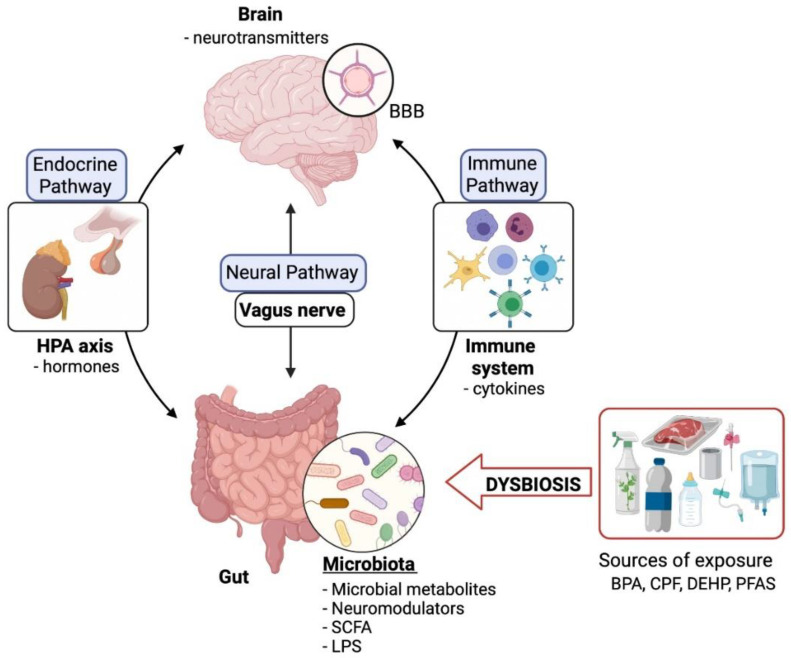
Over the last years, research has focused on microbiota to establish a missing link between neuronal health and intestine imbalance. Many studies have considered microbiota as critical regulators of the gut–brain axis. The crosstalk between microbiota and the central nervous system is mainly explained through three different pathways: the neural, endocrine, and immune pathways, intricately interconnected with each other. In day-to-day life, human beings are exposed to a wide variety of contaminants that affect our intestinal microbiota and alter the bidirectional communication between the gut and brain, causing neuronal disorders. The interplay between xenobiotics, microbiota and neurotoxicity is still not fully explored, especially for susceptible populations such as pregnant women, neonates, and developing children. Precisely, early exposure to contaminants can trigger neurodevelopmental toxicity and long-term diseases. There is growing but limited research on the specific mechanisms of the microbiota–gut–brain axis (MGBA), making it challenging to understand the effect of environmental pollutants. In this review, we discuss the biological interplay between microbiota–gut–brain and analyse the role of endocrine-disrupting chemicals: Bisphenol A (BPA), Chlorpyrifos (CPF), Diethylhexyl phthalate (DEHP), and Per- and polyfluoroalkyl substances (PFAS) in MGBA perturbations and subsequent neurotoxicity. The complexity of the MGBA and the changing nature of the gut microbiota pose significant challenges for future research. However, emerging in-silico models able to analyse and interpret meta-omics data are a promising option for understanding the processes in this axis and can help prevent neurotoxicity.
Overview
The claims and statistics of this paper haven’t been checked yet.
Run the check — free, no account needed. It reads the open-access text and checks the sources it cites.
Integrity signals
Registry
Cites
Statistics
Figures
Verification
Claims the paper makes
The claims and statistics of this paper haven’t been checked yet.
Run the check — free, no account needed. It reads the open-access text and checks the sources it cites.
Claims other papers make about this one
Each is checked against this paper’s own text: does it say what the citing paper says it does?
In the citing paper
“Fluoride may be beneficial or harmful to the gut microbiome depending upon the doses ingested, transit time, and duration of exposure.1,18”
From Effect of Fluoride on Gut Microbiota: A Systematic Review (2025) · cites this paper as [1]
Self-check
Percentages, sums and reported differences re-computed from the paper’s own numbers.
The self-check needs the paper’s full text.
Citations
Cites
Chen, Y., Xu, J., & Chen, Y. (2021) · Nutrients · doi:10.3390/nu13062099 · Cited by 917
Podder, A., Sadmani, A. H. M. A., Reinhart, D., Chang, N.-B., & Goel, R. (2021) · Journal of Hazardous Materials · doi:10.1016/j.jhazmat.2021.126361 · Cited by 623
Clark, A., & Mach, N. (2016) · Journal of the International Society of Sports Nutrition · doi:10.1186/s12970-016-0155-6 · Cited by 583 · cited 1×
“Therefore, intestinal microbiota composition is also affected by the type of diet and is directly related to the well-being of the host [11].”
BackgroundAho, V. T. E., Houser, M. C., Pereira, P. A. B., Chang, J., Rudi, K., Paulin, L., Hertzberg, V., Auvinen, P., Tansey, M. G., & Scheperjans, F. (2021) · Molecular Neurodegeneration · doi:10.1186/s13024-021-00427-6 · Cited by 435
You Are What You Eat—The Relationship between Diet, Microbiota, and Metabolic Disorders—A Review
Moszak, M., Szulińska, M., & Bogdański, P. (2020) · Nutrients · doi:10.3390/nu12041096 · Cited by 397
Hao, Z., Wang, W., Guo, R., & Liu, H. (2019) · Psychoneuroendocrinology · doi:10.1016/j.psyneuen.2019.02.025 · Cited by 242
Neuropod Cells: The Emerging Biology of Gut-Brain Sensory Transduction
Kaelberer, M. M., Rupprecht, L. E., Liu, W. W., Weng, P., & Bohórquez, D. V. (2020) · Annual Review of Neuroscience · doi:10.1146/annurev-neuro-091619-022657 · Cited by 236 · cited 1×
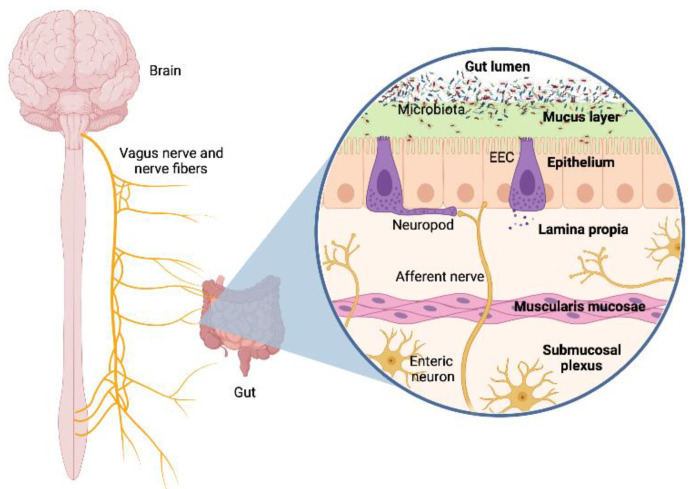
“Additionally, neuropod cells can synapse with neuronal circuits maintaining the communication with the plexuses of the ENS and consequently with the vagus nerve [27,28].”
BackgroundRegulation of gut luminal serotonin by commensal microbiota in mice
Hata, T., Asano, Y., Yoshihara, K., Kimura-Todani, T., Miyata, N., Zhang, X.-T., Takakura, S., Aiba, Y., Koga, Y., & Sudo, N. (2017) · PLOS ONE · doi:10.1371/journal.pone.0180745 · Cited by 211
Meneguzzi, A., Fava, C., Castelli, M., & Minuz, P. (2021) · Frontiers in Endocrinology · doi:10.3389/fendo.2021.706352 · Cited by 174
Agudelo-Ochoa, G. M., Valdés-Duque, B. E., Giraldo-Giraldo, N. A., Jaillier-Ramírez, A. M., Giraldo-Villa, A., Acevedo-Castaño, I., Yepes-Molina, M. A., Barbosa-Barbosa, J., & Benítez-Paéz, A. (2020) · Gut Microbes · doi:10.1080/19490976.2019.1707610 · Cited by 166
Research works printed but not linked: 112
- Nishino, 2013, Commensal Microbiota Modulate Murine Behaviors in a Strictly Contamination-Free Environment Confirmed by Culture-Based Methods, Neurogastroenterol. Motil., 25, 521-e371, 10.1111/nmo.12110 · DOI · Paper page
- Bezek, K., Petelin, A., Pražnikar, J., Nova, E., Redondo, N., Marcos, A., and Pražnikar, Z.J. (2020). Obesity Measures and Dietary Parameters as Predictors of Gut Microbiota Phyla in Healthy Individuals. Nutrients, 12. · DOI
- Arumugam, 2011, Enterotypes of the Human Gut Microbiome, Nature, 473, 174, 10.1038/nature09944 · DOI · Paper page
- Davenport, 2017, The Human Microbiome in Evolution, BMC Biol., 15, 1, 10.1186/s12915-017-0454-7 · DOI · Paper page
- Vaga, 2020, Compositional and Functional Differences of the Mucosal Microbiota along the Intestine of Healthy Individuals, Sci. Rep., 10, 14977, 10.1038/s41598-020-71939-2 · DOI
- Ahn, 2021, Environmental Influences on the Human Microbiome and Implications for Noncommunicable Disease, Annu. Rev. Public Health, 42, 277, 10.1146/annurev-publhealth-012420-105020 · DOI
- Magueresse-Battistoni, B. (2020). le Adipose Tissue and Endocrine-Disrupting Chemicals: Does Sex Matter?. Int. J. Environ. Res. Public Health, 17. · DOI
- Long, 2021, Dysbacteriosis Induces Abnormal Neurogenesis via LPS in a Pathway Requiring NF-ΚB/IL-6, Pharmacol. Res., 167, 105543, 10.1016/j.phrs.2021.105543 · DOI
- Gubert, 2020, Exercise, Diet and Stress as Modulators of Gut Microbiota: Implications for Neurodegenerative Diseases, Neurobiol. Dis., 134, 104621, 10.1016/j.nbd.2019.104621 · DOI
- Man, A.W.C., Zhou, Y., Xia, N., and Li, H. (2020). Involvement of Gut Microbiota, Microbial Metabolites and Interaction with Polyphenol in Host Immunometabolism. Nutrients, 12. · DOI
- Gentile, F., Doneddu, P.E., Riva, N., Nobile-Orazio, E., and Quattrini, A. (2020). Diet, Microbiota and Brain Health: Unraveling the Network Intersecting Metabolism and Neurodegeneration. Int. J. Mol. Sci., 21. · DOI
- Aguilera, 2020, Endobolome, a New Concept for Determining the Influence of Microbiota Disrupting Chemicals (MDC) in Relation to Specific Endocrine Pathogenesis, Front. Microbiol., 11, 578007, 10.3389/fmicb.2020.578007 · DOI
- Raja, 2022, In Utero Exposure to Endocrine Disruptors and Developmental Neurotoxicity: Implications for Behavioural and Neurological Disorders in Adult Life, Environ. Res., 203, 111829, 10.1016/j.envres.2021.111829 · DOI
- Vilcins, 2021, Early Environmental Exposures and Life-Long Risk of Chronic Non-Respiratory Disease, Paediatr. Respir. Rev., 40, 33
- Heinken, 2021, Advances in Constraint-Based Modelling of Microbial Communities, Curr. Opin. Syst. Biol., 27, 100346, 10.1016/j.coisb.2021.05.007 · DOI
- Merten, 2020, Editorial: Exploring the Need to Include Microbiomes into EFSA’s Scientific Assessments, EFSA J., 18, e18061, 10.2903/j.efsa.2020.e18061 · DOI
- Spencer, 2020, Enteric Nervous System: Sensory Transduction, Neural Circuits and Gastrointestinal Motility, Nat. Rev. Gastroenterol. Hepatol., 17, 338, 10.1038/s41575-020-0271-2 · DOI
- Kulkarni, 2018, Advances in Enteric Neurobiology: The “Brain” in the Gut in Health and Disease, J. Neurosci., 38, 9346, 10.1523/JNEUROSCI.1663-18.2018 · DOI
- D’alessandro, G., Lauro, C., Quaglio, D., Ghirga, F., Botta, B., Trettel, F., and Limatola, C. (2021). Neuro-signals from Gut Microbiota: Perspectives for Brain Glioma. Cancers, 13. · DOI
- Erny, 2021, Microbiota-Derived Acetate Enables the Metabolic Fitness of the Brain Innate Immune System during Health and Disease, Cell Metab., 33, 2260, 10.1016/j.cmet.2021.10.010 · DOI · Paper page
- Chevalier, 2020, Effect of Gut Microbiota on Depressive-like Behaviors in Mice Is Mediated by the Endocannabinoid System, Nat. Commun., 11, 6363, 10.1038/s41467-020-19931-2 · DOI
- Sudo, 2004, Postnatal Microbial Colonization Programs the Hypothalamic-Pituitary-Adrenal System for Stress Response in Mice, J. Physiol., 558, 263, 10.1113/jphysiol.2004.063388 · DOI · Paper page
- Bienenstock, 2019, Oral Selective Serotonin Reuptake Inhibitors Activate Vagus Nerve Dependent Gut-Brain Signalling, Sci. Rep., 9, 14290, 10.1038/s41598-019-50807-8 · DOI
- Basso, 2021, Psychobiotic Interventions for Anxiety in Young People: A Systematic Review and Meta-Analysis, with Youth Consultation, Transl. Psychiatry, 11, 352, 10.1038/s41398-021-01422-7 · DOI
- Sarkar, 2016, Psychobiotics and the Manipulation of Bacteria–Gut–Brain Signals, Trends Neurosci., 39, 763, 10.1016/j.tins.2016.09.002 · DOI · Paper page
- Venegas, 2019, Short Chain Fatty Acids (SCFAs)Mediated Gut Epithelial and Immune Regulation and Its Relevance for Inflammatory Bowel Diseases, Front. Immunol., 10, 277, 10.3389/fimmu.2019.00277 · DOI · Paper page
- Karunaratne, T.B., Okereke, C., Seamon, M., Purohit, S., Wakade, C., and Sharma, A. (2021). Niacin and Butyrate: Nutraceuticals Targeting Dysbiosis and Intestinal Permeability in Parkinson’s Disease. Nutrients, 13. · DOI
- Bourassa, 2016, Butyrate, Neuroepigenetics and the Gut Microbiome: Can a High Fiber Diet Improve Brain Health?, Neurosci. Lett., 625, 56, 10.1016/j.neulet.2016.02.009 · DOI
- Wang, 2021, Sodium Butyrate Ameliorates the Cognitive Impairment of Alzheimer’s Disease by Regulating the Metabolism of Astrocytes, Psychopharmacology, 239, 215, 10.1007/s00213-021-06025-0 · DOI
- Paley, E.L., and Perry, G. (2018). Towards an Integrative Understanding of TRNA Aminoacylation-Diet-Host-Gut Microbiome Interactions in Neurodegeneration. Nutrients, 10. · DOI
- Wan, 2020, Case-Control Study of the Effects of Gut Microbiota Composition on Neurotransmitter Metabolic Pathways in Children with Attention Deficit Hyperactivity Disorder, Front. Neurosci., 14, 127, 10.3389/fnins.2020.00127 · DOI
- Keskitalo, 2021, Gut Microbiota Diversity but Not Composition Is Related to Saliva Cortisol Stress Response at the Age of 2.5 Months, Stress, 24, 551, 10.1080/10253890.2021.1895110 · DOI · Paper page
- Modasia, 2020, Regulation of Enteroendocrine Cell Networks by the Major Human Gut Symbiont Bacteroides Thetaiotaomicron, Front. Microbiol., 11, 575595, 10.3389/fmicb.2020.575595 · DOI
- Yoon, 2021, Roles of Sex Hormones and Gender in the Gut Microbiota, J. Neurogastroenterol. Motil., 27, 314, 10.5056/jnm20208 · DOI
- Shin, 2019, Serum Level of Sex Steroid Hormone Is Associated with Diversity and Profiles of Human Gut Microbiome, Res. Microbiol., 170, 192, 10.1016/j.resmic.2019.03.003 · DOI · Paper page
- Consuegra, 2020, Cortisol-Related Signatures of Stress in the Fish Microbiome, Front. Microbiol., 11, 1621, 10.3389/fmicb.2020.01621 · DOI
- Jahnke, J.R., Roach, J., Azcarate-Peril, M.A., and Thompson, A.L. (2021). Maternal Precarity and HPA Axis Functioning Shape Infant Gut Microbiota and HPA Axis Development in Humans. PLoS ONE, 16. · DOI
- Hantsoo, 2019, Childhood Adversity Impact on Gut Microbiota and Inflammatory Response to Stress during Pregnancy, Brain Behav. Immun., 75, 240, 10.1016/j.bbi.2018.11.005 · DOI · Paper page
- Chassaing, 2014, Mammalian Gut Immunity, Biomed. J., 37, 246, 10.4103/2319-4170.130922 · DOI
- Teratani, 2020, The Liver–Brain–Gut Neural Arc Maintains the Treg Cell Niche in the Gut, Nature, 585, 591, 10.1038/s41586-020-2425-3 · DOI
- Chung, 2017, Sinulariolide Suppresses LPS-Induced Phenotypic and Functional Maturation of Dendritic Cells, Mol. Med. Rep., 16, 6992, 10.3892/mmr.2017.7480 · DOI
- Mol, S., Hafkamp, F.M.J., Varela, L., Simkhada, N., Taanman-Kueter, E.W., Tas, S.W., Wauben, M.H.M., Kormelink, T.G., and de Jong, E.C. (2021). Efficient Neutrophil Activation Requires Two Simultaneous Activating Stimuli. Int. J. Mol. Sci., 22. · DOI
- Liu, 2021, Loss of Vagal Integrity Disrupts Immune Components of the Microbiota-Gut-Brain Axis and Inhibits the Effect of Lactobacillus Rhamnosus on Behavior and the Corticosterone Stress Response, Neuropharmacology, 195, 108682, 10.1016/j.neuropharm.2021.108682 · DOI
- Erny, 2015, Host Microbiota Constantly Control Maturation and Function of Microglia in the CNS, Nat. Neurosci., 18, 965, 10.1038/nn.4030 · DOI · Paper page
- Nakkarach, 2021, Anti-Cancer and Anti-Inflammatory Effects Elicited by Short Chain Fatty Acids Produced by Escherichia coli Isolated from Healthy Human Gut Microbiota, Microb. Cell Factories, 20, 36, 10.1186/s12934-020-01477-z · DOI
- Stengel, 2010, Corticotropin-Releasing Factor Signaling and Visceral Response to Stress, Proceedings of the Experimental Biology and Medicine, Volume 235, 1168, 10.1258/ebm.2010.009347 · DOI
- Deleu, 2021, Short Chain Fatty Acids and Its Producing Organisms: An Overlooked Therapy for IBD?, EBioMedicine, 66, 103293, 10.1016/j.ebiom.2021.103293 · DOI
- Fragiadakis, 2019, Links between Environment, Diet, and the Hunter-Gatherer Microbiome, Gut Microbes, 10, 216, 10.1080/19490976.2018.1494103 · DOI
- He, 2018, Linking Gut Microbiota, Metabolic Syndrome and Economic Status Based on a Population-Level Analysis, Microbiome, 6, 172, 10.1186/s40168-018-0557-6 · DOI
- Cani, 2018, Human Gut Microbiome: Hopes, Threats and Promises, Gut, 67, 1716, 10.1136/gutjnl-2018-316723 · DOI · Paper page
- Collins, 2020, The Gut Microbiome: An Orchestrator of Xenobiotic Metabolism, Acta Pharm. Sin. B, 10, 19, 10.1016/j.apsb.2019.12.001 · DOI · Paper page
- Akimowicz, 2021, Probiotics as a Biological Detoxification Tool of Food Chemical Contamination: A Review, Food Chem. Toxicol., 153, 112306, 10.1016/j.fct.2021.112306 · DOI
- Velmurugan, 2018, Gut Microbiota in Toxicological Risk Assessment of Drugs and Chemicals: The Need of Hour, Gut Microbes, 9, 465
- Kabir, 2015, A Review on Endocrine Disruptors and Their Possible Impacts on Human Health, Environ. Toxicol. Pharmacol., 40, 241, 10.1016/j.etap.2015.06.009 · DOI · Paper page
- Lazarevic, 2019, Statistical Methodology in Studies of Prenatal Exposure to Mixtures of Endocrine-Disrupting Chemicals: A Review of Existing Approaches and New Alternatives, Environ. Health Perspect., 127, 26001, 10.1289/EHP2207 · DOI
- Walker, 2017, Epigenetic Impacts of Endocrine Disruptors in the Brain, Front. Neuroendocrinol., 44, 1, 10.1016/j.yfrne.2016.09.002 · DOI · Paper page
- Perera, 2020, The Role of Environmental Exposures and the Epigenome in Health and Disease, Environ. Mol. Mutagenesis, 61, 176, 10.1002/em.22311 · DOI
- Lin, 2017, A Study on Environmental Bisphenol A Pollution in Plastics Industry Areas, Water Air Soil Pollut., 228, 98, 10.1007/s11270-017-3277-9 · DOI
- Meza, 2020, Phthalates in the Diet of Mexican Children of School Age. Risk Analysis, Toxicol. Rep., 7, 1487, 10.1016/j.toxrep.2020.10.020 · DOI
- Papadopoulou, 2019, Diet as a Source of Exposure to Environmental Contaminants for Pregnant Women and Children from Six European Countries, Environ. Health Perspect., 127, 107005, 10.1289/EHP5324 · DOI
- Alla, 2021, Detection of Endocrine Disrupting Chemicals in Danio Rerio and Daphnia Pulex: Step-One, Behavioral Screen, Chemosphere, 271, 129442, 10.1016/j.chemosphere.2020.129442 · DOI
- Wang, 2018, Influence of Gastrointestinal Tract on Metabolism of Bisphenol A as Determined by in Vitro Simulated System, J. Hazard. Mater., 355, 111, 10.1016/j.jhazmat.2018.05.011 · DOI
- López-Moreno, A., Torres-Sánchez, A., Acuña, I., Suárez, A., and Aguilera, M. (2021). Representative Bacillus sp. AM1 from Gut Microbiota Harbor Versatile Molecular Pathways for Bisphenol A Biodegradation. Int. J. Mol. Sci., 22. · DOI
- Sirim, D., Widmann, M., Wagner, F., and Pleiss, J. (2010). Prediction and Analysis of the Modular Structure of Cytochrome P450 Monooxygenases. BMC Struct. Biol., 10. · DOI
- Wang, 2020, Bisphenol A Degradation Pathway and Associated Metabolic Networks in Escherichia coli Harboring the Gene Encoding CYP450, J. Hazard. Mater., 388, 121737, 10.1016/j.jhazmat.2019.121737 · DOI
- Esteves, 2021, The Central Role of Cytochrome P450 in Xenobiotic Metabolism—A Brief Review on a Fascinating Enzyme Family, J. Xenobiotics, 11, 94, 10.3390/jox11030007 · DOI
- Feng, 2020, Bisphenol A Exposure Induces Gut Microbiota Dysbiosis and Consequent Activation of Gut-Liver Axis Leading to Hepatic Steatosis in CD-1 Mice, Environ. Pollut., 265, 114880, 10.1016/j.envpol.2020.114880 · DOI
- Lai, 2016, Bisphenol A Alters Gut Microbiome: Comparative Metagenomics Analysis, Environ. Pollut., 218, 923, 10.1016/j.envpol.2016.08.039 · DOI · Paper page
- Ni, 2021, Bisphenol A Impairs Cognitive Function and 5-HT Metabolism in Adult Male Mice by Modulating the Microbiota-Gut-Brain Axis, Chemosphere, 282, 130952, 10.1016/j.chemosphere.2021.130952 · DOI
- Levin, 2017, Developmental Neurotoxicity of Succeeding Generations of Insecticides, Environ. Int., 99, 55, 10.1016/j.envint.2016.11.019 · DOI
- (2019). EFSA Statement on the Available Outcomes of the Human Health Assessment in the Context of the Pesticides Peer Review of the Active Substance Chlorpyrifos. EFSA J., 17, 5809.
- Mendler, 2020, Mucosal-Associated Invariant T-Cell (MAIT) Activation Is Altered by Chlorpyrifos- and Glyphosate-Treated Commensal Gut Bacteria, J. Immunotoxicol., 17, 10, 10.1080/1547691X.2019.1706672 · DOI
- Reygner, J., Condette, C.J., Bruneau, A., Delanaud, S., Rhazi, L., Depeint, F., Abdennebi-Najar, L., Bach, V., Mayeur, C., and Khorsi-Cauet, H. (2016). Changes in Composition and Function of Human Intestinal Microbiota Exposed to Chlorpyrifos in Oil as Assessed by the SHIME® Model. Int. J. Environ. Res. Public Health, 13. · DOI
- Delanaud, 2018, Use of a Combination of in Vitro Models to Investigate the Impact of Chlorpyrifos and Inulin on the Intestinal Microbiota and the Permeability of the Intestinal Mucosa, Environ. Sci. Pollut. Res., 25, 22529, 10.1007/s11356-018-2332-4 · DOI
- Li, 2019, Age- and Diet-Specific Effects of Chronic Exposure to Chlorpyrifos on Hormones, Inflammation and Gut Microbiota in Rats, Pestic. Biochem. Physiol., 159, 68, 10.1016/j.pestbp.2019.05.018 · DOI
- Ramadan, 2020, Bisphenols and Phthalates: Plastic Chemical Exposures Can Contribute to Adverse Cardiovascular Health Outcomes, Birth Defects Res., 112, 1362, 10.1002/bdr2.1752 · DOI
- Fu, 2021, Di-(2-Ethylhexyl) Phthalate Exposure Induces Female Reproductive Toxicity and Alters the Intestinal Microbiota Community Structure and Fecal Metabolite Profile in Mice, Environ. Toxicol., 36, 1226, 10.1002/tox.23121 · DOI
- Wang, G., Chen, Q., Tian, P., Wang, L., Li, X., Lee, Y.K., Zhao, J., Zhang, H., and Chen, W. (2020). Gut Microbiota Dysbiosis Might Be Responsible to Different Toxicity Caused by Di-(2-Ethylhexyl) Phthalate Exposure in Murine Rodents. Environ. Pollut., 261. · DOI
- Zhao, 2020, The Gut-Microbiota-Testis Axis Mediated by the Activation of the Nrf2 Antioxidant Pathway Is Related to Prepuberal Steroidogenesis Disorders Induced by Di-(2-Ethylhexyl) Phthalate, Environ. Sci. Pollut. Res., 27, 35261, 10.1007/s11356-020-09854-2 · DOI
- Yu, 2021, DEHP Induce Cholesterol Imbalance via Disturbing Bile Acid Metabolism by Altering the Composition of Gut Microbiota in Rats, Chemosphere, 263, 127959, 10.1016/j.chemosphere.2020.127959 · DOI
- Bhargava, 2020, Bile Acid Metabolism Is Altered in Multiple Sclerosis and Supplementation Ameliorates Neuroinflammation, J. Clin. Investig., 130, 3467, 10.1172/JCI129401 · DOI
- Gardner, 2021, Exposures to Semivolatile Organic Compounds in Indoor Environments and Associations with the Gut Microbiomes of Children, Environ. Sci. Technol. Lett., 8, 73, 10.1021/acs.estlett.0c00776 · DOI
- Zhang, 2020, Perfluorooctane Sulfonate Alters Gut Microbiota-Host Metabolic Homeostasis in Mice, Toxicology, 431, 152365, 10.1016/j.tox.2020.152365 · DOI
- Shi, 2020, Exposure to Perfluorooctanoic Acid Induces Cognitive Deficits via Altering Gut Microbiota Composition, Impairing Intestinal Barrier Integrity, and Causing Inflammation in Gut and Brain, J. Agric. Food Chem., 68, 13916, 10.1021/acs.jafc.0c05834 · DOI
- Coscia, A., Bardanzellu, F., Caboni, E., Fanos, V., and Peroni, D.G. (2021). When a Neonate Is Born, so Is a Microbiota. Life, 11. · DOI
- Parkin, K., Christophersen, C.T., Verhasselt, V., Cooper, M.N., and Martino, D. (2021). Risk Factors for Gut Dysbiosis in Early Life. Microorganisms, 9. · DOI
- Berghuis, 2019, Prenatal Exposure to PCBs and Neurological and Sexual/Pubertal Development from Birth to Adolescence, Curr. Probl. Pediatric Adolesc. Health Care, 49, 133
- Sarkar, A., Yoo, J.Y., Valeria Ozorio Dutra, S., Morgan, K.H., and Groer, M. (2021). The Association between Early-Life Gut Microbiota and Long-Term Health and Diseases. J. Clin. Med., 10. · DOI
- Calatayud Arroyo, M., García Barrera, T., Callejón Leblic, B., Arias Borrego, A., and Collado, M.C. (2021). A Review of the Impact of Xenobiotics from Dietary Sources on Infant Health: Early Life Exposures and the Role of the Microbiota. Environ. Pollut., 269. · DOI
- Kaur, 2020, Developmental Exposure of California Mice to Endocrine Disrupting Chemicals and Potential Effects on the Microbiome-Gut-Brain Axis at Adulthood, Sci. Rep., 10, 10902, 10.1038/s41598-020-67709-9 · DOI
- Liao, J.X., Chen, Y.W., Shih, M.K., Tain, Y.L., Yeh, Y.T., Chiu, M.H., Chang, S.K.C., and Hou, C.Y. (2021). Resveratrol Butyrate Esters Inhibit Bpa-induced Liver Damage in Male Offspring Rats by Modulating Antioxidant Capacity and Gut Microbiota. Int. J. Mol. Sci., 22. · DOI
- Chen, 2020, High Oscillospira Abundance Indicates Constipation and Low BMI in the Guangdong Gut Microbiome Project, Sci. Rep., 10, 9364, 10.1038/s41598-020-66369-z · DOI · Paper page
- Zhu, 2020, The Progress of Gut Microbiome Research Related to Brain Disorders, J. Neuroinflammation, 17, 25, 10.1186/s12974-020-1705-z · DOI · Paper page
- Colomina, 2020, Long-Term Effects of Low Doses of Chlorpyrifos Exposure at the Preweaning Developmental Stage: A Locomotor, Pharmacological, Brain Gene Expression and Gut Microbiome Analysis, Food Chem. Toxicol., 135, 110865, 10.1016/j.fct.2019.110865 · DOI
- Basaure, 2020, APOE Genotype and Postnatal Chlorpyrifos Exposure Modulate Gut Microbiota and Cerebral Short-Chain Fatty Acids in Preweaning Mice, Food Chem. Toxicol., 135, 110872, 10.1016/j.fct.2019.110872 · DOI
- Yang, 2019, Phthalate Exposure Alters Gut Microbiota Composition and IgM Vaccine Response in Human Newborns, Food Chem. Toxicol., 132, 110700, 10.1016/j.fct.2019.110700 · DOI
- Lei, 2019, Environmental Chemical Diethylhexyl Phthalate Alters Intestinal Microbiota Community Structure and Metabolite Profile in Mice, Msystems, 4, e00724-19, 10.1128/mSystems.00724-19 · DOI
- Wang, 2020, Intestinal Environmental Disorders Associate with the Tissue Damages Induced by Perfluorooctane Sulfonate Exposure, Ecotoxicol. Environ. Saf., 197, 110590, 10.1016/j.ecoenv.2020.110590 · DOI
- Wang, 2021, Perfluorooctanoic Acid-Induced Liver Injury Is Potentially Associated with Gut Microbiota Dysbiosis, Chemosphere, 266, 129004, 10.1016/j.chemosphere.2020.129004 · DOI
- Nagpal, 2018, Comparative Microbiome Signatures and Short-Chain Fatty Acids in Mouse, Rat, Non-Human Primate, and Human Feces, Front. Microbiol., 9, 2897, 10.3389/fmicb.2018.02897 · DOI
- Pan, 2018, A Gene Catalogue of the Sprague-Dawley Rat Gut Metagenome, GigaScience, 7, giy055, 10.1093/gigascience/giy055 · DOI
- Manor, 2020, Health and Disease Markers Correlate with Gut Microbiome Composition across Thousands of People, Nat. Commun., 11, 5206, 10.1038/s41467-020-18871-1 · DOI
- Olovo, 2021, Faecal Microbial Biomarkers in Early Diagnosis of Colorectal Cancer, J. Cell. Mol. Med., 25, 10783, 10.1111/jcmm.17010 · DOI
- King, C.H., Desai, H., Sylvetsky, A.C., LoTempio, J., Ayanyan, S., Carrie, J., Crandall, K.A., Fochtman, B.C., Gasparyan, L., and Gulzar, N. (2019). Baseline Human Gut Microbiota Profile in Healthy People and Standard Reporting Template. PLoS ONE, 14. · DOI
- Hawkins, 2020, The Microbiome and the Gut-Liver-Brain Axis for Central Nervous System Clinical Pharmacology: Challenges in Specifying and Integrating In Vitro and In Silico Models, Clin. Pharmacol. Ther., 108, 929, 10.1002/cpt.1870 · DOI
- Bauer, 2018, From Network Analysis to Functional Metabolic Modeling of the Human Gut Microbiota, mSystems, 3, e00209-17, 10.1128/mSystems.00209-17 · DOI
- Altamirano, 2020, Inferring Composition and Function of the Human Gut Microbiome in Time and Space: A Review of Genome-Scale Metabolic Modelling Tools, Comput. Struct. Biotechnol. J., 18, 3897, 10.1016/j.csbj.2020.11.035 · DOI
- Zimmermann, 2020, Insights from Pharmacokinetic Models of Host-Microbiome Drug Metabolism, Gut Microbes, 11, 587, 10.1080/19490976.2019.1667724 · DOI
- Thiele, 2017, Quantitative Systems Pharmacology and the Personalized Drug-Microbiota-Diet Axis, Curr. Opin. Syst. Biol., 4, 43, 10.1016/j.coisb.2017.06.001 · DOI
- Jansma, 2021, Understanding the Host-Microbe Interactions Using Metabolic Modeling, Microbiome, 9, 16, 10.1186/s40168-020-00955-1 · DOI
- Li, 2020, Proteomics and Metaproteomics Add Functional, Taxonomic and Biomass Dimensions to Modeling the Ecosystem at the Mucosal-Luminal Interface, Mol. Cell. Proteom., 19, 1409, 10.1074/mcp.R120.002051 · DOI
- Signore, 2021, Gut-on-Chip Microphysiological Systems: Latest Advances in the Integration of Sensing Strategies and Adoption of Mature Detection Mechanisms, Sens. Bio-Sens. Res., 33, 100443, 10.1016/j.sbsr.2021.100443 · DOI
Cited by
Sorted by citations
Effect of Fluoride on Gut Microbiota: A Systematic Review
Yasin, M., Zohoori, F. V., Kumah, E. A., Subramanian, M., Dean, P., & Orr, C. H. (2025) · Nutrition Reviews · doi:10.1093/nutrit/nuae202 · Cited by 8
Metadata
- Authors
- Balaguer-Trias, J., Deepika, D., Schuhmacher, M., & Kumar, V.
- Affiliations
- Environmental Engineering Laboratory, Department of Chemical Engineering, Universitat Rovira i Virgili, 43007 Tarragona, Spain
- Venue
- International Journal of Environmental Research and Public Health
- Publisher
- MDPI AG
- Published
- 2022-01-26
- Volume
- 19
- Issue
- 3
- Pages
- 1368
- ISSN
- 1660-4601
- PMC
- PMC8835190
- Cited by
- 88
- References
- 14
- Language
- en
- Funders
- Spanish Ministry of Science, Innovation and Universities (RTI2018-095466-B-100)
- Spanish Ministry of Science, Innovation and Universities, cofinanced by EU (PCIN-2017-012 and MCIN/AEI /10.13039/501100011033)
- European Commission (766251)
About these checks
Registry, retraction, Cites and statistics results are computed, not judged, with one exception: a printed reference that no index lists is read once by a model before it counts as a citation error. Claims are extracted by a model and kept only when their quote appears verbatim in the text; each cited source is then checked, with a model’s help, for whether it says what the claim relies on. Those verdicts can be wrong — read the claim’s quote and the cited source before relying on one.
Statistics and arithmetic are recomputed, not judged.
Confidence bands are shown only for fields calibrated on our annotated test set. None is calibrated yet, so no band is shown.
What counts as a claim ›How we measure confidence ›How we check this ›
Are you an author, or do you see a problem with this page? Request a review
