

Ketogenic Diet Benefits to Weight Loss, Glycemic Control, and Lipid Profiles in Overweight Patients with Type 2 Diabetes Mellitus: A Meta-Analysis of Randomized Controlled Trails
Open accessThe DOI matches its Crossref record; 51 of the 52 references it cites were found in a registry or an index.
Abstract
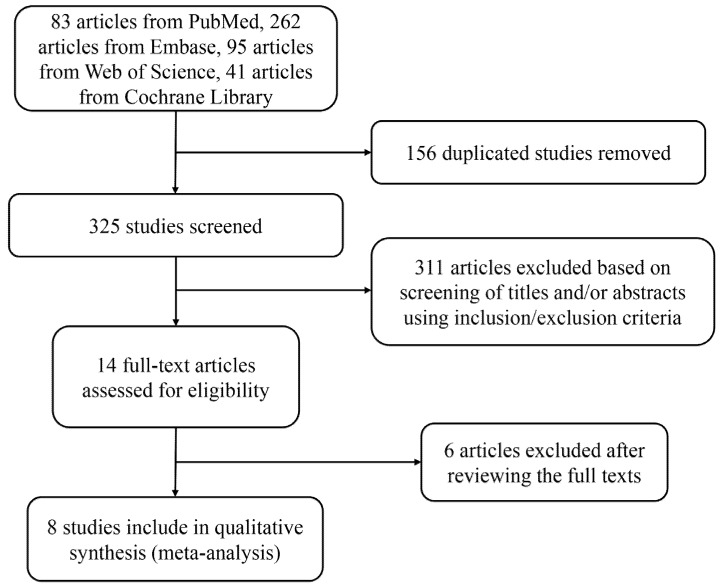
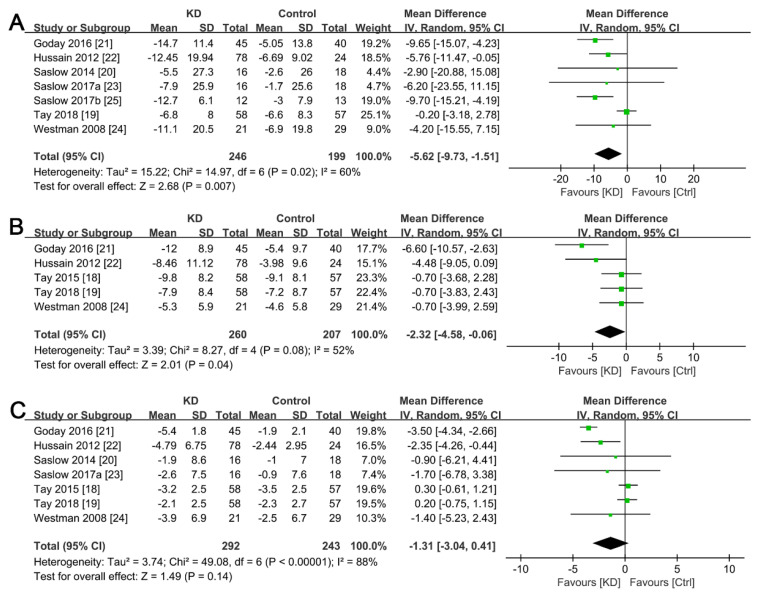
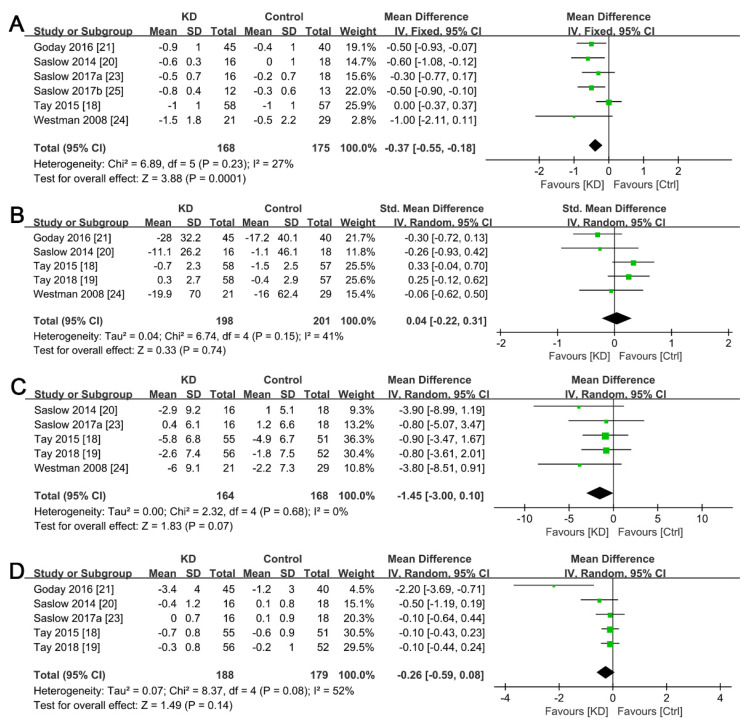
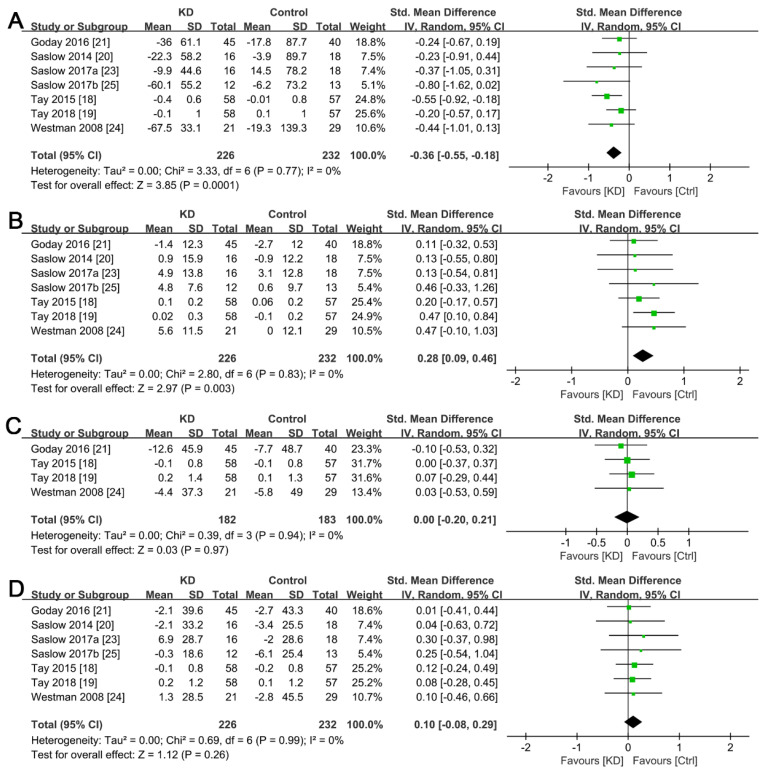
A ketogenic diet, characterized by low calories with high levels of fat, adequate levels of protein, and low levels of carbohydrates, has beneficial effects on body weight control in overweight patients. In the present study, a meta-analysis was conducted to investigate the role of a ketogenic diet in body weight control and glycemic management in overweight patients with type 2 diabetes mellitus (T2DM). In summary, we systematically reviewed articles from the Embase, PubMed, Web of Science and Cochrane Library databases and obtained eight randomized controlled trials for meta-analysis. The results show that a ketogenic diet had significantly beneficial effects on the loss of body weight (SMD, −5.63, p = 0.008), the reduction of waist circumference (SMD, −2.32, p = 0.04), lowering glycated hemoglobin (SMD, −0.38, p = 0.0008) and triglycerides (SMD, −0.36, p = 0.0001), and increasing high-density lipoproteins (SMD, 0.28, p = 0.003). Overall, these results suggest that a ketogenic diet may be an effective dietary intervention for body weight and glycemic control, as well as improved lipid profiles in overweight patients with T2DM. Hence, a ketogenic diet can be recommended for the therapeutic intervention of overweight patients with T2DM.
Overview
The claims and statistics of this paper haven’t been checked yet.
Free: it reads the open-access text and checks the first 5 claims that cite a source we can check. Create a free account to check every claim.
Integrity signals
Registry
Cites
Statistics
Figures
Verification
Claims the paper makes
The claims and statistics of this paper haven’t been checked yet.
Free: it reads the open-access text and checks the first 5 claims that cite a source we can check. Create a free account to check every claim.
Claims other papers make about this one
Each is checked against this paper’s own text: does it say what the citing paper says it does?
The source backs part of the claim, not all of it — or backs it for a different population, condition or comparison.
In the citing paper
“Ketosis is a good regulator of calorie intake and mimics the starvation effect in the body, leading to body weight control and consequent metabolism.”
From Low-Calorie Ketogenic Diet: Potential Application in the Treatment of Polycystic Ovary Syndrome in Adolescents (2023) · cites this paper as [8]
Experimental — accuracy not yet measuredThe source backs part of the claim, not all of it — or backs it for a different population, condition or comparison.
In the citing paper
“In addition to the positive regulation of glucose metabolism, KD may also result in enhanced lipolysis and fatty-acid oxidation, leading to a better lipidic profile [8].”
From Low-Calorie Ketogenic Diet: Potential Application in the Treatment of Polycystic Ovary Syndrome in Adolescents (2023) · cites this paper as [8]
Experimental — accuracy not yet measuredThe source backs part of the claim, not all of it — or backs it for a different population, condition or comparison.
In the citing paper
“Additionally, during ketogenesis, insulin receptor sensitivity is also promoted.”
From Low-Calorie Ketogenic Diet: Potential Application in the Treatment of Polycystic Ovary Syndrome in Adolescents (2023) · cites this paper as [8]
Experimental — accuracy not yet measured
Self-check
Percentages, sums and reported differences re-computed from the paper’s own numbers.
The self-check needs the paper’s full text.
Citations
Cites
The worldwide epidemiology of type 2 diabetes mellitus—present and future perspectives
Chen, L., Magliano, D. J., & Zimmet, P. Z. (2012) · Nature Reviews Endocrinology · doi:10.1038/nrendo.2011.183 · Cited by 2,227 · cited 1×
“Type 2 diabetes mellitus (T2DM) is a high-incidence chronic metabolic disorder, with high mortality and morbidity rates worldwide due to its multiple complications [1].”
BackgroundBeyond weight loss: a review of the therapeutic uses of very-low-carbohydrate (ketogenic) diets
Paoli, A., Rubini, A., Volek, J. S., & Grimaldi, K. A. (2013) · European Journal of Clinical Nutrition · doi:10.1038/ejcn.2013.116 · Cited by 885
Bueno, N. B., de Melo, I. S. V., de Oliveira, S. L., & da Rocha Ataide, T. (2013) · British Journal of Nutrition · doi:10.1017/s0007114513000548 · Cited by 778
Huxley, R., Mendis, S., Zheleznyakov, E., Reddy, S., & Chan, J. (2010) · European Journal of Clinical Nutrition · doi:10.1038/ejcn.2009.68 · Cited by 770 · cited 1×
“Additionally, ketogenic diet-based intervention was associated with a significant reduction in waist circumference, a parameter of central obesity that has been shown to be an important risk factor for the progression and prognosis of diabetes and related complications [32].”
BackgroundVeech, R. L. (2004) · Prostaglandins, Leukotrienes and Essential Fatty Acids · doi:10.1016/j.plefa.2003.09.007 · Cited by 755 · cited 2×
“Moreover, ketone bodies can increase the concentration of intracellular glucose and generate metabolic effects similar to those of insulin, but without activating the insulin signaling pathway, which allows for a therapeutic effect of mild ketosis in insulin resistance states [42].”
BackgroundMechanisms of insulin resistance in obesity
Ye, J. (2013) · Frontiers of Medicine · doi:10.1007/s11684-013-0262-6 · Cited by 699 · cited 2×
“Bo weight control is consid red an effective interventio strat gy for attenuating nsulin resistan e induce by obesity [27,28].”
BackgroundTomiyama, A. J. (2019) · Annual Review of Psychology · doi:10.1146/annurev-psych-010418-102936 · Cited by 695 · cited 2×
“Obesity, which is highly prevalent in patients with T2DM, has been associated with chronic inflammatio statuses, such as mitochondrial dysfunct on, endoplasmic reticulum s ress, nd hyperinsulinemia [26].”
BackgroundDiabetes mellitus: complications and therapeutics.
Tripathi, B. K., & Srivastava, A. K. (2006) · PubMed · Cited by 500
Westman, E. C., Yancy, W. S., Mavropoulos, J. C., Marquart, M., & McDuffie, J. R. (2008) · Nutrition & Metabolism · doi:10.1186/1743-7075-5-36 · Cited by 475
Johnstone, A. M., Horgan, G. W., Murison, S. D., Bremner, D. M., & Lobley, G. E. (2008) · The American Journal of Clinical Nutrition · doi:10.1093/ajcn/87.1.44 · Cited by 440 · cited 1×
“For instance, some mechanistic studies have indicated that a ketogenic diet can suppress appetite by either directly affecting ketone bodies [34] or regulating appetite control hormones [35].”
BackgroundEffects of Dietary Composition on Energy Expenditure During Weight-Loss Maintenance
Ebbeling, C. B., Swain, J. F., Feldman, H. A., Wong, W. W., Hachey, D. L., Garcia-Lago, E., & Ludwig, D. S. (2012) · JAMA · doi:10.1001/jama.2012.6607 · Cited by 431 · cited 1×
“The observed significant reduction in body weight after ketogenic diet intervention (Figure 3A) might be due to attenuation of decreased resting energy expenditure modulation, as previously reported [33].”
ResultHbA1c: A Review of Analytical and Clinical Aspects
Weykamp, C. (2013) · Annals of Laboratory Medicine · doi:10.3343/alm.2013.33.6.393 · Cited by 394 · cited 1×
“HbA1c levels can reflect average blood glucose concentrations in the past 2–3 months in patients with T2DM; hence, it has been recommended as an effective parameter for monitoring long-term glycemic regulation and a risk predictor [40].”
BackgroundAthyros, V. G., Doumas, M., Imprialos, K. P., Stavropoulos, K., Georgianou, E., Katsimardou, A., & Karagiannis, A. (2018) · Hormones · doi:10.1007/s42000-018-0014-8 · Cited by 367 · cited 1×
“Since the components of diabetic dyslipidemia were mostly related to insulin resistance [47], the improvement of dysfunctional lipid profiles could reduce the risks of cardiovascular diseases in diabetic patients [48].”
BackgroundKetogenic Diet for Obesity: Friend or Foe?
Paoli, A. (2014) · International Journal of Environmental Research and Public Health · doi:10.3390/ijerph110202092 · Cited by 352 · cited 1×
“Under the condition of reduced carbohydrate consumption, ketone bodies produced by the breakdown of fats in the liver, is an alternative source of energy to glucose, especially the central nervous system [7].”
BackgroundComparison of low- and high-carbohydrate diets for type 2 diabetes management: a randomized trial
Tay, J., Luscombe-Marsh, N. D., Thompson, C. H., Noakes, M., Buckley, J. D., Wittert, G. A., Yancy, W. S., & Brinkworth, G. D. (2015) · The American Journal of Clinical Nutrition · doi:10.3945/ajcn.115.112581 · Cited by 341 · cited 1×
“Tay (2015) [18] Australia RCT 52 weeks Age: 35–68 years old; BMI: 26–45 kg/m2; T2DM (HbA1c ≥ 7.”
Hall, K. D., Chen, K. Y., Guo, J., Lam, Y. Y., Leibel, R. L., Mayer, L. E., Reitman, M. L., Rosenbaum, M., Smith, S. R., Walsh, B. T., et al. (2016) · The American Journal of Clinical Nutrition · doi:10.3945/ajcn.116.133561 · Cited by 330
Effect of low-calorie versus low-carbohydrate ketogenic diet in type 2 diabetes
Hussain, T. A., Mathew, T. C., Dashti, A. A., Asfar, S., Al-Zaid, N., & Dashti, H. M. (2012) · Nutrition · doi:10.1016/j.nut.2012.01.016 · Cited by 329 · cited 1×
“Hussain (2012) [22] Kuwait RCT 24 weeks Age ≥ 18 years; BMI > 25 kg/m2; fasting serum glucose > 6.”
BackgroundSaslow, L. R., Mason, A. E., Kim, S., Goldman, V., Ploutz-Snyder, R., Bayandorian, H., Daubenmier, J., Hecht, F. M., & Moskowitz, J. T. (2017) · Journal of Medical Internet Research · doi:10.2196/jmir.5806 · Cited by 265 · cited 1×
“Saslow (2017b) [25] USA RCT 32 weeks Age ≥ 18 years old; BMI ≥ 25 kg/m2; T2DM (HbA1c 6.”
Lifestyle factors, self-management and patient empowerment in diabetes care
Lambrinou, E., Hansen, T. B., & Beulens, J. W. (2019) · European Journal of Preventive Cardiology · doi:10.1177/2047487319885455 · Cited by 261 · cited 1×
“Although medication therapy, such as metformin, gliquidone, and acarbose, can reduce the fluctuation in blood glucose levels, lifestyle interventions, especially medical nutrition, are an effective, recommended, non-pharmacological intervention [3].”
BackgroundKetosis and appetite-mediating nutrients and hormones after weight loss
Sumithran, P., Prendergast, L. A., Delbridge, E., Purcell, K., Shulkes, A., Kriketos, A., & Proietto, J. (2013) · European Journal of Clinical Nutrition · doi:10.1038/ejcn.2013.90 · Cited by 260 · cited 1×
“For instance, some mechanistic studies have indicated that a ketogenic diet can suppress appetite by either directly affecting ketone bodies [34] or regulating appetite control hormones [35].”
BackgroundGoday, A., Bellido, D., Sajoux, I., Crujeiras, A. B., Burguera, B., García-Luna, P. P., Oleaga, A., Moreno, B., & Casanueva, F. F. (2016) · Nutrition & Diabetes · doi:10.1038/nutd.2016.36 · Cited by 258
Castellana, M., Conte, E., Cignarelli, A., Perrini, S., Giustina, A., Giovanella, L., Giorgino, F., & Trimboli, P. (2020) · Reviews in Endocrine and Metabolic Disorders · doi:10.1007/s11154-019-09514-y · Cited by 249 · cited 1×
“Although previous meta-analyses and systematic reviews have demonstrated the efficacy of a ketogenic diet in body weight control [12,13], conflicting findings have been reported with regard to changes in glycemic and lipid profiles of T2DM patients under this dietary intervention.”
ResultSaslow, L. R., Daubenmier, J. J., Moskowitz, J. T., Kim, S., Murphy, E. J., Phinney, S. D., Ploutz-Snyder, R., Goldman, V., Cox, R. M., Mason, A. E., et al. (2017) · Nutrition & Diabetes · doi:10.1038/s41387-017-0006-9 · Cited by 241 · cited 1×
“Saslow (2017a) [23] USA RCT 12 months Age: >18 years old; BMI: ≥ 25 kg/m2; T2DM (HbAc1 ≥ 6.”
Yuan, X., Wang, J., Yang, S., Gao, M., Cao, L., Li, X., Hong, D., Tian, S., & Sun, C. (2020) · Nutrition & Diabetes · doi:10.1038/s41387-020-00142-z · Cited by 240 · cited 2×
“This result was consistent with those reported in other systemic reviews and meta-analyses, in which a ketogenic diet was found to remarkably improve glycemic profiles [41].”
BackgroundResultNutritional ketosis for weight management and reversal of metabolic syndrome
Gershuni, V. M., Yan, S. L., & Medici, V. (2018) · Current Nutrition Reports · doi:10.1007/s13668-018-0235-0 · Cited by 239 · cited 1×
“A ketogenic diet, characterized by low calories with high-level fat, moderate-level protein, and very low-level carbohydrate (usually less than 50 g/d), has been introduced as a nutrition-based intervention for the treatment of epilepsy through energy supply from ketone bodies, which mimics metabolic starvation due to…”
BackgroundLacombe, J., Armstrong, M. E. G., Wright, F. L., & Foster, C. (2019) · BMC Public Health · doi:10.1186/s12889-019-7030-8 · Cited by 228
Low-Carb and Ketogenic Diets in Type 1 and Type 2 Diabetes
Bolla, A. M., Caretto, A., Laurenzi, A., Scavini, M., & Piemonti, L. (2019) · Nutrients · doi:10.3390/nu11050962 · Cited by 226 · cited 1×
“Extreme restriction of daily dietary intake of carbohydrates causes a decline in the absorption of monosaccharides, reduces blood glucose levels, and limits blood glucose fluctuations, indicative of positive regulation of glucose metabolism [38,39].”
BackgroundSaslow, L. R., Kim, S., Daubenmier, J. J., Moskowitz, J. T., Phinney, S. D., Goldman, V., Murphy, E. J., Cox, R. M., Moran, P., & Hecht, F. M. (2014) · PLoS ONE · doi:10.1371/journal.pone.0091027 · Cited by 221 · cited 1×
“Saslow (2014) [20] USA RCT 3 months Age: >18 years old; BMI: ≥25 kg/m2; T2DM (HbAc1 ≥ 6.”
Tay, J., Thompson, C. H., Luscombe‐Marsh, N. D., Wycherley, T. P., Noakes, M., Buckley, J. D., Wittert, G. A., Yancy, W. S., & Brinkworth, G. D. (2018) · Diabetes, Obesity and Metabolism · doi:10.1111/dom.13164 · Cited by 215
Obesity and cardiovascular diseases
Kachur, S., Lavie, C. J., de Schutter, A., Milani, R. V., & Ventura, H. O. (2017) · Minerva Medica · doi:10.23736/s0026-4806.17.05022-4 · Cited by 214
Updated review on the benefits of weight loss
Vidal, J. (2002) · International Journal of Obesity · doi:10.1038/sj.ijo.0802215 · Cited by 188 · cited 2×
“Bo weight control is consid red an effective interventio strat gy for attenuating nsulin resistan e induce by obesity [27,28].”
BackgroundThe Management of Very Low-Calorie Ketogenic Diet in Obesity Outpatient Clinic: A Practical Guide
Muscogiuri, G., Barrea, L., Laudisio, D., Pugliese, G., Salzano, C., Savastano, S., & Colao, A. (2019) · Journal of Translational Medicine · doi:10.1186/s12967-019-2104-z · Cited by 180
Ketogenic diet as a metabolic therapy for mood disorders: Evidence and developments
Brietzke, E., Mansur, R. B., Subramaniapillai, M., Balanzá-Martínez, V., Vinberg, M., González-Pinto, A., Rosenblat, J. D., Ho, R., & McIntyre, R. S. (2018) · Neuroscience & Biobehavioral Reviews · doi:10.1016/j.neubiorev.2018.07.020 · Cited by 173 · cited 1×
“Furthermore, accumulating evidence has demonstrated a strong relationship between insulin resistance and the ketogenic diet [42,43].”
BackgroundBeneficial effects of ketogenic diet in obese diabetic subjects
Dashti, H. M., Mathew, T. C., Khadada, M., Al-Mousawi, M., Talib, H., Asfar, S. K., Behbahani, A. I., & Al-Zaid, N. S. (2007) · Molecular and Cellular Biochemistry · doi:10.1007/s11010-007-9448-z · Cited by 171 · cited 1×
“In addition, the basal lipid biomarkers were much higher than that of healthy controls, suggesting the possibility that a strict diet intervention might induce significant changes [46].”
BackgroundKetogenic diet for epilepsy treatment
Sampaio, L. P. D. B. (2016) · Arquivos de Neuro-Psiquiatria · doi:10.1590/0004-282x20160116 · Cited by 161 · cited 1×
“A ketogenic diet, characterized by low calories with high-level fat, moderate-level protein, and very low-level carbohydrate (usually less than 50 g/d), has been introduced as a nutrition-based intervention for the treatment of epilepsy through energy supply from ketone bodies, which mimics metabolic starvation due to…”
BackgroundEffects of dietary fats on blood lipids: a review of direct comparison trials
DiNicolantonio, J. J., & O’Keefe, J. H. (2018) · Open Heart · doi:10.1136/openhrt-2018-000871 · Cited by 136 · cited 1×
“The majority of daily calories are from fat intake in a ketogenic diet, and increasing fat consumption may improve lipid profiles in obese diabetic patients, as previously described [45].”
BackgroundDysfunctional HDL in diabetes mellitus and its role in the pathogenesis of cardiovascular disease
Srivastava, R. A. K. (2017) · Molecular and Cellular Biochemistry · doi:10.1007/s11010-017-3165-z · Cited by 130 · cited 1×
“Since the components of diabetic dyslipidemia were mostly related to insulin resistance [47], the improvement of dysfunctional lipid profiles could reduce the risks of cardiovascular diseases in diabetic patients [48].”
BackgroundThe Ketogenic Diet for Obesity and Diabetes—Enthusiasm Outpaces Evidence
Joshi, S., Ostfeld, R. J., & McMacken, M. (2019) · JAMA Internal Medicine · doi:10.1001/jamainternmed.2019.2633 · Cited by 125
Leow, Z. Z. X., Guelfi, K. J., Davis, E. A., Jones, T. W., & Fournier, P. A. (2018) · Diabetic Medicine · doi:10.1111/dme.13663 · Cited by 115 · cited 1×
“Conversely, other evidence indicates that a low-carbohydrate and high-fat diet is associated with deteriorated lipid profiles [15,16].”
BackgroundKetogenic diet in endocrine disorders: Current perspectives
Gupta, L., Khandelwal, D., Kalra, S., Gupta, P., Dutta, D., & Aggarwal, S. (2017) · Journal of Postgraduate Medicine · doi:10.4103/jpgm.jpgm_16_17 · Cited by 112 · cited 1×
“A mild increase in ketosis in peripheral blood, induced by a ketogenic diet, might improve peripheral insulin sensitivity, relieve hyperinsulinemia-related stress, reduce external insulin requirements, and inhibit its secretion, thereby improving glycemic profiles and mitigating insulin resistance [44].”
BackgroundPartsalaki, Karvela, A., & Spiliotis, B. E. (2012) · Journal of Pediatric Endocrinology and Metabolism · doi:10.1515/jpem-2012-0131 · Cited by 107 · cited 1×
“A randomized controlled trial (RCT) reported that a ketogenic diet could mitigate insulin resistance and reduce glycemic responses, thereby improving the glycemic profiles of T2DM patients [14].”
BackgroundYu, Z., Nan, F., Wang, L. Y., Jiang, H., Chen, W., & Jiang, Y. (2020) · Clinical Nutrition · doi:10.1016/j.clnu.2019.08.008 · Cited by 100 · cited 1×
“Although previous meta-analyses and systematic reviews have demonstrated the efficacy of a ketogenic diet in body weight control [12,13], conflicting findings have been reported with regard to changes in glycemic and lipid profiles of T2DM patients under this dietary intervention.”
ResultTagliabue, A., Bertoli, S., Trentani, C., Borrelli, P., & Veggiotti, P. (2011) · Clinical Nutrition · doi:10.1016/j.clnu.2011.09.012 · Cited by 90 · cited 1×
“On the other hand, other evidence has demonstrated a great metabolic efficiency of fat consumption by reducing the resting respiratory quotient in patients assigned to a ketogenic diet [36].”
BackgroundPonce, A. J., Galván-Salas, T., Lerma-Alvarado, R. M., Ruíz‐Herrera, X., Hernández-Cortés, T., Valencia-Jiménez, R., Cárdenas-Rodríguez, L. E., de la Escalera, G. M., Clapp, C., & Macotela, Y. (2020) · Endocrine · doi:10.1007/s12020-019-02170-x · Cited by 74 · cited 1×
“Previous mechanistic studies have shown that the improvement of dyslipidemia induced by a ketogenic diet may not only benefit the regulation of insulin sensitivity, but also control and prevent the occurrence and progression of related complications [49,50].”
BackgroundKetogenic diets: Boon or bane?
Shilpa, J., & Mohan, V. (2018) · Indian Journal of Medical Research · doi:10.4103/ijmr.ijmr_1666_18 · Cited by 72 · cited 1×
“There are four types of ketogenic diet, including standard ketogenic diet, cyclical ketogenic diet, targeted ketogenic diet, and high-protein ketogenic diet [6].”
BackgroundNonequilibrium thermodynamics and energy efficiency in weight loss diets
Feinman, R. D., & Fine, E. J. (2007) · Theoretical Biology and Medical Modelling · doi:10.1186/1742-4682-4-27 · Cited by 67
Krebs, J. D., Bell, D., Hall, R., Parry-Strong, A., Docherty, P. D., Clarke, K., & Chase, J. G. (2013) · Journal of the American College of Nutrition · doi:10.1080/07315724.2013.767630 · Cited by 65 · cited 1×
“Conversely, other evidence indicates that a low-carbohydrate and high-fat diet is associated with deteriorated lipid profiles [15,16].”
BackgroundAlsharairi, N. A. (2021) · Nutrients · doi:10.3390/nu13113702 · Cited by 52 · cited 1×
“The mechanisms that underlie the associations between ketogenic diet and T2DM are still a subject of debate, and gut microbiota might play a significant role in the relationship between very lowcarbohydrate ketogenic diet (VLCKD) and reducing obesity [17].”
BackgroundHamdy, O., Tasabehji, M. W., Elseaidy, T., Tomah, S., Ashrafzadeh, S., & Mottalib, A. (2018) · Current Diabetes Reports · doi:10.1007/s11892-018-1103-4 · Cited by 39
A Pilot Trial of a Low-Carbohydrate, Ketogenic Diet in Patients with Type 2 Diabetes
Yancy, W. S., Vernon, M. C., & Westman, E. C. (2003) · Metabolic Syndrome and Related Disorders · doi:10.1089/154041903322716723 · Cited by 26 · cited 1×
“Extreme restriction of daily dietary intake of carbohydrates causes a decline in the absorption of monosaccharides, reduces blood glucose levels, and limits blood glucose fluctuations, indicative of positive regulation of glucose metabolism [38,39].”
BackgroundDiabetic dyslipidemia and microvascular complications of diabetes
Karásek, D., & Vaverková, H. (2018) · Vnitřní lékařství · doi:10.36290/vnl.2018.003 · Cited by 8
Cited by
2026 ACC/AHA/AACVPR/ABC/ACPM/ADA/AGS/APhA/ASPC/NLA/PCNA Guideline on the Management of Dyslipidemia
Blumenthal, R. S., Morris, P. B., Gaudino, M., Johnson, H. M., Anderson, T. S., Bittner, V. A., Blankstein, R., Brewer, L. C., Cho, L., de Ferranti, S. D., et al. (2026) · JACC · doi:10.1016/j.jacc.2025.11.016 · Cited by 304
Writing Committee Members, Blumenthal, R. S., Morris, P. B., Gaudino, M., Johnson, H. M., Anderson, T. S., Bittner, V. A., Blankstein, R., Brewer, L. C., Cho, L., et al. (2026) · Circulation · doi:10.1161/cir.0000000000001423 · Cited by 122
Jing, T., Zhang, S., Bai, M., Chen, Z., Gao, S., Li, S., & Zhang, J. (2023) · Nutrients · doi:10.3390/nu15143156 · Cited by 143
“found that ketogenic diet was an effective dietary intervention for body weight and glycemic control, as well as improved lipid profiles in overweight patients with T2DM [96].”
BackgroundThe Ketogenic Diet and Cardiovascular Diseases
Dyńka, D., Kowalcze, K., Charuta, A., & Paziewska, A. (2023) · Nutrients · doi:10.3390/nu15153368 · Cited by 135
Advances in Research on Type 2 Diabetes Mellitus Targets and Therapeutic Agents
Su, J., Luo, Y., Hu, S., Tang, L., & Ouyang, S. (2023) · International Journal of Molecular Sciences · doi:10.3390/ijms241713381 · Cited by 130
“A meta-analysis revealed that the ketogenic diet was effective in improving the glycemic parameters, body weight, and lipid profile of patients [163].”
Background
Metadata
- Authors
- Zhou, C., Wang, M., Liang, J., He, G., & Chen, N.
- Affiliations
- Wuhan Sports University (CN)
- Tongji Hospital (CN)
- School of Economics and Management, Wuhan Sports University, Wuhan 430079, China
- Corresponding author
- Chen, Ning
- Venue
- International Journal of Environmental Research and Public Health
- Publisher
- MDPI AG
- Published
- 2022-08-22
- Volume
- 19
- Issue
- 16
- Pages
- 10429
- ISSN
- 1660-4601 (ISSN-L)
- PMC
- PMC9408028
- OpenAlex
- W4293778827
- Cited by
- 151
- References
- 52
- Citations by year
- 2026: 40 · 2025: 48 · 2024: 39 · 2023: 23 · 2022: 1
- FWCI
- 3.82
- Type
- journal article
- Language
- en
- Open access
- gold
- doi.org
- Licence
- Locations
- International Journal of Environmental Research and Public Health (publishedVersion, cc-by)
- PubMed Central (publishedVersion, cc-by)
- PubMed (publishedVersion)
- RePEc: Research Papers in Economics (submittedVersion)
- DOAJ (DOAJ: Directory of Open Access Journals) (submittedVersion)
- Funders
- National Natural Science Foundation of China (31771318, 2021yjsCXCY095)
- Fundamental Research Funds for the Central Universities (31771318, 2021yjsCXCY095)
- Chutian Scholar Program and Innovative Start-Up Foundation from Wuhan Sports University (31771318, 2021yjsCXCY095)
- Topics
- Health Sciences › Medicine › Physiology (medical) › Diet and metabolism studies
- Health Sciences › Medicine › Physiology (medical) › Dietary Effects on Health
- Health Sciences › Medicine › Endocrinology, Diabetes and Metabolism › Diabetes Management and Research
- Keywords
- ketogenic diet, type 2 diabetes, overweight, weight loss, glycemic control, HbA1c, lipid profile, triglycerides, HDL cholesterol, waist circumference, dietary intervention
- MeSH terms
- Glycemic Control, Blood Glucose, Body Weight, Diabetes Mellitus, Type 2, Humans, Triglycerides, Weight Loss, Overweight, Diet, Ketogenic
About these checks
Registry, retraction, Cites and statistics results are computed, not judged, with one exception: a printed reference that no index lists is read once by a model before it counts as a citation error. Claims are extracted by a model and kept only when their quote appears verbatim in the text; each cited source is then checked, with a model’s help, for whether it says what the claim relies on. Those verdicts can be wrong — read the claim’s quote and the cited source before relying on one.
Statistics and arithmetic are recomputed, not judged.
Confidence bands are shown only for fields calibrated on our annotated test set. None is calibrated yet, so no band is shown.
What counts as a claim ›How we measure confidence ›How we check this ›
Are you an author, or do you see a problem with this page? Request a review
Data sources
Bibliographic data: Semantic Scholar, OpenAlex, Crossref.
Contains information from the Semantic Scholar Academic Graph Datasets, made available under the ODC Attribution License (ODC-BY 1.0).
Semantic Scholar’s data is described in: Kinney, R., et al. (2023). The Semantic Scholar Open Data Platform. arXiv:2301.10140.
