

Forecasting Stock Market Prices Using Machine Learning and Deep Learning Models: A Systematic Review, Performance Analysis and Discussion of Implications
Open accessThe DOI matches its Crossref record; 76 of the 83 references it cites were found in a registry or an index; 44 of the 76 sources its claims cite were checked for support.
Abstract
A systematic review, performance analysis and discussion of implications of forecasting stock market prices using machine learning and deep learning models. Implements an ensemble model combining Random Forest, XGBoost, and LSTM for stock price prediction.
Overview
CoChat Summary
TL;DR
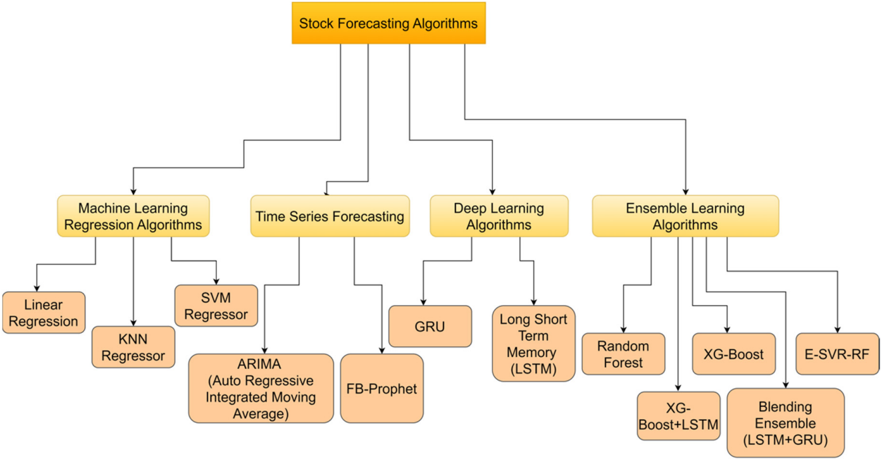
This paper reviews machine learning, deep learning, time series, and ensemble methods for stock price forecasting and implements an ensemble “Random Forest + XG-Boost + LSTM” on two Indian chemical-sector stocks. The ensemble achieved the best reported RMSE and R² among the compared models for both stocks.
Key findings
- The proposed ensemble “Random Forest + XG-Boost + LSTM” demonstrated the best performance compared with other distinct algorithms in the paper’s experimental analysis.
- For TAINIWALCHM, the ensemble achieved RMSE 2.0247 and R² 0.9921; for AGROPHOS, it achieved RMSE 1.2658 and R² 0.9897 (Table 2).
- The review concludes that machine learning or deep learning models alone are not sufficient, that ensemble techniques can provide superior performance, and that hyperparameter tuning is crucial for improving stock forecasts.
- The paper states there is still no universal solution to accurately predict stock price or market trend, and AI-based models can fail if not trained efficiently with fresh data.
Methods
- Design: a systematic/comprehensive review of supervised and unsupervised machine learning, ensemble, time series, and deep learning algorithms for stock price prediction and classification, plus an experimental comparative analysis.
- Data: stock data obtained from the Yahoo Finance API for Tainwala Chemicals and Plastics (TAINIWALCHM) from 2014 to 2023 and Agro Phos (AGROPHOS) from 2018 to 2023.
- Main analysis: implemented algorithms in Python and evaluated performance using RMSE and R²; the ensemble used a stacked model with Keras, TensorFlow, and sklearn, 80% training and 20% testing, MSE loss, Adam optimizer, and grid-search hyperparameter tuning.
Limitations
- The paper states that no universal solution exists for accurate stock price or trend prediction, that AI-based models can fail if not trained efficiently with fresh data, and that decisions should not rely only on AI-based price forecasting methods.
- The text makes evident that the experimental comparison is limited to two stocks, TAINIWALCHM and AGROPHOS, both described as falling under the chemical industry market sector.
- The text makes evident that the review’s comparative performance table draws on heterogeneous prior studies with different datasets, metrics, and evaluation settings, so the reported comparisons are not from a single controlled benchmark.
Model-written summary. Check it against the paper before relying on it.
Integrity signals
Registry
Cites
Statistics
Figures
Verification
Claims the paper makes
33 Valid · 11 Not valid · 17 Not checked · 26 Own results and interpretations
At least one cited source doesn’t support this claim or points to a different paper, and none confirmed it — see the verdicts below.
In the paper
“The ensemble algorithm of XG-Boost + LSTM shows the following evaluation parameter: MSE = 3.465 (Vuong et al. 2022).”
§ Forecasting Stock Market Prices Using Machine Learning and Deep Learning Models: A Systematic Review, Performance Analysis and Discussion of Implications > 13 XG-Boost + LSTM
What the sources say
- Disputedcites Vuong et al. 2022 matched to “Stock-Price Forecasting Based on XGBoost and LSTM” (2022) sourceExperimental — accuracy not yet measured
Table 6 in §3.3 Results reports an MSE of 3.465 × 10⁻⁷ for XGBoost + LSTM on the Forex dataset, not 3.465. The citing sentence omits the exponent, changing the reported value by a factor of ten million. (LLM, conf=0.95)
Checked by a reasoning model — may be wrong.
plain- Asserted: passes — The authors put it forward as true.
- Checkable: passes — It can be checked against evidence.
- Load-bearing: unclear — It is unclear whether the paper’s conclusions depend on it.
- Based: passes — The paper gives a reason why it holds.
- Disputed
The sources with a verdict support this claim; the rest weren’t checked yet, have no full text we could read, or their verdicts aren’t rated yet.
In the paper
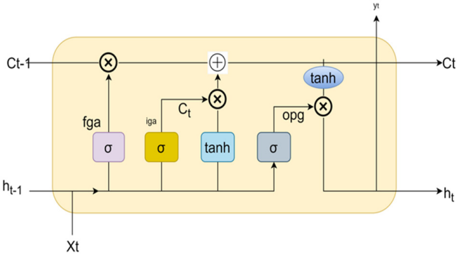
“Stock forecasting using LSTM, a unique recurrent neural network (RNN), overcomes long-term dependency (Qiu et al. 2020;Banik et al. 2022).”
§ Forecasting Stock Market Prices Using Machine Learning and Deep Learning Models: A Systematic Review, Performance Analysis and Discussion of Implications > 2. Comprehensive Summary of Theoretical Basis
What the sources say
- Supportedcites Qiu et al. 2020 matched to “Forecasting stock prices with long-short term memory neural network based on attention mechanism” (2020) source
The 'Long short-term memory neural networks (LSTM)' section describes LSTM as a form of RNN intended to avoid long-term dependence problems. The Introduction also says LSTM is suitable for stock-price time series. Page numbers are not provided in our copy. (LLM, conf=0.92)
- Not checked — no full text of the sourcecites Banik et al. 2022 matched to “LSTM based decision support system for swing trading in stock market” (2022) source
plainstates a cause- Asserted: passes — The authors put it forward as true.
- Checkable: passes — It can be checked against evidence.
- Load-bearing: unclear — It is unclear whether the paper’s conclusions depend on it.
- Based: passes — The paper gives a reason why it holds.
- Supported
Every source the paper cites for this claim was checked and supports it.
In the paper
“However, when it comes to predicting financial distress, the logistic regression model has exhibited better results in comparison to neural networks (Zizi et al. 2021).”
§ Forecasting Stock Market Prices Using Machine Learning and Deep Learning Models: A Systematic Review, Performance Analysis and Discussion of Implications > 2.3.1. Long Short-Term Memory (LSTM)
What the sources say
- Supportedcites Zizi et al. 2021 matched to “An Optimal Model of Financial Distress Prediction: A Comparative Study between Neural Networks and Logistic Regression” (2021) source
The Discussion reports that, in the authors’ comparison, logistic regression performed better than neural networks. The Conclusions likewise describe superior test-sample accuracy for logistic regression in predicting financial distress among Moroccan SMEs; the claim is supported as a report of those results, not as a universal rule. (LLM, conf=0.94)
plain- Asserted: passes — The authors put it forward as true.
- Checkable: passes — It can be checked against evidence.
- Load-bearing: unclear — It is unclear whether the paper’s conclusions depend on it.
- Based: passes — The paper gives a reason why it holds.
- Supported
Every source the paper cites for this claim was checked and supports it.
In the paper
“ARIMA can be combined with another algorithm, symmetric generalized autoregressive conditional heteroskedasticity (SGARCH), to improve forecasting performance.”
§ Forecasting Stock Market Prices Using Machine Learning and Deep Learning Models: A Systematic Review, Performance Analysis and Discussion of Implications > 2.2.1. ARIMA
What the sources say
- Supportedcites Vo and Ślepaczuk 2022 matched to “Applying Hybrid ARIMA-SGARCH in Algorithmic Investment Strategies on S&P500 Index” (2022) source
The Methodology section describes a hybrid model that combines ARIMA with GARCH to forecast the mean and variance. The Results section reports that the ARIMA–SGARCH model predicted S&P 500 returns more accurately than ARIMA alone on the study’s error metrics. (LLM, conf=0.94)
plainstates a cause- Asserted: passes — The authors put it forward as true.
- Checkable: passes — It can be checked against evidence.
- Load-bearing: unclear — It is unclear whether the paper’s conclusions depend on it.
- Based: passes — The paper gives a reason why it holds.
- Supported
The cited sources support only part of this claim — read each source’s verdict below.
In the paper
“Models with an integrated GNB algorithm will yield feature extraction and feature scaling outcomes that are superior to those already achieved using models that incorporate either the GNB algorithm or feature scaling (Setiani et al. 2020;Ampomah et al. 2021).”
§ Forecasting Stock Market Prices Using Machine Learning and Deep Learning Models: A Systematic Review, Performance Analysis and Discussion of Implications > Sr No Algorithm Name Gap Analysis Performance Evaluation 1 Linear regression
What the sources say
- Could not verifycites Setiani et al. 2020 matched to “Prediction of Banking Stock Prices Using Naïve Bayes Method” (2021) sourceExperimental — accuracy not yet measured
The Methodology section describes a Naïve Bayes classifier and a Gaussian-distribution calculation, while Figure 3 reports 57% prediction accuracy. Neither passage addresses integrated GNB with feature extraction or scaling, or compares it with models using either component alone (searched: integrated GNB, feature extraction, feature scaling, comparative performance). (LLM, conf=0.76)
- Partly supportedcites Ampomah et al. 2021 matched to “Stock Market Prediction with Gaussian Naïve Bayes Machine Learning Algorithm” (2021) sourceExperimental — accuracy not yet measured
The Conclusion reports that models combining GNB, feature scaling, and feature extraction generally outperformed models combining GNB with just one of those techniques. The cited paper measures stock-price prediction performance, not the quality of feature extraction or scaling themselves, and expressly notes an exception: GNB_LDA. (LLM, conf=0.86)
hedgedstates a cause- Asserted: passes — The authors put it forward as true.
- Checkable: passes — It can be checked against evidence.
- Load-bearing: unclear — It is unclear whether the paper’s conclusions depend on it.
- Based: passes — The paper gives a reason why it holds.
- Could not verify
7 more claims · 1 with their cited sources checked
Create a free account to see all 87 claims and to verify the 3 references still open.
- Probably not a substantial claim. 50
- It may state two separate claims as one. 45
- The quote only partly states this claim. 2
Claims other papers make about this one
Each is checked against this paper’s own text: does it say what the citing paper says it does?
In the citing paper
“Cognitive research indicates that human working memory can recall only five to nine events at a time [30].”
From FinMem: A Performance-Enhanced LLM Trading Agent With Layered Memory and Character Design (2025) · cites this paper as [30]
In the citing paper
“Unlike human working memory, having a maximum capacity of seven plus or minus two memory events [30], FINMEM has the ability to expand the capacity based on specific requirements.”
From FinMem: A Performance-Enhanced LLM Trading Agent With Layered Memory and Character Design (2025) · cites this paper as [30]
Self-check
Percentages, sums and reported differences re-computed from the paper’s own numbers.
Each contradiction between two passages listed here was confirmed by an independent check.
Rated major: it would touch a result — a value a result rests on, reported and recomputed p-values on opposite sides of the significance level, two passages that conflict with no sign which is right, or a cited work retracted before this paper was published.
In the paper
§ Forecasting Stock Market Prices Using Machine Learning and Deep Learning Models: A Systematic Review, Performance Analysis and Discussion of Implications > 7. Conclusions
“| Random forest | 87.8839 | 0.9818 | 98.5633 | 0.9428 |”
§ Forecasting Stock Market Prices Using Machine Learning and Deep Learning Models: A Systematic Review, Performance Analysis and Discussion of Implications > 7. Conclusions
“| SVR | 4.525 | 0.9279 | 1.5074 | 0.9432 |”
Rated major: it would touch a result — a value a result rests on, reported and recomputed p-values on opposite sides of the significance level, two passages that conflict with no sign which is right, or a cited work retracted before this paper was published.
In the paper
§ Forecasting Stock Market Prices Using Machine Learning and Deep Learning Models: A Systematic Review, Performance Analysis and Discussion of Implications > 7. Conclusions
“| SVR | 4.525 | 0.9279 | 1.5074 | 0.9432 |”
§ Forecasting Stock Market Prices Using Machine Learning and Deep Learning Models: A Systematic Review, Performance Analysis and Discussion of Implications > 7. Conclusions
“| MLPR | 2.5893 | 0.9611 | 2.4764 | 0.9472 |”
Rated minor: it would not touch a result — a value no result rests on, a p-value that stays on the same side of the significance level, or a conflict that is clerical, resolved elsewhere in the paper, or outside its own findings.
In the paper
§ Forecasting Stock Market Prices Using Machine Learning and Deep Learning Models: A Systematic Review, Performance Analysis and Discussion of Implications > 2.2.2. FB Prophet Model
“where l(t) represents the linear trend, sp(t) represents seasonal patterns, v(t) represents holiday effects, and εn is the white noise error.”
§ Forecasting Stock Market Prices Using Machine Learning and Deep Learning Models: A Systematic Review, Performance Analysis and Discussion of Implications > 7 FB Prophet
“One of its advantages is that it does not consider holidays or null values.”
Rated minor: it would not touch a result — a value no result rests on, a p-value that stays on the same side of the significance level, or a conflict that is clerical, resolved elsewhere in the paper, or outside its own findings.
In the paper
§ Forecasting Stock Market Prices Using Machine Learning and Deep Learning Models: A Systematic Review, Performance Analysis and Discussion of Implications > 3. General Machine Learning Pipeline
“Training the ML model involves six steps, which are described in the following section:”
§ Forecasting Stock Market Prices Using Machine Learning and Deep Learning Models: A Systematic Review, Performance Analysis and Discussion of Implications > 3. General Machine Learning Pipeline
“Step 7: Fine-tune the hyperparameters to improve the evaluation parameters of the model.”
Rated minor: it would not touch a result — a value no result rests on, a p-value that stays on the same side of the significance level, or a conflict that is clerical, resolved elsewhere in the paper, or outside its own findings.
In the paper
§ Forecasting Stock Market Prices Using Machine Learning and Deep Learning Models: A Systematic Review, Performance Analysis and Discussion of Implications > 2. Comprehensive Summary of Theoretical Basis
“The model showed the lowest RMSE value of 186.32, a precision of 60%, and an F1-score of 66.47 (Li and Pan 2021).”
§ Forecasting Stock Market Prices Using Machine Learning and Deep Learning Models: A Systematic Review, Performance Analysis and Discussion of Implications > 13 XG-Boost + LSTM
“The blending ensemble algorithm, which consists of a modified version of RNN, i.e., LSTM and GRU, has the following evaluation parameters: MSE = 186.32,MPA = 99.65,precision = 60%, Recall = 75%, F1-Score = 66.67% (Li and Pan 2021).”
8 more findings
Create a free account to see every finding of this check.
Cited works that were retracted
Works this paper cites that were later retracted, from the retraction notices publishers deposit. Major when the notice came out before this paper was published.
A note, not an issue: for example, a cited work that was retracted only after this paper was published, which its authors could not have known.
In the paper
“In (Sharaf et al. 2022), news headlines pertaining to TSLA, AMZ, and GOOG stock were considered to obtain good-quality data to reduce spam tweets through feature selection methods.”
Cited work 10.1007/s11042-022-14216-w · retracted 2026-04-25 · notice 10.1007/s11042-026-21614-x · this paper published 2023-07-26
Citations
Cites
1 retracted
Sharaf, M. M., Hemdan, E. E., El‐Sayed, A., & El-Bahnasawy, N. A. W. (2022) · Multimedia Tools and Applications · doi:10.1007/s11042-022-14216-w · Cited by 65 · cited 1×
“In (Sharaf et al. 2022), news headlines pertaining to TSLA, AMZ, and GOOG stock were considered to obtain good-quality data to reduce spam tweets through feature selection methods.”
BackgroundRetractedPatel, J., Shah, S., Thakkar, P., & Kotecha, K. (2015) · Expert Systems with Applications · doi:10.1016/j.eswa.2014.07.040 · Cited by 1,141 · cited 1×
“Random forest, trained on multiple decision trees and Naïve Bayes, predicts stock movement based on negative or positive probability using Reliance and Infosys’ 10-year historical data (Patel et al. 2015).”
MethodSentiment analysis using deep learning architectures: a review
Yadav, A., & Vishwakarma, D. K. (2020) · Artificial Intelligence Review · doi:10.1007/s10462-019-09794-5 · Cited by 841 · cited 1×
“Social media data, company news, and trend analysis can classify investors’ stock sentiments as positive, negative, or neutral (Yadav and Vishwakarma 2019).”
BackgroundApplications of deep learning in stock market prediction: Recent progress
Jiang, W. (2021) · Expert Systems with Applications · doi:10.1016/j.eswa.2021.115537 · Cited by 714 · cited 2×
“We believe that researchers can explore the possible usage of state-of-the-art deep learning and machine learning algorithms in stock trend prediction and classification (Jiang 2021; Nikou et al. 2019).”
BackgroundEvaluating multiple classifiers for stock price direction prediction
Ballings, M., Van den Poel, D., Hespeels, N., & Gryp, R. (2015) · Expert Systems with Applications · doi:10.1016/j.eswa.2015.05.013 · Cited by 611 · cited 7×
“The performance of the SVM algorithm can be elevated by tuning parameters such as regularization, gamma, and kernel parameters (Bustos et al. 2017).”
MethodInfluentialStock Market Analysis: A Review and Taxonomy of Prediction Techniques
Shah, D., Isah, H., & Zulkernine, F. (2019) · International Journal of Financial Studies · doi:10.3390/ijfs7020026 · Cited by 465 · cited 2×
“As the stock market evolves under the influence of various factors such as geopolitical issues, equity trading, and investment, the underlying challenges also change, and so do the methodologies for addressing the new challenges (Sprenger and Welpe 2011; Shah et al. 2019).”
BackgroundNabipour, M., Nayyeri, P., Jabani, H., S., S., & Mosavi, A. (2020) · IEEE Access · doi:10.1109/access.2020.3015966 · Cited by 463 · cited 1×
“Similar feature engineering-and deep learning-based approaches are presented in (Shen and Shafiq 2020; Nabipour et al. 2020; Mohapatra et al. 2022).”
BackgroundThe evolution of stock market efficiency over time: A survey of the empirical literature
Lim, K.-P., & Brooks, R. (2011) · Journal of Economic Surveys · doi:10.1111/j.1467-6419.2009.00611.x · Cited by 410 · cited 2×
“It is said that the stock market evolves over a period of time (Lim and Brooks 2011), and hence, the approaches developed for handling specific problems will see low performance sooner or later even though their performance is found to be appreciated initially.”
BackgroundShort-term stock market price trend prediction using a comprehensive deep learning system
Shen, J., & Shafiq, M. O. (2020) · Journal of Big Data · doi:10.1186/s40537-020-00333-6 · Cited by 380 · cited 1×
“Similar feature engineering-and deep learning-based approaches are presented in (Shen and Shafiq 2020; Nabipour et al. 2020; Mohapatra et al. 2022).”
BackgroundForecasting stock prices with long-short term memory neural network based on attention mechanism
Qiu, J., Wang, B., & Zhou, C. (2020) · PLOS ONE · doi:10.1371/journal.pone.0227222 · Cited by 366
Research works printed but not linked: 4
- 4. Baheti, Radhika, Gauri Shirkande, Sneha Bodake, Janhavi Deokar, and Archana K. 2021. Stock Market Analysis from Social Media and News using Machine Learning Techniques. International Journal on Data Science and Machine Learning with Applications 1: 59-67.
- 22. Gururaj, Vaishnavi, V. R. Shriya, and K. Ashwini. 2019. Stock Market Prediction using Linear Regression and Support Vector Machines. International Journal of Applied Engineering Research 14: 1931-34.
- 84. Seethalakshmi, Ramaswamy. 2018. Analayis of stock market predictor variables using linear regression. International Journal of Pure and Applied Mathematics 119: 369-78.
- 105. Venkat, Projects. 2022. Stock Market Trend Prediction Using K-Nearest Neighbor (KNN) Algorithm. Journal of Engineering Sciences 3: 32-44.
Cited by
Shaban, W. M., Ashraf, E., & Slama, A. E. (2023) · Neural Computing and Applications · doi:10.1007/s00521-023-09179-4 · Cited by 124
“These methods are ABC-ANFIS-SVM [16], DLSMP [17], CNN-BiLSTM-AM [20], PSO-LSTM [22], BiLSTM [26], CNN [27], and CKELM [28] as shown in Table 1.”
Rane, N. L., Choudhary, S., & Rane, J. (2023) · SSRN Electronic Journal · doi:10.2139/ssrn.4640316 · Cited by 142
Deep Learning in Finance: A Survey of Applications and Techniques
Mienye, E. D., Jere, N. R., Obaido, G., Mienye, I. D., & Aruleba, K. (2024) · AI · doi:10.3390/ai5040101 · Cited by 118
Deep learning for financial forecasting: A review of recent trends
Giantsidi, S., & Tarantola, C. (2025) · International Review of Economics & Finance · doi:10.1016/j.iref.2025.104719 · Cited by 122
Vuong, P. H., Phu, L. H., Nguyen, T. H. V., Duy, L. N., Bao, P. T., & Trinh, T. D. (2024) · Science Progress · doi:10.1177/00368504241236557 · Cited by 57
“1 Numerous models and predictions of stock prices have been proposed.”
BackgroundBhuiyan, M. S. M., Rafi, M. A., Rodrigues, G. N., Mir, M. N. H., Ishraq, A., Mridha, M. F., & Shin, J. (2025) · Array · doi:10.1016/j.array.2025.100390 · Cited by 84
Kabir, S., Hossain, M. S., & Andersson, K. (2025) · Algorithms · doi:10.3390/a18090556 · Cited by 44
Olubusola, O., Mhlongo, N. Z., Daraojimba, D. O., Ajayi-Nifise, A. O., & Falaiye, T. (2024) · World Journal of Advanced Research and Reviews · doi:10.30574/wjarr.2024.21.2.0444 · Cited by 54
A Novel RMS-Driven Deep Reinforcement Learning for Optimized Portfolio Management in Stock Trading
Sattar, A., Sarwar, A., Gillani, S. A., Bukhari, M., Rho, S., & Faseeh, M. (2025) · IEEE Access · doi:10.1109/access.2025.3546099 · Cited by 43
Engineering Sustainable Data Architectures for Modern Financial Institutions
Ionescu, S.-A., Dıaconıța, V., & Radu, A.-O. (2025) · Electronics · doi:10.3390/electronics14081650 · Cited by 73
“…with other machine learning methods, and they have also shown its effectiveness in providing reliable results in areas such as financial fraud detection [86], forecasting prices [87,88], and corporate financial performance [89–91], as it is capable of handling high-dimensional and noise data.”
Naeem, M. A., Arfaoui, N., & Yarovaya, L. (2024) · Technological Forecasting and Social Change · doi:10.1016/j.techfore.2024.123822 · Cited by 37
Stock Price Prediction in the Financial Market Using Machine Learning Models
Teixeira, D., & Barbosa, R. S. (2024) · Computation · doi:10.3390/computation13010003 · Cited by 34
Time-Series Stock Price Forecasting Based on Neural Networks: A Comprehensive Survey
Tian, G., Yang, Y., & Wen, S. (2025) · Artificial Intelligence Science and Engineering · doi:10.23919/aise.2025.000018 · Cited by 32
FinMem: A Performance-Enhanced LLM Trading Agent With Layered Memory and Character Design
Yu, Y., Li, H., Chen, Z., Jiang, Y., Li, Y., Suchow, J. W., Zhang, D., & Khashanah, K. (2025) · IEEE Transactions on Big Data · doi:10.1109/tbdata.2025.3593370 · Cited by 23
Wei, Z.-L., An, H.-Y., Yao, Y., Su, W.-C., Li, G., Saifullah, Sun, B.-F., & Wang, M. (2025) · Symmetry · doi:10.3390/sym17081344 · Cited by 39
BiMT-TCN: A cutting-edge hybrid model for enhanced stock price prediction
Tian, G., Huang, T., Peng, C., et al. (2025) · Knowledge-Based Systems · doi:10.1016/j.knosys.2025.114263 · Cited by 19
Application of machine learning in tax prediction: A review with practical approaches
Akinrinola, O., Addy, W. A., Ajayi-Nifise, A. O., Odeyemi, O., & Falaiye, T. O. (2024) · Global Journal of Engineering and Technology Advances · doi:10.30574/gjeta.2024.18.2.0028 · Cited by 27
“Sonkavde et al. (2023) further explore the application of ML in the financial sector, particularly in predicting stock market prices.”
BackgroundShah, S. B. (2025) · International Conference on Integrated Circuits and Communication Systems (ICICACS) · doi:10.1109/icicacs65178.2025.10968297 · Cited by 30
“The stock market value of the shares increases when successful results occur[4].”
REVIEW OF AI TECHNIQUES IN FINANCIAL FORECASTING: APPLICATIONS IN STOCK MARKET ANALYSIS
Ajiga, D. I., Adeleye, R. A., Asuzu, O. F., Owolabi, O. R., Bello, B. G., & Ndubuisi, N. L. (2024) · Finance & Accounting Research Journal · doi:10.51594/farj.v6i2.784 · Cited by 17
An ensemble approach integrating LSTM and ARIMA models for enhanced financial market predictions
Mochurad, L., & Dereviannyi, A. (2024) · Royal Society Open Science · doi:10.1098/rsos.240699 · Cited by 26
“Based on an analysis of scientific articles, the most popular approaches for financial market forecasting are machine learning regression algorithms, time series statistical models, deep learning and ensemble algorithms (see figure 1) [4,7–9].”
MethodApplication of machine learning algorithms in the domain of financial engineering
Liu, X., Salem, S. A. M., Bian, L., Seong, J.-T., & Alshanbari, H. M. (2024) · Alexandria Engineering Journal · doi:10.1016/j.aej.2024.03.058 · Cited by 18
A new Takagi–Sugeno–Kang model for time series forecasting
Alves, K. S. T. R., de Jesus, C. D., & de Aguiar, E. P. (2024) · Engineering Applications of Artificial Intelligence · doi:10.1016/j.engappai.2024.108155 · Cited by 19
Infodemiology of Influenza-like Illness: Utilizing Google Trends’ Big Data for Epidemic Surveillance
Shih, D., Wu, Y.-H., Wu, T.-W., Chang, S.-C., & Shih, M. (2024) · Journal of Clinical Medicine · doi:10.3390/jcm13071946 · Cited by 17
Development of Context-Based Sentiment Classification for Intelligent Stock Market Prediction
Smatov, N., Калашников, Р., & Kartbayev, A. Z. (2024) · Big Data and Cognitive Computing · doi:10.3390/bdcc8060051 · Cited by 24
Future Horizons: Key Trends Shaping the Evolution of Machine Learning
Prabhu, D. F., L, T. M. V. S., Durga Devi, G., et al. (2025) · International Conference on Trends in Electronics and Informatics (ICOEI) · doi:10.1109/icoei65986.2025.11013754 · Cited by 13
“Continued Evolution of Deep Learning: It is expected that deep learning will continue to be central to much of the ML development as practitioners continue the exploration of improved architectures, lower costs and expansion of the domain of applications in NLP, CV, etc.[15].”
RETRACTED ARTICLE: Advanced Machine Learning for Financial Markets: A PCA-GRU-LSTM Approach
Liu, B., & Lai, M. (2024) · Journal of the Knowledge Economy · doi:10.1007/s13132-024-02108-3 · Cited by 29
“These techniques employ sophisticated algorithms such as support vector regression (SVR), decision trees, and recurrent neural networks (RNNs) (Sonkavde et al., 2023).”
RetractedRohan, A., Hossen, M. D., Pranto, M. N., Hossain, B., Yoshi, A. M., & Islam, R. (2026) · Frontiers in Artificial Intelligence · doi:10.3389/frai.2025.1696423 · Cited by 31
A novel analysis of random forest regression model for wind speed forecasting
Sathyaraj, J., & Sankardoss, V. (2024) · Cogent Engineering · doi:10.1080/23311916.2024.2434617 · Cited by 15
“The advantage of this model is that it is a well-established model, computationally efficient method, and can handle large datasets (James et al. 2023; Sonkavde et al. 2023).”
Digital Transformation and Financial Sustainability
Khatib, S. F. A., Mustafa, Z., & Abbas, A. F. (2025) · Advances in finance, accounting, and economics book series · doi:10.4018/979-8-3693-6386-7.ch002 · Cited by 27
The analysis of optimization in music aesthetic education under artificial intelligence
Peng, Y. (2025) · Scientific Reports · doi:10.1038/s41598-025-96436-2 · Cited by 23
“This layer-by-layer processing mechanism enables the model to automatically learn and explore useful features from the original data without artificially designing features 25–27 .”
Deep Learning-Based Stock Market Prediction and Investment Model for Financial Management
Huang, Y., & Vakharia, V. (2024) · Journal of Organizational and End User Computing · doi:10.4018/joeuc.340383 · Cited by 18
Zhang, L., Jiang, P., Zhang, Y., Fan, Y. V., & Geng, Y. (2024) · Energy · doi:10.1016/j.energy.2024.133624 · Cited by 17
Latif, S., Aslam, F., Ferreira, P., & Iqbal, S. (2024) · Economies · doi:10.3390/economies13010006 · Cited by 22
“Recent advancements in Deep Learning (DL) have shown promising performance in learning complex data patterns by leveraging their sophisticated feature extraction and prediction capabilities (Sonkavde et al., 2023).”
Advancing Stock Market Predictions with Time Series Analysis including LSTM and ARIMA
Ahammad, I., Sarkar, W. A., Meem, F. A., Ferdus, J., Ahmed, M. K., Rahman, M. R., Sultana, R., & Islam, M. S. (2024) · Cloud Computing and Data Science · doi:10.37256/ccds.5220244470 · Cited by 14
“In the realm of stock trading, ML has gained increasing prominence, with investment firms utilizing it for a large number of purposes, including predicting market fluctuations, analyzing customer behavior, and scrutinizing stock price dynamics [15].”
BackgroundMachine Learning Approaches for Forecasting Financial Market Volatility
Behera, I., Nanda, P., Mitra, S., et al. (2024) · Intelligent systems reference library · doi:10.1007/978-3-031-61037-0_20 · Cited by 9
Predicting Healthcare Mutual Fund Performance Using Deep Learning and Linear Regression
Boonprasope, A., & Tippayawong, K. Y. (2024) · International Journal of Financial Studies · doi:10.3390/ijfs12010023 · Cited by 12
“The points highlighted in the study review by Sonkavde et al. (2023) align with the recognition of deep learning models’ prominence in the financial sector, particularly in stock price prediction and classification.”
BackgroundManohar, S. (2024) · Asia-Pacific Financial Markets · doi:10.1007/s10690-024-09490-7 · Cited by 11
Kumar, D., Pawar, P. P., Addula, S. R., Meesala, M. K., Oni, O., Cheema, Q. N., & Haq, A. U. (2025) · FinTech · doi:10.3390/fintech4040056 · Cited by 12
The Future of Bitcoin Price Predictions Integrating Deep Learning and the Hybrid Model Method
Belalova, G., Mannanova, S. G., & Karimov, B. (2023) · International Conference on Future Networks and Distributed Systems (ICFNDS) · doi:10.1145/3644713.3644739 · Cited by 9
Umunnawuike, C., Mahat, S. Q. A., Aziz, M. A. B. A., Gbonhinbor, J., Money, B., Nwaichi, P. I., Nyah, F., Abutu, D., Umunnawuike, C., Nwanosike, F. O., et al. (2025) · SPE Nigeria Annual International Conference and Exhibition · doi:10.2118/228640-ms · Cited by 14
Nguyen, A. Q., Phat, T. T. T., Son, H. X., et al. (2026) · Engineering Applications of Artificial Intelligence · doi:10.1016/j.engappai.2025.113681 · Cited by 7
Niu, H. (2024) · International Journal of Advanced Computer Science and Applications · doi:10.14569/ijacsa.2024.0150173 · Cited by 7
Kumar, D., Pawar, P. P., Meesala, M. K., Pareek, P. K., Addula, S. R., & Shwetha, K. S. (2024) · International Conference on Integrated Intelligence and Communication Systems (ICIICS) · doi:10.1109/iciics63763.2024.10859808 · Cited by 8
Tang, T., Wu, Y., Li, Y., Xu, L., Shi, X., Zhao, H., & Gui, G. (2025) · IEEE Journal of Selected Topics in Applied Earth Observations and Remote Sensing · doi:10.1109/jstars.2025.3528475 · Cited by 11
SECTOR-SPECIFIC FINANCIAL FORECASTING WITH MACHINE LEARNING ALGORITHM AND SHAP INTERACTION VALUES
Ergenç, C., & Aktaş, R. (2025) · Financial Internet Quarterly · doi:10.2478/fiqf-2025-0004 · Cited by 9
Predicting the Bitcoin’s price using AI
Cohen, G., & Aiche, A. (2025) · Frontiers in Artificial Intelligence · doi:10.3389/frai.2025.1519805 · Cited by 6
“In response, a growing body of literature demonstrates the superiority of Artificial Intelligence (AI) and Machine Learning (ML) techniques, particularly deep learning architectures, in predicting market trends with higher accuracy and robustness (Sonkavde, 2023; Wang et al., 2021; Razouk, 2023).”
Portfolio Optimization for Pension Purposes: Literature Review
Moreira, L., dos Santos, I. L., & González, P. H. (2025) · Journal of Economic Surveys · doi:10.1111/joes.12702 · Cited by 6
Azman, S., Pathmanathan, D., & Balakrishnan, V. (2025) · PLoS ONE · doi:10.1371/journal.pone.0323015 · Cited by 12
“A more recent review study [16] emphasized RF’s effectiveness in handling large and noisy financial datasets, proving its importance in feature selection and predictive analysis for stock market data.”
Zhao, Q., Li, H., Liu, X., & Wang, Y. (2025) · Mathematics · doi:10.3390/math13162622 · Cited by 9
AutoML Trading: A Rule-Based Model to Predict the Bull and Bearish Market
Padhi, D. K., Padhy, N., Panda, B., & Bhoi, A. K. (2024) · Journal of The Institution of Engineers (India) Series B · doi:10.1007/s40031-024-01024-z · Cited by 7
“…after going through the above-said literature studies, we have taken a forwards look at the recent tools and technologies adopted by different authors [36–41] and some review papers for our conceptual knowledge, which makes us develop a diversified study when we are developing our final paper.”
Comparative analysis of LSTM and transformer-based models for stock price forecasting
Yu, H. (2024) · AIP conference proceedings · doi:10.1063/5.0227011 · Cited by 5
Classifying SMS as Spam or Ham: Leveraging NLP and Machine Learning Techniques
Dharrao, D. S., Gaikwad, P., Gawai, S., et al. (2024) · International Journal of Safety and Security Engineering · doi:10.18280/ijsse.140128 · Cited by 6
Self-citationPredicting Stock Trends Using Web Semantics and Feature Fusion
Zhou, W., Jumahong, H., Cui, R., Wu, Y., Jing, C., & Lin, L. (2024) · International Journal on Semantic Web and Information Systems · doi:10.4018/ijswis.346378 · Cited by 6
Nguyen, A. Q., Ha, S. X., & Phien, N. N. (2024) · SSRN Electronic Journal · doi:10.2139/ssrn.4729648 · Cited by 6
Patsiarikas, M., Papageorgiou, G., & Tjortjis, C. (2025) · Information · doi:10.3390/info16070584 · Cited by 12
Ziółkowski, K., & Wieczyński, P. (2025) · Quality & Quantity · doi:10.1007/s11135-025-02325-1 · Cited by 11
“For instance, Sonkavde et al. (2023) conducted a systematic review that found deep learning models significantly outperform traditional machine learning models in forecasting stock market prices.”
Drira, Y., Boutouria, S., & Abbes, M. B. (2025) · EuroMed Journal of Business · doi:10.1108/emjb-01-2025-0020 · Cited by 9
Alves, K. S. T. R., Ballini, R., & de Aguiar, E. P. (2024) · Computational Economics · doi:10.1007/s10614-024-10670-w · Cited by 7
“Zhou et al. (2018) implemented the ensemble LSTM with convolutional neural network (CNN) and Sonkavde et al. (2023) the ensemble model RF, XGBoost, and LSTM for TAINIWALCHM and AGROPHOS stock prices forecasting Wan et al. (2015), Shivashankar et al. (2016).”
Ngwaba, C. A. (2025) · Journal of risk and financial management · doi:10.3390/jrfm18030120 · Cited by 8
“Sonkavde et al. (2023) conducted a systematic review of the application of ML and DL algorithms in stock market price forecasting.”
The Prospects of Artificial Intelligence and Machine Learning in the Stock Market
Taqi, M., Hamaidan, H., & Khan, R. (2024) · Advances in finance, accounting, and economics book series · doi:10.4018/979-8-3693-4382-1.ch009 · Cited by 8
Optimizing mean conditional value-at-risk portfolios through deep neural network stock prediction
Behera, J., & Kumar, P. (2025) · Engineering Applications of Artificial Intelligence · doi:10.1016/j.engappai.2025.112198 · Cited by 8
Gholami, M. T., & Shahabi, A. (2025) · Systems and Soft Computing · doi:10.1016/j.sasc.2025.200395 · Cited by 7
Evolving Financial Markets: The Impact and Efficiency of AI-Driven Trading Strategies
Liu, Z., Zhang, K., & Miao, D. (2024) · IFIP advances in information and communication technology · doi:10.1007/978-3-031-71253-1_22 · Cited by 5
Prediction of Financial Time-series Data Using ARIMA Model and Machine Learning Algorithm
Xia, P., Feng, J., & Tian, T. (2025) · Guangdong-Hong Kong-Macao Greater Bay Area International Conference on Digital Economy and Artificial Intelligence (DEAI) · doi:10.1145/3745238.3745492 · Cited by 7
High-frequency stock price prediction via deep learning
Bao, J., & Morimoto, T. (2025) · Machine Learning with Applications · doi:10.1016/j.mlwa.2025.100716 · Cited by 9
Presenting an Optimized Hybrid Model for Stock Price Prediction
Liangchao, L. I. U. (2024) · International Journal of Advanced Computer Science and Applications · doi:10.14569/ijacsa.2024.0150174 · Cited by 8
“Sonkavde et al. [14] investigated a range of algorithms to address challenges related to stock price prediction and classification.”
BackgroundLoopGAN: A Novel Multi-Step Generative Architecture for Sequential Stock Forecasting
Noormohammadzadehmaleki, D., Kargar, M., Movassaghpour, S. S., Ardebili, S., & Samadian, E. (2025) · International Computer Conference, Computer Society of Iran (CSICC) · doi:10.1109/csicc65765.2025.10967454 · Cited by 4
“Despite challenges such as maintaining model stability and addressing issues like mode collapse, the future of financial forecasting looks promising with GAN-based approaches [2].”
Shankarlingam, G., & Reddy, K. T. (2023) · Indian Journal of Science and Technology · doi:10.17485/ijst/v16i48.2793 · Cited by 4
Prediction of Stock Market Using Machine Learning
Ahamad, N., & Ahamed, J. (2025) · Lecture notes in networks and systems · doi:10.1007/978-981-96-3358-6_13 · Cited by 4
Li, R. (2025) · Procedia Computer Science · doi:10.1016/j.procs.2025.04.186 · Cited by 3
From Data to Decisions: Evaluating Machine Learning Models for Stock Market Forecasting
Karulkar, Y., Shah, A., & Naik, R. (2025) · NMIMS Management Review · doi:10.1177/09711023251349445 · Cited by 5
“However, despite significant advancements in ML-based stock prediction, gaps remain in evaluating the comparative performance of traditional statistical methods and modern ML algorithms across diverse market conditions (Sonkavde et al., 2023).”
Nugroho, W. A., Rachman, F. D., Siahu, B. K., Iswanto, I. A., & Joddy, S. (2025) · Procedia Computer Science · doi:10.1016/j.procs.2025.09.033 · Cited by 3
MarketSenseAI 2.0: Enhancing Stock Analysis Through LLM Agents
Fatouros, G., Metaxas, K., Soldatos, J., & Karathanassis, M. (2025) · IEEE ... International Conference on Data Mining workshops · doi:10.1109/icdmw69685.2025.00105 · Cited by 43
Zhou, P., Cao, X., Zhang, Y., et al. (2026) · Journal of Control and Decision · doi:10.1080/23307706.2026.2641739 · Cited by 3
Abir, S. I., Shoha, S., Shiam, S. A. A., Zakaria, R. M., Shimanto, A. H., Arefeen, S. M. S., Dolon, M. S. A., Sultana, N., Hasan, M., Sarwer, M. H., et al. (2025) · Journal of Economics Finance and Accounting Studies · doi:10.32996/jefas.2025.7.1.3 · Cited by 27
MASIP: A Methodology for Assets Selection in Investment Portfolios
Aldaz, J. L. P., Frausto–Solís, J., Valdez, G. C., Barbosa, J. J. G., & Sánchez-Hernández, J. P. (2025) · Mathematical and Computational Applications · doi:10.3390/mca30020034 · Cited by 3
“However, it is imperative to recognize the limitations and challenges inherent in these approaches, such as data quality and model complexity, to ensure optimal effectiveness in practical applications [40,41].”
Verma, R., & Pandiya, D. K. (2024) · International Journal of Global Innovations and Solutions (IJGIS) · doi:10.21428/e90189c8.d3f08d5f · Cited by 5
A Survey of Stock Market Prediction - Based on Machine Learning Techniques
Kangana, W. M., Allagi, S., & Laddi, M. (2024) · Global Conference on Communications and Information Technologies (GCCIT) · doi:10.1109/gccit63234.2024.10862395 · Cited by 3
“The stock market stands out key driving force in contrast to other financial markets [6].”
Fu, Y. (2025) · Procedia Computer Science · doi:10.1016/j.procs.2025.04.192 · Cited by 3
Deep Learning for Financial Forecasting: A Review of Recent AdvancementsPreprint
Giantsidi, S., & Tarantola, C. (2025) · SSRN Electronic Journal · doi:10.2139/ssrn.5263710 · Cited by 3
Ouf, S. M., Hawary, M. E., Aboutabl, A. E., & Adel, S. (2025) · Journal of Computer and Communications · doi:10.4236/jcc.2025.134012 · Cited by 2
Diggikar, S., Patil, A., Satyapal, K. S., & Samad, K. (2025) · e-Prime - Advances in Electrical Engineering Electronics and Energy · doi:10.1016/j.prime.2025.101021 · Cited by 2
Hiếu, P. T., Hang, T., Hoai, D. H. T., & Duy, V. Q. (2025) · Journal of Open Innovation Technology Market and Complexity · doi:10.1016/j.joitmc.2025.100605 · Cited by 4
Priyam, A., Devraj, A., Saini, A., et al. (2025) · Lecture notes in networks and systems · doi:10.1007/978-981-96-7131-1_26 · Cited by 2
Tu, Q., Zhang, H., Li, W., Duan, J., & Kong, C. (2025) · PLoS ONE · doi:10.1371/journal.pone.0336026 · Cited by 3
“Based on the power equipment inventory management standard model [28], the objective function is designed as follows: Q i is the procurement quantity of the i -th type of equipment, I i is the inventory at the end of the period for the i -th type of equipment, and S i is the expected stockout…”
Hybrid Models for Stock Market Forecasting: Combining Technical Analysis and News Sentiment
Alsaroot, L. R. K., Hamza, W. A., Sabeeh, V., Harjan, S. A., Srayyih, F. H., Kamil, M. L., Jasim, S. R., Furaijl, H. B., & Hussen, N. A. (2025) · International Conference on Business Analytics for Technology and Security (ICBATS) · doi:10.1109/icbats66542.2025.11258508 · Cited by 3
“Recently, thorough performance comparisons have proved that hybrid models are superior to solo counterparts, since they efficiently overcome restrictions encountered in classic forecasting systems [33].”
Deep Reinforcement Learning in Stock Trading: Evaluating DDPG and DQN Strategies
Kodurupaka, N., Basavadeepthi, H. M., Pecheti, S. T., et al. (2024) · International Conference on Emerging Smart Computing and Informatics (ESCI) · doi:10.1109/esci59607.2024.10497405 · Cited by 2
“The efficiency of an ensemble model incorporating LSTM, GRU, Random Forest, and XG-Boost is highlighted in Sonkavde et al.’s [17] systematic study.”
MethodZhang, Q., Zhang, C., & Zhao, X. T. (2024) · Advances in Economics Management and Political Sciences · doi:10.54254/2754-1169/87/20240979 · Cited by 2
“Machine learning algorithms commonly applied in credit risk prediction include, but are not limited to, logistic regression [5], decision trees [6], random forests [7], support vector machines [8], and neural networks [9].”
BackgroundA Comparative Review on Stock Market Prediction Using Artificial Intelligence
Sarker, P., Sayed, A., siddique, A. B., Apu, A. S., Tasnim, S. A., & Mahmud, R. (2024) · Malaysian Journal of Science and Advanced Technology · doi:10.56532/mjsat.v4i4.316 · Cited by 10
Stock Price Prediction Using Sentiment Analysis and LSTM Networks
Idrissi, M. E., Nacir, C., & Tachicart, R. (2025) · Communications in computer and information science · doi:10.1007/978-3-031-77493-5_14 · Cited by 2
Stock Market Analysis and Forecasting Using Deep Learning
Karthika, V., & Anusree, P. E. (2025) · International Conference on Machine Learning and Autonomous Systems (ICMLAS) · doi:10.1109/icmlas64557.2025.10968208 · Cited by 2
“Following the analysis of ML and DL applications, Sonkavde et al. (2023) include various stock methods related to price predictions.”
Fuzzy Support Vector Regression with Grey Wolf Optimization in Stock Market Prediction
Sonsupap, T., Auephanwiriyakul, S., & Theera‐Umpon, N. (2024) · International Conference on Electrical Engineering/Electronics, Computer, Telecommunications and Information Technology (ECTI-CON) · doi:10.1109/ecti-con60892.2024.10594896 · Cited by 1
COMPARATIVE ANALYSIS OF SELECTED TIME SERIES FORECASTING APPROACHES FOR INDIAN MARKETS
Tripathi, A., Tripathi, A., Trenz, O., et al. (2024) · doi:10.11118/978-80-7509-990-7-0167 · Cited by 1
Kumarappan, J., & Elakkiya, R. (2024) · International Conference on Computational Intelligence and Network Systems (CINS) · doi:10.1109/cins63881.2024.10864448 · Cited by 1
You, Y. (2025) · doi:10.1109/iciscn64258.2025.10934410 · Cited by 1
“In their study, G. Sonkavde and colleagues developed an ensemble model combining Random Forest, XGBoost[5],and LSTM to forecast the stock prices of TAINIWALCHM and AGROPHOS, and conducted a comparative analysis with popular machine learning and deep learning models.”
Predicting Stock Markets Using Linear Regression and Cloud Computing
Ansarullah, S. I., Islam, M. I. U., Ahmad, F., et al. (2025) · Advances in computational intelligence and robotics book series · doi:10.4018/979-8-3373-0781-7.ch015 · Cited by 1
Nandini, L., Naik, M., Srikanth, I. G., Srinivasa, G., & Sruthi, G. (2025) · International Conference on Knowledge Engineering and Communication Systems (ICKECS) · doi:10.1109/ickecs65700.2025.11034828 · Cited by 1
CDFNet: Collaborative Decomposition and Forecasting Network for Time Series
Zhang, Z. Y., Han, X. J., Wu, Y., Zhang, X., & Huang, Q. (2025) · Lecture notes in computer science · doi:10.1007/978-981-96-9875-2_38 · Cited by 1
Forecasting stock market behavior in BRICS economies using artificial neural machine learning models
Panigrahi, S., Kukreja, G., & Kumaraswamy, S. (2025) · Journal of Business and Socio-economic Development · doi:10.1108/jbsed-05-2025-0134 · Cited by 7
Exploring Deep Learning for Stock Price Forecasting: A LSTM-RVFL-Attention Framework
Zhou, Y. (2025) · doi:10.1145/3747227.3747235 · Cited by 1
“Sonkavde [7] et al. hybridized Random Forest, XGBoost, and LSTM to capture complex trends in stock prices, recommending further refinement by incorporating more models for improved performance.”
Metadata
- Authors
- Sonkavde, G., Dharrao, D. S., Bongale, A. M., Deokate, S. T., Doreswamy, D., & Bhat, S. K.
- Affiliations
- Symbiosis International University (IN)
- Savitribai Phule Pune University (IN)
- Department of Mechatronics, Manipal Institute of Technology, Manipal Academy of Higher Education, Manipal 576104, Karnataka, India
- Manipal Academy of Higher Education (IN)
- Corresponding author
- Dharrao, Deepak Sudhakar
- Bongale, Anupkumar M.
- ORCID
- Venue
- International Journal of Financial Studies
- Publisher
- MDPI AG
- Published
- 2023-07-26
- Volume
- 11
- Issue
- 3
- Pages
- 94
- ISSN
- 2227-7072 (ISSN-L)
- OpenAlex
- W4385363975
- Cited by
- 262
- References
- 83
- Citations by year
- 2026: 72 · 2025: 125 · 2024: 59 · 2023: 6
- FWCI
- 8.55
- Type
- journal article
- Language
- en
- Open access
- gold
- doi.org
- Licence
- Locations
- International Journal of Financial Studies (publishedVersion, cc-by)
- RePEc: Research Papers in Economics (submittedVersion)
- DOAJ (DOAJ: Directory of Open Access Journals) (submittedVersion, cc-by-sa)
- Topics
- Social Sciences › Decision Sciences › Management Science and Operations Research › Stock Market Forecasting Methods
- Social Sciences › Economics, Econometrics and Finance › Finance › Financial Markets and Investment Strategies
- Social Sciences › Business, Management and Accounting › Accounting › Financial Analysis and Corporate Governance
- Keywords
- stock price prediction, financial time series forecasting, ensemble learning, random forest, XGBoost, LSTM, financial classification, artificial intelligence in finance, portfolio optimization
About these checks
Registry, retraction, Cites and statistics results are computed, not judged, with one exception: a printed reference that no index lists is read once by a model before it counts as a citation error. Claims are extracted by a model and kept only when their quote appears verbatim in the text; each cited source is then checked, with a model’s help, for whether it says what the claim relies on. Those verdicts can be wrong — read the claim’s quote and the cited source before relying on one.
The claim verdicts this report counts are experimental: their accuracy is not yet measured.
A language model drew the claims from the paper on 2026-09-28, under version 3 of the claim definition (prompt extract-v3).
A second model labelled each claim on 2026-09-28 (model jev-1.13-20260917, definition revision gold-guideline-v0.2).
Cited sources are checked with a language model’s help (gpt-6-sol).
Statistics and arithmetic are recomputed, not judged.
Confidence bands are shown only for fields calibrated on our annotated test set. None is calibrated yet, so no band is shown.
What counts as a claim ›How we measure confidence ›How we check this ›
Are you an author, or do you see a problem with this page? Request a review
Data sources
Bibliographic data: Semantic Scholar, OpenAlex, Crossref.
Contains information from the Semantic Scholar Academic Graph Datasets, made available under the ODC Attribution License (ODC-BY 1.0).
Semantic Scholar’s data is described in: Kinney, R., et al. (2023). The Semantic Scholar Open Data Platform. arXiv:2301.10140.
