

Forecasting Stock Market Prices Using Machine Learning and Deep Learning Models: A Systematic Review, Performance Analysis and Discussion of Implications
Open accessThe DOI matches its Crossref record; 76 of the 83 references it cites were found in a registry or an index; 44 of the 76 sources its claims cite were checked for support.
Abstract
A systematic review, performance analysis and discussion of implications of forecasting stock market prices using machine learning and deep learning models. Implements an ensemble model combining Random Forest, XGBoost, and LSTM for stock price prediction.
Overview
CoChat Summary
TL;DR
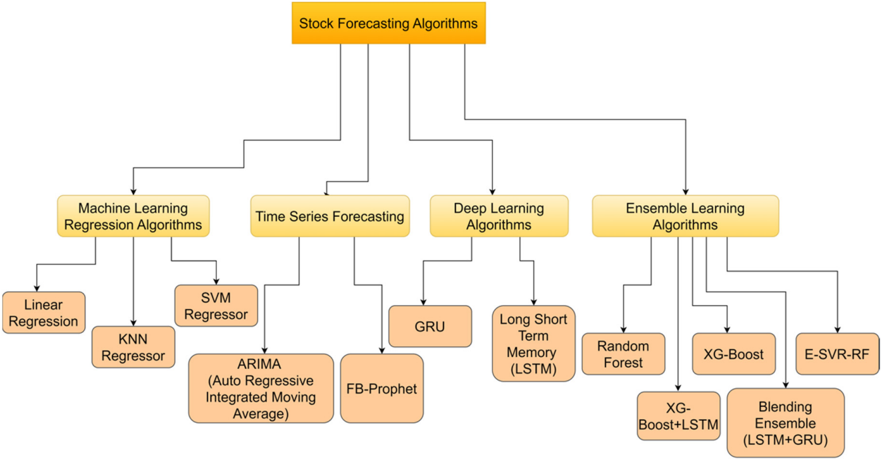
This paper reviews machine learning, deep learning, time series, and ensemble methods for stock price forecasting and implements an ensemble “Random Forest + XG-Boost + LSTM” on two Indian chemical-sector stocks. The ensemble achieved the best reported RMSE and R² among the compared models for both stocks.
Key findings
- The proposed ensemble “Random Forest + XG-Boost + LSTM” demonstrated the best performance compared with other distinct algorithms in the paper’s experimental analysis.
- For TAINIWALCHM, the ensemble achieved RMSE 2.0247 and R² 0.9921; for AGROPHOS, it achieved RMSE 1.2658 and R² 0.9897 (Table 2).
- The review concludes that machine learning or deep learning models alone are not sufficient, that ensemble techniques can provide superior performance, and that hyperparameter tuning is crucial for improving stock forecasts.
- The paper states there is still no universal solution to accurately predict stock price or market trend, and AI-based models can fail if not trained efficiently with fresh data.
Methods
- Design: a systematic/comprehensive review of supervised and unsupervised machine learning, ensemble, time series, and deep learning algorithms for stock price prediction and classification, plus an experimental comparative analysis.
- Data: stock data obtained from the Yahoo Finance API for Tainwala Chemicals and Plastics (TAINIWALCHM) from 2014 to 2023 and Agro Phos (AGROPHOS) from 2018 to 2023.
- Main analysis: implemented algorithms in Python and evaluated performance using RMSE and R²; the ensemble used a stacked model with Keras, TensorFlow, and sklearn, 80% training and 20% testing, MSE loss, Adam optimizer, and grid-search hyperparameter tuning.
Limitations
- The paper states that no universal solution exists for accurate stock price or trend prediction, that AI-based models can fail if not trained efficiently with fresh data, and that decisions should not rely only on AI-based price forecasting methods.
- The text makes evident that the experimental comparison is limited to two stocks, TAINIWALCHM and AGROPHOS, both described as falling under the chemical industry market sector.
- The text makes evident that the review’s comparative performance table draws on heterogeneous prior studies with different datasets, metrics, and evaluation settings, so the reported comparisons are not from a single controlled benchmark.
Model-written summary. Check it against the paper before relying on it.
Integrity signals
Registry
Cites
Statistics
Figures
Verification
Claims the paper makes
33 Valid · 11 Not valid · 17 Not checked · 26 Own results and interpretations
At least one cited source doesn’t support this claim or points to a different paper, and none confirmed it — see the verdicts below.
In the paper
“The ensemble algorithm of XG-Boost + LSTM shows the following evaluation parameter: MSE = 3.465 (Vuong et al. 2022).”
§ Forecasting Stock Market Prices Using Machine Learning and Deep Learning Models: A Systematic Review, Performance Analysis and Discussion of Implications > 13 XG-Boost + LSTM
What the sources say
- Disputedcites Vuong et al. 2022 matched to “Stock-Price Forecasting Based on XGBoost and LSTM” (2022) sourceExperimental — accuracy not yet measured
Table 6 in §3.3 Results reports an MSE of 3.465 × 10⁻⁷ for XGBoost + LSTM on the Forex dataset, not 3.465. The citing sentence omits the exponent, changing the reported value by a factor of ten million. (LLM, conf=0.95)
Checked by a reasoning model — may be wrong.
plain- Asserted: passes — The authors put it forward as true.
- Checkable: passes — It can be checked against evidence.
- Load-bearing: unclear — It is unclear whether the paper’s conclusions depend on it.
- Based: passes — The paper gives a reason why it holds.
- Disputed
The sources with a verdict support this claim; the rest weren’t checked yet, have no full text we could read, or their verdicts aren’t rated yet.
In the paper
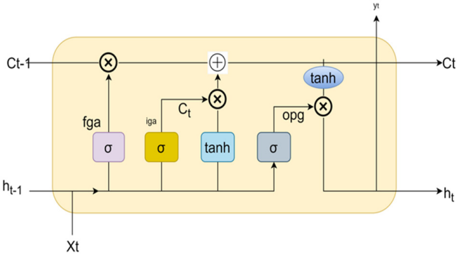
“Stock forecasting using LSTM, a unique recurrent neural network (RNN), overcomes long-term dependency (Qiu et al. 2020;Banik et al. 2022).”
§ Forecasting Stock Market Prices Using Machine Learning and Deep Learning Models: A Systematic Review, Performance Analysis and Discussion of Implications > 2. Comprehensive Summary of Theoretical Basis
What the sources say
- Supportedcites Qiu et al. 2020 matched to “Forecasting stock prices with long-short term memory neural network based on attention mechanism” (2020) source
The 'Long short-term memory neural networks (LSTM)' section describes LSTM as a form of RNN intended to avoid long-term dependence problems. The Introduction also says LSTM is suitable for stock-price time series. Page numbers are not provided in our copy. (LLM, conf=0.92)
- Not checked — no full text of the sourcecites Banik et al. 2022 matched to “LSTM based decision support system for swing trading in stock market” (2022) source
plainstates a cause- Asserted: passes — The authors put it forward as true.
- Checkable: passes — It can be checked against evidence.
- Load-bearing: unclear — It is unclear whether the paper’s conclusions depend on it.
- Based: passes — The paper gives a reason why it holds.
- Supported
Every source the paper cites for this claim was checked and supports it.
In the paper
“However, when it comes to predicting financial distress, the logistic regression model has exhibited better results in comparison to neural networks (Zizi et al. 2021).”
§ Forecasting Stock Market Prices Using Machine Learning and Deep Learning Models: A Systematic Review, Performance Analysis and Discussion of Implications > 2.3.1. Long Short-Term Memory (LSTM)
What the sources say
- Supportedcites Zizi et al. 2021 matched to “An Optimal Model of Financial Distress Prediction: A Comparative Study between Neural Networks and Logistic Regression” (2021) source
The Discussion reports that, in the authors’ comparison, logistic regression performed better than neural networks. The Conclusions likewise describe superior test-sample accuracy for logistic regression in predicting financial distress among Moroccan SMEs; the claim is supported as a report of those results, not as a universal rule. (LLM, conf=0.94)
plain- Asserted: passes — The authors put it forward as true.
- Checkable: passes — It can be checked against evidence.
- Load-bearing: unclear — It is unclear whether the paper’s conclusions depend on it.
- Based: passes — The paper gives a reason why it holds.
- Supported
Every source the paper cites for this claim was checked and supports it.
In the paper
“ARIMA can be combined with another algorithm, symmetric generalized autoregressive conditional heteroskedasticity (SGARCH), to improve forecasting performance.”
§ Forecasting Stock Market Prices Using Machine Learning and Deep Learning Models: A Systematic Review, Performance Analysis and Discussion of Implications > 2.2.1. ARIMA
What the sources say
- Supportedcites Vo and Ślepaczuk 2022 matched to “Applying Hybrid ARIMA-SGARCH in Algorithmic Investment Strategies on S&P500 Index” (2022) source
The Methodology section describes a hybrid model that combines ARIMA with GARCH to forecast the mean and variance. The Results section reports that the ARIMA–SGARCH model predicted S&P 500 returns more accurately than ARIMA alone on the study’s error metrics. (LLM, conf=0.94)
plainstates a cause- Asserted: passes — The authors put it forward as true.
- Checkable: passes — It can be checked against evidence.
- Load-bearing: unclear — It is unclear whether the paper’s conclusions depend on it.
- Based: passes — The paper gives a reason why it holds.
- Supported
The cited sources support only part of this claim — read each source’s verdict below.
In the paper
“Models with an integrated GNB algorithm will yield feature extraction and feature scaling outcomes that are superior to those already achieved using models that incorporate either the GNB algorithm or feature scaling (Setiani et al. 2020;Ampomah et al. 2021).”
§ Forecasting Stock Market Prices Using Machine Learning and Deep Learning Models: A Systematic Review, Performance Analysis and Discussion of Implications > Sr No Algorithm Name Gap Analysis Performance Evaluation 1 Linear regression
What the sources say
- Could not verifycites Setiani et al. 2020 matched to “Prediction of Banking Stock Prices Using Naïve Bayes Method” (2021) sourceExperimental — accuracy not yet measured
The Methodology section describes a Naïve Bayes classifier and a Gaussian-distribution calculation, while Figure 3 reports 57% prediction accuracy. Neither passage addresses integrated GNB with feature extraction or scaling, or compares it with models using either component alone (searched: integrated GNB, feature extraction, feature scaling, comparative performance). (LLM, conf=0.76)
- Partly supportedcites Ampomah et al. 2021 matched to “Stock Market Prediction with Gaussian Naïve Bayes Machine Learning Algorithm” (2021) sourceExperimental — accuracy not yet measured
The Conclusion reports that models combining GNB, feature scaling, and feature extraction generally outperformed models combining GNB with just one of those techniques. The cited paper measures stock-price prediction performance, not the quality of feature extraction or scaling themselves, and expressly notes an exception: GNB_LDA. (LLM, conf=0.86)
hedgedstates a cause- Asserted: passes — The authors put it forward as true.
- Checkable: passes — It can be checked against evidence.
- Load-bearing: unclear — It is unclear whether the paper’s conclusions depend on it.
- Based: passes — The paper gives a reason why it holds.
- Could not verify
7 more claims · 1 with their cited sources checked
Create a free account to see all 87 claims and to verify the 3 references still open.
- Probably not a substantial claim. 50
- It may state two separate claims as one. 45
- The quote only partly states this claim. 2
Claims other papers make about this one
Each is checked against this paper’s own text: does it say what the citing paper says it does?
In the citing paper
“Cognitive research indicates that human working memory can recall only five to nine events at a time [30].”
From FinMem: A Performance-Enhanced LLM Trading Agent With Layered Memory and Character Design (2025) · cites this paper as [30]
In the citing paper
“Unlike human working memory, having a maximum capacity of seven plus or minus two memory events [30], FINMEM has the ability to expand the capacity based on specific requirements.”
From FinMem: A Performance-Enhanced LLM Trading Agent With Layered Memory and Character Design (2025) · cites this paper as [30]
Self-check
Percentages, sums and reported differences re-computed from the paper’s own numbers.
Each contradiction between two passages listed here was confirmed by an independent check.
Rated major: it would touch a result — a value a result rests on, reported and recomputed p-values on opposite sides of the significance level, two passages that conflict with no sign which is right, or a cited work retracted before this paper was published.
In the paper
§ Forecasting Stock Market Prices Using Machine Learning and Deep Learning Models: A Systematic Review, Performance Analysis and Discussion of Implications > 7. Conclusions
“| Random forest | 87.8839 | 0.9818 | 98.5633 | 0.9428 |”
§ Forecasting Stock Market Prices Using Machine Learning and Deep Learning Models: A Systematic Review, Performance Analysis and Discussion of Implications > 7. Conclusions
“| SVR | 4.525 | 0.9279 | 1.5074 | 0.9432 |”
Rated major: it would touch a result — a value a result rests on, reported and recomputed p-values on opposite sides of the significance level, two passages that conflict with no sign which is right, or a cited work retracted before this paper was published.
In the paper
§ Forecasting Stock Market Prices Using Machine Learning and Deep Learning Models: A Systematic Review, Performance Analysis and Discussion of Implications > 7. Conclusions
“| SVR | 4.525 | 0.9279 | 1.5074 | 0.9432 |”
§ Forecasting Stock Market Prices Using Machine Learning and Deep Learning Models: A Systematic Review, Performance Analysis and Discussion of Implications > 7. Conclusions
“| MLPR | 2.5893 | 0.9611 | 2.4764 | 0.9472 |”
Rated minor: it would not touch a result — a value no result rests on, a p-value that stays on the same side of the significance level, or a conflict that is clerical, resolved elsewhere in the paper, or outside its own findings.
In the paper
§ Forecasting Stock Market Prices Using Machine Learning and Deep Learning Models: A Systematic Review, Performance Analysis and Discussion of Implications > 2.2.2. FB Prophet Model
“where l(t) represents the linear trend, sp(t) represents seasonal patterns, v(t) represents holiday effects, and εn is the white noise error.”
§ Forecasting Stock Market Prices Using Machine Learning and Deep Learning Models: A Systematic Review, Performance Analysis and Discussion of Implications > 7 FB Prophet
“One of its advantages is that it does not consider holidays or null values.”
Rated minor: it would not touch a result — a value no result rests on, a p-value that stays on the same side of the significance level, or a conflict that is clerical, resolved elsewhere in the paper, or outside its own findings.
In the paper
§ Forecasting Stock Market Prices Using Machine Learning and Deep Learning Models: A Systematic Review, Performance Analysis and Discussion of Implications > 3. General Machine Learning Pipeline
“Training the ML model involves six steps, which are described in the following section:”
§ Forecasting Stock Market Prices Using Machine Learning and Deep Learning Models: A Systematic Review, Performance Analysis and Discussion of Implications > 3. General Machine Learning Pipeline
“Step 7: Fine-tune the hyperparameters to improve the evaluation parameters of the model.”
Rated minor: it would not touch a result — a value no result rests on, a p-value that stays on the same side of the significance level, or a conflict that is clerical, resolved elsewhere in the paper, or outside its own findings.
In the paper
§ Forecasting Stock Market Prices Using Machine Learning and Deep Learning Models: A Systematic Review, Performance Analysis and Discussion of Implications > 2. Comprehensive Summary of Theoretical Basis
“The model showed the lowest RMSE value of 186.32, a precision of 60%, and an F1-score of 66.47 (Li and Pan 2021).”
§ Forecasting Stock Market Prices Using Machine Learning and Deep Learning Models: A Systematic Review, Performance Analysis and Discussion of Implications > 13 XG-Boost + LSTM
“The blending ensemble algorithm, which consists of a modified version of RNN, i.e., LSTM and GRU, has the following evaluation parameters: MSE = 186.32,MPA = 99.65,precision = 60%, Recall = 75%, F1-Score = 66.67% (Li and Pan 2021).”
8 more findings
Create a free account to see every finding of this check.
Cited works that were retracted
Works this paper cites that were later retracted, from the retraction notices publishers deposit. Major when the notice came out before this paper was published.
A note, not an issue: for example, a cited work that was retracted only after this paper was published, which its authors could not have known.
In the paper
“In (Sharaf et al. 2022), news headlines pertaining to TSLA, AMZ, and GOOG stock were considered to obtain good-quality data to reduce spam tweets through feature selection methods.”
Cited work 10.1007/s11042-022-14216-w · retracted 2026-04-25 · notice 10.1007/s11042-026-21614-x · this paper published 2023-07-26
Citations
Cites
1 retracted
Sharaf, M. M., Hemdan, E. E., El‐Sayed, A., & El-Bahnasawy, N. A. W. (2022) · Multimedia Tools and Applications · doi:10.1007/s11042-022-14216-w · Cited by 65 · cited 1×
“In (Sharaf et al. 2022), news headlines pertaining to TSLA, AMZ, and GOOG stock were considered to obtain good-quality data to reduce spam tweets through feature selection methods.”
BackgroundRetractedPatel, J., Shah, S., Thakkar, P., & Kotecha, K. (2015) · Expert Systems with Applications · doi:10.1016/j.eswa.2014.07.040 · Cited by 1,141 · cited 1×
“Random forest, trained on multiple decision trees and Naïve Bayes, predicts stock movement based on negative or positive probability using Reliance and Infosys’ 10-year historical data (Patel et al. 2015).”
MethodSentiment analysis using deep learning architectures: a review
Yadav, A., & Vishwakarma, D. K. (2020) · Artificial Intelligence Review · doi:10.1007/s10462-019-09794-5 · Cited by 841 · cited 1×
“Social media data, company news, and trend analysis can classify investors’ stock sentiments as positive, negative, or neutral (Yadav and Vishwakarma 2019).”
BackgroundApplications of deep learning in stock market prediction: Recent progress
Jiang, W. (2021) · Expert Systems with Applications · doi:10.1016/j.eswa.2021.115537 · Cited by 714 · cited 2×
“We believe that researchers can explore the possible usage of state-of-the-art deep learning and machine learning algorithms in stock trend prediction and classification (Jiang 2021; Nikou et al. 2019).”
BackgroundEvaluating multiple classifiers for stock price direction prediction
Ballings, M., Van den Poel, D., Hespeels, N., & Gryp, R. (2015) · Expert Systems with Applications · doi:10.1016/j.eswa.2015.05.013 · Cited by 611 · cited 7×
“The performance of the SVM algorithm can be elevated by tuning parameters such as regularization, gamma, and kernel parameters (Bustos et al. 2017).”
MethodInfluentialStock Market Analysis: A Review and Taxonomy of Prediction Techniques
Shah, D., Isah, H., & Zulkernine, F. (2019) · International Journal of Financial Studies · doi:10.3390/ijfs7020026 · Cited by 465 · cited 2×
“As the stock market evolves under the influence of various factors such as geopolitical issues, equity trading, and investment, the underlying challenges also change, and so do the methodologies for addressing the new challenges (Sprenger and Welpe 2011; Shah et al. 2019).”
BackgroundNabipour, M., Nayyeri, P., Jabani, H., S., S., & Mosavi, A. (2020) · IEEE Access · doi:10.1109/access.2020.3015966 · Cited by 463 · cited 1×
“Similar feature engineering-and deep learning-based approaches are presented in (Shen and Shafiq 2020; Nabipour et al. 2020; Mohapatra et al. 2022).”
BackgroundThe evolution of stock market efficiency over time: A survey of the empirical literature
Lim, K.-P., & Brooks, R. (2011) · Journal of Economic Surveys · doi:10.1111/j.1467-6419.2009.00611.x · Cited by 410 · cited 2×
“It is said that the stock market evolves over a period of time (Lim and Brooks 2011), and hence, the approaches developed for handling specific problems will see low performance sooner or later even though their performance is found to be appreciated initially.”
BackgroundShort-term stock market price trend prediction using a comprehensive deep learning system
Shen, J., & Shafiq, M. O. (2020) · Journal of Big Data · doi:10.1186/s40537-020-00333-6 · Cited by 380 · cited 1×
“Similar feature engineering-and deep learning-based approaches are presented in (Shen and Shafiq 2020; Nabipour et al. 2020; Mohapatra et al. 2022).”
BackgroundForecasting stock prices with long-short term memory neural network based on attention mechanism
Qiu, J., Wang, B., & Zhou, C. (2020) · PLOS ONE · doi:10.1371/journal.pone.0227222 · Cited by 366
Research works printed but not linked: 4
- 4. Baheti, Radhika, Gauri Shirkande, Sneha Bodake, Janhavi Deokar, and Archana K. 2021. Stock Market Analysis from Social Media and News using Machine Learning Techniques. International Journal on Data Science and Machine Learning with Applications 1: 59-67.
- 22. Gururaj, Vaishnavi, V. R. Shriya, and K. Ashwini. 2019. Stock Market Prediction using Linear Regression and Support Vector Machines. International Journal of Applied Engineering Research 14: 1931-34.
- 84. Seethalakshmi, Ramaswamy. 2018. Analayis of stock market predictor variables using linear regression. International Journal of Pure and Applied Mathematics 119: 369-78.
- 105. Venkat, Projects. 2022. Stock Market Trend Prediction Using K-Nearest Neighbor (KNN) Algorithm. Journal of Engineering Sciences 3: 32-44.
Cited by
Items 101–200 of 253
State-Space Type-2 Fuzzy Adaptive Identification Approach Based on Evolving Data Clustering
Torres, L. M. M., & Serra, G. L. D. O. (2025) · Journal of Control Automation and Electrical Systems · doi:10.1007/s40313-025-01200-6 · Cited by 1
“…et al., 2023), signal processing (Huang et al., 2023; Zheng et al., 2023), renewable energy (Cui et al., 2023; Ebead et al., 2023), fault detection (Chen et al., 2023a; Shadab et al., 2023), and economics (Banik et al., 2022; Sonkavde et al., 2023), establishing it as an important research area.”
Stock price prediction using CEEMD-CNN-BiLSTM-AM: A hybrid deep learning approach
Wei, E., & Wang, Z. (2025) · International Conference on Applied Mathematics, Modelling and Intelligent Computing (CAMMIC) · doi:10.1145/3745533.3745581 · Cited by 3
“Gaurang et al. employed several deep learning approaches to predict stock prices for TAINI-WALCHM and AGROPHOS, thereby demonstrating the models’ predictive power [11].”
Forecasting Malaysia Shipping Logistic Company Stock Market Using Machine Learning
Yahaya, M. A. B., Shariff, S. S. R., Kamarudin, N., et al. (2025) · doi:10.1109/roma66616.2025.11155240 · Cited by 1
Temporal Dynamics of Infant–Parent Synchrony: Challenges and Innovations in Brain–Behavior Coupling
Wilcox, T., Hammack, J. S., & Riera‐Gomez, L. (2025) · Child Development Perspectives · doi:10.1111/cdep.70001 · Cited by 1
Prasodjo, I., Suyanto, S., Indiyati, D., & Atastina, I. (2025) · doi:10.1109/icoict66265.2025.11192904 · Cited by 1
“This study emphasizes the importance of integrating various techniques in ensemble learning to improve the accuracy of stock price predictions [13] [14] [15] [16] [17].”
Gözkonan, Ü. H., & Karğın, M. (2025) · Yönetim ve Ekonomi Araştırmaları Dergisi · doi:10.11611/yead.1558158 · Cited by 1
Torres, L. M. M., & Serra, G. L. D. O. (2026) · Fuzzy Sets and Systems · doi:10.1016/j.fss.2025.109751 · Cited by 2
ML Application in Predicting Financial Markets and Supporting Data Driven Investments
Kashni, T., Albeez, S. F., A., P. C., et al. (2025) · doi:10.1109/icdiss68238.2025.11320643 · Cited by 1
RetractedLanda, G. L., & Minutti-Martinez, C. (2025) · International Conference in Software Engineering Research and Innovation (CONISOFT) · doi:10.1109/conisoft66928.2025.00049 · Cited by 1
“Systematic reviews confirm the increasing adoption of these techniques but emphasize that most applications remain concentrated in developed economies [8]–[10].”
Prediction of Stock Prices via Time Series and Machine Learning Models
Başaran, B., & Cılasun, S. M. (2026) · International Informatics and Software Engineering Conference (IISEC) · doi:10.1109/iisec69317.2026.11418398 · Cited by 1
Alowaimer, O. H. (2026) · Banks and Bank Systems · doi:10.21511/bbs.21(1).2026.06 · Cited by 1
An, S., Qiu, J., Lin, J., Yuan, Z., Tian, W., & Yao, Z. (2026) · Energy internet. · doi:10.1049/ein2.70021 · Cited by 7
Short-term prediction of the Romanian stock market benchmark index using genetic programming
Duma, F. S., & Lung, R. I. (2026) · Digital Finance · doi:10.1007/s42521-026-00188-1 · Cited by 1
“…how machine learning can predict the evolution of the stock market, and some of them do a systematic review of the literature, but also discuss the implications and future developments in this field Mintarya et al. (2023); Sonkavde et al. (2023); Rouf et al. ( 2021 ); Strader et al. ( 2020 ).”
Hartanto, R. D., Shidik, G. F., Alzami, F., Fanani, A. Z., Marjuni, A., & Syukur, A. (2026) · Journal of Computing Theories and Applications · doi:10.62411/jcta.15863 · Cited by 2
Su, D. (2026) · ITM Web of Conferences · doi:10.1051/itmconf/20268402007 · Cited by 1
“Studies have investigated whether integrating sentiment information into market forecasts improves their accuracy relative to forecasts based solely on historical price data [2].”
The common risk drivers of cryptocurrency markets
Maghyereh, A., & Awartani, B. M. A. (2026) · Finance Research Open · doi:10.1016/j.finr.2026.100120 · Cited by 1
Joon, A., Pahune, S. A., Neeli, S. S. S., & Boddu, B. (2026) · Lecture notes in networks and systems · doi:10.1007/978-3-032-20253-6_40 · Cited by 2
Application of machine learning in quantitative timing model based on factor stock selection
Duan, Y., Gu, X., & Lei, T. (2023) · Electronic Research Archive · doi:10.3934/era.2024009 · Cited by 2
“Sonkavde et al. [10] analyzed various existing machine learning algorithms, including time series models, deep learning models and integrated learning methods.”
BackgroundAnalysing Trends in Trading Patterns in Financial Markets Using Deep Learning Algorithms
Zhao, Y. H. X. (2024) · Journal of Electrical Systems · doi:10.52783/jes.1695 · Cited by 2
“This article [12] provides a thorough review of machine learning applications in finance, focusing on recent developments.”
BackgroundEnhancing Accuracy in Stock Price Prediction: The Power of Optimization Algorithms
Fitria, V. A., & Widayanti, L. (2024) · Matrik Jurnal Manajemen Teknik Informatika dan Rekayasa Komputer · doi:10.30812/matrik.v23i2.3785 · Cited by 1
“Understanding probable stock value fluctuations allows investors to take steps to protect their portfolios, such as investment diversification or the use of derivative financial instruments to offset risks [4].”
BackgroundEnhancing Stock Trading Strategies: Integrating Discrete Wavelet Transformation with Deep Q-Network
Wang, Q., Zhang, L., Zeng, Y., Wu, S., Yu, C., & Sun, S. (2024) · Journal of Circuits Systems and Computers · doi:10.1142/s0218126624502761 · Cited by 1
A comparative study on classification models for stock rating prediction
Yap, J. K., & Wiradinata, T. (2024) · AITI · doi:10.24246/aiti.v21i1.140-151 · Cited by 1
“Sonkavde et al. [18] compared the performance of existing stock prediction algorithms, and most algorithms, such as the ones used in this study, only achieved an F1-Score in the range of 60% to 70%.”
MethodStacked Block Analysis Based on LSTM for Stock Price Prediction
Shao, S. (2024) · Transactions on Computer Science and Intelligent Systems Research · doi:10.62051/xh2b7w58 · Cited by 1
“A good prediction can earn money for investors, reduce the loss of a company, or even prevent a financial crisis [1, 2].”
BackgroundWang, Y., Lin, J., & Liu, G. (2024) · doi:10.1109/ijcnn60899.2024.10650404 · Cited by 1
“The studies by Olorunnimbe and Viktor[30], Muhammad et al.[31], and Sonkavde et al.[32] collectively explore the use of advanced machine learning and deep learning models, including transformers, for predicting stock market prices.”
BackgroundA study of asset and liability management applied to Brazilian pension funds
Bernardino, W., Falcão, R., Jr., J., et al. (2024) · European Journal of Operational Research · doi:10.1016/j.ejor.2024.11.016 · Cited by 1
Progressive time series analysis: CNN-LSTM models for stock market trend prediction
Pandeeswari, G. J. A. (2025) · AIP conference proceedings · doi:10.1063/5.0245943 · Cited by 1
Enhancing Time Series Prediction with Evolutionary Algorithm-based Optimization of LSTM
Sun, J., Zhang, H., & Wang, J. (2025) · IEEE International Conference on Acoustics Speech and Signal Processing · doi:10.1109/icassp49660.2025.10889678 · Cited by 1
“Time series forecasting is a crucial task with wide-ranging applications in finance [1], [2], transportation [3]–[5], me-teorology [6]–[8], and energy [9].”
Morais, L. R. D. A., Fragoso, G. A. M., Ludermir, T. B., & Monteiro, C. L. A. (2024) · doi:10.5753/eniac.2024.244444 · Cited by 1
Tarafdar, R., Velu, H., Sinha, H., & Gupta, S. (2025) · International Conference on Distributed Computing and Electrical Circuits and Electronics (ICDCECE) · doi:10.1109/icdcece65353.2025.11035497 · Cited by 1
“In finance[7], among the most difficult tasks ever faced is predicting the stock market, which is fraught with uncertainty and complex interdependencies[8].”
Application Analysis and Research of Text Model Based on Improved CNN-LSTM in the Financial Field
Chen, J., & Li, C. (2025) · International Journal of Advanced Computer Science and Applications · doi:10.14569/ijacsa.2025.0160675 · Cited by 1
“Sonkavde et al. have employed SVM to identify stocks that might outperform the market by analyzing accounting fundamentals and price data [29].”
Zhang, T. (2025) · Applied and Computational Engineering · doi:10.54254/2755-2721/2025.26082 · Cited by 1
Naeem, M. A., Arfaoui, N., & Yarovaya, L. (2024) · SSRN Electronic Journal · doi:10.2139/ssrn.4816366 · Cited by 1
Stock Price Forecasts Based on KNN and LSTM
Chen, Z. (2023) · Advances in Economics Management and Political Sciences · doi:10.54254/2754-1169/56/20231064
Review of Predicting Stock Prices Based on Machine Learning and Stock Learning
Cao, Y. (2024) · Highlights in Science Engineering and Technology · doi:10.54097/j0tcxd44
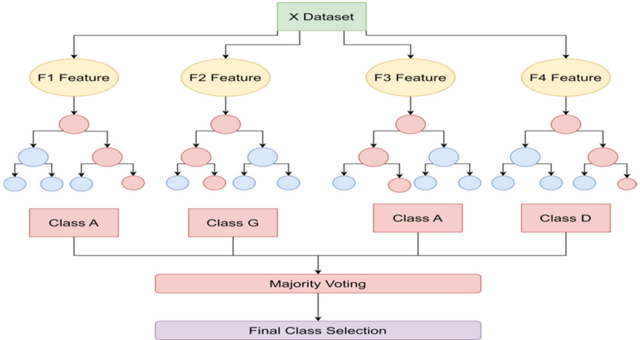
“Random forests make predictions by integrating multiple decision trees and voting[13].”
BackgroundLong-range dependence and rational Gaussian noise
Yang, Y. (2024) · Statistics · doi:10.1080/02331888.2024.2344689 · Cited by 1
“Furthermore, with regard to the recent significant advancement of applying machine learning (ML) and deep learning (DL) techniques on time series prediction, such as in the stock market [23,24], in engineering [25], and in natural language processing [26], we anticipate”
BackgroundTextual Analysis in Stock Picking: Additional Evidence on (Dis)SimilarityPreprint
Ferretti, R., & Sciandra, A. (2024) · SSRN Electronic Journal · doi:10.2139/ssrn.4837175
Stock Open Price Prediction of Software Companies in the BSE SENSEX 50 Index
Sonar, C. D., & Hammadi, A. M. A. (2024) · Communications in computer and information science · doi:10.1007/978-3-031-72483-1_12
Shivashankar, A., Lokesh, C., Adhikary, C., & Balaji, V. (2024) · Advances in computational intelligence and robotics book series · doi:10.4018/979-8-3693-6215-0.ch010
Impact of institutional quality and macroeconomic variables on stock market in Pakistan
Alvi, A. R., Gillani, S. M. A. H., Rana, M., & Ali, A. (2024) · Journal of Management Info · doi:10.31580/jmi.v11i3.3157 · Cited by 3
Banga, D., Kumar, A., & Jain, S. (2024) · International Conference on Contemporary Computing and Informatics (IC3I) · doi:10.1109/ic3i61595.2024.10828598
“The approach of comparing the findings of the models proposed here, with those of Gaur et al. [7] allows us to determine the strengths and limitations of each machine learning approach and further contribute to the development of such predictive models.”
Stock Forecasting Using LSTM Neural Networks
Paul, S., & Tanwar, S. (2025) · Lecture notes in networks and systems · doi:10.1007/978-981-97-8329-8_27
Financial Risk Prediction Model based on Deep Reinforcement Learning Neural Network
Zhou, Q. (2025) · doi:10.1109/iciscn64258.2025.10934296
“In their study, G. Sonkavde and colleagues developed an ensemble model combining Random Forest, XGBoost[5],and LSTM to forecast the stock prices of TAINIWALCHM and AGROPHOS, and conducted a comparative analysis with popular machine learning and deep learning models.”
MANAGING INVESTMENT RISKS: INSIGHTS FROM UNCERTAINTY AND VOLATILITY
Safarov, R. V., Zinollin, I. R., Kylyshbek, U., et al. (2025) · Herald of Kazakh-British technical university · doi:10.55452/1998-6688-2025-22-1-44-58
Managing dynamic stock with a smart inventory control system based on block chain
Sowndharya, R., Viswanathan, S., Govindaraj, P., & Rajarathinam, P. (2025) · AIP conference proceedings · doi:10.1063/5.0262925
Next-Gen AI Stock Prediction: How LSTM+RF Hybrids Outperform Traditional Models
Sekaran, P., & Dhamotharan, R. (2025) · doi:10.38124/ijisrt/25mar1247
Passive investing, active decisions: The DAX index inclusion effect
Bektić, D., Khan, A., & Körber, L. (2025) · Review of Financial Economics · doi:10.1002/rfe.70001
Prah, M. K., Yakubu, A., Attah, L. S., & Oluwatoba, A. (2025) · Technology and Investment · doi:10.4236/ti.2025.162005 · Cited by 1
StockNNEval: Evaluating Neural Network Methods for Predicting Stock Trend
Liao, Z., Zhang, L., Zhou, Z., & Zou, Q. (2025) · Lecture notes in computer science · doi:10.1007/978-981-96-5032-3_6
Forecasting Stock Prices with Machine Learning: A Practice in China A-Share Market
Jiang, Y. (2024) · Journal of big data and computing. · doi:10.62517/jbdc.202401319
Passive investing, active decisions: The DAX index inclusion effectPreprint
Bektić, D., Khan, A., & Körber, L. (2025) · SSRN Electronic Journal · doi:10.2139/ssrn.5228822
A Comparative Research on Stock Selection Strategy based on Machine Learning Models
Jiang, Y. (2024) · International Conference on Big Data Economy and Information Management (BDEIM) · doi:10.1145/3724154.3724317
“In this paper, we use and compare a variety of models, including linear regression models and ensemble models such as random forests and extreme gradient boosting (XGBoost) [5] [6].”
Roshanpour, R., Keyghobadi, A., Abdi, A. A., et al. (2025) · SN Business & Economics · doi:10.1007/s43546-025-00830-x
“Its ability to capture complex temporal dependencies aligns with findings from prior studies (Sonkavde et al. 2023).”
Usability of Forecasting Technique for Tackling Stock Price Action Decision
Lioner, T., & Wibowo, A. (2025) · doi:10.1109/icocseti63724.2025.11019815
“This text section is retrieved from paper [16].”
An, C. (2025) · Procedia Computer Science · doi:10.1016/j.procs.2025.05.119
Rai, S. K., Awasthi, Y., Singh, S., et al. (2025) · Lecture notes in networks and systems · doi:10.1007/978-981-96-3253-4_13
Stock Market Forecasting Based on Quantum Fuzzy Support Vector Machine
Min, S., & Zhang, S. (2025) · International Conference on Digital Management and Information Technology (DMIT) · doi:10.1145/3736426.3736484 · Cited by 1
“Researchers have proposed several capable and sophisticated prediction schemes [1, 2].”
The Analysis of Pricing Prediction for Stock in Fintech Based on Machine Learning
Chen, X., Sun, B., & Kan, P. (2025) · International Journal of Information Technologies and Systems Approach · doi:10.4018/ijitsa.384593
Presenting an innovative methodology to effectively handle investment risk in financial markets
Mei, S., Zhang, Y., Liu, X., & Li, F. (2025) · International Journal of Systems Assurance Engineering and Management · doi:10.1007/s13198-025-02862-w
Anyanwu, U. G., Mejeha, R. O., Njoku, M. E., Amusa, T. A., Ben-Chendo, G. N., OSUJI, M. N., Uhuegbulam, I., Maduike, I. A., Oshaji, I. O., Obi-Nwandikom, C. O., et al. (2025) · International Journal of Multidisciplinary Comprehensive Research · doi:10.54660/ijmcr.2025.4.4.13-25
Scientific quantitative analysis of artificial intelligence in the financial industry
Yin, F., Zhang, R., Pan, C.-L., et al. (2025) · doi:10.1145/3745133.3745169
“These technologies are deeply integrated into core areas such as risk management [4] and stock market forecasting [5], not only optimizing investment strategies and operational efficiency [6] but also effectively mitigating risks.”
Profit Prediction with Financial Accounting Systems using a Reinforced Hybrid GRU-LSTM Model
Viswanath, P., Kumar, D., Raju, A. N., Tharani, M., Jarad, R. S., & Lamba, A. K. (2025) · Global Conference in Emerging Technology (GINOTECH) · doi:10.1109/ginotech63460.2025.11076985
“An overview of machine learning and deep learning models for financial forecasting [12] introduces a comprehensive framework and an ensemble model for stock prediction.”
Falah, Z. E., Abouchabaka, J., & Rafalia, N. (2025) · Lecture notes in networks and systems · doi:10.1007/978-3-031-91235-1_25
Erol, Ü. N., Özer, S., Dosdoğru, A. T., & Göçken, M. (2025) · International Symposium on Innovative Approaches in Smart Technologies (ISAS) · doi:10.1109/isas66241.2025.11101853
“Sonkavde et al. [8] emphasized the growing importance of AI-driven ML and DL algorithms in the financial sector, systematically reviewing methods used for market forecasting.”
Wu, X. (2025) · Applied and Computational Engineering · doi:10.54254/2755-2721/2025.26120
Exploring the Landscape of Neural Networks for Stock Market Prediction
Pinhatiya, A., Kumari, L., Malhotra, I., et al. (2025) · International Conference on Computing for Sustainable Global Development · doi:10.23919/indiacom66777.2025.11115642
The sentiment-size nexus: how financial news drives forecasting power across market caps
George, M., & Murugesan, R. (2025) · Journal of Business Analytics · doi:10.1080/2573234x.2025.2552440
“LSTM and GRU (Chen & Huang, 2021; Jaiswal & Singh, 2022; Moodi et al., 2024; Patra & Mohanty, 2022; Sonkavde et al., 2023) are widely used neural networks for this purpose.”
Li, X. (2025) · IEEE International Conference on Image Processing and Computer Applications (ICIPCA) · doi:10.1109/icipca65645.2025.11138486
“Deep learning is a subfield of machine learning, originating from in - depth research on artificial neural networks [8] .”
Deep Learning for Global Equity Forecasting: New Evidence Across Major Markets
Sathyanarayana, N., Kumar, V., Rahul, V., Kumar, M. S. S. V. S., & Goranta, L. R. (2025) · IGI Global eBooks · doi:10.4018/979-8-3373-2838-6.ch007
A Hybrid Model for Stock Price Forecasting Integrating XGBoost and LSTM with Financial IndicatorsPreprint
Dubey, S., Sharma, R. K., Malviya, S., & Dubey, S. (2025) · Research Square · doi:10.21203/rs.3.rs-7396543/v1 · Cited by 1
A Comparative Analysis of Machine Learning Algorithms for Stock Portfolio Optimization
Deshpande, K. V., Khadke, J., Jain, A., et al. (2025) · International Conference on Advancements in Smart, Secure and Intelligent Computing (ASSIC) · doi:10.1109/assic64892.2025.11158419
Enhancing Stock Market Prediction with Guided Stochastic Gradient Descent
Khan, I. M., & Sharma, A. (2025) · Lecture notes in networks and systems · doi:10.1007/978-981-96-4536-7_33
Machine Learning Based Collaborative Development Model for Logistics and Finance
Zheng, Z., Ye, Z., Ding, Z., et al. (2025) · Smart innovation, systems and technologies · doi:10.1007/978-3-032-06372-4_3
Tasinaffo, P. M., Marques, J., Dias, L. A. V., da Cunha, A. M., Gonçalves, G. S., Lopes, T. G. G., Fernandes, T. D. L., Fernandes, S. C., & Ponte, L. A. A. R. (2025) · SN Computer Science · doi:10.1007/s42979-025-04370-x
“Figures 22, 23 and 24 show the graphical results of the simulations using Architecture 4 as described in Table 6.”
Detecting financial misstatements in emerging markets: a machine learning approachPreprint
Tieu, H. T. T., Hoang, H. T., & Tran, H. N. (2025) · Research Square · doi:10.21203/rs.3.rs-7360630/v1
Enhancing Portfolio Analysis and Stock Prediction Through LSTM and XGBoost Integration
Khande, R., Naik, S. A., Tayade, A., Kale, A., & Phalke, K. (2025) · Lecture notes in networks and systems · doi:10.1007/978-981-96-7511-1_16
Dynamic Window-Driven Quantitative Strategies Optimization via Heterogeneous Ensembles
Wu, H., Ma, Y., & Yuan, J. (2025) · doi:10.1109/icaide65466.2025.11189741
“Shen et al. showed ensemble methods enhance prediction performance [11].”
Mutual Fund Performance Prediction Using Supervised Regression Algorithms
Seethalakshmi, S., Hemalatha, J., Sathya, M., et al. (2025) · International Conference on Inventive Systems and Control (ICISC) · doi:10.1109/icisc65841.2025.11187714
“The assessment of the paper emphasizes how deep learning models are used in the financial industry, mostly for stock price classification and prediction [5].”
Predicting Stock Price Movements Using the RNN-MGU Model
Mendrofa, S. J., & Soeparno, H. (2025) · Studies in computational intelligence · doi:10.1007/978-3-032-01133-6_5
Esfandiari, A., & Doustmohammadi, A. (2025) · doi:10.1109/icee67339.2025.11212862
“Recently, machine learning techniques have gained attention for the prediction of financial markets [5], [6], [7].”
Luo, Z., & Liu, J. (2025) · International Joint Conference on Neural Networks (IJCNN) · doi:10.1109/ijcnn64981.2025.11227374
“According to theoretical financial analysis [11], investment risk should be considered as an essential factor for investors on making financial decisions.”
Ali, M. S. M., Manhosh, M. M., Alwahhab, A. B. A., Srayyih, F. H., Ahmed, M., Al-kharaz, A. A. I., Al-Mahmood, A., Madhi, A. A., & Ahmed, M. R. (2025) · International Conference on Business Analytics for Technology and Security (ICBATS) · doi:10.1109/icbats66542.2025.11258483
“A study on the merging of blockchain and IoT systems has been done to tackle the issues of privacy preservation [27].”
Patel, M. (2026) · Quality & Quantity · doi:10.1007/s11135-026-02581-9 · Cited by 2
“It is robust to noise and provides interpretable insights through feature importance analysis (Gu et al. 2020), yet its computational intensity and tendency to overfit under high volatility remain limitations (Sonkavde et al. 2023).”
Partial Multivariate Transformer as a Tool for Cryptocurrencies Time Series Prediction
Tokajuk, A., & Chudziak, J. A. (2025) · IEEE International Conference on Tools with Artificial Intelligence (ICTAI) · doi:10.1109/ictai66417.2025.00147 · Cited by 3
“This need for external data, however, exposes a core methodological dilemma in modern forecasting paradigms when applied to this noisy and complex ecosystem [4].”
Forecasting Stock Prices with Sequential Deep Learning: A Long Short-Term Memory Approach
Yohannes, E., Febriansyah, A., Septiyanti, N. D., et al. (2025) · doi:10.1109/icvee66651.2025.11281457
“Ensemble learning approaches, including stacking and bagging, have already demonstrated promise in enhancing both predictive accuracy and model robustness, suggesting a fertile direction for ongoing innovation in financial forecasting [10].”
Ugwunze, N. B., Iworiso, J., Stasinopoulos, D. M., & Hossain, A. (2025) · Journal of Data Analysis and Information Processing · doi:10.4236/jdaip.2026.141001 · Cited by 1
Priya, N. G., Karthika, D., & Ravi, A. T. (2025) · doi:10.1109/icicnis66685.2025.11315663
Study on Stock Price Forecasting Using a Hybrid ARIMA-LSTM Model
Paul, S. K., & Katiyar, K. (2026) · Lecture notes in networks and systems · doi:10.1007/978-3-032-06250-5_36 · Cited by 3
Machine Learning Implementation in Global Capital Market: A Systematic Literature Review
Athindra, M. A., Gunawan, A., & Mulyono (2026) · Lecture notes in electrical engineering · doi:10.1007/978-3-032-10898-2_1
Ray, I. S., Kler, R., Khan, R. L., Priyanshu, D., Matahen, R. K., & Ather, D. (2026) · SN Computer Science · doi:10.1007/s42979-025-04659-x
Analysis of Machine Learning and Deep Learning Approaches for Stock Market Time Series Forecasting
Kadam, A., & Kavitha Rani, P. (2025) · International Conference on Computational Intelligence and Knowledge Economy (ICCIKE) · doi:10.1109/iccike67021.2025.11318175
RNN-Based Time Series Modeling for Improving the Accuracy of Indonesia’s Export Forecasts
Gunaryati, A., Mantoro, T., Andryana, S., Wahyuddin, M. I., & Rahman, B. (2025) · IEEE International Conference on Computing, Engineering and Design (ICCED) · doi:10.1109/icced68324.2025.11324781
“Integrating machine learning and deep learning methods has been carried out by several researchers to predict stock prices [26], exchange rates [27], and macroeconomic indicators [28], [29] and the results show superior accuracy compared to traditional models.”
Ścisło, Ł., Swakoń, A., & Raźny, M. (2025) · IEEE International Conference on Intelligent Data Acquisition and Advanced Computing Systems: Technology and Applications (IDAACS) · doi:10.1109/idaacs68557.2025.11322235
Constructing and Evaluating a Minimum Variance Portfolio with Forecasted Returns for US Equities
Yin, H. (2025) · International Conference on Digital Economy and Computer Science (DECS) · doi:10.1145/3785706.3785898
“…(MVP), a backtest is conducted over the final 30% of the time period using the predicted prices and optimized portfolio weights derived in the previous sections [16] and further evaluated the strategy’s effectiveness by benchmarking its cumulative returns against those of the S&P 500 index [17].”
Udayakumar, S., & Anbalagan, E. (2025) · doi:10.1109/ic3it66137.2025.11340806
“Successful predictions in financial markets require new machine-learning algorithms according to[11] [12].”
A Transformer-Augmented TCN for Modeling Complex Patterns in Retail Sales Data
Robiuddin, M., Chowdhury, M. I., & Rahman, Q. A. (2025) · IEEE International Conference on Collaborative Advances in Software and Computing (CASCON) · doi:10.1109/cascon66301.2025.00052 · Cited by 1
“In particular, recurrent neural networks (RNNs), long short-term memory networks (LSTMs), and convolutional neural networks (CNNs) have become widely used due to their ability to model temporal sequences and capture complex patterns [19], [20].”
Competitive Advantage Through Strategic Market Analysis
Bükeç, C. M. (2026) · IGI Global eBooks · doi:10.4018/979-8-3373-6466-7.ch004 · Cited by 1
MDMF: A Market-Mainline-Driven Multi-Feature Fusion Model for Stock Trend Forecasting
Shi, Z., Zhao, Y., Zhang, Y., & Wu, H. (2026) · Applied Sciences · doi:10.3390/app16031648
A Comparative Analysis of AI-Based Predictive Models for NIFTY50 Index Forecasting
Mankotia, M., Gandotra, E., Gupta, D., Singhal, M., Jain, N., & Thakur, R. S. (2025) · International Conference on Innovations and Emerging Technologies in AI & Communication Systems (IETACS) · doi:10.1109/ietacs68750.2025.11385602
Predicting the Effects of News on Stock Market Using Deep Learning Techniques
Yadav, R., Saini, M. L., Dipanshu, Thakur, S., & Sharma, N. (2025) · Asia Pacific Conference on Innovation in Technology (APCIT) · doi:10.1109/apcit65661.2025.11411371
“G. Sonkavde et al [4] proposed a survey of traditional stock forecasting methods by comparing Neural Networks (NNs) with traditional methods where discussion on the Efficient Market Hypothesis and its contradictions takes place.”
Metadata
- Authors
- Sonkavde, G., Dharrao, D. S., Bongale, A. M., Deokate, S. T., Doreswamy, D., & Bhat, S. K.
- Affiliations
- Symbiosis International University (IN)
- Savitribai Phule Pune University (IN)
- Department of Mechatronics, Manipal Institute of Technology, Manipal Academy of Higher Education, Manipal 576104, Karnataka, India
- Manipal Academy of Higher Education (IN)
- Corresponding author
- Dharrao, Deepak Sudhakar
- Bongale, Anupkumar M.
- ORCID
- Venue
- International Journal of Financial Studies
- Publisher
- MDPI AG
- Published
- 2023-07-26
- Volume
- 11
- Issue
- 3
- Pages
- 94
- ISSN
- 2227-7072 (ISSN-L)
- OpenAlex
- W4385363975
- Cited by
- 262
- References
- 83
- Citations by year
- 2026: 72 · 2025: 125 · 2024: 59 · 2023: 6
- FWCI
- 8.55
- Type
- journal article
- Language
- en
- Open access
- gold
- doi.org
- Licence
- Locations
- International Journal of Financial Studies (publishedVersion, cc-by)
- RePEc: Research Papers in Economics (submittedVersion)
- DOAJ (DOAJ: Directory of Open Access Journals) (submittedVersion, cc-by-sa)
- Topics
- Social Sciences › Decision Sciences › Management Science and Operations Research › Stock Market Forecasting Methods
- Social Sciences › Economics, Econometrics and Finance › Finance › Financial Markets and Investment Strategies
- Social Sciences › Business, Management and Accounting › Accounting › Financial Analysis and Corporate Governance
- Keywords
- stock price prediction, financial time series forecasting, ensemble learning, random forest, XGBoost, LSTM, financial classification, artificial intelligence in finance, portfolio optimization
About these checks
Registry, retraction, Cites and statistics results are computed, not judged, with one exception: a printed reference that no index lists is read once by a model before it counts as a citation error. Claims are extracted by a model and kept only when their quote appears verbatim in the text; each cited source is then checked, with a model’s help, for whether it says what the claim relies on. Those verdicts can be wrong — read the claim’s quote and the cited source before relying on one.
The claim verdicts this report counts are experimental: their accuracy is not yet measured.
A language model drew the claims from the paper on 2026-09-28, under version 3 of the claim definition (prompt extract-v3).
A second model labelled each claim on 2026-09-28 (model jev-1.13-20260917, definition revision gold-guideline-v0.2).
Cited sources are checked with a language model’s help (gpt-6-sol).
Statistics and arithmetic are recomputed, not judged.
Confidence bands are shown only for fields calibrated on our annotated test set. None is calibrated yet, so no band is shown.
What counts as a claim ›How we measure confidence ›How we check this ›
Are you an author, or do you see a problem with this page? Request a review
Data sources
Bibliographic data: Semantic Scholar, OpenAlex, Crossref.
Contains information from the Semantic Scholar Academic Graph Datasets, made available under the ODC Attribution License (ODC-BY 1.0).
Semantic Scholar’s data is described in: Kinney, R., et al. (2023). The Semantic Scholar Open Data Platform. arXiv:2301.10140.
