

Impacts of Gut Bacteria on Human Health and Diseases
Open accessThe DOI matches its Crossref record; 130 of the 137 references it cites were found in a registry or an index.
Abstract
Gut bacteria are an important component of the microbiota ecosystem in the human gut, which is colonized by 1014 microbes, ten times more than the human cells. Gut bacteria play an important role in human health, such as supplying essential nutrients, synthesizing vitamin K, aiding in the digestion of cellulose, and promoting angiogenesis and enteric nerve function. However, they can also be potentially harmful due to the change of their composition when the gut ecosystem undergoes abnormal changes in the light of the use of antibiotics, illness, stress, aging, bad dietary habits, and lifestyle. Dysbiosis of the gut bacteria communities can cause many chronic diseases, such as inflammatory bowel disease, obesity, cancer, and autism. This review summarizes and discusses the roles and potential mechanisms of gut bacteria in human health and diseases.
Overview
The claims and statistics of this paper haven’t been checked yet.
Free: it reads the open-access text and checks the first 5 claims that cite a source we can check. Create a free account to check every claim.
Integrity signals
Registry
Cites
Statistics
Figures
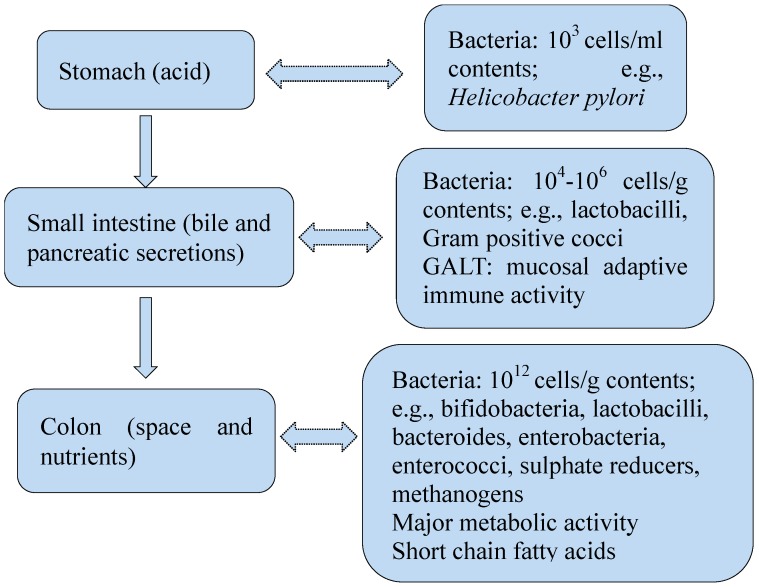
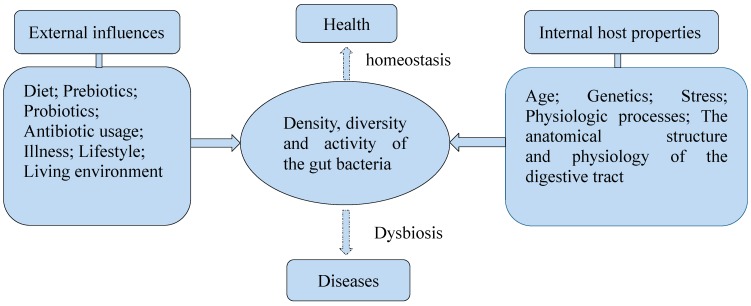
Verification
Claims the paper makes
The claims and statistics of this paper haven’t been checked yet.
Free: it reads the open-access text and checks the first 5 claims that cite a source we can check. Create a free account to check every claim.
Claims other papers make about this one
Each is checked against this paper’s own text: does it say what the citing paper says it does?
The source backs part of the claim, not all of it — or backs it for a different population, condition or comparison.
In the citing paper
“In the recent years, numerous evidences pointed towards the central role of commensal bacteria colonizing body surfaces as key determinants of health or pathologic conditions, including cancer [6].”
From Gut Microbiota and Cancer: From Pathogenesis to Therapy (2019) · cites this paper as [6]
Experimental — accuracy not yet measured
Self-check
Percentages, sums and reported differences re-computed from the paper’s own numbers.
The self-check needs the paper’s full text.
Citations
Cites
Diet rapidly and reproducibly alters the human gut microbiome
David, L. A., Maurice, C. F., Carmody, R. N., Gootenberg, D. B., Button, J. E., Wolfe, B. E., Ling, A. V., Devlin, A. S., Varma, Y., Fischbach, M. A., et al. (2014) · Nature · doi:10.1038/nature12820 · Cited by 10,100 · cited 1×
“The animal-based diet resulted in significantly lower levels of the products of carbohydrate fermentation and a higher concentration of the products of amino acid fermentation compared with the plant-based diet and baseline samples [35].”
Dietary Modulation of the Human Colonic Microbiota: Introducing the Concept of Prebiotics
Gibson, G. R., & Roberfroid, M. B. (1995) · The Journal of Nutrition · doi:10.1093/jn/125.6.1401 · Cited by 7,667 · cited 1×
“Prebiotics are defined as a non-digestible food ingredient that beneficially affects the host by selectively stimulating the growth and/or activity of one or a limited number of bacteria in the colon, and thus improving the hosts’ health [42].”
BackgroundLinking long-term dietary patterns with gut microbial enterotypes
Wu, G. D., Chen, J., Hoffmann, C., Bittinger, K., Chen, Y.-Y., Keilbaugh, S. A., Bewtra, M., Knights, D., Walters, W. A., Knight, R., et al. (2011) · Science · doi:10.1126/science.1208344 · Cited by 6,513 · cited 1×
“Microbiome composition changed detectably within 24 h of initiating a high-fat/low-fiber or low-fat/high-fiber diet, but that enterotype identity remained stable during the 10-days in a controlled-feeding study of 10 subjects [34].”
BackgroundSelf-citationMetabolites produced by commensal bacteria promote peripheral regulatory T-cell generation
Arpaia, N., Campbell, C., Fan, X., Dikiy, S., van der Veeken, J., deRoos, P., Liu, H., Cross, J. R., Pfeffer, K., Coffer, P. J., et al. (2013) · Nature · doi:10.1038/nature12726 · Cited by 4,838 · cited 1×
“Butyrate, produced by commensal microorganisms during starch fermentation, may facilitate extrathymic generation of Treg cells [23].”
BackgroundHost–microbe interactions have shaped the genetic architecture of inflammatory bowel disease
The International IBD Genetics Consortium (IIBDGC), Jostins, L., Ripke, S., Weersma, R. K., Duerr, R. H., McGovern, D. P., Hui, K. Y., Lee, J. C., Philip Schumm, L., Sharma, Y., et al. (2012) · Nature · doi:10.1038/nature11582 · Cited by 4,722 · cited 1×
“[53] have identified 163 risk loci associated with IBD, and found that many loci were involved in the sensing and elimination of bacteria.”
BackgroundMind-altering microorganisms: the impact of the gut microbiota on brain and behaviour
Cryan, J. F., & Dinan, T. G. (2012) · Nature Reviews Neuroscience · doi:10.1038/nrn3346 · Cited by 4,572 · cited 1×
“system through neural, endocrine and immune pathways to influence brain function and behavior [117].”
BackgroundGut Microbiota from Twins Discordant for Obesity Modulate Metabolism in Mice
Ridaura, V. K., Faith, J. J., Rey, F. E., Cheng, J., Duncan, A. E., Kau, A. L., Griffin, N. W., Lombard, V., Henrissat, B., Bain, J. R., et al. (2013) · Science · doi:10.1126/science.1241214 · Cited by 3,788 · cited 1×
“However, the microbial protection from increased adiposity was only possible against the backdrop of a suitable host diet [79].”
Gut flora in health and disease
Guarner, F., & Malagelada, J.-R. (2003) · The Lancet · doi:10.1016/s0140-6736(03)12489-0 · Cited by 3,365 · cited 2×
“may cause allergy, inflammatory bowel disease (IBD), obesity, diabetes, and even cancer [8,9].”
BackgroundThe Treatment-Naive Microbiome in New-Onset Crohn’s Disease
Gevers, D., Kugathasan, S., Denson, L. A., Vázquez-Baeza, Y., Van Treuren, W., Ren, B., Schwager, E., Knights, D., Song, S. J., Yassour, M., et al. (2014) · Cell Host & Microbe · doi:10.1016/j.chom.2014.02.005 · Cited by 3,220 · cited 1×
“It suggested as well that assessing the rectal mucosal-associated microbiome offered unique potential for convenient and early diagnosis of CD at this early stage of disease [63].”
BackgroundGut Microbiota in Human Adults with Type 2 Diabetes Differs from Non-Diabetic Adults
Larsen, N., Vogensen, F. K., van den Berg, F. W. J., Nielsen, D. S., Andreasen, A. S., Pedersen, B. K., Al-Soud, W. A., Sørensen, S. J., Hansen, L. H., & Jakobsen, M. (2010) · PLoS ONE · doi:10.1371/journal.pone.0009085 · Cited by 2,952 · cited 1×
“Class Betaproteobacteria was highly increased in diabetics compared to the non-diabetic and positively correlated with plasma glucose [88].”
Background
Research works printed but not linked: 2
- Heimesaat M.M. Fischer A. Siegmund B. Batra A. Loddenkemper C. Liesenfeld O. Blaut M. Gobel U.B. Schumann R.R. Bereswill S. Shifts towards pro-inflammatory intestinal bacteria aggravate acute murine colitis and ileitis via toll-like-receptor signaling Int. J. Med. Microbiol. 2007 29743 81 82
- Bhattacharjee A. Oral micro-particulate colon targeted drug delivery system for the treatment of Crohn’s disease: A review Int. J. Life Sci. Pharm. Res. 2012 1 31 39
Cited by
Items 701–800 of 999
Aalderink, G., Brouwer, H., Wang, J., Janssen, A. W. F., van der Zande, M., Govers, C., Hoppenbrouwers, T., Bouwmeester, H., & Busch, M. (2025) · Archives of Toxicology · doi:10.1007/s00204-025-04215-9 · Cited by 2
“When the intestine is in homeostasis, host-borne microbial agents from the lumen of the gastrointestinal tract induce an anti-inflammatory state, which promotes immune tolerance in the intestinal tissue (Lin and Zhang 2017; Zhang et al. 2015).”
González-Rico, C., Hernández, M., Rodríguez-Grande, J., Fernández‐Luis, S., Bermúdez, A., González‐Huerta, A. J., Velasco, E. L., López, L. V., García, I. G., Revillas, F. A. D. L., et al. (2025) · International Journal of Infectious Diseases · doi:10.1016/j.ijid.2025.108117 · Cited by 2
Zhang, X., Sun, K. M., Zhang, Z., & Yang, J. (2025) · ACS Agricultural Science & Technology · doi:10.1021/acsagscitech.5c00527 · Cited by 2
Doshier, J., Anderson, B., Yang, F., Stewart, S. D., Calapa, K. A., Cooper, R., Wilson-Robles, H. M., Embree, M., & Khanna, C. (2026) · Frontiers in Veterinary Science · doi:10.3389/fvets.2025.1720932 · Cited by 3
“These microbial-derived nutrients and metabolites have been linked to overall gastrointestinal health, and their absence or reduction is associated with impaired gut function (7).”
van der Merwe, L., Bester, M. J., Serem, J. C., & Apostolides, Z. (2026) · Journal of Ethnopharmacology · doi:10.1016/j.jep.2026.121182 · Cited by 2
Vaghela, P., Dave, B. P., Dabhade, A., Deshmukh, R., Prajapati, B. G., Alsaidan, O. A., Patel, S., Mehta, A., Singh, A., & Dudhat, K. R. (2026) · Antonie van Leeuwenhoek · doi:10.1007/s10482-026-02254-5 · Cited by 3
“…gets disrupted, leading to dysbiosis, characterized by a depletion of commensal microbial composition and an elevation of harmful microbiota (Zhang et al. 2015; Khan et al. 2019; Krishnamurthy et al. 2023 (2013) performed a meta-analysis of 20 RCTs assessing the effects of pro-biotics for…”
Nguyen, S., Le, T. A., Guven, M. N., Lu, C., Alabay, H. H., & Ceylan, H. (2026) · iScience · doi:10.1016/j.isci.2026.115007 · Cited by 2
“27 38 Normal transit times, 3.3 to 7 h, in the small intestine, and 15.9 to 28.9 h, in the colon, make targeted interventions feasible with proper localization control.”
InfluentialFood habits of the population of Kenitra city
Erahioui, R., Jaber, H., Inekach, S., Rhaim, N., Mennane, Z., & Ouhssine, M. (2020) · Mediterranean Journal of Chemistry · doi:10.13171/mjc10802011041527re · Cited by 2
Probiotics: An Update to Past Researches
Shirazinia, R., Golabchifar, A. A., Mishkar, A. P., & Fazeli, M. R. (2020) · International journal of basic science in medicine · doi:10.34172/ijbsm.2020.14 · Cited by 2
Wichienchot, S., & Keawyok, K. (2021) · Functional Foods in Health and Disease · doi:10.31989/ffhd.v11i12.841 · Cited by 2
“Significant declines in C-reactive protein, indoxyl sulfate, and pcresyl sulfate levels have often been noted when probiotics have been administered to patients with CKD [15].”
BackgroundCollection, compilation and analysis of bacterial vaccines
Gupta, S., Sharma, N., Naorem, L. D., Jain, S., & Raghava, G. P. S. (2022) · Computers in Biology and Medicine · doi:10.1016/j.compbiomed.2022.106030 · Cited by 4
Gut Microbiome and Insomnia: A Mini-Review
Asaad, N. Y., Ballan, M. W., Shalabi, H. E., & Hossain, A. (2022) · New Emirates Medical Journal · doi:10.2174/04666221122085900 · Cited by 3
Idramsa, I., Pranoto, H., & Hasanah, U. (2022) · International Conference on Innovation in Education, Science and Culture (ICIESC) · doi:10.4108/eai.11-10-2022.2325283 · Cited by 2
Nanoscale imaging and force probing of single microbial cells by atomic force microscopy
Li, M. (2023) · Elsevier eBooks · doi:10.1016/b978-0-323-95360-3.00003-4 · Cited by 4
YS Flora®, a Comprehensive and Multi-Purpose Collection of Human Gut Microbiome
Hong, M., Cho, S., Choi, K., Kim, G., & Yoon, S. S. (2023) · Current Topic in Lactic Acid Bacteria and Probiotics · doi:10.35732/ctlabp.2023.9.2.68 · Cited by 2
A novel method for enrichment of Morganella morganii in fecal samples using designed culture medium
Jalandra, R., Dalal, N., Mohan, A., Solanki, P. R., & Kumar, A. (2024) · Cell Biochemistry and Function · doi:10.1002/cbf.4004 · Cited by 2
“12 Culturomics gives an environment to a minority population of gut bacteria to grow and maximize their number.”
BackgroundGut microbiome and morphometry of quails fed diets containing essential oils
Deminicis, R. G. D. S., Meneghetti, C., Garcia, A. A. P., Deminicis, B. B., & Maciel, B. M. (2024) · Ciência Rural · doi:10.1590/0103-8478cr20230372 · Cited by 2
Emerging Era of “Biotics”: Prebiotics, Probiotics, and Synbiotics
Nair, R., Paul, P., Mahajan, S., Maji, I., Gupta, U., Aalhate, M., Singh, S. K., & Singh, P. K. (2024) · Springer eBooks · doi:10.1007/978-981-99-5575-6_15 · Cited by 2
Ideal Synbiotics: Pharmacokinetic, Pharmacodynamic, and Safety Assessment
Pathak, S., Kim, S., Lynn, G., Martin, N., Thomas, B., Patel, I., Nadar, R. M., Pondugul, S., DeRuiter, J., Dua, K., et al. (2024) · Springer eBooks · doi:10.1007/978-981-99-5575-6_23 · Cited by 2
Beauty from within: A comprehensive review on interplay between gut health and skin
Thangamuni, A. S., Harshiba, H. F., Rafi, N. M., Nitol, A. F., Mohan, J., & Korrapati, N. H. (2024) · Cosmoderma · doi:10.25259/csdm_73_2024 · Cited by 2
Kar, P., Çiftçi, G., & ÇİFTCİ, A. (2024) · Prostaglandins & Other Lipid Mediators · doi:10.1016/j.prostaglandins.2024.106911 · Cited by 3
Impact of Food Intake and Sleep Disturbances on Gut Microbiota
Vignesh, S. D., Vijayakumar, T. M., & Siddhu, N. S. S. (2024) · Cureus · doi:10.7759/cureus.70846 · Cited by 7
“An imbalance in the beneficial bacteria arises from an overgrowth of harmful bacteria, leading to disease [6].”
BackgroundUnveiling microbial dynamics: a review of health and immune enhancement in school settings
Asumang, P., Ntumi, R., & Dwomoh, F. (2024) · Frontiers in Microbiomes · doi:10.3389/frmbi.2024.1488702 · Cited by 5
Influential articles in autism and gut microbiota: bibliometric profile and research trends
Ying, J., Zhang, M. W., Wei, K., Wong, S. H., & Subramaniam, M. (2025) · Frontiers in Microbiology · doi:10.3389/fmicb.2024.1401597 · Cited by 3
Bakır-Güngör, B., Ersöz, N. Ş., & Yousef, M. (2025) · Applied Sciences · doi:10.3390/app15062940 · Cited by 3
Shi, X., Yue, D., Guo, Q., Li, X., Zhang, P., & Liu, H. (2025) · Aquaculture Reports · doi:10.1016/j.aqrep.2025.102835 · Cited by 3
Xu, H., Xia, Z., Jiang, Y., Shen, F., Cheng, Y., Zhang, C., Guan, C., Qu, H., Ma, W., Huang, Y., et al. (2025) · Journal of Functional Foods · doi:10.1016/j.jff.2025.106896 · Cited by 3
Fraser, D. R., & Stadnyk, A. W. (2025) · Frontiers in Immunology · doi:10.3389/fimmu.2025.1602934 · Cited by 3
Lactic Acid Bacteria Isolated from Human Feces of Vegetarian and Non-Vegetarians
Bamal, A., & Garg, A. P. (2025) · Biosciences Biotechnology Research Asia · doi:10.13005/bbra/3402 · Cited by 2
He, J., Lian, C., Fang, Y., Wu, J., Zhou, H., & Ye, X. (2016) · Experimental and Therapeutic Medicine · doi:10.3892/etm.2016.3694 · Cited by 2
“Previous studies reported that, IL‐10 can reduce the accumulated morbidity of diabetes, lower the inflammation degree of pancreas islets and relieve or prevent the occurrence and development of type 1 diabetes (19,20).”
BackgroundAre probiotics useful for the average consumer?
Lockyer, S. (2017) · Nutrition Bulletin · doi:10.1111/nbu.12247 · Cited by 2
Tetz’s theory and law of longevity
Tetz, G. V., & Tetz, V. (2018) · Theory in Biosciences · doi:10.1007/s12064-018-0267-4 · Cited by 4
Adhikari, B., Kwon, Y. M., Hargis, B. M., & Téllez‐Isaías, G. (2018) · IntechOpen eBooks · doi:10.5772/intechopen.77953 · Cited by 3
Wang, J., Wang, Y., Hou, Q., Xu, H., Sun, Z., Zhang, H., & Sun, T. (2018) · Chinese Science Bulletin (Chinese Version) · doi:10.1360/n972018-00822 · Cited by 2
Al-Rawe, A. M., & Suleiman, A. A. (2020) · Iraqi Journal of Science · doi:10.24996/ijs.2020.61.2.4 · Cited by 2
Effect of Periodontopathic Bacteria Fusobacterium Nucleatum on Intestinal Im mune Cells
Ogawa, Y., Kobayashi, R., Kôno, T., Toda, M., OKADA, H. M., Kurita‐Ochiai, T., & Komiya, M. (2020) · International Journal of Oral-Medical Sciences · doi:10.5466/ijoms.18.303 · Cited by 2
Active control of bacteria swimming orientation in a liquid crystal matrix by using UV light
Duchesne, I., & Galstian, T. (2020) · Molecular Crystals and Liquid Crystals · doi:10.1080/15421406.2020.1771669 · Cited by 2
Dysbiosis of the intestinal microbiota and colorectal cancer
Coleman, O., & Haller, D. (2020) · Colorectal Neoplasia and the Colorectal Microbiome · doi:10.1016/b978-0-12-819672-4.00007-6 · Cited by 2
Relationship between Escherichia coli and colon cancer
Al-Harbi, S. A., & Al-Judaibi, A. A. (2020) · GSC Biological and Pharmaceutical Sciences · doi:10.30574/gscbps.2020.12.2.0101 · Cited by 3
“, gastric acid, bile, digestive enzymes, and mucus [13].”
BackgroundAzis, L., Wichienchot, S., & Pinkaew, S. (2021) · Malaysian Journal of Nutrition · doi:10.31246/mjn-2021-0019 · Cited by 2
A Network of Physiological Interactions Modulating GI Homeostasis: Probiotics, Inflammasome, mTOR
Kling, D. N., Teixeira, L. D., DeBose-Scarlett, E. M., & González, C. F. (2018) · InTech eBooks · doi:10.5772/intechopen.72656 · Cited by 2
“Bifidobacterium and Lactobacillus are commonly regarded as beneficial members of the gut microbiota [23].”
BackgroundProbiotic Supplement Improves the Health Status and Lactation Performance in Dairy Animals
Ghazanfar, S., Riaz, A., Tahir, M. N., Maqbool, S., Ali, G. M., Tariq, F., & Arif, I. (2020) · IntechOpen eBooks · doi:10.5772/intechopen.85779 · Cited by 2
Mirzajani, F., & Hamidi, A. (2019) · Nanoscience & Nanotechnology-Asia · doi:10.2174/2210681209666190627161850 · Cited by 2
Special Issue: Mining human microbiome bringing newer paradigms to anticancer therapeutics
Sharma, A. K. (2020) · Seminars in Cancer Biology · doi:10.1016/j.semcancer.2020.08.008 · Cited by 2
Food Environment and Its Effects on Human Nutrition and Health
Mondragón, A. D. C., & Miranda, J. M. (2024) · Nutrients · doi:10.3390/nu16111733 · Cited by 2
“…not be forgotten that through nutrition, we can alleviate or cure diseases that affect organs far away from the digestive system, as in the case of nonfood allergies [14], respiratory viral infections [7], heart diseases [15], diseases of the nervous system, and neurological disorders [16,17].”
BackgroundThe Indispensable Role of Bacteria in Human Life and Environmental HealthPreprint
Gupta, P., Skiba, D., & SAWICKA, B. H. (2024) · Preprints.org · doi:10.20944/preprints202406.1580.v1 · Cited by 5
Sistema georreferenciado para la trazabilidad de la calidad del cacao (Theobroma cacao L.)
López, A. B. P., Portillo, E., Cohen, J., & Urdaneta, F. (2025) · High Rate Consulting eBooks · doi:10.38202/agronegocios8 · Cited by 1
Preparation of Soy Milk Zabady and Assessment of Its Quality
Sulieman, A. M. E., Ali, A. M., & Elkhalifa, E. A. (2022) · Springer eBooks · doi:10.1007/978-3-030-82902-5_23 · Cited by 1
Silva, M. A. M., Barud, M. D. L., Barkett, G. V., Almeida, M. E. G., & Leão, M. V. P. (2022) · Journal of Advances in Medicine and Medical Research · doi:10.9734/jammr/2022/v34i2231588 · Cited by 1
“translocated, which causes further damage to the intestinal mucosa barrier, causing a vicious cycle and accentuating the intestinal inflammatory response [27,28].”
BackgroundMeta-analysis of the gut microbiota alterations in patients with gastric cancer in China
Yang, J., Si, Y., Zhang, J., Liu, X., Gao, J., Lei, W., Chen, F., Cheng, Y., & Ling, Z. (2022) · Medicine in Microecology · doi:10.1016/j.medmic.2022.100069 · Cited by 1
On the possibility of engineering social evolution in microfluidic environments
Uppal, G., & Vural, D. C. (2024) · Biophysical Journal · doi:10.1016/j.bpj.2024.01.007 · Cited by 1
Capacity of the Human Gut Microbiome in Metabolism of Drugs and Its Interaction with CYP450 Enzymes
Shayeganpour, A. (2024) · Biochemistry · doi:10.5772/intechopen.112940 · Cited by 3
Introduction to Gut Microbiota and Its Role in Health and Diseases
Sharma, S., Hussain, M. S., Khan, Y., & Maqbool, M. (2025) · Cancer drug discovery and develogment/Cancer drug discovery and development · doi:10.1007/978-3-031-86065-2_2 · Cited by 1
Zhang, P., Zhang, H., Lv, Q., Wang, J., Tsoy, Z., & Fang, C. (2025) · Journal of Applied Animal Research · doi:10.1080/09712119.2025.2539134 · Cited by 1
“The normal intestinal mucosal physical barrier refers to the mucus layer, IECs, and cellular tight junctions (Zhang et al. 2015).”
Zhang, P., Li, Y., Chen, Z., Wang, X., & Pavlovna, K. I. (2025) · European journal of medical research · doi:10.1186/s40001-025-03199-7 · Cited by 2
“However, an increasing number of reports confirm a direct connection between pancreatitis and alterations in the gut microbiota, with several studies indicating that acute pancreatitis (AP) alters the intestinal microbiome [3, 4, 6, 24].”
Meta-Analysis of the Gut Microbiome: An African American Representation
Anushka, K. C., & Paudel, R. (2025) · International Journal of Environmental Research and Public Health · doi:10.3390/ijerph22101591 · Cited by 1
“For example, bacteria residing in the gut can aid in digestion, synthesize important nutrients such as vitamin K, and even promote angiogenesis [2].”
Microplastics in two commercial marine fish species: A pilot study from the Arabian Sea
Khan, N. S., Sultan, I. N., Tareen, A. K., & Khan, M. W. (2025) · Environmental Monitoring and Assessment · doi:10.1007/s10661-025-14696-x · Cited by 1
“…human gut microbiota (Tamargo et al., 2022), changes in which may cause a plethora of gut-related disorders such as abdominal aches and diarrhea (Zhang et al., 2015), causing histological changes in the structure of the duodenum and influencing the enteric nervous system adversely (Gałęcka et…”
Peanlikhit, T., Liu, J., Ahmed, T., Welsh, J. S., Karakach, T. K., Shroyer, K. R., Whorton, E. B., & Rithidech, K. N. (2025) · Cancers · doi:10.3390/cancers17213513 · Cited by 1
“Of note, it has been reported that the reduced abundance of these beneficial bacteria is associated not only with immune dysfunction but also defects in the integrity of the local epithelial barrier [63,64], due to low levels of single-chain fatty acids (SCFAs).”
See, M. S., Li, C. X., Razali, N., Asri, I. S., Abdullah, M. M., Bidai, J. A., Rusli, M. U., & Ling, N. (2025) · Marine Environmental Research · doi:10.1016/j.marenvres.2025.107688 · Cited by 2
Zheng, P., Ding, P., Gao, W., Chen, X., & Shi, L. (2025) · Current Research in Microbial Sciences · doi:10.1016/j.crmicr.2025.100508 · Cited by 3
“Candidatus Soleaferrea is known for its role in maintaining intestinal homeostasis and exerting anti-inflammatory effects (Zhang et al., 2015).”
Modality of Dialysis and Gastrointestinal Symptoms: A Cross-Sectional Study in Jordanian Adults
Dwairi, R., Al‐Refu, K., Aldiabat, B., Al-Smirat, H., Alnawaiseh, N. A., Alhalabi, W., & Al-saraireh, Y. M. (2025) · Kidney and Dialysis · doi:10.3390/kidneydial6010001 · Cited by 1
“It is defined as the imbalance in the gut microbiome, mainly marked by a reduction in beneficial bacteria and proliferation of harmful bacteria, which has been linked to a wide range of health issues, including inflammatory disease, metabolic disorders, mental health conditions, and GI disease [61].”
Chen, Q., Wang, J., Wu, X., Xiong, L., Zhang, L., & Cui, Z. (2025) · Microorganisms · doi:10.3390/microorganisms14010078 · Cited by 1
“Gut bacterial disorder causes intestinal ailments, and is associated with diabetes, chronic heart diseases, cancers and obesity [3].”
Economic Importance of Brassica Crops
Rijal, R., Sharm, A. K., & Kumar, A. (2026) · Springer eBooks · doi:10.1007/978-981-95-3861-4_1 · Cited by 7
Live bacteria microneedles for biomedical applications
Feng, J., Wang, Y., Huang, L., Guo, K., & Du, G. (2026) · Journal of Materials Chemistry B · doi:10.1039/d6tb00056h · Cited by 2
El‐Zahed, M. M., Shata, M. A., & Eissa, A. H. (2026) · Discover Materials · doi:10.1007/s43939-026-00609-3 · Cited by 1
Ivanova, S., Dyankov, S., Nalbantova, V., Shishmanova-Doseva, M., Slavova, I., & Saracheva, K. (2026) · Medicina · doi:10.3390/medicina62061138 · Cited by 4
“Changes in the quantity and diversity of the gut microbiota may contribute to various disorders, including conditions such as inflammatory bowel disease, obesity, diabetes, cancer, and infections caused by bacteria like Clostridium difficile and Escherichia coli [107–110].”
Pulmonary Complications in Cirrhosis: Current Concepts and Clinical Perspectives
Vivatvakin, S., & Werawatganon, D. (2026) · Biomedicines · doi:10.3390/biomedicines14071499 · Cited by 1
“Also, the portal venous system carries high concentrations of microbial metabolites derived from the gut microbiota, which comprises approximately 10 11 –10 12 microorganisms [48–51].”
The Impact of Plant-Derived Foods and Medicines on the Lung–Gut Axis and Microbiota Cross-Talk
Vivatvakin, S., & Werawatganon, D. (2026) · Molecules · doi:10.3390/molecules31152699 · Cited by 1
“The composition of these gut microbiota changes over time in infants [7].”
InfluentialDeng, J., Meng, W., Yang, Y., Xiao, T., Jin, Z., Wang, J., Qing-xin, L., Xie, L., Hu, J., Song, R., et al. (2026) · Nature Metabolism · doi:10.1038/s42255-026-01562-4 · Cited by 2
“Upon activation, cGAS catalyses the production of cyclic GMP-AMP, which then binds to the stimulator of interferon genes potentially harmful 3,4 .”
Cytokine Pathways and the Role of Dysbiosis in Psoriasis, Psoriatic Arthritis, and Crohn Disease
Puig, L. (2016) · Actas Dermo-Sifiliográficas · doi:10.1016/j.adengl.2016.01.001 · Cited by 1
Psoriasis, artritis psoriásica y enfermedad de Crohn: circuitos de citocinas y papel de la disbiosis
Puig, L. (2015) · Actas Dermo-Sifiliográficas · doi:10.1016/j.ad.2015.09.008 · Cited by 1
Probiyotik Mayalar ve Özellikleri
YILDIRAN, H., Kılıç, G. B., & Karahan, A. G. (2017) · Turkish Journal of Agriculture - Food Science and Technology · doi:10.24925/turjaf.v5i10.1148-1155.1239 · Cited by 6
How Trillions of Microbes Residing on Gastrointestinal Tract Maintain Homeostasis with Host Cells?
Adhikari, B., Kwon, Y. M., Hargis, B. M., & Tellez, G. (2018) · Food & Nutrition Journal · doi:10.29011/2575-7091.100070 · Cited by 1
Other Precipitating Factors for AECHB
Wang, B., Guo, J., Li, L., Chen, T., Guo, C., & He, Y.-W. (2019) · Springer eBooks · doi:10.1007/978-94-024-1606-0_6 · Cited by 1
Probiotics and Prebiotics on Intestinal Flora and Gut Health
Peng, M., Kennedy, N.-F., Truong, A., Arriola, B., & Akmel, A. (2020) · Springer eBooks · doi:10.1007/978-3-030-47384-6_4 · Cited by 3
DISORDERS OF THE INTESTINAL FLORA AND IT IS EFFECT ON SKELETAL SYSTEM DISEASES
Tomczyk‐Warunek, A., Dubiel, A., Poleszak, E., Blicharski, R., & Dobrzyński, M. (2020) · Wiadomości Lekarskie · doi:10.36740/wlek202009105 · Cited by 1
Pal, A., Oakes, J., Elnagheeb, M., & Ideraabdullah, F. (2020) · Epigenetics Insights · doi:10.1177/2516865720970575 · Cited by 1
Intestinal flora and pancreatitis: Present and future
Wen, H., Li, Q., Lü, N., Su, Y., Ma, P.-H., & Zhang, M. (2021) · World Chinese Journal of Digestology · doi:10.11569/wcjd.v29.i22.1269 · Cited by 1
Gut Microbiota in Elderly’s Health
Bäuerl, C., Selma‐Royo, M., Mera-Balseca, A. G., Collado, M. C., & Pérez‐Martínez, G. (2019) · Springer eBooks · doi:10.1007/978-3-319-99375-1_163 · Cited by 2
SUBSTITUTOS DE SACAROSE EM CHOCOLATES: UMA REVISÃO
Costa, D., & Lannes, S. C. D. S. (2022) · doi:10.22533/at.ed.4702229064 · Cited by 2
Dietary Fatty Acids, Gut Microbiome, and Gut–Brain Communication: A Current Perspective
Anand, S. K., Sukrutha, S. K., Shilpa, B. R., & Nagarathna, A. (2022) · Nutritional neurosciences · doi:10.1007/978-981-19-4530-4_8 · Cited by 1
Nyinoh, I. W., Azera, S. N., & Mbaawuaga, E. M. (2023) · Journal of Biosciences and Medicines · doi:10.4236/jbm.2023.116009 · Cited by 2
Korbush, M., Serhiichuk, T., Yumyna, Y., Borisova, Т., & Tolstanova, G. M. (2023) · Mikrobiolohichnyi Zhurnal · doi:10.15407/microbiolj85.04.034 · Cited by 1
Khan, A. I., Rehman, A. U., Ayub, Q., Sun, Y., Yousuf, W., Zang, S., Siddiqui, N. Z., Xin, Y., & Wang, L. (2023) · Medicine in Microecology · doi:10.1016/j.medmic.2023.100097 · Cited by 1
Chronic Liver Disease and Promising Therapeutic Strategy: A Concise Review
Yu, H., Wang, Z., & Zhao, G. (2024) · Pharmacognosy Magazine · doi:10.1177/09731296241228361 · Cited by 1
“It also inhibits toxin secretion from intestinal microbiota and reduces pro-inflammatory cytokine levels (Zhang et al., 2015).”
TAKRA: AN INTEGRATIVE REVIEW ON ITS EFFICACY IN IRRITABLE BOWEL SYNDROME
Keshri, M. K., & Prakash, S. (2024) · International Journal of Research in Ayurveda and Pharmacy · doi:10.7897/2277-4343.15122 · Cited by 1
Relation of the microflora of oral cavity and gallbladder
Tendulkar, M., & Tendulkar, R. (2024) · Elsevier eBooks · doi:10.1016/b978-0-443-16098-1.00011-4 · Cited by 3
Gaytanska, Y., Denkova, Z. R., Goranov, B. G., Denkova-Kostova, R. S., & Kostov, G. A. (2024) · BIO Web of Conferences · doi:10.1051/bioconf/202410202003 · Cited by 1
Future Prospects and Advancement in Synbiotics Containing Nutraceuticals
Loshali, A., Kukreti, G., & Sundriyal, A. (2024) · Springer eBooks · doi:10.1007/978-981-99-5575-6_35 · Cited by 2
Association between gut microbiota and thyroid dysfunction
Алексеевич, Т. А., Александровна, М. О., Олеговна, Щ. А., Martirosian, N. S., Валерьевна, Г. Е., Кузина, И. А., Эдуардовна, Т. М., Valeeva, F. V., & Petunina, N. A. (2024) · Meditsinskiy sovet = Medical Council · doi:10.21518/ms2024-073 · Cited by 1
Zhang, Y., Qi, X., Luo, F., Wang, G., & Ling, F. (2024) · Aquaculture · doi:10.1016/j.aquaculture.2024.741277 · Cited by 1
Compositional characteristics of the gut microbiome in patients with uremia
Wu, Z., Bian, M., Zhang, H., Wang, M., Wang, P., Shao, Y., Shen, L., & Zhu, G. (2024) · Indian Journal of Pathology and Microbiology · doi:10.4103/ijpm.ijpm_554_23 · Cited by 1
Тенденції вибору збалансованого харчування споживачами послуг індустрії гостинності
Тарасюк, Г. М., & Чагайда, А. О. (2024) · Економіка управління та адміністрування · doi:10.26642/ema-2024-1(107)-26-38 · Cited by 3
choudhry, S. S., Mehmood, H., Haroon, M., Akhtar, T., Tahir, E., Ehsan, M., & Musa, M. (2024) · Chemistry & Biodiversity · doi:10.1002/cbdv.202400305 · Cited by 1
Pioneering Pediatric Health - Machine Learning Ensembles for Appendicitis Detection
Vimal, T., Ganesh, J., Kumar, S., Abhishek, S., & Anjali, T. (2024) · International Conference on Computing, Communication and Networking Technologies (ICCCNT) · doi:10.1109/icccnt61001.2024.10724019 · Cited by 1
“According to research [1], it could retain beneficial gut bacteria, which could help heal disorders like diarrhea or infections that cause the microbial balance in the gut to be disrupted.”
BackgroundGut microbiota and geriatric health
Nayak, K., Gopan, A., ., P., Muraleedharan, A., Varghese, A., Patil, A., & Manokaran, K. (2024) · Reviews in Medical Microbiology · doi:10.1097/mrm.0000000000000398 · Cited by 3
“Colorectal cancer A high incidence of CRC occurs with/among people with a high-fat low-fibre diet (western diet).”
Hussain, S., & Bhattacharyya, N. (2024) · Springer eBooks · doi:10.1007/978-3-031-72757-3_21 · Cited by 2
Understanding Adverse Drug Effects and The Clinical Pharmacist's Role in Their Management
Tanin, F. A. (2024) · Journal of Natural Science Review · doi:10.62810/jnsr.v2i4.106 · Cited by 2
“This imbalance can cause symptoms from mild digestive upset to severe infections, such as Clostridium difficile colitis (Zhang et al., 2015).”
Functional microbiome assembly in food environments: addressing sustainable development challenges
Gu, Y., Liu, T., AL‐Ansi, W., Qian, H., Fan, M., Li, Y., & Wang, L. (2025) · Comprehensive Reviews in Food Science and Food Safety · doi:10.1111/1541-4337.70074 · Cited by 1
Metadata
- Authors
- Zhang, Y.-J., Li, S., Gan, R.-Y., Zhou, T., Xu, D.-P., & Li, H.-B.
- Affiliations
- Sun Yat-sen University (CN)
- University of Hong Kong (HK)
- Corresponding author
- Li, Hua-Bin
- Venue
- International Journal of Molecular Sciences
- Publisher
- MDPI AG
- Published
- 2015-04-02
- Volume
- 16
- Issue
- 4
- Pages
- 7493-7519
- ISSN
- 1422-0067 (ISSN-L)
- PMC
- PMC4425030
- OpenAlex
- W2058362335
- Cited by
- 1,055
- References
- 137
- Citations by year
- 2026: 45 · 2025: 116 · 2024: 158 · 2023: 134 · 2022: 129 · 2021: 127 · 2020: 83 · 2019: 85 · 2018: 72 · 2017: 53 · 2016: 35 · 2015: 18
- Type
- dissertation
- Language
- en
- Open access
- gold
- dx.doi.org
- Licence
- Locations
- International Journal of Molecular Sciences (publishedVersion, cc-by)
- PubMed Central (publishedVersion, cc-by)
- PubMed (publishedVersion)
- DOAJ (DOAJ: Directory of Open Access Journals) (submittedVersion, cc-by-sa)
- Funders
- National Natural Science Foundation of China (81372976)
- Sun Yat-sen University
- Topics
- Life Sciences › Biochemistry, Genetics and Molecular Biology › Molecular Biology › Gut microbiota and health
- Life Sciences › Agricultural and Biological Sciences › Food Science › Probiotics and Fermented Foods
- Health Sciences › Dentistry › Periodontics › Oral microbiology and periodontitis research
- Keywords
- gut microbiota, dysbiosis, human health, chronic disease, inflammatory bowel disease, obesity, cancer, autism spectrum disorder, cellulose digestion, angiogenesis, enteric nervous system, antibiotic use, diet and lifestyle
- MeSH terms
- Animals, Bacteria, Disease, Humans, Ecosystem, Probiotics, Gastrointestinal Tract, Microbiota
About these checks
Registry, retraction, Cites and statistics results are computed, not judged, with one exception: a printed reference that no index lists is read once by a model before it counts as a citation error. Claims are extracted by a model and kept only when their quote appears verbatim in the text; each cited source is then checked, with a model’s help, for whether it says what the claim relies on. Those verdicts can be wrong — read the claim’s quote and the cited source before relying on one.
Statistics and arithmetic are recomputed, not judged.
Confidence bands are shown only for fields calibrated on our annotated test set. None is calibrated yet, so no band is shown.
What counts as a claim ›How we measure confidence ›How we check this ›
Are you an author, or do you see a problem with this page? Request a review
Data sources
Bibliographic data: Semantic Scholar, OpenAlex, Crossref.
Contains information from the Semantic Scholar Academic Graph Datasets, made available under the ODC Attribution License (ODC-BY 1.0).
Semantic Scholar’s data is described in: Kinney, R., et al. (2023). The Semantic Scholar Open Data Platform. arXiv:2301.10140.
