

The DOI matches its Crossref record; 143 of the 144 references it cites were found in a registry or an index.
Aryl Hydrocarbon Receptor in Atopic Dermatitis and Psoriasis
Open accessAbstract
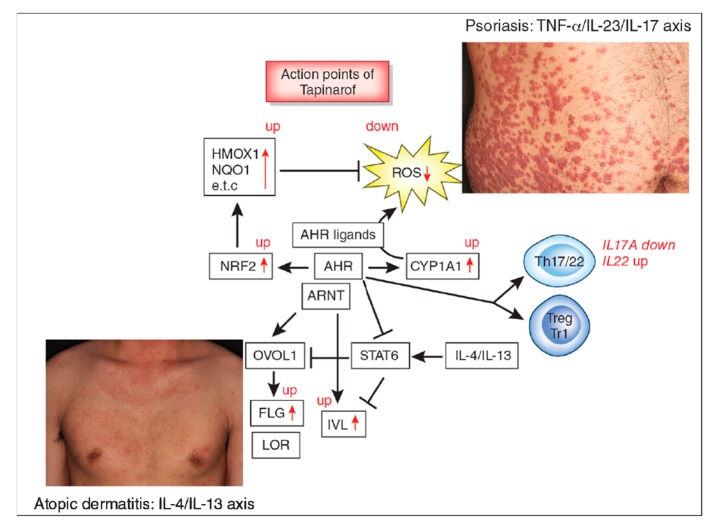
The aryl hydrocarbon receptor (AHR)/AHR-nuclear translocator (ARNT) system is a sensitive sensor for small molecular, xenobiotic chemicals of exogenous and endogenous origin, including dioxins, phytochemicals, microbial bioproducts, and tryptophan photoproducts. AHR/ARNT are abundantly expressed in the skin. Once activated, the AHR/ARNT axis strengthens skin barrier functions and accelerates epidermal terminal differentiation by upregulating filaggrin expression. In addition, AHR activation induces oxidative stress. However, some AHR ligands simultaneously activate the nuclear factor-erythroid 2-related factor-2 (NRF2) transcription factor, which is a master switch of antioxidative enzymes that neutralizes oxidative stress. The immunoregulatory system governing T-helper 17/22 (Th17/22) and T regulatory cells (Treg) is also regulated by the AHR system. Notably, AHR agonists, such as tapinarof, are currently used as therapeutic agents in psoriasis and atopic dermatitis. In this review, we summarize recent topics on AHR related to atopic dermatitis and psoriasis.
Overview
The claims and statistics of this paper haven’t been checked yet.
Run the check — free, no account needed. It reads the open-access text and checks the sources it cites.
Integrity signals
Registry
Cites
Statistics
Figures
Verification
Claims the paper makes
The claims and statistics of this paper haven’t been checked yet.
Run the check — free, no account needed. It reads the open-access text and checks the sources it cites.
Claims other papers make about this one
Each is checked against this paper’s own text: does it say what the citing paper says it does?
The source backs part of the claim, not all of it — or backs it for a different population, condition or comparison.
In the citing paper
“Subsequent examination of this mouse has revealed significant defects in resident immune cell populations in the gut, lung, and skin as well as increased susceptibility to certain diseases including psoriasis, experiment colitis and colorectal cancer, and infections of microorganisms like Citrobacter rodentium and Toxoplasma gondii (Díaz-Díaz et al., 2016; Furue et al., 2019; H. R. Kim et al., 202”
From Rodent Genetic Models of Ah Receptor Signaling (2021) · cites this paper as Furue et al., 2019
Experimental — accuracy not yet measuredThe source backs part of the claim, not all of it — or backs it for a different population, condition or comparison.
In the citing paper
“Subsequent examination of this mouse has revealed significant defects in resident immune cell populations in the gut, lung, and skin as well as increased susceptibility to certain diseases including psoriasis, experiment colitis and colorectal cancer, and infections of microorganisms like Citrobacter rodentium and Toxoplasma gondii (Díaz-Díaz et al., 2016; Furue et al., 2019; H. R. Kim et al., 202”
From Rodent Genetic Models of Ah Receptor Signaling (2021) · cites this paper as Furue et al., 2019
Experimental — accuracy not yet measuredThe cited source says what the claim attributes to it.
In the citing paper
“AHR, a ligand-dependent transcription factor, is activated by multiple compounds that can induce either epidermal differentiation or oxidative stress (43, 44).”
From Particulate matter causes skin barrier dysfunction. (2021) · cites this paper as [44]
Self-check
Percentages, sums and reported differences re-computed from the paper’s own numbers.
The self-check needs the paper’s full text.
Citations
Cites
Atopic Dermatitis: Global Epidemiology and Risk Factors
Nutten, S. (2015) · Annals of Nutrition and Metabolism · doi:10.1159/000370220 · Cited by 3,124
Boehncke, W., & Schön, M. P. (2015) · The Lancet · doi:10.1016/s0140-6736(14)61909-7 · Cited by 2,609
Liu, J. Z., van Sommeren, S., Huang, H., Ng, S. C., Alberts, R., Takahashi, A., Ripke, S., Lee, J. C., Jostins, L., Shah, T., et al. (2015) · Nature Genetics · doi:10.1038/ng.3359 · Cited by 2,603
Two Phase 3 Trials of Dupilumab versus Placebo in Atopic Dermatitis
Simpson, E. L., Bieber, T., Guttman-Yassky, E., Beck, L. A., Blauvelt, A., Cork, M. J., Silverberg, J. I., Deleuran, M., Kataoka, Y., Lacour, J.-P., et al. (2016) · New England Journal of Medicine · doi:10.1056/nejmoa1610020 · Cited by 2,110
The aryl hydrocarbon receptor links TH17-cell-mediated autoimmunity to environmental toxins
Veldhoen, M., Hirota, K., Westendorf, A. M., Buer, J., Dumoutier, L., Renauld, J.-C., & Stockinger, B. (2008) · Nature · doi:10.1038/nature06881 · Cited by 1,634
The aryl hydrocarbon receptor: multitasking in the immune system
Stockinger, B., Meglio, P. D., Gialitakis, M., & Duarte, J. H. (2014) · Annual Review of Immunology · doi:10.1146/annurev-immunol-032713-120245 · Cited by 909
The Aryl Hydrocarbon Receptor Regulates Gut Immunity through Modulation of Innate Lymphoid Cells
Qiu, J., Heller, J. J., Guo, X., Chen, Z. E., Fish, K., Fu, Y., & Zhou, L. (2011) · Immunity · doi:10.1016/j.immuni.2011.11.011 · Cited by 889
Natural aryl hydrocarbon receptor ligands control organogenesis of intestinal lymphoid follicles
Kiss, E. A., Vonarbourg, C., Kopfmann, S., Hobeika, E., Finke, D., Esser, C., & Diefenbach, A. (2011) · Science · doi:10.1126/science.1214914 · Cited by 801
Lee, J. S., Cella, M., McDonald, K. G., Garlanda, C., Kennedy, G. D., Nukaya, M., Mantovani, A., Kopan, R., Bradfield, C. A., Newberry, R. D., et al. (2012) · Nature Immunology · doi:10.1038/ni.2187 · Cited by 777
Functional role of AhR in the expression of toxic effects by TCDD
Mimura, J., & Fujii‐Kuriyama, Y. (2003) · Biochimica et Biophysica Acta (BBA) - General Subjects · doi:10.1016/s0304-4165(02)00485-3 · Cited by 754
Cited by
Sorted by citations
Vogel, C. F. A., Winkle, L. S. V., Esser, C., & Haarmann‐Stemmann, T. (2020) · Redox Biology · doi:10.1016/j.redox.2020.101530 · Cited by 538
Furue, M. (2020) · International Journal of Molecular Sciences · doi:10.3390/ijms21155382 · Cited by 419
Self-citationUberoi, A., Bartow‐McKenney, C., Zheng, Q., Flowers, L. J., Campbell, A. E., Knight, S. A. B., Chan, N., Wei, M. H., Lovins, V. M., Bugayev, J., et al. (2021) · Cell Host & Microbe · doi:10.1016/j.chom.2021.05.011 · Cited by 328
New Treatment Addressing the Pathogenesis of Psoriasis
Tokuyama, M., & Mabuchi, T. (2020) · International Journal of Molecular Sciences · doi:10.3390/ijms21207488 · Cited by 311
The translational revolution in atopic dermatitis: the paradigm shift from pathogenesis to treatment
Facheris, P., Jeffery, J., DUCA, E. D., & Guttman‐Yassky, E. (2023) · Cellular and Molecular Immunology · doi:10.1038/s41423-023-00992-4 · Cited by 255
Phase 3 Trials of Tapinarof Cream for Plaque Psoriasis
Lebwohl, M., Gold, L. S., Strober, B. E., Papp, K. A., Armstrong, A. W., Bagel, J., Kircik, L., Ehst, B. D., Hong, H., Soung, J., et al. (2021) · New England Journal of Medicine · doi:10.1056/nejmoa2103629 · Cited by 199
Bissonnette, R., Stein Gold, L., Rubenstein, D. S., Tallman, A. M., & Armstrong, A. (2021) · Journal of the American Academy of Dermatology · doi:10.1016/j.jaad.2020.10.085 · Cited by 181
Particulate matter causes skin barrier dysfunction.
Kim, B. E., Kim, J., Goleva, E., Berdyshev, E., Lee, J., Vang, K. A., Lee, U. H., Han, S., Leung, S., Hall, C. F., et al. (2021) · JCI insight · doi:10.1172/jci.insight.145185 · Cited by 173
“AHR, a ligand-dependent transcription factor, is activated by multiple compounds that can either induce epidermal differentiation or oxidative stress (43, 44).”
BackgroundRole of AHR Ligands in Skin Homeostasis and Cutaneous Inflammation
Fernández‐Gallego, N., Sánchez‐Madrid, F., & Cibrián, D. (2021) · Cells · doi:10.3390/cells10113176 · Cited by 138
Xu, L., Zhang, Y., Li, X., Li, C., Hu, H., Hu, J., Liu, M., Yang, Q. Z., Gu, P., Li, J., et al. (2025) · iMeta · doi:10.1002/imt2.270 · Cited by 143
Air pollution and skin disorders
Roberts, W. (2021) · International Journal of Women's Dermatology · doi:10.1016/j.ijwd.2020.11.001 · Cited by 111
Advances in psoriasis research: From pathogenesis to therapeutics
Sugumaran, D., Yong, A. C. H., & Stanslas, J. (2024) · Life Sciences · doi:10.1016/j.lfs.2024.122991 · Cited by 108
Szelest, M., Walczak, K., & Plech, T. (2021) · International Journal of Molecular Sciences · doi:10.3390/ijms22031104 · Cited by 102
Environmental Air Pollutants Affecting Skin Functions with Systemic Implications
Bocheva, G., Slominski, R. M., & Slominski, A. T. (2023) · International Journal of Molecular Sciences · doi:10.3390/ijms241310502 · Cited by 94
Modulating AHR function offers exciting therapeutic potential in gut immunity and inflammation
Chen, Y., Wang, Y., Fu, Y., Yin, Y., & Xu, K. (2023) · Cell & Bioscience · doi:10.1186/s13578-023-01046-y · Cited by 92
Tapinarof validates the aryl hydrocarbon receptor as a therapeutic target: A clinical review
Silverberg, J. I., Boguniewicz, M., Quintana, F. J., Clark, R. A., Gross, L., Hirano, I., Tallman, A. M., Brown, P. M., Fredericks, D., Rubenstein, D. S., et al. (2023) · Journal of Allergy and Clinical Immunology · doi:10.1016/j.jaci.2023.12.013 · Cited by 94
Aryl hydrocarbon receptor: Its roles in physiology
Kou, Z., & Dai, W. H. (2021) · Biochemical Pharmacology · doi:10.1016/j.bcp.2021.114428 · Cited by 94
Molecular role of cytochrome P4501A enzymes in oxidative stress
Stading, R. E., Chu, C., Couroucli, X. I., Lingappan, K., & Moorthy, B. (2020) · Current Opinion in Toxicology · doi:10.1016/j.cotox.2020.07.001 · Cited by 88
Skin barrier defects in atopic dermatitis: From old idea to new opportunity
Yoshida, T., Beck, L. A., & Benedetto, A. D. (2021) · Allergology International · doi:10.1016/j.alit.2021.11.006 · Cited by 88
Bacterial Metabolites: A Link between Gut Microbiota and Dermatological Diseases
Stec, A., Sikora, M., Maciejewska, M., Paralusz-Stec, K., Michalska, M. N., Sikorska, E., & Rudnicka, L. (2023) · International Journal of Molecular Sciences · doi:10.3390/ijms24043494 · Cited by 89
Itch in Atopic Dermatitis – What Is New?
Legat, F. J. (2021) · Frontiers in Medicine · doi:10.3389/fmed.2021.644760 · Cited by 82
Bangert, C., Alkon, N., Chennareddy, S., Arnoldner, T., Levine, J. P., Pilz, M., Medjimorec, M. A., Ruggiero, J. R., Cohenour, E. R., Jonak, C., et al. (2024) · Nature Communications · doi:10.1038/s41467-024-46540-0 · Cited by 78
Autoimmunity and autoimmune co‐morbidities in psoriasis
Furue, K., Ito, T., Tsuji, G., Kadono, T., Nakahara, T., & Furue, M. (2018) · Immunology · doi:10.1111/imm.12891 · Cited by 76
Self-citationTapinarof Cream 1%: First Approval
Keam, S. J. (2022) · Drugs · doi:10.1007/s40265-022-01748-6 · Cited by 74
What’s New in Topicals for Atopic Dermatitis?
Kleinman, E. P., Laborada, J., Metterle, L., & Eichenfield, L. F. (2022) · American Journal of Clinical Dermatology · doi:10.1007/s40257-022-00712-0 · Cited by 73
Hemrajani, C., Negi, P., Parashar, A., Gupta, G., Jha, N. K., Singh, S. K., Chellappan, D. K., & Dua, K. (2022) · Biomedicine & Pharmacotherapy · doi:10.1016/j.biopha.2022.112633 · Cited by 69
Targeting AhR as a Novel Therapeutic Modality against Inflammatory Diseases
Cannon, A. S., Nagarkatti, P. S., & Nagarkatti, M. (2021) · International Journal of Molecular Sciences · doi:10.3390/ijms23010288 · Cited by 72
Fang, Z., Pan, T., Wang, H., Zhu, J., Zhang, H., Zhao, J., Chen, W., & Lu, W. (2022) · International Journal of Molecular Sciences · doi:10.3390/ijms23147735 · Cited by 65
Tissue-resident memory T cells in the skin
Khalil, S., Bardawil, T., Kurban, M., & Abbas, O. M. (2020) · Inflammation Research · doi:10.1007/s00011-020-01320-6 · Cited by 66
Miake, S., Tsuji, G., Takemura, M., Hashimoto‐Hachiya, A., Vu, Y. H., Furue, M., & Nakahara, T. (2019) · International Journal of Molecular Sciences · doi:10.3390/ijms20164053 · Cited by 61
Self-citationOxidative Stress and Phototherapy in Atopic Dermatitis: Mechanisms, Role, and Future Perspectives
Borgia, F., Pomi, F. L., Vaccaro, M., Alessandrello, C., Papa, V., & Gangemi, S. (2022) · Biomolecules · doi:10.3390/biom12121904 · Cited by 63
Role of Aryl Hydrocarbon Receptor Activation in Inflammatory Chronic Skin Diseases
Napolitano, M., Fabbrocini, G., Martora, F., Picone, V., Morelli, P., & Patruno, C. (2021) · Cells · doi:10.3390/cells10123559 · Cited by 59
Tapinarof for the treatment of psoriasis
Nogueira, S., Rodrigues, M. A., Vender, R. B., & Torres, T. R. (2022) · Dermatologic Therapy · doi:10.1111/dth.15931 · Cited by 55
Pathogenesis of Inflammation in Skin Disease: From Molecular Mechanisms to Pathology
Shirley, S. N., Watson, A. E., & Yusuf, N. (2024) · International Journal of Molecular Sciences · doi:10.3390/ijms251810152 · Cited by 55
New Topical Therapies for Psoriasis
Lé, A. M., & Torres, T. R. (2021) · American Journal of Clinical Dermatology · doi:10.1007/s40257-021-00649-w · Cited by 54
Synthetic Approaches to the New Drugs Approved during 2019
Flick, A. C., Leverett, C. A., Ding, H. X., McInturff, E. L., Fink, S. J., Mahapatra, S., Carney, D. W., Lindsey, E. A., DeForest, J. C., France, S. P., et al. (2021) · Journal of Medicinal Chemistry · doi:10.1021/acs.jmedchem.1c00208 · Cited by 53
Vu, Y. H., Hashimoto‐Hachiya, A., Takemura, M., Yumine, A., Mitamura, Y., Nakahara, T., Furue, M., & Tsuji, G. (2020) · International Journal of Molecular Sciences · doi:10.3390/ijms21249412 · Cited by 52
Self-citationDębińska, A. (2021) · Journal of Clinical Medicine · doi:10.3390/jcm10112506 · Cited by 52
Woo, Y. R., Park, S., Choi, K., Hong, E. S., Kim, S., & Kim, H. S. (2020) · International Journal of Molecular Sciences · doi:10.3390/ijms21176079 · Cited by 51
New and Emerging Oral/Topical Small-Molecule Treatments for Psoriasis
Carmona‐Rocha, E., Rusiñol, L., & Puig, L. (2024) · Pharmaceutics · doi:10.3390/pharmaceutics16020239 · Cited by 51
Landemaine, L., Costa, G. D., Fissier, E., Francis, C., Morand, S. C., Verbeke, J., Michel, M., Briandet, R., Sokol, H., Guéniche, A., et al. (2023) · Frontiers in Immunology · doi:10.3389/fimmu.2023.1098160 · Cited by 50
The Aryl Hydrocarbon Receptor (AHR): A Novel Therapeutic Target for Pulmonary Diseases?
Shivanna, B., Chu, C., & Moorthy, B. (2022) · International Journal of Molecular Sciences · doi:10.3390/ijms23031516 · Cited by 54
Hwang, J., Newton, E. M., Hsiao, J. L., & Shi, V. Y. (2022) · Experimental Dermatology · doi:10.1111/exd.14541 · Cited by 47
The role of the AHR in host–pathogen interactions
Barreira‐Silva, P., Lian, Y., Kaufmann, S. H. E., & Moura‐Alves, P. (2024) · Nature reviews. Immunology · doi:10.1038/s41577-024-01088-4 · Cited by 44
The roles of T cells in psoriasis
Zhang, P., Su, Y., Li, S., Chen, H., Wu, R., & Wu, H. (2023) · Frontiers in Immunology · doi:10.3389/fimmu.2023.1081256 · Cited by 44
Atopic dermatitis: diagnosis, molecular pathogenesis, and therapeutics
Bai, R., Zheng, Y., & Dai, X. (2025) · Molecular Biomedicine · doi:10.1186/s43556-025-00313-3 · Cited by 49
Jett, J. E., McLaughlin, M., Lee, M. S., Parish, L. C., DuBois, J. C., Raoof, T. J., Tabolt, G., Wilson, T., Somerville, M. C., DellaMaestra, W., et al. (2021) · American Journal of Clinical Dermatology · doi:10.1007/s40257-021-00641-4 · Cited by 40
Aryl hydrocarbon receptor (AhR) impairs circadian regulation: Impact on the aging process
Salminen, A. (2023) · Ageing Research Reviews · doi:10.1016/j.arr.2023.101928 · Cited by 42
Emerging Therapeutic Options for Chronic Pruritus
Reszke, R., Krajewski, P. K., & Szepietowski, J. C. (2020) · American Journal of Clinical Dermatology · doi:10.1007/s40257-020-00534-y · Cited by 38
Aryl Hydrocarbon Receptor and Dioxin-Related Health Hazards—Lessons from Yusho
Furue, M., Ishii, Y., Tsukimori, K., & Tsuji, G. (2021) · International Journal of Molecular Sciences · doi:10.3390/ijms22020708 · Cited by 39
Self-citationZhu, W.-T., Li, C., Dai, T.-T., Song, Q.-Q., Chen, Y., Han, Z., Sun, N., & Wang, D. L. (2023) · Phytomedicine · doi:10.1016/j.phymed.2023.154774 · Cited by 37
Alves, L. D. F., Moore, J. B., & Kell, D. B. (2024) · International Journal of Molecular Sciences · doi:10.3390/ijms25169082 · Cited by 39
Tanaka, Y., Uchi, H., Hashimoto‐Hachiya, A., & Furue, M. (2018) · Oxidative Medicine and Cellular Longevity · doi:10.1155/2018/9298052 · Cited by 36
Self-citationCai, L., Chen, G.-H., Lu, Q., Zheng, M., Li, Y., Chen, J., Zheng, J., Zhang, F., Yu, J.-B., Yang, S., et al. (2020) · Chinese Medical Journal · doi:10.1097/cm9.0000000000001221 · Cited by 35
The role of cytochrome P450 (CYP) enzymes in hyperoxic lung injury
Stading, R. E., Couroucli, X. I., Lingappan, K., & Moorthy, B. (2020) · Expert Opinion on Drug Metabolism & Toxicology · doi:10.1080/17425255.2021.1853705 · Cited by 35
Igarashi, A., Tsuji, G., Fukasawa, S., Murata, R., & Yamane, S. (2024) · The Journal of Dermatology · doi:10.1111/1346-8138.17451 · Cited by 35
Self-citationvan den Bogaard, E. H. J., Esser, C., & Perdew, G. H. (2021) · Experimental Dermatology · doi:10.1111/exd.14409 · Cited by 35
Liu, S., Yuan, X., Su, H., Liu, F., Zhuang, Z., & Chen, Y. (2022) · Frontiers in Immunology · doi:10.3389/fimmu.2022.892368 · Cited by 35
The Aryl Hydrocarbon Receptor (AHR): Peacekeeper of the Skin
Dawe, H. R., & Meglio, P. D. (2025) · International Journal of Molecular Sciences · doi:10.3390/ijms26041618 · Cited by 37
Tanaka, Y., Ito, T., Tsuji, G., & Furue, M. (2020) · Antioxidants · doi:10.3390/antiox9060507 · Cited by 31
Self-citationTherapeutic potential of microneedles based delivery systems for the management of atopic dermatitis
Shukla, S., Mamale, K., Arya, R. K. K., Kaundal, R. K., & Shukla, R. (2023) · Journal of Drug Delivery Science and Technology · doi:10.1016/j.jddst.2023.104493 · Cited by 30
Novel Therapeutic Targets for the Treatment of Atopic Dermatitis
Tsuji, G., Yamamura, K., Kawamura, K., Kido‐Nakahara, M., Ito, T., & Nakahara, T. (2023) · Biomedicines · doi:10.3390/biomedicines11051303 · Cited by 30
Self-citationExperimental Pharmacological Management of Psoriasis
Campione, E., Cosio, T., Di Prete, M., Lanna, C., Dattola, A., & Bianchi, L. (2021) · Journal of Experimental Pharmacology · doi:10.2147/jep.s265632 · Cited by 27
The contribution of IL-17 to the development of autoimmunity in psoriasis
Furue, M., & Kadono, T. (2019) · Innate Immunity · doi:10.1177/1753425919852156 · Cited by 27
Self-citationAryl Hydrocarbon Receptors: Evidence of Therapeutic Targets in Chronic Inflammatory Skin Diseases
Kim, H.-B., Um, J., Chung, B. Y., Kim, J. C., Kang, S. Y., Park, C. W., & Kim, H. O. (2022) · Biomedicines · doi:10.3390/biomedicines10051087 · Cited by 28
Novel Therapeutic Strategies in the Topical Treatment of Atopic Dermatitis
Pinto, L. M., Chiricozzi, A., Calabrese, L., Mannino, M., & Peris, K. (2022) · Pharmaceutics · doi:10.3390/pharmaceutics14122767 · Cited by 29
Lee, Y. G., Jung, Y., Choi, H., Lee, J.-I., Lim, T., & Lee, J. (2024) · International Journal of Molecular Sciences · doi:10.3390/ijms25116068 · Cited by 27
Park, H. B., Goddard, T. N., Oh, J., Patel, J. R., Wei, Z., Perez, C. E., Mercado, B. Q., Wang, R., Wyche, T. P., Piizzi, G., et al. (2020) · Angewandte Chemie International Edition · doi:10.1002/anie.201916204 · Cited by 26
Epigenetic Regulations of AhR in the Aspect of Immunomodulation
Wajda, A., Łapczuk-Romańska, J., & Paradowska‐Gorycka, A. (2020) · International Journal of Molecular Sciences · doi:10.3390/ijms21176404 · Cited by 29
Tsuji, G., Hashimoto-Hachiya, A., Matsuda-Taniguchi, T., Takai-Yumine, A., Takemura, M., Yan, X., Furue, M., & Nakahara, T. (2022) · Frontiers in Immunology · doi:10.3389/fimmu.2022.745997 · Cited by 22
Self-citationTopical Management of Pediatric Psoriasis: A Review of New Developments and Existing Therapies
Lie, E., Choi, M., Wang, S., & Eichenfield, L. F. (2023) · Pediatric Drugs · doi:10.1007/s40272-023-00592-9 · Cited by 23
The Effects of Environmental Pollutants and Exposures on Hair Follicle Pathophysiology
Samra, T., Lin, R. R., & Maderal, A. D. (2024) · Skin Appendage Disorders · doi:10.1159/000537745 · Cited by 23
Igarashi, A., Tsuji, G., Murata, R., Fukasawa, S., & Yamane, S. (2024) · The Journal of Dermatology · doi:10.1111/1346-8138.17587 · Cited by 22
Self-citationTsuji, G., Yamamura, K., Kawamura, K., Kido-Nakahara, M., Ito, T., & Nakahara, T. (2023) · International Journal of Molecular Sciences · doi:10.3390/ijms241914633 · Cited by 21
Self-citationAryl Hydrocarbon Receptor Activation Downregulates IL-33 Expression in Keratinocytes via Ovo-Like 1
Tsuji, G., Hashimoto‐Hachiya, A., Vu, Y. H., Miake, S., Takemura, M., Mitamura, Y., Ito, T., Murata, M., Furue, M., & Nakahara, T. (2020) · Journal of Clinical Medicine · doi:10.3390/jcm9030891 · Cited by 21
Self-citationLee, Y., Bae, C., & Ahn, T. (2022) · Laboratory Animal Research · doi:10.1186/s42826-022-00148-x · Cited by 20
Zhong, C., Peng, L., Tao, B., Yin, S., Lyu, L., Ding, H., Yang, X., Peng, T., He, H., & Zhou, P. (2022) · PubMed Central · Cited by 19
Ardizzone, A., Repici, A., Capra, A. P., Gaetano, F. D., Bova, V., Casili, G., Campolo, M., & Esposito, E. (2023) · Antioxidants · doi:10.3390/antiox12061278 · Cited by 20
Synthesis and clinical application of new drugs approved by FDA in 2022
Zhang, J., Wang, Y., Sun, L., Wang, S., & Chen, Z. (2023) · Molecular Biomedicine · doi:10.1186/s43556-023-00138-y · Cited by 19
Oxidative stress products and managements in atopic dermatitis
Luo, Y., Hu, J., Zhou, Z., Zhang, Y., Wu, Y., & Sun, J. (2025) · Frontiers in Medicine · doi:10.3389/fmed.2025.1538194 · Cited by 18
Rodent Genetic Models of Ah Receptor Signaling
Wilson, R. H., & Bradfield, C. A. (2021) · Drug Metabolism Reviews · doi:10.1080/03602532.2021.1955916 · Cited by 16
“…psoriasis, experiment colitis and colorectal cancer, and infections of microorganisms like Citrobacter rodentium and Toxoplasma gondii (D ıaz-D ıaz et al. 2016; Furue et al. 2019; H. R. Kim et al. 2020; Kim et al. 2012; Kiss et al. 2011; Qiu et al. 2012; Sanchez et al. 2010; Wagage et al. 2015).”
BackgroundBiomimetic Total Synthesis of (±)-Carbocyclinone-534 Reveals Its Biosynthetic Pathway
Qu, C., Long, X., Sang, Y., Zhang, M., Zhao, X., Xue, X., & Deng, J. (2020) · Organic Letters · doi:10.1021/acs.orglett.0c02865 · Cited by 17
Chao, L., Lu, M., An, Z., Li, J., Li, Y., Zhao, Q., Wang, Y., Liu, Y., Wu, W., & Song, J. (2021) · Environmental Geochemistry and Health · doi:10.1007/s10653-021-00831-3 · Cited by 17
Aryl hydrocarbon receptor role in chronic inflammatory skin diseases: a narrative review
Dec, M., & Arasiewicz, H. (2024) · Advances in Dermatology and Allergology · doi:10.5114/ada.2023.135617 · Cited by 22
Lee, Y., Lee, E. M., Yon, D. K., Jee, H. M., Baek, H., Lee, S. W., Cho, J., & Han, M. Y. (2021) · Scientific Reports · doi:10.1038/s41598-021-83288-9 · Cited by 17
Staphylococcus aureus Activates the Aryl Hydrocarbon Receptor in Human Keratinocytes
Stange, E.-L., Rademacher, F., Drerup, K. A., Heinemann, N., Möbus, L., Gläser, R., & Harder, J. (2022) · Journal of Innate Immunity · doi:10.1159/000524033 · Cited by 17
The role of aryl hydrocarbon receptor in vitiligo: a review
Li, Y., Zeng, Y., Chen, Z., Tan, X., Mei, X., & Wu, Z. (2024) · Frontiers in Immunology · doi:10.3389/fimmu.2024.1291556 · Cited by 20
Nuclear receptors for epidermal lipid barrier: Advances in mechanisms and applications
Yin, X., Yan, Y., Li, J., Cao, Z., Shen, S., Chang, Q., Zhao, Y., Wang, X., & Wang, P. (2024) · Experimental Dermatology · doi:10.1111/exd.15107 · Cited by 17
Zimmerman, E., Sturrock, A., Reilly, C. A., Burrell, K. L., Warren, K. J., Mir-Kasimov, M., Zhang, M., Pierce, M. S., Helms, M. N., & Paine, R. (2024) · The Journal of Immunology · doi:10.4049/jimmunol.2300325 · Cited by 19
Igarashi, A., Tsuji, G., Fukasawa, S., Murata, R., & Yamane, S. (2024) · The Journal of Dermatology · doi:10.1111/1346-8138.17423 · Cited by 16
Self-citationSH-29 and SK-119 Attenuates Air-Pollution Induced Damage by Activating Nrf2 in HaCaT Cells
Kahremany, S., Hofmann, L., Eretz-Kdosha, N., Silberstein, E., Gruzman, A., & Cohen, G. (2021) · International Journal of Environmental Research and Public Health · doi:10.3390/ijerph182312371 · Cited by 14
Ongoing Clinical Trials in Aging-Related Tissue Fibrosis and New Findings Related to AhR Pathways
Yu, H., Feng, Z., Lin, W., Yang, K., Liu, R., Li, J., Liu, X., Pei, M., & Yang, H. (2022) · Aging and Disease · doi:10.14336/ad.2021.1105 · Cited by 16
Naumowicz, M., Modzelewski, S., Macko, A., Łuniewski, B., Baran, A. M., & Flisiak, I. (2024) · International Journal of Molecular Sciences · doi:10.3390/ijms25063482 · Cited by 18
An update on topical therapies for psoriasis
Pender, E., & Kirby, B. (2024) · Current Opinion in Rheumatology · doi:10.1097/bor.0000000000001018 · Cited by 15
Goddard, T. N., Patel, J. R., Park, H. B., & Crawford, J. M. (2020) · Biochemistry · doi:10.1021/acs.biochem.0c00213 · Cited by 15
Social isolation: main dermatosis and the impact of stress during the COVID-19 pandemic
Mangini, C. S. M., de Vasconcelos, R. C. F., Rodriguez, E. V. R., & de Oliveira, I. R. L. (2022) · Einstein (São Paulo) · doi:10.31744/einstein_journal/2022ao6320 · Cited by 15
Atopic dermatitisReview of comorbidities and therapeutics
Appiah, M., Haft, M. A., Kleinman, E. P., Laborada, J., Lee, S., Loop, L., Geng, B., & Eichenfield, L. F. (2022) · Annals of Allergy Asthma & Immunology · doi:10.1016/j.anai.2022.05.015 · Cited by 15
Dermal Safety of Tapinarof Cream 1%: Results From 4 Phase 1 Trials
Jett, J. E., McLaughlin, M., Wilson, T., Somerville, M. C., DellaMaestra, W., Rubenstein, D., & Piscitelli, S. C. (2022) · Journal of Drugs in Dermatology · doi:10.36849/jdd.6627 · Cited by 14
Nie, Y., Liu, L., Xue, S., Yan, L., Ma, N., Liu, X., Liu, R., Wang, X., Wang, Y., Zhang, X., et al. (2022) · Environmental Science and Pollution Research · doi:10.1007/s11356-022-22901-4 · Cited by 15
Modern Interventions for Pediatric Atopic Dermatitis: An Updated Pharmacologic Approach
Kondratuk, K. E., Netravali, I. A., & Castelo‐Soccio, L. A. (2022) · Dermatology and Therapy · doi:10.1007/s13555-022-00868-x · Cited by 17
Metadata
- Authors
- Furue, M., Hashimoto-Hachiya, A., & Tsuji, G.
- Affiliations
- Kyushu University (JP)
- Department of Dermatology, Graduate School of Medical Sciences, Kyushu University, Maidashi 3-1-1, Higashiku, Fukuoka 812-8582, Japan
- Corresponding author
- Furue, Masutaka
- Venue
- International Journal of Molecular Sciences
- Publisher
- MDPI AG
- Published
- 2019-10-31
- Volume
- 20
- Issue
- 21
- Pages
- 5424
- ISSN
- 1422-0067 (ISSN-L)
- PMC
- PMC6862295
- OpenAlex
- W2982429666
- Cited by
- 215
- References
- 144
- Citations by year
- 2026: 35 · 2025: 23 · 2024: 42 · 2023: 37 · 2022: 27 · 2021: 27 · 2020: 20 · 2019: 2
- FWCI
- 3.68
- Type
- journal article
- Language
- en
- Open access
- gold
- dx.doi.org
- Licence
- Locations
- International Journal of Molecular Sciences (publishedVersion, cc-by)
- PubMed Central (publishedVersion, cc-by)
- PubMed (publishedVersion)
- DOAJ (DOAJ: Directory of Open Access Journals) (submittedVersion, cc-by-sa)
- Funders
- The Ministry of Health, Labour, and Welfare in Japan (H30-Shokuhin-Shitei-005)
- The Leading Advanced Projects for Medical Innovation in Japan (The Leading Advanced Projects for Medical Innovation in Japan)
- Topics
- Health Sciences › Medicine › Dermatology › Dermatology and Skin Diseases
- Life Sciences › Immunology and Microbiology › Immunology › Psoriasis: Treatment and Pathogenesis
- Physical Sciences › Environmental Science › Health, Toxicology and Mutagenesis › Toxic Organic Pollutants Impact
- Keywords
- aryl hydrocarbon receptor, ARNT, atopic dermatitis, psoriasis, skin barrier function, filaggrin, oxidative stress, Nrf2, tapinarof, AhR agonists, dioxins, tryptophan metabolites
- MeSH terms
- Filaggrin Proteins, Animals, Dermatitis, Atopic, T-Lymphocytes, Helper-Inducer, Humans, Psoriasis, Skin, Receptors, Aryl Hydrocarbon, Oxidative Stress, Polymorphism, Single Nucleotide, T-Lymphocytes, Regulatory
About these checks
Registry, retraction, Cites and statistics results are computed, not judged, with one exception: a printed reference that no index lists is read once by a model before it counts as a citation error. Claims are extracted by a model and kept only when their quote appears verbatim in the text; each cited source is then checked, with a model’s help, for whether it says what the claim relies on. Those verdicts can be wrong — read the claim’s quote and the cited source before relying on one.
Statistics and arithmetic are recomputed, not judged.
Confidence bands are shown only for fields calibrated on our annotated test set. None is calibrated yet, so no band is shown.
What counts as a claim ›How we measure confidence ›How we check this ›
Are you an author, or do you see a problem with this page? Request a review
