

The DOI matches its Crossref record; 112 of the 114 references it cites were found in a registry or an index.
Sex Hormone-Binding Globulin (SHBG) as an Early Biomarker and Therapeutic Target in Polycystic Ovary Syndrome
Open accessAbstract
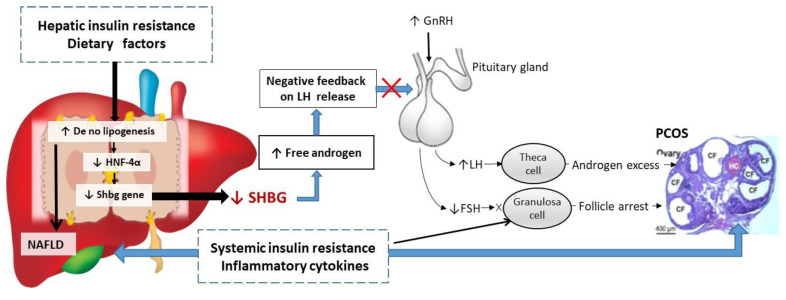
Human sex hormone-binding globulin (SHBG) is a glycoprotein produced by the liver that binds sex steroids with high affinity and specificity. Clinical observations and reports in the literature have suggested a negative correlation between circulating SHBG levels and markers of non-alcoholic fatty liver disease (NAFLD) and insulin resistance. Decreased SHBG levels increase the bioavailability of androgens, which in turn leads to progression of ovarian pathology, anovulation and the phenotypic characteristics of polycystic ovarian syndrome (PCOS). This review will use a case report to illustrate the inter-relationships between SHBG, NAFLD and PCOS. In particular, we will review the evidence that low hepatic SHBG production may be a key step in the pathogenesis of PCOS. Furthermore, there is emerging evidence that serum SHBG levels may be useful as a diagnostic biomarker and therapeutic target for managing women with PCOS.
Overview
The claims and statistics of this paper haven’t been checked yet.
Run the check — free, no account needed. It reads the open-access text and checks the sources it cites.
Integrity signals
Registry
Cites
Statistics
Figures
Verification
Claims the paper makes
The claims and statistics of this paper haven’t been checked yet.
Run the check — free, no account needed. It reads the open-access text and checks the sources it cites.
Claims other papers make about this one
Each is checked against this paper’s own text: does it say what the citing paper says it does?
The source backs part of the claim, not all of it — or backs it for a different population, condition or comparison.
In the citing paper
“Lower levels of the blood protein called sex hormone-binding globulin (SHBG) are advised to indicate the anomalous cholesterol measurements which are connected to inhibited insulin signaling, for instance, PCOS [112].”
From Nutritional and herbal interventions for polycystic ovary syndrome (PCOS): a comprehensive review of dietary approaches, macronutrient impact, and herbal medicine in management (2025) · cites this paper as [112]
Experimental — accuracy not yet measuredThe source backs part of the claim, not all of it — or backs it for a different population, condition or comparison.
In the citing paper
“Together with free T, SHBG has recently been recognized a useful diagnostic marker and therapeutic target for managing women with PCOS [195].”
From Role of sex hormone-binding globulin in the free hormone hypothesis and the relevance of free testosterone in androgen physiology (2022) · cites this paper as [195]
Experimental — accuracy not yet measured
Self-check
Percentages, sums and reported differences re-computed from the paper’s own numbers.
The self-check needs the paper’s full text.
Citations
Cites
Mechanisms of Insulin Action and Insulin Resistance
Petersen, M. C., & Shulman, G. I. (2018) · Physiological Reviews · doi:10.1152/physrev.00063.2017 · Cited by 3,028
Adolescence: A foundation for future health
Sawyer, S. M., Afifi, R. A., Bearinger, L. H., Blakemore, S.-J., Dick, B., Ezeh, A. C., & Patton, G. C. (2012) · The Lancet · doi:10.1016/s0140-6736(12)60072-5 · Cited by 2,635
Azziz, R., Carmina, E., Dewailly, D., Diamanti-Kandarakis, E., Escobar-Morreale, H. F., Futterweit, W., Janssen, O. E., Legro, R. S., Norman, R. J., Taylor, A. E., et al. (2009) · Fertility and Sterility · doi:10.1016/j.fertnstert.2008.06.035 · Cited by 2,132
Teede, H. J., Misso, M. L., Costello, M. F., Dokras, A., Laven, J., Moran, L., Piltonen, T., Norman, R. J., & the International PCOS Network (2018) · Clinical Endocrinology · doi:10.1111/cen.13795 · Cited by 1,823
Teede, H. J., Misso, M. L., Costello, M. F., Dokras, A., Laven, J., Moran, L., Piltonen, T., Norman, R. J., International PCOS Network, Andersen, M., et al. (2018) · Human Reproduction · doi:10.1093/humrep/dey256 · Cited by 1,593
Adipose tissue dysfunction as determinant of obesity-associated metabolic complications
Longo, M., Zatterale, F., Naderi, J., Parrillo, L., Formisano, P., Raciti, G. A., Beguinot, F., & Miele, C. (2019) · International Journal of Molecular Sciences · doi:10.3390/ijms20092358 · Cited by 1,575
Teede, H., Deeks, A., & Moran, L. (2010) · BMC Medicine · doi:10.1186/1741-7015-8-41 · Cited by 1,565
Bozdag, G., Mumusoglu, S., Zengin, D., Karabulut, E., & Yildiz, B. O. (2016) · Human Reproduction · doi:10.1093/humrep/dew218 · Cited by 1,526
DUNN, J. F., NISULA, B. C., & RODBARD, D. (1981) · The Journal of Clinical Endocrinology & Metabolism · doi:10.1210/jcem-53-1-58 · Cited by 1,238
Stefan, N., Häring, H., & Cusi, K. J. (2018) · The Lancet Diabetes & Endocrinology · doi:10.1016/s2213-8587(18)30154-2 · Cited by 874
Research works printed but not linked: 1
- Johnson, T., Kaplan, L., Ouyang, P., Rizza, R., and Health, N.I.O. (2012). Evidence-Based Methodology Workshop on Polycystic Ovary Syndrome.
Cited by
Sorted by citations
Stener-Victorin, E., Teede, H., Norman, R. J., Legro, R., Goodarzi, M. O., Dokras, A., Laven, J., Hoeger, K., & Piltonen, T. T. (2024) · Nature Reviews Disease Primers · doi:10.1038/s41572-024-00511-3 · Cited by 495
The Influence of Sex Hormones in Liver Function and Disease
Kasarinaite, A., Sinton, M. C., Saunders, P. T. K., & Hay, D. C. (2023) · Cells · doi:10.3390/cells12121604 · Cited by 139
Xing, C., Zhang, J., Zhao, H., & He, B. (2022) · International Journal of Women's Health · doi:10.2147/ijwh.s344542 · Cited by 118
Narinx, N., David, K., Walravens, J., Vermeersch, P., Claessens, F., Fiers, T., Lapauw, B., Antonio, L., & Vanderschueren, D. (2022) · Cellular and Molecular Life Sciences · doi:10.1007/s00018-022-04562-1 · Cited by 96
Cognition and mental health in menopause: A review
Hogervorst, E., Craig, J., & O’Donnell, E. (2021) · Best Practice & Research Clinical Obstetrics & Gynaecology · doi:10.1016/j.bpobgyn.2021.10.009 · Cited by 101
Beyond the X Factor: Relevance of Sex Hormones in NAFLD Pathophysiology
Torre, S. D. (2021) · Cells · doi:10.3390/cells10092502 · Cited by 91
Dobbie, L. J., Pittam, B., Zhao, S. S., Alam, U., Hydes, T., Barber, T. M., & Cuthbertson, D. J. (2023) · Human Reproduction · doi:10.1093/humrep/dead053 · Cited by 89
Bourebaba, N., Ngo, T., Śmieszek, A., Bourebaba, L., & Marycz, K. (2022) · Biomedicine & Pharmacotherapy · doi:10.1016/j.biopha.2022.113261 · Cited by 75
Mendelian randomization analyses for PCOS: evidence, opportunities, and challenges
Wang, C., Wu, W., Yang, H., Ye, Z., Zhao, Y., Liu, J., & Mu, L. (2022) · Trends in Genetics · doi:10.1016/j.tig.2022.01.005 · Cited by 75
Effect and mechanism of berberine against polycystic ovary syndrome
Zhang, S., Zhou, J., Gober, H.-J., Leung, W. T., & Wang, L. (2021) · Biomedicine & Pharmacotherapy · doi:10.1016/j.biopha.2021.111468 · Cited by 73
Androgen dysfunction in non-alcoholic fatty liver disease: Role of sex hormone binding globulin
Song, M. J., & Choi, J. Y. (2022) · Frontiers in Endocrinology · doi:10.3389/fendo.2022.1053709 · Cited by 65
Cano-Herrera, G., Nehmad, S. S., Gascón, J. R. D. C., Vionet, A. M., van Tienhoven, X. A., Martínez, M. F. O., Álvarez, M. M., Rivero, M. X. V., Torres, M. F. L., Valverde, M. J. B., et al. (2024) · Biomedicines · doi:10.3390/biomedicines12071476 · Cited by 67
Insulin-resistance in paediatric age: Its magnitude and implications
Al‐Beltagi, M., Bediwy, A. S., & Saeed, N. K. (2022) · World Journal of Diabetes · doi:10.4239/wjd.v13.i4.282 · Cited by 56
Bridging systemic metabolic dysfunction and Alzheimer’s disease: the liver interface
Song, D., Yang, L., Yang, L.-L., Luo, Y., & Yao, X. (2025) · Molecular Neurodegeneration · doi:10.1186/s13024-025-00849-6 · Cited by 53
Cao, S., & Hu, Y. (2024) · Frontiers in Immunology · doi:10.3389/fimmu.2024.1367340 · Cited by 41
Rani, R., Hajam, Y. A., Kumar, R., Bhat, R. A., Rai, S., & Rather, M. A. (2021) · Phytomedicine Plus · doi:10.1016/j.phyplu.2021.100161 · Cited by 45
Rambaran, N., & Islam, M. S. (2025) · World Journal of Diabetes · doi:10.4239/wjd.v16.i7.108789 · Cited by 41
Wang, X., Ding, N., Harlow, S. D., Randolph, J. F., Mukherjee, B., Gold, E. B., & Park, S. K. (2022) · Environmental Pollution · doi:10.1016/j.envpol.2022.120740 · Cited by 32
Sarahian, N., Sarvazad, H., Sajadi, E., Rahnejat, N., & Eskandari Roozbahani, N. (2021) · Reproductive Health · doi:10.1186/s12978-021-01203-x · Cited by 30
Genetic and Epigenetic Landscape for Drug Development in Polycystic Ovary Syndrome
Chen, Y., Wang, G., Chen, J., Wang, C., Dong, X., Chang, H., Yuan, S., Zhao, Y., & Mu, L. (2024) · Endocrine Reviews · doi:10.1210/endrev/bnae002 · Cited by 33
Chakraborty, S., Anand, S., Coe, S. T., Reh, B., & Bhandari, R. K. (2023) · Environmental Science & Technology · doi:10.1021/acs.est.3c01922 · Cited by 28
Impact of junk food on obesity and polycystic ovarian syndrome: Mechanisms and management strategies
Begum, R. F., Ankul Singh, S., & Mohan, S. (2023) · Obesity Medicine · doi:10.1016/j.obmed.2023.100495 · Cited by 32
Ott, J., Robin, G., Hager, M., & Dewailly, D. (2024) · Human Reproduction Update · doi:10.1093/humupd/dmae030 · Cited by 27
Dwivedi, A. K., Vishwakarma, D., Dubey, P., & Reddy, S. (2023) · European Journal of Endocrinology · doi:10.1093/ejendo/lvad067 · Cited by 27
Muhammed Saeed, A. A., Noreen, S., Awlqadr, F. H., Farooq, M. I., Qadeer, M., Rai, N., Farag, H. A., & Saeed, M. N. (2025) · Journal of Health, Population and Nutrition · doi:10.1186/s41043-025-00899-y · Cited by 29
Female obesity: Association with endocrine disruption and reproductive dysfunction
Baraskar, K., Thakur, P., Shrivastava, R., & Shrivastava, V. K. (2021) · Obesity Medicine · doi:10.1016/j.obmed.2021.100375 · Cited by 27
Bizoń, A., Franik, G., Niepsuj, J., Czwojdzińska, M., Leśniewski, M., Nowak, A., Szynkaruk-Matusiak, M., Madej, P., & Piwowar, A. (2021) · Journal of Clinical Medicine · doi:10.3390/jcm10173941 · Cited by 24
Research Progress on the Effect of Epilepsy and Antiseizure Medications on PCOS Through HPO Axis
Li, S., Zhang, L., Wei, N., Tai, Z., Yu, C., & Xu, Z. (2021) · Frontiers in Endocrinology · doi:10.3389/fendo.2021.787854 · Cited by 27
AI-based derivation of atrial fibrillation phenotypes in the general and critical care populations
Bellfield, R. A. A., Olier, I., Lotto, R. R., Jones, I. D., Dawson, E. A., Li, G., Tuladhar, A. M., Lip, G. Y. H., & Ortega‐Martorell, S. (2024) · EBioMedicine · doi:10.1016/j.ebiom.2024.105280 · Cited by 23
The Role of the Liver in the Pathophysiology of PCOS: A Literature Review
Alhermi, A., Perks, H., Vadassery, V. N., Altahoo, N., Atkin, S. L., & Butler, A. E. (2025) · Biomolecules · doi:10.3390/biom15010051 · Cited by 24
Camajani, E., Feraco, A., Verde, L., Moriconi, E., Marchetti, M., Colao, A., Caprio, M., Muscogiuri, G., & Barrea, L. (2023) · Current Obesity Reports · doi:10.1007/s13679-023-00516-1 · Cited by 25
Zhang, H., Qiu, W., Zhou, P., Shi, L., Chen, Z., Yang, Y., Lu, Y., Zhou, L., Zhang, H., Cheng, M. Y., et al. (2024) · BMC Endocrine Disorders · doi:10.1186/s12902-024-01789-w · Cited by 21
Role of Omega-3 Fatty Acids in Improving Metabolic Dysfunctions in Polycystic Ovary Syndrome
Albardan, L., Platat, C., & Kalupahana, N. S. (2024) · Nutrients · doi:10.3390/nu16172961 · Cited by 18
“Thus, lower SHBG levels result in higher free androgen levels in the blood increasing their androgenic effects [32].”
BackgroundUrbano, F., Chiarito, M., Lattanzio, C., Messa, A., Ferrante, M., Francavilla, M., Mehmeti, I., Lassandro, G., Giordano, P., & Faienza, M. F. (2022) · Children · doi:10.3390/children9111748 · Cited by 18
Greff, D., Váncsa, S., Váradi, A., Szinte, J., Park, S., Hegyi, P., Nyírády, P., Ács, N., Horvath, E. M., & Várbı́ró, S. (2023) · Nutrients · doi:10.3390/nu15194224 · Cited by 18
Sex-Hormone-Binding Globulin Gene Polymorphisms and Breast Cancer Risk in Caucasian Women of Russia
Ponomarenko, I., Николаевич, П. К., Churnosova, M., Николаевна, С. И., Aristova, I., Churnosov, V., Ponomarenko, M., Reshetnikov, E., & Churnosov, M. I. (2024) · International Journal of Molecular Sciences · doi:10.3390/ijms25042182 · Cited by 19
Ni, F.-D., Wang, F., Sun, J., Tu, M., Chen, J., Shen, X., Ye, X., Chen, R., Liu, Y., Sun, X., et al. (2024) · The American Journal of Human Genetics · doi:10.1016/j.ajhg.2024.10.008 · Cited by 16
Niu, J., Lu, M.-Y., & Liu, B. (2023) · Journal of Ovarian Research · doi:10.1186/s13048-023-01122-4 · Cited by 15
The Current and Emerging Role of Statins in the Treatment of PCOS: The Evidence to Date
Kolnikaj, T. S., Herman, R., Janež, A., & Jensterle, M. (2024) · Medicina · doi:10.3390/medicina60020244 · Cited by 18
The LH:FSH Ratio in Functional Hypothalamic Amenorrhea: An Observational Study
Boegl, M. S., Dewailly, D., Marculescu, R., Steininger, J., Ott, J., & Hager, M. (2024) · Journal of Clinical Medicine · doi:10.3390/jcm13051201 · Cited by 15
El-attar, A. A., Ibrahim, O. M., Alhassanin, S. A., Essa, E. S., & Mostafa, T. M. (2022) · European Journal of Clinical Pharmacology · doi:10.1007/s00228-022-03444-6 · Cited by 15
Mazloomi, S., Barartabar, Z., & Pilehvari, S. (2023) · Journal of Reproduction & Infertility · doi:10.18502/jri.v24i1.11906 · Cited by 17
Liu, S., Zhao, X., Meng, Q., & Li, B. (2023) · PLoS ONE · doi:10.1371/journal.pone.0293447 · Cited by 14
RetractedQi, R., Liang, Y., Yu, J., Chen, B., Jiang, J., Wu, X., Lu, W., & Li, Z. (2024) · Reproductive Biology and Endocrinology · doi:10.1186/s12958-024-01202-0 · Cited by 14
Rizk, F. H., Saadany, A. A. E., Elshamy, A. M., Ellatif, R. A. A., El-Guindy, D. M., Helal, D. S., Hamama, M. G., El-Sharnouby, J. A., Ghafar, M. T. A., & Faheem, H. (2024) · The Journal of Physiology · doi:10.1113/jp285793 · Cited by 15
Multiomics Analysis–Based Biomarkers in Diagnosis of Polycystic Ovary Syndrome
Rani, S., & Chandna, P. (2022) · Reproductive Sciences · doi:10.1007/s43032-022-00863-9 · Cited by 14
Huo, Y., Ji, S., Yang, H. J., Wu, W., Yu, L., Ren, Y., & Wang, F. (2022) · Annals of Translational Medicine · doi:10.21037/atm-22-2941 · Cited by 13
Hormonal, genetic, epigenetic and environmental aspects of polycystic ovarian syndrome
Bhandary, P., Shetty, P. K., Manjeera, L., & Patil, P. (2022) · Gene Reports · doi:10.1016/j.genrep.2022.101698 · Cited by 15
Voros, C., Papadimas, G. K., Mavrogianni, D., Koulakmanidis, A.-M., Athanasiou, D., Bananis, K., Athanasiou, A. I., Athanasiou, A. V., Papapanagiotou, I., Vaitsis, D., et al. (2025) · Genes · doi:10.3390/genes16091101 · Cited by 13
Bourebaba, N., Sikora, M., Qasem, B., Bourebaba, L., & Marycz, K. (2023) · Cell Communication and Signaling · doi:10.1186/s12964-023-01254-6 · Cited by 7
Shekarian, A., Mazaheri‐Tehrani, S., Shekarian, S., Pourbazargan, M., Setudeh, M., Abhari, A. P., Fakhrolmobasheri, M., & Heidarpour, M. (2025) · BMC Endocrine Disorders · doi:10.1186/s12902-025-01896-2 · Cited by 14
Jafar, N. K. A., Fan, M., Moran, L., Mansfield, D. R., & Bennett, C. (2025) · Clinical Endocrinology · doi:10.1111/cen.15219 · Cited by 16
Sarvestani, M., Rajabzadeh, A., Mazoochi, T., Samimi, M., Navari, M., & Moradi, F. (2024) · BMC Endocrine Disorders · doi:10.1186/s12902-024-01688-0 · Cited by 11
Tiwari, R., Bajpai, M., Tiwari, S., & Agrawal, S. (2022) · Journal of Family Medicine and Primary Care · doi:10.4103/jfmpc.jfmpc_2510_20 · Cited by 11
The pathogenesis, therapeutic targets and drugs of polycystic ovary syndrome
Chen, Y., Sun, X., Xia, X., Chen, K., & Zeng, F. (2026) · Frontiers in Endocrinology · doi:10.3389/fendo.2025.1722649 · Cited by 17
Influence of the nutritional status on facial morphology in young Japanese women
Tanikawa, C., Kurata, M., 谷崎典子, Takeuchi, M., Zere, E., Fukuo, K., & Takada, K. (2022) · Scientific Reports · doi:10.1038/s41598-022-21919-5 · Cited by 10
Zhang, M., Sun, J., Wang, Y., Wu, Y., Li, X., Li, R., Fang, Y., Bai, H., Luo, P., & Yuan, Y. (2024) · Frontiers in Endocrinology · doi:10.3389/fendo.2023.1273170 · Cited by 10
Yan, Z., Zheng, Z., Xia, T., Ni, Z., Dou, Y., & Liu, X. (2024) · American Journal of Reproductive Immunology · doi:10.1111/aji.13824 · Cited by 10
Lafitte, A., Dupuit, M., Chassard, T., Barlier, K., Badier, N., Duclos, M., Toussaint, J., & Antero, J. (2024) · BMJ Open Sport & Exercise Medicine · doi:10.1136/bmjsem-2024-002078 · Cited by 11
Fodor, L., Belčić, V., Korbar, A. O., Ćurković, S., Vujičić, B., Gulin, T., Muslim, J., Gulin, M., Grgurević, M., & Ćuti, E. Ć. (2024) · Journal of Clinical Medicine · doi:10.3390/jcm13247717 · Cited by 11
Kalra, S., Bhattacharya, S., & Rawal, P. (2021) · Medical Sciences · doi:10.3390/medsci9020039 · Cited by 11
Dong, J., Liu, C., Lu, J., Wang, L., Xie, S., Ji, L., & Lu, B. (2023) · European Journal of Clinical Investigation · doi:10.1111/eci.14082 · Cited by 10
Gupta, J., Antal, Z., Mauer, E., Gerber, L. M., An, A., & Censani, M. (2022) · BMC Endocrine Disorders · doi:10.1186/s12902-022-01098-0 · Cited by 9
“There is emerging evidence that serum SHBG levels may be a useful diagnostic biomarker and therapeutic target for managing women with diagnosis of PCOS [26].”
BackgroundHu, R., Geng, Y., Huang, Y., Liu, Z., Li, F., Song, K., Ma, W., Dong, H., Zhang, M., Lei, T., et al. (2024) · Phytomedicine · doi:10.1016/j.phymed.2024.155931 · Cited by 10
The correlation of vitamin D level with body mass index in women with PCOS
Nowak, A., Wójtowicz, M. K., Barański, K., Gałczyńska, D., Daniluk, J., & Pluta, D. (2023) · Ginekologia Polska · doi:10.5603/gp.a2023.0037 · Cited by 9
Abdel-latif, A., Al-Jarhi, U. M., Hesham, D., Khozam, M., & Fathy, S. A. (2023) · The Egyptian Journal of Internal Medicine · doi:10.1186/s43162-023-00220-5 · Cited by 8
Yadav, S., Dadge, S. D., Garg, R., Goand, U. K., Agarwal, A. K., Chauhan, D., & Gayen, J. R. (2024) · Steroids · doi:10.1016/j.steroids.2024.109558 · Cited by 8
Gul, M., Khan, H., Rauf, B., Bukhari, S. M. S., Ehtesham, E., Malik, M. O., Shah, F. A., Alanazi, F. E., & Shah, M. (2025) · Naunyn-Schmiedeberg s Archives of Pharmacology · doi:10.1007/s00210-025-03813-9 · Cited by 8
Sex hormones, SHBG and cognitive performance among older Australian women: an observational study
Sultana, F., Davis, S. R., Murray, A. M., Woods, R. L., McNeil, J. J., & Islam, R. M. (2023) · Climacteric · doi:10.1080/13697137.2023.2166824 · Cited by 8
Zhao, S., Gu, J., Tian, Y., Wang, R., & Li, W. (2024) · Open Life Sciences · doi:10.1515/biol-2022-0822 · Cited by 9
Wen, Y., Wang, Y., Zhuang, Y., Xu, G., Zhang, Y., Zhang, S., Xu, A., Chen, X., Li, K., Cai, W., et al. (2025) · Phytomedicine · doi:10.1016/j.phymed.2025.157167 · Cited by 7
Harrath, A. H., Jalouli, M., Al-Zharani, M. M., & Rahaman (2026) · Biomolecules · doi:10.3390/biom16050626 · Cited by 8
Büyükyılmaz, G., Koca, S. B., Adıgüzel, K. T., Boyraz, M., & Gürbüz, F. (2023) · Turkish Journal of Pediatric Disease · doi:10.12956/tchd.1347807 · Cited by 7
Singh, P., Covassin, N., Kuniyoshi, F. H. S., Marlatt, K. L., Romero‐Corral, A., Davison, D. E., Singh, R. J., Jensen, M. D., & Somers, V. K. (2021) · Physiological Reports · doi:10.14814/phy2.15127 · Cited by 6
Doughan, M., Chehab, O., Doughan, B., Lima, J. A. C., & Michos, E. D. (2024) · Journal of Periodontal Research · doi:10.1111/jre.13312 · Cited by 6
Co-Analysis of Serum and Urine Differentially Expressed Proteins in Mucopolysaccharidosis Type I
Liu, K., Wan, G., Li, Y., Liang, Z., Meng, Y., Yuan, X., & Duan, J. (2024) · Journal of Proteome Research · doi:10.1021/acs.jproteome.3c00571 · Cited by 6
Tedongmo, A. D. F., & Mvondo, M. A. (2024) · Biochemistry Research International · doi:10.1155/2024/8364343 · Cited by 7
Functional hypothalamic amenorrhoea: a diagnosis of exclusion
Ng, E., Sztal‐Mazer, S., & Davis, S. R. (2022) · The Medical Journal of Australia · doi:10.5694/mja2.51376 · Cited by 6
Yang, B., Yang, X., Tan, X., Lu, L., Fan, W., Barbier‐Torres, L., Steggerda, J. A., Liu, T., & Yang, H. (2022) · Canadian Journal of Gastroenterology and Hepatology · doi:10.1155/2022/6799414 · Cited by 7
Mahdi, E. E., Fekry, N., Ahmed, M. N., & Ghebremeskel, K. (2023) · Journal of Obstetrics and Gynaecology · doi:10.1080/01443615.2022.2163625 · Cited by 7
Polycystic ovary syndrome and adverse pregnancy outcomes: potential role of decidual function
Li, L., Ge, H., Zhou, J., Wang, J., & Wang, L. (2023) · Drug Discoveries & Therapeutics · doi:10.5582/ddt.2023.01096 · Cited by 6
Coşar, A., Özcan, P., Tanoğlu, F. B., Tok, O. E., Özkara, G., Timur, H. T., Çetin, Ç., & Neccar, D. (2024) · Gynecological Endocrinology · doi:10.1080/09513590.2024.2302086 · Cited by 7
Resistance Training as Therapeutic Management in Women with PCOS: What is the Evidence?
Wright, P. J., Corbett, C. F., Pinto, B. M., Dawson, R. M., & Wirth, M. D. (2021) · International journal of exercise science · doi:10.70252/neex8658 · Cited by 8
Peng, H., Ren, J., Zhao, Y., Fang, X., Wang, X., Liu, C., & Wan, Z. (2025) · Diabetes Research and Clinical Practice · doi:10.1016/j.diabres.2025.112235 · Cited by 7
Kearney, C. A., Brinks, A. L., Lawrence, C. N., Maas, D., Spindler, A. J., Coric, C., Gener-Pangilinan, L. A., Lasheras‐Pérez, M. A., Shapiro, J., & Sicco, K. L. (2026) · American Journal of Clinical Dermatology · doi:10.1007/s40257-026-01009-2 · Cited by 5
Li, M., Zhang, Q., Wang, Z., Gui, Z., Liu, J., Li, J., Jiang, M., Chang, Z., Han, Q., Yang, B., et al. (2026) · iMeta · doi:10.1002/imt2.70157 · Cited by 6
Shahbaz, S., Sharif, A., Akhtar, B., Mobashar, A., Shazly, G. A., Metouekel, A., & Bourhia, M. (2024) · Naunyn-Schmiedeberg s Archives of Pharmacology · doi:10.1007/s00210-024-03720-5 · Cited by 5
RetractedLiang, M., Wu, X., Xie, Y., Wang, Y., Luo, B., Xue, H., & Li, Z. (2025) · Frontiers in Endocrinology · doi:10.3389/fendo.2025.1517318 · Cited by 5
Hormone Imbalance in Polycystic Ovarian Syndrome
Bergo, I., Eckert, D., Puşcaş, A., Jîtcă, G., & Tero-Vescan, A. (2023) · Acta Biologica Marisiensis · doi:10.2478/abmj-2023-0002 · Cited by 5
Evaluating spironolactone monotherapy against combined treatment with metformin in rat PCOS model
Bashir, S. M., Ali, S. I., Rather, M. A., Sheikh, W. M., Singh, H., Nabi, S. U., Ganie, M. A., Shafi, M., Shah, M. Z. U. H., Bhat, J. I., et al. (2025) · European Journal of Pharmacology · doi:10.1016/j.ejphar.2025.177516 · Cited by 4
Yurt, M., & Özel, H. G. (2025) · Journal of Clinical Medicine · doi:10.3390/jcm14165803 · Cited by 4
The association between metabolic syndrome and incidence of endometrial cancer: a meta-analysis
Zhong, J., Cai, B., Su, T., & Chen, H. (2025) · Diabetology & Metabolic Syndrome · doi:10.1186/s13098-025-01964-6 · Cited by 4
Ma, H., & Chen, Y. (2024) · PLoS ONE · doi:10.1371/journal.pone.0304216 · Cited by 4
Alur, V., Vastrad, B., Raju, V., Vastrad, C., & Kotturshetti, S. (2024) · Middle East Fertility Society Journal · doi:10.1186/s43043-024-00212-7 · Cited by 4
Masood, M. A., Khatoon, R., & Veenstra, T. D. (2022) · Steroids · doi:10.1016/j.steroids.2022.109060 · Cited by 4
Sex-specific differences in bone mineral density loss after sleeve gastrectomy
Yang, D., Ye, Y., Tu, Y., Xu, R., Xiao, Y., Zhang, H., Liu, W., Zhang, P., Yu, H., Bao, Y., et al. (2022) · Frontiers in Medicine · doi:10.3389/fmed.2022.957478 · Cited by 4
Hestiantoro, A., Saraswati, J., Prasetya, D. E., Sandra, F., Muharam, R., Pratama, G., & Harzif, A. K. (2024) · The Indonesian Biomedical Journal · doi:10.18585/inabj.v16i1.2639 · Cited by 3
Priadko, K., Crocetto, F., Sciorio, C., Barone, B., Tufano, A., Napolitano, L., Pandolfo, S. D., Romano, M., & Romano, L. (2025) · Reviews on Recent Clinical Trials · doi:10.2174/0115748871355207250411202640 · Cited by 3
Wang, M., Tan, Y., Guo, H., Peng, H., Wang, S., Zheng, Y., Hou, T., Gao, C., Xian, W., Huang, J., et al. (2025) · Nutrition Journal · doi:10.1186/s12937-025-01155-z · Cited by 2
Xiao, J., Zhu, H., Fu, Q., Hu, Q., Li, W., Zhang, X., & Huang, S. (2025) · BMC Public Health · doi:10.1186/s12889-025-24297-5 · Cited by 4
Metadata
- Authors
- Qu, X., & Donnelly, R.
- Affiliations
- University of Technology Sydney (AU)
- University of Nottingham (GB)
- Corresponding author
- Qu, Xianqin
- Venue
- International Journal of Molecular Sciences
- Publisher
- MDPI AG
- Published
- 2020-11-01
- Volume
- 21
- Issue
- 21
- Pages
- 8191
- ISSN
- 1422-0067 (ISSN-L)
- PMC
- PMC7663738
- OpenAlex
- W3096809272
- Cited by
- 210
- References
- 114
- Citations by year
- 2026: 40 · 2025: 46 · 2024: 47 · 2023: 35 · 2022: 29 · 2021: 13
- FWCI
- 16.98
- Type
- journal article
- Language
- en
- Open access
- gold
- doi.org
- Licence
- Locations
- International Journal of Molecular Sciences (publishedVersion, cc-by)
- PubMed Central (publishedVersion, cc-by)
- PubMed (publishedVersion)
- DOAJ (DOAJ: Directory of Open Access Journals) (submittedVersion)
- UTS ePRESS (University of Technology Sydney) (submittedVersion)
- Topics
- Health Sciences › Medicine › Reproductive Medicine › Ovarian function and disorders
- Health Sciences › Medicine › Endocrinology, Diabetes and Metabolism › Hormonal and reproductive studies
- Life Sciences › Biochemistry, Genetics and Molecular Biology › Genetics › Genetic and Kidney Cyst Diseases
- Keywords
- sex hormone-binding globulin, polycystic ovary syndrome, non-alcoholic fatty liver disease, insulin resistance, diagnostic biomarkers, therapeutic target, PCOS pathogenesis
- MeSH terms
- Female, Humans, Insulin Resistance, Polycystic Ovary Syndrome, Sensitivity and Specificity, Sex Hormone-Binding Globulin, Biomarkers, Young Adult, Molecular Targeted Therapy, Non-alcoholic Fatty Liver Disease
About these checks
Registry, retraction, Cites and statistics results are computed, not judged, with one exception: a printed reference that no index lists is read once by a model before it counts as a citation error. Claims are extracted by a model and kept only when their quote appears verbatim in the text; each cited source is then checked, with a model’s help, for whether it says what the claim relies on. Those verdicts can be wrong — read the claim’s quote and the cited source before relying on one.
Statistics and arithmetic are recomputed, not judged.
Confidence bands are shown only for fields calibrated on our annotated test set. None is calibrated yet, so no band is shown.
What counts as a claim ›How we measure confidence ›How we check this ›
Are you an author, or do you see a problem with this page? Request a review
