

Melanin Distribution in Human Skin: Influence of Cytoskeletal, Polarity, and Centrosome-Related Machinery of Stratum basale Keratinocytes
Open accessThe DOI matches its Crossref record; 67 of the 69 references it cites were found in a registry or an index.
Abstract
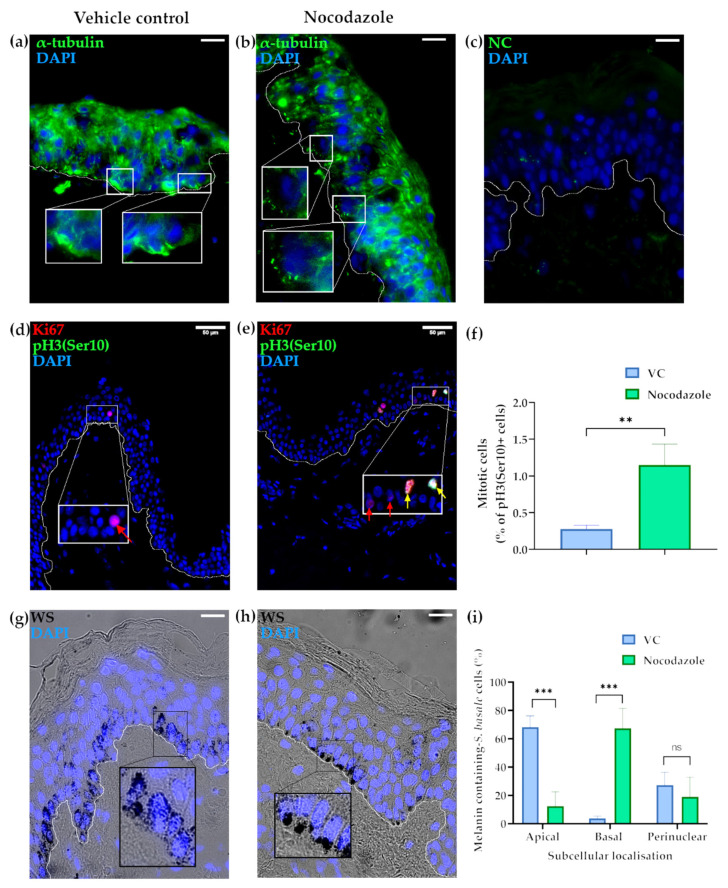
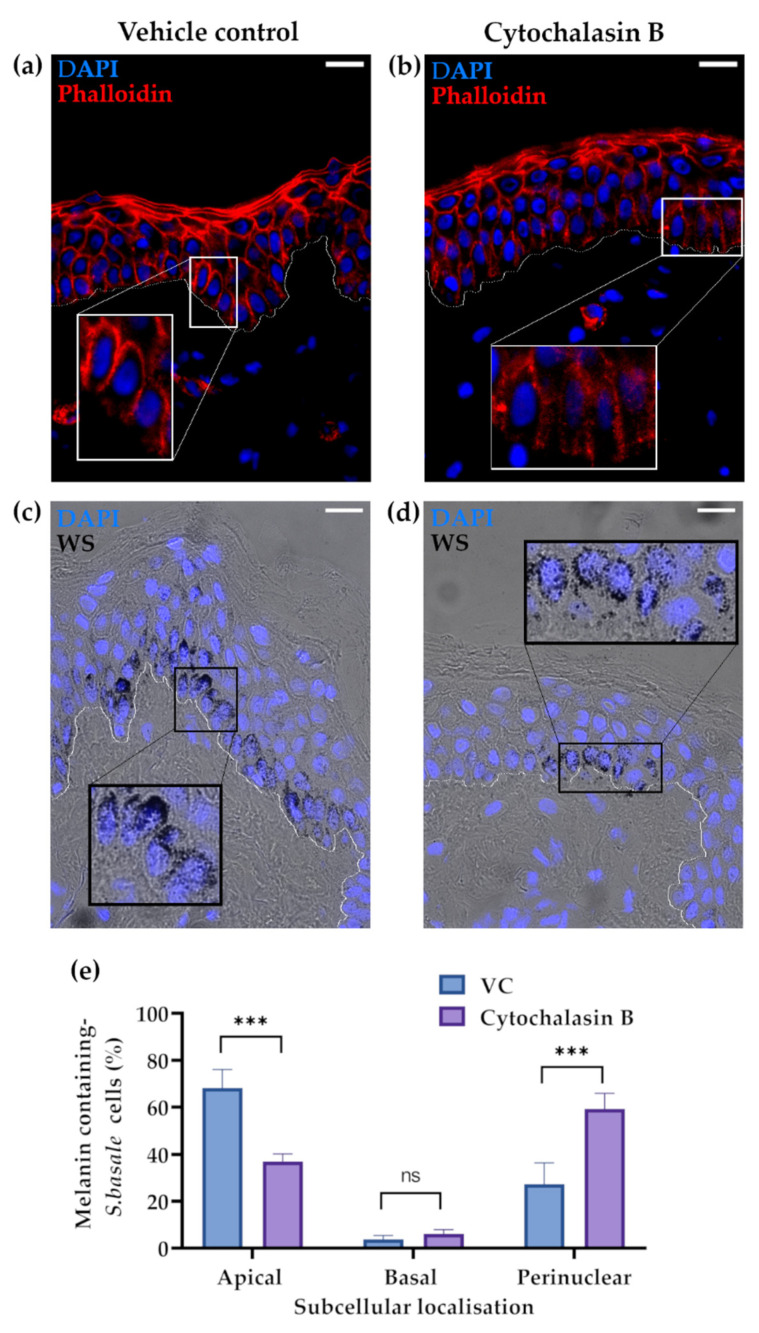
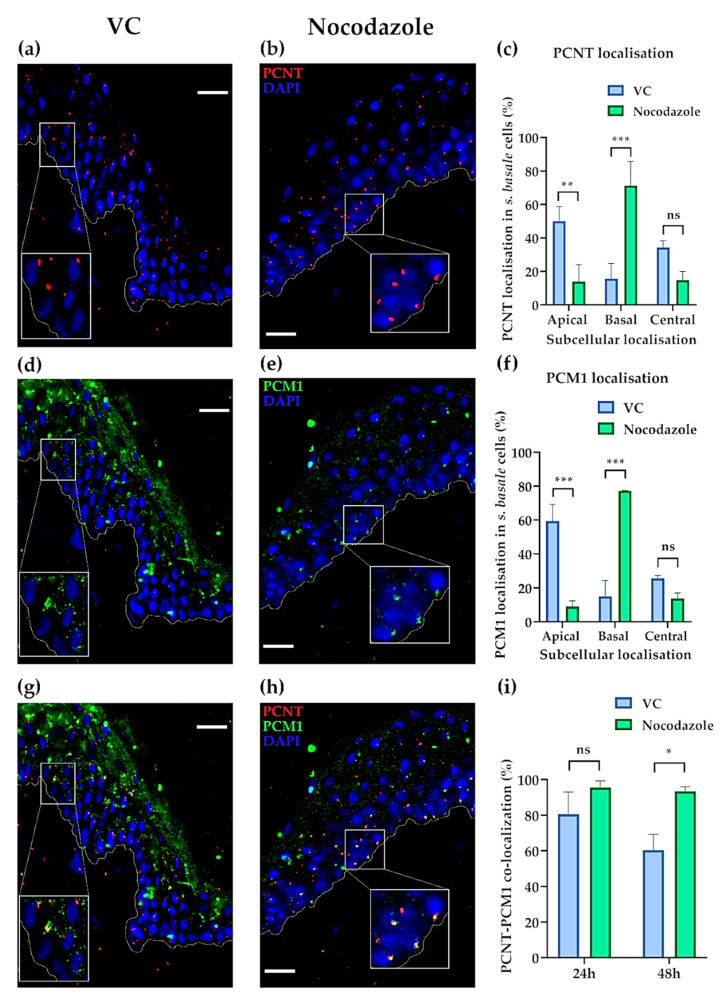
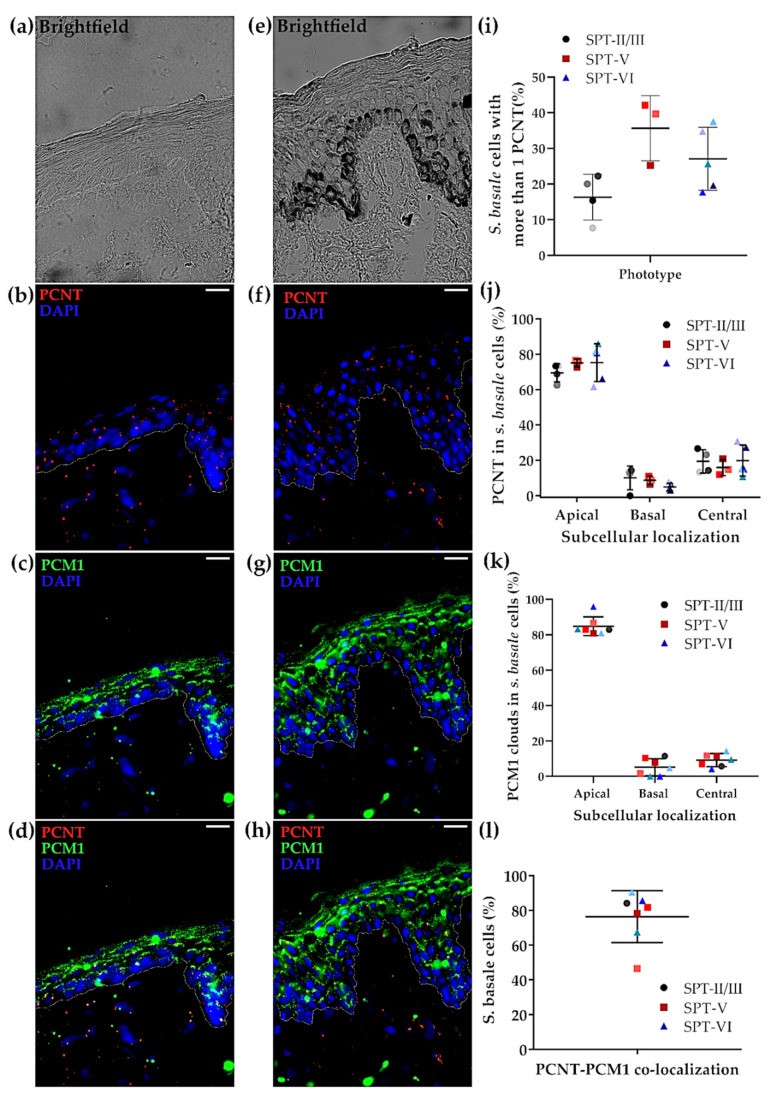
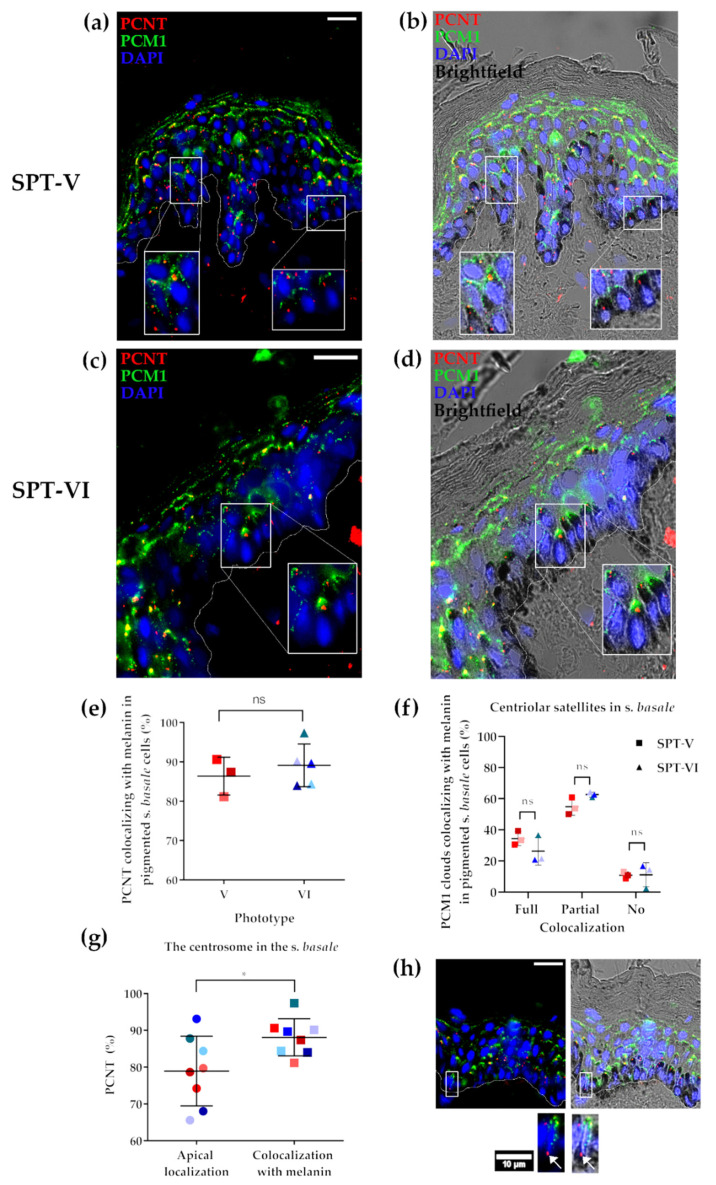
Melanin granules cluster within supra-nuclear caps in basal keratinocytes (KCs) of the human epidermis, where they protect KC genomic DNA against ultraviolet radiation (UVR) damage. While much is known about melanogenesis in melanocytes (MCs) and a moderate amount about melanin transfer from MC to KC, we know little about the fate of melanin once inside KCs. We recently reported that melanin fate in progenitor KCs is regulated by rare asymmetric organelle movement during mitosis. Here, we explore the role of actin, microtubules, and centrosome-associated machinery in distributing melanin within KCs. Short-term cultures of human skin explants were treated with cytochalasin-B and nocodazole to target actin filaments and microtubules, respectively. Treatment effects on melanin distribution were assessed by the Warthin–Starry stain, on centrosome-associated proteins by immunofluorescence microscopy, and on co-localisation with melanin granules by brightfield microscopy. Cytochalasin-B treatment disassembled supra-nuclear melanin caps, while nocodazole treatment moved melanin from the apical to basal KC domain. Centrosome and centriolar satellite-associated proteins showed a high degree of co-localisation with melanin. Thus, once melanin granules are transferred to KCs, their preferred apical distribution appears to be facilitated by coordinated movement of centrosomes and centriolar satellites. This mechanism may control melanin’s strategic position within UVR-exposed KCs.
Overview
The claims and statistics of this paper haven’t been checked yet.
Free: it reads the open-access text and checks the first 5 claims that cite a source we can check. Create a free account to check every claim.
Integrity signals
Registry
Cites
Statistics
Figures
Verification
Claims the paper makes
The claims and statistics of this paper haven’t been checked yet.
Free: it reads the open-access text and checks the first 5 claims that cite a source we can check. Create a free account to check every claim.
Claims other papers make about this one
Each is checked against this paper’s own text: does it say what the citing paper says it does?
The source backs part of the claim, not all of it — or backs it for a different population, condition or comparison.
In the citing paper
“The same study also reported the co-localization between melanin, the centrosome, and nuclear satellites at the apical region of stratified keratinocytes, suggesting a potential role for centrosome-related proteins in the regulation of melanin polarization.”
From Melanin's Journey from Melanocytes to Keratinocytes: Uncovering the Molecular Mechanisms of Melanin Transfer and Processing (2023) · cites this paper as [123]
Experimental — accuracy not yet measuredThe cited source says what the claim attributes to it.
In the citing paper
“These results were further corroborated by recent studies, which reported a significant impairment in melanin polarization upon disruption of the actin cytoskeleton and the microtubule network [ 123 ].”
From Melanin's Journey from Melanocytes to Keratinocytes: Uncovering the Molecular Mechanisms of Melanin Transfer and Processing (2023) · cites this paper as [123]
Self-check
Percentages, sums and reported differences re-computed from the paper’s own numbers.
The self-check needs the paper’s full text.
Citations
Cites
Kinesin and Dynein Superfamily Proteins and the Mechanism of Organelle Transport
Hirokawa, N. (1998) · Science · doi:10.1126/science.279.5350.519 · Cited by 1,686 · cited 1×
“For example, Myosin Va can facilitate unidirectional movement of melanin along actin [12,16–18], while organelle transport via MTs undergoes both retrograde (to the –ve end of MT/cell nucleus) and anterograde (to the positive end of MTs/cell periphery) movement [19].”
BackgroundAsymmetric cell divisions promote stratification and differentiation of mammalian skin
Lechler, T., & Fuchs, E. (2005) · Nature · doi:10.1038/nature03922 · Cited by 998 · cited 2×
“We are still at a very early stage in our understanding on how skin cell polarity influences skin pigmentation and should not over-extrapolate from either these data or data emerging from the (nocturnal) mouse [28,63,64].”
BackgroundThe Retinal Pigment Epithelium in Health and Disease
R. Sparrrow, J., Hicks, D., & P. Hamel, C. (2010) · Current Molecular Medicine · doi:10.2174/156652410793937813 · Cited by 618 · cited 7×
“Sci. 2021, 22, 3143 17 of 19 Abbreviations DAPI 4′,6-diamidino-2-phenylindole DNCT1 Dynactin 1 F Female KC Keratinocyte KRT10 Keratin 10 M Male MC Melanocyte MT Microtubule MTOC MT-organising centre NINL Ninein-like PCM1 Pericentriolar Material 1 PCNT Pericentrin RPE Retinal pigmented epithelium S. stratum SPT Skin ph…”
BackgroundInfluentialAsymmetric apportioning of aged mitochondria between daughter cells is required for stemness
Katajisto, P., Döhla, J., Chaffer, C. L., Pentinmikko, N., Marjanovic, N., Iqbal, S., Zoncu, R., Chen, W., Weinberg, R. A., & Sabatini, D. M. (2015) · Science · doi:10.1126/science.1260384 · Cited by 541 · cited 1×
“It has been reported recently for mitochondria, albeit in vitro, where this strategy may be important for the maintenance of cell stemness [51].”
BackgroundHistone H3 phosphorylation and cell division
Hans, F., & Dimitrov, S. (2001) · Oncogene · doi:10.1038/sj.onc.1204326 · Cited by 518 · cited 1×
“The number of mitotic cells was assessed using the mitosisspecific marker pH3(Ser10) [42].”
MethodAssembly of centrosomal proteins and microtubule organization depends on PCM-1
Dammermann, A., & Merdes, A. (2002) · The Journal of Cell Biology · doi:10.1083/jcb.200204023 · Cited by 489 · cited 3×
“Importantly, centriolar satellites exhibit cell cycle-dependent assembly and disassembly [36].”
BackgroundMethodInfluentialThe Centrosome in Cells and Organisms
Bornens, M. (2012) · Science · doi:10.1126/science.1209037 · Cited by 480 · cited 1×
“The centrosome, consisting of two barrel-shaped centrioles embedded in a matrix of proteins known as the pericentriolar material, plays a key role in the transmission of cell polarity to daughter cells after cell division [31].”
BackgroundIdentification of an organelle receptor for myosin-Va
Wu, X. S., Rao, K., Zhang, H., Wang, F., Sellers, J. R., Matesic, L. E., Copeland, N. G., Jenkins, N. A., & Hammer, J. A. (2002) · Nature Cell Biology · doi:10.1038/ncb760 · Cited by 455 · cited 7×
“Currently, the identity of motor proteins involved in melanin granule movement within the S. basale KCs remains unknown, although we hypothesise that different motor proteins may be involved in melanin movement within the KCs (versus within MCs), not least because of the autophagolysosomal compartment context of melan…”
BackgroundInfluentialHyperproliferation and Defects in Epithelial Polarity upon Conditional Ablation of α-Catenin in Skin
Vasioukhin, V., Bauer, C., Degenstein, L., Wise, B., & Fuchs, E. (2001) · Cell · doi:10.1016/s0092-8674(01)00246-x · Cited by 435
Wu, X., Bowers, B., Rao, K., Wei, Q., & Hammer, J. A. (1998) · The Journal of Cell Biology · doi:10.1083/jcb.143.7.1899 · Cited by 418 · cited 8×
“Currently, the identity of motor proteins involved in melanin granule movement within the S. basale KCs remains unknown, although we hypothesise that different motor proteins may be involved in melanin movement within the KCs (versus within MCs), not least because of the autophagolysosomal compartment context of melan…”
BackgroundMethodInfluential
Cited by
Melanin Transfer in the Epidermis: The Pursuit of Skin Pigmentation Control Mechanisms
Moreiras, H., Seabra, M. C., & Barral, D. C. (2021) · International Journal of Molecular Sciences · doi:10.3390/ijms22094466 · Cited by 145
“Also, it was recently shown that the apical distribution of melanin after being transferred to keratinocytes is regulated by the centrosome and centriolar satellites [75].”
BackgroundMelanin Transfer in the Epidermis: The Pursuit of Skin Pigmentation Control Mechanisms
Moreiras, H., Seabra, M. C., & Barral, D. C. (2021) · doi:10.20944/preprints202104.0441.v1 · Cited by 147
Bento-Lopes, L., Cabaço, L. C., Charneca, J., Neto, M. V., Seabra, M. C., & Barral, D. C. (2023) · International Journal of Molecular Sciences · doi:10.3390/ijms241411289 · Cited by 114
Endogenous Photosensitizers in Human Skin
Bastos, E. L., Quina, F. H., & Baptista, M. S. (2023) · Chemical Reviews · doi:10.1021/acs.chemrev.2c00787 · Cited by 91
Targeting the Complexity of In Vitro Skin Models: A Review of Cutting-Edge Developments
Quílez, C., Bebiano, L. B., Jones, E., Maver, U., Meesters, L., Parzymies, P., Petiot, E., Rikken, G., Risueño, I., Zaidi, H., et al. (2024) · Journal of Investigative Dermatology · doi:10.1016/j.jid.2024.04.032 · Cited by 65
Self-citation
Metadata
- Authors
- Castellano-Pellicena, I., Morrison, C. G., Bell, M., O’Connor, C., & Tobin, D. J.
- Affiliations
- The Charles Institute of Dermatology, School of Medicine, University College Dublin, D04 V1W8 Dublin, Ireland
- Ollscoil na Gaillimhe – University of Galway (IE)
- Walgreens Boots Alliance (United Kingdom) (GB)
- University College Dublin (IE)
- Corresponding author
- Tobin, Desmond J.
- Venue
- International Journal of Molecular Sciences
- Publisher
- MDPI AG
- Published
- 2021-03-19
- Volume
- 22
- Issue
- 6
- Pages
- 3143
- ISSN
- 1422-0067 (ISSN-L)
- PMC
- PMC8003549
- OpenAlex
- W3139508732
- Cited by
- 35
- References
- 69
- Citations by year
- 2026: 4 · 2025: 7 · 2024: 7 · 2023: 8 · 2022: 5 · 2021: 4
- FWCI
- 3.13
- Type
- journal article
- Language
- en
- Open access
- gold
- doi.org
- Licence
- Locations
- International Journal of Molecular Sciences (publishedVersion, cc-by)
- PubMed Central (publishedVersion, cc-by)
- PubMed (publishedVersion)
- DOAJ (DOAJ: Directory of Open Access Journals) (submittedVersion, cc-by-sa)
- Funders
- Walgreens Boots Alliance UK (NA)
- Topics
- Life Sciences › Biochemistry, Genetics and Molecular Biology › Cell Biology › melanin and skin pigmentation
- Life Sciences › Biochemistry, Genetics and Molecular Biology › Molecular Biology › Melanoma and MAPK Pathways
- Life Sciences › Biochemistry, Genetics and Molecular Biology › Cell Biology › Skin and Cellular Biology Research
- Keywords
- melanin distribution, basal keratinocytes, melanin granules, centrosome, centriolar satellites, actin cytoskeleton, microtubules, mitosis, UV protection, melanin transfer, cytochalasin B, nocodazole, human epidermis, Warthin-Starry stain
- MeSH terms
- Actins, Cells, Cultured, Cytoplasmic Granules, Cytoskeleton, Fluorescent Antibody Technique, Humans, Melanins, Melanocytes, Phenotype, Skin, Biomarkers, Keratinocytes, Cell Polarity, In Situ Hybridization, Centrosome
About these checks
Registry, retraction, Cites and statistics results are computed, not judged, with one exception: a printed reference that no index lists is read once by a model before it counts as a citation error. Claims are extracted by a model and kept only when their quote appears verbatim in the text; each cited source is then checked, with a model’s help, for whether it says what the claim relies on. Those verdicts can be wrong — read the claim’s quote and the cited source before relying on one.
Statistics and arithmetic are recomputed, not judged.
Confidence bands are shown only for fields calibrated on our annotated test set. None is calibrated yet, so no band is shown.
What counts as a claim ›How we measure confidence ›How we check this ›
Are you an author, or do you see a problem with this page? Request a review
Data sources
Bibliographic data: Semantic Scholar, OpenAlex, Crossref.
Contains information from the Semantic Scholar Academic Graph Datasets, made available under the ODC Attribution License (ODC-BY 1.0).
Semantic Scholar’s data is described in: Kinney, R., et al. (2023). The Semantic Scholar Open Data Platform. arXiv:2301.10140.
