

Osteoporosis Due to Hormone Imbalance: An Overview of the Effects of Estrogen Deficiency and Glucocorticoid Overuse on Bone Turnover
Open accessThe DOI matches its Crossref record; 108 of the 108 references it cites were found in a registry or an index.
Abstract
Osteoporosis is a serious health issue among aging postmenopausal women. The majority of postmenopausal women with osteoporosis have bone loss related to estrogen deficiency. The rapid bone loss results from an increase in bone turnover with an imbalance between bone resorption and bone formation. Osteoporosis can also result from excessive glucocorticoid usage, which induces bone demineralization with significant changes of spatial heterogeneities of bone at microscale, indicating potential risk of fracture. This review is a summary of current literature about the molecular mechanisms of actions, the risk factors, and treatment of estrogen deficiency related osteoporosis (EDOP) and glucocorticoid induced osteoporosis (GIOP). Estrogen binds with estrogen receptor to promote the expression of osteoprotegerin (OPG), and to suppress the action of nuclear factor-κβ ligand (RANKL), thus inhibiting osteoclast formation and bone resorptive activity. It can also activate Wnt/β-catenin signaling to increase osteogenesis, and upregulate BMP signaling to promote mesenchymal stem cell differentiation from pre-osteoblasts to osteoblasts, rather than adipocytes. The lack of estrogen will alter the expression of estrogen target genes, increasing the secretion of IL-1, IL-6, and tumor necrosis factor (TNF). On the other hand, excessive glucocorticoids interfere the canonical BMP pathway and inhibit Wnt protein production, causing mesenchymal progenitor cells to differentiate toward adipocytes rather than osteoblasts. It can also increase RANKL/OPG ratio to promote bone resorption by enhancing the maturation and activation of osteoclast. Moreover, excess glucocorticoids are associated with osteoblast and osteocyte apoptosis, resulting in declined bone formation. The main focuses of treatment for EDOP and GIOP are somewhat different. Avoiding excessive glucocorticoid use is mandatory in patients with GIOP. In contrast, appropriate estrogen supplement is deemed the primary treatment for females with EDOP of various causes. Other pharmacological treatments include bisphosphonate, teriparatide, and RANKL inhibitors. Nevertheless, more detailed actions of EDOP and GIOP along with the safety and effectiveness of medications for treating osteoporosis warrant further investigation.
Overview
The claims and statistics of this paper haven’t been checked yet.
Free: it reads the open-access text and checks the first 5 claims that cite a source we can check. Create a free account to check every claim.
Integrity signals
Registry
Cites
Statistics
Figures
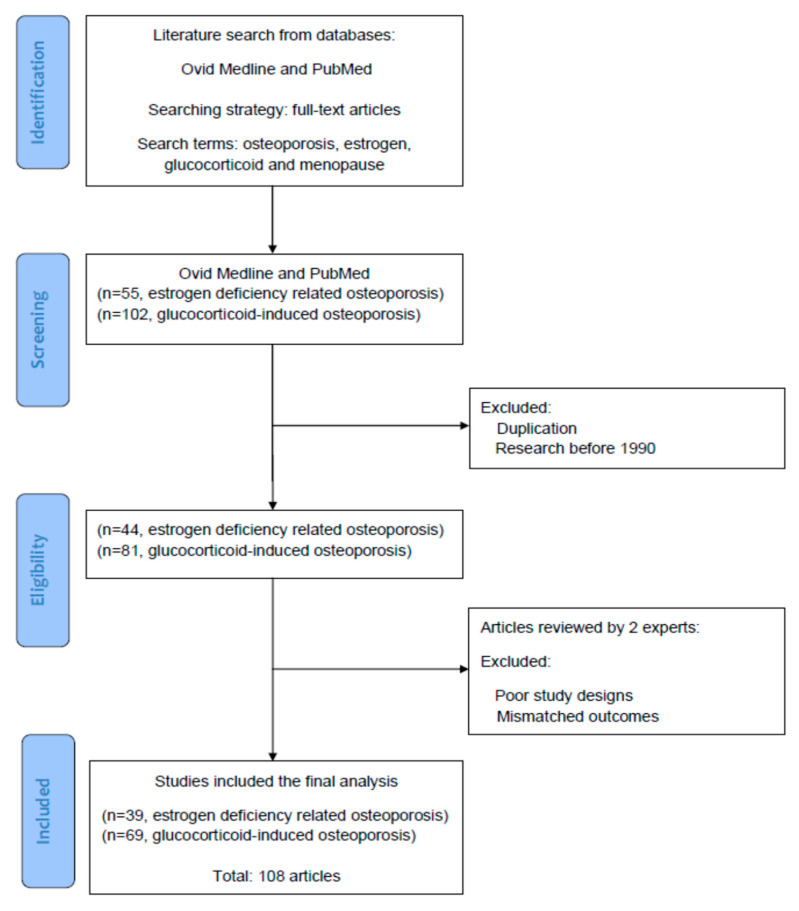
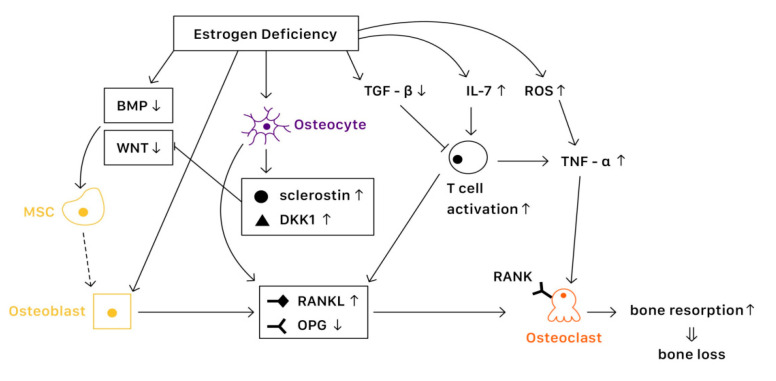
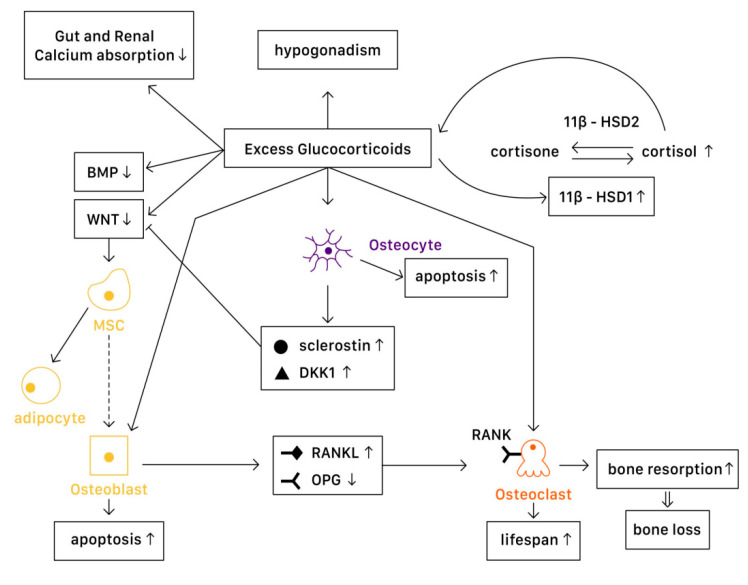
Verification
Claims the paper makes
The claims and statistics of this paper haven’t been checked yet.
Free: it reads the open-access text and checks the first 5 claims that cite a source we can check. Create a free account to check every claim.
Claims other papers make about this one
Each is checked against this paper’s own text: does it say what the citing paper says it does?
The cited source says what the claim attributes to it.
In the citing paper
“In addition, estrogen can also increase TGF-β and osteoprotegerin (OPG) levels, which inhibit osteoclast differentiation [[58], [59], [60]].”
From Emerging role of liver-bone axis in osteoporosis (2024) · cites this paper as [59]
Self-check
Percentages, sums and reported differences re-computed from the paper’s own numbers.
The self-check needs the paper’s full text.
Citations
Cites
1 retracted
RETIRED: Osteoporosis in Menopause
Khan, A. A., Fortier, M. P., Fortier, M. P., Reid, R. L., Abramson, B. L., Blake, J. M., Desindes, S., Dodin, S., Graves, L. E., Guthrie, B., et al. (2014) · Journal of Obstetrics and Gynaecology Canada · doi:10.1016/s1701-2163(15)30489-8 · Cited by 68
RetractedEstrogen deficiency and bone loss: an inflammatory tale
Weitzmann, M. N. (2006) · Journal of Clinical Investigation · doi:10.1172/jci28550 · Cited by 990 · cited 5×
“The lack of estrogen will alter the expression of estroge t rget ge s, inc easing the secretion of IL-1, IL-6, and tumor necrosis factor (TNF).”
BackgroundInfluentialEastell, R., O'Neill, T. W., Hofbauer, L. C., Langdahl, B., Reid, I. R., Gold, D. T., & Cummings, S. R. (2016) · Nature Reviews Disease Primers · doi:10.1038/nrdp.2016.69 · Cited by 827 · cited 5×
“Moreover, estrogens stimulate the production of IGF1 and TGFβ by osteoblasts, enhancing bone formation [19].”
BackgroundInfluentialRecommendations for the prevention and treatment of glucocorticoid-induced osteoporosis: 2001 update
American College of Rheumatology Ad Hoc Committee on Glucocorticoid-Induced Osteoporosis (2001) · Arthritis & Rheumatism · doi:10.1002/1529-0131(200107)44:7<1496::aid-art271>3.0.co;2-5 · Cited by 647
Buckley, L., Guyatt, G., Fink, H. A., Cannon, M., Grossman, J., Hansen, K. E., Humphrey, M. B., Lane, N. E., Magrey, M., Miller, M., et al. (2017) · Arthritis Care & Research · doi:10.1002/acr.23279 · Cited by 579
Buckley, L., Guyatt, G., Fink, H. A., Cannon, M., Grossman, J., Hansen, K. E., Humphrey, M. B., Lane, N. E., Magrey, M., Miller, M., et al. (2017) · Arthritis & Rheumatology · doi:10.1002/art.40137 · Cited by 527
Saag, K. G., Zanchetta, J. R., Devogelaer, J., Adler, R. A., Eastell, R., See, K., Krege, J. H., Krohn, K., & Warner, M. R. (2009) · Arthritis & Rheumatism · doi:10.1002/art.24879 · Cited by 493 · cited 1×
“One randomized controlled trial showed significantly greater increases in spine and hip BMD in the teriparatide group compared with the alendronate group during a 36-months therapy [95].”
ResultThe mechanisms of estrogen regulation of bone resorption
Riggs, B. L. (2000) · Journal of Clinical Investigation · doi:10.1172/jci11468 · Cited by 446 · cited 2×
“Studi have also shown that estrogen deficiency directly affects cell differentiation and apoptosis [21].”
BackgroundNF-κB signaling and bone resorption
Abu-Amer, Y. (2013) · Osteoporosis International · doi:10.1007/s00198-013-2313-x · Cited by 340
Research works printed but not linked: 1
- Eisenberg Center at Oregon Health & Science University Osteoporosis Treatments That Help Prevent Broken Bones: A Guide for Women After Menopause Comparative Effectiveness Review Summary Guides for Consumers AHRQ Comparative Effectiveness Reviews Agency for Healthcare Research and Quality (US) Rockville, MD, USA 2005 21919254
Cited by
Items 601–663 of 663
Beraja, G. E., Kausel, A. M., Murase, J. E., Bordone, L. A., Sawaya, A. P., Vaccari, J. P. D. R., & Lev‐Tov, H. A. (2026) · International Journal of Women’s Dermatology · doi:10.1097/jw9.0000000000000262
Menopause and Hormonal Replacement Therapy in Women with Rheumatic Diseases
Kayidhi, S., & Das, P. (2026) · Springer eBooks · doi:10.1007/978-981-95-9581-5_18
Inhibition of AXL receptor tyrosine kinase increases osteoblast function and bone mass
Ahmad, M., Kölbl, C., Jan, I., Dorn, A.-K., Özkan, B., Heuvel, F. O., Yilmaz, D., Wagner, A., Spasić, M. V., Krüger, B. T., et al. (2026) · Bone Research · doi:10.1038/s41413-026-00554-0 · Cited by 1
Yang, M., Fu, J., Yang, W., Li, Z., Yang, X., Xing, S., An, M., Zhang, J., Zhou, G., & Ge, K. (2026) · Biomaterials Science · doi:10.1039/d6bm00719h
Periodontitis aggravates bone loss through gut microbiota alterations in ovariectomized mice
Nie, H., Wang, N., Mao, H., Yuan, W., Qian, J., Chen, R., Yuan, Q., Xiao, Y., Zhang, L., & Yan, F. (2026) · npj Biofilms and Microbiomes · doi:10.1038/s41522-026-01084-7
“24 , and accumulating evidence suggests that intestinal barrier dysfunction 25,26 and low-grade in fl ammation contribute to its progression 27 .”
Zhao, M., Tian, B., Zhao, L., Chen, Y., Sun, X., & Song, H. (2026) · Biomedical Chromatography · doi:10.1002/bmc.70543
Liu, J., Hu, Y., Yao, Z., & Wang, H. (2026) · Beni-Suef University Journal of Basic and Applied Sciences · doi:10.1186/s43088-026-00812-4
“At the molecular level, downregulation of the Wnt/β-catenin pathway impairs osteoblast differentiation [27], while an elevated RANKL/ OPG ratio leads to sustained activation of osteoclasts [28].”
Liu, F. F., Jiang, H., Li, Z., & Li, L. (2026) · Frontiers in Endocrinology · doi:10.3389/fendo.2026.1858179
“Estrogen is well-characterized to suppress bone resorption and promote epiphyseal fusion (39, 40).”
Min, H., Li, Y., Chen, G., Wen, J., Li, X., Long, Z., & Cheng, J. (2026) · The FASEB Journal · doi:10.1096/fj.202601404r
Bone mineral density among postmenopausal women in Basra
Habeeb, N. A., Abed, A. A., & Al-Rubaai, S. (2026) · Romanian Journal of Medical Practice · doi:10.37897/rjmp.2026.2.2
The Role of Short-Chain Fatty Acids and Derived Metabolites in Osteoporosis
Qiu, G., Xie, S., Luo, W. Q., Yang, K., Wu, J., Xl, Z., Li, S., Hu, Y., & Yang, L. T. (2026) · Current Osteoporosis Reports · doi:10.1007/s11914-026-00975-0
“First, estro - gen deficiency results in enhanced RANKL expression in osteoblast lineage cells, osteocytes, and bone-lining cells, while OPG production is reduced [ 99, 100 ].”
Zhou, C., Tang, Y., Zeng, L., Xu, S., Xiang, Y., Ning, K., Zhang, S., Peng, S., Chen, S., Liu, H., et al. (2026) · Frontiers in Cell and Developmental Biology · doi:10.3389/fcell.2026.1876518
“First, excessive glucocorticoid exposure increases the RANKL/OPG ratio, thereby promoting osteoclast maturation, activation, and bone resorption (Cheng et al., 2022; Urquiaga and Saag, 2022).”
InfluentialLu, H.-L., Yu, F., Zhou, H.-F., Hu, P., & Gan, S.-L. (2026) · World Journal of Diabetes · doi:10.4239/wjd.123389
The impact of hops on bone health: Benefits and mechanisms of action
Wanionok, N. E., & Fernández, J. M. (2026) · Elsevier eBooks · doi:10.1016/b978-0-443-22332-7.00059-3
Zhunussova, G., Omarbayeva, N., Zhunussova, A., Abdullayeva, D., Skvortsova, L., Nurdinov, N. S., & Oshibayeva, A. (2026) · Genes · doi:10.3390/genes17080913
“However, disruption of the tightly regulated balance between these hormones can trigger abnormal cellular proliferation and promote breast carcinogenesis [14].”
Hassan, A. M., Abdallah, S. A., Al-Haidose, A., Al‐Hamdani, M., & Abdallah, A. M. (2026) · Tobacco Induced Diseases · doi:10.18332/tid/221015
“Importantly, the study found that BMI partially mediated this link, supporting the hypothesis that both hormonal and mechanical variables play a role in maintaining bone density 24 .”
Hyassat, D., Alfandi, A., Alhussami, M., Ajlouni, H. K., Khader, Y. S., Haddad, S., Abujbara, M. A., Alnsour, S., Samara, E., Layyous, M., et al. (2026) · Jordan Medical Journal · doi:10.35516/jmj.v60i3.5271
dos Santos, J. M., Pedreira, L. C., Góes, R. P., da Silva, V. A., Caramelo, A., de Souza, M. A. A., Junqueira, A. C., Baixinho, C. L., & Santos, J. L. P. (2026) · International Journal of Orthopaedic and Trauma Nursing · doi:10.1016/j.ijotn.2026.101311
Rekaby, M. H. A., El-Tantawi, H. G., Badr, G. M., Darwish, S. K., & El-Kareem, H. F. A. (2026) · Egyptian Journal of Basic and Applied Sciences · doi:10.1080/2314808x.2026.2711174
Keat, K., Zhang, D. Y., Caruth, L., Duda, J., Beeche, C., Kripke, C. M., Sagreiya, H., Witschey, W. R. T., Biobank, T. P. M., Rader, D. J., et al. (2026) · medRxiv · doi:10.64898/2026.08.05.26359812
The multisystem impact of perimenopausal hormonal fluctuations on chronic disease risk
Luo, L., Li, L., Wang, X., & Bai, W. (2026) · Frontiers in Endocrinology · doi:10.3389/fendo.2026.1894588
Jia, X., Liu, L., & Yang, Y. (2026) · Frontiers in Medicine · doi:10.3389/fmed.2026.1838641
“This population exhibits heightened sensitivity to the bone-depleting effects of corticosteroids, as estrogen plays a crucial protective role in maintaining bone mineral density (BMD) by suppressing osteoclast activity and promoting osteoblast survival (9, 10).”
ZHANG, W., An-zhu, W. A. N. G., Xiang, L. I., Meng-jiao, K. A. N. G., Qian, L. I. U., Jing-ru, T., Xiang-yan, L. I., Ze-yu, W. A. N. G., Jin-yue, Z., Jia-xing, F. A. N., et al. (2026) · Phytomedicine · doi:10.1016/j.phymed.2026.158706
Al-Shemery, M. K. (2026) · Zenodo (CERN European Organization for Nuclear Research) · doi:10.58612/hs4114
Xie, R., Liu, Y., Wu, Z., Huang, K., & Sun, Q. (2026) · BMC Endocrine Disorders · doi:10.1186/s12902-026-02481-x
“Postmenopausal women are at high risk of osteoporosis, mainly because declining ovarian function leads to a sharp decrease in estrogen levels, thereby accelerating bone resorption and increasing bone turnover [2].”
Esmaili, H., Asgari, N., Mosayeb, N., & Jafarnejad, S. (2026) · Food Science & Nutrition · doi:10.1002/fsn3.72229
“Studies show that prolonged estrogen deficiency induces higher biomarker levels of bone remodeling in postmenopausal women, implying an overall upregulation in bone turnover and greater net osteolysis (Cheng et al. 2022).”
Nie, P., Liu, Y., Zheng, Y., Zhang, C., Chen, Q., Ping, H., Liu, Y., Chen, Y., Shuang, F., Li, J., et al. (2026) · Biochemical Pharmacology · doi:10.1016/j.bcp.2026.118365
Applications of DNA Hydrogels in Osteoporotic Bone Defects
Chen, J., Jia, H., Zhang, X., Liu, D., Jia, X., Gu, X., Wen, H., & Jin, Y. (2026) · Journal of Functional Biomaterials · doi:10.3390/jfb17080415 · Cited by 1
“Excess glucocorticoids, by contrast, suppress Wnt protein synthesis and block the BMP signaling pathway, driving mesenchymal stem cells (MSCs) to preferentially differentiate into adipocytes and impairing their osteogenic differentiation potential [201].”
Li, Y., Chen, Z., Li, G., Ji, S., Yin, R., & Wang, S. (2026) · Comprehensive physiology · doi:10.1002/cph4.70242
Motafeghi, F., Naz, M. S. G., Tehrani, F. R., & Behboudi‐Gandevani, S. (2026) · Frontiers in Global Women s Health · doi:10.3389/fgwh.2026.1895443
“There appears to be a gap in current management, in which the effects of hypoestrogenism on bone health are rarely addressed in treatment plans for premenopausal women (5, 6).”
Rathore, G., Kaur, S., Parihar, R. R., & Sarin, J. (2026) · Current Medicine Research and Practice · doi:10.4103/cmrp.cmrp_146_25
Fan, J., Cai, J., & Chen, S. (2026) · Archives of Osteoporosis · doi:10.1007/s11657-026-01765-y
Inflammatory indices and bone density in osteoporosis: A cross-sectional study
Bazgir, N., Gilan, M. S., Mozafari, A., & Nejad, A. M. (2026) · Journal of Education and Health Promotion · doi:10.4103/jehp.jehp_752_25
“[1,2] Affecting an estimated 200 million people globally, comprising 75 million individuals across Europe, the United States, and Japan, osteoporosis and osteopenia are among the most pervasive and underdiagnosed metabolic bone disorders.”
Skeletal Health in Premenopausal Women with Type 1 Diabetes: A Scoping Review
Vlachou, E. D., Ntikoudi, A., Owens, D. A., Rizikou, D., Tsalkitzi, A., Evangelou, E., & Tsartsalis, A. N. (2026) · Diabetology · doi:10.3390/diabetology7090168
Lv, X., Ran, X., Wei, C., Liu, X., Wang, J., & Huo, L. (2026) · Frontiers in Cell and Developmental Biology · doi:10.3389/fcell.2026.1938041
マウスの卵巣摘出誘発性骨粗鬆症モデルにおけるイカ骨粉末の抗骨粗鬆症効果
Sreemak, K., & スリーマク, カ. (2026) · Institutional Repositories DataBase (IRDB)
Biotics in Menopausal Health: A Two-Decade Bibliometric Analysis and Narrative Review
Olawale, F., Alake, S. E., Chandrashekar, R., Kim, Y., Chowanadisai, W., (6622952), E. A. M., Smith, B. J., & Lucas, E. A. (2026) · Current Nutrition Reports · doi:10.1007/s13668-026-00798-6
Tudor, V., Poalelungi, C.-V., Cîmpean, C. R., & Slăvescu, D. A. (2026) · Romanian Journal of Military Medicine · doi:10.55453/rjmm.2026.129.5.5
O‐ GlcNAcylation : A Metabolic‐Immune Hub Regulating Macrophage Fate and Osteoclast Differentiation
Zhang, J., 田坤, Zhuang, N., Zhang, X., & Zhang, Y. (2026) · Oral Diseases · doi:10.1111/odi.70498
Ma, Z., Liang, M., Hong, W., Li, M., & Jin, L. (2026) · Journal of Imaging Informatics in Medicine · doi:10.1007/s10278-026-02289-0
Solgun, S., Türkben, E., Durmaz, S. C., & Uçar, İ. (2026) · Folia Morphologica · doi:10.5603/fm.114146
Tan, C., Zhou, X., Xie, Y., & Zhi, Y. (2026) · Frontiers in Pharmacology · doi:10.3389/fphar.2026.1945663
“…centres on an imbalance between osteoblast-mediated bone formation and osteoclast-mediated resorption, driven by factors including oestrogen deficiency, glucocorticoid excess, mechanical disuse, metabolic disease, and cellular senescence (Rolvien and Amling, 2022; Cheng et al., 2022).”
Zhu, T.-Y., Yuan, M., Wen, X.-C., Tian, C.-C., Han, Y.-H., Zheng, C., Wu, Y.-T., Xia, Q., & Wang, Y. (2026) · World Journal of Orthopedics · doi:10.5312/wjo.121526
Tokarczyk, W., Smędowski, I., Czernecka, K., Kazimierczuk, K., Mordko, N., Góras, M., Mazelanik, Ł., Mordarski, J., Kurzyński, S., & Pawlak, J. (2026) · Quality in Sport · doi:10.12775/qs.2026.74.75377
Xiao, Y., Lu, Q., Shi, M., Liang, H., Luo, J., Wu, Y., Wang, L., Nan, Y., Wei, R., Miao, J., et al. (2026) · Biochemical Pharmacology · doi:10.1016/j.bcp.2026.118502
Jin, J., Wang, X., Ma, J., Peng, D. U., Zhang, G., Li, C., & Liu, L. (2026) · Food & Function · doi:10.1039/d6fo04218j
Role of Glutathione Peroxidase 1 and Sex Hormones in Iraqi Patients with Osteoporosis
Abdulhadi, S. S., & Mohammed, R. K. (2026) · Iraqi Journal of Science · doi:10.24996/ijs.2026.67.9.13
“In line with this view, the results of the present study indicated that serum estradiol levels were involved in the development of osteoporosis and associated with lower T scores in both genders [9,33].”
Assi, T. A., Albazi, W. J., Mousa, R. F., & Farhan, B. A. (2025) · International Journal of Environmental Sciences · doi:10.64252/6hz1h096
Tirado, A. G. (2025) · Actualizaciones en osteología
Gut microbiota-immune-bone axis in osteoporosis: mechanisms and intervention strategies
Huang, M., Xie, B., & Liu, H. (2026) · Frontiers in Pharmacology · doi:10.3389/fphar.2026.1879472
“On the one hand, DCs produce cytokines such as IL-1, IL-6, and TNF-α , and influence the balance between bone resorption and bone formation through the Wnt/ β -catenin and RANKL/OPG pathways (Chen, 2022).”
Aldayel, T. S., Mahmoud, H. S., Abdelrazek, H. M. A., Elsayed, D. H., Higo, M. A., Eltamany, E. E., & El-Hak, H. N. G. (2026) · Frontiers in Pharmacology · doi:10.3389/fphar.2026.1841164
“Its depletion accelerates bone turnover, favoring resorption over formation, which leads directly to mobilization and loss of skeletal stores, contributing to hypocalcemia commonly seen both clinically among menopausal women and experimentally after ovariectomy (Cheng et al., 2022).”
Maiuolo, J., Scicchitano, M., Guarnieri, L., Ruga, S., Bosco, F., Oppedisano, F., Caminiti, R., Mazza, V., Nucera, S., Palma, E., et al. (2026) · Molecules · doi:10.3390/molecules31203597
“Additionally, estrogen helps the body retain calcium ions and vitamin D [28].”
Obszańska, A., Tesyna, J., Gendasz, A., & Marchlik, K. (2026) · Quality in Sport · doi:10.12775/qs.2026.77.76176
Epigenetic regulatory networks in the pathogenesis and treatment of osteoporosis subtypes
Ren, Z., Dai, B., Chen, D., Li, Z., Meng, K., Lan, S., Liu, C., 张忠民, & Hao, J. (2026) · Molecular Biomedicine · doi:10.1186/s43556-026-00630-1
“This process is regulated by multiple factors, including genetics [4], hormones [5], cytokines [6, 7], and mechanical stress [3].”
Choi, J.-H., Choi, H., Koo, J., & Kwon, J. (2026) · Applied Sciences · doi:10.3390/app162110458
Ali, S., Mushtaq, Q., Hussain, T., Bajwa, S. Z., Afzal, A., & Mujahid, A. (2026) · Journal of Applied Polymer Science · doi:10.1002/app.71657
da Silva, A. C. E., Batista, F. R. D. S., Hassumi, J. S., Monteiro, N. G., Fernandes, M. S., de Vasconcellos, L. M. R., Mulinari‐Santos, G., Gruber, R., Lisboa‐Filho, P. N., & Okamoto, R. (2026) · Clinical Oral Implants Research · doi:10.1111/clr.70187
Epimedium: A Versatile Player in Bone Tissue Engineering
Xu, T., Zhang, R., Hu, J., Jiang, J., Qiao, L., Deng, S., Li, X., Zhang, W., Zhengxin, Z. H. O. U., Xu, K., et al. (2026) · International Journal of Molecular Sciences · doi:10.3390/ijms27219579
Maomao, H., Wang, Q., Chen, Y., Lu, Y., Xing, F., & Wang, J. (2026) · Frontiers in Endocrinology · doi:10.3389/fendo.2026.1831069
Li, Y., Shen, J., Liu, J., Wu, P., Gao, F., Yang, B., Zhang, T., Huijia, Z., Fan, J., Li, C., et al. (2026) · Current Issues in Molecular Biology · doi:10.3390/cimb48111137
Nguyen, A. D.-M., Nguyen, C. K., Nguyen, Q. H., & Cao, H. T. (2026) · Journal of International Society of Preventive and Community Dentistry · doi:10.4103/jispcd.jispcd_67_26
Nakajima, T., Ohara, T., Hirose, Y., & Kawasaki, K. (2026) · Nutrients · doi:10.3390/nu18213641
Zhao, D., Thuya, W. L., & Cao, Y. (2026) · Frontiers in Endocrinology · doi:10.3389/fendo.2026.1901439
Metadata
- Authors
- Cheng, C.-H., Chen, L.-R., & Chen, K.-H.
- Affiliations
- Mackay Memorial Hospital (TW)
- National Yang Ming Chiao Tung University (TW)
- Tzu Chi University (TW)
- Corresponding author
- Chen, Kuo-Hu
- Venue
- International Journal of Molecular Sciences
- Publisher
- MDPI AG
- Published
- 2022-01-25
- Volume
- 23
- Issue
- 3
- Pages
- 1376
- ISSN
- 1422-0067 (ISSN-L)
- PMC
- PMC8836058
- OpenAlex
- W4210278962
- Cited by
- 595
- References
- 108
- Citations by year
- 2026: 148 · 2025: 174 · 2024: 166 · 2023: 72 · 2022: 33
- FWCI
- 24.40
- Type
- journal article
- Language
- en
- Open access
- gold
- doi.org
- Licence
- Locations
- International Journal of Molecular Sciences (publishedVersion, cc-by)
- PubMed Central (publishedVersion, cc-by)
- PubMed (publishedVersion)
- DOAJ (DOAJ: Directory of Open Access Journals) (submittedVersion, cc-by-sa)
- Funders
- Taipei Tzu Chi Hospital (TCRD-TPE-110-06)
- Topics
- Health Sciences › Medicine › Orthopedics and Sports Medicine › Bone health and osteoporosis research
- Life Sciences › Biochemistry, Genetics and Molecular Biology › Molecular Biology › Bone Metabolism and Diseases
- Life Sciences › Biochemistry, Genetics and Molecular Biology › Endocrinology › Estrogen and related hormone effects
- Keywords
- glucocorticoid-induced osteoporosis, bone turnover, bone resorption, estrogen receptor, osteoprotegerin, RANKL, Wnt/β-catenin signaling, BMP signaling, mesenchymal stem cell differentiation, osteoclastogenesis, osteocyte apoptosis, postmenopausal women, estrogen replacement therapy, bisphosphonates, teriparatide, RANKL inhibitor, fracture risk
- MeSH terms
- Bone Resorption, Cell Differentiation, Estrogens, Female, Glucocorticoids, Humans, Osteoblasts, Osteoclasts, Osteocytes, Osteogenesis, Osteoporosis, Tumor Necrosis Factor-alpha, Bone Remodeling, Postmenopause, RANK Ligand
About these checks
Registry, retraction, Cites and statistics results are computed, not judged, with one exception: a printed reference that no index lists is read once by a model before it counts as a citation error. Claims are extracted by a model and kept only when their quote appears verbatim in the text; each cited source is then checked, with a model’s help, for whether it says what the claim relies on. Those verdicts can be wrong — read the claim’s quote and the cited source before relying on one.
Statistics and arithmetic are recomputed, not judged.
Confidence bands are shown only for fields calibrated on our annotated test set. None is calibrated yet, so no band is shown.
What counts as a claim ›How we measure confidence ›How we check this ›
Are you an author, or do you see a problem with this page? Request a review
Data sources
Bibliographic data: Semantic Scholar, OpenAlex, Crossref.
Contains information from the Semantic Scholar Academic Graph Datasets, made available under the ODC Attribution License (ODC-BY 1.0).
Semantic Scholar’s data is described in: Kinney, R., et al. (2023). The Semantic Scholar Open Data Platform. arXiv:2301.10140.
