

Osteoporosis Due to Hormone Imbalance: An Overview of the Effects of Estrogen Deficiency and Glucocorticoid Overuse on Bone Turnover
Open accessThe DOI matches its Crossref record; 108 of the 108 references it cites were found in a registry or an index.
Abstract
Osteoporosis is a serious health issue among aging postmenopausal women. The majority of postmenopausal women with osteoporosis have bone loss related to estrogen deficiency. The rapid bone loss results from an increase in bone turnover with an imbalance between bone resorption and bone formation. Osteoporosis can also result from excessive glucocorticoid usage, which induces bone demineralization with significant changes of spatial heterogeneities of bone at microscale, indicating potential risk of fracture. This review is a summary of current literature about the molecular mechanisms of actions, the risk factors, and treatment of estrogen deficiency related osteoporosis (EDOP) and glucocorticoid induced osteoporosis (GIOP). Estrogen binds with estrogen receptor to promote the expression of osteoprotegerin (OPG), and to suppress the action of nuclear factor-κβ ligand (RANKL), thus inhibiting osteoclast formation and bone resorptive activity. It can also activate Wnt/β-catenin signaling to increase osteogenesis, and upregulate BMP signaling to promote mesenchymal stem cell differentiation from pre-osteoblasts to osteoblasts, rather than adipocytes. The lack of estrogen will alter the expression of estrogen target genes, increasing the secretion of IL-1, IL-6, and tumor necrosis factor (TNF). On the other hand, excessive glucocorticoids interfere the canonical BMP pathway and inhibit Wnt protein production, causing mesenchymal progenitor cells to differentiate toward adipocytes rather than osteoblasts. It can also increase RANKL/OPG ratio to promote bone resorption by enhancing the maturation and activation of osteoclast. Moreover, excess glucocorticoids are associated with osteoblast and osteocyte apoptosis, resulting in declined bone formation. The main focuses of treatment for EDOP and GIOP are somewhat different. Avoiding excessive glucocorticoid use is mandatory in patients with GIOP. In contrast, appropriate estrogen supplement is deemed the primary treatment for females with EDOP of various causes. Other pharmacological treatments include bisphosphonate, teriparatide, and RANKL inhibitors. Nevertheless, more detailed actions of EDOP and GIOP along with the safety and effectiveness of medications for treating osteoporosis warrant further investigation.
Overview
The claims and statistics of this paper haven’t been checked yet.
Free: it reads the open-access text and checks the first 5 claims that cite a source we can check. Create a free account to check every claim.
Integrity signals
Registry
Cites
Statistics
Figures
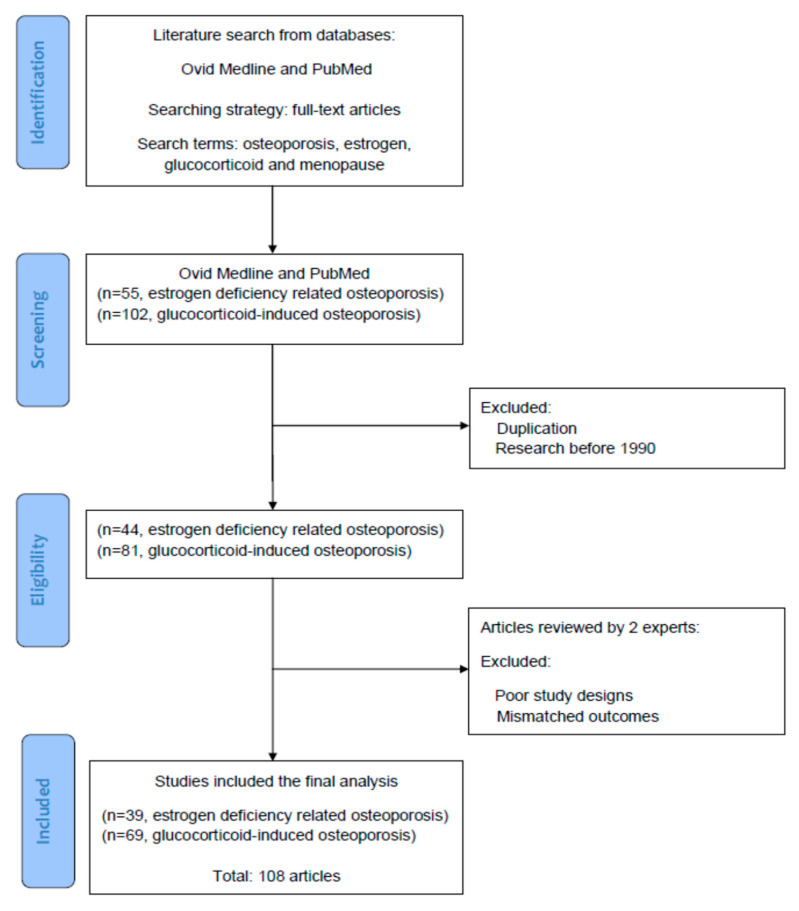
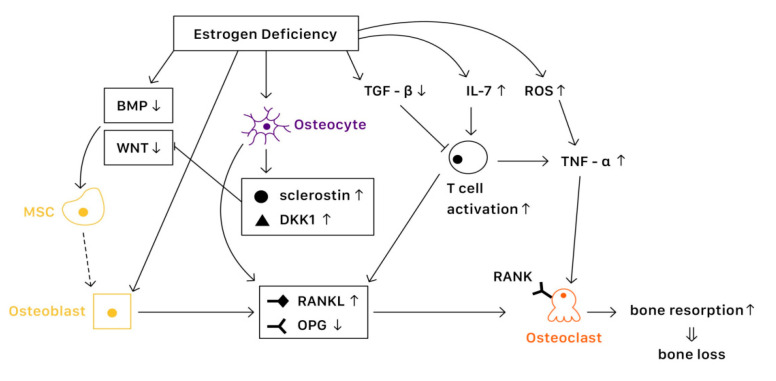
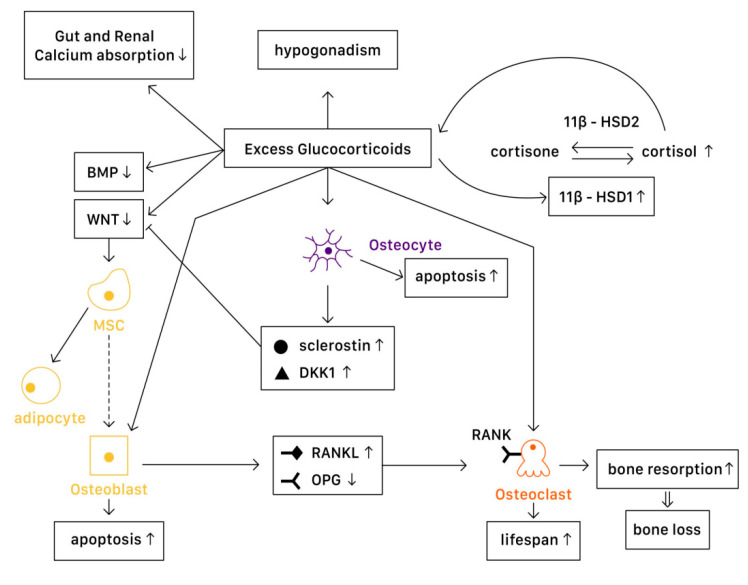
Verification
Claims the paper makes
The claims and statistics of this paper haven’t been checked yet.
Free: it reads the open-access text and checks the first 5 claims that cite a source we can check. Create a free account to check every claim.
Claims other papers make about this one
Each is checked against this paper’s own text: does it say what the citing paper says it does?
The cited source says what the claim attributes to it.
In the citing paper
“In addition, estrogen can also increase TGF-β and osteoprotegerin (OPG) levels, which inhibit osteoclast differentiation [[58], [59], [60]].”
From Emerging role of liver-bone axis in osteoporosis (2024) · cites this paper as [59]
Self-check
Percentages, sums and reported differences re-computed from the paper’s own numbers.
The self-check needs the paper’s full text.
Citations
Cites
1 retracted
RETIRED: Osteoporosis in Menopause
Khan, A. A., Fortier, M. P., Fortier, M. P., Reid, R. L., Abramson, B. L., Blake, J. M., Desindes, S., Dodin, S., Graves, L. E., Guthrie, B., et al. (2014) · Journal of Obstetrics and Gynaecology Canada · doi:10.1016/s1701-2163(15)30489-8 · Cited by 68
RetractedEstrogen deficiency and bone loss: an inflammatory tale
Weitzmann, M. N. (2006) · Journal of Clinical Investigation · doi:10.1172/jci28550 · Cited by 990 · cited 5×
“The lack of estrogen will alter the expression of estroge t rget ge s, inc easing the secretion of IL-1, IL-6, and tumor necrosis factor (TNF).”
BackgroundInfluentialEastell, R., O'Neill, T. W., Hofbauer, L. C., Langdahl, B., Reid, I. R., Gold, D. T., & Cummings, S. R. (2016) · Nature Reviews Disease Primers · doi:10.1038/nrdp.2016.69 · Cited by 827 · cited 5×
“Moreover, estrogens stimulate the production of IGF1 and TGFβ by osteoblasts, enhancing bone formation [19].”
BackgroundInfluentialRecommendations for the prevention and treatment of glucocorticoid-induced osteoporosis: 2001 update
American College of Rheumatology Ad Hoc Committee on Glucocorticoid-Induced Osteoporosis (2001) · Arthritis & Rheumatism · doi:10.1002/1529-0131(200107)44:7<1496::aid-art271>3.0.co;2-5 · Cited by 647
Buckley, L., Guyatt, G., Fink, H. A., Cannon, M., Grossman, J., Hansen, K. E., Humphrey, M. B., Lane, N. E., Magrey, M., Miller, M., et al. (2017) · Arthritis Care & Research · doi:10.1002/acr.23279 · Cited by 579
Buckley, L., Guyatt, G., Fink, H. A., Cannon, M., Grossman, J., Hansen, K. E., Humphrey, M. B., Lane, N. E., Magrey, M., Miller, M., et al. (2017) · Arthritis & Rheumatology · doi:10.1002/art.40137 · Cited by 527
Saag, K. G., Zanchetta, J. R., Devogelaer, J., Adler, R. A., Eastell, R., See, K., Krege, J. H., Krohn, K., & Warner, M. R. (2009) · Arthritis & Rheumatism · doi:10.1002/art.24879 · Cited by 493 · cited 1×
“One randomized controlled trial showed significantly greater increases in spine and hip BMD in the teriparatide group compared with the alendronate group during a 36-months therapy [95].”
ResultThe mechanisms of estrogen regulation of bone resorption
Riggs, B. L. (2000) · Journal of Clinical Investigation · doi:10.1172/jci11468 · Cited by 446 · cited 2×
“Studi have also shown that estrogen deficiency directly affects cell differentiation and apoptosis [21].”
BackgroundNF-κB signaling and bone resorption
Abu-Amer, Y. (2013) · Osteoporosis International · doi:10.1007/s00198-013-2313-x · Cited by 340
Research works printed but not linked: 1
- Eisenberg Center at Oregon Health & Science University Osteoporosis Treatments That Help Prevent Broken Bones: A Guide for Women After Menopause Comparative Effectiveness Review Summary Guides for Consumers AHRQ Comparative Effectiveness Reviews Agency for Healthcare Research and Quality (US) Rockville, MD, USA 2005 21919254
Cited by
Items 101–200 of 663
Wang, K., Zhao, X., Yang, S., Qi, X., Li, A., & Yu, W. (2024) · Comprehensive Reviews in Food Science and Food Safety · doi:10.1111/1541-4337.13374 · Cited by 22
Stolzer, C., Müller, M., Gosau, M., Henningsen, A., Fuest, S., Aavani, F., & Smeets, R. (2022) · Journal of Oral and Maxillofacial Surgery · doi:10.1016/j.joms.2022.10.019 · Cited by 18
Advances in the mechanism for steroid-induced osteonecrosis of the femoral head
Zhou, R., Bian, Y., Cai, X., Sun, H., Lv, Z., Xu, Y., Wang, Y., Wang, H., Zhu, W., Feng, B., et al. (2026) · Bone Research · doi:10.1038/s41413-025-00477-2 · Cited by 21
“83,178 Moreover, GC-induced TNF-α also fosters cell proliferation and angiogenesis (Fig.”
Panda, D., & Nayak, S. (2023) · Stem Cell Reviews and Reports · doi:10.1007/s12015-023-10640-z · Cited by 17
“Similarly, Cheng et al., 2022 show that AMSCs derived from female patient (age 20-58) have less osteogenic potential because females are exposed to more hormonal variation during menopausal period [173].”
Su, Y., Yu, G., Li, D., Lu, Y. W., Ren, C., Xu, Y., Yang, Y., Zhang, K., Ma, T., & Zhong, L. (2024) · Frontiers in Physiology · doi:10.3389/fphys.2023.1289976 · Cited by 18
Seemann, L. L., Hanos, C. T., & Pujalte, G. G. A. (2024) · Primary Care Clinics in Office Practice · doi:10.1016/j.pop.2024.04.005 · Cited by 19
Consumption of Phytoestrogens Affects Bone Health by Regulating Estrogen Metabolism
Tomczyk‐Warunek, A., Winiarska‐Mieczan, A., Blicharski, T., Blicharski, R., Kowal, F., Pano, I. T., Tomaszewska, E., & Muszyński, S. (2024) · Journal of Nutrition · doi:10.1016/j.tjnut.2024.05.026 · Cited by 24
The mechanism of bone healing after traumatic brain injury
Xiong, Y., Zhong, W., & Mi, B. (2023) · Brain‐X · doi:10.1002/brx2.31 · Cited by 18
The Potential of Collagen Treatment for Comorbid Diseases
Wang, H. (2023) · Polymers · doi:10.3390/polym15193999 · Cited by 16
“Osteoporosis poses a significant health concern among women in the postmenopausal stage of life, and the mechanism of osteoporosis is the age-related decline in hormonal/estrogen levels [46].”
Rejuvenation of young blood on aging organs: Effects, circulating factors, and mechanisms
Liu, M., Lan, Q., Wu, H., & Qiu, C.-W. (2024) · Heliyon · doi:10.1016/j.heliyon.2024.e32652 · Cited by 18
“Due to the fact that bone resorption tends to increase and bone synthesis declines with age, there is considerable interest in finding interventions that can simultaneously reduce bone resorption and promote bone synthesis [36,37].”
BackgroundAntioxidant Potential of Xanthohumol in Disease Prevention: Evidence from Human and Animal Studies
Piekara, J., & Piasecka‐Kwiatkowska, D. (2024) · Antioxidants · doi:10.3390/antiox13121559 · Cited by 16
“…bone resorption, where binding to the estrogen receptor is followed by the expression of genes encoding proteins such as IGF-1 (Insulin-like growth factor), IL-1 (Interleukin 1), and TGF-β (Transforming growth factor β ) while inhibiting bone resorption as a result of NF-κ B inhibition [98,99].”
Rahaman, S. N., Lishadevi, M., & Anandasadagopan, S. K. (2025) · Phytotherapy Research · doi:10.1002/ptr.8455 · Cited by 17
“Additionally, EA was found to down-regulate the expression of Bax and Bcl-2 proteins, which inhibits the activation of caspase-3 and helps FIGURE 4 | Polyphenols targeting various signaling pathways include inhibition of ROS-mediated ubiquitination of IKK complex that can block the activation of NF-κB complex preventi…”
Priya, P. S., Pavithra, V., Vaishnavi, S., Pachaiappan, R., Kumar, T. T. A., Rady, A. M., Darwish, N., Arokiyaraj, S., Namasivayam, S. K. R., & Arockiaraj, J. (2023) · Process Biochemistry · doi:10.1016/j.procbio.2023.09.019 · Cited by 16
Su, Z., Chen, D., Huang, J., Liang, Z., Ren, W., Zhang, Z., Jiang, Q., Luo, T., & Guo, L. (2023) · Phytotherapy Research · doi:10.1002/ptr.8032 · Cited by 16
“Estrogen deficiency is an important risk factor in the pathogenesis of osteoporosis (Cheng et al., 2022).”
BackgroundAl-Qurmoti, S., Mahyoub, M. A., Elhoumed, M., Al‐Moraissi, E. A., Tao, Z.-Y., Hou, X., Li, J., Bi, S., Wu, H., Zhang, J., et al. (2023) · BMC Oral Health · doi:10.1186/s12903-023-03307-1 · Cited by 15
“Previous research has shown that females may have slower bone healing and a higher risk of nonunion, which is the failure of the bone to heal [23, 24].”
BackgroundYang, K., Zhu, Y., Shao, Y., Jiang, Y., Zhu, L., Liu, Y., Zhang, P., Liu, Y., Zhang, X., & Zhou, Y. (2024) · Biomedicines · doi:10.3390/biomedicines12040730 · Cited by 17
“For many decades, selective estrogen receptor modulators (SERMs), bisphosphonates, denosumab, calcitonin, and estrogens have been used in clinical practice as inhibitors of osteoclast activation and differentiation [55,56].”
BackgroundA comprehensive review and advanced biomolecule-based therapies for osteoporosis
Ali, M., & Kim, Y. (2024) · Journal of Advanced Research · doi:10.1016/j.jare.2024.05.024 · Cited by 17
“Bone loss can be caused by hormonal abnormalities, such as reduced testosterone levels in men and decreasing estrogen levels in post-menopausal women [25].”
Li, X., Wu, K., Dong, Q., Chen, H., Li, C., Ren, Z., Liu, F., Yue, X., Xia, C., Wang, Y., et al. (2022) · Frontiers in Endocrinology · doi:10.3389/fendo.2022.1074516 · Cited by 22
“Estrogen deficiency increases bone turnover with an imbalance between bone formation and resorption, and it is the main cause of osteoporosis in women aged 50 years or older (7, 8).”
BackgroundКорокин, М. В., Soldatov, V. O., Гудырев, О. С., Koklin, I. S., Taran, E. I., Mishenin, M. O., Korokina, L. V., Kochkarov, A. A., Покровский, М. В., Вараксин, М. В., et al. (2022) · RESEARCH RESULTS IN BIOMEDICINE · doi:10.18413/2658-6533-2022-8-4-0-5 · Cited by 15
Karnik, S. J., Margetts, T. J., Wang, H. S., Movilă, A., Oblak, A. L., Fehrenbacher, J. C., Kacena, M. A., & Plotkin, L. I. (2024) · Current Osteoporosis Reports · doi:10.1007/s11914-023-00847-x · Cited by 16
“Like ADRD, osteoporosis prevalence amplifies with age and is more prevalent in women, especially post-menopausal women, partially due to the discontinuation of protective estrogen levels [23–25].”
Wang, S.-J., Zhang, J., Zhang, J.-Z., Ning, R., Li, C., Xu, X. Y., Jiang, M., & Qiu, W. (2023) · Journal of Medicinal Chemistry · doi:10.1021/acs.jmedchem.3c00601 · Cited by 14
Drug-induced osteoporosis and mechanisms of bone tissue regeneration through trace elements
da Costa, N. D. S., Lima, L. S., Galiciolli, M. E. A., Ribeiro, D. H. F., Ribeiro, M. M., Garica, G. D. P. J., Marçal, I. S., da Silva, J. F., Pereira, M. E., Oliveira, C. S., et al. (2024) · Journal of Trace Elements in Medicine and Biology · doi:10.1016/j.jtemb.2024.127446 · Cited by 15
Yang, Y., Jian, Y., Liu, Y., Ma, M., Guo, J., Xu, B., & Chen, Y. (2024) · EFORT Open Reviews · doi:10.1530/eor-24-0023 · Cited by 15
Li, Y., Huang, X., Qian, X., Liu, C., Yao, Y., Wang, Z., Zhu, X., & Guo, Q. (2025) · Frontiers in Nutrition · doi:10.3389/fnut.2025.1651367 · Cited by 20
Yang, J., Kong, G., Yao, X., & Zhu, Z. (2022) · International Journal of Endocrinology · doi:10.1155/2022/4228740 · Cited by 14
Demystifying the Risk Factors and Preventive Measures for Osteoporosis
Vaishya, R., Iyengar, K. P., Jain, V. K., & Vaish, A. (2023) · Indian Journal of Orthopaedics · doi:10.1007/s43465-023-00998-0 · Cited by 18
“At the molecular level, it blocks the generation of Wnt protein, increases PPAR-2 production, overexpression of Dickkopf-1 (DKK1), and disrupts the BMP pathway, causing development towards adipocytes rather than osteoblasts [53].”
Sun, N., Zhang, Y., Xie, D., Chen, Y., & Liu, Y. (2024) · Frontiers in Endocrinology · doi:10.3389/fendo.2024.1359550 · Cited by 13
Functions of Epimedin C in a zebrafish model of glucocorticoid‐induced osteoporosis
Zhou, X., Lian, K., Jia, J., Zhao, X., Duan, P., Huang, J., & Shi, Y. (2024) · Journal of Cellular and Molecular Medicine · doi:10.1111/jcmm.18569 · Cited by 14
“43 Interestingly, our KEGG pathway analysis revealed distinct yet complementary actions of PN and EC.”
BackgroundEstrogen Deficiency Exacerbates Traumatic Heterotopic Ossification in Mice
Wang, Z., Wu, Y., Yi, W., Yu, Y., Fang, X., Li, Z., & Yu, A. (2024) · Journal of Inflammation Research · doi:10.2147/jir.s477382 · Cited by 13
“12 Therefore, we may not be able to explain the interesting phenomenon that estrogen deficiency promotes HO formation from the perspective of the direct effect of estrogen on TMPCs. Histologically, traumatic HO is believed to develop through a process of endochondral ossification involving four…”
BackgroundInfluentialWei, X., Xie, H., Liu, C., Li, Y., Sun, K., Qi, B., Guo, X., Liu, Z., Huang, X., Sun, C., et al. (2025) · Advanced Functional Materials · doi:10.1002/adfm.202417810 · Cited by 15
Je, M., Hwang, S., Lee, S., & Kim, Y. (2025) · BMC Women s Health · doi:10.1186/s12905-025-03669-4 · Cited by 16
“A reduction in estrogen levels after menopause could cause an imbalance in bone formation and resorption, leading to bone loss and an increased risk of osteoporosis [18, 48].”
Xiu, C., Luo, H., Huang, W., Fan, S., Yuan, C., Chen, J., Xu, C., Yao, C., Hong, D., & Zhang, L. (2025) · Drug Design Development and Therapy · doi:10.2147/dddt.s515930 · Cited by 14
Transdermal drug delivery via microneedles for musculoskeletal systems
Zheng, H., Xie, X., Ling, H., You, X., Liang, S., Lin, R., Qiu, R., & Hou, H. (2023) · Journal of Materials Chemistry B · doi:10.1039/d3tb01441j · Cited by 16
Effects of Loganin on Bone Formation and Resorption In Vitro and In Vivo
Lee, C.-G., Kim, D.-W., Kim, J., Uprety, L. P., Oh, K.-I., Singh, S., Yoo, J., Jin, H., Choi, T. H., Park, E., et al. (2022) · International Journal of Molecular Sciences · doi:10.3390/ijms232214128 · Cited by 14
“It has been reported that hormones such as estrogen and parathyroid hormone play a major role in bone remodeling by regulating OPG/RANKL expression in osteocytes [4,5].”
BackgroundIwasa, T., Noguchi, H., Aoki, H., Tamura, K., Maeda, T., Takeda, A., Uchishiba, M., Arakaki, R., Minato, S., Kamada, S., et al. (2022) · Endocrine Journal · doi:10.1507/endocrj.ej22-0426 · Cited by 13
Rosa, G. R. M. L., Priolo, C. Y., Abiad, R. S., Romeo, V. R., Ambu, E., & Pedullá, E. (2024) · Clinical Oral Investigations · doi:10.1007/s00784-024-05612-7 · Cited by 12
The bone nonunion microenvironment: A place where osteogenesis struggles with osteoclastic capacity
Cheng, K., Gao, S., Mei, Y., Zhou, D., Song, C., Guo, D., Hou, Y., & Liu, Z. (2024) · Heliyon · doi:10.1016/j.heliyon.2024.e31314 · Cited by 16
Liang, Y., Yuan, X., Dai, X., Zhang, G., Li, C., Yang, H., Zhang, T., & Qin, J. (2024) · BMC Musculoskeletal Disorders · doi:10.1186/s12891-024-07860-w · Cited by 12
Nutraceuticals in osteoporosis prevention
Roseti, L., Borciani, G., Grassi, F., Desando, G., Gambari, L., & Grigolo, B. (2024) · Frontiers in Nutrition · doi:10.3389/fnut.2024.1445955 · Cited by 12
Yang, N., Li, M., Li, X., Wu, L., Wang, W., Xu, Y., Wang, Z., Zhu, C., & Geng, D. (2024) · Cellular and Molecular Life Sciences · doi:10.1007/s00018-024-05443-5 · Cited by 13
“The Wnt/β-catenin signaling pathway nega - tively modulates the expression of RANKL in osteoblasts [50 ].”
BackgroundStem cell treatments for female reproductive disorders: a comprehensive review
Nair, R., Agarwal, P., Gadre, M. A., Vasanthan, K. S., & Seetharam, R. N. (2025) · Journal of Ovarian Research · doi:10.1186/s13048-025-01750-y · Cited by 14
Mechanism of Microbiota-Gut-Brain in Perimenopausal Depression: An Inflammatory Perspective
Yu, X., Zuo, Y., Yang, Y., Cheng, W., Shi, M., Cheng, L., Shao, Q., Xu, Y., & Chen, L. (2025) · Expert Reviews in Molecular Medicine · doi:10.1017/erm.2025.10011 · Cited by 13
“Oestrogenisamajorgutmicrobiomeregulator,withthegut microbiomegenepool( ‘ oestrogen-ome ’ ) capable of metabolizing oestrogen (Ref.”
Self-citationLiu, G., Zhang, H., Chen, M., & Chen, W. (2024) · Frontiers in Endocrinology · doi:10.3389/fendo.2024.1298531 · Cited by 16
Karnik, S. J., Nazzal, M. K., Kacena, M. A., & Bruzzaniti, A. (2023) · Calcified Tissue International · doi:10.1007/s00223-023-01095-y · Cited by 12
Du, J., Cui, H., Zhao, Y., Xue, H., & Chen, J. (2024) · Osteoporosis International · doi:10.1007/s00198-024-07249-4 · Cited by 12
Irfan, S. A., Ali, A. A., Ashkar, A., Akram, U., Fatima, S., Baig, M. M. A., & Khan, M. W. (2023) · Trauma Surgery & Acute Care Open · doi:10.1136/tsaco-2023-001188 · Cited by 11
“32 Furthermore, certain research indicates that progesterone could potentially impede the process of bone regeneration.”
BackgroundYu, H., Wang, C., Wu, J., Wang, Q., Liu, H., Li, Z., He, S., Wang, C., & Liu, J. (2024) · International Journal of Molecular Sciences · doi:10.3390/ijms25020835 · Cited by 11
“Due to their widespread distribution within the body, these drugs may even cause some side effects on bone marrow [5,6], blood [7], skin [8], and other tissues [9].”
BackgroundWang, Y., Xiao, Y., Yang, X., He, F., Hu, J., Yang, G., & Wang, W. (2024) · BMC Musculoskeletal Disorders · doi:10.1186/s12891-024-07957-2 · Cited by 11
“It has serious repercussions on the physiological health and quality of life of a majority of middle-aged and elderly women [3, 4].”
BackgroundInpan, R., Dukaew, N., Takuathung, M. N., Teekachunhatean, S., & Koonrungsesomboon, N. (2024) · Archives of Osteoporosis · doi:10.1007/s11657-024-01467-3 · Cited by 13
Fixation Failure in Osteoporotic Bone: A Review of Complications and Outcomes
Mukhopadhaya, J., & Bhadani, J. S. (2024) · Indian Journal of Orthopaedics · doi:10.1007/s43465-024-01316-y · Cited by 13
Hossain, M., Sultana, T., Moon, J. E., Moon, G., & Jeong, J. H. (2025) · Scientific Reports · doi:10.1038/s41598-025-02089-6 · Cited by 12
Nucleic acid aptamers in orthopedic diseases: promising therapeutic agents for bone disorders
He, Z., Peng, Q., Bin, W., Zhao, L., Chen, Y., Zhang, Y., Yang, W., Yan, X., & Liu, H. (2025) · Bone Research · doi:10.1038/s41413-025-00447-8 · Cited by 13
The RANK/RANKL axis controls vascular dynamics in the bone marrow
Kaneko, T., Yari, S., Kikuta, J., Omatsu, Y., Seno, S., Kikuchi, S., Sato, K., Fujii, K., Sudo, T., Hasegawa, T., et al. (2025) · Proceedings of the National Academy of Sciences · doi:10.1073/pnas.2425366122 · Cited by 11
“A previous study showed that estrogen depletion by OVX or menopause enhances RANKL expression in osteoblasts and osteocytes, stimulating aberrant osteoclast differentiation and leading to osteoporosis (14).”
Kalhori, M. R., Soleimani, M., Alibakhshi, R., Kalhori, A. A., Mohammadi, P., Azreh, R., & Farzaei, M. H. (2023) · Stem Cell Reviews and Reports · doi:10.1007/s12015-023-10510-8 · Cited by 12
Pathogenesis, assessment, and management of bone loss in axial spondyloarthritis
Nakamura, A., & Towheed, T. (2023) · Seminars in Arthritis and Rheumatism · doi:10.1016/j.semarthrit.2023.152345 · Cited by 13
Autophagy markers are decreased in bone of osteoporotic patients: a monocentric comparative study
Trojani, M.-C., Clavé, A., Bereder, I., Camuzard, O., de Dompsure, R. B., Gonzalez, J., Trojani, C., Santucci‐Darmanin, S., Carle, G. F., Breuil, V., et al. (2024) · European Journal of Endocrinology · doi:10.1093/ejendo/lvae017 · Cited by 11
Jin, W., Xu, L., Yue, C., Hu, L., Wang, Y., Fu, Y., Guo, Y., Bai, F., Yang, Y., Zhao, X., et al. (2025) · International Journal of Medical Informatics · doi:10.1016/j.ijmedinf.2025.105889 · Cited by 11
Cichocka, E., Górczyńska-Kosiorz, S. B., Niemiec, P., Trautsolt, W., & Gumprecht, J. (2025) · International Journal of Molecular Sciences · doi:10.3390/ijms26114981 · Cited by 11
“Postmenopausal women are at a significantly increased risk of developing osteoporosis and metabolic disorders due to hormonal changes that affect bone remodeling and metabolism [1,2].”
Maffei, F., Masini, A., Marini, S., Buffa, A., Malavolta, N., Latessa, P. M., & Dallolio, L. (2022) · Biomedicines · doi:10.3390/biomedicines10102467 · Cited by 11
“The reduced production of estrogen in women induces substantial bone loss [3].”
BackgroundSIRT3: A Potential Target of Different Types of Osteoporosis
Pan, B., Chen, C., Zhao, Y., Cai, J., Fu, S., & Liu, J. (2024) · Cell Biochemistry and Biophysics · doi:10.1007/s12013-024-01254-4 · Cited by 11
“…estrogen levels decrease in an organism, the expression of osteoprotegerin decreases, and receptor activator for nuclear factor-κ B ligand (RANKL) in mesenchymal stem cells (MSCs), T cells, and B cells is upregulated, which promotes the formation of OCs and improves bone resorption activity [13].”
Dong, Q., Wu, J., Zhang, H., Luo, L., & Wu, W. (2024) · Frontiers in Immunology · doi:10.3389/fimmu.2024.1412298 · Cited by 11
Chandran, K., Zochedh, A., Rawat, R., Eyüpoğlu, V., Bahadur, S. A., & Kathiresan, T. (2024) · Chemistry Africa · doi:10.1007/s42250-024-01148-1 · Cited by 11
“This has consequences for disorders such as breast cancer and osteoporosis [10].”
Hip Fractures: Clinical, Biomaterial and Biomechanical Insights into a Common Health Challenge
Luo, Y. (2025) · Bioengineering · doi:10.3390/bioengineering12060580 · Cited by 11
“Studies have shown that women experience significant changes in bone microarchitecture and density due to these hormonal shifts [170,171].”
Conforti, A., Ruggiero, M., Lucchetti, L., Cipolloni, V., Galati, F. D., Gentile, M., & Gullo, A. L. (2025) · Medicina · doi:10.3390/medicina62010027 · Cited by 12
Identification of a potential signature to predict the risk of postmenopausal osteoporosis
Geng, Y., Shao, R., Xu, T., & Zhang, L. (2023) · Gene · doi:10.1016/j.gene.2023.147942 · Cited by 11
Supakul, S., Oyama, C., Hatakeyama, Y., Maeda, S., & Okano, H. (2024) · Regenerative Therapy · doi:10.1016/j.reth.2023.12.018 · Cited by 10
“Particularly, estrogen, a primary female steroid hormone, is recognized for its role in the regulation of the musculoskeletal system, the cardiovascular system, and the central nervous system [1 e 3].”
BackgroundBone metabolism in complex regional pain syndrome
Harnik, M. A., Sodmann, A., Hartmannsberger, B., Kindl, G., Becker, J., Reinhold, A., Herrmann, E. M., Buck, A. K., Dischinger, U., Birklein, F., et al. (2024) · PAIN Reports · doi:10.1097/pr9.0000000000001217 · Cited by 10
“6,19,23,42 Procollagen type I N-terminal propeptide is cleaved off procollagen I by osteoblasts during bone formation, 43 whereas b -CTx are peptide fragments from fibrillary collagens that are degraded by osteoclasts during bone resorption.”
Kubo, Y., Gonzalez, J. A. H., Beckmann, R., Weiler, M., Pahlavani, H., Saldívar, M. C., Szymanski, K., Rosenhain, S., Fragoulis, A., Leeflang, M. A., et al. (2022) · BMC Musculoskeletal Disorders · doi:10.1186/s12891-022-05942-1 · Cited by 10
“primary osteoporosis in postmenopausal females [12], and 17β-estradiol (E2) was shown to induce the Nrf2Keap1 antioxidant defense system in other tissues [9–11].”
BackgroundOsteoclast: The novel whistleblower in osteonecrosis of the femoral head
Qi, M., Wang, Y., Yuan, T., Su, Y., Li, Z., & Sun, S. (2023) · Gene Reports · doi:10.1016/j.genrep.2023.101833 · Cited by 18
Risk factors for fractures following liver transplantation: a population-based cohort study
Chang, J.-W., Yang, H.-H., Lin, N.-C., Kuo, F.-C., Lin, T.-C., & Tsai, H.-L. (2023) · Annals of Medicine · doi:10.1080/07853890.2023.2230871 · Cited by 9
Mohanty, S., Sahu, A., Mukherjee, T., Kispotta, S., Mal, P., Gupta, M., Ghosh, J. K., & Prabhakar, P. K. (2025) · Inflammopharmacology · doi:10.1007/s10787-025-01749-3 · Cited by 11
Li, Y., Jiang, L., Jin, C., Kong, M., Hao, M., & Zhao, J. (2025) · APOPTOSIS · doi:10.1007/s10495-025-02179-w · Cited by 9
Cappariello, A., Muraca, M., Teti, A. M., & Rucci, N. (2022) · Calcified Tissue International · doi:10.1007/s00223-022-01032-5 · Cited by 9
“This is in line with the role of oestrogen in the stimulation of bone formation while protecting from excess of bone resorption [28].”
BackgroundFan, J., Zhang, D., Jiang, Y., Yu, L., Han, B., & Qian, Z. (2023) · Experimental Gerontology · doi:10.1016/j.exger.2023.112281 · Cited by 10
PMAIP1 regulates autophagy in osteoblasts via the AMPK/mTOR pathway in osteoporosis
Gao, Y., Huang, A., Zhao, Y., & Du, Y. (2024) · Human Cell · doi:10.1007/s13577-024-01067-w · Cited by 10
Guo, L., Wei, P., Li, S., Zhou, L., Yan, Y., & Li, D. (2024) · Journal of Natural Medicines · doi:10.1007/s11418-024-01859-2 · Cited by 10
Kast, S., Jakob, F. J., Kohl, M., von Stengel, S., Kerschan‐Schindl, K., Lange, U., Thomasius, F. E., & KEMMLER, W. K. (2022) · Rheumatology Advances in Practice · doi:10.1093/rap/rkad019 · Cited by 13
“Apart from dedicated effects on bone cells [1, 39], systemic effects of GC therapy might prevent positive effects of exercise/mechanical loading on bone.”
BackgroundHe, J., Hou, Y., Wu, W., Li, Y., & Tang, F. (2024) · Food Chemistry · doi:10.1016/j.foodchem.2024.138377 · Cited by 9
Lee, S. (2026) · Toxicology Mechanisms and Methods · doi:10.1080/15376516.2025.2584495 · Cited by 8
“In females, estrogen deficiency affects cardiovascular function and bone metabolism (Cheng et al. 2022; Ryczkowska et al. 2023).”
Li, D.-Q., Zheng, X., Lin, D., Cheng, Y., Wang, Z., Chen, Y., & Xie, X. (2026) · Frontiers in Immunology · doi:10.3389/fimmu.2026.1766460 · Cited by 13
“Studies have shown that estrogen de fi ciency not only induces immune cells to produce more pro-in fl ammatory cytokines (such as TNF-a , IL-1 b , IL-6), but also promotes the activation of bone-resorbing cells (osteoclasts), enhancing the bone resorption process and causing osteoporosis (21, 173).”
Lu, X., Zhang, A., Zhang, C., Guo, D., Li, Z. A., & Xie, D. (2026) · Bioactive Materials · doi:10.1016/j.bioactmat.2026.02.024 · Cited by 22
“In postmenopausal women, the drastic decline in estrogen levels leads to a significant increase in osteoclasts (OCs) activity [10 – 12].”
Critical illness and bone metabolism: where are we now and what is next?
Yun, C., Kang, F.-X., & Wang, X. (2022) · European journal of medical research · doi:10.1186/s40001-022-00805-w · Cited by 9
“OPG, RANK, and RANKL are the members of the tumor necrosis factor-α (TNF-α) receptor superfamily.”
BackgroundInfluentialWang, L., Guo, X., Qin, J., Jin, Z., Liu, Q., Sun, C., Sun, K., Li, L., Wei, X., & Zhang, Y. (2024) · Osteoporosis International · doi:10.1007/s00198-024-07225-y · Cited by 8
Microwave Irradiation as a Powerful Tool for Isolating Isoflavones from Soybean Flour
Đurović, S., Nikolić, B., Pisinov, B., Mijin, D., & Knežević‐Jugović, Z. D. (2024) · Molecules · doi:10.3390/molecules29194685 · Cited by 9
Pasa, C., Pamungkasari, E. P., Doewes, M., Purwanto, B., Hartono, H., Cilmiaty, R., & Dirgahayu, P. (2024) · Narra J · doi:10.52225/narra.v4i3.1321 · Cited by 9
Beyond the Surface: Uncovering Secondary Causes of Osteoporosis for Optimal Management
Hosein‐Woodley, R., Hirani, R., Issani, A., Hussaini, A. S., Stala, O., Smiley, A., Etienne, M., & Tiwari, R. K. (2024) · Biomedicines · doi:10.3390/biomedicines12112558 · Cited by 9
Weng, K., He, Y., Weng, X., & Yuan, Y. J. (2025) · Bone · doi:10.1016/j.bone.2025.117485 · Cited by 9
Ekeuku, S. O., Chin, K., Qian, J., Qu, H., Wáng, Y., Ramli, E. S. M., Wong, S. K., Noor, M. M. M., & Ima-Nirwana, S. (2022) · International Journal of Medical Sciences · doi:10.7150/ijms.75915 · Cited by 8
“Oestrogen deficiency results in rapid bone loss due to an increase in bone turnover and an imbalance between bone resorption and formation [30].”
BackgroundXue, P., Xi, H., Chen, H., He, S., Liu, X., & Du, B. (2023) · Journal of Orthopaedic Surgery and Research · doi:10.1186/s13018-023-04431-y · Cited by 8
“Modern studies have demonstrated that glucocorticoids and alcohol can lead to decreased osteogenic capacity, sparse bone trabeculae, and decreased bone density [19].”
BackgroundPang, C., Chen, L.-R., & Chen, K.-H. (2026) · International Journal of Molecular Sciences · doi:10.3390/ijms27031453 · Cited by 8
“PTH analogs are generally reserved for patients with severe osteoporosis, those who are intolerant to other treatments, or individuals who continue to experience fractures despite antiresorptive therapy [65,70].”
InfluentialSelf-citationReis, T. G., Colletto, A. M. S. D., Silva, L. A. S., Koga, B. A. A., Sogayar, M. C., & Carreira, A. C. O. (2024) · Biomolecules · doi:10.3390/biom14030317 · Cited by 7
“Low estrogen levels are also linked to reduced expression of osteoprotegerin (OPG), a key RANKL inhibitor [58,59], further exacerbating the imbalance between bone resorption and formation.”
Yang, C., Yang, H., Kim, H., Chung, N., Shin, J., Min, H., Lee, K., & Lee, J. R. (2024) · Biomaterials Research · doi:10.34133/bmr.0054 · Cited by 7
“…to its regulatory nature, cell-based HRT may prevent hormonal excess and, consequently, could mitigate related side effects more effectively than pharmaceutical HRT. Osteoporosis is representative of menopausal symptoms, marked by the gradual decline in bone mass and structural deterioration [43].”
BackgroundKubi, J. A., Brah, A. S., Cheung, K., Chen, A. C. H., Lee, Y. L., Lee, C., Qiao, W., Feng, Y., & Yeung, K. (2024) · Bioactive Materials · doi:10.1016/j.bioactmat.2024.08.045 · Cited by 16
“Consequently, clinical studies have shifted towards the use of selective estrogen receptor modulators (SERMs) which selectively bind to ERs to suppress osteoporosis [13,15,51,55,56].”
BackgroundResultInfluentialThe potential health benefits and mechanisms of sesame lignans in age-related diseases
Li, Y., Chang, Y., Zhang, Y., Tu, W., Xu, F., Zhang, L., Wang, X., & Wang, L. (2024) · Food Bioscience · doi:10.1016/j.fbio.2024.105360 · Cited by 7
Luo, X., Zhang, J., Guo, Y., & Xu, L. (2024) · Food Science & Nutrition · doi:10.1002/fsn3.4512 · Cited by 9
Nanomaterials‐Based Drug Delivery Systems for Therapeutic Applications in Osteoporosis
Shi, D., Li, Y., Tian, M., Xue, M., Wang, J., & An, H. (2025) · Advanced Biology · doi:10.1002/adbi.202400721 · Cited by 8
Diversity analysis of oral and gut microbiota in osteoporotic rats
Chen, M., Liao, Z., Yang, Z., Li, Y., Ma, L., & Hu, J. (2025) · PLoS ONE · doi:10.1371/journal.pone.0320063 · Cited by 8
“The risk of osteoporosis and fractures is increased when menopause results in estrogen insufficiency because it causes rapid bone loss and a marked increase in bone resorption [5,6].”
Liang, G., Zhao, J., Zhao, D., Dou, Y., Huang, H., Yang, W., Zhou, G., Gu, Z., Pan, J., & Liu, J. L. (2023) · Frontiers in Medicine · doi:10.3389/fmed.2023.1256238 · Cited by 9
Effects of Early-Childhood-Based Interventions Influencing Bones: A Systematic Review
Rico-González, M., Martín-Moya, R., & Moreno-Villanueva, A. (2023) · Journal of Functional Morphology and Kinesiology · doi:10.3390/jfmk9010002 · Cited by 7
“This disease is caused by changes in hormone secretion that lead to the breakdown of the original balance in the body and cause dysfunction in structures such as bones [17].”
BackgroundAdvances of long non-coding RNAs in osteoclast differentiation and osteoporosis
Liu, W., Zhang, Y., Li, Q., Wang, X., Wu, Y., Shen, H., & Wang, P. (2024) · Pathology - Research and Practice · doi:10.1016/j.prp.2024.155413 · Cited by 8
Metadata
- Authors
- Cheng, C.-H., Chen, L.-R., & Chen, K.-H.
- Affiliations
- Mackay Memorial Hospital (TW)
- National Yang Ming Chiao Tung University (TW)
- Tzu Chi University (TW)
- Corresponding author
- Chen, Kuo-Hu
- Venue
- International Journal of Molecular Sciences
- Publisher
- MDPI AG
- Published
- 2022-01-25
- Volume
- 23
- Issue
- 3
- Pages
- 1376
- ISSN
- 1422-0067 (ISSN-L)
- PMC
- PMC8836058
- OpenAlex
- W4210278962
- Cited by
- 595
- References
- 108
- Citations by year
- 2026: 148 · 2025: 174 · 2024: 166 · 2023: 72 · 2022: 33
- FWCI
- 24.40
- Type
- journal article
- Language
- en
- Open access
- gold
- doi.org
- Licence
- Locations
- International Journal of Molecular Sciences (publishedVersion, cc-by)
- PubMed Central (publishedVersion, cc-by)
- PubMed (publishedVersion)
- DOAJ (DOAJ: Directory of Open Access Journals) (submittedVersion, cc-by-sa)
- Funders
- Taipei Tzu Chi Hospital (TCRD-TPE-110-06)
- Topics
- Health Sciences › Medicine › Orthopedics and Sports Medicine › Bone health and osteoporosis research
- Life Sciences › Biochemistry, Genetics and Molecular Biology › Molecular Biology › Bone Metabolism and Diseases
- Life Sciences › Biochemistry, Genetics and Molecular Biology › Endocrinology › Estrogen and related hormone effects
- Keywords
- glucocorticoid-induced osteoporosis, bone turnover, bone resorption, estrogen receptor, osteoprotegerin, RANKL, Wnt/β-catenin signaling, BMP signaling, mesenchymal stem cell differentiation, osteoclastogenesis, osteocyte apoptosis, postmenopausal women, estrogen replacement therapy, bisphosphonates, teriparatide, RANKL inhibitor, fracture risk
- MeSH terms
- Bone Resorption, Cell Differentiation, Estrogens, Female, Glucocorticoids, Humans, Osteoblasts, Osteoclasts, Osteocytes, Osteogenesis, Osteoporosis, Tumor Necrosis Factor-alpha, Bone Remodeling, Postmenopause, RANK Ligand
About these checks
Registry, retraction, Cites and statistics results are computed, not judged, with one exception: a printed reference that no index lists is read once by a model before it counts as a citation error. Claims are extracted by a model and kept only when their quote appears verbatim in the text; each cited source is then checked, with a model’s help, for whether it says what the claim relies on. Those verdicts can be wrong — read the claim’s quote and the cited source before relying on one.
Statistics and arithmetic are recomputed, not judged.
Confidence bands are shown only for fields calibrated on our annotated test set. None is calibrated yet, so no band is shown.
What counts as a claim ›How we measure confidence ›How we check this ›
Are you an author, or do you see a problem with this page? Request a review
Data sources
Bibliographic data: Semantic Scholar, OpenAlex, Crossref.
Contains information from the Semantic Scholar Academic Graph Datasets, made available under the ODC Attribution License (ODC-BY 1.0).
Semantic Scholar’s data is described in: Kinney, R., et al. (2023). The Semantic Scholar Open Data Platform. arXiv:2301.10140.
