

Effect of Exercise on Liver Function and Insulin Resistance Markers in Patients with Non-Alcoholic Fatty Liver Disease: A Systematic Review and Meta-Analysis of Randomized Controlled Trials
Open accessThe DOI matches its Crossref record; 71 of the 71 references it cites were found in a registry or an index.
Abstract
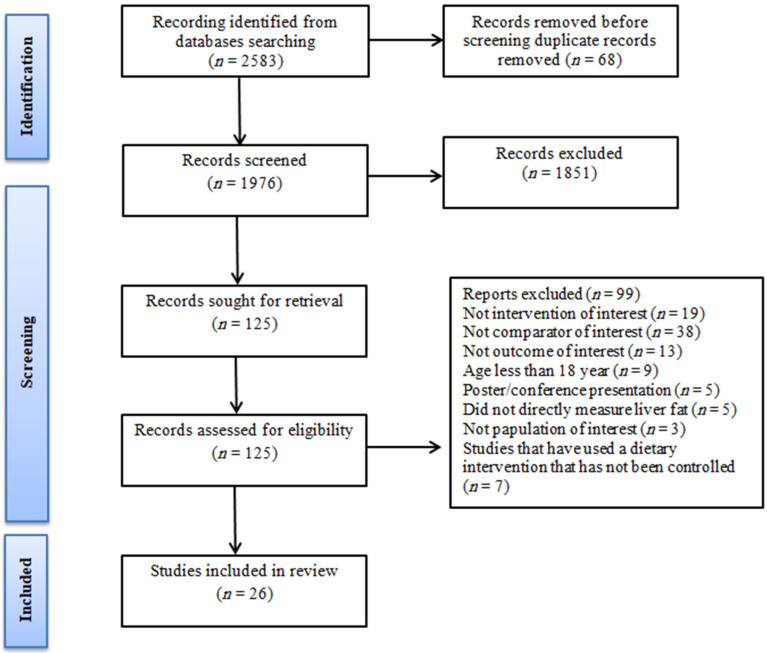
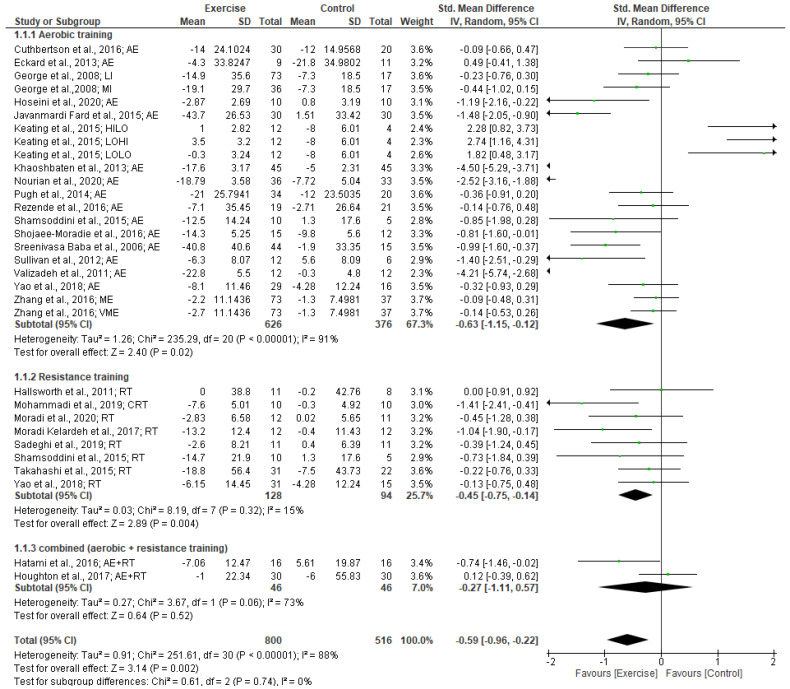
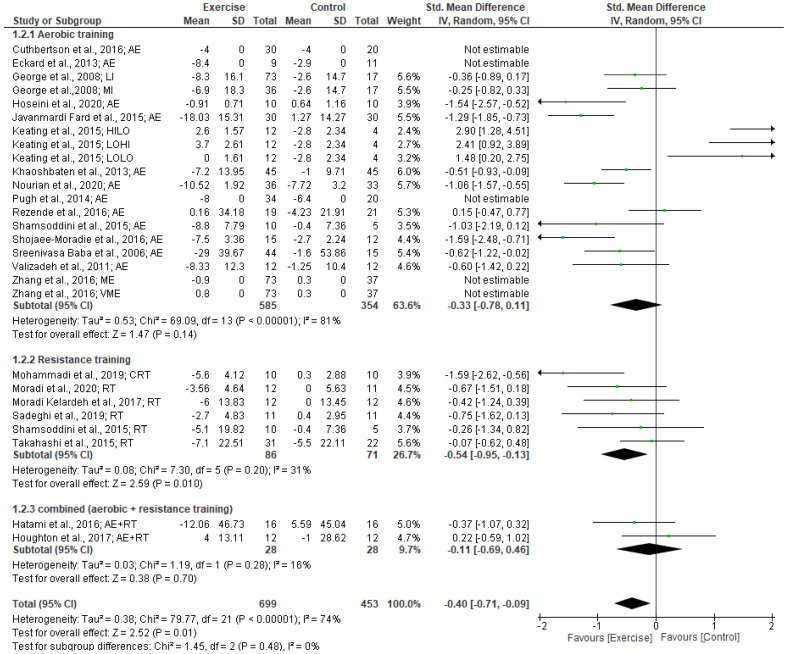
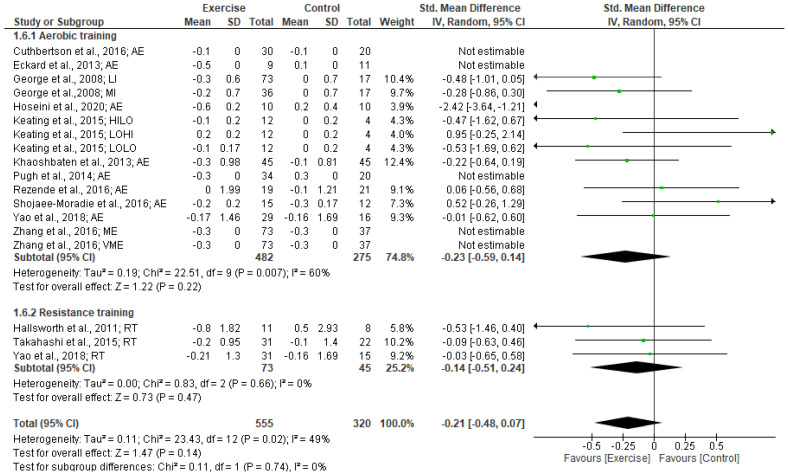
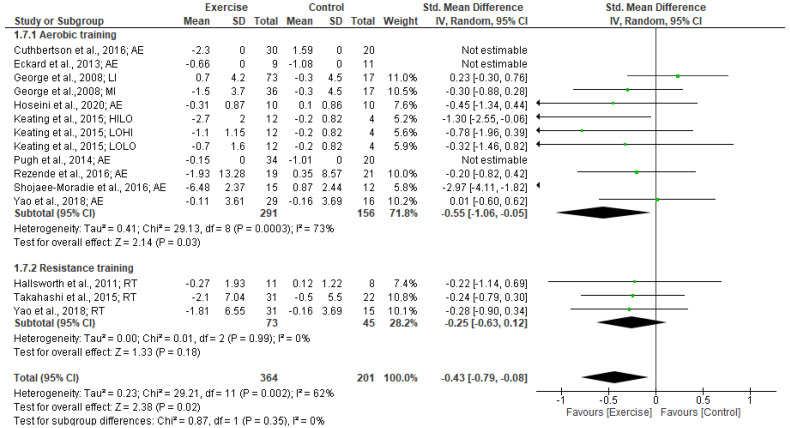
Background: Structured exercise as part of lifestyle modification plays an important role in the improvement of non-alcoholic fatty liver disease (NAFLD); however, its effectiveness has been shown to vary. This systematic review with meta-analysis investigated the effects of exercise on liver function and insulin resistance markers in patients with NAFLD. Methods: Six electronic databases were searched using terms related to exercise and NAFLD up to March 2022. Data were analyzed using a random-effects model to estimate the standardized mean difference (SMD) and 95% confidence interval. Results: The systematic search identified 2583 articles, of which a total of 26 studies met the inclusion criteria and were eligible. Exercise training had a moderate effect on reducing ALT (SMD: −0.59, p = 0.01) and small effects on reducing AST (SMD: −0.40, p = 0.01) and insulin (SMD: −0.43, p = 0.02). Significant reductions in ALT were found following aerobic training (SMD: −0.63, p < 0.01) and resistance training (SMD: −0.45, p < 0.001). Moreover, reductions in AST were found following resistance training (SMD: −0.54, p = 0.001), but not after aerobic training and combined training. However, reductions in insulin were found following aerobic training (SMD: −0.55, p = 0.03). Exercise interventions for <12 weeks compared to ≥12 weeks were more effective in reducing FBG and HOMA-IR, while interventions for ≥12 weeks compared to <12 weeks were more effective in reducing ALT and AST levels. Conclusions: Our findings support the effectiveness of exercise in improving liver function markers but not in blood glucose control in NAFLD patients. Additional studies are needed to determine the exercise prescription to maximize health in these patients.
Overview
The claims and statistics of this paper haven’t been checked yet.
Free: it reads the open-access text and checks the first 5 claims that cite a source we can check. Create a free account to check every claim.
Integrity signals
Registry
Cites
Statistics
Figures
Verification
Claims the paper makes
The claims and statistics of this paper haven’t been checked yet.
Free: it reads the open-access text and checks the first 5 claims that cite a source we can check. Create a free account to check every claim.
Claims other papers make about this one
Each is checked against this paper’s own text: does it say what the citing paper says it does?
The source backs part of the claim, not all of it — or backs it for a different population, condition or comparison.
In the citing paper
“The significant reduction in liver fat percentage observed with aerobic exercise may be attributed to enhanced fat oxidation and improved hepatic insulin sensitivity [100, 101].”
From Effects of Mediterranean diet, exercise, and their combination on body composition and liver outcomes in metabolic dysfunction-associated steatotic liver disease: a systematic review and meta-analysis of randomized controlled trials (2025) · cites this paper as [101]
Experimental — accuracy not yet measuredThe source backs part of the claim, not all of it — or backs it for a different population, condition or comparison.
In the citing paper
“This effect on ALT aligns with previous findings, suggesting that resistance training may improve hepatic enzyme levels through enhanced insulin sensitivity and reduced hepatic fat accumulation [101].”
From Effects of Mediterranean diet, exercise, and their combination on body composition and liver outcomes in metabolic dysfunction-associated steatotic liver disease: a systematic review and meta-analysis of randomized controlled trials (2025) · cites this paper as [101]
Experimental — accuracy not yet measured
Self-check
Percentages, sums and reported differences re-computed from the paper’s own numbers.
The self-check needs the paper’s full text.
Citations
Cites
Measuring inconsistency in meta-analyses
Higgins, J. P. T., Thompson, S. G., Deeks, J. J., & Altman, D. G. (2003) · BMJ · doi:10.1136/bmj.327.7414.557 · Cited by 63,139 · cited 2×
“If standard errors were reported, these values were converted to SD [21].”
MethodBias in meta-analysis detected by a simple, graphical test
Egger, M., Smith, G. D., Schneider, M., & Minder, C. (1997) · BMJ · doi:10.1136/bmj.315.7109.629 · Cited by 56,722
Statistical Power Analysis for the Behavioral Sciences
Cohen, J. (2013) · doi:10.4324/9780203771587 · Cited by 25,373
The PRISMA 2020 statement: an updated guideline for reporting systematic reviews
Page, M. J., McKenzie, J. E., Bossuyt, P. M., Boutron, I., Hoffmann, T. C., Mulrow, C. D., Shamseer, L., Tetzlaff, J. M., Akl, E. A., Brennan, S. E., et al. (2021) · Systematic Reviews · doi:10.1186/s13643-021-01626-4 · Cited by 13,874 · cited 2×
“2023, 12, 3011 16 of 19 Supplementary Materials: The following supporting information can be downloaded at: https://www.mdpi.com/article/10.3390/jcm12083011/s1, Figure S1: Funnel plot for ALT levels; Figure S2: Funnel plot for AST levels; Figure S3: Funnel plot for FBG levels; Figure S4: Funnel plot for insulin; Figur…”
MethodInfluentialBorenstein, M., Hedges, L. V., Higgins, J. P. T., & Rothstein, H. R. (2021) · doi:10.1002/9781119558378 · Cited by 9,799
Global burden of NAFLD and NASH: trends, predictions, risk factors and prevention
Younossi, Z., Anstee, Q. M., Marietti, M., Hardy, T., Henry, L., Eslam, M., George, J., & Bugianesi, E. (2018) · Nature Reviews Gastroenterology & Hepatology · doi:10.1038/nrgastro.2017.109 · Cited by 5,249 · cited 1×
“The disease affects almost 25% of the world population [7] and 23% of European citizens [8].”
BackgroundEASL–EASD–EASO Clinical Practice Guidelines for the management of non-alcoholic fatty liver disease
(2016) · Journal of Hepatology · doi:10.1016/j.jhep.2015.11.004 · Cited by 4,836
Boulé, N. G., Haddad, E., Kenny, G. P., Wells, G. A., & Sigal, R. J. (2001) · JAMA · doi:10.1001/jama.286.10.1218 · Cited by 1,889
KANALEY, J. A., COLBERG, S. R., CORCORAN, M. H., MALIN, S. K., RODRIGUEZ, N. R., CRESPO, C. J., KIRWAN, J. P., & ZIERATH, J. R. (2022) · Medicine & Science in Sports & Exercise · doi:10.1249/mss.0000000000002800 · Cited by 931 · cited 1×
“Physical activity is consistently reported to be as effective as weight loss, if not more so, for T2D prevention [61].”
BackgroundMelsen, W. G., Bootsma, M. C. J., Rovers, M. M., & Bonten, M. J. M. (2014) · Clinical Microbiology and Infection · doi:10.1111/1469-0691.12494 · Cited by 776 · cited 1×
“However, even with the strictest selection criteria for study inclusion, it is challenging to avoid some heterogeneity [67].”
BackgroundA Global View of the Interplay between Non-Alcoholic Fatty Liver Disease and Diabetes
Stefan, N., & Cusi, K. (2022) · The Lancet Diabetes & Endocrinology · doi:10.1016/s2213-8587(22)00003-1 · Cited by 593 · cited 3×
“Engaging in adequate levels of physical activity plays a protective role against the emergence of T2DM, central (abdominal) obesity, and other risk factors related to NAFLD (including high blood pressure and dyslipidemia) [14].”
BackgroundLeoni, S., Tovoli, F., Napoli, L., Serio, I., Ferri, S., & Bolondi, L. (2018) · World Journal of Gastroenterology · doi:10.3748/wjg.v24.i30.3361 · Cited by 539 · cited 1×
“Studies indicate that NAFLD is associated with obesity, insulin resistance, T2DM, and dyslipidemia, and its prevalence throughout the world appears to be increasing [11].”
BackgroundExercise and non-alcoholic fatty liver disease: A systematic review and meta-analysis
Keating, S. E., Hackett, D. A., George, J., & Johnson, N. A. (2012) · Journal of Hepatology · doi:10.1016/j.jhep.2012.02.023 · Cited by 537
Self-citationHallsworth, K., Fattakhova, G., Hollingsworth, K. G., Thoma, C., Moore, S., Taylor, R., Day, C. P., & Trenell, M. I. (2011) · Gut · doi:10.1136/gut.2011.242073 · Cited by 529 · cited 2×
“reported that insulin sensitivity, circulating lipids, and energy balance may be affected by mechanistic changes in liver fat after exercise training [43].”
BackgroundMethodThoma, C., Day, C. P., & Trenell, M. I. (2012) · Journal of Hepatology · doi:10.1016/j.jhep.2011.06.010 · Cited by 523 · cited 1×
“is no pharmacological treatment for NAFLD, therefore the initial management focuses on lifestyle and dietary changes [12,13].”
BackgroundSmart, N. A., Waldron, M., Ismail, H., Giallauria, F., Vigorito, C., Cornelissen, V., & Dieberg, G. (2015) · International Journal of Evidence-Based Healthcare · doi:10.1097/xeb.0000000000000020 · Cited by 499 · cited 1×
“The methodological quality of the studies were examined independently based on a fifteen-point scale, Tool for the Assessment of Study Quality and Reporting in Exercise (TESTEX), which is a validated tool for evaluating the quality (five points maximum) and reporting (10 points maximum) of exercise training studies [2…”
MethodSchindhelm, R. K., Diamant, M., Dekker, J. M., Tushuizen, M. E., Teerlink, T., & Heine, R. J. (2006) · Diabetes/Metabolism Research and Reviews · doi:10.1002/dmrr.666 · Cited by 375 · cited 3×
“Engaging in adequate levels of physical activity plays a protective role against the emergence of T2DM, central (abdominal) obesity, and other risk factors related to NAFLD (including high blood pressure and dyslipidemia) [14].”
BackgroundEffects of Exercise on Cardiovascular Risk Factors in Type 2 Diabetes
Chudyk, A., & Petrella, R. J. (2011) · Diabetes Care · doi:10.2337/dc10-1881 · Cited by 331
Independent effects of physical activity in patients with nonalcoholic fatty liver disease #
St. George, A., Bauman, A., Johnston, A., Farrell, G., Chey, T., & George, J. (2009) · Hepatology · doi:10.1002/hep.22940 · Cited by 318 · cited 1×
“NAFLD is among the most prevalent forms of chronic hepatic diseases in the world and is the main reason for adults visiting hepatology clinics [5,6].”
BackgroundEffect of aerobic exercise training dose on liver fat and visceral adiposity
Keating, S. E., Hackett, D. A., Parker, H. M., O’Connor, H. T., Gerofi, J. A., Sainsbury, A., Baker, M. K., Chuter, V. H., Caterson, I. D., George, J., et al. (2015) · Journal of Hepatology · doi:10.1016/j.jhep.2015.02.022 · Cited by 313 · cited 2×
“, 2015 [46] Australia NAFLD 36 (12) 33.”
MethodSelf-citationSullivan, S., Kirk, E. P., Mittendorfer, B., Patterson, B. W., & Klein, S. (2012) · Hepatology · doi:10.1002/hep.25548 · Cited by 301 · cited 1×
“, 2012 [50] AE CON Brisk walk/walking on a treadmill 5/7 16 30–60 min AE group: 45–55% VO2peak CON group: No intervention”
MethodNon-alcoholic fatty liver disease
Smith, B. W., & Adams, L. A. (2011) · Critical Reviews in Clinical Laboratory Sciences · doi:10.3109/10408363.2011.596521 · Cited by 285 · cited 1×
“The disease affects almost 25% of the world population [7] and 23% of European citizens [8].”
BackgroundZhang, H.-J., He, J., Pan, L.-L., Ma, Z.-M., Han, C.-K., Chen, C.-S., Chen, Z., Han, H.-W., Chen, S., Sun, Q., et al. (2016) · JAMA Internal Medicine · doi:10.1001/jamainternmed.2016.3202 · Cited by 276 · cited 1×
“, 2016 [41] ME VME CON Jogged on a treadmill and gradually increased exercise intensity 5/7 48 30 min ME group: 65–80% HRmax CON group: No intervention”
Katsagoni, C. N., Georgoulis, M., Papatheodoridis, G. V., Panagiotakos, D. B., & Kontogianni, M. D. (2017) · Metabolism · doi:10.1016/j.metabol.2016.12.006 · Cited by 270 · cited 1×
“It has been shown that moderate intensity aerobic exercise with higher volume (above 180 min per week) is more effective in reducing intrahepatic triglyceride than moderate intensity aerobic exercise with low volume (volume 120 to 180 min per week) [57].”
BackgroundSecondary causes of nonalcoholic fatty liver disease
Kneeman, J. M., Misdraji, J., & Corey, K. E. (2012) · Therapeutic Advances in Gastroenterology · doi:10.1177/1756283x11430859 · Cited by 268 · cited 1×
“Non-alcoholic fatty liver disease (NAFLD) is a prevalent hepatic disorder that is accompanied by the concentration of lipids in hepatocytes and usually arises when the concentration of fats in the liver exceeds 5% of the organ weight [1,2].”
BackgroundRice, B., Janssen, I., Hudson, R., & Ross, R. (1999) · Diabetes Care · doi:10.2337/diacare.22.5.684 · Cited by 231 · cited 1×
“While diet-induced weight loss as well as exercise alone is associated with improvements in insulin sensitivity and glucose tolerance, a combination of diet and exercise is expected to promote the best results [60].”
BackgroundBABA, C. S., ALEXANDER, G., KALYANI, B., PANDEY, R., RASTOGI, S., PANDEY, A., & CHOUDHURI, G. (2006) · Journal of Gastroenterology and Hepatology · doi:10.1111/j.1440-1746.2005.04233.x · Cited by 226 · cited 2×
“…plus resistance exercise or outdoor aerobic activities and resistance exercise 4–5/7 16 20–60 min AE group: 40–60% HRmax CON group: No intervention Sreenivasa Baba et al., 2006 [29] AE CON Brisk walking/jogging or rhythmic aerobic exercises set to beat music 5/7 12 20–45 min AE group: 60–70%…”
BackgroundKirwan, J. P., Solomon, T. P. J., Wojta, D. M., Staten, M. A., & Holloszy, J. O. (2009) · American Journal of Physiology-Endocrinology and Metabolism · doi:10.1152/ajpendo.00210.2009 · Cited by 218 · cited 1×
“Vigorous aerobic exercise training for 7 days increased insulin-stimulated glucose disposal and suppression of hepatic glucose production, leading to improvement of glycemia without lowering body weight [66].”
BackgroundHoughton, D., Thoma, C., Hallsworth, K., Cassidy, S., Hardy, T., Burt, A. D., Tiniakos, D., Hollingsworth, K. G., Taylor, R., Day, C. P., et al. (2017) · Clinical Gastroenterology and Hepatology · doi:10.1016/j.cgh.2016.07.031 · Cited by 209
Phielix, E., Meex, R., Moonen-Kornips, E., Hesselink, M. K. C., & Schrauwen, P. (2010) · Diabetologia · doi:10.1007/s00125-010-1764-2 · Cited by 206 · cited 8×
“Over the past few years, NAFLD has attracted a lot of attention as a risk factor for the development of insulin resistance (IR) and type 2 diabetes mellitus (T2DM) [9,10].”
BackgroundInfluentialDo Non-Responders to Exercise Exist—and If So, What Should We Do About Them?
Pickering, C., & Kiely, J. (2019) · Sports Medicine · doi:10.1007/s40279-018-01041-1 · Cited by 165
Exercise training response heterogeneity: physiological and molecular insights.
Sparks, L. M. (2017) · Diabetologia · doi:10.1007/s00125-017-4461-6 · Cited by 160 · cited 1×
“, responders versus non-responders) [68,69].”
Eckard, C., Cole, R., Lockwood, J., Torres, D. M., Williams, C. D., Shaw, J. C., & Harrison, S. A. (2013) · Therapeutic Advances in Gastroenterology · doi:10.1177/1756283x13484078 · Cited by 155 · cited 1×
“, 2013 [37] AE CON Participants followed an 18-step program, including warm up, exercise bicycle, walking on a treadmill, various arm and leg strength exercises, and cool down, with gradual ramp up over the 6 months 4–7/7 24 20–60 min AE group: Moderate exercise CON group: No intervention”
MethodWinnick, J. J., Sherman, W. M., Habash, D. L., Stout, M. B., Failla, M. L., Belury, M. A., & Schuster, D. P. (2008) · The Journal of Clinical Endocrinology & Metabolism · doi:10.1210/jc.2007-1524 · Cited by 153 · cited 1×
“In patients with obesity and T2D, short-term aerobic exercise increased peripheral insulin sensitivity more than hepatic insulin sensitivity and thus enhanced whole-body insulin action [65].”
BackgroundHealth‐related fitness and physical activity in patients with nonalcoholic fatty liver disease†‡
Krasnoff, J. B., Painter, P. L., Wallace, J. P., Bass, N. M., & Merriman, R. B. (2008) · Hepatology · doi:10.1002/hep.22137 · Cited by 148 · cited 1×
“NAFLD is among the most prevalent forms of chronic hepatic diseases in the world and is the main reason for adults visiting hepatology clinics [5,6].”
BackgroundSmart, N. A., King, N., McFarlane, J. R., Graham, P. L., & Dieberg, G. (2018) · British Journal of Sports Medicine · doi:10.1136/bjsports-2016-096197 · Cited by 140 · cited 11×
“While further research is required to explore whether the degree of “fatness” impacts the effectiveness of exercise on clinical markers of NAFLD, it has been recognized that weight loss is associated with important pathophysiological changes, specifically increased insulin sensitivity, decreased fatty acids in the liv…”
BackgroundResultInfluentialRole of diet and lifestyle changes in nonalcoholic fatty liver disease.
Nseir, W., Hellou, E., & Assy, N. (2014) · PubMed · doi:10.3748/wjg.v20.i28.9338 · Cited by 139 · cited 1×
“The disorder ranges from steatosis and non-alcoholic steatohepatitis (NASH) to advanced fibrosis and cirrhosis [3,4].”
BackgroundCuthbertson, D. J., Shojaee-Moradie, F., Sprung, V. S., Jones, H., Pugh, C. J. A., Richardson, P., Kemp, G. J., Barrett, M., Jackson, N. C., Thomas, E. L., et al. (2016) · Clinical Science · doi:10.1042/cs20150447 · Cited by 138 · cited 1×
“, 2016 [42] AE CON Aerobic exercise (treadmill, cross-trainer, bike ergometer, rower) 3–5/7 12 30–45 min AE group: 30–60% HRmax CON group: No intervention”
BackgroundShamsoddini, A., Sobhani, V., Ghamar Chehreh, M. E., Alavian, S. M., & Zaree, A. (2015) · Hepatitis Monthly · doi:10.5812/hepatmon.31434 · Cited by 126 · cited 2×
“Fifteen studies directly examined the effects of aerobic training [28–30,36–38,40–42,45–50], six directly examined the effects of resistance training [32–34,39,43,51], two studies directly investigated the effects of aerobic training versus resistance training [31,52], two studies directly investigated the effects of…”
BackgroundMethodNon-alcoholic fatty liver disease and cardiovascular risk
Brea, Á., & Puzo, J. (2012) · International Journal of Cardiology · doi:10.1016/j.ijcard.2012.09.085 · Cited by 123 · cited 1×
“While further research is required to explore whether the degree of “fatness” impacts the effectiveness of exercise on clinical markers of NAFLD, it has been recognized that weight loss is associated with important pathophysiological changes, specifically increased insulin sensitivity, decreased fatty acids in the liv…”
BackgroundSt. George, A., Bauman, A., Johnston, A., Farrell, G., Chey, T., & George, J. (2009) · Journal of Gastroenterology and Hepatology · doi:10.1111/j.1440-1746.2008.05694.x · Cited by 117 · cited 2×
“, 2008 [36] LI MI CON Participants were encouraged to increase both planned and incidental moderate-intensity PA to achieve at least 150 min/week for general health and to target more than 200 min/week for weight loss 3/7 6/7 4 10 45–60 min LI group: 35–40% VO2max MI group: 70–75% VO2max CON group: No intervention”
BackgroundExercise training reverses endothelial dysfunction in nonalcoholic fatty liver disease
Pugh, C. J. A., Sprung, V. S., Kemp, G. J., Richardson, P., Shojaee-Moradie, F., Umpleby, A. M., Green, D. J., Cable, N. T., Jones, H., & Cuthbertson, D. J. (2014) · American Journal of Physiology-Heart and Circulatory Physiology · doi:10.1152/ajpheart.00306.2014 · Cited by 116 · cited 1×
“, 2014 [49] AE CON Exercise training comprised a combination of treadmill and cycle ergometer-based exercise, which progressively increased in both intensity and duration throughout the course of the intervention 3–5/7 12 30–45 min AE group: 30–60 HRmax CON group: No intervention”
MethodShojaee-Moradie, F., Cuthbertson, D. J., Barrett, M., Jackson, N. C., Herring, R., Thomas, E. L., Bell, J., Kemp, G. J., Wright, J., & Umpleby, A. M. (2016) · The Journal of Clinical Endocrinology & Metabolism · doi:10.1210/jc.2016-2353 · Cited by 116 · cited 2×
“…curl, calf raise, leg press, leg extension, lat pull down, and sit-ups 3/7 8 45 min AE group: 60–75% HRmax RT group: 50–70% 1RM CON group: No intervention Shojaee-Moradie et al., 2016 [30] AE CON Types of activities were either gym-based aerobic plus resistance exercise or outdoor aerobic…”
BackgroundAbdelbasset, W. K., Tantawy, S. A., Kamel, D. M., Alqahtani, B. A., & Soliman, G. S. (2019) · Medicine · doi:10.1097/md.0000000000014918 · Cited by 109 · cited 4×
“, aerobic and resistance training) during sessions [35,44], and one study directly investigated the effects of interval training [26].”
BackgroundMethodInfluentialWojtyniak, J., Britz, H., Selzer, D., Schwab, M., & Lehr, T. (2020) · CPT: Pharmacometrics & Systems Pharmacology · doi:10.1002/psp4.12511 · Cited by 108 · cited 1×
“Any data presented in graphs were extracted using web-based software (GetData Graph Digitizer) [22].”
MethodMuthiah, M. D., Cheng Han, N., & Sanyal, A. J. (2022) · Diabetes, Obesity and Metabolism · doi:10.1111/dom.14521 · Cited by 108 · cited 1×
“Non-alcoholic fatty liver disease (NAFLD) is a prevalent hepatic disorder that is accompanied by the concentration of lipids in hepatocytes and usually arises when the concentration of fats in the liver exceeds 5% of the organ weight [1,2].”
BackgroundBabu, A. F., Csader, S., Lok, J., Gómez-Gallego, C., Hanhineva, K., El-Nezami, H., & Schwab, U. (2021) · Nutrients · doi:10.3390/nu13093135 · Cited by 88 · cited 2×
“is no pharmacological treatment for NAFLD, therefore the initial management focuses on lifestyle and dietary changes [12,13].”
BackgroundSabag, A., Barr, L., Armour, M., Armstrong, A., Baker, C. J., Twigg, S. M., Chang, D., Hackett, D. A., Keating, S. E., George, J., et al. (2022) · The Journal of Clinical Endocrinology & Metabolism · doi:10.1210/clinem/dgab795 · Cited by 88 · cited 1×
“However, it should be noted that there is evidence that high-intensity interval training (HIIT) is an efficacious exercise type for improvements in liver fat [70].”
BackgroundSelf-citationExercise training improves cutaneous microvascular function in nonalcoholic fatty liver disease
Pugh, C. J. A., Cuthbertson, D. J., Sprung, V. S., Kemp, G. J., Richardson, P., Margot Umpleby, A., Green, D. J., Timothy Cable, N., & Jones, H. (2013) · American Journal of Physiology-Endocrinology and Metabolism · doi:10.1152/ajpendo.00055.2013 · Cited by 72
Association between physical activity and risk of nonalcoholic fatty liver disease: a meta-analysis
Qiu, S., Cai, X., Sun, Z., Li, L., Zügel, M., Steinacker, J. M., & Schümann, U. (2017) · Therapeutic Advances in Gastroenterology · doi:10.1177/1756283x17725977 · Cited by 70 · cited 1×
“Engaging in adequate levels of physical activity plays a protective role against the emergence of T2DM, central (abdominal) obesity, and other risk factors related to NAFLD (including high blood pressure and dyslipidemia) [14].”
BackgroundWang, S.-T., Zheng, J., Peng, H.-W., Cai, X.-L., Pan, X.-T., Li, H.-Q., Hong, Q.-Z., & Peng, X.-E. (2020) · BMC Gastroenterology · doi:10.1186/s12876-020-01204-3 · Cited by 68 · cited 10×
“While further research is required to explore whether the degree of “fatness” impacts the effectiveness of exercise on clinical markers of NAFLD, it has been recognized that weight loss is associated with important pathophysiological changes, specifically increased insulin sensitivity, decreased fatty acids in the liv…”
BackgroundInfluentialMoradi Kelardeh, B., Rahmati-Ahmadabad, S., Farzanegi, P., Helalizadeh, M., & Azarbayjani, M.-A. (2020) · Journal of Bodywork and Movement Therapies · doi:10.1016/j.jbmt.2020.02.021 · Cited by 67 · cited 1×
“, 2020 [39] RT CON Knee extension, bench press, incline bench press, seated row, dead lift, pulley crunches, lat pull-downs, calf raise, hamstring curl, press behind neck, upright row, arm curl 3/7 12 60–70 min RT group: 1–4 sets/2–20 reps at 40–95% 1RM CON group: No intervention”
Rezende, R. E. F., Duarte, S. M. B., Stefano, J. T., Roschel, H., Gualano, B., de Sá Pinto, A. L., Vezozzo, D. C. P., Carrilho, F. J., & Oliveira, C. P. (2016) · Menopause · doi:10.1097/gme.0000000000000647 · Cited by 62 · cited 1×
“, 2016 [40] AE CON Aerobic exercise on treadmill 2/7 24 120 min AE group: Increased from VAT up to 10% below RCP CON group: No intervention”
MethodSimple resistance exercise helps patients with non-alcoholic fatty liver disease
Takahashi, A., Abe, K., Usami, K., Imaizumi, H., Hayashi, M., Okai, K., Kanno, Y., Tanji, N., Watanabe, H., & Ohira, H. (2015) · International Journal of Sports Medicine · doi:10.1055/s-0035-1549853 · Cited by 53 · cited 1×
“, 2015 [51] RT CON Resistance exercise comprising push-ups and squats at the beginning of the study.”
Xiong, Y., Peng, Q., Cao, C., Xu, Z., & Zhang, B. (2021) · International Journal of Environmental Research and Public Health · doi:10.3390/ijerph18063242 · Cited by 53 · cited 1×
“including 1250 NAFLD patients showed that aerobic exercise led to reductions in more metabolic and liver function markers compared to resistance training and high-intensity [18].”
BackgroundNourian, M., Askari, G., Golshiri, P., Miraghajani, M., Shokri, S., & Arab, A. (2020) · Clinical Nutrition ESPEN · doi:10.1016/j.clnesp.2020.04.004 · Cited by 36 · cited 1×
“, 2020 [48] AE CON The educational content of each session was presented to participants by using a short lecture, slide show, pamphlet, and discussion.”
MethodHoseini, Z., Behpoor, N., & Hoseini, R. (2020) · Hepatitis Monthly · doi:10.5812/hepatmon.96437 · Cited by 35 · cited 1×
“, 2020 [38] AE CON Walking and jogging/running 3/7 8 20–40 min AE group: 60–75%, HRmax CON group: No intervention”
BackgroundGonzález, A., Valero‐Breton, M., Huerta-Salgado, C., Achiardi, O. A., Simón, F., & Cabello‐Verrugio, C. (2021) · European Journal of Translational Myology · doi:10.4081/ejtm.2021.9630 · Cited by 31 · cited 1×
“The disorder ranges from steatosis and non-alcoholic steatohepatitis (NASH) to advanced fibrosis and cirrhosis [3,4].”
BackgroundFard, S. J., Ghodsbin, F., Kaviani, M. J., Jahanbin, I., & Bagheri, Z. (2016) · PubMed Central · Cited by 25
Khaoshbaten, M., Gholami, N., Sokhtehzari, S., Monazami, A. H., & Nejad, M. R. (2013) · Gastroenterology and hepatology from bed to bench. · Cited by 18
Mohammadi, F., Ghalavand, A., & Delaramnasab, M. (2019) · Jundishapur Journal of Chronic Disease Care · doi:10.5812/jjcdc.90213 · Cited by 17 · cited 1×
“, 2019 [34] CRT CON The resistance training included three circles with nine stations per circle 3/7 12 30–45 min CRT group: 3 sets/10–20 reps at 40–80% 1RM CON group: No intervention”
Rahimi, G. R. M., & Hosseini, S. R. A. (2022) · Biological Research For Nursing · doi:10.1177/10998004211068026 · Cited by 17 · cited 1×
“The results of this previous meta-analysis showed that aerobic exercise combined with diet led to a significant improvement in not only liver enzymes but also insulin sensitivity [59].”
ResultGonzález, A., Valero‐Breton, M., Huerta-Salgado, C., Achiardi, O. A., Simón, F., & Cabello‐Verrugio, C. (2021) · European Journal of Translational Myology · doi:10.4081/ejtm.2020.9630 · Cited by 17
Valizadeh, R., Nikbakht, M., Davoodi, M., & Khodadoost, M. (2011) · Procedia - Social and Behavioral Sciences · doi:10.1016/j.sbspro.2011.04.300 · Cited by 12 · cited 3×
“, 2011 [28] AE CON Walking/running 5/7 8 45 min AE group: 50–70% VO2max CON group: No intervention”
InfluentialZhou, B., Huang, G., & Ma, F. (2021) · doi:10.37766/inplasy2021.8.0062 · Cited by 10
Zhou, B.-J., Huang, G., Wang, W., Zhu, L.-H., Deng, Y.-X., He, Y.-Y., & Ma, F.-H. (2021) · PubMed · doi:10.26355/eurrev_202112_27615 · Cited by 10 · cited 1×
“However, it should be noted that for the previous meta-analysis, no significant differences between the exercise modalities were found for the hepatic enzymes [19].”
ResultKelardeh, B. M., Keshavarz, S., & Karimi, M. (2017) · DOAJ (DOAJ: Directory of Open Access Journals) · Cited by 6
Nikroo, H., Nematy, M., Sima, H. R., & Hosseini, S. A. (2011) · Journal of North Khorasan University of Medical Sciences · doi:10.29252/jnkums.3.3.91 · Cited by 6 · cited 1×
“The mechanism attributed to the significant decreases in ALT and AST enzymes following exercise includes increased sensitivity of insulin, increased liver oxidation, decreased activity and inhibition of lipogenic enzymes, and thus reduced liver fat [58].”
BackgroundGuo, C. (2015) · SOJ Immunology · doi:10.15226/2372-0948/3/5/00143 · Cited by 5
Hatami, M. T., & Eftekhari, E. (2016) · Biotechnology and Health Sciences · doi:10.17795/bhs-36162 · Cited by 3 · cited 3×
“, 2016 [35] Iran NAFLD 16 (16) 28 M 32.”
BackgroundMethodSadeghi, A., Pourrazi, H., & Yazdi, H. H. D. (2019) · Bimonthly Journal of Hormozgan University of Medical Sciences · doi:10.5812/hmj.97644 · Cited by 2 · cited 1×
“, 2019 [32] RT CON These exercises include TRX plank on elbows, TRX T deltoid fly, TRX chest press, TRX high row, TRX triceps press, TRX biceps curl, TRX squat, and TRX hip press 3/7 8 60 min RT group: 3 sets/8 reps at 70–100% 1RM CON group: No intervention”
Method
Research works printed but not linked: 1
- Yao J. Meng M. Yang S. Li F. Anderson R.M. Liu C. Liu L. Yuan X. Fang Z. Lou Q. Effect of aerobic and resistance exercise on liver enzyme and blood lipids in Chinese patients with nonalcoholic fatty liver disease: A randomized controlled trial Int. J. Clin. Exp. Med. 2018 11 4867 4874
Cited by
Keating, S. E., Sabag, A., Hallsworth, K., Hickman, I. J., Macdonald, G. A., Stine, J. G., George, J., & Johnson, N. A. (2023) · Sports Medicine · doi:10.1007/s40279-023-01918-w · Cited by 119
“…within-group benefits for exercise on hepatic insulin sensitivity [69], the efficacy for improving glycaemic control [54, 65, 73, 75, 79, 80] and the Homeostatic Model Assessment for Insulin Resistance (HOMA-IR) [25, 50, 54, 59, 60, 66, 67, 70, 76, 123] in people with MAFLD is…”
Arita, V. A., Cabezas, M. C., Hernández Vargas, J. A., Trujillo-Cáceres, S. J., Mendez Pernicone, N., Bridge, L. A., Raeisi-Dehkordi, H., Dietvorst, C. A. W., Dekker, R., Uriza-Pinzón, J. P., et al. (2025) · BMC Medicine · doi:10.1186/s12916-025-04320-7 · Cited by 43
Grinshpan, L. S., Haim, Y. E., Wajcman, D. I., Isakov, N. F., Nov, Y., Webb, M., Shibolet, O., Kariv, R., & Zelber‐Sagi, S. (2024) · Hepatology Communications · doi:10.1097/hc9.0000000000000583 · Cited by 29
“[3] Many studies have tested the role of different lifestyle factors in the prevention and treatment of MASLD, suggesting moderate physical activity, [4] nonsmoking, [5] maintenance of normal body weight, and adherence to a healthy diet [6,7] as key protective factors.”
BackgroundPhysical exercise in liver diseases
Zhang, Y., Cao, C., Li, C., Witt, R. G., Huang, H., Tsung, A., & Zhang, H. (2024) · Hepatology · doi:10.1097/hep.0000000000000941 · Cited by 26
“[107] Interestingly, an RCT indicated that combining moderate-intensity aerobic exercise (60 min per day, 5 times per week for 12 wks) with alternate-day fasting has been shown to reduce insulin resistance in adults with MASLD.”
Huang, M., Yang, J., Wang, Y., & Wu, J. (2024) · Frontiers in Physiology · doi:10.3389/fphys.2024.1428723 · Cited by 14
Metadata
- Authors
- Hejazi, K., & Hackett, D.
- Affiliations
- Hakim Sabzevari University (IR)
- The University of Sydney (AU)
- Corresponding author
- Hejazi, Keyvan
- Venue
- Journal of Clinical Medicine
- Publisher
- MDPI AG
- Published
- 2023-04-20
- Volume
- 12
- Issue
- 8
- Pages
- 3011
- ISSN
- 2077-0383 (ISSN-L)
- PMC
- PMC10143548
- OpenAlex
- W4366772864
- Semantic Scholar
- 3a65867ab7112337b1c88f6c1010312de666185d
- Cited by
- 29
- References
- 71
- Citations by year
- 2026: 6 · 2025: 16 · 2024: 5 · 2023: 2
- FWCI
- 1.13
- Type
- journal article
- Language
- en
- Open access
- gold
- doi.org
- Licence
- Locations
- Journal of Clinical Medicine (publishedVersion, cc-by)
- PubMed Central (publishedVersion, cc-by)
- PubMed (publishedVersion)
- Topics
- Health Sciences › Medicine › Hepatology › Liver Disease Diagnosis and Treatment
- Health Sciences › Medicine › Public Health, Environmental and Occupational Health › Physical Activity and Health
- Health Sciences › Medicine › Endocrinology, Diabetes and Metabolism › Diabetes, Cardiovascular Risks, and Lipoproteins
- Keywords
- non-alcoholic fatty liver disease, exercise training, aerobic exercise, resistance training, liver function markers, alanine aminotransferase, aspartate aminotransferase, insulin resistance, HOMA-IR, fasting blood glucose, lifestyle modification
About these checks
Registry, retraction, Cites and statistics results are computed, not judged, with one exception: a printed reference that no index lists is read once by a model before it counts as a citation error. Claims are extracted by a model and kept only when their quote appears verbatim in the text; each cited source is then checked, with a model’s help, for whether it says what the claim relies on. Those verdicts can be wrong — read the claim’s quote and the cited source before relying on one.
Statistics and arithmetic are recomputed, not judged.
Confidence bands are shown only for fields calibrated on our annotated test set. None is calibrated yet, so no band is shown.
What counts as a claim ›How we measure confidence ›How we check this ›
Are you an author, or do you see a problem with this page? Request a review
Data sources
Bibliographic data: Semantic Scholar, OpenAlex, Crossref.
Contains information from the Semantic Scholar Academic Graph Datasets, made available under the ODC Attribution License (ODC-BY 1.0).
Semantic Scholar’s data is described in: Kinney, R., et al. (2023). The Semantic Scholar Open Data Platform. arXiv:2301.10140.
