

Explainable Deep Learning Models in Medical Image Analysis
Open accessThe DOI matches its Crossref record; 76 of the 77 references it cites were found in a registry or an index, and 1 are not checked yet.
Abstract
Deep learning methods have been very effective for a variety of medical diagnostic tasks and have even outperformed human experts on some of those. However, the black-box nature of the algorithms has restricted their clinical use. Recent explainability studies aim to show the features that influence the decision of a model the most. The majority of literature reviews of this area have focused on taxonomy, ethics, and the need for explanations. A review of the current applications of explainable deep learning for different medical imaging tasks is presented here. The various approaches, challenges for clinical deployment, and the areas requiring further research are discussed here from a practical standpoint of a deep learning researcher designing a system for the clinical end-users.
Overview
The claims and statistics of this paper haven’t been checked yet.
Free: it reads the open-access text and checks the first 5 claims that cite a source we can check. Create a free account to check every claim.
Integrity signals
Registry
Cites
Statistics
Figures

Verification
Claims the paper makes
The claims and statistics of this paper haven’t been checked yet.
Free: it reads the open-access text and checks the first 5 claims that cite a source we can check. Create a free account to check every claim.
Self-check
Percentages, sums and reported differences re-computed from the paper’s own numbers.
The self-check needs the paper’s full text.
Citations
Cites
Vaswani, A., Shazeer, N., Parmar, N., Uszkoreit, J., Jones, L., Gomez, A. N., Kaiser, L., & Polosukhin, I. (2017) · arXiv · doi:10.48550/arxiv.1706.03762 · Cited by 120,404 · cited 1×
“More details about attention mechanisms in neural networks is discussed in [51].”
BackgroundImageNet classification with deep convolutional neural networks
Krizhevsky, A., Sutskever, I., & Hinton, G. E. (2017) · Communications of the ACM · doi:10.1145/3065386 · Cited by 112,155 · cited 1×
“An earlier study for breast mass classification from mammograms [40] using two different CNNs - AlexNet [41] and GoogleNet [42] - employed saliency maps to visualize the image features.”
MethodU-Net: Convolutional Networks for Biomedical Image Segmentation
Ronneberger, O., Fischer, P., & Brox, T. (2015) · Lecture notes in computer science · doi:10.1007/978-3-319-24574-4_28 · Cited by 99,404
ImageNet: A large-scale hierarchical image database
Deng, J., Dong, W., Socher, R., Li, L.-J., Li, K., & Fei-Fei, L. (2009) · 2009 IEEE Conference on Computer Vision and Pattern Recognition · doi:10.1109/cvpr.2009.5206848 · Cited by 65,333 · cited 1×
“Both approaches are beneficial for medical imaging datasets which tend to be relatively smaller than computer vision benchmarks like ImageNet [33].”
BackgroundGoing deeper with convolutions
Szegedy, C., Liu, W., Jia, Y., Sermanet, P., Reed, S., Anguelov, D., Erhan, D., Vanhoucke, V., & Rabinovich, A. (2015) · 2015 IEEE Conference on Computer Vision and Pattern Recognition (CVPR) · doi:10.1109/cvpr.2015.7298594 · Cited by 48,562
(2008) · Journal of Machine Learning Research · Cited by 33,051
Grad-CAM: Visual Explanations from Deep Networks via Gradient-Based Localization
Selvaraju, R. R., Cogswell, M., Das, A., Vedantam, R., Parikh, D., & Batra, D. (2017) · 2017 IEEE International Conference on Computer Vision (ICCV) · doi:10.1109/iccv.2017.74 · Cited by 24,513
Visualizing and understanding convolutional networks
Zeiler, M. D., & Fergus, R. (2014) · Lecture Notes in Computer Science · doi:10.1007/978-3-319-10590-1_53 · Cited by 15,839 · cited 2×
“rey patch and hence occluding them from the system’s view. It can provide both positive and negative evidence by highlighting the responsible features. This technique was applied by Zeiler and Fergus [18] to the CNN for the image classification task. Occlusion is the benchmark for any attribution study as it is a simpl…”
MethodWold, S., Esbensen, K., & Geladi, P. (1987) · Chemometrics and Intelligent Laboratory Systems · doi:10.1016/0169-7439(87)80084-9 · Cited by 11,606 · cited 1×
“Principal component analysis (PCA) [12], t-Distributed Stochastic Neighbor Embedding (t-SNE) [13] are some common examples of these methods.”
MethodArrieta, A. B., Díaz-Rodríguez, N., Del Ser, J., Bennetot, A., Tabik, S., Barbado, A., García, S., Gil-López, S., Molina, D., Benjamins, R., et al. (2019) · arXiv · doi:10.48550/arxiv.1910.10045 · Cited by 11,321 · cited 2×
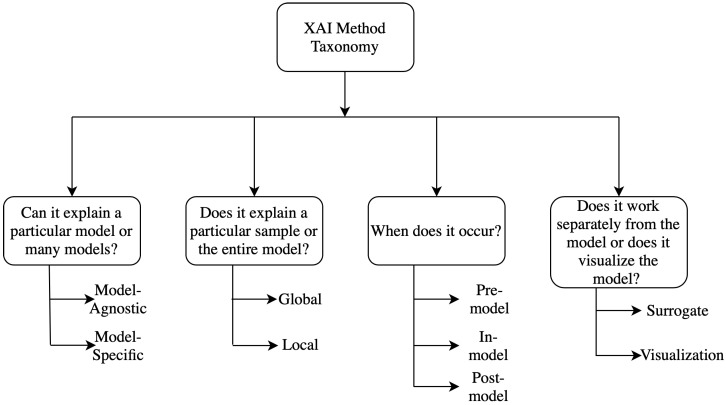
“Different kinds of taxonomies and classification methods are discussed briefly here and a detailed analysis of the taxonomies can be found in [8,9] and a flow chart for them is shown in 1.”
Background
Research works printed but not linked: 2
- El-Baz, A.S. (2020). Recent Advances in Deep Learning Applications for Retinal Diagnosis using OCT. State of the Art in Neural Networks, Elsevier. in press.
- Goodfellow, I.J., Shlens, J., and Szegedy, C. (2014). Explaining and harnessing adversarial examples. arXiv.
Cited by
Items 501–600 of 772
Yi, E.-G., Shim, M., Lee, S., & Hwang, H.-J. (2025) · Depression and Anxiety · doi:10.1155/da/5512539 · Cited by 2
“Explainable AI (XAI) methods are key to understanding how deep learning models process input data to make diagnoses [24 – 26].”
Advances in SPECT and PET Reconstruction for Theranostics
Enninful, K. S., Ahmed, F., Girod, B., Laforest, R. A., Thorek, D. L. J., Prasad, V., & Jha, A. K. (2025) · PET Clinics · doi:10.1016/j.cpet.2025.09.008 · Cited by 2
Varghese, A., Somasundaram, G., & Nambiar, A. (2026) · ACM Transactions on Intelligent Systems and Technology · doi:10.1145/3779054 · Cited by 3
“Since then, SHAP has been applied in various real-world image classification problems such as CXR images in [13, 54] and medical image analysis in [81, 87].”
Raghupathi, W. (2026) · Algorithms · doi:10.3390/a19010063 · Cited by 2
Class-attention pooling and token sparsity based vision transformers for chest X-ray interpretation
Lokunde, V., Sundar, K., Khokhar, A., Tyagi, B., Naga Priyadarsini, R., & Mohankumar, B. (2026) · Scientific Reports · doi:10.1038/s41598-026-37109-6 · Cited by 3
“(iii) To provide explainable visual outputs highlighting the regions responsible for the classification decisions 21 .”
Kiflie, M. A. (2026) · Intelligent Systems with Applications · doi:10.1016/j.iswa.2026.200638 · Cited by 2
Roadmap on fast machine learning for science
Summers, S., Tapper, A., Aarrestad, T. K., Qin, C., Rathsman, K., Streeter, M. J. V., Palmer, C. A. J., Citrin, J., Zheng, C., Zilberman, N., et al. (2026) · Machine Learning Science and Technology · doi:10.1088/2632-2153/ae484b · Cited by 2
Breast Cancer Detection with Topological Deep Learning
Nuwagira, B., Rodriguez, A., Li, Q. Y., & Coskunuzer, B. (2025) · IEEE International Conference on Computer Vision Workshops · doi:10.1109/iccvw69036.2025.00108 · Cited by 2
“However, challenges such as data scarcity, interpretability, and clinical validation remain areas of active research and development [6, 64].”
Zuo, M., Li, J., Chang, M., Zhang, Q., & Fan, S. (2026) · PLoS ONE · doi:10.1371/journal.pone.0344375 · Cited by 2
“In the perturbation-based approach, Singh et al. [18] researched perturbations are applied to the keypoint information while observing the changes in the model output to determine the keypoints that have a significant impact on the judgment results.”
Tie, Z., Meng, X., Chen, C., Xu, C., & Zuo, S. (2026) · Bioresource Technology · doi:10.1016/j.biortech.2026.134730 · Cited by 2
Explainable deep learning with Shapley additive explanations for multivariate wind power forecasting
Kandemir, E., Prasad, D. K., Hasan, A., Kvamsdal, T., & Alaliyat, S. A.-A. (2026) · Energy Conversion and Management X · doi:10.1016/j.ecmx.2026.101901 · Cited by 2
Federated explainable artificial intelligence: roles, architectures, evaluation, and open challenges
Gholizade, M., Ruffini, F., Ducange, P., & Marcelloni, F. (2026) · Expert Systems with Applications · doi:10.1016/j.eswa.2026.133183 · Cited by 2
Segment Anything Model for medical image segmentation: A review
Xiao, H., Liu, S., Liu, X., Qian, L., & Jiang, J. (2026) · Computerized Medical Imaging and Graphics · doi:10.1016/j.compmedimag.2026.102789 · Cited by 3
Erklärbare KI in der medizinischen Diagnose – Erfolge und Herausforderungen
Lucieri, A., Bajwa, M. N., Dengel, A. R., & Ahmed, S. (2022) · Springer eBooks · doi:10.1007/978-3-658-33597-7_35 · Cited by 3
Deep Learning Applied to COVID-19 Detection in X-Ray Images
Arteaga-Arteaga, H. B., delaPava, M., Mora-Rubio, A., Bravo-Ortíz, M. A., Alzate-Grisales, J. A., Arias-Garzón, D., López-Murillo, L. H., Buitrago-Carmona, F., Villa-Pulgarín, J. P., Mercado-Ruiz, E., et al. (2022) · Advances in medical diagnosis, treatment, and care (AMDTC) book series · doi:10.4018/978-1-6684-2304-2.ch007 · Cited by 3
Irarte, D., Testolin, A., Grazia, M. D. F. D., & Zorzi, M. (2022) · Lecture notes in computer science · doi:10.1007/978-3-031-15037-1_12 · Cited by 2
Removing Zero Variance Units of Deep Models for COVID-19 Detection
García-Ramírez, J., Ramírez, B. E., & Olveres, J. (2023) · IEEE Access · doi:10.1109/access.2023.3255834 · Cited by 2
“Some advances of interpretability are reported in literature [4], popular techniques such as GradCam [5] search for regions that a neural network uses for the classification.”
MethodTalasila, A., Karthikeyan, A., Alle, S., Maity, M., & Priyakumar, U. D. (2023) · International Joint Conference on Neural Networks (IJCNN) · doi:10.1109/ijcnn54540.2023.10191913 · Cited by 2
“Clinical applications of explainable DL algorithms will likely be a human-inthe-loop hybrid in which medical experts, like radiologists, control the decision-making process [27].”
BackgroundEnhancement of medical images diagnosis using fuzzy convolutional neural network
Mahdi, H. A., Shujaa, M. I., & Zghair, E. M. (2023) · Bulletin of Electrical Engineering and Informatics · doi:10.11591/eei.v12i6.5729 · Cited by 2
Appropriate artificial intelligence algorithms will ultimately contribute to health equity
Kalina, J. (2024) · Elsevier eBooks · doi:10.1016/b978-0-443-21598-8.00008-7 · Cited by 3
Atcı, Ş. Y. (2024) · Engineering cyber-physical systems and critical infrastructures · doi:10.1007/978-3-031-52787-6_8 · Cited by 2
Gupta, K., Arora, P., Sharma, R. M., Yeshfeen, N., Kumari, R., & Bansal, P. (2023) · International Conference on Communication, Security and Artificial Intelligence (ICCSAI) · doi:10.1109/iccsai59793.2023.10421087 · Cited by 2
“[3][15] The ship explanations can be seen in Fig VIII.”
BackgroundGuo, H., Jiang, L., Zheng, F., Liang, Y., Bao, S., Zhang, X., Zhang, Q., Tang, J., & Li, R. (2024) · International Conference on Computer Graphics, Artificial Intelligence, and Data Processing (ICCAID) · doi:10.1117/12.3026314 · Cited by 2
“This opacity restricts the models' usability in clinical practice, as physicians tend to rely more on decision-making processes that they can understand and explain[4][5].”
BackgroundMasquelin, A. H. P., Cheney, N., Estépar, R. S. J., Bates, J. H. T., & Kinsey, C. M. (2024) · Cancer Biomarkers · doi:10.3233/cbm-230444 · Cited by 2
“Deep neural networks and the growing availability of big data have allowed for rapid improvements in the accuracy of computed aided diagnostic tools (CADx) at the cost of interpretability [26,27].”
Ahanger, A. B., Aalam, S. W., Assad, A., Macha, M. A., & Bhat, M. R. (2024) · International Journal of Systems Assurance Engineering and Management · doi:10.1007/s13198-024-02401-z · Cited by 2
Image Processing: Unlocking the Secrets of Visual Information
Lavanya, D. L., Bhushan, K., Kant, G. S., Sountharraj, A. C., Srivastav, A., & Begum, M. S. (2024) · International Conference on Trends in Quantum Computing and Emerging Business Technologies (TQCEBT) · doi:10.1109/tqcebt59414.2024.10545303 · Cited by 2
“Magnetic Resonance Images or MRI or X rays which are sometimes susceptible to noise benefit in a great manner from the restoration techniques and that is how it enables the healthcare professionals to make accurate decisions [12].”
BackgroundZhang, L. M. (2024) · International Joint Conference on Neural Networks (IJCNN) · doi:10.1109/ijcnn60899.2024.10650408 · Cited by 2
“A review of the latest applications of explainable deep learning methods for medical imaging discusses various approaches, challenges for clinical deployment, and the areas requiring further research [11].”
BackgroundA Systematic Review of Quantitative MRI Brain Analysis Studies in Multiple Sclerosis Disease
Nicolaou, A., Loizou, C. P., Pantzaris, M., & Pattichis, C. S. (2024) · IEEE Access · doi:10.1109/access.2024.3489798 · Cited by 2
“Quite a few studies proposed the use of explainable AI in the medical domain [33], [34], [35].”
BackgroundSabitha, V., Nayak, J., & Reddy, P. R. (2024) · International Conference on Recent Trends in Microelectronics, Automation, Computing and Communications Systems (ICMACC) · doi:10.1109/icmacc62921.2024.10894615 · Cited by 2
“In [12, 24, and 35] worked on transformed model to classify the brain tumors.”
Scope and Sense of Explainability for AI-Systems
Leventi-Peetz, A.-M., Östreich, T., Lennartz, W., & Weber, K. (2021) · Lecture notes in networks and systems · doi:10.1007/978-3-030-82193-7_19 · Cited by 5
“For instance, the interpretation of ML models employed in computer-aided diagnosis (CADx) to support cancer detection on the basis of digital medical images is often the recognition of certain patterns which pixels in the images form [28].”
MethodA Sneak Attack on Segmentation of Medical Images Using Deep Neural Network Classifiers
Guan, S., & Loew, M. H. (2021) · IEEE Applied Imagery Pattern Recognition Workshop · doi:10.1109/aipr52630.2021.9762077 · Cited by 3
Explaining Deep Neural Networks in medical imaging context
Rguibi, Z., Hajami, A., & Zitouni, D. (2021) · IEEE/ACS International Conference on Computer Systems and Applications (AICCSA) · doi:10.1109/aiccsa53542.2021.9686919 · Cited by 2
Meng, J., Chen, X., Gall, J., Kim, C., Liu, Z., Piva, A., & Yuan, J. (2022) · APSIPA Transactions on Signal and Information Processing · doi:10.1561/116.00000009 · Cited by 2
Explainable Deep Learning for Medical Imaging Models through Class Specific Semantic Dictionaries
Layton, H., Shrapnel, S., & Bialkowski, A. (2022) · International Conference on Digital Image Computing: Techniques and Applications (DICTA) · doi:10.1109/dicta56598.2022.10034639 · Cited by 2
“Recent approaches in medical imaging have attempted to make the decision making of neural networks more transparent [3, 4].”
BackgroundErsöz, B., Sağıroğlu, Ş., & Bülbül, H. İ. (2023) · International Journal of Smart grid · doi:10.20508/ijsmartgrid.v6i4.256.g250 · Cited by 9
Solving the challenges of concept drift in data stream classification.
Hu, H. (2022) · ThinkIR: The University of Louisville's Institutional Repository (University of Louisville) · doi:10.18297/etd/3947 · Cited by 3
Kumar, K., & Jyoti, K. (2025) · Research Square · doi:10.21203/rs.3.rs-5882298/v1 · Cited by 3
Efficient Epistemic Uncertainty Estimation in Cerebrovascular SegmentationPreprint
Rathore, O., Paul, R., Morrison, A., Scharr, H., & Pfaehler, E. A. G. (2025) · arXiv (Cornell University) · doi:10.34734/fzj-2025-05416 · Cited by 2
Hakes, R., Zhao, Y., Fang, X., & Tao, J. (2023) · International Conference on Knowledge Capture · doi:10.1145/3587259.3627553 · Cited by 1
“A recent literature review summarized them [21].”
User-Assisted Design of a Neural Network for Brain Tumor Segmentation
Cerqueira, M. A., & Falcão, A. X. (2023) · SIBGRAPI Conference on Graphics, Patterns and Images (SIBGRAPI) · doi:10.5753/sibgrapi.est.2023.27455 · Cited by 1
“A solution for this problem is to use expert knowledge to build more safe and explainable models, which can also increase their performance [10].”
BackgroundA Novel Black-Box Complementary Explanation Approach for Thorax Multi-Label Classification
Bouabdallah, K., Drif, A., & Kaderali, L. (2024) · International Conference on Innovative Research in Applied Science, Engineering and Technology (IRASET) · doi:10.1109/iraset60544.2024.10548809 · Cited by 1
“In recent years, several promising works [1]–[3] analyze the relevance of explainability for medical AI tools to justify how/why the model arrived at its outputs and how much it is possible to ensure that the inner workings of these models are transparent.”
BackgroundMethodMicroXercise: A Micro-Level Comparative and Explainable System for Remote Physical Therapy
Wang, H. D., Khan, N., Chen, A., Sarkar, N., Wiśniewski, P., & Ma, M. (2024) · IEEE/ACM Conference on Connected Health: Applications, Systems and Engineering Technologies · doi:10.1109/chase60773.2024.00017 · Cited by 6
“This opacity can be a significant drawback in healthcare applications, where understanding the reasoning behind a diagnosis or treatment recommendation is crucial [11], [12].”
BackgroundDemystifying XAI: Understanding of Applications, Limitations, Challenges, and Future Perspectives
Varshney, P., Rathore, N. P. S., Sethi, K. K., & Rajput, S. S. (2024) · IEEE International Conference on Advances in Computing Research on Science Engineering and Technology (ACROSET) · doi:10.1109/acroset62108.2024.10743621 · Cited by 1
“2 [16].”
Unraveling the Mysteries of Alzheimer's Disease Using Artificial Intelligence
Tripathi, S., Sharma, Y., & Kumar, D. (2024) · Reviews on Recent Clinical Trials · doi:10.2174/0115748871330861241030143321 · Cited by 2
Spinal Metastasis—Imaging Using XAI and RAI Techniques
Bagada, A. A., & Patel, P. V. (2025) · Wiley eBooks · doi:10.1002/9781394302444.ch5 · Cited by 1
AÇIKLANABİLİR YAPAY ZEKA YÖNTEMLERİYLE MR GÖRÜNTÜLERİNDEN BEYİN TÜMÖRÜ TESPİTİ
İli, M. D., & Özyurt, F. (2025) · Kahramanmaraş Sütçü İmam Üniversitesi Mühendislik Bilimleri Dergisi · doi:10.17780/ksujes.1614945 · Cited by 1
Deep Learning in Bone Fracture Analysis: A Comprehensive Review
Reddy, K. R., & Lakshmi, L. (2025) · Smart innovation, systems and technologies · doi:10.1007/978-981-96-2124-8_3 · Cited by 1
Ponsingh, S. A. A. K., Arun Vijay, A. P., Arunpranav, R. K., & Patturose, J. G. B. (2025) · International Conference on Trends in Engineering Systems and Technologies (ICTEST) · doi:10.1109/ictest64710.2025.11042320 · Cited by 1
Applications and Challenges of Artificial Intelligence in Orthodontics
Shuai, X., Li, X., Wen, L., & Qi, M. (2025) · International Conference on Biomedical and Intelligent Systems (IC-BIS) · doi:10.1145/3745034.3745097 · Cited by 2
“Clinicians report 42% lower confidence in AI-generated treatment plans when lacking visual explanations for skeletal classification decisions, as evidenced by a multicenter survey of 327 orthodontists [101].”
Artificial Intelligence-Driven Image and Data Analytics in Anesthesia
Madadi, F., Kohzadi, Z., Rahmatizadeh, S., Sabouri, A. S., & Dabbagh, A. (2025) · Anesthesiology Clinics · doi:10.1016/j.anclin.2025.07.001 · Cited by 3
Revuri, N., La, Q. D., Faltas, M., Pryor, F., Aradhya, S., & Kahlam, J. S. (2025) · Cureus · doi:10.7759/cureus.89743 · Cited by 5
Strijbis, V. I. J., Gurney‐Champion, O. J., Grama, D. I., Slotman, B. J., & Verbakel, W. F. A. R. (2025) · Computers in Biology and Medicine · doi:10.1016/j.compbiomed.2025.110925 · Cited by 1
Distinct neural correlates of active listening and passive listening to emotional narratives
Hung, R.-J., Wang, P.-Y., Low, I., Chen, Y., & Chen, L. (2025) · Cognitive Systems Research · doi:10.1016/j.cogsys.2025.101394 · Cited by 1
Enhancing airway obstruction diagnosis with multimodal 3D shape analysis
Dole, L., Mattos, C. T., Bianchi, J., Oh, H., Evangelista, K., Neto, J. V., Júnior, S. L. M., Cevidanes, L., & Prieto, J. C. (2025) · International Journal of Computer Assisted Radiology and Surgery · doi:10.1007/s11548-025-03527-6 · Cited by 1
Shape modeling of longitudinal medical images: from diffeomorphic metric mapping to deep learning
Tay, E., Tümer, N., & ZADPOOR, A. A. (2025) · Frontiers in Artificial Intelligence · doi:10.3389/frai.2025.1671099 · Cited by 4
Saraswat, S., Chandra, P., Vashisht, I., & Pal, A. (2025) · International Conference on Reliability, Infocom Technologies and Optimization (Trends and Future Directions) (ICRITO) · doi:10.1109/icrito66076.2025.11241548 · Cited by 2
“These results resonate with Holzinger et al. [18], who advocated for XAI to bridge the “translational gap” between AI developers and clinicians.”
A Literature Review on Example-Based Explanations in Medical Image Analysis
Montenegro, H., & Cardoso, J. S. (2025) · Journal of Healthcare Informatics Research · doi:10.1007/s41666-025-00227-3 · Cited by 1
Bains, R., Singh, N., & Singh, N. P. (2025) · Journal of Healthcare Research and Education · doi:10.25259/jhre_9_2025 · Cited by 1
Visualization methods for explainable medical imaging diagnosis: A survey
Yang, L., Liu, Y., He, L., & Hu, D. (2026) · Computer Science Review · doi:10.1016/j.cosrev.2026.100930 · Cited by 1
Maruyama, S., & Saitou, H. (2026) · Journal of Applied Clinical Medical Physics · doi:10.1002/acm2.70521 · Cited by 1
“23 Therefore,a thorough understanding of how DLNR algorithms alter image noise characteristics is crucial for medical imaging teams.”
Gill, H. M., Hassan, D., Omoru, O. B., Bogan, F., Liu, J. X., Happe, M., Hajrasouliha, A. R., & Janga, S. C. (2026) · Scientific Reports · doi:10.1038/s41598-026-43573-x · Cited by 2
“Using expert knowledge to refine model inputs, as well as post-model, attribution-based visualizations provided by tools like SHAP, helps to address the three points above 75 .”
Fawzy, A. E., Almandouh, M. E., Herajy, M., & Eisa, M. (2026) · Scientific Reports · doi:10.1038/s41598-026-38218-y · Cited by 1
“Local interpretability zooms in on specific predictions, helping to show which input features impacted those particular results 52 .”
Sengupta, S., & Anastasio, M. A. (2026) · SPIE Medical Imaging: Image Perception, Observer Performance, and Technology Assessment · doi:10.1117/12.3088115 · Cited by 1
Self-citationAn interpretable hybrid-domain fusion network for subjective memory concern diagnosis
Wen, J., Zhang, G., Liu, J., Fang, M., Zhang, P., Ding, W., & Unger, H. (2026) · Information Fusion · doi:10.1016/j.inffus.2026.104395 · Cited by 2
Zhou, Z. (2026) · Frontiers in Plant Science · doi:10.3389/fpls.2026.1738585 · Cited by 1
Artificial intelligence empowered coronary artery imaging: A review
Wang, M., Chen, J., Li, H., Zhang, L., & Wang, W. W. (2026) · Computerized Medical Imaging and Graphics · doi:10.1016/j.compmedimag.2026.102782 · Cited by 1
Dafali, S. M., Kissi, M., & Beggar, O. E. (2026) · Results in Engineering · doi:10.1016/j.rineng.2026.112856 · Cited by 1
Medical Image Classification for Disease Prediction with the AID of Machine Learning Approach
Illa, P. K., Kumar, T. S., Bhardwaj, A., Prakash, S., Adakane, P. K., & Verma, D. (2022) · International Conference on Advance Computing and Innovative Technologies in Engineering (ICACITE) · doi:10.1109/icacite53722.2022.9823839 · Cited by 1
Texture Segmentation on Synthesized Vascular Image
Wu, Q., Yao, S., Morris, T., & Kang, Q. (2022) · IEEE International Conference on Networking, Sensing and Control (ICNSC) · doi:10.1109/icnsc55942.2022.10004159 · Cited by 1
“With the trend of deep learning, the low-level feature is encoded and contributed to the neural network architecture [17].”
BackgroundAttuluri, S., Bhupati, C., Ramya, L. N., Tiwari, A., Budaraju, R. R., & Cotrina-Aliaga, J. C. (2023) · SN Computer Science · doi:10.1007/s42979-023-01877-z · Cited by 1
Explainable Deep Learning Models for Healthcare Decision Support
(2023) · International Journal of Advances in Computer Science and Technology · doi:10.30534/ijacst/2023/0112102023 · Cited by 4
“Despite these developments, deep learning for healthcare has yet to be widely adopted [3].”
Shankar, K. C. P., & Shyry, S. P. (2023) · Journal of Intelligent & Fuzzy Systems · doi:10.3233/jifs-233931 · Cited by 1
RetractedSLO-Aware DL Job Scheduling for Efficient FPGA-GPU Edge Cloud Computing
Kim, T., Jeon, M., Lee, C., Kim, S.-H., AL-Hazemi, F., & Youn, C. (2024) · Communications in computer and information science · doi:10.1007/978-3-031-50385-6_2 · Cited by 1
Predicting Chronic Kidney Disease using ML algorithms and LIME
Thapa, T. B., & Bhandari, M. (2023) · Technical Journal · doi:10.3126/tj.v3i1.61946 · Cited by 1
Pandey, A. K., & Verma, S. (2024) · Elsevier eBooks · doi:10.1016/b978-0-443-18508-3.00005-x · Cited by 1
Multi-feature Combination Medical Image Registration with Keypoints Correction
Xing, F., Yan, Z., & Cao, W. (2024) · Asia Pacific Information Technology Conference (APIT) · doi:10.1145/3651623.3651630 · Cited by 1
Artificial Intelligence in Cutaneous Lesions: Where do we Stand and What is Next?
(2024) · Frontiers research topics · doi:10.3389/978-2-8325-4911-7 · Cited by 2
Comparative Evaluation of Deep Learning CNN Techniques for Power Quality Disturbance Classification
Soni, P., Soni, P., Mondal, D., & Mishra, P. (2023) · Journal of Mines Metals and Fuels · doi:10.18311/jmmf/2023/34161 · Cited by 1
Multimodal Image Confidence: A Novel Method for Tumor and Organ Boundary Representation
Yang, L., Liu, X., Li, Z., Li, Z., Li, Z., Yin, X., Qi, X. S., & Zhou, Q. (2024) · International Journal of Radiation Oncology*Biology*Physics · doi:10.1016/j.ijrobp.2024.09.020 · Cited by 1
XAI Technique in Deep Learning–Based Medical Image Analysis
Kumar, D., Porwal, S., Malviya, R., & Sridhar, S. B. (2025) · Wiley eBooks · doi:10.1002/9781394302444.ch8 · Cited by 2
The Impact of Open-Ended Learning on 21st-Century Skill Acquisition in Early Learners
Puji, C., & Hakobyan, A. (2025) · Journal of Early Childhood Education and Teaching (JECET) · doi:10.64840/jecet.v1i2.42 · Cited by 3
“The teacher’s engagement directly influences the success of learning activities (Singh et al., 2020).”
Application of artificial intelligence in eosinophilic esophagitis
Xu, X., Chen, H., Chen, Y., & Fan, L. (2025) · Frontiers in Immunology · doi:10.3389/fimmu.2025.1712113 · Cited by 1
“First, the “ black box ” nature of deep learning models makes their decision-making processes opaque, hindering clinical trust and adoption (41, 42).”
Lipes, A., & Milena, A. (2021) · Dipòsit Digital de la Universitat de Barcelona (Universitat de Barcelona) · Cited by 2
Counterfactual Graphs for Explainable Classification of Brain NetworksPreprint
Abrate, C., & Bonchi, F. (2021) · arXiv (Cornell University) · doi:10.48550/arxiv.2106.08640 · Cited by 1
“On the other hand, although providing post-hoc explanations of a black-box classifier is a very active research area [13, 14], most of the proposed methods focus on tabular data [22, 26], images [31, 33, 34] or time series [3].”
BackgroundMedGAN-Net:a computer-aided diagnosis approach based on deep learning for COVID-19 with CT imagesPreprint
Nie, S., Cai, Y., Guo, Y., Zheng, Z., & Yang, H. (2022) · Research Square · doi:10.21203/rs.3.rs-1730800/v1 · Cited by 1
Gaur, L., Biswas, M., Bakshi, S., Gupta, P., Si, T., Mallik, S., & Maulik, U. (2022) · SSRN Electronic Journal · doi:10.2139/ssrn.4129888 · Cited by 1
amor, I. B. (2024) · theses.fr (ABES) · doi:10.70675/7f49c144zf750z4f04za5efzb9ee13802913 · Cited by 3
Mensah, S. O., Neubauer, J., Ayhan, M. S., Djoumessi, K., Koch, L. M., Uzel, M., Gelişken, F., & Berens, P. (2025) · medRxiv · doi:10.1101/2025.06.05.25329045 · Cited by 1
“Despite these impressive results, a drawback of these models is their black-box nature, making them difficult for clinicians to interpret and trust [45, 53, 46, 22, 30, 52].”
Roffi, M. R. A. M., Rafan, N. A., & Abdullah, S. (2025) · Research Square · doi:10.21203/rs.3.rs-6952608/v1 · Cited by 1
Ennab, M. M. H. (2025) · Constellation (Université du Québec à Chicoutimi) · Cited by 7
Explainable and Interpretable AI for Voice and Speech Analysis in Clinical Care: Systematic Review
Ebraheem, M., Toghranegar, J., Bridge2AI-Voice Consortium, Bensoussan, Y., & Templeton, J. M. (2026) · Journal of Medical Internet Research · doi:10.2196/83790
“Thereby, multidisciplinary effort in the design of XAI methods is vital for providing appropriate presentations of explanations suited for the diverse backgrounds and needs of the respective stakeholders [37,38].”
Self-explanatory neural models, part 2
Rguibi, Z., Hajami, A., & Zitouni, D. (2021) · MOL2NET International Conference on Multidisciplinary Sciences (MOL2NET) · doi:10.3390/mol2net-07-11237
Explaining Deep Neural Networks in medical imaging context.
Rguibi, Z., Hajami, A., & Zitouni, D. (2021) · MOL2NET International Conference on Multidisciplinary Sciences (MOL2NET) · doi:10.3390/mol2net-07-11235
Peer Review #3 of "Deep convolutional neural networks for regular texture recognition (v0.1)"
(2022) · PeerJ Computer Science · doi:10.7287/peerj-cs.869v0.1/reviews/3
Peer Review #2 of "Deep convolutional neural networks for regular texture recognition (v0.3)"
(2022) · PeerJ Computer Science · doi:10.7287/peerj-cs.869v0.3/reviews/2
Peer Review #2 of "Deep convolutional neural networks for regular texture recognition (v0.1)"
(2022) · PeerJ Computer Science · doi:10.7287/peerj-cs.869v0.1/reviews/2
Peer Review #2 of "Deep convolutional neural networks for regular texture recognition (v0.2)"
(2022) · PeerJ Computer Science · doi:10.7287/peerj-cs.869v0.2/reviews/2
Metadata
- Authors
- Singh, A., Sengupta, S., & Lakshminarayanan, V.
- Affiliations
- University of Waterloo (CA)
- Corresponding author
- Singh, Amitojdeep
- Venue
- Journal of Imaging
- Publisher
- MDPI AG
- Published
- 2020-06-20
- Volume
- 6
- Issue
- 6
- Pages
- 52
- ISSN
- 2313-433X (ISSN-L)
- PMC
- PMC8321083
- OpenAlex
- W3031116957
- Semantic Scholar
- af6af40155860ac2fd36680e63686473803b5f52
- Cited by
- 718
- References
- 75
- Citations by year
- 2026: 82 · 2025: 135 · 2024: 132 · 2023: 154 · 2022: 130 · 2021: 77 · 2020: 8
- FWCI
- 3.17
- Type
- journal article
- Language
- en
- Open access
- gold
- dx.doi.org
- Licence
- Locations
- Journal of Imaging (publishedVersion, cc-by)
- PubMed Central (publishedVersion, cc-by)
- PubMed (publishedVersion)
- arXiv (Cornell University) (submittedVersion)
- DOAJ (DOAJ: Directory of Open Access Journals) (submittedVersion, cc-by-sa)
- arXiv (Cornell University) (cc-by)
- Funders
- Nvidia
- Compute Canada
- Natural Sciences and Engineering Research Council of Canada
- Topics
- Physical Sciences › Computer Science › Artificial Intelligence › Explainable Artificial Intelligence (XAI)
- Health Sciences › Medicine › Health Informatics › Artificial Intelligence in Healthcare and Education
- Health Sciences › Medicine › Radiology, Nuclear Medicine and Imaging › Radiomics and Machine Learning in Medical Imaging
- Keywords
- explainable deep learning, medical image analysis, model interpretability, black-box models, clinical deployment, feature importance, diagnosis
About these checks
Registry, retraction, Cites and statistics results are computed, not judged, with one exception: a printed reference that no index lists is read once by a model before it counts as a citation error. Claims are extracted by a model and kept only when their quote appears verbatim in the text; each cited source is then checked, with a model’s help, for whether it says what the claim relies on. Those verdicts can be wrong — read the claim’s quote and the cited source before relying on one.
Statistics and arithmetic are recomputed, not judged.
Confidence bands are shown only for fields calibrated on our annotated test set. None is calibrated yet, so no band is shown.
What counts as a claim ›How we measure confidence ›How we check this ›
Are you an author, or do you see a problem with this page? Request a review
Data sources
Bibliographic data: Semantic Scholar, OpenAlex, Crossref.
Contains information from the Semantic Scholar Academic Graph Datasets, made available under the ODC Attribution License (ODC-BY 1.0).
Semantic Scholar’s data is described in: Kinney, R., et al. (2023). The Semantic Scholar Open Data Platform. arXiv:2301.10140.
