

Explainable Deep Learning Models in Medical Image Analysis
Open accessThe DOI matches its Crossref record; 76 of the 77 references it cites were found in a registry or an index, and 1 are not checked yet.
Abstract
Deep learning methods have been very effective for a variety of medical diagnostic tasks and have even outperformed human experts on some of those. However, the black-box nature of the algorithms has restricted their clinical use. Recent explainability studies aim to show the features that influence the decision of a model the most. The majority of literature reviews of this area have focused on taxonomy, ethics, and the need for explanations. A review of the current applications of explainable deep learning for different medical imaging tasks is presented here. The various approaches, challenges for clinical deployment, and the areas requiring further research are discussed here from a practical standpoint of a deep learning researcher designing a system for the clinical end-users.
Overview
The claims and statistics of this paper haven’t been checked yet.
Free: it reads the open-access text and checks the first 5 claims that cite a source we can check. Create a free account to check every claim.
Integrity signals
Registry
Cites
Statistics
Figures
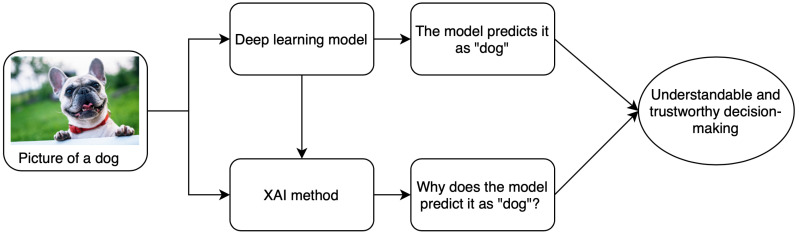
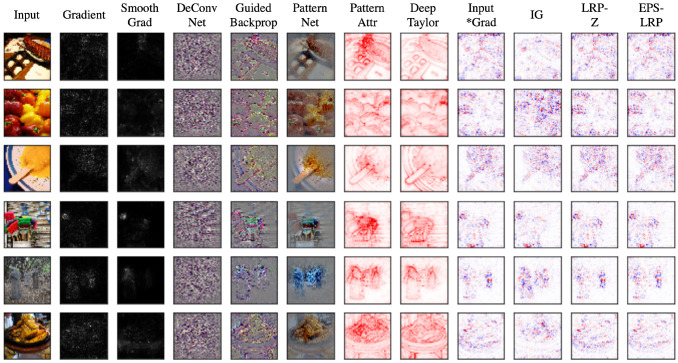

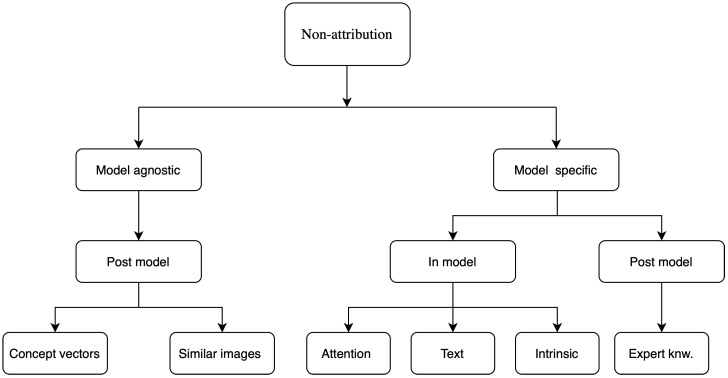
Verification
Claims the paper makes
The claims and statistics of this paper haven’t been checked yet.
Free: it reads the open-access text and checks the first 5 claims that cite a source we can check. Create a free account to check every claim.
Self-check
Percentages, sums and reported differences re-computed from the paper’s own numbers.
The self-check needs the paper’s full text.
Citations
Cites
Vaswani, A., Shazeer, N., Parmar, N., Uszkoreit, J., Jones, L., Gomez, A. N., Kaiser, L., & Polosukhin, I. (2017) · arXiv · doi:10.48550/arxiv.1706.03762 · Cited by 120,404 · cited 1×
“More details about attention mechanisms in neural networks is discussed in [51].”
BackgroundImageNet classification with deep convolutional neural networks
Krizhevsky, A., Sutskever, I., & Hinton, G. E. (2017) · Communications of the ACM · doi:10.1145/3065386 · Cited by 112,155 · cited 1×
“An earlier study for breast mass classification from mammograms [40] using two different CNNs - AlexNet [41] and GoogleNet [42] - employed saliency maps to visualize the image features.”
MethodU-Net: Convolutional Networks for Biomedical Image Segmentation
Ronneberger, O., Fischer, P., & Brox, T. (2015) · Lecture notes in computer science · doi:10.1007/978-3-319-24574-4_28 · Cited by 99,404
ImageNet: A large-scale hierarchical image database
Deng, J., Dong, W., Socher, R., Li, L.-J., Li, K., & Fei-Fei, L. (2009) · 2009 IEEE Conference on Computer Vision and Pattern Recognition · doi:10.1109/cvpr.2009.5206848 · Cited by 65,333 · cited 1×
“Both approaches are beneficial for medical imaging datasets which tend to be relatively smaller than computer vision benchmarks like ImageNet [33].”
BackgroundGoing deeper with convolutions
Szegedy, C., Liu, W., Jia, Y., Sermanet, P., Reed, S., Anguelov, D., Erhan, D., Vanhoucke, V., & Rabinovich, A. (2015) · 2015 IEEE Conference on Computer Vision and Pattern Recognition (CVPR) · doi:10.1109/cvpr.2015.7298594 · Cited by 48,562
(2008) · Journal of Machine Learning Research · Cited by 33,051
Grad-CAM: Visual Explanations from Deep Networks via Gradient-Based Localization
Selvaraju, R. R., Cogswell, M., Das, A., Vedantam, R., Parikh, D., & Batra, D. (2017) · 2017 IEEE International Conference on Computer Vision (ICCV) · doi:10.1109/iccv.2017.74 · Cited by 24,513
Visualizing and understanding convolutional networks
Zeiler, M. D., & Fergus, R. (2014) · Lecture Notes in Computer Science · doi:10.1007/978-3-319-10590-1_53 · Cited by 15,839 · cited 2×
“rey patch and hence occluding them from the system’s view. It can provide both positive and negative evidence by highlighting the responsible features. This technique was applied by Zeiler and Fergus [18] to the CNN for the image classification task. Occlusion is the benchmark for any attribution study as it is a simpl…”
MethodWold, S., Esbensen, K., & Geladi, P. (1987) · Chemometrics and Intelligent Laboratory Systems · doi:10.1016/0169-7439(87)80084-9 · Cited by 11,606 · cited 1×
“Principal component analysis (PCA) [12], t-Distributed Stochastic Neighbor Embedding (t-SNE) [13] are some common examples of these methods.”
MethodArrieta, A. B., Díaz-Rodríguez, N., Del Ser, J., Bennetot, A., Tabik, S., Barbado, A., García, S., Gil-López, S., Molina, D., Benjamins, R., et al. (2019) · arXiv · doi:10.48550/arxiv.1910.10045 · Cited by 11,321 · cited 2×
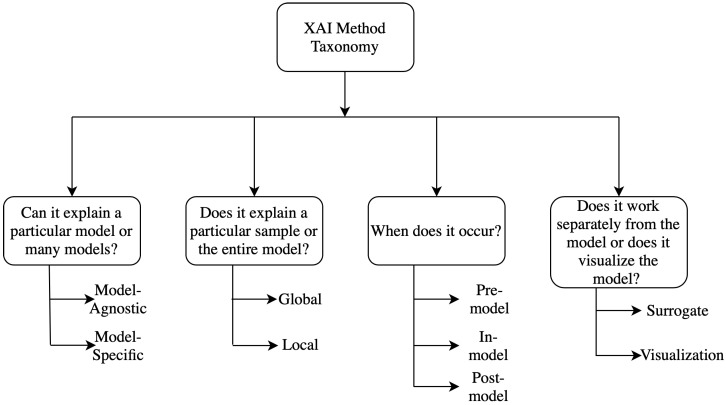
“Different kinds of taxonomies and classification methods are discussed briefly here and a detailed analysis of the taxonomies can be found in [8,9] and a flow chart for them is shown in 1.”
Background
Research works printed but not linked: 2
- El-Baz, A.S. (2020). Recent Advances in Deep Learning Applications for Retinal Diagnosis using OCT. State of the Art in Neural Networks, Elsevier. in press.
- Goodfellow, I.J., Shlens, J., and Szegedy, C. (2014). Explaining and harnessing adversarial examples. arXiv.
Cited by
Items 601–700 of 772
Peer Review #1 of "Deep convolutional neural networks for regular texture recognition (v0.2)"
(2022) · PeerJ Computer Science · doi:10.7287/peerj-cs.869v0.2/reviews/1
Peer Review #1 of "Deep convolutional neural networks for regular texture recognition (v0.1)"
(2022) · PeerJ Computer Science · doi:10.7287/peerj-cs.869v0.1/reviews/1
Artificial Intelligence-Based Evaluation of Functional Cardiac Magnetic Resonance Imaging
Tao, Q., & van der Geest, R. J. (2022) · Contemporary medical imaging · doi:10.1007/978-3-030-92087-6_33
The Past and the Future of Explainable AI Techniques
Kameya, Y. (2022) · IEICE ESS FUNDAMENTALS REVIEW · doi:10.1587/essfr.16.2_83 · Cited by 2
Local feature selection for multiple instance learning with applications.
Shahrjooihaghighi, A. (2021) · ThinkIR: The University of Louisville's Institutional Repository (University of Louisville) · doi:10.18297/etd/3761
On Analyzing Complex Data Within Clinical Decision Support Systems
Kalina, J. (2022) · Advances in medical technologies and clinical practice book series · doi:10.4018/978-1-6684-5092-5.ch004 · Cited by 1
Rethink Deep Learning for Clinical Natural Language Processing: Challenges and OpportunitiesPreprint
Luo, C. (2022) · OSF Preprints (OSF Preprints) · doi:10.31219/osf.io/e7wh2
Big Data and AI in Cardiac Imaging
Reddy, C. D. (2022) · Integrated science · doi:10.1007/978-3-031-11199-0_5 · Cited by 1
AI applications in routine clinical imaging: detection, segmentation, diagnosis, and prognosis
Vaidyanathan, A. (2023) · Research Publications (Maastricht University) · doi:10.26481/dis.20230228av · Cited by 1
Utkin, L. V., Krylova, J. Y., & Konstantinov, A. V. (2023) · Russian Journal for Personalized Medicine · doi:10.18705/2782-3806-2022-2-6-23-32
Clinical Natural Language Processing for Japanese: Challenges and OpportunitiesPreprint
Yuki, J. (2023) · OSF Preprints (OSF Preprints) · doi:10.31219/osf.io/ver53
日本語の臨床自然言語処理:課題と機会Preprint
Yuki, J. (2023) · OSF Preprints (OSF Preprints) · doi:10.31219/osf.io/qnkb2
Applications of Deep Leaning on Cardiac MRI: Design Approaches for a Computer Aided Diagnosis
Pelegrí, M. P. (2023) · RiuNet (Universitat Politècnica de València) · doi:10.4995/thesis/10251/192988
Deep Learning Model With Game Theory-Based Gradient Explanations for Retinal Images
Mittal, K., & Rajam, V. M. A. (2023) · Lecture notes on data engineering and communications technologies · doi:10.1007/978-981-99-0609-3_15
Beyond Predictions: Explainability and Learning from Machine Learning
Deng, C.-Y., Mitani, A., Chen, C., Peng, L. H., Hammel, N., & Liu, Y. (2023) · Springer eBooks · doi:10.1007/978-3-031-24052-2_15
Role of Explainable AI in 6G Security
Porambage, P., Liyanage, M., & Senevirathna, T. (2023) · Wiley eBooks · doi:10.1002/9781119875437.ch18
Predicting Disease(s) using Machine Learning in Medical Science
Benmechiche, M., NAIDJA, A., & BENNACER, L. (2023) · International journal of research studies in computer science and engineering · doi:10.20431/2349-4859.0901004
ML-based Individual Contribution Assessment of Basketball Players from Their Trajectories
Tanaka, T. Q., Uchiyama, A., & Yamaguchi, H. (2023) · IEEE International Conference on Mobile Data Management (MDM) · doi:10.1109/mdm58254.2023.00021
“particular, studies have been reported to visualize and quantify the parts (often called attentions) of the input image that a deep learning model focuses on to achieve image recognition and analysis [37].”
BackgroundTexton Tri-alley Separable Feature Merging (TTSFM) Capsule Network for Brain Tumor Detection
Akoto-Adjepong, V., Appiah, O., Appiahene, P., & Mensah, P. K. (2023) · International Journal of Advanced Computer Science and Applications · doi:10.14569/ijacsa.2023.0140951
“However, it should be noted that these data augmentation techniques are both time-consuming and labor-intensive [7].”
BackgroundCharacter Structure Analysis by Adding and Pruning Neural Networks in Handwritten Kanji Recognition
Gyohten, K., Ohki, H., & Takami, T. (2023) · Lecture notes in computer science · doi:10.1007/978-3-031-47637-2_10
Automatic Report Generation Method for Ultrasound Assisted Diagnosis of Cervical Lymph NodesPreprint
Ding, X., Wang, R., Liu, Y., Zhao, J., Li, C., Luo, Q., & Shen, C. (2023) · SSRN Electronic Journal · doi:10.2139/ssrn.4625427
Explainable AI and Transfer Learning in the Classification of PET Cardiac Perfusion Polar Maps
Hosseini, S. M., Moghaddam, R. M., Schultz, C. J., Saraste, A., Klén, R., & Teuho, J. (2023) · IEEE Nuclear Science Symposium and Medical Imaging Conference (NSS/MIC) · doi:10.1109/nssmicrtsd49126.2023.10338595
He, F. (2023) · theses.fr (ABES) · doi:10.70675/36ca0c0ezd16az482czb017z91314fff3b6c · Cited by 1
Towards robust explainability of deep neural networks against attribution attacks
Wang, F. (2024) · DR-NTU (Nanyang Technological University) · doi:10.32657/10356/175394
Interpretable Coronary Artery Disease Prediction Based on K-Stacking Model
Yu, H., & Bian, H. (2024) · Lecture notes in computer science · doi:10.1007/978-981-97-5663-6_38
Neuroimaging and Biomarkers in AD Detection
Thapa, K., Kanojia, N., Sharma, A., Rani, L., & Puri, V. (2024) · Advances in medical technologies and clinical practice book series · doi:10.4018/979-8-3693-3605-2.ch002
Image Analysis for Health Prediction
Sujarani, P., & Kalaiselvi, K. (2024) · Wiley eBooks · doi:10.1002/9781394242528.ch9
Causal Logic Discovery and Rule Validation Using Evolutionary Integration Model Global Fit U-Net
Yang, X., Du, F., Chen, K., & Chen, H. (2024) · doi:10.1109/icnlp60986.2024.10692568
Ahmadi, S. A., & Mohammadzadeh, A. (2024) · نشریه علمی علوم و فنون نقشه برداری · doi:10.61186/jgst.13.4.41
Analyzing Medical Images through Advanced Deep Learning Models
Bhoite, A. S., Pati, P. R., Mishra, G., Lipi, K., Desai, J., & Rani, D. S. (2024) · International Conference on Healthcare Innovations, Software and Engineering Technologies (HISET) · doi:10.1109/hiset61796.2024.00065
Review on Detecting Facial Emotions Using Deep Learning for Mental Health Applications
Veligeti, M. S. R. K., & Pavithra, L. K. (2024) · International Journal of Image and Graphics · doi:10.1142/s0219467826500439
Tiwary, S., Mishra, S. R., Bhowmick, R., Mohapatra, H., & Gourisaria, M. K. (2025) · Studies in computational intelligence · doi:10.1007/978-3-031-82516-3_2
Provenzano, D., Wang, J. Y., Goyal, S., & Rao, Y. J. (2025) · Tomography · doi:10.3390/tomography11030038
“Techniques such as GradCAM are typically considered “attribution based” and use gradient (GradCAM) or perturbation based (SHAP, LIME) techniques to attempt to explain model selections [26].”
An interpretation-model-guided classification method for malignant pulmonary nodule
Li, B., & He, W. (2025) · Elsevier eBooks · doi:10.1016/b978-0-443-23979-3.00005-1
Sentiment analysis for whatsapp using NLP
Charles, N. (2025) · i-manager s Journal on Computer Science · doi:10.26634/jcom.12.4.21307
Vision Transformer and Explainable AI for Breast Cancer Detection and Classification: A Review
Yadav, L. (2025) · International Journal for Research in Applied Science and Engineering Technology · doi:10.22214/ijraset.2025.71641
Unet-Like Pure Transformer Model with Variable Shifted Windows for Low-Dose CT Denoising
Pu, Y., Chen, J., Yuan, H., Li, J., & Li, Y. (2025) · Communications in computer and information science · doi:10.1007/978-981-96-6963-9_6
Roy, A., Ashik, M. A., Khan, N., Karim, D., & Kumar, A. (2025) · The Eastasouth Journal of Information System and Computer Science · doi:10.58812/esiscs.v3i01.594
Desirability vs. feasibility: a research through design inquiry of explainable AI
Corti, L., & Yang, J. (2025) · Elsevier eBooks · doi:10.1016/b978-0-44-340553-2.00010-1
Evaluation of Client Participation on Federated Learning Scenario for Chest X-Ray Imaging
Cerro, C. F. D., Desco, M., & Abella, M. (2025) · Proceedings - IEEE Symposium on Computer-Based Medical Systems · doi:10.1109/cbms65348.2025.00139
DLCA-CapsNet: Dual-Lane CDH Atrous CapsNet for the Detection of Plant Diseases
Okyere-Gyamfi, S., Asante, M., Missah, Y. M., Peasah, K. O., & Akoto-Adjepong, V. (2025) · International Journal of Advanced Computer Science and Applications · doi:10.14569/ijacsa.2025.0160764
XAI: A Comparative Study on Skin Illnesses Prediction Based on LIME Method
Sharma, M. K., Sharma, R., & Kaur, R. (2025) · Lecture notes in networks and systems · doi:10.1007/978-981-96-6066-7_24
Hybrid Feature Extraction-Enabled Diabetic Retinopathy Detection and Classification
Sait, A. R. W., & Mohammed, H. A. (2025) · Lecture notes in networks and systems · doi:10.1007/978-3-031-99965-9_23
Güldoğan, E., & Çolak, C. (2025) · Adıyaman Üniversitesi Sağlık Bilimleri Dergisi · doi:10.30569/adiyamansaglik.1643217
Ethical concerns of generative AI in healthcare applications
Gaur, L., & Abraham, A. (2025) · Elsevier eBooks · doi:10.1016/b978-0-443-33124-4.00009-6
Explainability in generative AI and large language models
Gaur, L., & Abraham, A. (2025) · Elsevier eBooks · doi:10.1016/b978-0-443-33124-4.00002-3
Deep Learning Algorithms and Techniques
Syed, M., Chauhan, V., Mathur, B., Goyal, S., Narad, P., & Sengupta, A. (2025) · Medical virology · doi:10.1007/978-981-96-8919-4_3
Deep Learning and Orthodontics: A Bibliometric Analysis
Jasen, S. (2025) · Studies in systems, decision and control · doi:10.1007/978-3-031-90271-0_32
Leveraging Remote Sensing for Enhanced Forest Fire Prevention
Gambardella, C., Ciaburro, G., & Parente, R. (2025) · Lecture notes in networks and systems · doi:10.1007/978-981-96-6060-5_22
Generating vascular network structures from real data
Simões, J. B., Travasso, R. D. M., Baptista, T., & Costa, E. J. F. (2025) · Expert Systems with Applications · doi:10.1016/j.eswa.2025.129941
AI-based Medical Diagnosis System using Deep Learning and Predictive Analytics
Sharvary, K. V., Jayesh, S., & Karan, S. (2025) · Indian Journal of Computer Science and Technology · doi:10.59256/indjcst.20250403025
DE-KAN: A Kolmogorov Arnold Network with Dual Encoder for accurate 2D Teeth SegmentationPreprint
Mustakim, M. M. R., Li, J., Bhuiyan, S., Hasan, M. M., & Han, B. (2025) · SSRN Electronic Journal · doi:10.2139/ssrn.5639670
Radiomics-based intelligent diagnosis and treatment
Fang, M., Wang, Z., Fu, J., Wang, Y., Zhao, Y., Qin, Z., Zhang, C., Xie, X., Tang, L., & Dong, D. (2025) · Elsevier eBooks · doi:10.1016/b978-0-443-30142-1.00006-7
Training Resilient AI Models With Rich Interpretations From Highly Scarce Data
Qureshi, H. N., & Imran, M. A. (2025) · IEEE Open Journal of the Communications Society · doi:10.1109/ojcoms.2025.3627389
“…such as the survey papers in material science and chemistry [37], high energy physics [13], smart grids [38], process industries [39], medicine [40], [41] and its specific subfields, such as cardiology [42], [43], and even a recent survey paper on interpretable ML models for fighting COVID-19 [44].”
Dermoscopy-Specific XAI for Melanoma Recognition
Surowka, G. (2025) · Lecture notes in computer science · doi:10.1007/978-3-032-03711-4_25
Evaluation of Explainability Methods in Medical Image Analysis
Tanyel, T., & Öksüz, İ. (2025) · Springer eBooks · doi:10.1007/978-3-031-91379-2_10
Deep Learning-Driven Medical Image Captioning with eXplainable AI
Kushwah, V. R. S., & Shrivastava, A. K. (2025) · Advances in computer science research · doi:10.2991/978-94-6463-858-5_8
Explainable Schizophrenia Classification from rs-fMRI Using SwiFT and TransLRP
Weaver, J., Zhang, E., Sarma, N. V. N. S., Melek, A., & Castillo, E. M. (2025) · Algorithms · doi:10.3390/a18110701
“These approaches typically fall into categories such as gradient-based, attribution, saliency, backpropagation, or perturbation methods [19,20].”
XAMT: Cross-Framework API Matching for Testing Deep Learning Libraries
Duan, B., Dong, R., Dong, N., Kim, D. S., & Yang, G. (2025) · Proceedings/Proceedings - International Symposium on Software Reliability Engineering · doi:10.1109/issre66568.2025.00030 · Cited by 1
“These applications depend heavily on the correctness of deep learning libraries, whose APIs are widely used for model construction, training, and inference [30].”
Rafało, M., & Żyłka, A. (2025) · Proceedings of the International Conference on Information Systems Development · doi:10.62036/isd.2025.74
Lin, J., Ma, Z., Tao, Y., Liang, Y., Wei, Y., Liu, H., & Zhang, Y. (2026) · BMC Medical Imaging · doi:10.1186/s12880-026-02706-4
Vivekanandam, B., Kumar, K. V., & Annam, J. R. (2025) · Healthcraft Frontiers · doi:10.56578/hf030203
Hinge, C., Rodell, A. B., Zuehlsdorff, S., Spottiswoode, B. S., Korsholm, K., Fischer, B. M., Ladefoged, C. N., & Andersen, F. L. (2025) · Scientific Reports · doi:10.1038/s41598-025-26827-y · Cited by 1
“2 and 5).”
Reasoning Visualization for Critical Care EEG Classification with Prototypical Part Networks
Bingo, T., Yano, H., Ashizaki, T., Koda, K., Togo, M., Matsumoto, R., & Takiguchi, T. (2025) · Asia-Pacific Signal and Information Processing Association Annual Summit and Conference (APSIPA ASC) · doi:10.1109/apsipaasc65261.2025.11249144
Blood Cell Detection: A Review
He, W., Zhang, T., Ju, T., Chen, Y., Liu, M., Wang, Z., Zhao, L., & Cheng, C. (2025) · IEEE International Conference on Manipulation, Manufacturing and Measurement on the Nanoscale (3M-NANO) · doi:10.1109/3m-nano65639.2025.11261203
Enhancement of X-Rays via Hybrid Denoising and Adaptive Contrast
Gupta, R., & Siddiq, M. (2025) · IEEE India Council International Subsections Conference (INDISCON) · doi:10.1109/indiscon66021.2025.11253580
Chiedozie, O. J., Ebem, D. U., Ikegwu, A. C., & Ikpo, C. V. (2025) · International Journal of Education and Management Engineering · doi:10.5815/ijeme.2025.06.03
ExplainNet: A Hybrid Visual-Linguistic Model for Human-Centered Autism Diagnosis
Sefat, S. M., Adnan, M. H. B. M., & Hasan, M. M. (2025) · IEEE International Conference on Artificial Intelligence in Engineering and Technology (IICAIET) · doi:10.1109/iicaiet67254.2025.11265039
“Clinicians, caregivers, and educators require transparent and trustworthy AI systems [2].”
Obeed, A. N., Algraittee, S. J. R., Salman, Z. N., Mejbel, M. K., Sulaiman, S. K., Fallah, D., & Rdeaan, M. A. (2025) · International Conference on Cyber Resilience (ICCR) · doi:10.1109/iccr67387.2025.11292271
“Ensemble learning has gained traction for its ability to combine the strengths of multiple architectures, thereby reducing model variance, enhancing feature representation, and improving resilience against outliers and noise in NCCT images [28].”
Explainable deep learning for image understanding
Yu, L. (2024) · ResearchOnline at James Cook University (James Cook University) · doi:10.25903/x9mm-pm46
Soe, N. N., Yu, Z., Latt, P. M., Lee, D., Ong, J. J., Ge, Z., Fairley, C. K., & Zhang, L. (2024) · Figshare · doi:10.6084/m9.figshare.26322665
Classification of Pulmonary Nodules in 2-[18F]FDG PET/CT Images with Convolutional Neural Networks
Alves, V. M. (2021) · Portuguese National Funding Agency for Science, Research and Technology (RCAAP Project by FCT) · doi:10.34626/8et0-9a16
Liu, Y., Hsu, H. Y., Lin, T., Peng, B., Saqi, A., Salvatore, M. M., & Jambawalikar, S. (2024) · Figshare · doi:10.6084/m9.figshare.26667208
Ayodele, O. O. (2024) · UUM Electronic Theses and Dissertation [eTheses] (Northern University of Malaysia)
Tempelaere, A. (2024) · Lirias
Mendo, R. S. (2024) · University of Valladolid Documentary Repository (University of Valladolid)
Spiers, J. (2021) · eScholarship@McGill (McGill) · doi:10.82308/53929
Development of Feature Extraction Models to Improve Image Analysis Applications in Cancer
Shi, Y. (2024) · Lincoln (University of Nebraska)
Progress in SPECT and PET Reconstruction for Theranostics: From Diagnosis to TherapyPreprint
Enninful, K. S., Ahmed, F., Girod, B., Laforest, R. A., Thorek, D. L. J., Prasad, V., & Jha, A. K. (2025) · PubMed · doi:10.48550/arxiv.2509.07313
“An additional complexity is the dificulty in detecting and interpreting these defects 64 .”
DE-KAN: A Kolmogorov Arnold Network with Dual Encoder for accurate 2D Teeth SegmentationPreprint
Mustakim, M. M. R., Li, J., Bhuiyan, S., Hasan, M. M., & Han, B. (2025) · arXiv (Cornell University) · doi:10.48550/arxiv.2511.18533
“Current deep learning models in medical image segmentation encounter difficulties arising from inadequate kernel design and insufficient explainabil-ity [16].”
'Embedding Ethics' in diagnostischer bildverarbeitender Künstlicher Intelligenz
Willem, T., Buyx, A., & München, T. U. (2025)
Explainable Transform Learning for Interpretable Medical Image Analysis
Santosh Kumar, B., Nagarajan, A., Sumathi, S., Prabakaran, S., Eric Clapten, J., & Murugan, V. (2025) · International Conference on Innovative Data Communication Technologies and Application (ICIDCA) · doi:10.1109/icidca66325.2025.11280392
A Review of Deep Metric Learning Methods in Disease Detection on Medical Images
Febriantono, M. A., Isnan, M., & Pardamean, B. B. (2025) · IEEE Information Technology International Seminar (ITIS) · doi:10.1109/itis67966.2025.11309033
“The latest trends in 2023–2024 show the emergence of optimization topics and broader applications, for example the use of genetic algorithms for brain diseases [13], the use of IoT in the diagnosis of heart disease [14], and handling the problem of class imbalance in medical images [15].”
Medical Image Processing and Analysis
Pallavi, M., Hota, S., Gandhi, A., Jebaselvi, G. D. A., Priya, G. P., & Rajvanshi, D. (2025) · Wiley eBooks · doi:10.1002/9781394386659.ch8
Arkah, Z. M., Pontes, B., & Rubio, C. (2026) · Lecture notes in computer science · doi:10.1007/978-3-032-10661-2_4
AI Methods: Understanding AI Models, Radiomic Analysis and Performance Metrics in Medical Imaging
Grigorescu, I., Mushari, N. A., Tsoumpas, C., & Deprez, M. (2026) · Springer eBooks · doi:10.1007/978-3-032-05080-9_2
Yamazaki, A., Yamazaki, R., Kita, M., Kubo, T., Noma, S., Hashimoto, S., Taguchi, Y., & Ishida, T. (2026) · Journal of Imaging Informatics in Medicine · doi:10.1007/s10278-025-01790-2
Lacroux, D. (2026) · médecine/sciences · doi:10.1051/medsci/2025194
CLMN: Concept based Language Models via Neural Symbolic Reasoning
Yang, Y. (2025) · Conference proceedings/Conference proceedings - IEEE International Conference on Systems, Man, and Cybernetics · doi:10.1109/smc58881.2025.11342496
“For instance, when a model recommends a specific treatment plan, doctors need to understand the underlying reasons and logic to ensure its reliability and effectiveness [24].”
Explainable Deep Learning for Predicting Diabetic Kidney Health from Retinal Biomarkers
R, E. G., Sridevi, S., Raja Subramanian, R., & Srijah, S. (2025) · International Conference on Computational Intelligence and Communication Networks (CICN) · doi:10.1109/cicn67655.2025.11367870
“Arcadu et al. [21] employed multi-task learning on 15,000 retinal images, demonstrating that joint prediction of retinopathy severity and nephropathy risk improved both tasks (nephropathy AUC 0.81, retinopathy AUC 0.89).”
InfluentialMustapha, R., Ganeshan, B., Ellis, S., Dolcetti, L., Tharmakulasingam, M., DeSouza, K., Jiang, X., Savage, C., Lim, S. K. X., Chan, E., et al. (2025) · medRxiv · doi:10.1101/2025.01.10.24319412
Agentic Brain: Agentic AI System for Autonomous Diagnosis of Functional Connectivity Network
Ji, C.-H., Oh, J.-H., Kang, Y.-K., Kwak, S.-Y., Han, J.-W., Kim, J.-M., Hwang, J.-Y., & Kam, T. (2026) · International Conference on Electronics, Information, and Communication (ICEIC) · doi:10.1109/iceic69189.2026.11386258
Metadata
- Authors
- Singh, A., Sengupta, S., & Lakshminarayanan, V.
- Affiliations
- University of Waterloo (CA)
- Corresponding author
- Singh, Amitojdeep
- Venue
- Journal of Imaging
- Publisher
- MDPI AG
- Published
- 2020-06-20
- Volume
- 6
- Issue
- 6
- Pages
- 52
- ISSN
- 2313-433X (ISSN-L)
- PMC
- PMC8321083
- OpenAlex
- W3031116957
- Semantic Scholar
- af6af40155860ac2fd36680e63686473803b5f52
- Cited by
- 718
- References
- 75
- Citations by year
- 2026: 82 · 2025: 135 · 2024: 132 · 2023: 154 · 2022: 130 · 2021: 77 · 2020: 8
- FWCI
- 3.17
- Type
- journal article
- Language
- en
- Open access
- gold
- dx.doi.org
- Licence
- Locations
- Journal of Imaging (publishedVersion, cc-by)
- PubMed Central (publishedVersion, cc-by)
- PubMed (publishedVersion)
- arXiv (Cornell University) (submittedVersion)
- DOAJ (DOAJ: Directory of Open Access Journals) (submittedVersion, cc-by-sa)
- arXiv (Cornell University) (cc-by)
- Funders
- Nvidia
- Compute Canada
- Natural Sciences and Engineering Research Council of Canada
- Topics
- Physical Sciences › Computer Science › Artificial Intelligence › Explainable Artificial Intelligence (XAI)
- Health Sciences › Medicine › Health Informatics › Artificial Intelligence in Healthcare and Education
- Health Sciences › Medicine › Radiology, Nuclear Medicine and Imaging › Radiomics and Machine Learning in Medical Imaging
- Keywords
- explainable deep learning, medical image analysis, model interpretability, black-box models, clinical deployment, feature importance, diagnosis
About these checks
Registry, retraction, Cites and statistics results are computed, not judged, with one exception: a printed reference that no index lists is read once by a model before it counts as a citation error. Claims are extracted by a model and kept only when their quote appears verbatim in the text; each cited source is then checked, with a model’s help, for whether it says what the claim relies on. Those verdicts can be wrong — read the claim’s quote and the cited source before relying on one.
Statistics and arithmetic are recomputed, not judged.
Confidence bands are shown only for fields calibrated on our annotated test set. None is calibrated yet, so no band is shown.
What counts as a claim ›How we measure confidence ›How we check this ›
Are you an author, or do you see a problem with this page? Request a review
Data sources
Bibliographic data: Semantic Scholar, OpenAlex, Crossref.
Contains information from the Semantic Scholar Academic Graph Datasets, made available under the ODC Attribution License (ODC-BY 1.0).
Semantic Scholar’s data is described in: Kinney, R., et al. (2023). The Semantic Scholar Open Data Platform. arXiv:2301.10140.
