

The pH-Responsive PacC Transcription Factor of Aspergillus fumigatus Governs Epithelial Entry and Tissue Invasion during Pulmonary Aspergillosis
Open accessThe DOI matches its Crossref record; 88 of the 88 references it cites were found in a registry or an index.
Abstract
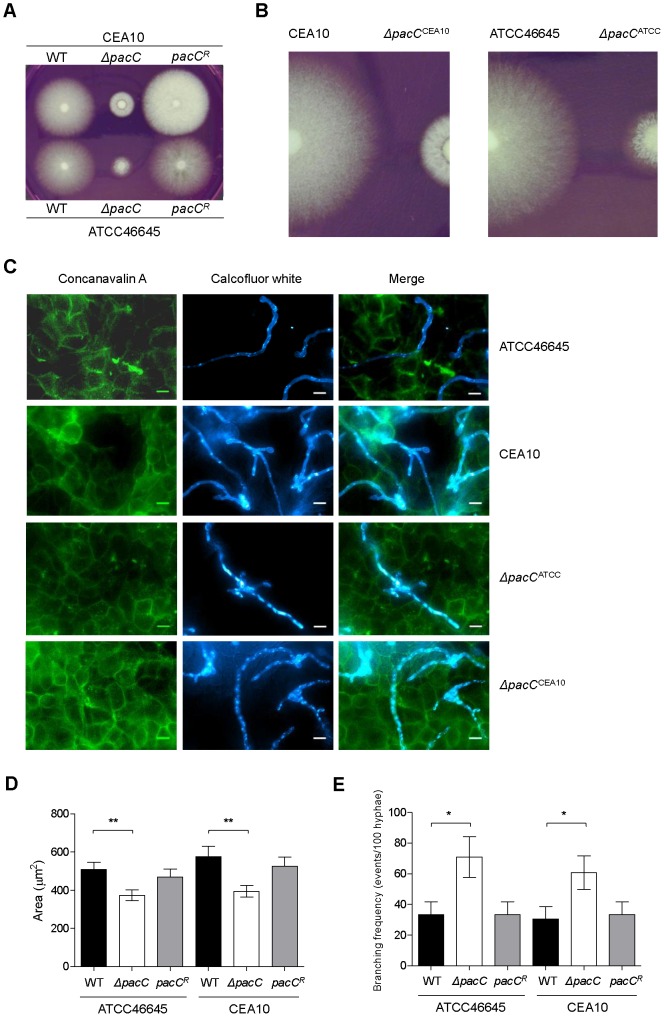
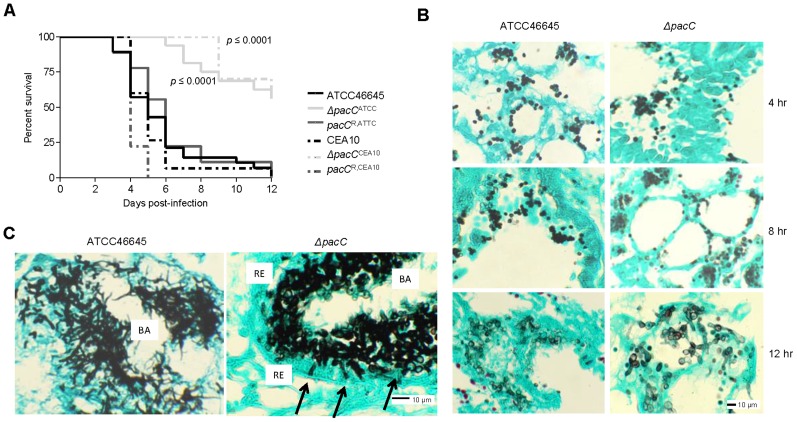
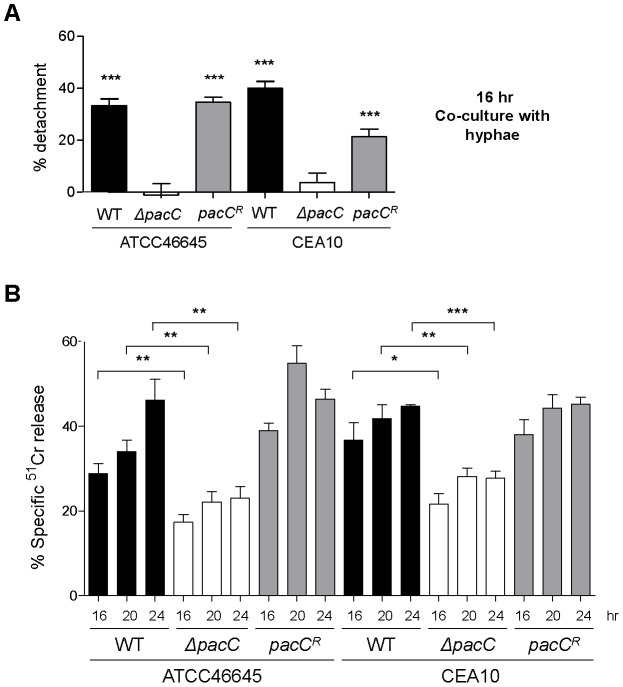
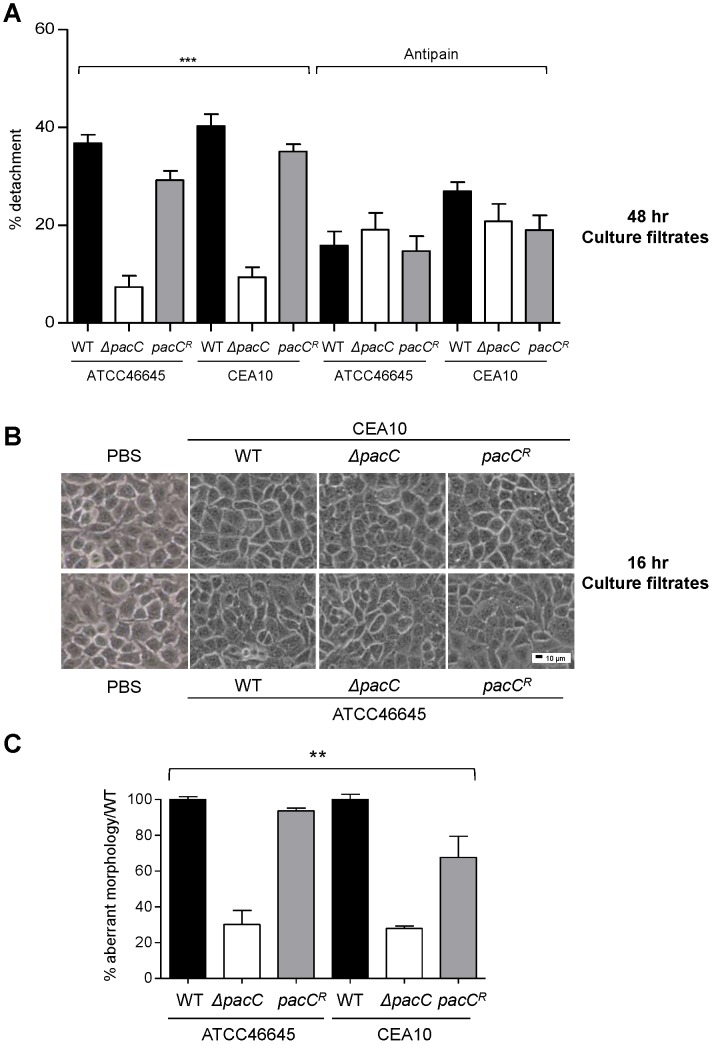
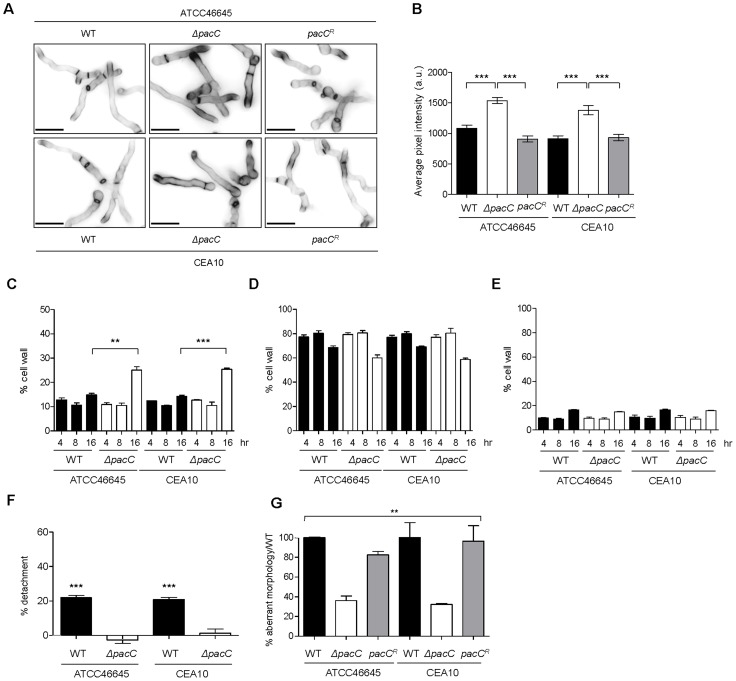
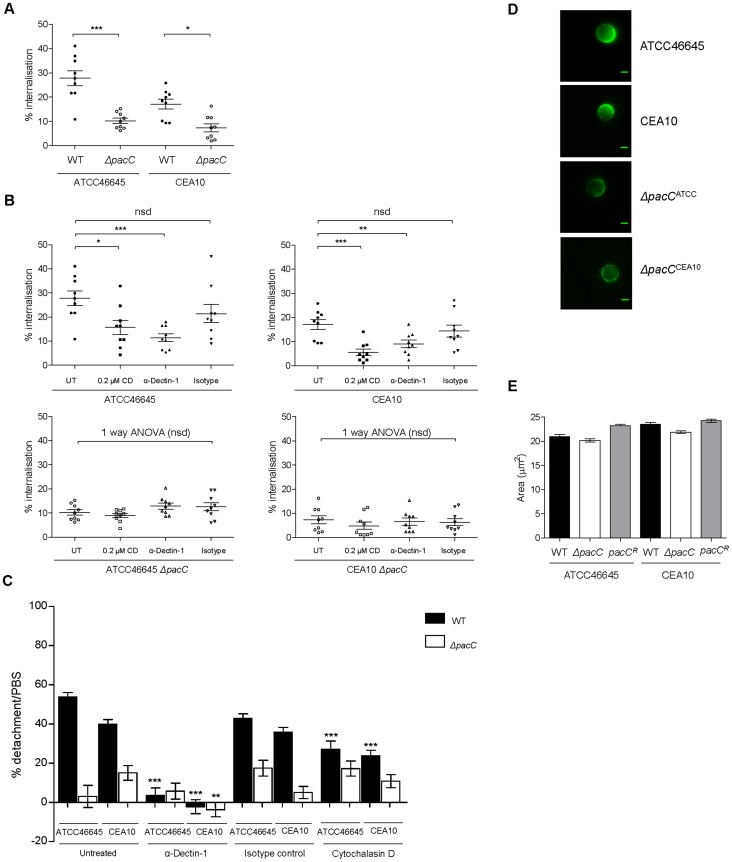
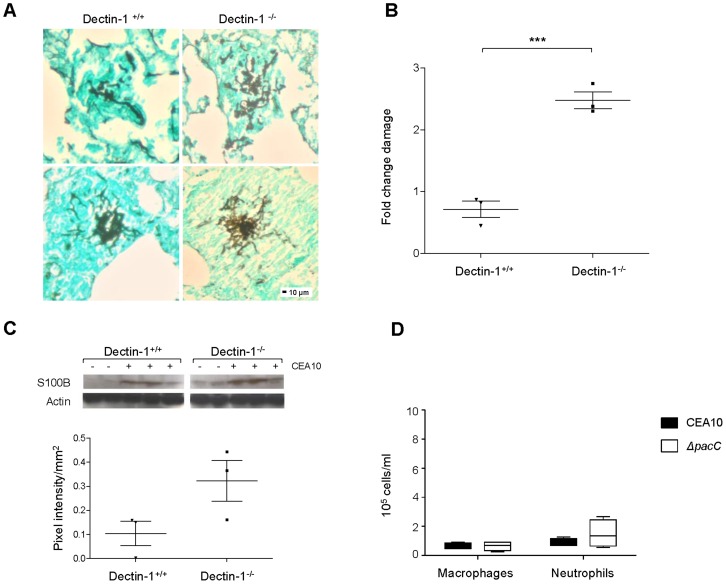
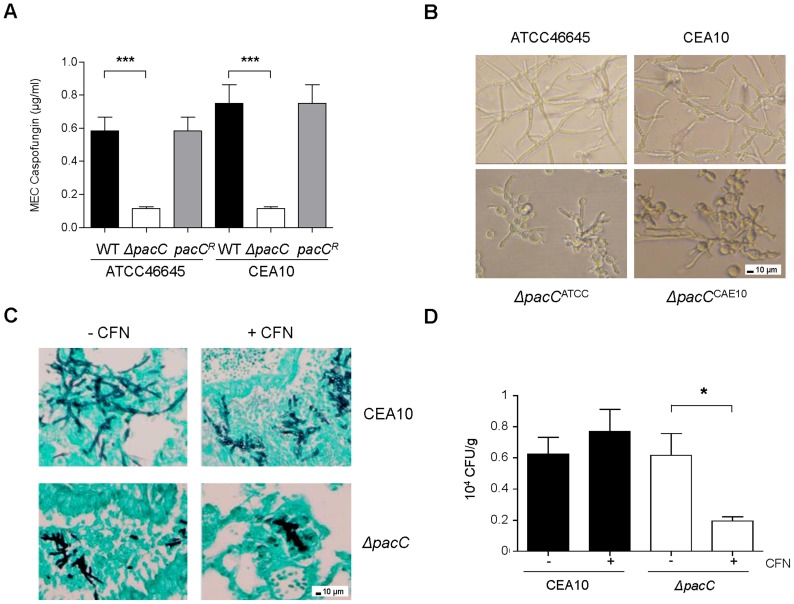
Destruction of the pulmonary epithelium is a major feature of lung diseases caused by the mould pathogen Aspergillus fumigatus. Although it is widely postulated that tissue invasion is governed by fungal proteases, A. fumigatus mutants lacking individual or multiple enzymes remain fully invasive, suggesting a concomitant requirement for other pathogenic activities during host invasion. In this study we discovered, and exploited, a novel, tissue non-invasive, phenotype in A. fumigatus mutants lacking the pH-responsive transcription factor PacC. Our study revealed a novel mode of epithelial entry, occurring in a cell wall-dependent manner prior to protease production, and via the Dectin-1 β-glucan receptor. ΔpacC mutants are defective in both contact-mediated epithelial entry and protease expression, and significantly attenuated for pathogenicity in leukopenic mice. We combined murine infection modelling, in vivo transcriptomics, and in vitro infections of human alveolar epithelia, to delineate two major, and sequentially acting, PacC-dependent processes impacting epithelial integrity in vitro and tissue invasion in the whole animal. We demonstrate that A. fumigatus spores and germlings are internalised by epithelial cells in a contact-, actin-, cell wall- and Dectin-1 dependent manner and ΔpacC mutants, which aberrantly remodel the cell wall during germinative growth, are unable to gain entry into epithelial cells, both in vitro and in vivo. We further show that PacC acts as a global transcriptional regulator of secreted molecules during growth in the leukopenic mammalian lung, and profile the full cohort of secreted gene products expressed during invasive infection. Our study reveals a combinatorial mode of tissue entry dependent upon sequential, and mechanistically distinct, perturbations of the pulmonary epithelium and demonstrates, for the first time a protective role for Dectin-1 blockade in epithelial defences. Infecting ΔpacC mutants are hypersensitive to cell wall-active antifungal agents highlighting the value of PacC signalling as a target for antifungal therapy.
Overview
The claims and statistics of this paper haven’t been checked yet.
Free: it reads the open-access text and checks the first 5 claims that cite a source we can check. Create a free account to check every claim.
Integrity signals
Registry
Cites
Statistics
Figures
Verification
Claims the paper makes
The claims and statistics of this paper haven’t been checked yet.
Free: it reads the open-access text and checks the first 5 claims that cite a source we can check. Create a free account to check every claim.
Claims other papers make about this one
Each is checked against this paper’s own text: does it say what the citing paper says it does?
The source backs part of the claim, not all of it — or backs it for a different population, condition or comparison.
In the citing paper
“Moreover, reduced epithelial cell wall damage due to defective protease secretion was observed with the pacC mutants (223).”
From Aspergillus fumigatus and Aspergillosis in 2019 (2019) · cites this paper as [223]
Experimental — accuracy not yet measuredIn the citing paper
“In this study, A. fumigatus conidia and germlings are internalized by epithelial cells in a Dectin-1-dependent manner”
From Aspergillus fumigatus and Aspergillosis in 2019 (2019) · cites this paper as [223]
In the citing paper
“A recent study with the A549 cell line and mice identified a novel role of the pH-responsive transcription factor (TF) PacC in Aspergillus pathogenicity, linked to epithelial cell penetration.”
From Aspergillus fumigatus and Aspergillosis in 2019 (2019) · cites this paper as [223]
In the citing paper
“and pacC mutants, which aberrantly remodel the cell wall during germinative growth, are able to enter efficiently into epithelial cells.”
From Aspergillus fumigatus and Aspergillosis in 2019 (2019) · cites this paper as [223]
In the citing paper
“However, PacC controls more than pH adaptation, since the pacC mutant has an altered cell wall associated with differences in susceptibility to cell wall drugs (223) (S. Raj, Z. Liu, M. Bromley, and J.-P. Latgé, unpublished data).”
From Aspergillus fumigatus and Aspergillosis in 2019 (2019) · cites this paper as [223]
1 more claim about this paper
Create a free account to see every claim other papers make about this one.
Self-check
Percentages, sums and reported differences re-computed from the paper’s own numbers.
The self-check needs the paper’s full text.
Citations
Cites
Bradford, M. M. (1976) · Analytical Biochemistry · doi:10.1016/0003-2697(76)90527-3 · Cited by 255,302 · cited 1×
“Protein concentrations were determined using the Bradford assay [74].”
MethodTowbin, H., Staehelin, T., & Gordon, J. (1979) · Proceedings of the National Academy of Sciences · doi:10.1073/pnas.76.9.4350 · Cited by 53,385
Raza, H., John, A., & Nemmar, A. (2013) · Cellular Physiology and Biochemistry · doi:10.1159/000350087 · Cited by 47,221
Systematic and integrative analysis of large gene lists using DAVID bioinformatics resources
Huang, D. W., Sherman, B. T., & Lempicki, R. A. (2009) · Nature Protocols · doi:10.1038/nprot.2008.211 · Cited by 35,890 · cited 1×
“gov/) [77,78].”
Huang, D. W., Sherman, B. T., & Lempicki, R. A. (2009) · Nucleic Acids Research · doi:10.1093/nar/gkn923 · Cited by 14,108 · cited 1×
“gov/) [77,78].”
Hidden Killers: Human Fungal Infections
Brown, G. D., Denning, D. W., Gow, N. A. R., Levitz, S. M., Netea, M. G., & White, T. C. (2012) · Science Translational Medicine · doi:10.1126/scitranslmed.3004404 · Cited by 4,284 · cited 2×
“Amongst the resultant diseases, invasive aspergillosis (IA) exerts the highest fatal toll, resulting globally in an estimated 200,000 deaths per annum [1].”
BackgroundAspergillus fumigatus and Aspergillosis
Latgé, J.-P. (1999) · Clinical Microbiology Reviews · doi:10.1128/cmr.12.2.310 · Cited by 2,307 · cited 1×
“fumigatus genome is predicted to encode more than 100 hydrolytic enzymes [55] some of which are assumed as crucial for liberation of proteinaceous nutrients from host tissues [56,57].”
BackgroundThe Genetics of Aspergillus nidulans
Pontecorvo, G., Roper, J. A., Chemmons, L. M., Macdonald, K. D., & Bufton, A. W. J. (1953) · Advances in Genetics · doi:10.1016/s0065-2660(08)60408-3 · Cited by 2,302 · cited 11×
“Aspergillus phenotypic analysis Dilutions of 103 conidia were inoculated onto ACM or supplemented AMM (as shown on Table S3) and incubated for 48 hr and 72 hr respectively.”
MethodInfluentialBrown, G. D., & Gordon, S. (2001) · Nature · doi:10.1038/35092620 · Cited by 1,579
Pappas, P. G., Alexander, B. D., Andes, D. R., Hadley, S., Kauffman, C. A., Freifeld, A., Anaissie, E. J., Brumble, L. M., Herwaldt, L., Ito, J., et al. (2010) · Clinical Infectious Diseases · doi:10.1086/651262 · Cited by 1,570 · cited 1×
“all invasive fungal infections in these cohorts and causes 58% and 34% mortality, respectively, at 12 weeks post-transplant [2–4].”
Background
Cited by
Aspergillus fumigatus and Aspergillosis in 2019
Latgé, J.-P., & Chamilos, G. (2019) · Clinical Microbiology Reviews · doi:10.1128/cmr.00140-18 · Cited by 1,400
Regulation and Role of Fungal Secondary Metabolites
Macheleidt, J., Mattern, D. J., Fischer, J., Netzker, T., Weber, J., Schroeckh, V., Valiante, V., & Brakhage, A. A. (2016) · Annual Review of Genetics · doi:10.1146/annurev-genet-120215-035203 · Cited by 433
Regulators of plant biomass degradation in ascomycetous fungi
Benocci, T., Aguilar-Pontes, M. V., Zhou, M., Seiboth, B., & de Vries, R. P. (2017) · Biotechnology for Biofuels · doi:10.1186/s13068-017-0841-x · Cited by 237
Latgé, J.-P., Beauvais, A., & Chamilos, G. (2017) · Annual Review of Microbiology · doi:10.1146/annurev-micro-030117-020406 · Cited by 207
Streptomyces exploration is triggered by fungal interactions and volatile signals
Jones, S. E., Ho, L., Rees, C. A., Hill, J. E., Nodwell, J. R., & Elliot, M. A. (2017) · eLife · doi:10.7554/elife.21738 · Cited by 189
“neoformans, and Aspergillus fumigatus (Bertuzzi et al., 2014; Davis et al., 2000; O’Meara et al., 2014).”
Background
Metadata
- Authors
- Bertuzzi, M., Schrettl, M., Alcazar-Fuoli, L., Cairns, T. C., Muñoz, A., Walker, L. A., Herbst, S., Safari, M., Cheverton, A. M., Chen, D., Liu, H., Saijo, S., Fedorova, N. D., Armstrong-James, D., Munro, C. A., Read, N. D., Filler, S. G., Espeso, E. A., Nierman, W. C., Haas, H., & Bignell, E. M.
- Affiliations
- University of Manchester (GB)
- Innsbruck Medical University (AT)
- University of Exeter (GB)
- University of Aberdeen (GB)
- Imperial College London (GB)
- National Institutes of Health (US)
- University of California, Los Angeles (US)
- Chiba University (JP)
- Consejo Superior de Investigaciones Científicas (ES)
- Corresponding author
- Bignell, Elaine M.
- ORCID
- Venue
- PLoS Pathogens
- Publisher
- Public Library of Science (PLoS)
- Published
- 2014-10-16
- Volume
- 10
- Issue
- 10
- Pages
- e1004413
- ISSN
- 1553-7366 (ISSN-L)
- 1553-7374
- PMC
- PMC4199764
- OpenAlex
- W2057948698
- Cited by
- 158
- References
- 88
- Citations by year
- 2026: 7 · 2025: 10 · 2024: 13 · 2023: 13 · 2022: 8 · 2021: 20 · 2020: 16 · 2019: 9 · 2018: 21 · 2017: 16 · 2016: 16 · 2015: 8
- FWCI
- 9.29
- Type
- journal article
- Language
- en
- Update notices
- Open access
- gold
- doi.org
- Licence
- public-domain
- Locations
- PLoS Pathogens (publishedVersion, public-domain)
- Europe PMC (PubMed Central) (publishedVersion, public-domain)
- PubMed Central (publishedVersion, public-domain)
- PubMed (publishedVersion)
- Aberdeen University Research Archive (Aberdeen University) (submittedVersion)
- DIGITAL.CSIC (Spanish National Research Council (CSIC)) (submittedVersion, cc-by)
- LA Referencia (Red Federada de Repositorios Institucionales de Publicaciones Científicas) (submittedVersion, cc-by-nc-sa)
- DOAJ (DOAJ: Directory of Open Access Journals) (submittedVersion, cc-by-sa)
- eScholarship (California Digital Library) (submittedVersion)
- Figshare (submittedVersion, cc-by)
- Research Explorer (The University of Manchester) (submittedVersion, other-oa)
- Spiral (Imperial College London) (submittedVersion)
- Funders
- Wellcome Trust (WT093596MA)
- Imperial College London
- University of Aberdeen
- Austrian Science Fund
- National Institutes of Health
- Medical Research Council (G0501164, MR/L000822/1)
- Biotechnology and Biological Sciences Research Council (BB/G009619/1)
- Japan Society for the Promotion of Science (26293094)
- National Institute of Allergy and Infectious Diseases (R01AI073829)
- Topics
- Health Sciences › Medicine › Infectious Diseases › Antifungal resistance and susceptibility
- Life Sciences › Biochemistry, Genetics and Molecular Biology › Molecular Biology › Fungal and yeast genetics research
- Health Sciences › Medicine › Infectious Diseases › Fungal Infections and Studies
- Keywords
- Aspergillus fumigatus, PacC transcription factor, pulmonary aspergillosis, tissue invasion, Dectin-1, beta-glucan receptor, cell wall, fungal proteases, antifungal drug targets, fungal pathogenesis
- MeSH terms
- Animals, Aspergillus fumigatus, Epithelial Cells, Fungal Proteins, Hydrogen-Ion Concentration, Transcription Factors, Mice, Pulmonary Aspergillosis
About these checks
Registry, retraction, Cites and statistics results are computed, not judged, with one exception: a printed reference that no index lists is read once by a model before it counts as a citation error. Claims are extracted by a model and kept only when their quote appears verbatim in the text; each cited source is then checked, with a model’s help, for whether it says what the claim relies on. Those verdicts can be wrong — read the claim’s quote and the cited source before relying on one.
Statistics and arithmetic are recomputed, not judged.
Confidence bands are shown only for fields calibrated on our annotated test set. None is calibrated yet, so no band is shown.
What counts as a claim ›How we measure confidence ›How we check this ›
Are you an author, or do you see a problem with this page? Request a review
How to cite
Cite CoChat for the checks on this page, and the paper for its own findings.
- This page
- CoChat. (2026). Citation check: The pH-Responsive PacC Transcription Factor of Aspergillus fumigatus Governs Epithelial Entry and Tissue Invasion during Pulmonary Aspergillosis. https://app.cochat.ai/papers/10.1371/journal.ppat.1004413
- The paper
- Bertuzzi, M., Schrettl, M., Alcazar-Fuoli, L., Cairns, T. C., Muñoz, A., Walker, L. A., Herbst, S., Safari, M., Cheverton, A. M., Chen, D., Liu, H., Saijo, S., Fedorova, N. D., Armstrong-James, D., Munro, C. A., Read, N. D., Filler, S. G., Espeso, E. A., Nierman, W. C., . . . Bignell, E. M. (2014). The pH-Responsive PacC Transcription Factor of Aspergillus fumigatus Governs Epithelial Entry and Tissue Invasion during Pulmonary Aspergillosis. PLoS Pathogens. https://doi.org/10.1371/journal.ppat.1004413
Data sources
Bibliographic data: Semantic Scholar, OpenAlex, Crossref.
Contains information from the Semantic Scholar Academic Graph Datasets, made available under the ODC Attribution License (ODC-BY 1.0).
Semantic Scholar’s data is described in: Kinney, R., et al. (2023). The Semantic Scholar Open Data Platform. arXiv:2301.10140.
